

Using the Knowledge to Action Framework in practice: a citation analysis and systematic review
Open accessThe DOI matches its Crossref record; 44 of the 45 references it cites were found in a registry or an index.
Abstract
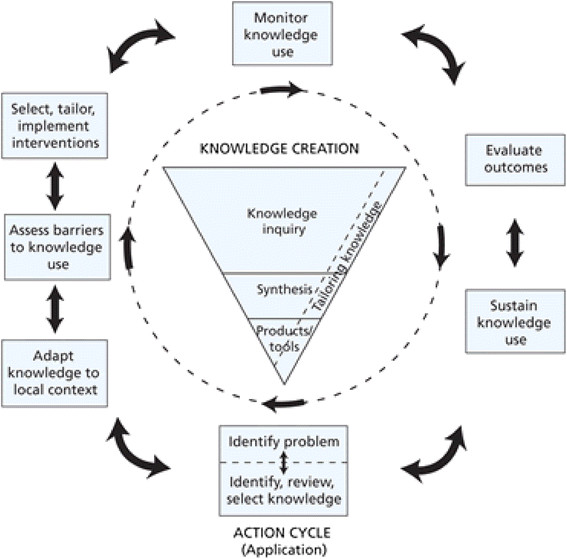
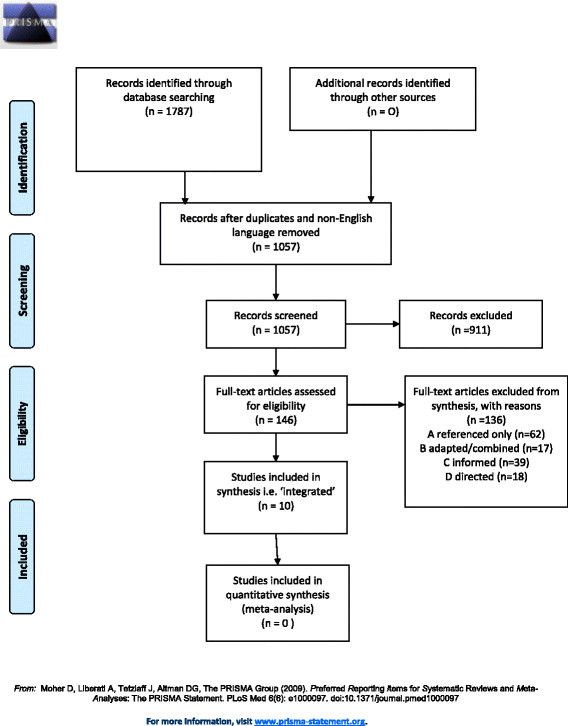
BACKGROUND: Conceptual frameworks are recommended as a way of applying theory to enhance implementation efforts. The Knowledge to Action (KTA) Framework was developed in Canada by Graham and colleagues in the 2000s, following a review of 31 planned action theories. The framework has two components: Knowledge Creation and an Action Cycle, each of which comprises multiple phases. This review sought to answer two questions: 'Is the KTA Framework used in practice? And if so, how?' METHODS: This study is a citation analysis and systematic review. The index citation for the original paper was identified on three databases-Web of Science, Scopus and Google Scholar-with the facility for citation searching. Limitations of English language and year of publication 2006-June 2013 were set. A taxonomy categorising the continuum of usage was developed. Only studies applying the framework to implementation projects were included. Data were extracted and mapped against each phase of the framework for studies where it was integral to the implementation project. RESULTS: The citation search yielded 1,787 records. A total of 1,057 titles and abstracts were screened. One hundred and forty-six studies described usage to varying degrees, ranging from referenced to integrated. In ten studies, the KTA Framework was integral to the design, delivery and evaluation of the implementation activities. All ten described using the Action Cycle and seven referred to Knowledge Creation. The KTA Framework was enacted in different health care and academic settings with projects targeted at patients, the public, and nursing and allied health professionals. CONCLUSIONS: The KTA Framework is being used in practice with varying degrees of completeness. It is frequently cited, with usage ranging from simple attribution via a reference, through informing planning, to making an intellectual contribution. When the framework was integral to knowledge translation, it guided action in idiosyncratic ways and there was theory fidelity. Prevailing wisdom encourages the use of theories, models and conceptual frameworks, yet their application is less evident in practice. This may be an artefact of reporting, indicating that prospective, primary research is needed to explore the real value of the KTA Framework and similar tools.
Overview
The claims and statistics of this paper haven’t been checked yet.
Free: it reads the open-access text and checks the first 5 claims that cite a source we can check. Create a free account to check every claim.
Integrity signals
Registry
Cites
Statistics
Figures
Verification
Claims the paper makes
The claims and statistics of this paper haven’t been checked yet.
Free: it reads the open-access text and checks the first 5 claims that cite a source we can check. Create a free account to check every claim.
Claims other papers make about this one
Each is checked against this paper’s own text: does it say what the citing paper says it does?
The cited source says what the claim attributes to it.
In the citing paper
“Out of 146 identified studies, the authors found that 101 studies either cited the model without explanation or used it to guide the project in a 'general, non-specified way', while only 10 studies used the model to inform 'the design, delivery, and evaluation of implementation activities' [32].”
From Scoping review identifies significant number of knowledge translation theories, models, and frameworks with limited use (2018) · cites this paper as [32]
In the citing paper
“Many of the action models mentioned here have been subjected to testing or evaluation, and some have been widely applied in empirical research, underscoring their usefulness [9,55].”
From Making sense of implementation theories, models and frameworks (2015) · cites this paper as [55]
Self-check
Percentages, sums and reported differences re-computed from the paper’s own numbers.
The self-check needs the paper’s full text.
Citations
Cites
Damschroder, L. J., Aron, D. C., Keith, R. E., Kirsh, S. R., Alexander, J. A., & Lowery, J. C. (2009) · Implementation Science · doi:10.1186/1748-5908-4-50 · Cited by 14,496 · cited 3×
“The importance of organisational or external factors and the ability to influence them is well recognised [1,3,33-35].”
Hoffmann, T. C., Glasziou, P. P., Boutron, I., Milne, R., Perera, R., Moher, D., Altman, D. G., Barbour, V., Macdonald, H., Johnston, M., et al. (2014) · BMJ · doi:10.1136/bmj.g1687 · Cited by 10,548 · cited 2×
“importance of reporting standards [8,36], such as the new TIDieR checklist [37] to facilitate more explicit”
Lost in knowledge translation: Time for a map?
Graham, I. D., Logan, J., Harrison, M. B., Straus, S. E., Tetroe, J., Caswell, W., & Robinson, N. (2006) · Journal of Continuing Education in the Health Professions · doi:10.1002/chp.47 · Cited by 4,705 · cited 9×
“The KTA Framework [1] is being used in practice with varying degrees of completeness and theory fidelity when the conceptual framework is integrated into the implementation project.”
InfluentialKnowledge translation of research findings
Grimshaw, J. M., Eccles, M. P., Lavis, J. N., Hill, S. J., & Squires, J. E. (2012) · Implementation Science · doi:10.1186/1748-5908-7-50 · Cited by 2,407 · cited 2×
“Our review, and similar studies [39,40,43-45], consistently comments on the limited, haphazard use of theory, even though theories can be applied in many different ways [41].”
Taylor, M. J., McNicholas, C., Nicolay, C., Darzi, A., Bell, D., & Reed, J. E. (2014) · BMJ Quality & Safety · doi:10.1136/bmjqs-2013-001862 · Cited by 1,871 · cited 1×
“The prevalence of the Action Cycle may simply reflect the cyclical nature of the change process evident in other common, quality improvement tools such as the ‘Plan, Do, Study, Act’ cycle [30].”
Bridging Research and Practice
Tabak, R. G., Khoong, E. C., Chambers, D. A., & Brownson, R. C. (2012) · American Journal of Preventive Medicine · doi:10.1016/j.amepre.2012.05.024 · Cited by 1,386 · cited 1×
“Potential benefits from applying a conceptual framework include making the process of knowledge translation more systematic, with greater likelihood of changed practice and spread of evidence [4,6-9].”
Kitson, A. L., Rycroft-Malone, J., Harvey, G., McCormack, B., Seers, K., & Titchen, A. (2008) · Implementation Science · doi:10.1186/1748-5908-3-1 · Cited by 1,314 · cited 1×
“The importance of organisational or external factors and the ability to influence them is well recognised [1,3,33-35].”
A compilation of strategies for implementing clinical innovations in health and mental health
Powell, B. J., McMillen, J. C., Proctor, E. K., Carpenter, C. R., Griffey, R. T., Bunger, A. C., Glass, J. E., & York, J. L. (2012) · Medical Care Research and Review · doi:10.1177/1077558711430690 · Cited by 1,069 · cited 1×
“more likely to be successful than a single strategy [27,46,47], as they target different barriers [40], which”
The PARIHS Framework—A Framework for Guiding the Implementation of Evidence-based Practice
Rycroft-Malone, J. (2004) · Journal of Nursing Care Quality · doi:10.1097/00001786-200410000-00002 · Cited by 923 · cited 5×
“Several conceptual frameworks are pertinent for implementation scientists, including Promoting Action on Research Implementation in Health Services (PARIHS) [5,10] the Consolidated Framework for Implementation Research (CFIR) [3] as well as the KTA Framework [1].”
InfluentialEccles, M., Grimshaw, J., Walker, A., Johnston, M., & Pitts, N. (2005) · Journal of Clinical Epidemiology · doi:10.1016/j.jclinepi.2004.09.002 · Cited by 917 · cited 2×
“Potential benefits from applying a conceptual framework include making the process of knowledge translation more systematic, with greater likelihood of changed practice and spread of evidence [4,6-9].”
Research works printed but not linked: 2
- Rycroft-Malone J Bucknall T Models and Frameworks for Implementing Evidence-Based Practice 2010 Chichester, UK Wiley Blackwell
- Keyser SE The Implementation of a Delirium Knowledge Translation Project for Families of the Elderly 2010 Ontario, Canada Dissertation for Masters of Science, School of Nursing, Queen’s University
Cited by
Items 101–200 of 548
Kokorelias, K. M., Wasilewski, M. B., Flanagan, A. K., Zhabokritsky, A., Singh, H., Dove, E., Eaton, A. D., Valentine, D., Sheppard, C. L., Abdelhalim, R., et al. (2023) · International Journal of Qualitative Methods · doi:10.1177/16094069231205189 · Cited by 19
“…et al., 2021; Museus & Grif fi n, 2011) and the Knowledge to Action Framework (KTA) such that we can shift our research knowledge into action and facilitate evidence uptake by health service administrators, healthcare professionals, and other stakeholders (Field et al., 2014; Graham et al., 2006).”
BackgroundKagan, A., Simmons‐Mackie, N. N., Villar-Guerrero, E., Chan, M. T., Turczyn, I., Victor, J. C., Shumway, E., Chan, L., Cohen‐Schneider, R., & Bayley, M. T. (2023) · Journal of Communication Disorders · doi:10.1016/j.jcomdis.2023.106390 · Cited by 19
Heckman, G. A., Boscart, V., Quail, P., Keller, H., Ramsey, C., Vucea, V., King, S., Bains, I., Choi, N., & Garland, A. (2021) · Canadian Journal on Aging / La Revue canadienne du vieillissement · doi:10.1017/s0714980820000410 · Cited by 19
“Knowledge translation is “a dynamic and iterative process that includes synthesis, dissemination, exchange and ethically sound application of knowledge to improve health, provide more effective health services and products, and strengthen the healthcare system” (Field et al., 2014; Straus et al., 2009).”
Dixon, J., Elliott, S. J., & Clarke, A. E. (2016) · Research Involvement and Engagement · doi:10.1186/s40900-016-0043-x · Cited by 18
“However, comprehensive application of the KTA Framework is rare [16].”
BackgroundRomney, W. M., Salbach, N. M., Parrott, J. S., & Deutsch, J. E. (2018) · Physiotherapy Theory and Practice · doi:10.1080/09593985.2018.1457113 · Cited by 18
Wiseman‐Hakes, C., Saleem, M., Poulin, V., Nalder, E. J., Balachandran, P., Gan, C., & Colantonio, A. (2019) · Disability and Rehabilitation · doi:10.1080/09638288.2019.1597180 · Cited by 18
Rockers, P. C., Tugwell, P., Grimshaw, J., Oliver, S. R., Atun, R. A., Røttingen, J., Fretheim, A., Ranson, M. K., Daniels, K., Luiza, V. L., et al. (2017) · Journal of Clinical Epidemiology · doi:10.1016/j.jclinepi.2016.03.034 · Cited by 17
“potentially useful method for facilitating these ef forts [29].”
MethodDengler, J., Padovano, W. M., Davidge, K. M., McKay, V., Yee, A., & Mackinnon, S. E. (2020) · Plastic & Reconstructive Surgery · doi:10.1097/prs.0000000000007492 · Cited by 18
Anderson, J. L., Reamey, R. A., Levitan, E. B., Asif, I. M., Aswani, M. S., Fletcher, F. E., Hall, A. G., Kennedy, K. C., Long, D. M., Redden, D. T., et al. (2021) · Learning Health Systems · doi:10.1002/lrh2.10292 · Cited by 17
“structure serves as the research engine, based upon institutional research capabilities and applied to specific clinical conditions or topics of interest.(9,10) Positioned upon these dynamic engines are seven struc-”
BackgroundMethodInfluentialIntegrating Implementation Science with Quality Improvement to Improve Perinatal Outcomes
Callaghan‐Koru, J. A., Farzin, A., Ridout, E., & Curran, G. M. (2023) · Clinics in Perinatology · doi:10.1016/j.clp.2023.01.002 · Cited by 17
Bélanger‐Gravel, A., Janezic, I., Desroches, S., Paquette, M.-C., Therrien, F., Barnett, T. A., Lavoie, K., & Gauvin, L. I. (2023) · BMC Health Services Research · doi:10.1186/s12913-023-09455-y · Cited by 17
“, barriers and facilitators) and ways to adapt evidence-based knowledge to practitioners’ contexts [28].”
BackgroundBonham, P. A., Brunette, G., Crestodina, L., Droste, L. R., González, A., Kelechi, T. J., Ratliff, C. R., & Varnado, M. F. (2022) · Journal of Wound Ostomy and Continence Nursing · doi:10.1097/won.0000000000000860 · Cited by 20
Romney, W. M., Wormley, M. E., Veneri, D., Oberlander, A., Grevelding, P., Rice, J., & Moore, J. L. (2021) · Physiotherapy Theory and Practice · doi:10.1080/09593985.2021.1898065 · Cited by 17
Insights into Global Health Practice from the Agile Software Development Movement
Flood, D., Chary, A. N., Austad, K., Díaz, A. K., García, P., Martinez, B., Lopez, W., & Rohloff, P. J. (2016) · Global Health Action · doi:10.3402/gha.v9.29836 · Cited by 18
“We see these principles as complementary to other rapid cycle methods from the fields of quality improvement and implementation science such as Plan-Do-Study-Act cycles (11) and the Knowledge to Action framework (12).”
MethodGermani, T., Zwaigenbaum, L., Magill‐Evans, J., Thompson‐Hodgetts, S., & Ball, G. D. C. (2016) · Developmental Neurorehabilitation · doi:10.1080/17518423.2016.1214188 · Cited by 17
“Including stakeholders in this context fits within an integrated knowledge translation framework that encourages collaboration of researchers with knowledge users over the entirety of the research process.(14,15) Recent discussions of stakeholder engagement in ASD have highlighted the need to develop and maintain thes…”
BackgroundDriving Innovation in Health Care: Clinical Nurse Leader Role
Noles, K., Barber, R., James, D., & Wingo, N. P. (2019) · Journal of Nursing Care Quality · doi:10.1097/ncq.0000000000000394 · Cited by 20
“The knowledge to action framework provided a process for identifying information needed to fill perceived gaps in knowledge related to innovation and applying new knowledge into practice.(9) In addition, identifying gaps in innovation competence provides insight into the current needs of practicing CNLs.”
Domingo, A., Yessis, J., Charles, K.-A., Skinner, K., & Hanning, R. M. (2023) · Implementation Science · doi:10.1186/s13012-023-01291-2 · Cited by 16
“When used in conjunction with implementation models or frameworks such as ABLe Change and the KTA cycle [5, 38, 59, 60], opportunities for centering Indigenous voices in iterative planning and strengthening collaborative action can be supported.”
MethodRiedel, A., & Lehmeyer, S. (2021) · Springer Reference Pflege, Therapie, Gesundheit · doi:10.1007/978-3-662-58685-3_92-1 · Cited by 22
Slade, S. C., Hay‐Smith, J., Mastwyk, S., Morris, M. E., & Frawley, H. (2018) · Neurourology and Urodynamics · doi:10.1002/nau.23716 · Cited by 18
“13–17 The clinical implementation of this knowledge is argued to benefit from close collaborations between researchers and knowledge users.(18) The Knowledge to Action Translation framework(18) suggests identification of barriers and facilitators, involvement of stakeholders such as clinicians and patients and tailori…”
BackgroundJaniak, E., Clark, J., Bartz, D., Langer, A., & Gottlieb, B. R. (2018) · Perspectives on Sexual and Reproductive Health · doi:10.1363/psrh.12071 · Cited by 16
Content analysis of concussion education for coaches of youth and high school sport
Perlin, A., & Kroshus, E. (2020) · Brain Injury · doi:10.1080/02699052.2020.1755894 · Cited by 17
Rawlings, D., Yin, H., Devery, K., Morgan, D. D., & Tieman, J. (2020) · Healthcare · doi:10.3390/healthcare8030254 · Cited by 17
“Transfer of training [16], transfer of learning [17], knowledge translation [18] and knowledge to action [19], are all examples of models or frameworks developed to address and evaluate the transfer or translation of what is learned into practice or to the workplace.”
BackgroundPreventing Fractures in Long-Term Care: Translating Recommendations to Clinical Practice
Παπαϊωάννου, Α., Ioannidis, G., McArthur, C., Hillier, L. M., Feldman, S., Giangregorio, L., Jaglal, S. B., Jain, R., van der Horst, M., & Adachi, J. D. (2020) · Journal of the American Medical Directors Association · doi:10.1016/j.jamda.2020.07.003 · Cited by 17
Stages of Milestones Implementation: A Template Analysis of 16 Programs Across 4 Specialties
Yaghmour, N. A., Poulin, L. J., Bernabeo, E. C., Ekpenyong, A., Li, S. T., Eden, A. R., Hauer, K. E., Tichter, A. M., Hamstra, S. J., & Holmboe, E. S. (2021) · Journal of Graduate Medical Education · doi:10.4300/jgme-d-20-00900.1 · Cited by 16
Implementing Patient-Reported Outcome Measures in Inpatient Rehabilitation: Challenges and Solutions
Heinemann, A. W., Nitsch, K. P., Gracz, K., Ehrlich‐Jones, L., Engel, E., Wilson, M., Zale, C., & Graham, I. D. (2021) · Archives of Physical Medicine and Rehabilitation · doi:10.1016/j.apmr.2021.05.010 · Cited by 16
A modified action framework to develop and evaluate academic-policy engagement interventions
Mäkelä, P., Boaz, A., & Oliver, K. A. (2024) · Implementation Science · doi:10.1186/s13012-024-01359-7 · Cited by 17
“Field et al. identified the multiple, idiosyncratic ways that the Knowledge to Action Framework has been applied in practice, demonstrating its ‘informal’ adaptability to different healthcare settings and topics [35].”
BackgroundYan, W., Morgan, B. T., Berry, P., Matthys, M. K., Thompson, J. A., & Smallheer, B. (2019) · Dimensions of Critical Care Nursing · doi:10.1097/dcc.0000000000000353 · Cited by 15
Benoit, C., & Unsworth, R. (2020) · Archives of Sexual Behavior · doi:10.1007/s10508-020-01778-9 · Cited by 15
Development of a Coaching Protocol to Enhance Self-efficacy Within Outpatient Physical Therapy
Bamonti, P. M., Moye, J. A., Harris, R., Kallmi, S., Kelly, C. A., Middleton, A., & Bean, J. F. (2022) · Archives of Rehabilitation Research and Clinical Translation · doi:10.1016/j.arrct.2022.100198 · Cited by 17
Doré, I., Plante, A., Bedrossian, N., Montminy, S., St-Onge, K., St-Cyr, J., Pomey, M., Charpentier, D., Pettigrew, L., Brisson, I., et al. (2022) · PLoS ONE · doi:10.1371/journal.pone.0273145 · Cited by 15
“Conceptual frameworks are recommended to translate evidence into actual health interventions [55] as they provide a frame of reference that accounts for the multiple, dynamic, and interactive factors that influence effective implementation of evidence into practice [55].”
BackgroundPearse, B. L., Rickard, C. M., Keogh, S. J., & Fung, Y. L. (2018) · Australian Critical Care · doi:10.1016/j.aucc.2018.01.001 · Cited by 15
“responsibilities of stakeholders; (4) sponsors; (5) identification of barriers/potential risks; (6) milestones; (7) budget; (8) data collection; (9) data analysis; (10) communication/reporting plan; and (11) timeline.”
Developing a health-promoting school using Knowledge to Action framework
Jain, Y. K., Joshi, N. K., Bhardwaj, P., Singh, K., Suthar, P., & Joshi, V. (2021) · Journal of Education and Health Promotion · doi:10.4103/jehp.jehp_1139_20 · Cited by 15
“There are many theories, models, and frameworks used in the field of knowledge translation among which, conceptual frameworks are preferred as the means of applying theory toward implementation efforts.[6] Knowledge to Action Framework or the “KTA Framework” is one of the highly cited conceptual frameworks by the orga…”
BackgroundThe Translational Science Spectrum
McCartney, P. R. (2021) · Journal of Obstetric, Gynecologic & Neonatal Nursing · doi:10.1016/j.jogn.2021.09.007 · Cited by 15
Carroll, C. (2016) · Scientometrics · doi:10.1007/s11192-016-2085-0 · Cited by 14
“…a single citation of the key paper within the citing publication was considered to represent low impact (likely to be just a reference ‘‘in passing’’ to the key paper (Field et al. 2014)); two citations represented moderate impact; and three or more citations represented high impact (see Table 1).”
BackgroundWan, C. S., Nankervis, A. J., Teede, H. J., & Aroni, R. (2023) · Journal of Human Nutrition and Dietetics · doi:10.1111/jhn.13191 · Cited by 14
“According to the Knowledge to Action Framework 25 in implementation science, identifying problems in providing culturally appropriate woman ‐ centred care is the fi rst step to understanding the barriers to evidence ‐ based care.”
Barriers to Informational Support for Care Partners of People With Aphasia After Stroke
Shafer, J. S., Haley, K. L., & Jacks, A. (2023) · American Journal of Speech-Language Pathology · doi:10.1044/2023_ajslp-22-00391 · Cited by 14
Kamran, R., Jackman, L., Laws, A., Stepney, M., Harrison, C. J., Jain, A., & Rodrigues, J. N. (2024) · BMJ Open Quality · doi:10.1136/bmjoq-2023-002677 · Cited by 14
“20 The key step of the KTA model followed in this study is ‘evaluate outcomes’, which follows from previous steps of the KTA Model followed to develop the PG- PROM-GAC.”
Kossinna, C., Lau, C. L., Mayr, H. L., Wilkinson, S. A., Young, A., Meloncelli, N. J. L., Cameron, A. E., Rigby, R. R., & Hickman, I. J. (2025) · Nutrition in Clinical Practice · doi:10.1002/ncp.70016 · Cited by 15
“9 Subsequent to its original publication, the KTA framework has undergone several methodological enhancements and contextual adaptations.”
InfluentialOrava, T., Provvidenza, C. F., Townley, A., & Kingsnorth, S. (2018) · Disability and Rehabilitation · doi:10.1080/09638288.2018.1471524 · Cited by 14
“Implementation, adoption and evaluation of the Toolbox (including its prior development) were guided by the Knowledgeto-Action Cycle [28]; this process model is intended to facilitate moving evidence into practice through a series of systematic and planned steps [29].”
MethodSuart, C., Graham, K. J., Suart, T. N., & Truant, R. (2020) · PLoS ONE · doi:10.1371/journal.pone.0238512 · Cited by 18
“One popular knowledge translation model, Knowledge-to-Action, outlines both cycles of knowledge creation and knowledge application [5, 6] cation cycle involves adapting knowledge to the local context of users, as well as identifying barriers to using and accessing this knowledge [5].”
BackgroundSullivan, J. L., Montano, A.-R. L., Hughes, J. M., Davila, H. W., O’Malley, K. A., Engle, R. L., Hawley, C. E., Shin, M. H., Smith, J. G., & Pimentel, C. B. (2022) · The Gerontologist · doi:10.1093/geront/gnac096 · Cited by 15
Godbee, K., Guccione, L., Palmer, V. J., Gunn, J., Lautenschlager, N., & Francis, J. J. (2022) · Journal of Alzheimer's Disease · doi:10.3233/jad-220382 · Cited by 13
“The Knowledge-to-Action framework [23] is one of the most established implementation process models [24].”
MethodPaving the Way Forward for Evidence-Based Continuing Professional Development
Jeyakumar, T., Karsan, I., Williams, B. W., Fried, J. M., Kane, G. M., Ambata-Villanueva, S., Bennett, A., McMahon, G. T., Paton, M., Williams, N. V., et al. (2023) · Journal of Continuing Education in the Health Professions · doi:10.1097/ceh.0000000000000500 · Cited by 13
“19 The phases consisted of a selection of the included education interventions, identi fi cation of the techniques for each intervention, and development of the toolkit.”
MethodPatrician, P. A., Travis, J. R., Blackburn, C., Carter, J.-L., Hall, A. G., Meese, K. A., Miltner, R. S., Montgomery, A. P., Stewart, J., Ruffin, A., et al. (2024) · Nursing Administration Quarterly · doi:10.1097/naq.0000000000000626 · Cited by 14
“15,35,36 With workloads from COVID tapering off and some hospitals responding to the need for better staffing as a result of high staff burnout and turnover, burnout and distress may have decreased due to this phenomenon alone.”
BackgroundStrifler, L., Fahim, C., Hillmer, M. P., Barnsley, J. M., & Straus, S. E. (2024) · BMC Medical Informatics and Decision Making · doi:10.1186/s12911-024-02580-6 · Cited by 15
“This frequently cited [18] process model is comprehensive and includes all stages of implementation: identifying the evidence gap and adapting the evidence to the local context; assessing barriers/ facilitators to evidence use and selecting, tailoring and implementing interventions; monitoring…”
BackgroundOutcomes of co-designed communities of practice that support members to address public health issues
Elbrink, S. H., Elmer, S., Hawkins, M., & Osborne, R. H. (2024) · Health Promotion International · doi:10.1093/heapro/daae080 · Cited by 15
“To fulfil members’ needs in top–down initiated communities of practice, facilitators can approximate these spontaneously evolved groups by deliberately drawing together people with shared interests and implementing actions to ensure members’ needs are met (Field et al. , 2014).”
BackgroundFoster, A., O’Cathain, A., & Harris, J. (2020) · BMJ Open · doi:10.1136/bmjopen-2020-039116 · Cited by 13
From trials to communities: implementation and scale-up of health behaviour interventions
McCrabb, S., Hall, A. E., McKay, H. A., Gonzalez, S., Milat, A., Bauman, A. E., Sutherland, R., & Wolfenden, L. (2023) · Health Research Policy and Systems · doi:10.1186/s12961-023-01027-0 · Cited by 14
“Survey items were grounded in the Payback [28] and Knowledge-To-Action (KTA) Frameworks [29], and similar studies in the published literature [30–40].”
ResultSelecting, adapting, and sustaining programs in health care systems
Zullig, L. L., & Bosworth, H. B. (2015) · Journal of Multidisciplinary Healthcare · doi:10.2147/jmdh.s80037 · Cited by 13
“Theoretical framework The Knowledge to Action (KTA) Framework was developed based on a review of 31 planned action theories with the goal of providing a framework for thinking about the process and integration of knowledge creation and knowledge application.(1,3) Stated differently, the theory outlines a process for e…”
BackgroundMethodInfluentialKingsnorth, S., Orava, T., Parker, K., & Milo‐Manson, G. (2019) · Disability and Rehabilitation · doi:10.1080/09638288.2018.1514075 · Cited by 13
“Previous research indicates that the KTA cycle has been used to variable degrees of completeness across healthcare and academic settings [55]; a strength of the Evidence to Care unit is the capability to use this process model to guide all large-scale projects and pull from engagement, dissemination and implementation…”
MethodMackenzie, L. A., Lovarini, M., Price, T., Clemson, L. M., Tan, A. C. W., & O’Connor, C. M. C. (2018) · British Journal of Occupational Therapy · doi:10.1177/0308022618764798 · Cited by 13
Nitsch, K. P., Stipp, K. L., Gracz, K., Ehrlich‐Jones, L., Graham, I. D., & Heinemann, A. W. (2020) · Journal of Spinal Cord Medicine · doi:10.1080/10790268.2020.1712893 · Cited by 13
A Decade of Efforts to Add Value to Child Health Research Practices
Sammy, A., Baba, A., Klassen, T. P., Moher, D., & Offringa, M. (2023) · The Journal of Pediatrics · doi:10.1016/j.jpeds.2023.113840 · Cited by 13
Motivations for volunteers to participate in ecological restoration: a systematic map
Alamenciak, T., & Murphy, S. D. (2024) · Restoration Ecology · doi:10.1111/rec.14155 · Cited by 12
“In order for practitioners to make good use of the information, some synthesis is required (Field et al. 2014).”
BackgroundDietary management of type 2 diabetes mellitus among South Asian immigrants: A mixed‐methods study
Wan, C. S., Rawat, P., Gulyani, P., Elmi, Y., & Ng, A. (2023) · Nutrition & Dietetics · doi:10.1111/1747-0080.12820 · Cited by 12
“11 According to the knowledge to action framework, 12 identifying South Asian immigrants' problems with managing diabetes in relation to their dietary patterns and perceived barriers and facilitators to follow dietary advice provided by health professionals is needed to inform the development of a…”
Pediatrician Perspectives on Learning and Practice Change in the MOCA-Peds 2017 Pilot
Turner, A. L., Olmsted, M. G., Smith, A. C., Dounoucos, V., Bradford, A., Althouse, L. A., & Leslie, L. K. (2019) · PEDIATRICS · doi:10.1542/peds.2019-2305 · Cited by 12
Spooner, A. J., Aitken, L. M., & Chaboyer, W. P. (2017) · Australian Critical Care · doi:10.1016/j.aucc.2017.09.001 · Cited by 16
Royaux, C., Mihoub, J., Jossé, M., Pelletier, D., Norvez, O., Reecht, Y., Fouilloux, A., Rasche, H., Hiltemann, S., Batut, B., et al. (2025) · GigaScience · doi:10.1093/gigascience/giae122 · Cited by 12
“…in the second part of this article r epr esents an oper ational and actionable path for r esearc hers and experts to attain le v els of best pr actices (e.g., r epr oducibility, FAIR, open science, R compendium) [ 46 ] with no mor e inv estment than they ar e able or willing to pr ovide [ 47 ].”
Developing the Driving and Dementia Roadmap: a knowledge-to-action process
Stasiulis, E., Naglie, G., Sanford, S., Belchior, P. D. C., Crizzle, A. M., Gélinas, I., Mazer, B. L., Moorhouse, P. A., Myers, A., Porter, M. M., et al. (2023) · International Psychogeriatrics · doi:10.1017/s1041610222001235 · Cited by 11
“Our adaption of the KTA framework to include two knowledge creation funnels attests to the KTA ’ s practicality and fl exibility allowing for its application in idiosyncratic ways that were integral to our study (Field et al ., 2014).”
InfluentialMakrides, T., Law, M. P., Ross, L., Gosling, C. M., Acker, J. J., & O'Meara, P. F. (2023) · Australasian Emergency Care · doi:10.1016/j.auec.2023.03.002 · Cited by 14
Boscart, V., Davey, M., Crutchlow, L., Heyer, M., Johnson, K., Taucar, L. S., Costa, A. P., & Heckman, G. A. (2020) · Clinical Gerontologist · doi:10.1080/07317115.2019.1707339 · Cited by 11
“These trends suggest that there is a need for comprehensive BPGs specific to NH residents’ complex needs (Cox, 2011; Field et al., 2014).”
BackgroundResultThe impact of knowledge brokering in health sector and the challenges: A review of literature
Yamanie, N., Amanda, N. F., & Felistia, Y. (2023) · Journal of Public Health Research · doi:10.1177/22799036231167833 · Cited by 10
“” The inclusion criteria consist of (1) study design including systematic review, meta-analysis, cross-sectional, case study, or literature review; (2) Study scope of knowledge brokering impact in health sector; (3) KB approach with detailed description and written framework or module; (4) Full text available.”
BackgroundHumphrey, E., Burston, A., McInnes, E., Cheng, H., Musgrave‐Takeda, M., & Wan, C. S. (2024) · Journal of Clinical Nursing · doi:10.1111/jocn.17443 · Cited by 10
Hunter, S. C., Morgillo, S., Kim, B., Bergström, A., Ehrenberg, A., Eldh, A. C., Wallin, L., & Kitson, A. A. (2025) · Implementation Science Communications · doi:10.1186/s43058-025-00704-1 · Cited by 11
“This parallels reviews of other implementation frameworks, such as CFIR [16] and KTA [17], which have identified that they have seldom been used as intended.”
Moyal‐Smith, R., Etheridge, J. C., Karlage, A., Sonnay, Y., Yuan, C. T., Havens, J. M., Brindle, M. E., & Berry, W. R. (2023) · Implementation Science Communications · doi:10.1186/s43058-023-00440-4 · Cited by 11
Skouteris, H., Melder, A., Bailey, C., Morris, H., Garad, R. M., Teede, H. J., & Robinson, T. (2018) · Seminars in Reproductive Medicine · doi:10.1055/s-0038-1667311 · Cited by 10
Spoelstra, S., Schueller, M., Basso, V., & Sikorskii, A. E. (2022) · Implementation Science · doi:10.1186/s13012-022-01232-5 · Cited by 10
“The knowledge to action [24] model underpinned examination of outcomes and the Consolidated Framework for Implementation Research [25]-guided implementation.”
MethodPreclinical Immersion Experiences Improve Medical Student Perceptions of Surgery
Palenzuela, D. L., Pradarelli, A. A., McKinley, S. K., Moses, J., Saillant, N. N., & Phitayakorn, R. (2023) · Journal of Surgical Research · doi:10.1016/j.jss.2023.07.010 · Cited by 10
VanderKaay, S., Letts, L. J., Jung, B., & Moll, S. E. (2018) · Disability and Rehabilitation · doi:10.1080/09638288.2018.1473510 · Cited by 14
“One such reason is that the KTA process allows for knowledge creation that becomes increasingly useful, relevant, and ready for implementation as it is filtered through the funnel [29,90,91].”
BackgroundKnowledge exchange and adoption to enable safer post-disaster self-recovery
Hendriks, E., Luyten, L., & Parrack, C. (2018) · IDRiM Journal · doi:10.5595/001c.11660 · Cited by 10
Taremwa, I. M., Ashaba, S., Ayebazibwe, C., Kemeza, I., Adrama, H., Omoding, D., Yatuha, J., & Hilliard, R. I. (2020) · Health Psychology and Behavioral Medicine · doi:10.1080/21642850.2020.1814782 · Cited by 10
“As a result, there is a firm and synergistic bonding of the interaction (Field et al., 2014; Ownby et al., 2014).”
BackgroundThe Wicked Problem of Packaging and Consumers: Innovative Approaches for Sustainability Research
Brennan, L. L., Parker, L., Lockrey, S., Verghese, K., Chin, S., Langley, S., Hill, A., Phan-Le, N. T., Francis, C., Ryder, M., et al. (2021) · Environmental footprints and eco-design of products and processes · doi:10.1007/978-981-16-4609-6_6 · Cited by 12
Evaluation of MealSense © : A Sensory Integration–Based Feeding Support Program for Parents
Trewin, A., Mailloux, Z., & Schaaf, R. C. (2022) · American Journal of Occupational Therapy · doi:10.5014/ajot.2022.046987 · Cited by 10
Bonham, P. A., Droste, L. R., González, A., Kelechi, T. J., & Ratliff, C. R. (2024) · Journal of Wound Ostomy and Continence Nursing · doi:10.1097/won.0000000000001111 · Cited by 10
Martinez, R. G., Weiner, B. J., Meza, R. D., Dorsey, S., Palazzo, L. G., Matson, A., Bain, C. E., Mettert, K. D., Pullmann, M. D., & Lewis, C. C. (2023) · Implementation Science Communications · doi:10.1186/s43058-023-00526-z · Cited by 9
“Implementation studies usually conduct key informant interviews, focus groups, or surveys to identify barriers [19–22].”
Kuruppu, N. R., Tobiano, G., Ranse, K., Abayadeera, A., & Chaboyer, W. P. (2024) · Intensive and Critical Care Nursing · doi:10.1016/j.iccn.2024.103708 · Cited by 9
Elser, A., Kopkow, C., & Schäfer, A. G. M. (2024) · JMIR Research Protocols · doi:10.2196/58089 · Cited by 11
ter Bogt, M. J. J., Tobi, H., van Straten, C. G. J. I., Molleman, G. R. M., van den Muijsenbergh, M. E. T. C., Bevelander, K. E., & Fransen, G. A. J. (2025) · Frontiers in Public Health · doi:10.3389/fpubh.2025.1453197 · Cited by 9
Knowledge to action framework for home health monitoring
Lee, C., & Ho, K. (2019) · Healthcare Management Forum · doi:10.1177/0840470419855364 · Cited by 10
Movilización del conocimiento: aportes para los estudios sociales de la salud
Rojas-Rajs, S., & Natera, J. M. (2019) · Revista Ciencias de la Salud · doi:10.12804/revistas.urosario.edu.co/revsalud/a.8369 · Cited by 11
“En una revisión sistemática reciente, se encontró que, de los 1057 artículos referidos a este modelo entre 2006 y 2012, solo 10 (1 %) estaban relacionados con experiencias de investigación prácticas que integraron todo el modelo, desde la fase de creación de conocimiento hasta el ciclo de acción (43); 8 de estos artíc…”
BackgroundRattray, M., Marshall, A. P., Desbrow, B., von Papen, M., & Roberts, S. (2021) · BMC Health Services Research · doi:10.1186/s12913-021-06493-2 · Cited by 9
“Many models and frameworks for supporting the translation of knowledge into practice have been developed, outlining the steps necessary to design, implement and evaluate evidence-based interventions [22].”
BackgroundBerryman, J. (2021) · Worldviews on Evidence-Based Nursing · doi:10.1111/wvn.12541 · Cited by 9
Feasibility of implementing systematic social needs assessment for children with medical complexity
Ming, D. Y., Jones, K. A., Sainz, E., Tkach, H., Stewart, A., Cram, A., Morreale, M. C., Dizon, S., & deJong, N. A. (2021) · Implementation Science Communications · doi:10.1186/s43058-021-00237-3 · Cited by 9
“steps in the SSNAC implementation process to an evidence-based framework (Knowledge to Action) [27].”
MethodInfluentialEhrlich, B. S., Yakimkova, T., Batmunkh, T., Mishkova, V., Movsisyan, N., Kirgizov, K., Borisevich, M. V., Kizyma, R., Graetz, D. E., McNeil, M. J., et al. (2022) · JCO Global Oncology · doi:10.1200/go.21.00270 · Cited by 10
“This work may also inform future interventions to improve palliative care delivery by supporting components of the implementation process, such as the action cycle in the Knowledge-to-Action framework.(28,29) Moving forward, repeating the original ADAPT study can also track implementation outcomes and the efficacy of…”
BackgroundKitto, S. C., Danilovich, N., Delva, D., Meuser, J., Presseau, J., Grimshaw, J., & HENDRY, P. J. (2018) · Europe PMC (PubMed Central) · Cited by 12
Nurses' Knowledge and Attitudes Toward Pressure Injury Prevention: A Systematic Review
Saleh, Z. T., Rababa, M., Al-Za'areer, M. S., Elshatarat, R. A., Shahin, M. A. H., Hamithi, M. A., Abdelkader, R. H., Alnawafleh, K. A., Alharbi, A. A., Alasmari, A. A., et al. (2026) · International Wound Journal · doi:10.1111/iwj.70855 · Cited by 12
“Interpretation of these findings is strengthened by implementation science frameworks, particularly the Knowledge- to-Action (KTA) framework and the Capability–Opportunity–Motivation– Behaviour (COM-B) model [44–46].”
Lyzwinski, L. N., McDonald, S., Zwicker, J. D., & Tough, S. (2024) · JMIR Pediatrics and Parenting · doi:10.2196/55100 · Cited by 10
“A study in Europe used the Knowledge to Action framework [80], with stakeholders involved in each stage of the research process from the development and implementation stages to the evaluation stage, including focus groups, surveys, and interviews [37].”
MethodNielsen, K. R., Becerra, R., Mallma, G., & Fieno, J. T. D. (2018) · Frontiers in Pediatrics · doi:10.3389/fped.2018.00085 · Cited by 10
Jeong, Y., Law, M., DeMatteo, C. A., Stratford, P. W., & Kim, I. H. (2016) · Occupational Therapy In Health Care · doi:10.1080/07380577.2016.1192311 · Cited by 8
“Among many frameworks for the knowledge translation implementation, the Knowledge to Action process framework has been applied in various areas of health care (Field et al., 2014).”
MethodDeveloping minimally invasive procedure quality metrics: one step at a time
Aloia, T. A., Jackson, T. D., Ghaferi, A. A., Dort, J. M., Schwarz, E., & Romanelli, J. R. (2019) · Surgical Endoscopy · doi:10.1007/s00464-019-06661-w · Cited by 8
Making aphasia implementation stick: ensuring the sustainability of implementation
Power, E., Bryant, L., & Shrubsole, K. (2020) · Speech Language and Hearing · doi:10.1080/2050571x.2019.1707349 · Cited by 8
Research to Policy and Practice
Gupta, A. (2021) · Wiley eBooks · doi:10.1002/9781119564522.ch10 · Cited by 8
Sivakumar, B., Mak, J., Bafagih, S., & Arcand, J. (2025) · Nutrition in Clinical Practice · doi:10.1002/ncp.70020 · Cited by 7
“2 These include process frameworks (e.g., Knowledge ‐ to ‐ Action framework 3 ), which guide the systematic process of knowledge creation to its translation and application in practice settings, and classical theories (e.g., social cognitive theory 4 ), which describe mechanisms of behavior change…”
How practitioners can leverage GenAI to bridge the research-practice gap
Lasarov, W., Trabandt, M., Hoffmann, S., & Viglia, G. (2025) · Tourism Management · doi:10.1016/j.tourman.2025.105309 · Cited by 8
An introduction to implementation science in rehabilitation medicine
Roseen, E. J., Welch, S. A., Stout, N. L., Bean, J. F., Friedly, J. L., & Mittman, B. S. (2025) · PM&R · doi:10.1002/pmrj.70040 · Cited by 7
“52 Determinant frameworks are particularly helpful in early phases of implementation when clinicians or researchers aim to identify the determinants (ie, barriers and facilitators) of successful implementation, for example, the Consolidated Framework for Implementation Research and the Theoretical…”
Stacey, D., Ludwig, C., Truant, T. L. O., Carley, M. E., Bennis, C., Gifford, W., Kuziemsky, C. E., Nichol, K., Lafreniere-Davis, N., Owens, G. S., et al. (2018) · Home Health Care Management & Practice · doi:10.1177/1084822318817896 · Cited by 7
Takagi‐Stewart, J., Avery, A. D., Deshpande, S. J., Andersen, S., Combs, T., Vavilala, M. S., & Prater, L. (2023) · Health Promotion Practice · doi:10.1177/15248399221150911 · Cited by 7
“KTA and the PARiHS framework do have more broad system and contextual considerations, but many still do not consider economic benefits (Field et al., 2014; Milat & Li, 2017).”
BackgroundLee, Y.-J., Bettick, D., & Rosenberg, C. (2024) · Pain Management Nursing · doi:10.1016/j.pmn.2024.04.008 · Cited by 7
Determinants and facilitators of community coalition diffusion of prevention efforts
Moore, T. R., Pachucki, M. C., & Economos, C. D. (2024) · PLOS complex systems. · doi:10.1371/journal.pcsy.0000004 · Cited by 7
Airoldi, M. J., Vieira, B. S., Teplicky, R., Chalfun, D., Bonfim, R. G. A. S., Mancini, M. C., Rosenbaum, P., & Brandão, M. B. (2021) · Frontiers in Rehabilitation Sciences · doi:10.3389/fresc.2021.709983 · Cited by 8
Metadata
- Authors
- Field, B., Booth, A., Ilott, I., & Gerrish, K.
- Affiliations
- University of Sheffield (GB)
- Sheffield Teaching Hospitals NHS Foundation Trust (GB)
- Corresponding author
- Field, Becky
- Venue
- Implementation Science
- Published
- 2014-11-23
- Volume
- 9
- Issue
- 1
- Pages
- 172-172
- ISSN
- 1748-5908 (ISSN-L)
- PMC
- PMC4258036
- OpenAlex
- W2158985563
- Semantic Scholar
- c9e86a3c27ffe230645f343b1bc7cd1c57d7339e
- Cited by
- 454
- References
- 45
- Citations by year
- 2026: 49 · 2025: 67 · 2024: 46 · 2023: 48 · 2022: 44 · 2021: 51 · 2020: 37 · 2019: 24 · 2018: 39 · 2017: 23 · 2016: 19 · 2015: 7
- FWCI
- 2.78
- Type
- journal article
- Language
- en
- Open access
- gold
- doi.org
- Locations
- Implementation Science (publishedVersion, cc-by)
- Europe PMC (PubMed Central) (publishedVersion, cc-by)
- PubMed Central (publishedVersion, cc-by)
- PubMed (publishedVersion)
- White Rose Research Online (University of Leeds, The University of Sheffield, University of York) (acceptedVersion)
- Funders
- National Institute for Health and Care Research
- National Institute for Health Research Collaboration for Leadership in Applied Health Research and Care Yorkshire and Humber
- Topics
- Health Sciences › Health Professions › General Health Professions › Health Policy Implementation Science
- Health Sciences › Health Professions › General Health Professions › Health Sciences Research and Education
- Health Sciences › Medicine › Public Health, Environmental and Occupational Health › Clinical practice guidelines implementation
- Keywords
- knowledge-to-action framework, knowledge translation, implementation research, conceptual framework, theory application, knowledge production, healthcare implementation
- MeSH terms
- Canada, Delivery of Health Care, Denmark, Diffusion of Innovation, Democratic Republic of the Congo, Translational Research, Biomedical, Knowledge Management
About these checks
Registry, retraction, Cites and statistics results are computed, not judged, with one exception: a printed reference that no index lists is read once by a model before it counts as a citation error. Claims are extracted by a model and kept only when their quote appears verbatim in the text; each cited source is then checked, with a model’s help, for whether it says what the claim relies on. Those verdicts can be wrong — read the claim’s quote and the cited source before relying on one.
Statistics and arithmetic are recomputed, not judged.
Confidence bands are shown only for fields calibrated on our annotated test set. None is calibrated yet, so no band is shown.
What counts as a claim ›How we measure confidence ›How we check this ›
Are you an author, or do you see a problem with this page? Request a review
Data sources
Bibliographic data: Semantic Scholar, OpenAlex, Crossref.
Contains information from the Semantic Scholar Academic Graph Datasets, made available under the ODC Attribution License (ODC-BY 1.0).
Semantic Scholar’s data is described in: Kinney, R., et al. (2023). The Semantic Scholar Open Data Platform. arXiv:2301.10140.
