

Outcomes for implementation science: an enhanced systematic review of instruments using evidence-based rating criteria
Open accessThe DOI matches its Crossref record; 27 of the 27 references it cites were found in a registry or an index.
Abstract
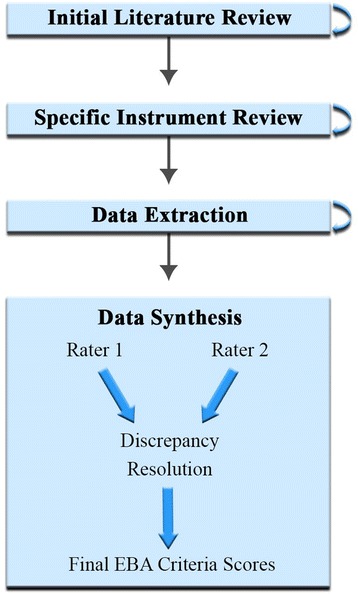
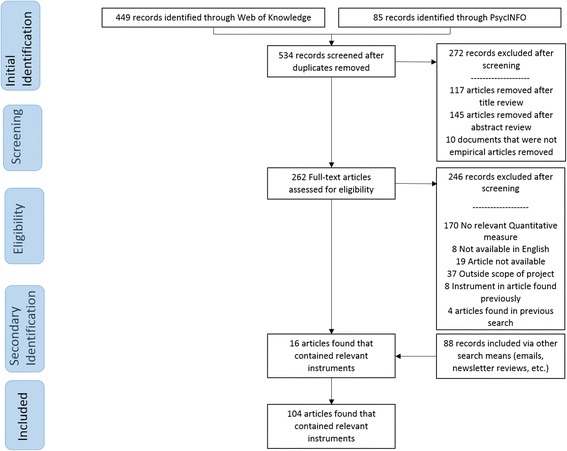
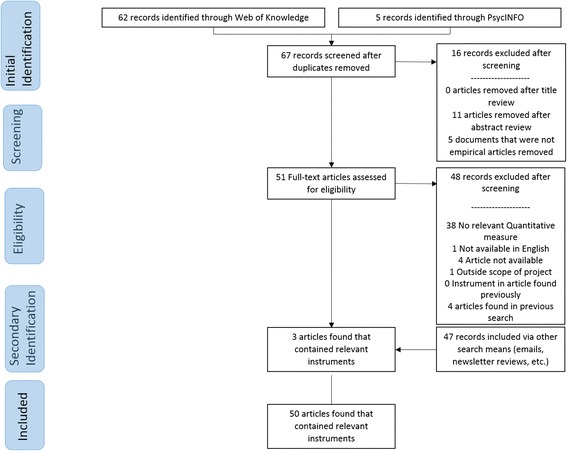
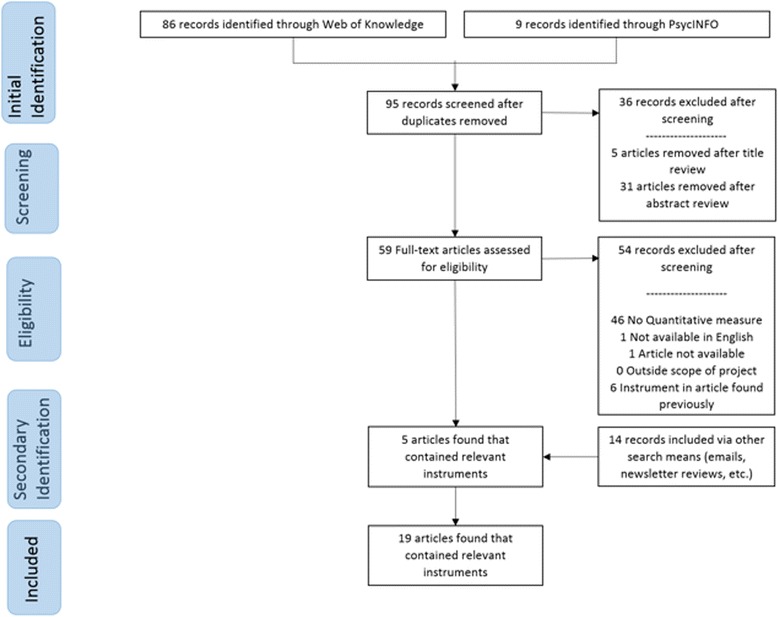
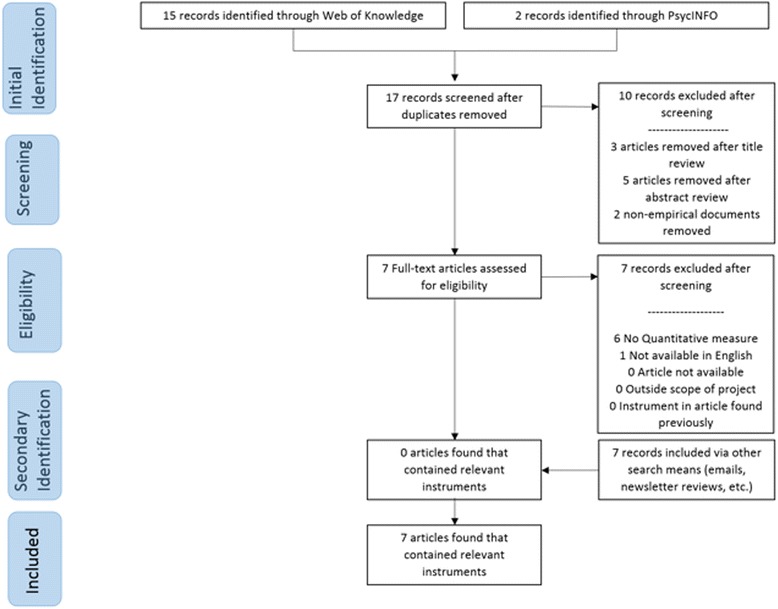
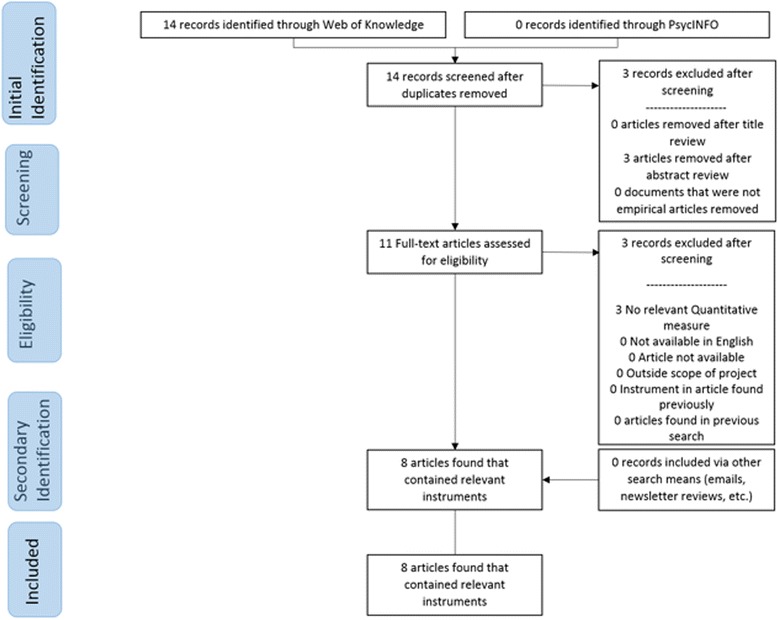
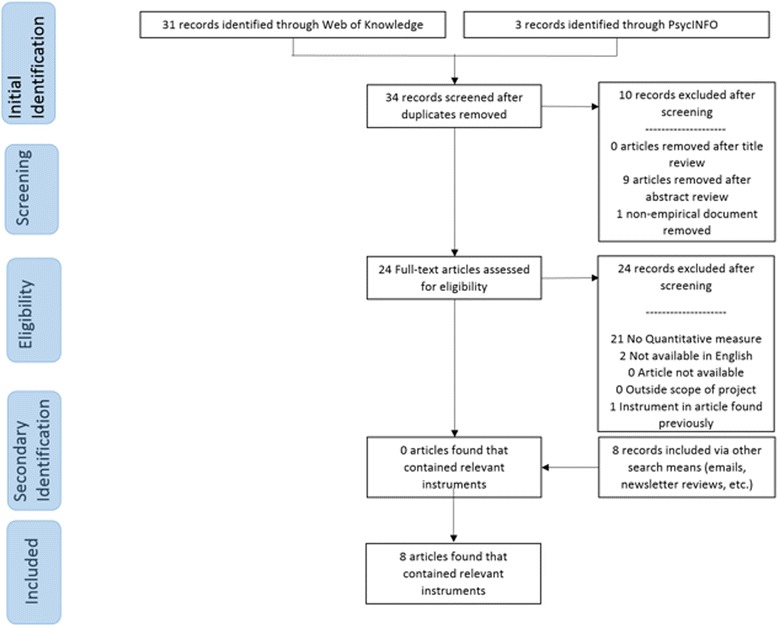
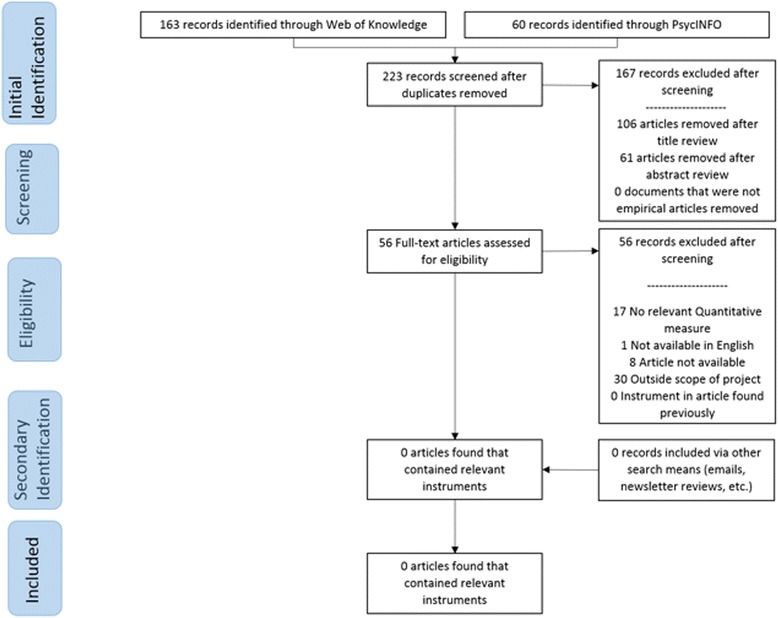
BACKGROUND: High-quality measurement is critical to advancing knowledge in any field. New fields, such as implementation science, are often beset with measurement gaps and poor quality instruments, a weakness that can be more easily addressed in light of systematic review findings. Although several reviews of quantitative instruments used in implementation science have been published, no studies have focused on instruments that measure implementation outcomes. Proctor and colleagues established a core set of implementation outcomes including: acceptability, adoption, appropriateness, cost, feasibility, fidelity, penetration, sustainability (Adm Policy Ment Health Ment Health Serv Res 36:24-34, 2009). The Society for Implementation Research Collaboration (SIRC) Instrument Review Project employed an enhanced systematic review methodology (Implement Sci 2: 2015) to identify quantitative instruments of implementation outcomes relevant to mental or behavioral health settings. METHODS: Full details of the enhanced systematic review methodology are available (Implement Sci 2: 2015). To increase the feasibility of the review, and consistent with the scope of SIRC, only instruments that were applicable to mental or behavioral health were included. The review, synthesis, and evaluation included the following: (1) a search protocol for the literature review of constructs; (2) the literature review of instruments using Web of Science and PsycINFO; and (3) data extraction and instrument quality ratings to inform knowledge synthesis. Our evidence-based assessment rating criteria quantified fundamental psychometric properties as well as a crude measure of usability. Two independent raters applied the evidence-based assessment rating criteria to each instrument to generate a quality profile. RESULTS: We identified 104 instruments across eight constructs, with nearly half (n = 50) assessing acceptability and 19 identified for adoption, with all other implementation outcomes revealing fewer than 10 instruments. Only one instrument demonstrated at least minimal evidence for psychometric strength on all six of the evidence-based assessment criteria. The majority of instruments had no information regarding responsiveness or predictive validity. CONCLUSIONS: Implementation outcomes instrumentation is underdeveloped with respect to both the sheer number of available instruments and the psychometric quality of existing instruments. Until psychometric strength is established, the field will struggle to identify which implementation strategies work best, for which organizations, and under what conditions.
Overview
The claims and statistics of this paper haven’t been checked yet.
Free: it reads the open-access text and checks the first 5 claims that cite a source we can check. Create a free account to check every claim.
Integrity signals
Registry
Cites
Statistics
Figures
Verification
Claims the paper makes
The claims and statistics of this paper haven’t been checked yet.
Free: it reads the open-access text and checks the first 5 claims that cite a source we can check. Create a free account to check every claim.
Claims other papers make about this one
Each is checked against this paper’s own text: does it say what the citing paper says it does?
The source backs part of the claim, not all of it — or backs it for a different population, condition or comparison.
In the citing paper
“Furthermore, the lack of valid and pragmatic assessments for implementation-related factors and outcomes has been noted in the health services and implementation science literature [110, 111] and has been echoed by researchers across health-related interventions [112].”
From Barriers and facilitators to implementation of evidence-based task-sharing mental health interventions in low- and middle-income countries: a systematic review using implementation science frameworks (2022) · cites this paper as [111]
Experimental — accuracy not yet measuredThe source backs part of the claim, not all of it — or backs it for a different population, condition or comparison.
In the citing paper
“few if any have been assessed for other measurement properties that are of key importance to implementation researchers and other implementation stakeholders (e.g., intermediaries, policymakers, practice leaders), such as stability, responsiveness, and predictive validity [2–4].”
From Psychometric assessment of three newly developed implementation outcome measures (2017) · cites this paper as [2]
Experimental — accuracy not yet measuredThe cited source says what the claim attributes to it.
In the citing paper
“We now have systematic reviews of implementation outcomes [15] and their measurement properties in behavioral health [16], public policy [17], stroke care [7], and physical healthcare [18].”
From Ten years of implementation outcomes research: a scoping review (2023) · cites this paper as [16]
The cited source says what the claim attributes to it.
In the citing paper
“This assessment responds to the need for reliable measures within implementation science, specifically in the area of sustainability research (1, 32, 33).”
From Assessing the sustainability capacity of evidence-based programs in community and health settings (2022) · cites this paper as [33]
The cited source says what the claim attributes to it.
In the citing paper
“Despite their importance, existing measures of implementation outcomes have largely unknown psychometric and pragmatic qualities [2].”
From Psychometric assessment of three newly developed implementation outcome measures (2017) · cites this paper as [2]
1 more claim about this paper
Create a free account to see every claim other papers make about this one.
Self-check
Percentages, sums and reported differences re-computed from the paper’s own numbers.
The self-check needs the paper’s full text.
Citations
Cites
Quality criteria were proposed for measurement properties of health status questionnaires
Terwee, C. B., Bot, S. D. M., de Boer, M. R., van der Windt, D. A. W. M., Knol, D. L., Dekker, J., Bouter, L. M., & de Vet, H. C. W. (2007) · Journal of Clinical Epidemiology · doi:10.1016/j.jclinepi.2006.03.012 · Cited by 10,764 · cited 1×
“The EBA rating criteria were also informed by the work of Terwee and colleagues [10].”
Moore, G. C., & Benbasat, I. (1991) · Information Systems Research · doi:10.1287/isre.2.3.192 · Cited by 9,150 · cited 2×
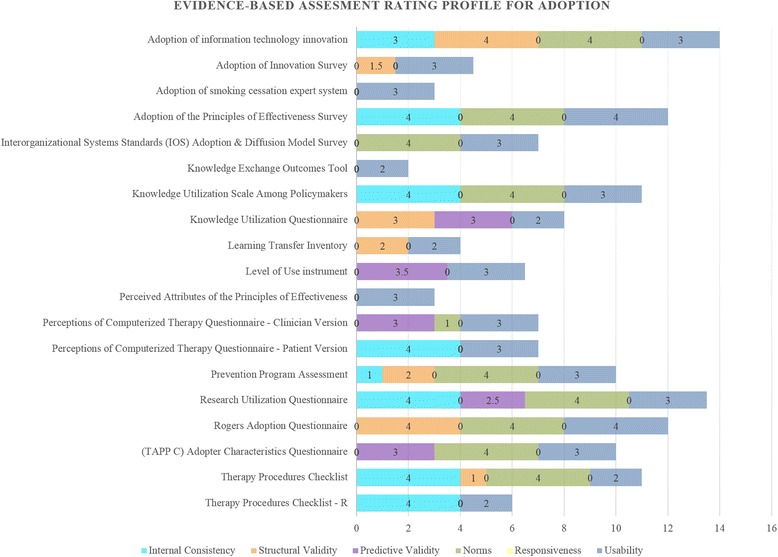
“The Adoption of Information Technology Innovation [16] scale had the highest overall rating (score = 14), with “ 4 — excellent ” ratings for structural validity and norms and “ 3 — good ” ratings for reliability and usability; however, no information about predictive validity is available.”
Proctor, E., Silmere, H., Raghavan, R., Hovmand, P., Aarons, G., Bunger, A., Griffey, R., & Hensley, M. (2011) · Administration and Policy in Mental Health and Mental Health Services Research · doi:10.1007/s10488-010-0319-7 · Cited by 8,721 · cited 10×
“Appropriateness (N = 7) is the perceived fit, relevance, or compatibility of the innovation or evidence based practice for a given practice setting, provider, or consumer; and/or perceived fit of the innovation to address a particular issue or problem [6].”
InfluentialTerwee, C. B., Mokkink, L. B., Knol, D. L., Ostelo, R. W. J. G., Bouter, L. M., & de Vet, H. C. W. (2012) · Quality of Life Research · doi:10.1007/s11136-011-9960-1 · Cited by 1,978 · cited 1×
“Raters used the conservative “worst score counts” methodology [12].”
Proctor, E. K., Landsverk, J., Aarons, G., Chambers, D., Glisson, C., & Mittman, B. (2009) · Administration and Policy in Mental Health and Mental Health Services Research · doi:10.1007/s10488-008-0197-4 · Cited by 1,894 · cited 1×
“Proctor and colleagues [5] articulated the following core set of seven implementation outcomes: acceptability, feasibility, uptake, penetration, cost, fidelity, and sustainability.”
Chaudoir, S. R., Dugan, A. G., & Barr, C. H. (2013) · Implementation Science · doi:10.1186/1748-5908-8-22 · Cited by 800 · cited 1×
“4 % [3] lacked criterion validity and 49.”
Weiner, B. J., Amick, H., & Lee, S.-Y. D. (2008) · Medical Care Research and Review · doi:10.1177/1077558708317802 · Cited by 786 · cited 1×
“science have been published [2–4], none have focused on implementation outcomes instruments.”
BackgroundSelf-citationGrimshaw, J., Eccles, M., Thomas, R., MacLennan, G., Ramsay, C., Fraser, C., & Vale, L. (2006) · Journal of General Internal Medicine · doi:10.1007/s11606-006-0269-7 · Cited by 631 · cited 1×
“Establishing the psychometric properties of implementation outcome instruments is a necessary step to ensuring that predictors, moderators, and mediators of implementation are identified and that comparative effectiveness of implementation strategies is measureable [8].”
Hunsley, J., & Mash, E. J. (2007) · Annual Review of Clinical Psychology · doi:10.1146/annurev.clinpsy.3.022806.091419 · Cited by 528
A national survey of practicing psychologists' attitudes toward psychotherapy treatment manuals
Addis, M. E., & Krasnow, A. D. (2000) · Journal of Consulting and Clinical Psychology · doi:10.1037/0022-006x.68.2.331 · Cited by 509 · cited 2×
“The Practitioner’s Attitudes toward Treatment Manuals [15] had the highest overall rating among implementation process acceptability instruments (total score = 17), with “4—excellent” ratings for reliability, structural validity, and norms; “3—good” rating for usability; and “2—adequate” rating for predictive validity.”
Cited by
Items 101–200 of 446
King, K. M., Pullmann, M. D., Lyon, A. R., Dorsey, S., & Lewis, C. C. (2019) · Journal of Abnormal Psychology · doi:10.1037/abn0000417 · Cited by 39
“These are the primary outcomes of implementation research, and it is important that psychometrically sound instruments are used to measure implementation outcomes in order to more clearly understand the rela- tive effectiveness of specific implementation strategies (Lewis et al., 2015).”
BackgroundSelf-citationChanging Behavior Using the Transtheoretical Model
DiClemente, C. C., & Graydon, M. M. (2020) · Cambridge University Press eBooks · doi:10.1017/9781108677318.010 · Cited by 38
Changing Behavior Using the Health Belief Model and Protection Motivation Theory
Orbell, S., Zahid, H., & Henderson, C. J. (2020) · Cambridge University Press eBooks · doi:10.1017/9781108677318.004 · Cited by 40
Perfil toxicológico dos suicídios no Rio Grande do Sul, Brasil, 2017 a 2019
Franck, M. C., Monteiro, M. G., & Limberger, R. P. (2020) · Revista Panamericana de Salud Pública · doi:10.26633/rpsp.2020.28 · Cited by 36
Hull, L., Boulton, R., Jones, F., Boaz, A., & Sevdalis, N. (2022) · Translational Behavioral Medicine · doi:10.1093/tbm/ibac064 · Cited by 38
“Several systematic reviews have been conducted to identify and appraise the psychometric and methodological quality of quantitative implementation measurement instruments developed and validated for use in mental or behavioral health [10], physical health [11], and public health and community settings [12], for the ev…”
BackgroundChambers, C., Dol, J., Parker, J., Caes, L., Birnie, K., Taddio, A., Campbell-Yeo, M., Halperin, S., & Langille, J. (2019) · JMIR Pediatrics and Parenting · doi:10.2196/13552 · Cited by 25
“Implementation outcomes include acceptability (ie, the intervention is satisfactory), adoption (ie, intention or action to try or use an evidence-based practice), appropriateness (ie, perceived fit of the intervention to address a particular issue or problem), feasibility (ie, the extent to which the intervention can…”
BackgroundBecker‐Haimes, E. M., Marcus, S. C., Klein, M. R., Schoenwald, S. K., Fugo, P. B., McLeod, B. D., Dorsey, S., Williams, N. J., Mandell, D. S., & Beidas, R. S. (2022) · Behavior Therapy · doi:10.1016/j.beth.2022.06.001 · Cited by 35
de la Salud, O. P. (2023) · Revista Panamericana de Salud Pública · doi:10.26633/rpsp.2023.43 · Cited by 35
Bond, L., Simmons, E. C., & Sabbath, E. L. (2022) · SSM - Population Health · doi:10.1016/j.ssmph.2022.101249 · Cited by 36
Changing Behavior by Changing Environments
Marteau, T. M., Fletcher, P. C., Hollands, G. J., & Munafo, M. R. (2020) · Cambridge University Press eBooks · doi:10.1017/9781108677318.014 · Cited by 35
Nishi, D., Imamura, K., Watanabe, K., Obikane, E., Sasaki, N., Yasuma, N., Sekiya, Y., Matsuyama, Y., & Kawakami, N. (2020) · BMJ Open · doi:10.1136/bmjopen-2019-036482 · Cited by 31
Sasaki, N., Obikane, E., Vedanthan, R., Imamura, K., Cuijpers, P. J., Shimazu, T., Kamada, M., Kawakami, N., & Nishi, D. (2021) · JMIR Formative Research · doi:10.2196/24332 · Cited by 31
Khadjesari, Z., Vitoratou, S., Sevdalis, N., & Hull, L. (2017) · BMJ Open · doi:10.1136/bmjopen-2017-017972 · Cited by 32
“The instrument quality scores will be included in tables similar to those presented in the review conducted by Lewis et al,17 which includes the number and percentage of instruments with a rating of 1 or more for each outcome and a table of summary statistics of instrument quality ratings by…”
MethodInfluentialPickard, K. E., Rowless, S., & Ingersoll, B. R. (2017) · Autism · doi:10.1177/1362361317744078 · Cited by 35
“Project ImPACT attributes were assessed using Moore and Benbasat’s (1991) measure of an innovation’s attributes specific to Rogers’ theory (Lewis et al., 2015; Moore and Benbasat, 1991).”
MethodPrakoso, D. A., Istiono, W., Mahendradhata, Y., & Arini, M. (2023) · BMC Public Health · doi:10.1186/s12889-023-16840-z · Cited by 35
Dorsey, S., Meza, R. D., Martin, P., Gray, C. L., Triplett, N. S., Soi, C., Woodard, G. S., Lucid, L., Amanya, C., Wasonga, A. I., et al. (2019) · Frontiers in Psychiatry · doi:10.3389/fpsyt.2019.00860 · Cited by 34
Changing Behavior Using the Reflective-Impulsive Model
Deutsch, R., & Strack, F. (2020) · Cambridge University Press eBooks · doi:10.1017/9781108677318.012 · Cited by 37
Changing Behavior Using the Common-Sense Model of Self-Regulation
Cameron, L. D., Fleszar‐Pavlović, S. E., & Khachikian, T. (2020) · Cambridge University Press eBooks · doi:10.1017/9781108677318.005 · Cited by 32
Kazak, A. E., Deatrick, J. A., Scialla, M. A., Sandler, E. S., Madden, R. E., & Barakat, L. P. (2020) · Implementation Science · doi:10.1186/s13012-020-01023-w · Cited by 32
“The measures assess outcomes across patient/family, provider, and institution levels (Table 1) that are clearly operationalized and reproducible [46].”
BackgroundCasale, M., Somefun, O. D., Ronnie, G. H., Desmond, C., Sherr, L., & Cluver, L. D. (2023) · Social Science & Medicine · doi:10.1016/j.socscimed.2023.115899 · Cited by 30
“…area of investigation has been largely constrained by the absence of a consistent definition of ‘acceptability ’ , comprehensive conceptual frameworks disaggregating its components, and few reliable or standardized assessment measures (El-Den et al., 2015; Lewis et al., 2015; Sabben et al., 2019).”
Dopp, A. R., Hunter, S. B., Godley, M. D., Pham, C., Han, B., Smart, R., Cantor, J., Kilmer, B., Hindmarch, G., González, I. E., et al. (2022) · Implementation Science Communications · doi:10.1186/s43058-022-00298-y · Cited by 28
“Outcomes As recommended for evaluating implementation strategies [28, 73, 74], we will compare the impacts of organization-focused versus state-focused grants using key implementation outcomes [23, 24, 28] for A-CRA: penetration (aim 1) and sustainment (aim 2).”
MethodDeveloping Behavior Change Interventions
Hankonen, N. E., & Hardeman, W. (2020) · Cambridge University Press eBooks · doi:10.1017/9781108677318.021 · Cited by 38
Santesson, A. H. E., Bäckström, M., Holmberg, R. G., Perrin, S. G., & Jarbin, H. (2020) · BMC Medical Research Methodology · doi:10.1186/s12874-020-01126-4 · Cited by 30
“confidently and consistently measure what they are intended to measure, psychometric information is absent in about half of all articles using various scales as part of innovation implementation programs in healthcare settings [8, 10].”
BackgroundLivet, M., Blanchard, C., Richard, C., Sheppard, K. W., Yannayon, M., Sorensen, T. D., & McClurg, M. R. (2021) · Research in Social and Administrative Pharmacy · doi:10.1016/j.sapharm.2021.01.001 · Cited by 27
Nnaji, C. A., Wiysonge, C. S., Okeibunor, J., Malinga, T., Adamu, A. A., Tumusiime, P., & Karamagi, H. C. (2021) · BMC Health Services Research · doi:10.1186/s12913-021-06449-6 · Cited by 31
“able health data, particularly at facility and health programme levels [80].”
BackgroundAmano, T., Hooley, C., Strong, J., & Inoue, M. (2021) · International Journal of Geriatric Psychiatry · doi:10.1002/gps.5641 · Cited by 30
Using Resource and Cost Considerations to Support Educational Evaluation: Six Domains
Belfield, C., & Bowden, A. B. (2018) · Educational Researcher · doi:10.3102/0013189x18814447 · Cited by 30
“Methodological literature on program fidelity has focused on the need for valid fidelity indices and instruments (see Carroll et al., 2007; Lewis et al., 2015; Mowbray, Holter, Teague, & Bybee, 2003).”
BackgroundDesign, Implementation, and Evaluation of Behavior Change Interventions: A Ten-Task Guide
Abraham, C., & Denford, S. (2020) · Cambridge University Press eBooks · doi:10.1017/9781108677318.019 · Cited by 36
Gehring, N. D., McGrath, P., Wozney, L., Soleimani, A., Bennett, K., Hartling, L., Huguet, A., Dyson, M. P., & Newton, A. S. (2017) · Implementation Science · doi:10.1186/s13012-017-0608-6 · Cited by 26
“, acceptability and appropriateness), which could have resulted in some factors being arguably different constructs [23, 79].”
BackgroundOkamura, K. H., Hee, P. J., Jackson, D., & Nakamura, B. J. (2018) · Administration and Policy in Mental Health and Mental Health Services Research · doi:10.1007/s10488-018-0854-1 · Cited by 27
Dyadic Behavior Change Interventions
Scholz, U., Berli, C., Lüscher, J., & Knoll, N. (2020) · Cambridge University Press eBooks · doi:10.1017/9781108677318.043 · Cited by 29
How are qualitative methods used in implementation science research? A scoping review protocol
Hagaman, A. K., Rhodes, E., Nyhan, K., Katague, M., Schwartz, A. E., & Spiegelman, D. L. (2020) · JBI Evidence Synthesis · doi:10.11124/jbies-20-00120 · Cited by 28
“PR OO F identified and described eight implementation outcomes as distinct from service and client outcomes, including acceptability, adoption, appropriateness, costs, feasibility, fidelity, penetration, and sustainability.(35) These outcomes formed the basis of our search terms.”
BackgroundPilar, M. R., Jost, E., Walsh‐Bailey, C., Powell, B. J., Mazzucca, S., Eyler, A. A., Purtle, J., Allen, P. M., & Brownson, R. C. (2022) · Implementation Research and Practice · doi:10.1177/26334895221141116 · Cited by 30
Palinkas, L. A., Campbell, M. R., & Saldana, L. (2018) · Frontiers in Public Health · doi:10.3389/fpubh.2018.00161 · Cited by 26
Rothman, A. J., Klein, W. M. P., & Sheeran, P. (2020) · Cambridge University Press eBooks · doi:10.1017/9781108677318.020 · Cited by 30
Advancing Implementation Science Measurement
Lewis, C. C., & Dorsey, C. N. (2020) · Springer eBooks · doi:10.1007/978-3-030-03874-8_9 · Cited by 27
Self-citationOptimizing Implementation in Cancer Control (OPTICC): protocol for an implementation science center
Lewis, C. C., Hannon, P. A., Klasnja, P., Baldwin, L., Hawkes, R. J., Blackmer, J., & Johnson, A. N. (2021) · Implementation Science Communications · doi:10.1186/s43058-021-00117-w · Cited by 27
“For implementation science to support optimized EBI implementation, four critical barriers must be overcome: (1) underdeveloped methods for determinant identification and prioritization [5], (2) incomplete knowledge of strategy mechanisms [6, 7], (3) underuse of methods for optimizing strategies [7], and (4) poor meas…”
BackgroundMethodSelf-citationImagery, Visualization, and Mental Simulation Interventions
Hagger, M. S., & Conroy, D. (2020) · Cambridge University Press eBooks · doi:10.1017/9781108677318.033 · Cited by 25
Rimmele, D. L., Lebherz, L., Frese, M., Appelbohm, H., Bartz, H.-J., Kriston, L., Gerloff, C. P., Härter, M. C., & Thomalla, G. (2019) · Neurological Research and Practice · doi:10.1186/s42466-019-0034-0 · Cited by 23
McGuier, E. A., Kolko, D. J., Klem, M. L., Feldman, J., Kinkler, G., Diabes, M. A., Weingart, L. R., & Wolk, C. B. (2021) · Systematic Reviews · doi:10.1186/s13643-021-01747-w · Cited by 21
“Similarly, there is variability in implementation outcomes reported across studies and considerable unevenness in the availability and psychometric quality of implementation outcome measures [48].”
BackgroundRestivo, J. L., Mitchell, L. M., Joshi, U., Anand, A., Gugiu, P. C., Singla, D. R., Hollon, S. D., Patel, V., Naslund, J. A., & Cooper, Z. (2020) · Journal of Behavioral and Cognitive Therapy · doi:10.1016/j.jbct.2020.10.001 · Cited by 23
“The majority of these knowledge tests have been devised for particular studies and as such are study-specific and lack established psychometric properties (Lewis et al., 2015; Martinez et al., 2014).”
BackgroundAssessing the sustainability capacity of evidence-based programs in community and health settings
Bacon, C., Malone, S., Prewitt, K., Hackett, R., Hastings, M., Dexter, S., & Luke, D. A. (2022) · Frontiers in Health Services · doi:10.3389/frhs.2022.1004167 · Cited by 22
“This assessment responds to the need for reliable measures within implementation science, specifically in the area of sustainability research (1, 32, 33).”
Backgroundde la Salud, O. P. (2022) · Revista Panamericana de Salud Pública · doi:10.26633/rpsp.2022.172 · Cited by 22
de la Salud, O. P. (2021) · Revista Panamericana de Salud Pública · doi:10.26633/rpsp.2021.141 · Cited by 23
“Se utilizó el enfoque DECIDE (14) (Decisions and Practice based on Evidence) fue utilizado para orientar las recomendaciones basado en la calidad de la evidencia, el efecto de las intervenciones, recursos, equidad, aceptabilidad y factibilidad (15).”
Changing Behavior Using Social Identity Processes
Reynolds, K. J., Branscombe, N. R., Subašić, E., & Willis, L. (2020) · Cambridge University Press eBooks · doi:10.1017/9781108677318.016 · Cited by 24
Taylor, C., Harris, J., Stenner, K. L., Sevdalis, N., & Green, J. S. A. (2021) · Cancer Medicine · doi:10.1002/cam4.3719 · Cited by 23
Rosen, N. O., Muise, M. D., Vannier, S. A., Chambers, C. T., Scott, H. M., the #postbabyhankypanky Advisory Team, Attenborough, R., Chisholm, K., Clarke, H. L., MacAulay, J., et al. (2020) · Archives of Sexual Behavior · doi:10.1007/s10508-020-01734-7 · Cited by 22
Implementation Science is Imperative to the Optimization of Obstetric Care
Hamm, R. F., Iriye, B. K., & Srinivas, S. K. (2020) · American Journal of Perinatology · doi:10.1055/s-0040-1721728 · Cited by 21
Engell, T., Løvstad, A. M., Kirkøen, B., Ogden, T., & Hagen, K. A. (2021) · Children and Youth Services Review · doi:10.1016/j.childyouth.2021.106180 · Cited by 22
Hall, A., Shoesmith, A., Shelton, R. C., Lane, C., Wolfenden, L., & Nathan, N. (2021) · International Journal of Environmental Research and Public Health · doi:10.3390/ijerph182111414 · Cited by 20
“While there has been an increase in the number of theoretically informed and psychometrically evaluated measures of determinants of sustainment [23,24], few have been designed and evaluated for use specifically in the school environment.”
BackgroundEngagement of Stakeholders in the Design, Evaluation, and Implementation of Complex Interventions
Hudson, J. L., Moon, Z., Hughes, L. D., & Moss-Morris, R. E. (2020) · Cambridge University Press eBooks · doi:10.1017/9781108677318.024 · Cited by 29
Engelhart, A., Mason, S., Nwaozuru, U., Obiezu‐Umeh, C., Carter, V., Shato, T., Gbaja-Biamila, T. A., Oladele, D. A., & Iwelunmor, J. (2022) · Frontiers in Health Services · doi:10.3389/frhs.2022.889390 · Cited by 24
“, an adopted combination of definitions from various scholarly sources, sustainability is “the extent to which a newly implemented treatment is maintained or institutionalized within a service setting’s ongoing, stable operations” (21, 22).”
BackgroundGneezy, U., Kajackaite, A., & Meier, S. (2020) · Cambridge University Press eBooks · doi:10.1017/9781108677318.036 · Cited by 28
Ruiter, R. A. C., Crutzen, R., de Leeuw, E., & Kok, G. (2020) · Cambridge University Press eBooks · doi:10.1017/9781108677318.018 · Cited by 22
The Cost to Successfully Apply for Level 3 Medical Home Recognition
Halladay, J. R., MOTTUS, K. M., Reiter, K. L., Mitchell, C. M., Donahue, K. E., Gabbard, W. M., & Gush, K. A. (2016) · The Journal of the American Board of Family Medicine · doi:10.3122/jabfm.2016.01.150211 · Cited by 19
Postoperative nausea and vomiting: is the big little problem becoming a smaller little problem?
Benhamou, D. (2023) · British Journal of Anaesthesia · doi:10.1016/j.bja.2023.04.004 · Cited by 19
An improved competence rating scale for CBT Supervision: Short-SAGE
Reiser, R. P., Cliffe, T., & Milne, D. L. (2018) · The Cognitive Behaviour Therapist · doi:10.1017/s1754470x18000065 · Cited by 20
“The extent of the measurement problem in implementation science was specified in a systematic review of 104 instruments (Lewis et al., 2015).”
MethodJones, A., Tay, C. T., Melder, A., Vincent, A. J., & Teede, H. J. (2020) · Seminars in Reproductive Medicine · doi:10.1055/s-0041-1726131 · Cited by 19
Síntesis de evidencia: Guía para el diagnóstico y el tratamiento de la enfermedad de Chagas
de la Salud, O. P. (2020) · Revista Panamericana de Salud Pública · doi:10.26633/rpsp/2020.28 · Cited by 19
En Route to Implementation Science 3.0
Albers, B., Shlonsky, A., & Mildon, R. L. (2020) · Springer eBooks · doi:10.1007/978-3-030-03874-8_1 · Cited by 30
Riaz, A., Cambaço, O., Ellington, L. E., Lenahan, J. L., Munguambe, K., Mehmood, U., Lamorte, A., Qaisar, S., Baloch, B., Kanth, N., et al. (2021) · BMJ Open · doi:10.1136/bmjopen-2020-042547 · Cited by 18
Willson, M. L., Vernooij, R. W. M., Gagliardi, A. R., Armstrong, M. J., Bernhardsson, S., Brouwers, M. C., Bussières, A., Fleuren, M. A. H., Gali, K., Huckson, S., et al. (2017) · Journal of Clinical Epidemiology · doi:10.1016/j.jclinepi.2016.12.012 · Cited by 20
“For example, Lewis et al. identified 104 instruments for measuring implementation outcomes of particular relevance to mental health such as cost, feasibility, fidelity, penetration, and sustainability [195].”
Randall, C. L. (2023) · Community Dentistry and Oral Epidemiology · doi:10.1111/cdoe.12841 · Cited by 17
How can we monitor the impact of national health information systems? Results from a scoping review
Delnord, M., Tille, F., Abboud, L. A., Ivanković, D., & Oyen, H. J. V. (2019) · European Journal of Public Health · doi:10.1093/eurpub/ckz164 · Cited by 19
Perceived communication effectiveness in implementation strategies: a measurement scale
Zhao, X., Toronjo, H., Shaw, C. C., Murphy, A., & Taxman, F. S. (2022) · Implementation Science Communications · doi:10.1186/s43058-022-00284-4 · Cited by 20
“Several comprehensive reviews of measurement instruments in the implementation literature note that many existing measures lack conceptual grounding and systematic testing [8, 9].”
BackgroundMethodInfluentialHamm, R. F., Levine, L. D., Szymczak, J. E., Parry, S. I., Srinivas, S. K., & Beidas, R. S. (2023) · BMC Medical Research Methodology · doi:10.1186/s12874-023-02010-7 · Cited by 19
“In fact, in a 2015 systematic review, 50 of 104 instruments for measuring implementation outcomes were measures of acceptability [3].”
BackgroundMethodDonovan, T., Abell, B., McPhail, S., & Carter, H. E. (2025) · Implementation Science · doi:10.1186/s13012-025-01423-w · Cited by 20
“Yet, only one of the eight identified implementation costing instruments was focused on measuring implementation costs that fit the definition in our study [20].”
Opportunities to Improve a Mobile Obesity Wellness Intervention for Rural Older Adults with Obesity
Batsis, J. A., Dokko, R., Naslund, J. A., Zagaria, A. B., Kotz, D. F., Bartels, S. J., & Carpenter-Song, E. A. (2019) · Journal of Community Health · doi:10.1007/s10900-019-00720-y · Cited by 18
Görlach, M. G., Schrage, T., Bokemeyer, C., Kröger, N. M., Müller, V., Petersen, C., Betz, C. S., Krüll, A., Schulz, H., & Bleich, C. (2020) · Health and Quality of Life Outcomes · doi:10.1186/s12955-019-1262-2 · Cited by 17
Freund, J., Piotrowski, A., Bührmann, L., Oehler, C., Titzler, I., Netter, A.-L., Potthoff, S., Ebert, D. D., Finch, T. L., Köberlein–Neu, J., et al. (2023) · Implementation Science Communications · doi:10.1186/s43058-023-00505-4 · Cited by 16
“[8], the authors found that psychometric evidence is lacking and, when available, questionnaires were often of poor psychometric quality.”
BackgroundFidelity and Its Relationship to Effectiveness, Adaptation, and Implementation
Shelton, R. C., Adsul, P., Emmons, K. M., Linnan, L. A., & Allen, J. D. (2023) · Oxford University Press eBooks · doi:10.1093/oso/9780197660690.003.0007 · Cited by 16
The organizational trauma resilience assessment: Methods and psychometric properties.
Brown, L. L., Pennings, J. S., Steckel, S., & van Zyl, M. A. (2023) · Psychological Trauma Theory Research Practice and Policy · doi:10.1037/tra0001184 · Cited by 19
Vorkoper, S., Tahlil, K. M., Sam-Agudu, N. A., Tucker, J. D., Livinski, A. A., Fernando, F., & Sturke, R. (2022) · AIDS and Behavior · doi:10.1007/s10461-022-03770-x · Cited by 17
Webb, T. L., & de Bruin, M. (2020) · Cambridge University Press eBooks · doi:10.1017/9781108677318.037 · Cited by 17
Psychology’s Replication Crisis and Clinical Psychological SciencePreprint
Tackett, J. L., Brandes, C. M., King, K. M., & Markon, K. E. (2018) · PsyArXiv (OSF Preprints) · doi:10.31234/osf.io/kc8xt · Cited by 16
Dorsey, C. N., Mettert, K. D., Puspitasari, A. J., Damschroder, L. J., & Lewis, C. C. (2021) · Implementation Research and Practice · doi:10.1177/26334895211002474 · Cited by 15
“At least 10 (Chaudoir et al., 2013; Chor et al., 2015; Emmons et al., 2012; Hrisos et al., 2009; Ibrahim & Sidani, 2015; King & Byers, 2007; Lewis et al., 2015; T. Scott et al., 2003; Squires et al., 2011; Weiner et al., 2008) recent implementation science and quality improvement (QI)…”
BackgroundMethodInfluentialSelf-citationA Psychometric Evaluation of the Intention Scale for Providers-Direct Items
Mah, A. C., Hill, K. A., Cicero, D. C., & Nakamura, B. J. (2019) · The Journal of Behavioral Health Services & Research · doi:10.1007/s11414-019-09675-3 · Cited by 16
Nigatu, D., Azage, M., Misgan, E., Enquobahrie, D. A., Kebebaw, T., Abate, E., Alemneh, E., Woldie, M. K., & Girma, T. (2025) · Health Research Policy and Systems · doi:10.1186/s12961-024-01259-8 · Cited by 15
Smith, J. D., Rafferty, M. R., Heinemann, A. W., Meachum, M. K., Villamar, J. A., Lieber, R. L., & Brown, C. H. (2020) · BMC Health Services Research · doi:10.1186/s12913-020-05118-4 · Cited by 18
Peters, N., Borge, R. H., Skar, A. S., & Egeland, K. M. (2022) · BMC Health Services Research · doi:10.1186/s12913-021-07441-w · Cited by 15
“The need for high-quality implementation outcome instruments is identified as a critical gap in the implementation literature [32].”
BackgroundBartáková, J., Zúñiga, F., Guerbaaï, R.-A., Basinska, K., Brunkert, T., Simon, M., Denhaerynck, K., Geest, S. D., Wellens, N. I. H., Serdaly, C., et al. (2022) · BMC Geriatrics · doi:10.1186/s12877-022-03182-5 · Cited by 17
“It is also important to mention that the current lack of standardised measures and guidance is identified in implementation science as a critical impediment to high-quality, implementable findings [50].”
BackgroundGoldthorpe, J., Epton, T., Keyworth, C., Calam, R. M., Brooks, J. M., & Armitage, C. J. (2020) · BMJ Open · doi:10.1136/bmjopen-2020-038625 · Cited by 15
Ten years of implementation outcome research: a scoping review protocol
Lengnick-Hall, R., Proctor, E. K., Bunger, A. C., & Gerke, D. R. (2021) · BMJ Open · doi:10.1136/bmjopen-2021-049339 · Cited by 14
Evaluating Integrated Mental Health Care Programs for Children and Youth
Wissow, L. S., Brown, J. D., Hilt, R. J., & Sarvet, B. D. (2017) · Child and Adolescent Psychiatric Clinics of North America · doi:10.1016/j.chc.2017.06.005 · Cited by 15
Lane, H., Calvert, H. G., Deitch, R., Harris, R. L., Babatunde, O. T., Turner, L. R., Hager, E. R., & Pitts, S. J. (2020) · Health & Place · doi:10.1016/j.healthplace.2020.102388 · Cited by 14
Moore, S. K., Saunders, E. C., Hichborn, E. G., McLeman, B. M., Meier, A., Young, R., Nesin, N., Farkas, S., Hamilton, L., Marsch, L. A., et al. (2021) · Substance Abuse · doi:10.1080/08897077.2020.1827125 · Cited by 14
“Reliable and valid measurement is fundamental to advancing knowledge in any field of inquiry and the new field of implementation science with its many measurement gaps is no different.(39,73,74) By using focus groups to further conceptualize implementation outcomes, our study contributes site-specific data by analyzin…”
BackgroundNarh-Bana, S., Kawonga, M., Chirwa, E. D., Ibisomi, L., Bonsu, F. A., & Chirwa, T. F. (2021) · PLoS ONE · doi:10.1371/journal.pone.0257486 · Cited by 16
“This fairly high percentage of providers with lower adherence score (<79%) might lead to spurious conclusions about the effectiveness of the intervention [17, 57, 58].”
Backgroundde la Salud, O. P. (2022) · Revista Panamericana de Salud Pública · doi:10.26633/rpsp.2022.134 · Cited by 14
“Se utilizó misma estrategia de búsqueda empleada en la guía y filtros para identificar estudios sobre considera-ciones para la implementación (14), y se buscaron revisiones sistemáticas que abordaran aspectos de implementación (barre-ras, facilitadores, estrategias de implementación e indicadores).”
BackgroundDariotis, J. K., Mabisi, K., Jackson‐Gordon, R., Yang, N., Rose, E. J., Mendelson, T., & Fishbein, D. H. (2023) · Prevention Science · doi:10.1007/s11121-022-01481-2 · Cited by 16
Harker, A., Cordoba, N., Moya, A., & Piñeros-Leaño, M. (2023) · Frontiers in Psychology · doi:10.3389/fpsyg.2023.1134094 · Cited by 15
de la Salud, O. P. (2021) · Revista Panamericana de Salud Pública · doi:10.26633/rpsp.2021.128 · Cited by 14
Goldston, D. B., Curry, J. F., Wells, K. C., Kaminer, Y., Daniel, S. S., Esposito-Smythers, C., Doyle, O., Sapyta, J., Tunno, A. M., Heilbron, N., et al. (2021) · Evidence-Based Practice in Child and Adolescent Mental Health · doi:10.1080/23794925.2021.1888664 · Cited by 13
“Acceptability refers to the “perception among implementation stakeholders that a given treatment, service, practice, or innovation is agreeable, palatable, or satisfactory” (Lewis et al., 2015).”
BackgroundPiat, M., Wainwright, M., Cherkas, D., LeBlanc, S., Sofouli, E., Rivest, M.-P., Albert, H., Casey, R., O’Rourke, J. J., & Labonté, L. (2021) · Implementation Science Communications · doi:10.1186/s43058-021-00206-w · Cited by 16
Performance Evaluation of Lateral Flow Assays for Coronavirus Disease-19 Serology
Ochola, L. B., Ogongo, P., Mbugua, S. M., Gitaka, J., & Suliman, S. (2021) · Clinics in Laboratory Medicine · doi:10.1016/j.cll.2021.10.005 · Cited by 14
Garner, B. R., Burrus, O., Ortiz, A., Tueller, S., Peinado, S., Hedrick, H., Harshbarger, C. L., Galindo, C. A., Courtenay–Quirk, C., & Lewis, M. A. (2022) · JAIDS Journal of Acquired Immune Deficiency Syndromes · doi:10.1097/qai.0000000000003018 · Cited by 13
Life Review Intervention: A Systematic Review of Its Feasibility Among Persons With Cancer
Ng, J. K.-Q., Subramaniam, P., Ismail, F., Ahmad, M., & Shamsudin, N. L. (2022) · Journal of Pain and Symptom Management · doi:10.1016/j.jpainsymman.2022.07.016 · Cited by 14
Repeated measures of implementation variables
Fixsen, D. L., Dyke, M. K. V., & Blasé, K. A. (2023) · Frontiers in Health Services · doi:10.3389/frhs.2023.1085859 · Cited by 13
Autonomy-Supportive Interventions
Reeve, J., & Cheon, S. H. (2020) · Cambridge University Press eBooks · doi:10.1017/9781108677318.035 · Cited by 15
Critical and Qualitative Approaches to Behavior Change
Chamberlain, K., & Lyons, A. C. (2020) · Cambridge University Press eBooks · doi:10.1017/9781108677318.030 · Cited by 16
Ruble, L. A., Ogle, L. N., & McGrew, J. H. (2022) · Psychology in the Schools · doi:10.1002/pits.22800 · Cited by 13
Metadata
- Authors
- Lewis, C. C., Fischer, S., Weiner, B. J., Stanick, C., Kim, M., & Martinez, R. G.
- Affiliations
- University of Washington (US)
- Indiana University Bloomington (US)
- University of North Carolina at Chapel Hill (US)
- University of Montana (US)
- Virginia Commonwealth University (US)
- Corresponding author
- Lewis, Cara C.
- Venue
- Implementation Science
- Published
- 2015-11-04
- Volume
- 10
- Issue
- 1
- Pages
- 155-155
- ISSN
- 1748-5908 (ISSN-L)
- PMC
- PMC4634818
- OpenAlex
- W2120941905
- Semantic Scholar
- edba1483b061fe1b9a35dd81f979980308ce3525
- Cited by
- 430
- References
- 26
- Citations by year
- 2026: 24 · 2025: 24 · 2024: 33 · 2023: 58 · 2022: 58 · 2021: 51 · 2020: 100 · 2019: 36 · 2018: 25 · 2017: 15 · 2016: 5 · 2015: 1
- FWCI
- 2.76
- Type
- journal article
- Language
- en
- Open access
- gold
- doi.org
- Licence
- Locations
- Implementation Science (publishedVersion, cc-by)
- PubMed (publishedVersion)
- Carolina Digital Repository (University of North Carolina at Chapel Hill) (submittedVersion)
- VCU Scholars Compass (Virginia Commonwealth University) (submittedVersion, cc-by)
- NORA - Norwegian Open Research Archives (submittedVersion, cc-by)
- Funders
- Georgia Clinical and Translational Science Alliance
- National Institutes of Health (2010-2015, UL1TR000083)
- National Institute of Mental Health (R01MH106510)
- National Center for Advancing Translational Sciences
- Topics
- Health Sciences › Health Professions › General Health Professions › Health Policy Implementation Science
- Health Sciences › Nursing › Research and Theory › Health Education and Validation
- Social Sciences › Decision Sciences › Statistics, Probability and Uncertainty › Meta-analysis and systematic reviews
- Keywords
- implementation outcomes, psychometric properties, mental health services, behavioral health services, acceptability, adoption, fidelity, feasibility, cost, penetration, sustainability, measurement gaps
- MeSH terms
- Diffusion of Innovation, Humans, Mental Health Services, Psychometrics, Reproducibility of Results, Program Evaluation, Evidence-Based Practice
About these checks
Registry, retraction, Cites and statistics results are computed, not judged, with one exception: a printed reference that no index lists is read once by a model before it counts as a citation error. Claims are extracted by a model and kept only when their quote appears verbatim in the text; each cited source is then checked, with a model’s help, for whether it says what the claim relies on. Those verdicts can be wrong — read the claim’s quote and the cited source before relying on one.
Statistics and arithmetic are recomputed, not judged.
Confidence bands are shown only for fields calibrated on our annotated test set. None is calibrated yet, so no band is shown.
What counts as a claim ›How we measure confidence ›How we check this ›
Are you an author, or do you see a problem with this page? Request a review
Data sources
Bibliographic data: Semantic Scholar, OpenAlex, Crossref.
Contains information from the Semantic Scholar Academic Graph Datasets, made available under the ODC Attribution License (ODC-BY 1.0).
Semantic Scholar’s data is described in: Kinney, R., et al. (2023). The Semantic Scholar Open Data Platform. arXiv:2301.10140.
