

Outcomes for implementation science: an enhanced systematic review of instruments using evidence-based rating criteria
Open accessThe DOI matches its Crossref record; 27 of the 27 references it cites were found in a registry or an index.
Abstract
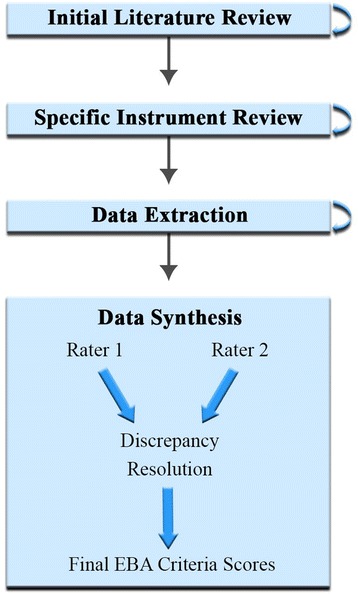
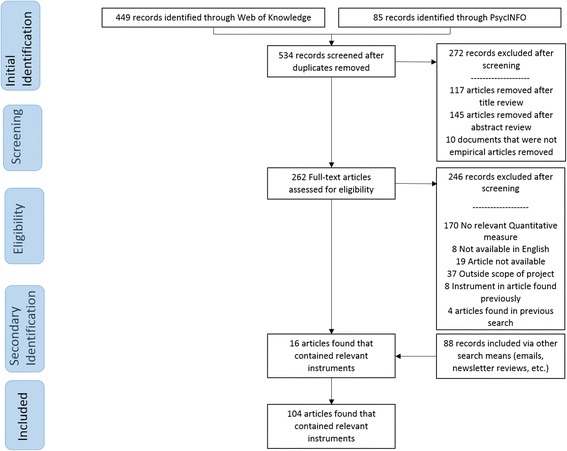
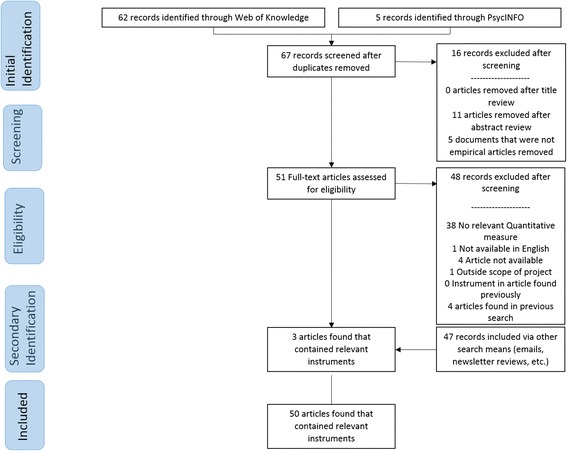
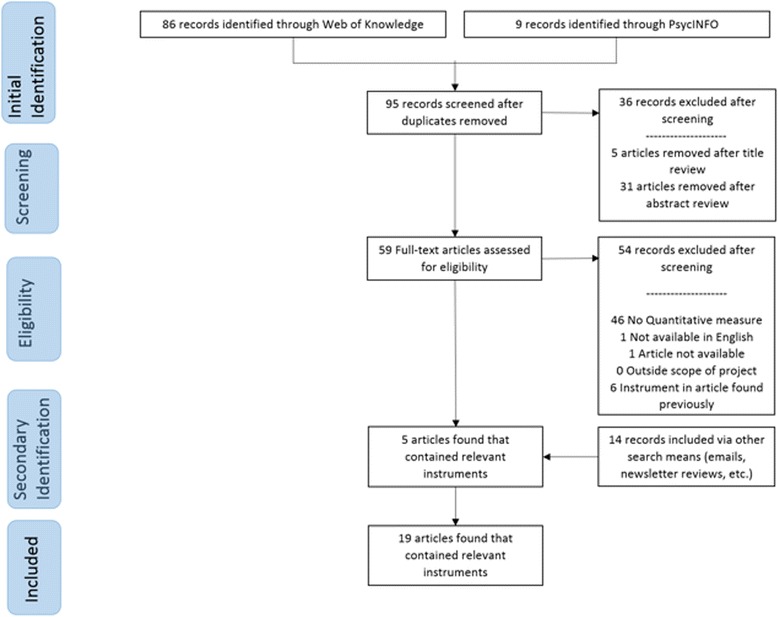
BACKGROUND: High-quality measurement is critical to advancing knowledge in any field. New fields, such as implementation science, are often beset with measurement gaps and poor quality instruments, a weakness that can be more easily addressed in light of systematic review findings. Although several reviews of quantitative instruments used in implementation science have been published, no studies have focused on instruments that measure implementation outcomes. Proctor and colleagues established a core set of implementation outcomes including: acceptability, adoption, appropriateness, cost, feasibility, fidelity, penetration, sustainability (Adm Policy Ment Health Ment Health Serv Res 36:24-34, 2009). The Society for Implementation Research Collaboration (SIRC) Instrument Review Project employed an enhanced systematic review methodology (Implement Sci 2: 2015) to identify quantitative instruments of implementation outcomes relevant to mental or behavioral health settings. METHODS: Full details of the enhanced systematic review methodology are available (Implement Sci 2: 2015). To increase the feasibility of the review, and consistent with the scope of SIRC, only instruments that were applicable to mental or behavioral health were included. The review, synthesis, and evaluation included the following: (1) a search protocol for the literature review of constructs; (2) the literature review of instruments using Web of Science and PsycINFO; and (3) data extraction and instrument quality ratings to inform knowledge synthesis. Our evidence-based assessment rating criteria quantified fundamental psychometric properties as well as a crude measure of usability. Two independent raters applied the evidence-based assessment rating criteria to each instrument to generate a quality profile. RESULTS: We identified 104 instruments across eight constructs, with nearly half (n = 50) assessing acceptability and 19 identified for adoption, with all other implementation outcomes revealing fewer than 10 instruments. Only one instrument demonstrated at least minimal evidence for psychometric strength on all six of the evidence-based assessment criteria. The majority of instruments had no information regarding responsiveness or predictive validity. CONCLUSIONS: Implementation outcomes instrumentation is underdeveloped with respect to both the sheer number of available instruments and the psychometric quality of existing instruments. Until psychometric strength is established, the field will struggle to identify which implementation strategies work best, for which organizations, and under what conditions.
Overview
The claims and statistics of this paper haven’t been checked yet.
Free: it reads the open-access text and checks the first 5 claims that cite a source we can check. Create a free account to check every claim.
Integrity signals
Registry
Cites
Statistics
Figures
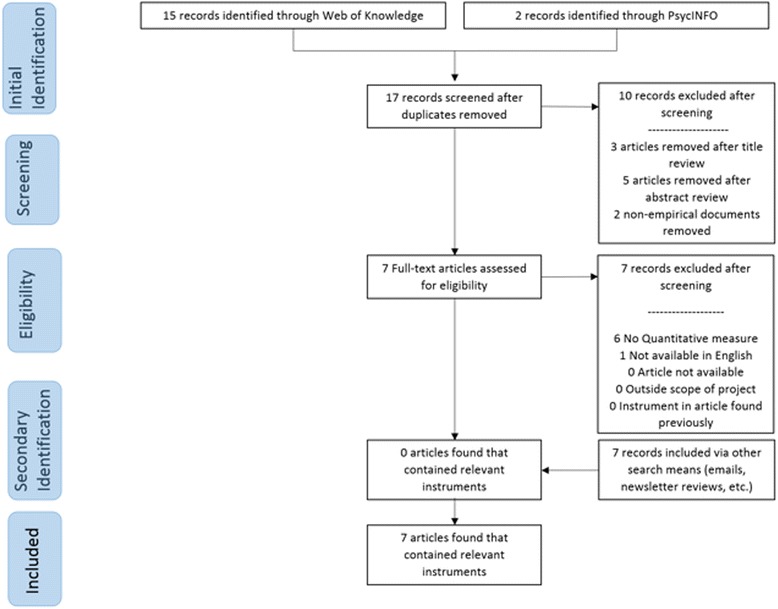
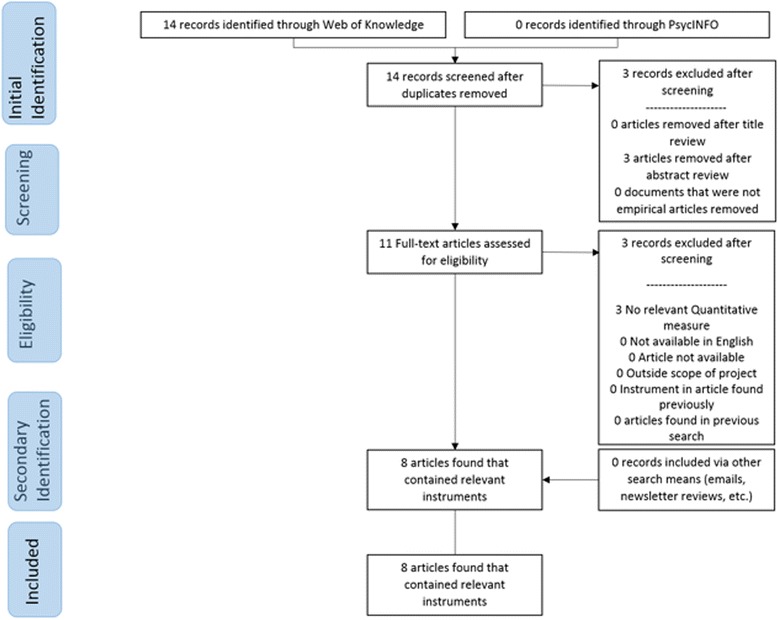
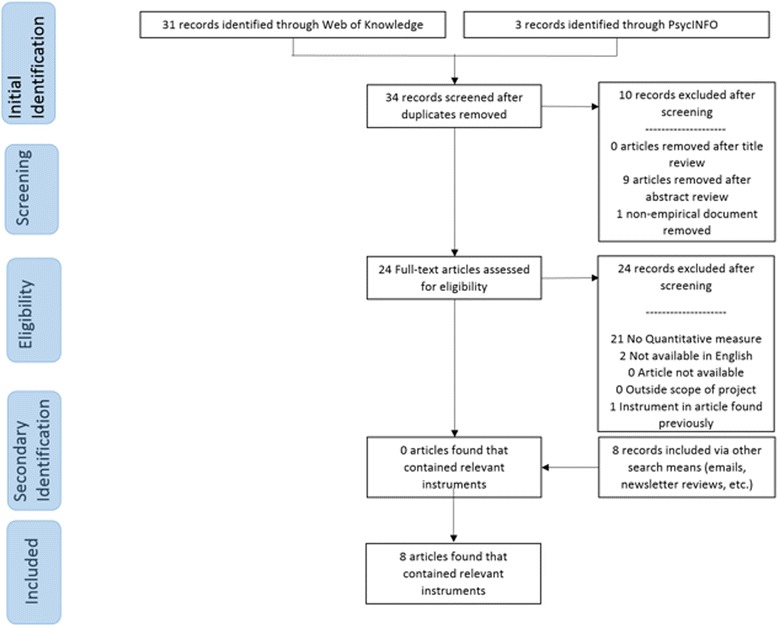
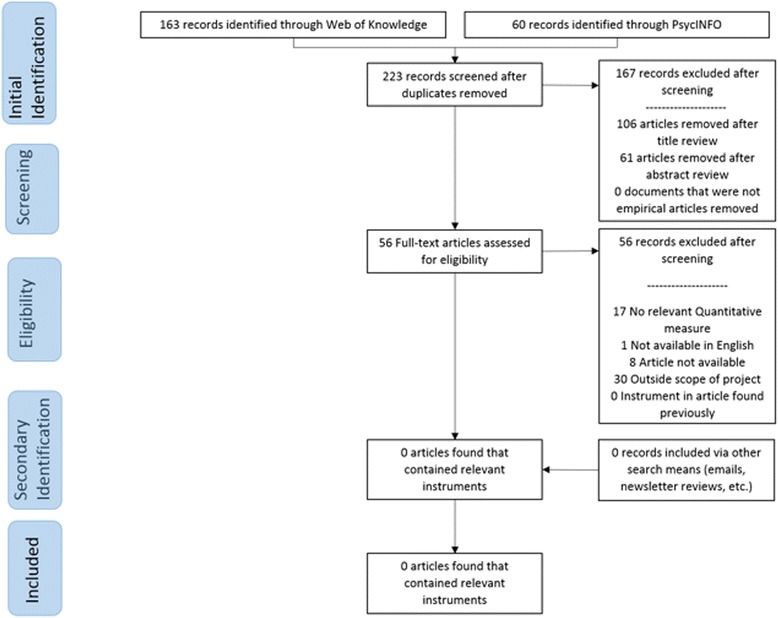
Verification
Claims the paper makes
The claims and statistics of this paper haven’t been checked yet.
Free: it reads the open-access text and checks the first 5 claims that cite a source we can check. Create a free account to check every claim.
Claims other papers make about this one
Each is checked against this paper’s own text: does it say what the citing paper says it does?
The source backs part of the claim, not all of it — or backs it for a different population, condition or comparison.
In the citing paper
“Furthermore, the lack of valid and pragmatic assessments for implementation-related factors and outcomes has been noted in the health services and implementation science literature [110, 111] and has been echoed by researchers across health-related interventions [112].”
From Barriers and facilitators to implementation of evidence-based task-sharing mental health interventions in low- and middle-income countries: a systematic review using implementation science frameworks (2022) · cites this paper as [111]
Experimental — accuracy not yet measuredThe source backs part of the claim, not all of it — or backs it for a different population, condition or comparison.
In the citing paper
“few if any have been assessed for other measurement properties that are of key importance to implementation researchers and other implementation stakeholders (e.g., intermediaries, policymakers, practice leaders), such as stability, responsiveness, and predictive validity [2–4].”
From Psychometric assessment of three newly developed implementation outcome measures (2017) · cites this paper as [2]
Experimental — accuracy not yet measuredThe cited source says what the claim attributes to it.
In the citing paper
“We now have systematic reviews of implementation outcomes [15] and their measurement properties in behavioral health [16], public policy [17], stroke care [7], and physical healthcare [18].”
From Ten years of implementation outcomes research: a scoping review (2023) · cites this paper as [16]
The cited source says what the claim attributes to it.
In the citing paper
“This assessment responds to the need for reliable measures within implementation science, specifically in the area of sustainability research (1, 32, 33).”
From Assessing the sustainability capacity of evidence-based programs in community and health settings (2022) · cites this paper as [33]
The cited source says what the claim attributes to it.
In the citing paper
“Despite their importance, existing measures of implementation outcomes have largely unknown psychometric and pragmatic qualities [2].”
From Psychometric assessment of three newly developed implementation outcome measures (2017) · cites this paper as [2]
1 more claim about this paper
Create a free account to see every claim other papers make about this one.
Self-check
Percentages, sums and reported differences re-computed from the paper’s own numbers.
The self-check needs the paper’s full text.
Citations
Cites
Quality criteria were proposed for measurement properties of health status questionnaires
Terwee, C. B., Bot, S. D. M., de Boer, M. R., van der Windt, D. A. W. M., Knol, D. L., Dekker, J., Bouter, L. M., & de Vet, H. C. W. (2007) · Journal of Clinical Epidemiology · doi:10.1016/j.jclinepi.2006.03.012 · Cited by 10,764 · cited 1×
“The EBA rating criteria were also informed by the work of Terwee and colleagues [10].”
Moore, G. C., & Benbasat, I. (1991) · Information Systems Research · doi:10.1287/isre.2.3.192 · Cited by 9,150 · cited 2×
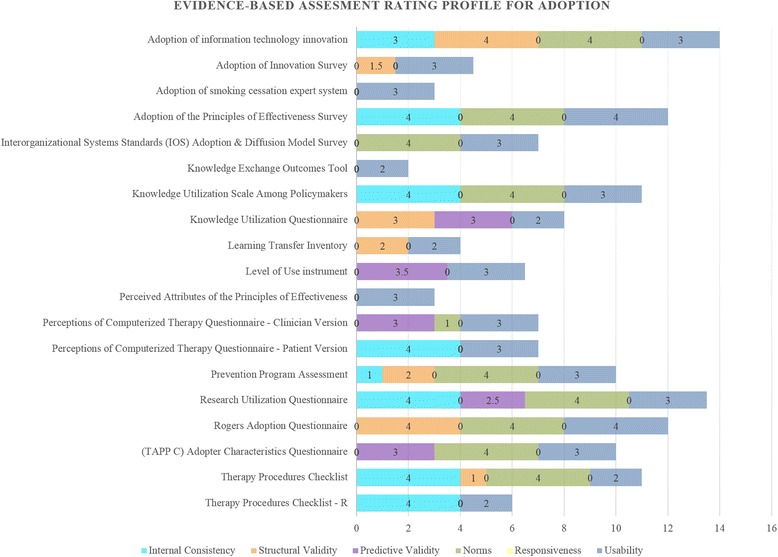
“The Adoption of Information Technology Innovation [16] scale had the highest overall rating (score = 14), with “ 4 — excellent ” ratings for structural validity and norms and “ 3 — good ” ratings for reliability and usability; however, no information about predictive validity is available.”
Proctor, E., Silmere, H., Raghavan, R., Hovmand, P., Aarons, G., Bunger, A., Griffey, R., & Hensley, M. (2011) · Administration and Policy in Mental Health and Mental Health Services Research · doi:10.1007/s10488-010-0319-7 · Cited by 8,721 · cited 10×
“Appropriateness (N = 7) is the perceived fit, relevance, or compatibility of the innovation or evidence based practice for a given practice setting, provider, or consumer; and/or perceived fit of the innovation to address a particular issue or problem [6].”
InfluentialTerwee, C. B., Mokkink, L. B., Knol, D. L., Ostelo, R. W. J. G., Bouter, L. M., & de Vet, H. C. W. (2012) · Quality of Life Research · doi:10.1007/s11136-011-9960-1 · Cited by 1,978 · cited 1×
“Raters used the conservative “worst score counts” methodology [12].”
Proctor, E. K., Landsverk, J., Aarons, G., Chambers, D., Glisson, C., & Mittman, B. (2009) · Administration and Policy in Mental Health and Mental Health Services Research · doi:10.1007/s10488-008-0197-4 · Cited by 1,894 · cited 1×
“Proctor and colleagues [5] articulated the following core set of seven implementation outcomes: acceptability, feasibility, uptake, penetration, cost, fidelity, and sustainability.”
Chaudoir, S. R., Dugan, A. G., & Barr, C. H. (2013) · Implementation Science · doi:10.1186/1748-5908-8-22 · Cited by 800 · cited 1×
“4 % [3] lacked criterion validity and 49.”
Weiner, B. J., Amick, H., & Lee, S.-Y. D. (2008) · Medical Care Research and Review · doi:10.1177/1077558708317802 · Cited by 786 · cited 1×
“science have been published [2–4], none have focused on implementation outcomes instruments.”
BackgroundSelf-citationGrimshaw, J., Eccles, M., Thomas, R., MacLennan, G., Ramsay, C., Fraser, C., & Vale, L. (2006) · Journal of General Internal Medicine · doi:10.1007/s11606-006-0269-7 · Cited by 631 · cited 1×
“Establishing the psychometric properties of implementation outcome instruments is a necessary step to ensuring that predictors, moderators, and mediators of implementation are identified and that comparative effectiveness of implementation strategies is measureable [8].”
Hunsley, J., & Mash, E. J. (2007) · Annual Review of Clinical Psychology · doi:10.1146/annurev.clinpsy.3.022806.091419 · Cited by 528
A national survey of practicing psychologists' attitudes toward psychotherapy treatment manuals
Addis, M. E., & Krasnow, A. D. (2000) · Journal of Consulting and Clinical Psychology · doi:10.1037/0022-006x.68.2.331 · Cited by 509 · cited 2×
“The Practitioner’s Attitudes toward Treatment Manuals [15] had the highest overall rating among implementation process acceptability instruments (total score = 17), with “4—excellent” ratings for reliability, structural validity, and norms; “3—good” rating for usability; and “2—adequate” rating for predictive validity.”
Cited by
Items 301–400 of 446
Pineda, R. G., Kellner, P., Ghahramani, S., Dusing, S. C., Chapman, R., & Peden, C. J. (2025) · OTJR Occupational Therapy Journal of Research · doi:10.1177/15394492251362721 · Cited by 3
“We have defined measures for this study based on previous implementation research (Lewis et al., 2015; Proctor et al., 2009, 2011).”
Lorente-Català, R., Díaz‐García, A., Jaén, I., Gili, M., Mayoral, F., García‐Campayo, J., del Hoyo, Y. L., Castro, A., Hurtado, M. M., Planting, C. H. M., et al. (2025) · Journal of Clinical Medicine · doi:10.3390/jcm14176347 · Cited by 3
Thusini, S., Soukup, T., & Henderson, C. (2025) · BMC Health Services Research · doi:10.1186/s12913-025-13484-0 · Cited by 2
“Implementation outcomes are also a relatively new focus, and may not be measured in many programmes [33].”
Dorsey, S., Pullmann, M. D., Kerns, S. E. U., Deblinger, E., Lucid, L., Harrison, J. P., Thompson, K., & Berliner, L. (2018) · Implementation Science · doi:10.1186/s13012-018-0715-z · Cited by 2
Juckett, L., Wengerd, L. R., Banhos, M., & Darragh, A. R. (2022) · Neurorehabilitation and neural repair · doi:10.1177/15459683221138747 · Cited by 2
Kemp, C. G., Danforth, K., Aldridge, L. R., Murray, L. K., & Haroz, E. E. (2023) · Cambridge Prisms Global Mental Health · doi:10.1017/gmh.2023.63 · Cited by 2
“Importantly, almost all extant, validated, pragmatic, quantitative implementation measures were developed for use in high-income countries (Lewis et al., 2015).”
BackgroundBourdeau, B., Guzé, M. A., Rebchook, G., Shade, S. B., Psihopaidas, D., Chavis, N. S., & Myers, J. J. (2025) · AIDS and Behavior · doi:10.1007/s10461-025-04614-0 · Cited by 2
Behavior Change in Community Contexts
Trickett, E. J., & Paterson, S. E. (2020) · Cambridge University Press eBooks · doi:10.1017/9781108677318.028 · Cited by 2
Jones, T. M., Williford, A., Sole, R. N. D., Hansen, A., Toll, R., Zamzow, M. V., Wentworth, G., & Kebaya, O. E. (2024) · Journal of Community Practice · doi:10.1080/10705422.2024.2428860 · Cited by 2
“Acceptability (i.e. perception that the intervention is “agreeable, palatable, satisfactory” [Lewis et al., 2015, p. 5]) was also important to evaluate, given the potential difficulty of talking about racism in a rural community that is largely racially segregated.”
Cost-Effectiveness Evaluations of Behavior Change Interventions
Wang, T., Downes, M., Byrnes, J., & Scuffham, P. (2020) · Cambridge University Press eBooks · doi:10.1017/9781108677318.026 · Cited by 1
Brault, M. A., Peskin, M. F., Jones, A. N., Saikia, A., Bhutia, R. O., Cheruvu, S. S., Jagtap, V. M., Singh, R., Nair, P., Vedanthan, R., et al. (2024) · International Journal of Environmental Research and Public Health · doi:10.3390/ijerph21081007 · Cited by 1
Development and validation of a conceptual test for the human circulatory system
Gaylan, E., Elladora, S. T., Taneo, J. K., Callanga, C., Piloton-Narca, M., Becbec, J., & Sanchez, J. M. P. (2024) · JPBI (Jurnal Pendidikan Biologi Indonesia) · doi:10.22219/jpbi.v10i3.34327 · Cited by 2
“Though conceptual understanding is acknowledged as a crucial factor, more research is needed concerning the availability of standardized or validated instruments to measure it (Lewis et al., 2015).”
Mahon, K. N., Harris-Lane, L. M., King, A. C., Bobele, M., Churchill, A., Cornish, P. A., Goguen, B., Garland, S. N., Jaouich, A., & Rash, J. A. (2025) · International Journal of Mental Health Systems · doi:10.1186/s13033-025-00683-9 · Cited by 1
“The AAFI is a psychometrically strong measure that is commonly used within implementation projects [37, 57].”
McNeil, R., McGrath, R. L., Ackland, K., Oates, R.-K., Woodhart, L., & Wright, K. (2025) · BMJ Open · doi:10.1136/bmjopen-2025-105353 · Cited by 1
Knox, J., Portier, K., Magana, C., Denning, M., Ferraris, C. M., Dove‐Medows, E., Shrader, C., Poku, O. B., Kreniske, P., Remien, R. H., et al. (2025) · Annals of Epidemiology · doi:10.1016/j.annepidem.2025.10.018 · Cited by 1
A Measurement Roadmap to Guide Implementation Practitioners in Selecting Implementation Measures
Martinez, R. G., Antonaccio, C. M., Crane, M. E., Cramer, E. R., Fu, E. S., Arnold, T. L., Frank, H. E., Littlewood, A., Guzman, L. E., Hoyos, C. C.-D., et al. (2025) · Global Implementation Research and Applications · doi:10.1007/s43477-025-00189-z · Cited by 1
“These teams, including the Society for Implementation Research and Collaboration (née Seattle Implementation Research Conference; Lewis et al., 2015a, b, 2016) and the National Cancer Institute’s Grid-Enabled Measures (GEM) database (now called the Group-Evaluated Measures; Moser et al., 2011),…”
InfluentialSelf-citationvan Nassau, F., Driessen, A., van Bodegom‐Vos, L., Walters, B. H., Ista, E., Keijser, W., van der Sluis, R. V. D. K. –., Welker, G. A., Wensing, M., & Vis, C. (2026) · Implementation Science Communications · doi:10.1186/s43058-026-00890-6 · Cited by 1
Designing an implementation study: rationale and considerations for design
Lewis, K. B., Straiton, N., Graham, I. D., & Lauck, S. (2026) · European Journal of Cardiovascular Nursing · doi:10.1093/eurjcn/zvag078 · Cited by 1
Scaling MHPSS Interventions: Key Dilemmas and Pathways Forward
Muneghina, O. (2026) · Springer eBooks · doi:10.1007/978-981-95-5871-1_4 · Cited by 1
Pearce, N., CROSS, D. S., Francis, J., Sae-Koew, J. H., Godley, A. M., Attwell, C., Evans-Whipp, T. J., Allen, J. B. H., Homel, R. J., Olsson, C. A., et al. (2026) · Clinical Child and Family Psychology Review · doi:10.1007/s10567-026-00567-5 · Cited by 1
“Although instrumentation issues in implementation science are recognised and said to be in an early stage of development, (Lewis et al., 2015a; 2022).”
O’Halloran, A. J., Sutton, R. M., & Lane-Fall, M. (2026) · Implementation Science Communications · doi:10.1186/s43058-026-00967-2 · Cited by 1
Ford, B. S., Glasgow, R. E., Mallard, K., Gomes, R., Gifford, M., Jamali, B., Brownson, R. C., Hamilton, A., Malone, S. M., & Rabin, B. A. (2026) · Frontiers in Health Services · doi:10.3389/frhs.2026.1855885 · Cited by 1
“Currently available assessment instrument repositories have multiple shortcomings, including not being publicly available or free, limiting their focus to a subset of IS constructs, settings, or conditions, and not allowing for direct linkage to constructs from a broad set of TMFs (1, 2, 4, 7, 8).”
Experimental Designs for Evaluation of Implementation Strategies
Wensing, M., & Grimshaw, J. (2020) · Wiley eBooks · doi:10.1002/9781119488620.ch20 · Cited by 1
Development and testing of a brief EBP implementation intentions scale using Rasch analysis
Moullin, J. C., Ehrhart, M. G., Torres, E., & Aarons, G. A. (2018) · eSpace (Curtin University) · Cited by 1
Ablordeppey, E., Powell, B. J., McKay, V., Keating, S. M., James, A. S., Carpenter, C. R., Kollef, M. H., & Griffey, R. T. (2021) · BMJ Open Quality · doi:10.1136/bmjoq-2020-001222 · Cited by 1
Perspectives on healthcare quality and safety
Russ, S. J., & Sevdalis, N. (2020) · Oxford University Press eBooks · doi:10.1093/oso/9780198837206.003.0012 · Cited by 2
An Exploratory Factor Analysis of a Prison Rape Elimination Act Survey in a Women's Prison
Shippen, M. E., Derzis, N. C., Hall, A., & Weaver, S. (2022) · The Prison Journal · doi:10.1177/00328855221109818 · Cited by 1
Schriger, S. H., & Beidas, R. S. (2022) · Oxford University Press eBooks · doi:10.1093/med-psych/9780198867791.003.0020 · Cited by 1
Siraneh, Y., Woldie, M. K., & Birhanu, Z. (2022) · International Journal of Women s Health · doi:10.2147/ijwh.s385662 · Cited by 2
“However, currently available implementation outcome measures are not clear, not context-based, and less qualified to our interest.(5) This raises questions in building common knowledge in guiding implementation efforts.”
BackgroundMethodInfluentialFinch, T. L., Bührmann, L., Potthoff, S., May, C. R., Gibson, B., Gumančík, J., Wilson-Dickson, O., Girling, M., & Rapley, T. (2024) · NIHR Open Research · doi:10.3310/nihropenres.13559.1 · Cited by 1
“…us to explore questions about (statistical) relationships amongst the NPT constructs; relationships between NoMAD and other ‘implementation outcome’ measures 2,27,28 or in mixed methods studies, the triangulation of data collected using NoMAD alongside qualitative methods within single studies.”
MethodRehabilitación basada en comunidad para la salud mental: rutas para la implementación en Colombia
López, J. E. M., Agudelo‐Hernández, F., & Giraldo-Álvarez, A. B. (2024) · Revista Salud Bosque · doi:10.18270/rsb.v13i2.4461 · Cited by 2
Bartels, S. M., Nguyen, M. X., Trang, N. T., Hà, T. V., Sripaipan, T., Nguyen, T. K. N., Cao, V. A. T., Tran, V. A., Powell, B. J., Barrington, C., et al. (2025) · Implementation Science Communications · doi:10.1186/s43058-025-00745-6 · Cited by 1
“In addition to challenges with measuring organizational characteristics, there is also a dearth of sustain-ment measures that are both pragmatic and have strong psychometric properties, and even fewer that measure sustainment as an outcome rather than measuring sustainment determinants [39, 51–54].”
Sarkies, M. (2019) · Monash University · doi:10.26180/5cd9118654a02 · Cited by 1
Improving the prevention of maternal infection in global settings
Dunlop, C. L. (2022) · University of Birmingham Institutional Research Archive (University of Birmingham) · Cited by 5
Brown, L. (2016) · ThinkIR: The University of Louisville's Institutional Repository (University of Louisville) · doi:10.18297/etd/2394
Hunt, T. (2017) · Columbia Academic Commons (Columbia University) · doi:10.7916/d8m04hr6
“There is a need for additional standardized instruments to better capture the multi-levels of implementation constructs (Lewis et al., 2015).”
BackgroundA PRACTICE ELEMENTS-BASED APPROACH TO ADHERENCE MEASUREMENT
Violante, S. (2018) · VCU Scholars Compass (Virginia Commonwealth University) · doi:10.25772/k63k-4f57
Burn, A., Vainre, M., Humphrey, A., & Howarth, E. (2019) · Apollo (University of Cambridge) · doi:10.17863/cam.41671
Rasmussen, L. P. (2019) · NVA (Nasjonalt vitenarkiv)
Research end points for diabetes digital health
Fantasia, K. L., Stockman, M.-C., & Modzelewski, K. L. (2020) · Elsevier eBooks · doi:10.1016/b978-0-12-817485-2.00015-8
Brabson, L. A. (2020) · The Research Repository @ WVU (West Virginia University) · doi:10.33915/etd.7566
“Although a variety of acceptability measures exist, most are tailored to specific interventions or practices (Lewis et al., 2015).”
BackgroundOutcomes of a School-Wide Mathematics Intervention
Garrett, L. M. (2020) · ScholarWorks (Walden University)
Wilson, D. M., & Errasti‐Ibarrondo, B. (2021) · Evaluation and Program Planning · doi:10.1016/j.evalprogplan.2021.101987
Merle, J. L. (2021) · University of Minnesota Digital Conservancy (University of Minnesota) · Cited by 3
McLoughlin, G. M., Allen, P. M., Walsh‐Bailey, C., & Brownson, R. C. (2021) · Research Square · doi:10.21203/rs.3.rs-206237/v1
Assessing the Usability of Complex Psychosocial Interventions: The Intervention Usability ScalePreprint
Lyon, A. R., Pullmann, M. D., Jacobson, J., Osterhage, K. P., Achkar, M. A., Renn, B. N., Munson, S. A., & Areán, P. A. (2020) · doi:10.21203/rs.3.rs-22305/v1 · Cited by 1
Hagger, M. S., Cameron, L. D., Hamilton, K., Hankonen, N. E., & Lintunen, T. (2020) · Cambridge University Press eBooks · doi:10.1017/9781108677318.047
Linthwaite, B., Kronfli, N., Lessard, D., Engler, K., Ruppenthal, L., Bourbonnière, E., Obas, N., Brown, M., Lebouché, B., & Cox, J. (2022) · AIDS and Behavior · doi:10.1007/s10461-022-03888-y
“Third, the scales used to measure implementation outcomes (FIM, AIM, and SPAICQ) are relatively new, and evidence regarding their validity and reliability is still accumulating [36, 39].”
BackgroundMethodDevelopment and testing of a diagnostic model of innovative organizational culture
Subtselnaya, T. A., & NEGRII, V. A. (2022) · Economics and Management · doi:10.35854/1998-1627-2022-11-1181-1194
Effecten van implementatie: het experimentele studiedesign
Wensing, M., & Grol, R. P. T. M. (2023) · Bohn Stafleu van Loghum eBooks · doi:10.1007/978-90-368-2909-0_20
Carrasco, M., Muñoz, B., Villablanca, V., Araya, I., Aranda, C., & Brown, J. (2023) · Global Implementation Research and Applications · doi:10.1007/s43477-023-00099-y
“The challenge is to develop psychometrically robust instruments that are also sensitive to context (Lewis et al., 2015).”
Walker, A. E., Claydon, E. A., Scarneo‐Miller, S. E., Totzkay, D., & Olfert, M. D. (2023) · Health Behavior Research · doi:10.4148/2572-1836.1198
Kemp, C. G. (2023) · Cambridge Prisms Global Mental Health · doi:10.1017/gmh.2023.63.pr7
(2023) · Cambridge Prisms Global Mental Health · doi:10.1017/gmh.2023.63.pr11
(2023) · Cambridge Prisms Global Mental Health · doi:10.1017/gmh.2023.63.pr4
(2023) · Cambridge Prisms Global Mental Health · doi:10.1017/gmh.2023.63.pr5
(2023) · Cambridge Prisms Global Mental Health · doi:10.1017/gmh.2023.63.pr10
(2023) · Cambridge Prisms Global Mental Health · doi:10.1017/gmh.2023.63.pr6
(2023) · Cambridge Prisms Global Mental Health · doi:10.1017/gmh.2023.63.pr9
(2023) · Cambridge Prisms Global Mental Health · doi:10.1017/gmh.2023.63.pr8
(2023) · Cambridge Prisms Global Mental Health · doi:10.1017/gmh.2023.63.pr3
(2023) · Cambridge Prisms Global Mental Health · doi:10.1017/gmh.2023.63.pr2
Kemp, C. G. (2023) · Cambridge Prisms Global Mental Health · doi:10.1017/gmh.2023.63.pr1
Freund, J., Piotrowski, A., Bührmann, L., Oehler, C., Titzler, I., Netter, A.-L., Potthoff, S., Ebert, D. D., Finch, T. L., Köberlein–Neu, J., et al. (2023) · Figshare · doi:10.6084/m9.figshare.24319936
Knowledge Implementation and Dissemination
Stevens, B., Swift, A., & Harrison, D. M. (2024) · Wiley eBooks · doi:10.1002/9781119645641.ch16
Treichel, C. A. D. S., Chavez, L. J. E., Sevdalis, N., Bakolis, I., Hull, L., & Campos, R. T. O. (2024) · Saúde em Debate · doi:10.1590/2358-289820241418550p
Treichel, C. A. D. S., Chavez, L. J. E., Sevdalis, N., Bakolis, I., Hull, L., & Campos, R. T. O. (2024) · Saúde em Debate · doi:10.1590/2358-289820241418550i
The role of health administration technicians in public health policy implementation
Alsulaiman, A. L., Almzairie, K. A., & Alharbi, M. S. S. (2020) · International Journal of Health Sciences · doi:10.53730/ijhs.v4ns1.15278
Auyeung, L., Mak, W. W. S., & Tsang, E. Z. (2024) · JMIR Formative Research · doi:10.2196/55450 · Cited by 1
“The importance of considering acceptability has recently gained much recognition in the implementation of new health care interventions [23].”
Blackburn, C., Steller, A., Meisman, A. R., Real, F. J., & Rosen, B. L. (2025) · Preventive Medicine · doi:10.1016/j.ypmed.2025.108308
Pineda, R. G., Kellner, P., Dusing, S. C., Kaplan, C. M., Chapman, R., & Peden, C. J. (2025) · medRxiv · doi:10.1101/2025.06.09.25329300
Measuring What Matters: An Environmental Scan and Quality Appraisal of Population Well-being Surveys
Colford, L. R., Käser, A., & Hill, T. G. (2026) · International Journal of Community Well-Being · doi:10.1007/s42413-026-00291-6 · Cited by 1
“…articles establish - ing the psychometry of the measure (i.e., the development and validation of each measure) were uploaded into Covidence, and two independent reviewers applied the Psychometric and Pragmatic Evidence Rating Scale (PAPERS) tool (Lewis et al., 2015 , 2021) to rate each measure.”
Critical Diagnostic Psychometrics (CDP) in Action
Kadhm, S. J., & Weissman, A. (2025) · IGI Global eBooks · doi:10.4018/979-8-3373-1812-7.ch002
Song, Y., & Chen, Z. (2025) · Sound&Vibration · doi:10.59400/sv3723
“Regulatory diversity adds another complication [77].”
Ojo, T., Yassin, H., Sowunmi, E., Hameed, T., Ryan, N., Gyamfi, J., Shelley, D., Ogedegbe, G. G., & Peprah, E. K. (2025) · Frontiers in Public Health · doi:10.3389/fpubh.2025.1597996
Hamdani, S. U., Huma, Z.-E., & Wissow, L. S. (2022) · Figshare · doi:10.6084/m9.figshare.21130064
Piat, M., Wainwright, M., Cherkas, D., LeBlanc, S., Sofouli, E., Rivest, M.-P., Albert, H., Casey, R., O’Rourke, J. J., & Labonté, L. (2021) · Figshare · doi:10.6084/m9.figshare.16625620
Means, A. R., Kemp, C. G., Gwayi-Chore, M.-C., Gimbel, S., Soi, C., Sherr, K., Wagenaar, B. H., Wasserheit, J. N., & Weiner, B. J. (2020) · Figshare · doi:10.6084/m9.figshare.11979126
Self-citationHaroz, E. E., Bolton, P. A., Nguyen, A. J., Lee, C., Bogdanov, S., Bass, J., Singh, N. S., Doty, B., & Murray, L. K. (2019) · Figshare · doi:10.6084/m9.figshare.8057684
Ashcraft, L. E., Moon, D. J., Merlin, J. S., Eack, S. M., & Rogal, S. S. (2023) · Figshare · doi:10.6084/m9.figshare.22603838
Peters, N., Borge, R. H., Skar, A. M. S., & Egeland, K. M. (2022) · Figshare · doi:10.6084/m9.figshare.17870361
Czosnek, L., Zopf, E. M., Cormie, P., Rosenbaum, S., Richards, J., & Rankin, N. M. (2022) · Figshare · doi:10.6084/m9.figshare.20502028
McGuier, E. A., Kolko, D. J., Klem, M. L., Feldman, J. A., Kinkler, G., Diabes, M. A., Weingart, L. R., & Wolk, C. B. (2021) · Figshare · doi:10.6084/m9.figshare.14853032
Piat, M., Wainwright, M., Cherkas, D., LeBlanc, S., Sofouli, E., Rivest, M.-P., Albert, H., Casey, R., O’Rourke, J. J., & Labonté, L. (2021) · Figshare · doi:10.6084/m9.figshare.16625623
Santesson, A. H. E., Bäckström, M., Holmberg, R. G., Perrin, S. G., & Jarbin, H. (2020) · Figshare · doi:10.6084/m9.figshare.13093994
Calvert, H. G., McQuilkin, M., Havlicak, A., Lewis, T., & Turner, L. (2023) · Figshare · doi:10.6084/m9.figshare.23935857
Hall, A., Shoesmith, A., Doherty, E. L., McEvoy, B., Mettert, K. D., Lewis, C. C., Wolfenden, L., Yoong, S., Kingsland, M., Shelton, R. C., et al. (2023) · Figshare · doi:10.6084/m9.figshare.22608673
Self-citationPiat, M., Wainwright, M., Cherkas, D., LeBlanc, S., Sofouli, E., Rivest, M.-P., Albert, H., Casey, R., O’Rourke, J. J., & Labonté, L. (2021) · Figshare · doi:10.6084/m9.figshare.16625617
Shoesmith, A., Nathan, N., Lum, M., Yoong, S., Nolan, E., Wolfenden, L., Shelton, R. C., Cooper, B. R., Lane, C., Grady, A., et al. (2024) · Figshare · doi:10.6084/m9.figshare.26736702
Hall, A., Shoesmith, A., Doherty, E. L., McEvoy, B., Mettert, K. D., Lewis, C. C., Wolfenden, L., Yoong, S., Kingsland, M., Shelton, R. C., et al. (2023) · Figshare · doi:10.6084/m9.figshare.22608670
Self-citationNnaji, C. A., Wiysonge, C. S., Okeibunor, J., Malinga, T., Adamu, A. A., Tumusiime, P., & Karamagi, H. C. (2021) · Figshare · doi:10.6084/m9.figshare.14532606
Smith, J. D., Rafferty, M. R., Heinemann, A. W., Meachum, M. K., Villamar, J., Lieber, R. L., & Brown, C. H. (2020) · Figshare · doi:10.6084/m9.figshare.12050433
McLoughlin, G. M., Allen, P., Walsh‐Bailey, C., & Brownson, R. C. (2021) · Figshare · doi:10.6084/m9.figshare.14853441
Hamdani, S. U., Huma, Z.-E., & Wissow, L. S. (2022) · Figshare · doi:10.6084/m9.figshare.21130063
Zhao, X., Toronjo, H., Shaw, C. C., Murphy, A., & Taxman, F. S. (2022) · Figshare · doi:10.6084/m9.figshare.19556197
McGuier, E. A., Kolko, D. J., Klem, M. L., Feldman, J. A., Kinkler, G., Diabes, M. A., Weingart, L. R., & Wolk, C. B. (2021) · Figshare · doi:10.6084/m9.figshare.14853026
Hall, A., Shoesmith, A., Doherty, E. L., McEvoy, B., Mettert, K. D., Lewis, C. C., Wolfenden, L., Yoong, S., Kingsland, M., Shelton, R. C., et al. (2023) · Figshare · doi:10.6084/m9.figshare.22608667
Self-citation
Metadata
- Authors
- Lewis, C. C., Fischer, S., Weiner, B. J., Stanick, C., Kim, M., & Martinez, R. G.
- Affiliations
- University of Washington (US)
- Indiana University Bloomington (US)
- University of North Carolina at Chapel Hill (US)
- University of Montana (US)
- Virginia Commonwealth University (US)
- Corresponding author
- Lewis, Cara C.
- Venue
- Implementation Science
- Published
- 2015-11-04
- Volume
- 10
- Issue
- 1
- Pages
- 155-155
- ISSN
- 1748-5908 (ISSN-L)
- PMC
- PMC4634818
- OpenAlex
- W2120941905
- Semantic Scholar
- edba1483b061fe1b9a35dd81f979980308ce3525
- Cited by
- 430
- References
- 26
- Citations by year
- 2026: 24 · 2025: 24 · 2024: 33 · 2023: 58 · 2022: 58 · 2021: 51 · 2020: 100 · 2019: 36 · 2018: 25 · 2017: 15 · 2016: 5 · 2015: 1
- FWCI
- 2.76
- Type
- journal article
- Language
- en
- Open access
- gold
- doi.org
- Licence
- Locations
- Implementation Science (publishedVersion, cc-by)
- PubMed (publishedVersion)
- Carolina Digital Repository (University of North Carolina at Chapel Hill) (submittedVersion)
- VCU Scholars Compass (Virginia Commonwealth University) (submittedVersion, cc-by)
- NORA - Norwegian Open Research Archives (submittedVersion, cc-by)
- Funders
- Georgia Clinical and Translational Science Alliance
- National Institutes of Health (2010-2015, UL1TR000083)
- National Institute of Mental Health (R01MH106510)
- National Center for Advancing Translational Sciences
- Topics
- Health Sciences › Health Professions › General Health Professions › Health Policy Implementation Science
- Health Sciences › Nursing › Research and Theory › Health Education and Validation
- Social Sciences › Decision Sciences › Statistics, Probability and Uncertainty › Meta-analysis and systematic reviews
- Keywords
- implementation outcomes, psychometric properties, mental health services, behavioral health services, acceptability, adoption, fidelity, feasibility, cost, penetration, sustainability, measurement gaps
- MeSH terms
- Diffusion of Innovation, Humans, Mental Health Services, Psychometrics, Reproducibility of Results, Program Evaluation, Evidence-Based Practice
About these checks
Registry, retraction, Cites and statistics results are computed, not judged, with one exception: a printed reference that no index lists is read once by a model before it counts as a citation error. Claims are extracted by a model and kept only when their quote appears verbatim in the text; each cited source is then checked, with a model’s help, for whether it says what the claim relies on. Those verdicts can be wrong — read the claim’s quote and the cited source before relying on one.
Statistics and arithmetic are recomputed, not judged.
Confidence bands are shown only for fields calibrated on our annotated test set. None is calibrated yet, so no band is shown.
What counts as a claim ›How we measure confidence ›How we check this ›
Are you an author, or do you see a problem with this page? Request a review
Data sources
Bibliographic data: Semantic Scholar, OpenAlex, Crossref.
Contains information from the Semantic Scholar Academic Graph Datasets, made available under the ODC Attribution License (ODC-BY 1.0).
Semantic Scholar’s data is described in: Kinney, R., et al. (2023). The Semantic Scholar Open Data Platform. arXiv:2301.10140.
