

Outcomes for implementation science: an enhanced systematic review of instruments using evidence-based rating criteria
Open accessThe DOI matches its Crossref record; 27 of the 27 references it cites were found in a registry or an index.
Abstract
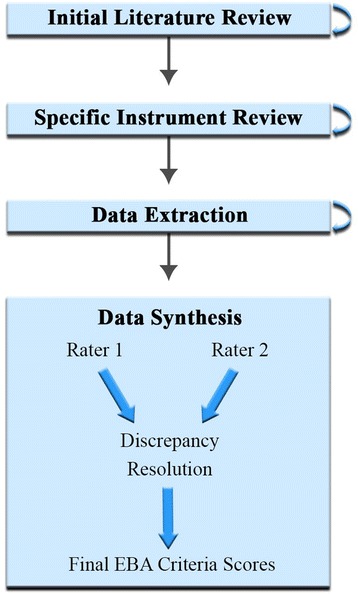
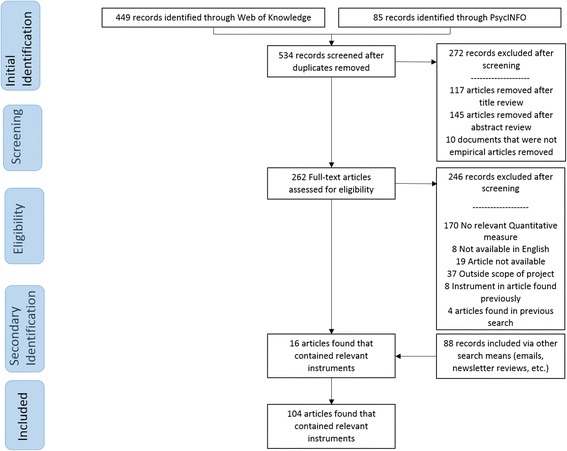
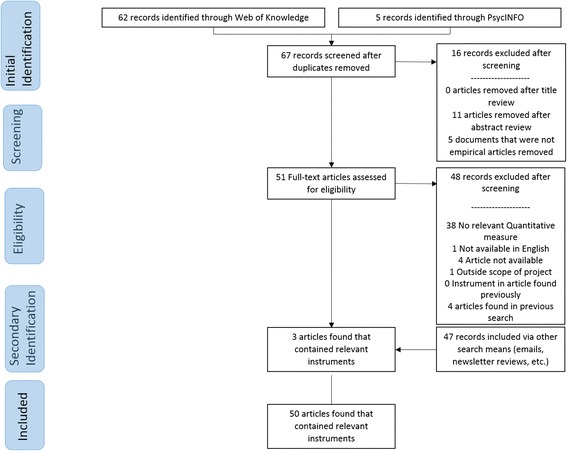
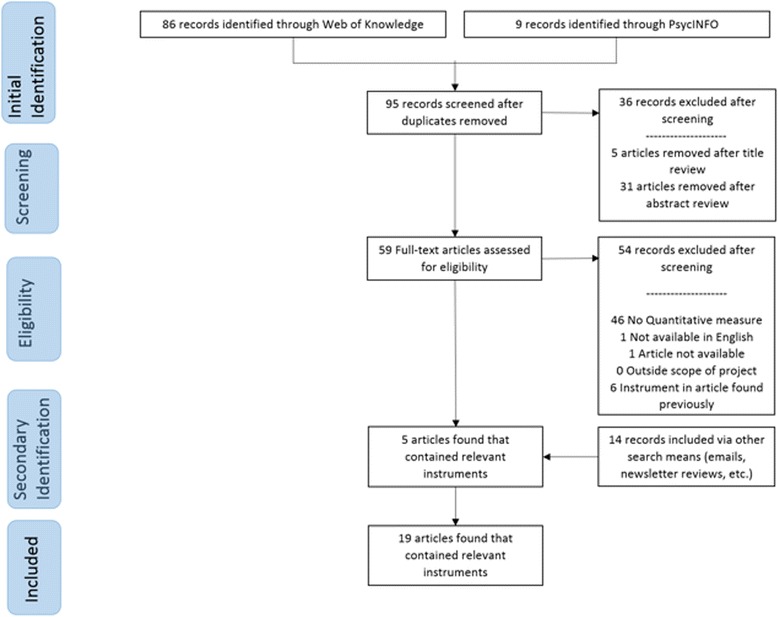
BACKGROUND: High-quality measurement is critical to advancing knowledge in any field. New fields, such as implementation science, are often beset with measurement gaps and poor quality instruments, a weakness that can be more easily addressed in light of systematic review findings. Although several reviews of quantitative instruments used in implementation science have been published, no studies have focused on instruments that measure implementation outcomes. Proctor and colleagues established a core set of implementation outcomes including: acceptability, adoption, appropriateness, cost, feasibility, fidelity, penetration, sustainability (Adm Policy Ment Health Ment Health Serv Res 36:24-34, 2009). The Society for Implementation Research Collaboration (SIRC) Instrument Review Project employed an enhanced systematic review methodology (Implement Sci 2: 2015) to identify quantitative instruments of implementation outcomes relevant to mental or behavioral health settings. METHODS: Full details of the enhanced systematic review methodology are available (Implement Sci 2: 2015). To increase the feasibility of the review, and consistent with the scope of SIRC, only instruments that were applicable to mental or behavioral health were included. The review, synthesis, and evaluation included the following: (1) a search protocol for the literature review of constructs; (2) the literature review of instruments using Web of Science and PsycINFO; and (3) data extraction and instrument quality ratings to inform knowledge synthesis. Our evidence-based assessment rating criteria quantified fundamental psychometric properties as well as a crude measure of usability. Two independent raters applied the evidence-based assessment rating criteria to each instrument to generate a quality profile. RESULTS: We identified 104 instruments across eight constructs, with nearly half (n = 50) assessing acceptability and 19 identified for adoption, with all other implementation outcomes revealing fewer than 10 instruments. Only one instrument demonstrated at least minimal evidence for psychometric strength on all six of the evidence-based assessment criteria. The majority of instruments had no information regarding responsiveness or predictive validity. CONCLUSIONS: Implementation outcomes instrumentation is underdeveloped with respect to both the sheer number of available instruments and the psychometric quality of existing instruments. Until psychometric strength is established, the field will struggle to identify which implementation strategies work best, for which organizations, and under what conditions.
Overview
The claims and statistics of this paper haven’t been checked yet.
Free: it reads the open-access text and checks the first 5 claims that cite a source we can check. Create a free account to check every claim.
Integrity signals
Registry
Cites
Statistics
Figures
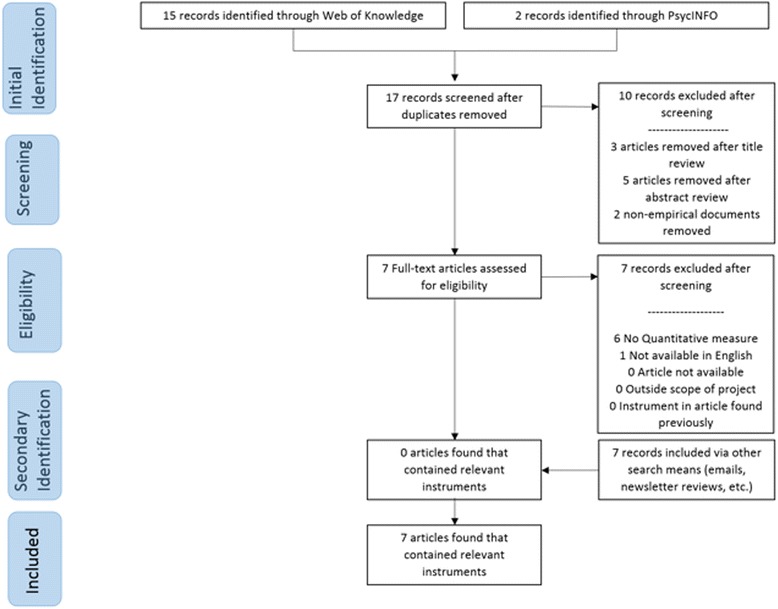
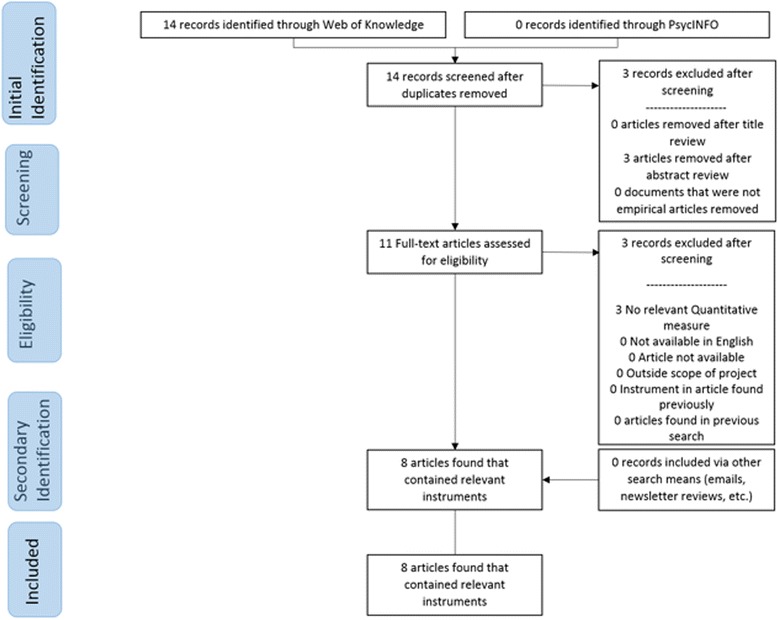
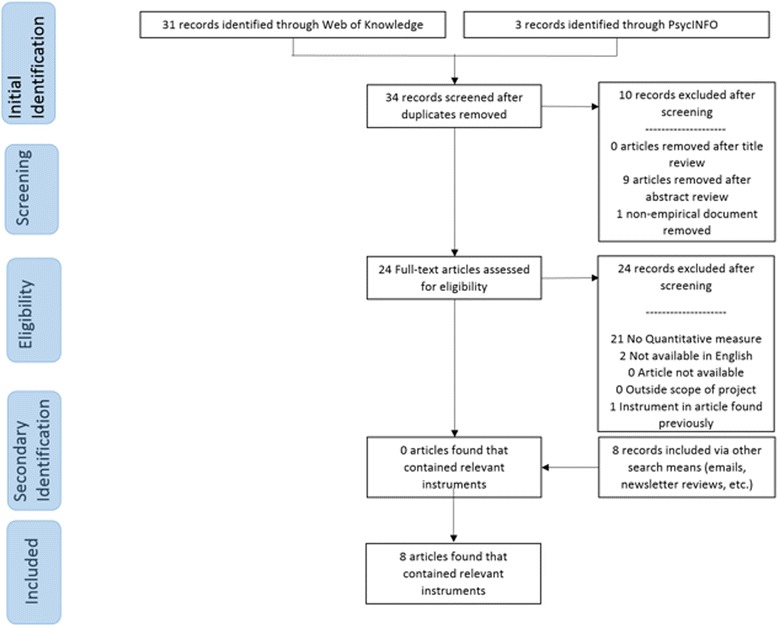
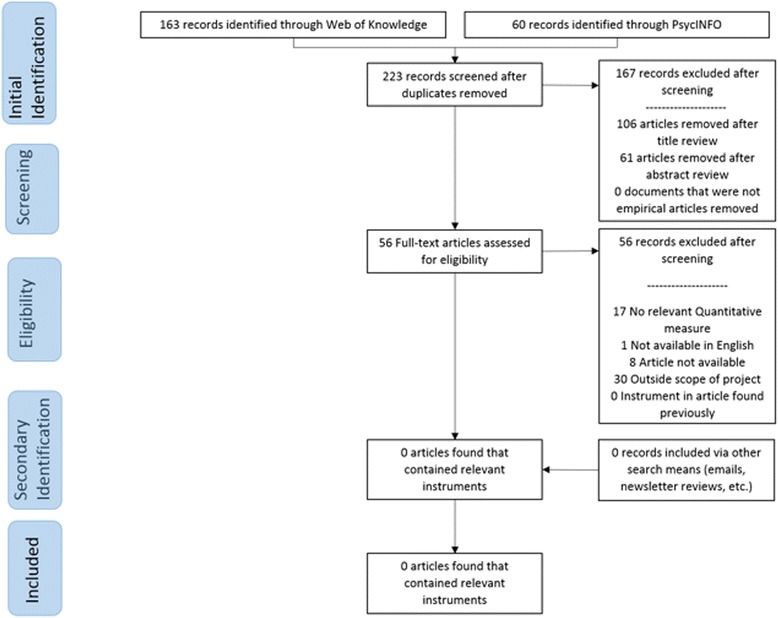
Verification
Claims the paper makes
The claims and statistics of this paper haven’t been checked yet.
Free: it reads the open-access text and checks the first 5 claims that cite a source we can check. Create a free account to check every claim.
Claims other papers make about this one
Each is checked against this paper’s own text: does it say what the citing paper says it does?
The source backs part of the claim, not all of it — or backs it for a different population, condition or comparison.
In the citing paper
“Furthermore, the lack of valid and pragmatic assessments for implementation-related factors and outcomes has been noted in the health services and implementation science literature [110, 111] and has been echoed by researchers across health-related interventions [112].”
From Barriers and facilitators to implementation of evidence-based task-sharing mental health interventions in low- and middle-income countries: a systematic review using implementation science frameworks (2022) · cites this paper as [111]
Experimental — accuracy not yet measuredThe source backs part of the claim, not all of it — or backs it for a different population, condition or comparison.
In the citing paper
“few if any have been assessed for other measurement properties that are of key importance to implementation researchers and other implementation stakeholders (e.g., intermediaries, policymakers, practice leaders), such as stability, responsiveness, and predictive validity [2–4].”
From Psychometric assessment of three newly developed implementation outcome measures (2017) · cites this paper as [2]
Experimental — accuracy not yet measuredThe cited source says what the claim attributes to it.
In the citing paper
“We now have systematic reviews of implementation outcomes [15] and their measurement properties in behavioral health [16], public policy [17], stroke care [7], and physical healthcare [18].”
From Ten years of implementation outcomes research: a scoping review (2023) · cites this paper as [16]
The cited source says what the claim attributes to it.
In the citing paper
“This assessment responds to the need for reliable measures within implementation science, specifically in the area of sustainability research (1, 32, 33).”
From Assessing the sustainability capacity of evidence-based programs in community and health settings (2022) · cites this paper as [33]
The cited source says what the claim attributes to it.
In the citing paper
“Despite their importance, existing measures of implementation outcomes have largely unknown psychometric and pragmatic qualities [2].”
From Psychometric assessment of three newly developed implementation outcome measures (2017) · cites this paper as [2]
1 more claim about this paper
Create a free account to see every claim other papers make about this one.
Self-check
Percentages, sums and reported differences re-computed from the paper’s own numbers.
The self-check needs the paper’s full text.
Citations
Cites
Quality criteria were proposed for measurement properties of health status questionnaires
Terwee, C. B., Bot, S. D. M., de Boer, M. R., van der Windt, D. A. W. M., Knol, D. L., Dekker, J., Bouter, L. M., & de Vet, H. C. W. (2007) · Journal of Clinical Epidemiology · doi:10.1016/j.jclinepi.2006.03.012 · Cited by 10,764 · cited 1×
“The EBA rating criteria were also informed by the work of Terwee and colleagues [10].”
Moore, G. C., & Benbasat, I. (1991) · Information Systems Research · doi:10.1287/isre.2.3.192 · Cited by 9,150 · cited 2×
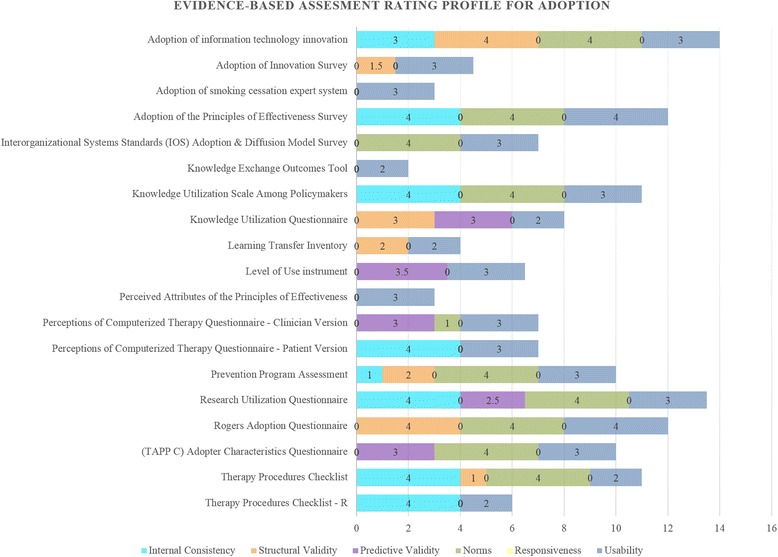
“The Adoption of Information Technology Innovation [16] scale had the highest overall rating (score = 14), with “ 4 — excellent ” ratings for structural validity and norms and “ 3 — good ” ratings for reliability and usability; however, no information about predictive validity is available.”
Proctor, E., Silmere, H., Raghavan, R., Hovmand, P., Aarons, G., Bunger, A., Griffey, R., & Hensley, M. (2011) · Administration and Policy in Mental Health and Mental Health Services Research · doi:10.1007/s10488-010-0319-7 · Cited by 8,721 · cited 10×
“Appropriateness (N = 7) is the perceived fit, relevance, or compatibility of the innovation or evidence based practice for a given practice setting, provider, or consumer; and/or perceived fit of the innovation to address a particular issue or problem [6].”
InfluentialTerwee, C. B., Mokkink, L. B., Knol, D. L., Ostelo, R. W. J. G., Bouter, L. M., & de Vet, H. C. W. (2012) · Quality of Life Research · doi:10.1007/s11136-011-9960-1 · Cited by 1,978 · cited 1×
“Raters used the conservative “worst score counts” methodology [12].”
Proctor, E. K., Landsverk, J., Aarons, G., Chambers, D., Glisson, C., & Mittman, B. (2009) · Administration and Policy in Mental Health and Mental Health Services Research · doi:10.1007/s10488-008-0197-4 · Cited by 1,894 · cited 1×
“Proctor and colleagues [5] articulated the following core set of seven implementation outcomes: acceptability, feasibility, uptake, penetration, cost, fidelity, and sustainability.”
Chaudoir, S. R., Dugan, A. G., & Barr, C. H. (2013) · Implementation Science · doi:10.1186/1748-5908-8-22 · Cited by 800 · cited 1×
“4 % [3] lacked criterion validity and 49.”
Weiner, B. J., Amick, H., & Lee, S.-Y. D. (2008) · Medical Care Research and Review · doi:10.1177/1077558708317802 · Cited by 786 · cited 1×
“science have been published [2–4], none have focused on implementation outcomes instruments.”
BackgroundSelf-citationGrimshaw, J., Eccles, M., Thomas, R., MacLennan, G., Ramsay, C., Fraser, C., & Vale, L. (2006) · Journal of General Internal Medicine · doi:10.1007/s11606-006-0269-7 · Cited by 631 · cited 1×
“Establishing the psychometric properties of implementation outcome instruments is a necessary step to ensuring that predictors, moderators, and mediators of implementation are identified and that comparative effectiveness of implementation strategies is measureable [8].”
Hunsley, J., & Mash, E. J. (2007) · Annual Review of Clinical Psychology · doi:10.1146/annurev.clinpsy.3.022806.091419 · Cited by 528
A national survey of practicing psychologists' attitudes toward psychotherapy treatment manuals
Addis, M. E., & Krasnow, A. D. (2000) · Journal of Consulting and Clinical Psychology · doi:10.1037/0022-006x.68.2.331 · Cited by 509 · cited 2×
“The Practitioner’s Attitudes toward Treatment Manuals [15] had the highest overall rating among implementation process acceptability instruments (total score = 17), with “4—excellent” ratings for reliability, structural validity, and norms; “3—good” rating for usability; and “2—adequate” rating for predictive validity.”
Cited by
Items 201–300 of 446
The Science of Behavior Change: The Road Ahead
Hagger, M. S., Cameron, L. D., Hamilton, K., Hankonen, N. E., & Lintunen, T. (2020) · Cambridge University Press eBooks · doi:10.1017/9781108677318.046 · Cited by 16
Fioratti, I., Santos, V. S., Fernandes, L. G., Rodrigues, K. A., Soares, R. J., & Saragiotto, B. T. (2023) · Archives of Physiotherapy · doi:10.1186/s40945-023-00160-x · Cited by 15
“In implementation research, multiple outcomes are evaluated at various stages of the study, and their evaluation methods often adopt a qualitative or mixed-methods approach, instead of relying solely on quantitative measures [2, 7].”
BackgroundEiraldi, R. B., Comly, R., Goldstein, J., Khanna, M. S., McCurdy, B. L., Rutherford, L. E., Henson, K., Bevenour, P., Francisco, J., & Jawad, A. F. (2023) · School Mental Health · doi:10.1007/s12310-023-09582-1 · Cited by 12
“In implementation research, perceived appropriateness refers to the perceived fit, relevance, or compatibility of the innovation for a specific setting; feasibility refers to the extent to which an innovation can be successfully used in a particular setting; and acceptability refers to the perception among stakeholder…”
BackgroundCalvert, H. G., McQuilkin, M., Havlicak, A., Lewis, T., & Turner, L. R. (2023) · Implementation Science Communications · doi:10.1186/s43058-023-00478-4 · Cited by 13
“Though psycho-metrically strong measures for examining acceptability, appropriateness, and feasibility exist [69, 70], our measures were also used to inform the ISPs on how to improve support components in real-time and thus were tailored to those needs.”
MethodGaias, L. M., Cook, C. R., Brewer, S. K., Bruns, E. J., & Lyon, A. R. (2023) · Educational Research and Evaluation · doi:10.1080/13803611.2023.2285440 · Cited by 12
“One potential limiting factor is the lack of validated measures to capture implementation outcomes, especially within the school context (Clinton-McHarg et al., 2016; Lewis et al., 2015; Schultes et al., 2014).”
BackgroundBatterham, P. J., Allenhof, C., Pashoja, A. C., Etzelmueller, A., Fanaj, N., Finch, T. L., Freund, J., Hanssen, D. J. C., Mathiasen, K., Piera-Jiménez, J., et al. (2024) · Implementation Research and Practice · doi:10.1177/26334895241245448 · Cited by 15
“Generally, validated theory-based instruments to objectively and reliably monitor implementation processes and assess outcomes are lacking (Lewis et al., 2015a, 2015b; Mettert et al., 2020; Proctor et al., 2011; Weiner et al., 2020a, 2020b).”
Nilsen, P. (2026) · Implementation Science Communications · doi:10.1186/s43058-026-00901-6 · Cited by 18
“Quantitative measures often lack psychometric validation [28, 29], and qualitative assessments, although rich, can be difficult to standardize or compare [30].”
Garner, B. R., Hunter, S. B., Slaughter, M. E., Han, B., & Godley, S. H. (2017) · Drug and Alcohol Dependence · doi:10.1016/j.drugalcdep.2017.08.011 · Cited by 12
“…each of the organizational-level measures examined as part of this study remain viable candidates for testing given research examining the relationship between these constructs and other important constructs (EMBIs, client outcomes) remains limited (Chaudoir et al., 2013; Lewis et al., 2015).”
Understanding How Newly Implemented Rehabilitation Best Practices Are Sustained: A Realist Review
Ataman, R., Ahmed, S., Zidan, A., & Thomas, A. (2022) · Archives of Physical Medicine and Rehabilitation · doi:10.1016/j.apmr.2022.05.016 · Cited by 12
Building an implementation strategy for community-based rehabilitation for mental health in Colombia
Agudelo‐Hernández, F., Andrade, R. M. R., & Giraldo-Álvarez, A. B. (2024) · International Journal of Evidence-Based Healthcare · doi:10.1097/xeb.0000000000000431 · Cited by 13
Gutt, A.-K., Hoben, M., Roes, M., Willmeroth, T., Wesselborg, B., & Kuske, S. (2018) · Zeitschrift für Evidenz Fortbildung und Qualität im Gesundheitswesen · doi:10.1016/j.zefq.2018.06.005 · Cited by 13
Coumoundouros, C., von Essén, L., Sanderman, R., & Woodford, J. (2020) · BMJ Open · doi:10.1136/bmjopen-2019-035406 · Cited by 13
Motivational Interviewing Interventions
Berman, A. H., Beckman, M., & Lindqvist, H. (2020) · Cambridge University Press eBooks · doi:10.1017/9781108677318.045 · Cited by 14
Eiraldi, R. B., McCurdy, B. L., Khanna, M. S., Goldstein, J., Comly, R., Francisco, J., Rutherford, L. E., Wilson, T., Henson, K., Farmer, T. W., et al. (2022) · Pilot and Feasibility Studies · doi:10.1186/s40814-022-01082-4 · Cited by 12
“Acceptability refers to the perception among EBP implementers as to whether the innovation is agreeable, palatable, or satisfactory [37, 39].”
BackgroundStanick, C., Halko, H., Mettert, K., Dorsey, C., Moullin, J., Weiner, B., Powell, B., & Lewis, C. C. (2021) · Implementation Research and Practice · doi:10.1177/26334895211000458 · Cited by 11
“As with other areas of implementation measurement, the quality of existing measures assessing the characteristics of individuals is lacking (Lewis et al., 2015).”
BackgroundSelf-citationKnowledge of Evidence-Based Services Questionnaire: Development and Validation of a Short Form
Lawson, G. M., Moore, T. M., Okamura, K. H., Becker‐Haimes, E. M., & Beidas, R. S. (2020) · Administration and Policy in Mental Health and Mental Health Services Research · doi:10.1007/s10488-020-01020-7 · Cited by 11
Maximizing User Engagement with Behavior Change Interventions
Yardley, L., Morrison, L. G., Müller, I., & Bradbury, K. J. (2020) · Cambridge University Press eBooks · doi:10.1017/9781108677318.025 · Cited by 13
Changing Behavior Using Control Theory
Mansell, W. (2020) · Cambridge University Press eBooks · doi:10.1017/9781108677318.009 · Cited by 13
Jeffrey, N. K., Senn, C. Y., Hobden, K. L., Barata, P. C., McVey, G. L., Radtke, H. L., & Eliasziw, M. (2022) · Sexuality Research and Social Policy · doi:10.1007/s13178-022-00749-0 · Cited by 11
“Nevertheless, our findings highlight the difficulty of recruiting university students to participate in an otherwise wellreceived (i.e., high acceptability; Lewis et al., 2015) noncredit program, and that sites may not be able to adequately handle recruitment on their own.”
BackgroundEditorial: Scaling-up health-IT—sustainable digital health implementation and diffusion
Schlieter, H., Gand, K., Marsch, L. A., Chan, W. S., & Kowatsch, T. (2024) · Frontiers in Digital Health · doi:10.3389/fdgth.2024.1296495 · Cited by 12
“Additionally, quantifying implementation outcomes remains unclear due to poorly de fi ned and operationalized constructs like adoption and sustainability, with a notable absence of standardized measures (12, 13).”
Vamos, C. A., Foti, T. R., Martinez, E. R., Pointer, Z., Detman, L. A., & Sappenfield, W. M. (2023) · International Journal of Environmental Research and Public Health · doi:10.3390/ijerph20116003 · Cited by 10
Cook, C., Finch, T. L., Sharma, S., Girling, M., Rapley, T., & Vernazza, C. R. (2019) · European Journal Of Dental Education · doi:10.1111/eje.12481 · Cited by 10
Triplett, N. S., Mbwayo, A., Kiche, S. W., Liu, L., Silva, J., AlRasheed, R., Johnson, C. M., Amanya, C., Munson, S. A., Weiner, B. J., et al. (2023) · Cambridge Prisms Global Mental Health · doi:10.1017/gmh.2023.23 · Cited by 12
“Much of the existing literature on acceptability has focused on the acceptability of interventions to stakeholders (Lewis et al., 2015).”
BackgroundSelf-citationImplementation Science and Translation in Behavior Change
Łuszczyńska, A., Łobczowska, K., & Horodyska, K. (2020) · Cambridge University Press eBooks · doi:10.1017/9781108677318.023 · Cited by 13
An overview of quantitative instruments and measures for impact in coproduction
MacGregor, S. (2020) · Journal of Professional Capital and Community · doi:10.1108/jpcc-06-2020-0042 · Cited by 12
Hamdani, S. U., Huma, Z., & Wissow, L. S. (2022) · Implementation Science Communications · doi:10.1186/s43058-022-00343-w · Cited by 10
Larson, M. F., & Cook, C. R. (2023) · Issues in clinical child psychology · doi:10.1007/978-3-031-20006-9_28 · Cited by 10
The sustainability of two departmental health insurance units in Senegal: A qualitative study
Ridde, V., Kane, B., Mbow, N. B., Senghor, I., & Faye, A. (2023) · SSM - Health Systems · doi:10.1016/j.ssmhs.2023.100006 · Cited by 12
Woodfield, M. J., Merry, S., & Hetrick, S. E. (2022) · Implementation Research and Practice · doi:10.1177/26334895221082330 · Cited by 9
“Attempts to ascertain the validity and reliability of psychometric measures of adoption have been undertaken (e.g. Lewis et al., 2015), though as yet, there is not one inventory or instrument that is widely used or understood to represent best practice in the assessment of adoption.”
BackgroundPreventing Suicide in Health Systems: How Can Implementation Science Help?
Larkin, C., Arensman, E., & Boudreaux, E. D. (2022) · Archives of Suicide Research · doi:10.1080/13811118.2022.2131490 · Cited by 10
“Any given implementation effort may involve a multitude of implementation strategies, although it is not yet clear whether a higher number of strategies used results in better outcomes (Boyd, Powell, Endicott, & Lewis, 2018; Brown et al., 2014; Trogrli (cid:2) c et al., 2015).”
BackgroundBhuiya, A. R., Sutherland, J., Boateng, R., Bain, T., Skidmore, B., Perrier, L., Makarski, J., Munce, S., Lewis, I., Graham, I. D., et al. (2023) · Journal of Clinical Epidemiology · doi:10.1016/j.jclinepi.2023.10.021 · Cited by 13
de Ridder, D. T. D., Gillebaart, M., & Friese, M. (2020) · Cambridge University Press eBooks · doi:10.1017/9781108677318.040 · Cited by 11
Konlan, K. D., Ibrahim, Z. A., Lee, J., & Lee, H. (2025) · Digital Health · doi:10.1177/20552076251330194 · Cited by 8
“15,42 However, unlike other fi elds where appropriateness was considered as a key outcome, 16,43 our review found that fi delity was more commonly prioritized in digital health interventions.”
Evaluation of Behavior Change Interventions
Matthews, L., & Simpson, S. A. (2020) · Cambridge University Press eBooks · doi:10.1017/9781108677318.022 · Cited by 10
Epton, T., & Armitage, C. J. (2020) · Cambridge University Press eBooks · doi:10.1017/9781108677318.038 · Cited by 8
de la Salud, O. P. (2022) · Revista Panamericana de Salud Pública · doi:10.26633/rpsp.2022.183 · Cited by 8
DeVylder, E. K., Breda, K. L., & Pietrzak, R. H. (2023) · Archives of Psychiatric Nursing · doi:10.1016/j.apnu.2023.05.002 · Cited by 7
“These frameworks emphasize deliberate and purposive actions to implement new treatments, practices, and services, and evidence-based instruments that are widely used in the implementation science field (Lewis et al., 2015).”
Garneau, H. C., Cheng, H. L., Kim, J. P., Magid, M. A., Chin-Purcell, L., & McGovern, M. P. (2025) · Implementation Science Communications · doi:10.1186/s43058-025-00726-9 · Cited by 9
Economic and Behavioral Economic Approaches to Behavior Change
Brown, P. M., Cameron, L. D., Wilkinson, M., & Taylor, D. (2020) · Cambridge University Press eBooks · doi:10.1017/9781108677318.042 · Cited by 10
Ashcraft, L. E., Moon, D. J., Merlin, J. S., Eack, S. M., & Rogal, S. S. (2022) · Implementation Science Communications · doi:10.1186/s43058-022-00378-z · Cited by 8
“Recent efforts have sought to make this process more empirical by quantifying strategies and implementation determinants [10, 11].”
BackgroundImplementation science for quality improvement in pediatric surgery
Sullivan, G. A., Schäfer, W. L. A., Raval, M. V., & Johnson, J. K. (2023) · Seminars in Pediatric Surgery · doi:10.1016/j.sempedsurg.2023.151282 · Cited by 7
Hall, A. E., Wolfenden, L., Gardner, C., McEvoy, B., Lane, C., Shelton, R. C., McFadyen, T., Lee, D. C. W., Shoesmith, A., Austin, K., et al. (2023) · Public Health in Practice · doi:10.1016/j.puhip.2023.100444 · Cited by 8
Meredith, L. S., Wong, E. C., Marx, B. P., Han, B., Korn, A. R., Tobin, J. N., Cassells, A. N., Williamson, S. L., Franco, M. E., Overa, C. C., et al. (2024) · Contemporary Clinical Trials · doi:10.1016/j.cct.2024.107435 · Cited by 7
Yang, L. H., Bass, J. K., Le, P. D., Singh, R., Gurung, D., Velasco, P. R., Grivel, M. M., Susser, E., Cleland, C. M., Alvarado, R., et al. (2024) · BMC Health Services Research · doi:10.1186/s12913-024-11783-6 · Cited by 7
“Most implementation science (IS) measurement development has been done in high-income health system contexts such as the US, UK, Australia, and select European countries [1].”
Backgroundde la Salud, O. P. (2021) · Revista Panamericana de Salud Pública · doi:10.26633/rpsp.2021.134 · Cited by 14
Measuring sustainment of an evidence based treatment for adolescent substance use
Huang, W., Hunter, S. B., Ayer, L. A., Han, B., Slaughter, M. E., Garner, B. R., & Godley, S. H. (2017) · Journal of Substance Abuse Treatment · doi:10.1016/j.jsat.2017.10.005 · Cited by 7
“As noted in the emerging field of implementation science, more feasible, rigorous methods and measures are needed in order to assess EBT sustainment (Lewis et al., 2015; Proctor et al., 2015).”
BackgroundChanging Behavior Using Integrative Self-Control Theory
Hofmann, W., Dohle, S., & Diel, K. (2020) · Cambridge University Press eBooks · doi:10.1017/9781108677318.011 · Cited by 8
Implementation Science Across Lifestyle Medicine Interventions
Adsul, P., Perez, L. G., Oh, A., & Chambers, D. (2020) · Springer eBooks · doi:10.1007/978-3-030-48088-2_4 · Cited by 7
Delivery of Cancer Survivorship Education to Community Healthcare Professionals
Pariser, A. C., Brita, J., Harrigan, M., Capozza, S. J., Khairallah, A., & Sanft, T. B. (2022) · Journal of Cancer Education · doi:10.1007/s13187-022-02164-w · Cited by 6
Sustainability of an outcome measure in outpatient stroke rehabilitation: A realist evaluation
Ataman, R., Ahmed, S., Berta, W. B., & Thomas, A. (2024) · Journal of Evaluation in Clinical Practice · doi:10.1111/jep.13972 · Cited by 6
Austin, J. D., Rutten, L. J. F., Fischer, K. J., Ridgeway, J. L., Minteer, S. A., Griffin, J. M., Pachman, D. R., Ruddy, K. J., & Cheville, A. L. (2024) · JCO Oncology Practice · doi:10.1200/op.24.00280 · Cited by 6
de la Salud, O. P. (2023) · Revista Panamericana de Salud Pública · doi:10.26633/rpsp.2023.72 · Cited by 6
“(19) La estrategia de búsqueda incluyó los términos “adoption, uptake, utilization; taken implementation, dissemination, evidence-based treatment, barriers”.”
Conner, M. T., Williams, D. M., & Rhodes, R. E. (2020) · Cambridge University Press eBooks · doi:10.1017/9781108677318.034 · Cited by 8
Jyung, H., Bhandiwad, A., Handel, M. J., Walter, E., & Teets, R. (2020) · EXPLORE · doi:10.1016/j.explore.2020.06.002 · Cited by 5
Sarfan, L. D., Agnew, E. R., Diaz, M., Cogan, A. B., Spencer, J. M., Hache, R. E., Stirman, S. W., Lewis, C. C., Kilbourne, A. M., & Harvey, A. G. (2024) · Trials · doi:10.1186/s13063-023-07900-1 · Cited by 5
“In a review of implementation science measures, this formula was found to have excellent usability [49].”
BackgroundSelf-citationSweetnam, C., Goulding, L., Davis, R. E., Khadjesari, Z., Boaz, A., Healey, A., Sevdalis, N., Bakolis, I., & Hull, L. (2022) · BMJ Open · doi:10.1136/bmjopen-2022-061209 · Cited by 5
Beima‐Sofie, K., Njuguna, I. N., Concepcion, T. L., DeLong, S. M., Donenberg, G. R., Zanoni, B. C., Dow, D. E., Braitstein, P. K. A., & Wagner, A. D. (2023) · AIDS and Behavior · doi:10.1007/s10461-023-04021-3 · Cited by 5
“Within implementation science, timely methodologic challenges include development and psychometric validation of implementation measures for contexts outside the US and Canada [10, 11, 56], as well as elucidating implementation strategy mechanisms and identifying moderators and mediators that activate or inhibit mecha…”
BackgroundMethodInfluentialHoyt, C. R., Erickson, J., Luo, L., Varughese, T. E., Han, T., Housten, A. J., & King, A. A. (2023) · Journal of Early Intervention · doi:10.1177/10538151231159637 · Cited by 6
“Program acceptability refers to comments related to a participant’s level of willingness to participate in a screening program, support its implementation, or comments associated with agreement with the program (Lewis et al., 2015).”
Backgroundde la Salud, O. P. (2024) · Revista Panamericana de Salud Pública · doi:10.26633/rpsp.2024.51 · Cited by 6
“…una búsqueda bibliográfica para identificar estudios que abordaran aspectos de implementación (barreras, facilitadores, estrategias de implementación e indicadores) usando la estrate-gia de búsqueda de las guías y filtros para identificar estudios sobre consideraciones de implementación 13 .”
BackgroundBrasil, F., Brasil, A. M., & Correr, C. J. (2018) · Neuropsychiatry · doi:10.4172/neuropsychiatry.1000397 · Cited by 6
“The patients who refused to participate or dropped out of the study tend to be different from those who agreed and remained [12-14]; however this situation should not be considered as selection bias, because the viability and acceptability of the instrument determine its clinical universe [15,16].”
BackgroundAsgharzadeh, A., Shabaninejad, H., Aryankhesal, A., & Majdzadeh, R. (2019) · Evidence & Policy · doi:10.1332/174426419x15704986117256 · Cited by 7
Addressing Underserved Populations and Disparities in Behavior Change
Schüz, B., & Hooper, M. W. (2020) · Cambridge University Press eBooks · doi:10.1017/9781108677318.027 · Cited by 8
Leveraging Implementation Science to Improve the Scale-up of School Mental Health Programming
Bradshaw, C. P. (2023) · Issues in clinical child psychology · doi:10.1007/978-3-031-20006-9_27 · Cited by 7
Perspectives: Envisioning healthcare quality and safety in 2030
Ricciardi, R. (2021) · Journal of research in nursing · doi:10.1177/1744987121992911 · Cited by 9
“Several recent reviews have summarised the domains and quantitative measurement properties of the available instruments to capture implementation outcomes (Allen et al., 2020; Khadjesari et al., 2020; Lewis et al., 2015).”
BackgroundKuharić, M., Merle, J. L., Cella, D. F., Mitchell, S. A., DiMartino, L., Ridgeway, J. L., Dizon, D. S., Paudel, R., Austin, J. D., Wong, S. L., et al. (2025) · Implementation Science Communications · doi:10.1186/s43058-025-00756-3 · Cited by 5
“However, to establish NoMAD as a generalizable measure of implementation, it is essential to assess its psychometric properties in large, diverse samples of healthcare staff involved in the implementation of complex interventions [14].”
Self-citationChanging Behavior in the Digital Age
Kavanagh, D. J. (2020) · Cambridge University Press eBooks · doi:10.1017/9781108677318.029 · Cited by 20
Incorporating implementation science principles into curricular design
Gottlieb, M. A., Bobitt, J., Kotini‐Shah, P., Khosla, S., & Watson, D. P. (2024) · AEM Education and Training · doi:10.1002/aet2.10996 · Cited by 4
Shoesmith, A., Nathan, N., Lum, M., Yoong, S., Nolan, E., Wolfenden, L., Shelton, R. C., Cooper, B. R., Lane, C., Grady, A., et al. (2024) · Implementation Science · doi:10.1186/s13012-024-01372-w · Cited by 4
“High-quality systematic reviews have been conducted examining available measures of sustainability (as an outcome) and sustainability determinants across a range of settings, their psychometric and pragmatic properties, and how they have been empirically used [20, 26, 27].”
BackgroundCommunity-Engaged Implementation Strategies in Occupational Therapy: A Scoping Review
Kang, E., Chen, J. Y., Lipsey, K. L., & Foster, E. R. (2024) · American Journal of Occupational Therapy · doi:10.5014/ajot.2024.050526 · Cited by 4
“…and knowledge translation should be considered synonyms because they overlap significantly (Allen et al., 2020; Gertner et al., 2021; Juckett & Robinson, 2018; Juckett et al., 2020; Koczwara et al., 2016; Lewis et al., 2015, 2020; Murrell et al., 2021; Powell et al., 2015; Viglione et al., 2023).”
Williams, N. J., Cardamone, N. C., Beidas, R. S., & Marcus, S. C. (2024) · Implementation Research and Practice · doi:10.1177/26334895241279153 · Cited by 6
Reasoning with AI: Six Essential Factors for Augmenting Human Expertise in the Workplace
Koon, S. (2025) · Progress in IS · doi:10.1007/978-3-031-83512-4_6 · Cited by 4
Peiper, L. J., Cramer, R. J., Cacace, S. C., Peters, A., Corral, A. R., Post, A., Prowten, S. D., & Bowling, J. (2024) · Pilot and Feasibility Studies · doi:10.1186/s40814-024-01533-0 · Cited by 4
“Second, models of implementation science [91] frame implementation or feasibility as a multi-dimensional outcome set.”
MethodWesolowicz, D. M., Becker, W. C., Alegria, M. M., Chin-Purcell, L., Glass, J. E., Knudsen, H. K., Dow, P. M., Seal, K. H., & McGinty, E. B. (2025) · Journal of General Internal Medicine · doi:10.1007/s11606-025-09551-1 · Cited by 5
Watson, D. P., Staton, M. D., Dennis, M. L., Grella, C. E., & Scott, C. K. (2021) · Substance Abuse Treatment Prevention and Policy · doi:10.1186/s13011-021-00381-y · Cited by 4
“Given that higher-fidelity implementation and quality assurance procedures have been demonstrated to mediate client outcomes for behavioral health interventions [52, 53], another potential direction for future research in this area would be to test implementation strategies and quality assurance procedures and measure…”
BackgroundTabin, M., Diacquenod, C., & Petitpierre, G. (2021) · Research in Developmental Disabilities · doi:10.1016/j.ridd.2021.104111 · Cited by 4
Freedman, D., Waddell, A., Lam, H., Bourdon, A., & Wang, K. (2021) · BMJ Open · doi:10.1136/bmjopen-2021-054751 · Cited by 4
Stover, A. M., Wang, M., Shea, C. M., Richman, E. L., Rees, J. R., Cherrington, A., Cummings, D. M., Pugh-Nicholson, L. L., Peaden, S. H., Craft, M. M., et al. (2022) · PLoS ONE · doi:10.1371/journal.pone.0272816 · Cited by 5
“Of the existing scales, few have psychometric properties established [9].”
BackgroundParchman, M. L., Perloff, J. N., & Ritter, G. A. (2022) · Implementation Science · doi:10.1186/s13012-022-01237-0 · Cited by 5
“Current approaches to evaluating implementation outcomes are still nascent, with few measures that have validated psychometric properties [30, 31].”
BackgroundLazebnik, T., & Gorlitsky, D. (2023) · Data · doi:10.3390/data8110165 · Cited by 4
“The accuracy and validity of research findings are crucial for advancing knowledge and establishing evidence-based policies [4, 5].”
BackgroundEekholm, S., Samuelson, K. A. M., Ahlström, G., & Lindhardt, T. (2023) · Healthcare · doi:10.3390/healthcare12010032 · Cited by 7
“Moreover, a systematic review by Lewis et al. [58] emphasised the importance of designing strategies for clinical practice that target specific local determinants to avoid the deployment of insufficient or less effective strategies, resulting in a waste of time and resources.”
BackgroundMckenzie, E., Barnett, P., Parker, G., & Pilling, S. (2025) · BJPsych Open · doi:10.1192/bjo.2025.10075 · Cited by 4
“55 Furthermore, the majority of existing implementation outcome instruments have been developed to measure the implementation of specific interventions.”
Clarifying dissemination outcomes: a taxonomy to advance dissemination science
Gamarel, K. E., Merrill, K. G., Hosek, S., & Hightow‐Weidman, L. (2026) · Implementation Science · doi:10.1186/s13012-026-01520-4 · Cited by 3
“The field would benefit from measurement development comparable to what has occurred for implementation outcomes [71, 72].”
do Vale, M. L., Farmer, A. P., Gokiert, R., Ball, G. D. C., & Maximova, K. (2021) · Canadian Journal of Dietetic Practice and Research · doi:10.3148/cjdpr-2021-021 · Cited by 3
Tagavi, D. M., Ahlers, K. P., Bravo, A., McVey, A. J., & Locke, J. J. (2023) · Implementation Research and Practice · doi:10.1177/26334895231154289 · Cited by 3
Westerlund, A. (2022) · doi:10.13140/rg.2.2.19273.42080 · Cited by 4
Sommer, A., Rehbock, C., Krafft, T., & Ziemann, A. (2019) · Implementation Science · doi:10.1186/s13012-019-0911-5 · Cited by 3
Implementation of Effective Services in Community Settings
Wolfenden, L., Kingsland, M., Sutherland, R., Finch, M., Nathan, N., Williams, C. M., Wiggers, J., & Yoong, S. (2020) · Springer eBooks · doi:10.1007/978-3-030-03874-8_7 · Cited by 3
From Research to Practice in OBGYN: How to Critically Interpret Studies in Implementation
Hamm, R. F., & Moniz, M. H. (2022) · Clinical Obstetrics & Gynecology · doi:10.1097/grf.0000000000000706 · Cited by 3
Bhuiya, A. R., Makarski, J., Hayden, L., Perrier, L., Munce, S., Lewis, I., Graham, I. D., Holroyd-Leduc, J. M., Straus, S. E., Stelfox, H. T., et al. (2022) · JBI Evidence Synthesis · doi:10.11124/jbies-22-00055 · Cited by 3
Li, D., Shelby, T., Brault, M. A., Manohar, R., Vermund, S. H., Hagaman, A. K., Forastiere, L., Caruthers, T., Egger, E. E., Wang, Y., et al. (2022) · JMIR Formative Research · doi:10.2196/39765 · Cited by 3
Sileo, K. M., Wanyenze, R. K., Anecho, A., Luttinen, R. L., Mukama, S. C., Mukasa, B., Musoke, W., Vermund, S. H., Dworkin, S. L., Dovidio, J. F., et al. (2022) · Pilot and Feasibility Studies · doi:10.1186/s40814-022-01202-0 · Cited by 3
“Table 4 CFIR [28] domains and constructs [106, 107] explored as barriers and facilitators to the implementation and adoption of the”
BackgroundBussières, A., Passmore, S. R., Kopansky-Giles, D. R., Tavares, P., Ward, J., Ladwig, J. C., Glazebrook, C. M., Mior, S. A., Atkinson-Graham, M., Moss, J., et al. (2025) · Chiropractic & Manual Therapies · doi:10.1186/s12998-025-00576-1 · Cited by 5
“The measures have established psychometric properties, and can be compared when the MoC is implemented in other settings [66–71].”
Dugstad, J., Sundling, V., Nilsen, E. R., & Eide, H. (2019) · NORA - Norwegian Open Research Archives · Cited by 4
Loughran, T., Scharer, J. L., Rodriguez, L., Víta, M., Maisto, S. A., & Funderburk, J. S. (2021) · Journal of Substance Abuse Treatment · doi:10.1016/j.jsat.2021.108456 · Cited by 3
Brandt, L., Yanagida, T., Campbell, A. N. C., Jones, J. D., Schultes, M.-T., Martinez, S., & Comer, S. D. (2021) · Global Implementation Research and Applications · doi:10.1007/s43477-021-00021-4 · Cited by 3
Assessing the Usability of Complex Psychosocial Interventions: The Intervention Usability ScalePreprint
Lyon, A. R., Pullmann, M. D., Jacobson, J., Osterhage, K. P., Achkar, M. A., Renn, B. N., Munson, S. A., & Areán, P. A. (2020) · Research Square · doi:10.21203/rs.3.rs-22305/v2 · Cited by 5
McLoughlin, G. M., Allen, P. M., Walsh‐Bailey, C., & Brownson, R. C. (2021) · Research Square · doi:10.21203/rs.3.rs-206237/v2 · Cited by 3
Balayah, Z., Stavropoulou, C., Scarbrough, H., Nigam, A., & Ziemann, A. (2025) · Frontiers in Health Services · doi:10.3389/frhs.2025.1373429 · Cited by 2
“However, the availability of instruments for implementation outcomes and their psychometric quality remains underdeveloped (16, 17, 89), with most existing tools concentrating on concepts such as acceptability, appropriateness, feasibility, adoption, fi delity, cost, penetration, and sustainability…”
Mirzadegan, I. A., Blanton, A. C., & Meyer, A. (2022) · JMIR Pediatrics and Parenting · doi:10.2196/37449 · Cited by 2
“Indeed, the measure earned a passing score on each metric of a set of established criteria [42] used to evaluate measures of acceptability, including reliability, structural validity, criterion (predictive) validity, norms, responsiveness, and usability.”
MethodInfluentialCorwin, D. J., Godfrey, M., Arbogast, K. B., Zorc, J. J., Wiebe, D. J., Michel, J. J., Barnett, I., Stenger, K. M., Calandra, L. M., Cobb, J., et al. (2024) · BMJ Open · doi:10.1136/bmjopen-2023-082644 · Cited by 3
“…implementation outcomes include appropriateness (the perceived fit of a new practice), 41 42 assessed using the System Usability Scale, 43 and acceptability (the perception that an innovation or practice is agreeable), 41 42 assessed using a Technology Acceptance Model (TAM)- derived questionnaire.”
Method
Metadata
- Authors
- Lewis, C. C., Fischer, S., Weiner, B. J., Stanick, C., Kim, M., & Martinez, R. G.
- Affiliations
- University of Washington (US)
- Indiana University Bloomington (US)
- University of North Carolina at Chapel Hill (US)
- University of Montana (US)
- Virginia Commonwealth University (US)
- Corresponding author
- Lewis, Cara C.
- Venue
- Implementation Science
- Published
- 2015-11-04
- Volume
- 10
- Issue
- 1
- Pages
- 155-155
- ISSN
- 1748-5908 (ISSN-L)
- PMC
- PMC4634818
- OpenAlex
- W2120941905
- Semantic Scholar
- edba1483b061fe1b9a35dd81f979980308ce3525
- Cited by
- 430
- References
- 26
- Citations by year
- 2026: 24 · 2025: 24 · 2024: 33 · 2023: 58 · 2022: 58 · 2021: 51 · 2020: 100 · 2019: 36 · 2018: 25 · 2017: 15 · 2016: 5 · 2015: 1
- FWCI
- 2.76
- Type
- journal article
- Language
- en
- Open access
- gold
- doi.org
- Licence
- Locations
- Implementation Science (publishedVersion, cc-by)
- PubMed (publishedVersion)
- Carolina Digital Repository (University of North Carolina at Chapel Hill) (submittedVersion)
- VCU Scholars Compass (Virginia Commonwealth University) (submittedVersion, cc-by)
- NORA - Norwegian Open Research Archives (submittedVersion, cc-by)
- Funders
- Georgia Clinical and Translational Science Alliance
- National Institutes of Health (2010-2015, UL1TR000083)
- National Institute of Mental Health (R01MH106510)
- National Center for Advancing Translational Sciences
- Topics
- Health Sciences › Health Professions › General Health Professions › Health Policy Implementation Science
- Health Sciences › Nursing › Research and Theory › Health Education and Validation
- Social Sciences › Decision Sciences › Statistics, Probability and Uncertainty › Meta-analysis and systematic reviews
- Keywords
- implementation outcomes, psychometric properties, mental health services, behavioral health services, acceptability, adoption, fidelity, feasibility, cost, penetration, sustainability, measurement gaps
- MeSH terms
- Diffusion of Innovation, Humans, Mental Health Services, Psychometrics, Reproducibility of Results, Program Evaluation, Evidence-Based Practice
About these checks
Registry, retraction, Cites and statistics results are computed, not judged, with one exception: a printed reference that no index lists is read once by a model before it counts as a citation error. Claims are extracted by a model and kept only when their quote appears verbatim in the text; each cited source is then checked, with a model’s help, for whether it says what the claim relies on. Those verdicts can be wrong — read the claim’s quote and the cited source before relying on one.
Statistics and arithmetic are recomputed, not judged.
Confidence bands are shown only for fields calibrated on our annotated test set. None is calibrated yet, so no band is shown.
What counts as a claim ›How we measure confidence ›How we check this ›
Are you an author, or do you see a problem with this page? Request a review
Data sources
Bibliographic data: Semantic Scholar, OpenAlex, Crossref.
Contains information from the Semantic Scholar Academic Graph Datasets, made available under the ODC Attribution License (ODC-BY 1.0).
Semantic Scholar’s data is described in: Kinney, R., et al. (2023). The Semantic Scholar Open Data Platform. arXiv:2301.10140.
