

Outcomes for implementation science: an enhanced systematic review of instruments using evidence-based rating criteria
Open accessThe DOI matches its Crossref record; 27 of the 27 references it cites were found in a registry or an index.
Abstract
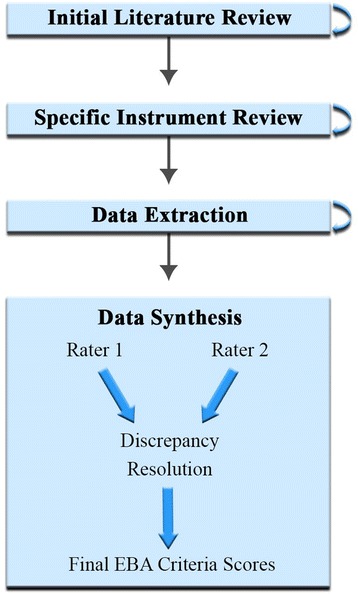
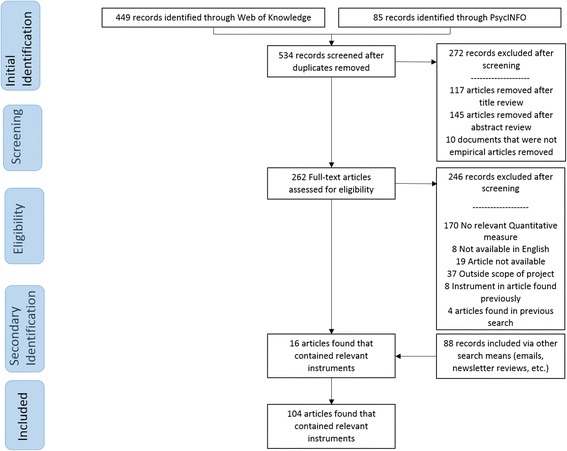
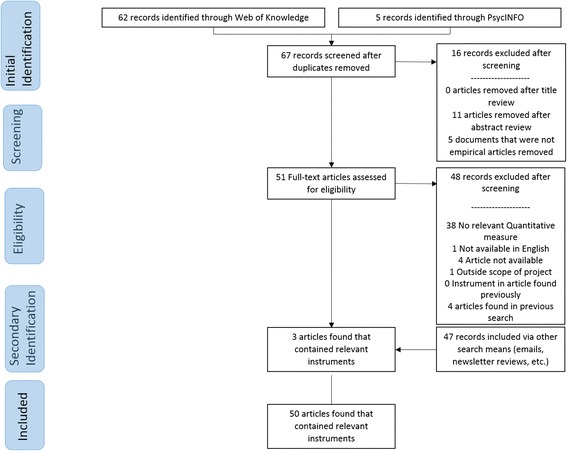
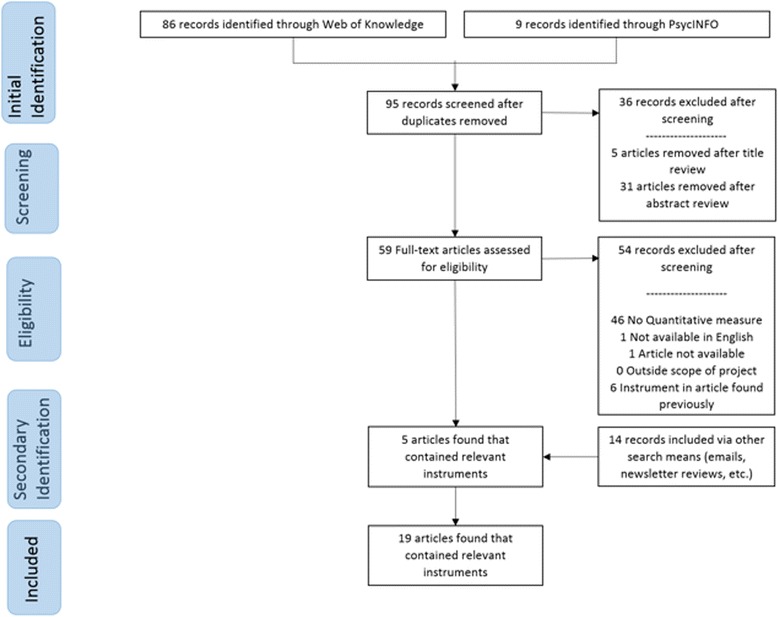
BACKGROUND: High-quality measurement is critical to advancing knowledge in any field. New fields, such as implementation science, are often beset with measurement gaps and poor quality instruments, a weakness that can be more easily addressed in light of systematic review findings. Although several reviews of quantitative instruments used in implementation science have been published, no studies have focused on instruments that measure implementation outcomes. Proctor and colleagues established a core set of implementation outcomes including: acceptability, adoption, appropriateness, cost, feasibility, fidelity, penetration, sustainability (Adm Policy Ment Health Ment Health Serv Res 36:24-34, 2009). The Society for Implementation Research Collaboration (SIRC) Instrument Review Project employed an enhanced systematic review methodology (Implement Sci 2: 2015) to identify quantitative instruments of implementation outcomes relevant to mental or behavioral health settings. METHODS: Full details of the enhanced systematic review methodology are available (Implement Sci 2: 2015). To increase the feasibility of the review, and consistent with the scope of SIRC, only instruments that were applicable to mental or behavioral health were included. The review, synthesis, and evaluation included the following: (1) a search protocol for the literature review of constructs; (2) the literature review of instruments using Web of Science and PsycINFO; and (3) data extraction and instrument quality ratings to inform knowledge synthesis. Our evidence-based assessment rating criteria quantified fundamental psychometric properties as well as a crude measure of usability. Two independent raters applied the evidence-based assessment rating criteria to each instrument to generate a quality profile. RESULTS: We identified 104 instruments across eight constructs, with nearly half (n = 50) assessing acceptability and 19 identified for adoption, with all other implementation outcomes revealing fewer than 10 instruments. Only one instrument demonstrated at least minimal evidence for psychometric strength on all six of the evidence-based assessment criteria. The majority of instruments had no information regarding responsiveness or predictive validity. CONCLUSIONS: Implementation outcomes instrumentation is underdeveloped with respect to both the sheer number of available instruments and the psychometric quality of existing instruments. Until psychometric strength is established, the field will struggle to identify which implementation strategies work best, for which organizations, and under what conditions.
Overview
The claims and statistics of this paper haven’t been checked yet.
Free: it reads the open-access text and checks the first 5 claims that cite a source we can check. Create a free account to check every claim.
Integrity signals
Registry
Cites
Statistics
Figures
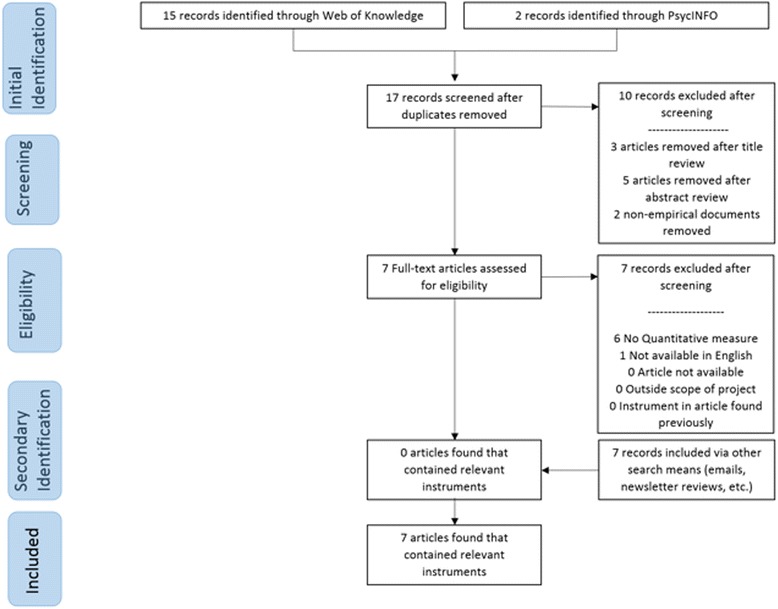
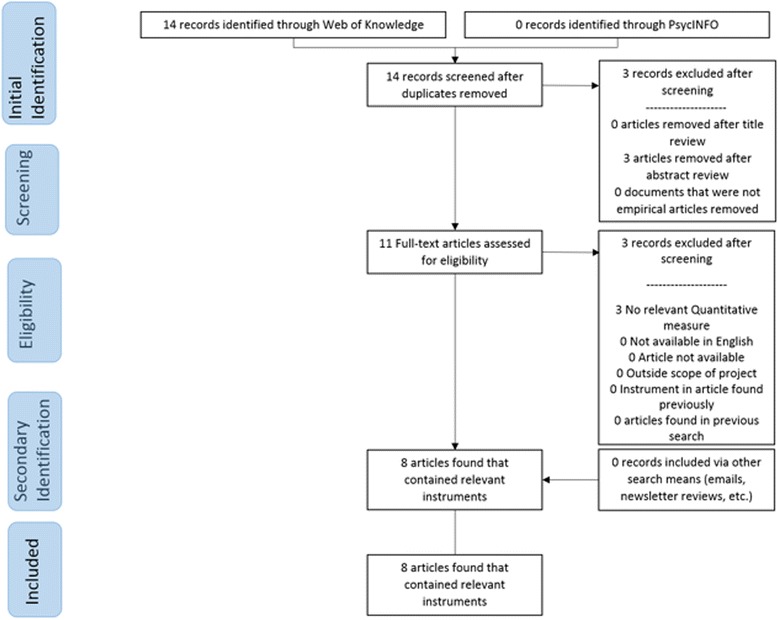
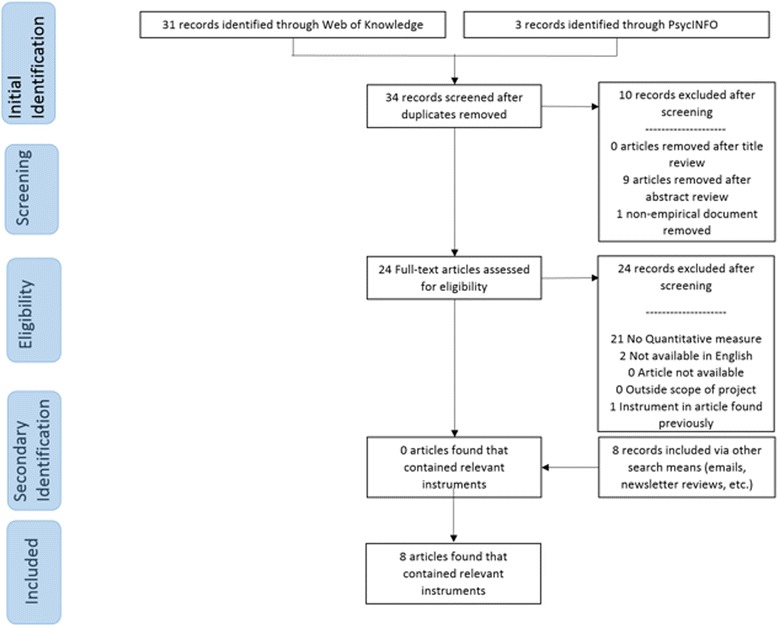
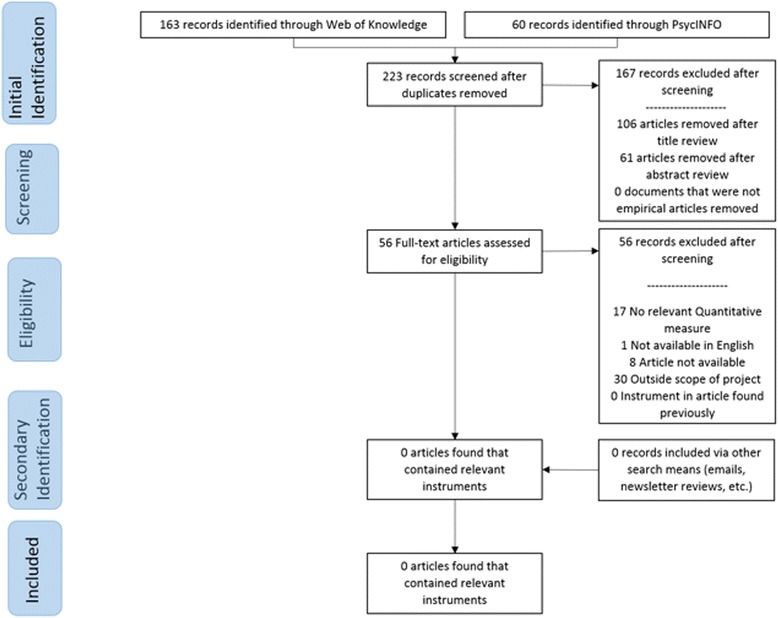
Verification
Claims the paper makes
The claims and statistics of this paper haven’t been checked yet.
Free: it reads the open-access text and checks the first 5 claims that cite a source we can check. Create a free account to check every claim.
Claims other papers make about this one
Each is checked against this paper’s own text: does it say what the citing paper says it does?
The source backs part of the claim, not all of it — or backs it for a different population, condition or comparison.
In the citing paper
“Furthermore, the lack of valid and pragmatic assessments for implementation-related factors and outcomes has been noted in the health services and implementation science literature [110, 111] and has been echoed by researchers across health-related interventions [112].”
From Barriers and facilitators to implementation of evidence-based task-sharing mental health interventions in low- and middle-income countries: a systematic review using implementation science frameworks (2022) · cites this paper as [111]
Experimental — accuracy not yet measuredThe source backs part of the claim, not all of it — or backs it for a different population, condition or comparison.
In the citing paper
“few if any have been assessed for other measurement properties that are of key importance to implementation researchers and other implementation stakeholders (e.g., intermediaries, policymakers, practice leaders), such as stability, responsiveness, and predictive validity [2–4].”
From Psychometric assessment of three newly developed implementation outcome measures (2017) · cites this paper as [2]
Experimental — accuracy not yet measuredThe cited source says what the claim attributes to it.
In the citing paper
“We now have systematic reviews of implementation outcomes [15] and their measurement properties in behavioral health [16], public policy [17], stroke care [7], and physical healthcare [18].”
From Ten years of implementation outcomes research: a scoping review (2023) · cites this paper as [16]
The cited source says what the claim attributes to it.
In the citing paper
“This assessment responds to the need for reliable measures within implementation science, specifically in the area of sustainability research (1, 32, 33).”
From Assessing the sustainability capacity of evidence-based programs in community and health settings (2022) · cites this paper as [33]
The cited source says what the claim attributes to it.
In the citing paper
“Despite their importance, existing measures of implementation outcomes have largely unknown psychometric and pragmatic qualities [2].”
From Psychometric assessment of three newly developed implementation outcome measures (2017) · cites this paper as [2]
1 more claim about this paper
Create a free account to see every claim other papers make about this one.
Self-check
Percentages, sums and reported differences re-computed from the paper’s own numbers.
The self-check needs the paper’s full text.
Citations
Cites
Quality criteria were proposed for measurement properties of health status questionnaires
Terwee, C. B., Bot, S. D. M., de Boer, M. R., van der Windt, D. A. W. M., Knol, D. L., Dekker, J., Bouter, L. M., & de Vet, H. C. W. (2007) · Journal of Clinical Epidemiology · doi:10.1016/j.jclinepi.2006.03.012 · Cited by 10,764 · cited 1×
“The EBA rating criteria were also informed by the work of Terwee and colleagues [10].”
Moore, G. C., & Benbasat, I. (1991) · Information Systems Research · doi:10.1287/isre.2.3.192 · Cited by 9,150 · cited 2×
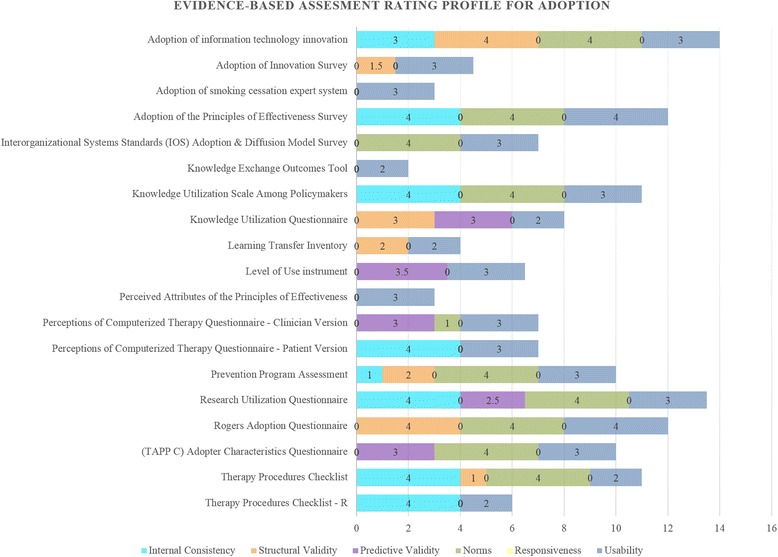
“The Adoption of Information Technology Innovation [16] scale had the highest overall rating (score = 14), with “ 4 — excellent ” ratings for structural validity and norms and “ 3 — good ” ratings for reliability and usability; however, no information about predictive validity is available.”
Proctor, E., Silmere, H., Raghavan, R., Hovmand, P., Aarons, G., Bunger, A., Griffey, R., & Hensley, M. (2011) · Administration and Policy in Mental Health and Mental Health Services Research · doi:10.1007/s10488-010-0319-7 · Cited by 8,721 · cited 10×
“Appropriateness (N = 7) is the perceived fit, relevance, or compatibility of the innovation or evidence based practice for a given practice setting, provider, or consumer; and/or perceived fit of the innovation to address a particular issue or problem [6].”
InfluentialTerwee, C. B., Mokkink, L. B., Knol, D. L., Ostelo, R. W. J. G., Bouter, L. M., & de Vet, H. C. W. (2012) · Quality of Life Research · doi:10.1007/s11136-011-9960-1 · Cited by 1,978 · cited 1×
“Raters used the conservative “worst score counts” methodology [12].”
Proctor, E. K., Landsverk, J., Aarons, G., Chambers, D., Glisson, C., & Mittman, B. (2009) · Administration and Policy in Mental Health and Mental Health Services Research · doi:10.1007/s10488-008-0197-4 · Cited by 1,894 · cited 1×
“Proctor and colleagues [5] articulated the following core set of seven implementation outcomes: acceptability, feasibility, uptake, penetration, cost, fidelity, and sustainability.”
Chaudoir, S. R., Dugan, A. G., & Barr, C. H. (2013) · Implementation Science · doi:10.1186/1748-5908-8-22 · Cited by 800 · cited 1×
“4 % [3] lacked criterion validity and 49.”
Weiner, B. J., Amick, H., & Lee, S.-Y. D. (2008) · Medical Care Research and Review · doi:10.1177/1077558708317802 · Cited by 786 · cited 1×
“science have been published [2–4], none have focused on implementation outcomes instruments.”
BackgroundSelf-citationGrimshaw, J., Eccles, M., Thomas, R., MacLennan, G., Ramsay, C., Fraser, C., & Vale, L. (2006) · Journal of General Internal Medicine · doi:10.1007/s11606-006-0269-7 · Cited by 631 · cited 1×
“Establishing the psychometric properties of implementation outcome instruments is a necessary step to ensuring that predictors, moderators, and mediators of implementation are identified and that comparative effectiveness of implementation strategies is measureable [8].”
Hunsley, J., & Mash, E. J. (2007) · Annual Review of Clinical Psychology · doi:10.1146/annurev.clinpsy.3.022806.091419 · Cited by 528
A national survey of practicing psychologists' attitudes toward psychotherapy treatment manuals
Addis, M. E., & Krasnow, A. D. (2000) · Journal of Consulting and Clinical Psychology · doi:10.1037/0022-006x.68.2.331 · Cited by 509 · cited 2×
“The Practitioner’s Attitudes toward Treatment Manuals [15] had the highest overall rating among implementation process acceptability instruments (total score = 17), with “4—excellent” ratings for reliability, structural validity, and norms; “3—good” rating for usability; and “2—adequate” rating for predictive validity.”
Cited by
Psychometric assessment of three newly developed implementation outcome measures
Weiner, B. J., Lewis, C. C., Stanick, C., Powell, B. J., Dorsey, C. N., Clary, A. S., Boynton, M. H., & Halko, H. (2017) · Implementation Science · doi:10.1186/s13012-017-0635-3 · Cited by 2,819
“Despite their importance, existing measures of implementation outcomes have largely unknown psychometric and pragmatic qualities [2].”
BackgroundSelf-citationLewis, C. C., Klasnja, P., Powell, B. J., Lyon, A. R., Tuzzio, L., Jones, S., Walsh-Bailey, C., & Weiner, B. (2018) · Frontiers in Public Health · doi:10.3389/fpubh.2018.00136 · Cited by 588
“Many of these outcomes are appropriately construed as latent variables, but others are manifest/observable in nature (30); a recent systematic review offers measures of these outcomes and measure meta-data (31).”
BackgroundSelf-citationChambers, D. A., & Norton, W. E. (2016) · American Journal of Preventive Medicine · doi:10.1016/j.amepre.2016.05.011 · Cited by 581
“Indeed, one of the key outcomes of implementation is that of fidelity, the degree to which an intervention is delivered as designed.(14,15) Fidelity measures are developed for the purpose of monitoring and maintaining integrity to the intervention, often focusing predominantly on the “core components” or “active ingre…”
BackgroundWoodward, E. N., Matthieu, M. M., Uchendu, U. S., Rogal, S., & Kirchner, J. E. (2019) · Implementation Science · doi:10.1186/s13012-019-0861-y · Cited by 470
The Handbook of Behavior Change
(2020) · Cambridge University Press eBooks · doi:10.1017/9781108677318 · Cited by 407
Ten years of implementation outcomes research: a scoping review
Proctor, E. K., Bunger, A. C., Lengnick-Hall, R., Gerke, D. R., Martin, J. K., Phillips, R. J., & Swanson, J. C. (2023) · Implementation Science · doi:10.1186/s13012-023-01286-z · Cited by 424
Means, A. R., Kemp, C. G., Gwayi-Chore, M.-C., Gimbel, S., Soi, C., Sherr, K., Wagenaar, B. H., Wasserheit, J. N., & Weiner, B. J. (2020) · Implementation Science · doi:10.1186/s13012-020-0977-0 · Cited by 418
“Author questionnaire respondents, in addition to CFIR utilizers from HICs, identified spread and scale as key missing constructs [50].”
Self-citationFinch, T. L., Girling, M., May, C. R., Mair, F. S., Murray, E., Treweek, S., McColl, E., Steen, I. N., Cook, C., Vernazza, C. R., et al. (2018) · BMC Medical Research Methodology · doi:10.1186/s12874-018-0591-x · Cited by 337
Stover, A. M., Haverman, L., van Oers, H. A., Greenhalgh, J., Potter, C. M., On behalf of the ISOQOL PROMs/PREMs in Clinical Practice Implementation Science Work Group, Ahmed, S., Greenhalgh, J., Gibbons, E., Haverman, L., et al. (2021) · Quality of Life Research · doi:10.1007/s11136-020-02564-9 · Cited by 308
Frank, H. E., Becker-Haimes, E. M., & Kendall, P. C. (2020) · Clinical Psychology: Science and Practice · doi:10.1111/cpsp.12330 · Cited by 297
“Of note, measurement development in implementation science is in its infancy (Lewis et al., 2015) and most implementation studies rely on measures with limited psychometric properties out of necessity.”
BackgroundInfluentialSindhwani, R., Afridi, S., Kumar, A., Banaitis, A., Luthra, S., & Singh, P. L. (2022) · Technology in Society · doi:10.1016/j.techsoc.2022.101887 · Cited by 282
Changing Behavior Using the Theory of Planned Behavior
Ajzen, I., & Schmidt, P. (2020) · The Handbook of Behavior Change · doi:10.1017/9781108677318.002 · Cited by 266
Fernandez, M. E., Walker, T. J., Weiner, B. J., Calo, W. A., Liang, S., Risendal, B., Friedman, D. B., Tu, S. P., Williams, R. S., Jacobs, S., et al. (2018) · Implementation Science · doi:10.1186/s13012-018-0736-7 · Cited by 254
Self-citationLe, P. D., Eschliman, E. L., Grivel, M. M., Tang, J., Cho, Y. G., Yang, X., Tay, C., Li, T., Bass, J., & Yang, L. H. (2022) · Implementation Science · doi:10.1186/s13012-021-01179-z · Cited by 233
Williams, N. J., & Beidas, R. S. (2019) · Journal of Child Psychology and Psychiatry · doi:10.1111/jcpp.12960 · Cited by 233
“A challenge to moving towards causal theory in implementation science is that to date, measurement has been weak in the field (Lewis et al., 2015).”
BackgroundPsychology's Replication Crisis and Clinical Psychological Science
Tackett, J. L., Brandes, C. M., King, K. M., & Markon, K. E. (2019) · Annual Review of Clinical Psychology · doi:10.1146/annurev-clinpsy-050718-095710 · Cited by 198
“…and valid research findings or improved patient health outcomes), but also by specific outcomes of the implementation strategies, such as increases in fidelity, widespread adoption, and increases in perceived acceptability, feasibility, and appropriateness (Lewis et al. 2015, Proctor et al. 2011).”
BackgroundLyon, A. R., Munson, S. A., Renn, B. N., Atkins, D. C., Pullmann, M. D., Friedman, E., & Areán, P. A. (2019) · JMIR Research Protocols · doi:10.2196/14990 · Cited by 187
“Indeed, recent reviews of implementation measurement instruments [30] and implementation strategies [31] indicate that attention to intervention-level determinants has been sparse.”
BackgroundRapley, T., Girling, M., Mair, F. S., Murray, E., Treweek, S., McColl, E., Steen, I. N., May, C. R., & Finch, T. L. (2018) · BMC Medical Research Methodology · doi:10.1186/s12874-018-0590-y · Cited by 193
Lyon, A. R., & Bruns, E. J. (2019) · School Mental Health · doi:10.1007/s12310-018-09306-w · Cited by 191
McKay, H., Naylor, P.-J., Lau, E., Gray, S. M., Wolfenden, L., Milat, A., Bauman, A., Race, D., Nettlefold, L., & Sims-Gould, J. (2019) · International Journal of Behavioral Nutrition and Physical Activity · doi:10.1186/s12966-019-0868-4 · Cited by 169
“Finally, there are few valid and reliable measures and tools – and sometimes none at all – for evaluating implementation and scale-up processes [20].”
BackgroundMethodQuantitative measures of health policy implementation determinants and outcomes: a systematic review
Allen, P., Pilar, M., Walsh-Bailey, C., Hooley, C., Mazzucca, S., Lewis, C. C., Mettert, K. D., Dorsey, C. N., Purtle, J., Kepper, M. M., et al. (2020) · Implementation Science · doi:10.1186/s13012-020-01007-w · Cited by 164
Self-citationMeasuring implementation outcomes: An updated systematic review of measures’ psychometric properties
Mettert, K., Lewis, C., Dorsey, C., Halko, H., & Weiner, B. (2020) · Implementation Research and Practice · doi:10.1177/2633489520936644 · Cited by 162
“Our systematic review and psychometric assessment revealed that evidence of measures’ reliability and validity is largely unknown or poor (Lewis et al., 2015).”
BackgroundMethodInfluentialSelf-citationMo, P. K. H., Ko, T. T., & Xin, M. (2018) · Child and Adolescent Psychiatry and Mental Health · doi:10.1186/s13034-018-0233-4 · Cited by 160
“Moreover, developing standardised evaluation methods for implementation science would contribute to the appraisal and comparison of diverse gatekeeper training programs [51].”
BackgroundMethodHermes, E. D., Lyon, A. R., Schueller, S. M., & Glass, J. E. (2019) · Journal of Medical Internet Research · doi:10.2196/11752 · Cited by 149
“As others have proposed, there may be theoretical divisions between these outcomes but little empirical evidence or practical means to measure distinctions between them [61].”
Shelton, R. C., Lee, M., Brotzman, L., Wolfenden, L., Nathan, N., & Wainberg, M. L. (2020) · International Journal of Behavioral Medicine · doi:10.1007/s12529-020-09848-x · Cited by 161
Changing Behavior Using the Model of Action Phases
Keller, L., Gollwitzer, P. M., & Sheeran, P. (2020) · The Handbook of Behavior Change · doi:10.1017/9781108677318.006 · Cited by 147
Quantitative approaches for the evaluation of implementation research studies
Smith, J. D., & Hasan, M. M. (2019) · Psychiatry Research · doi:10.1016/j.psychres.2019.112521 · Cited by 170
Kemp, C. G., Jarrett, B. A., Kwon, C.-S., Song, L., Jetté, N., Sapag, J. C., Bass, J., Murray, L., Rao, D., & Baral, S. (2019) · BMC Medicine · doi:10.1186/s12916-018-1237-x · Cited by 138
“Robust measures are increasingly available [25], including measures of acceptability, appropriateness, feasibility [85], and sustainability [86, 87], though there is a major need for continued development and validation to ensure these are relevant to stigma interventions and valid in LMIC settings.”
BackgroundMethodInfluentialFood Insecurity and Obesity: Research Gaps, Opportunities, and Challenges
Brown, A. G. M., Esposito, L. E., Fisher, R. A., Nicastro, H. L., Tabor, D. C., & Walker, J. R. (2019) · Translational Behavioral Medicine · doi:10.1093/tbm/ibz117 · Cited by 136
“This would include outcomes such as acceptability, adoption, appropriateness, cost, feasibility, fidelity, penetration, and sustainability that are key in the effective translation of evidence-based outcomes into any population [51].”
BackgroundIs Implementation Fidelity Important? A Systematic Review on School-Based Mental Health Programs
Andrade, R. M. R., & Leiva, L. (2018) · Contemporary School Psychology · doi:10.1007/s40688-018-0175-0 · Cited by 143
Ugalde, A., Gaskin, C. J., Rankin, N. M., Schofield, P., Boltong, A., Aranda, S., Chambers, S., Krishnasamy, M., & Livingston, P. M. (2019) · Psycho-Oncology · doi:10.1002/pon.5018 · Cited by 126
Hull, L., Goulding, L., Khadjesari, Z., Davis, R. E., Healey, A., Bakolis, I., & Sevdalis, N. (2019) · Implementation Science · doi:10.1186/s13012-019-0897-z · Cited by 139
Franklin, B. J., Gandhi, T. K., Bates, D. W., Huancahuari, N., Morris, C. A., Pearson, M. M., Bass, M. B., & Goralnick, E. (2020) · BMJ Quality & Safety · doi:10.1136/bmjqs-2019-009911 · Cited by 128
Leveraging Implementation Science to Improve Cancer Care Delivery and Patient Outcomes
Mitchell, S. A., & Chambers, D. (2017) · Journal of Oncology Practice · doi:10.1200/jop.2017.024729 · Cited by 122
Stanick, C. F., Halko, H. M., Nolen, E. A., Powell, B. J., Dorsey, C. N., Mettert, K. D., Weiner, B. J., Barwick, M., Wolfenden, L., Damschroder, L. J., et al. (2021) · Translational Behavioral Medicine · doi:10.1093/tbm/ibz164 · Cited by 117
“Although some implementation science measures have been psychometrically evaluated [3,4], to date, there has been little explicit focus on developing measures that are pragmatic, and we have no capacity to evaluate the quality of their pragmatic properties.”
BackgroundSelf-citationClinton-McHarg, T., Yoong, S. L., Tzelepis, F., Regan, T., Fielding, A., Skelton, E., Kingsland, M., Ooi, J. Y., & Wolfenden, L. (2016) · Implementation Science · doi:10.1186/s13012-016-0512-5 · Cited by 116
“To date, the SIRC review has uncovered 420 instru- ments related to 34 of the CFIR constructs and 104 instruments related to Proctor and colleagues’ IOF [16, 17].”
BackgroundMethodInfluentialAdvancing implementation science through measure development and evaluation: a study protocol
Lewis, C. C., Weiner, B. J., Stanick, C., & Fischer, S. M. (2015) · Implementation Science · doi:10.1186/s13012-015-0287-0 · Cited by 115
Self-citationChanging Behavior Using the Health Action Process Approach
Schwarzer, R., & Hamilton, K. (2020) · The Handbook of Behavior Change · doi:10.1017/9781108677318.007 · Cited by 102
Reilly, K. L., Kennedy, S., Porter, G., & Estabrooks, P. (2020) · Frontiers in Public Health · doi:10.3389/fpubh.2020.00430 · Cited by 102
Implementation outcome instruments for use in physical healthcare settings: a systematic review
Khadjesari, Z., Boufkhed, S., Vitoratou, S., Schatte, L., Ziemann, A., Daskalopoulou, C., Uglik-Marucha, E., Sevdalis, N., & Hull, L. (2020) · Implementation Science · doi:10.1186/s13012-020-01027-6 · Cited by 92
“[13] that the assessment of implementation cost and penetration may be more suited to formula-based instruments as they do not reflect latent constructs.”
BackgroundMethodResultInfluentialAssessing the usability of complex psychosocial interventions: The Intervention Usability Scale
Lyon, A. R., Pullmann, M. D., Jacobson, J., Osterhage, K. P., Achkar, M. A., Renn, B. N., Munson, S. A., & Areán, P. A. (2021) · Implementation Research and Practice · doi:10.1177/2633489520987828 · Cited by 101
“However, despite the existence of over a hundred instruments available to assess standard implementation outcomes (Lewis, Fischer, et al., 2015), no measures exist to evaluate CHI usability or other aspects of design quality (Lewis, Stanick, et al., 2015).”
Livet, M., Haines, S. T., Curran, G. M., Seaton, T., Ward, C. S., Sorensen, T. D., & McClurg, M. R. (2018) · Pharmacotherapy The Journal of Human Pharmacology and Drug Therapy · doi:10.1002/phar.2114 · Cited by 91
Opportunities for Epidemiologists in Implementation Science: A Primer
Neta, G. I., Brownson, R. C., & Chambers, D. (2017) · American Journal of Epidemiology · doi:10.1093/aje/kwx323 · Cited by 98
Organizational Readiness for Change: What We Know, What We Think We Know, and What We Need to Know
Weiner, B. J., Clary, A., Klaman, S. L., Turner, K. L., & Alishahi-Tabriz, A. (2020) · Springer eBooks · doi:10.1007/978-3-030-03874-8_5 · Cited by 110
Self-citationVis, C., Ruwaard, J., Finch, T. L., Rapley, T., Beurs, D. P. D., van Stel, H. F., van Lettow, B., Mol, M., Kleiboer, A. M., Riper, H. M., et al. (2019) · Journal of Medical Internet Research · doi:10.2196/12376 · Cited by 90
“However, measuring implementation outcomes reliably remains a challenge [11,12].”
BackgroundMethodHall, A., Shoesmith, A., Doherty, E., McEvoy, B., Mettert, K., Lewis, C. C., Wolfenden, L., Yoong, S., Kingsland, M., Shelton, R. C., et al. (2022) · Implementation Science · doi:10.1186/s13012-022-01252-1 · Cited by 81
“There are two systematic reviews exploring measures of sustainability as an implementation outcome in health care settings focused on mental health and substance use [18, 20].”
BackgroundMethodSelf-citationChanging Behavior Using Social Cognitive Theory
Łuszczyńska, A., & Schwarzer, R. (2020) · Cambridge University Press eBooks · doi:10.1017/9781108677318.003 · Cited by 104
Powell, B. J., Mettert, K. D., Dorsey, C. N., Weiner, B. J., Stanick, C. F., Lengnick-Hall, R., Ehrhart, M. G., Aarons, G. A., Barwick, M. A., Damschroder, L. J., et al. (2021) · Implementation Research and Practice · doi:10.1177/26334895211018862 · Cited by 79
“This is more reflective of the range of measure performance than often used “top score” or “worst score counts” methods (Lewis et al., 2015; Terwee et al., 2012).”
BackgroundMethodSelf-citationde la Salud, O. P. (2022) · Revista Panamericana de Salud Pública · doi:10.26633/rpsp.2022.82 · Cited by 115
Systematic Review of Quantitative Measures of Stakeholder Engagement
Bowen, D. J., Hyams, T. C., Goodman, M. S., West, K., Harris-Wai, J. N., & Yu, J. (2017) · Clinical and Translational Science · doi:10.1111/cts.12474 · Cited by 79
Gardner, B., Rebar, A. L., & Lally, P. J. (2020) · Cambridge University Press eBooks · doi:10.1017/9781108677318.041 · Cited by 85
Advancing the pragmatic measurement of sustainment: a narrative review of measures
Moullin, J. C., Sklar, M., Green, A., Dickson, K. S., Stadnick, N. A., Reeder, K., & Aarons, G. A. (2020) · Implementation Science Communications · doi:10.1186/s43058-020-00068-8 · Cited by 72
Dziedzic, K., French, S., Davis, A. M., Geelhoed, E. A., & Porcheret, M. (2016) · Best Practice & Research Clinical Rheumatology · doi:10.1016/j.berh.2016.08.004 · Cited by 81
Haroz, E. E., Bolton, P., Nguyen, A. J., Lee, C., Bogdanov, S., Bass, J., Singh, N. S., Doty, B., & Murray, L. (2019) · BMC Health Services Research · doi:10.1186/s12913-019-4097-y · Cited by 70
“information on reliability, 26% on structural validity, 18% on predictive validity and 4% on responsiveness [3].”
BackgroundChanging Behavior Using Self-Determination Theory
Hagger, M. S., Hankonen, N. E., Chatzisarantis, N. L. D., & Ryan, R. M. (2020) · Cambridge University Press eBooks · doi:10.1017/9781108677318.008 · Cited by 86
Implementation Science Research in Communication Sciences and Disorders: A Scoping Review
Douglas, N., Feuerstein, J. L., Oshita, J. Y., Schliep, M. E., & Danowski, M. (2022) · American Journal of Speech-Language Pathology · doi:10.1044/2021_ajslp-21-00126 · Cited by 69
Zipfel, N., Horreh, B., Hulshof, C. T. J., de Boer, A. G. E. M., & van der Burg-Vermeulen, S. J. (2022) · BMJ Open · doi:10.1136/bmjopen-2021-058630 · Cited by 74
Roberts, M. C., Mensah, G. A., & Khoury, M. J. (2019) · Ethnicity & Disease · doi:10.18865/ed.29.s1.187 · Cited by 68
Weiner, B. J., Mettert, K. D., Dorsey, C. N., Nolen, E. A., Stanick, C., Powell, B. J., & Lewis, C. C. (2020) · Implementation Research and Practice · doi:10.1177/2633489520933896 · Cited by 58
“negative assessment of a PAPERS property than the “worst counts” approach wherein a PAPERS property is assigned the lowest rating for that property when there are multiple ratings (Lewis et al., 2015; Terwee et al., 2012).”
BackgroundSelf-citationThe case for prioritizing implementation strategy fidelity measurement: benefits and challenges
Akiba, C. F., Powell, B. J., Pence, B. W., Nguyen, M. X. B., Golin, C., & Go, V. (2022) · Translational Behavioral Medicine · doi:10.1093/tbm/ibab138 · Cited by 59
Warner, L. M., & French, D. (2020) · Cambridge University Press eBooks · doi:10.1017/9781108677318.032 · Cited by 79
Eshun‐Wilson, I., Awotiwon, A., Germann, A., Amankwaa, S. A., Ford, N. P., Schwartz, S., Baral, S., & Geng, E. (2021) · PLoS Medicine · doi:10.1371/journal.pmed.1003646 · Cited by 67
Guerin, R. J., Glasgow, R. E., Tyler, A. N., Rabin, B. A., & Huebschmann, A. G. (2022) · Safety Science · doi:10.1016/j.ssci.2022.105763 · Cited by 63
“As a newer field, quantitative assessment in D & I science is challenged by measurement issues, and work in this area is under-developed but rapidly expanding (Lewis et al., 2015; Lewis et al., 2018a, 2018b; Martinez et al., 2014; Weiner, 2021).”
BackgroundMethodJames, S., Thompson, R. W., & Ringle, J. L. (2017) · Journal of Emotional and Behavioral Disorders · doi:10.1177/1063426616687083 · Cited by 67
“Rapid advances in the field of implementation science have led to the development of many new measures (see Lewis et al., 2015).”
BackgroundMethodMapping the growing discipline of dissemination and implementation science in health
Norton, W. E., Lungeanu, A., Chambers, D. A., & Contractor, N. (2017) · Scientometrics · doi:10.1007/s11192-017-2455-2 · Cited by 53
“, measurement instruments (Lewis et al. 2015; Rabin et al. 2012) and measurement repositories (Rabin et al.”
Changing Behavior Using Ecological Models
Salmon, J., Hesketh, K. D., Arundell, L., Downing, K. L., & Biddle, S. (2020) · Cambridge University Press eBooks · doi:10.1017/9781108677318.017 · Cited by 89
Willmeroth, T., Wesselborg, B., & Kuske, S. (2019) · INQUIRY: The Journal of Health Care Organization, Provision, and Financing · doi:10.1177/0046958019861257 · Cited by 53
Psychometric Testing of the German Versions of Three Implementation Outcome Measures
Kien, C., Griebler, U., Schultes, M.-T., Thaler, K. J., & Stamm, T. (2021) · Global Implementation Research and Applications · doi:10.1007/s43477-021-00019-y · Cited by 56
Sabben, G., Mudhune, V., Ondenge, K., Odero, I. A., Ndivo, R., Akelo, V., & Winskell, K. (2019) · JMIR mhealth and uhealth · doi:10.2196/13049 · Cited by 58
“Although acceptability is understood to be a key aspect of early intervention development [9], definitions of the term acceptability with regard to an intervention are inconsistent; reliable measures to assess this construct are few [27].”
Moullin, J. C., Ehrhart, M. G., & Aarons, G. A. (2018) · Implementation Science · doi:10.1186/s13012-018-0782-1 · Cited by 52
“Improving the availability of measurement tools with sound psychometric properties has been a priority in implementation science for many years [14].”
BackgroundMcHugh, S., Dorsey, C. N., Mettert, K., Purtle, J., Bruns, E., & Lewis, C. C. (2020) · Implementation Research and Practice · doi:10.1177/2633489520940022 · Cited by 51
“Similar to other systematic reviews of implementation measures (Lewis et al., 2015), traditional systematic review methods were not useful for identifying articles with measures of outer setting constructs.”
ResultSelf-citationon behalf of the ImpleMentAll consortium, Bührmann, L., Schuurmans, J., Ruwaard, J., Fleuren, M., Etzelmüller, A., Piera-Jiménez, J., Finch, T., Rapley, T., Potthoff, S., et al. (2020) · Trials · doi:10.1186/s13063-020-04686-4 · Cited by 51
Wozney, L., McGrath, P. J., Gehring, N. D., Bennett, K., Huguet, A., Hartling, L., Dyson, M. P., Soleimani, A., & Newton, A. S. (2018) · JMIR Mental Health · doi:10.2196/mental.9655 · Cited by 50
“We recommend increased emphasis on underdeveloped implementation outcomes like feasibility, where few comprehensive and validated instruments exist [98].”
Aldridge, L. R., Kemp, C. G., Bass, J., Danforth, K., Kane, J. C., Hamdani, S. U., Marsch, L. A., Uribe-Restrepo, J. M., Nguyen, A. J., Bolton, P. A., et al. (2022) · Implementation Science Communications · doi:10.1186/s43058-022-00301-6 · Cited by 51
“Most implementation measures originate in Western high-income countries and rely on assumptions about healthcare that do not necessarily hold globally, often reducing their appropriateness for use within LMIC or lower-resource contexts within high-income countries [12, 13].”
BackgroundChanging Behavior Using Habit Theory
Orbell, S., & Verplanken, B. (2020) · Cambridge University Press eBooks · doi:10.1017/9781108677318.013 · Cited by 64
Dev, R., Woods, N. F., Unger, J. A., Kinuthia, J., Matemo, D., Farid, S., Begnel, E. R., Kohler, P., & Drake, A. L. (2019) · Reproductive Health · doi:10.1186/s12978-019-0767-9 · Cited by 48
Oh, A., Vinson, C., & Chambers, D. (2020) · Translational Behavioral Medicine · doi:10.1093/tbm/ibaa018 · Cited by 47
Changing Behavior: A Theory- and Evidence-Based Approach
Hagger, M. S., Cameron, L. D., Hamilton, K., Hankonen, N. E., & Lintunen, T. (2020) · Cambridge University Press eBooks · doi:10.1017/9781108677318.001 · Cited by 63
Shuman, C. J., Ehrhart, M. G., Torres, E. M., Veliz, P., Kath, L. M., VanAntwerp, K., Banaszak‐Holl, J., Titler, M. G., & Aarons, G. A. (2020) · Worldviews on Evidence-Based Nursing · doi:10.1111/wvn.12402 · Cited by 46
“Studies are needed to demonstrate the validity and reliability of pragmatic measures of leadership behaviors specific to EBP implementation (Gifford et al., 2018; Lewis et al., 2015).”
BackgroundSquires, J. E., Hutchinson, A. M., Coughlin, M., Bashir, K., Curran, J., Grimshaw, J., Dorrance, K., Aloisio, L. D., Brehaut, J., Francis, J., et al. (2021) · International Journal of Health Policy and Management · doi:10.34172/ijhpm.2021.32 · Cited by 58
What’s known about implementing co-located paediatric integrated care: a scoping review
Platt, R. E., Spencer, A. E., Burkey, M. D., Vidal, C., Polk, S., Bettencourt, A. F., Jain, S., Stratton, J., & Wissow, L. S. (2018) · International Review of Psychiatry · doi:10.1080/09540261.2018.1563530 · Cited by 48
“Furthermore, lack of evidence for psychometric strength of the tools utilized in implementation research is an important barrier to the measurement of integrated paediatric behavioural health implementation (Lewis et al., 2015).”
BackgroundPlanning and Implementation Intention Interventions
Rhodes, R. E., Grant, S. J., & de Bruijn, G. (2020) · Cambridge University Press eBooks · doi:10.1017/9781108677318.039 · Cited by 49
An implementation science primer for psycho-oncology: translating robust evidence into practice
Rankin, N. M., Butow, P. N., Hack, T. F., Shaw, J., Shepherd, H. L., Ugalde, A., & Sales, A. E. (2019) · Journal of Psychosocial Oncology Research and Practice · doi:10.1097/or9.0000000000000014 · Cited by 51
Attitudes and Persuasive Communication Interventions
Hamilton, K., & Johnson, B. T. (2020) · Cambridge University Press eBooks · doi:10.1017/9781108677318.031 · Cited by 60
Changing Behavior Using Integrated Theories
Hagger, M. S., & Hamilton, K. (2020) · Cambridge University Press eBooks · doi:10.1017/9781108677318.015 · Cited by 51
Ryan, N., Vieira, D. L., Gyamfi, J., Ojo, T., Shelley, D., Ogedegbe, O., Iwelunmor, J., & Peprah, E. K. (2022) · Implementation Science Communications · doi:10.1186/s43058-021-00236-4 · Cited by 49
Implementation Science in Perioperative Care
Lane-Fall, M. B., Cobb, B. T., Cené, C. W., & Beidas, R. S. (2018) · Anesthesiology Clinics · doi:10.1016/j.anclin.2017.10.004 · Cited by 42
Implementation of eHealth Interventions Across the HIV Care Cascade: a Review of Recent Research
Kemp, C. G., & Velloza, J. (2018) · Current HIV/AIDS Reports · doi:10.1007/s11904-018-0415-y · Cited by 44
Shepherd, H. L., Geerligs, L., Butow, P. N., Masya, L. M., Shaw, J., Price, M. A., Dhillon, H. M., Hack, T. F., Girgis, A., Luckett, T., et al. (2019) · Frontiers in Public Health · doi:10.3389/fpubh.2019.00293 · Cited by 42
“It is typically measured by comparing the original evidence-based intervention and the disseminated/implemented intervention in terms of factors such as adherence, quality of delivery, program component differentiation, exposure to the intervention, and participant responsiveness or involvement (26, 27, 33).”
BackgroundThompson, H. M., Kronk, C. A., Feasley, K., Pachwicewicz, P., & Karnik, N. S. (2021) · International Journal of Environmental Research and Public Health · doi:10.3390/ijerph18126599 · Cited by 42
“Another patientcentered reason for low penetration may have to do with the appropriateness of GI data collection during a particular encounter [25,26].”
BackgroundKey recommendations from the 2021 “inclusion of older adults in clinical research” workshop
Petrovsky, D., Ðoàn, L. N., Loizos, M., O’Conor, R. M., Prochaska, M. T., Tsang, M., Hopman, R. J., Klinedinst, T. C., Mathur, A., Bandeen‐Roche, K., et al. (2022) · Journal of Clinical and Translational Science · doi:10.1017/cts.2022.1 · Cited by 45
“In addition, implementation outcomes can be incorporated into study design to evaluate intervention success [26,27].”
Structure, Process, and Outcome Data of AWHONN’s Postpartum Hemorrhage Quality Improvement Project
Bingham, D., Scheich, B., & Bateman, B. T. (2018) · Journal of Obstetric, Gynecologic & Neonatal Nursing · doi:10.1016/j.jogn.2018.05.002 · Cited by 41
Waller, G., Finch, T. L., Giles, E. L., & Newbury‐Birch, D. (2017) · Implementation Science · doi:10.1186/s13012-017-0659-8 · Cited by 45
McLoughlin, G. M., Allen, P. M., Walsh‐Bailey, C., & Brownson, R. C. (2021) · Implementation Science Communications · doi:10.1186/s43058-021-00169-y · Cited by 46
An introduction to implementation evaluation of school-based interventions
Schultes, M.-T. (2021) · European Journal of Developmental Psychology · doi:10.1080/17405629.2021.1976633 · Cited by 40
“Still, there is a lack of validated instruments that were developed for implementation evaluations in school settings (see Clinton-McHarg et al., 2016; Lewis et al., 2015).”
BackgroundTarrant, M., Haslam, C., Carter, M., Calitri, R., & Haslam, S. A. (2020) · Cambridge University Press eBooks · doi:10.1017/9781108677318.044 · Cited by 43
Risk assessments for violence and reoffending: Implementation and impact on risk management.
Viljoen, J. L., & Vincent, G. M. (2020) · Clinical Psychology Science and Practice · doi:10.1111/cpsp.12378 · Cited by 40
Czosnek, L., Zopf, E. M., Cormie, P., Rosenbaum, S., Richards, J. A., & Rankin, N. M. (2022) · Implementation Science Communications · doi:10.1186/s43058-022-00337-8 · Cited by 44
Kien, C., Schultes, M.-T., Szeląg, M., Schoberberger, R., & Gartlehner, G. (2018) · Implementation Science · doi:10.1186/s13012-018-0837-3 · Cited by 39
Chapman, A., Rankin, N. M., Jongebloed, H., Yoong, S. L., White, V., Livingston, P. M., Hutchinson, A. M., & Ugalde, A. (2023) · Systematic Reviews · doi:10.1186/s13643-023-02285-3 · Cited by 36
Metadata
- Authors
- Lewis, C. C., Fischer, S., Weiner, B. J., Stanick, C., Kim, M., & Martinez, R. G.
- Affiliations
- University of Washington (US)
- Indiana University Bloomington (US)
- University of North Carolina at Chapel Hill (US)
- University of Montana (US)
- Virginia Commonwealth University (US)
- Corresponding author
- Lewis, Cara C.
- Venue
- Implementation Science
- Published
- 2015-11-04
- Volume
- 10
- Issue
- 1
- Pages
- 155-155
- ISSN
- 1748-5908 (ISSN-L)
- PMC
- PMC4634818
- OpenAlex
- W2120941905
- Semantic Scholar
- edba1483b061fe1b9a35dd81f979980308ce3525
- Cited by
- 430
- References
- 26
- Citations by year
- 2026: 24 · 2025: 24 · 2024: 33 · 2023: 58 · 2022: 58 · 2021: 51 · 2020: 100 · 2019: 36 · 2018: 25 · 2017: 15 · 2016: 5 · 2015: 1
- FWCI
- 2.76
- Type
- journal article
- Language
- en
- Open access
- gold
- doi.org
- Licence
- Locations
- Implementation Science (publishedVersion, cc-by)
- PubMed (publishedVersion)
- Carolina Digital Repository (University of North Carolina at Chapel Hill) (submittedVersion)
- VCU Scholars Compass (Virginia Commonwealth University) (submittedVersion, cc-by)
- NORA - Norwegian Open Research Archives (submittedVersion, cc-by)
- Funders
- Georgia Clinical and Translational Science Alliance
- National Institutes of Health (2010-2015, UL1TR000083)
- National Institute of Mental Health (R01MH106510)
- National Center for Advancing Translational Sciences
- Topics
- Health Sciences › Health Professions › General Health Professions › Health Policy Implementation Science
- Health Sciences › Nursing › Research and Theory › Health Education and Validation
- Social Sciences › Decision Sciences › Statistics, Probability and Uncertainty › Meta-analysis and systematic reviews
- Keywords
- implementation outcomes, psychometric properties, mental health services, behavioral health services, acceptability, adoption, fidelity, feasibility, cost, penetration, sustainability, measurement gaps
- MeSH terms
- Diffusion of Innovation, Humans, Mental Health Services, Psychometrics, Reproducibility of Results, Program Evaluation, Evidence-Based Practice
About these checks
Registry, retraction, Cites and statistics results are computed, not judged, with one exception: a printed reference that no index lists is read once by a model before it counts as a citation error. Claims are extracted by a model and kept only when their quote appears verbatim in the text; each cited source is then checked, with a model’s help, for whether it says what the claim relies on. Those verdicts can be wrong — read the claim’s quote and the cited source before relying on one.
Statistics and arithmetic are recomputed, not judged.
Confidence bands are shown only for fields calibrated on our annotated test set. None is calibrated yet, so no band is shown.
What counts as a claim ›How we measure confidence ›How we check this ›
Are you an author, or do you see a problem with this page? Request a review
Data sources
Bibliographic data: Semantic Scholar, OpenAlex, Crossref.
Contains information from the Semantic Scholar Academic Graph Datasets, made available under the ODC Attribution License (ODC-BY 1.0).
Semantic Scholar’s data is described in: Kinney, R., et al. (2023). The Semantic Scholar Open Data Platform. arXiv:2301.10140.
