

Evaluating and optimizing the consolidated framework for implementation research (CFIR) for use in low- and middle-income countries: a systematic review
Open accessThe DOI matches its Crossref record; 61 of the 61 references it cites were found in a registry or an index.
Abstract
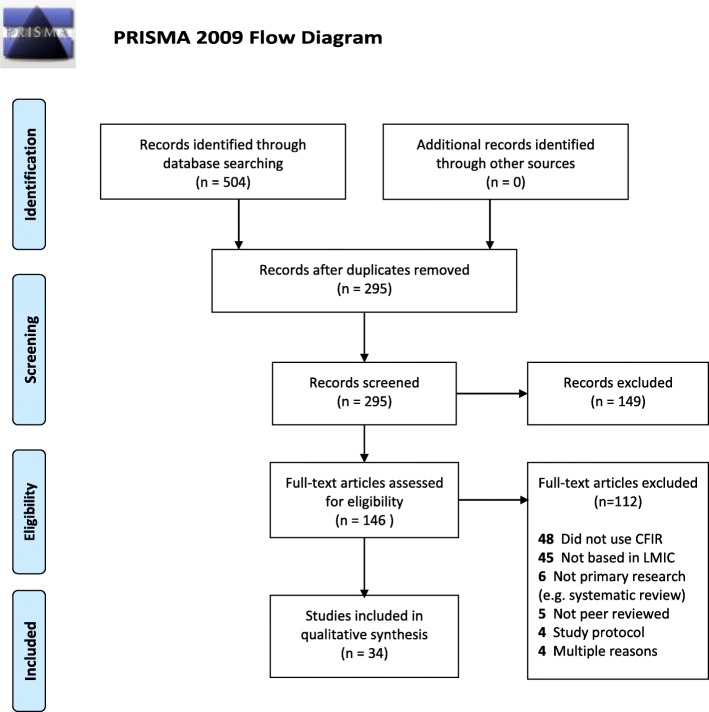
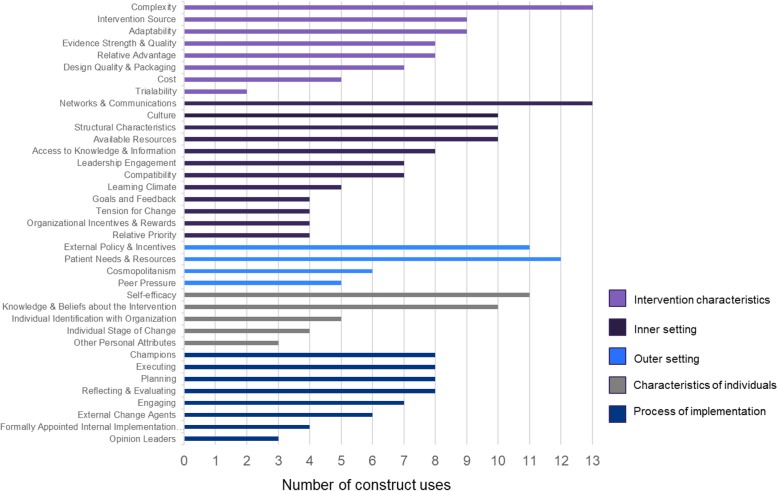
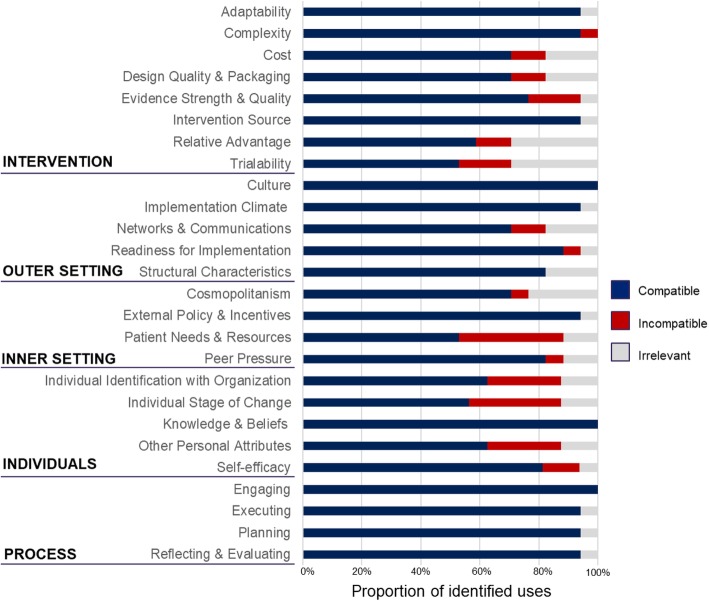
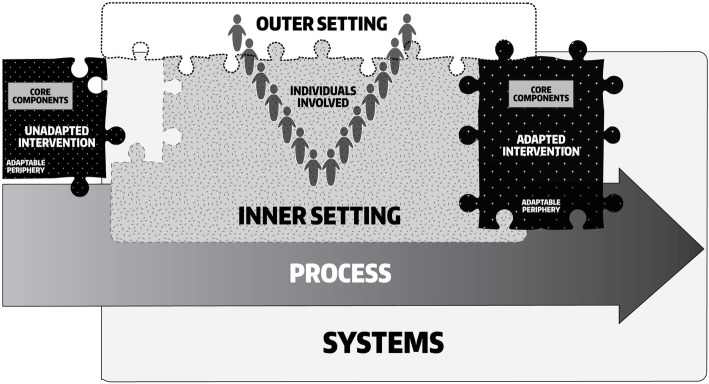
Background: The Consolidated Framework for Implementation Research (CFIR) is a determinants framework that may require adaptation or contextualization to fit the needs of implementation scientists in low- and middle-income countries (LMICs). The purpose of this review is to characterize how the CFIR has been applied in LMIC contexts, to evaluate the utility of specific constructs to global implementation science research, and to identify opportunities to refine the CFIR to optimize utility in LMIC settings. Methods: A systematic literature review was performed to evaluate the use of the CFIR in LMICs. Citation searches were conducted in Medline, CINAHL, PsycINFO, CINAHL, SCOPUS, and Web of Science. Data abstraction included study location, study design, phase of implementation, manner of implementation (ex., data analysis), domains and constructs used, and justifications for use, among other variables. A standardized questionnaire was sent to the corresponding authors of included studies to determine which CFIR domains and constructs authors found to be compatible with use in LMICs and to solicit feedback regarding ways in which CFIR performance could be improved for use in LMICs. Results: Our database search yielded 504 articles, of which 34 met final inclusion criteria. The studies took place across 21 countries and focused on 18 different health topics. The studies primarily used qualitative study designs (68%). Over half (59%) of the studies applied the CFIR at study endline, primarily to guide data analysis or to contextualize study findings. Nineteen (59%) of the contacted authors participated in the survey. Authors unanimously identified culture and engaging as compatible with use in global implementation research. Only two constructs, patient needs and resources and individual stages of change were commonly identified as incompatible with use. Author feedback centered on team level influences on implementation, as well as systems characteristics, such as health system architecture. We propose a “Characteristics of Systems” domain and eleven novel constructs be added to the CFIR to increase its compatibility for use in LMICs. Conclusions: These additions provide global implementation science practitioners opportunities to account for systems-level determinants operating independently of the implementing organization. Newly proposed constructs require further reliability and validity assessments. Trial registration: PROSPERO, CRD42018095762
Overview
The claims and statistics of this paper haven’t been checked yet.
Free: it reads the open-access text and checks the first 5 claims that cite a source we can check. Create a free account to check every claim.
Integrity signals
Registry
Cites
Statistics
Figures
Verification
Claims the paper makes
The claims and statistics of this paper haven’t been checked yet.
Free: it reads the open-access text and checks the first 5 claims that cite a source we can check. Create a free account to check every claim.
Claims other papers make about this one
Each is checked against this paper’s own text: does it say what the citing paper says it does?
The source backs part of the claim, not all of it — or backs it for a different population, condition or comparison.
In the citing paper
“The updated CFIR adds constructs to capture the potential influence of Local Attitudes, i.e., sociocultural values and beliefs, and Local Conditions, i.e., economic, environmental, political, and/or technological conditions, on the willingness and ability of entities within the Outer Setting to support implementation and delivery of the innovation [42–47]”
From The updated consolidated framework for implementation research based on user feedback (2022) · cites this paper as [42]
Experimental — accuracy not yet measuredThe source backs part of the claim, not all of it — or backs it for a different population, condition or comparison.
In the citing paper
“a few best practices have been added: Teaming [42, 46, 73], Assessing Needs [46, 47], Assessing Context, Tailoring Strategies [14], and Adapting [45, 74, 75].”
From The updated consolidated framework for implementation research based on user feedback (2022) · cites this paper as [42]
Experimental — accuracy not yet measuredThe source backs part of the claim, not all of it — or backs it for a different population, condition or comparison.
In the citing paper
“Means et al. further recommended that studies encompassing dual resource-limited subgroups must conduct systematic cross-group comparisons to disentangle divergent barriers and enablers: LMICs suffer nationwide systemic underinvestment, whereas health inequities in high-income nations stem from localized uneven resource distribution.”
From Implementation and translation of evidence-based dietary strategies for type 2 diabetes in resource-limited settings: a scoping review based on the CFIR framework (2026) · cites this paper as [8]
Experimental — accuracy not yet measuredThe source backs part of the claim, not all of it — or backs it for a different population, condition or comparison.
In the citing paper
“This broad two-tier classification is methodologically justified by prior implementation science research reported by Means et al. (8), who conducted a systematic review of CFIR applications across LMIC contexts.”
From Implementation and translation of evidence-based dietary strategies for type 2 diabetes in resource-limited settings: a scoping review based on the CFIR framework (2026) · cites this paper as [8]
Experimental — accuracy not yet measuredThe cited source says what the claim attributes to it.
In the citing paper
“These constructs are especially important for innovations that require support from community entities, such as Housing First models of care [48], and for capturing common resource constraints in LMICs [42].”
From The updated consolidated framework for implementation research based on user feedback (2022) · cites this paper as [42]
8 more claims about this paper
Create a free account to see every claim other papers make about this one.
Self-check
Percentages, sums and reported differences re-computed from the paper’s own numbers.
The self-check needs the paper’s full text.
Citations
Cites
Preferred Reporting Items for Systematic Reviews and Meta-Analyses: the PRISMA statement
Moher, D., Liberati, A., Tetzlaff, J., Altman, D. G., & for the PRISMA Group (2009) · BMJ · doi:10.1136/bmj.b2535 · Cited by 83,823
Preferred Reporting Items for Systematic Reviews and Meta-Analyses: The PRISMA Statement
Moher, D., Liberati, A., Tetzlaff, J., Altman, D. G., & The PRISMA Group (2009) · PLoS Medicine · doi:10.1371/journal.pmed.1000097 · Cited by 64,042 · cited 1×
“The systematic review protocol is registered in the International Prospective Register of Systematic Reviews (PROSPERO #CRD42018095762) and followed the Preferred Reporting Items for Systematic Reviews and MetaAnalyses (PRISMA) guidelines (Additional file 1) [6].”
Harris, P. A., Taylor, R., Thielke, R., Payne, J., Gonzalez, N., & Conde, J. G. (2009) · Journal of Biomedical Informatics · doi:10.1016/j.jbi.2008.08.010 · Cited by 51,384 · cited 1×
“We designed a standardized questionnaire in REDCap, and sent the questionnaire to the corresponding author of most included studies (surveys were not sent to authors of studies published immediately prior to paper submission) [9].”
MethodPreferred reporting items for systematic reviews and meta-analyses: the PRISMA Statement.
(2009) · PubMed Central · Cited by 44,859
Damschroder, L. J., Aron, D. C., Keith, R. E., Kirsh, S. R., Alexander, J. A., & Lowery, J. C. (2009) · Implementation Science · doi:10.1186/1748-5908-4-50 · Cited by 14,496 · cited 5×
“Damschroder and colleagues introduced the CFIR in 2009 as a meta-theoretical framework compiling nineteen preceding implementation theories [2].”
BackgroundInfluentialProctor, E., Silmere, H., Raghavan, R., Hovmand, P., Aarons, G., Bunger, A., Griffey, R., & Hensley, M. (2011) · Administration and Policy in Mental Health and Mental Health Services Research · doi:10.1007/s10488-010-0319-7 · Cited by 8,721 · cited 1×
“Sustainability is a key implementation outcome, and definitions of sustainability vary in the implementation literature [51, 52].”
BackgroundMaking sense of implementation theories, models and frameworks
Nilsen, P. (2015) · Implementation Science · doi:10.1186/s13012-015-0242-0 · Cited by 4,447 · cited 13×
“Author questionnaire respondents, in addition to CFIR utilizers from HICs, identified spread and scale as key missing constructs [50].”
BackgroundInfluentialUse of NeuroEyeCoach™ to Improve Eye Movement Efficacy in Patients with Homonymous Visual Field Loss
Sahraie, A., Smania, N., & Zihl, J. (2016) · BioMed Research International · doi:10.1155/2016/5186461 · Cited by 1,772
A systematic review of the use of the Consolidated Framework for Implementation Research
Kirk, M. A., Kelley, C., Yankey, N., Birken, S. A., Abadie, B., & Damschroder, L. (2015) · Implementation Science · doi:10.1186/s13012-016-0437-z · Cited by 1,496 · cited 5×
“study design, monitoring implementation processes, data analysis, and outcome interpretation [3].”
BackgroundResultInfluentialWhat Do We Know about Health Care Team Effectiveness? A Review of the Literature
Lemieux-Charles, L., & McGuire, W. L. (2006) · Medical Care Research and Review · doi:10.1177/1077558706287003 · Cited by 844 · cited 2×
“Examples of these features might include team diversity, interdependence/collaboration, and practice norms [46].”
BackgroundMethodChaudoir, S. R., Dugan, A. G., & Barr, C. H. (2013) · Implementation Science · doi:10.1186/1748-5908-8-22 · Cited by 800 · cited 12×
“Author questionnaire respondents, in addition to CFIR utilizers from HICs, identified spread and scale as key missing constructs [50].”
InfluentialAn Agenda for Research on the Sustainability of Public Health Programs
Scheirer, M. A., & Dearing, J. W. (2011) · American Journal of Public Health · doi:10.2105/ajph.2011.300193 · Cited by 775 · cited 2×
“The construct of perceived sustainability is intended to capture the perceived likelihood of continued use of program components and activities for the continued achievement of desirable program and population outcomes [45].”
BackgroundDamschroder, L. J., & Lowery, J. C. (2013) · Implementation Science · doi:10.1186/1748-5908-8-51 · Cited by 734
Developing a comprehensive definition of sustainability
Moore, J. E., Mascarenhas, A., Bain, J., & Straus, S. E. (2017) · Implementation Science · doi:10.1186/s13012-017-0637-1 · Cited by 630 · cited 1×
“Sustainability is a key implementation outcome, and definitions of sustainability vary in the implementation literature [51, 52].”
BackgroundLewis, C. C., Fischer, S., Weiner, B. J., Stanick, C., Kim, M., & Martinez, R. G. (2015) · Implementation Science · doi:10.1186/s13012-015-0342-x · Cited by 430 · cited 12×
“Author questionnaire respondents, in addition to CFIR utilizers from HICs, identified spread and scale as key missing constructs [50].”
Self-citationProctor, E., Luke, D., Calhoun, A., McMillen, C., Brownson, R., McCrary, S., & Padek, M. (2015) · Implementation Science · doi:10.1186/s13012-015-0274-5 · Cited by 429 · cited 1×
“For studies focused solely on studying determinants or outcomes of sustainability, we suggest that researchers utilize models and frameworks focused explicitly on exploring the dynamics of sustainability [53, 54].”
MethodLennox, L., Maher, L., & Reed, J. (2018) · Implementation Science · doi:10.1186/s13012-017-0707-4 · Cited by 421 · cited 1×
“For studies focused solely on studying determinants or outcomes of sustainability, we suggest that researchers utilize models and frameworks focused explicitly on exploring the dynamics of sustainability [53, 54].”
MethodBarker, P. M., Reid, A., & Schall, M. W. (2015) · Implementation Science · doi:10.1186/s13012-016-0374-x · Cited by 400 · cited 1×
“However, if researchers aim to study scaleup as an outcome, as opposed to a determinant, more comprehensive scalability frameworks are recommended [55].”
BackgroundVCE Physical Activity Leadership Team, Chambers, D., Simpson, L., Neta, G., Schwarz, U. V. T., Percy-Laurry, A., Aarons, G. A., Neta, G., Brownson, R., Vogel, A., et al. (2017) · Implementation Science · doi:10.1186/s13012-017-0575-y · Cited by 156
Self-citationBuregyeya, E., Naigino, R., Mukose, A. D., Makumbi, F., Esiru, G., Arinaitwe, J., Musinguzi, J., & Wanyenze, R. K. (2017) · BMC Pregnancy and Childbirth · doi:10.1186/s12884-017-1276-x · Cited by 124 · cited 1×
“The Covidence tool was used to remove duplicate studies and to conduct study screening [8].”
MethodCollaborative, T. A. P. P., Gimbel, S., Mwanza, M., Nisingizwe, M. P., Michel, C., & Hirschhorn, L. (2017) · BMC Health Services Research · doi:10.1186/s12913-017-2660-y · Cited by 101 · cited 2×
“Mixed methods studies used review of financial records [15], routine facility, or surveillance indicators [13, 17, 22, 28, 43], health worker questionnaires or other quantitative study process indicators [10, 20, 23, 28, 29], or validated surveys to calculate measures such as organizational readiness and provider burn…”
MethodSelf-citationEnglish, M. (2013) · Implementation Science · doi:10.1186/1748-5908-8-39 · Cited by 97 · cited 1×
“English [18] Kenya Pediatric inpatient care To develop a systemoriented intervention to Qualitative design Organizations involved in implementation Preimplementation Used to frame/ design the Means et al.”
MethodVanDevanter, N., Kumar, P. C., Nguyen, N. T., Nguyen, L., Nguyen, T., Stillman, F. A., Weiner, B. J., & Shelley, D. (2017) · Implementation Science · doi:10.1186/s13012-017-0558-z · Cited by 90 · cited 1×
“VanDevanter [41] Vietnam Tobacco cessation To identify potential barriers and facilitators to implementing system changes to increase adoption of tobacco use treatment guidelines Qualitative design Health providers in facilities involved in implementation Preimplementation Used to guide data collection; used to guide…”
MethodSelf-citationSoi, C., Gimbel, S., Chilundo, B., Muchanga, V., Matsinhe, L., & Sherr, K. (2018) · Implementation Science · doi:10.1186/s13012-018-0846-2 · Cited by 81 · cited 6×
“Nine of the studies focused upon more than one unit of analysis [10, 13, 14, 16, 30, 35, 39, 40, 42].”
BackgroundMethodSelf-citationIlott, I., Gerrish, K., Booth, A., & Field, B. (2013) · Journal of Evaluation in Clinical Practice · doi:10.1111/j.1365-2753.2012.01876.x · Cited by 78 · cited 1×
“spondents, in addition to CFIR utilizers from HICs, identified spread and scale as key missing constructs [50].”
BackgroundWarren, C., Ndwiga, C., Sripad, P., Medich, M., Njeru, A., Maranga, A., Odhiambo, G. A., & Abuya, T. (2017) · BMC Women s Health · doi:10.1186/s12905-017-0425-8 · Cited by 78 · cited 2×
“Nine of the studies focused upon more than one unit of analysis [10, 13, 14, 16, 30, 35, 39, 40, 42].”
BackgroundMethodImplementation and evaluation of nationwide scale-up of the Surgical Safety Checklist
White, M. C., Randall, K., Capo‐Chichi, N., Sodogas, F., Quenum, S., Wright, K., Close, K. L., Russ, S. J., Sevdalis, N., & Leather, A. J. M. (2019) · British journal of surgery · doi:10.1002/bjs.11034 · Cited by 77 · cited 2×
“White [43] Benin Surgical safety To measure the sustainability of surgical safety checklist use and to evaluate the acceptability, adoption, appropriateness, feasibility and fidelity of nationwide checklist implementation, including penetration of the checklist into operating room culture Mixedmethods Health providers…”
BackgroundMethodPhulkerd, S., Sacks, G., Vandevijvere, S., Worsley, A., & Lawrence, M. A. (2017) · Food Policy · doi:10.1016/j.foodpol.2017.07.014 · Cited by 74 · cited 1×
“Phulkerd [34] Thailand Obesity To identify barriers and potential facilitators to implementing regulations to restrict unhealthy radio and television food advertising to children and policies to promote healthier products Qualitative design Organizations involved in implementation Preimplementation Used to guide data…”
BackgroundEnglish, M., Nzinga, J., Mbindyo, P., Ayieko, P., Irimu, G., & Mbaabu, L. (2011) · Implementation Science · doi:10.1186/1748-5908-6-124 · Cited by 72 · cited 5×
“English [17] Kenya Pediatric inpatient care To explore why a facility-based intervention to introduce care based on best-practice guidelines varied in effect across place and time Mixedmethods Organizations involved in implementation Postimplementation Used to interpret/ contextualize findings”
BackgroundMethodInfluentialBardosh, K. L., Murray, M., Khaemba, A. M., Smillie, K., & Lester, R. (2017) · Globalization and Health · doi:10.1186/s12992-017-0311-z · Cited by 61 · cited 2×
“One study conducted research in Canada simultaneously with research in Kenya, and one study did not specify a country of focus [11], as it described analytical findings associated with a global surgery working group [37].”
BackgroundMethodResearch evidence and policy: qualitative study in selected provinces in South Africa and Cameroon
Naude, C. E., Zani, B., Ongolo‐Zogo, P., Wiysonge, C. S., Dudley, L., Kredo, T., Garner, P., & Young, T. (2015) · Implementation Science · doi:10.1186/s13012-015-0315-0 · Cited by 51 · cited 1×
“Naude [32] South Africa, Cameroon Evidence based health policy generally To describe the different contexts in which health policies are formulated and identify the facilitators and barriers to incorporating research evidence Qualitative design Health policy and health system leaders at national or subnational levels…”
BackgroundRodó, C., Arévalo, S., Lewi, L., Couck, I., Hollwitz, B., Hecher, K., & Carreras, E. (2017) · BMC Pregnancy and Childbirth · doi:10.1186/s12884-017-1435-0 · Cited by 51
Gimbel, S., Rustagi, A. S., Robinson, J., Kouyate, S., Coutinho, J., Nduati, R., Pfeiffer, J., Gloyd, S., Sherr, K., with input from the SAIA study team, et al. (2016) · JAIDS Journal of Acquired Immune Deficiency Syndromes · doi:10.1097/qai.0000000000001055 · Cited by 50 · cited 5×
“However, given that these constructs are not widely acknowledged as part of the CFIR, they are not included in the analysis for purposes of consistency [19, 40].”
BackgroundMethodSelf-citationBarriers to using eHealth data for clinical performance feedback in Malawi: A case study
Landis‐Lewis, Z., Manjomo, R., Gadabu, O. J., Kam, M., Simwaka, B. N., Zickmund, S. L., Chimbwandira, F. M., Douglas, G. P., & Jacobson, R. S. (2015) · International Journal of Medical Informatics · doi:10.1016/j.ijmedinf.2015.07.003 · Cited by 49 · cited 1×
“Landis-Lewis [25] Malawi HIV To identify and describe barriers to using electronic medical record data for individualized audit and feedback for healthcare providers in Malawi and to consider how to design technology to overcome these barriers Qualitative design Health providers in facilities involved in implementatio…”
MethodImproving preventive health care in Aboriginal and Torres Strait Islander primary care settings
Bailie, J., Matthews, V., Laycock, A. F., Schultz, R., Burgess, C. P., Peiris, D., Larkins, S., & Bailie, R. S. (2017) · Globalization and Health · doi:10.1186/s12992-017-0267-z · Cited by 48
Naidoo, N., Zuma, N., Khosa, N. S., Marincowitz, G. J. O., Railton, J. P., Matlakala, N., Jobson, G. A., Igumbor, J. O., McIntyre, J. A., Struthers, H. E., et al. (2018) · PLoS ONE · doi:10.1371/journal.pone.0203081 · Cited by 43
Nathavitharana, R. R., Daru, P., Barrera, A. E., Kamal, S. M. M., Islam, S. U., ul-Alam, M., Sultana, R., Rahman, M. A., Hossain, M. S., Lederer, P. A., et al. (2017) · The International Journal of Tuberculosis and Lung Disease · doi:10.5588/ijtld.16.0794 · Cited by 42 · cited 1×
“Nathavitharana [31] Bangladesh TB To present operational data and discuss the challenges of implementing FAST (Find cases Actively, Separate safely and Qualitative design Health providers in facilities involved in implementation Postimplementation Used to guide data analysis Means et al.”
MethodRodriguez, V. J., LaCabe, R. P., Privette, C. K., Douglass, K. M., Peltzer, K., Matseke, G., Mathebula, A., Ramlagan, S., Sifunda, S., Prado, G. J., et al. (2017) · SAHARA-J Journal of Social Aspects of HIV/AIDS · doi:10.1080/17290376.2017.1375425 · Cited by 41 · cited 2×
“Rodriguez [35] South Africa HIV To identify barriers and facilitators in the implementation, uptake, and sustainability of PMTCT protocols in a rural areas Qualitative design Health providers in facilities involved in implementation; health policy and health system leaders at national or subnational levels; patients b…”
BackgroundMethodPredictive models of the risk of hospital admission and re-admission: current and future development
Sutch, S., Lemke, K., & Abrams, C. (2015) · BMC Health Services Research · doi:10.1186/1472-6963-15-s2-a9 · Cited by 40
Williams, P. P., Petersen, Z., Sorsdahl, K. R., Mathews, C., Everett‐Murphy, K., & Parry, C. D. H. (2015) · Journal of Midwifery & Women s Health · doi:10.1111/jmwh.12328 · Cited by 39 · cited 3×
“Qualitative design Organizations involved in implementation Midimplementation Used to guide data collection; used to guide data analysis; used to interpret/ contextualize findings Hosey [22] US Associated Pacific Islands Chronic disease To describe the implementation and evaluation of a noncommunicable disease (NCD) p…”
MethodInfluentialSaluja, S., Silverstein, A., Mukhopadhyay, S., Lin, Y., Raykar, N., Keshavjee, S., Samad, L., & Meara, J. G. (2017) · BMJ Global Health · doi:10.1136/bmjgh-2016-000269 · Cited by 39 · cited 2×
“One study conducted research in Canada simultaneously with research in Kenya, and one study did not specify a country of focus [11], as it described analytical findings associated with a global surgery working group [37].”
BackgroundMethodA Framework to Guide Implementation Research for Care Transitions Interventions
Dy, S. M., Ashok, M., Wines, R. C., & Rojas Smith, L. (2015) · Journal for Healthcare Quality · doi:10.1097/01.jhq.0000460121.06309.f9 · Cited by 38
Dogar, O. F., Elsey, H., Khanal, S., & Siddiqi, K. (2016) · The Journal of Smoking Cessation · doi:10.1017/jsc.2015.20 · Cited by 34 · cited 2×
“Dogar [16] Nepal, Pakistan Tuberculosis (TB) To describe challenges and lessons learned of implementing tobacco cessation in routine TB care Qualitative design Patients benefiting from intervention; health providers in facilities involved in implementation Postimplementation Used to interpret/ contextualize findings”
BackgroundCollaborative, T. A. P. P., Rwabukwisi, F. C., Bawah, A. A., Gimbel, S., Phillips, J. F., Mutale, W., & Drobac, P. C. (2017) · BMC Health Services Research · doi:10.1186/s12913-017-2662-9 · Cited by 34 · cited 2×
“Rwabukwisi [36] Ghana, Mozambique, Rwanda, Tanzania, and Zambia Primary healthcare To retrospectively evaluate a multi-country consortium aiming to implement and evaluate district-level health system strengthening interventions Qualitative design Organizations involved in implementation Postimplementation Used to guid…”
BackgroundMethodSelf-citationHuang, K., Nakigudde, J., Rhule, D. M., Gumikiriza‐Onoria, J. L., Abura, G., Kolawole, B., Ndyanabangi, S., Kim, S. Y., Seidman, E., Ogedegbe, G. G., et al. (2017) · Prevention Science · doi:10.1007/s11121-017-0822-0 · Cited by 31 · cited 2×
“Mixed methods studies used review of financial records [15], routine facility, or surveillance indicators [13, 17, 22, 28, 43], health worker questionnaires or other quantitative study process indicators [10, 20, 23, 28, 29], or validated surveys to calculate measures such as organizational readiness and provider burn…”
BackgroundMethodCooke, A. C., Saleem, H. T., Hassan, S., Mushi, D., Mbwambo, J. K. K., & Lambdin, B. H. (2019) · Addiction Science & Clinical Practice · doi:10.1186/s13722-019-0133-9 · Cited by 30 · cited 2×
“Nine of the studies focused upon more than one unit of analysis [10, 13, 14, 16, 30, 35, 39, 40, 42].”
BackgroundMethodSax, S., & Marx, M. (2013) · Health Policy and Planning · doi:10.1093/heapol/czt084 · Cited by 29 · cited 1×
“Sax [38] Pakistan Primary healthcare (healthcare accreditation) To identify perceived factors influencing introduction and adaptation of international healthcare accreditation to improve healthcare quality Qualitative design Organizations involved in implementation Postimplementation Used to guide data analysis Means…”
MethodMyburgh, H., Murphy, J., van Huyssteen, M., Foster, N., Grobbelaar, C. J., Struthers, H. E., McIntyre, J. A., Hurter, T., & Peters, R. P. H. (2015) · PLoS ONE · doi:10.1371/journal.pone.0127223 · Cited by 28 · cited 2×
“Myburgh [29] South Africa HIV To identify barriers and facilitators in the implementation of an antiretrovirals electronic register at facility, subdistrict, and district levels Mixedmethods Health providers in facilities involved in implementation Postimplementation Used to interpret/ contextualize findings”
BackgroundMethodCarney, T., MYERS, B. J., Kline, T., Johnson, K., & Wechsberg, W. M. (2017) · BMC Women s Health · doi:10.1186/s12905-017-0447-2 · Cited by 27
Implementation of Interventions for the Control of Typhoid Fever in Low- and Middle-Income Countries
Barac, R., Als, D., Radhakrishnan, A., Gaffey, M. F., Bhutta, Z. A., & Barwick, M. A. (2018) · American Journal of Tropical Medicine and Hygiene · doi:10.4269/ajtmh.18-0110 · Cited by 25 · cited 6×
“Nine of the studies focused upon more than one unit of analysis [10, 13, 14, 16, 30, 35, 39, 40, 42].”
BackgroundMethodInfluentialGutiérrez-Alba, G., González-Block, M. Á., & Reyes‐Morales, H. (2015) · Salud Pública de México · doi:10.21149/spm.v57i6.7644 · Cited by 24
Framework for Research on Implementation of Process Redesigns
Ashok, M., Hung, D., Rojas-Smith, L., Halpern, M. T., & Harrison, M. (2018) · Quality Management in Health Care · doi:10.1097/qmh.0000000000000158 · Cited by 23
Cole, C. B., Pacca, J., Mehl, A., Tomasulo, A., van der Veken, L., Viola, A., & Ridde, V. (2018) · Reproductive Health · doi:10.1186/s12978-018-0574-8 · Cited by 21
Malham, S. A., Hatem, M., & Leduc, N. (2015) · BMC Health Services Research · doi:10.1186/s12913-015-1037-3 · Cited by 20 · cited 1×
“Malham [26] Morocco Maternal health To identify the factors hindering full implementation of a national action plan to strengthen the professional role of midwives in two regions and to identify recommendations that could increase the effectiveness of the action plan Qualitative design Health providers in facilities i…”
MethodMcRobie, E., Wringe, A., Nakiyingi‐Miiro, J., Kiweewa, F., Lutalo, T., Nakigozi, G. F., Todd, J., Eaton, J. W., Żaba, B., & Church, K. (2017) · Implementation Science · doi:10.1186/s13012-017-0574-z · Cited by 20 · cited 2×
“Mixed methods studies used review of financial records [15], routine facility, or surveillance indicators [13, 17, 22, 28, 43], health worker questionnaires or other quantitative study process indicators [10, 20, 23, 28, 29], or validated surveys to calculate measures such as organizational readiness and provider burn…”
MethodHosey, G. M., Rengiil, A., Maddison, R., Agapito, A. U., Lippwe, K., Wally, O. D., Agapito, D. D., Seremai, J., Primo, S., Luther, X.-N., et al. (2016) · Journal of Health Care for the Poor and Underserved · doi:10.1353/hpu.2016.0187 · Cited by 18 · cited 2×
“Mixed methods studies used review of financial records [15], routine facility, or surveillance indicators [13, 17, 22, 28, 43], health worker questionnaires or other quantitative study process indicators [10, 20, 23, 28, 29], or validated surveys to calculate measures such as organizational readiness and provider burn…”
BackgroundMethodJones, D. L., Rodriguez, V. J., Butts, S. A., Arheart, K. L., Zulu, R., Chitalu, N. W., & Weiss, S. M. (2018) · Translational Behavioral Medicine · doi:10.1093/tbm/iby078 · Cited by 17 · cited 6×
“Jones [24] Zambia HIV To identify predictors of a voluntary male medical circumcision program’s success or failure to create an “early warning” system that enables remedial action during Mixedmethods Health providers in facilities involved in implementation Midimplementation Used to guide data collection; used to guid…”
BackgroundMethodInfluentialShi, J., Jiang, C., Tan, D., Yu, D., Lü, Y., Sun, P., Pan, Y., Zhang, H., Wang, Z., & Yang, B. (2016) · BioMed Research International · doi:10.1155/2016/2694030 · Cited by 16 · cited 3×
“Shi [39] China Evidencebased public health generally To assess implementation of evidence based public health and identify barriers to evidence based public health in the public sector Qualitative design Health providers in facilities involved in implementation; health policy and health system leaders at national or s…”
BackgroundMethodUND group, Dansereau, E. A., IFORD group, Miangotar, Y., Squires, E., Mimche, H., & Bcheraoui, C. E. (2017) · Globalization and Health · doi:10.1186/s12992-017-0310-0 · Cited by 13 · cited 2×
“Mixed methods studies used review of financial records [15], routine facility, or surveillance indicators [13, 17, 22, 28, 43], health worker questionnaires or other quantitative study process indicators [10, 20, 23, 28, 29], or validated surveys to calculate measures such as organizational readiness and provider burn…”
BackgroundMethodMalham, S. A., Hatem, M., & Leduc, N. (2015) · Journal of Multidisciplinary Healthcare · doi:10.2147/jmdh.s86920 · Cited by 11 · cited 2×
“used the CFIR to assess the extent to which a national action plan to strengthen the professional role of midwives was delivered as well as the barriers and facilitators influencing implementation [27].”
MethodChu, C. E., Wu, F., He, X., Zhou, K., Cheng, Y., Cai, W., Geng, E., Volberding, P. A., & Tucker, J. D. (2016) · Open Forum Infectious Diseases · doi:10.1093/ofid/ofw065 · Cited by 8
Research works printed but not linked: 1
- Rojas Smith L, Ashok M, Morss Dy S, Wines R, Teixeira-Poit S. Contextual frameworks for research on the implementation of complex system interventions. Methods research report. (Prepared by the RTI International–University of North Carolina at Chapel Hill Evidence-Based Practice Center under contract No. 290-2007-10056-I.). Rockville: Agency for Healthcare Research and Quality; 2014. 24783308
Cited by
The updated consolidated framework for implementation research based on user feedback
Damschroder, L. J., Reardon, C. M., Widerquist, M. A. O., & Lowery, J. (2022) · Implementation Science · doi:10.1186/s13012-022-01245-0 · Cited by 4,452
“Though it is outside the scope of the CFIR to include all 73 implementation strategies from the Expert Recommendations for Implementing Change (ERIC) [26, 27], a few best practices have been added: Teaming [42, 46, 73], Assessing Needs [46, 47], Assessing Context, Tailoring Strategies [14], and Adapting [45, 74, 75].”
BackgroundMethodInfluentialTen considerations for effectively managing the COVID-19 transition
Habersaat, K. B., Betsch, C., Danchin, M., Sunstein, C. R., Böhm, R., Falk, A., Brewer, N. T., Omer, S. B., Scherzer, M., Sah, S., et al. (2020) · Nature Human Behaviour · doi:10.1038/s41562-020-0906-x · Cited by 297
Woodward, E. N., Singh, R. S., Ndebele-Ngwenya, P., Melgar Castillo, A., Dickson, K. S., & Kirchner, J. E. (2021) · Implementation Science Communications · doi:10.1186/s43058-021-00146-5 · Cited by 270
Huo, Y., Couzner, L., Windsor, T. D., Laver, K., Dissanayaka, N. N., & Cations, M. (2023) · Implementation Science Communications · doi:10.1186/s43058-023-00428-0 · Cited by 220
“Nine of the studies explicitly described using existing implementation frameworks, theories and/or models to design and evaluate their implementation strategies, including the Exploration, Preparation, Implementation and Sustainment (EPIS) framework [23, 24], the Service Integration Framework [25, 26], Chen’s theoreti…”
MethodInfluentialThe Lancet Psychiatry Commission: transforming mental health implementation research
McGinty, E. E., Alegria, M. M., Beidas, R. S., Braithwaite, J., Kola, L., LESLIE, D. L., Moise, N., Mueller, B., Pincus, H. A., Shidhaye, R. R., et al. (2024) · The Lancet Psychiatry · doi:10.1016/s2215-0366(24)00040-3 · Cited by 148
Metadata
- Authors
- Means, A. R., Kemp, C. G., Gwayi-Chore, M.-C., Gimbel, S., Soi, C., Sherr, K., Wagenaar, B. H., Wasserheit, J. N., & Weiner, B. J.
- Affiliations
- University of Washington (US)
- Corresponding author
- Means, Arianna Rubin
- ORCID
- Venue
- Implementation Science
- Published
- 2020-03-12
- Volume
- 15
- Issue
- 1
- Pages
- 17-17
- ISSN
- 1748-5908 (ISSN-L)
- PMC
- PMC7069199
- OpenAlex
- W3011338064
- Cited by
- 418
- References
- 61
- Citations by year
- 2026: 69 · 2025: 54 · 2024: 82 · 2023: 82 · 2022: 70 · 2021: 48 · 2020: 13
- FWCI
- 10.15
- Type
- journal article
- Language
- en
- Open access
- gold
- doi.org
- Licence
- cc-by
- creativecommons.org/licenses/by/4.0/ (tdm)
- creativecommons.org/licenses/by/4.0/ (vor)
- Locations
- Implementation Science (publishedVersion, cc-by)
- PubMed Central (publishedVersion, cc-by)
- PubMed (publishedVersion)
- DOAJ (DOAJ: Directory of Open Access Journals) (submittedVersion, cc-by-sa)
- Funders
- National Institute of Mental Health (K01MH110599)
- Topics
- Health Sciences › Health Professions › General Health Professions › Health Policy Implementation Science
- Health Sciences › Health Professions › General Health Professions › Health Sciences Research and Education
- Health Sciences › Medicine › Public Health, Environmental and Occupational Health › Clinical practice guidelines implementation
- Keywords
- Consolidated Framework for Implementation Research, implementation research, low- and middle-income countries, framework adaptation, contextualization, implementation factors, health system architecture, stages of change
- MeSH terms
- Implementation Science, Developing Countries, Health Services Needs and Demand, Humans, Reproducibility of Results, Health Care Rationing, Organizational Culture
About these checks
Registry, retraction, Cites and statistics results are computed, not judged, with one exception: a printed reference that no index lists is read once by a model before it counts as a citation error. Claims are extracted by a model and kept only when their quote appears verbatim in the text; each cited source is then checked, with a model’s help, for whether it says what the claim relies on. Those verdicts can be wrong — read the claim’s quote and the cited source before relying on one.
Statistics and arithmetic are recomputed, not judged.
Confidence bands are shown only for fields calibrated on our annotated test set. None is calibrated yet, so no band is shown.
What counts as a claim ›How we measure confidence ›How we check this ›
Are you an author, or do you see a problem with this page? Request a review
Data sources
Bibliographic data: Semantic Scholar, OpenAlex, Crossref.
Contains information from the Semantic Scholar Academic Graph Datasets, made available under the ODC Attribution License (ODC-BY 1.0).
Semantic Scholar’s data is described in: Kinney, R., et al. (2023). The Semantic Scholar Open Data Platform. arXiv:2301.10140.
