

The DOI matches its Crossref record; 417 of the 417 references it cites were found in a registry or an index.
NADPH oxidase in brain injury and neurodegenerative disorders
Open accessAbstract
Oxidative stress is a common denominator in the pathology of neurodegenerative disorders such as Alzheimer's disease, Parkinson's disease, Huntington's disease, amyotrophic lateral sclerosis, and multiple sclerosis, as well as in ischemic and traumatic brain injury. The brain is highly vulnerable to oxidative damage due to its high metabolic demand. However, therapies attempting to scavenge free radicals have shown little success. By shifting the focus to inhibit the generation of damaging free radicals, recent studies have identified NADPH oxidase as a major contributor to disease pathology. NADPH oxidase has the primary function to generate free radicals. In particular, there is growing evidence that the isoforms NOX1, NOX2, and NOX4 can be upregulated by a variety of neurodegenerative factors. The majority of recent studies have shown that genetic and pharmacological inhibition of NADPH oxidase enzymes are neuroprotective and able to reduce detrimental aspects of pathology following ischemic and traumatic brain injury, as well as in chronic neurodegenerative disorders. This review aims to summarize evidence supporting the role of NADPH oxidase in the pathology of these neurological disorders, explores pharmacological strategies of targeting this major oxidative stress pathway, and outlines obstacles that need to be overcome for successful translation of these therapies to the clinic.
Overview
The claims and statistics of this paper haven’t been checked yet.
Run the check — free, no account needed. It reads the open-access text and checks the sources it cites.
Integrity signals
Registry
Cites
Statistics
Figures
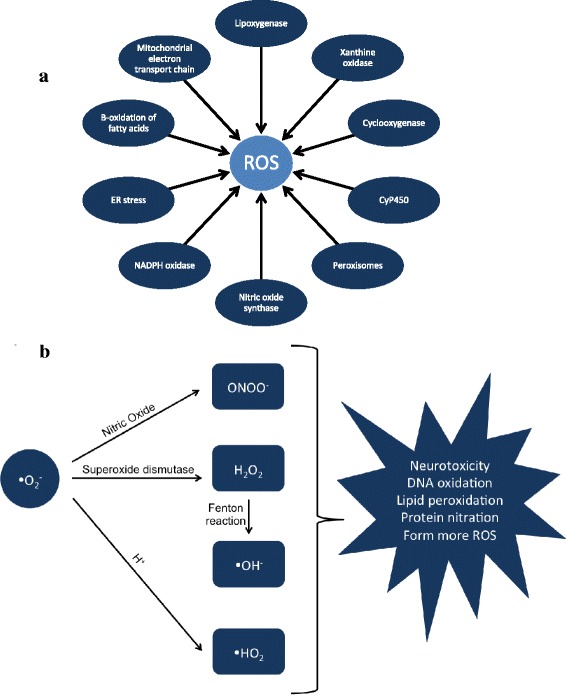
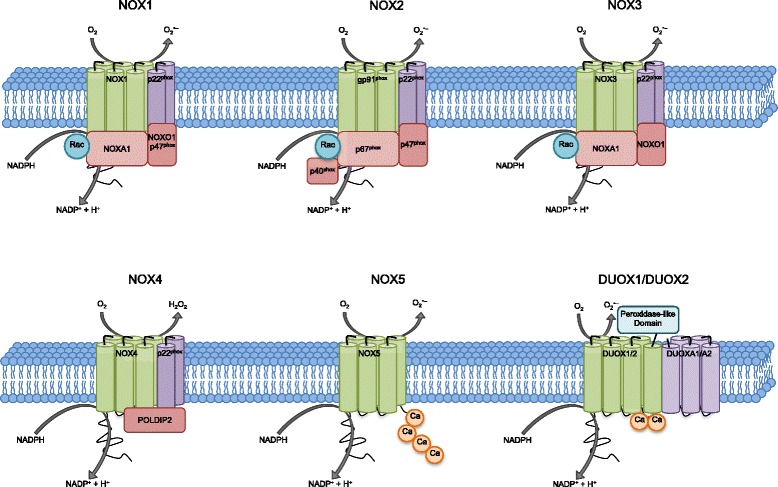
Verification
Claims the paper makes
The claims and statistics of this paper haven’t been checked yet.
Run the check — free, no account needed. It reads the open-access text and checks the sources it cites.
Claims other papers make about this one
Each is checked against this paper’s own text: does it say what the citing paper says it does?
In the citing paper
“The robust activation of NOX isoforms in response to acute neuronal injury and chronic inflammation with oxidative damage has been well documented in post-mortem tissue and models of neurodegeneration (reviewed in [83]).”
From ROS Generation in Microglia: Understanding Oxidative Stress and Inflammation in Neurodegenerative Disease (2020) · cites this paper as [83]
Self-check
Percentages, sums and reported differences re-computed from the paper’s own numbers.
The self-check needs the paper’s full text.
Citations
Cites
1 retracted
Valencia, A., Sapp, E., Kimm, J. S., McClory, H., Reeves, P., Alexander, J. S., Ansong, K. A., Masso, N., Frosch, M. P., Kegel, K. B., et al. (2012) · Human Molecular Genetics · doi:10.1093/hmg/dds516 · Cited by 95
RetractedMcCord, J. M., & Fridovich, I. (1969) · Journal of Biological Chemistry · doi:10.1016/s0021-9258(18)63504-5 · Cited by 12,952
Polazzi, E., Mengoni, I., Caprini, M., Peña‐Altamira, E., Kurtys, E., & Monti, B. (2012) · Neurosignals · doi:10.1159/000337115 · Cited by 9,023
Rosen, D. R., Siddique, T., Patterson, D., Figlewicz, D. A., Sapp, P., Hentati, A., Donaldson, D., Goto, J., O'Regan, J. P., Deng, H.-X., et al. (1993) · Nature · doi:10.1038/362059a0 · Cited by 7,062
The NOX Family of ROS-Generating NADPH Oxidases: Physiology and Pathophysiology
Bedard, K., & Krause, K.-H. (2007) · Physiological Reviews · doi:10.1152/physrev.00044.2005 · Cited by 6,989
Vos, T., Barber, R. M., Bell, B., Bertozzi-Villa, A., Biryukov, S., Bolliger, I., Charlson, F., Davis, A., Degenhardt, L., Dicker, D., et al. (2015) · The Lancet · doi:10.1016/s0140-6736(15)60692-4 · Cited by 6,414
Nitric oxide, superoxide, and peroxynitrite: the good, the bad, and ugly
Beckman, J. S., & Koppenol, W. H. (1996) · American Journal of Physiology-Cell Physiology · doi:10.1152/ajpcell.1996.271.5.c1424 · Cited by 5,513
Noseworthy, J. H., Lucchinetti, C. F., Rodriguez, M., & Weinshenker, B. G. (2000) · New England Journal of Medicine · doi:10.1056/nejm200009283431307 · Cited by 3,016
Adult Neurogenesis in the Mammalian Brain: Significant Answers and Significant Questions
Ming, G.-L., & Song, H. (2011) · Neuron · doi:10.1016/j.neuron.2011.05.001 · Cited by 2,651
The State of US Health, 1990-2010: Burden of Diseases, Injuries, and Risk Factors
Murray, C. J. L. (2013) · JAMA · doi:10.1001/jama.2013.13805 · Cited by 2,438
Cited by
Sorted by citations
Items 401–433 of 433
Turchan, A., Armando, A. R., Andriana, M., & Kusumawardani, M. K. (2022) · AKSONA · doi:10.20473/aksona.v2i2.35816
Effect of Vitamin E on Serum MDA and Antioxidant Enzymes in Traumatic Brain Injury-Induced Rats
Usman, B., Sajo, M. U., Adam, M. K., Mshelia, P. A., Bulama, I., & Sanda, K. A. (2023) · Journal of Complementary and Alternative Medical Research · doi:10.9734/jocamr/2023/v24i1492
Okwakpam, F. N., Otobo, M. B., Dokubo, A., Nzor, J. N., Nkomadu, V. D., & Odinga, T.-B. (2024) · Trends in Medical Research · doi:10.3923/tmr.2024.136.150 · Cited by 1
Microglial Signaling in Health and Disease
Oppenheimer, M. R., Singh, S., Antoine, D., Truitt, B., & Roy, S. (2024) · Springer eBooks · doi:10.1007/978-3-031-68237-7_8
Mil, E., Albantova, A. A., Матиенко, Л. И., Goloshchapov, A. N., Korovin, M. A., & Kuvyrkova, V. (2024) · Russian Journal of Physical Chemistry B · doi:10.1134/s1990793124701227
Mou, Y.-J., & Qin, Z. (2025) · Springer eBooks · doi:10.1007/978-981-97-9877-3_41
Mechanisms of Neuronal Damage and Dysfunction
Ansari, U. A. (2025) · Springer eBooks · doi:10.1007/978-981-95-0125-0_1
Proton channel Hv1 modulates microglial responses to neurological disorders
Stratmann, M., Gagliardi, C., & Capasso, M. (2025) · Frontiers in Biophysics · doi:10.3389/frbis.2025.1681011
The Role of NOX2-Mediated Oxidative Stress in Initiation of Acute Amyloid Toxicity
Osypov, A. A., Mukhina, K. A., Lyubanskaya, A. D., Nikiforova, A. B., Korchagina, V. M., Mitkevich, V. A., & Popova, I. Y. (2025) · Molecular Biology · doi:10.1134/s0026893325700463
The role of ROS in cardiovascular and neurological disorders
Goswami, S. K. (2025) · Elsevier eBooks · doi:10.1016/b978-0-443-22335-8.00012-7
Li, C., Cao, Y., Wang, Y., Ren, Z., Liu, X., Li, D., Su, B., Cong, H., & Yu, B. (2025) · ACS Biomaterials Science & Engineering · doi:10.1021/acsbiomaterials.5c01556
Stepanov, Y. V., Golovynska, I., Zhang, R., Golovynskyi, S., Stepanova, L. I., Gorbach, O. I., Dovbynchuk, T., Garmanchuk, L., Ohulchanskyy, T. Y., & Qu, J. (2022) · Figshare · doi:10.6084/m9.figshare.20098663
He, S., Wang, Q., Chen, L., He, Y. J., Wang, X., & Qu, S. (2024) · Figshare · doi:10.6084/m9.figshare.26631022
Zong, F., Wang, X., You, J., & Wu, H. (2026) · Indian Journal of Ophthalmology · doi:10.4103/ijo.ijo_1322_25
Feat-Vetel, J. (2018) · theses.fr (ABES) · doi:10.70675/11b7a40fzb10ez43b4z85aez38d4b27bbb07
Regulation of homeoproteins intercellular transfer
Amblard, I. (2020) · theses.fr (ABES) · doi:10.70675/bbf68b66zb816z4669z84f4zec67820f5b54
Lévêque, C. (2024) · theses.fr (ABES) · doi:10.70675/0d961065ze6e6z464fz8e74zd9c653b2325f
Govindarajan, V., Jackson, Q., Ramsoomair, C. K., Berckemeyer, M. A., Vaccari, J. P. D. R., Keane, R. W., & Shah, A. H. (2026) · Journal of Neuroinflammation · doi:10.1186/s12974-026-03813-3
Zhang, X., Jiang, F., Ling, C., Liu, F., Feng, Z., Wu, N., & Zhu, Y. (2026) · Neuropharmacology and Therapy · doi:10.15212/npt-2025-0022
Cellular and molecular mechanisms of diabetes-mediated disc degeneration
Wang, H. Y., Suo, M., Wang, K., Chen, S., Liu, X., Wang, Q., Wang, Z., Chen, X., & Li, Z. (2026) · Frontiers in Endocrinology · doi:10.3389/fendo.2026.1785260
NADPH Oxidases and Epilepsy: Pathophysiological Insights and Therapeutic Implications
Singh, P. K., Saadi, A., & Shekh‐Ahmad, T. (2026) · Springer eBooks · doi:10.1007/978-3-032-21135-4_27
Girgenti, A., Picone, P., Palumbo, L., Lauceri, R., & Nuzzo, D. (2026) · Journal of Biological Engineering · doi:10.1186/s13036-026-00720-2
Kołodziejska, R., Godlewski, A., Tafelska‐Kaczmarek, A., Kuk, J., Moritz, M., Sergot, K., Kurhaluk, N., Ткаченко, Г. М., & Woźniak, A. (2026) · Cells · doi:10.3390/cells15121103
Fibrinogen as a Driver of Oxidative Stress and Apoptosis in the Fetal Brain After Maternal InfluenzaPreprint
Gonzalez-Ricon, R., Rigal, F. J., Chalen, I., & Antonson, A. M. (2026) · Research Square · doi:10.21203/rs.3.rs-10396951/v1
The Trx1–ATM–PPP Axis in traumatic brain injury: Redox regulation and neuroprotective perspectives
Mei, Y., Zhang, Y., Wang, Z., & Liu, J. (2024) · Trauma and Emergency Medicine · doi:10.46439/trauma.2.008
The emerging role of NADPH oxidases (NOX) in Alzheimer’s disease pathogenesis
Yadav, A., Verma, H., Kumari, S., Gangwar, P., Rao, R., Yadav, B., Kaur, S., Dhiman, M., & Mantha, A. K. (2026) · Neuroscience · doi:10.1016/j.neuroscience.2026.08.004
Thakur, M., Mutyala, D., Amoliga, A., Ortega, M. C., & Batra, S. (2026) · Cellular and Molecular Immunology · doi:10.1038/s41423-026-01447-2
Oxidative stress: mechanisms, implications and emerging therapeutic strategies
Namratha, B., Martis, G. J., Sushma, S., Hakkimane, S. S., & Gaonkar, S. L. (2026) · Advances in Redox Research · doi:10.1016/j.arres.2026.100191
BindingDB Entry 50020295: NADPH Oxidases: From Molecular Mechanisms to Current Inhibitors.
BindingDB (2024) · UC San Diego · doi:10.7270/q2jm2g3p
Luiz, A. C. M., Peres, D. S., Kudsi, S. Q., Morais, R. I. F., Antoniazzi, C. T. D. D., Pereira, L. G., Brito, H. A., Pillat, M. M., Flores, M. M., Rodrigues, P., et al. (2026) · International Journal of Molecular Sciences · doi:10.3390/ijms27219592
Metadata
- Authors
- Ma, M. W., Wang, J., Zhang, Q., Wang, R., Dhandapani, K. M., Vadlamudi, R. K., & Brann, D. W.
- Affiliations
- Augusta University (US)
- The University of Texas at San Antonio Health Science Center (US)
- Corresponding author
- Brann, Darrell W.
- ORCID
- Venue
- Molecular Neurodegeneration
- Published
- 2017-01-17
- Volume
- 12
- Issue
- 1
- Pages
- 7-7
- ISSN
- 1750-1326 (ISSN-L)
- PMC
- PMC5240251
- OpenAlex
- W2574254633
- Cited by
- 432
- References
- 417
- Citations by year
- 2026: 21 · 2025: 45 · 2024: 43 · 2023: 59 · 2022: 44 · 2021: 67 · 2020: 49 · 2019: 38 · 2018: 40 · 2017: 26
- FWCI
- 3.92
- Type
- journal article
- Language
- en
- Open access
- gold
- doi.org
- Locations
- Molecular Neurodegeneration (publishedVersion, cc-by)
- PubMed Central (publishedVersion, cc-by)
- PubMed (publishedVersion)
- Funders
- U.S. Department of Veterans Affairs (5l101BX001117)
- National Institute of Neurological Disorders and Stroke (5R01NS050730, R01NS088058)
- Topics
- Life Sciences › Biochemistry, Genetics and Molecular Biology › Molecular Biology › Redox biology and oxidative stress
- Health Sciences › Medicine › Physiology (medical) › Nitric Oxide and Endothelin Effects
- Life Sciences › Immunology and Microbiology › Immunology › Neutrophil, Myeloperoxidase and Oxidative Mechanisms
- Keywords
- NADPH oxidase, oxidative stress, neurodegenerative diseases, brain injury, ischemic brain injury, traumatic brain injury, NOX1, NOX2, NOX4, neuroprotection, antioxidant therapy, Alzheimer's disease, Parkinson's disease, Huntington's disease, amyotrophic lateral sclerosis, multiple sclerosis
- MeSH terms
- Animals, Brain Injuries, Humans, NADPH Oxidases, Neurodegenerative Diseases
About these checks
Registry, retraction, Cites and statistics results are computed, not judged, with one exception: a printed reference that no index lists is read once by a model before it counts as a citation error. Claims are extracted by a model and kept only when their quote appears verbatim in the text; each cited source is then checked, with a model’s help, for whether it says what the claim relies on. Those verdicts can be wrong — read the claim’s quote and the cited source before relying on one.
Statistics and arithmetic are recomputed, not judged.
Confidence bands are shown only for fields calibrated on our annotated test set. None is calibrated yet, so no band is shown.
What counts as a claim ›How we measure confidence ›How we check this ›
Are you an author, or do you see a problem with this page? Request a review
