

The DOI matches its Crossref record; 166 of the 166 references it cites were found in a registry or an index.
New insights into the role of TREM2 in Alzheimer’s disease
Open accessAbstract
Alzheimer's disease (AD) is the leading cause of dementia. The two histopathological markers of AD are amyloid plaques composed of the amyloid-β (Aβ) peptide, and neurofibrillary tangles of aggregated, abnormally hyperphosphorylated tau protein. The majority of AD cases are late-onset, after the age of 65, where a clear cause is still unknown. However, there are likely different multifactorial contributors including age, enviornment, biology and genetics which can increase risk for the disease. Genetic predisposition is considerable, with heritability estimates of 60-80%. Genetic factors such as rare variants of TREM2 (triggering receptor expressed on myeloid cells-2) strongly increase the risk of developing AD, confirming the role of microglia in AD pathogenesis. In the last 5 years, several studies have dissected the mechanisms by which TREM2, as well as its rare variants affect amyloid and tau pathologies and their consequences in both animal models and in human studies. In this review, we summarize increases in our understanding of the involvement of TREM2 and microglia in AD development that may open new therapeutic strategies targeting the immune system to influence AD pathogenesis.
Overview
The claims and statistics of this paper haven’t been checked yet.
Run the check — free, no account needed. It reads the open-access text and checks the sources it cites.
Integrity signals
Registry
Cites
Statistics
Figures
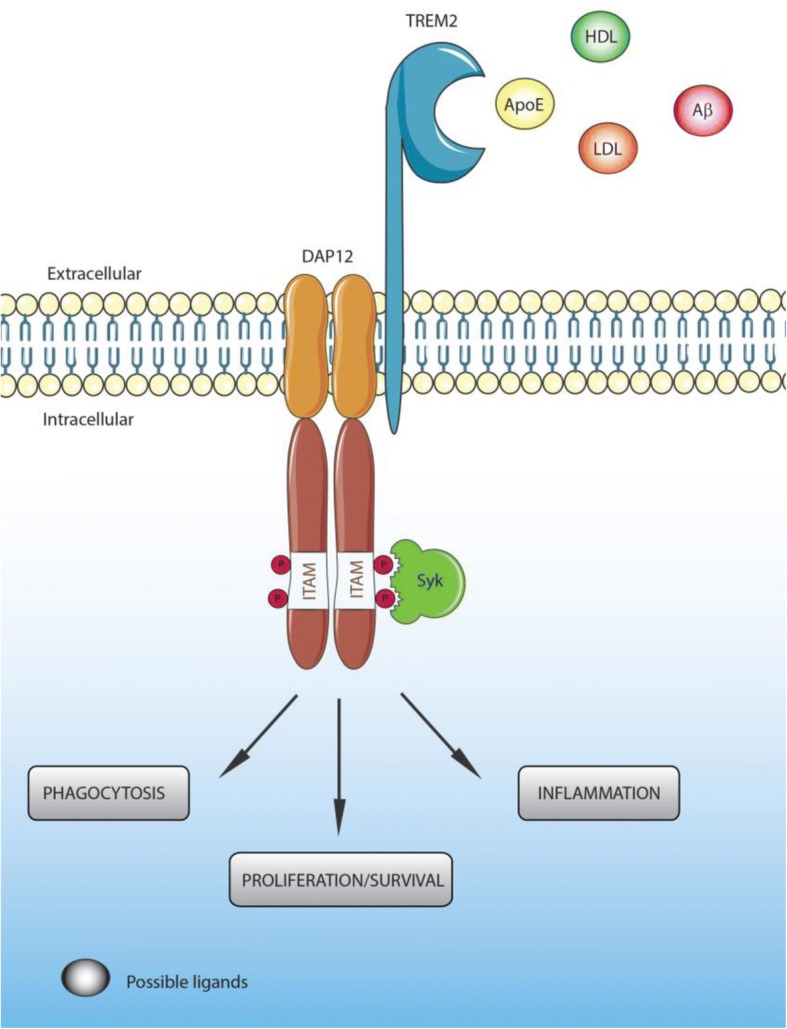
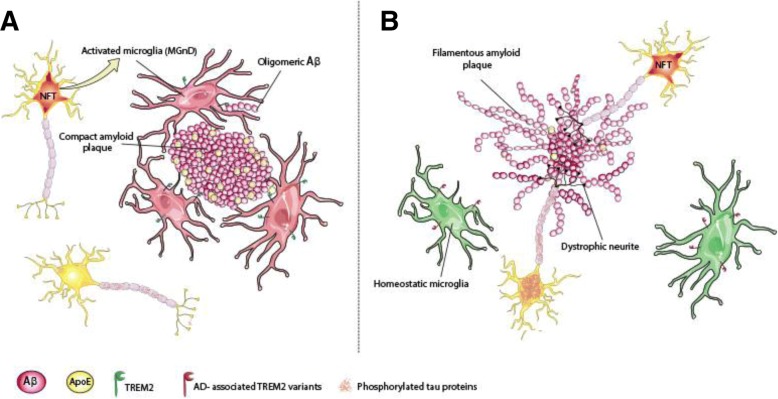
Verification
Claims the paper makes
The claims and statistics of this paper haven’t been checked yet.
Run the check — free, no account needed. It reads the open-access text and checks the sources it cites.
Claims other papers make about this one
Each is checked against this paper’s own text: does it say what the citing paper says it does?
The cited source says what the claim attributes to it.
In the citing paper
“A crystal structure is available for TREM2 [82].”
From TREM2/PLCγ2 signalling in immune cells: function, structural insight, and potential therapeutic modulation (2021) · cites this paper as [82]
In the citing paper
“As an example, TREM2 is an AD risk gene with a rare variant allele R47H associated with significantly increased risk of AD (Gratuze et al., 2018).”
From Alzheimer Disease: An Update on Pathobiology and Treatment Strategies (2019) · cites this paper as Gratuze et al., 2018
Self-check
Percentages, sums and reported differences re-computed from the paper’s own numbers.
The self-check needs the paper’s full text.
Citations
Cites
Corder, E. H., Saunders, A. M., Strittmatter, W. J., Schmechel, D. E., Gaskell, P. C., Small, G. W., Roses, A. D., Haines, J. L., & Pericak-Vance, M. A. (1993) · Science · doi:10.1126/science.8346443 · Cited by 9,429
2016 Alzheimer's disease facts and figures
Alzheimer's Association (2016) · Alzheimer's & Dementia · doi:10.1016/j.jalz.2016.03.001 · Cited by 5,069
Inflammation and Alzheimer’s disease
Akiyama, H. (2000) · Neurobiology of Aging · doi:10.1016/s0197-4580(00)00124-x · Cited by 4,514
Oakley, H., Cole, S. L., Logan, S., Maus, E., Shao, P., Craft, J., Guillozet-Bongaarts, A., Ohno, M., Disterhoft, J., Van Eldik, L., et al. (2006) · The Journal of Neuroscience · doi:10.1523/jneurosci.1202-06.2006 · Cited by 3,530
Neuropathological alterations in Alzheimer disease
Serrano-Pozo, A., Frosch, M. P., Masliah, E., & Hyman, B. T. (2011) · Cold Spring Harbor Perspectives in Medicine · doi:10.1101/cshperspect.a006189 · Cited by 3,345
TREM2 Variants in Alzheimer's Disease
Guerreiro, R., Wojtas, A., Bras, J., Carrasquillo, M., Rogaeva, E., Majounie, E., Cruchaga, C., Sassi, C., Kauwe, J. S. K., Younkin, S., et al. (2013) · New England Journal of Medicine · doi:10.1056/nejmoa1211851 · Cited by 3,020
Krasemann, S., Madore, C., Cialic, R., Baufeld, C., Calcagno, N., El Fatimy, R., Beckers, L., O’Loughlin, E., Xu, Y., Fanek, Z., et al. (2017) · Immunity · doi:10.1016/j.immuni.2017.08.008 · Cited by 2,979
Self-citationVariant of TREM2 Associated with the Risk of Alzheimer's Disease
Jonsson, T., Stefansson, H., Steinberg, S., Jonsdottir, I., Jonsson, P. V., Snaedal, J., Bjornsson, S., Huttenlocher, J., Levey, A. I., Lah, J. J., et al. (2013) · New England Journal of Medicine · doi:10.1056/nejmoa1211103 · Cited by 2,558
Identification of a unique TGF-β–dependent molecular and functional signature in microglia
Butovsky, O., Jedrychowski, M. P., Moore, C. S., Cialic, R., Lanser, A. J., Gabriely, G., Koeglsperger, T., Dake, B., Wu, P. M., Doykan, C. E., et al. (2014) · Nature Neuroscience · doi:10.1038/nn.3599 · Cited by 2,543
Synapse Loss and Microglial Activation Precede Tangles in a P301S Tauopathy Mouse Model
Yoshiyama, Y., Higuchi, M., Zhang, B., Huang, S.-M., Iwata, N., Saido, T. C., Maeda, J., Suhara, T., Trojanowski, J. Q., & Lee, V. M.-Y. (2007) · Neuron · doi:10.1016/j.neuron.2007.01.010 · Cited by 2,208
Cited by
Sorted by citations
Items 101–200 of 496
Promoting Alzheimer’s disease research and therapy with stem cell technology
Cao, Z., Kong, F., Ding, J., Chen, C., He, F., & Deng, W. (2024) · Stem Cell Research & Therapy · doi:10.1186/s13287-024-03737-w · Cited by 60
Dual role of microglia in neuroinflammation and neurodegenerative diseases
Ajoolabady, A., Kim, B., Abdulkhaliq, A. A., Ren, J. T., Bahijri, S., Tuomilehto, J. O., Borai, A., Khan, J., & Praticò, D. (2025) · Neurobiology of Disease · doi:10.1016/j.nbd.2025.107133 · Cited by 62
Dwellers and Trespassers: Mononuclear Phagocytes at the Borders of the Central Nervous System
Ivan, D. C., Walthert, S., Berve, K., Steudler, J., & Locatelli, G. (2021) · Frontiers in Immunology · doi:10.3389/fimmu.2020.609921 · Cited by 55
Microglial activation as a hallmark of neuroinflammation in Alzheimer’s disease
Ebrahimi, R., Nejad, S. S., Tafti, M. F., Karimi, Z., Sadr, S. R., Hussein, D. R., Talebian, N., & Esmaeilpour, K. (2025) · Metabolic Brain Disease · doi:10.1007/s11011-025-01631-9 · Cited by 58
Popescu, A. S., Butler, C. A., Allendorf, D. H., Piers, T. M., Mallach, A., Roewe, J., Reinhardt, P., Cinti, A., Redaelli, L., Boudesco, C., et al. (2022) · Glia · doi:10.1002/glia.24318 · Cited by 57
Beyond Amyloid and Tau: The Critical Role of Microglia in Alzheimer’s Disease Therapeutics
Dias, D., & Socodato, R. (2025) · Biomedicines · doi:10.3390/biomedicines13020279 · Cited by 60
TREM2 Promotes Immune Evasion by Mycobacterium tuberculosis in Human Macrophages
Dabla, A., Liang, Y. C., Rajabalee, N., Irwin, C. L., Moonen, C. G. J., Willis, J. V., Berton, S., & Sun, J. (2022) · mBio · doi:10.1128/mbio.01456-22 · Cited by 57
The role of TREM2 in Alzheimer’s disease: from the perspective of Tau
Huang, W., Huang, J., Huang, N., & Luo, Y. (2023) · Frontiers in Cell and Developmental Biology · doi:10.3389/fcell.2023.1280257 · Cited by 49
“Moreover, partial or normal function of TREM2 can cause Tau disease and Tau-mediated damage, whereas complete loss of function can reduce Tau-mediated brain damage (Gratuze et al., 2018).”
BackgroundOmoluabi, T., Torraville, S. E., Maziar, A., Ghosh, A., Power, K. D., Reinhardt, C., Harley, C. W., & Yuan, Q. (2021) · Alzheimer s & Dementia Translational Research & Clinical Interventions · doi:10.1002/trc2.12231 · Cited by 53
The therapeutic potential of TREM2 in cancer
Wolf, E. M., Fingleton, B., & Hasty, A. H. (2022) · Frontiers in Oncology · doi:10.3389/fonc.2022.984193 · Cited by 51
Li, C., Ren, J., Zhang, M., Wang, H., Fang, Y., Wu, J., & Tang, Y. (2022) · Cellular and Molecular Life Sciences · doi:10.1007/s00018-022-04536-3 · Cited by 52
Knapskog, A., Henjum, K., Idland, A., Eldholm, R. S., Persson, K., Saltvedt, I. T., Watne, L. O., Engedal, K., & Nilsson, L. N. G. (2020) · Scientific Reports · doi:10.1038/s41598-020-72878-8 · Cited by 53
Kaminska, B., Ochocka, N., & Segit, P. (2021) · Cells · doi:10.3390/cells10092264 · Cited by 49
Khodadadi, H., Salles, É. L., Jarrahi, A., Costigliola, V., Khan, M. B., Yu, J. C.-K., Morgan, J. C., Hess, D. C., Vaibhav, K., Dhandapani, K. M., et al. (2021) · Journal of Alzheimer s Disease · doi:10.3233/jad-210026 · Cited by 52
McFarland, K. N., & Chakrabarty, P. (2022) · Neurotherapeutics · doi:10.1007/s13311-021-01179-3 · Cited by 48
TREM2 splice isoforms generate soluble TREM2 species that disrupt long-term potentiation
Moutinho, M., Coronel, I., Tsai, A. P., Di Prisco, G. V., Pennington, T., Atwood, B. K., Puntambekar, S. S., Smith, D. C., Martinez, P., Han, S., et al. (2023) · Genome Medicine · doi:10.1186/s13073-023-01160-z · Cited by 42
“Genetic variants have been associated with an elevated risk of AD and other neurodegenerative diseases, and studies in animal models have uncovered the molecular mechanisms subserving the actions of this receptor [9, 10, 48].”
BackgroundAβ and Tau Regulate Microglia Metabolism via Exosomes in Alzheimer’s Disease
Zhao, Y., Liu, B., Wang, J., Xu, L., Yu, S., Fu, J., Yan, X., & Su, J. (2022) · Biomedicines · doi:10.3390/biomedicines10081800 · Cited by 48
TREM2 expression and amyloid‐beta phagocytosis in Alzheimer's disease
La Rosa, F., Agostini, S., Piancone, F., Marventano, I., Hernis, A., Fenoglio, C., Galimberti, D., Scarpini, E., Saresella, M., & Clerici, M. (2023) · International Journal of Molecular Sciences · doi:10.3390/ijms24108626 · Cited by 50
Plasma soluble TREM2 is associated with white matter lesions independent of amyloid and tau
Tsai, H.-H. C., Chen, Y., Yen, R., Lo, Y.-L., Yang, K., Jeng, J., Tsai, L., & Chang, C.-F. (2021) · Brain · doi:10.1093/brain/awab332 · Cited by 47
The effect of aged microglia on synaptic impairment and its relevance in neurodegenerative diseases
Triviño, J. J., & von Bernhardi, R. (2021) · Neurochemistry International · doi:10.1016/j.neuint.2021.104982 · Cited by 43
Johnston, K. G., Berackey, B. T., Tran, K. M., Gelber, A., Yu, Z., MacGregor, G. R., Mukamel, E. A., Tan, Z., Green, K. N., & Xu, X. (2024) · Molecular Psychiatry · doi:10.1038/s41380-024-02651-0 · Cited by 51
Granzyme K+ CD8 T cells slow tauopathy progression by targeting microglia
Mason, H. D., Latour, Y. L., Boughter, C. T., Johnson, K. R., Maric, D., Dorrier, C., Guedes, V. A., Lai, C., Duncker, P. C., Johnson, A. M., et al. (2025) · Nature Immunology · doi:10.1038/s41590-025-02198-4 · Cited by 48
Metformin treatment improves the spatial memory of aged mice in an APOE genotype–dependent manner
Zhang, J., Lin, Y., Dai, X., Fang, W., Wu, X., & Chen, X. (2019) · The FASEB Journal · doi:10.1096/fj.201802718r · Cited by 44
MicroRNAs in Extracellular Vesicles of Alzheimer’s Disease
Li, W., & Zheng, Y. (2023) · Cells · doi:10.3390/cells12101378 · Cited by 43
He, L., Loika, Y., Park, Y., Bennett, D. A., Kellis, M., Kulminski, A. M., & Initiative, A. D. N. (2021) · Translational Psychiatry · doi:10.1038/s41398-021-01263-4 · Cited by 41
Khezri, M. R., Yousefi, K., Mahboubi, N., Hodaei, D., & Ghasemnejad‐Berenji, M. (2022) · Biochemical Pharmacology · doi:10.1016/j.bcp.2022.114945 · Cited by 43
Lan, L., Wang, H., Zhang, X., Shen, Q., Li, X., He, L., Rong, X., Peng, J., Mo, J., & Peng, Y. (2022) · Experimental Neurology · doi:10.1016/j.expneurol.2022.114061 · Cited by 40
The Dual Role of Microglia in the Progression of Alzheimer's Disease
Onuska, K. M. (2020) · Journal of Neuroscience · doi:10.1523/jneurosci.2594-19.2020 · Cited by 41
Deubiquitinases in Neurodegeneration
Bello, A. I., Goswami, R., Brown, S. L., Costanzo, K. M., Shores, T., Allan, S. K., Odah, R., & Mohan, R. D. (2022) · Cells · doi:10.3390/cells11030556 · Cited by 42
The Emerging Roles and Therapeutic Potential of Soluble TREM2 in Alzheimer’s Disease
Zhong, L., & Chen, X. (2019) · Frontiers in Aging Neuroscience · doi:10.3389/fnagi.2019.00328 · Cited by 40
Laval, K., & Enquist, L. W. (2021) · Frontiers in Neurology · doi:10.3389/fneur.2021.658695 · Cited by 43
Therapeutic potential of ADAM10 modulation in Alzheimer’s disease: a review of the current evidence
Khezri, M. R., Mohebalizadeh, M., & Ghasemnejad‐Berenji, M. (2023) · Cell Communication and Signaling · doi:10.1186/s12964-023-01072-w · Cited by 42
Mani, S., Dubey, R., Lai, I., Babu, M. A., Tyagi, S., Swargiary, G., Mody, D., Singh, M., Agarwal, S., Iqbal, D., et al. (2023) · Journal of Alzheimer s Disease · doi:10.3233/jad-220700 · Cited by 43
Multi-functional role of apolipoprotein E in neurodegenerative diseases
Islam, S., Noorani, A. A., Sun, Y., Michikawa, M., & Zou, K. (2025) · Frontiers in Aging Neuroscience · doi:10.3389/fnagi.2025.1535280 · Cited by 43
The TREM2 agonistic antibody AL002 in early Alzheimer’s disease: a phase 2 randomized trial
Mummery, C. J., Mayorga, A. J., Simmons, A., Chow, T. W., Burgess, B., Nguyen, T., 高晶晶, Budda, B., Park, L. Q., Gupta, R., et al. (2026) · Nature Medicine · doi:10.1038/s41591-026-04273-1 · Cited by 51
Čuperlović‐Culf, M., & Badhwar, A. (2019) · Expert Opinion on Drug Discovery · doi:10.1080/17460441.2020.1674808 · Cited by 40
The Roles of Peroxiredoxin 6 in Brain Diseases
Liao, J., Zhang, Y., Chen, X., & Zhang, J. (2021) · Molecular Neurobiology · doi:10.1007/s12035-021-02427-5 · Cited by 39
Synapses, Microglia, and Lipids in Alzheimer’s Disease
Paasila, P. J., Aramideh, J. A., Sutherland, G. T., & Graeber, M. B. (2022) · Frontiers in Neuroscience · doi:10.3389/fnins.2021.778822 · Cited by 40
Alzheimer’s Disease: From Pathogenesis to Mesenchymal Stem Cell Therapy – Bridging the Missing Link
Hu, J., & Wang, X. (2022) · Frontiers in Cellular Neuroscience · doi:10.3389/fncel.2021.811852 · Cited by 42
Microglial TREM2 at the Intersection of Brain Aging and Alzheimer’s Disease
Qu, W., & Li, L. (2021) · The Neuroscientist · doi:10.1177/10738584211040786 · Cited by 38
Regulation of microglia phagocytosis and potential involvement of exercise
Li, C., Wang, Y., Xing, Y., Han, J., Zhang, Y., Zhang, A., Hu, J., Hua, Y., & Bai, Y. (2022) · Frontiers in Cellular Neuroscience · doi:10.3389/fncel.2022.953534 · Cited by 37
García‐León, J. A., Cáceres-Palomo, L., Sánchez‐Mejías, E., Mejias‐Ortega, M., Nuñez‐Diaz, C., Fernandez-Valenzuela, J. J., Sanchez-Varo, R. M., Dávila, J. C., Vitórica, J., & Gutiérrez, A. (2020) · International Journal of Molecular Sciences · doi:10.3390/ijms21186867 · Cited by 35
Large-scale neurophysiology and single-cell profiling in human neuroscience
Lee, A. T., Chang, E. F., Paredes, M. F., & Nowakowski, T. J. (2024) · Nature · doi:10.1038/s41586-024-07405-0 · Cited by 35
Belayev, L., Hong, S., Freitas, R. S., Menghani, H., Marcell, S. J., Khoutorova, L., Mukherjee, P. K., Reid, M. M., Oriá, R. B., & Bazan, N. G. (2020) · CNS Neuroscience & Therapeutics · doi:10.1111/cns.13444 · Cited by 34
TMEM59 interacts with TREM2 and modulates TREM2-dependent microglial activities
Liu, Z., Ning, J., Zheng, X., Meng, J., Han, L., Zheng, H., Zhong, L., Chen, X., Zhang, X., Luo, H., et al. (2020) · Cell Death and Disease · doi:10.1038/s41419-020-02874-3 · Cited by 35
Konishi, H., & Kiyama, H. (2020) · Neurochemistry International · doi:10.1016/j.neuint.2020.104878 · Cited by 33
Inflammasome activation in neurodegenerative diseases
Ravichandran, K. A., & Heneka, M. T. (2021) · Essays in Biochemistry · doi:10.1042/ebc20210021 · Cited by 37
Lee, J., Kim, S. W., & Kim, K.-T. (2022) · Cells · doi:10.3390/cells11121902 · Cited by 34
Shastri, D., Raj, V., & Lee, S.-K. (2024) · Ageing Research Reviews · doi:10.1016/j.arr.2024.102379 · Cited by 34
Chuang, S. T., Cruz, S., & Narayanaswami, V. (2020) · Nanomaterials · doi:10.3390/nano10050906 · Cited by 34
Edwin, T. H., Henjum, K., Nilsson, L. N. G., Watne, L. O., Persson, K., Eldholm, R. S., Saltvedt, I. T., Halaas, N. B., Selbæk, G., Engedal, K., et al. (2020) · Alzheimer s & Dementia Diagnosis Assessment & Disease Monitoring · doi:10.1002/dad2.12128 · Cited by 35
The sTREM2 Concentrations in the Blood: A Marker of Neurodegeneration?
Ferri, E., Rossi, P. D., Geraci, A., Ciccone, S., Cesari, M., & Arosio, B. (2021) · Frontiers in Molecular Biosciences · doi:10.3389/fmolb.2020.627931 · Cited by 36
Variant TREM2 Signaling in Alzheimer's Disease
Olufunmilayo, E. O., & Holsinger, R. M. D. (2022) · Journal of Molecular Biology · doi:10.1016/j.jmb.2022.167470 · Cited by 33
Gao, P., Wang, Z., Lei, M., Che, J., Zhang, S., Zhang, T., Hu, Y., Shi, L., Li, C., Liu, J., et al. (2022) · Pharmacological Research · doi:10.1016/j.phrs.2022.106227 · Cited by 36
TREM2: Keeping Pace With Immune Checkpoint Inhibitors in Cancer Immunotherapy
Qiu, H., Shao, Z., Wen, X., Jiang, J., Ma, Q., Wang, Y., Huang, L., Ding, X., & Zhang, L. (2021) · Frontiers in Immunology · doi:10.3389/fimmu.2021.716710 · Cited by 32
Bac, B., Hicheri, C., Weiss, C., Buell, A., Vilcek, N., Späni, C. B., Geula, C., Savas, J. N., & Disterhoft, J. F. (2022) · Neurobiology of Aging · doi:10.1016/j.neurobiolaging.2022.12.015 · Cited by 31
Induced pluripotent stem cell-derived macrophages as a platform for modelling human disease
Tiwari, S. K., Wong, W. J., Moreira, M., Pasqualini, C., & Ginhoux, F. (2024) · Nature reviews. Immunology · doi:10.1038/s41577-024-01081-x · Cited by 36
Tobeh, N. S., & Bruce, K. D. (2023) · Frontiers in Aging Neuroscience · doi:10.3389/fnagi.2023.1259012 · Cited by 35
Molecular Pathogenesis and Interventional Strategies for Alzheimer’s Disease: Promises and Pitfalls
Bhute, S., Sarmah, D., Datta, A., Rane, P., Shard, A., Goswami, A., Borah, A., Kalia, K., Dave, K. R., & Bhattacharya, P. (2020) · ACS Pharmacology & Translational Science · doi:10.1021/acsptsci.9b00104 · Cited by 32
Salvadó, G., Milà‐Alomà, M., Shekari, M., Minguillón, C., Fauria, K., Niñerola‐Baizán, A., Perissinotti, A., Kollmorgen, G., Buckley, C. J., Farrar, G., et al. (2021) · Alzheimer s & Dementia · doi:10.1002/alz.12245 · Cited by 30
Zhang, Y., Gao, H., Zheng, W., & Xu, H. J. (2022) · Neurobiology of Disease · doi:10.1016/j.nbd.2022.105824 · Cited by 31
Role of TET1-mediated epigenetic modulation in Alzheimer's disease
Armstrong, M. J., Jin, Y., Vattathil, S., Huang, Y., Schroeder, J. P., Bennet, D. A., Qin, Z. S., Wingo, T. S., & Jin, P. (2023) · Neurobiology of Disease · doi:10.1016/j.nbd.2023.106257 · Cited by 32
Caramello, A., Fancy, N. N., Tournerie, C., Eklund, M., Chau, V. M. N., Adair, E., Papageorgopoulou, M., Willumsen, N., Jackson, J., Hardy, J., et al. (2025) · Nature Communications · doi:10.1038/s41467-025-60328-w · Cited by 37
Paul, K., Ganguly, U., Chakrabarti, S., & Bhattacharjee, P. (2019) · NeuroMolecular Medicine · doi:10.1007/s12017-019-08574-2 · Cited by 30
Galectin-3 Involvement in Cognitive Processes for New Therapeutic Considerations
Mijailović, N. R., Vesić, K., Arsenijević, D., Milojević‐Rakić, M., & Borovčanin, M. (2022) · Frontiers in Cellular Neuroscience · doi:10.3389/fncel.2022.923811 · Cited by 29
Wątroba, M., & Szukiewicz, D. (2022) · Frontiers in Physiology · doi:10.3389/fphys.2022.962769 · Cited by 29
Astrocytes regulate neuronal network activity by mediating synapse remodeling
Kim, N., & Chung, W. (2022) · Neuroscience Research · doi:10.1016/j.neures.2022.09.007 · Cited by 31
Zeng, X., Cheung, S. K. K., Shi, M., Or, P. M. Y., Li, Z., Liu, J. Y. H., Ho, W. L.-H., Liu, T., Lu, K., Rudd, J. A., et al. (2023) · Journal of Neuroinflammation · doi:10.1186/s12974-023-02970-z · Cited by 28
Zhuang, X., Jie, L., Song, Y., Ban, R., Zhao, X., Xia, Z., Wang, Z., & Zhang, G. (2024) · NeuroMolecular Medicine · doi:10.1007/s12017-024-08815-z · Cited by 33
Cognitive frailty: A comprehensive clinical paradigm beyond cognitive decline
Cozza, M., & Boccardi, V. (2025) · Ageing Research Reviews · doi:10.1016/j.arr.2025.102738 · Cited by 30
Animal and Cellular Models of Alzheimer’s Disease: Progress, Promise, and Future Approaches
Trujillo‐Estrada, L., Sánchez‐Mejías, E., Sanchez-Varo, R. M., García‐León, J. A., Nuñez‐Diaz, C., Dávila, J. C., Vitórica, J., LaFerla, F. M., Moreno‐González, I., Gutiérrez, A., et al. (2021) · The Neuroscientist · doi:10.1177/10738584211001753 · Cited by 30
Rabaneda‐Bueno, R., Mena‐Montes, B., Torres‐Castro, S., Torres‐Carrillo, N., & Torres-Carrillo, N. M. (2021) · Genes · doi:10.3390/genes12121959 · Cited by 30
Yao, A. Y., & Yan, R. (2020) · Molecular Neurodegeneration · doi:10.1186/s13024-020-00417-0 · Cited by 26
Genetics of Alzheimer’s disease
König, T., & Stögmann, E. (2021) · Wiener Medizinische Wochenschrift · doi:10.1007/s10354-021-00819-9 · Cited by 31
Lordén, G., & Newton, A. C. (2021) · Neuronal Signaling · doi:10.1042/ns20210036 · Cited by 27
Alzheimer’s disease: from early pathogenesis to novel therapeutic approaches
Prajapati, S. K., Pathak, A., & Samaiya, P. K. (2024) · Metabolic Brain Disease · doi:10.1007/s11011-024-01389-6 · Cited by 21
Ahmed, S., Ma, N., Kawanokuchi, J., Matsuoka, K., Oikawa, S., Kobayashi, H., Hiraku, Y., & Murata, M. (2024) · Scientific Reports · doi:10.1038/s41598-024-57973-4 · Cited by 28
Quinoline-Pyrazole Scaffold as a Novel Ligand of Galectin-3 and Suppressor of TREM2 Signaling
Gabr, M. T., Rehman, A. U., & Chen, H. (2020) · ACS Medicinal Chemistry Letters · doi:10.1021/acsmedchemlett.0c00330 · Cited by 23
Differential Roles of TREM2+ Microglia in Anterograde and Retrograde Axonal Injury Models
Manich, G., Gómez‐López, A. R., Almolda, B., Villacampa, N., Recasens, M., Shrivastava, K., González, B., & Castellano, B. (2020) · Frontiers in Cellular Neuroscience · doi:10.3389/fncel.2020.567404 · Cited by 27
Li, F., Eteleeb, A. M., Buchser, W., Sohn, C., Wang, G., Xiong, C., Payne, P., McDade, E., Karch, C. M. M., Harari, O., et al. (2022) · Frontiers in Aging Neuroscience · doi:10.3389/fnagi.2022.935279 · Cited by 27
Orchestration of antiviral responses within the infected central nervous system
Pavlou, A., Mulenge, F., Gern, O. L., Busker, L. M., Greimel, E., Waltl, I., & Kalinke, U. (2024) · Cellular and Molecular Immunology · doi:10.1038/s41423-024-01181-7 · Cited by 24
TREM2 promotes the formation of a tumor-supportive microenvironment in hepatocellular carcinoma
Guo, H., Wang, M., Ni, C., Yang, C., Fu, C., Zhang, X., Chen, X., Wu, X., Hou, J. W., & Wang, L. (2025) · Journal of Experimental & Clinical Cancer Research · doi:10.1186/s13046-025-03287-w · Cited by 30
Lake, J., Storm, C. S., Makarious, M. B., & Bandrés‐Ciga, S. (2021) · Cells · doi:10.3390/cells10051030 · Cited by 24
Regulation of inositol 5-phosphatase activity by the C2 domain of SHIP1 and SHIP2
Bradshaw, W. J., Kennedy, E. C., Moreira, T., Smith, L. A., Chalk, R., Katis, V. L., Benesch, J. L. P., Brennan, P. E., Murphy, E. J., & Gileadi, O. (2024) · Structure · doi:10.1016/j.str.2024.01.005 · Cited by 23
Tan, L. Y., Cunliffe, G., Hogan, M. P., Yeo, X. Y., Oh, C., Jin, B., Kang, J., Park, J., Kwon, M., Kim, M., et al. (2024) · Frontiers in Immunology · doi:10.3389/fimmu.2024.1380063 · Cited by 23
TREM2 in Neurodegenerative Disorders: Mutation Spectrum, Pathophysiology, and Therapeutic Targeting
Yang, H.-W., Kim, D., Yang, Y., Bagyinszky, E., & An, S. S. A. (2025) · International Journal of Molecular Sciences · doi:10.3390/ijms26157057 · Cited by 26
Das, M., Mao, W., Shao, E., Tamhankar, S., Yu, G.-Q., Yu, X., Ho, K., Wang, X., Wang, J., & Mucke, L. (2021) · iScience · doi:10.1016/j.isci.2021.103245 · Cited by 21
γ-Secretase Modulatory Proteins: The Guiding Hand Behind the Running Scissors
Wong, E., Frost, G. R., & Li, Y. (2020) · Frontiers in Aging Neuroscience · doi:10.3389/fnagi.2020.614690 · Cited by 23
CD40L protects against mouse hepatitis virus-induced neuroinflammatory demyelination
Saadi, F., Chakravarty, D., Kumar, S., Kamble, M., Saha, B., Shindler, K. S., & Sarma, J. D. (2021) · PLoS Pathogens · doi:10.1371/journal.ppat.1010059 · Cited by 22
Khan, M. I., Khan, M. Z., Shin, J. H., Shin, T. S., Lee, Y. B., Kim, M. Y., & Kim, J. D. (2022) · Molecules · doi:10.3390/molecules27072079 · Cited by 24
Combination Therapy in Alzheimer’s Disease: Is It Time?
Salehipour, A., Bagheri, M., Sabahi, M., Dolatshahi, M., & Boche, D. (2022) · Journal of Alzheimer s Disease · doi:10.3233/jad-215680 · Cited by 22
Large-scale imputation models for multi-ancestry proteome-wide association analysisPreprint
Wu, C., Zhang, Z., Yang, X., & Zhao, B. (2023) · bioRxiv (Cold Spring Harbor Laboratory) · doi:10.1101/2023.10.05.561120 · Cited by 21
Illouz, T., Nicola, R., Ben-Shushan, L., Madar, R., Biragyn, A., & Okun, E. (2021) · Communications Biology · doi:10.1038/s42003-021-01851-6 · Cited by 21
Chlamydia pneumoniae in Alzheimer's disease pathology
Subedi, L., Gaire, B. P., Koronyo, Y., Koronyo‐Hamaoui, M., & Crother, T. R. (2024) · Frontiers in Neuroscience · doi:10.3389/fnins.2024.1393293 · Cited by 24
Niazi, S. K., Magoola, M., & Mariam, Z. (2024) · Pharmaceuticals · doi:10.3390/ph17060741 · Cited by 26
Human Brain Neuropharmacology: A Platform for Translational Neuroscience
Dragunow, M. (2020) · Trends in Pharmacological Sciences · doi:10.1016/j.tips.2020.09.002 · Cited by 23
Brain-Gut and Microbiota-Gut-Brain Communication in Type-2 Diabetes Linked Alzheimer’s Disease
Momen, Y. S., Mishra, J., & Kumar, N. (2024) · Nutrients · doi:10.3390/nu16152558 · Cited by 26
Pillai, J. A., Khrestian, M., Bena, J., Leverenz, J. B., & Bekris, L. M. (2021) · Frontiers in Aging Neuroscience · doi:10.3389/fnagi.2021.676744 · Cited by 21
Lee, M. J., Wang, C., Carroll, M. J., Brubaker, D. K., Hyman, B. T., & Lauffenburger, D. A. (2021) · Frontiers in Neuroscience · doi:10.3389/fnins.2021.727784 · Cited by 19
Metadata
- Authors
- Gratuze, M., Leyns, C. E. G., & Holtzman, D. M.
- Affiliations
- Washington University in St. Louis (US)
- Corresponding author
- Holtzman, David M.
- Venue
- Molecular Neurodegeneration
- Published
- 2018-12
- Volume
- 13
- Issue
- 1
- Pages
- 66-66
- ISSN
- 1750-1326 (ISSN-L)
- PMC
- PMC6302500
- OpenAlex
- W2905219483
- Cited by
- 489
- References
- 166
- Citations by year
- 2026: 40 · 2025: 59 · 2024: 83 · 2023: 63 · 2022: 84 · 2021: 86 · 2020: 52 · 2019: 22
- FWCI
- 3.80
- Type
- journal article
- Language
- en
- Open access
- gold
- doi.org
- Licence
- Locations
- Molecular Neurodegeneration (publishedVersion, cc-by)
- Europe PMC (PubMed Central) (publishedVersion, other-oa)
- PubMed Central (publishedVersion, cc-by)
- PubMed (publishedVersion)
- Digital Commons@Becker (Washington University School of Medicine) (submittedVersion, cc-by)
- HAL (submittedVersion)
- DOAJ (DOAJ: Directory of Open Access Journals) (submittedVersion)
- Funders
- Edward N. and Della L. Thome Memorial Foundation (none)
- Topics
- Life Sciences › Neuroscience › Neurology › Neuroinflammation and Neurodegeneration Mechanisms
- Life Sciences › Neuroscience › Cellular and Molecular Neuroscience › Alzheimer's disease research and treatments
- Health Sciences › Medicine › Psychiatry and Mental health › Dementia and Cognitive Impairment Research
- Keywords
- TREM2, Alzheimer's disease, microglia, amyloid plaques, amyloid-beta, tau pathology, genetic risk variants, late-onset Alzheimer's disease, neuroinflammation, therapeutic target, immune system
- MeSH terms
- Alzheimer Disease, Animals, Disease Models, Animal, Humans, Membrane Glycoproteins, Receptors, Immunologic, Amyloid beta-Peptides, Microglia, Plaque, Amyloid
About these checks
Registry, retraction, Cites and statistics results are computed, not judged, with one exception: a printed reference that no index lists is read once by a model before it counts as a citation error. Claims are extracted by a model and kept only when their quote appears verbatim in the text; each cited source is then checked, with a model’s help, for whether it says what the claim relies on. Those verdicts can be wrong — read the claim’s quote and the cited source before relying on one.
Statistics and arithmetic are recomputed, not judged.
Confidence bands are shown only for fields calibrated on our annotated test set. None is calibrated yet, so no band is shown.
What counts as a claim ›How we measure confidence ›How we check this ›
Are you an author, or do you see a problem with this page? Request a review
