

The DOI matches its Crossref record; 69 of the 69 references it cites were found in a registry or an index.
Trem2 deletion enhances tau dispersion and pathology through microglia exosomes
Open accessAbstract
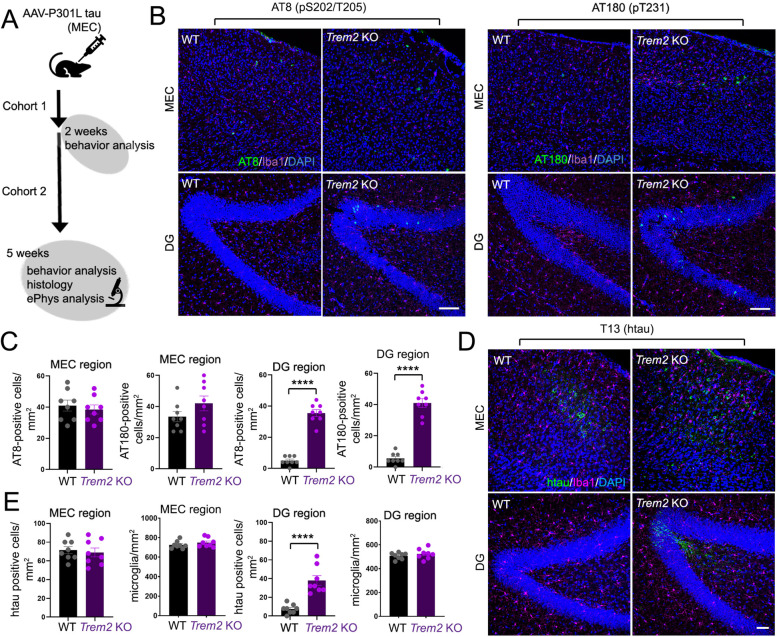
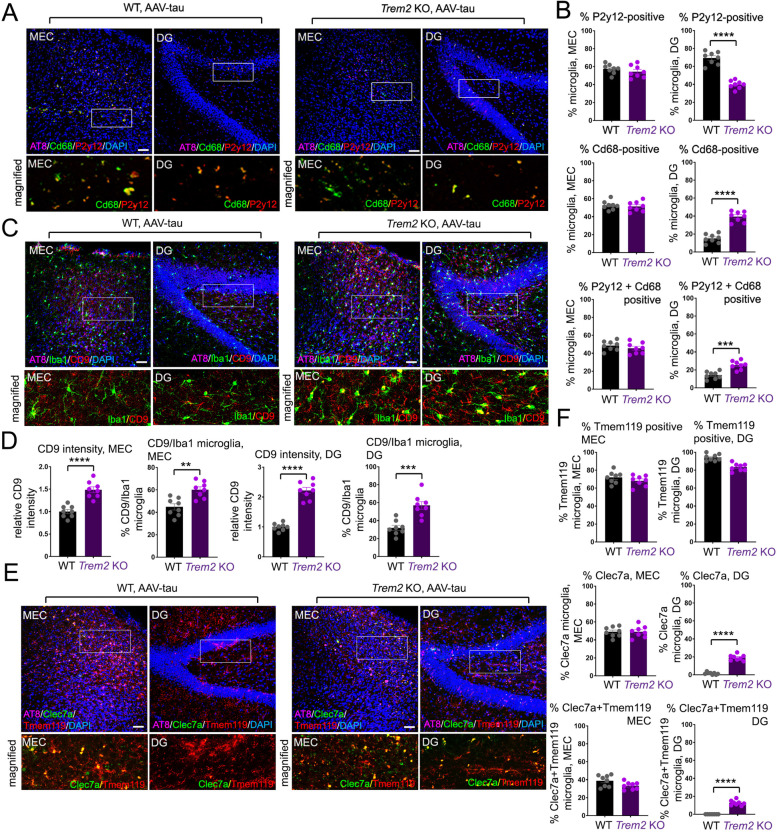
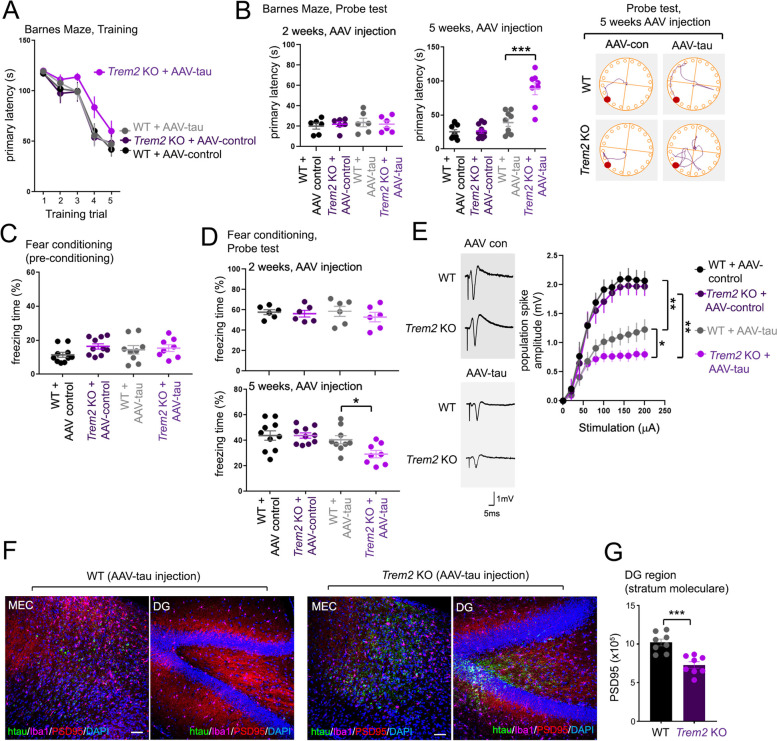
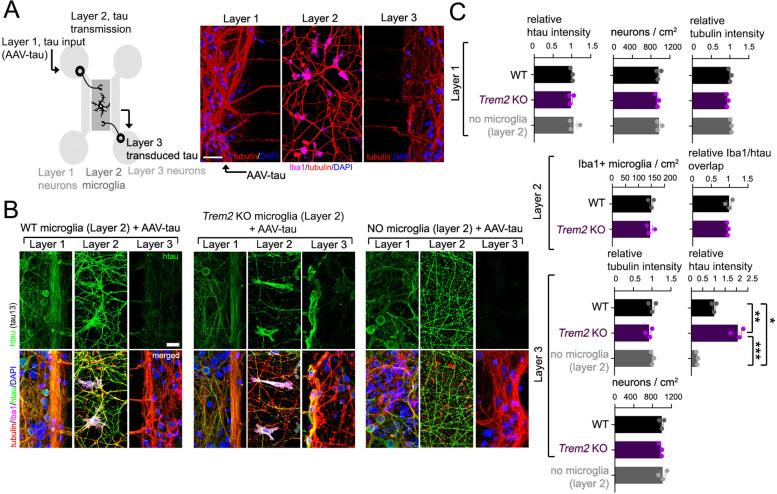
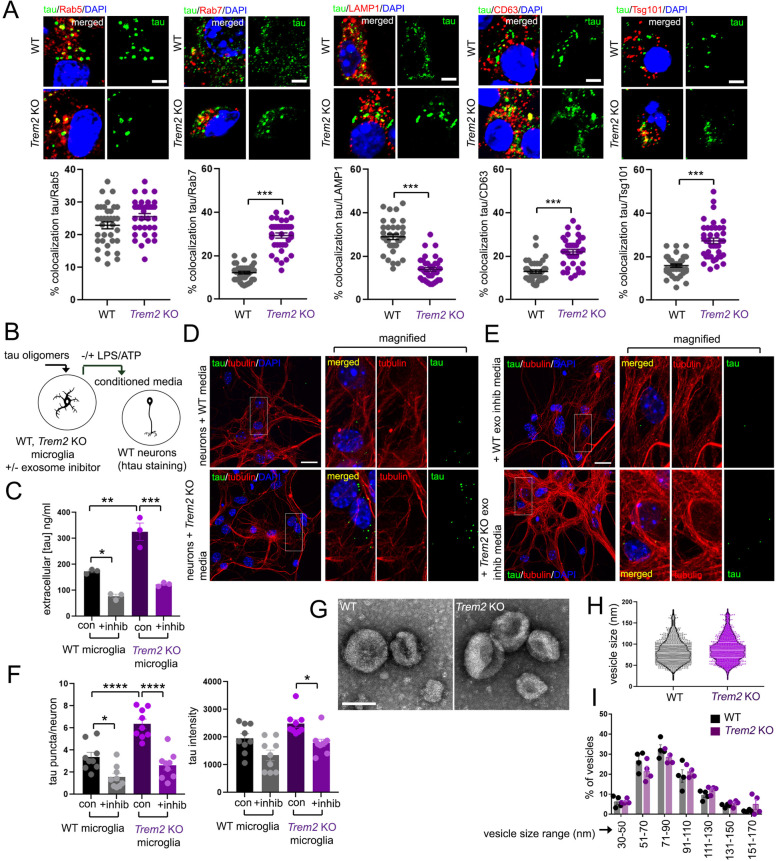
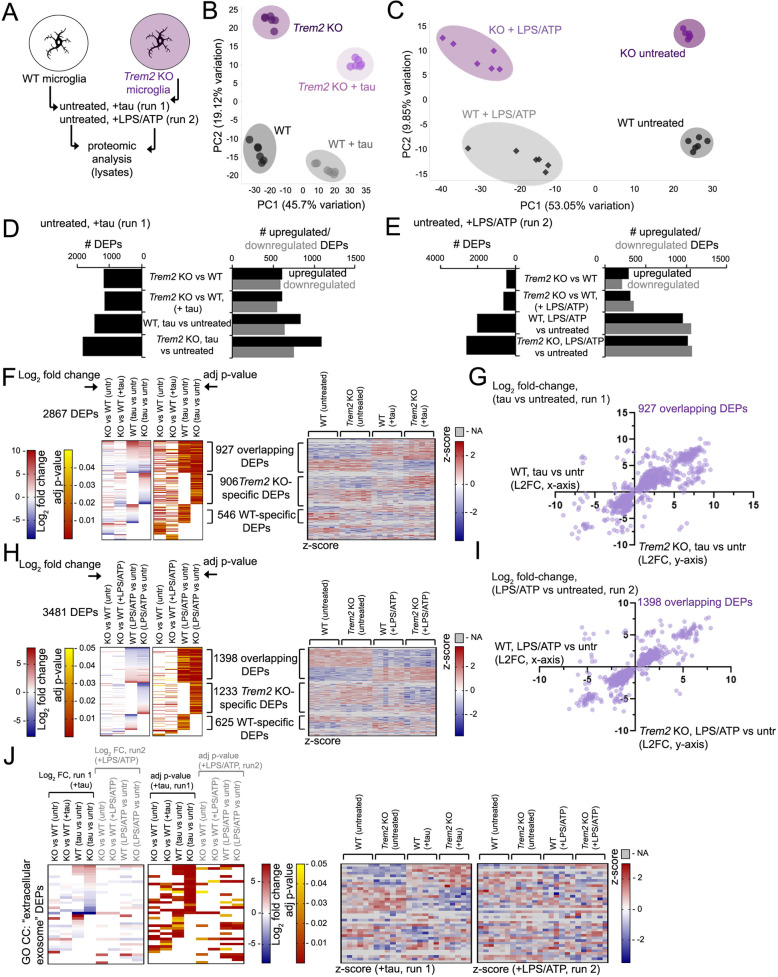
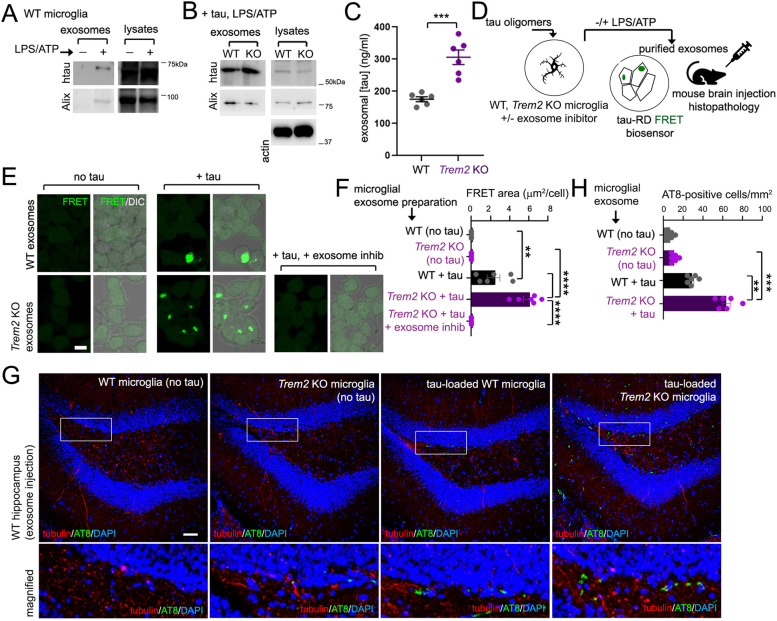
Background: Alzheimer’s disease (AD) is a neurodegenerative disorder that manifests sequential Aβ and tau brain pathology with age-dependent onset. Variants in the microglial immune receptor TREM2 are associated with enhanced risk of onset in sporadic Alzheimer’s disease (AD). While recent studies suggest TREM2 dysfunction can aggravate tau pathology, mechanisms underlying TREM2-dependent modulation of tau pathology remains elusive. Methods: Here, we characterized differences in progressive tau spreading from the medial entorhinal cortex (MEC) to the hippocampus in wildtype (WT) and Trem2 knockout (KO) mice by injection of AAV-P301L tau into the MEC, and correlated changes in hippocampal tau histopathology with spatial and fear memory. We also compared effects of intraneuronal dispersion between cultured microglia and neurons using a microfluidic dispersion assay, analyzed differences in microglial tau trafficking following uptake, and quantified exosomal tau secretion and pathogenicity from purified WT and Trem2 KO exosomes. Results: Trem2 deletion in mice (Trem2 KO) can enhance tau spreading from the medial entorhinal cortex (MEC) to the hippocampus, which coincides with impaired synaptic function and memory behavior. Trem2 deletion in microglia enhances intraneuronal dispersion of tau in vitro between neuronal layers cultured in a microfluidic chamber, and the presence of exosome inhibitors can significantly reduce tau in exosomes and extracellular media from tau-loaded microglia. Although microglial Trem2 deletion has no effect on tau uptake, Trem2 deletion enhances distribution to endosomal and cellular pre-exosomal compartments following internalization. Trem2 deletion has little effect on exosome size, however, proteomic analysis indicates that Trem2 deletion can modulate changes in the microglial proteomic landscape with tau and LPS/ATP treatment conditions associated with exosome induction. Furthermore, exosomes from Trem2 KO microglia show elevated tau levels, and feature enhanced tau-seeding capacity in a tau FRET reporter line compared to exosomes from WT microglia. Conclusion: Together, our results reveal a role for Trem2 in suppressing exosomal tau pathogenicity, and demonstrates that Trem2 deletion can enhance tau trafficking, distribution and seeding through microglial exosomes. Graphical abstract:
Overview
The claims and statistics of this paper haven’t been checked yet.
Run the check — free, no account needed. It reads the open-access text and checks the sources it cites.
Integrity signals
Registry
Cites
Statistics
Figures
Verification
Claims the paper makes
The claims and statistics of this paper haven’t been checked yet.
Run the check — free, no account needed. It reads the open-access text and checks the sources it cites.
Claims other papers make about this one
Each is checked against this paper’s own text: does it say what the citing paper says it does?
The cited source says what the claim attributes to it.
In the citing paper
“in vitro experiments suggest that microglia or macrophage uptake of tau does not depend on TREM2 expression [39,43].”
From TREM2-Deficient Microglia Attenuate Tau Spreading In Vivo (2023) · cites this paper as [43]
The cited source says what the claim attributes to it.
In the citing paper
“they suggested that TREM2 deletion promotes tau trafficking to late endosome/pre-exosomal compartments [43].”
From TREM2-Deficient Microglia Attenuate Tau Spreading In Vivo (2023) · cites this paper as [43]
The cited source says what the claim attributes to it.
In the citing paper
“a recent study using the adeno-associated virus (AAV) expression of P301L tau showed that TREM2 deletion enhanced tau spreading from the medial entorhinal cortex (MEC) to the hippocampal dentate gyrus (DG) [43].”
From TREM2-Deficient Microglia Attenuate Tau Spreading In Vivo (2023) · cites this paper as [43]
The cited source says what the claim attributes to it.
In the citing paper
“The authors demonstrated that TREM2 deletion aggravates tau spreading, possibly through microglial extracellular exosomes.”
From TREM2-Deficient Microglia Attenuate Tau Spreading In Vivo (2023) · cites this paper as [43]
In the citing paper
“Furthermore, Zhu et al. reveal that TREM2 deficiency exacerbates pathological tau propagation via microglial exosomes [196].”
From Tau and neuroinflammation in Alzheimer’s disease: interplay mechanisms and clinical translation (2023) · cites this paper as [196]
Self-check
Percentages, sums and reported differences re-computed from the paper’s own numbers.
The self-check needs the paper’s full text.
Citations
Cites
Systematic and integrative analysis of large gene lists using DAVID bioinformatics resources
Huang, D. W., Sherman, B. T., & Lempicki, R. A. (2009) · Nature Protocols · doi:10.1038/nprot.2008.211 · Cited by 35,890
Neuropathological stageing of Alzheimer-related changes.
Braak, H., & Braak, E. (1991) · Acta Neuropathologica · doi:10.1007/bf00308809 · Cited by 16,123
Huang, D. W., Sherman, B. T., & Lempicki, R. A. (2009) · Nucleic Acids Research · doi:10.1093/nar/gkn923 · Cited by 14,108
A Unique Microglia Type Associated with Restricting Development of Alzheimer’s Disease
Keren-Shaul, H., Spinrad, A., Weiner, A., Matcovitch-Natan, O., Dvir-Szternfeld, R., Ulland, T. K., David, E., Baruch, K., Lara-Astaiso, D., Toth, B., et al. (2017) · Cell · doi:10.1016/j.cell.2017.05.018 · Cited by 5,493
Inflammation and Alzheimer’s disease
Akiyama, H. (2000) · Neurobiology of Aging · doi:10.1016/s0197-4580(00)00124-x · Cited by 4,514
TREM2 Variants in Alzheimer's Disease
Guerreiro, R., Wojtas, A., Bras, J., Carrasquillo, M., Rogaeva, E., Majounie, E., Cruchaga, C., Sassi, C., Kauwe, J. S. K., Younkin, S., et al. (2013) · New England Journal of Medicine · doi:10.1056/nejmoa1211851 · Cited by 3,020
Krasemann, S., Madore, C., Cialic, R., Baufeld, C., Calcagno, N., El Fatimy, R., Beckers, L., O’Loughlin, E., Xu, Y., Fanek, Z., et al. (2017) · Immunity · doi:10.1016/j.immuni.2017.08.008 · Cited by 2,979
Variant of TREM2 Associated with the Risk of Alzheimer's Disease
Jonsson, T., Stefansson, H., Steinberg, S., Jonsdottir, I., Jonsson, P. V., Snaedal, J., Bjornsson, S., Huttenlocher, J., Levey, A. I., Lah, J. J., et al. (2013) · New England Journal of Medicine · doi:10.1056/nejmoa1211103 · Cited by 2,558
Memory deficits associated with senescence: A neurophysiological and behavioral study in the rat.
Barnes, C. A. (1979) · Journal of Comparative and Physiological Psychology · doi:10.1037/h0077579 · Cited by 2,088
Initiative, T. A. D. N., Hollingworth, P., CHARGE consortium, EADI1 consortium, Harold, D., Sims, R., Gerrish, A., Lambert, J.-C., Carrasquillo, M. M., Abraham, R., et al. (2011) · Nature Genetics · doi:10.1038/ng.803 · Cited by 1,997
Cited by
Sorted by citations
Tau and neuroinflammation in Alzheimer’s disease: interplay mechanisms and clinical translation
Chen, Y., & Yu, Y. (2023) · Journal of Neuroinflammation · doi:10.1186/s12974-023-02853-3 · Cited by 516
Cellular and pathological functions of tau
Bravo, C. P., Naguib, S. A., & Gan, L. (2024) · Nature Reviews Molecular Cell Biology · doi:10.1038/s41580-024-00753-9 · Cited by 271
TREM2: Potential therapeutic targeting of microglia for Alzheimer's disease
Li, Y., Xu, H., Wang, H., Yang, K., Luan, J., & Wang, S. (2023) · Biomedicine & Pharmacotherapy · doi:10.1016/j.biopha.2023.115218 · Cited by 133
Self-citationImmune Activation in Alzheimer Disease
Mary, A., Mancuso, R., & Heneka, M. T. (2024) · Annual Review of Immunology · doi:10.1146/annurev-immunol-101921-035222 · Cited by 82
Targeting tau in Alzheimer's disease: from mechanisms to clinical therapy
Ye, J., Wan, H., Chen, S., & Liu, G. (2023) · Neural Regeneration Research · doi:10.4103/1673-5374.385847 · Cited by 74
Metadata
- Authors
- Zhu, B., Liu, Y., Hwang, S., Archuleta, K., Huang, H., Campos, A., Murad, R., Piña-Crespo, J., Xu, H., & Huang, T. Y.
- Affiliations
- Sanford Burnham Prebys Medical Discovery Institute (US)
- Chongqing Medical University (CN)
- Corresponding author
- Xu, Huaxi
- Huang, Timothy Y.
- Venue
- Molecular Neurodegeneration
- Published
- 2022-09-02
- Volume
- 17
- Issue
- 1
- Pages
- 58-58
- ISSN
- 1750-1326 (ISSN-L)
- PMC
- PMC9438095
- OpenAlex
- W4294169024
- Cited by
- 127
- References
- 69
- Citations by year
- 2026: 28 · 2025: 35 · 2024: 35 · 2023: 26 · 2022: 3
- FWCI
- 15.33
- Type
- journal article
- Language
- en
- Open access
- gold
- doi.org
- Locations
- Molecular Neurodegeneration (publishedVersion, cc-by)
- PubMed Central (publishedVersion, cc-by)
- PubMed (publishedVersion)
- DOAJ (DOAJ: Directory of Open Access Journals) (submittedVersion, cc-by-sa)
- Funders
- National Institute on Aging (R21 AG070676, RF1 056130)
- Topics
- Life Sciences › Neuroscience › Cellular and Molecular Neuroscience › Alzheimer's disease research and treatments
- Life Sciences › Neuroscience › Neurology › Neuroinflammation and Neurodegeneration Mechanisms
- Life Sciences › Biochemistry, Genetics and Molecular Biology › Molecular Biology › Extracellular vesicles in disease
- Keywords
- TREM2, tau pathology, Alzheimer's disease, microglia, exosomes, tau propagation, tau seeding, medial entorhinal cortex, hippocampus, memory impairment, TREM2 knockout mice
- MeSH terms
- Alzheimer Disease, Animals, Membrane Glycoproteins, Receptors, Immunologic, Microglia, Mice, Knockout, Proteomics, Mice, Exosomes
About these checks
Registry, retraction, Cites and statistics results are computed, not judged, with one exception: a printed reference that no index lists is read once by a model before it counts as a citation error. Claims are extracted by a model and kept only when their quote appears verbatim in the text; each cited source is then checked, with a model’s help, for whether it says what the claim relies on. Those verdicts can be wrong — read the claim’s quote and the cited source before relying on one.
Statistics and arithmetic are recomputed, not judged.
Confidence bands are shown only for fields calibrated on our annotated test set. None is calibrated yet, so no band is shown.
What counts as a claim ›How we measure confidence ›How we check this ›
Are you an author, or do you see a problem with this page? Request a review
