

The DOI matches its Crossref record; 319 of the 319 references it cites were found in a registry or an index.
ApoE in Alzheimer’s disease: pathophysiology and therapeutic strategies
Open accessAbstract
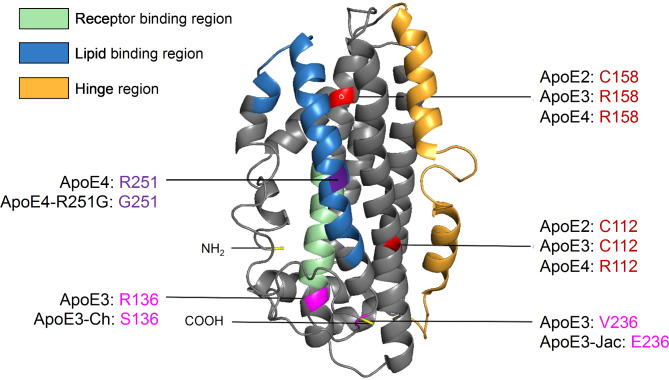
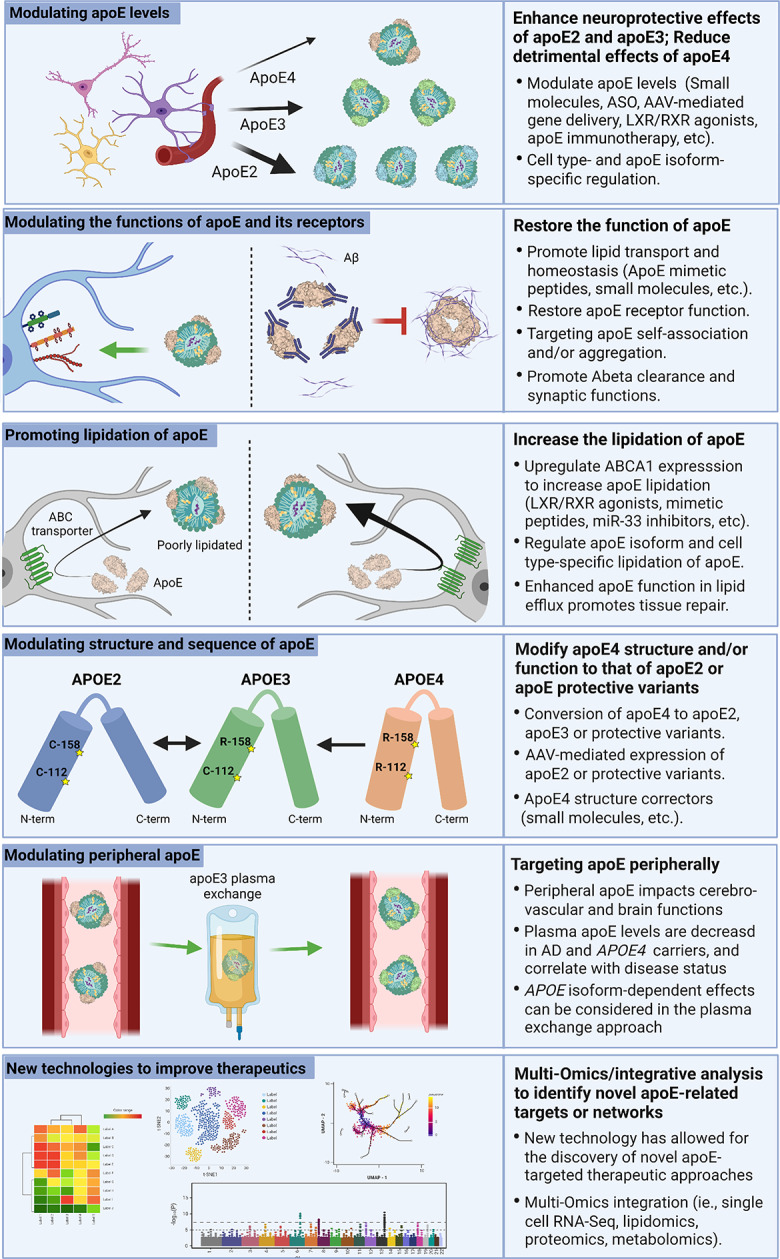
Alzheimer’s disease (AD) is the most common cause of dementia worldwide, and its prevalence is rapidly increasing due to extended lifespans. Among the increasing number of genetic risk factors identified, the apolipoprotein E ( APOE ) gene remains the strongest and most prevalent, impacting more than half of all AD cases. While the ε4 allele of the APOE gene significantly increases AD risk, the ε2 allele is protective relative to the common ε3 allele. These gene alleles encode three apoE protein isoforms that differ at two amino acid positions. The primary physiological function of apoE is to mediate lipid transport in the brain and periphery; however, additional functions of apoE in diverse biological functions have been recognized. Pathogenically, apoE seeds amyloid-β (Aβ) plaques in the brain with apoE4 driving earlier and more abundant amyloids. ApoE isoforms also have differential effects on multiple Aβ-related or Aβ-independent pathways. The complexity of apoE biology and pathobiology presents challenges to designing effective apoE-targeted therapeutic strategies. This review examines the key pathobiological pathways of apoE and related targeting strategies with a specific focus on the latest technological advances and tools.
Overview
The claims and statistics of this paper haven’t been checked yet.
Run the check — free, no account needed. It reads the open-access text and checks the sources it cites.
Integrity signals
Registry
Cites
Statistics
Figures
Verification
Claims the paper makes
The claims and statistics of this paper haven’t been checked yet.
Run the check — free, no account needed. It reads the open-access text and checks the sources it cites.
Claims other papers make about this one
Each is checked against this paper’s own text: does it say what the citing paper says it does?
The source backs part of the claim, not all of it — or backs it for a different population, condition or comparison.
In the citing paper
“In humans, three major isoforms of APOE are lipidated in an isoform‐specific manner (ε2 > ε3 > ε4). 9 , 48”
From Deletion of miR-33, a regulator of the ABCA1–APOE pathway, ameliorates neuropathological phenotypes in APP/PS1 mice (2024) · cites this paper as [48]
Experimental — accuracy not yet measuredThe source backs part of the claim, not all of it — or backs it for a different population, condition or comparison.
In the citing paper
“APOE binds to cell surface receptors, such as low‐density lipoprotein receptor (LDLR), LDLR‐related protein 1 (LRP1), very low‐density lipoprotein receptor (VLDLR), and apolipoprotein E receptor 2 (APOER2 or LRP8). 2 , 14 , 15”
From Deletion of neuronal Idol ameliorates Alzheimer's disease–related pathologies via APOE receptors (2025) · cites this paper as [2]
Experimental — accuracy not yet measuredThe source backs part of the claim, not all of it — or backs it for a different population, condition or comparison.
In the citing paper
“Although mainly secreted by astrocytes, APOE is also expressed in microglia, neurons, and oligodendrocytes, particularly under injury and degenerative conditions. 2 , 13”
From Deletion of neuronal Idol ameliorates Alzheimer's disease–related pathologies via APOE receptors (2025) · cites this paper as [2]
Experimental — accuracy not yet measuredThe source backs part of the claim, not all of it — or backs it for a different population, condition or comparison.
In the citing paper
“Genetic variants of many of the differentially expressed genes identified in this study, such as CLU and APOE, have been associated with increased Alzheimer’s disease risk58,59.”
From mTORC1 drives cell-autonomous astrocyte reactivity in tuberous sclerosis (2026) · cites this paper as [59]
Experimental — accuracy not yet measuredThe source backs part of the claim, not all of it — or backs it for a different population, condition or comparison.
In the citing paper
“The APOE-ε4 allele increases AD risk three- to eightfold compared to the neutral ε3 allele, while ε2 confers relative protection [154].”
From Toward a Unified Framework in Molecular Neurobiology of Alzheimer’s Disease: Revisiting the Pathophysiological Hypotheses (2026) · cites this paper as [154]
Experimental — accuracy not yet measured
The source backs part of the claim, not all of it — or backs it for a different population, condition or comparison.
In the citing paper
“ApoE influences AD pathogenesis through multiple pathways, such as (i) impaired clearance of Aβ by competing with receptor-mediated uptake (e.g., LRP1), (ii) modulation of tau phosphorylation and spread, and (iii) regulation of microglial activation.”
From Toward a Unified Framework in Molecular Neurobiology of Alzheimer’s Disease: Revisiting the Pathophysiological Hypotheses (2026) · cites this paper as [154]
Experimental — accuracy not yet measuredThe cited source says what the claim attributes to it.
In the citing paper
“APOE is multifunctional, with roles in lipid and glucose metabolism, neuroinflammation, amyloid and tau accumulation, and blood-brain barrier dysfunction [2].”
From Effects of APOE2 and APOE4 on brain microstructure in older adults: modification by age, sex, and cognitive status (2024) · cites this paper as [2]
The cited source says what the claim attributes to it.
In the citing paper
“These efforts have resulted in identifying multiple mechanisms by which APOE influences AD‐related pathologies, including amyloid beta (Aβ) accumulation, tauopathy, neuroinflammation, and synaptic impairment. 2”
From Deletion of neuronal Idol ameliorates Alzheimer's disease–related pathologies via APOE receptors (2025) · cites this paper as [2]
The cited source says what the claim attributes to it.
In the citing paper
“as APOE is increasingly viewed not only as a risk locus, but also as a mechanistically actionable therapeutic axis in AD 2 .”
From Association of Rare APOE Missense Variants R189C and W276C With Risk of Alzheimer Disease (2026) · cites this paper as [2]
The cited source says what the claim attributes to it.
In the citing paper
“Together, these data support a model in which C-terminal ApoE biology, including lipidation and self-association, is not merely correlative but is closely tied to pathogenesis and may inform future APOE-directed therapeutic strategies 2,17 .”
From Association of Rare APOE Missense Variants R189C and W276C With Risk of Alzheimer Disease (2026) · cites this paper as [2]
The cited source says what the claim attributes to it.
In the citing paper
“Among these, the APOE gene plays a central role in modulating disease risk, primarily through its involvement in lipid transport, synaptic function, and amyloid-beta metabolism in the brain (Martens et al., 2022; Raulin et al., 2022).”
From Isogenic human stem cell models reveal mutation-dependent protective mechanisms of APOE3 Christchurch (2026) · cites this paper as Raulin et al., 2022
The cited source says what the claim attributes to it.
In the citing paper
“suggesting the distinct biochemical interactions influencing Aβ deposition or clearance [2, 3, 22, 23].”
From Astrocytic APOE3-Christchurch expression ameliorates brain amyloid-β pathology in 5xFAD mice (2026) · cites this paper as [2]
The cited source says what the claim attributes to it.
In the citing paper
“In contrast, sporadic AD is strongly associated with polymorphisms in the APOE gene.”
From Toward a Unified Framework in Molecular Neurobiology of Alzheimer’s Disease: Revisiting the Pathophysiological Hypotheses (2026) · cites this paper as [154]
The cited source says what the claim attributes to it.
In the citing paper
“Recent work suggests that APOE variants not only modulate amyloid deposition but also reshape immune responses and lipid metabolism, positioning APOE at the nexus of amyloid, tau, and neuroinflammation [154].”
From Toward a Unified Framework in Molecular Neurobiology of Alzheimer’s Disease: Revisiting the Pathophysiological Hypotheses (2026) · cites this paper as [154]
In the citing paper
“APOE exists in three isoforms, namely APOE2, APOE3, and APOE4, among which APOE4 isoform has been identified as the strongest genetic risk factor for late-onset AD.173”
From Microbiota–gut–brain axis and its therapeutic applications in neurodegenerative diseases (2024) · cites this paper as [173]
Self-check
Percentages, sums and reported differences re-computed from the paper’s own numbers.
The self-check needs the paper’s full text.
Citations
Cites
2 retracted
Wu, B., Wu, M., & Guo, J. (2017) · Journal of Cellular Physiology · doi:10.1002/jcp.26328 · Cited by 43
RetractedSawmiller, D. R., Habib, A., Hou, H., Mori, T., Fan, A., Tian, J., Jin, Z., Giunta, B. N., Sanberg, P. R., Mattson, M. P., et al. (2019) · Biological Psychiatry · doi:10.1016/j.biopsych.2019.04.026 · Cited by 38
RetractedA Unique Microglia Type Associated with Restricting Development of Alzheimer’s Disease
Keren-Shaul, H., Spinrad, A., Weiner, A., Matcovitch-Natan, O., Dvir-Szternfeld, R., Ulland, T. K., David, E., Baruch, K., Lara-Astaiso, D., Toth, B., et al. (2017) · Cell · doi:10.1016/j.cell.2017.05.018 · Cited by 5,493
Strittmatter, W. J., Saunders, A. M., Schmechel, D., Pericak-Vance, M., Enghild, J., Salvesen, G. S., & Roses, A. D. (1993) · Proceedings of the National Academy of Sciences · doi:10.1073/pnas.90.5.1977 · Cited by 4,268 · cited 1×
“APOE4 is a major genetic risk factor for AD in a gene dose-dependent manner increasing risk by up to 15 fold in homozygotes [13], whereas APOE2 reduces AD risk by almost half and contributes to longevity [14].”
BackgroundApolipoprotein E and Alzheimer disease: risk, mechanisms and therapy
Liu, C.-C., Kanekiyo, T., Xu, H., & Bu, G. (2013) · Nature Reviews Neurology · doi:10.1038/nrneurol.2012.263 · Cited by 3,459
Self-citationNeuropathological alterations in Alzheimer disease
Serrano-Pozo, A., Frosch, M. P., Masliah, E., & Hyman, B. T. (2011) · Cold Spring Harbor Perspectives in Medicine · doi:10.1101/cshperspect.a006189 · Cited by 3,345
The neuropathological diagnosis of Alzheimer's disease
DeTure, M. A., & Dickson, D. W. (2019) · Molecular Neurodegeneration · doi:10.1186/s13024-019-0333-5 · Cited by 3,329
Role of C-Reactive Protein at Sites of Inflammation and Infection
Sproston, N. R., & Ashworth, J. (2018) · Frontiers in Immunology · doi:10.3389/fimmu.2018.00754 · Cited by 3,243
Blennow, K., de Leon, M. J., & Zetterberg, H. (2006) · The Lancet · doi:10.1016/s0140-6736(06)69113-7 · Cited by 3,134
The antibody aducanumab reduces Aβ plaques in Alzheimer’s disease
Sevigny, J., Chiao, P., Bussière, T., Weinreb, P. H., Williams, L., Maier, M., Dunstan, R., Salloway, S., Chen, T., Ling, Y., et al. (2016) · Nature · doi:10.1038/nature19323 · Cited by 3,059
Cited by
Sorted by citations
Items 101–200 of 755
Zhao, Y., Guo, Q., Tian, J., Liu, W., & Wang, X. (2024) · Ageing Research Reviews · doi:10.1016/j.arr.2024.102596 · Cited by 23
Circadian Influences on Brain Lipid Metabolism and Neurodegenerative Diseases
Hussain, Y., Dar, M. I., & Pan, X. (2024) · Metabolites · doi:10.3390/metabo14120723 · Cited by 23
Liu, A., Wang, T., Yang, L., & Zhou, Y. (2025) · Brain Sciences · doi:10.3390/brainsci15070675 · Cited by 23
Consensus statement on exploring the Nexus between nutrition, brain health and dementia prevention
Johnstone, A. M., Albanese, E., Crabtree, D. R., Dalile, B., Grabrucker, S., Gregory, J. M., Grosso, G., Holliday, A., Hughes, C., Itsiopoulos, C., et al. (2025) · Nutrition & Metabolism · doi:10.1186/s12986-025-00981-6 · Cited by 24
APOEε4 and risk of Alzheimer’s disease – time to move forward
Lefterov, I. M., Fitz, N. F., Lü, Y., & Koldamova, R. P. (2023) · Frontiers in Neuroscience · doi:10.3389/fnins.2023.1195724 · Cited by 25
Circadian Regulation of Apolipoproteins in the Brain: Implications in Lipid Metabolism and Disease
Lee, C., Murrell, C. E., Chu, A., & Pan, X. (2023) · International Journal of Molecular Sciences · doi:10.3390/ijms242417415 · Cited by 20
Tolar, M., Hey, J. A., Power, A., & Abushakra, S. R. (2024) · International Journal of Molecular Sciences · doi:10.3390/ijms25052727 · Cited by 23
Chlamydia pneumoniae in Alzheimer's disease pathology
Subedi, L., Gaire, B. P., Koronyo, Y., Koronyo‐Hamaoui, M., & Crother, T. R. (2024) · Frontiers in Neuroscience · doi:10.3389/fnins.2024.1393293 · Cited by 24
Wearn, A. R., Tremblay, S. A., Tardif, C. L., Leppert, I. R., Gauthier, C. J., Baracchini, G., Hughes, C. S., Hewan, P., Tremblay‐Mercier, J., Rosa‐Neto, P., et al. (2024) · Nature Communications · doi:10.1038/s41467-024-48490-z · Cited by 27
Reas, E. T., Triebswetter, C., Banks, S. J., & McEvoy, L. K. (2024) · Alzheimer's Research & Therapy · doi:10.1186/s13195-023-01380-w · Cited by 21
“APOE is multifunctional, with roles in lipid and glucose metabolism, neuroinflammation, amyloid and tau accumulation, and blood-brain barrier dysfunction [2].”
BackgroundAlzheimer’s disease and age-related macular degeneration: Shared and distinct immune mechanisms
Butovsky, O., & Rosenzweig, N. (2025) · Immunity · doi:10.1016/j.immuni.2025.04.013 · Cited by 22
Protective genetic variants against Alzheimer's disease
Mariño, C., Malotaux, V., Giudicessi, A., Aguillon, D. F., Falla, D. S., Lopera, F. J., & Quiroz, Y. T. (2025) · The Lancet Neurology · doi:10.1016/s1474-4422(25)00116-4 · Cited by 22
The Effects of Estrogen on the Risk of Developing Dementia: A Cohort Study Using the UK Biobank Data
Park, H. K., Marston, L., & Mukadam, N. (2024) · American Journal of Geriatric Psychiatry · doi:10.1016/j.jagp.2024.01.025 · Cited by 20
Jin, J., Zhang, H., Lu, Q., Tian, L., Yao, S., Lai, F., Liang, Y., Liu, C., Lu, Y., Tian, S., et al. (2024) · Neural Regeneration Research · doi:10.4103/nrr.nrr-d-24-00303 · Cited by 20
Self-citationImmune Modulation in Alzheimer’s Disease: From Pathogenesis to Immunotherapy
Balkhi, S., Spirito, A. D., Poggi, A. D., & Mortara, L. (2025) · Cells · doi:10.3390/cells14040264 · Cited by 21
Shared genetic architecture of COVID-19 and Alzheimer’s disease
Matveeva, N. A., Сергеевич, К. И., Baulina, N., Semina, E. V., Kakotkin, V. V., Агапов, М. А., Кулакова, О. Г., & Favorova, O. O. (2023) · Frontiers in Aging Neuroscience · doi:10.3389/fnagi.2023.1287322 · Cited by 20
APOE genotype and sex modulate Alzheimer’s disease pathology in aged EFAD transgenic mice
Balu, D., Valencia‐Olvera, A. C., Islam, Z., Mielczarek, C., Hansen, A. L., Ramos, T. M. P., York, J. M., LaDu, M. J., & Tai, L. M. (2023) · Frontiers in Aging Neuroscience · doi:10.3389/fnagi.2023.1279343 · Cited by 20
Apolipoprotein E Gene in α-Synucleinopathies: A Narrative Review
Liampas, I., Kyriakoulopoulou, P., Siokas, V., Tsiamaki, E., Stamati, P., Kefalopoulou, Z. M., Chroni, E., & Dardiotis, E. (2024) · International Journal of Molecular Sciences · doi:10.3390/ijms25031795 · Cited by 30
Epigenetic modifications of DNA and RNA in Alzheimer’s disease
Martínez-Feduchi, P., Jin, P., & Yao, B. (2024) · Frontiers in Molecular Neuroscience · doi:10.3389/fnmol.2024.1398026 · Cited by 22
Golden, L. R., Siano, D. S., Stephens, I. O., MacLean, S. M., Saito, K., Nolt, G. L., Funnell, J. L., Pallerla, A. V., Lee, S., Smith, C., et al. (2025) · Nature Neuroscience · doi:10.1038/s41593-025-02094-y · Cited by 18
Human apolipoprotein E glycosylation and sialylation: from structure to function
Moon, H.-J., Luo, Y., Chugh, D., & Zhao, L. (2024) · Frontiers in Molecular Neuroscience · doi:10.3389/fnmol.2024.1399965 · Cited by 18
Hu, H., Wan, S., Hu, Y., Wang, Q., Li, H., & Zhang, N. (2025) · Annals of Medicine · doi:10.1080/07853890.2024.2445194 · Cited by 20
Pineiro‐Alonso, L., Rubio-Prego, I., Lobyntseva, A., González‐Freire, E., Langer, R., & Alonso, M. J. (2025) · Advanced Drug Delivery Reviews · doi:10.1016/j.addr.2025.115606 · Cited by 22
Complement therapeutics in neurodegenerative diseases
Zelek, W. M., & Tenner, A. J. (2025) · Immunobiology · doi:10.1016/j.imbio.2025.153089 · Cited by 19
Sepúlveda‐Rivera, V., Olivieri‐Henry, G., Morales, H., Ruiz‐Adames, J. A., Herrero‐Rivera, C. A., Rentas-Echeverria, A., Cardona-Berdecía, V., Soler‐Llompart, C. M., Sala‐Morales, A. C., Pérez-Montero, G., et al. (2025) · Scientific Reports · doi:10.1038/s41598-025-13262-2 · Cited by 21
Richardson, T. E., Walker, J. M., Farrell, K. W., Oliveira, T. G., White, C. L., & Crary, J. F. (2025) · Acta Neuropathologica · doi:10.1007/s00401-025-02943-x · Cited by 25
Nabizadeh, F. (2023) · Brain Communications · doi:10.1093/braincomms/fcad286 · Cited by 19
Bumber, J. R., Rački, V., Mežnarić, S., Pelčić, G., & Mršić‐Pelčić, J. (2025) · Journal of Clinical Medicine · doi:10.3390/jcm14176047 · Cited by 19
Emerging roles for innate and adaptive immunity in tauopathies
Johnson, A. M., & Lukens, J. R. (2025) · Cell Reports · doi:10.1016/j.celrep.2025.116232 · Cited by 19
Tangles and Plaques: A deep dive into the pathological hallmarks of Alzheimer’s disease
Vanya, Kumari, S., Bagri, K., & Deshmukh, R. R. (2025) · Neuroscience · doi:10.1016/j.neuroscience.2025.10.050 · Cited by 18
Microglia and neuroinflammation: function, heterogeneity, and crosstalk
Zong, S., Cui, X., Wu, S., & Lu, Z. (2026) · Cellular and Molecular Immunology · doi:10.1038/s41423-026-01438-3 · Cited by 28
Apolipoprotein E and Alzheimer’s Disease in Italian Population: Systematic Review and Meta-Analysis
Abrego-Guandique, D. M., Saraceno, G. F., Cannataro, R., de Burnside, M. M., Caroleo, M. C., & Cione, E. (2024) · Brain Sciences · doi:10.3390/brainsci14090908 · Cited by 17
Walker, J. M., Gonzales, M. M., Goette, W. F., Farrell, K. W., White, C. L., Crary, J. F., & Richardson, T. E. (2023) · Journal of Alzheimer s Disease · doi:10.3233/jad-230022 · Cited by 18
The big tau splice isoform resists Alzheimer’s-related pathological changesPreprint
Chung, D. C., Deng, X., Yalamanchili, H. K., Revelli, J., Han, A. L., Tadros, B., Richman, R., Dias, M., Naini, F. A., Boeynaems, S., et al. (2024) · bioRxiv (Cold Spring Harbor Laboratory) · doi:10.1101/2024.07.30.605685 · Cited by 16
Tate, M., Wijeratne, H. R. S., Kim, B., Philtjens, S., You, Y., Lee, D., Gutierrez, D. A., Sharify, D., Wells, M., Perez‐Cardelo, M., et al. (2024) · Alzheimer's & Dementia · doi:10.1002/alz.14243 · Cited by 21
“9,48 Interestingly, this lipidation pattern inversely correlates with the risk of developing AD ( ε 2 ε 3 ε 4).”
Zhang, W., Huang, C., Yao, H., Yang, S., Jiapaer, Z., Song, J., & Wang, X. (2025) · Translational Neurodegeneration · doi:10.1186/s40035-025-00471-y · Cited by 16
Khan, B., Iqbal, M. K., Khan, M. A., Khan, H. R., Kiyani, M. M., Bashir, S., & Li, S. (2025) · Journal of Molecular Neuroscience · doi:10.1007/s12031-025-02337-4 · Cited by 17
Cognitive and neuropsychological trajectories in patients with mixed neurodegenerative pathologies
Almeida, F., Marx, G. A., Rohde, S. K., Gonzales, M. M., Maldonado‐Díaz, C., Hiya, S., Clare, K. M., Samanamud, J. L., Slocum, C., Kauffman, J., et al. (2025) · Alzheimer s & Dementia · doi:10.1002/alz.70575 · Cited by 15
APOE Locus-Associated Mitochondrial Function and Its Implication in Alzheimer’s Disease and Aging
Lee, E.-G., Leong, L., Chen, S., Tulloch, J., & Yu, C. (2023) · International Journal of Molecular Sciences · doi:10.3390/ijms241310440 · Cited by 16
Pharmacogenomics of Dementia: Personalizing the Treatment of Cognitive and Neuropsychiatric Symptoms
Vuić, B., Milos, T., Tudor, L., Perković, M. N., Konjevod, M., Erjavec, G. N., Farkaš, V., Uzun, S., Mimica, N., & Štrac, D. Š. (2023) · Genes · doi:10.3390/genes14112048 · Cited by 17
Valencia‐Olvera, A. C., Balu, D., Bellur, S., McNally, T. P., Saleh, Y., Pham, D., Ghura, S., York, J. M., Johansson, J. O., LaDu, M. J., et al. (2023) · Alzheimer s Research & Therapy · doi:10.1186/s13195-023-01353-z · Cited by 18
Monoclonal antibody therapy for Alzheimer's disease focusing on intracerebral targets
Gu, X., Long, Q., Qi, Q., Zhou, J., Chen, S., & Wang, L. (2024) · BioScience Trends · doi:10.5582/bst.2023.01288 · Cited by 17
The role of foam cells in spinal cord injury: challenges and opportunities for intervention
Wang, X., Li, Z., Du, H., Liu, W.-B., Zhang, C.-J., Xu, X., Ke, H., Peng, R., Yang, D., Li, J., et al. (2024) · Frontiers in Immunology · doi:10.3389/fimmu.2024.1368203 · Cited by 16
APOE ε4 carrier status modifies plasma p‐tau181 concentrations in cognitively healthy super‐seniors
Cooper, J. G., Ghodsi, M., Stukas, S. K., Leach, S. R., Brooks-Wilson, A. R., & Wellington, C. L. (2024) · Alzheimer s & Dementia · doi:10.1002/alz.13804 · Cited by 16
Meta-analysis reveals an inverse relationship between Alzheimer’s disease and cancer
Gui, Z., Xu, M., Dong, Z., Abdelrahman, Z., & Wang, X. (2024) · Behavioural Brain Research · doi:10.1016/j.bbr.2024.115327 · Cited by 17
Huang, A. Y., Zhou, Z., Talukdar, M., Enyenihi, L., Miller, M. B., Chhouk, B., Rosen, I., Zheng, M., Zhou, M., Yang, A., et al. (2026) · Cell · doi:10.1016/j.cell.2026.03.040 · Cited by 15
Sleep Disordered Breathing and Neurocognitive Disorders
Ogbu, I. R., Menon, T., Chahil, V., Kahlon, A., Devanand, D., & Kalra, D. K. (2024) · Journal of Clinical Medicine · doi:10.3390/jcm13175001 · Cited by 19
Zeng, J., Hu, K., Wang, Z., Huang, Y.-C., Zhang, Y., Peng, H., & Ma, S. (2025) · ACS Pharmacology & Translational Science · doi:10.1021/acsptsci.5c00086 · Cited by 18
Zhu, P., Xiao, L., & Wang, Y. (2025) · Fluids and Barriers of the CNS · doi:10.1186/s12987-025-00721-1 · Cited by 19
American Ginseng for the Treatment of Alzheimer’s Disease: A Review
Shan, M., Bai, Y., Fang, X., Lan, X., Zhang, Y., Cao, Y., Zhu, D., & Luo, H. (2023) · Molecules · doi:10.3390/molecules28155716 · Cited by 15
Harnessing cognitive trajectory clusterings to examine subclinical decline risk factors
Du, L., Hermann, B. P., Jonaitis, E. M., Cody, K. A., Rivera‐Rivera, L. A., Rowley, H. A., Field, A. S., Eisenmenger, L. B., Christian, B. T., Betthauser, T. J., et al. (2023) · Brain Communications · doi:10.1093/braincomms/fcad333 · Cited by 15
Pramanik, S., Harini Devi, M., Chakrabarty, S., Paylar, B., Pradhan, A., Thaker, M., Ayyadhury, S., Manavalan, A., Olsson, P., Pramanik, G., et al. (2024) · Neuroscience & Biobehavioral Reviews · doi:10.1016/j.neubiorev.2024.105834 · Cited by 18
Shin, M., Schuck, A., Kang, M., & Kim, Y. (2024) · Biosensors · doi:10.3390/bios14100510 · Cited by 15
Jain, S., Bhushan, B., Mishra, A. K., & Singh, R. (2024) · Journal of Drug Delivery Science and Technology · doi:10.1016/j.jddst.2024.106413 · Cited by 17
Liou, J., Lou, J. J., Aguilar, L. F., Nakagiri, J., Yong, W. H., Hom, C. L., Doran, E. W., Totoiu, M. O., Lott, I. T., Mapstone, M. E., et al. (2025) · Alzheimer s & Dementia · doi:10.1002/alz.14479 · Cited by 16
Models and mechanisms of post-stroke dementia and cognitive impairment
Khan, R., Devlin, P. J., Urayama, A., & Ritzel, R. M. (2025) · Frontiers in Stroke · doi:10.3389/fstro.2025.1563924 · Cited by 14
The connection between autophagy and Alzheimer’s disease
Nechushtai, L., Chen, D., Dan, F., & Pinkas‐Kramarski, R. (2025) · Inflammation Research · doi:10.1007/s00011-025-02118-0 · Cited by 19
Impact of APOE on amyloid and tau accumulation in argyrophilic grain disease and Alzheimer’s disease
Raulin, A., Doss, S. V., Heckman, M. G., Craver, E. C., Li, Z., Ikezu, T. C., Sekiya, H., Liu, C., Martens, Y. A., Rosenberg, C. L., et al. (2024) · Acta Neuropathologica Communications · doi:10.1186/s40478-024-01731-0 · Cited by 14
Self-citationLi, Y., Li, T., Chen, T., Li, C., Yu, W., Xu, Y., Zeng, X., & Zheng, F. (2024) · Journal of Integrative Neuroscience · doi:10.31083/j.jin2305091 · Cited by 15
Martens, N., Zhan, N., Yam, S. C., Leijten, F. P. J., Palumbo, M., Caspers, M. P. M., Tiane, A., Friedrichs, S., Li, Y., der Zee, L. V. V., et al. (2024) · Nutrients · doi:10.3390/nu16111614 · Cited by 15
Predicting Conversion Time from Mild Cognitive Impairment to Dementia with Interval-Censored Models
Zhang, Y., Li, Y., Song, S., Li, Z., Lu, M., & Shan, G. (2024) · Journal of Alzheimer s Disease · doi:10.3233/jad-240285 · Cited by 15
Synergistic reduction in interfacial flexibility of TREM2 R47H and ApoE4 may underlie AD pathology
Lietzke, E. E., Saeb, D., Aldrich, E. C., Bruce, K. D., & Sprenger, K. G. (2025) · Alzheimer s & Dementia · doi:10.1002/alz.70120 · Cited by 16
Wendt, S., Lin, A. J., Ebert, S. N., Brennan, D. J., Cai, W., Bai, Y., Kong, D. Y., Sorrentino, S., Groten, C. J., Lee, C., et al. (2025) · Journal of Neuroinflammation · doi:10.1186/s12974-025-03433-3 · Cited by 13
Zhang, Y.-B., Liu, M., Wang, Y., Hu, D., Wu, S., Zhao, B., Zhou, B., & Yang, L. (2025) · European Journal of Pharmacology · doi:10.1016/j.ejphar.2025.177958 · Cited by 14
ApoE-calypse tau: ApoE–tau synergy in Alzheimer’s disease
Lennol, M. P., Bordier, C., Kamelher, L., Ulrich, J. D., Holtzman, D. M., & Gratuze, M. (2025) · The Journal of Experimental Medicine · doi:10.1084/jem.20250965 · Cited by 14
Njoku, G. C., & Kanmogne, G. D. (2025) · International Journal of Molecular Sciences · doi:10.3390/ijms26189069 · Cited by 15
Cho, S. B. (2024) · International Journal of Molecular Sciences · doi:10.3390/ijms25042211 · Cited by 12
Genomic Insights into Dementia: Precision Medicine and the Impact of Gene-Environment Interaction
Tripathi, A., Pandey, V. K., Sharma, G., Sharma, A. R., Taufeeq, A., Jha, A. K., & Kim, J. (2024) · Aging and Disease · doi:10.14336/ad.2024.0322 · Cited by 13
Time‐encoded ASL reveals lower cerebral blood flow in the early AD continuum
Falcón, C., Montesinos, P., Václavů, L., Kassinopoulos, M., Minguillón, C., Fauria, K., Cascales‐Lahoz, D., Contador, J., Fernández‐Lebrero, A., Navalpotro‐Gómez, I., et al. (2024) · Alzheimer s & Dementia · doi:10.1002/alz.14059 · Cited by 13
Lim, L. (2024) · Frontiers in Neurology · doi:10.3389/fneur.2024.1407785 · Cited by 16
Laslo, A., Laslo, L., Arbănași, E. M., Ujlaki-Nagi, A.-A., Chinezu, L., Ivănescu, A. D., Arbănași, E. M., Carare, R. O., Cordoș, B. A., Popa, I. A., et al. (2024) · Pathophysiology · doi:10.3390/pathophysiology31040040 · Cited by 14
Immunotherapy in Alzheimer’s Disease: Current Status and Future Directions
Vashisth, K., Sharma, S., Ghosh, S., Babu, M. A., Ghosh, S., Iqbal, D., Kamal, M., Almutary, A. G., Jha, S. K., Ojha, S. K., et al. (2024) · Journal of Alzheimer s Disease · doi:10.3233/jad-230603 · Cited by 13
Novel techniques for early diagnosis and monitoring of Alzheimer’s disease
Parul, P., Singh, A. K., & Shukla, S. (2024) · Expert Review of Neurotherapeutics · doi:10.1080/14737175.2024.2415985 · Cited by 13
Microglial CD2AP deficiency exerts protection in an Alzheimer’s disease model of amyloidosis
Zhang, L., Huang, L., Zhou, Y., Meng, J., Zhang, L., Zhou, Y., Zheng, N., Guo, T., Zhao, S., Wang, Z., et al. (2024) · Molecular Neurodegeneration · doi:10.1186/s13024-024-00789-7 · Cited by 13
Pokrzyk, J., Kulczyńska‐Przybik, A., Guzik-Makaruk, E. M., Winkel, I., & Mroczko, B. (2025) · International Journal of Molecular Sciences · doi:10.3390/ijms26051935 · Cited by 14
Yan, L., Zhang, L., Xu, Z., & Luo, Z. Y. (2025) · Frontiers in Pharmacology · doi:10.3389/fphar.2025.1559447 · Cited by 13
Targeting lipid metabolism in neurodegenerative diseases: From experimental to clinical
Long, J., Liu, S., Shi, Y., Zhang, C., Li, Q., & Ai, Q. (2025) · Metabolism · doi:10.1016/j.metabol.2025.156436 · Cited by 12
Cystatins: unravelling the biological implications for neuroprotection
Stańczykiewicz, B., Łuc, M., Banach, M., & Zabłocka, A. (2023) · Archives of Medical Science · doi:10.5114/aoms/171706 · Cited by 12
Harker, S. A., Al-Hassan, L., Huentelman, M. J., Braden, B. B., & Lewis, C. R. (2023) · International Journal of Molecular Sciences · doi:10.3390/ijms242115988 · Cited by 11
Cai, F., Xue, S., Zhou, Z., Zhang, X., Kang, Y., Zhang, J., & Zhang, M. (2024) · The Science of The Total Environment · doi:10.1016/j.scitotenv.2024.174202 · Cited by 14
Exploring the effect of APOE ε4 on biomarkers of neurodegeneration in Alzheimer’s disease
Agnello, L., Gambino, C. M., Ciaccio, A. M., Piccoli, T., Blandino, V., Scazzone, C., Sasso, B. L., Ben, F. D., & Ciaccio, M. (2024) · Clinica Chimica Acta · doi:10.1016/j.cca.2024.119876 · Cited by 12
Associations between brain structure and dual decline in gait and cognition
Karunarathna, S., Breslin, M. C., Alty, J., Beare, R. J., Collyer, T. A., Srikanth, V. K., McDonald, J. S., & Callisaya, M. L. (2024) · Neurobiology of Aging · doi:10.1016/j.neurobiolaging.2024.08.004 · Cited by 11
Biomarkers of cognitive and memory decline in psychotropic drug users
Grigore, M. M., Ruscu, M. A., Hermann, D. M., Colita, I.-C., Doeppner, T. R., Glăvan, D., & Popa‐Wagner, A. (2024) · Journal of Neural Transmission · doi:10.1007/s00702-024-02837-4 · Cited by 12
Kang, S., Lee, J., Ali, D. N., Choi, S. H., Nesbitt, J. J., Min, H.-K. P., Trushina, E. V., & Choi, D. (2024) · Scientific Reports · doi:10.1038/s41598-024-75202-w · Cited by 16
Viruses and the Brain—A Relationship Prone to Trouble
Mielcarska, M. B., & Rouse, B. T. (2025) · Viruses · doi:10.3390/v17020203 · Cited by 15
Alzheimer's disease, a metabolic disorder: Clinical advances and basic model studies (Review)
Zhou, S., Tu, L., Chen, W., Yan, G., Guo, H., Wang, X., Hu, Q., Liu, H., & Li, F. (2023) · Experimental and Therapeutic Medicine · doi:10.3892/etm.2023.12351 · Cited by 12
Shim, G. H., Lau, E. C. Y., Huynh, A. L. H., Lu, C. Y., & Tan, E. C. K. (2025) · Ageing Research Reviews · doi:10.1016/j.arr.2025.102981 · Cited by 11
Role of long non-coding RNAs in the pathophysiology of Alzheimer’s disease and other dementias
Teixeira, L. C. R., Mamede, I., Luizon, M. R., & Gomes, K. B. (2024) · Molecular Biology Reports · doi:10.1007/s11033-023-09178-7 · Cited by 12
FragGrow: A Web Server for Structure-Based Drug Design by Fragment Growing within Constraints
Zhang, Y., Zhang, Z., Ke, D., Pan, X., Wang, X., Xiao, X., & Ji, C. (2024) · Journal of Chemical Information and Modeling · doi:10.1021/acs.jcim.4c00154 · Cited by 11
Haessler, A., Candlish, M., Hefendehl, J. K., Jung, N., & Windbergs, M. (2024) · Communications Biology · doi:10.1038/s42003-024-07182-6 · Cited by 10
Homocysteine, neurodegenerative biomarkers, and APOE ε4 in neurodegenerative diseases
Lin, W. Z., Yu, D., Xiong, L. Y., Zebarth, J., Wang, R., Fischer, C. E., Rajji, T. K., Tang‐Wai, D. F., Tartaglia, M. C., Saposnik, G., et al. (2024) · Alzheimer s & Dementia · doi:10.1002/alz.14376 · Cited by 12
Tarantini, L., Möller, C., Schiestl, V., Sordon, S., Noll‐Hussong, M., Wittemann, M., Menzie, N., & Riemenschneider, M. J. (2025) · European Archives of Psychiatry and Clinical Neuroscience · doi:10.1007/s00406-025-01978-1 · Cited by 11
Neuropsychiatric symptoms and apolipoprotein E genotypes in neurocognitive disorders
Lozupone, M., Leccisotti, I., Mollica, A., Berardino, G., Moretti, M. C., Altamura, M., Bellomo, A., Daniele, A., Dibello, V., Solfrizzi, V., et al. (2025) · Neural Regeneration Research · doi:10.4103/nrr.nrr-d-24-01274 · Cited by 11
News & views: anti-amyloid antibodies and novel emerging approaches to Alzheimer’s disease in 2023
Gandy, S. (2023) · Molecular Neurodegeneration · doi:10.1186/s13024-023-00656-x · Cited by 11
Microglial APOE4: more is less and less is more
Eskandari‐Sedighi, G., & Blurton-Jones, M. M. (2023) · Molecular Neurodegeneration · doi:10.1186/s13024-023-00693-6 · Cited by 11
Linking APOE4/4 genotype to microglial lipid droplets and neurotoxicity in Alzheimer’s disease
Huang, H., Xiang, R., & Yan, R. (2024) · Translational Neurodegeneration · doi:10.1186/s40035-024-00433-w · Cited by 11
P-glycoprotein and Alzheimer’s Disease: Threats and Opportunities
Asante, J., & Barger, S. W. (2025) · ASN NEURO · doi:10.1080/17590914.2025.2495632 · Cited by 11
Jung, J. H., Kong, N., & Lee, S. (2025) · The Journal of Prevention of Alzheimer s Disease · doi:10.1016/j.tjpad.2025.100363 · Cited by 10
Shifting Microglial Phenotypes: Targeting Disease-Associated Microglia in Neurodegeneration
Sasidharan, A., Somayaji, Y., & Fernandes, R. (2025) · ACS Chemical Neuroscience · doi:10.1021/acschemneuro.5c00159 · Cited by 11
CRISPR-Based Transcriptional Regulation: Technologies, Applications, and Future Directions
Srinivasa, M. A., & Escobar, M. (2025) · DNA · doi:10.3390/dna5040057 · Cited by 11
Metadata
- Authors
- Raulin, A.-C., Doss, S. V., Trottier, Z. A., Ikezu, T. C., Bu, G., & Liu, C.-C.
- Affiliations
- Mayo Clinic in Florida (US)
- Corresponding author
- Bu, Guojun
- Liu, Chia-Chen
- ORCID
- Venue
- Molecular Neurodegeneration
- Published
- 2022-11-08
- Volume
- 17
- Issue
- 1
- Pages
- 72-72
- ISSN
- 1750-1326 (ISSN-L)
- PMC
- PMC9644639
- OpenAlex
- W4308572221
- Cited by
- 756
- References
- 317
- Citations by year
- 2026: 222 · 2025: 266 · 2024: 187 · 2023: 81
- FWCI
- 18.38
- Type
- journal article
- Language
- en
- Open access
- gold
- doi.org
- Locations
- Molecular Neurodegeneration (publishedVersion, cc-by)
- PubMed Central (publishedVersion, cc-by)
- PubMed (publishedVersion)
- DOAJ (DOAJ: Directory of Open Access Journals) (submittedVersion)
- Rare & Special e-Zone (The Hong Kong University of Science and Technology) (submittedVersion)
- Funders
- NIH Blueprint for Neuroscience Research (R37AG027924, RF1AG057181, U19AG069701, U19AG069701, R01AG062110)
- Cure Alzheimer’s Fund (Cure Alzheimer’s Fund)
- Topics
- Life Sciences › Neuroscience › Cellular and Molecular Neuroscience › Alzheimer's disease research and treatments
- Health Sciences › Medicine › Psychiatry and Mental health › Dementia and Cognitive Impairment Research
- Life Sciences › Neuroscience › Neurology › Neuroinflammation and Neurodegeneration Mechanisms
- Keywords
- apolipoprotein E, Alzheimer's disease, APOE ε4, APOE isoforms, amyloid plaques, lipid transport, genetic risk factors
- MeSH terms
- Alleles, Alzheimer Disease, Apolipoproteins E, Humans, Amyloid beta-Peptides, Apolipoprotein E4, Plaque, Amyloid
About these checks
Registry, retraction, Cites and statistics results are computed, not judged, with one exception: a printed reference that no index lists is read once by a model before it counts as a citation error. Claims are extracted by a model and kept only when their quote appears verbatim in the text; each cited source is then checked, with a model’s help, for whether it says what the claim relies on. Those verdicts can be wrong — read the claim’s quote and the cited source before relying on one.
Statistics and arithmetic are recomputed, not judged.
Confidence bands are shown only for fields calibrated on our annotated test set. None is calibrated yet, so no band is shown.
What counts as a claim ›How we measure confidence ›How we check this ›
Are you an author, or do you see a problem with this page? Request a review
