

The DOI matches its Crossref record; 319 of the 319 references it cites were found in a registry or an index.
ApoE in Alzheimer’s disease: pathophysiology and therapeutic strategies
Open accessAbstract
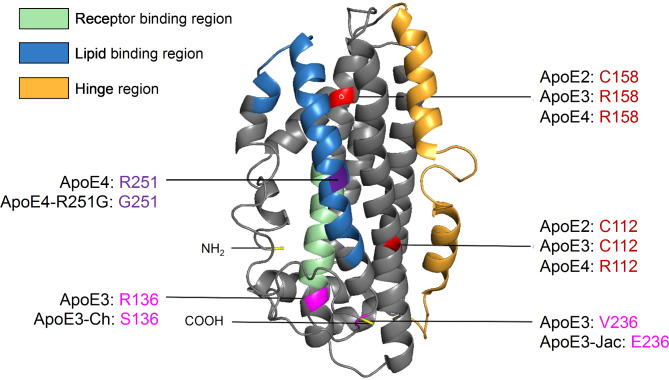
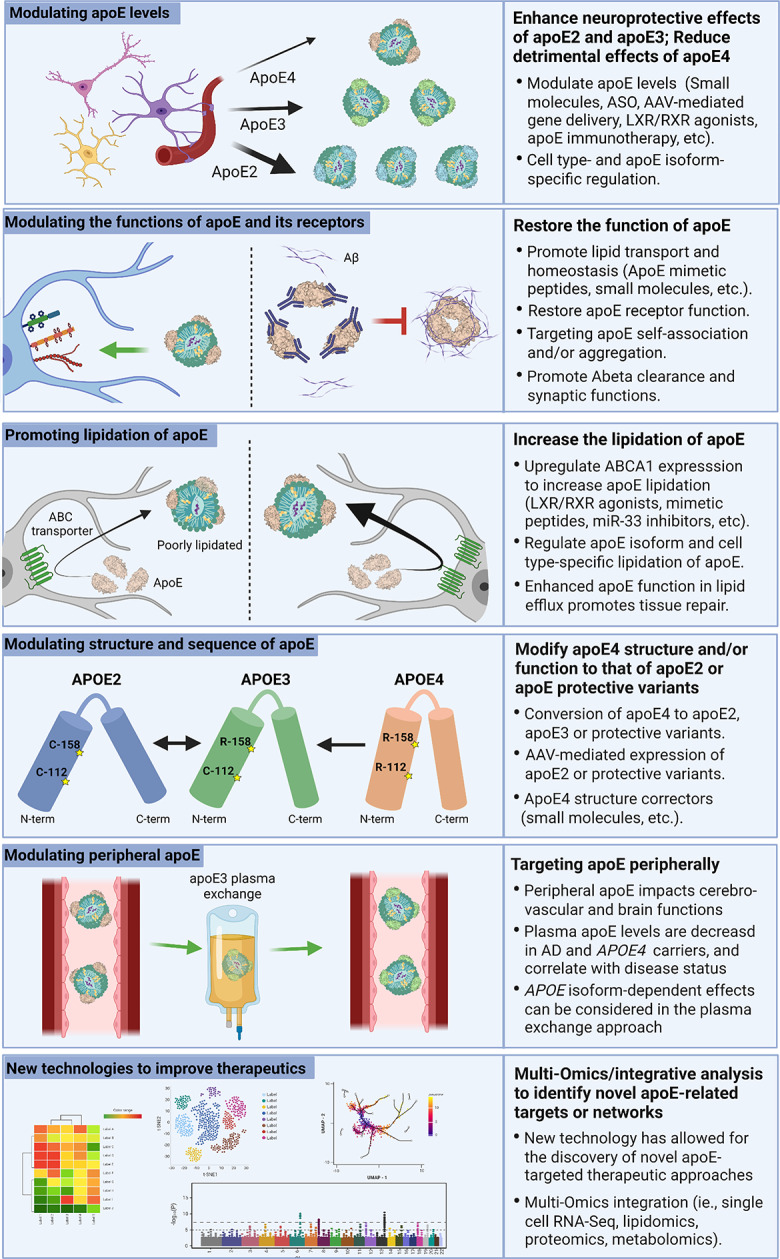
Alzheimer’s disease (AD) is the most common cause of dementia worldwide, and its prevalence is rapidly increasing due to extended lifespans. Among the increasing number of genetic risk factors identified, the apolipoprotein E ( APOE ) gene remains the strongest and most prevalent, impacting more than half of all AD cases. While the ε4 allele of the APOE gene significantly increases AD risk, the ε2 allele is protective relative to the common ε3 allele. These gene alleles encode three apoE protein isoforms that differ at two amino acid positions. The primary physiological function of apoE is to mediate lipid transport in the brain and periphery; however, additional functions of apoE in diverse biological functions have been recognized. Pathogenically, apoE seeds amyloid-β (Aβ) plaques in the brain with apoE4 driving earlier and more abundant amyloids. ApoE isoforms also have differential effects on multiple Aβ-related or Aβ-independent pathways. The complexity of apoE biology and pathobiology presents challenges to designing effective apoE-targeted therapeutic strategies. This review examines the key pathobiological pathways of apoE and related targeting strategies with a specific focus on the latest technological advances and tools.
Overview
The claims and statistics of this paper haven’t been checked yet.
Run the check — free, no account needed. It reads the open-access text and checks the sources it cites.
Integrity signals
Registry
Cites
Statistics
Figures
Verification
Claims the paper makes
The claims and statistics of this paper haven’t been checked yet.
Run the check — free, no account needed. It reads the open-access text and checks the sources it cites.
Claims other papers make about this one
Each is checked against this paper’s own text: does it say what the citing paper says it does?
The source backs part of the claim, not all of it — or backs it for a different population, condition or comparison.
In the citing paper
“In humans, three major isoforms of APOE are lipidated in an isoform‐specific manner (ε2 > ε3 > ε4). 9 , 48”
From Deletion of miR-33, a regulator of the ABCA1–APOE pathway, ameliorates neuropathological phenotypes in APP/PS1 mice (2024) · cites this paper as [48]
Experimental — accuracy not yet measuredThe source backs part of the claim, not all of it — or backs it for a different population, condition or comparison.
In the citing paper
“APOE binds to cell surface receptors, such as low‐density lipoprotein receptor (LDLR), LDLR‐related protein 1 (LRP1), very low‐density lipoprotein receptor (VLDLR), and apolipoprotein E receptor 2 (APOER2 or LRP8). 2 , 14 , 15”
From Deletion of neuronal Idol ameliorates Alzheimer's disease–related pathologies via APOE receptors (2025) · cites this paper as [2]
Experimental — accuracy not yet measuredThe source backs part of the claim, not all of it — or backs it for a different population, condition or comparison.
In the citing paper
“Although mainly secreted by astrocytes, APOE is also expressed in microglia, neurons, and oligodendrocytes, particularly under injury and degenerative conditions. 2 , 13”
From Deletion of neuronal Idol ameliorates Alzheimer's disease–related pathologies via APOE receptors (2025) · cites this paper as [2]
Experimental — accuracy not yet measuredThe source backs part of the claim, not all of it — or backs it for a different population, condition or comparison.
In the citing paper
“Genetic variants of many of the differentially expressed genes identified in this study, such as CLU and APOE, have been associated with increased Alzheimer’s disease risk58,59.”
From mTORC1 drives cell-autonomous astrocyte reactivity in tuberous sclerosis (2026) · cites this paper as [59]
Experimental — accuracy not yet measuredThe source backs part of the claim, not all of it — or backs it for a different population, condition or comparison.
In the citing paper
“The APOE-ε4 allele increases AD risk three- to eightfold compared to the neutral ε3 allele, while ε2 confers relative protection [154].”
From Toward a Unified Framework in Molecular Neurobiology of Alzheimer’s Disease: Revisiting the Pathophysiological Hypotheses (2026) · cites this paper as [154]
Experimental — accuracy not yet measured
The source backs part of the claim, not all of it — or backs it for a different population, condition or comparison.
In the citing paper
“ApoE influences AD pathogenesis through multiple pathways, such as (i) impaired clearance of Aβ by competing with receptor-mediated uptake (e.g., LRP1), (ii) modulation of tau phosphorylation and spread, and (iii) regulation of microglial activation.”
From Toward a Unified Framework in Molecular Neurobiology of Alzheimer’s Disease: Revisiting the Pathophysiological Hypotheses (2026) · cites this paper as [154]
Experimental — accuracy not yet measuredThe cited source says what the claim attributes to it.
In the citing paper
“APOE is multifunctional, with roles in lipid and glucose metabolism, neuroinflammation, amyloid and tau accumulation, and blood-brain barrier dysfunction [2].”
From Effects of APOE2 and APOE4 on brain microstructure in older adults: modification by age, sex, and cognitive status (2024) · cites this paper as [2]
The cited source says what the claim attributes to it.
In the citing paper
“These efforts have resulted in identifying multiple mechanisms by which APOE influences AD‐related pathologies, including amyloid beta (Aβ) accumulation, tauopathy, neuroinflammation, and synaptic impairment. 2”
From Deletion of neuronal Idol ameliorates Alzheimer's disease–related pathologies via APOE receptors (2025) · cites this paper as [2]
The cited source says what the claim attributes to it.
In the citing paper
“as APOE is increasingly viewed not only as a risk locus, but also as a mechanistically actionable therapeutic axis in AD 2 .”
From Association of Rare APOE Missense Variants R189C and W276C With Risk of Alzheimer Disease (2026) · cites this paper as [2]
The cited source says what the claim attributes to it.
In the citing paper
“Together, these data support a model in which C-terminal ApoE biology, including lipidation and self-association, is not merely correlative but is closely tied to pathogenesis and may inform future APOE-directed therapeutic strategies 2,17 .”
From Association of Rare APOE Missense Variants R189C and W276C With Risk of Alzheimer Disease (2026) · cites this paper as [2]
The cited source says what the claim attributes to it.
In the citing paper
“Among these, the APOE gene plays a central role in modulating disease risk, primarily through its involvement in lipid transport, synaptic function, and amyloid-beta metabolism in the brain (Martens et al., 2022; Raulin et al., 2022).”
From Isogenic human stem cell models reveal mutation-dependent protective mechanisms of APOE3 Christchurch (2026) · cites this paper as Raulin et al., 2022
The cited source says what the claim attributes to it.
In the citing paper
“suggesting the distinct biochemical interactions influencing Aβ deposition or clearance [2, 3, 22, 23].”
From Astrocytic APOE3-Christchurch expression ameliorates brain amyloid-β pathology in 5xFAD mice (2026) · cites this paper as [2]
The cited source says what the claim attributes to it.
In the citing paper
“In contrast, sporadic AD is strongly associated with polymorphisms in the APOE gene.”
From Toward a Unified Framework in Molecular Neurobiology of Alzheimer’s Disease: Revisiting the Pathophysiological Hypotheses (2026) · cites this paper as [154]
The cited source says what the claim attributes to it.
In the citing paper
“Recent work suggests that APOE variants not only modulate amyloid deposition but also reshape immune responses and lipid metabolism, positioning APOE at the nexus of amyloid, tau, and neuroinflammation [154].”
From Toward a Unified Framework in Molecular Neurobiology of Alzheimer’s Disease: Revisiting the Pathophysiological Hypotheses (2026) · cites this paper as [154]
In the citing paper
“APOE exists in three isoforms, namely APOE2, APOE3, and APOE4, among which APOE4 isoform has been identified as the strongest genetic risk factor for late-onset AD.173”
From Microbiota–gut–brain axis and its therapeutic applications in neurodegenerative diseases (2024) · cites this paper as [173]
Self-check
Percentages, sums and reported differences re-computed from the paper’s own numbers.
The self-check needs the paper’s full text.
Citations
Cites
2 retracted
Wu, B., Wu, M., & Guo, J. (2017) · Journal of Cellular Physiology · doi:10.1002/jcp.26328 · Cited by 43
RetractedSawmiller, D. R., Habib, A., Hou, H., Mori, T., Fan, A., Tian, J., Jin, Z., Giunta, B. N., Sanberg, P. R., Mattson, M. P., et al. (2019) · Biological Psychiatry · doi:10.1016/j.biopsych.2019.04.026 · Cited by 38
RetractedA Unique Microglia Type Associated with Restricting Development of Alzheimer’s Disease
Keren-Shaul, H., Spinrad, A., Weiner, A., Matcovitch-Natan, O., Dvir-Szternfeld, R., Ulland, T. K., David, E., Baruch, K., Lara-Astaiso, D., Toth, B., et al. (2017) · Cell · doi:10.1016/j.cell.2017.05.018 · Cited by 5,493
Strittmatter, W. J., Saunders, A. M., Schmechel, D., Pericak-Vance, M., Enghild, J., Salvesen, G. S., & Roses, A. D. (1993) · Proceedings of the National Academy of Sciences · doi:10.1073/pnas.90.5.1977 · Cited by 4,268 · cited 1×
“APOE4 is a major genetic risk factor for AD in a gene dose-dependent manner increasing risk by up to 15 fold in homozygotes [13], whereas APOE2 reduces AD risk by almost half and contributes to longevity [14].”
BackgroundApolipoprotein E and Alzheimer disease: risk, mechanisms and therapy
Liu, C.-C., Kanekiyo, T., Xu, H., & Bu, G. (2013) · Nature Reviews Neurology · doi:10.1038/nrneurol.2012.263 · Cited by 3,459
Self-citationNeuropathological alterations in Alzheimer disease
Serrano-Pozo, A., Frosch, M. P., Masliah, E., & Hyman, B. T. (2011) · Cold Spring Harbor Perspectives in Medicine · doi:10.1101/cshperspect.a006189 · Cited by 3,345
The neuropathological diagnosis of Alzheimer's disease
DeTure, M. A., & Dickson, D. W. (2019) · Molecular Neurodegeneration · doi:10.1186/s13024-019-0333-5 · Cited by 3,329
Role of C-Reactive Protein at Sites of Inflammation and Infection
Sproston, N. R., & Ashworth, J. (2018) · Frontiers in Immunology · doi:10.3389/fimmu.2018.00754 · Cited by 3,243
Blennow, K., de Leon, M. J., & Zetterberg, H. (2006) · The Lancet · doi:10.1016/s0140-6736(06)69113-7 · Cited by 3,134
The antibody aducanumab reduces Aβ plaques in Alzheimer’s disease
Sevigny, J., Chiao, P., Bussière, T., Weinreb, P. H., Williams, L., Maier, M., Dunstan, R., Salloway, S., Chen, T., Ling, Y., et al. (2016) · Nature · doi:10.1038/nature19323 · Cited by 3,059
Cited by
Sorted by citations
Items 201–300 of 755
Required improvements for cerebrospinal fluid-based biomarker tests of Alzheimer’s disease
Gaetani, L., Chiasserini, D., Paoletti, F. P., Bellomo, G., & Parnetti, L. (2023) · Expert Review of Molecular Diagnostics · doi:10.1080/14737159.2023.2276918 · Cited by 10
Alzheimer's Targeted Treatments: Focus on Amyloid and Inflammation
Iwatsubo, T., Irizarry, M. C., Lewcock, J. W., & Carrillo, M. C. (2023) · Journal of Neuroscience · doi:10.1523/jneurosci.1576-23.2023 · Cited by 10
Chen, Y., Li, J., Le, D., Zhang, Y., & Liao, Z. (2024) · Lipids in Health and Disease · doi:10.1186/s12944-024-02056-6 · Cited by 12
Kirby, A., Porter, T., Adewuyi, E. O., & Laws, S. M. (2024) · International Journal of Molecular Sciences · doi:10.3390/ijms25168814 · Cited by 11
Kucikova, L., Xiong, X., Reinecke, P., Madden, J., Jackson, E., Tappin, O., Huang, W., Dounavi, M., & Su, L. (2024) · Ageing Research Reviews · doi:10.1016/j.arr.2024.102510 · Cited by 10
Min, J.-H., Sarlus, H., & Harris, R. A. (2024) · Frontiers in Neuroscience · doi:10.3389/fnins.2024.1467333 · Cited by 11
Schmidt, A. F., Davidson, M. H., Ditmarsch, M., Kastelein, J. J. P., & Finan, C. (2024) · Alzheimer s Research & Therapy · doi:10.1186/s13195-024-01594-6 · Cited by 12
Cerebral Amyloid Angiopathy, Dementia, and Alzheimer Neuropathologic Changes
Sin, M., Cheng, Y., Ahmed, A., Roseman, J. M., Dowling, N. M., & ZAMRINI, E. Y. (2024) · Neurology · doi:10.1212/wnl.0000000000210009 · Cited by 10
Jiang, X., Wang, Y., Lin, Z., Li, C., Wang, Q., Zhang, J., Liu, X., Li, Z., & Cui, C. (2024) · Neurochemistry International · doi:10.1016/j.neuint.2024.105902 · Cited by 10
Escarcega, R. D., J., V. K. M., Kyriakopoulos, V. E., Ortiz, G. J., Gusdon, A. M., Fan, H., Peesh, P., Conesa, M. P. B., Colpo, G. D., Ahnstedt, H. W., et al. (2024) · Neurobiology of Disease · doi:10.1016/j.nbd.2024.106747 · Cited by 11
The role of Apolipoprotein E4 on cognitive impairment in Parkinson’s disease and Parkinsonisms
Rosal, A. E., Martin, S. L., & Strafella, A. P. (2025) · Frontiers in Neuroscience · doi:10.3389/fnins.2025.1515374 · Cited by 10
Aiello, A. E., Momkus, J., Stebbins, R. C., Zhang, Y. S., Martin, C. L., Yang, Y. C., Gaydosh, L. M., Hargrove, T. W., Hazzouri, A. Z. A., & Harris, K. M. (2025) · The Lancet Regional Health - Americas · doi:10.1016/j.lana.2025.101087 · Cited by 10
Xu, B., Tang, C., Han, R., Zhu, C., Yang, Y., Li, H. J., Wu, N., & He, D. (2025) · Journal of Alzheimer s Disease Reports · doi:10.1177/25424823251326044 · Cited by 10
Biologics as Therapeutical Agents Under Perspective Clinical Studies for Alzheimer’s Disease
Li, H., Shen, X., Zhang, B., & Zhu, Z. (2025) · Molecules · doi:10.3390/molecules30173479 · Cited by 11
Liu, T., Rong, Z., Li, J., Wu, H., & Wei, J. (2025) · Genes & Diseases · doi:10.1016/j.gendis.2025.101846 · Cited by 10
Tang, P., Zhao, D., Lin, H., Li, X., Shi, C., Li, P., & Chen, H. (2025) · International Immunopharmacology · doi:10.1016/j.intimp.2025.115489 · Cited by 11
Oriá, R. B., Freitas, R. S., Roque, C. R., Nascimento, J. C. R., Silva, A. P., Malva, J. O., Guerrant, R. L., & Vitek, M. P. (2023) · Pharmaceutics · doi:10.3390/pharmaceutics15041086 · Cited by 11
Naringin and Naringenin: Potential Multi-Target Agents for Alzheimer’s Disease
Lu, J., Chen, J., Li, S., Pan, G.-J., Ou, Y., Yuan, L.-F., Jiang, J., Zeng, L., & Zhao, J. J. (2024) · Current Medical Science · doi:10.1007/s11596-024-2921-z · Cited by 9
Wang, N., Parsons, T. M., Ren, Y., Pan, Y., Kurti, A., Starling, S. C., Muolokwu, C. E., Singh, J., & Kanekiyo, T. (2024) · Heliyon · doi:10.1016/j.heliyon.2024.e39607 · Cited by 9
Advances and Challenges in Gene Therapy for Alzheimer’s Disease
Morroni, F., & Caccamo, A. (2024) · Journal of Alzheimer s Disease · doi:10.3233/jad-230783 · Cited by 11
Identification of novel risk genes for Alzheimer’s disease by integrating genetics from hippocampus
Li, J., Li, L., Cai, S., Song, K., & Hu, S. (2024) · Scientific Reports · doi:10.1038/s41598-024-78181-0 · Cited by 9
Genetic Studies Through the Lens of Gene Networks
Subirana-Granés, M., Hoffman, J., Zhang, H., Akirtava, C., Nandi, S., Fotso, K., & Pividori, M. (2025) · Annual Review of Biomedical Data Science · doi:10.1146/annurev-biodatasci-103123-095355 · Cited by 11
Rodríguez-López, A., Esteban, D., Domínguez‐Romero, A. N., & Gevorkian, G. (2025) · Experimental Neurology · doi:10.1016/j.expneurol.2025.115189 · Cited by 9
Active Travel Mode and Incident Dementia and Brain Structure
Hou, C., Zhang, Y., Zhao, F., Lv, Y., Luo, M., Pan, C., Ding, D., & Chen, L. (2025) · JAMA Network Open · doi:10.1001/jamanetworkopen.2025.14316 · Cited by 9
Kehinde, S. A., Lin, W. P., Lay, B. B., Phyo, K. Y., San, M. M., Pattanayaiying, R., & Chusri, S. (2025) · International Journal of Molecular Sciences · doi:10.3390/ijms26147026 · Cited by 10
Jain, S., Acharya, R., Verma, L., & Chauhan, A. (2025) · ACS Pharmacology & Translational Science · doi:10.1021/acsptsci.5c00077 · Cited by 9
TDP-43 in Alzheimer's disease: Pathophysiology and therapeutic strategies
Zhou, X., Lin, X., He, Y., Huang, N., & Luo, Y. (2025) · Pharmacological Research · doi:10.1016/j.phrs.2025.107977 · Cited by 11
Dissecting the genetic and proteomic risk factors for delirium
Raptis, V., Bhak, Y., Cannings, T. I., MacLullich, A. M. J., & Tenesa, A. (2025) · Nature Aging · doi:10.1038/s43587-025-01018-6 · Cited by 9
Grech, V.-S., Lotsaris, K., Kefala, V., & Rallis, E. A. (2025) · Genes · doi:10.3390/genes16121463 · Cited by 9
Dong, Y., Cao, K., Xiang, J., Qi, X.-L., Xiao, Y., Yu, W., He, Y., Hong, W., & Guan, Z.-Z. (2023) · Neuroscience · doi:10.1016/j.neuroscience.2023.04.023 · Cited by 10
Unveiling the Molecular Footprint: Proteome-Based Biomarkers for Alzheimer’s Disease
Jain, M., Dhariwal, R., Patil, N., Ojha, S., Tendulkar, R., Tendulkar, M., Dhanda, P. S., Yadav, A., & Kaushik, P. (2023) · Proteomes · doi:10.3390/proteomes11040033 · Cited by 11
Amukti, D. P., Wazni, A. R., Irham, L. M., Sulistyani, N., Ma’ruf, M. F., Adikusuma, W., Sarasmita, M. A., Khairi, S., Purwanto, B. D., Suyatmi, S., et al. (2024) · E3S Web of Conferences · doi:10.1051/e3sconf/202450101021 · Cited by 8
Pericytes change function depending on glioblastoma vicinity: emphasis on immune regulation
Buizza, C., Carlsson, R., Gamper, C., Chitale, G. G., Bengzon, J., & Paul, G. (2025) · Molecular Oncology · doi:10.1002/1878-0261.70095 · Cited by 9
da Silva, A. M. P., Falcão, L., Ribeiro, F. V., Menezes, I. R., Leite, M. G. H. S. J., Farias, E., Nascimento, M., Han, M. L., Telles, J. P. M., Franco, E. D. S., et al. (2025) · Journal of Alzheimer s Disease · doi:10.1177/13872877251361044 · Cited by 8
Zawadzki, S., Okła, E., Michlewska, S., Makowski, T., Buczkowski, A., López, P. O., de la Mata, F. J., Йонов, М., Bryszewska, M. J., & Miłowska, K. (2025) · Scientific Reports · doi:10.1038/s41598-025-23355-7 · Cited by 8
Akhter, F., Akhter, A., & Zhu, D. (2025) · Free Radical Biology and Medicine · doi:10.1016/j.freeradbiomed.2025.11.040 · Cited by 8
Dissecting pleiotropy to gain mechanistic insights into human disease
Jee, Y. H., He, Y., Lu, W., Shi, Y., Lazarev, D., Daly, M. J., Reeve, M. P., & Martin, A. R. (2025) · Nature Reviews Genetics · doi:10.1038/s41576-025-00908-0 · Cited by 12
Apolipoprotein E4 in Alzheimer’s Disease: Role in Pathology, Lipid Metabolism, and Drug Treatment
Al-Ghraiybah, N. F., Alkhalifa, A. E., Itokazu, Y., Farr, T., Pérez, N., Ali, H., & Kaddoumi, A. (2026) · International Journal of Molecular Sciences · doi:10.3390/ijms27021004 · Cited by 9
Diverse signaling mechanisms and heterogeneity of astrocyte reactivity in Alzheimer's disease
Qin, H., Zhou, L., Haque, F. T., Martín-Jiménez, C., Trang, A., Benveniste, E. N., & Wang, Q. (2023) · Journal of Neurochemistry · doi:10.1111/jnc.16002 · Cited by 10
Aljadaan, A. M., AlSaadi, A. M., Shaikh, I. A., Whitby, A., Ray, A., Kim, D., & Carter, W. G. (2025) · Biomedicines · doi:10.3390/biomedicines13092148 · Cited by 13
Ikonnikova, A. Y., Morozova, A. Y., Antonova, O., Ochneva, A., Fedoseeva, E., Abramova, O. V., Emelyanova, M., Filippova, M. A., Morozova, I., Zorkina, Y., et al. (2023) · International Journal of Molecular Sciences · doi:10.3390/ijms241914765 · Cited by 7
Novel plasma protein biomarkers: A time-dependent predictive model for Alzheimer's disease
Zhuang, T., Yang, Y., Ren, H., Zhang, H., Gao, C. Q., Chen, S., Shen, J., Ji, M., & Cui, Y. (2024) · Archives of Gerontology and Geriatrics · doi:10.1016/j.archger.2024.105650 · Cited by 7
Association between atherosclerosis and the development of multi-organ pathologies
Dabravolski, S. A., Churov, A. V., Elizova, N. V., Ravani, A. L., Karimova, A. E., Sukhorukov, V. N., & Orekhov, A. N. (2024) · SAGE Open Medicine · doi:10.1177/20503121241310013 · Cited by 8
The Biological Intersection Between Chemotherapy-Related Cognitive Impairment and Alzheimer Disease
Torre, M., Zanella, C. A., & Feany, M. Β. (2025) · American Journal Of Pathology · doi:10.1016/j.ajpath.2024.12.013 · Cited by 8
Navigating the treatment landscape of Alzheimer's disease: Current strategies and future directions
Mohapatra, T. K., Nayak, R. R., Ganeshpurkar, A., Tiwari, P. K., & Kumar, D. (2025) · Ibrain · doi:10.1002/ibra.12197 · Cited by 8
Beta cells to brain cells: The pivotal role of insulin and glucose metabolism in Alzheimer's disease
Schwartz, S. S., Rhea, E. M., Banks, W. A., & Herman, M. E. (2025) · Neuroprotection/Neuroprotection (Chichester, England. Print) · doi:10.1002/nep3.70008 · Cited by 7
Arnsten, A. F. T., Perone, I., Wang, M., Yang, S., Uchendu, S., Bolat, D., & Datta, D. (2025) · Frontiers in Aging Neuroscience · doi:10.3389/fnagi.2025.1610350 · Cited by 7
Wadop, Y. N., Bernal, R., Njamnshi, W. Y., Satizábal, C. L., Beiser, A., Ruiz, A., NJAMNSHI, A. K., Vasan, R. S., Seshadri, S. S., Himali, J. J., et al. (2025) · Journal of Neurology · doi:10.1007/s00415-025-13412-6 · Cited by 10
Advances of therapeutic strategies for Alzheimer’s disease
Guo, X., Yue, R.-Z., Cui, Z., Wang, S., Jia, T., Li, W., Zhang, W., Shan, L., & Li, C. (2025) · Journal of Neurology · doi:10.1007/s00415-025-13456-8 · Cited by 9
Brain aging: Unlocking personalized strategies for cognitive resilience
Saliev, T. M. (2025) · Brain Network Disorders · doi:10.1016/j.bnd.2025.09.002 · Cited by 9
Günaydın, C., Hackett, N. R., Wakim, V., Sondhi, D., Kaminsky, S. M., & Crystal, R. G. (2025) · Human Gene Therapy · doi:10.1177/10430342251401888 · Cited by 10
Wang, S., Guo, Y., Wang, S., Wang, Y., Huo, S. Y., Li, M., Chen, Q., Zhang, L., Kuang, H., Juan, P., et al. (2026) · Journal of Ethnopharmacology · doi:10.1016/j.jep.2026.121359 · Cited by 8
Raturi, A., Yadav, V., Hoda, N., Subbarao, N., & Chaudhry, S. A. (2023) · Journal of Biomolecular Structure and Dynamics · doi:10.1080/07391102.2023.2263586 · Cited by 7
Alsenani, F. (2024) · Saudi Journal of Biological Sciences · doi:10.1016/j.sjbs.2024.103998 · Cited by 8
Lin, J., Zhu, X., Li, X., Yu, H., Liang, Y., Chen, S., Feng, C., & Cao, L. (2025) · BMC Anesthesiology · doi:10.1186/s12871-025-02928-z · Cited by 7
mTORC1 activation drives astrocyte reactivity in cortical tubers and brain organoid models of TSCPreprint
Li, T. L., Blair, J. D., Yoo, T., Grant, G. A., Hockemeyer, D. F., Porter, B. E., & Bateup, H. S. (2025) · bioRxiv (Cold Spring Harbor Laboratory) · doi:10.1101/2025.02.28.640914 · Cited by 8
Wei, Z., Pan, X., Cui, X., Zhang, J., Dai, X., Zeng, Y., & Chen, X. (2025) · Frontiers in Aging Neuroscience · doi:10.3389/fnagi.2025.1537388 · Cited by 7
“These genes include CLU, CR1 , CD33 , EPHA1 , and TREM2 , which are involved in immunity, and APOE and ABCA7 , which are involved in lipid processing (Kim et al., 2023; Raulin et al., 2022; Zhao et al., 2015).”
Drug–Target Interaction Prediction Based on an Interactive Inference Network
Chen, Y., Liang, X., Du, W., Liang, Y., Wong, G., & Chen, L. (2024) · International Journal of Molecular Sciences · doi:10.3390/ijms25147753 · Cited by 6
Role and Diagnostic Significance of Apolipoprotein D in Selected Neurodegenerative Disorders
Kolanek, A., Cemaga, R., & Maciejczyk, M. (2024) · Diagnostics · doi:10.3390/diagnostics14242814 · Cited by 6
Adewuyi, E. O., & Laws, S. M. (2025) · Biomedicines · doi:10.3390/biomedicines13030618 · Cited by 5
Zhou, M., & Pang, X. (2025) · Frontiers in Aging Neuroscience · doi:10.3389/fnagi.2025.1571563 · Cited by 6
Sala, G., Cuffaro, L., Pozzi, F. E., Andreoni, S., Bazzini, C., Conti, E., Zoia, C., Beretta, S., Tremolizzo, L., Bellelli, G., et al. (2025) · Frontiers in Aging Neuroscience · doi:10.3389/fnagi.2025.1581892 · Cited by 8
Sadruddin, Z., Harris, K., Bilsborough, E., Sciba, L., Vargas, A. F., Shyer, M. N., Hinojosa, M., Colby, J., Chung, K., Farrell, C. M., et al. (2025) · Geriatric Nursing · doi:10.1016/j.gerinurse.2025.05.010 · Cited by 7
From particulates to pathways: environmental exposures and their impact on Alzheimer’s disease
Liu, B., Ahmad, M. A., Abbas, G., Ahmed, U., Javed, R., Ali, I., Ao, Q., & Deng, X. (2025) · Brain Research · doi:10.1016/j.brainres.2025.149880 · Cited by 6
de Mello-Sampayo, C., Pádua, M. S., Silva, M. R., Lourenço, M. E. M., Pinto, R. M. A., Carvalho, S., Correia, J., Martins, C. F., Gomes, R., Gomes‐Bispo, A., et al. (2025) · Biomolecules · doi:10.3390/biom15081164 · Cited by 7
The effect of APOE4 on Alzheimer’s plasma biomarkers among Mexican Americans in the HABS-HD cohort
Contreras, J. A., Ortega, N. E., Espejo, K., Aslanyan, V., Pa, J., The HABS-HD Study Team, O’Bryan, S. E., Yaffe, K., Toga, A. W., Rissman, R., et al. (2025) · Alzheimer s Research & Therapy · doi:10.1186/s13195-025-01845-0 · Cited by 6
The Role of Genetics in Stroke Risk and Outcome: A Review of Current Evidence
Oyovwi, M. O., Ben‐Azu, B., Jeroh, E., & Friday, F. B. (2025) · Brain and Behavior · doi:10.1002/brb3.70820 · Cited by 9
Mukherjee, D. A. (2026) · Clinical Immunology Communications · doi:10.1016/j.clicom.2026.01.004 · Cited by 6
The ethics case for longevity science
Han, Z. Z., & de Magalhães, J. P. (2026) · Ageing Research Reviews · doi:10.1016/j.arr.2026.103054 · Cited by 6
APOE3 astrocytes can rescue lipid abnormalities and dystrophic neurites of APOE4 human neurons
Halim, D. O., Biase, E. D., Rajon, A., Jordi, L., Hallett, P. J., & Ole Isacson, A. (2026) · PNAS Nexus · doi:10.1093/pnasnexus/pgag053 · Cited by 7
Efraimidis, E., Krokidis, M. G., Exarchos, T. P., Lázár, T., & Vlamos, P. (2023) · International Journal of Molecular Sciences · doi:10.3390/ijms241713543 · Cited by 7
Goldberg, T. E., Devanand, D. P., Fang, Z., Kim, H., Rueppel, E., Tucker, A., Carlson, S., & Lee, S. (2024) · Biological Psychiatry Cognitive Neuroscience and Neuroimaging · doi:10.1016/j.bpsc.2024.01.012 · Cited by 6
Ye, S., Roccati, E., Wang, W., Zhu, Z., Kiburg, K., Huang, Y., Zhang, X., Zhang, X., Liu, J., Tang, S., et al. (2024) · BMC Neurology · doi:10.1186/s12883-024-03557-8 · Cited by 6
Mihailovich, M., Bajić, S. S., Dinić, M., Đokić, J., Živković, M., Radojević, D., & Golić, N. (2024) · International Journal of Molecular Sciences · doi:10.3390/ijms251810156 · Cited by 7
Wijesinghe, P., Li, H. R., Ai, Z., Campbell, M., Chen, S. X., Xi, J., Pham, W. N., & Matsubara, J. A. (2024) · Frontiers in Aging Neuroscience · doi:10.3389/fnagi.2024.1495615 · Cited by 6
APOEε4 alters ApoE and Fabp7 in frontal cortex white matter in prodromal Alzheimer's disease
Moreno‐Rodríguez, M., Perez, S. E., Malek‐Ahmadi, M. H., & Mufson, E. J. (2025) · Journal of Neuroinflammation · doi:10.1186/s12974-025-03349-y · Cited by 8
A real-world safety surveillance study of aducanumab through the FDA adverse event reporting system
Huang, J., Long, X., & Chen, C. (2025) · Frontiers in Pharmacology · doi:10.3389/fphar.2025.1522058 · Cited by 6
Loss of the APP regulator RHBDL4 preserves memory in an Alzheimer’s disease mouse model
Penalva, Y. C. M., Paschkowsky, S., Yang, J., Recinto, S. J., Cinkornpumin, J. K., Ruelas, M., Xiao, B., Nitu, A., Kwon, S. Y., Wu, H. Y.-L., et al. (2025) · Cell Death and Disease · doi:10.1038/s41419-025-07579-z · Cited by 6
Pharmacogenomic Strategies in Alzheimer’s Disease: An In-Depth Review
Zhou, Y., Peng, S., Wang, H., Cai, X., & Wang, Q. (2024) · Journal of Medical Sciences and Interdisciplinary Research · doi:10.51847/q8jx01pn0m · Cited by 6
Plasma IAPP-Autoantibody Levels in Alzheimer’s Disease Patients Are Affected by APOE4 Status
Pocevičiūtė, D., Roth, B., Schultz, N., Nuñez‐Diaz, C., Janelidze, S., Bank, T. N. B., Olofsson, A., Hansson, O., & Wennström, M. (2023) · International Journal of Molecular Sciences · doi:10.3390/ijms24043776 · Cited by 6
CRISPRi-based screens in iAssembloids to elucidate neuron-glia interactionsPreprint
Li, E., Benitez, C., Boggess, S. C., Koontz, M., Rose, I. V. L., Martinez, D., Dräger, N. M., Teter, O. M., Samelson, A. J., Pierce, N., et al. (2023) · bioRxiv (Cold Spring Harbor Laboratory) · doi:10.1101/2023.04.26.538498 · Cited by 6
APOE loss of function: A genetic shield against Alzheimer’s disease
Tate, M. D., Karahan, H., & Kim, J. (2024) · Neuron · doi:10.1016/j.neuron.2024.03.003 · Cited by 5
Sirimaharaj, N., Thiankhaw, K., Chattipakorn, N., & Chattipakorn, S. C. (2025) · Molecular Neurobiology · doi:10.1007/s12035-025-04904-7 · Cited by 5
Medical risk factors, ApoE haplotype, and Alzheimer’s disease: a large-scale analysis
Elias, U., Gazit, L., Zucker, R., Stern, A., Linial, M., Allali, G., Ben‐Hur, T., Marshall, G. A., & Arzy, S. (2025) · The Journal of Prevention of Alzheimer s Disease · doi:10.1016/j.tjpad.2025.100301 · Cited by 7
From Better Diagnostics to Earlier Treatment: The Rapidly Evolving Alzheimer’s Disease Landscape
Bougea, A. M., Debasa‐Mouce, M., Gulkarov, S., Castro‐Mosquera, M., Reiss, A. B., & Ouro, A. (2025) · Medicina · doi:10.3390/medicina61081462 · Cited by 5
Hunter, S., Walsh, S., & Brayne, C. (2025) · Molecular Psychiatry · doi:10.1038/s41380-025-03156-0 · Cited by 7
Moser, V. A., Dimas‐Harms, L. J., Lipman, R. M., Inzalaco, J., Bell, S., Alcantara, M., Valenzuela, E., Lawless, G. M., Kreimer, S. D., Parker, S. J., et al. (2025) · Advanced Science · doi:10.1002/advs.202417848 · Cited by 5
Ge, T., Niu, A., Lv, Y., Chen, Y., Liu, Y., Lei, X., Li, Y., Ye, L., Liu, L., Li, Y., et al. (2025) · Journal of Controlled Release · doi:10.1016/j.jconrel.2025.114255 · Cited by 6
Yang, F., Guo, Q., Chen, M., Wang, W., Chen, X., Zhang, S., Bian, H., Li, J., Jiao, Z., Wang, Q., et al. (2025) · European Journal of Medicinal Chemistry · doi:10.1016/j.ejmech.2025.118302 · Cited by 5
Waqar, Z., Sethi, P., Jain, D., Singh, K., Alsaidan, O. A., Alzarea, S. I., Gupta, J. K., Saxena, S., & Sharma, M. C. (2025) · Current Genomics · doi:10.2174/0113892029372437251010114053 · Cited by 6
Singh, A. S., Naqvi, A. R., & Chanu, M. T. (2026) · Journal of Psychiatric Research · doi:10.1016/j.jpsychires.2026.01.050 · Cited by 7
Microglia protein profiles in CSF across Alzheimer’s disease clinical stages
Blujdea, E. R., van Bokhoven, P., Adami, P. V. M., Marshe, V. S., Vromen, E., Hok‐A‐Hin, Y. S., Boiten, W. A., Irwin, D. J., Chen‐Plotkin, A. S., Lemstra, A. W., et al. (2026) · Nature Aging · doi:10.1038/s43587-026-01088-0 · Cited by 7
Merkel, J., Perneczky, R., Jessen, F., Frölich, L., Jansen, O., Peters, S., Berg, D., Schulz, J. B., & Bartsch, T. (2026) · Alzheimer s Research & Therapy · doi:10.1186/s13195-026-02022-7 · Cited by 5
Methods to characterize lactate turnover in aging and Alzheimer's disease; The LEAN study
Kemna, R. E., Kueck, P. J., Blankenship, A. E., John, C. S., Johnson, C. N., Green, Z. D., Chamberlain, T., Thyfault, J. P., Mahnken, J. D., Miller, B. F., et al. (2024) · Contemporary Clinical Trials · doi:10.1016/j.cct.2024.107682 · Cited by 5
Harnessing the potential of long non-coding RNAs in the pathophysiology of Alzheimer's disease
Kaur, R., Pandey, S., Gupta, S. K., & Singh, J. P. (2024) · Experimental Neurology · doi:10.1016/j.expneurol.2024.115134 · Cited by 5
Huang, X., Liang, J., Zhang, J. Y., Fu, J., Chen, Y., Xie, W., & Zheng, F. (2025) · Journal of Alzheimer s Disease · doi:10.1177/13872877251324093 · Cited by 7
Correlation of peripheral olfactomedin 1 with Alzheimer’s disease and cognitive functions
Wei, C., Zhang, G., Fu, X., Zhao, M. L., Zhai, W., Shen, Y., & Sun, L. (2025) · Translational Psychiatry · doi:10.1038/s41398-025-03373-9 · Cited by 5
Phase separation in mitochondrial fate and mitochondrial diseases
Chen, Q., An, S., Wang, C., Zhou, Y., Liu, X., & Ren, W. (2025) · Proceedings of the National Academy of Sciences · doi:10.1073/pnas.2422255122 · Cited by 6
Systems Medicine as a Strategy to Deal with Alzheimer’s Disease
Zeng, X. X., & Zeng, J. (2023) · Journal of Alzheimer s Disease · doi:10.3233/jad-230739 · Cited by 5
Metadata
- Authors
- Raulin, A.-C., Doss, S. V., Trottier, Z. A., Ikezu, T. C., Bu, G., & Liu, C.-C.
- Affiliations
- Mayo Clinic in Florida (US)
- Corresponding author
- Bu, Guojun
- Liu, Chia-Chen
- ORCID
- Venue
- Molecular Neurodegeneration
- Published
- 2022-11-08
- Volume
- 17
- Issue
- 1
- Pages
- 72-72
- ISSN
- 1750-1326 (ISSN-L)
- PMC
- PMC9644639
- OpenAlex
- W4308572221
- Cited by
- 756
- References
- 317
- Citations by year
- 2026: 222 · 2025: 266 · 2024: 187 · 2023: 81
- FWCI
- 18.38
- Type
- journal article
- Language
- en
- Open access
- gold
- doi.org
- Locations
- Molecular Neurodegeneration (publishedVersion, cc-by)
- PubMed Central (publishedVersion, cc-by)
- PubMed (publishedVersion)
- DOAJ (DOAJ: Directory of Open Access Journals) (submittedVersion)
- Rare & Special e-Zone (The Hong Kong University of Science and Technology) (submittedVersion)
- Funders
- NIH Blueprint for Neuroscience Research (R37AG027924, RF1AG057181, U19AG069701, U19AG069701, R01AG062110)
- Cure Alzheimer’s Fund (Cure Alzheimer’s Fund)
- Topics
- Life Sciences › Neuroscience › Cellular and Molecular Neuroscience › Alzheimer's disease research and treatments
- Health Sciences › Medicine › Psychiatry and Mental health › Dementia and Cognitive Impairment Research
- Life Sciences › Neuroscience › Neurology › Neuroinflammation and Neurodegeneration Mechanisms
- Keywords
- apolipoprotein E, Alzheimer's disease, APOE ε4, APOE isoforms, amyloid plaques, lipid transport, genetic risk factors
- MeSH terms
- Alleles, Alzheimer Disease, Apolipoproteins E, Humans, Amyloid beta-Peptides, Apolipoprotein E4, Plaque, Amyloid
About these checks
Registry, retraction, Cites and statistics results are computed, not judged, with one exception: a printed reference that no index lists is read once by a model before it counts as a citation error. Claims are extracted by a model and kept only when their quote appears verbatim in the text; each cited source is then checked, with a model’s help, for whether it says what the claim relies on. Those verdicts can be wrong — read the claim’s quote and the cited source before relying on one.
Statistics and arithmetic are recomputed, not judged.
Confidence bands are shown only for fields calibrated on our annotated test set. None is calibrated yet, so no band is shown.
What counts as a claim ›How we measure confidence ›How we check this ›
Are you an author, or do you see a problem with this page? Request a review
