

The DOI matches its Crossref record; 319 of the 319 references it cites were found in a registry or an index.
ApoE in Alzheimer’s disease: pathophysiology and therapeutic strategies
Open accessAbstract
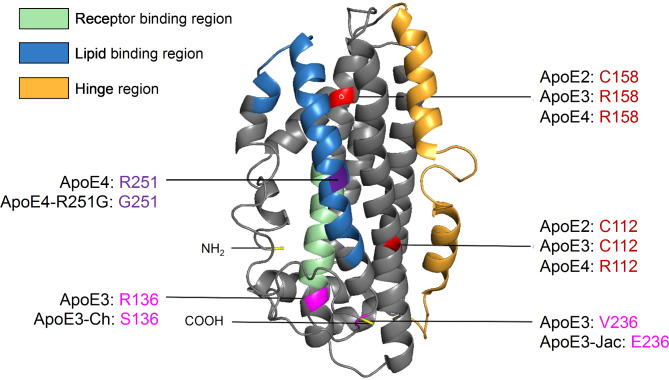
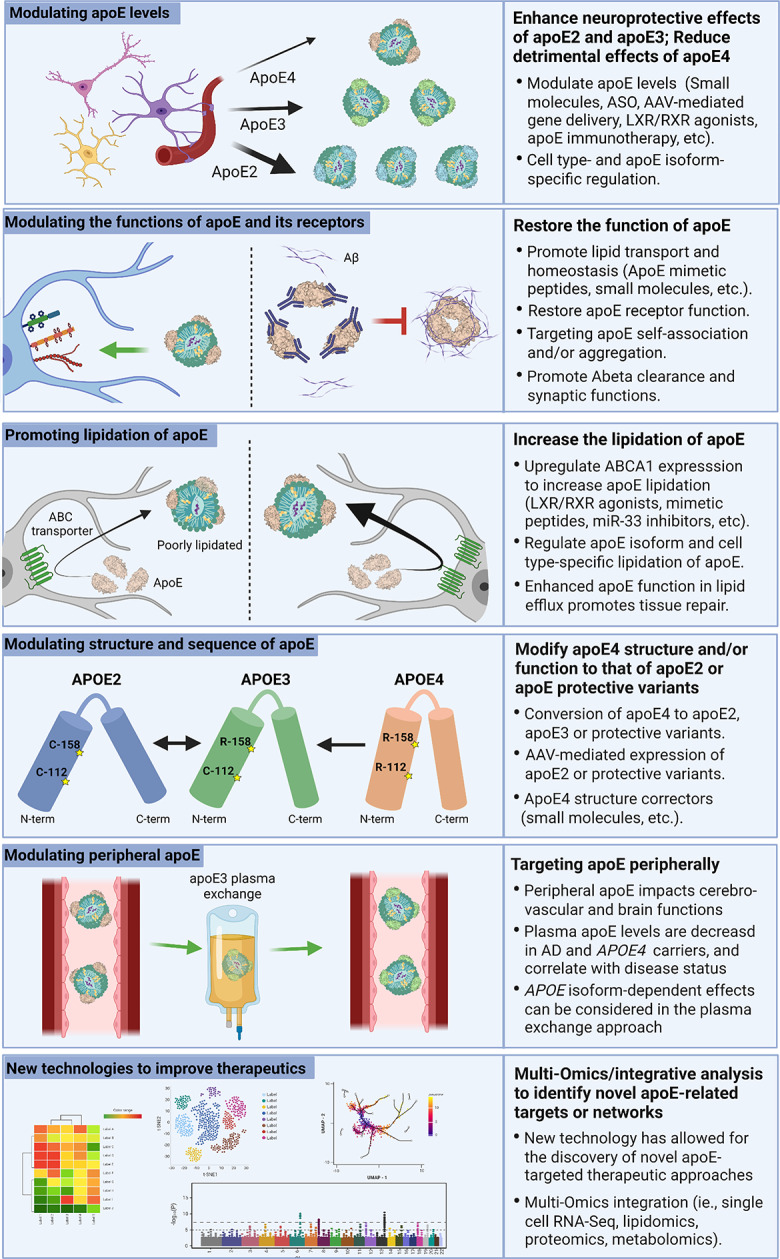
Alzheimer’s disease (AD) is the most common cause of dementia worldwide, and its prevalence is rapidly increasing due to extended lifespans. Among the increasing number of genetic risk factors identified, the apolipoprotein E ( APOE ) gene remains the strongest and most prevalent, impacting more than half of all AD cases. While the ε4 allele of the APOE gene significantly increases AD risk, the ε2 allele is protective relative to the common ε3 allele. These gene alleles encode three apoE protein isoforms that differ at two amino acid positions. The primary physiological function of apoE is to mediate lipid transport in the brain and periphery; however, additional functions of apoE in diverse biological functions have been recognized. Pathogenically, apoE seeds amyloid-β (Aβ) plaques in the brain with apoE4 driving earlier and more abundant amyloids. ApoE isoforms also have differential effects on multiple Aβ-related or Aβ-independent pathways. The complexity of apoE biology and pathobiology presents challenges to designing effective apoE-targeted therapeutic strategies. This review examines the key pathobiological pathways of apoE and related targeting strategies with a specific focus on the latest technological advances and tools.
Overview
The claims and statistics of this paper haven’t been checked yet.
Run the check — free, no account needed. It reads the open-access text and checks the sources it cites.
Integrity signals
Registry
Cites
Statistics
Figures
Verification
Claims the paper makes
The claims and statistics of this paper haven’t been checked yet.
Run the check — free, no account needed. It reads the open-access text and checks the sources it cites.
Claims other papers make about this one
Each is checked against this paper’s own text: does it say what the citing paper says it does?
The source backs part of the claim, not all of it — or backs it for a different population, condition or comparison.
In the citing paper
“In humans, three major isoforms of APOE are lipidated in an isoform‐specific manner (ε2 > ε3 > ε4). 9 , 48”
From Deletion of miR-33, a regulator of the ABCA1–APOE pathway, ameliorates neuropathological phenotypes in APP/PS1 mice (2024) · cites this paper as [48]
Experimental — accuracy not yet measuredThe source backs part of the claim, not all of it — or backs it for a different population, condition or comparison.
In the citing paper
“APOE binds to cell surface receptors, such as low‐density lipoprotein receptor (LDLR), LDLR‐related protein 1 (LRP1), very low‐density lipoprotein receptor (VLDLR), and apolipoprotein E receptor 2 (APOER2 or LRP8). 2 , 14 , 15”
From Deletion of neuronal Idol ameliorates Alzheimer's disease–related pathologies via APOE receptors (2025) · cites this paper as [2]
Experimental — accuracy not yet measuredThe source backs part of the claim, not all of it — or backs it for a different population, condition or comparison.
In the citing paper
“Although mainly secreted by astrocytes, APOE is also expressed in microglia, neurons, and oligodendrocytes, particularly under injury and degenerative conditions. 2 , 13”
From Deletion of neuronal Idol ameliorates Alzheimer's disease–related pathologies via APOE receptors (2025) · cites this paper as [2]
Experimental — accuracy not yet measuredThe source backs part of the claim, not all of it — or backs it for a different population, condition or comparison.
In the citing paper
“Genetic variants of many of the differentially expressed genes identified in this study, such as CLU and APOE, have been associated with increased Alzheimer’s disease risk58,59.”
From mTORC1 drives cell-autonomous astrocyte reactivity in tuberous sclerosis (2026) · cites this paper as [59]
Experimental — accuracy not yet measuredThe source backs part of the claim, not all of it — or backs it for a different population, condition or comparison.
In the citing paper
“The APOE-ε4 allele increases AD risk three- to eightfold compared to the neutral ε3 allele, while ε2 confers relative protection [154].”
From Toward a Unified Framework in Molecular Neurobiology of Alzheimer’s Disease: Revisiting the Pathophysiological Hypotheses (2026) · cites this paper as [154]
Experimental — accuracy not yet measured
The source backs part of the claim, not all of it — or backs it for a different population, condition or comparison.
In the citing paper
“ApoE influences AD pathogenesis through multiple pathways, such as (i) impaired clearance of Aβ by competing with receptor-mediated uptake (e.g., LRP1), (ii) modulation of tau phosphorylation and spread, and (iii) regulation of microglial activation.”
From Toward a Unified Framework in Molecular Neurobiology of Alzheimer’s Disease: Revisiting the Pathophysiological Hypotheses (2026) · cites this paper as [154]
Experimental — accuracy not yet measuredThe cited source says what the claim attributes to it.
In the citing paper
“APOE is multifunctional, with roles in lipid and glucose metabolism, neuroinflammation, amyloid and tau accumulation, and blood-brain barrier dysfunction [2].”
From Effects of APOE2 and APOE4 on brain microstructure in older adults: modification by age, sex, and cognitive status (2024) · cites this paper as [2]
The cited source says what the claim attributes to it.
In the citing paper
“These efforts have resulted in identifying multiple mechanisms by which APOE influences AD‐related pathologies, including amyloid beta (Aβ) accumulation, tauopathy, neuroinflammation, and synaptic impairment. 2”
From Deletion of neuronal Idol ameliorates Alzheimer's disease–related pathologies via APOE receptors (2025) · cites this paper as [2]
The cited source says what the claim attributes to it.
In the citing paper
“as APOE is increasingly viewed not only as a risk locus, but also as a mechanistically actionable therapeutic axis in AD 2 .”
From Association of Rare APOE Missense Variants R189C and W276C With Risk of Alzheimer Disease (2026) · cites this paper as [2]
The cited source says what the claim attributes to it.
In the citing paper
“Together, these data support a model in which C-terminal ApoE biology, including lipidation and self-association, is not merely correlative but is closely tied to pathogenesis and may inform future APOE-directed therapeutic strategies 2,17 .”
From Association of Rare APOE Missense Variants R189C and W276C With Risk of Alzheimer Disease (2026) · cites this paper as [2]
The cited source says what the claim attributes to it.
In the citing paper
“Among these, the APOE gene plays a central role in modulating disease risk, primarily through its involvement in lipid transport, synaptic function, and amyloid-beta metabolism in the brain (Martens et al., 2022; Raulin et al., 2022).”
From Isogenic human stem cell models reveal mutation-dependent protective mechanisms of APOE3 Christchurch (2026) · cites this paper as Raulin et al., 2022
The cited source says what the claim attributes to it.
In the citing paper
“suggesting the distinct biochemical interactions influencing Aβ deposition or clearance [2, 3, 22, 23].”
From Astrocytic APOE3-Christchurch expression ameliorates brain amyloid-β pathology in 5xFAD mice (2026) · cites this paper as [2]
The cited source says what the claim attributes to it.
In the citing paper
“In contrast, sporadic AD is strongly associated with polymorphisms in the APOE gene.”
From Toward a Unified Framework in Molecular Neurobiology of Alzheimer’s Disease: Revisiting the Pathophysiological Hypotheses (2026) · cites this paper as [154]
The cited source says what the claim attributes to it.
In the citing paper
“Recent work suggests that APOE variants not only modulate amyloid deposition but also reshape immune responses and lipid metabolism, positioning APOE at the nexus of amyloid, tau, and neuroinflammation [154].”
From Toward a Unified Framework in Molecular Neurobiology of Alzheimer’s Disease: Revisiting the Pathophysiological Hypotheses (2026) · cites this paper as [154]
In the citing paper
“APOE exists in three isoforms, namely APOE2, APOE3, and APOE4, among which APOE4 isoform has been identified as the strongest genetic risk factor for late-onset AD.173”
From Microbiota–gut–brain axis and its therapeutic applications in neurodegenerative diseases (2024) · cites this paper as [173]
Self-check
Percentages, sums and reported differences re-computed from the paper’s own numbers.
The self-check needs the paper’s full text.
Citations
Cites
2 retracted
Wu, B., Wu, M., & Guo, J. (2017) · Journal of Cellular Physiology · doi:10.1002/jcp.26328 · Cited by 43
RetractedSawmiller, D. R., Habib, A., Hou, H., Mori, T., Fan, A., Tian, J., Jin, Z., Giunta, B. N., Sanberg, P. R., Mattson, M. P., et al. (2019) · Biological Psychiatry · doi:10.1016/j.biopsych.2019.04.026 · Cited by 38
RetractedA Unique Microglia Type Associated with Restricting Development of Alzheimer’s Disease
Keren-Shaul, H., Spinrad, A., Weiner, A., Matcovitch-Natan, O., Dvir-Szternfeld, R., Ulland, T. K., David, E., Baruch, K., Lara-Astaiso, D., Toth, B., et al. (2017) · Cell · doi:10.1016/j.cell.2017.05.018 · Cited by 5,493
Strittmatter, W. J., Saunders, A. M., Schmechel, D., Pericak-Vance, M., Enghild, J., Salvesen, G. S., & Roses, A. D. (1993) · Proceedings of the National Academy of Sciences · doi:10.1073/pnas.90.5.1977 · Cited by 4,268 · cited 1×
“APOE4 is a major genetic risk factor for AD in a gene dose-dependent manner increasing risk by up to 15 fold in homozygotes [13], whereas APOE2 reduces AD risk by almost half and contributes to longevity [14].”
BackgroundApolipoprotein E and Alzheimer disease: risk, mechanisms and therapy
Liu, C.-C., Kanekiyo, T., Xu, H., & Bu, G. (2013) · Nature Reviews Neurology · doi:10.1038/nrneurol.2012.263 · Cited by 3,459
Self-citationNeuropathological alterations in Alzheimer disease
Serrano-Pozo, A., Frosch, M. P., Masliah, E., & Hyman, B. T. (2011) · Cold Spring Harbor Perspectives in Medicine · doi:10.1101/cshperspect.a006189 · Cited by 3,345
The neuropathological diagnosis of Alzheimer's disease
DeTure, M. A., & Dickson, D. W. (2019) · Molecular Neurodegeneration · doi:10.1186/s13024-019-0333-5 · Cited by 3,329
Role of C-Reactive Protein at Sites of Inflammation and Infection
Sproston, N. R., & Ashworth, J. (2018) · Frontiers in Immunology · doi:10.3389/fimmu.2018.00754 · Cited by 3,243
Blennow, K., de Leon, M. J., & Zetterberg, H. (2006) · The Lancet · doi:10.1016/s0140-6736(06)69113-7 · Cited by 3,134
The antibody aducanumab reduces Aβ plaques in Alzheimer’s disease
Sevigny, J., Chiao, P., Bussière, T., Weinreb, P. H., Williams, L., Maier, M., Dunstan, R., Salloway, S., Chen, T., Ling, Y., et al. (2016) · Nature · doi:10.1038/nature19323 · Cited by 3,059
Cited by
Sorted by citations
Items 501–600 of 755
One pot PCR genotyping of ApoE for diagnosing Alzheimer’s diseasePreprint
Kim, H. M., Bae, J. H., Yang, M., Yang, Y., Cha, W., kwak, T., Jeon, S., Bae, S., Son, S., Lee, E. Y., et al. (2025) · Research Square · doi:10.21203/rs.3.rs-6415246/v1 · Cited by 1
Vrba, S. M., Laaker, C. J., Limkar, A. R., Hsu, M., Ricke, W. A., Ulland, T. K., Pehar, M., Sándor, M., & Fábry, Z. (2025) · bioRxiv (Cold Spring Harbor Laboratory) · doi:10.1101/2025.05.15.654007 · Cited by 1
McCaulley, M. E. (2025) · medRxiv · doi:10.1101/2025.05.29.25328282 · Cited by 1
Gao, W., Gao, B., Wang, S., Wu, D., Mei, P., Geng, L., Li, C., Li, Y., Liu, X., Pan, J., et al. (2025) · bioRxiv (Cold Spring Harbor Laboratory) · doi:10.1101/2025.05.28.656730 · Cited by 1
Advancing Human Population Genomics with DNA Foundation ModelsPreprint
Zhu, R., Zhou, X., de Aquino, M. M., Engchuan, W., Zhou, H., Cheng, H., Initiative, A. D. N., Hardy, J., Tang, H., Scherer, S. W., et al. (2025) · medRxiv · doi:10.1101/2025.09.09.25335438 · Cited by 1
Sierra, A., Pereira‐Iglesias, M., Martinson, W. D., Falcó, C., Maldonado-Teixidó, J., González-Domínguez, M., Senovilla-Ganzo, R., Benito, E., Beccari, S., Valero, J., et al. (2025) · bioRxiv (Cold Spring Harbor Laboratory) · doi:10.1101/2025.11.03.685577 · Cited by 1
Martinuzzo, C., Pilotto, A., Tolassi, C., Sauer, M., Benedet, A. L., Rondina, A., Galli, A., Merati, T., Trasciatti, C., Girotto, I., et al. (2026) · medRxiv · doi:10.64898/2026.05.21.26353560 · Cited by 2
Frisch, C., Baker, L., Srinivasan, G., Mintah, A. E., Leyasi, S., Pedroza, M., Galyon, B., & Brafman, D. A. (2026) · Frontiers in Aging Neuroscience · doi:10.3389/fnagi.2026.1856154
Association of Rare APOE Missense Variants R189C and W276C With Risk of Alzheimer Disease
Le Guen, Y., Reil, D., Jackson, R. J., Peña-Tauber, A., Khosla, C., & Greicius, M. D. (2026) · doi:10.64898/2026.05.08.26352778
Astrocytic APOE3-Christchurch expression ameliorates brain amyloid-β pathology in 5xFAD mice
Raulin, A.-C., Alnobani, A., Rodriguez-Martinez, P., Lee, E., Linares, C., Yslas, A. R., Li, M., Ren, Y., Doss, S. V., Roy, B., et al. (2026) · Translational Psychiatry · doi:10.1038/s41398-026-04002-9
Self-citationRodriguez Martinez, P. J., Yslas, A. R., Inoue, Y., Parsons, T. M., Baker, S. K., Lu, W., Raulin, A.-C., & Kanekiyo, T. (2026) · Frontiers in Molecular Biosciences · doi:10.3389/fmolb.2026.1778856
Self-citationBiancardi, I. M., Carneiro, I. R., SILVA, M. L. R. D., Quincór, R. R. D. S., & Sardinha, R. M. (2023) · Congresso Brasileiro de Estudos Patológicos On-line · doi:10.51161/ii-conbesp/14165
Microglia and macrophages in diseases
Kanamori, M., Harada, Y., & Ito, M. (2023) · Folia Pharmacologica Japonica · doi:10.1254/fpj.22155
Alzheimer's Repairs through the Role of Ketogenic Diet
Khan, A. S., Zulfiqar, N., Naseer, S., & Iftikhar, M. (2023) · International Neuropsychiatric Disease Journal · doi:10.9734/indj/2023/v20i4405
Nagarajan, A., Laird, J., Ugochukwu, O., Reppe, S., Gautvik, K. M., Ross, R. D., Bennett, D. A., Rosen, C. J., Kiel, D. P., Higginbotham, L. A., et al. (2023) · bioRxiv (Cold Spring Harbor Laboratory) · doi:10.1101/2023.10.26.559969
Schmidt, A. F., Davidson, M. H., Ditmarsch, M., Kastelein, J. J. P., & Finan, C. (2023) · medRxiv · doi:10.1101/2023.11.03.23298058
Novel Plasma Protein Biomarkers: A Time-Dependent predictive model for Alzheimer's DiseasePreprint
Zhuang, T., Yang, Y., Ren, H., Gao, C. Q., Chen, S., Shen, J., Ji, M., & Cui, Y. (2023) · Research Square · doi:10.21203/rs.3.rs-3666285/v1
Assessment of Serum level of Apolipoprotein E4 in Patients with Vitiligo: A Comparative Review
Aql, E., Abdallah, O. B., AbdelKhalik, G., & Mohammed, A. (2023) · Benha Journal of Applied Sciences · doi:10.21608/bjas.2023.227673.1222
Defective Mitophagy and the Etiopathogenesis of Alzheimer’s Disease
Elbermawy, Y., & Abdelhameed, A. M. (2023) · Springer eBooks · doi:10.1007/978-981-19-3949-5_29-1
Gui, Z., Xu, M., Dong, Z., & Wang, X. (2024) · Research Square · doi:10.21203/rs.3.rs-3769740/v1
Jiang, H., Yao, X., Zhou, L., & Wu, T. (2024) · Lecture notes in electrical engineering · doi:10.1007/978-981-97-0855-0_52
Exercise-Induced Changes in Aging Mouse Hippocampus: A Single-Cell Transcriptomic AnalysisPreprint
Huang, X., Li, X., Yu, J. Z., Wei, C., & Zhang, Y. (2024) · Research Square · doi:10.21203/rs.3.rs-4035975/v1
Nguyen, H. D., Vu, G. H., & Kim, W. (2024) · Gene Reports · doi:10.1016/j.genrep.2024.101920
Geut, A. J. (2024) · doi:10.5463/thesis.484
Xu, G. M., Sacilotto, P., Gorski, C., Bali, P., Fromholt, S., Vo, Q., McFarland, K. N., Lu, Q., Borchelt, D., & Chakrabarty, P. (2024) · bioRxiv (Cold Spring Harbor Laboratory) · doi:10.1101/2024.04.30.591932
Xu, L., Ren, C., Jing, C., Wang, G., Wei, H., Kong, M., Ba, M., & Initiative, A. D. N. (2024) · European Journal of Neuroscience · doi:10.1111/ejn.16376
Shu, N., Chen, H., Dong, X., Wang, K., Feng, G., Wang, Y., Zhang, M., Gan, K., Huang, W., Ma, G., et al. (2024) · Research Square · doi:10.21203/rs.3.rs-4242200/v1
Sobczyk, M., Słaboń, M., Pasztelan, M., Pulikowski, J., Garbacz, K., Maciąg, M., Walczuk, J. K. V., Baran, J., Muca, A., & Marczak, A. (2024) · Journal of Education Health and Sport · doi:10.12775/jehs.2024.70.49802
Patel, B., & Acharya, N. S. (2024) · Journal of Young Pharmacists · doi:10.5530/jyp.2024.16.22
APOE4, activation of latent form HSV-1, A beta accumulation and AD progression
Mo, W. (2024) · Theoretical and Natural Science · doi:10.54254/2753-8818/44/20240488
The impact of proton pomp inhibitors on the development of dementia in the elderly population
Bolshakova, O. M., Krivonos, A. A., Rogozina, A., Lindover, V. S., Englas, M. V., & Rayevsky, K. P. (2024) · Russian Medicine · doi:10.17816/medjrf629536
Genetic and Nongenetic Risk Factors for Dementia
Khosravi, S., Masoudi, M., & Tarki, A. (2024) · Nutritional neurosciences · doi:10.1007/978-981-97-4117-5_2
In silico screening of multi-target drugs against Alzheimer's Disease: a repurposing approachPreprint
Amato, M. B., Martinez, D. P., Dias, R. S., Höfs, F. N., & Kremer, F. S. (2024) · Research Square · doi:10.21203/rs.3.rs-4774275/v1
Han, R., Zhang, X., Chen, Y., Hou, X., & Bai, F. (2024) · Brain Research · doi:10.1016/j.brainres.2024.149229
Rajendrakumar, A. L., Arbeev, K. G., Bagley, O., Duan, M., Yashin, A. I., Ukraintseva, S. V., & Initiative, A. D. N. (2024) · medRxiv · doi:10.1101/2024.09.13.24313582
Improvement of Clinical Diagnosis Accuracy of Alzheimer’s Disease Using Multiple Blood Biomarkers
Na, H., Shin, K. Y., Lee, D., Yoon, C., Han, S., Park, J., Mook‐Jung, I., Jang, J., & Kwon, S. (2024) · Laboratory Medicine Online · doi:10.47429/lmo.2024.14.4.330
Oral‐systemic Link and Its Impact on General and Oral Health
Shanahan, D., & George, S. J. (2024) · Wiley eBooks · doi:10.1002/9781119989233.ch20
Schwarz, J. E., Mrčela, A., Lahens, N. F., Li, Y., Hsu, C. T., Grant, G. R., Skarke, C., Zhang, S., & Sehgal, A. (2024) · eLife · doi:10.7554/elife.88322.2
Defective Mitophagy and the Etiopathogenesis of Alzheimer’s Disease
Elbermawy, Y., & Abdelhameed, A. M. (2024) · Springer eBooks · doi:10.1007/978-981-99-7557-0_29
Research Progress of Neurodegenerative Diseases Targeting APOE
苏, 航. (2024) · Aging Research · doi:10.12677/ar.2024.115295
Sakamoto, T., Ueda, T., Horie, T., Sakamoto, D., Yoshitomi, Y., Ishigaki, Y., Ono, M., Kato, N., Kanda, T., & Kasamaki, Y. (2024) · Cureus · doi:10.7759/cureus.72272
Aiello, A. E., Momkus, J., Stebbins, R. C., Zhang, Y. S., Martin, C. L., Yang, Y. C., Gaydosh, L. M., Hargrove, T. W., Hazzouri, A. Z. A., & Harris, K. M. (2024) · medRxiv · doi:10.1101/2024.10.31.24316509
Precision mitochondrial medicine: Uncovering pathways across diverse diseases
Sainero‐Alcolado, L., Garde-Lapido, E., Liaño-Pons, J., & Arsenian‐Henriksson, M. (2024) · Elsevier eBooks · doi:10.1016/b978-0-323-98808-7.00007-2
Causal mediation analysis of the neuroprotection of APOE2 through lipid pathwaysPreprint
Xiang, Q., Lok, J. J., Roth, N., Andersen, S. L., Perls, T. T., Song, Z., Yashin, A. I., Mengel‐From, J., Patti, G. J., & Paola Sebastiani, B. (2025) · medRxiv · doi:10.1101/2025.01.03.25319984
Understanding Alzheimer’s Disease: A Multidisciplinary Perspective
Akbarzadehmoallemkoalei, M., Yektakasmaei, M. P., Tabar, S. S. S., Zolfaghari, K., Noorikoloori, S., Niktalab, P., Rouzrokh, S., Sheykhzadeh, Z., Sanavi, M. A., Dozdouzan, M. A., et al. (2024) · Integrated science · doi:10.1007/978-3-031-72079-6_14
Future Barriers and Possible Solutions with Recent Advances in Alzheimer’s Disease
Dwivedi, A. R., & Raghuveer, P. (2024) · Springer eBooks · doi:10.1007/978-981-96-0259-9_21
A bird's eye view to the homeostatic, Alzheimer and Glioblastoma attractors
Nieves, J., Gil, G., & Gonzalez, A. (2025) · Heliyon · doi:10.1016/j.heliyon.2025.e42445
Bouland, G. A., Tesi, N., Zhang, M., Ganz, A. B., Hulsman, M., van der Lee, S. J., Graat, M., Rozemüller, A. J. M., Huisman, M. A., van Schoor, N. M., et al. (2025) · medRxiv · doi:10.1101/2025.02.11.25322052
Molina, B., Rojas, J. J., El-Mecharrafie, N., Ratliff, E. P., Lipinski, M. M., & Finley, K. D. (2025) · bioRxiv (Cold Spring Harbor Laboratory) · doi:10.1101/2025.02.10.637558
Gallagher, I., Li, Y., Youn, C., Tanaka, H., Davis, J. N., & Haley, A. P. (2025) · Nutrition and Dietary Supplements · doi:10.2147/nds.s496926
SARS-CoV-2: A synergy to the Alzheimer’s disease
Shaik, K. M., Kumar, D., Srikanth, P., & Nandi, S. (2025) · Journal of NeuroVirology · doi:10.1007/s13365-025-01247-w
Changes in transcriptional regulation in the temporal lobe in patients with Alzheimer's disease
Yang, Y., Li, Y., & Chen, Y. (2025) · Journal of Alzheimer s Disease · doi:10.1177/13872877251322536 · Cited by 1
Vilor‐Tejedor, N., Rodrigo, A., Genius, P., Rodríguez‐Fernández, B., Anastasi, F., Pelkmans, W., Navarro, A., Adams, H. H. H., Wisse, L. E. M., Gispert, J. D., et al. (2025) · medRxiv · doi:10.1101/2025.03.25.25324619
Role of Genomics and Proteomics in Alzheimer’s Disease
Thriveni, A., Radhika, K. T., Anuhya, A., bhargavi, D. M. V., & Sumakanth, M. (2025) · INTERANTIONAL JOURNAL OF SCIENTIFIC RESEARCH IN ENGINEERING AND MANAGEMENT · doi:10.55041/ijsrem44128
Liu, Q., Parrish, R. L., Tang, S., Tasaki, S., Bennett, D. A., Seyfried, N. T., Jager, P. L. D., Menon, V., Buchman, A. S., & Yang, J. (2025) · medRxiv · doi:10.1101/2025.05.27.25328452
Sandhu, J. K., Thakur, K., Cai, D., Péladeau, C. L., Hewitt, M., & Ghadban, W. (2025) · Elsevier eBooks · doi:10.1016/b978-0-443-22300-6.00055-3 · Cited by 1
Jamali, Q., & Oraegbunam, C. (2025) · BJPsych Advances · doi:10.1192/bja.2025.10112
Hasan, U., Jain, H., & Ali, R. (2025) · Current Drug Targets · doi:10.2174/0113894501388678250618070927
Zhang, G. (2025) · Environmental Disease · doi:10.4103/ed.ed_5_25
Genomics and Transcriptomics of Alzheimer Disease
Vilor‐Tejedor, N., Rodríguez‐Fernández, B., Genius, P., Luckett, E. S., Anastasi, F., Lorenzini, L., Murray, H., Bull, C. J., Clement, M. H. S., Morris, A., et al. (2025) · Springer eBooks · doi:10.1007/978-3-031-80849-4_13
CRISPR Therapies for Alzheimer’s Disease
Sun, J., & Roy, S. (2025) · Springer eBooks · doi:10.1007/978-3-031-89307-0_12 · Cited by 1
Raghuvanshi, S., Mazumder, A., & Das, S. (2025) · CNS & Neurological Disorders - Drug Targets · doi:10.2174/0118715273378092250623064748
Insights into Proteostasis System in Ageing and Neurodegenerative Disorders
Mishra, Y., Kumar, R., & Netam, R. K. (2025) · Springer eBooks · doi:10.1007/978-981-96-6202-9_9
Role and relation of cell death in Alzheimer’s disease
Hoang, D. A., Le, D. A., Do, T. M. H., & Than, V. T. (2025) · Progress in molecular biology and translational science · doi:10.1016/bs.pmbts.2025.06.024
Targum, S. D., Günay, A., Leow, A., Ajilore, O., Rapaport, M. H., & Rasenick, M. M. (2025) · Europe PMC (PubMed Central) · doi:10.3389/fpsyt.2025.1619243
Younis, S. M. D., Shareef, A., Bishoyi, A. K., Roopashree, R., Kashyap, A., Pramanik, A., Ray, S., Mavlyanova, Z. F., Sameer, H. N., Yaseen, A., et al. (2025) · International Journal of Neuroscience · doi:10.1080/00207454.2025.2544791
REM Sleep Misfires: Intruding Delta Waves Forecast Tau, Amyloid, and Forgetting in AgingPreprint
Desel, T., Walker, M. P., Brown, C., Chen, C., Chadwick, T. A., Jagust, W. J., & Sharon, O. (2025) · bioRxiv (Cold Spring Harbor Laboratory) · doi:10.1101/2025.08.18.670879
Gene editing technologies: Transformative approaches to chronic disease treatment
Balasubramaniam, B., & van der Hoeven, R. (2025) · Elsevier eBooks · doi:10.1016/b978-0-443-33877-9.00010-0
Apolipoprotein E (APOE) Isoforms and Neurobiology of Sporadic Alzheimer’s Disease
Mollica, A., Berardino, G., Bellomo, A., Altamura, M., Panza, F., & Lozupone, M. (2025) · Springer eBooks · doi:10.1007/978-3-031-73368-0_155
Ser mujer, un factor de riesgo para desarrollar Alzheimer
Quijano-Guerrero, D. P., & Zomosa‐Signoret, V. (2025) · Ciencia UANL · doi:10.29105/cienciauanl28.133-1
In Silico Design of APOE ɛ4 Interaction Inhibitor Peptides for Alzheimer’s DiseasePreprint
Ji, J., Han, E., Park, J., Son, A., & Kim, H. (2025) · bioRxiv (Cold Spring Harbor Laboratory) · doi:10.1101/2025.09.03.673973
Li, M., Wang, Y., Kazis, L. E., Weng, J., & Xia, W. (2025) · Journal of Alzheimer s Disease Reports · doi:10.1177/25424823251353209
Scaria, E. B., & Dhanda, N. (2025) · medRxiv · doi:10.1101/2025.09.11.25335584
Benjamin, S. R., Dutra, R. F., & de Andrade, G. M. (2025) · Springer eBooks · doi:10.1007/978-3-031-52641-1_38-1
Sherman, E., Qiu, K., Roberts, R., Shichman, L., Li, S., Sun, H., Ide, L., Tucker, A., Lee, S., Gniadzik, W., et al. (2025) · SSRN Electronic Journal · doi:10.1101/2025.10.17.683162 · Cited by 1
Health effects of loss of function variants in gene targets for Alzheimer’s disease prevention
Ma, Y., Zhang, A., Asri, S., & Curtis, D. (2025) · Neurological Sciences · doi:10.1007/s10072-025-08578-w
Guo, L., Gaunt, J. R., Cheah, C. C. H., Chen, A. I., Claudine, S., Dawe, G. S., Goh, E. L. K., Kho, S.-H., Kumar, P., Lim, G. G. Y., et al. (2025) · Frontiers in Neuroscience · doi:10.3389/fnins.2025.1629830
Antibodies targeting amyloid-β and Tau oligomers in Alzheimer’s disease
Chinnathambi, S., Rangappa, N., & Chandrashekar, M. (2025) · Advances in protein chemistry and structural biology · doi:10.1016/bs.apcsb.2025.10.002
Brain volumes discriminate clinical dementia rating scale categories
Christova, P. S., James, L. M., & Georgopoulos, A. P. (2025) · Scientific Reports · doi:10.1038/s41598-025-23418-9
Shi, D., Liu, J., Chen, Q., Chen, L., Yang, M., Yang, W., Li, C., & Cui, G. (2025) · Medicine · doi:10.1097/md.0000000000045486
Autophagy and Neuroinflammatory Pathways in Alzheimer’s Disease
Gupta, R. V., Pawar, J. S., Gujjari, L., & Kumari, S. (2025) · Springer eBooks · doi:10.1007/978-981-95-3945-1_8
Quantitative proteomic analysis reveals key proteins involved in radiation-induced brain injury
Liu, J., Wang, J., Lv, S., Wang, H., Yang, D., Zhang, Y., Li, Y., Qu, H., Xu, Y., & Yan, Y. (2025) · PLoS ONE · doi:10.1371/journal.pone.0337608
Blanco‐Luquin, I., Macías, M., Marro, I., Puebla‐Guedea, M., Acha, B., Álvarez-Jiménez, J., Razquin-Sola, S., Roldán, M., Cabezon-Arteta, E., González-Villena, L., et al. (2026) · Mindfulness · doi:10.1007/s12671-026-02877-9
Seong, W. J., An, S. J., Gim, J., Gupta, D. P., Park, J. Y., Kang, S., Lee, K. H., & Song, G. J. (2025) · Molecular Brain · doi:10.1186/s13041-025-01257-z
Attaallah, B., Waters, S., Marshall, C. R., & Noyce, A. J. (2025) · npj Parkinson s Disease · doi:10.1038/s41531-025-01181-y
The effects of nicotine on neurocognitive outcomes: evidence from a polygenic risk score analysisPreprint
Khatun, T., Bothongo, P. L., Williams, D. M., Khouja, J. N., & Anderson, E. L. (2025) · medRxiv · doi:10.64898/2025.11.27.25341175
Apolipoprotein E4 genotype in Moroccan patients with dementia
Razouqi, Y., Bouchikhi, I. E., El‐Abid, H., Mergaoui, M., Khalki, L., & Bouguenouch, L. (2025) · Journal of Neurosciences in Rural Practice · doi:10.25259/jnrp_349_2025
A APOLIPOPROTEINA E (APOE) E SUAS ISOFORMAS NA DOENÇA DE ALZHEIMER
Rodrigues, M. V., & Sena, A. B. (2025) · Revista Contemporânea · doi:10.56083/rcv5n12-114
Raulin, A.-C., Doss, S. V., Heckman, M. G., Craver, E. C., Li, Z., Ikezu, T. C., Sekiya, H., Liu, C.-C., Martens, Y. A., Rosenberg, C. L., et al. (2024) · Figshare · doi:10.6084/m9.figshare.26679095
Self-citationReas, E. T., Triebswetter, C., Banks, S. J., & McEvoy, L. K. (2024) · Figshare · doi:10.6084/m9.figshare.24987857
Valencia‐Olvera, A. C., Balu, D., Bellur, S., McNally, T. P., Saleh, Y., Pham, D., Ghura, S., York, J. M., Johansson, J. O., LaDu, M. J., et al. (2023) · Figshare · doi:10.6084/m9.figshare.24844648
Valencia‐Olvera, A. C., Balu, D., Bellur, S., McNally, T. P., Saleh, Y., Pham, D., Ghura, S., York, J. M., Johansson, J. O., LaDu, M. J., et al. (2024) · Figshare · doi:10.6084/m9.figshare.24844709
Valencia‐Olvera, A. C., Balu, D., Bellur, S., McNally, T. P., Saleh, Y., Pham, D., Ghura, S., York, J. M., Johansson, J. O., LaDu, M. J., et al. (2024) · Figshare · doi:10.6084/m9.figshare.26654539
van Wetering, J., Geut, H., Bol, J. G. J. M., Galis, Y., Timmermans, E., Twisk, J. W. R., Hepp, D. H., Morella, M. L., Pihlstrøm, L., Lemstra, A. W., et al. (2024) · Figshare · doi:10.6084/m9.figshare.26716930
Ye, S., Roccati, E., Wang, W., Zhu, Z., Kiburg, K., Huang, Y., Zhang, X., Zhang, X., Liu, J., Tang, S., et al. (2024) · Figshare · doi:10.6084/m9.figshare.25255773
Valencia‐Olvera, A. C., Balu, D., Bellur, S., McNally, T. P., Saleh, Y., Pham, D., Ghura, S., York, J. M., Johansson, J. O., LaDu, M. J., et al. (2024) · Figshare · doi:10.6084/m9.figshare.26654542
Valencia‐Olvera, A. C., Balu, D., Bellur, S., McNally, T. P., Saleh, Y., Pham, D., Ghura, S., York, J. M., Johansson, J. O., LaDu, M. J., et al. (2024) · Figshare · doi:10.6084/m9.figshare.26654536
Cholesterol and sphingolipids in Alzheimer's disease
Cajuste, S., Devaney, D., Farr, V., & Bhattacharya, S. K. (2025) · Elsevier eBooks · doi:10.1016/b978-0-443-19116-9.00039-7
Metadata
- Authors
- Raulin, A.-C., Doss, S. V., Trottier, Z. A., Ikezu, T. C., Bu, G., & Liu, C.-C.
- Affiliations
- Mayo Clinic in Florida (US)
- Corresponding author
- Bu, Guojun
- Liu, Chia-Chen
- ORCID
- Venue
- Molecular Neurodegeneration
- Published
- 2022-11-08
- Volume
- 17
- Issue
- 1
- Pages
- 72-72
- ISSN
- 1750-1326 (ISSN-L)
- PMC
- PMC9644639
- OpenAlex
- W4308572221
- Cited by
- 756
- References
- 317
- Citations by year
- 2026: 222 · 2025: 266 · 2024: 187 · 2023: 81
- FWCI
- 18.38
- Type
- journal article
- Language
- en
- Open access
- gold
- doi.org
- Locations
- Molecular Neurodegeneration (publishedVersion, cc-by)
- PubMed Central (publishedVersion, cc-by)
- PubMed (publishedVersion)
- DOAJ (DOAJ: Directory of Open Access Journals) (submittedVersion)
- Rare & Special e-Zone (The Hong Kong University of Science and Technology) (submittedVersion)
- Funders
- NIH Blueprint for Neuroscience Research (R37AG027924, RF1AG057181, U19AG069701, U19AG069701, R01AG062110)
- Cure Alzheimer’s Fund (Cure Alzheimer’s Fund)
- Topics
- Life Sciences › Neuroscience › Cellular and Molecular Neuroscience › Alzheimer's disease research and treatments
- Health Sciences › Medicine › Psychiatry and Mental health › Dementia and Cognitive Impairment Research
- Life Sciences › Neuroscience › Neurology › Neuroinflammation and Neurodegeneration Mechanisms
- Keywords
- apolipoprotein E, Alzheimer's disease, APOE ε4, APOE isoforms, amyloid plaques, lipid transport, genetic risk factors
- MeSH terms
- Alleles, Alzheimer Disease, Apolipoproteins E, Humans, Amyloid beta-Peptides, Apolipoprotein E4, Plaque, Amyloid
About these checks
Registry, retraction, Cites and statistics results are computed, not judged, with one exception: a printed reference that no index lists is read once by a model before it counts as a citation error. Claims are extracted by a model and kept only when their quote appears verbatim in the text; each cited source is then checked, with a model’s help, for whether it says what the claim relies on. Those verdicts can be wrong — read the claim’s quote and the cited source before relying on one.
Statistics and arithmetic are recomputed, not judged.
Confidence bands are shown only for fields calibrated on our annotated test set. None is calibrated yet, so no band is shown.
What counts as a claim ›How we measure confidence ›How we check this ›
Are you an author, or do you see a problem with this page? Request a review
