

The DOI matches its Crossref record; 319 of the 319 references it cites were found in a registry or an index.
ApoE in Alzheimer’s disease: pathophysiology and therapeutic strategies
Open accessAbstract
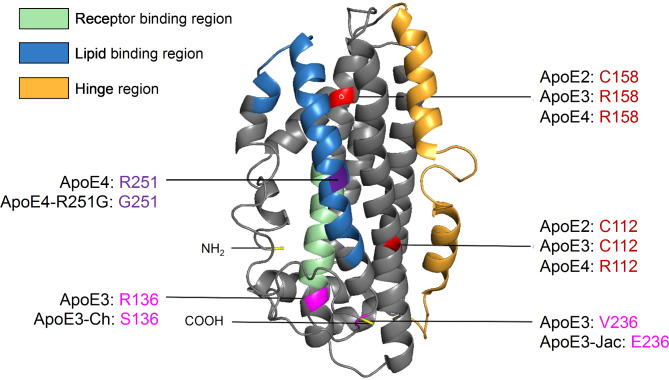
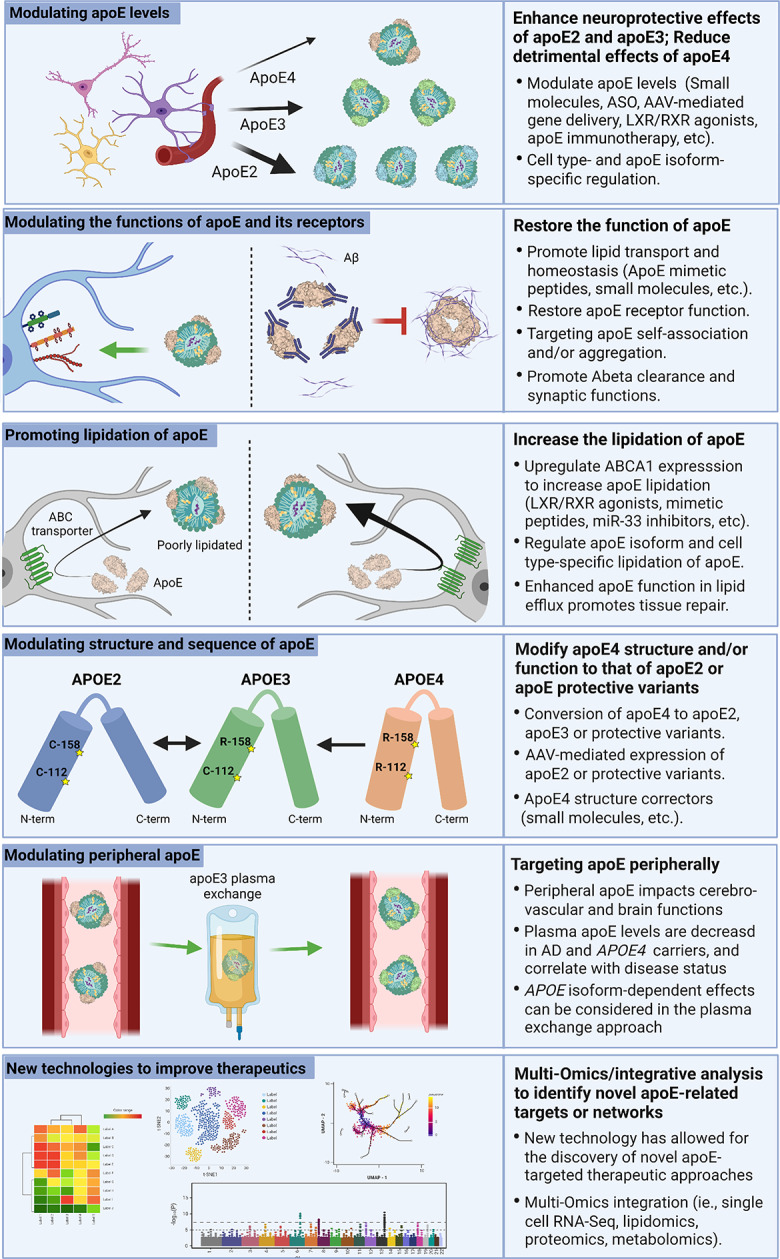
Alzheimer’s disease (AD) is the most common cause of dementia worldwide, and its prevalence is rapidly increasing due to extended lifespans. Among the increasing number of genetic risk factors identified, the apolipoprotein E ( APOE ) gene remains the strongest and most prevalent, impacting more than half of all AD cases. While the ε4 allele of the APOE gene significantly increases AD risk, the ε2 allele is protective relative to the common ε3 allele. These gene alleles encode three apoE protein isoforms that differ at two amino acid positions. The primary physiological function of apoE is to mediate lipid transport in the brain and periphery; however, additional functions of apoE in diverse biological functions have been recognized. Pathogenically, apoE seeds amyloid-β (Aβ) plaques in the brain with apoE4 driving earlier and more abundant amyloids. ApoE isoforms also have differential effects on multiple Aβ-related or Aβ-independent pathways. The complexity of apoE biology and pathobiology presents challenges to designing effective apoE-targeted therapeutic strategies. This review examines the key pathobiological pathways of apoE and related targeting strategies with a specific focus on the latest technological advances and tools.
Overview
The claims and statistics of this paper haven’t been checked yet.
Run the check — free, no account needed. It reads the open-access text and checks the sources it cites.
Integrity signals
Registry
Cites
Statistics
Figures
Verification
Claims the paper makes
The claims and statistics of this paper haven’t been checked yet.
Run the check — free, no account needed. It reads the open-access text and checks the sources it cites.
Claims other papers make about this one
Each is checked against this paper’s own text: does it say what the citing paper says it does?
The source backs part of the claim, not all of it — or backs it for a different population, condition or comparison.
In the citing paper
“In humans, three major isoforms of APOE are lipidated in an isoform‐specific manner (ε2 > ε3 > ε4). 9 , 48”
From Deletion of miR-33, a regulator of the ABCA1–APOE pathway, ameliorates neuropathological phenotypes in APP/PS1 mice (2024) · cites this paper as [48]
Experimental — accuracy not yet measuredThe source backs part of the claim, not all of it — or backs it for a different population, condition or comparison.
In the citing paper
“APOE binds to cell surface receptors, such as low‐density lipoprotein receptor (LDLR), LDLR‐related protein 1 (LRP1), very low‐density lipoprotein receptor (VLDLR), and apolipoprotein E receptor 2 (APOER2 or LRP8). 2 , 14 , 15”
From Deletion of neuronal Idol ameliorates Alzheimer's disease–related pathologies via APOE receptors (2025) · cites this paper as [2]
Experimental — accuracy not yet measuredThe source backs part of the claim, not all of it — or backs it for a different population, condition or comparison.
In the citing paper
“Although mainly secreted by astrocytes, APOE is also expressed in microglia, neurons, and oligodendrocytes, particularly under injury and degenerative conditions. 2 , 13”
From Deletion of neuronal Idol ameliorates Alzheimer's disease–related pathologies via APOE receptors (2025) · cites this paper as [2]
Experimental — accuracy not yet measuredThe source backs part of the claim, not all of it — or backs it for a different population, condition or comparison.
In the citing paper
“Genetic variants of many of the differentially expressed genes identified in this study, such as CLU and APOE, have been associated with increased Alzheimer’s disease risk58,59.”
From mTORC1 drives cell-autonomous astrocyte reactivity in tuberous sclerosis (2026) · cites this paper as [59]
Experimental — accuracy not yet measuredThe source backs part of the claim, not all of it — or backs it for a different population, condition or comparison.
In the citing paper
“The APOE-ε4 allele increases AD risk three- to eightfold compared to the neutral ε3 allele, while ε2 confers relative protection [154].”
From Toward a Unified Framework in Molecular Neurobiology of Alzheimer’s Disease: Revisiting the Pathophysiological Hypotheses (2026) · cites this paper as [154]
Experimental — accuracy not yet measured
The source backs part of the claim, not all of it — or backs it for a different population, condition or comparison.
In the citing paper
“ApoE influences AD pathogenesis through multiple pathways, such as (i) impaired clearance of Aβ by competing with receptor-mediated uptake (e.g., LRP1), (ii) modulation of tau phosphorylation and spread, and (iii) regulation of microglial activation.”
From Toward a Unified Framework in Molecular Neurobiology of Alzheimer’s Disease: Revisiting the Pathophysiological Hypotheses (2026) · cites this paper as [154]
Experimental — accuracy not yet measuredThe cited source says what the claim attributes to it.
In the citing paper
“APOE is multifunctional, with roles in lipid and glucose metabolism, neuroinflammation, amyloid and tau accumulation, and blood-brain barrier dysfunction [2].”
From Effects of APOE2 and APOE4 on brain microstructure in older adults: modification by age, sex, and cognitive status (2024) · cites this paper as [2]
The cited source says what the claim attributes to it.
In the citing paper
“These efforts have resulted in identifying multiple mechanisms by which APOE influences AD‐related pathologies, including amyloid beta (Aβ) accumulation, tauopathy, neuroinflammation, and synaptic impairment. 2”
From Deletion of neuronal Idol ameliorates Alzheimer's disease–related pathologies via APOE receptors (2025) · cites this paper as [2]
The cited source says what the claim attributes to it.
In the citing paper
“as APOE is increasingly viewed not only as a risk locus, but also as a mechanistically actionable therapeutic axis in AD 2 .”
From Association of Rare APOE Missense Variants R189C and W276C With Risk of Alzheimer Disease (2026) · cites this paper as [2]
The cited source says what the claim attributes to it.
In the citing paper
“Together, these data support a model in which C-terminal ApoE biology, including lipidation and self-association, is not merely correlative but is closely tied to pathogenesis and may inform future APOE-directed therapeutic strategies 2,17 .”
From Association of Rare APOE Missense Variants R189C and W276C With Risk of Alzheimer Disease (2026) · cites this paper as [2]
The cited source says what the claim attributes to it.
In the citing paper
“Among these, the APOE gene plays a central role in modulating disease risk, primarily through its involvement in lipid transport, synaptic function, and amyloid-beta metabolism in the brain (Martens et al., 2022; Raulin et al., 2022).”
From Isogenic human stem cell models reveal mutation-dependent protective mechanisms of APOE3 Christchurch (2026) · cites this paper as Raulin et al., 2022
The cited source says what the claim attributes to it.
In the citing paper
“suggesting the distinct biochemical interactions influencing Aβ deposition or clearance [2, 3, 22, 23].”
From Astrocytic APOE3-Christchurch expression ameliorates brain amyloid-β pathology in 5xFAD mice (2026) · cites this paper as [2]
The cited source says what the claim attributes to it.
In the citing paper
“In contrast, sporadic AD is strongly associated with polymorphisms in the APOE gene.”
From Toward a Unified Framework in Molecular Neurobiology of Alzheimer’s Disease: Revisiting the Pathophysiological Hypotheses (2026) · cites this paper as [154]
The cited source says what the claim attributes to it.
In the citing paper
“Recent work suggests that APOE variants not only modulate amyloid deposition but also reshape immune responses and lipid metabolism, positioning APOE at the nexus of amyloid, tau, and neuroinflammation [154].”
From Toward a Unified Framework in Molecular Neurobiology of Alzheimer’s Disease: Revisiting the Pathophysiological Hypotheses (2026) · cites this paper as [154]
In the citing paper
“APOE exists in three isoforms, namely APOE2, APOE3, and APOE4, among which APOE4 isoform has been identified as the strongest genetic risk factor for late-onset AD.173”
From Microbiota–gut–brain axis and its therapeutic applications in neurodegenerative diseases (2024) · cites this paper as [173]
Self-check
Percentages, sums and reported differences re-computed from the paper’s own numbers.
The self-check needs the paper’s full text.
Citations
Cites
2 retracted
Wu, B., Wu, M., & Guo, J. (2017) · Journal of Cellular Physiology · doi:10.1002/jcp.26328 · Cited by 43
RetractedSawmiller, D. R., Habib, A., Hou, H., Mori, T., Fan, A., Tian, J., Jin, Z., Giunta, B. N., Sanberg, P. R., Mattson, M. P., et al. (2019) · Biological Psychiatry · doi:10.1016/j.biopsych.2019.04.026 · Cited by 38
RetractedA Unique Microglia Type Associated with Restricting Development of Alzheimer’s Disease
Keren-Shaul, H., Spinrad, A., Weiner, A., Matcovitch-Natan, O., Dvir-Szternfeld, R., Ulland, T. K., David, E., Baruch, K., Lara-Astaiso, D., Toth, B., et al. (2017) · Cell · doi:10.1016/j.cell.2017.05.018 · Cited by 5,493
Strittmatter, W. J., Saunders, A. M., Schmechel, D., Pericak-Vance, M., Enghild, J., Salvesen, G. S., & Roses, A. D. (1993) · Proceedings of the National Academy of Sciences · doi:10.1073/pnas.90.5.1977 · Cited by 4,268 · cited 1×
“APOE4 is a major genetic risk factor for AD in a gene dose-dependent manner increasing risk by up to 15 fold in homozygotes [13], whereas APOE2 reduces AD risk by almost half and contributes to longevity [14].”
BackgroundApolipoprotein E and Alzheimer disease: risk, mechanisms and therapy
Liu, C.-C., Kanekiyo, T., Xu, H., & Bu, G. (2013) · Nature Reviews Neurology · doi:10.1038/nrneurol.2012.263 · Cited by 3,459
Self-citationNeuropathological alterations in Alzheimer disease
Serrano-Pozo, A., Frosch, M. P., Masliah, E., & Hyman, B. T. (2011) · Cold Spring Harbor Perspectives in Medicine · doi:10.1101/cshperspect.a006189 · Cited by 3,345
The neuropathological diagnosis of Alzheimer's disease
DeTure, M. A., & Dickson, D. W. (2019) · Molecular Neurodegeneration · doi:10.1186/s13024-019-0333-5 · Cited by 3,329
Role of C-Reactive Protein at Sites of Inflammation and Infection
Sproston, N. R., & Ashworth, J. (2018) · Frontiers in Immunology · doi:10.3389/fimmu.2018.00754 · Cited by 3,243
Blennow, K., de Leon, M. J., & Zetterberg, H. (2006) · The Lancet · doi:10.1016/s0140-6736(06)69113-7 · Cited by 3,134
The antibody aducanumab reduces Aβ plaques in Alzheimer’s disease
Sevigny, J., Chiao, P., Bussière, T., Weinreb, P. H., Williams, L., Maier, M., Dunstan, R., Salloway, S., Chen, T., Ling, Y., et al. (2016) · Nature · doi:10.1038/nature19323 · Cited by 3,059
Cited by
Sorted by citations
Items 601–700 of 755
Epigenetics in neurodegeneration: Emerging biomarkers and translational insights
Singh, H., Gurjar, S., & Taliyan, R. (2025) · Brain Research · doi:10.1016/j.brainres.2025.150005
Fredriksen, K., Joshi, S. S., Chang, A., & Li, L. (2025) · bioRxiv (Cold Spring Harbor Laboratory) · doi:10.64898/2025.12.16.694774
Cortical asymmetry in autosomal dominant Alzheimer’s disease progression
Pérez‐Millan, A., Falgàs, N., Bosch, B., Borrego‐Écija, S., Antonell, A., Fernández‐Villullas, G., Esteller, D., Tort‐Merino, A., Bargalló, N., Balasa, M., et al. (2025) · Brain Communications · doi:10.1093/braincomms/fcaf488 · Cited by 1
Role of apolipoprotein E4 in alzheimer’s disease pathogenesis and emerging therapeutic strategies
Natarajan, S., & Saraswathy, S. D. (2025) · Metabolic Brain Disease · doi:10.1007/s11011-025-01761-0
Educational preparation of primary care nurse practitioners and outcomes for patients with dementia
Porat‐Dahlerbruch, J., Horton, M., Featherston, K. G., Flandrick, K., Boyd, J., Poghosyan, L., & Martsolf, G. R. (2026) · Nursing Outlook · doi:10.1016/j.outlook.2025.102673
Ferré‐González, L., Peña‐Bautista, C., Álvarez‐Sánchez, L., Peretó, M., García, L., Raga, L., Roca, M. I., Baquero, M., & Cháfer‐Pericás, C. (2026) · Journal of clinical lipidology · doi:10.1016/j.jacl.2025.12.025
Walker, C. S., Barnoin, G., Bennett, M., Hughes, C. S., Tremblay‐Mercier, J., Spreng, R. N., Poirier, J., Morris, L. S., Villeneuve, S., & Geddes, M. R. (2026) · medRxiv · doi:10.64898/2026.01.10.26343857
Malliou, G., Reus, L. M., Pijnenburg, Y. A. L., van der Flier, W. M., de Wit, N. M., Chornyi, S., Kooij, G., de Vries, H. E., Teunissen, C. E., Visser, P. J., et al. (2026) · Molecular Neurodegeneration Advances · doi:10.1186/s44477-026-00018-z
Chung, C., Chen, J.-H., Chan, L., Liu, H.-Y., Shao, J. Y.-H., Hung, Y.-C., & Hong, C. (2026) · Current Alzheimer Research · doi:10.2174/0115672050420540251027112136
APOE, Biomarkers, and Proteogenomics in Alzheimer’s Disease
Pereira, J. D., Tosatti, J. A. G., & Gomes, K. B. (2026) · Springer eBooks · doi:10.1007/978-3-031-52641-1_66-1
APOE, Inflammation, and T Cells in Translational Disease Models and Clinical Medicine
Adlimoghaddam, A., Cervantes, D., & Wheeler, C. J. (2026) · Springer eBooks · doi:10.1007/978-3-031-52641-1_35-1
Apolipoprotein E, malnutrition, and neurodegenerative risk
Ciurleo, G. C. V., Carvalho, C. G. M., Freitas, R. S., & Oriá, R. B. (2026) · Elsevier eBooks · doi:10.1016/b978-0-443-33841-0.00032-4
Resende, R. R., & Pereira, C. F. (2025) · Springer eBooks · doi:10.1007/978-3-031-52641-1_14-1
Grazia, A., Levin, F., Jessen, F., Wagner, M., Peters, O., Priller, J., Schneider, A., Wiltfang, J., Düzel, E., Buerger, K., et al. (2026) · Frontiers in Neuroscience · doi:10.3389/fnins.2026.1730947
ApoE and Methylmercury Intoxication
Bittencourt, L. O., Aschner, M., & Lima, R. R. (2025) · Springer eBooks · doi:10.1007/978-3-031-52641-1_45-1
The Role of ApoE Genetics in Glial Lipid Metabolism and Inflammation
Julia, T. C. W., Negi, R., & Kurkela, M. (2025) · Springer eBooks · doi:10.1007/978-3-031-52641-1_74-1
van der Plas, M. C., van Dort, R., Rasing, I., Long, Y., van Zwet, E. W., van Osch, M. J. P., Sohrabi, H. R., Taddei, K., Gardener, S. L., Martins, R. N., et al. (2026) · Journal of Stroke and Cerebrovascular Diseases · doi:10.1016/j.jstrokecerebrovasdis.2026.108593
Yang, X., Jiang, J., Li, W., Pan, R., & Li, Y. (2026) · The Journal of Prevention of Alzheimer s Disease · doi:10.1016/j.tjpad.2026.100509
Walking to protect against cognitive decline: the role of APOE genotype and sex
Burma, J. S., Rosano, C., Best, J. R., Simonsick, E. M., Liu-Ambrose, T. Y. L., & Barha, C. K. (2026) · Biology of Sex Differences · doi:10.1186/s13293-026-00860-6
Olagunju, M. T., Omotoso, I. O., Abodunrin, O. R., Koledowo, A., Moussounda, E. A. M. B., Hassan, S. S., Ramphoma, K., & Akinsolu, F. T. (2026) · The North African Journal of Food and Nutrition Research · doi:10.51745/najfnr.10.21.22-34
Hakim, M., Ranjan, R., Ken‐Dror, G., Yusuf, M. A., Uddin, M. N., Mamun, M. T., Mamun, A. A., Kawnayn, G., & Sharma, P. K. (2026) · Journal of Alzheimer s Disease · doi:10.1177/13872877261419066
APOE and Proteomics in Chronic Inflammation
Shvetcov, A., & Finney, C. A. (2026) · Springer eBooks · doi:10.1007/978-3-031-52641-1_82-1
Damsbo, K., Reyahi, A., Nik, A. M., Oubounyt, M., Weber, A., Hyrlov, K. H., Kingo, C., Foged, M. L., Waede, M., Baumbach, J., et al. (2026) · Journal of Neuroimmunology · doi:10.1016/j.jneuroim.2026.578896
ApoE in Lipidomic Signature of Alzheimer’s Disease
Wartchow, K. M., Souza, D. O., & McIntire, L. B. (2026) · Springer eBooks · doi:10.1007/978-3-031-52641-1_65-1
Alzheimer's Disease Revisited: An Integrative Review of Modern Neurology and Ayurvedic Therapeutics
Modi, D., Dasar, D., Singh, N., & Shinde, K. (2026) · Journal of Natural Remedies · doi:10.18311/jnr/2026/50239
Gojani, E. G., Farzin, H., Sutherland, R. J., & Mohajerani, M. H. (2026) · Neuroscience & Biobehavioral Reviews · doi:10.1016/j.neubiorev.2026.106619
Serum Expression of miR-106b-3p and Its Diagnostic Significance in Alzheimer Disease
Hou, D., Hou, Z., Qu, H., Sun, M. Y., & Wang, L. (2026) · Alzheimer Disease & Associated Disorders · doi:10.1097/wad.0000000000000710
Apolipoprotein E as a Susceptibility Gene Beyond Brain Degenerative Diseases: A Systematic Review
Wilson, V. V., Coschignano, J. I., Massicotte, E. M., Fehlings, M. G., & Furlan, J. C. (2026) · Canadian Journal of Neurological Sciences / Journal Canadien des Sciences Neurologiques · doi:10.1017/cjn.2026.10581
Benjamin, S. R., Dutra, R. F., & de Andrade, G. M. (2026) · Springer eBooks · doi:10.1007/978-3-031-52641-1_38-2
Tayem, A. J., Bani-Jaber, A., Altantawi, A. M., Masadeh, N. M., Quran, L. A., Jammal, O. L. A., & Initiative, A. D. N. (2026) · Journal of Alzheimer s Disease · doi:10.1177/13872877261422449
Brain lipid dysregulation as a driver of energy metabolism failure in Alzheimer’s disease
Yadav, N., Banerjee, J., Tiwari, M., & Dixit, A. B. (2026) · International review of neurobiology · doi:10.1016/bs.irn.2026.02.004
Can Nutrition Modulate the Progression of Alzheimer’s Disease? A Narrative Review
Jankowski, W. M., Fichna, J., & Tarasiuk, A. (2026) · Current Nutrition Reports · doi:10.1007/s13668-026-00733-9
Duan, J., Engelman, C. D., Lu, Q., & Kang, H. (2026) · Statistics in Medicine · doi:10.1002/sim.70446
Xue, C., Chen, C., Zou, X., Li, S., Lv, Y., & Liu, W. (2026) · Experimental Neurology · doi:10.1016/j.expneurol.2026.115742
Systemic dysregulation of apolipoproteins in amyotrophic lateral sclerosis serum
Isik, F. I., Pickford, R., Timmins, H. C., Piguet, O., Halliday, G. M., Kiernan, M. C., & Kim, W. S. (2026) · FEBS Open Bio · doi:10.1002/2211-5463.70232
Leikin-Frenkel, A. I., Ravid, O., Liberman, M., Atrakchi, D., Lamport, V., Rand, D., Harats, D., Yassine, H. N., Sampath, H., Michaelson, D. M., et al. (2026) · The Journal of Nutritional Biochemistry · doi:10.1016/j.jnutbio.2026.110352 · Cited by 1
Farouk, Y., Nagy, N., Amir, A. M. E., Madbouly, N. A., & El-Khazragy, N. N. (2026) · Molecular Neurobiology · doi:10.1007/s12035-026-05789-w
Addressing nonignorable missing data and heterogeneity in prognostic biomarker assessment
Huang, X., Li, R., NING, J., & Initiative, A. D. N. (2026) · Statistical Methods in Medical Research · doi:10.1177/09622802261432996
Doan, V. U., Xu, Y., Wang, Z., Kaminski, A. M., Pedersen, L., & Liu, J. (2026) · Glycobiology · doi:10.1093/glycob/cwag024
Noreen, Z., Mondal, T., Johnson, J., Sahota, J., Loffredo, C. A., Nunlee-Bland, G. L., Korba, B. A., Bhatti, A., Chandra, V., & Ghosh, S. (2026) · Journal of Alzheimer s Disease Reports · doi:10.1177/25424823251403462
Lin, L., Pratt, A. E., & Hoffman, D. A. (2026) · International Journal of Molecular Sciences · doi:10.3390/ijms27073224
Nguyen, K.-T., & Phan, A.-C. (2026) · Lecture notes in networks and systems · doi:10.1007/978-3-032-18316-3_31
Guo, Z., He, X., Ge, Y., Zhao, B. D., Huang, L.-Y., Chen, S., Fu, Y., Gao, P., Sheng, Z.-H., Huang, Y., et al. (2026) · European Journal of Neurology · doi:10.1111/ene.70558
Liu, J., Liu, J., Fan, Y., Liu, C., Cao, J., Ma, H., Hou, Y., Gao, S., & Wang, P. (2026) · Journal of Translational Medicine · doi:10.1186/s12967-026-08098-x
Self-citationSingh, M. (2026) · International Conference on Visual Analytics and Data Visualization (ICVADV) · doi:10.1109/icvadv67766.2026.11470437
Plasma proteomics of APOE genotype: age-specific analyses in UK population-based cohortsPreprint
Packer, A. E., Khatun, T., Groves, J. W., Wyss‐Coray, T., Schott, J. M., Proitsi, P., Anderson, E. L., & Williams, D. M. (2026) · medRxiv · doi:10.64898/2026.04.16.26351010
Gene Therapy and RNA-Based Innovations for Management of Alziemer's
Tiwari, J., Anand, P., Kumar, D., & Singh, S. N. (2026) · BENTHAM SCIENCE PUBLISHERS eBooks · doi:10.2174/9798898814953126010011
Chen, J., Chen, J., Zhao, Z., Zhao, D., Chen, B., Wang, Q., Li, Y., Bai, C., Guo, X., Wang, J., et al. (2026) · Journal of Clinical Medicine · doi:10.3390/jcm15093217
He, M., Chen, Y., Zhang, Y., & Ruan, L. (2026) · Frontiers in Psychiatry · doi:10.3389/fpsyt.2026.1825454
Ağırbaşlı, D., Ağırbaşlı, M. A., Cakir, M. E., & Müftüoğlu, M. (2026) · Genes · doi:10.3390/genes17050516
Marchi, A. J., Brooks, A. M., & Gjoneska, E. (2026) · bioRxiv (Cold Spring Harbor Laboratory) · doi:10.64898/2026.05.09.723490 · Cited by 1
Cognitive Function and Perimenopause
Parry, E. (2026) · Cambridge University Press eBooks · doi:10.1017/9781009689489.011
Zelníčková, K., Ondráček, D., Mikulec, M., Mekyska, J., Farkaš, J., Lamoš, M., & Rektorová, I. (2026) · Journal of Neural Transmission · doi:10.1007/s00702-026-03171-7
M‐Atoom, A., Ahmed, M. H., Al-Hasnaawei, S., Malathi, H., Maharana, L., Nanda, A., Arora, V., & Singh‐Chauhan, A. (2026) · Polymer International · doi:10.1002/pi.70141
Saraceno, G. F., Sorrenti, D., Ferraro, C., & Cione, E. (2026) · BioMedInformatics · doi:10.3390/biomedinformatics6030029
Ridho, F. M., Irmawati, A., Wicaksana, A. P., Alfatah, R., & Labib, R. (2026) · Revista Clínica Española · doi:10.1016/j.rce.2026.502545
APOE, Biomarkers, and Proteogenomics in Alzheimer’s Disease
Pereira, J. D., Tosatti, J. A. G., & Gomes, K. B. (2026) · Springer eBooks · doi:10.1007/978-3-031-96089-5_66
Neuroinflammation- molecular target based therapeutic approach
Paul, D. (2026) · Advances in protein chemistry and structural biology · doi:10.1016/bs.apcsb.2026.04.006
APOE and Proteomics in Chronic Inflammation
Shvetcov, A., & Finney, C. A. (2026) · Springer eBooks · doi:10.1007/978-3-031-96089-5_82
ApoE in Lipidomic Signature of Alzheimer’s Disease
Wartchow, K. M., Souza, D. O., & McIntire, L. B. (2026) · Springer eBooks · doi:10.1007/978-3-031-96089-5_65
ApoE and Methylmercury Intoxication
Bittencourt, L. O., Aschner, M., & Lima, R. R. (2026) · Springer eBooks · doi:10.1007/978-3-031-96089-5_45
Resende, R. R., & Pereira, C. F. (2026) · Springer eBooks · doi:10.1007/978-3-031-96089-5_14
The Role of ApoE Genetics in Glial Lipid Metabolism and Inflammation
Julia, T. C. W., Negi, R., & Kurkela, M. (2026) · Springer eBooks · doi:10.1007/978-3-031-96089-5_74
Germline APOE ε2 homozygosity and reduced risk of breast cancer: a population-based cohort study
Woo, H., Han, S., Heo, J., Cho, J., Kim, D.-G., Kim, C., & Kang, D. (2026) · Breast Cancer Research · doi:10.1186/s13058-026-02308-6
Kim, C. (2026) · Elsevier eBooks · doi:10.1016/b978-0-443-45844-6.00005-6
Apolipoprotein E (APOE) in Alzheimer’s Disease: Mechanisms, Modifiers, and Therapeutic Implications
Rehman, S. U. (2026) · Bengal Journal of Psychiatry · doi:10.25259/bjpsy_2_2026
The physiological effects of APOE genotype in healthy young/middle‐aged individuals
de Leeuw, S. M., Emrani, S., Putter, J., & Nuriel, T. (2026) · Biological reviews/Biological reviews of the Cambridge Philosophical Society · doi:10.1002/brv.70187
Rizzo, M., Oomens, J. E., Jansen, W. J., Visser, P. J., & Vos, S. J. B. (2026) · Journal of Alzheimer s Disease · doi:10.1177/13872877261453099 · Cited by 1
Chaudhary, S., Verma, S., Kumari, V., & Tare, M. (2026) · International review of neurobiology · doi:10.1016/bs.irn.2026.05.019
Gillet, J.-N. (2026) · Journal of Biomolecular Structure and Dynamics · doi:10.1080/07391102.2026.2671163
ApoE impairs microglial efferocytosis by targeting Gas6/MerTK in a mouse model of acute seizure
Gao, B., Cheng, S.-M., Zhang, Y.-Y., Yang, H.-X., Hu, M.-M., Wang, Y., Han, J.-M., Li, Y. M., Cao, S.-Z., Dong, K., et al. (2026) · Acta Pharmacologica Sinica · doi:10.1038/s41401-026-01842-5 · Cited by 1
Frosina, M., Maurotti, S., Castagna, A., Montalcini, T., Pujia, A., & Tirinato, L. (2026) · MedComm · doi:10.1002/mco2.70789
Shared genetic architecture between Alzheimer’s disease and brain morphology
Wu, X., Shadrin, A. A., Blokland, G. A. M., Gülöksüz, S., Andreassen, O. A., Linden, D. E. J., & van der Meer, D. (2026) · Alzheimer s Research & Therapy · doi:10.1186/s13195-026-02105-5
APOE interacts with COX-2 on lipid droplets to modulate inflammatory lipid signalingPreprint
Powers, A. E., Kamble, K., Nair, M., Windham, I. A., Miner, G. E., Prim, C. E., Mills, C. A., Lyons, S. P., Herring, L. E., Chirasani, V. R., et al. (2026) · bioRxiv (Cold Spring Harbor Laboratory) · doi:10.64898/2026.06.09.730852
Data-Driven Causal Pathway Discovery in Alzheimer’s Disease via Mendelian Randomization
Xia, Y., Li, C., Jin, S., Zhang, L., Zhang, J., & Shao, X. (2026) · IEEE Transactions on Computational Social Systems · doi:10.1109/tcss.2026.3698468
Ren, L., Luo, X.-Q., Mi, F., & Yu, C. (2026) · Neuroscience · doi:10.1016/j.neuroscience.2026.06.009
Lietzke, E. E., Saeb, D., Aldrich, E. C., de Menezes, R. F., Bruce, K. D., & Sprenger, K. G. (2026) · Progress in Biophysics and Molecular Biology · doi:10.1016/j.pbiomolbio.2026.06.002 · Cited by 1
Mechanism of Metabolic Disorder and Endothelial Dysfunction in Alzheimer’s Disease
Sunday, B. Y., Terkimbi, S. D., Hidalgo, I., Bunu, U. O., & Idehen, C. I. (2026) · F1000Research · doi:10.12688/f1000research.172489.2
Hu, G., Feng, L., He, L., Liu, N., & Wang, H. F. (2026) · Frontiers in Neurology · doi:10.3389/fneur.2026.1877217
Powell, W. J. B., Hofmann, A., Oh, I. Y., Schindler, S. E., Snider, B. J., Paczynski, M., Ghoshal, N., Payne, P. R. O., Lai, A. M., Hofford, M. R., et al. (2026) · npj Dementia · doi:10.1038/s44400-026-00098-4
Sensory decline in aging and neurodegeneration: A mitochondrial perspective
Adeboye, O., Gonda, B. L., Gulati, N., Hu, K., Karp, A. R., McNally, D. C., Tsai, W., Zarate, J. G., Holmes, M., Johnson-Kleinpeter, L., et al. (2026) · Pharmacological Research · doi:10.1016/j.phrs.2026.108322 · Cited by 1
Apolipoprotein E in drug delivery systems—targeted pharmacotherapeutics
Pandey, J., & Jain, S. (2026) · Elsevier eBooks · doi:10.1016/b978-0-443-40563-1.00009-0
Apolipoprotein E and infectious diseases: A framework for therapeutic developments
Viswalingam, V., Kumar, D., Tewari, S., & Ganeshpurkar, A. (2026) · Elsevier eBooks · doi:10.1016/b978-0-443-40563-1.00018-1
Apolipoprotein E and precision medicine: Individualized disease management approaches
Singh, V., Shirbhate, E., Kore, R., Veerasamy, R., Koch, B., Tiwari, A. K., & Rajak, H. (2026) · Elsevier eBooks · doi:10.1016/b978-0-443-40563-1.00012-0
Apolipoprotein E in Alzheimer’s disease: Genetic predisposition and mechanistic implications
Koley, A., Aziz, N., Dash, B., Prakash, K. P., Firdaus, J. U., Atneriya, U. K., Wal, P., Kumar, A., & Ganeshpurkar, A. (2026) · Elsevier eBooks · doi:10.1016/b978-0-443-40563-1.00004-1
The diagnostic and therapeutic significance of apolipoprotein E in personalized medicine
Kumar, M., Suryavanshi, A., Mahapatra, D. K., Jaiswal, M., Mandal, V., & Bharti, S. K. (2026) · Elsevier eBooks · doi:10.1016/b978-0-443-40563-1.00007-7
Apolipoprotein E's immune mediation: Implications in inflammatory disorders
Ganeshpurkar, A., Dubey, N., & Gasmi, A. (2026) · Elsevier eBooks · doi:10.1016/b978-0-443-40563-1.00011-9
Zhang, X., Niu, Y., Wang, X., Wang, X., Li, W., Liu, Z., Xu, H., Sun, Z., & Jiang, W. (2026) · Ageing and Neurodegenerative Diseases · doi:10.20517/and.2026.3
Chemometric profiling reveals selective circulating bile acid remodeling in Alzheimer's disease
emam, M., Alatawi, F. S., Alzamil, Y., Haj, N., Mahbub, A. A., Ahmed, A. M., Albadri, S., & Alazzam, M. B. (2026) · Clinica Chimica Acta · doi:10.1016/j.cca.2026.121218
Forgham, H., Albornoz, E. A., Pietrogrande, G., Munir, M. U., Zhu, J., Anjum, M. A., Chung, K. H. K., Tahir, M. S., Ali, S. A., Käkinen, A., et al. (2026) · npj Dementia · doi:10.1038/s44400-026-00122-7 · Cited by 1
Domain-specific proteome remodeling defines mouse myelin agingPreprint
Freund, Y., Schoof, M., Moreno, N., Kriegel, F., Shin, H., Waelchli, V., Kaur, A., Abraham, K., Fogel, I., Shi, S. M., et al. (2026) · bioRxiv (Cold Spring Harbor Laboratory) · doi:10.64898/2026.07.05.736479 · Cited by 1
New Insights into Drug Development and Immunotherapy for Alzheimer’s Disease
Gayen, S., Roy, S., Uddin, M. A., & Sukul, D. (2026) · BENTHAM SCIENCE PUBLISHERS eBooks · doi:10.2174/9798898815646126010014
Acuaporina-4 y el sistema glinfático: claves en el desarrollo del Alzheimer
Pulido, E. U. R., López, J. L. H., & Nuche, M. L. (2026) · Acta Médica Grupo Ángeles · doi:10.35366/123506
Mahmoud, O. A., Ayoub, I. M., Tawfiq, R. A., Eldahshan, O. A., & Singab, A. N. B. (2026) · Beni-Suef University Journal of Basic and Applied Sciences · doi:10.1186/s43088-026-00769-4
Meng, G., Cai, L., Mo, Z., An, S., Sun, W., Shen, P., & Xie, Y. (2026) · Journal of Alzheimer s Disease · doi:10.1177/13872877261465779
Shang, Y., Zhai, Z., Cong, L., & Dong, X. (2026) · Pharmacological Research · doi:10.1016/j.phrs.2026.108339
Ameur, N. B., Chaieb, M., & Ghazouani, H. (2026) · Intelligence in Business and Industry (IBI) · doi:10.1109/ibi68858.2026.11604062
Hsu, C.-H., Chu, P.-W., Chen, Y.-Y., Ho, M.-H., Liao, E.-C., & Chen, S.-K. (2026) · Neurochemical Research · doi:10.1007/s11064-026-04842-3
Kumar, N., & Yarlagadda, V. (2026) · ACS Chemical Neuroscience · doi:10.1021/acschemneuro.6c00255
Zawadzki, S., Okła, E., Ortega, P., de la Mata, F. J., Йонов, М., Kreišmane, M., Skrastiņa, D., Jansons, J., Bryszewska, M. J., & Miłowska, K. (2026) · ACS Applied Materials & Interfaces · doi:10.1021/acsami.6c06027
Metadata
- Authors
- Raulin, A.-C., Doss, S. V., Trottier, Z. A., Ikezu, T. C., Bu, G., & Liu, C.-C.
- Affiliations
- Mayo Clinic in Florida (US)
- Corresponding author
- Bu, Guojun
- Liu, Chia-Chen
- ORCID
- Venue
- Molecular Neurodegeneration
- Published
- 2022-11-08
- Volume
- 17
- Issue
- 1
- Pages
- 72-72
- ISSN
- 1750-1326 (ISSN-L)
- PMC
- PMC9644639
- OpenAlex
- W4308572221
- Cited by
- 756
- References
- 317
- Citations by year
- 2026: 222 · 2025: 266 · 2024: 187 · 2023: 81
- FWCI
- 18.38
- Type
- journal article
- Language
- en
- Open access
- gold
- doi.org
- Locations
- Molecular Neurodegeneration (publishedVersion, cc-by)
- PubMed Central (publishedVersion, cc-by)
- PubMed (publishedVersion)
- DOAJ (DOAJ: Directory of Open Access Journals) (submittedVersion)
- Rare & Special e-Zone (The Hong Kong University of Science and Technology) (submittedVersion)
- Funders
- NIH Blueprint for Neuroscience Research (R37AG027924, RF1AG057181, U19AG069701, U19AG069701, R01AG062110)
- Cure Alzheimer’s Fund (Cure Alzheimer’s Fund)
- Topics
- Life Sciences › Neuroscience › Cellular and Molecular Neuroscience › Alzheimer's disease research and treatments
- Health Sciences › Medicine › Psychiatry and Mental health › Dementia and Cognitive Impairment Research
- Life Sciences › Neuroscience › Neurology › Neuroinflammation and Neurodegeneration Mechanisms
- Keywords
- apolipoprotein E, Alzheimer's disease, APOE ε4, APOE isoforms, amyloid plaques, lipid transport, genetic risk factors
- MeSH terms
- Alleles, Alzheimer Disease, Apolipoproteins E, Humans, Amyloid beta-Peptides, Apolipoprotein E4, Plaque, Amyloid
About these checks
Registry, retraction, Cites and statistics results are computed, not judged, with one exception: a printed reference that no index lists is read once by a model before it counts as a citation error. Claims are extracted by a model and kept only when their quote appears verbatim in the text; each cited source is then checked, with a model’s help, for whether it says what the claim relies on. Those verdicts can be wrong — read the claim’s quote and the cited source before relying on one.
Statistics and arithmetic are recomputed, not judged.
Confidence bands are shown only for fields calibrated on our annotated test set. None is calibrated yet, so no band is shown.
What counts as a claim ›How we measure confidence ›How we check this ›
Are you an author, or do you see a problem with this page? Request a review
