

Cognitive–behavioral therapy for management of mental health and stress-related disorders: Recent advances in techniques and technologies
Open accessThe DOI matches its Crossref record; 19 of the 19 references it cites were found in a registry or an index.
Abstract
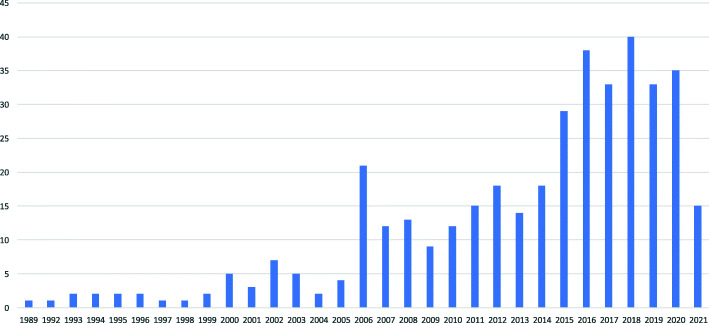
Cognitive–behavioral therapy (CBT) helps individuals to eliminate avoidant and safety-seeking behaviors that prevent self-correction of faulty beliefs, thereby facilitating stress management to reduce stress-related disorders and enhance mental health. The present review evaluated the effectiveness of CBT in stressful conditions among clinical and general populations, and identified recent advances in CBT-related techniques. A search of the literature for studies conducted during 1987–2021 identified 345 articles relating to biopsychosocial medicine; 154 (45%) were review articles, including 14 systemic reviews, and 53 (15%) were clinical trials including 45 randomized controlled trials. The results of several randomized controlled trials indicated that CBT was effective for a variety of mental problems (e.g., anxiety disorder, attention deficit hypersensitivity disorder, bulimia nervosa, depression, hypochondriasis), physical conditions (e.g., chronic fatigue syndrome, fibromyalgia, irritable bowel syndrome, breast cancer), and behavioral problems (e.g., antisocial behaviors, drug abuse, gambling, overweight, smoking), at least in the short term; more follow-up observations are needed to assess the long-term effects of CBT. Mental and physical problems can likely be managed effectively with online CBT or self-help CBT using a mobile app, but these should be applied with care, considering their cost-effectiveness and applicability to a given population.
Overview
The claims and statistics of this paper haven’t been checked yet.
Free: it reads the open-access text and checks the first 5 claims that cite a source we can check. Create a free account to check every claim.
Integrity signals
Registry
Cites
Statistics
Figures
Verification
Claims the paper makes
The claims and statistics of this paper haven’t been checked yet.
Free: it reads the open-access text and checks the first 5 claims that cite a source we can check. Create a free account to check every claim.
Claims other papers make about this one
Each is checked against this paper’s own text: does it say what the citing paper says it does?
The source backs part of the claim, not all of it — or backs it for a different population, condition or comparison.
In the citing paper
“multiple mobile applications support tracking and management of symptoms common during BZD tapering (e.g., sleep impairment, anxiety, depression).204–208”
From Joint Clinical Practice Guideline on Benzodiazepine Tapering: Considerations When Risks Outweigh Benefits (2025) · cites this paper as [208]
Experimental — accuracy not yet measuredThe source backs part of the claim, not all of it — or backs it for a different population, condition or comparison.
In the citing paper
“Cognitive-behavioural therapy emphasizes cognitive restructuring, which involves identifying irrational thoughts and negative ideations and instead allows substitution with positive reinforcement coping strategies to meet conceived expectations [42]. It also incoporates behavioural activation, which encourages engagement in positive activities and thoughts that enhance emotional regulation and cop”
From Psychosocial interventions for improving marital intimacy, sexual satisfaction, and quality of life of women and couples with infertility problems in low and middle-income countries: Systematic review protocol (2025) · cites this paper as [42]
Experimental — accuracy not yet measured
Self-check
Percentages, sums and reported differences re-computed from the paper’s own numbers.
The self-check needs the paper’s full text.
Citations
Cites
The Efficacy of Cognitive Behavioral Therapy: A Review of Meta-analyses
Hofmann, S. G., Asnaani, A., Vonk, I. J. J., Sawyer, A. T., & Fang, A. (2012) · Cognitive Therapy and Research · doi:10.1007/s10608-012-9476-1 · Cited by 3,445 · cited 1×
“CBT is a type of psychotherapeutic treatment that helps people to identify and change destructive or disturbing thought patterns that have a negative influence on their behavior and emotions [1].”
BackgroundPrevalence of chronic benign pain disorder among adults: a review of the literature
Verhaak, P. F. M., Kerssens, J. J., Dekker, J., Sorbi, M. J., & Bensing, J. M. (1998) · Pain · doi:10.1016/s0304-3959(98)00117-1 · Cited by 743
Cherkin, D. C., Sherman, K. J., Balderson, B. H., Cook, A. J., Anderson, M. L., Hawkes, R. J., Hansen, K. E., & Turner, J. A. (2016) · JAMA · doi:10.1001/jama.2016.2323 · Cited by 729 · cited 2×
“logical well-being and quality of life [11].”
BackgroundCognitive therapy: A 30-year retrospective.
Beck, A. T. (1991) · American Psychologist · doi:10.1037//0003-066x.46.4.368 · Cited by 607 · cited 1×
“In the US, Albert Ellis founded rational emotive therapy to help clients modify their irrational thoughts when encountering problematic events, and Aaron Beck employed cognitive therapy for depressed clients using Ellison’s model [3].”
Cognitive Behavior Therapy for Hypochondriasis: A Randomized Controlled Trial
Barsky, A. J., & Ahern, D. K. (2004) · JAMA · doi:10.1001/jama.291.12.1464 · Cited by 307
Schmidt, S., Grossman, P., Schwarzer, B., Jena, S., Naumann, J., & Walach, H. (2011) · PAIN · doi:10.1016/j.pain.2010.10.043 · Cited by 297 · cited 1×
“disease conditions like panic disorder and agoraphobia [6], and mindfulness reduces stress-related pain in fibromyalgia [7].”
BackgroundHellman, C. J. C., Budd, M., Borysenko, J., McClelland, D. C., & Benson, H. (1990) · Behavioral Medicine · doi:10.1080/08964289.1990.9934605 · Cited by 155 · cited 1×
“medicine, it has been reported that cognitive restructuring is effective in improving psychosomatic symptoms [5], exposure therapy is suitable for a variety of anxious”
BackgroundBiopsychosocial Approach to Assessing and Managing Patients with Chronic Pain
Cheatle, M. D. (2015) · Medical Clinics of North America · doi:10.1016/j.mcna.2015.08.007 · Cited by 137 · cited 1×
“The use of biopsychosocial approaches to treat chronic pain is shown to be clinically and economically efficacious [10]; for example, CBT is effective for chronic low-back pain [11].”
BackgroundFeliu‐Soler, A., Cebolla, A., McCracken, L. M., D’Amico, F., Knapp, M. R. J., López-Montoyo, A., García‐Campayo, J., Soler, J., Baños, R., Pérez‐Aranda, A., et al. (2017) · Behavior Therapy · doi:10.1016/j.beth.2017.07.001 · Cited by 77 · cited 2×
“The first- and second-wave forms of CBT arose via attempts to develop well-specified and rigorous techniques based on empirically validated basic principles [4].”
BackgroundCoping with Work-Related Stress through Guided Imagery and Music (GIM): Randomized Controlled Trial
Beck, B. D., Hansen, Å. M., & Gold, C. (2015) · Journal of Music Therapy · doi:10.1093/jmt/thv011 · Cited by 65 · cited 1×
“Most clinical trials recruited the samples from patient populations in order to assess specific diseases, but some targeted at those from non-patient populations like a working population in order to assessing mind-body conditions relating to sick leave [9].”
Background
Research works printed but not linked: 1
- Cochrane library. Cochrane reviews. [ https://www.cochranelibrary.com/] Accessed 15 June 2021.
Cited by
Items 201–300 of 491
Anjomshoaa, H., Moharer, G. S., & Shirazi, M. (2024) · Social Determinants of Health · doi:10.22037/sdh.v10i1.45797 · Cited by 2
Recommended resources for cognitive-behavioral therapy across the lifespan
Rajendram, R., Patel, V. B., & Preedy, V. R. (2023) · Elsevier eBooks · doi:10.1016/b978-0-323-85757-4.00022-5 · Cited by 2
Miqdadi, A. I., Chong, M. C., Yoong, T. L., Koh, O. H., & Alhadidi, M. M. B. (2023) · Journal of Psychosocial Nursing and Mental Health Services · doi:10.3928/02793695-20230919-02 · Cited by 3
Strategies for integrating martial arts-based mindfulness into educational settings
Kwok, W. W.-Y. (2024) · Digital Repository Service (Northeastern University) · doi:10.17760/d20649864 · Cited by 8
Cardiovascular Health and Disability: Prevention and Management
Sen, A., Singh, V. B., & Preetha, S. (2024) · Springer eBooks · doi:10.1007/978-3-031-40858-8_391-1 · Cited by 2
Group Cognitive-Behavioral Therapy for Reducing Anxiety in Middle-Aged Women
Rinaldi, M. R., & Musawwamah, Q. A. (2024) · Tazkiya Journal of Psychology · doi:10.15408/tazkiya.v12i1.32225 · Cited by 1
“CBT is a psychotherapy approach that helps individuals in identify and change negative patterns of thought that impact their behavior and feelings (Nakao et al., 2021).”
BackgroundPROTOCOLOS DE TERAPIA COGNITIVO-COMPORTAMENTAL PARA DISFUNÇÕES SEXUAIS: REVISÃO DE ESCOPO
Zwielewski, G., Silva, J. V. A., Oltramari, G., Camera, D. S. D. L., & Cruz, R. M. (2024) · Revista Brasileira de Sexualidade Humana · doi:10.35919/rbsh.v35.1102 · Cited by 1
Kholifah, S. N., Sharoni, S. K. A., & Yusuf, A. (2024) · International Journal of Public Health Science (IJPHS) · doi:10.11591/ijphs.v13i4.24538 · Cited by 2
“CBT may provide significant benefits [26], [31], [33].”
BackgroundLee, Y., Choe, J. C., Choe, J. C., Jung, S., & Lee, Y. (2024) · Korean Journal of Adult Nursing · doi:10.7475/kjan.2024.36.3.228 · Cited by 1
Hypnotic-based intervention for people with non-communicable diseases : A scoping review
Baskoro, D. S. B., Yuniarti, K. W., & Lufityanto, G. (2024) · Cognicia · doi:10.22219/cognicia.v12i2.35762 · Cited by 1
Яганова, А., & Іванова, Т. (2024) · Сучасні гуманітарні дискусії. · doi:10.60022/2(2)-1mhd · Cited by 1
Neurodevelopmental Disorders and Criminal Behavior
Reddy, K. J. (2025) · Springer eBooks · doi:10.1007/978-3-031-83771-5_4 · Cited by 1
Optimizing chemotherapy outcomes: The role of mindfulness in Epirubicin treatment for urinary tumors
Abolfazli, P., Nchama, C. N. A., & Lucke-Wold, B. P. (2025) · World Journal of Psychiatry · doi:10.5498/wjp.v15.i4.102852 · Cited by 1
Amzolini, A. M., Matei, D. V., Trăistaru, M. R., Bumbea, A. M., Matei, M. A., Amzolini, M. T., Patru, A., Cealicu, M., Munteanu, C., & Pătru, S. (2025) · Balneo and PRM Research Journal · doi:10.12680/balneo.2025.782 · Cited by 2
“The CBT program incorporated innovative psychological techniques to address both physical and mental health aspects of FM [42].”
Nwokedi, V. U., Nnamani, N. C., Orobator, E. T., Foster-Pagaebi, E., Chidera, U. A., Agu, C. P., & Ofori-Addi, S. (2025) · Path of Science · doi:10.22178/pos.116-22 · Cited by 1
Sun, W. (2025) · Applied Psychophysiology and Biofeedback · doi:10.1007/s10484-025-09722-0 · Cited by 3
“Traditional management approaches, including cognitive-behavioral techniques and pharmacological interventions, exhibit variable effi - cacy, often constrained by the performer’s subjective receptivity (Nakao et al., 2021).”
Artificial Intelligence-generated Psychological Counseling for Cancer Patients
Mahendiran, N., Sheik Mohamed, M. I., & Saravanan, S. (2025) · Current Psychiatry Research and Reviews · doi:10.2174/0126660822338819250214064950 · Cited by 1
Al-leimon, O., Saadeh, M., Ghaibeh, A., & Elzamzamy, K. (2025) · BJPsych International · doi:10.1192/bji.2025.10047 · Cited by 1
“8,9 Internet-based therapies and brief psychoeducation sessions also provide accessible options for symptom management for people with depression, anxiety and other common mental disorders, particularly in resource-limited or conflict-affected settings.”
The cognitive processes of cancer patients in advanced stages: Navigating terminal realities
Ahmed, M. M., & John, J. (2025) · Advances in Neuron Sciences · doi:10.70462/ans.2025.1.001 · Cited by 1
The Memory-Masturbation Link: Analyzing Psychological Impacts and Myths
Eskandar, K. (2025) · Sexuality & Culture · doi:10.1007/s12119-025-10418-0 · Cited by 1
“By addressing topics such as healthy sex - ual expression, the risks of addiction, and the availability of therapeutic interventions like CBT, education equips individuals with the knowledge and resources needed to seek help when necessary (Nakao et al., 2021 ).”
Resolving the Personalisation Agenda in Psychological Therapy Through a Biomedical Approach
Seymour, J. (2025) · BioMed · doi:10.3390/biomed5030019 · Cited by 1
“CBT—works by helping individuals reduce subjective stress by connecting thoughts and feelings, eliminating avoidance behaviours and influencing reward networks, achieved by challenging faulty schema and basic assumptions [60].”
Soraya, I., Rahmawati, W. K., & Fauziyah, N. (2025) · SENTRI Jurnal Riset Ilmiah · doi:10.55681/sentri.v4i8.4429 · Cited by 1
“Cognitive Behavior Therapy merupakan bentuk terapi psikologis yang mendukung individu dalam mengenali serta memodifikasi pola pikir destruktif yang berdampak buruk pada perilaku dan emosi mereka (Nakao et al., 2021).”
Fahami, M. S., Lame-Jouybari, A. H., & Farhangi, M. A. (2025) · Trials · doi:10.1186/s13063-025-09113-0 · Cited by 1
“CBT is a psychotherapeutic intervention designed to help individuals in identifying and restructuring faulty beliefs and thought patterns, thereby promoting emotional well-being and mental health [24].”
Hobden, B., Pollock, L., Lau, V., Leask, S., & Fakes, K. (2025) · Behaviour Research and Therapy · doi:10.1016/j.brat.2025.104875 · Cited by 1
Kahraman, M. A., Mohammed, T. F., Pigart, C. J., & Cooper, K. M. (2025) · International Journal of STEM Education · doi:10.1186/s40594-025-00560-4 · Cited by 1
“This supportive mentorship mirrors the principles of CBT by fostering resilience, enabling students to approach stressors in research with a healthier mindset, and reducing the risk of enduring depressive symptoms (Beck, 2020; Nakao et al., 2021).”
Generative AI for Art Therapy Informed Visual Emotional Expression
Liu, J., You, X., Dillon, A. P., & Zhang, Y. (2025) · Proceedings of the Association for Information Science and Technology · doi:10.1002/pra2.1465 · Cited by 1
“For instance, AI-driven chatbots have shown promising results in reducing symptoms of depression and anxiety in young adults (Kitson et al., 2024; Nakao et al., 2021).”
Yang, J., Bao, R., Chen, Z., Han, C., Zhao, Y., Niu, X., Dong, D., He, Y., & Chu, Q. (2025) · BMJ Open · doi:10.1136/bmjopen-2025-102071 · Cited by 2
“Future interventions should prioritise enhancing social connection and self-efficacy in stress coping through tailored physical activity programmes, thereby maximising the emotional health benefits of physical activity.”
Position Statement on Cardiometabolic Health Across the Woman's Life Course – 2025
de Oliveira, G. M. M., de Almeida, M. C. C., Valério, C. M., Giuffrida, F. M. A., Espíndola, L. N., Izar, M. C. D. O., Marques-Santos, C., Freire, C. M. V., Albuquerque, C. J. D. M., Chagas, A. C. P., et al. (2025) · Arquivos Brasileiros de Cardiologia · doi:10.36660/abc.20250615i · Cited by 2
Mapping evolving care needs in older adults with disabilities: a qualitative study
Jin, Y., Wang, X. C., Gong, L.-L., Zhang, H., Xie, Y., Ling, X.-H., Chen, Q., & Yang, D.-H. (2025) · Scientific Reports · doi:10.1038/s41598-025-32338-7 · Cited by 1
“Interventions such as cognitive-behavioral therapy 23 can help address emotional stress.”
Management of psychological distress in adolescents through cognitive-behavioral group therapy
Hafizah, N., Sulistyarini, R. I., & Azkiya, W. N. (2025) · Jurnal Psikologi Terapan dan Pendidikan · doi:10.26555/jptp.v7i2.30869 · Cited by 1
Zidan, M. S., ElHay, A. E. M. A., Elfahl, A. М., Al-Kafian, R. S., Arafah, M. M. M., Elsharkawy, M. M., Hassan, S. M., Elfeky, H. A.-E., Radwa, M. A. S., & Morsi, H. (2026) · Retos · doi:10.47197/retos.v75.118225 · Cited by 1
Mechanisms to medicines: navigating drug repurposing strategies in Alzheimer’s disease
Khan, S. A., Raza, K., Tiwari, P., El‐Tanani, M., Rabbani, S. A., & Parvez, S. (2026) · Frontiers in Aging Neuroscience · doi:10.3389/fnagi.2025.1676065 · Cited by 4
Rodríguez, K. B. G., & Núñez, S. V. G. (2026) · Revista Científica Retos de la Ciencia · doi:10.53877/rc10.21-611 · Cited by 1
Kustiawan, R., Soemantri, I., & Fitria, D. (2026) · Acta Medica Philippina · doi:10.47895/amp.vi0.11536 · Cited by 1
“22,23 For example, research has consistently shown that interventions focusing on cognitive and behavioral strategies help reduce the frequency and intensity of hallucinations by targeting the distorted thought patterns and behaviors associated with these symptoms.”
Psychometric properties of the Turkish version of the posttraumatic maladaptive beliefs scale
Alpay, E. H., & Usluoğlu, F. (2026) · Journal of Clinical Psychiatry · doi:10.5505/kpd.2026.66900 · Cited by 1
Leng, J. N. W., Sam, J. M., & Nelson, A. A. (2026) · Clinical Child Psychology and Psychiatry · doi:10.1177/13591045261433503 · Cited by 1
“CBT helps individuals respond more effectively to stress, anxiety, and other negative emotions by identifying and challenging negative beliefs (Nakao et al., 2021).”
Calaresi, D., Verrastro, V., Sechi, M., & Saladino, V. (2026) · Adversity and Resilience Science · doi:10.1007/s42844-026-00203-9 · Cited by 1
“…strategies specifically designed to reduce HB. Cognitive-behavioral therapy (CBT) has been shown to be effective in helping adolescents identify and reframe unhelpful thought patterns, regulate emotional responses, and gradually re-engage with social and daily life activities (Nakao et al., 2021).”
Al-Wahedi, M., Ismail, S., Alkhofani, W., & Azman, A. (2024) · Psychology · doi:10.4236/psych.2024.159087 · Cited by 4
Wu, M., Wang, W., He, H., Bao, L., & Qiu, H. (2026) · Scientific Reports · doi:10.1038/s41598-026-47494-7 · Cited by 2
“These may include brief cognitive-behavioral techniques aimed at reframing negative beliefs about recovery 47 , and goal-setting sessions to enhance perceived attainability of rehabilitation tasks 48 .”
Artificial Intelligence in Mental Health Monitoring
Pabbi, V., Sandhu, M. K., & Angurala, M. (2026) · International Conference on Computing for Sustainable Global Development · doi:10.23919/indiacom70271.2026.11525482 · Cited by 1
“Among these ML techniques, deep learning has received the most attention for its superior performance when compared to traditional methods [8].”
Moreira, M. T., Lima, A., Martins, D. R., Guimarães, M. I., Cardoso, I. L., Fernandes, C. S., da Costa, T. L., & Ferreira, S. (2026) · Psychiatry International · doi:10.3390/psychiatryint7030129 · Cited by 1
Psychological Health, Polysocial Risk, and Cardiovascular Health Among Women of Reproductive Age
Metlock, F., Stanislas, K. A., Vaidya, D. M., Hladek, M. D., Himmelfarb, C. D., Ouyang, P., Hall, J., Sharma, G. V., & Commodore-Mensah, Y. Y. (2026) · JACC Advances · doi:10.1016/j.jacadv.2026.102796 · Cited by 1
Addressing neonatal intensive care unit clinicians’ distress via interprofessional meetings
Callahan, K. P., Behringer, K., Hill, D. L., Mason, K., Walter, J. K., Lechtenberg, L., Munson, D., & Feudtner, C. (2026) · Journal of Perinatology · doi:10.1038/s41372-026-02763-1 · Cited by 1
Restrukturisasi kognitif untuk menurunkan kecemasan masa depan pada dewasa awal
Rahma, T. H., & Hidayati, D. S. (2026) · Procedia Studi Kasus dan Intervensi Psikologi · doi:10.22219/procedia.v14i1.43094 · Cited by 1
Cabanban, I. D., Matibag, C. M. M., Macalintal, M. C. G., Guivencan, J. K. D., Esmail, J. J. B., Cortuna, A. P., Comia, M. J. J. C., Chua, F. M. J., Calimag, M. K. L. V., Bernardo, J. Y. C., et al. (2026) · International Journal of Health & Business Analytics · doi:10.65166/d60d0m36 · Cited by 1
Galatoula, P., Pipelias, P., Mantikas, V., Papadopoulou, A., Chrousos, G. P., Bacopoulou, F., Mykoniatis, M., & Darviri, C. (2026) · Nutrients · doi:10.3390/nu18152501 · Cited by 1
“Conversely, interventions that enhance self-awareness and cognitive reframing have been shown to reduce psychological distress and improve adaptive coping strategies [103].”
Introduction: Trends, Puzzles, and Hopes for the Future of Healthcare
Ehsani, S., Glauner, P., Plugmann, P., & Thieringer, F. M. (2022) · Future of business and finance · doi:10.1007/978-3-030-99838-7_1 · Cited by 1
Recommended resources for cognitive-behavioral therapy in different disorders
Patel, V. B., Rajendram, R., & Preedy, V. R. (2023) · Elsevier eBooks · doi:10.1016/b978-0-323-85726-0.00041-7 · Cited by 1
Rajendram, R., Patel, V. B., & Preedy, V. R. (2023) · Elsevier eBooks · doi:10.1016/b978-0-323-85726-0.00017-x · Cited by 1
Tahvilian, M., Foroozandeh, E., & Banitaba, S. M. (2023) · Journal of Multidisciplinary Care · doi:10.34172/jmdc.1172 · Cited by 1
“CBT helps a patient better perceive the problems that cause psychological imbalance, for thinking about a particular problem will change physical and emotional states (18,19).”
BackgroundPsychosocial Rehabilitation Through Social Cognitive Approaches
Singha, R. (2024) · Advances in medical technologies and clinical practice book series · doi:10.4018/979-8-3693-1265-0.ch011 · Cited by 1
Lecter - A Large Language Model Chatbot for Cognitive Behavioral Therapy
Sundhar, R. S., Shivavardhini, T., Clemency, C. A. D. D., & Roobini, M. S. (2024) · IFIP advances in information and communication technology · doi:10.1007/978-3-031-69982-5_4 · Cited by 1
REVIEW OF THE THEORY AND PRACTICE OF COGNITIVE BEHAVIORISTIC GROUP COUNSELING APPROACHES
Habsy, B. A., Putri, R. F., Nursani, R. N., & A'yunin, W. Q. (2024) · Jurnal Kajian Pendidikan dan Psikologi · doi:10.61397/jkpp.v2i1.141 · Cited by 2
Aliyari, Z., Ahmadizadeh, M. J., & Aghdam, G. F. (2024) · Middle East Journal of Rehabilitation and Health Studies · doi:10.5812/mejrh-153269 · Cited by 1
Lopez, R. D. P., Cabrera, P. R. C., Alvarado, L. G. S., González, H. F. N., Rosales, A. A., Jaimes, A. Z. V., Morales, D. F., de la Canal, C. F., Sánchez, A. J. E., & Reyna-Manzano, J. F. (2024) · Case Reports in Surgery · doi:10.1155/cris/9114813 · Cited by 1
HUBUNGAN WAKTU TUNGGU PEMERIKSAAN DENGAN TINGKAT KECEMASAN PASIEN LANSIA DENGAN NYERI SENDI
Raharjo, S., Salam, A. Y., & Abidin, Z. (2024) · Jurnal Kesehatan Tambusai · doi:10.31004/jkt.v5i4.37638 · Cited by 1
A guide to diagnosis and management of hypertrichosis
Islam, R. K., Tong, V. T., & Lipner, S. R. (2025) · JAAD reviews. · doi:10.1016/j.jdrv.2025.01.013 · Cited by 1
Clinical Implications for Childhood Psychological Trauma and Mental Illness
Tadros, E., & Daifallah, N. (2025) · KMAN Counseling and Psychology Nexus · doi:10.61838/kman.cp.psynexus.3.1 · Cited by 1
Shi, J., & Zhu, L. (2025) · Journal of Nursing Care Quality · doi:10.1097/ncq.0000000000000859 · Cited by 1
Chakole, V., Mankhair, S., Dev, P., Tople, J. P., & Ambad, R. S. (2025) · Journal of Pharmacy And Bioallied Sciences · doi:10.4103/jpbs.jpbs_1813_24 · Cited by 1
“Psychological Support [20] Administering SHPB to manage pain facilitates better engagement in CBT or counseling.”
Chen, Y. T., Shah, N., Hassett, A. L., Huang, S., Khanna, D., & Murphy, S. L. (2025) · Archives of Physical Medicine and Rehabilitation · doi:10.1016/j.apmr.2025.05.002 · Cited by 1
UPAYA PENCEGAHAN GAMING DISORDER PADA REMAJA: LITERATURE REVIEW
Giyaningtyas, I. J., & Armi, A. (2024) · Jurnal Cakrawala Keperawatan · doi:10.35872/jck.v1i02.748 · Cited by 1
“Terapi kognitif perilaku merupakan pendekatan psikoterapi yang berfokus pada mengubah pola pikir dan perilaku negatif untuk mencapai perubahan jangka panjang dalam pola pikir dan perilaku pasien (Nakao et al., 2021).”
Kumar, R., Tonyot, L., Singh, A., & Singh, V. (2026) · Sport Sciences for Health · doi:10.1007/s11332-026-01745-2 · Cited by 1
“3) [20, 21].”
Eficacia de la Terapia Cognitivo Conductual en el Tratamiento de Ansiedad Generalizada
Torres, D. F. L., & Naranjo, J. P. M. (2025) · Polo del Conocimiento · doi:10.23857/pc.v10i4.9397 · Cited by 3
Intersection of Cancer and Disability: A Multidisciplinary Approach
Sen, A. (2024) · Springer eBooks · doi:10.1007/978-3-031-40858-8_379-1 · Cited by 1
Oppong, S. S., Naab, F., Duah, I. O., Ankamah, S., Owiredu, D., Ametor, F. H., Imakando, M. M., Kyei, J. M., & Danso-Appiah, A. (2025) · PLOS ONE · doi:10.1371/journal.pone.0335068
“Cognitive-behavioural therapy emphasizes cognitive restructuring, which involves identifying irrational thoughts and negative ideations and instead allows substitution with positive reinforcement coping strategies to meet conceived expectations [42].”
The Effect of Group Cognitive-Behavioral Therapy on the Lifestyle of Patients With Hepatitis B
Faramarzi, M., Khalatbari, J., Shiroudi, S. G., & Abolmaali, K. (2022) · Journal of Client-centered Nursing Care · doi:10.32598/jccnc.8.4.442.1
“It is believed that these components interact and contribute to the ultimate success of the therapy (Allegrante, et al., 2019; Nakao et al., 2021).”
BackgroundApplications of Neuroscience and Virtual Reality for Neurorehabilitation
Kwon, M. (2023) · Zenodo (CERN European Organization for Nuclear Research) · doi:10.5281/zenodo.8054988
Zhang, X. (2023) · Theoretical and Natural Science · doi:10.54254/2753-8818/24/20231086
Zabihiyeganeh, M., Afshar, S. V., Kadijani, A. A., Janbozorgi, M., Akbari, A., Yahyazadeh, H., Kadijani, B. A., & Mirzaei, A. (2024) · Iranian Journal of Psychiatry and Behavioral Sciences · doi:10.5812/ijpbs-139852
Collaborative Care Models for Cognitive Disorder Patients
Singha, R. (2024) · Advances in medical technologies and clinical practice book series · doi:10.4018/979-8-3693-1090-8.ch002
Managing Stress, Traumatic Experiences, Life Skill Training, and Leading With a Purpose
Thomas, J., & Karalam, S. R. B. (2024) · Advances in educational marketing, administration, and leadership book series · doi:10.4018/979-8-3693-1773-0.ch003
Liu, S., Chen, X., Liu, D., Lin, Y., Chen, Y., & Cai, S. (2024) · doi:10.2196/preprints.59751
Telemedicine’s Impact on Mental Health and Physical DisordersPreprint
Fukushima, K. (2024) · doi:10.58445/rars.1136
Syros, I., & Anastassiou‐Hadjicharalambous, X. (2024) · OBM Neurobiology · doi:10.21926/obm.neurobiol.2403231
Managing Stress as an Emerging Adult
Riddle, D. B., Hertz, A. G., & Storch, E. A. (2024) · Springer eBooks · doi:10.1007/978-3-031-54281-7_14
Brandon, R., & Zhang, A. (2024) · Interdisciplinary cancer research · doi:10.1007/16833_2024_303
Ortibano, M. T., Madrigal, D. V., & Singson, D. N. E. (2024) · Technium Social Sciences Journal · doi:10.47577/tssj.v60i1.11507 · Cited by 2
Aeni, N., Yosep, I., & Sriati, A. (2024) · Indonesian Contemporary Nursing Journal (ICON Journal) · doi:10.20956/icon.v9i1.35565
Multi-Model Machine Learning Approach for Supporting Sri Lankan Veteran Mental Health
Dharmapriya, I. S. C., Pathirana, S. G. B. V. R., Hettiarachchi, H. G., Warnakulasooriya, D., Thelijjagoda, S., Krishara, J., & Giguruwa, N. (2024) · IEEE International Conference on Automatic Control and Intelligent Systems (I2CACIS) · doi:10.1109/i2cacis61270.2024.10649827
“2) Deep Learning Model Architecture: We utilized a 4-layered deep learning model with ReLU activation functions and the Sequential Keras model (a type of MLP) for personalized CBT recommendations [17].”
MethodThe physician-to-physician health-care barriers—a phenomenological study
DeJong, C. A. J., Soeters, E. M., van Rijn, L., Iskandar, S., Jokūbonis, D., & Pool, G. (2024) · Academia Mental Health and Well-Being · doi:10.20935/mhealthwellb7337
Salim, N. A., & Taylor, J. L. W. (2024) · Research Square · doi:10.21203/rs.3.rs-4089545/v1
Chen, Z. (2024) · Interdisciplinary Humanities and Communication Studies · doi:10.61173/4s1d3048
Kerna, N. A., Ngwu, D. C., Rodriguez, D., Holets, H. M., Flores, J. V., Pruitt, K. D., Carsrud, N. D. V., Jeremiah, S. M., Azi, C. I., Khan, M., et al. (2024) · European Journal of Medical and Health Research · doi:10.59324/ejmhr.2024.2(5).17
Bustos, J. E. O., Bustos, E. F. O., & Bravo, A. M. M. (2024) · Revista Interdisciplinaria de Educación, Salud, Actividad Física y Deporte. · doi:10.70262/riesafd.v1i2.2024.30 · Cited by 1
Psycho-oncology for adult and pediatric patients. Essential approaches
Niţă, E., Licu, M., & Mititelu, M. (2024) · Farmacist ro · doi:10.26416/farm.219.4.2024.10196
Hao, F., Li, P., Chen, M., Xu, J., Xu, J., Lin, Z., Liang, Z., Wang, C., & Liu, T. C. (2024) · Cognitive Therapy and Research · doi:10.1007/s10608-024-10537-2
“Unlike pharmacological treatments, which have produced mixed outcomes (Mitchell & Anderson, 2024 ), CBT provides significant therapeutic benefits, likely due to its structured focus on the maladaptive thought patterns characteristic of BDD (Fordham et al., 2018 ; Nakao et al., 2021).”
Therapie bei funktionellen Störungen der Nahrungsaufnahme
Bolten, M. I., Légeret, C., & Odenheimer, S. (2024) · Springer eBooks · doi:10.1007/978-3-662-69606-4_7
ПСИХОКОРЕКЦІЯ ЖИТТЄСТІЙКОСТІ У СПОРТСМЕНІВ ІЗ РІЗНИМ РІВНЕМ САМООЦІНКИ
Коляда, Н., & Пронюшкіна, А. (2024) · Перспективи та інновації науки · doi:10.52058/2786-4952-2024-11(45)-1345-1356
Shoigu, J. S., & Tarasova, A. А. (2024) · Theoretical and experimental psychology · doi:10.11621/tep-24-35
Liu, M., Pagador, A. J. T., Mizyed, J., Martinez, E. C., & Schueller, S. M. (2024) · Cognitive and Behavioral Practice · doi:10.1016/j.cbpra.2024.11.004
Innovation in mental health services: Where are we now?
Subrata, S. A., Abdelaal, H. M., & Abdelrazek, M. N. (2024) · Innovation in Health for Society · doi:10.31603/ihs.11991 · Cited by 1
Decision: Internet chat based intervention as a mode for therapy and counselling — R3/PR18
(2024) · Cambridge Prisms Global Mental Health · doi:10.1017/gmh.2024.151.pr18
African Journal of Biomedical Research
Sawiji, S., Said, F. M., Aljaberi, M. A., & Huda, A. (2025) · doi:10.53555//ajbr.v28i1s.6269
A comprehensive bibliographic study on mental illness
Ding, Y., & Chen, S. (2025) · Acta Neuropsychiatrica · doi:10.1017/neu.2024.64 · Cited by 2
“Cognitive behavioural therapy (CBT) is one of the most common forms, helping individuals reframe negative thought patterns and behaviours (Nakao, Shirotsuki and Sugaya 2021).”
Психосоматотерапия как метод восстановления ресурсного потенциала личности
Тур, Е. Ю., & Коваленко, Н. П. (2024) · International journal of medicine and psychology. · doi:10.58224/2658-3313-2024-7-7-196-201
(2025) · La Prensa Medica · doi:10.47275/2953-4763-437
“When compared with adolescents, those in college may be more independent and mature regarding self-regulation and internet usage, making them more receptive to self-help interventions [58-63].”
Qu, H., Song, B., Yang, L., & Liu, J. (2025) · The Tohoku Journal of Experimental Medicine · doi:10.1620/tjem.2025.j030
PJETRUSHAJ, S., & Melonashi, E. (2025) · Polis · doi:10.58944/wxvw6025 · Cited by 1
“Research shows that CBT helps children adapt, manage emotions, and develop healthier behaviors (Nakao, Shirotsuki & Sugaya, 2021).”
Adhikari, A. A. D. N. W., Bhatta, K., Parajuli, S., & Kaphle, H. P. (2025) · Mental Illness · doi:10.1155/mij/4778500
“Treatment strategies may include cognitive-behavioural techniques to challenge negative thought patterns, self-esteem building exercises, and encouraging participation in activities that promote a sense of accomplishment and self-worth [56].”
Metadata
- Authors
- Nakao, M., Shirotsuki, K., & Sugaya, N.
- Affiliations
- International University of Health and Welfare (JP)
- Musashino University (JP)
- Yokohama City University (JP)
- Corresponding author
- Nakao, Mutsuhiro
- Venue
- BioPsychoSocial Medicine
- Published
- 2021-10-03
- Volume
- 15
- Issue
- 1
- Pages
- 16-16
- ISSN
- 1751-0759 (ISSN-L)
- PMC
- PMC8489050
- OpenAlex
- W3204339337
- Semantic Scholar
- bc7fb565310ef2d6f78bc9b8eccb5e262110bafb
- Cited by
- 339
- References
- 19
- Citations by year
- 2026: 75 · 2025: 137 · 2024: 88 · 2023: 30 · 2022: 9
- FWCI
- 30.69
- Type
- journal article
- Language
- en
- Open access
- gold
- doi.org
- Licence
- cc-by
- creativecommons.org/licenses/by/4.0 (tdm)
- creativecommons.org/licenses/by/4.0 (vor)
- Locations
- BioPsychoSocial Medicine (publishedVersion, cc-by)
- Europe PMC (PubMed Central) (publishedVersion, other-oa)
- PubMed Central (publishedVersion, cc-by)
- PubMed (publishedVersion)
- DOAJ (DOAJ: Directory of Open Access Journals) (submittedVersion, cc-by-sa)
- Funders
- ministry of education and science (kakenhi C)
- Topics
- Social Sciences › Psychology › Experimental and Cognitive Psychology › Anxiety, Depression, Psychometrics, Treatment, Cognitive Processes
- Social Sciences › Psychology › Applied Psychology › Digital Mental Health Interventions
- Social Sciences › Psychology › Clinical Psychology › Psychological Treatments and Assessments
- Keywords
- cognitive behavioral therapy, stress management, stress-related disorders, mental health, anxiety disorders, depression, bulimia nervosa, health anxiety, chronic fatigue syndrome, fibromyalgia, irritable bowel syndrome, breast cancer, antisocial behavior, drug abuse, gambling, smoking, mobile application, cost-effectiveness
About these checks
Registry, retraction, Cites and statistics results are computed, not judged, with one exception: a printed reference that no index lists is read once by a model before it counts as a citation error. Claims are extracted by a model and kept only when their quote appears verbatim in the text; each cited source is then checked, with a model’s help, for whether it says what the claim relies on. Those verdicts can be wrong — read the claim’s quote and the cited source before relying on one.
Statistics and arithmetic are recomputed, not judged.
Confidence bands are shown only for fields calibrated on our annotated test set. None is calibrated yet, so no band is shown.
What counts as a claim ›How we measure confidence ›How we check this ›
Are you an author, or do you see a problem with this page? Request a review
Data sources
Bibliographic data: Semantic Scholar, OpenAlex, Crossref.
Contains information from the Semantic Scholar Academic Graph Datasets, made available under the ODC Attribution License (ODC-BY 1.0).
Semantic Scholar’s data is described in: Kinney, R., et al. (2023). The Semantic Scholar Open Data Platform. arXiv:2301.10140.
