

Cognitive–behavioral therapy for management of mental health and stress-related disorders: Recent advances in techniques and technologies
Open accessThe DOI matches its Crossref record; 19 of the 19 references it cites were found in a registry or an index.
Abstract
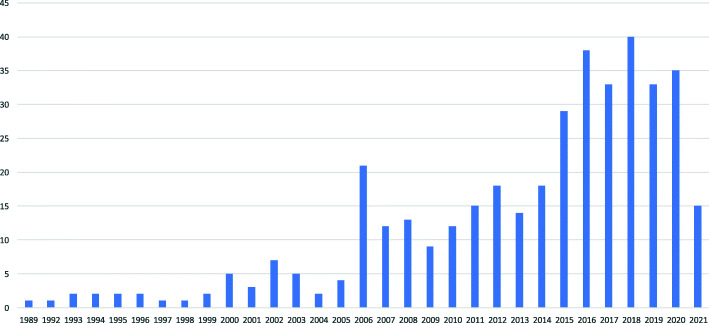
Cognitive–behavioral therapy (CBT) helps individuals to eliminate avoidant and safety-seeking behaviors that prevent self-correction of faulty beliefs, thereby facilitating stress management to reduce stress-related disorders and enhance mental health. The present review evaluated the effectiveness of CBT in stressful conditions among clinical and general populations, and identified recent advances in CBT-related techniques. A search of the literature for studies conducted during 1987–2021 identified 345 articles relating to biopsychosocial medicine; 154 (45%) were review articles, including 14 systemic reviews, and 53 (15%) were clinical trials including 45 randomized controlled trials. The results of several randomized controlled trials indicated that CBT was effective for a variety of mental problems (e.g., anxiety disorder, attention deficit hypersensitivity disorder, bulimia nervosa, depression, hypochondriasis), physical conditions (e.g., chronic fatigue syndrome, fibromyalgia, irritable bowel syndrome, breast cancer), and behavioral problems (e.g., antisocial behaviors, drug abuse, gambling, overweight, smoking), at least in the short term; more follow-up observations are needed to assess the long-term effects of CBT. Mental and physical problems can likely be managed effectively with online CBT or self-help CBT using a mobile app, but these should be applied with care, considering their cost-effectiveness and applicability to a given population.
Overview
The claims and statistics of this paper haven’t been checked yet.
Free: it reads the open-access text and checks the first 5 claims that cite a source we can check. Create a free account to check every claim.
Integrity signals
Registry
Cites
Statistics
Figures
Verification
Claims the paper makes
The claims and statistics of this paper haven’t been checked yet.
Free: it reads the open-access text and checks the first 5 claims that cite a source we can check. Create a free account to check every claim.
Claims other papers make about this one
Each is checked against this paper’s own text: does it say what the citing paper says it does?
The source backs part of the claim, not all of it — or backs it for a different population, condition or comparison.
In the citing paper
“multiple mobile applications support tracking and management of symptoms common during BZD tapering (e.g., sleep impairment, anxiety, depression).204–208”
From Joint Clinical Practice Guideline on Benzodiazepine Tapering: Considerations When Risks Outweigh Benefits (2025) · cites this paper as [208]
Experimental — accuracy not yet measuredThe source backs part of the claim, not all of it — or backs it for a different population, condition or comparison.
In the citing paper
“Cognitive-behavioural therapy emphasizes cognitive restructuring, which involves identifying irrational thoughts and negative ideations and instead allows substitution with positive reinforcement coping strategies to meet conceived expectations [42]. It also incoporates behavioural activation, which encourages engagement in positive activities and thoughts that enhance emotional regulation and cop”
From Psychosocial interventions for improving marital intimacy, sexual satisfaction, and quality of life of women and couples with infertility problems in low and middle-income countries: Systematic review protocol (2025) · cites this paper as [42]
Experimental — accuracy not yet measured
Self-check
Percentages, sums and reported differences re-computed from the paper’s own numbers.
The self-check needs the paper’s full text.
Citations
Cites
The Efficacy of Cognitive Behavioral Therapy: A Review of Meta-analyses
Hofmann, S. G., Asnaani, A., Vonk, I. J. J., Sawyer, A. T., & Fang, A. (2012) · Cognitive Therapy and Research · doi:10.1007/s10608-012-9476-1 · Cited by 3,445 · cited 1×
“CBT is a type of psychotherapeutic treatment that helps people to identify and change destructive or disturbing thought patterns that have a negative influence on their behavior and emotions [1].”
BackgroundPrevalence of chronic benign pain disorder among adults: a review of the literature
Verhaak, P. F. M., Kerssens, J. J., Dekker, J., Sorbi, M. J., & Bensing, J. M. (1998) · Pain · doi:10.1016/s0304-3959(98)00117-1 · Cited by 743
Cherkin, D. C., Sherman, K. J., Balderson, B. H., Cook, A. J., Anderson, M. L., Hawkes, R. J., Hansen, K. E., & Turner, J. A. (2016) · JAMA · doi:10.1001/jama.2016.2323 · Cited by 729 · cited 2×
“logical well-being and quality of life [11].”
BackgroundCognitive therapy: A 30-year retrospective.
Beck, A. T. (1991) · American Psychologist · doi:10.1037//0003-066x.46.4.368 · Cited by 607 · cited 1×
“In the US, Albert Ellis founded rational emotive therapy to help clients modify their irrational thoughts when encountering problematic events, and Aaron Beck employed cognitive therapy for depressed clients using Ellison’s model [3].”
Cognitive Behavior Therapy for Hypochondriasis: A Randomized Controlled Trial
Barsky, A. J., & Ahern, D. K. (2004) · JAMA · doi:10.1001/jama.291.12.1464 · Cited by 307
Schmidt, S., Grossman, P., Schwarzer, B., Jena, S., Naumann, J., & Walach, H. (2011) · PAIN · doi:10.1016/j.pain.2010.10.043 · Cited by 297 · cited 1×
“disease conditions like panic disorder and agoraphobia [6], and mindfulness reduces stress-related pain in fibromyalgia [7].”
BackgroundHellman, C. J. C., Budd, M., Borysenko, J., McClelland, D. C., & Benson, H. (1990) · Behavioral Medicine · doi:10.1080/08964289.1990.9934605 · Cited by 155 · cited 1×
“medicine, it has been reported that cognitive restructuring is effective in improving psychosomatic symptoms [5], exposure therapy is suitable for a variety of anxious”
BackgroundBiopsychosocial Approach to Assessing and Managing Patients with Chronic Pain
Cheatle, M. D. (2015) · Medical Clinics of North America · doi:10.1016/j.mcna.2015.08.007 · Cited by 137 · cited 1×
“The use of biopsychosocial approaches to treat chronic pain is shown to be clinically and economically efficacious [10]; for example, CBT is effective for chronic low-back pain [11].”
BackgroundFeliu‐Soler, A., Cebolla, A., McCracken, L. M., D’Amico, F., Knapp, M. R. J., López-Montoyo, A., García‐Campayo, J., Soler, J., Baños, R., Pérez‐Aranda, A., et al. (2017) · Behavior Therapy · doi:10.1016/j.beth.2017.07.001 · Cited by 77 · cited 2×
“The first- and second-wave forms of CBT arose via attempts to develop well-specified and rigorous techniques based on empirically validated basic principles [4].”
BackgroundCoping with Work-Related Stress through Guided Imagery and Music (GIM): Randomized Controlled Trial
Beck, B. D., Hansen, Å. M., & Gold, C. (2015) · Journal of Music Therapy · doi:10.1093/jmt/thv011 · Cited by 65 · cited 1×
“Most clinical trials recruited the samples from patient populations in order to assess specific diseases, but some targeted at those from non-patient populations like a working population in order to assessing mind-body conditions relating to sick leave [9].”
Background
Research works printed but not linked: 1
- Cochrane library. Cochrane reviews. [ https://www.cochranelibrary.com/] Accessed 15 June 2021.
Cited by
Items 401–491 of 491
Adicciones comportamentales : epidemiología, factores de riesgo, fenotipos y resultado terapéutico
Ayala-Rojas, R.-E. (2026) · Tesis Doctorals en Xarxa (Consorci de Serveis Universitaris de Catalunya)
Varšová, K. K., & Juřík, V. (2026) · Frontiers in Psychology · doi:10.3389/fpsyg.2026.1811278
Wang, Y., Jin, X., Zhao, S., Zhang, Z., Liu, L., Lu, X., Wu, S., Zheng, L., Wang, Z., Lv, Y., et al. (2026) · Frontiers in Oncology · doi:10.3389/fonc.2026.1808208
“…to the patient ’ s emotional state and provide diversi fi ed psychological support: adopt cognitive behavioral therapy to improve negative cognition (19); relieve anxiety through mindfulness stress reduction training (20); combine traditional Chinese medicine emotional care and other characteristic…”
Taguchi, K. (2026) · Stress Science Research · doi:10.5058/stresskagakukenkyu.2025007
Mohammadamini, S., Salimi, S., Narimani, M., & Zarei, H. (2026) · Rooyesh Psychological Journal · doi:10.66224/rooyesh.15.1.129
ФУНКЦІОНАЛЬНА МОДЕЛЬ КОГНІТИВНИХ ВИКРИВЛЕНЬ У ПРОЦЕСІ ПРОЄКТУВАННЯ ІНФОРМАЦІЙНИХ СИСТЕМ
Безуглий, В. І., & Кравченко, О. С. (2026) · Таврійський науковий вісник Серія Технічні науки · doi:10.32782/tnv-tech.2026.2.1.2
Bell, C. (2026) · Digital Commons (Liberty University)
Ahmed, G. H. A., & Klinker, S. (2026) · IGI Global eBooks · doi:10.4018/979-8-3373-7986-9.ch005
Clinical counselling at Bloom Counselling & Wellness Center
White, C. R. (2025) · doi:10.82465/86
A clinical field practicum experience at The Caring Place
Homes, T. (2025) · doi:10.82465/103
Aromatherapy for Stress Relief in Paediatric Care
Kumar, S., Panwar, S., Shukla, A., & Purohit, P. (2026) · BENTHAM SCIENCE PUBLISHERS eBooks · doi:10.2174/9798898815851126010009
Babirye, S., Kawooya, S., Namuli, J. F., Oundo, C., & Kihara, C. (2026) · Pan African Medical Journal · doi:10.11604/pamj.2026.53.148.43474
“It also promotes more realistic and adaptive ways of thinking to bring about emotional and behavioral change [11].”
Obeagu, E. I. (2026) · Precision Medical Sciences · doi:10.1002/prm2.70042
Lee, S.-M., Kang, Y.-J., Song, E., Jeong, S. J., Moon, J., Jo, Y., Choi, S., Hong, I.-K., & Shim, Y. (2026) · Journal of people, plants, and environment · doi:10.11628/ksppe.2026.29.2.225
Antunes, A., Campos, J., Dias, J., & Santos, P. M. (2026) · ACM Transactions on Computing for Healthcare · doi:10.1145/3816699
Kaushik, S., SUBA, A., Dharani, B., Abeetha, S., Mourali, C., & Sawardekar, P. N. (2026) · International Journal of Drug Delivery Technology · doi:10.25258/ijddt.16.50s.14
“In contrast, the absence of stress-reduction practices was associated with a slight decline in academic outcomes in the study, emphasizing that while moderate stress may support performance, inadequate coping or lack of stress management can diminish its benefits 18 .”
Dao, P. Q., Khoa, N. N. Đ., & Pham, T. D. (2026) · Counselling Psychology Quarterly · doi:10.1080/09515070.2026.2687577
Piri, K., Jofreh, M. G., Haghighizadeh, M. H., Afshari, P., & Makvandi, S. (2026) · BMC Psychology · doi:10.1186/s40359-026-04903-w
“This result is consistent with the established effectiveness of CBT for anxiety disorders, wherein cognitive restructuring and exposure techniques help women challenge catastrophic thoughts and reduce avoidance behaviors related to childbirth [23, 24].”
PATHOGENESIS OF DISTRESS AND COMBINED APPROACHES TO ITS CORRECTION
Duranyk, G. Y., Korsakevych, S. S., Левчук, Н. І., & An, M. (2026) · Актуальні проблеми сучасної медицини Вісник Української медичної стоматологічної академії · doi:10.31718/2077-1096.26.2.285
Barros-Osorio, C., Villoria, E., Vargas, E. C., Becerra, R. M. Á., & Bulnes, A. M. M. (2026) · Lecture notes in networks and systems · doi:10.1007/978-3-031-99702-0_11
Technological solutions for multiple sclerosis: a scoping review
Lima, B., Guimaraes, J., Fernandes, C. S., & Ferreira, M. C. (2026) · International Journal of Medical Informatics · doi:10.1016/j.ijmedinf.2026.106537
Comparing the Efficacy of CBT and ACT on Pain Perception in Patients With Leukemia
Zakizadeh, M., Tajali, F. B., & nastaran, S. (2025) · Journal of Vessels and Circulation · doi:10.32598/jvc.6.4.210.1
“Root-ed in information-processing theory, CBT posits that thoughts and beliefs shape emotions and behaviors and that irrational thinking, such as excessive threat focus [8], can lead to maladaptive emotional cycles [9].”
Lacerte, M. (2026) · eScholarship@McGill (McGill) · doi:10.82308/55992
Alzaher, W., Stott, N. S., Hofman, P. L., Hogan, A., & Williams, S. A. (2026) · Developmental Medicine & Child Neurology · doi:10.1111/dmcn.70370
Cognitive Behavioral Therapy and Mindfulness in Chronic Low Back Pain
Rai, A., & Kumar, V. (2026) · Springer eBooks · doi:10.1007/978-981-97-4087-1_56-1
Tékus, V., Borbély, É., Zelena, D., Czéh, B., & Helyes, Z. (2026) · Progress in Neuro-Psychopharmacology and Biological Psychiatry · doi:10.1016/j.pnpbp.2026.111821
Ariansyah, E. (2026) · EduInovasi Journal of Basic Educational Studies · doi:10.47467/edu.v6i2.12147
Nie, S., Zhao, Y., Wang, J., Lu, Z., Zou, H., & Zhao, P. (2026) · Journal of Health Psychology · doi:10.1177/13591053261461928
Zainal, N. H. (2024) · OSF Preprints (OSF Preprints)
Hosseini, S. E., Anbarzadeh, P., Heidari, S., & Mansouri, M. (2025) · Mental Health and Lifestyle Journal · doi:10.61838/mhlj.261
Cognitive-behavioural treatment for neck pain
Kamarova, S., Henschke, N., Newton-John, T. R. O., & Kamper, S. J. (2026) · Cochrane Database of Systematic Reviews · doi:10.1002/14651858.cd015052
Early risk factors and six month posttraumatic stress disorder symptom severity following trauma
Chen, X. (., Harb, F., deRoon‐Cassini, T. A., & Larson, C. L. (2026) · European Journal of Psychotraumatology · doi:10.1080/20008066.2026.2689203
“Cognitive reframing, which helps individuals adopt more adaptive interpretations of traumatic experiences, has been shown to alleviate negative emotional responses and PTSD-related symptoms (Mueser et al., 2015; Nakao et al., 2021).”
Digital Device Usage and Eye Hygiene: Contemporary Issues and Preventive Strategies
Kumar, G. B., & Dzhusupov, K. O. (2026) · West Kazakhstan Public Health Journal · doi:10.4103/wkpj.wkpj_31_26
Attention-Deficit Hyperactivity Disorder: Management and the Pharmacist’s Role
Mbonjani, N. C., Naqvi, A. A., & Khan, M. I. (2026) · Elsevier eBooks · doi:10.1016/b978-0-443-26472-6.00031-0
Peña-Vargas, C., Rivera-Ruiz, L., Martinez-Pesante, F. N., Rosario-Ramos, L., del Río-Rodriguez, P., Laporte-Estela, G., Díaz-Rodríguez, J., Marrero-Quiñones, G. N., Rodríguez-Castro, Z., Cortes-Castro, C., et al. (2026) · Healthcare · doi:10.3390/healthcare14142222
“Likewise, cognitive behavioral strategies have been proven to be beneficial for a variety of mental health diagnoses and concerns [53].”
Hassanzadeh, J. F. (2026) · The Journal of Mental Health Training Education and Practice · doi:10.1108/jmhtep-05-2025-0055
Modifying Mental Health Help-Seeking Stigma in Young Rural Australians: A Mixed Method Approach
Williams, L. R., Bartik, W. J., & Cosh, S. (2025) · RUNE (Research UNE)
Cognitive behavioral intervention for depressive disorders in patients after cervical cancer surgery
Guo, Y.-L., Duan, J.-F., & Li, J.-P. (2026) · World Journal of Psychiatry · doi:10.5498/wjp.123042
Treating spiritual, emotional, and psychological aspects of pain
Nadalin, S., & Marić, D. (2026) · Elsevier eBooks · doi:10.1016/b978-0-443-30050-9.00046-1
Richer, S. (2026) · Bournemouth University Research Online (Bournemouth University)
Auri: A Game to Promote Awareness and Inclusion of Children with Autism in Schools
Álvarez, C. (2026) · London Journal of Research In Humanities and Social Sciences · doi:10.34257/ljrhss108990uk
Risk Factors of Suicidality Among Physician Assistants
Page, L. M. (2026) · ScholarWorks (Walden University)
Social Workers’ Lived Experiences of Trauma-Informed Training
Johnson, A. A. (2026) · ScholarWorks (Walden University)
Salimi, S., Mohammadamini, S., Mikaeili, N., & Zarei, H. (2026) · Rooyesh Psychological Journal · doi:10.66224/rooyesh.15.3.83
Popov, M. Y. (2026) · Psikhiatriya · doi:10.30629/2618-6667-2026-24-3-101-114
Silondae, D. P., Rahmat, A., Jahada, J., Aspin, A., & Putri, N. (2026) · Konselor · doi:10.24036/02026152181-0-86
“One possible intervention is Cognitive Behavioural Therapy, a form of psychological therapy that helps individuals identify and modify destructive or disruptive thought patterns that negatively affect their emotions and behaviour (Nakao et al., 2021).”
Sitorus, A. S., & Latipah, E. (2026) · Indonesian Journal of Action Research · doi:10.14421/ijar.2026.51-02
“From a theoretical standpoint, the cognitive-behavioral model developed by Randy O. Frost and Gail Steketee provides a comprehensive analytical framework for understanding this disorder (M. Nakao et al., 2021).”
The Heart of Depression: A Review of New-Onset Depression Following Cardiac Surgery
Socransky, O., Friedman, Z., Gutterman, D. D., Shinfeld, A., Koren, D., Rimon, J., Kumbhare, D. A., Clarke, H. A., Slepian, P. M., Lidor, R., et al. (2026) · Cardiology in Review · doi:10.1097/crd.0000000000001447
The Effect of Positive Self-Talk on Anxiety Levels in Elderly with Hypertension
Suwanti, S., & Liyanovitasari, L. (2025) · Journal of Integrated Health Research · doi:10.70109/jinher.v1i3.30
“(Nakao et al., 2021) state that Cognitive– behavioral therapy (CBT) helps individuals to eliminate avoidant and safety-seeking behaviour that prevent self-correction of faulty beliefs, thereby facilitating stress management to reduce stress-related disorders and enhance mental health.”
Barani, N., & Jahanian, S. (2025) · Rooyesh Psychological Journal · doi:10.66224/rooyesh.14.10.271
Bernacki, A. (2026) · Mspace (University of Manitoba)
Mohammadi, N. P., & Irani, R. D. (2025) · Archives of Hygiene Sciences · doi:10.66224/ahs.14.3.106
THE IMPACT OF CHRONIC MEDICAL ILLNESSES ON MENTAL HEALTH AND PSYCHOLOGICAL TREATMENT
Githenya, V. (2026) · GSC Advanced Research and Reviews · doi:10.30574/gscarr.2026.28.3.0200
Khoa, N., Pham, P. N., Anh, B. Q., Duong, N. Q. D., Anh, P. T. Q., & Hồng, B. V. (2026) · Research Square · doi:10.21203/rs.3.rs-11050447/v1
Njogu, M. W., Munyua, J. K., & Chepsiror, E. (2026) · International Journal of Social Science and Human Research · doi:10.47191/ijsshr/v9-i9-49
Psychological stress, mild cognitive impairment, and Alzheimer’s disease
Reddy, N. K., Mohanty, V., Surendra, K., & Sumitha, E. (2026) · International review of neurobiology · doi:10.1016/bs.irn.2026.08.029
Fewtrell, C. (2026) · Massey Research Online (Massey University) · doi:10.82921/mro-74
Čuturilo, G., Vukosavljević‐Gvozden, T., Gvozden, M., Cukanovic, N., & Batinić, B. (2026) · Frontiers in Psychiatry · doi:10.3389/fpsyt.2026.1963031
AI Assistant for counselling of alcoholics: a case study with Kikuyu language in Kenya
Kimondo, A. M. (2025) · SU+ Digital Repository (Strathmore University)
Gu, P., 潘, 晓., & Chen, S. (2026) · Current Psychology · doi:10.1007/s12144-026-10130-8
“Therefore, improving adolescents’ coping mode through cognitive behavioral intervention has been proven to be an effective way to improve their mental health (Nakao et al., 2021).”
Asna, A., Masrukhin, A. R., & Uke, O. G. (2025) · KONSELING RELIGI Jurnal Bimbingan Konseling Islam · doi:10.21043/kr.v16i1.33859
The effects of interactive space variables on the healing process for children’s hospitals
Al-Baghdadi, A. F. M., & Agha, R. H. M. (2026) · Al-Qadisiyah Journal for Engineering Sciences · doi:10.30772/qjes.2024.151823.1310
“Key principles include cognitive-behavioral therapy, which focuses on modifying negative thought patterns, and emotional regulation, which aids in the healthy management and expression of emotions [10].”
School-based digital mental health interventions: A scoping review
Santosh-Thomas, S., Aggarwal, A., Chandler, T., Dremann, S., Phillips, S., Lopez, E., Weist, M. D., & Daly, B. P. (2026) · Journal of Child and Adolescent Mental Health · doi:10.2989/17280583.2026.2721998
Anxiety And Performance: An Insight From Cognitive Behavioral Angle
Patnaik, S., Selvanayagam, N., Sharma, K., Sadiq, F. U., Wu, W. Y., & Chi, H. (2023) · Journal for ReAttach Therapy and Developmental Diversities
Intervenção e acompanhamento psicológico em contexto militar
Fernandes, I. M. B. (2025) · Repositório Institucional da Universidade Autónoma de Lisboa (Universidade Autónoma de Lisboa)
DR KIRAN SRIVASTAVA, D. L. K. S. (2025) · TPM Testing, psychometrics, methodology in applied psychology
Mehrmanesh, E. (2023) · International journal of body, mind and culture · doi:10.22122/ijbmc.v10i3.488
Harahap, K., & Muslikah (2026) · Jurnal Bimbingan dan Konseling Pandohop · doi:10.37304/pandohop.v6i2.25838
Miladiah, F., & Diniaty, A. (2026) · Jurnal Bimbingan dan Konseling Pandohop · doi:10.37304/pandohop.v6i2.25693
Petersen, A. J. (2022) · UWC Research Repository (University of the Western Cape)
Cognitive Behavioral Therapy vs. Medication in Treating Major Depressive Disorder
Velukuri, K., Guraamkonda, N. J., Reganti, A., & Zaman, B. A. (2025) · Journal of Neonatal Surgery
Patel, A. A., & Singh, R. (2025) · Journal of Neonatal Surgery
diana, R., Khaira, W., & Muslima (2026) · FOKUS (Kajian Bimbingan & Konseling dalam Pendidikan)
Manansala, J. E., Acenas, W. D. P., Aquino, K. M., & Bañadera, S. P. (2025) · Physical Education Chronicle : Insights of Kinesthetics, Sports & nutrition · Cited by 1
Un enfoque para la rehabilitación neurológica: técnicas de neuromodulación no invasiva
Marroqui͐n, J. D. M., & Paredes, M. A. P. (2026) · Semilleros med · doi:10.18359/19099061.8226
Sari, B. P., & Lolita, L. (2025) · Prosiding Seminar Nasional Farmasi Universitas Ahmad Dahlan
Abbasi, A. A., & Moradikor, N. (2026) · Pharmacotherapy in Psychiatry and Neurology · doi:10.17219/fpn/240586
CBT APPROACH IN INDIVIDUAL COUNSELING FOR SPECIFIC PHOBIA CAUSED BY VERBAL ABUSE
Maulani, F., Jannati, Z., & Putra, B. J. (2025) · Jurnal Konseling Pendidikan Islam
Effects of a drumming programme on improving well-being of people with severe spinal cord injuries
Chan, T. C., & Hay-ming, H. L. (2026) · China Journal of Social Work · doi:10.1080/17525098.2026.2742310
“Cognitive behavioural therapy has demonstrated effectiveness in treating depression among people with SCI (Nakao, Shirotsuki, and Sugaya 2021).”
Iorlumun, F. (2026) · JOURNAL OF HUMANITIES AND SOCIAL POLICY · doi:10.56201/jhsp.vol.12.no9.2026.pg89.106
Conklin, D., Phillips, K. E., & Corcoran, K. J. (2026) · Journal of the American Psychiatric Nurses Association · doi:10.1177/10783903261491743
Semonella, M., Simpson, S., Marchesi, G., Andersson, G., & Pietrabissa, G. (2026) · Lecture notes in networks and systems · doi:10.1007/978-3-032-34434-2_6
Haile, G. B., Gu, J., Wang, P., Mebrahtom, G., Bitsue, H. K., Ya, L., & Wang, P. (2026) · Tropical Medicine & International Health · doi:10.1111/tmi.70242
Jaya, A. C., Purwanta, E., Wangid, M. N., & Purnama, D. S. (2026) · International Journal of Education and Practice · doi:10.18488/61.v14i4.5288
Yakob, J. G. B. (2026) · Kahanjak Atei Jurnal Psikologi dan Budaya · doi:10.54170/3a4f8v74
Depression, Anxiety, and Healthcare Utilization in Adults with Uncontrolled Asthma
Yohannes, A. M., Rane, D., & Hannania, N. A. (2026) · Pulmonary Therapy · doi:10.1007/s41030-026-00399-2
Minoretti, P., & Emanuele, E. (2026) · Methods and Protocols · doi:10.3390/mps9060161
Bore, M. G., Allan, J., Aychiluhm, S. B., Ahmed, K. Y., Dadi, A. F., Fentie, E. A., & Thapa, S. (2026) · JCPP Advances · doi:10.1002/jcv2.70186
Acceptance and Commitment Therapy in Chronic Low Back Pain
Rai, A., & Kumar, V. (2026) · Springer eBooks · doi:10.1007/978-981-97-4087-1_56-2
Jarvis, J. (2026) · Digital Commons (Liberty University)
Metadata
- Authors
- Nakao, M., Shirotsuki, K., & Sugaya, N.
- Affiliations
- International University of Health and Welfare (JP)
- Musashino University (JP)
- Yokohama City University (JP)
- Corresponding author
- Nakao, Mutsuhiro
- Venue
- BioPsychoSocial Medicine
- Published
- 2021-10-03
- Volume
- 15
- Issue
- 1
- Pages
- 16-16
- ISSN
- 1751-0759 (ISSN-L)
- PMC
- PMC8489050
- OpenAlex
- W3204339337
- Semantic Scholar
- bc7fb565310ef2d6f78bc9b8eccb5e262110bafb
- Cited by
- 339
- References
- 19
- Citations by year
- 2026: 75 · 2025: 137 · 2024: 88 · 2023: 30 · 2022: 9
- FWCI
- 30.69
- Type
- journal article
- Language
- en
- Open access
- gold
- doi.org
- Licence
- cc-by
- creativecommons.org/licenses/by/4.0 (tdm)
- creativecommons.org/licenses/by/4.0 (vor)
- Locations
- BioPsychoSocial Medicine (publishedVersion, cc-by)
- Europe PMC (PubMed Central) (publishedVersion, other-oa)
- PubMed Central (publishedVersion, cc-by)
- PubMed (publishedVersion)
- DOAJ (DOAJ: Directory of Open Access Journals) (submittedVersion, cc-by-sa)
- Funders
- ministry of education and science (kakenhi C)
- Topics
- Social Sciences › Psychology › Experimental and Cognitive Psychology › Anxiety, Depression, Psychometrics, Treatment, Cognitive Processes
- Social Sciences › Psychology › Applied Psychology › Digital Mental Health Interventions
- Social Sciences › Psychology › Clinical Psychology › Psychological Treatments and Assessments
- Keywords
- cognitive behavioral therapy, stress management, stress-related disorders, mental health, anxiety disorders, depression, bulimia nervosa, health anxiety, chronic fatigue syndrome, fibromyalgia, irritable bowel syndrome, breast cancer, antisocial behavior, drug abuse, gambling, smoking, mobile application, cost-effectiveness
About these checks
Registry, retraction, Cites and statistics results are computed, not judged, with one exception: a printed reference that no index lists is read once by a model before it counts as a citation error. Claims are extracted by a model and kept only when their quote appears verbatim in the text; each cited source is then checked, with a model’s help, for whether it says what the claim relies on. Those verdicts can be wrong — read the claim’s quote and the cited source before relying on one.
Statistics and arithmetic are recomputed, not judged.
Confidence bands are shown only for fields calibrated on our annotated test set. None is calibrated yet, so no band is shown.
What counts as a claim ›How we measure confidence ›How we check this ›
Are you an author, or do you see a problem with this page? Request a review
Data sources
Bibliographic data: Semantic Scholar, OpenAlex, Crossref.
Contains information from the Semantic Scholar Academic Graph Datasets, made available under the ODC Attribution License (ODC-BY 1.0).
Semantic Scholar’s data is described in: Kinney, R., et al. (2023). The Semantic Scholar Open Data Platform. arXiv:2301.10140.
