

The DOI matches its Crossref record; 42 of the 42 references it cites were found in a registry or an index.
Virtual reality exposure therapy for adolescents with fear of public speaking: a non-randomized feasibility and pilot study
Open accessAbstract
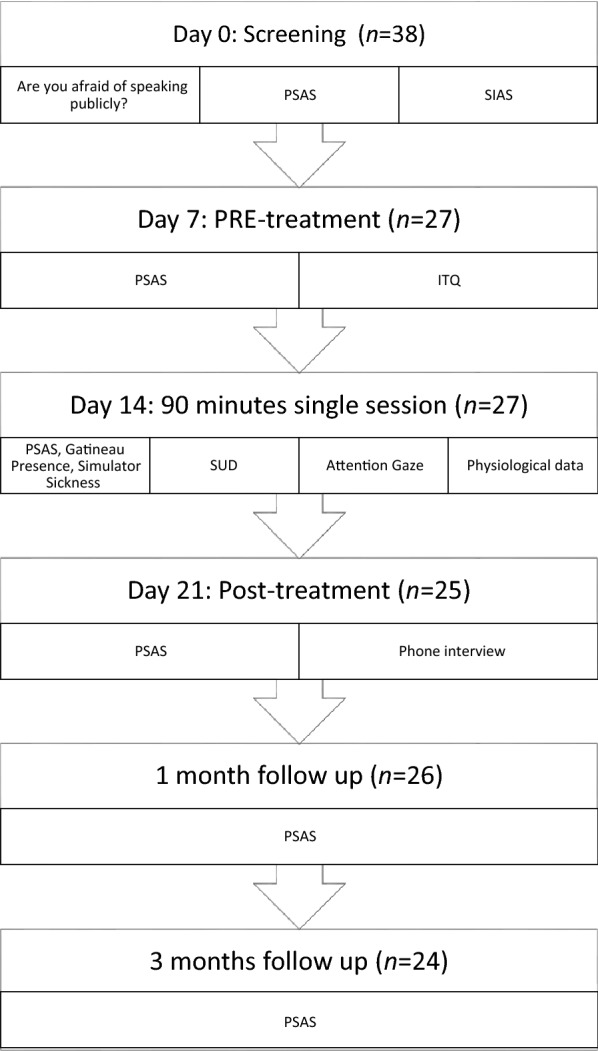
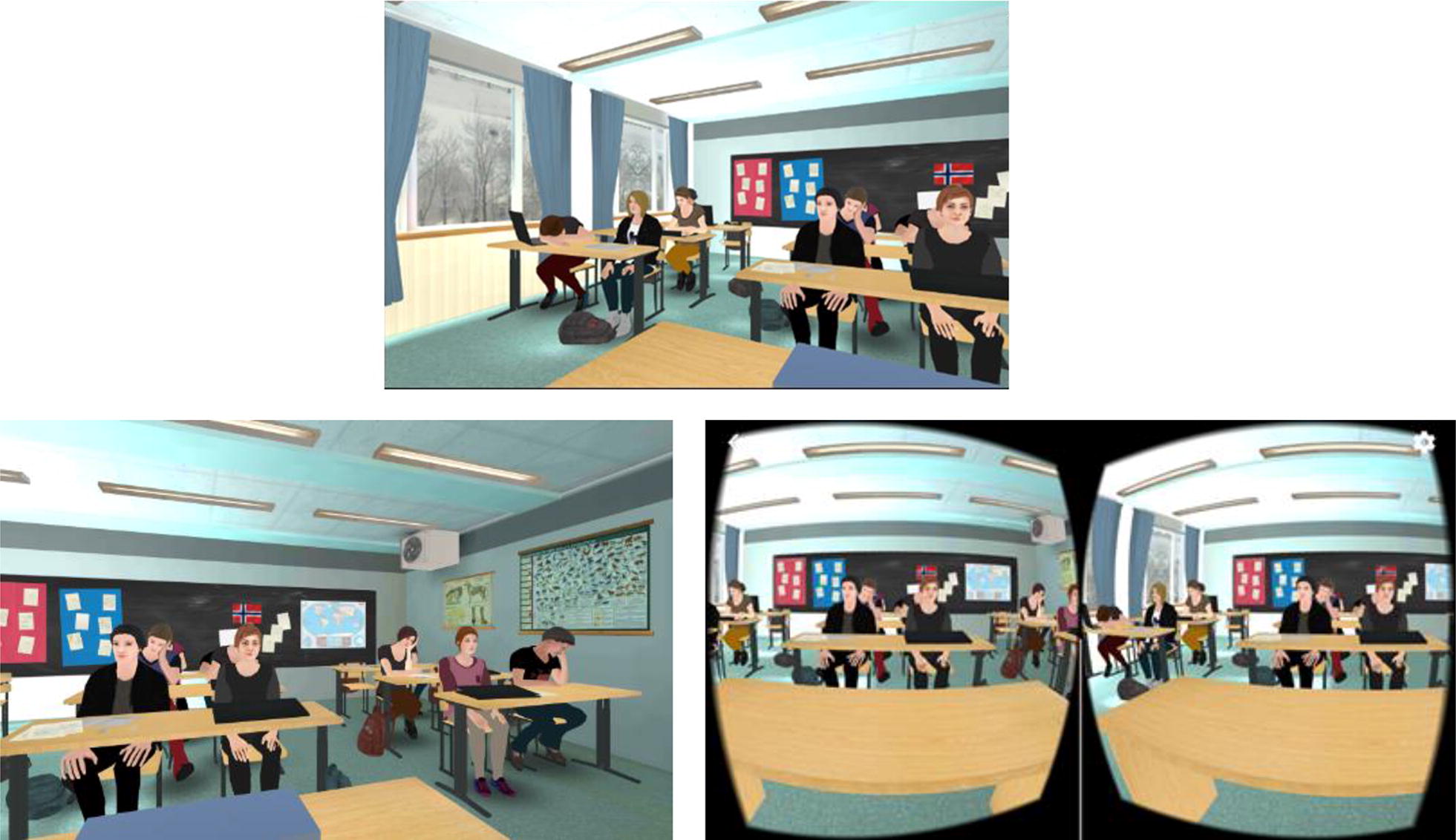
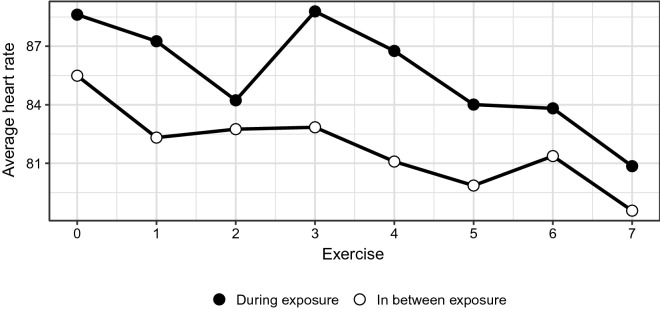
BACKGROUND: Public Speaking Anxiety (PSA) is a common anxiety with onset in adolescence and early adulthood. With the advent of consumer virtual reality (VR) technology, VR-delivered exposure therapy is now a scalable and practical treatment option and has previously been shown to be efficacious with adults. In this non-randomized feasibility and pilot trial, we explore the effect of one-session (90 min) VR-delivered exposure therapy for adolescents (aged 13-16) with PSA. METHODS: A total of 27 adolescents were recruited from Norwegian high schools and completed self-report measures of PSA twice prior to treatment, 1 week after treatment, and at 1 and 3 month follow-up. Heart rate was recorded during the treatment session. A low-cost head-mounted VR display with a custom-built VR stimuli material depicting a cultural and age appropriate classroom and audience were used when a series of speech (exposure exercises) were performed. RESULTS: = 1.53) pre-post treatment, and improvements were maintained at follow-ups. Physiological data revealed a small increase in heart rate during exposure tasks. Based on feedback from the adolescents, the feasibility of the intervention was increased during the trial. CONCLUSIONS: The results show that low-cost, consumer VR hardware can be used to deliver efficacious treatment for PSA in adolescents, in a feasible one-session format.
Overview
The claims and statistics of this paper haven’t been checked yet.
Run the check — free, no account needed. It reads the open-access text and checks the sources it cites.
Integrity signals
Registry
Cites
Statistics
Figures
Verification
Claims the paper makes
The claims and statistics of this paper haven’t been checked yet.
Run the check — free, no account needed. It reads the open-access text and checks the sources it cites.
Claims other papers make about this one
Each is checked against this paper’s own text: does it say what the citing paper says it does?
The cited source says what the claim attributes to it.
In the citing paper
“some studies have specifically adapted and successfully applied VRET for adolescents with anxiety (Kahlon et al., 2019; Sülter et al., 2022).”
From Virtual Reality exposure therapy in the treatment of public speaking anxiety and social anxiety disorder (2024) · cites this paper as Kahlon et al., 2019
In the citing paper
“this treatment works across age groups [8]”
From Experiences of gamified and automated virtual reality exposure therapy for spider phobia: qualitative study (2020) · cites this paper as [8]
Self-check
Percentages, sums and reported differences re-computed from the paper’s own numbers.
The self-check needs the paper’s full text.
Citations
Cites
Diagnostic and Statistical Manual of Mental Disorders
American Psychiatric Association (2013) · doi:10.1176/appi.books.9780890425596 · Cited by 116,369
Diagnostic and Statistical Manual of Mental Disorders
Williams, J. B. W., & First, M. B. (2013) · Oxford University Press eBooks · doi:10.1093/acrefore/9780199975839.013.104 · Cited by 109,845
Mattick, R. P., & Clarke, J. C. (1998) · Behaviour Research and Therapy · doi:10.1016/s0005-7967(97)10031-6 · Cited by 3,367
Lee, K. M. (2004) · Communication Theory · doi:10.1111/j.1468-2885.2004.tb00302.x · Cited by 1,631
Optimizing inhibitory learning during exposure therapy
Craske, M. G., Kircanski, K., Zelikowsky, M., Mystkowski, J., Chowdhury, N., & Baker, A. (2008) · Behaviour Research and Therapy · doi:10.1016/j.brat.2007.10.003 · Cited by 1,607
Grant, B. F., Hasin, D. S., Blanco, C., Stinson, F. S., Chou, S. P., Goldstein, R. B., Dawson, D. A., Smith, S., Saha, T. D., & Huang, B. (2005) · The Journal of Clinical Psychiatry · doi:10.4088/jcp.v66n1102 · Cited by 601
A Norwegian Psychiatric Epidemiological Study
Kringlen, E., Torgersen, S. O., & Cramer, V. (2001) · American Journal of Psychiatry · doi:10.1176/appi.ajp.158.7.1091 · Cited by 594
Collaborators, W. W. M. H. S., Stein, D. J., Lim, C. C. W., Roest, A. M., de Jonge, P., Aguilar-Gaxiola, S., Al-Hamzawi, A., Alonso, J., Benjet, C., Bromet, E. J., et al. (2017) · BMC Medicine · doi:10.1186/s12916-017-0889-2 · Cited by 520
One-session treatment for specific phobias
Öst, L.-G. (1989) · Behaviour Research and Therapy · doi:10.1016/0005-7967(89)90113-7 · Cited by 498
Epidemiology and natural course of social fears and social phobia
Wïttchen, H., & Fehm, L. (2003) · Acta Psychiatrica Scandinavica · doi:10.1034/j.1600-0447.108.s417.1.x · Cited by 394
Cited by
Sorted by citations
Halbig, A., & Latoschik, M. E. (2021) · Frontiers in Virtual Reality · doi:10.3389/frvir.2021.694567 · Cited by 166
Virtual reality therapy in social anxiety disorder
Emmelkamp, P. M. G., Meyerbröker, K., & Morina, N. (2020) · Current Psychiatry Reports · doi:10.1007/s11920-020-01156-1 · Cited by 150
Virtual Reality Aided Therapy towards Health 4.0: A Two-Decade Bibliometric Analysis
Liu, Z., Ren, L., Xiao, C., Zhang, K., & Demian, P. (2022) · International Journal of Environmental Research and Public Health · doi:10.3390/ijerph19031525 · Cited by 142
Better, Virtually: the Past, Present, and Future of Virtual Reality Cognitive Behavior Therapy
Lindner, P. (2021) · International Journal of Cognitive Therapy · doi:10.1007/s41811-020-00090-7 · Cited by 120
Reeves, R., Elliott, A., Curran, D., Dyer, K., & Hanna, D. (2021) · Journal of Anxiety Disorders · doi:10.1016/j.janxdis.2021.102451 · Cited by 82
Metadata
- Authors
- Kahlon, S., Lindner, P., & Nordgreen, T.
- Affiliations
- Haukeland University Hospital (NO)
- Stockholm University (SE)
- Corresponding author
- Kahlon, Smiti
- Venue
- Child and Adolescent Psychiatry and Mental Health
- Published
- 2019-12
- Volume
- 13
- Issue
- 1
- Pages
- 47-47
- ISSN
- 1753-2000 (ISSN-L)
- PMC
- PMC6933883
- OpenAlex
- W2997613705
- Cited by
- 130
- References
- 42
- Citations by year
- 2026: 10 · 2025: 25 · 2024: 19 · 2023: 25 · 2022: 18 · 2021: 23 · 2020: 9 · 2019: 1
- FWCI
- 12.06
- Type
- journal article
- Language
- en
- Open access
- gold
- doi.org
- Licence
- Locations
- Child and Adolescent Psychiatry and Mental Health (publishedVersion, cc-by)
- PubMed Central (publishedVersion, cc-by)
- PubMed (publishedVersion)
- DOAJ (DOAJ: Directory of Open Access Journals) (submittedVersion)
- Funders
- Norges Forskningsråd (259293)
- Topics
- Physical Sciences › Computer Science › Human-Computer Interaction › Virtual Reality Applications and Impacts
- Social Sciences › Psychology › Experimental and Cognitive Psychology › Anxiety, Depression, Psychometrics, Treatment, Cognitive Processes
- Social Sciences › Psychology › Applied Psychology › Digital Mental Health Interventions
- Keywords
- virtual reality exposure therapy, public speaking anxiety, social anxiety, adolescents, single-session intervention, heart rate, treatment feasibility
About these checks
Registry, retraction, Cites and statistics results are computed, not judged, with one exception: a printed reference that no index lists is read once by a model before it counts as a citation error. Claims are extracted by a model and kept only when their quote appears verbatim in the text; each cited source is then checked, with a model’s help, for whether it says what the claim relies on. Those verdicts can be wrong — read the claim’s quote and the cited source before relying on one.
Statistics and arithmetic are recomputed, not judged.
Confidence bands are shown only for fields calibrated on our annotated test set. None is calibrated yet, so no band is shown.
What counts as a claim ›How we measure confidence ›How we check this ›
Are you an author, or do you see a problem with this page? Request a review
