

rAAV-compatible MiniPromoters for restricted expression in the brain and eye
Open accessThe DOI matches its Crossref record; 71 of the 71 references it cites were found in a registry or an index.
Abstract
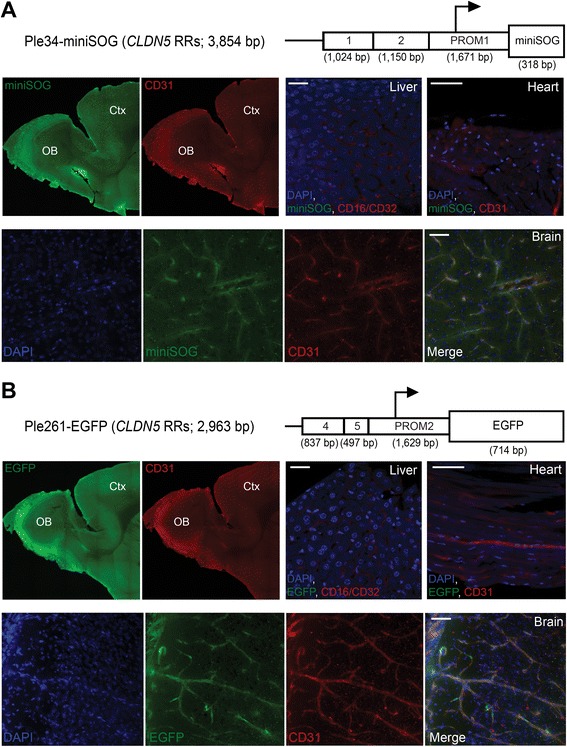
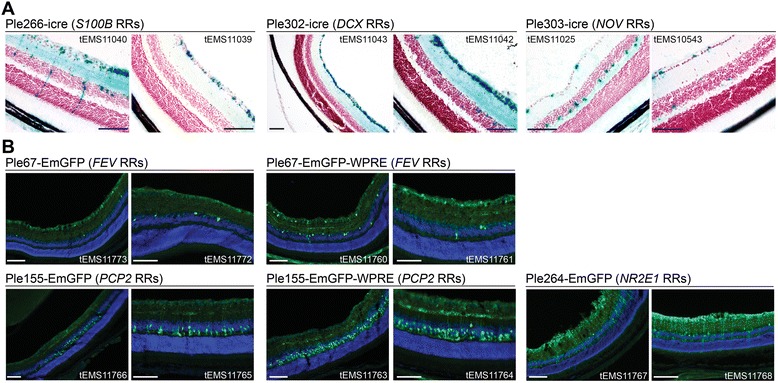
BACKGROUND: Small promoters that recapitulate endogenous gene expression patterns are important for basic, preclinical, and now clinical research. Recently, there has been a promising revival of gene therapy for diseases with unmet therapeutic needs. To date, most gene therapies have used viral-based ubiquitous promoters-however, promoters that restrict expression to target cells will minimize off-target side effects, broaden the palette of deliverable therapeutics, and thereby improve safety and efficacy. Here, we take steps towards filling the need for such promoters by developing a high-throughput pipeline that goes from genome-based bioinformatic design to rapid testing in vivo. METHODS: For much of this work, therapeutically interesting Pleiades MiniPromoters (MiniPs; ~4 kb human DNA regulatory elements), previously tested in knock-in mice, were "cut down" to ~2.5 kb and tested in recombinant adeno-associated virus (rAAV), the virus of choice for gene therapy of the central nervous system. To evaluate our methods, we generated 29 experimental rAAV2/9 viruses carrying 19 different MiniPs, which were injected intravenously into neonatal mice to allow broad unbiased distribution, and characterized in neural tissues by X-gal immunohistochemistry for icre, or immunofluorescent detection of GFP. RESULTS: The data showed that 16 of the 19 (84 %) MiniPs recapitulated the expression pattern of their design source. This included expression of: Ple67 in brain raphe nuclei; Ple155 in Purkinje cells of the cerebellum, and retinal bipolar ON cells; Ple261 in endothelial cells of brain blood vessels; and Ple264 in retinal Müller glia. CONCLUSIONS: Overall, the methodology and MiniPs presented here represent important advances for basic and preclinical research, and may enable a paradigm shift in gene therapy.
Overview
The claims and statistics of this paper haven’t been checked yet.
Free: it reads the open-access text and checks the first 5 claims that cite a source we can check. Create a free account to check every claim.
Integrity signals
Registry
Cites
Statistics
Figures
Verification
Claims the paper makes
The claims and statistics of this paper haven’t been checked yet.
Free: it reads the open-access text and checks the first 5 claims that cite a source we can check. Create a free account to check every claim.
Claims other papers make about this one
Each is checked against this paper’s own text: does it say what the citing paper says it does?
The source backs part of the claim, not all of it — or backs it for a different population, condition or comparison.
In the citing paper
“systematic enhancer discovery has been accelerated by the recent development of technologies allowing for transcriptomic and epigenetic studies at single-cell resolution6–12.”
From Viral manipulation of functionally distinct interneurons in mice, non-human primates and humans (2020) · cites this paper as [9]
Experimental — accuracy not yet measured
Self-check
Percentages, sums and reported differences re-computed from the paper’s own numbers.
The self-check needs the paper’s full text.
Citations
Cites
An integrated encyclopedia of DNA elements in the human genome
The ENCODE Project Consortium (2012) · Nature · doi:10.1038/nature11247 · Cited by 18,072
Genome-wide atlas of gene expression in the adult mouse brain
Lein, E. S., Hawrylycz, M. J., Ao, N., Ayres, M., Bensinger, A., Bernard, A., Boe, A. F., Boguski, M. S., Brockway, K. S., Byrnes, E. J., et al. (2007) · Nature · doi:10.1038/nature05453 · Cited by 5,572 · cited 1×
“expected by the endogenous gene expression in development and/or the adult mouse [45–49].”
BackgroundThe ENCODE (ENCyclopedia Of DNA Elements) Project
(2004) · Science · doi:10.1126/science.1105136 · Cited by 2,390
A User's Guide to the Encyclopedia of DNA Elements (ENCODE)
The ENCODE Project Consortium (2011) · PLoS Biology · doi:10.1371/journal.pbio.1001046 · Cited by 1,506
Intravascular AAV9 preferentially targets neonatal neurons and adult astrocytes
Foust, K. D., Nurre, E., Montgomery, C. L., Hernandez, A., Chan, C. M., & Kaspar, B. K. (2009) · Nature Biotechnology · doi:10.1038/nbt.1515 · Cited by 1,456 · cited 2×
“After an initial wide survey of methodologies, we focused on neo-natal intravenous delivery of singlestranded rAAV in AAV9, due to its excellent capability to transduce a variety of CNS cell types in our hands and as described in the literature [27, 40, 41].”
BackgroundMethodGene therapy returns to centre stage
Naldini, L. (2015) · Nature · doi:10.1038/nature15818 · Cited by 1,184
VISTA Enhancer Browser—a database of tissue-specific human enhancers
Visel, A., Minovitsky, S., Dubchak, I., & Pennacchio, L. A. (2007) · Nucleic Acids Research · doi:10.1093/nar/gkl822 · Cited by 1,080 · cited 3×
“Two were representative of the extensive community resource developed by the VISTA enhancer project, the main goal of which is to identify distant-acting noncoding regulatory elements that drive developmental gene expression in a region-specific manner [38].”
BackgroundMethodZufferey, R., Donello, J. E., Trono, D., & Hope, T. J. (1999) · Journal of Virology · doi:10.1128/jvi.73.4.2886-2892.1999 · Cited by 1,014 · cited 1×
“In this study we tested the 3’ UTR element WPRE (woodchuck hepatitis virus post-transcriptional regulatory element) mut6 [32, 33].”
MethodMathelier, A., Zhao, X., Zhang, A. W., Parcy, F., Worsley-Hunt, R., Arenillas, D. J., Buchman, S., Chen, C.-Y., Chou, A., Ienasescu, H., et al. (2014) · Nucleic Acids Research · doi:10.1093/nar/gkt997 · Cited by 983 · cited 1×
“Now, as additional genome-wide datasets such as RNAseq, and new data and tools within projects such as FANTOM [30] and JASPAR [31] become publically available, they were exploited for bioinformatically-driven MiniP design and redesign.”
MethodSelf-citationCharting a course for genomic medicine from base pairs to bedside
National Human Genome Research Institute, Green, E. D., & Guyer, M. S. (2011) · Nature · doi:10.1038/nature09764 · Cited by 902 · cited 1×
“challenge [2, 19–21].”
Cited by
Chan, K. Y., Jang, M. J., Yoo, B. B., Greenbaum, A., Ravi, N., Wu, W.-L., Sánchez-Guardado, L., Lois, C., Mazmanian, S. K., Deverman, B. E., et al. (2017) · Nature Neuroscience · doi:10.1038/nn.4593 · Cited by 1,578
Miura, Y., Li, M.-Y., Birey, F., Ikeda, K., Revah, O., Thete, M. V., Park, J.-Y., Puno, A., Lee, S. H., Porteus, M. H., et al. (2020) · Nature Biotechnology · doi:10.1038/s41587-020-00763-w · Cited by 415
Systemic AAV vectors for widespread and targeted gene delivery in rodents
Challis, R. C., Ravindra Kumar, S., Chan, K. Y., Challis, C., Beadle, K., Jang, M. J., Kim, H. M., Rajendran, P. S., Tompkins, J. D., Shivkumar, K., et al. (2019) · Nature Protocols · doi:10.1038/s41596-018-0097-3 · Cited by 409
Gene therapy for neurological disorders: progress and prospects
Deverman, B. E., Ravina, B. M., Bankiewicz, K. S., Paul, S. M., & Sah, D. W. Y. (2018) · Nature Reviews Drug Discovery · doi:10.1038/nrd.2018.110 · Cited by 306
Erratum: Gene therapy for neurological disorders: progress and prospects
Deverman, B. E., Ravina, B. M., Bankiewicz, K. S., Paul, S. M., & Sah, D. W. Y. (2018) · Nature Reviews Drug Discovery · doi:10.1038/nrd.2018.158 · Cited by 248
Viral manipulation of functionally distinct interneurons in mice, non-human primates and humans
Vormstein-Schneider, D., Lin, J. D., Pelkey, K. A., Chittajallu, R., Guo, B., Arias-Garcia, M. A., Allaway, K., Sakopoulos, S., Schneider, G., Stevenson, O., et al. (2020) · Nature Neuroscience · doi:10.1038/s41593-020-0692-9 · Cited by 235
Adeno-Associated Virus Technologies and Methods for Targeted Neuronal Manipulation
Haery, L., Deverman, B. E., Matho, K. S., Cetin, A., Woodard, K., Cepko, C., Guerin, K. I., Rego, M. A., Ersing, I., Bachle, S. M., et al. (2019) · Frontiers in Neuroanatomy · doi:10.3389/fnana.2019.00093 · Cited by 211
Multiplexed Cre-dependent selection yields systemic AAVs for targeting distinct brain cell types
Ravindra Kumar, S., Miles, T. F., Chen, X., Brown, D., Dobreva, T., Huang, Q., Ding, X., Luo, Y., Einarsson, P. H., Greenbaum, A., et al. (2020) · Nature Methods · doi:10.1038/s41592-020-0799-7 · Cited by 192
Engineering brain assembloids to interrogate human neural circuits
Miura, Y., Li, M.-Y., Revah, O., Yoon, S.-J., Narazaki, G., & Pașca, S. P. (2022) · Nature Protocols · doi:10.1038/s41596-021-00632-z · Cited by 187
Viral Strategies for Targeting the Central and Peripheral Nervous Systems
Bedbrook, C. N., Deverman, B. E., & Gradinaru, V. (2018) · Annual Review of Neuroscience · doi:10.1146/annurev-neuro-080317-062048 · Cited by 168
Adeno-Associated Virus Toolkit to Target Diverse Brain Cells
Challis, R. C., Ravindra Kumar, S., Chen, X., Goertsen, D., Coughlin, G. M., Hori, A. M., Chuapoco, M. R., Otis, T. S., Miles, T. F., & Gradinaru, V. (2022) · Annual Review of Neuroscience · doi:10.1146/annurev-neuro-111020-100834 · Cited by 148
Durability of transgene expression after rAAV gene therapy
Muhuri, M., Lévy, D., Schulz, M., McCarty, D. M., & Gao, G. (2022) · Molecular Therapy · doi:10.1016/j.ymthe.2022.03.004 · Cited by 173
“Shortened promoter sequences have also been used successfully to restrict expression to target cells within the mammalian CNS.(66,67)”
BackgroundCerebellar dopamine D2 receptors regulate social behaviors
Cutando, L., Puighermanal, E., Castell, L., Tarot, P., Belle, M., Bertaso, F., Arango-Lievano, M., Ango, F., Rubinstein, M., Quintana, A., et al. (2022) · Nature Neuroscience · doi:10.1038/s41593-022-01092-8 · Cited by 105
A suite of enhancer AAVs and transgenic mouse lines for genetic access to cortical cell types
Ben‐Simon, Y., Hooper, M. J., Narayan, S., Daigle, T. L., Dwivedi, D., Way, S. W., Oster, A., Stafford, D. A., Mich, J. K., Taormina, M. J., et al. (2025) · Cell · doi:10.1016/j.cell.2025.05.002 · Cited by 98
“21,34,65 It has also been reported that certain cell subclasses such as (legend continued on next page) VLMCs, OPCs, and microglia have virtually absent transduction with PhP.eB-pseudotyped AAVs and hence are difficult to target via our current screening strategy, which exclusively used the PhP.eB…”
Nieuwenhuis, B., Laperrousaz, E., Tribble, J. R., Verhaagen, J., Fawcett, J. W., Martin, K. R. G., Williams, P. A., & Osborne, A. (2023) · Gene Therapy · doi:10.1038/s41434-022-00380-z · Cited by 90
Circuit-specific gene therapy reverses core symptoms in a primate Parkinson’s disease model
Chen, Y., Hong, Z., Wang, J., Liu, K., Liu, J., Lin, J., Feng, S., Zhang, T., Shan, L., Liu, T., et al. (2023) · Cell · doi:10.1016/j.cell.2023.10.004 · Cited by 81
Getz, A. M., Ducros, M., Breillat, C., Lampin-Saint-Amaux, A., Daburon, S., François, U., Nowacka, A., Fernández-Monreal, M., Hosy, E., Lanore, F., et al. (2022) · Science Advances · doi:10.1126/sciadv.abm5298 · Cited by 55
Campos, L., Arokiaraj, C. M., Chuapoco, M. R., Chen, X., Goeden, N., Gradinaru, V., & Fox, A. S. (2023) · Current Research in Neurobiology · doi:10.1016/j.crneur.2023.100086 · Cited by 44
Simpson, E. M., Korecki, A. J., Fornés, O., McGill, T. J., Vargas, J. L. C., Agostinone, J., Farkas, R. A., Hickmott, J. W., Lam, S. L., Mathelier, A., et al. (2019) · Human Gene Therapy · doi:10.1089/hum.2018.118 · Cited by 43
Self-citationMultiplex Neural Circuit Tracing With G-Deleted Rabies Viral Vectors
Suzuki, T., Morimoto, N., Akaike, A., & Osakada, F. (2020) · Frontiers in Neural Circuits · doi:10.3389/fncir.2019.00077 · Cited by 41
Galván, A., Petkau, T. L., Hill, A. M., Korecki, A. J., Lu, G., Choi, D., Rahman, K. A., Simpson, E. M., Leavitt, B. R., & Smith, Y. (2021) · Human Gene Therapy · doi:10.1089/hum.2020.301 · Cited by 40
“22,24,25 The 469 bp continuous human sequence, plus 8 bp restriction enzyme sites on each end was DNA synthesized (GenScript, Inc., Piscataway, NJ) and cloned by exchanging the promoter from pEMS2113 (version 1) 26 with Asc I and Fse I, to produce plasmid pEMS2155.”
Self-citationKorecki, A. J., Vargas, J. L. C., Fornés, O., Agostinone, J., Farkas, R. A., Hickmott, J. W., Lam, S. L., Mathelier, A., Zhou, M., Wasserman, W. W., et al. (2021) · Gene Therapy · doi:10.1038/s41434-021-00227-z · Cited by 36
“For the BRB and BBB, we are the primary contributor to the resource of promoters tested in rAAV [54, 55], and now recommend Ple32 (CLDN5).”
BackgroundInfluentialSelf-citationGermline CRISPR/Cas9-Mediated Gene Editing Prevents Vision Loss in a Novel Mouse Model of Aniridia
Mohanna, S. Z. M., Hickmott, J. W., Lam, S. L., Chiu, N. Y., Lengyell, T. C., Tam, B. M., Moritz, O. L., & Simpson, E. M. (2020) · Molecular Therapy — Methods & Clinical Development · doi:10.1016/j.omtm.2020.03.002 · Cited by 36
“Cloning To generate plasmids for in vitro transcription, EmGFP, PAX6, 3xFLAG/PAX6, and PAX6/3xFLAG open reading frames (ORFs) were cloned into pBluescript as previously described.(12,61) Briefly, EmGFP, PAX6, 3xFLAG/PAX6, and PAX6/3xFLAG ORFs, flanked by NotI restriction sites, were commercially synthesized (DNA2.”
MethodSelf-citationRobinson, J. E., & Gradinaru, V. (2017) · Current Opinion in Neurobiology · doi:10.1016/j.conb.2017.08.003 · Cited by 42
Miyadera, K., Santana, E., Roszak, K. P., Iffrig, S., Visel, M., Iwabe, S., Boyd, R. F., Bartoe, J. T., Sato, Y., Gray, A. P., et al. (2022) · Proceedings of the National Academy of Sciences · doi:10.1073/pnas.2117038119 · Cited by 32
Ferroportin-mediated iron export from vascular endothelial cells in retina and brain
Baumann, B. H., Shu, W., Song, Y., Simpson, E. M., Lakhal‐Littleton, S., & Dunaief, J. L. (2019) · Experimental Eye Research · doi:10.1016/j.exer.2019.107728 · Cited by 34
Self-citationCell-specific regulation of gene expression using splicing-dependent frameshifting
Ling, J. P., Bygrave, A. M., Santiago, C. P., Carmen‐Orozco, R. P., Trinh, V., Yu, M., Li, Y., Liu, Y., Bowden, K. D., Duncan, L. H., et al. (2022) · Nature Communications · doi:10.1038/s41467-022-33523-2 · Cited by 33
Coughlin, G. M., Borsos, M., Barcelona, B. H., Appling, N., Mayfield, A. M. H., Mackey, E. D. W., Eser, R. A., Jackson, C. R., Chen, X., Kumar, S. R., et al. (2025) · Nature Biotechnology · doi:10.1038/s41587-025-02565-4 · Cited by 31
Genetic targeting of astrocytes to combat neurodegenerative disease
Kirschen, G., Kéry, R., & Chen, A. F. (2019) · Neural Regeneration Research · doi:10.4103/1673-5374.265541 · Cited by 30
“To circumvent this issue, the Simpson group has worked on creating a variety of shortened promoters, termed “MiniPromoters” in order to target specific cell populations of the brain (de Leeuw et al., 2016).”
BackgroundMethodKofoed, R. H., Heinen, S., Silburt, J., Dubey, S., Dibia, C. L., Maes, M. S., Simpson, E. M., Hynynen, K., & Aubert, I. (2021) · Molecular Therapy — Methods & Clinical Development · doi:10.1016/j.omtm.2021.10.001 · Cited by 31
“All vectors contained the emerald green fluorescent protein (EmGFP) transgene under the control of the ubiquitous small chicken beta-actin promoter/ cytomegalovirus enhancer (smCBA).(25) Relative to the contralateral side, increased BBB permeability in MRIgFUS-targeted spots was confirmed using gadodiamide (Gad) contr…”
BackgroundSelf-citationHickmott, J. W., Gunawardane, U., Jensen, K., Korecki, A. J., & Simpson, E. M. (2018) · Gene Therapy · doi:10.1038/s41434-018-0043-6 · Cited by 30
Self-citationA systematic comparison of optogenetic approaches to visual restoration
Gilhooley, M. J., Lindner, M., Palumaa, T., Hughes, S., Peirson, S. N., & Hankins, M. W. (2022) · Molecular Therapy — Methods & Clinical Development · doi:10.1016/j.omtm.2022.03.003 · Cited by 28
Korecki, A. J., Hickmott, J. W., Lam, S. L., Dreolini, L., Mathelier, A., Baker, O. K., Kühne, C., Bonaguro, R. J., Smith, J., Tan, C.-V., et al. (2019) · Genetics · doi:10.1534/genetics.119.301984 · Cited by 28
Self-citationPAX6 MiniPromoters drive restricted expression from rAAV in the adult mouse retina
Hickmott, J. W., Chen, C., Arenillas, D. J., Korecki, A. J., Lam, S. L., Molday, L. L., Bonaguro, R. J., Zhou, M., Chou, A., Mathelier, A., et al. (2016) · Molecular Therapy — Methods & Clinical Development · doi:10.1038/mtm.2016.51 · Cited by 29
Self-citationMayer, P., Sivakumar, N., Pritz, M., Varga, M., Mehmann, A., Lee, S., Salvatore, A., Magno, M., Pharr, M., Johannssen, H. C., et al. (2019) · Frontiers in Neuroscience · doi:10.3389/fnins.2019.00819 · Cited by 24
Sun, S., & Schaffer, D. V. (2018) · Current Opinion in Neurobiology · doi:10.1016/j.conb.2017.12.011 · Cited by 24
Viral vectors for neuronal cell type-specific visualization and manipulations
Liu, Y., Hegarty, S. V., Winter, C. C., Wang, F., & He, Z. (2020) · Current Opinion in Neurobiology · doi:10.1016/j.conb.2020.03.011 · Cited by 24
Strategies for Targeting Neural Circuits: How to Manipulate Neurons Using Virus Vehicles
Hui, Y., Zheng, X., Zhang, H., Li, F., Yu, G., Li, J., Zhang, J., Gong, X., & Guo, G. (2022) · Frontiers in Neural Circuits · doi:10.3389/fncir.2022.882366 · Cited by 27
Vijayasarathy, C., Zeng, Y., Marangoni, D., Dong, L., Pan, Z., Simpson, E. M., Fariss, R. N., & Sieving, P. A. (2022) · Investigative Ophthalmology & Visual Science · doi:10.1167/iovs.63.11.8 · Cited by 24
Self-citationSystemic gene delivery transduces the enteric nervous system of guinea pigs and cynomolgus macaques
Gombash, S. E., Cowley, C. J., Fitzgerald, J. A., Lepak, C. A., Neides, M. G., Hook, K., Todd, L. J., Wang, G., Mueller, C., Kaspar, B. K., et al. (2017) · Gene Therapy · doi:10.1038/gt.2017.72 · Cited by 20
“As mentioned above, the expression cassette encoded by the recombinant AAV genome can include cell type specific promoters and/or miRNA binding sites to further specify transgene expression once inside a target cell(38).”
Short regulatory DNA sequences to target brain endothelial cells for gene therapy
Graßhoff, H., Müller‐Fielitz, H., Dogbevia, G. K., Körbelin, J., Bannach, J., Vahldieck, C., Kusche-Vihrog, K., Jöhren, O., Müller, O. J., Nogueiras, R., et al. (2021) · Journal of Cerebral Blood Flow & Metabolism · doi:10.1177/0271678x211039617 · Cited by 18
“The latter seems to apply to the Tie2 intron that contains binding sites for members of the ETS family and other transcription factors and enhances gene expression when positioned upstream of the core Cdh5 promoter (Supplementary Figure 3).44,48 To enhance expression further, we tested the WPRE.”
BackgroundInfluentialSomatic Genetics Analysis of Sleep in Adult Mice
Wang, G., Li, Q., Xu, J., Zhao, S., Zhou, R., Chen, Z., Jiang, W., Gao, X., Zhou, S., Chen, Z., et al. (2022) · Journal of Neuroscience · doi:10.1523/jneurosci.0089-22.2022 · Cited by 20
Hu, S. W., Lv, J., Wang, Z., Tang, H., Wang, H., Wang, F., Wang, D., Zhang, J., Zhang, L., Cao, Q., et al. (2024) · Research · doi:10.34133/research.0341 · Cited by 25
“However, the majority of mammalian promoters are larger than 2 kb [19,63,64].”
BackgroundChallis, R. C., Kumar, S. R., Chan, K. Y., Challis, C., Jang, M. J., Rajendran, P. S., Tompkins, J. D., Shivkumar, K., Deverman, B. E., & Gradinaru, V. (2018) · bioRxiv (Cold Spring Harbor Laboratory) · doi:10.1101/246405 · Cited by 17
Calcineurin governs baseline and homeostatic regulations of non–rapid eye movement sleep in mice
Yin, X., Zhang, Z., Zhou, R., Zuo, P., Sang, D., Zhou, S., Shi, B., Chen, L., Wu, C., Guo, Y., et al. (2025) · Proceedings of the National Academy of Sciences · doi:10.1073/pnas.2418317122 · Cited by 17
“Retro - orbital injection of AAV - Ple94 - Cre in the Ai14 mice resulted in Cre - dependent mCherry expression in the cortex, hypothalamus, striatum, and part of brainstem ( 43 ) ( SI Appendix , Fig.”
García, F., & Heiman, M. (2025) · Molecular Neurodegeneration · doi:10.1186/s13024-025-00799-z · Cited by 14
Lin, C., Sun, Y., Chan, C. S. Y., Wu, M.-R., Gu, L., Davis, A. E., Gu, B., Zhang, W., Tanasă, B., Zhong, L. R., et al. (2021) · Journal of Biological Chemistry · doi:10.1016/j.jbc.2022.101674 · Cited by 14
“A fewminipromoters that can driveMG-specific expression in AAVs in the retina have been reported previously (8, 21, 27, 28).”
MethodOnTarget: in silico design of MiniPromoters for targeted delivery of expression
Fornés, O., Av‐Shalom, T. V., Korecki, A. J., Farkas, R. A., Arenillas, D. J., Mathelier, A., Simpson, E. M., & Wasserman, W. W. (2023) · Nucleic Acids Research · doi:10.1093/nar/gkad375 · Cited by 12
Self-citationEmerging Concepts in Vector Development for Glial Gene Therapy: Implications for Leukodystrophies
von Jonquières, G., Rae, C. D., & Housley, G. D. (2021) · Frontiers in Cellular Neuroscience · doi:10.3389/fncel.2021.661857 · Cited by 12
Kojima, L., Seiriki, K., Rokujo, H., Nakazawa, T., Kasai, A., & Hashimoto, H. (2024) · iScience · doi:10.1016/j.isci.2024.109878 · Cited by 14
Matsumata, M., Hirao, K., Kobayashi, T., Handa, T., Zhou, Y., Sugiyama, T., Kakinuma, H., Islam, T., Kobayashi, Y., Huang, A. J. Y., et al. (2025) · Current Biology · doi:10.1016/j.cub.2025.03.036 · Cited by 12
“To induce GCaMP6f expression in the MnR, we injected AAV-expressing GCaMP6f under the Ple-67 minimal promoter and implanted an optic cannula for imaging (Figures 6A and 6B).”
InfluentialEnbar, T., Hickmott, J. W., Siu, R., Gao, D., Flores, E. G., Smart, J., Casabuenas, D. L., Faiz, M., & Morshead, C. M. (2024) · Scientific Reports · doi:10.1038/s41598-024-79124-5 · Cited by 10
“However, advances in genomics have driven the development of new astrocyte specific promoters, such as a promoter built from the human S100B gene 55,56 .”
Self-citationLipinski, D. M. (2019) · Advances in Experimental Medicine and Biology · doi:10.1007/978-3-030-27378-1_13 · Cited by 8
Saito, S., Nakamura, Y., Miyashita, S., Sato, T., Hoshina, K., Okada, M., Hasegawa, H., Oishi, M., Fujii, Y., Körbelin, J., et al. (2024) · JCI Insight · doi:10.1172/jci.insight.179729 · Cited by 13
Crombie, E. M., Korecki, A. J., Cleverley, K., Adair, B. A., Cunningham, T. J., Lee, W. C., Lengyell, T. C., Maduro, C., Mo, V., Slade, L. M., et al. (2024) · Disease Models & Mechanisms · doi:10.1242/dmm.050741 · Cited by 8
“Timed pregnancies were achieved as previously described (de Leeuw et al., 2016), using crowded females, experienced studs and plug checking of femalestodeterminethedate ofcopulation.”
Self-citationLuchicchi, A., Pattij, T., Viaña, J. N. M., de Kloet, S. F., & Marchant, N. J. (2020) · Journal of Neuroscience Methods · doi:10.1016/j.jneumeth.2020.109004 · Cited by 9
VWA3A-derived ependyma promoter drives increased therapeutic protein secretion into the CSF
Carrell, E. M., Chen, Y. H., Ranum, P. T., Coffin, S. L., Singh, L. N., Tecedor, L., Keiser, M. S., Hudry, E., Hyman, B. T., & Davidson, B. L. (2023) · Molecular Therapy — Nucleic Acids · doi:10.1016/j.omtn.2023.07.016 · Cited by 10
Will Optogenetics Be Used To Treat Chronic Pain Patients?
Beaudry, H., Daou, I., Ribeiro‐da‐Silva, A., & Séguéla, P. (2017) · Pain Management · doi:10.2217/pmt-2016-0055 · Cited by 7
Li, J.-L., Bi, Z., Chen, X.-J., Ming, T., Qiu, B., Li, F., Feng, Z., Ai, D., Zhang, T., Wang, J., et al. (2025) · Nature Biomedical Engineering · doi:10.1038/s41551-025-01538-x · Cited by 9
Mohanna, S. Z. M., Korecki, A. J., & Simpson, E. M. (2023) · Gene Therapy · doi:10.1038/s41434-023-00400-6 · Cited by 4
Self-citationDjaksigulova, D., Kaad, S. G., Korecki, A. J., Lam, S. L., Lengyell, T. C., & Simpson, E. M. (2026) · Gene Therapy · doi:10.1038/s41434-026-00605-5 · Cited by 5
Self-citationLinville, R. M., James, B. T., Galani, K., Ho, L., Shin, J. H., Oliver, E., Fass, S. B., Cameron, J. C., Fitzwalter, B. E., Bock, R., et al. (2026) · Cell · doi:10.1016/j.cell.2026.08.006 · Cited by 5
Gomes, A. D. M., Petkau, T. L., Korecki, A. J., Fornés, O., Galván, A., Lu, G., Hill, A. M., Lam, S. L., Yao, A., Farkas, R. A., et al. (2024) · Scientific Reports · doi:10.1038/s41598-024-79004-y · Cited by 5
Self-citationChemo- and Optogenetic Strategies for the Elucidation of Pain Pathways
Alles, S. R. A., Malfait, A., & Miller, R. J. (2019) · Oxford University Press eBooks · doi:10.1093/oxfordhb/9780190860509.013.33 · Cited by 4
Optogénétique et douleur chronique : une stratégie applicable chez l’humain ?
Beaudry, H., Daou, I., Ribeiro‐da‐Silva, A., & Séguéla, P. (2016) · Douleur et Analgésie · doi:10.1007/s11724-016-0477-9 · Cited by 3
Jackson, K. L., Dayton, R. D., & Klein, R. L. (2016) · Expert Opinion on Therapeutic Targets · doi:10.1080/14728222.2016.1212016 · Cited by 3
Regulatory Elements for Gene Therapy of Epilepsy
Chesnokova, E., Bal, N. V., Alhalabi, G., & Balaban, P. M. (2025) · Cells · doi:10.3390/cells14030236 · Cited by 2
Cerebellar dopamine D2 receptors regulate preference for social noveltyPreprint
Cutando, L., Puighermanal, E., Castell, L., Tarot, P., Belle, M., Bertaso, F., Arango-Lievano, M., Ango, F., Rubinstein, M., Chédotal, A., et al. (2019) · bioRxiv · doi:10.1101/2019.12.20.884288 · Cited by 2
rAAV-compatible human mini promoters enhance transgene expression in rat retinal ganglion cells
Araújo, V. G., Dias, M. S., Hauswirth, W. W., Linden, R., & Petrs‐Silva, H. (2023) · Experimental Eye Research · doi:10.1016/j.exer.2023.109758 · Cited by 1
Kaad, S. G., Lengyell, T. C., Mohanna, S. Z. M., Djaksigulova, D., Korecki, A. J., & Simpson, E. M. (2026) · Molecular Therapy Advances · doi:10.1016/j.omta.2026.201786 · Cited by 1
“67,68 The rAAV genome plasmid was propagated in E . coli SURE cells (Agilent Technologies, Santa Clara, CA, USA).”
Self-citationThe End of the Beginning: The Journey to Molecular Therapies for Spinal Muscular Atrophy
Pacak, C. A., & Kang, P. B. (2019) · Pediatric Neurology · doi:10.1016/j.pediatrneurol.2019.07.018 · Cited by 1
Chemical Modulation of AAV Trafficking
Berry, G. E. (2016) · Carolina Digital Repository (University of North Carolina at Chapel Hill) · doi:10.17615/dpe3-gy73
Self-citationThe utility of peer group supervision for psychologists in practice.
Evans, D. J. (2003) · ResearchSpace (University of KwaZulu-Natal)
Calcineurin is a central regulator of Process S (sleep homeostasis) in micePreprint
Liu, Q., Yin, X., Zhang, Z., Zhou, R., & Zuo, P. (2023) · Research Square · doi:10.21203/rs.3.rs-2598271/v1
An AAV-Based Therapy Approach for Neurological Phenotypes of X-Linked Adrenoleukodystrophy
Gornostal, E. A., Alsalloum, A., Degtyarev, E., Kuznetsova, E., Levashova, A., Mishina, D., Mingaleva, N., Mazloum, A., Bogdanov, V. P., Krupinova, J. A., et al. (2025) · International Journal of Molecular Sciences · doi:10.3390/ijms262311645
“When packaged in AAV2/9 or AAV-Int PHP.eB capsids, the S100 beta promoter drives robust, astrocyte-and glial-specific reporter expression with minimal off-target effects [108].”
Metadata
- Authors
- de Leeuw, C. N., Korecki, A. J., Berry, G. E., Hickmott, J. W., Lam, S. L., Lengyell, T. C., Bonaguro, R. J., Borretta, L. J., Chopra, V., Chou, A. Y., D’Souza, C. A., Kaspieva, O., Laprise, S., McInerny, S. C., Portales-Casamar, E., Swanson-Newman, M. I., Wong, K., Yang, G. S., Zhou, M., Jones, S. J. M., Holt, R. A., Asokan, A., Goldowitz, D., Wasserman, W. W., & Simpson, E. M.
- Affiliations
- University of British Columbia (CA)
- University of North Carolina at Chapel Hill (US)
- BC Cancer Agency (CA)
- Corresponding author
- Simpson, Elizabeth M.
- ORCID
- Venue
- Molecular Brain
- Published
- 2016-05-10
- Volume
- 9
- Issue
- 1
- Pages
- 52-52
- ISSN
- 1756-6606 (ISSN-L)
- PMC
- PMC4862195
- OpenAlex
- W2365630593
- Cited by
- 76
- References
- 71
- Citations by year
- 2026: 3 · 2025: 8 · 2024: 6 · 2023: 9 · 2022: 12 · 2021: 5 · 2020: 7 · 2019: 11 · 2018: 7 · 2017: 4 · 2016: 3
- FWCI
- 6.72
- Type
- journal article
- Language
- en
- Open access
- gold
- doi.org
- Licence
- cc-by
- creativecommons.org/licenses/by/4.0/ (tdm)
- creativecommons.org/licenses/by/4.0/ (vor)
- Locations
- Molecular Brain (publishedVersion, cc-by)
- PubMed Central (publishedVersion, cc-by)
- PubMed (publishedVersion)
- cIRcle (University of British Columbia) (submittedVersion, cc-by)
- Spiral (Imperial College London) (submittedVersion, other-oa)
- Funders
- Genome British Columbia (AGCP-CanEuCre-01)
- Genome Canada
- GlaxoSmithKline
- BC Mental Health and Addiction Services
- Child and Family Research Institute
- University of British Columbia (UBC) Institute of Mental Health
- UBC Office of the Vice President Research
- NIH National Heart, Lung, and Blood Institute
- Brain Canada
- Quebec Consortium for Drug Discovery
- Topics
- Life Sciences › Biochemistry, Genetics and Molecular Biology › Genetics › Virus-based gene therapy research
- Life Sciences › Biochemistry, Genetics and Molecular Biology › Molecular Biology › RNA Interference and Gene Delivery
- Health Sciences › Medicine › Ophthalmology › Retinal Development and Disorders
- Keywords
- recombinant adeno-associated virus, AAV2/9, tissue-specific gene expression, central nervous system gene therapy, promoter design, raphe nuclei, Purkinje cells, retinal bipolar cells, Müller cells, brain endothelial cells, knock-in mice
- MeSH terms
- Dependovirus, Animals, Blood-Brain Barrier, Brain, Eye, Genetic Vectors, Mice, Inbred C57BL, Promoter Regions, Genetic, Recombination, Genetic, Transduction, Genetic, Gene Expression, Integrases, Retinal Bipolar Cells, Dorsal Raphe Nucleus
About these checks
Registry, retraction, Cites and statistics results are computed, not judged, with one exception: a printed reference that no index lists is read once by a model before it counts as a citation error. Claims are extracted by a model and kept only when their quote appears verbatim in the text; each cited source is then checked, with a model’s help, for whether it says what the claim relies on. Those verdicts can be wrong — read the claim’s quote and the cited source before relying on one.
Statistics and arithmetic are recomputed, not judged.
Confidence bands are shown only for fields calibrated on our annotated test set. None is calibrated yet, so no band is shown.
What counts as a claim ›How we measure confidence ›How we check this ›
Are you an author, or do you see a problem with this page? Request a review
Data sources
Bibliographic data: Semantic Scholar, OpenAlex, Crossref.
Contains information from the Semantic Scholar Academic Graph Datasets, made available under the ODC Attribution License (ODC-BY 1.0).
Semantic Scholar’s data is described in: Kinney, R., et al. (2023). The Semantic Scholar Open Data Platform. arXiv:2301.10140.
