

S100B is selectively expressed by gray matter protoplasmic astrocytes and myelinating oligodendrocytes in the developing CNS
Open accessThe DOI matches its Crossref record; 42 of the 43 references it cites were found in a registry or an index.
Abstract
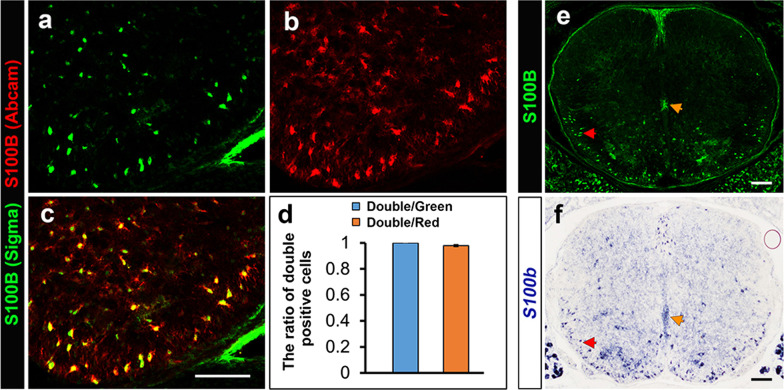
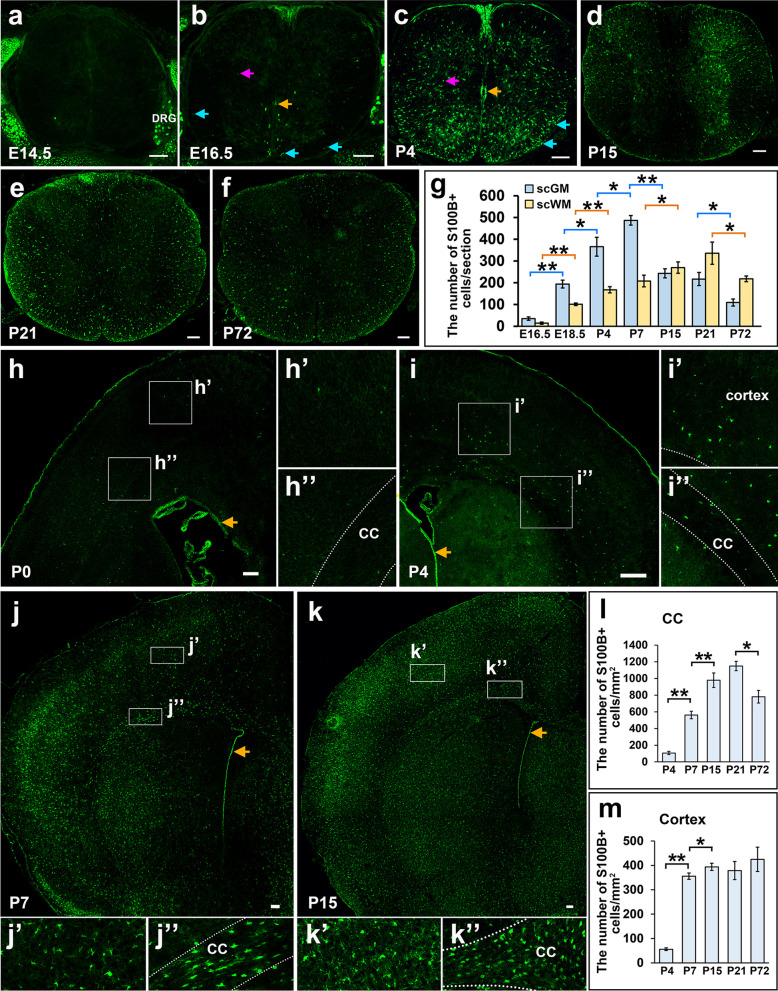
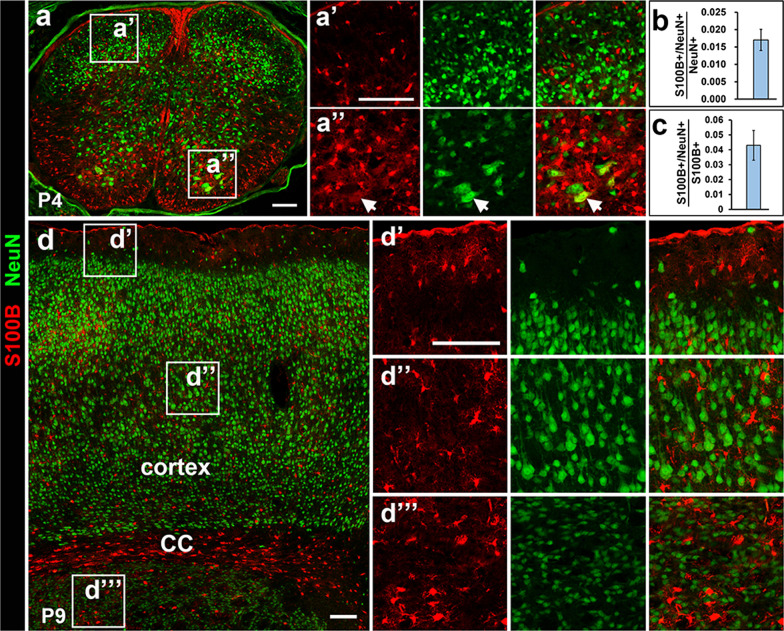
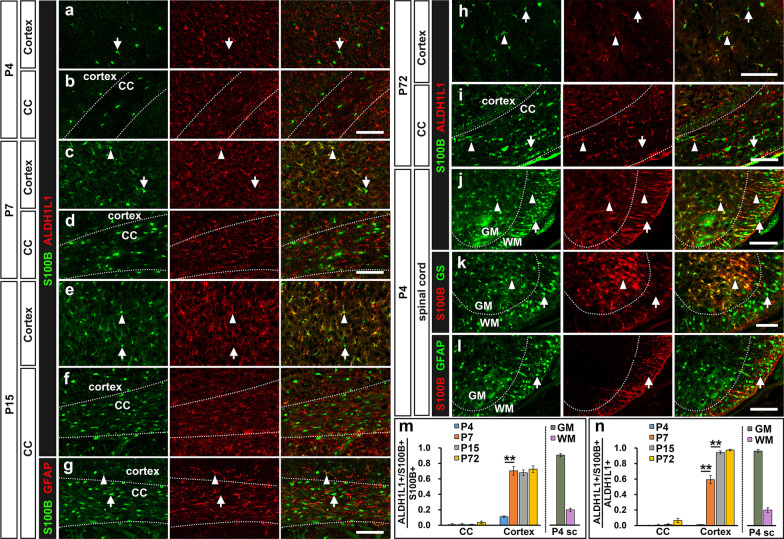
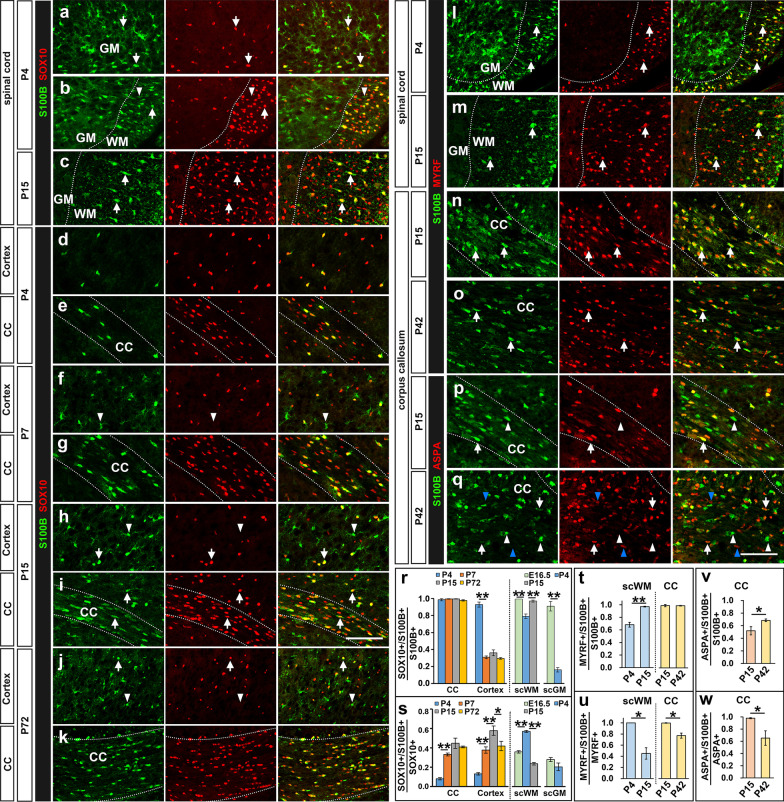
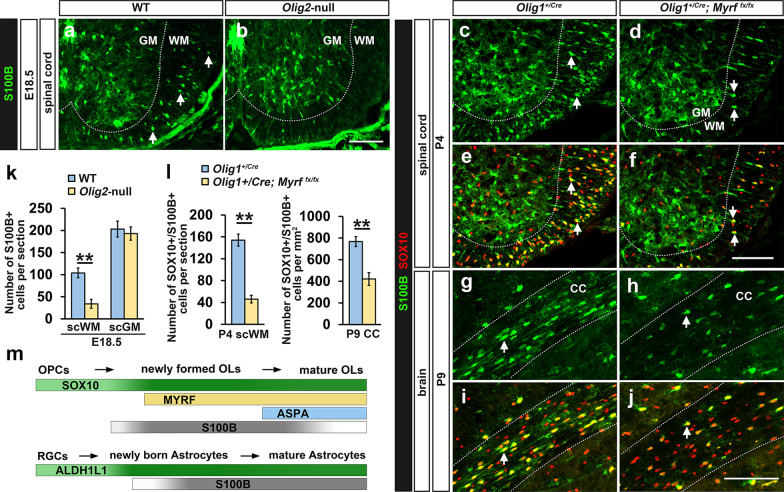
Studies on the development of central nervous system (CNS) primarily rely on the use of specific molecular markers for different types of neural cells. S100B is widely being used as a specific marker for astrocytes in the CNS. However, the specificity of its expression in astrocyte lineage has not been systematically investigated and thus has remained a lingering issue. In this study, we provide several lines of molecular and genetic evidences that S100B is expressed in both protoplasmic astrocytes and myelinating oligodendrocytes. In the developing spinal cord, S100B is first expressed in the ventral neuroepithelial cells, and later in ALDH1L1+/GS+ astrocytes in the gray matter. Meanwhile, nearly all the S100B+ cells in the white matter are SOX10+/MYRF+ oligodendrocytes. Consistent with this observation, S100B expression is selectively lost in the white matter in Olig2-null mutants in which oligodendrocyte progenitor cells (OPCs) are not produced, and dramatically reduced in Myrf-conditional knockout mutants in which OPCs fail to differentiate. Similar expression patterns of S100B are observed in the developing forebrain. Based on these molecular and genetic studies, we conclude that S100B is not a specific marker for astrocyte lineage; instead, it marks protoplasmic astrocytes in the gray matter and differentiating oligodendrocytes.
Overview
The claims and statistics of this paper haven’t been checked yet.
Free: it reads the open-access text and checks the first 5 claims that cite a source we can check. Create a free account to check every claim.
Integrity signals
Registry
Cites
Statistics
Figures
Verification
Claims the paper makes
The claims and statistics of this paper haven’t been checked yet.
Free: it reads the open-access text and checks the first 5 claims that cite a source we can check. Create a free account to check every claim.
Claims other papers make about this one
Each is checked against this paper’s own text: does it say what the citing paper says it does?
The cited source says what the claim attributes to it.
In the citing paper
“S100B is produced and secreted by astrocytes in the gray matter, 174”
From Major depressive disorder: hypothesis, mechanism, prevention and treatment (2024) · cites this paper as [174]
Self-check
Percentages, sums and reported differences re-computed from the paper’s own numbers.
The self-check needs the paper’s full text.
Citations
Cites
Cahoy, J. D., Emery, B., Kaushal, A., Foo, L. C., Zamanian, J. L., Christopherson, K. S., Xing, Y., Lubischer, J. L., Krieg, P. A., Krupenko, S. A., et al. (2008) · The Journal of Neuroscience · doi:10.1523/jneurosci.4178-07.2008 · Cited by 3,129 · cited 1×
“ALDH1L1 is expressed by both astrocytes and their radial glial progenitors, and has been widely used as a specific pan-astrocyte marker in the parenchyma region outside the germinal zone [4, 28, 29].”
BackgroundA soluble protein characteristic of the nervous system
Moore, B. W. (1965) · Biochemical and Biophysical Research Communications · doi:10.1016/0006-291x(65)90320-7 · Cited by 1,695
Donato, R. (2001) · The International Journal of Biochemistry & Cell Biology · doi:10.1016/s1357-2725(01)00046-2 · Cited by 1,580
Glial Fibrillary Acidic Protein: GFAP-Thirty-One Years (1969–2000)
Eng, L. F., Ghirnikar, R. S., & Lee, Y. L. (2000) · Neurochemical Research · doi:10.1023/a:1007677003387 · Cited by 1,369
An acidic protein isolated from fibrous astrocytes
Eng, L. F., Vanderhaeghen, J. J., Bignami, A., & Gerstl, B. (1971) · Brain Research · doi:10.1016/0006-8993(71)90668-8 · Cited by 1,230
Lu, Q. R., Sun, T., Zhu, Z., Ma, N., Garcia, M., Stiles, C. D., & Rowitch, D. H. (2002) · Cell · doi:10.1016/s0092-8674(02)00678-5 · Cited by 1,073 · cited 1×
“Mouse lines for Olig2-null, Olig1-Cre and Myrfflox were described previously, as well as the genotyping methods [32, 34, 35].”
The bHLH Transcription Factors OLIG2 and OLIG1 Couple Neuronal and Glial Subtype Specification
Zhou, Q., & Anderson, D. J. (2002) · Cell · doi:10.1016/s0092-8674(02)00677-3 · Cited by 1,059
Developmental genetics of vertebrate glial–cell specification
Rowitch, D. H., & Kriegstein, A. R. (2010) · Nature · doi:10.1038/nature09611 · Cited by 715
S100 proteins structure functions and pathology
Heizmann, C. W. (2002) · Frontiers in Bioscience · doi:10.2741/a846 · Cited by 706 · cited 1×
“Since S100B is a secreted Ca2+-binding protein and has neurotrophic activity in enhancing neurite outgrowth and neuronal survival [20, 40, 41], it may function as an secreted extracellular signal influencing the development and function of neurons and this possibility awaits to be investigated in future genetic studie…”
BackgroundStolt, C. C., Rehberg, S., Ader, M., Lommes, P., Riethmacher, D., Schachner, M., Bartsch, U., & Wegner, M. (2002) · Genes & Development · doi:10.1101/gad.215802 · Cited by 684 · cited 1×
“To investigate this possibility, we performed S100B double immunostaining with SOX10, a specific marker of oligodendrocyte-lineage cells [31], in P4 and P15 spinal cords.”
Method
Cited by
Major depressive disorder: hypothesis, mechanism, prevention and treatment
Cui, L., Li, S., Wang, S., Wu, X., Liu, Y., Yu, W., Wang, Y., Tang, Y., Xia, M., & Li, B. (2024) · Signal Transduction and Targeted Therapy · doi:10.1038/s41392-024-01738-y · Cited by 1,244
“…levels or mislocalization of AQP4 may contribute to the pathogenesis of MDD. 169,173 S100B is produced and secreted by astrocytes in the gray matter, 174 and changes in the levels of S100B in the blood and cerebrospinal fl uid (CSF) of patients with MDD can cause glial cell dysfunction and damage.”
BackgroundImmunological Markers for Central Nervous System Glia
Huang, H., He, W., Tang, T., & Qiu, M. S. (2022) · Neuroscience Bulletin · doi:10.1007/s12264-022-00938-2 · Cited by 111
“S100B and GS) with mature oligodendrocytes in the CNS [95, 107].”
BackgroundSelf-citationContext-dependent regulation of Notch signaling in glial development and tumorigenesis
Guo, R., Han, D., Song, X., Gao, Y., Li, Z., Li, X., Yang, Z., & Xu, Z. (2023) · Science Advances · doi:10.1126/sciadv.adi2167 · Cited by 67
Chandra, S., Di Meco, A., Dodiya, H. B., Popovic, J., Cuddy, L. K., Weigle, I. Q., Zhang, X., Sadleir, K., Sisodia, S. S., & Vassar, R. (2023) · Molecular Neurodegeneration · doi:10.1186/s13024-023-00635-2 · Cited by 58
S100B actions on glial and neuronal cells in the developing brain: an overview
Hernández‐Ortega, K., Canul-Euan, A. A., Solis‐Paredes, J. M., Borboa-Olivares, H. J., Reyes-Muñoz, E., Estrada‐Gutiérrez, G., & Camacho‐Arroyo, I. (2024) · Frontiers in Neuroscience · doi:10.3389/fnins.2024.1425525 · Cited by 57
“The earliest S100B+ cells reported are differentiating OLs before P4 in the forebrain (Du et al., 2021).”
BackgroundMode of action of astrocytes in pain: From the spinal cord to the brain
Chen, Y.-L., Feng, X., Cheung, C., & Liu, J. A. (2022) · Progress in Neurobiology · doi:10.1016/j.pneurobio.2022.102365 · Cited by 46
Emerging strategies for nerve repair and regeneration in ischemic stroke: neural stem cell therapy
Wang, S., He, Q., Qu, Y., Yin, W., Zhao, R., Wang, X., Yang, Y., & Guo, Z. (2023) · Neural Regeneration Research · doi:10.4103/1673-5374.391313 · Cited by 45
Astroglial and oligodendroglial markers in the cuprizone animal model for de- and remyelination
Castillo-Rodriguez, M. D. L. A., Gingele, S., Schröder, L., Möllenkamp, T. M., Stangel, M., Skripuletz, T., & Gudi, V. (2022) · Histochemistry and Cell Biology · doi:10.1007/s00418-022-02096-y · Cited by 34
Transcript-specific enrichment enables profiling of rare cell states via single-cell RNA sequencing
Abay, T., Stickels, R. R., Takizawa, M., Nalbant, B. N., Hsieh, Y.-H., Hwang, S., Snopkowski, C., Yu, K. K. H., Abou-Mrad, Z., Tabar, V. S., et al. (2025) · Nature Genetics · doi:10.1038/s41588-024-02036-7 · Cited by 33
“Cluster 0 expressed markers of terminally differen tiated oligodendrocytes ( Il33 and Ptgds ) 33,34 , whereas cluster 1 was characterized by Klk6 and S100B , markers of maturing oligodendrocyte precursors 35–37 (Fig.”
Mathews, J., Kuchling, F., Báez-Nieto, D., Diberardinis, M., Pan, J. Q., & Levin, M. G. (2022) · Cancers · doi:10.3390/cancers14061499 · Cited by 30
“CREB (Figure 12B), a known marker for differentiation and S100B (Figure 12C) and GFAP (Figure 12D), markers for astrocytic differentiation, also were in- Cancers 2022, 14, 1499 20 of 36 creased by these same treatments (Figure 12B).”
BackgroundMethodInfluentialRole of Glial Cells in Neuronal Function, Mood Disorders, and Drug Addiction
Tizabi, Y., Getachew, B., Hauser, S. R., Tsytsarev, V., Manhães, A. C., & da Silva, V. D. A. (2024) · Brain Sciences · doi:10.3390/brainsci14060558 · Cited by 27
“Curiously, a recent study using an experimental model of periodontitis-induced depression in mice revealed that SorCS2, a gene that controls the expression of a critical amino acid transporter [191], is responsible for the expression of depressive phenotype in these mice [192].”
BackgroundBansal, Y., Codeluppi-Arrowsmith, S. A., & Banasr, M. (2024) · International Journal of Molecular Sciences · doi:10.3390/ijms25126357 · Cited by 30
“Interestingly, S100B in gray matter is specific to astrocytes, but in white matter, it can also be found in myelinating oligodendrocytes [11].”
BackgroundBrown, T. G., Thayer, M. N., VanTreeck, J. G., Zarate, N., Hart, D. W., Heilbronner, S. R., & Gómez‐Pastor, R. (2023) · Frontiers in Cellular Neuroscience · doi:10.3389/fncel.2023.1094503 · Cited by 28
“These subpopulations of astrocytes are not entirely distinct, but rather probably belong on a spectrum of expression, as they can exhibit partial colocalization (Mack et al., 2018; Klein et al., 2020; Du et al., 2021), which was recapitulated in our study.”
ResultDepaauw-Holt, L. R., Duquenne, M., Hamane, S., Peyrard, S., Rogers, B., Ireland, C., Nasu, Y., Fulton, S., Bosson, A., Alquier, T., et al. (2025) · Nature Communications · doi:10.1038/s41467-025-61643-y · Cited by 21
Luciani, M., Garsia, C., Beretta, S., Cifola, I., Peano, C., Merelli, I., Petiti, L., Miccio, A., Meneghini, V., & Gritti, A. (2024) · Nature Communications · doi:10.1038/s41467-024-53613-7 · Cited by 22
“1 ).”
An Extensive Study Regarding the Microscopic Anatomy of the Early Fetal Human Optic Nerve
Publik, M. A., Filipoiu, F. M., Dumitru, A. V., Precup, A., Petrescu, I.-A., Slavu, I. M., Tulin, R. F., Tulin, A. D., Baloiu, A. I., Cîrstoiu, M. M., et al. (2024) · Neurology International · doi:10.3390/neurolint16030035 · Cited by 11
“Contributing to the immunohistochemical study is the antibody against S100 which is a molecule implicated in the migration and differentiation of astrocytes and is also expressed in two populations of glial cells in the developing central nervous system [26–29].”
BackgroundOlig1/2 Orchestrates Progenitor Cell Fates during Mammalian Cortical Gliogenesis and Gliomagenesis
Tian, Y., Wang, Z., Yang, F., Zhang, W., Li, J., Yang, L., Fu, T., Zheng, W., Xu, Z., Ma, T., et al. (2025) · Nature Communications · doi:10.1038/s41467-025-64753-9 · Cited by 10
Pearls and Pitfalls of Isolating Rat OPCs for In Vitro Culture with Different Methods
Janowska, J., Gargaś, J., & Sypecka, J. (2023) · Cellular and Molecular Neurobiology · doi:10.1007/s10571-023-01380-2 · Cited by 11
“Calcium-binding protein S100β was also recently reported to be expressed in progenitor cells, as well as in the mature oligodendrocytes; therefore, the use of aforementioned proteins as selective astrocyte markers should be questioned (de los Angeles Castillo-Rodriguez et al. 2022; Du et al. 2021; Su et al. 2021).”
BackgroundLatham, A. S., Geer, C. E., Ackart, D. F., Anderson, I. K., Vittoria, K. M., Podell, B. K., Basaraba, R. J., & Moreno, J. A. (2023) · Frontiers in Neuroscience · doi:10.3389/fnins.2023.1157652 · Cited by 11
Chornyy, S., Herstine, J. A., Holaway, C., Biddle, A., Vetter, T. A., Pyne, N. K., & Bradbury, A. M. (2025) · Molecular Therapy — Methods & Clinical Development · doi:10.1016/j.omtm.2025.101588 · Cited by 9
“25,26 We employed the NIS-Elements software for automatic detection and quantification of colocalization across a wide range of cells, ensuring accurate and reproducible results (Figure 5B).”
Neural Tube Organoids: A Novel System to Study Developmental Timing
Rabeling, A., van der Hoven, A., Andersen, N., & Goolam, M. (2024) · Stem Cell Reviews and Reports · doi:10.1007/s12015-024-10785-5 · Cited by 10
Rabczyński, M., Chwałek, S., Adamiec-Mroczek, J., Lewandowski, Ł., Trocha, M., Nowak, B., Misiuk‐Hojło, M., Bednarska-Chabowska, D., Kuźnik, E., Lubieniecki, P., et al. (2024) · International Journal of Molecular Sciences · doi:10.3390/ijms252111791 · Cited by 9
“The S100B protein is expressed in various types of cells, including protoplasmic astrocytes and myelinating oligodendrocytes [7].”
BackgroundThe Relevance of Astrocytic Cell Culture Models for Neuroinflammation in Neurodegeneration Research
Preato, A. M., Pinheiro, E. D. S., Rosenstock, T. R., & Glezer, I. (2024) · Neuroglia · doi:10.3390/neuroglia5010003 · Cited by 10
“S100B , in contrast, has shown to be predominantly expressed in gray matter protoplasmatic astrocytes, and in differentiating oligodendrocytes [62].”
BackgroundClarkson, T. C., Iguchi, N., Xie, A. X., & Malykhina, A. P. (2022) · PLoS ONE · doi:10.1371/journal.pone.0278918 · Cited by 6
“Astrocytes express S100b gene [43] under Fig 7.”
BackgroundGlial fibrillary acidic protein vs. S100B to identify astrocytes impacted by sex and high fat diet
Lee, B. G., Schultz, C., Zhao, A., Menon, P., Bugescu, R., & Leinninger, G. M. (2025) · Physiology & Behavior · doi:10.1016/j.physbeh.2025.115004 · Cited by 5
“The marker proteins specific for astrocyte lineage are very limited [9,15].”
Gerzanich, V., Zhang, C., Zhang, J., Sallapalli, B. T., Pei, S., Nasr, M., Tosun, Ç., Zhang, Y., Tang, Q., Simard, J. M., et al. (2025) · mBio · doi:10.1128/mbio.02012-25 · Cited by 4
“To validate the viral infection status of ORF3a-positive and control brain tissues, we examined the presence of the viral nucleocapsid (NCp) protein by co-immunostaining with S100B, an astrocytic marker of gray matter (53).”
O’Toole, K., Guetta, L., Urbanaviciute, P., Suklai, P., Wright, C., Fisher, T., Liddelow, S. A., Luisier, R., Marzi, S. J., & Serio, A. (2024) · bioRxiv (Cold Spring Harbor Laboratory) · doi:10.1101/2024.11.11.622998 · Cited by 4
TAAR1 Modulates Neuronal and Glial Density in the Neocortex Following Spinal Cord Injury
Kalinina, D. S., Chesnokov, A. A., Romanyuk, E. A., Buglinina, А. D., Khuzin, D. V., Milov, S. I., Konovalova, S. P., Shkorbatova, P. Y., Pavlova, N. V., Belskaya, A. D., et al. (2025) · Journal of Evolutionary Biochemistry and Physiology · doi:10.1134/s0022093025050072 · Cited by 3
“Additionally, S100b is not a strictly specific marker of astrocytes; it can also be expressed in oligoden(cid:2) drocytes and neurons [42].”
Bontempo, C., Gallo, L. P., Mattiacci, M., Valente, S., Astolfi, A., Conte, M. A., Manna, G. L., Pasquinelli, G., Gargiulo, M., Olivieri, F., et al. (2025) · Ageing Research Reviews · doi:10.1016/j.arr.2025.103003 · Cited by 4
Hao, Y., Liang, D., Ren, M., Kuang, F., & Wu, M. (2026) · Cells · doi:10.3390/cells15060487 · Cited by 3
Special characteristics of human astrocytes and their roles in brain homeostasis
Kousa, I., Talvio, K., Peteri, U., & Castrén, M. L. (2026) · Neuroscience Applied · doi:10.1016/j.nsa.2026.107000 · Cited by 3
Spice, D. M., Dierolf, J. G., & Kelly, G. M. (2022) · Stem Cells and Development · doi:10.1089/scd.2022.0131 · Cited by 3
“We reported an increase in astrocyte and oligodendrocyte marker S100b [28] on day 17 in SUFU-deficient cells (Fig.”
Gaber, W., Hussein, M. T., Aly, K., & Abdel‐Maksoud, F. M. (2024) · Cells Tissues Organs · doi:10.1159/000537688 · Cited by 3
“In addition, S-100 is a Ca-binding protein that is speci fi cally expressed in cells of astrocyte lineage in the brain and spinal cord [49].”
Gongwer, M. W., Etienne, F., Moca, E. N., Blagburn-Blanco, S. V., Chappell, M. S., Newton, K. A., Gray, D. T., Riley, J. P., Christensen, C. R., Ahmed, R. N., et al. (2026) · Nature Communications · doi:10.1038/s41467-026-77487-z · Cited by 3
Zacher, A., Grabinski, M., Console‐Meyer, L., Felmy, F., & Pätz, C. (2025) · Frontiers in Cellular Neuroscience · doi:10.3389/fncel.2025.1561312 · Cited by 2
Spatial–temporal representation of the astroglial markers in the developing human cortex
Kharlamova, A., Krivova, Y. S., Proshchina, A. E., Godovalova, O. S., Otlyga, D., Andreeva, E., Shachina, M. Y., Grushetskaya, E., & Saveliev, S. V. (2024) · Brain Structure and Function · doi:10.1007/s00429-024-02850-z · Cited by 1
“It has been also reported, that S100 + cells in the developing and mature white matter possess oligodendroglial markers, and astrocytes of the developing gray matter start to express S100 after P4 stage (Du et al. 2021).”
Plasma biomarkers in chronic mild traumatic brain injury: A review
Dark, H. E., Lippa, S. M., & Gill, J. (2025) · The Clinical Neuropsychologist · doi:10.1080/13854046.2025.2604091 · Cited by 1
“Other commonly studied biomarkers include S100β, a marker of astrocytic injury (specifically protoplasmic astrocytes) (Du et al., 2021), and NfL and t-tau, markers of axonal injury.”
Differential Expression Patterns of Astrocyte Markers in The Adult Mouse Brain
Kawaguchi, Y., Terashima, Y., Tanaka, S., & Okuda, H. (2026) · ACTA HISTOCHEMICA ET CYTOCHEMICA · doi:10.1267/ahc.26-00008 · Cited by 1
“Du et al. [17] reported that although many S100β-positive cells in white matter regions, including the corpus callosum, are likely oligodendrocytes, fewer than 30% of S100β-positive cells in the brain parenchyma are oligodendrocytes.”
Insight into Early Diagnosis of Multiple Sclerosis by Targeting Prognostic Biomarkers
Puranik, N., Yadav, D., & Song, M. (2023) · Current Pharmaceutical Design · doi:10.2174/0113816128247471231018053737 · Cited by 1
Wu, Y., Xu, P., Moran, J., Xu, C. S., Hayworth, K. J., Cao, M., Shao, L., Surmeier, D. J., Hess, H. F., & Camilli, P. V. D. (2026) · Proceedings of the National Academy of Sciences · doi:10.1073/pnas.2622215123 · Cited by 1
“These included cell bodies of spiny projection neurons (SPNs) (DARPP32 immunoreactive) (26), of astrocytes (S100b immunoreactive) (27, 28) and of microglia (Iba1 immunoreactive) (29), thus ruling out specificity for a given cell type (Fig.”
Brown, T. G., Thayer, M. N., Zarate, N., & Gómez‐Pastor, R. (2021) · bioRxiv (Cold Spring Harbor Laboratory) · doi:10.1101/2021.11.29.470488
Silva, L. (2022) · Digital Library of Theses and Dissertations (Universidade de São Paulo) · doi:10.11606/t.42.2022.tde-08082023-101118
Synchronization of the Pineal and Pituitary Morphophysiology by Photoperiodic Environmental Signals
Filippa, V., Busolini, F. I., & Mohamed, F. (2024) · Springer eBooks · doi:10.1007/978-3-031-49487-1_17
Analysis of transporter activity in an Alzheimer’s disease blood-brain barrier cell model
Chaves, J. (2024) · Queensland University of Technology · doi:10.5204/thesis.eprints.248279
Jakovčevski, I., Acar, A., Schwindenhammer, B., Hamad, M. I. K., Reiss, G., Förster, E., & Schachner, M. (2025) · Biomolecules · doi:10.3390/biom15091247
“The three major glial cell types are astrocytes, oligodendrocytes, and microglia/macrophages [6,22,23].”
Schwahn, J., Hebestreit, S., Kosche, O., Steinacker, P., Sandikci, V., Winzer, I., Hesebeck‐Brinckmann, J., Bachhuber, F., Valkadinov, I., Nittka, S., et al. (2025) · Brain Communications · doi:10.1093/braincomms/fcaf388
“26,27 In contrast, GFAP is more specifically expressed in a subset of astrocytes and increases in chronic conditions with astrocytosis, such as amyotrophic lateral sclerosis (ALS).”
Characterization of the toolbox for selective biotinylation of Neurexin1α
Schulze Wehninck, M. (2024) · URN:NBN Resolver for Germany & Switzerland (German National Library) · doi:10.17879/54918343498
The role of mitochondrial translocator protein 18kDa (TSPO) in regulating astrocyte metabolism
Firth, W. (2024) · Open Research Exeter (University of Exeter)
Sato, F., Fujii, A., Katagiri, S., Uchiumi, Y., Gotoh, M., Miyamoto, Y., Ishikawa, M., Kawashima, Y., Nakajima, D., Konno, R., et al. (2026) · Journal of Neuroinflammation · doi:10.1186/s12974-026-03704-7
“Though it is known that GFAP is more specific astrocyte marker than S100β [55], further study about the change of astrocyte dynamics in 6-month-old SAMP8 hippocampus is required.”
Nosálová, N., Huniadi, M., Valencakova, A., Hornakova, L., Kalinaj, B., Almášiová, V., Marcinčáková, D., Kubatka, P., Horňák, S., & Čížková, D. (2026) · Frontiers in Veterinary Science · doi:10.3389/fvets.2025.1652991
Galvão, I. C., Lemoine, M., Waichman, T. V., Chandarana, B., Hébert, S., de Oliveira, T. C., dos Santos, L. H. B., Rogério, F., Yasuda, C. L., Ghizoni, E., et al. (2026) · bioRxiv (Cold Spring Harbor Laboratory) · doi:10.64898/2026.02.20.707029
Astroglia Dysfunction in the Behavioural and Cellular Changes Associated with Chronic Stress
Codeluppi, S. (2024) · TSpace (University of Toronto)
Jarrahi, A., Jones, A. W., Tang, W., Qi, H., & Crouch, A. C. (2026) · bioRxiv (Cold Spring Harbor Laboratory) · doi:10.64898/2026.04.09.717471
“The S100B protein is widely used as a molecular marker of astrocytes and glial activity in the central nervous system, although it can also be expressed in oligodendrocytes during development [62], [63], [64].”
de Abreu, G. H. D., Wilson, J., Ritzmann, V., Moosbrugger, O. J., Johnson, C. T., Mackie, K., Bradshaw, H. B., Huang, J.-Y., & Lu, H. (2026) · bioRxiv (Cold Spring Harbor Laboratory) · doi:10.64898/2026.04.16.719010 · Cited by 1
“…with antibodies against NeuN (a neuronal marker) [92], GFP (amplified the astrocytic GFP signals), and S100β (a marker for a subset of astrocytes and oligodendrocyte precursor cells [93, 94]), was conducted with Aldh1l1-GFP brain sections acquired after PCE and vehicle treatment (Figure 2C).”
Spatial and Molecular Progression of Neural Progenitor Cells in the Developing Human Dentate GyrusPreprint
Pastor-Alonso, O., Heffel, M. G., Baig, M. S., Harris, J., González-Granero, S., Li, S., Beccari, S., Chu, J. S. F., Lambing, H., Lu, I.-L., et al. (2026) · bioRxiv (Cold Spring Harbor Laboratory) · doi:10.64898/2026.06.06.730648
Protoplasmic Astrocytes Are Poorly Understood Cells in Adult Human Brain Tissue
Sivakova, I., Perzelova, A., & Polák, Š. (2026) · Neuroglia · doi:10.3390/neuroglia7030020
“S100B is a less specific marker than GFAP, as it has been detected in some neuronal populations [24] and in oligodendrocytes [25,26].”
Zhou, D., Hu, X., Wang, Y., Tang, F., Du, Z., & Xiong, J. (2026) · The Journal of Pathology Clinical Research · doi:10.1002/2056-4538.70103
“This transcription factor is particularly essential for oligodendrocyte maturation during CNS myelination, as evidenced by its speci fi c expression in oligodendrocytes in normal brain tissue [14,15].”
Sun, X., Ramakrishnan, S., Ogbolu, V. C., Kanaan, N. M., Karch, C. M. M., Baas, P. W., & Liang, Q. (2026) · Alzheimer s & Dementia · doi:10.1002/alz.71565
“53 Leveraging this, we conducted Sholl analysis to evaluate morphological changes in astrocytes expressing the P301S mutation.”
Astrocytes in Multiple Sclerosis: Getting to the Core
Tinkey, R. A., Smith, B. C., & Williams, J. L. (2026) · International Journal of Molecular Sciences · doi:10.3390/ijms27146520
“Additional markers show preferential enrichment within specific astrocyte populations; for example, GFAP expression is more prominent in fibrous astrocytes associated with white matter tracts, whereas S100 β is expressed at higher levels in many gray matter astrocytes [55,64–66].”
Stump, S. M., Bohlen, J. F., Phan, B. N., & Maher, B. J. (2026) · Neuroglia · doi:10.3390/neuroglia7030024 · Cited by 1
Marti, M. B., Morrison, S. D., Pars, S., Al-mhanawi, B., Noakes, P. G., Wolvetang, E. J., & Shaker, M. R. (2026) · bioRxiv (Cold Spring Harbor Laboratory) · doi:10.64898/2026.08.27.747500
Interferon‐γ Mitigates Oxaliplatin‐Induced Neurotoxicity: Analogies With Connexin 43
Toti, A., Ferrara, V., Lucarini, E., Micheli, L., Ciampi, C., Margiotta, F., Venturi, D., Parisio, C., Gerace, E., Curti, L., et al. (2026) · CNS Neuroscience & Therapeutics · doi:10.1002/cns.71197
Mednova, I. A., Shternis, Y. V., Kornetova, E. G., Алексеевич, Г. С., Першина, А. А., Корнетов, А. Н., & Ivanova, S. А. (2026) · The World Journal of Biological Psychiatry · doi:10.1080/15622975.2026.2757825
Metadata
- Authors
- Du, J., Yi, M., Zhou, F., He, W., Yang, A., Qiu, M., & Huang, H.
- Affiliations
- Hangzhou Normal University (CN)
- Corresponding author
- Huang, Hao
- Venue
- Molecular Brain
- Published
- 2021-10-06
- Volume
- 14
- Issue
- 1
- Pages
- 154-154
- ISSN
- 1756-6606 (ISSN-L)
- PMC
- PMC8496084
- OpenAlex
- W3202682008
- Cited by
- 57
- References
- 43
- Citations by year
- 2026: 12 · 2025: 13 · 2024: 16 · 2023: 8 · 2022: 7 · 2021: 1
- FWCI
- 2.91
- Type
- journal article
- Language
- en
- Open access
- gold
- doi.org
- Licence
- cc-by
- creativecommons.org/licenses/by/4.0 (tdm)
- creativecommons.org/licenses/by/4.0 (vor)
- Locations
- Molecular Brain (publishedVersion, cc-by)
- Europe PMC (PubMed Central) (publishedVersion, other-oa)
- PubMed Central (publishedVersion, cc-by)
- PubMed (publishedVersion)
- DOAJ (DOAJ: Directory of Open Access Journals) (submittedVersion, cc-by-sa)
- Funders
- Natural Science Foundation of Zhejiang Province (LQ19C090001)
- National Natural Science Foundation of China (31900703, 31771621)
- Topics
- Life Sciences › Neuroscience › Developmental Neuroscience › Neurogenesis and neuroplasticity mechanisms
- Life Sciences › Biochemistry, Genetics and Molecular Biology › Molecular Biology › S100 Proteins and Annexins
- Life Sciences › Neuroscience › Neurology › Neuroinflammation and Neurodegeneration Mechanisms
- Keywords
- S100B, protoplasmic astrocyte, myelinating oligodendrocytes, central nervous system development, gray matter, white matter, spinal cord, forebrain, Olig2, MYRF, oligodendrocyte precursor cells, SOX10, ALDH1L1, conditional knockout
- MeSH terms
- Formyltetrahydrofolate Dehydrogenase, Oxidoreductases Acting on CH-NH Group Donors, Animals, Astrocytes, Brain, Cytoplasm, Glial Fibrillary Acidic Protein, Glutamate-Ammonia Ligase, Myelin Sheath, Neurons, Oligodendroglia, Organ Specificity, RNA, Messenger, Spinal Cord, Biomarkers, Prosencephalon, Cell Lineage, Mice, SOXE Transcription Factors, S100 Calcium Binding Protein beta Subunit, Gray Matter
About these checks
Registry, retraction, Cites and statistics results are computed, not judged, with one exception: a printed reference that no index lists is read once by a model before it counts as a citation error. Claims are extracted by a model and kept only when their quote appears verbatim in the text; each cited source is then checked, with a model’s help, for whether it says what the claim relies on. Those verdicts can be wrong — read the claim’s quote and the cited source before relying on one.
Statistics and arithmetic are recomputed, not judged.
Confidence bands are shown only for fields calibrated on our annotated test set. None is calibrated yet, so no band is shown.
What counts as a claim ›How we measure confidence ›How we check this ›
Are you an author, or do you see a problem with this page? Request a review
Data sources
Bibliographic data: Semantic Scholar, OpenAlex, Crossref.
Contains information from the Semantic Scholar Academic Graph Datasets, made available under the ODC Attribution License (ODC-BY 1.0).
Semantic Scholar’s data is described in: Kinney, R., et al. (2023). The Semantic Scholar Open Data Platform. arXiv:2301.10140.
