

Mesenchymal stromal cells as vehicles of tetravalent bispecific Tandab (CD3/CD19) for the treatment of B cell lymphoma combined with IDO pathway inhibitor d-1-methyl-tryptophan
Open accessThe DOI matches its Crossref record; 47 of the 47 references it cites were found in a registry or an index.
Abstract
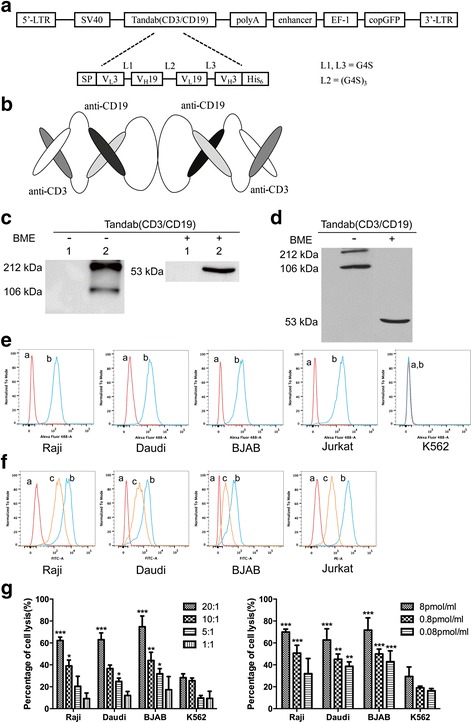
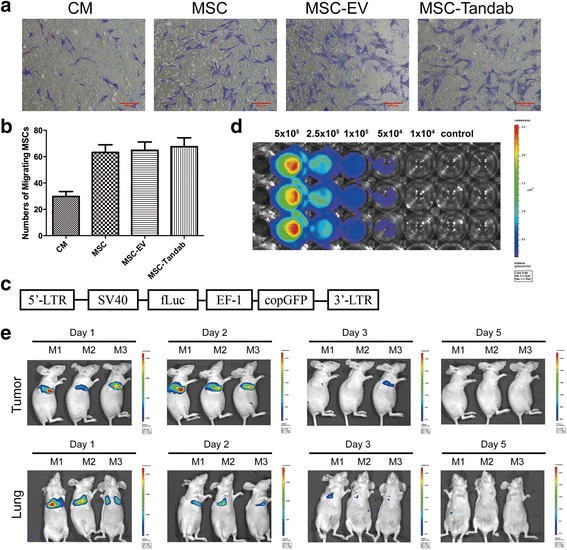
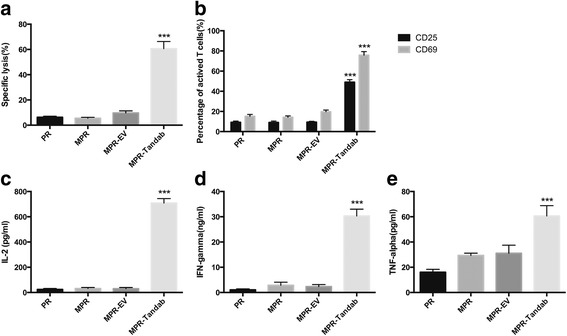
BACKGROUND: Although blinatumomab, a bispecific T cell engaging antibody, exhibits high clinical response rates in patients with relapsed or refractory B-precursor acute lymphoblastic leukemia (B-ALL) and B cell non-Hodgkin's lymphoma (B-NHL), it still has some limitations because of its short half-life. Mesenchymal stromal cells (MSCs) represent an attractive approach for delivery of therapeutic agents to cancer sites owing to their tropism towards tumors, but their immunosuppression capabilities, especially induced by indoleamine 2,3-dioxygenase (IDO), should also be taken into consideration. METHODS: Human umbilical cord-derived MSCs (UC-MSCs) were genetically modified to secrete Tandab (CD3/CD19), a tetravalent bispecific tandem diabody with two binding sites for CD3 and two for CD19. The tropism of MSCs towards Raji cells in vitro was determined by migration assays, and the homing property of MSCs in vivo was analyzed with firefly luciferase-labeled MSCs (MSC-Luc) by bioluminescent imaging (BLI). The cytotoxicity of T cells induced by MSC-secreting Tandab (CD3/CD19) was detected in vitro and in vivo in combination with D-1-methyl-tryptophan (D-1MT), an IDO pathway inhibitor. RESULTS: The purified Tandab (CD3/CD19) was functional with high-binding capability both for CD3-positive cells and CD19-positive cells and was able to induce specific lysis of CD19-positive cell lines (Raji, Daudi, and BJAB) in the presence of T cells. Additionally, results from co-culture killing experiments demonstrated that Tandab (CD3/CD19) secreted from MSCs was also effective. Then, we confirmed that D-1MT could enhance the cytotoxicity of T cells triggered by MSC-Tandab through reversing T cell anergy with down-regulation of CD98 and Jumonji and restoring the proliferation capacity of T cells. Furthermore, MSC-Luc could selectively migrate to tumor site in a BALB/c nude mouse model with Raji cells. And mice injected with MSC-Tandab in combination with D-1MT significantly inhibited the tumor growth. CONCLUSIONS: These results suggest that UC-MSCs releasing Tandab (CD3/CD19) is an efficient therapeutic tool for the treatment of B cell lymphoma when combined with D-1MT.
Overview
The claims and statistics of this paper haven’t been checked yet.
Free: it reads the open-access text and checks the first 5 claims that cite a source we can check. Create a free account to check every claim.
Integrity signals
Registry
Cites
Statistics
Figures
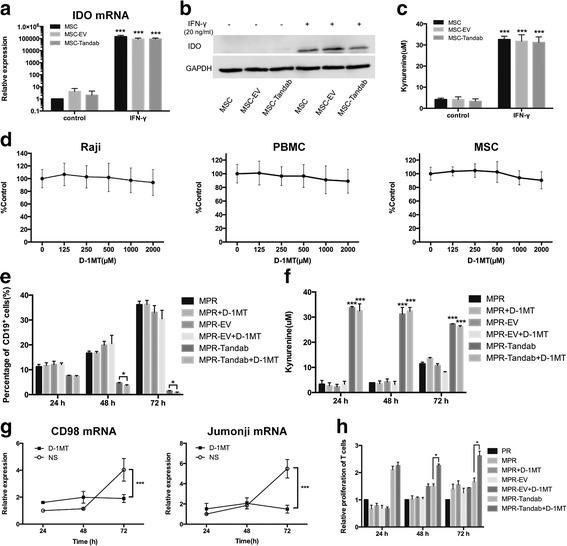
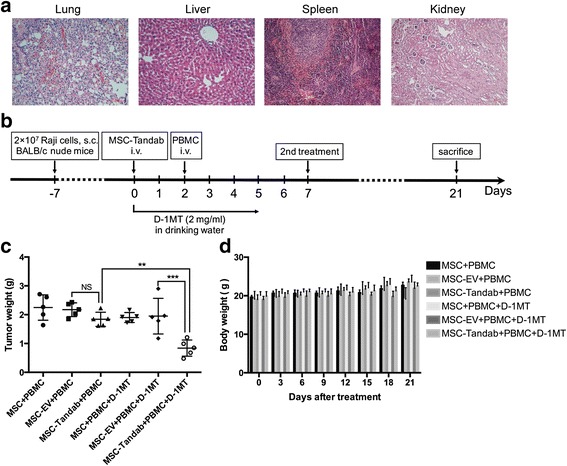
Verification
Claims the paper makes
The claims and statistics of this paper haven’t been checked yet.
Free: it reads the open-access text and checks the first 5 claims that cite a source we can check. Create a free account to check every claim.
Claims other papers make about this one
Each is checked against this paper’s own text: does it say what the citing paper says it does?
The source backs part of the claim, not all of it — or backs it for a different population, condition or comparison.
In the citing paper
“In a recent animal study, human umbilical cord-derived MSCs were genetically modified to produce a bispecific Ab (Tandab CD3/CD19) against B cell lymphoma and inhibited cancer cell proliferation [128].”
From Mesenchymal stromal cells for bone sarcoma treatment: Roadmap to clinical practice (2019) · cites this paper as [128]
Experimental — accuracy not yet measured
Self-check
Percentages, sums and reported differences re-computed from the paper’s own numbers.
The self-check needs the paper’s full text.
Citations
Cites
Uyttenhove, C., Pilotte, L., Théate, I., Stroobant, V., Colau, D., Parmentier, N., Boon, T., & Van den Eynde, B. J. (2003) · Nature Medicine · doi:10.1038/nm934 · Cited by 2,305 · cited 1×
“Although IDO is known to be overexpressed in several human cancers, including prostate, breast, brain, and hematologic malignancies [46], it is not detectable in Raji cells even with the stimulation of IFN-γ [47].”
BackgroundMeisel, R., Zibert, A., Laryea, M., Göbel, U., Däubener, W., & Dilloo, D. (2004) · Blood · doi:10.1182/blood-2003-11-3909 · Cited by 1,646
Frumento, G., Rotondo, R., Tonetti, M., Damonte, G., Benatti, U., & Ferrara, G. B. (2002) · The Journal of Experimental Medicine · doi:10.1084/jem.20020121 · Cited by 1,133 · cited 1×
“By depleting tryptophan locally and accumulation of its metabolites such as kynurenine and quinolinic acid, which could interact the aryl hydrocarbon receptor (AHR) on T cells, IDO seems to block the proliferation of T cells and inhibit T cell activity [18, 19].”
Background"Diabodies": small bivalent and bispecific antibody fragments.
Holliger, P., Prospero, T., & Winter, G. (1993) · Proceedings of the National Academy of Sciences · doi:10.1073/pnas.90.14.6444 · Cited by 874 · cited 1×
“The concept of dimerizing scFv fragments having a short peptide linker between the domains to create two antigen-binding sites pointing in opposite directions [27] was extended to single-chain molecules containing four antibody variable domains [8].”
BackgroundStudeny, M., Marini, F. C., Dembinski, J. L., Zompetta, C., Cabreira-Hansen, M., Bekele, B. N., Champlin, R. E., & Andreeff, M. (2004) · JNCI Journal of the National Cancer Institute · doi:10.1093/jnci/djh299 · Cited by 842 · cited 1×
“Mesenchymal stromal cells (MSCs) are attractive cellular vehicles for the therapy of malignant diseases as they have the ability to migrate into tumors and track microscopic metastasis [10, 11].”
BackgroundTryptophan Catabolism in Cancer: Beyond IDO and Tryptophan Depletion
Platten, M., Wick, W., & Van den Eynde, B. J. (2012) · Cancer Research · doi:10.1158/0008-5472.can-12-0569 · Cited by 703 · cited 1×
“It has been revealed that indoleamine 2,3-dioxygenase (IDO), the first and rate-limiting enzyme in the degradation of tryptophan [16], plays a role in human MSCs to regulate immunity in tumor microenvironment [17].”
BackgroundHow mesenchymal stem cells interact with tissue immune responses
Shi, Y., Su, J., Roberts, A. I., Shou, P., Rabson, A. B., & Ren, G. (2012) · Trends in Immunology · doi:10.1016/j.it.2011.11.004 · Cited by 633 · cited 1×
“However, it has been reported that various factors are believed to be involved in the mechanisms of MSC-mediated immunosuppression, including inducible nitric oxide synthase (iNOS), IDO, tumor necrosis factor-inducible gene 6 (TSG6), CC-chemokine ligand 2 (CCL2), IL-10, and prostaglandin E2 (PGE2) [45].”
BackgroundAntibody-modified T cells: CARs take the front seat for hematologic malignancies
Maus, M. V., Grupp, S. A., Porter, D. L., & June, C. H. (2014) · Blood · doi:10.1182/blood-2013-11-492231 · Cited by 616
Bispecific T-Cell Engaging Antibodies for Cancer Therapy
Baeuerle, P. A., & Reinhardt, C. (2009) · Cancer Research · doi:10.1158/0008-5472.can-09-0547 · Cited by 592 · cited 1×
“approach depends on T cell recruitment via bispecific antibodies (bsAbs) [36] which bind one arm to T cell activation domain and bind the other arm to a tumorassociated antigen on the target cell.”
BackgroundBrüggemann, M., Raff, T., Flohr, T., Gökbuget, N., Nakao, M., Droese, J., Lüschen, S., Pott, C., Ritgen, M., Scheuring, U., et al. (2006) · Blood · doi:10.1182/blood-2005-07-2708 · Cited by 537 · cited 2×
“(TIF 9594 kb) Abbreviations AHR: Aryl hydrocarbon receptor; B-ALL: B-precursor acute lymphoblastic leukemia; BiTE: Bispecific T cell engager; BLI: Bioluminescent imaging; BNHL: B cell non-Hodgkin’s lymphoma; BrdU: Bromodeoxyuridine; bsAbs: Bispecific antibodies; CAR: Chimeric antigen receptor; CM: Culture medium; D-1M…”
Background
Cited by
Mesenchymal Stem Cell Immunomodulation: Mechanisms and Therapeutic Potential
Song, N., Scholtemeijer, M., & Shah, K. (2020) · Trends in Pharmacological Sciences · doi:10.1016/j.tips.2020.06.009 · Cited by 948
Challenges and advances in clinical applications of mesenchymal stromal cells
Zhou, T., Yuan, Z., Weng, J., Pei, D., Du, X., He, C., & Lai, P. (2021) · Journal of Hematology & Oncology · doi:10.1186/s13045-021-01037-x · Cited by 712
“MSCs loaded with degradable budesonide-containing MPs exhibited fourfold increase in IDO activity in vitro compared to MSCs without being pre-treated with budesonide [104].”
BackgroundZhuang, W.-Z., Lin, Y.-H., Su, L.-J., Wu, M.-S., Jeng, H.-Y., Chang, H.-C., Huang, Y.-H., & Ling, T.-Y. (2021) · Journal of Biomedical Science · doi:10.1186/s12929-021-00725-7 · Cited by 258
Challenges and strategies for next-generation bispecific antibody-based antitumor therapeutics
Li, H., Er Saw, P., & Song, E. (2020) · Cellular & Molecular Immunology · doi:10.1038/s41423-020-0417-8 · Cited by 200
Redirecting T cells to hematological malignancies with bispecific antibodies
Velasquez, M. P., Bonifant, C. L., & Gottschalk, S. (2018) · Blood · doi:10.1182/blood-2017-06-741058 · Cited by 172
“18 against CD19-positive lymphoma in a xenograft model.(92) MSCs may themselves be immunosuppressive and therefore, engineering of alternate immune effectors with good fitness may additionally improve potency.”
BackgroundAdvances in targeted therapy for malignant lymphoma
Wang, L., Qin, W. D., Huo, Y., Li, X., Shi, Q., Rasko, J. E. J., Janin, A., & Zhao, W. (2020) · Signal Transduction and Targeted Therapy · doi:10.1038/s41392-020-0113-2 · Cited by 155
“In vitro, TandAb can induce the specific lysis of CD19+ cell lines in the presence of T cells, and an IDO inhibitor could enhance the cytotoxicity of T cells triggered by MSCTandAb.419 Clinical studies of IDO inhibitors in lymphomas are still lacking.”
BackgroundImmunomodulatory Mechanisms and Therapeutic Potential of Mesenchymal Stem Cells
Yang, G., Fan, X., Liu, Y., Jie, P., Mazhar, M., Liu, Y., Dechsupa, N., & Wang, L. (2023) · Stem Cell Reviews and Reports · doi:10.1007/s12015-023-10539-9 · Cited by 97
Zhao, Q., Zhang, L., Wei, Y., Yu, H., Zou, L., Huo, J., Yang, H., Song, B., Wei, T., Wu, D., et al. (2019) · Stem Cell Research & Therapy · doi:10.1186/s13287-019-1478-4 · Cited by 128
Self-citationZhang, L., Wang, H., Liu, C., Wu, Q., Su, P., Wu, D., Guo, J., Zhou, W., Xu, Y., Shi, L., et al. (2018) · Stem Cell Reports · doi:10.1016/j.stemcr.2018.06.019 · Cited by 119
Self-citationHuo, J., Zhang, L., Ren, X., Li, C., Li, X., Dong, P., Zheng, X., Huang, J., Shao, Y., Ge, M., et al. (2020) · Stem Cell Research & Therapy · doi:10.1186/s13287-020-1577-2 · Cited by 116
Self-citationShang, Y., Guan, H., & Zhou, F. (2021) · Frontiers in Cell and Developmental Biology · doi:10.3389/fcell.2021.570179 · Cited by 112
Mesenchymal stem cells attenuate liver fibrosis by suppressing Th17 cells - an experimental study
Milosavljevic, N., Gazdic, M., Simovic Markovic, B., Arsenijevic, A., Nurkovic, J., Dolicanin, Z., Jovicic, N., Jeftic, I., Djonov, V., Arsenijevic, N., et al. (2018) · Transplant International · doi:10.1111/tri.13023 · Cited by 87
“CCl4/corn oil and CCl4/corn oil + MSC-treated mice continuously received 1-MT (2 mg/ml in drinking water) for in vivo inhibition of IDO activity [19].”
MethodZhang, L., Wei, Y., Chi, Y., Liu, D., Yang, S., Han, Z., & Li, Z. (2021) · Cell & Bioscience · doi:10.1186/s13578-020-00516-x · Cited by 89
“Statistical analysis All statistical analyses were performed as we reported before [21, 42, 43, 45].”
MethodResultSelf-citationWei, Y., Zhang, L., Chi, Y., Ren, X., Gao, Y., Song, B., Li, C., Han, Z., Zhang, L., & Han, Z. (2020) · Cell Proliferation · doi:10.1111/cpr.12862 · Cited by 81
Self-citationZhang, L., Chi, Y., Wei, Y., Zhang, W., 王福旭, Zhang, L., Zou, L., Song, B., Zhao, X., & Han, Z. (2021) · Stem Cell Research & Therapy · doi:10.1186/s13287-021-02444-0 · Cited by 80
Self-citationWei, Y., Hou, H., Zhang, L., Zhao, N., Li, C., Huo, J., Liu, Y., Zhang, W., Li, Z., Liu, D., et al. (2019) · Stem Cell Research & Therapy · doi:10.1186/s13287-019-1302-1 · Cited by 75
Self-citationBispecific antibodies in haematological malignancies
Viardot, A., & Bargou, R. C. (2018) · Cancer Treatment Reviews · doi:10.1016/j.ctrv.2018.04.002 · Cited by 72
Yao, J., Chen, N., Wang, X., Zhang, L., Huo, J., Chi, Y., Li, Z., & Han, Z. (2020) · Stem Cells International · doi:10.1155/2020/6489396 · Cited by 68
“A quantitative realtime PCR assay (qRT-PCR) was performed as we previously reported [21, 23, 24].”
MethodSelf-citationHou, H., Zhang, L., Duan, L., Liu, Y., Han, Z., Li, Z., & Cao, X. (2020) · Stem Cell Reviews and Reports · doi:10.1007/s12015-020-10053-2 · Cited by 61
“Longitudinally preclinical and clinical studies have indicated the pivotal characteristics of MSCs in regenerative medicine and coordinate contributions to pathogenesis [17, 30, 35].”
BackgroundMethodSelf-citationT Cell-Redirecting Strategies to ‘STAb’ Tumors: Beyond CARs and Bispecific Antibodies
Blanco, B., Compte, M., Lykkemark, S., Sanz, L., & Álvarez‐Vallina, L. (2019) · Trends in Immunology · doi:10.1016/j.it.2019.01.008 · Cited by 60
Lin, J., Yang, L., Liu, T., Zhao, H., Liu, Y., Shu, F., Huang, H., Liu, W., Zhang, W., Jiang, L., et al. (2025) · Journal of Controlled Release · doi:10.1016/j.jconrel.2025.01.073 · Cited by 57
Wang, L., Zhang, L., Xue, L., Zou, J., Liu, N., Liu, T., Wang, G., Ding, X., Liu, Y., Zhang, B., et al. (2020) · International Journal of Stem Cells · doi:10.15283/ijsc20028 · Cited by 52
Self-citationResearch and Clinical Landscape of Bispecific Antibodies for the Treatment of Solid Malignancies
Antonarelli, G., Giugliano, F., Corti, C., Repetto, M., Tarantino, P., & Curigliano, G. (2021) · Pharmaceuticals · doi:10.3390/ph14090884 · Cited by 49
“Different cell types can be utilized: T cells, which would benefit from autocrine bsAb production at the tumor site; or scaffold-implanted mesenchymal stromal cells, which have shown anti-cancer activity at the pre-clinical level in combination with indoleamine 2,3-dioxygenase pathway inhibition [91].”
BackgroundMetabolic regulation of the bone marrow microenvironment in leukemia
Xu, B., Hu, R., Zhao, L., Chen, T., Chen, J., Hu, Y., Jiang, Y., & Li, Y. (2020) · Blood Reviews · doi:10.1016/j.blre.2020.100786 · Cited by 48
Yang, Y., Zhang, X., Lin, F., Xiong, M., Fan, D., Yuan, X., Yang, L., Song, Y., Zhang, Y., Hao, M., et al. (2019) · Journal of Hematology & Oncology · doi:10.1186/s13045-019-0723-8 · Cited by 41
Self-citationMesenchymal stromal cells for bone sarcoma treatment: Roadmap to clinical practice
Stamatopoulos, A., Stamatopoulos, T., Gamie, Z., Kenanidis, E., Ribeiro, R. D. C., Rankin, K. S., Gerrand, C., Dalgarno, K., & Tsiridis, E. (2019) · Journal of Bone Oncology · doi:10.1016/j.jbo.2019.100231 · Cited by 37
Recent advances in the development of novel protein scaffolds based therapeutics
Azhar, A., Ahmad, E., Zia, Q., Rauf, M. A., Owais, M., & Ashraf, G. M. (2017) · International Journal of Biological Macromolecules · doi:10.1016/j.ijbiomac.2017.04.045 · Cited by 37
Acović, A., Marković, B. S., Gazdic, M., Arsenijević, A., Jovicic, N. U., Gajović, N., Jovanović, M., Zdravković, N., Kanjevac, T., Harrell, C. R., et al. (2018) · Therapeutic Advances in Gastroenterology · doi:10.1177/1756284818793558 · Cited by 33
Regulation of Cancer and Cancer-Related Genes via NAD +
Sharif, T., Martell, E., Dai, C., Ghassemi-Rad, M. S., Kennedy, B. E., Lee, P. W. K., & Gujar, S. A. (2018) · Antioxidants and Redox Signaling · doi:10.1089/ars.2017.7478 · Cited by 28
“Combination therapies involving IDO inhibitors with IFN a , CD3/ CD19, or paclitaxel have also been explored in kidney cancer, B cell lymphoma, and murine melanoma model, respectively (85, 121, 197).”
Yoon, A. R., Rivera‐Cruz, C. M., Gimble, J. M., Yun, C., & Figueiredo, M. L. (2022) · Molecular Therapy — Oncolytics · doi:10.1016/j.omto.2022.03.008 · Cited by 28
Brunetti, G., Benedetto, A. D., Posa, F., Colaianni, G., Faienza, M. F., Ballini, A., Colucci, S. C., Passeri, G., Muzio, L. L., Grano, M., et al. (2018) · Oncology Reports · doi:10.3892/or.2018.6272 · Cited by 23
“Furthermore, two studies have reported the antitumor activity of human genetically modified MSCs expressing antibodies in a diabody format (22,23).”
BackgroundYang, H., Li, Q., Zhang, L., Zhu, M. J., Niu, J., Xue, F., Yang, L., Qu, Q., Lao, Y., Ding, Z., et al. (2020) · Clinical and Experimental Medicine · doi:10.1007/s10238-020-00636-1 · Cited by 23
Self-citationEngineered stem cells targeting multiple cell surface receptors in tumors
Kavari, S. L., & Shah, K. (2019) · Stem Cells · doi:10.1002/stem.3069 · Cited by 22
Advances in the clinical application of bispecific antibodies in cancer therapy
Zhou, S., Feng, L., Niu, M., Wu, K., Li, T., & Yi, M. (2025) · iScience · doi:10.1016/j.isci.2025.114203 · Cited by 20
Gao, H., Liu, M., Zhang, Y., Zhang, L., & Xie, B. (2022) · Cancer Cell International · doi:10.1186/s12935-022-02697-6 · Cited by 19
Self-citationRhein enhances the cytotoxicity of effector lymphocytes in colon cancer under hypoxic conditions
Yuan, X., Tian, W., Yang, H., Hu, L., Yang, J., Xie, J., Hu, J., & Wang, F. (2018) · Experimental and Therapeutic Medicine · doi:10.3892/etm.2018.6855 · Cited by 18
Practical microenvironment classification in diffuse large B cell lymphoma using digital pathology
Wang, Y., Wang, S., Yi, H., Qian, Y., Wang, Y., Xu, H., Xu-Monette, Z. Y., Au, K., Tian, S., Dong, Y., et al. (2025) · Cell Reports Medicine · doi:10.1016/j.xcrm.2025.102030 · Cited by 17
Liao, P., Chang, N., Xu, B., Qiu, Y., Wang, S., Zhou, L., He, Y., Xie, X., & Li, Y. (2022) · Immunology and Cell Biology · doi:10.1111/imcb.12557 · Cited by 17
“ensure the cytotoxicity of T cells after antibody binding to tumor cells.(164) The combination of immunotherapy and IDO1 inhibitors has shown favorable antitumor efficacy in preclinical trials, and the effects of combined”
BackgroundMarini, I., Siegemund, M., Hutt, M., Kontermann, R. E., & Pfizenmaier, K. (2017) · Frontiers in Immunology · doi:10.3389/fimmu.2017.00536 · Cited by 17
Hu, Y., Li, Q., Zhang, L., Zhong, L., Gu, M., He, B., Qu, Q., Lao, Y., Gu, K., Zheng, B., et al. (2021) · Clinics · doi:10.6061/clinics/2021/e2502 · Cited by 17
“For instance, multifaceted T2DM and/or complication-associated inducements, such as hyperglycemia, insulin resistance, excess fatty acids, and the malfunction of pancreatic beta cells are sufficient for inducing thrombosis, vasoconstriction, vascular inflammation, and atherogenesis, which collectively result in the de…”
BackgroundSelf-citationZhang, L., Liu, M., Song, B., Miao, W., Zhan, R., Yang, S., Han, Z., Cai, H., Xu, X., Zhao, Y., et al. (2022) · PubMed · Cited by 15
Self-citationSun, Y., Wang, T.-E., Hu, Q., Zhang, W., Zeng, Y., Lai, X., Zhang, L., & Shi, M. (2022) · Stem Cell Research & Therapy · doi:10.1186/s13287-022-03179-2 · Cited by 15
“To date, MSCs in combination with biomaterials or 3D-bioprinting scaffolds have been demonstrated with therapeutic effects in regenerative medicine by preclinical and clinical studies including aplastic anemia [5], acute myeloid leukemia (AML) [3, 6], B cell lymphoma [4], Crohn disease-associated enterocutaneous fistu…”
BackgroundSelf-citationZhang, T., Huang, T., Su, Y., & Gao, J. (2021) · Advanced Therapeutics · doi:10.1002/adtp.202100030 · Cited by 13
Zhang, L., Zou, L., Ma, Y., Feng, C., Zhan, R., Yang, H., Song, B., & Han, Z. (2020) · Cell Biology International · doi:10.1002/cbin.11491 · Cited by 12
“Especially, the presence of circulating tumor microemboli (CTM), which consist of more than three CTCs, predicts the worse prognosis in multiple advanced cancer patients during radiotherapy and chemotherapy (Aceto et al., 2014; Müller et al., 2014; Wan et al., 2017; Zhang et al., 2017).”
BackgroundMethodSelf-citationMa, M., Colletti, K. S., Yang, T., Leung, S. S., Pederson, S. M., Hottenstein, C. S., Xu, X., Warrino, D. E., & Wakshull, E. (2019) · Bioanalysis · doi:10.4155/bio-2018-0146 · Cited by 11
Chen, H., Zhang, L., He, Z., Wang, D., Liu, L., Zhang, W., Chen, T., Dai, Z., Han, Z., & Chen, M. (2020) · World Academy of Sciences Journal · doi:10.3892/wasj.2020.70 · Cited by 11
Self-citationChen, C., Guo, W., Wang, H., Cao, L., & Bai, O. (2025) · Frontiers in Immunology · doi:10.3389/fimmu.2025.1659011 · Cited by 8
Silini, A. R., Ramuta, T. Ž., Pires, A. S., Banerjee, A., Dubus, M., Gindraux, F., Kerdjoudj, H., Mačiulaitis, J., Weidinger, A., Wolbank, S., et al. (2022) · Frontiers in Bioengineering and Biotechnology · doi:10.3389/fbioe.2022.958669 · Cited by 8
“techniques (Di et al., 2014; Leng et al., 2014; Ciavarella et al., 2015; Cafforio et al., 2017; Zhang et al., 2017; Yuan Z et al., 2019; Chetty et al., 2020), which include fluorescence and bioluminescence studies.”
BackgroundWang, A.-T., Zhao, M., Feng, Y., Jia, H., Zhang, L., Yu, H., Li, Z., Han, Z., & Han, Z. (2021) · Stem Cells International · doi:10.1155/2021/8827212 · Cited by 7
“, adipocytes, osteoblasts, chondrocytes, and angiocellular), which are therewith recognized as the uppermost components in the hematopoietic microenvironment as well as advantaged sources for translational medicine [6, 7].”
BackgroundSelf-citationZhang, J., Zhong, M., Zhong, W., Lan, Y., Yuan, Z., Duan, Y., & Wei, Y. (2022) · Stem Cell Research & Therapy · doi:10.1186/s13287-022-03169-4 · Cited by 7
“It has been proved that CD3 and CD19 bispecific antibodies expressed by MSCs could be used in the treatment of CD19-positive Raji lymphoma [25].”
BackgroundMethodResultInfluentialStem Cell as Vehicles of Antibody in Treatment of Lymphoma: a Novel and Potential Targeted Therapy
Zhang, J., Yuan, Z., Zhong, W., & Wei, Y. (2020) · Stem Cell Reviews and Reports · doi:10.1007/s12015-020-10080-z · Cited by 7
The Role of Mesenchymal Stem Cells in Cancer Immunotherapy
Zhao, Y., Zhong, X., Du, F., Wu, X., Li, M., Wen, Q., Shen, J., Chen, Y., Zhang, X., Yang, Z., et al. (2023) · Current Stem Cell Research & Therapy · doi:10.2174/1574888x18666230103120302 · Cited by 6
Self-citationImmunotargeting and therapy of cancer by advanced multivalence antibody scaffolds
Kafil, V., Saei, A. A., Tohidkia, M. R., Barar, J., & Omidi, Y. (2020) · Journal of drug targeting · doi:10.1080/1061186x.2020.1772796 · Cited by 6
Yuan, X., Yang, L., Yang, Y., Tian, W., Fan, D., Liu, R., Lei, X., Xia, Y., Yang, L. X., Yan, S. W., et al. (2023) · OncoImmunology · doi:10.1080/2162402x.2023.2219544 · Cited by 6
Self-citationStrategies for the Generation of Bispecific Antibodies
Yuan, Z., Yang, X., Jin, H., Cui, S., & Li, J. (2025) · ChemBioChem · doi:10.1002/cbic.202500575 · Cited by 5
Deng, M., Zhang, X., & Zhang, Y. (2025) · Stem Cell Research & Therapy · doi:10.1186/s13287-025-04880-8 · Cited by 5
“When combined with the IDO pathway inhibitor D-1MT, particularly in MSCs co-expressing dogurmodin, the proportion of lysed target cells increases significantly, enhancing antitumor efficacy in vivo [133].”
Self-citationMesenchymal stem cells in hematology: Therapeutic initiatives and future directions
Smallbone, P., Kebriaei, P., Mendt, M. C., Shpall, E. J., Olson, A. L., & Fingrut, W. B. (2025) · Best Practice & Research Clinical Haematology · doi:10.1016/j.beha.2025.101613 · Cited by 4
Zhang, P., Lin, R., Gao, J., & Ouyang, G. (2025) · Expert Opinion on Drug Delivery · doi:10.1080/17425247.2025.2556320 · Cited by 4
Ning, J., Zhang, L., Xie, H., Chai, L., & Yao, J. P. (2023) · Cell Biology International · doi:10.1002/cbin.12088 · Cited by 4
“Additionally, we also reported the feasibility of MSCs as vehicles of CD3/CD19 for B cell lymphoma in combination with IDO pathway inhibitors, which further suggested the promising prospects of SCAP ‐ Ss as advantageous candidates for targeted cytotherapy (Zhang et al., 2017).”
BackgroundSelf-citationApplication of Perinatal Derivatives on Oncological Preclinical Models: A Review of Animal Studies
Teixo, R. J., Pires, A. S., Pereira, E., Serambeque, B., Marques, I. A., Laranjo, M., Mojsilović, S. B., Gramignoli, R., Ponsaerts, P., Schoeberlein, A., et al. (2022) · International Journal of Molecular Sciences · doi:10.3390/ijms23158570 · Cited by 4
“The herein described animal studies evaluated the efficacy of different PnD towards different types of cancer (Table 1, Figure 2), namely kidney cancer [85], pancreatic cancer [97,99], ovarian cancer [36,46,47,49,72, breast cancer [25,26,28,29,40,41,43,51,52,58,60– 64,83,87,95,99], osteosarcoma [96], multiple myeloma…”
BackgroundMethodInfluentialHe, J., Wang, Z., Ao, C., Tu, C., Zhang, Y., Chang, C., Xiao, C., Xiang, E., Rao, W., Li, C., et al. (2024) · Biotechnology Journal · doi:10.1002/biot.202300484 · Cited by 3
Self-citationBraileanu, G. (2025) · Frontiers in Immunology · doi:10.3389/fimmu.2025.1648926 · Cited by 2
Chen, J., Wang, X. L., Gong, M., Wang, Y., & Yu, T. (2026) · Frontiers in Immunology · doi:10.3389/fimmu.2026.1878140 · Cited by 2
“This is a key point for clinical interpretation: the biological meaning of tryptophan metabolism may depend not only on how much pathway activity is present, but also on where that activity is localized relative to immune and stromal populations (133 – 135).”
Xiong, M., Kong, C., Lü, Y., Liu, J., Ding, W., Zhang, T., Zuo, W., Cao, L., Lu, Q., Li, A., et al. (2025) · Stem Cell Research & Therapy · doi:10.1186/s13287-025-04212-w · Cited by 2
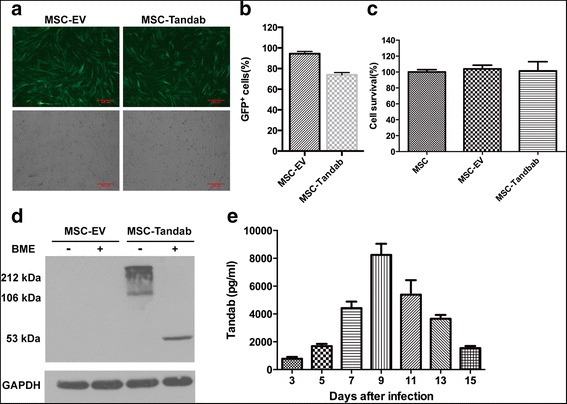
“This result was in accordance with other studies that reported the highest secretion level at 6–9 days, ranging from 1500 to 8247 pg/ml, with constant increases for 15 to 30 days after transduction [24, 25].”
Enhance therapeutic efficacy of BiTE (HER2/CD3) for HER2- positive tumors through in vivo expression
Zong, H., Li, X., Li, Y., Wang, L., Yue, Y., Chen, J., Ke, Y., Paerhati, P., Han, L., Li, Y., et al. (2025) · International Journal of Pharmaceutics X · doi:10.1016/j.ijpx.2025.100375 · Cited by 1
“MSCs can be genetically engineered to express tumor suppressor genes with anti-cancer activity and cytokines; and are currently being evaluated in numerous preclinical and clinical studies (Marini et al., 2017; Studeny et al., 2004; Zhang et al., 2017).”
Mesenchymal Stem Cell-based Cytotherapy for Osteoarthritis Management: State of the Art
Zhang, L., Han, Z., Han, Z., & Cai, H. (2023) · IntechOpen eBooks · doi:10.5772/intechopen.108258 · Cited by 1
Self-citationMSC-Derived Exosomes for Tissue Engineering and Disease Intervention
Zhang, L., Gao, X., Ma, S., Yu, M., Xu, X., Zhao, Y.-G., Chen, S., Li, Y., Yang, X., Guo, T., et al. (2023) · Physiology · doi:10.5772/intechopen.110530 · Cited by 1
Self-citationExosomes - Recent Advances From Bench to Bedside
Saheera, S. (2023) · Physiology · doi:10.5772/intechopen.106308 · Cited by 1
The Historical Overview of Stem Cells
Zhang, L., Yu, H., Du, W., Chen, S., Zhao, Y.-G., Yao, J. P., & Chen, C. (2024) · BENTHAM SCIENCE PUBLISHERS eBooks · doi:10.2174/9789815196627124010004 · Cited by 1
Self-citationModulação da via das quinureninas na lesão auricular aguda induzida pela radiação UVB em camundongos
Piêgas, M. B. (2017) · LA Referencia (Red Federada de Repositorios Institucionales de Publicaciones Científicas)
Acović, A. (2020) · National Repository of Dissertations in Serbia
Yuan, X., Yang, L. W., Yang, Y., Tian, W., Fan, D., Liu, R., Lei, X., Xia, Y., Yang, L. X., Yan, S. W., et al. (2022) · Research Square · doi:10.21203/rs.3.rs-1702175/v1
Self-citationRetractedZhang, L., & Han, Z. (2022) · Current Chinese Science · doi:10.2174/2210298103666221228143135
Self-citationHuman Pluripotent Stem Cell-Derived Mesenchymal Stem Cells for Oncotherapy
Yu, H., Yang, X., Chen, S., Xu, X., Han, Z., Cai, H., Guan, Z., & Zhang, L. (2024) · Biochemistry · doi:10.5772/intechopen.112975
Self-citationZhang, L., Chi, Y., Wei, Y., Zhang, W., Wang, F., Zhang, L., Zou, L., Song, B., Zhao, X., & Han, Z. (2021) · Figshare · doi:10.6084/m9.figshare.14853582
Self-citationZhang, L., Chi, Y., Wei, Y., Zhang, W., Wang, F., Zhang, L., Zou, L., Song, B., Zhao, X., & Han, Z. (2021) · Figshare · doi:10.6084/m9.figshare.14853573
Self-citationZhang, L., Chi, Y., Wei, Y., Zhang, W., Wang, F., Zhang, L., Zou, L., Song, B., Zhao, X., & Han, Z. (2021) · Figshare · doi:10.6084/m9.figshare.14853576
Self-citationZhang, L., Chi, Y., Wei, Y., Zhang, W., Wang, F., Zhang, L., Zou, L., Song, B., Zhao, X., & Han, Z. (2021) · Figshare · doi:10.6084/m9.figshare.14853579
Self-citationGao, H., Liu, M., Zhang, Y., Zhang, L., & Xie, B. (2022) · Figshare · doi:10.6084/m9.figshare.21203395
Self-citationZhang, L., Wei, Y., Chi, Y., Liu, D., Yang, S., Han, Z., & Li, Z. (2021) · Figshare · doi:10.6084/m9.figshare.13532107
Self-citationSun, Y., Wang, T., Hu, Q., Zhang, W., Zeng, Y., Lai, X., Zhang, L., & Shi, M. (2022) · Figshare · doi:10.6084/m9.figshare.21275660
Self-citationSun, Y., Wang, T.-E., Hu, Q., Zhang, W., Zeng, Y., Lai, X., Zhang, L., & Shi, M. (2022) · Figshare · doi:10.6084/m9.figshare.21275669
Self-citationSun, Y., Wang, T.-E., Hu, Q., Zhang, W., Zeng, Y., Lai, X., Zhang, L., & Shi, M. (2022) · Figshare · doi:10.6084/m9.figshare.21275675
Self-citationZhuang, W.-Z., Lin, Y.-H., Su, L.-J., Wu, M.-S., Jeng, H.-Y., Chang, H., Huang, Y.-H., & Ling, T.-Y. (2021) · Figshare · doi:10.6084/m9.figshare.14411581
Sun, Y., Wang, T.-E., Hu, Q., Zhang, W., Zeng, Y., Lai, X., Zhang, L., & Shi, M. (2022) · Figshare · doi:10.6084/m9.figshare.21275666
Self-citationZhang, L., Wei, Y., Chi, Y., Liu, D., Yang, S., Han, Z., & Li, Z. (2021) · Figshare · doi:10.6084/m9.figshare.13532104
Self-citationZhang, J., Zhong, M., Zhong, W., Lan, Y., Yuan, Z., Duan, Y., & Wei, Y. (2022) · Figshare · doi:10.6084/m9.figshare.21117410
Zhang, L., Chi, Y., Wei, Y., Zhang, W., 王福旭, Zhang, L., Zou, L., Song, B., Zhao, X., & Han, Z. (2021) · Figshare · doi:10.6084/m9.figshare.14853570
Self-citationZhang, L., Wei, Y., Chi, Y., Liu, D., Yang, S., Han, Z., & Li, Z. (2021) · Figshare · doi:10.6084/m9.figshare.13532116
Self-citationZhuang, W.-Z., Lin, Y.-H., Su, L.-J., Wu, M.-S., Jeng, H.-Y., Chang, H., Huang, Y.-H., & Ling, T.-Y. (2021) · Figshare · doi:10.6084/m9.figshare.14411578
Zhang, L., Wei, Y., Chi, Y., Liu, D., Yang, S., Han, Z., & Li, Z. (2021) · Figshare · doi:10.6084/m9.figshare.13532113
Self-citationSun, Y., Wang, T.-E., Hu, Q., Zhang, W., Zeng, Y., Lai, X., Zhang, L., & Shi, M. (2022) · Figshare · doi:10.6084/m9.figshare.21275672
Self-citationZhang, L., Wei, Y., Chi, Y., Liu, D., Yang, S., Han, Z., & Li, Z. (2021) · Figshare · doi:10.6084/m9.figshare.13532119
Self-citationZhang, L., Wei, Y., Chi, Y., Liu, D., Yang, S., Han, Z., & Li, Z. (2021) · Figshare · doi:10.6084/m9.figshare.13532110
Self-citationSharifzad, F., Alsadi, N., Yasavoli‐Sharahi, H., Shahbazi, R., Burger, D. E., & Matar, C. (2026) · Current Issues in Molecular Biology · doi:10.3390/cimb48040368
“The tumor-homing capacity of EVs makes them attractive agents for use as tumor-targeted delivery vehicles [57].”
Advances in the clinical application of mesenchymal stem cells for neurological disorders
Jamali, M. C., Shafie, A., Alqahtani, A. J., Al-Samawi, R. I., Alyami, H. M., Ashour, A. A., Felemban, M. F., Mansuri, N., Tayeb, F. J., Ahmad, I., et al. (2026) · Stem Cell Research & Therapy · doi:10.1186/s13287-026-05229-5
“For instance, intracellular delivery of degradable budesonide-containing MPs to MSCs resulted in an approximately fourfold increase in IDO activity in vitro compared with non-loaded MSCs, indicating a substantial enhancement of their immunomodulatory capacity [252].”
Metadata
- Authors
- Zhang, X., Yang, Y., Zhang, L., Lu, Y., Zhang, Q., Fan, D., Zhang, Y., Zhang, Y., Ye, Z., & Xiong, D.
- Affiliations
- Chinese Academy of Medical Sciences & Peking Union Medical College (CN)
- Corresponding author
- Zhang, Yizhi
- Zhang, Yanjun
- Xiong, Dongsheng
- ORCID
- Venue
- Journal of Hematology & Oncology
- Published
- 2017-02-23
- Volume
- 10
- Issue
- 1
- Pages
- 56-56
- ISSN
- 1756-8722 (ISSN-L)
- PMC
- PMC5322661
- OpenAlex
- W2591391056
- Semantic Scholar
- 1c442fe1caa683b262f13e91272f0aafb1925dce
- Cited by
- 89
- References
- 47
- Citations by year
- 2026: 3 · 2025: 11 · 2024: 2 · 2023: 7 · 2022: 17 · 2021: 18 · 2020: 14 · 2019: 7 · 2018: 6 · 2017: 4
- FWCI
- 4.87
- Type
- journal article
- Language
- en
- Open access
- gold
- doi.org
- Licence
- cc-by
- Locations
- Journal of Hematology & Oncology (publishedVersion, cc-by)
- PubMed Central (publishedVersion, cc-by)
- PubMed (publishedVersion)
- DOAJ (DOAJ: Directory of Open Access Journals) (submittedVersion, cc-by-sa)
- Funders
- National Natural Science Foundation of China (30971291, 81400176, 81572993)
- National Science and Technology Major Project of China (2012zx09102301-015)
- CAMS Initiative for Innovative Medicine (2016-I2M-1-007, 2016-I2M-3-013)
- Topics
- Life Sciences › Biochemistry, Genetics and Molecular Biology › Cell Biology › Mesenchymal stem cell research
- Health Sciences › Medicine › Oncology › CAR-T cell therapy research
- Life Sciences › Biochemistry, Genetics and Molecular Biology › Biotechnology › Bacterial Cancer Therapy
- Keywords
- mesenchymal stem cells, B-cell lymphoma, B-cell non-Hodgkin lymphoma, indoleamine 2,3-dioxygenase inhibition, tumor tropism, tumor homing, T cell anergy, CD98, tumor growth inhibition, adoptive immunotherapy, T cell cytotoxicity, immunosuppressive tumor microenvironment
- MeSH terms
- Animals, Antibodies, Neoplasm, Antibody-Dependent Cell Cytotoxicity, Cell Line, Humans, T-Lymphocytes, Tryptophan, Lymphoma, B-Cell, CD3 Complex, Antibodies, Bispecific, Antigens, CD19, K562 Cells, Cell Line, Tumor, Indoleamine-Pyrrole 2,3,-Dioxygenase, Mice, Single-Chain Antibodies, HEK293 Cells, Mesenchymal Stem Cells, Heterografts
About these checks
Registry, retraction, Cites and statistics results are computed, not judged, with one exception: a printed reference that no index lists is read once by a model before it counts as a citation error. Claims are extracted by a model and kept only when their quote appears verbatim in the text; each cited source is then checked, with a model’s help, for whether it says what the claim relies on. Those verdicts can be wrong — read the claim’s quote and the cited source before relying on one.
Statistics and arithmetic are recomputed, not judged.
Confidence bands are shown only for fields calibrated on our annotated test set. None is calibrated yet, so no band is shown.
What counts as a claim ›How we measure confidence ›How we check this ›
Are you an author, or do you see a problem with this page? Request a review
Data sources
Bibliographic data: Semantic Scholar, OpenAlex, Crossref.
Contains information from the Semantic Scholar Academic Graph Datasets, made available under the ODC Attribution License (ODC-BY 1.0).
Semantic Scholar’s data is described in: Kinney, R., et al. (2023). The Semantic Scholar Open Data Platform. arXiv:2301.10140.
