

Targeting the Wnt/β-catenin signaling pathway in cancer
Open accessThe DOI matches its Crossref record; 166 of the 166 references it cites were found in a registry or an index.
Abstract
The aberrant Wnt/β-catenin signaling pathway facilitates cancer stem cell renewal, cell proliferation and differentiation, thus exerting crucial roles in tumorigenesis and therapy response. Accumulated investigations highlight the therapeutic potential of agents targeting Wnt/β-catenin signaling in cancer. Wnt ligand/ receptor interface, β-catenin destruction complex and TCF/β-catenin transcription complex are key components of the cascade and have been targeted with interventions in preclinical and clinical evaluations. This scoping review aims at outlining the latest progress on the current approaches and perspectives of Wnt/β-catenin signaling pathway targeted therapy in various cancer types. Better understanding of the updates on the inhibitors, antagonists and activators of Wnt/β-catenin pathway rationalizes innovative strategies for personalized cancer treatment. Further investigations are warranted to confirm precise and secure targeted agents and achieve optimal use with clinical benefits in malignant diseases.
Overview
The claims and statistics of this paper haven’t been checked yet.
Free: it reads the open-access text and checks the first 5 claims that cite a source we can check. Create a free account to check every claim.
Integrity signals
Registry
Cites
Statistics
Figures
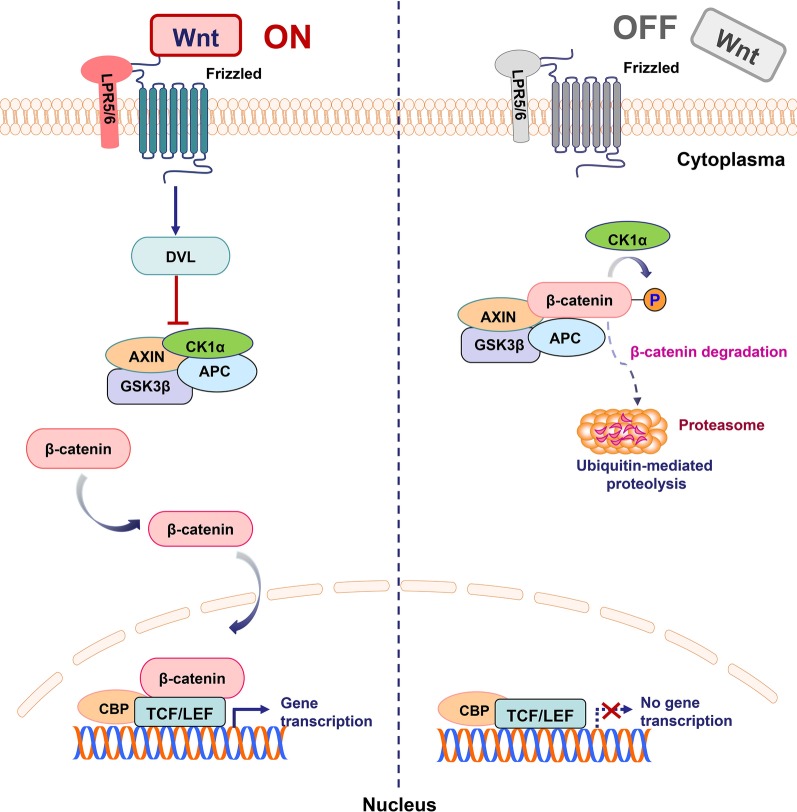
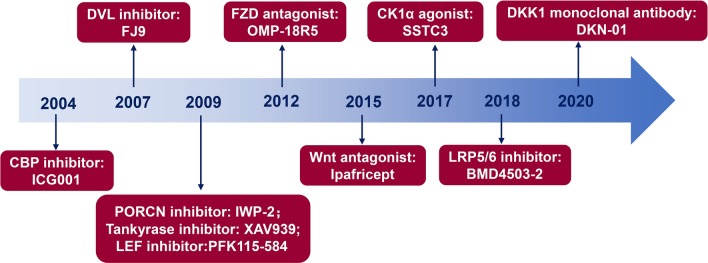
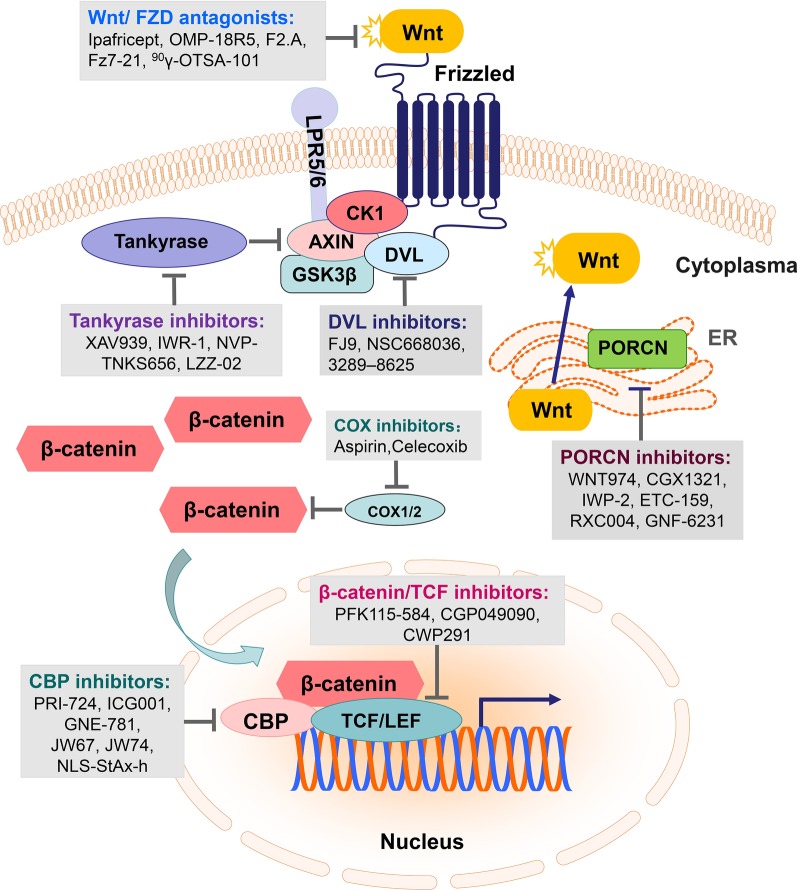
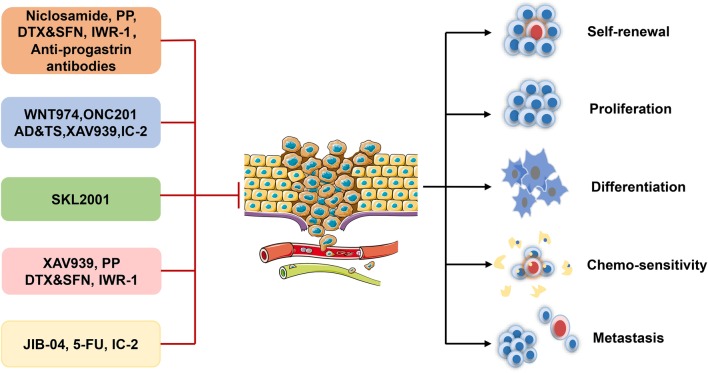
Verification
Claims the paper makes
The claims and statistics of this paper haven’t been checked yet.
Free: it reads the open-access text and checks the first 5 claims that cite a source we can check. Create a free account to check every claim.
Claims other papers make about this one
Each is checked against this paper’s own text: does it say what the citing paper says it does?
The source backs part of the claim, not all of it — or backs it for a different population, condition or comparison.
In the citing paper
“The Wnt/β-catenin pathway is a well-established oncogenic driver in numerous cancers, including ccRCC, where its aberrant activation is linked to tumor initiation and progression [30–32].”
From PPP1R18-mediated activation of Wnt/β-catenin and EMT is dependent on ERK signaling in clear cell renal cell carcinoma (2026) · cites this paper as [30]
Experimental — accuracy not yet measured
Self-check
Percentages, sums and reported differences re-computed from the paper’s own numbers.
The self-check needs the paper’s full text.
Citations
Cites
2 retracted
Razak, S., Afsar, T., Almajwal, A. M., et al. (2019) · Cell & Bioscience · doi:10.1186/s13578-019-0277-z · Cited by 43
RetractedWu, L., He, S., He, Y., Wang, X., & Lu, L. (2018) · Medical Science Monitor · doi:10.12659/msm.910742 · Cited by 14
Self-citationRetractedWnt/β-Catenin Signaling, Disease, and Emerging Therapeutic Modalities
Nusse, R., & Clevers, H. (2017) · Cell · doi:10.1016/j.cell.2017.05.016 · Cited by 4,342
Tankyrase inhibition stabilizes axin and antagonizes Wnt signalling
Huang, S.-M. A., Mishina, Y. M., Liu, S., Cheung, A., Stegmeier, F., Michaud, G. A., Charlat, O., Wiellette, E., Zhang, Y., Wiessner, S., et al. (2009) · Nature · doi:10.1038/nature08356 · Cited by 2,037
Self-citationCan we safely target the WNT pathway?
Kahn, M. (2014) · Nature Reviews Drug Discovery · doi:10.1038/nrd4233 · Cited by 1,034
Targeting the Wnt/beta-catenin pathway in cancer: Update on effectors and inhibitors
Krishnamurthy, N., & Kurzrock, R. (2018) · Cancer Treatment Reviews · doi:10.1016/j.ctrv.2017.11.002 · Cited by 1,026
Targeting cancer stem cells by inhibiting Wnt, Notch, and Hedgehog pathways
Takebe, N., Harris, P. J., Warren, R. Q., & Ivy, S. P. (2011) · Nature Reviews Clinical Oncology · doi:10.1038/nrclinonc.2010.196 · Cited by 992
Wnt Induces LRP6 Signalosomes and Promotes Dishevelled-Dependent LRP6 Phosphorylation
Bilić, J., Huang, Y.-L., Davidson, G., Zimmermann, T., Cruciat, C.-M., Bienz, M., & Niehrs, C. (2007) · Science · doi:10.1126/science.1137065 · Cited by 934
The m6A reader YTHDF1 promotes ovarian cancer progression via augmenting EIF3C translation
Liu, T., Wei, Q., Jin, J., Luo, Q., Liu, Y., Yang, Y., Cheng, C., Li, L., Pi, J., Si, Y., et al. (2020) · Nucleic Acids Research · doi:10.1093/nar/gkaa048 · Cited by 746
The Roles of APC and Axin Derived from Experimental and Theoretical Analysis of the Wnt Pathway
Lee, E., Salic, A., Krüger, R., Heinrich, R., & Kirschner, M. W. (2003) · PLoS Biology · doi:10.1371/journal.pbio.0000010 · Cited by 708
Research works printed but not linked: 1
- Amado N Predes D Fonseca B Cerqueira D Reis A Dudenhoeffer A Borges H Mendes F Abreu J Isoquercitrin suppresses colon cancer cell growth in vitro by targeting the Wnt/β-catenin signaling pathway J Biol Chem 2014 289 51 35456 35467 10.1074/jbc.M114.621599 25359775 PMC4271231 · DOI
Cited by
Items 601–700 of 1,002
Molecular Biomarkers of Glioma
Rajakaruna, P., Rios, S., Elnahas, H., Villanueva, A., Uribe, D., Leslie, S., Abbas, W. A., Barroso, L., Oyervides, S., Persans, M. W., et al. (2025) · Biomedicines · doi:10.3390/biomedicines13061298 · Cited by 10
UCHL3: a crucial deubiquitinase in DNA damage repair and tumor progression
Liu, J., Hu, S., Xiao, J., & Zhou, J. (2025) · Cancer Cell International · doi:10.1186/s12935-025-03884-x · Cited by 10
Cancer Stem Cells in Melanoma: Drivers of Tumor Plasticity and Emerging Therapeutic Strategies
Sabău, A.-H., Tinca, A. C., Niculescu, R., Cocuz, I. G., Cozac-Szőke, A. R., Lazar, B. A., Chiorean, D. M., Budin, C. E., & Cotoi, O. S. (2025) · International Journal of Molecular Sciences · doi:10.3390/ijms26157419 · Cited by 10
Zou, H., Liu, Y., Yang, X., Zhang, Q., Pan, Q., Huang, J., Guo, Y., Zhou, Y., Fang, S., Chen, Z., et al. (2025) · Cancer Letters · doi:10.1016/j.canlet.2025.217967 · Cited by 10
Duan, X., Zhang, L., & Liu, F. (2025) · Frontiers in Pharmacology · doi:10.3389/fphar.2025.1642957 · Cited by 10
Chen, K., Pan, X., Zhang, S., Xu, M., Chen, X., Pei, F., Wu, M., Meng, F., Sun, B., Zhang, M., et al. (2025) · Cellular & Molecular Biology Letters · doi:10.1186/s11658-025-00814-7 · Cited by 10
Tumor Cell Secretomes in Response to Anti- and Pro-Tumorigenic Agents
Liu, S., Sun, X., Li, K., Lin, C., Na, S., Li, B., & Yokota, H. (2021) · Onco · doi:10.3390/onco1020009 · Cited by 10
DIRAS2 Is a Prognostic Biomarker and Linked With Immune Infiltrates in Melanoma
Xue, W., Zhu, H., Liu, H., & He, H. (2022) · Frontiers in Oncology · doi:10.3389/fonc.2022.799185 · Cited by 10
Gao, Q., Chen, Y., Yue, L., Li, Z., & Wang, M. (2022) · Nucleosides Nucleotides & Nucleic Acids · doi:10.1080/15257770.2022.2148692 · Cited by 10
Weidle, U. H., & Nopora, A. (2023) · Cancer Genomics & Proteomics · doi:10.21873/cgp.20369 · Cited by 10
Li, S., Qi, S., Li, Y., Zhang, C., Sun, L., Liu, C., & Wang, H. (2023) · Thoracic Cancer · doi:10.1111/1759-7714.14844 · Cited by 10
Prieur, A., Harper, A. S., Khan, M., Vire, B., BRESSION, D., Payen, L. F., & Kopciuk, K. A. (2023) · BMC Cancer · doi:10.1186/s12885-023-10729-1 · Cited by 10
Zhu, D., Han, Q., & Zhu, H. (2023) · Scientific Reports · doi:10.1038/s41598-023-39537-0 · Cited by 10
Curcuminoids as Cell Signaling Pathway Modulators: A Potential Strategy for Cancer Prevention
Noor, A., Shafi, S., Sehar, N., Qadir, I., Bilquees, Rashid, S., Arafah, A. M., Rasool, S., Dar, N. J., Masoodi, M. H., et al. (2023) · Current Medicinal Chemistry · doi:10.2174/0929867331666230809100335 · Cited by 10
Xiao, H., Ma, L., Ding, J., Wang, H., Bi, X., Tan, F., & Piao, W. (2023) · Current Cancer Drug Targets · doi:10.2174/1568009624666230912095526 · Cited by 10
Synthesis and Medicinal Applications of Fenamic Acid Derivatives
Sharma, M., & Prasher, P. (2023) · Current Organic Chemistry · doi:10.2174/1385272827666230914113509 · Cited by 10
Li, H., Liu, J., Qin, X., Sun, J., Liu, Y., & Jin, F. (2023) · Cellular and Molecular Neurobiology · doi:10.1007/s10571-023-01414-9 · Cited by 10
Chen, J., Zhao, Y.-X., Wang, X., Zang, L., Yin, D., & Tan, S. (2024) · Anti-Cancer Agents in Medicinal Chemistry · doi:10.2174/0118715206289246240110044931 · Cited by 10
Self-citationSu, G., Wang, D., Yang, Q., Kong, L., Ju, X., Yang, Q., Zhu, Y., Zhang, S., & Li, Y. (2024) · Natural Products and Bioprospecting · doi:10.1007/s13659-024-00443-1 · Cited by 10
PI3K and tankyrase inhibitors as therapeutic targets in colorectal cancer
Yakkala, P. A., Naaz, F., Shafi, S., & Kamal, Ä. (2024) · Expert Opinion on Therapeutic Targets · doi:10.1080/14728222.2024.2331015 · Cited by 10
Raghav, A., & Jeong, G. (2024) · Cells · doi:10.3390/cells13070638 · Cited by 10
Intrinsic Epigenetic State of Primary Osteosarcoma Drives Metastasis
Singh, I., Rainusso, N. C., Kurenbekova, L., Nirala, B. K., Dou, J., Muruganandham, A., & Yustein, J. T. (2024) · Molecular Cancer Research · doi:10.1158/1541-7786.mcr-23-0055 · Cited by 10
Zhang, Y., Liu, J., Yang, G., Zou, J., Tan, Y., Xi, E.-P., Geng, Q., & Wang, Z. (2024) · Environmental Toxicology · doi:10.1002/tox.24359 · Cited by 10
Self-citationSun, J., Zhang, S., Wang, M., Cheng, H., Wang, Y., He, S., Zuo, Q., Wang, N., Li, Q., & Wang, M. (2024) · Translational Oncology · doi:10.1016/j.tranon.2024.102054 · Cited by 10
MiR-135b-5p promotes cetuximab resistance in colorectal cancer by regulating FOXN3
Peng, C., Li, X., Yao, Y., Nie, Y., Fan, L., & Zhu, C. (2024) · Cancer Biology & Therapy · doi:10.1080/15384047.2024.2373497 · Cited by 10
Hu, L., Wang, Z., Liao, Y., Jiang, X., Lian, H., & Lin, Z. (2024) · Oncology and Translational Medicine · doi:10.1097/ot9.0000000000000041 · Cited by 10
Wu, W., Wang, X., Ma, R., Huang, S., Li, H., & Lyu, X. (2024) · Genes & Diseases · doi:10.1016/j.gendis.2024.101483 · Cited by 10
Self-citationQi, W., Li, R., Li, L., Li, S., Zhang, H., & Tian, H. (2021) · Annals of Translational Medicine · doi:10.21037/atm-21-4015 · Cited by 10
Zhang, X., Wang, M., Zhang, Y., Yang, J., & Duan, W. (2022) · Tissue and Cell · doi:10.1016/j.tice.2022.102009 · Cited by 10
Self-citationPeña-Flores, J. A., Enríquez-Espinoza, D., Muela‐Campos, D., Álvarez-Ramírez, A., Sáenz, A., Barraza-Gómez, A. A., Bravo, K., Estrada-Macías, M. E., & González-Alvarado, K. (2023) · Non-Coding RNA · doi:10.3390/ncrna9010012 · Cited by 10
Hasyeoui, M., Lassagne, F., Erb, W., Nael, M. A., Elokely, K. M., Chaikuad, A., Knapp, S., Jorda, A., Vallés, S. L., Quissac, E., et al. (2023) · Bioorganic Chemistry · doi:10.1016/j.bioorg.2023.106456 · Cited by 10
Muneer, R., Qazi, R., Fatima, A., Ahmad, W., Salim, A., Dini, L., & Khan, I. (2023) · World Journal of Stem Cells · doi:10.4252/wjsc.v15.i8.821 · Cited by 10
CircRNAs in Malignant Tumor Radiation: The New Frontier as Radiotherapy Biomarkers
Wu, X., Wu, J., Wang, L., Yang, W., Wang, B., & Yang, H. (2022) · Frontiers in Oncology · doi:10.3389/fonc.2022.854678 · Cited by 10
Wang, S. S. Y., Chng, W. J., Liu, H., & Mel, S. D. (2022) · Cancers · doi:10.3390/cancers14225654 · Cited by 10
Huang, G., Wu, Y., Du, Y., Gan, H., & Hao, S. (2022) · World Neurosurgery · doi:10.1016/j.wneu.2022.12.063 · Cited by 10
Fujimura, T., Furugaki, K., Mizuta, H., Muraoka, S., Nishio, M., Adachi, J., Uchibori, K., Miyauchi, E., Hayashi, H., Katayama, R., et al. (2024) · npj Precision Oncology · doi:10.1038/s41698-024-00757-w · Cited by 9
Seryl‐ tRNA synthetase inhibits Wnt signaling and breast cancer progression and metastasis
Lei, J., Wang, J., Liu, Z., Zhang, Q., & Yang, X. (2025) · The FASEB Journal · doi:10.1096/fj.202401720r · Cited by 9
Walther, N., Schultz-Heienbrok, R., Staß, H., Corman, V. M., Gassen, N. C., Müller, M. A., Drosten, C., Witzenrath, M., Lee, H., & Posch, M. G. (2025) · PLoS ONE · doi:10.1371/journal.pone.0303924 · Cited by 9
Gao, D., Zhou, Z., Chen, L. V., Zheng, J., & Yang, J. (2025) · BMC Cancer · doi:10.1186/s12885-025-13808-7 · Cited by 9
Regulatory effect of Wnt signaling on mitochondria in cancer: from mechanism to therapy
Han, J., Yuan, Y., Zhang, J., Hou, Y., Xu, H., Nie, X., Zhao, Z., & Hou, J. (2025) · APOPTOSIS · doi:10.1007/s10495-025-02114-z · Cited by 9
Wang, L., Yang, Z., Xing, S., Song, Z., Ouyang, M., & Yu, H. (2025) · Discover Oncology · doi:10.1007/s12672-025-02756-0 · Cited by 9
Samah, B., Lanez, E., Benamor, M. L., Bekkar, Y., Nacer, S. N., Bourougaa, L., Bouraoui, R., Garzoli, S., & Lanez, T. (2025) · Computational Biology and Chemistry · doi:10.1016/j.compbiolchem.2025.108754 · Cited by 9
Bian, Y., Li, J., Cao, J., Wang, S., & Ma, C. (2025) · Cancer Medicine · doi:10.1002/cam4.71421 · Cited by 9
Astore, M., Fabbri, L., Monte, A., Deiana, C., Rizzo, A., Tavolari, S., Deserti, M., Brandi, G., Palloni, A., & Frega, G. (2025) · International Journal of Molecular Sciences · doi:10.3390/ijms262411961 · Cited by 9
Chen, Y., Jin, Y., Chen, Y.-K., Cui, C., Yao, J., Zhang, Y., Li, M. H., Cao, G. F., Yang, S., Fan, Y. H., et al. (2026) · Annals of Oncology · doi:10.1016/j.annonc.2026.01.005 · Cited by 9
Self-citationLaeliocattleya, R. A., Yunianta, Y., Risjani, Y., & Wulan, S. N. (2023) · Journal of Biomolecular Structure and Dynamics · doi:10.1080/07391102.2023.2265488 · Cited by 9
Kumar, V., Haldar, S., Ghosh, S., Saini, S., Dhankhar, P., & Roy, P. (2023) · ACS Omega · doi:10.1021/acsomega.3c02732 · Cited by 9
Song, W., Miao, L., Zhang, K., Liu, Y., Lin, J., Li, J., Huang, Z., Cao, D., Zhang, Y., & Hu, C. (2023) · Cellular Signalling · doi:10.1016/j.cellsig.2023.110987 · Cited by 9
Self-citationCheng, X.-Y., Wu, C., Xu, H., Zou, R., Li, T., & Ye, S. (2024) · Aging · doi:10.18632/aging.205554 · Cited by 9
Norcantharidin in cancer therapy – a new approach to overcoming therapeutic resistance: A review
Zeng, B., Chen, X., Zhang, L., Gao, X., & Gui, Y. (2024) · Medicine · doi:10.1097/md.0000000000037394 · Cited by 9
Yu, J., Gadwa, J., Ross, R. B., Knitz, M. W., Darragh, L. B., Abdelazeem, K. N. M., Beynor, J. I., Neupert, B., Nguyen, A. T., Nguyen, D., et al. (2024) · Cancer Immunology Immunotherapy · doi:10.1007/s00262-024-03664-y · Cited by 10
Foxd3/SLC5A6 axis regulates apoptosis in LUAD cells by controlling mitochondrial biotin uptake
Zheng, C. R., Hu, W., Wu, D., Chen, R., Xu, C., & Huang, R. (2024) · Cellular Signalling · doi:10.1016/j.cellsig.2024.111473 · Cited by 9
Emerging therapeutic strategies for Wnt-dependent colon cancer targeting macropinocytosis
Tejeda‐Muñoz, N., Binder, G., & Mei, K. (2024) · Cells and Development · doi:10.1016/j.cdev.2024.203974 · Cited by 9
Shi, F., Wei, Y., Huang, Y., & Yao, D. (2025) · Cancer Management and Research · doi:10.2147/cmar.s496925 · Cited by 9
Saadh, M. J., Ghnim, Z. S., Mahdi, M. S., Mandaliya, V. B., Ballal, S., Bareja, L., Chaudhary, K., Sharma, R., Gupta, S., Taher, W. M., et al. (2025) · Pathology - Research and Practice · doi:10.1016/j.prp.2025.155904 · Cited by 9
Sun, M., Zhu, H., Yang, Y. P., Yao, Y., Li, H., Feng, F., Wáng, Q., Liu, R., & Sun, C. (2025) · International Journal of Oncology · doi:10.3892/ijo.2025.5742 · Cited by 9
Patnaik, R., Varghese, R. L., Khan, S., Huda, B., Bhurka, F., Amiri, L., & Banerjee, Y. (2025) · Translational Cancer Research · doi:10.21037/tcr-24-1027 · Cited by 9
Recent advances in understanding the role of Wnt5a in prostate cancer and bone metastasis
Xie, Q.-Y., Zhao, G.-Q., Tang, H., & Wa, Q. (2025) · Discover Oncology · doi:10.1007/s12672-025-02680-3 · Cited by 9
Pathogenic roles of long noncoding RNAs in melanoma: Implications in diagnosis and therapies
Xiao, Y., Xia, Y., Wang, Y., & Xue, C. (2021) · Genes & Diseases · doi:10.1016/j.gendis.2021.08.007 · Cited by 9
Liu, Q., Hoffman, R. M., Song, J., Miao, S., Zhang, J., Ding, D., & Wang, D. (2022) · Anticancer Research · doi:10.21873/anticanres.15713 · Cited by 9
Zhao, H.-G., Yin, J.-J., Chen, X., Wu, J., Wang, W., & Tang, L. (2022) · Folia Biologica · doi:10.14712/fb2022068010033 · Cited by 9
Wnt Signaling and Aging of the Gastrointestinal Tract
Asano, N., Takeuchi, A., Imatani, A., Saito, M., Jin, X., Hatta, W., Uno, K., Koike, T., & Masamune, A. (2022) · International Journal of Molecular Sciences · doi:10.3390/ijms232012210 · Cited by 10
Tan, L., & Chen, Z. (2022) · Journal of Oncology · doi:10.1155/2022/8071343 · Cited by 9
Roles of oncogenes in esophageal squamous cell carcinoma and their therapeutic potentials
Xiao, S., Huang, G. C., Zeng, W., Zhou, J., Li, Y., Fan, T., Liu, X., Xia, J., & Zeng, X. (2022) · Clinical & Translational Oncology · doi:10.1007/s12094-022-02981-x · Cited by 9
TIGD1 Is an Independent Prognostic Factor that Promotes the Progression of Colon Cancer
Zou, J., Zhang, H., Wu, Z., Hu, W., Zhang, T., Xie, H., Huang, Y., & Zhou, H. (2024) · Cancer Biotherapy and Radiopharmaceuticals · doi:10.1089/cbr.2022.0052 · Cited by 9
Ridwan, S., Erlina, L., Bahtiar, A., & SUKMAWATI, D. (2023) · International Journal of Applied Pharmaceutics · doi:10.22159/ijap.2023v15i1.46570 · Cited by 9
Shen, C., Li, P., Wang, S., Wu, S.-R., Hsieh, C.-Y., Dai, Y., & Liu, Y. (2023) · Heliyon · doi:10.1016/j.heliyon.2023.e16004 · Cited by 9
Das, A., Ghosh, B., Dasgupta, S., Seal, I., Sil, S., & Roy, S. (2023) · Arabian Journal of Chemistry · doi:10.1016/j.arabjc.2023.104995 · Cited by 9
Du, J., Zhuo, Y., Sun, X., Nie, M., Yang, J., Luo, X., & Gu, H. (2023) · Open Medicine · doi:10.1515/med-2023-0726 · Cited by 9
Shen, D., & Kang, S. (2024) · Biology Direct · doi:10.1186/s13062-024-00461-6 · Cited by 9
Wang, N., Gan, G., Yang, J., & Wang, L. (2022) · Current Medicinal Chemistry · doi:10.2174/0929867329666220629150656 · Cited by 9
Fan, Y., Yang, L., Ren, Y., Wu, Y., Li, L., & Li, L. (2022) · Journal of the Korean Gastric Cancer Association · doi:10.5230/jgc.2022.22.e26 · Cited by 9
Porcupine inhibition is a promising pharmacological treatment for severe sclerosteosis pathologies
Dreyer, T. J., Keen, J. A. C., Wells, L. M., Hopkinson, M., Orriss, I. R., Holdsworth, G., Pitsillides, A. A., & Roberts, S. J. (2025) · Bone Research · doi:10.1038/s41413-025-00406-3 · Cited by 8
Mir, P. A., Kumar, N., Gupta, S. K., Kaur, A., Farooq, S., Sandhu, G. S., & Kumar, A. (2025) · Frontiers in Oncology · doi:10.3389/fonc.2025.1645438 · Cited by 8
USP7 at the Crossroads of Ubiquitin Signaling, Cell Cycle, and Tumorigenesis
Lusardi, M., Rapetti, F., Spallarossa, A., Massone, M., Cichero, E., & Brullo, C. (2025) · Molecules · doi:10.3390/molecules30204038 · Cited by 9
Renal cell carcinoma organoids for precision medicine: bridging the gap between models and patients
Gao, J., Luo, H., Wang, S., Zhou, C., Li, Z., Kimhoy, C., Liang, G., & Chen, S. (2025) · Journal of Translational Medicine · doi:10.1186/s12967-025-06949-7 · Cited by 8
Samadder, S., Paul, P., & De, A. (2023) · Journal of Cancer Metastasis and Treatment · doi:10.20517/2394-4722.2023.21 · Cited by 8
Yang, X., XIANG, X., XU, G., ZHOU, S., An, T., & Huang, Z. (2023) · Oncology Research Featuring Preclinical and Clinical Cancer Therapeutics · doi:10.32604/or.2023.030768 · Cited by 8
Valdivia, A., Cowan, M. L., Cárdenas, H., Isac, A. M., Zhao, G., Huang, H., & Matei, D. E. (2024) · Frontiers in Oncology · doi:10.3389/fonc.2024.1304691 · Cited by 8
Yang, Y., Yue, C., Mu, Y., Tang, X., & Mu, X. (2024) · Chemical Biology & Drug Design · doi:10.1111/cbdd.14507 · Cited by 8
Kongsintaweesuk, S., Klungsaeng, S., Intuyod, K., Techasen, A., Pairojkul, C., Luvira, V., Pinlaor, S., & Pinlaor, P. (2024) · Heliyon · doi:10.1016/j.heliyon.2024.e30104 · Cited by 8
Targeting HSP47 for cancer treatment
Shi, R., Yu, R., Lian, F., Zheng, Y., Feng, S., Li, C., & Zheng, X. (2024) · Anti-Cancer Drugs · doi:10.1097/cad.0000000000001612 · Cited by 8
Kan, L. K., Drill, M., Jayakrishnan, P. C., Sequeira, R. P., Sanfilippo, P. G., McLean, C., Hunn, M., Williams, D. A., O'Brien, T. J., Drummond, K. J., et al. (2024) · Brain Research Bulletin · doi:10.1016/j.brainresbull.2024.110996 · Cited by 8
Inokuchi, S., & Shimamoto, K. (2024) · Frontiers in Pharmacology · doi:10.3389/fphar.2024.1411285 · Cited by 8
Unveiling the Impact of BMP9 in Liver Diseases: Insights into Pathogenesis and Therapeutic Potential
Chen, H., Li, Y.-Y., Nio, K., & Tang, H. (2024) · Biomolecules · doi:10.3390/biom14081013 · Cited by 8
Oxidative Stress, Glutaredoxins, and Their Therapeutic Potential in Posterior Capsular Opacification
Li, C., Yan, W., & YAN, H. H. (2024) · Antioxidants · doi:10.3390/antiox13101210 · Cited by 8
SEMA3C promotes thyroid cancer via the Wnt/β-catenin pathway
Li, S., Cheng, Y., Gao, C., Yuan, Q., & Lu, X. (2024) · Experimental Cell Research · doi:10.1016/j.yexcr.2024.114378 · Cited by 8
Lack of dominant-negative activity for tumor-related ZNRF3 missense mutations at endogenous levels
Li, S., Niu, J., Zhang, R., Massaar, S., Cabrita, M. N., van Merode, J., de Schipper, N., van de Kamp, L., Peppelenbosch, M. P., & Smits, R. (2024) · Oncogene · doi:10.1038/s41388-024-03253-4 · Cited by 8
Wei, Z., Xia, K., Liu, W., Huang, X., Wei, Z., & Guo, W. (2024) · Molecular Medicine · doi:10.1186/s10020-024-01038-9 · Cited by 8
Signaling pathway regulators in preimplantation embryos
Karami, N., Taei, A., Eftekhari‐Yazdi, P., & Hassani, F. (2024) · Journal of Molecular Histology · doi:10.1007/s10735-024-10338-7 · Cited by 8
Lasota, J. P., Kaczorowski, M., Chłopek, M., Miłek-Krupa, J., Szczepaniak, M., Ylaya, K., Chodyna, M., Iżycka‐Świeszewska, E., Scherping, A. K., Czapiewski, P., et al. (2025) · Human Pathology · doi:10.1016/j.humpath.2025.105717 · Cited by 8
The role of lncRNAs in the interplay of signaling pathways and epigenetic mechanisms in glioma
Yildiz, C. B., Du, J., Mohan, K. N., Zimmer‐Bensch, G., & Abdolahi, S. (2025) · Epigenomics · doi:10.1080/17501911.2024.2442297 · Cited by 8
Valkama, A., Vorimo, S., Tervasmäki, A., Räsänen, H., Savolainen, E., Pylkäs, K., & Mantere, T. (2025) · Genes Chromosomes and Cancer · doi:10.1002/gcc.70024 · Cited by 8
Lieb, N., Tran, A., Torres, M., & Bommareddy, A. (2025) · Biology · doi:10.3390/biology14020194 · Cited by 8
Stachyra, P., & Grzybowska‐Szatkowska, L. (2025) · Genes · doi:10.3390/genes16050600 · Cited by 8
Chen, F., Zhao, B., Tian, Y., Liu, Q., & Zhang, B. (2025) · Biochemical and Biophysical Research Communications · doi:10.1016/j.bbrc.2025.152079 · Cited by 8
Fernández-Pérez, J., Pommepuy, I., Michal, M., Michal, M., Cleven, A. H. G., Bouvier, C., Gomez‐Brouchet, A., Weingertner, N., Papke, D. J., Jo, V. Y., et al. (2025) · Modern Pathology · doi:10.1016/j.modpat.2025.100810 · Cited by 8
Ursolic Acid Suppresses Colorectal Cancer Through Autophagy–Lysosomal Degradation of β-Catenin
Lin, C.-M., Chao, M., Chen, H., & Chen, H.-J. (2025) · International Journal of Molecular Sciences · doi:10.3390/ijms26136210 · Cited by 8
Chen, W., Wang, H.-T., Ji, J.-F., Wang, Z.-Y., Shi, T., Wu, M.-H., & Yu, P.-J. (2022) · Neoplasma · doi:10.4149/neo_2022_211208n1749 · Cited by 8
Xie, D., Li, S., Wang, X., & Fang, L. (2023) · Aging · doi:10.18632/aging.204468 · Cited by 8
Self-citation
Metadata
- Authors
- Zhang, Y., & Wang, X.
- Affiliations
- Shandong University (CN)
- Corresponding author
- Wang, Xin
- Venue
- Journal of Hematology & Oncology
- Published
- 2020-12
- Volume
- 13
- Issue
- 1
- Pages
- 165-165
- ISSN
- 1756-8722 (ISSN-L)
- PMC
- PMC7716495
- OpenAlex
- W3108389912
- Semantic Scholar
- 0d7942a68a143e7bb071bb09cce214062907f1cc
- Cited by
- 1,431
- References
- 165
- Citations by year
- 2026: 140 · 2025: 298 · 2024: 363 · 2023: 312 · 2022: 238 · 2021: 79 · 2020: 1
- FWCI
- 15.17
- Type
- journal article
- Language
- en
- Open access
- gold
- doi.org
- Licence
- cc-by
- creativecommons.org/licenses/by/4.0/ (tdm)
- creativecommons.org/licenses/by/4.0/ (vor, 3 d)
- Locations
- Journal of Hematology & Oncology (publishedVersion, cc-by)
- PubMed Central (publishedVersion, cc-by)
- PubMed (publishedVersion)
- DOAJ (DOAJ: Directory of Open Access Journals) (submittedVersion, cc-by-sa)
- Funders
- National Natural Science Foundation of China (No.82000195)
- National Natural Science Foundation (No. 81270598, No. 81473486, No. 81770210)
- Key Research and Development Program of Shandong Province (No.2018CXGC1213)
- Technology Development Projects of Shandong Province (No. 2017GSF18189)
- Taishan Scholars Program of Shandong Province (No.tsqn201909184)
- Academic promotion programme of Shandong First Medical University (2020RC007)
- Shandong Provincial Hospital Youth Talent Plan
- Shandong Provincial Hospital Research Incubation Fund
- Topics
- Life Sciences › Biochemistry, Genetics and Molecular Biology › Molecular Biology › Wnt/β-catenin signaling in development and cancer
- Health Sciences › Medicine › Oncology › Colorectal Cancer Treatments and Studies
- Life Sciences › Biochemistry, Genetics and Molecular Biology › Molecular Biology › Hedgehog Signaling Pathway Studies
- Keywords
- Wnt/β-catenin signaling, cancer stem cells, targeted cancer therapy, β-catenin destruction complex, Wnt inhibitors, precision oncology, carcinogenesis
- MeSH terms
- Animals, Antineoplastic Agents, Humans, Neoplasms, Neoplastic Stem Cells, Wnt Proteins, beta Catenin, Molecular Targeted Therapy, Wnt Signaling Pathway
About these checks
Registry, retraction, Cites and statistics results are computed, not judged, with one exception: a printed reference that no index lists is read once by a model before it counts as a citation error. Claims are extracted by a model and kept only when their quote appears verbatim in the text; each cited source is then checked, with a model’s help, for whether it says what the claim relies on. Those verdicts can be wrong — read the claim’s quote and the cited source before relying on one.
Statistics and arithmetic are recomputed, not judged.
Confidence bands are shown only for fields calibrated on our annotated test set. None is calibrated yet, so no band is shown.
What counts as a claim ›How we measure confidence ›How we check this ›
Are you an author, or do you see a problem with this page? Request a review
Data sources
Bibliographic data: Semantic Scholar, OpenAlex, Crossref.
Contains information from the Semantic Scholar Academic Graph Datasets, made available under the ODC Attribution License (ODC-BY 1.0).
Semantic Scholar’s data is described in: Kinney, R., et al. (2023). The Semantic Scholar Open Data Platform. arXiv:2301.10140.
