

GD2 or HER2 targeting T cell engaging bispecific antibodies to treat osteosarcoma
Open accessThe DOI matches its Crossref record; 64 of the 64 references it cites were found in a registry or an index.
Abstract
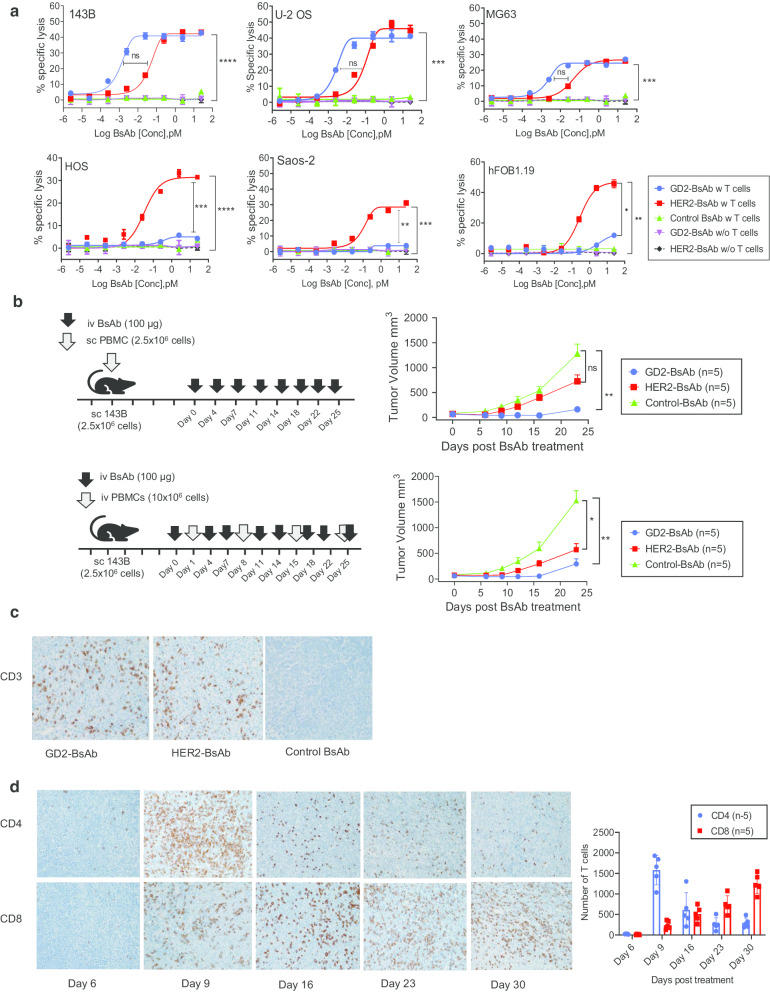
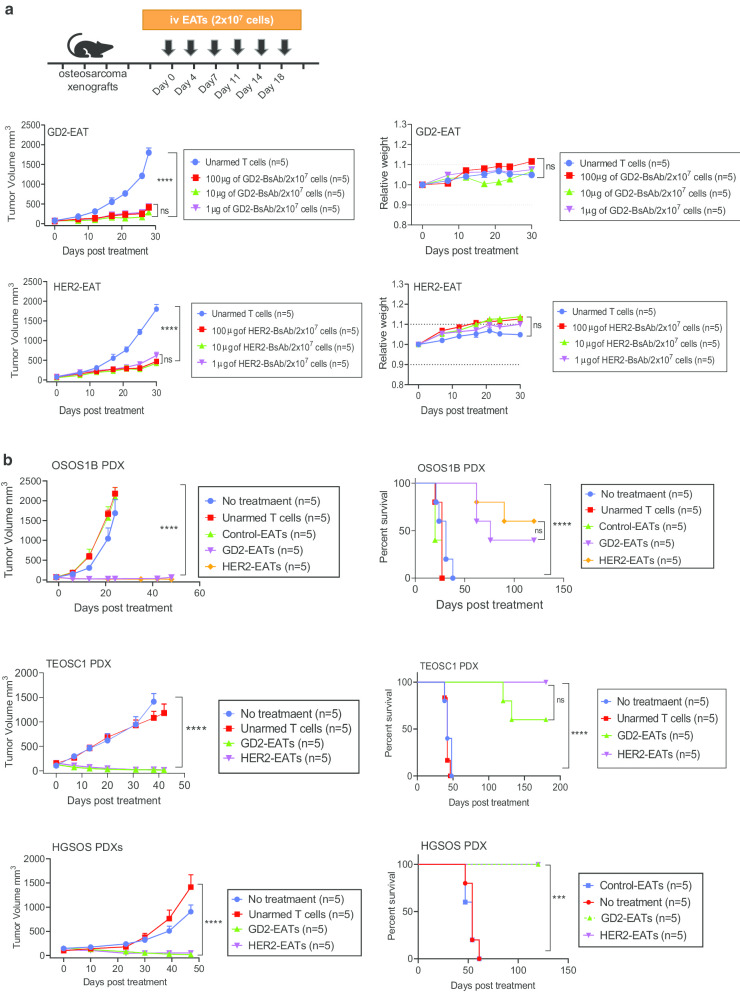
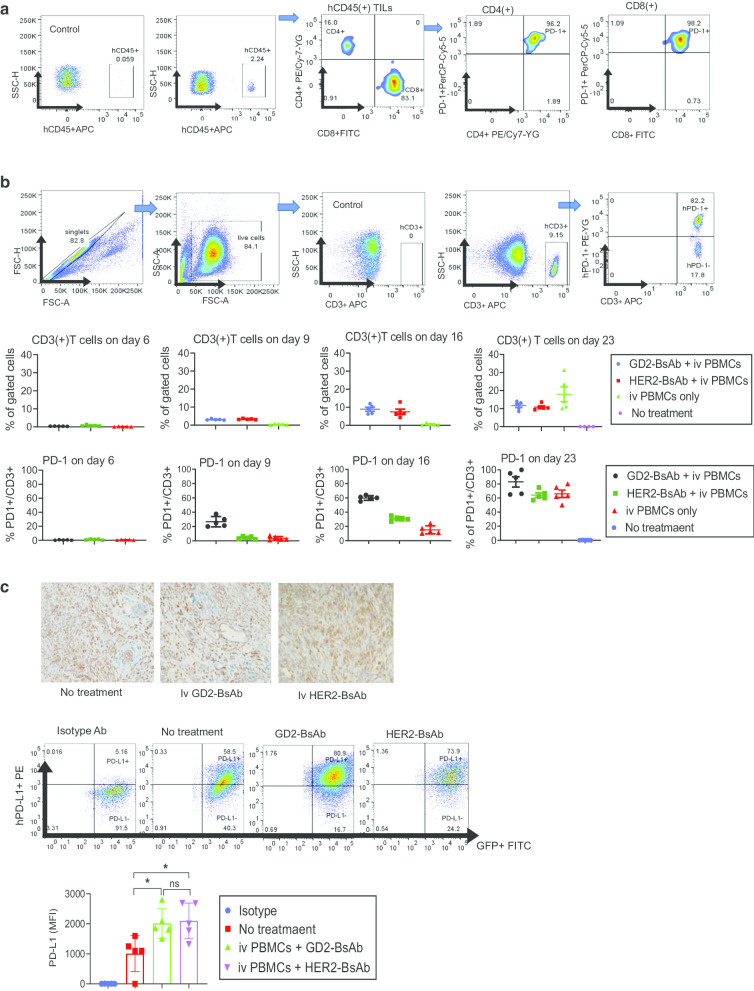
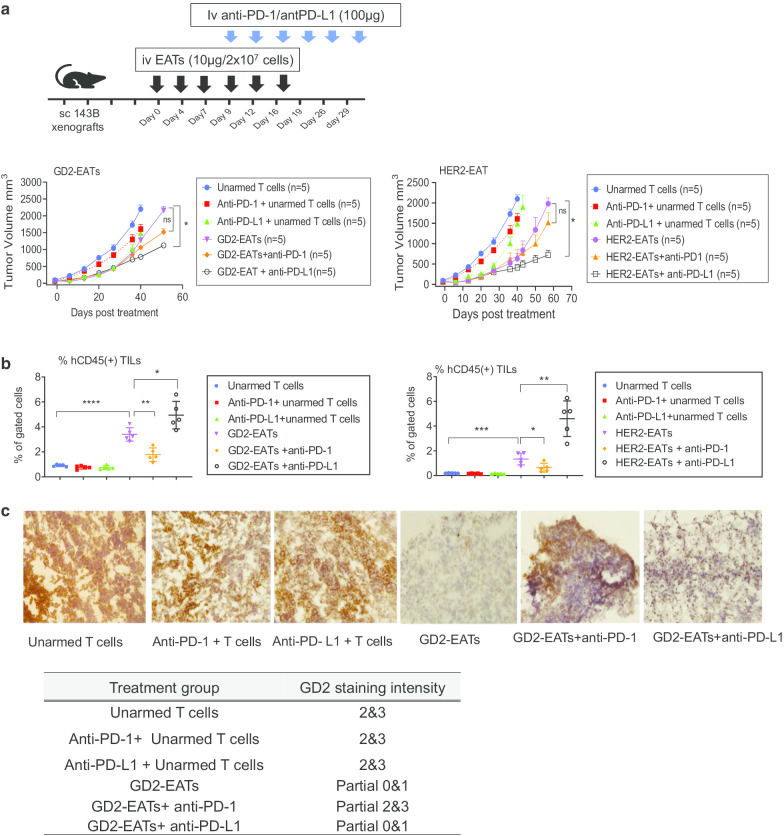
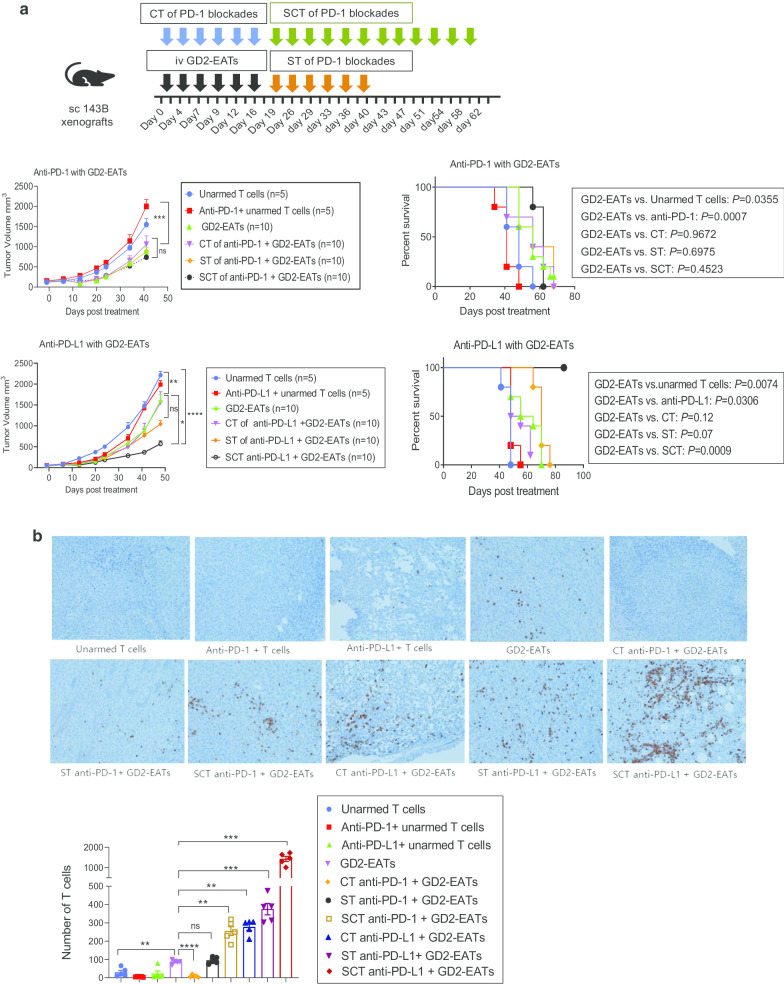
Background: The cure rate for metastatic osteosarcoma has not substantially improved over the past decades. Clinical trials of anti-HER2 trastuzumab or anti-GD2 dinutuximab for metastatic or refractory osteosarcoma were not successful, and neither was immune checkpoint inhibitors (ICIs). Methods: We tested various target antigen expressions on osteosarcoma cell lines using flow cytometry and analyzed in vitro T cell engaging BsAb (T-BsAb)-dependent T cell-mediated cytotoxicity using 4-h 51 Cr release assay. We tested in vivo anti-tumor activities of T-BsAb targeting GD2 or HER2 in established osteosarcoma cell line or patient-derived xenograft (PDX) mouse models carried out in BALB-Rag2−/−IL-2R-γc-KO (BRG) mice. We also generated ex vivo BsAb-armed T cells (EATs) and studied their tumor-suppressive effect against osteosarcoma xenografts. In order to improve the anti-tumor response, ICIs, anti-human PD-1 (pembrolizumab) or anti-human PD-L1 (atezolizumab) antibodies were tested their synergy with GD2- or HER2-BsAb against osteosarcoma. Results: GD2 and HER2 were chosen from a panel of surface markers on osteosarcoma cell lines and PDXs. Anti-GD2 BsAb or anti-HER2 BsAb exerted potent anti-tumor effect against osteosarcoma tumors in vitro and in vivo. T cells armed with anti-GD2-BsAb (GD2-EATs) or anti-HER2-BsAb (HER2-EATs) showed significant anti-tumor activities as well. Anti-PD-L1 combination treatment enhanced BsAb-armed T cell function in vivo and improved tumor control and survival of the mice, when given sequentially and continuously. Conclusion: Anti-GD2 and anti-HER2 BsAbs were effective in controlling osteosarcoma. These data support the clinical investigation of GD2 and HER2 targeted T-BsAb treatment in combination with immune checkpoint inhibitors, particularly anti-PD-L1, in patients with osteosarcoma to improve their treatment outcome.
Overview
The claims and statistics of this paper haven’t been checked yet.
Free: it reads the open-access text and checks the first 5 claims that cite a source we can check. Create a free account to check every claim.
Integrity signals
Registry
Cites
Statistics
Figures
Verification
Claims the paper makes
The claims and statistics of this paper haven’t been checked yet.
Free: it reads the open-access text and checks the first 5 claims that cite a source we can check. Create a free account to check every claim.
Claims other papers make about this one
Each is checked against this paper’s own text: does it say what the citing paper says it does?
The source backs part of the claim, not all of it — or backs it for a different population, condition or comparison.
In the citing paper
“Besides, PD-1/PD-L1 blockade significantly enhanced anti-tumor activity of GD2-BsAb and HER2-BsAb [147].”
From Advances on immunotherapy for osteosarcoma (2024) · cites this paper as [147]
Experimental — accuracy not yet measuredThe cited source says what the claim attributes to it.
In the citing paper
“GD2-BsAb and HER2-BsAb successfully directed T cells into tumor tissues and exerted potent anti-tumor activity against osteosarcoma.”
From Advances on immunotherapy for osteosarcoma (2024) · cites this paper as [147]
Self-check
Percentages, sums and reported differences re-computed from the paper’s own numbers.
The self-check needs the paper’s full text.
Citations
Cites
Tumor-associated B7-H1 promotes T-cell apoptosis: A potential mechanism of immune evasion
Dong, H., Strome, S. E., Salomao, D. R., Tamura, H., Hirano, F., Flies, D. B., Roche, P. C., Lu, J., Zhu, G., Tamada, K., et al. (2002) · Nature Medicine · doi:10.1038/nm730 · Cited by 5,025 · cited 2×
“When confronted by tumor targets, EATs produce pro-inflammatory cytokines such as IFN-γ, upregulating PD-L1, which induces T cell apoptosis and inhibits T cell cytotoxicity [60].”
BackgroundNagata, S., & Golstein, P. (1995) · Science · doi:10.1126/science.7533326 · Cited by 3,979
CD19 CAR–T cells of defined CD4+:CD8+ composition in adult B cell ALL patients
Turtle, C. J., Hanafi, L.-A., Berger, C., Gooley, T. A., Cherian, S., Hudecek, M., Sommermeyer, D., Melville, K., Pender, B., Budiarto, T. M., et al. (2016) · Journal of Clinical Investigation · doi:10.1172/jci85309 · Cited by 2,112 · cited 2×
“Furthermore, balanced ratio of CD4(+) and CD8(+) CAR T cells (CD4:CD8 ratio 1:1) seemed to be important for high remission rates in B-ALL [51].”
BackgroundResultExpanding roles for CD4+ T cells in immunity to viruses
Swain, S. L., McKinstry, K. K., & Strutt, T. M. (2012) · Nature Reviews Immunology · doi:10.1038/nri3152 · Cited by 956
Epitope spreading in immune-mediated diseases: implications for immunotherapy
Vanderlugt, C. L., & Miller, S. D. (2002) · Nature Reviews Immunology · doi:10.1038/nri724 · Cited by 950
Sommermeyer, D., Hudecek, M., Kosasih, P. L., Gogishvili, T., Maloney, D. G., Turtle, C. J., & Riddell, S. R. (2016) · Leukemia · doi:10.1038/leu.2015.247 · Cited by 867
Szabo, P. A., Levitin, H. M., Miron, M., Snyder, M. E., Senda, T., Yuan, J., Cheng, Y. L., Bush, E. C., Dogra, P., Thapa, P., et al. (2019) · Nature Communications · doi:10.1038/s41467-019-12464-3 · Cited by 756 · cited 2×
“, IFN-γ, TNF-α, IL-15, and IL-13, as confirmed by the expression of master transcription factor genes TBX21 and GATA3 [49, 50].”
BackgroundRecurrent Somatic Structural Variations Contribute to Tumorigenesis in Pediatric Osteosarcoma
Chen, X., Bahrami, A., Pappo, A., Easton, J., Dalton, J., Hedlund, E., Ellison, D., Shurtleff, S., Wu, G., Wei, L., et al. (2014) · Cell Reports · doi:10.1016/j.celrep.2014.03.003 · Cited by 752 · cited 1×
“osteosarcoma have shown high levels of chromosome structural variations, rearrangements, and mutation clusters that result in significant disease heterogeneity but few clinically approachable alterations [9, 10].”
BackgroundMeyers, P. A., Schwartz, C. L., Krailo, M. D., Healey, J. H., Bernstein, M. L., Betcher, D., Ferguson, W. S., Gebhardt, M. C., Goorin, A. M., Harris, M., et al. (2008) · Journal of Clinical Oncology · doi:10.1200/jco.2008.14.0095 · Cited by 752 · cited 1×
“Coley on bacterial toxins inducing tumor regression [5], many immunotherapy attempts have been made in soft tissue and bone sarcomas, but success has been very limited [6, 7].”
BackgroundClaudin-18 Splice Variant 2 Is a Pan-Cancer Target Suitable for Therapeutic Antibody Development
Sahin, U., Koslowski, M., Dhaene, K., Usener, D., Brandenburg, G., Seitz, G., Huber, C., & Türeci, O. (2008) · Clinical Cancer Research · doi:10.1158/1078-0432.ccr-08-1547 · Cited by 501
Perry, J. A., Kiezun, A., Tonzi, P., Van Allen, E. M., Carter, S. L., Baca, S. C., Cowley, G. S., Bhatt, A. S., Rheinbay, E., Pedamallu, C. S., et al. (2014) · Proceedings of the National Academy of Sciences · doi:10.1073/pnas.1419260111 · Cited by 481
Coley, W. B. (1910) · Proceedings of the Royal Society of Medicine · doi:10.1177/003591571000301601 · Cited by 423
Bielack, S. S., Smeland, S., Whelan, J. S., Marina, N., Jovic, G., Hook, J. M., Krailo, M. D., Gebhardt, M., Pápai, Z., Meyer, J., et al. (2015) · Journal of Clinical Oncology · doi:10.1200/jco.2014.60.0734 · Cited by 422 · cited 1×
“The EURAMOS-1 clinical trial, which incorporated IFN-α2b, failed to show the benefit [8], and also, antibody-based immunotherapies have not succeeded in improving outcome including trastuzumab or dinutuximab in clinical trials.”
MethodA Meta-Analysis of Osteosarcoma Outcomes in the Modern Medical Era
Allison, D. C., Carney, S. C., Ahlmann, E. R., Hendifar, A., Chawla, S., Fedenko, A., Angeles, C., & Menendez, L. R. (2012) · Sarcoma · doi:10.1155/2012/704872 · Cited by 404
CD4 T-cell Subsets and Tumor Immunity: The Helpful and the Not-so-Helpful
Kim, H.-J., & Cantor, H. (2014) · Cancer Immunology Research · doi:10.1158/2326-6066.cir-13-0216 · Cited by 380
Grignani, G., Palmerini, E., Ferraresi, V., D'Ambrosio, L., Bertulli, R., Asaftei, S. D., Tamburini, A., Pignochino, Y., Sangiolo, D., Marchesi, E., et al. (2015) · The Lancet Oncology · doi:10.1016/s1470-2045(14)71136-2 · Cited by 340
Timing of PD-1 Blockade Is Critical to Effective Combination Immunotherapy with Anti-OX40
Messenheimer, D. J., Jensen, S. M., Afentoulis, M. E., Wegmann, K. W., Feng, Z., Friedman, D. J., Gough, M. J., Urba, W. J., & Fox, B. A. (2017) · Clinical Cancer Research · doi:10.1158/1078-0432.ccr-16-2677 · Cited by 321
Lymphocyte depletion and repopulation after chemotherapy for primary breast cancer
Verma, R., Foster, R. E., Horgan, K., Mounsey, K., Nixon, H., Smalle, N., Hughes, T. A., & Carter, C. R. (2016) · Breast Cancer Research · doi:10.1186/s13058-015-0669-x · Cited by 269
Behjati, S., Tarpey, P. S., Haase, K., Ye, H., Young, M. D., Alexandrov, L. B., Farndon, S. J., Collord, G., Wedge, D. C., Martincorena, I., et al. (2017) · Nature Communications · doi:10.1038/ncomms15936 · Cited by 261
Immuno-genomic landscape of osteosarcoma
Wu, C.-C., Beird, H. C., Andrew Livingston, J., Advani, S., Mitra, A., Cao, S., Reuben, A., Ingram, D., Wang, W.-L., Ju, Z., et al. (2020) · Nature Communications · doi:10.1038/s41467-020-14646-w · Cited by 251 · cited 1×
“osteosarcoma have shown high levels of chromosome structural variations, rearrangements, and mutation clusters that result in significant disease heterogeneity but few clinically approachable alterations [9, 10].”
BackgroundYu, A. L., Uttenreuther-Fischer, M. M., Huang, C. S., Tsui, C. C., Gillies, S. D., Reisfeld, R. A., & Kung, F. H. (1998) · Journal of Clinical Oncology · doi:10.1200/jco.1998.16.6.2169 · Cited by 250
Ebb, D., Meyers, P., Grier, H., Bernstein, M., Gorlick, R., Lipshultz, S. E., Krailo, M., Devidas, M., Barkauskas, D. A., Siegal, G. P., et al. (2012) · Journal of Clinical Oncology · doi:10.1200/jco.2011.37.4546 · Cited by 243
Menares, E., Gálvez-Cancino, F., Cáceres-Morgado, P., Ghorani, E., López, E., Díaz, X., Saavedra-Almarza, J., Figueroa, D. A., Roa, E., Quezada, S. A., et al. (2019) · Nature Communications · doi:10.1038/s41467-019-12319-x · Cited by 237
Glioblastoma-targeted CD4+ CAR T cells mediate superior antitumor activity
Wang, D., Aguilar, B., Starr, R., Alizadeh, D., Brito, A., Sarkissian, A., Ostberg, J. R., Forman, S. J., & Brown, C. E. (2018) · JCI Insight · doi:10.1172/jci.insight.99048 · Cited by 233
Osteosarcoma in adolescents and adults: survival analysis with and without lung metastases
Aljubran, A. H., Griffin, A., Pintilie, M., & Blackstein, M. (2009) · Annals of Oncology · doi:10.1093/annonc/mdn731 · Cited by 230
Creation of “Humanized” Mice to Study Human Immunity
Pearson, T., Greiner, D. L., & Shultz, L. D. (2008) · Current Protocols in Immunology · doi:10.1002/0471142735.im1521s81 · Cited by 211
TCR engagement negatively affects CD8 but not CD4 CAR T cell expansion and leukemic clearance
Yang, Y., Kohler, M. E., Chien, C. D., Sauter, C. T., Jacoby, E., Yan, C., Hu, Y., Wanhainen, K., Qin, H., & Fry, T. J. (2017) · Science Translational Medicine · doi:10.1126/scitranslmed.aag1209 · Cited by 208 · cited 1×
“Although cytotoxic CD8(+) T cells mediate direct tumor cell killing, CD4(+) T helper (TH) cells are also important in tumor cell eradication [47], as CD4(+) CAR T cells exert significant cytotoxicity comparable to CD8(+) CAR T cells [48].”
BackgroundEnhanced T-Cell Immunity to Osteosarcoma Through Antibody Blockade of PD-1/PD-L1 Interactions
Lussier, D. M., O’Neill, L., Nieves, L. M., McAfee, M. S., Holechek, S. A., Collins, A. W., Dickman, P., Jacobsen, J., Hingorani, P., & Blattman, J. N. (2015) · Journal of Immunotherapy · doi:10.1097/cji.0000000000000065 · Cited by 197 · cited 2×
“Although immune checkpoint inhibitors (ICIs) have yet to demonstrate their benefit in patients with osteosarcoma (NCT02406781), blockade of PD-1 and PD-L1 interactions showed their potential to improve anti-tumor response in preclinical studies [18].”
BackgroundHuman T follicular helper (Tfh) cells and disease
Ma, C. S., & Deenick, E. K. (2014) · Immunology & Cell Biology · doi:10.1038/icb.2013.55 · Cited by 185
Ali, N., Flutter, B., Sanchez Rodriguez, R., Sharif-Paghaleh, E., Barber, L. D., Lombardi, G., & Nestle, F. O. (2012) · PLoS ONE · doi:10.1371/journal.pone.0044219 · Cited by 175
Shrimali, R. K., Ahmad, S., Verma, V., Zeng, P., Ananth, S., Gaur, P., Gittelman, R. M., Yusko, E., Sanders, C., Robins, H., et al. (2017) · Cancer Immunology Research · doi:10.1158/2326-6066.cir-17-0292 · Cited by 161
Stock, S., Schmitt, M. W., & Sellner, L. (2019) · International Journal of Molecular Sciences · doi:10.3390/ijms20246223 · Cited by 152
Oncotargets GD2 and GD3 are highly expressed in sarcomas of children, adolescents, and young adults
Dobrenkov, K., Ostrovnaya, I., Gu, J., Cheung, I. Y., & Cheung, N. V. (2016) · Pediatric Blood & Cancer · doi:10.1002/pbc.26097 · Cited by 149
Self-citationYang, Z. Z., Grote, D. M., Ziesmer, S. C., Xiu, B., Novak, A. J., & Ansell, S. M. (2015) · Blood Cancer Journal · doi:10.1038/bcj.2015.1 · Cited by 141
Cytokines and the inception of CD8 T cell responses
Cox, M. A., Harrington, L. E., & Zajac, A. J. (2011) · Trends in Immunology · doi:10.1016/j.it.2011.01.004 · Cited by 138
Targeted T-cell Therapy in Stage IV Breast Cancer: A Phase I Clinical Trial
Lum, L. G., Thakur, A. B., Al-Kadhimi, Z. S., Colvin, G. A., Cummings, F. J., Legare, R. D., Dizon, D. S., KOUTTAB, N. M., Maizel, A., Colaiace, W., et al. (2015) · Clinical Cancer Research · doi:10.1158/1078-0432.ccr-14-2280 · Cited by 116
Xhangolli, I., Dura, B., Lee, G., Kim, D., Xiao, Y., & Fan, R. (2019) · Genomics Proteomics & Bioinformatics · doi:10.1016/j.gpb.2019.03.002 · Cited by 114
Polymerase chain reaction (PCR) techniques for site-directed mutagenesis
Reikofski, J., & Tao, B. Y. (1992) · Biotechnology Advances · doi:10.1016/0734-9750(92)91451-j · Cited by 112
Sundara, Y. T., Kostine, M., Cleven, A. H. G., Bovée, J. V. M. G., Schilham, M. W., & Cleton-Jansen, A.-M. (2017) · Cancer Immunology, Immunotherapy · doi:10.1007/s00262-016-1925-3 · Cited by 111
Shibuya, H., Hamamura, K., Hotta, H., Matsumoto, Y., Nishida, Y., Hattori, H., Furukawa, K., Ueda, M., & Furukawa, K. (2012) · Cancer Science · doi:10.1111/j.1349-7006.2012.02344.x · Cited by 110
A modular IgG-scFv bispecific antibody topology
Orcutt, K. D., Ackerman, M. E., Cieslewicz, M., Quiroz, E., Slusarczyk, A. L., Frangioni, J. V., & Wittrup, K. D. (2010) · Protein Engineering, Design and Selection · doi:10.1093/protein/gzp077 · Cited by 100
Cell surface receptor expression patterns in osteosarcoma
Hassan, S. E., Bekarev, M., Kim, M. Y., Lin, J., Piperdi, S., Gorlick, R., & Geller, D. S. (2012) · Cancer · doi:10.1002/cncr.26339 · Cited by 97
Chordoma and chondrosarcoma gene profile: implications for immunotherapy
Schwab, J. H., Boland, P. J., Agaram, N. P., Socci, N. D., Guo, T., O'Toole, G. C., Wang, X., Ostroumov, E., Hunter, C., Block, J. A., et al. (2008) · Cancer Immunology Immunotherapy · doi:10.1007/s00262-008-0557-7 · Cited by 97
Retargeting T Cells to GD2 Pentasaccharide on Human Tumors Using Bispecific Humanized Antibody
Xu, H., Cheng, M., Guo, H., Chen, Y., Huse, M., & Cheung, N.-K. V. (2015) · Cancer Immunology Research · doi:10.1158/2326-6066.cir-14-0230-t · Cited by 92
Self-citationMüller, C. R., Smeland, S., Bauer, H. C. F., Sæter, G., & Strander, H. (2005) · Acta Oncologica · doi:10.1080/02841860510029978 · Cited by 82
Anti‐CD3 × anti‐GD2 bispecific antibody redirects T‐cell cytolytic activity to neuroblastoma targets
Yankelevich, M., Kondadasula, S. V., Thakur, A. B., Buck, S. A., Cheung, N. V., & Lum, L. G. (2012) · Pediatric Blood & Cancer · doi:10.1002/pbc.24237 · Cited by 80
Self-citationOvercoming resistance to HER2-targeted therapy with a novel HER2/CD3 bispecific antibody
Lopez-Albaitero, A., Xu, H., Guo, H., Wang, L., Wu, Z., Tran, H., Chandarlapaty, S., Scaltriti, M., Janjigian, Y., de Stanchina, E., et al. (2017) · OncoImmunology · doi:10.1080/2162402x.2016.1267891 · Cited by 80
Self-citationPD-1 and PD-L1 expression in bone and soft tissue sarcomas
Torabi, A., Amaya, C. N., Wians, F. H., & Bryan, B. A. (2017) · Pathology · doi:10.1016/j.pathol.2017.05.003 · Cited by 80
Cellular therapy: Immune‐related complications
Oved, J. H., Barrett, D. M., & Teachey, D. T. (2019) · Immunological Reviews · doi:10.1111/imr.12768 · Cited by 75
Surface proteomic analysis of osteosarcoma identifies EPHA2 as receptor for targeted drug delivery
PosthumaDeBoer, J., Piersma, S. R., Pham, T. V., van Egmond, P. W., Knol, J. C., Cleton-Jansen, A. M., van Geer, M. A., van Beusechem, V. W., Kaspers, G. J. L., van Royen, B. J., et al. (2013) · British Journal of Cancer · doi:10.1038/bjc.2013.578 · Cited by 73 · cited 2×
“In addition, surface proteomic analysis of osteosarcoma has identified a wide range of proteins with differential abundance on osteosarcoma cells and human primary osteoblasts including ephrin type-A receptor (EPHA2) [62].”
BackgroundANDRADE, D. C. O. D., Redecha, P. B., Vukelic, M., Qing, X., Perino, G., Salmon, J. E., & Koo, G. C. (2011) · Arthritis & Rheumatism · doi:10.1002/art.30424 · Cited by 69
Huang, X., Zhang, W., Zhang, Z., Shi, D., Wu, F., Zhong, B., & Shao, Z. (2018) · Journal of Cancer · doi:10.7150/jca.25011 · Cited by 67
Vaishampayan, U. N., Thakur, A. B., Rathore, R., KOUTTAB, N. M., & Lum, L. G. (2015) · Prostate Cancer · doi:10.1155/2015/285193 · Cited by 66
Palmerini, E., Agostinelli, C., Picci, P., Pileri, S., Marafioti, T., Lollini, P.-L., Scotlandi, K., Longhi, A., Benassi, M. S., & Ferrari, S. (2017) · Oncotarget · doi:10.18632/oncotarget.22912 · Cited by 65
The genetic basis for inactivation of Wnt pathway in human osteosarcoma
Du, X., Yang, J., Yang, D., Tian, W., & Zhu, Z. (2014) · BMC Cancer · doi:10.1186/1471-2407-14-450 · Cited by 62
Martín‐Broto, J., Redondo, A., Valverde, C. M., Vaz, M. A., Mora, J., del Muro, X. G., Gutierrez, A. M., Tous, C., Carnero, A., Marcilla, D., et al. (2017) · Annals of Oncology · doi:10.1093/annonc/mdx536 · Cited by 59
Boye, K., Del Prever, A. B., Eriksson, M., Sæter, G., Tienghi, A., Lindholm, P., Fagioli, F., Skjeldal, S., Ferrari, S., & Hall, K. S. (2014) · Pediatric Blood & Cancer · doi:10.1002/pbc.24868 · Cited by 51
Somers, G. R., Ho, M., Zieleńska, M., Squire, J. A., & Thorner, P. S. (2005) · Pediatric and Developmental Pathology · doi:10.1007/s10024-005-0044-5 · Cited by 50
Development of a Tetravalent Anti-GPA33/Anti-CD3 Bispecific Antibody for Colorectal Cancers
Wu, Z., Guo, H.-F., Xu, H., & Cheung, N. V. (2018) · Molecular Cancer Therapeutics · doi:10.1158/1535-7163.mct-18-0026 · Cited by 49
Self-citationA potent tetravalent T-cell–engaging bispecific antibody against CD33 in acute myeloid leukemia
Hoseini, S. S., Guo, H.-F., Wu, Z., Hatano, M. N., & Cheung, N. V. (2018) · Blood Advances · doi:10.1182/bloodadvances.2017014373 · Cited by 44
Self-citationMaximizing the Utility of Cancer Transcriptomic Data
Xiang, Y., Ye, Y., Zhang, Z., & Han, L. (2018) · Trends in cancer · doi:10.1016/j.trecan.2018.09.009 · Cited by 40
Onabajo, O. O., George, J., Lewis, M. G., & Mattapallil, J. J. (2013) · PLoS ONE · doi:10.1371/journal.pone.0059758 · Cited by 39
Ullenhag, G. J., Spendlove, I., Watson, N. F., Kallmeyer, C., Pritchard‐Jones, K., & Durrant, L. G. (2008) · Clinical Immunology · doi:10.1016/j.clim.2008.03.512 · Cited by 24
Chemotherapy Regimens for Patients with Newly Diagnosed Malignant Bone Tumors
Roberts, R. D., Wedekind, M. F., & Setty, B. A. (2015) · Pediatric oncology · doi:10.1007/978-3-319-18099-1_6 · Cited by 10
Cited by
Advances on immunotherapy for osteosarcoma
Yu, S., & Yao, X. (2024) · Molecular Cancer · doi:10.1186/s12943-024-02105-9 · Cited by 270
“Besides, PD-1/PD-L1 blockade significantly enhanced anti-tumor activity of GD2-BsAb and HER2-BsAb [147].”
BackgroundInchingolo, A. D., Inchingolo, A. M., Malcangi, G., Avantario, P., Azzollini, D., Buongiorno, S., Viapiano, F., Campanelli, M., Ciocia, A. M., De Leonardis, N., et al. (2022) · Nutrients · doi:10.3390/nu14173519 · Cited by 176
“These proteins can be targeted with antibody-drug conjugates and/or adoptive cell treatments [184].”
BackgroundThe role of tumor-associated macrophages in osteosarcoma progression – therapeutic implications
Huang, Q., Liang, X., Ren, T., Huang, Y., Zhang, H., Yu, Y., Chen, C., Wang, W., Niu, J., Lou, J., et al. (2021) · Cellular Oncology · doi:10.1007/s13402-021-00598-w · Cited by 118
“teosarcoma cells and xenografts [141], which provides a basis”
BackgroundImmune checkpoints in osteosarcoma: Recent advances and therapeutic potential
Yang, W., Tang, F., Tu, C., Hornicek, F. J., Duan, Z., & Min, L. (2022) · Cancer Letters · doi:10.1016/j.canlet.2022.215887 · Cited by 114
Liu, K., Liao, Y., Zhou, Z., Zhang, L., Jiang, Y., Lu, H., Xu, T., Dong, Y., Gao, Q., Li, Z., et al. (2022) · Biomaterials · doi:10.1016/j.biomaterials.2022.121383 · Cited by 91
Metadata
- Authors
- Park, J. A., & Cheung, N.-K. V.
- Affiliations
- Memorial Sloan Kettering Cancer Center (US)
- Corresponding author
- Cheung, Nai-Kong V.
- Venue
- Journal of Hematology & Oncology
- Published
- 2020-12
- Volume
- 13
- Issue
- 1
- Pages
- 172-172
- ISSN
- 1756-8722 (ISSN-L)
- PMC
- PMC7731630
- OpenAlex
- W3112196236
- Cited by
- 88
- References
- 64
- Citations by year
- 2026: 10 · 2025: 16 · 2024: 22 · 2023: 14 · 2022: 12 · 2021: 14
- FWCI
- 5.62
- Type
- journal article
- Language
- en
- Open access
- gold
- doi.org
- Licence
- cc-by
- creativecommons.org/licenses/by/4.0/ (tdm)
- creativecommons.org/licenses/by/4.0/ (vor, 9 d)
- Locations
- Journal of Hematology & Oncology (publishedVersion, cc-by)
- PubMed Central (publishedVersion, cc-by)
- PubMed (publishedVersion)
- DOAJ (DOAJ: Directory of Open Access Journals) (submittedVersion, cc-by-sa)
- Funders
- Enid A. Haupt Endowed Chair
- The Robert Steel Foundation
- Kids Walk for Kids with Cancer
- Y-mAbs Therapeutics
- NCI Cancer Center Support Grant (P30 CA008748)
- Division of Cancer Epidemiology and Genetics, National Cancer Institute (P30 CA008748)
- Robert Steel Foundation
- Topics
- Health Sciences › Medicine › Oncology › Sarcoma Diagnosis and Treatment
- Life Sciences › Immunology and Microbiology › Immunology › Monoclonal and Polyclonal Antibodies Research
- Health Sciences › Medicine › Oncology › Cancer Immunotherapy and Biomarkers
- Keywords
- osteosarcoma, bispecific antibodies, T cell-engaging antibody, GD2, HER2, PD-L1 inhibitors, immune checkpoint inhibitors, adoptive T cell therapy, ex vivo T cell engineering, pembrolizumab, atezolizumab, patient-derived xenografts, combination immunotherapy
- MeSH terms
- Antineoplastic Agents, Immunological, Animals, Bone Neoplasms, Gangliosides, Humans, Male, Mice, Inbred BALB C, Osteosarcoma, T-Lymphocytes, Antibodies, Bispecific, Erb-b2 Receptor Tyrosine Kinases, Cell Line, Tumor
About these checks
Registry, retraction, Cites and statistics results are computed, not judged, with one exception: a printed reference that no index lists is read once by a model before it counts as a citation error. Claims are extracted by a model and kept only when their quote appears verbatim in the text; each cited source is then checked, with a model’s help, for whether it says what the claim relies on. Those verdicts can be wrong — read the claim’s quote and the cited source before relying on one.
Statistics and arithmetic are recomputed, not judged.
Confidence bands are shown only for fields calibrated on our annotated test set. None is calibrated yet, so no band is shown.
What counts as a claim ›How we measure confidence ›How we check this ›
Are you an author, or do you see a problem with this page? Request a review
Data sources
Bibliographic data: Semantic Scholar, OpenAlex, Crossref.
Contains information from the Semantic Scholar Academic Graph Datasets, made available under the ODC Attribution License (ODC-BY 1.0).
Semantic Scholar’s data is described in: Kinney, R., et al. (2023). The Semantic Scholar Open Data Platform. arXiv:2301.10140.
