

Novel therapies emerging in oncology to target the TGF‐β pathway
Open accessThe DOI matches its Crossref record; 140 of the 142 references it cites were found in a registry or an index.
Abstract
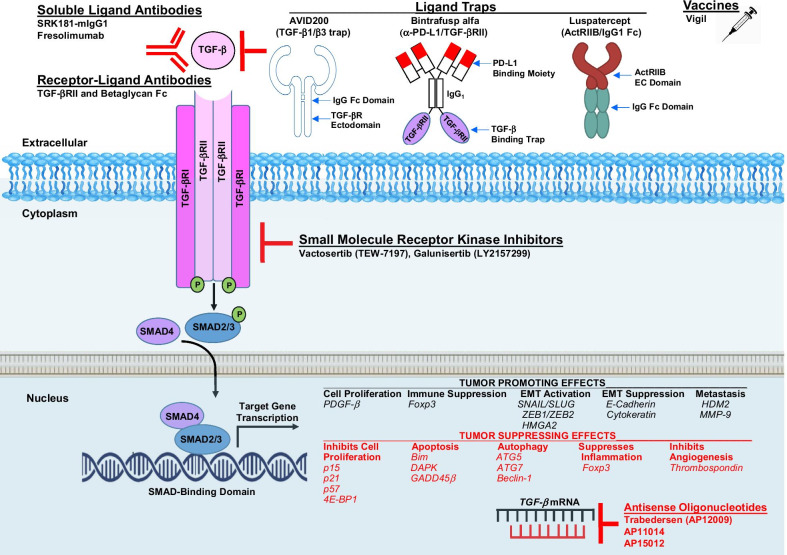
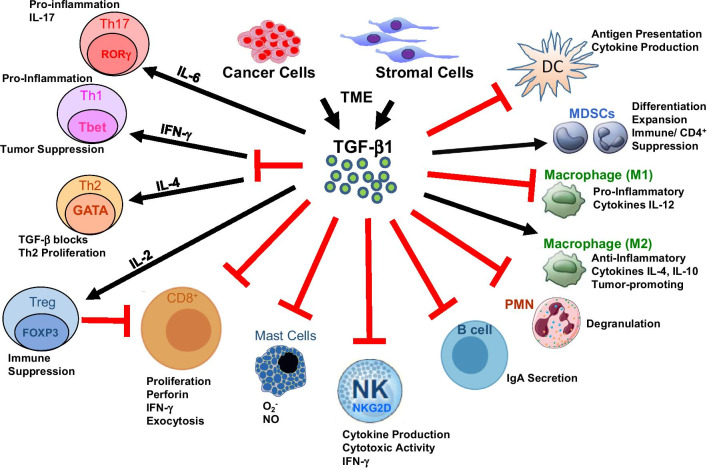
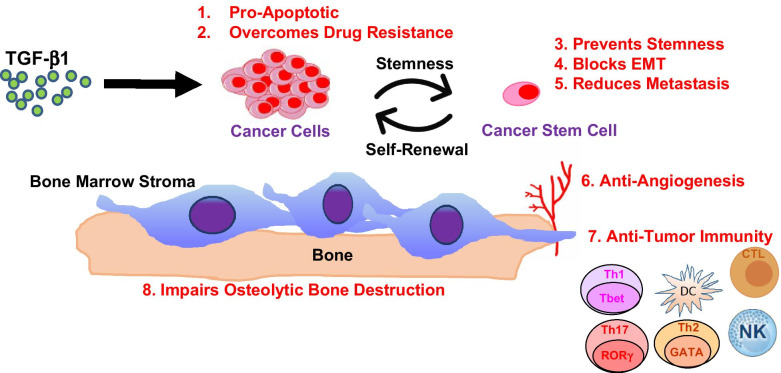
The TGF-β signaling pathway governs key cellular processes under physiologic conditions and is deregulated in many pathologies, including cancer. TGF-β is a multifunctional cytokine that acts in a cell- and context-dependent manner as a tumor promoter or tumor suppressor. As a tumor promoter, the TGF-β pathway enhances cell proliferation, migratory invasion, metastatic spread within the tumor microenvironment and suppresses immunosurveillance. Collectively, the pleiotropic nature of TGF-β signaling contributes to drug resistance, tumor escape and undermines clinical response to therapy. Based upon a wealth of preclinical studies, the TGF-β pathway has been pharmacologically targeted using small molecule inhibitors, TGF-β-directed chimeric monoclonal antibodies, ligand traps, antisense oligonucleotides and vaccines that have been now evaluated in clinical trials. Here, we have assessed the safety and efficacy of TGF-β pathway antagonists from multiple drug classes that have been evaluated in completed and ongoing trials. We highlight Vactosertib, a highly potent small molecule TGF-β type 1 receptor kinase inhibitor that is well-tolerated with an acceptable safety profile that has shown efficacy against multiple types of cancer. The TGF-β ligand traps Bintrafusp alfa (a bifunctional conjugate that binds TGF-β and PD-L1), AVID200 (a computationally designed trap of TGF-β receptor ectodomains fused to an Fc domain) and Luspatercept (a recombinant fusion that links the activin receptor IIb to IgG) offer new ways to fight difficult-to-treat cancers. While TGF-β pathway antagonists are rapidly emerging as highly promising, safe and effective anticancer agents, significant challenges remain. Minimizing the unintentional inhibition of tumor-suppressing activity and inflammatory effects with the desired restraint on tumor-promoting activities has impeded the clinical development of TGF-β pathway antagonists. A better understanding of the mechanistic details of the TGF-β pathway should lead to more effective TGF-β antagonists and uncover biomarkers that better stratify patient selection, improve patient responses and further the clinical development of TGF-β antagonists.
Overview
The claims and statistics of this paper haven’t been checked yet.
Free: it reads the open-access text and checks the first 5 claims that cite a source we can check. Create a free account to check every claim.
Integrity signals
Registry
Cites
Statistics
Figures
Verification
Claims the paper makes
The claims and statistics of this paper haven’t been checked yet.
Free: it reads the open-access text and checks the first 5 claims that cite a source we can check. Create a free account to check every claim.
Claims other papers make about this one
Each is checked against this paper’s own text: does it say what the citing paper says it does?
The source backs part of the claim, not all of it — or backs it for a different population, condition or comparison.
In the citing paper
“AVID200, a ligand trap for TGF‐β1 and TGF‐β3, showed anti‐tumor activity in mouse models [164] and feasibility in clinics in patients with advanced solid‐state tumors in a phase 1 clinical trial (NCT03834662) [165].”
From Tumor microenvironment signaling and therapeutics in cancer progression (2023) · cites this paper as [164]
Experimental — accuracy not yet measuredThe source backs part of the claim, not all of it — or backs it for a different population, condition or comparison.
In the citing paper
“Hyperactivated TGF-β signaling was associated with the poor response to α-PD-1/PD-L1, and blocking TGF-β significantly improved the efficacy of α-PD-1/PD-L1 [299–302].”
From Combination strategies with PD-1/PD-L1 blockade: current advances and future directions (2022) · cites this paper as [302]
Experimental — accuracy not yet measured
Self-check
Percentages, sums and reported differences re-computed from the paper’s own numbers.
The self-check needs the paper’s full text.
Citations
Cites
Chen, W., Jin, W., Hardegen, N., Lei, K.-J., Li, L., Marinos, N., McGrady, G., & Wahl, S. M. (2003) · The Journal of Experimental Medicine · doi:10.1084/jem.20030152 · Cited by 4,699
Massagué, J. (2008) · Cell · doi:10.1016/j.cell.2008.07.001 · Cited by 3,907
Massagué, J. (2012) · Nature Reviews Molecular Cell Biology · doi:10.1038/nrm3434 · Cited by 3,128
Role of Transforming Growth Factor β in Human Disease
Blobe, G. C., Schiemann, W. P., & Lodish, H. F. (2000) · New England Journal of Medicine · doi:10.1056/nejm200005043421807 · Cited by 2,427
Transforming Growth Factor-β Signaling in Immunity and Cancer
Batlle, E., & Massagué, J. (2019) · Immunity · doi:10.1016/j.immuni.2019.03.024 · Cited by 2,366
The evolving landscape of biomarkers for checkpoint inhibitor immunotherapy
Havel, J. J., Chowell, D., & Chan, T. A. (2019) · Nature Reviews Cancer · doi:10.1038/s41568-019-0116-x · Cited by 2,286 · cited 1×
“Immune markers Checkpoint inhibitor-based immunotherapies that target cytotoxic T lymphocyte antigen 4 (CTLA4) or the programmed cell death 1 (PD1) pathway have achieved impressive success in the treatment of different cancer types, but only a subset of patients derive clinical benefit [63].”
BackgroundMassagué, J. (2000) · Nature Reviews Molecular Cell Biology · doi:10.1038/35043051 · Cited by 1,899
TGF-ß Signaling in Fibroblasts Modulates the Oncogenic Potential of Adjacent Epithelia
Bhowmick, N. A., Chytil, A., Plieth, D., Gorska, A. E., Dumont, N., Shappell, S., Washington, M. K., Neilson, E. G., & Moses, H. L. (2004) · Science · doi:10.1126/science.1090922 · Cited by 1,401
TGF-β directly targets cytotoxic T cell functions during tumor evasion of immune surveillance
Thomas, D. A., & Massagué, J. (2005) · Cancer Cell · doi:10.1016/j.ccr.2005.10.012 · Cited by 1,355
TGFβ: the molecular Jekyll and Hyde of cancer
Bierie, B., & Moses, H. L. (2006) · Nature Reviews Cancer · doi:10.1038/nrc1926 · Cited by 1,267
Research works printed but not linked: 4
- Tang J Gifford CC Samarakoon R Higgins PJ Deregulation of negative controls on TGF-β1 signaling in tumor progression Cancers (Basel) 2018 10 6 159 10.3390/cancers10060159.PMID:29799477;PMCID:PMC6025439 PMC6025439 29799477 · DOI · Paper page
- Lee KW Park YS Ahn JB Rha SY Kim HK Lee PY Ryu MH Lee J Lee JK Hwang S Safety and anti-tumor activity of the transforming growth factor beta receptor I kinase inhibitor, vactosertib, in combination with pembrolizumab in patients with metastatic colorectal or gastric cancer J Immunother Cancer 2020 8 Suppl. 3 A358
- Han JY Pyo KH Kim JH Xin CF Lee JK Hwang S Kim SJ Cho BC Cho BC Safety and anti-tumor activity of the transforming growth factor beta receptor I kinase inhibitor, vactosertib, in combination with durvalumab in patients with advanced non-small cell lung cancer (NSCLC) J Immunother Cancer 2020 8 Suppl. 3 A388
- Yap TBC, Massard C. First-in-human phase 1 dose-escalation trial of the potent and selective next generation transforming growth factor-β receptor type 1 (TGF-βR1) inhibitor LY3200882 in patients with advanced cancer. In Proceedings from the 2018 SITC annual meeting. 2018; Abstract 030.
Cited by
Items 101–200 of 454
Mouse models in colon cancer, inferences, and implications
Kucherlapati, M. H. (2023) · iScience · doi:10.1016/j.isci.2023.106958 · Cited by 33
Oh, D., Ikeda, M., Lee, C., Rojas, C., Hsu, C., Kim, J. W., Shen, L., Furuse, J., Park, J. O., Borad, M. J., et al. (2024) · Hepatology · doi:10.1097/hep.0000000000000965 · Cited by 31
Yi, M., Li, T., Niu, M., Wu, Y., Zhao, B., Shen, Z., Hu, S., Zhang, C. H., Zhang, X., Zhang, J., et al. (2024) · Advanced Science · doi:10.1002/advs.202408598 · Cited by 40
Cheikh, I. A., El‐Baba, C., Youssef, A., Saliba, N. A., Ghantous, A., & Darwiche, N. (2022) · Expert Opinion on Drug Discovery · doi:10.1080/17460441.2023.2147920 · Cited by 30
Microvascular significance of TGF-β axis activation in COVID-19
Arguinchona, L., Zagona‐Prizio, C., Joyce, M. E., Chan, E. D., & Maloney, J. P. (2023) · Frontiers in Cardiovascular Medicine · doi:10.3389/fcvm.2022.1054690 · Cited by 41
Overcoming Chemoresistance in Cancer: The Promise of Crizotinib
Musa, S., Amara, N., Selawi, A., Wang, J., Marchini, C., Agbarya, A., & Mahajna, J. A. (2024) · Cancers · doi:10.3390/cancers16132479 · Cited by 31
Coptidis rhizoma and berberine as anti-cancer drugs: A 10-year updates and future perspectives
Chen, G., Zhang, C., Zou, J., Zhou, Z., Zhang, J., Yan, Y., Liang, Y., Tang, G., Chen, G., Xu, X., et al. (2025) · Pharmacological Research · doi:10.1016/j.phrs.2025.107742 · Cited by 41
Biomarkers in systemic sclerosis: mechanistic insights into pathogenesis and treatment
Arron, J. R. (2021) · Current Opinion in Rheumatology · doi:10.1097/bor.0000000000000827 · Cited by 27
Advances in Immunotherapy and the TGF-β Resistance Pathway in Metastatic Bladder Cancer
Benjamin, D. J., & Lyou, Y. (2021) · Cancers · doi:10.3390/cancers13225724 · Cited by 30
Zeng, C., He, R. X., Dai, Y., Lu, X., Deng, L., Zhu, Q., Liu, Y., Liu, Q., Lu, W., Wang, Y., et al. (2022) · Frontiers in Pharmacology · doi:10.3389/fphar.2022.1069204 · Cited by 29
Chuang, K., Chiou, S., & Hsu, S. (2023) · Cancers · doi:10.3390/cancers15133338 · Cited by 28
New Opportunities in the Systemic Treatment of Hepatocellular Carcinoma—Today and Tomorrow
Becht, R., Kiełbowski, K., & Wasilewicz, M. P. (2024) · International Journal of Molecular Sciences · doi:10.3390/ijms25031456 · Cited by 31
New Immuno-oncology Targets and Resistance Mechanisms
Tokaz, M. C., Baik, C. S., Houghton, A. M., & Tseng, D. (2022) · Current Treatment Options in Oncology · doi:10.1007/s11864-022-01005-8 · Cited by 26
He, J. N., Gao, Y., Jing, L., Yang, H., & Liu, S. (2025) · Frontiers in Oncology · doi:10.3389/fonc.2025.1489701 · Cited by 33
Vugmeyster, Y., Grišić, A., Wilkins, J. J., Loos, A. H., Hallwachs, R., Osada, M., Venkatakrishnan, K., & Khandelwal, A. (2022) · Cancer Chemotherapy and Pharmacology · doi:10.1007/s00280-022-04468-6 · Cited by 27
Choi, S. H., Myers, J., Tomchuck, S. L., Bonner, M., Eid, S. K., Kingsley, D., VanHeyst, K. A., Kim, S., Kim, B., & Huang, A. Y.-C. (2024) · 癌症:英文版 · doi:10.1002/cac2.12589 · Cited by 32
Immune Cell Interactions and Immune Checkpoints in the Tumor Microenvironment of Gastric Cancer
Cozac-Szőke, A.-R., Cozac, D. A., Negovan, A. E., Tinca, A. C., Vilaia, A., Cocuz, I. G., Sabău, A.-H., Niculescu, R., Chiorean, D. M., Tomuț, A. N., et al. (2025) · International Journal of Molecular Sciences · doi:10.3390/ijms26031156 · Cited by 29
Acquired resistance to immunotherapy in solid tumors
Verdys, P., Johansen, A. Z., Gupta, A. K., Presti, M., Dionisio, E., Madsen, D. H., Fontecedro, A. C., & Donia, M. (2025) · Trends in Molecular Medicine · doi:10.1016/j.molmed.2025.03.010 · Cited by 32
Organokines in COVID-19: A Systematic Review
Barbalho, S. M., Minniti, G., Miola, V. F. B., Haber, J. F. D. S., Bueno, P. C. D. S., Haber, L. S. D. A., Gírio, R. J. S., Detregiachi, C. R. P., Dall’Antonia, C., Rodrigues, V. D., et al. (2023) · Cells · doi:10.3390/cells12101349 · Cited by 26
Barakat, R., Chatterjee, J., Mu, R., Qi, X., Gu, X., Smirnov, I., Cobb, O. M., Gao, K., Barnes, A., Kipnis, J., et al. (2024) · Nature Communications · doi:10.1038/s41467-024-54569-4 · Cited by 27
Gao, T. M., Li, J., Cheng, T., Wang, X., Wang, M., Xu, Z., Yang, M., He, X., Xing, J., & Liu, S. (2024) · Cell Death and Disease · doi:10.1038/s41419-024-07311-3 · Cited by 25
Arany, P. R. (2021) · Photobiomodulation Photomedicine and Laser Surgery · doi:10.1089/photob.2021.0109 · Cited by 34
Ma, X., Luo, Y.-F., Zeng, F.-F., Su, C., Liu, X., Li, X., & Lü, J. (2022) · Frontiers in Oncology · doi:10.3389/fonc.2022.815437 · Cited by 36
Zhang, N., Zhu, H., Huang, W. C., Wen, X., Xie, X., Jiang, X., Peng, C., Han, B., & He, G. (2022) · Experimental Hematology and Oncology · doi:10.1186/s40164-022-00321-x · Cited by 24
Werchau, N., Kotter, B., Criado-Moronati, E., Gosselink, A., Cordes, N., Lock, D., Lennartz, S., Kolbe, C., Winter, N., Teppert, K., et al. (2022) · OncoImmunology · doi:10.1080/2162402x.2022.2140534 · Cited by 22
Apoptosis, a Metabolic “Head-to-Head” between Tumor and T Cells: Implications for Immunotherapy
Franzese, O., Ancona, P., Bianchi, N., & Aguiari, G. (2024) · Cells · doi:10.3390/cells13110924 · Cited by 28
Ding, X., Huang, H., Zhang, F., & Jiang, J. (2024) · Current Treatment Options in Oncology · doi:10.1007/s11864-024-01282-5 · Cited by 28
Qiu, M., Bai, Y., Wang, J., Gu, K., Yang, M., He, Y., Cheng, Y., Jin, Y., Liu, B., Wang, F., et al. (2024) · Signal Transduction and Targeted Therapy · doi:10.1038/s41392-024-02063-0 · Cited by 27
CRATER tumor niches facilitate CD8+ T cell engagement and correspond with immunotherapy success
Ludin, A., Stirtz, G. L., Tal, A., Nirmal, A. J., Pfaff, K. L., Manos, M. P., Besson, N. R., Eskndir, N., Porter, B. A., Jones, S. M., et al. (2025) · Cell · doi:10.1016/j.cell.2025.09.021 · Cited by 24
Zhang, Z., Yu, Q., Li, Y., Zuwang, C., Li, T., Gu, M., Li, C., Liu, M., & Li, R. (2021) · Phytotherapy Research · doi:10.1002/ptr.7278 · Cited by 26
Regulation and Signaling of TGF-β Autoinduction.
Hariyanto, N. I., Yo, E. C., & Wanandi, S. I. (2021) · PubMed Central · doi:10.22088/ijmcm.bums.10.4.234 · Cited by 41
Targeting tumor extracellular matrix with nanoparticles to circumvent therapeutic resistance
Ding, X., Liang, Y., Zhou, S., Wu, Y., Sałata, P., Mikolajczk-Martinez, A., Khosrawipour, V., & Zhang, Z. (2025) · Journal of Controlled Release · doi:10.1016/j.jconrel.2025.113786 · Cited by 20
Andac-Aktas, A. B., & Calibasi‐Kocal, G. (2025) · Frontiers in Molecular Biosciences · doi:10.3389/fmolb.2025.1687556 · Cited by 29
TGF-β in tumor development and progression: mechanisms and therapeutics
Liu, J., Wang, Y., Tang, C., Zhang, L., Xiong, S., Wang, J., & Dong, C. (2026) · Molecular Biomedicine · doi:10.1186/s43556-026-00403-w · Cited by 31
Oncofetal reprogramming in tumor development and progression: novel insights into cancer therapy
Cao, J., Zhang, Z., Zhou, L., Luo, M., Li, L., Li, B., Nice, E. C., He, W., Zheng, S., & Huang, C. (2023) · MedComm · doi:10.1002/mco2.427 · Cited by 22
Targeting SMAD-Dependent Signaling: Considerations in Epithelial and Mesenchymal Solid Tumors
Runa, F., Ortíz-Soto, G., de Barros, N. R., & Kelber, J. A. (2024) · Pharmaceuticals · doi:10.3390/ph17030326 · Cited by 26
Yap, T. A., Choudhury, A. D., Hamilton, E. P., Rosen, L. S., Stratton, K. L., Gordon, M. S., Schaer, D., Liu, L., Zhang, L., Mittapalli, R. K., et al. (2024) · ESMO Open · doi:10.1016/j.esmoop.2024.103653 · Cited by 23
TGF-β at the crossroads of multiple prognosis in breast cancer, and beyond
Shukla, N., Naik, A., Moryani, K., Soni, M., Shah, J., & Dave, H. V. (2022) · Life Sciences · doi:10.1016/j.lfs.2022.121011 · Cited by 26
Lucchesi, C. A., Vasilatis, D. M., Mantrala, S., Chandrasekar, T., Mudryj, M. M., & Ghosh, P. (2023) · International Journal of Molecular Sciences · doi:10.3390/ijms241411395 · Cited by 23
Unlocking the potential of the tumor microenvironment for cancer therapy
Tufail, M. (2023) · Pathology - Research and Practice · doi:10.1016/j.prp.2023.154846 · Cited by 23
Salvia officinalis L. exerts oncostatic effects in rodent and in vitro models of breast carcinoma
Kubatka, P., Mazuráková, A., Koklesová, L., Kuruc, T., Samec, M., Kajo, K., Petrová, K., Adamkov, M., Šmejkal, K., Švajdlenka, E., et al. (2024) · Frontiers in Pharmacology · doi:10.3389/fphar.2024.1216199 · Cited by 23
Tang, M., Zhang, Z., Wang, P., Zhao, F., Miao, L., Wang, Y., Li, Y., Li, Y., & Gao, Z. (2024) · Acta Pharmaceutica Sinica B · doi:10.1016/j.apsb.2024.04.034 · Cited by 19
Chen, S. Y., Kung, H., Espinoza, B., Washington, I., Chen, K., Wang, J., Zlomke, H., Loycano, M., Wang, R., Pickup, M. W., et al. (2024) · JCI Insight · doi:10.1172/jci.insight.182766 · Cited by 21
Immunocytokines and cytokine neutralization for cancer immunotherapy
Berraondo, P., Cuesta, R., Aranda, F., Riaño, A. M., Eguren‐Santamaría, I., Luri‐Rey, C., Risson, A., Melero, A., Gomis, G., & Melero, I. (2025) · Trends in cancer · doi:10.1016/j.trecan.2025.04.014 · Cited by 24
Role of IQ Motif-Containing GTPase-Activating Proteins in Hepatocellular Carcinoma
Dai, Q., Ain, Q., Rooney, M., Song, F., & Zipprich, A. (2022) · Frontiers in Oncology · doi:10.3389/fonc.2022.920652 · Cited by 20
Bonowicz, K., Mikołajczyk, K., Faisal, I., Qamar, M., Steinbrink, K., Kleszczyński, K., Grzanka, A., & Gagat, M. (2022) · International Journal of Molecular Sciences · doi:10.3390/ijms232315335 · Cited by 23
Cancer resistance to immunotherapy: What is the role of cancer stem cells?
Gupta, G., Merhej, G., Saravanan, S., & Chen, H. (2022) · Cancer Drug Resistance · doi:10.20517/cdr.2022.19 · Cited by 24
Guo, Y., Wang, Z., Zhou, H., Pan, H., Han, W., Deng, Y., Li, Q., Xue, J., Ge, X., Wang, S., et al. (2024) · BMC Cancer · doi:10.1186/s12885-024-12216-7 · Cited by 22
TGFβ in Pancreas and Colorectal Cancer: Opportunities to Overcome Therapeutic Resistance
Johansen, A. M., Forsythe, S. D., McGrath, C. T., Barker, G., Jimenez, H., Paluri, R. K., & Pasche, B. (2024) · Clinical Cancer Research · doi:10.1158/1078-0432.ccr-24-0468 · Cited by 21
Engineered implantable vaccine platform for continuous antigen-specific immunomodulation
Viswanath, D. I., Liu, H., Capuani, S., Pol, R. V., Saunders, S. Z., Chua, C. Y. X., & Grattoni, A. (2022) · Biomaterials · doi:10.1016/j.biomaterials.2022.121374 · Cited by 18
Metastasis prevention: targeting causes and roots
Schegoleva, A. A., Khozyainova, A. A., Gerashchenko, T. S., Zhuikova, L. D., & Denisov, E. V. (2022) · Clinical & Experimental Metastasis · doi:10.1007/s10585-022-10162-x · Cited by 20
Choi, J., Park, J., Cho, I., & Sheen, Y.-Y. (2022) · Radiology and Oncology · doi:10.2478/raon-2022-0012 · Cited by 18
Single-cell panleukemia signatures of HSPC-like blasts predict drug response and clinical outcome
Chen, C., Xu, J. Z., Sussman, J., Vincent, T. L., Tumulty, J. S., Yoshimura, S., Alikarami, F., Yu, W., Ding, Y., Chen, C.-H., et al. (2025) · Blood · doi:10.1182/blood.2024027270 · Cited by 20
Small extracellular vesicles encapsulating lefty1 mRNA inhibit hepatic fibrosis
Zhao, Y., Yu, Y., Wang, S., Li, J., & Teng, L. (2022) · Asian Journal of Pharmaceutical Sciences · doi:10.1016/j.ajps.2022.07.004 · Cited by 17
Rozenberg, J. M., Buzdin, A. A., Mohammad, T., Rakitina, O. A., Didych, D. A., Pleshkan, V. V., & Алексеенко, И. В. (2023) · Frontiers in Immunology · doi:10.3389/fimmu.2023.1099921 · Cited by 17
Chemoresistance in pancreatic ductal adenocarcinoma: Overcoming resistance to therapy
Bhoopathi, P., Mannangatti, P., Das, S. K., Fisher, P. B., & Emdad, L. (2023) · Advances in cancer research · doi:10.1016/bs.acr.2023.02.010 · Cited by 20
Giraulo, C., Turiello, R., Orlando, L., Leonardelli, S., Landsberg, J., Belvedere, R., Rolshoven, G. W., Müller, C. E., Hölzel, M., & Morello, S. (2023) · Biomedicine & Pharmacotherapy · doi:10.1016/j.biopha.2023.115225 · Cited by 17
What role does PDL1 play in EMT changes in tumors and fibrosis?
Zhang, Y.-C., Zhang, Y., Wang, Y., Ya, Z., & He, L. (2023) · Frontiers in Immunology · doi:10.3389/fimmu.2023.1226038 · Cited by 27
Manipulating TGF-β signaling to optimize immunotherapy for cervical cancer
Yin, S., Cui, H., Qin, S., & Yu, S. (2023) · Biomedicine & Pharmacotherapy · doi:10.1016/j.biopha.2023.115355 · Cited by 19
Targeting TGF-β: a promising strategy for cancer therapy
Himani, Kaur, C., Kumar, R., Mishra, R., & Singh, G. (2025) · Medical Oncology · doi:10.1007/s12032-025-02667-8 · Cited by 20
Liu, Y., Ran, X., Zhou, G., Liu, Y., & Tan, W. (2025) · ACS Nano · doi:10.1021/acsnano.4c16628 · Cited by 17
Neoadjuvant lutetium PSMA, the TIME and immune response in high-risk localized prostate cancer
Eapen, R. S., Williams, S., Macdonald, S., Keam, S. P., Lawrentschuk, N., Au, L., Hofman, M. S., Murphy, D. G., & Neeson, P. J. (2024) · Nature Reviews Urology · doi:10.1038/s41585-024-00913-8 · Cited by 17
Sravani, A. N. K. V., & Thomas, J. (2025) · Heliyon · doi:10.1016/j.heliyon.2025.e41964 · Cited by 19
RetractedCheng, H., Yan, Y., Zhang, B., Ma, Z., Fu, S., Ji, Z. L., Zou, Z., & Wang, Q. (2025) · PLoS ONE · doi:10.1371/journal.pone.0312764 · Cited by 19
Progress in the development of cytokine armoured CAR T cells
Prasad, K., Cross, R. S., & Jenkins, M. R. (2026) · Nature reviews. Immunology · doi:10.1038/s41577-026-01280-8 · Cited by 22
Karunarathne, W. A. H. M., Lee, K. T., Choi, Y. H., Kang, C., Lee, M., Kim, S., & Kim, G. (2023) · BioFactors · doi:10.1002/biof.2020 · Cited by 15
Guruvayurappan, G. K., Frankenbach-Désor, T., Laubach, M., Klein, A., von Bergwelt‐Baildon, M., Cusan, M., Aszódi, A., Holzapfel, B. M., Böcker, W., & Mayer‐Wagner, S. (2024) · Cancer Letters · doi:10.1016/j.canlet.2024.217310 · Cited by 20
Mendoza, F. A., & Jiménez, S. A. (2021) · Rheumatology · doi:10.1093/rheumatology/keab762 · Cited by 16
Jiménez, D. J., Javed, A., Rubio‐Tomás, T., Seye-Loum, N., & Barceló, C. (2024) · International Journal of Molecular Sciences · doi:10.3390/ijms25052860 · Cited by 17
Single-cell sequencing reveals VEGFR as a potential target for CAR-T cell therapy in chordoma
Wu, H., Li, X., Zhang, B., Liu, P., Qi, M., Du, Y., Zhang, C., Duan, W., & Chen, Z. (2024) · British Journal of Cancer · doi:10.1038/s41416-024-02635-5 · Cited by 15
Targeting the TGF-β signaling pathway: an updated patent review (2021–present)
Guo, W., Liu, H., Yan, Y., Wu, D., Yao, H., Lin, K., & Li, X. (2024) · Expert Opinion on Therapeutic Patents · doi:10.1080/13543776.2024.2346325 · Cited by 16
ZNF8 Orchestrates with Smad3 to Promote Lung Metastasis by Recruiting SMYD3 in Breast Cancer
Geng, W., An, J., Dong, K., Zhang, H., Zhang, X., Liu, Y., Xu, R., Liu, Y., Huang, X., Song, H., et al. (2024) · Advanced Science · doi:10.1002/advs.202404904 · Cited by 13
Khan, A., Alzahrani, H. A., Felemban, S. G., Algarni, A. S., Alenezi, A. B. S., Kamal, M., Rehman, Z. U., Asdaq, S. M. B., Ahmed, N., Alharbi, B., et al. (2025) · Biogerontology · doi:10.1007/s10522-025-10226-x · Cited by 16
Paine, P. T., Rechsteiner, C., Morandini, F., Desdín-Micó, G., Mrabti, C., Parras, A., Haghani, A., Brooke, R., Horvath, S., Seluanov, A., et al. (2024) · Frontiers in Aging · doi:10.3389/fragi.2023.1323194 · Cited by 13
“Incontrast,upregulationofTGFbsignaling isadriverofagingphenotypesincludingcelldegeneration, fi brosis,ROS, in fl ammation, DNA damage, senescence, and stem cell aging (Lyu et al., 2018; Tominaga and Suzuki, 2019; Kim et al., 2021; Liu et al., 2021).”
BackgroundSmall Molecule Allosteric Inhibitor of HIPK2 as a Novel Therapy against Kidney Fibrosis
Lee, K., Drakas, R. A., & He, C. (2024) · Journal of the American Society of Nephrology · doi:10.1681/asn.0000000000000327 · Cited by 13
Emerging roles of type 1 innate lymphoid cells in tumour pathogenesis and cancer immunotherapy
Verner, J. M., Arbuthnott, H. F., Ramachandran, R., Bharadwaj, M., Chaudhury, N., & Jou, E. (2024) · Exploration of Targeted Anti-tumor Therapy · doi:10.37349/etat.2024.00219 · Cited by 15
Kim, N., Lee, J., Kim, S. H., Kang, S.-H., Bae, S., Yu, C.-H., Seo, J., & Kim, H.-T. (2024) · Cancer Immunology Immunotherapy · doi:10.1007/s00262-024-03777-4 · Cited by 15
Takahashi, M., Hashimoto, Y., & Nakamura, Y. (2022) · Molecular Therapy — Nucleic Acids · doi:10.1016/j.omtn.2022.06.001 · Cited by 16
Next Generation Immuno-Oncology Strategies: Unleashing NK Cells Activity
Mendoza, A., Álvarez, M., Maria, A. D., Margolin, K. A., Melero, I., & Ascierto, M. L. (2022) · Cells · doi:10.3390/cells11193147 · Cited by 15
Pan, B., Wang, Z., Yao, Y., Ke, X., Shen, S., Chen, W., Zhang, X., Qiu, J., Wu, X., & Tang, N. (2023) · Cellular Oncology · doi:10.1007/s13402-023-00830-9 · Cited by 17
Advancing Cancer Treatment Through Nanotechnology Driven Immunotherapy for Pancreatic Cancer
Nair, S. T., Kamalasanan, K., Sneha, S., Pavithran, K., & Harb, H. (2023) · ACS Applied Nano Materials · doi:10.1021/acsanm.3c03454 · Cited by 14
Paine, P. T., Rechsteiner, C., Morandini, F., Desdin Mico, G., Mrabti, C., Parras, A., Haghani, A., Brooke, R., Horvath, S., Seluanov, A., et al. (2023) · doi:10.1101/2023.05.12.540500 · Cited by 13
Ganjoo, S., Puebla‐Osorio, N., Nanez, S., Hsu, E. Y., Voss, T. A., Barsoumian, H. B., Duong, L. K., Welsh, J. W., & Cortez, M. A. (2022) · Frontiers in Immunology · doi:10.3389/fimmu.2022.1033642 · Cited by 15
Matikhina, T., & Cohen, C. J. (2024) · Frontiers in Immunology · doi:10.3389/fimmu.2024.1460266 · Cited by 14
Xu, J., Li, Z., Tong, Q., Zhang, S., Fang, J., Wu, A., Wei, G., Zhang, C., Yu, S., Zheng, B., et al. (2025) · Nature Communications · doi:10.1038/s41467-025-55876-0 · Cited by 17
Kweon, J., Lim, W., Lee, H., Kim, J., Song, G., Jeong, W., & Ham, J. (2025) · Reproductive Toxicology · doi:10.1016/j.reprotox.2025.108842 · Cited by 12
Transforming Growth Factor‐β Pathway: Biological Functions and Therapeutic Targets
Mekky, R. H., Fetoh, M. E. A., Faheem, S. A., Radwan, A., Fawzy, M. H., Mustafa, A. M., Said, M. A., Călina, D. C., Sharifi‐Rad, J., & Cho, W. C. S. (2025) · MedComm · doi:10.1002/mco2.70278 · Cited by 17
Payload Delivery: Engineering Immune Cells to Disrupt the Tumour Microenvironment
Fowler, D. W., Nattress, C. B., Southern, A., Barisa, M., & Fisher, J. P. H. (2021) · Cancers · doi:10.3390/cancers13236000 · Cited by 13
Angiogenesis and Its Targeting in Glioblastoma with Focus on Clinical Approaches.
Daneshimehr, F., Barabadi, Z., Abdolahi, S., Soleimani, M., Verdi, J., Ebrahimi‐Barough, S., & Ai, J. (2022) · PubMed Central · doi:10.22074/cellj.2022.8154 · Cited by 18
Yao, Y., Li, J., Qu, K., Wang, Y., Wang, Z., Lu, W., Yu, Y., & Wang, L. (2022) · Cancer Immunology Immunotherapy · doi:10.1007/s00262-022-03315-0 · Cited by 14
TGFβ signaling mediates microglial resilience to spatiotemporally restricted myelin degeneration
Zhu, K., Liu, Y., Min, J.-H., Joshua, V., Lin, J., Li, Y., Kreutzmann, J. C., Guo, Y., Xia, W., Mohammadi, E., et al. (2026) · Nature Neuroscience · doi:10.1038/s41593-025-02161-4 · Cited by 11
“Furthermore, TGFβ pathway antagonists are rapidly emerging as effective and promising anticancer agents for preclinical investigations 66,67 .”
Receptor-Mediated Redox Imbalance: An Emerging Clinical Avenue against Aggressive Cancers
Dai, X., Thompson, E. W., & Ostrikov, K. (2022) · Biomolecules · doi:10.3390/biom12121880 · Cited by 13
NK Cell-Targeted Immunotherapies in Bladder Cancer: Beyond Checkpoint Inhibitors
Wang, Y. A., Ranti, D. L., Bieber, C., Galsky, M. D., Bhardwaj, N., Sfakianos, J. P., & Horowitz, A. (2023) · Bladder Cancer · doi:10.3233/blc-220109 · Cited by 11
Naing, A., McKean, M. A., Tolcher, A. W., Victor, A., Hu, P., Gao, W., Filho, M. A. F. N., Kitzing, T., Gleicher, S., Holland, D., et al. (2025) · Journal for ImmunoTherapy of Cancer · doi:10.1136/jitc-2024-010584 · Cited by 13
Revisiting the TGFβ paradox: insights from HPV-driven cancer and the DNA damage response
Barcellos‐Hoff, M. H., & Yom, S. S. (2025) · Nature reviews. Cancer · doi:10.1038/s41568-025-00819-6 · Cited by 17
Tumor Microenvironment Onmyoji: Cytokines with Dual Protumor and Antitumor Roles
Wang, Y., Lin, A., Liu, Z., Cheng, Q., Zhang, J., & Luo, P. (2026) · 癌症:英文版 · doi:10.34133/cancomm.0008 · Cited by 15
Pedersen, R. S., Nissen, N. I., Jensen, C., Thorlacius‐Ussing, J., Manon‐Jensen, T., Olesen, M. L., Langholm, L. L., Diab, H. M. H., Jørgensen, L. N., Hansen, C. P., et al. (2022) · Biomolecules · doi:10.3390/biom12091315 · Cited by 11
Lewis, C. R., Dadgar, N., Yellin, S. A., Donnenberg, V. S., Donnenberg, A. D., Bartlett, D. L., Allen, C. J., & Wagner, P. L. (2023) · Cancers · doi:10.3390/cancers15205107 · Cited by 10
Cheng, Y.-H., Huang, C., Lien, H.-T., Hsiao, Y.-Y., Weng, P.-L., Chang, Y.-C., Cheng, J., & Lan, K. (2024) · International Journal of Molecular Sciences · doi:10.3390/ijms25073873 · Cited by 12
Advances in the discovery of activin receptor-like kinase 5 (ALK5) inhibitors
Mansour, M. A., Hassan, G. S., Serya, R. A. T., Jaballah, M. Y., & Abouzid, K. A. M. (2024) · Bioorganic Chemistry · doi:10.1016/j.bioorg.2024.107332 · Cited by 12
Metadata
- Authors
- Kim, B.-G., Malek, E., Choi, S. H., Ignatz-Hoover, J. J., & Driscoll, J. J.
- Affiliations
- Case Comprehensive Cancer Center (US)
- University Hospitals Cleveland Medical Center (US)
- Corresponding author
- Driscoll, James J.
- Venue
- Journal of Hematology & Oncology
- Published
- 2021-04-06
- Volume
- 14
- Issue
- 1
- Pages
- 55-55
- ISSN
- 1756-8722 (ISSN-L)
- PMC
- PMC8022551
- OpenAlex
- W3149714833
- Semantic Scholar
- dd92222ac2ab56f4a0904d33ecb1b62c63f76d17
- Cited by
- 453
- References
- 142
- Citations by year
- 2026: 45 · 2025: 99 · 2024: 111 · 2023: 77 · 2022: 100 · 2021: 21
- FWCI
- 8.10
- Type
- journal article
- Language
- en
- Open access
- gold
- doi.org
- Licence
- cc-by
- creativecommons.org/licenses/by/4.0 (tdm)
- creativecommons.org/licenses/by/4.0 (vor)
- Locations
- Journal of Hematology & Oncology (publishedVersion, cc-by)
- PubMed Central (publishedVersion, cc-by)
- PubMed (publishedVersion)
- DOAJ (DOAJ: Directory of Open Access Journals) (submittedVersion, cc-by-sa)
- Funders
- National Cancer Institute (K12CA076917)
- National Institute of Allergy and Infectious Diseases (R01AI139141)
- Topics
- Life Sciences › Biochemistry, Genetics and Molecular Biology › Molecular Biology › TGF-β signaling in diseases
- Life Sciences › Biochemistry, Genetics and Molecular Biology › Molecular Biology › Kruppel-like factors research
- Health Sciences › Medicine › Oncology › Cancer Immunotherapy and Biomarkers
- Keywords
- TGF-beta signaling, TGF-beta antagonists, vactosertib, bintrafusp alfa, AVID200, luspatercept, small molecule inhibitors, chimeric monoclonal antibody, antisense oligonucleotides, cancer immunotherapy, tumor microenvironment, drug resistance, clinical trials, patient selection biomarkers
- MeSH terms
- Humans, Medical Oncology, Signal Transduction, Transforming Growth Factor beta
About these checks
Registry, retraction, Cites and statistics results are computed, not judged, with one exception: a printed reference that no index lists is read once by a model before it counts as a citation error. Claims are extracted by a model and kept only when their quote appears verbatim in the text; each cited source is then checked, with a model’s help, for whether it says what the claim relies on. Those verdicts can be wrong — read the claim’s quote and the cited source before relying on one.
Statistics and arithmetic are recomputed, not judged.
Confidence bands are shown only for fields calibrated on our annotated test set. None is calibrated yet, so no band is shown.
What counts as a claim ›How we measure confidence ›How we check this ›
Are you an author, or do you see a problem with this page? Request a review
Data sources
Bibliographic data: Semantic Scholar, OpenAlex, Crossref.
Contains information from the Semantic Scholar Academic Graph Datasets, made available under the ODC Attribution License (ODC-BY 1.0).
Semantic Scholar’s data is described in: Kinney, R., et al. (2023). The Semantic Scholar Open Data Platform. arXiv:2301.10140.
