

Novel therapies emerging in oncology to target the TGF‐β pathway
Open accessThe DOI matches its Crossref record; 140 of the 142 references it cites were found in a registry or an index.
Abstract
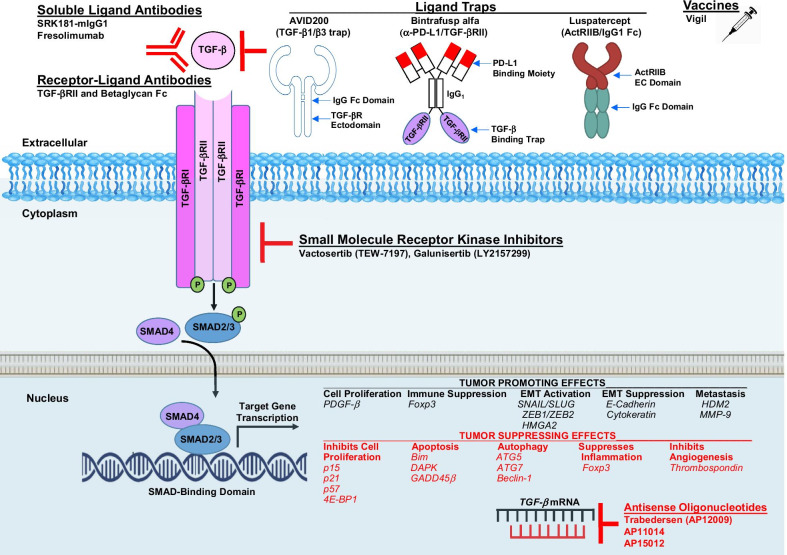
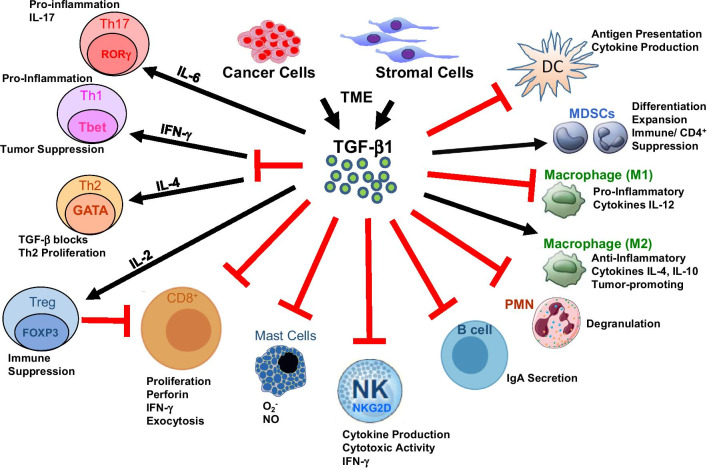
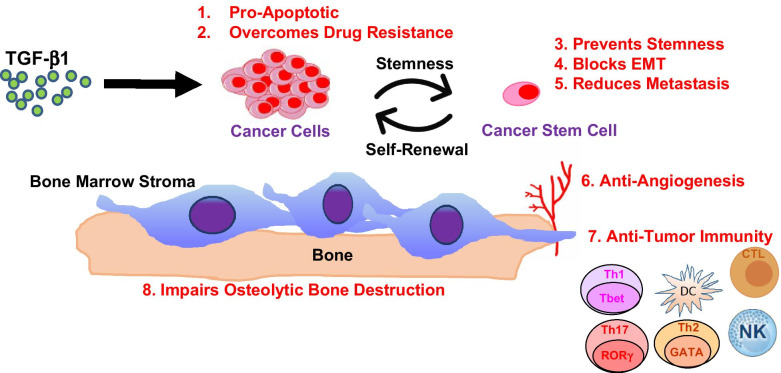
The TGF-β signaling pathway governs key cellular processes under physiologic conditions and is deregulated in many pathologies, including cancer. TGF-β is a multifunctional cytokine that acts in a cell- and context-dependent manner as a tumor promoter or tumor suppressor. As a tumor promoter, the TGF-β pathway enhances cell proliferation, migratory invasion, metastatic spread within the tumor microenvironment and suppresses immunosurveillance. Collectively, the pleiotropic nature of TGF-β signaling contributes to drug resistance, tumor escape and undermines clinical response to therapy. Based upon a wealth of preclinical studies, the TGF-β pathway has been pharmacologically targeted using small molecule inhibitors, TGF-β-directed chimeric monoclonal antibodies, ligand traps, antisense oligonucleotides and vaccines that have been now evaluated in clinical trials. Here, we have assessed the safety and efficacy of TGF-β pathway antagonists from multiple drug classes that have been evaluated in completed and ongoing trials. We highlight Vactosertib, a highly potent small molecule TGF-β type 1 receptor kinase inhibitor that is well-tolerated with an acceptable safety profile that has shown efficacy against multiple types of cancer. The TGF-β ligand traps Bintrafusp alfa (a bifunctional conjugate that binds TGF-β and PD-L1), AVID200 (a computationally designed trap of TGF-β receptor ectodomains fused to an Fc domain) and Luspatercept (a recombinant fusion that links the activin receptor IIb to IgG) offer new ways to fight difficult-to-treat cancers. While TGF-β pathway antagonists are rapidly emerging as highly promising, safe and effective anticancer agents, significant challenges remain. Minimizing the unintentional inhibition of tumor-suppressing activity and inflammatory effects with the desired restraint on tumor-promoting activities has impeded the clinical development of TGF-β pathway antagonists. A better understanding of the mechanistic details of the TGF-β pathway should lead to more effective TGF-β antagonists and uncover biomarkers that better stratify patient selection, improve patient responses and further the clinical development of TGF-β antagonists.
Overview
The claims and statistics of this paper haven’t been checked yet.
Free: it reads the open-access text and checks the first 5 claims that cite a source we can check. Create a free account to check every claim.
Integrity signals
Registry
Cites
Statistics
Figures
Verification
Claims the paper makes
The claims and statistics of this paper haven’t been checked yet.
Free: it reads the open-access text and checks the first 5 claims that cite a source we can check. Create a free account to check every claim.
Claims other papers make about this one
Each is checked against this paper’s own text: does it say what the citing paper says it does?
The source backs part of the claim, not all of it — or backs it for a different population, condition or comparison.
In the citing paper
“AVID200, a ligand trap for TGF‐β1 and TGF‐β3, showed anti‐tumor activity in mouse models [164] and feasibility in clinics in patients with advanced solid‐state tumors in a phase 1 clinical trial (NCT03834662) [165].”
From Tumor microenvironment signaling and therapeutics in cancer progression (2023) · cites this paper as [164]
Experimental — accuracy not yet measuredThe source backs part of the claim, not all of it — or backs it for a different population, condition or comparison.
In the citing paper
“Hyperactivated TGF-β signaling was associated with the poor response to α-PD-1/PD-L1, and blocking TGF-β significantly improved the efficacy of α-PD-1/PD-L1 [299–302].”
From Combination strategies with PD-1/PD-L1 blockade: current advances and future directions (2022) · cites this paper as [302]
Experimental — accuracy not yet measured
Self-check
Percentages, sums and reported differences re-computed from the paper’s own numbers.
The self-check needs the paper’s full text.
Citations
Cites
Chen, W., Jin, W., Hardegen, N., Lei, K.-J., Li, L., Marinos, N., McGrady, G., & Wahl, S. M. (2003) · The Journal of Experimental Medicine · doi:10.1084/jem.20030152 · Cited by 4,699
Massagué, J. (2008) · Cell · doi:10.1016/j.cell.2008.07.001 · Cited by 3,907
Massagué, J. (2012) · Nature Reviews Molecular Cell Biology · doi:10.1038/nrm3434 · Cited by 3,128
Role of Transforming Growth Factor β in Human Disease
Blobe, G. C., Schiemann, W. P., & Lodish, H. F. (2000) · New England Journal of Medicine · doi:10.1056/nejm200005043421807 · Cited by 2,427
Transforming Growth Factor-β Signaling in Immunity and Cancer
Batlle, E., & Massagué, J. (2019) · Immunity · doi:10.1016/j.immuni.2019.03.024 · Cited by 2,366
The evolving landscape of biomarkers for checkpoint inhibitor immunotherapy
Havel, J. J., Chowell, D., & Chan, T. A. (2019) · Nature Reviews Cancer · doi:10.1038/s41568-019-0116-x · Cited by 2,286 · cited 1×
“Immune markers Checkpoint inhibitor-based immunotherapies that target cytotoxic T lymphocyte antigen 4 (CTLA4) or the programmed cell death 1 (PD1) pathway have achieved impressive success in the treatment of different cancer types, but only a subset of patients derive clinical benefit [63].”
BackgroundMassagué, J. (2000) · Nature Reviews Molecular Cell Biology · doi:10.1038/35043051 · Cited by 1,899
TGF-ß Signaling in Fibroblasts Modulates the Oncogenic Potential of Adjacent Epithelia
Bhowmick, N. A., Chytil, A., Plieth, D., Gorska, A. E., Dumont, N., Shappell, S., Washington, M. K., Neilson, E. G., & Moses, H. L. (2004) · Science · doi:10.1126/science.1090922 · Cited by 1,401
TGF-β directly targets cytotoxic T cell functions during tumor evasion of immune surveillance
Thomas, D. A., & Massagué, J. (2005) · Cancer Cell · doi:10.1016/j.ccr.2005.10.012 · Cited by 1,355
TGFβ: the molecular Jekyll and Hyde of cancer
Bierie, B., & Moses, H. L. (2006) · Nature Reviews Cancer · doi:10.1038/nrc1926 · Cited by 1,267
Research works printed but not linked: 4
- Tang J Gifford CC Samarakoon R Higgins PJ Deregulation of negative controls on TGF-β1 signaling in tumor progression Cancers (Basel) 2018 10 6 159 10.3390/cancers10060159.PMID:29799477;PMCID:PMC6025439 PMC6025439 29799477 · DOI · Paper page
- Lee KW Park YS Ahn JB Rha SY Kim HK Lee PY Ryu MH Lee J Lee JK Hwang S Safety and anti-tumor activity of the transforming growth factor beta receptor I kinase inhibitor, vactosertib, in combination with pembrolizumab in patients with metastatic colorectal or gastric cancer J Immunother Cancer 2020 8 Suppl. 3 A358
- Han JY Pyo KH Kim JH Xin CF Lee JK Hwang S Kim SJ Cho BC Cho BC Safety and anti-tumor activity of the transforming growth factor beta receptor I kinase inhibitor, vactosertib, in combination with durvalumab in patients with advanced non-small cell lung cancer (NSCLC) J Immunother Cancer 2020 8 Suppl. 3 A388
- Yap TBC, Massard C. First-in-human phase 1 dose-escalation trial of the potent and selective next generation transforming growth factor-β receptor type 1 (TGF-βR1) inhibitor LY3200882 in patients with advanced cancer. In Proceedings from the 2018 SITC annual meeting. 2018; Abstract 030.
Cited by
Items 301–400 of 454
Sheng, Y., Li, X., Ye, X., Fan, Q., Li, J., Qiao, C., Chen, X., Yang, Q., Wang, Z., Li, J., et al. (2025) · Journal of Ethnopharmacology · doi:10.1016/j.jep.2025.119865 · Cited by 3
Towards directed therapy for fusion-positive rhabdomyosarcoma
Turco, G. M., Oberoi, S., Ladle, B. H., Raavi, Wagner, L. M., Koehler, A. N., & Linardic, C. M. (2025) · Pharmacology & Therapeutics · doi:10.1016/j.pharmthera.2025.108931 · Cited by 4
Biophysical Regulation of TGFβ Signaling in the Tumor Microenvironment
Sankhe, C. S., Sacco, J. L., & Gomez, E. W. (2023) · Current cancer research · doi:10.1007/978-3-031-22802-5_6 · Cited by 4
Ishabiyi, F. O., Omotosho‐Sanni, R. Y., Baammi, S., Bourhia, M., Shazly, G. A., Ibenmoussa, S., & Umar, H. I. (2024) · ChemistrySelect · doi:10.1002/slct.202401413 · Cited by 4
Dose-Dependent Effects of TGF-β Inhibition on Osteoblast Differentiation and Wound Healing
AlMuraikhi, N. A., Alkhamees, L., Tareen, S., Alshammari, H., & Manikandan, M. (2025) · Current Issues in Molecular Biology · doi:10.3390/cimb47050360 · Cited by 2
Chen, C. H., Chang, S., Lin, P., & Su, P. (2025) · Statistics in Medicine · doi:10.1002/sim.70145 · Cited by 2
Jafari, H., Wang, Z., Li, C., Yang, G., Yang, Q., Han, J., Hu, Q., Muhatai, G., Lei, C., & Dang, R. (2025) · Journal of Dairy Science · doi:10.3168/jds.2025-26480 · Cited by 1
Borchert, S. V., Hallén, J., Hussain, R. I., Holyer, I., Troelsen, J. T., & Klingelhöfer, J. (2025) · Journal of Pharmacology and Experimental Therapeutics · doi:10.1016/j.jpet.2025.103722 · Cited by 4
Willumsen, N., Henriksen, K., Bager, C. L., Selnø, A. T. H., Mohamed, K. E., Leeming, D. J., Skarsfeldt, M. A., Nissen, N. I., Pedersen, R. S., Thorlacius‐Ussing, J., et al. (2025) · Scientific Reports · doi:10.1038/s41598-025-24463-0 · Cited by 2
Liu, Q., Xie, Z., Li, W., Li, M., & Qi, Y. (2025) · Frontiers in Cell and Developmental Biology · doi:10.3389/fcell.2025.1714824 · Cited by 3
Mohammad, K. S., & Izran, F. H. N. B. (2025) · Frontiers in Bioscience-Landmark · doi:10.31083/fbl43850 · Cited by 5
Çakırsoy, D., Nordin, J. Z., Andaloussi, S. E., & Alici, E. (2026) · Frontiers in Immunology · doi:10.3389/fimmu.2026.1726590 · Cited by 2
Treg-directed cancer immunotherapy beyond immune checkpoints: progress and opportunities
Xie, J., Hamdy, H., & Elkord, E. (2026) · Trends in Pharmacological Sciences · doi:10.1016/j.tips.2026.03.007 · Cited by 2
Harnessing neutrophil plasticity: From mechanistic insights to oncology therapeutics
Zhang, A. Q., Wang, J., Chung, J. Y., Zhou, J., Tang, P. C., Liu, X., Zhang, Q. P., To, K., Li, Y., & Tang, P. M. (2026) · Cancer Letters · doi:10.1016/j.canlet.2026.218730 · Cited by 2
Ni, Y., Xu, J., & Tong, D. (2023) · Medical Hypotheses · doi:10.1016/j.mehy.2023.111018 · Cited by 1
Phan, P.-T. T., Pham, T.-A. N., Nguyen, N. P., Nguyen, V.-A. T., & Nguyen, T. H. (2023) · Letters in Organic Chemistry · doi:10.2174/0115701786268073230926160649 · Cited by 3
Enhancing the Treating Efficacy of Immunotherapy through the Restructure of Tumor Microenvironment
Gong, B., Jia, W., Zhou, Y., Xu, Y., Ya, W., & Gao, H. (2023) · Advanced NanoBiomed Research · doi:10.1002/anbr.202300061 · Cited by 2
Sharaky, M. M., kiki, S. M. E., Effat, H., & Mansour, H. H. (2025) · Naunyn-Schmiedeberg s Archives of Pharmacology · doi:10.1007/s00210-025-03878-6 · Cited by 4
Kiran, S., Xue, Y., Sarker, D. B., & Sang, Q. A. (2025) · Cancers · doi:10.3390/cancers17060997 · Cited by 2
Arai, M., Hanada, M., Taniguchi, H., Nakajima, F., Ohmoto, H., Tsuyoshi Inoue, A., Naka, K., & Sawa, M. (2025) · Journal of Medicinal Chemistry · doi:10.1021/acs.jmedchem.4c02293 · Cited by 2
Nitschkowski, D., Vierbuchen, T., Heine, H., Behrends, J., Reiling, N., Reck, M., Rabe, K. F., Kügler, C., Ammerpohl, O., Drömann, D., et al. (2025) · British Journal of Cancer · doi:10.1038/s41416-025-02970-1 · Cited by 2
Targeting transcription in neuroblastoma: focus on the core regulatory circuit
Kuchur, O. A., Pogodaeva, S. S., Zhdankina, V. I., Shcherbakova, A. V., Shtil, A. A., & Антипова, Н. В. (2025) · Expert Opinion on Therapeutic Targets · doi:10.1080/14728222.2025.2545837 · Cited by 5
EGCG remodels the TGF-β cervical cancer micro-environment towards immune responsiveness
Gnanagurusamy, J., Sabanayagam, R., Krishnamoorthy, S., Balasubramanian, V., & Muthusami, S. (2025) · Cellular Immunology · doi:10.1016/j.cellimm.2025.105027 · Cited by 2
Murphy, J. D., Shiomitsu, K., Milner, R. J., Lejeune, A. T., Ossiboff, R. J., Castellanos-Gell, J., & Axiak‐Bechtel, S. M. (2023) · Veterinary Immunology and Immunopathology · doi:10.1016/j.vetimm.2023.110560 · Cited by 2
Miley, D. R., Andrews-Pfannkoch, C. M., Pulido, J. S., Erickson, S. A., Vile, R. G., Fautsch, M. P., Marmorstein, A. D., & Dalvin, L. A. (2023) · Melanoma Research · doi:10.1097/cmr.0000000000000921 · Cited by 2
Targeting TGF-β: Triumphs and Challenges
Acharya, B., Miah, S., & Frett, B. (2022) · Future Medicinal Chemistry · doi:10.4155/fmc-2021-0344 · Cited by 4
Tian, Q., Guo, Y., Liu, J., Pang, C., Wang, Q., Xie, Q., & Li, J. (2023) · Journal of Biochemical and Molecular Toxicology · doi:10.1002/jbt.23406 · Cited by 1
Clinical development complexity of TGF-β inhibition: From fibrosis to cancer immunotherapy
Gallo-Oller, G., Guillén-Antonini, M. I., & Dotor, J. (2025) · International review of cytology · doi:10.1016/bs.ircmb.2025.01.005 · Cited by 3
Li, M., Pang, K., Qiao, L., Guan, Z.-Q., Gong, C., Li, S., Tang, Z., Zhang, Y.-L., & Ding, J. (2025) · Journal of Asian Natural Products Research · doi:10.1080/10286020.2025.2462610 · Cited by 1
Wal, A., Rasheed, A., Wal, P., Bhise, M. R., Parmar, M., Nathiya, D., Sharma, R. K., & Gasmi, A. (2025) · Current Signal Transduction Therapy · doi:10.2174/0115743624339476250212114656 · Cited by 1
Patel, B. B., Curcic, M., Eltokhy, M. A., & Prasad, S. (2025) · Journal of Clinical Medicine · doi:10.3390/jcm14145139 · Cited by 1
Leclerc, G. M., Egan, J. O., You, L., Shrestha, N., Rhode, P. R., & Wong, H. C. (2025) · Journal of Immunoassay and Immunochemistry · doi:10.1080/15321819.2025.2538025 · Cited by 1
Kawczak, P., Feszak, I. J., & Bączek, T. (2025) · Journal of Clinical Medicine · doi:10.3390/jcm14196853 · Cited by 1
Unmasking cancer’s silent saboteurs: T regulatory cells as therapeutic targets in immunotherapy
Khudeir, J. F., & Elkord, E. (2025) · Expert Review of Clinical Immunology · doi:10.1080/1744666x.2025.2585521 · Cited by 2
Cancer Stem Cells in Human Gastrointestinal and Hepatic Cancers
Bu, J., Cui, M., Zhang, Y., Yu, L., Zhu, X., Peng, F., & Zhang, H. (2025) · MedComm · doi:10.1002/mco2.70513 · Cited by 3
Oyanagi, M., Konno, T., Nishida, S., Kohno, T., Kimura, I., Nakano, M., Ohwada, K., Kakuki, T., Obata, K., Kakiuchi, A., et al. (2026) · European Archives of Oto-Rhino-Laryngology · doi:10.1007/s00405-025-09959-9 · Cited by 3
Tumolo, M. R., Conte, L., Guarino, R., Giorgi, U. D., Matteis, E. D., & Sabina, S. (2026) · International Journal of Molecular Sciences · doi:10.3390/ijms27020865 · Cited by 2
Inflammation drives TGFβ1 activation via the αvβ6 integrin-mechanotransduction pathway in human skin
Jiang, X., Sellami, S., Kessler, J., Bachmann, M., Noulet, F., Russo, B. F., Brembilla, N. C., Kaya, G., Ivanov, A. I., Shutova, M. S., et al. (2026) · iScience · doi:10.1016/j.isci.2026.115052 · Cited by 1
Cytokine multimerization: when more is more and sometimes less
Rudloff, I., Christie, M., Deen, N. S., Ellisdon, A. M., Nold‐Petry, C. A., & Nold, M. F. (2026) · Nature reviews. Immunology · doi:10.1038/s41577-026-01290-6 · Cited by 4
Horowitz, N. B., Mohammad, I., Shin, J. H., Hickey, J. W., Chockley, P. J., Snyder, G., Chen, C., Lee, K., Sharma, K., Tran, Q., et al. (2026) · Science Translational Medicine · doi:10.1126/scitranslmed.adw5567 · Cited by 2
Guo, X., Liu, B. M., Han, Y., Si, X., Zhou, Y., & Wang, Y. (2026) · Journal of Cardiothoracic Surgery · doi:10.1186/s13019-026-04445-7 · Cited by 1
Liu, L., 陈颖君, Guo, M., Yun, F., Li, X., Chen, L., Li, Y. M., & Li, F. (2026) · Frontiers in Pharmacology · doi:10.3389/fphar.2026.1782130 · Cited by 1
Pulmonary fibrosis and the TGF-β signaling axis: Advances in targeted therapeutics
Wang, Y., Xu, Y., Zhang, Y., Wang, B., Liu, X., & Zhang, H. (2026) · European Journal of Pharmacology · doi:10.1016/j.ejphar.2026.179174 · Cited by 1
Dhaliwal, J. (2022) · Undergraduate Research in Natural and Clinical Science and Technology (URNCST) Journal · doi:10.26685/urncst.406 · Cited by 1
Transforming Growth Factor-β1 and Tumor Development
Dahl, L. (2023) · Science Insights · doi:10.15354/si.23.re298 · Cited by 1
Therapeutics Targeting Cancer Stem Cell Signalling Pathways
Punnasseril, J. M. J., Gopalan, V., & Islam, F. (2023) · Springer eBooks · doi:10.1007/978-981-99-3185-9_11 · Cited by 2
The Potential Therapeutic Applications of CRISPR/Cas9 in Colorectal Cancer
Sahranavard, T., Mehrabadi, S., Pourali, G., Maftooh, M., Akbarzade, H., Hassanian, S. M., Ghayour‐Mobarhan, M., Ferns, G. A., Khazaei, M., & Avan, A. (2023) · Current Medicinal Chemistry · doi:10.2174/0929867331666230915103707 · Cited by 2
Ito, K., Yamaguchi, M., Semba, T., Tabata, K., Tamura, M., Aoyama, M., Abe, T., Asano, O., Terada, Y., Funahashi, Y., et al. (2023) · Molecular Cancer Therapeutics · doi:10.1158/1535-7163.mct-23-0158 · Cited by 4
Rastegar‐Pouyani, N., Farzin, M. A., Karimi, P., Jafarzadeh, E., Abdolvahab, M. H., & Najafi, M. (2024) · Current Pharmaceutical Design · doi:10.2174/0113816128320120240805104433 · Cited by 1
Guha, M., Thibault, S., Pham, S. M., Bernales, S., Pai, R., Herrera, F. J., Johnson, T. R., Vitsky, A., Fernando, T., & Finkelstein, M. B. (2024) · Journal of Pharmacology and Experimental Therapeutics · doi:10.1124/jpet.124.002193 · Cited by 1
Cheng, C., Chuang, W.-C., Lin, C.-P., Li, C.-H., Chang, H.-Y., Wu, W., Wu, M., & Ko, J. (2025) · Cancer Chemotherapy and Pharmacology · doi:10.1007/s00280-024-04734-9 · Cited by 1
Mao, Y., Xu, W. L., Chen, L., & Liao, H. (2025) · Cell Biochemistry and Biophysics · doi:10.1007/s12013-025-01762-x · Cited by 1
Aziz, U., & Jabeen, I. (2025) · PLoS ONE · doi:10.1371/journal.pone.0324677 · Cited by 1
Skóra, K., Strojny, D., Sobański, D., Staszkiewicz, R., Bryś, K., Gogol, P., Bereza, K., Masternak, M. M., & Grabarek, B. O. (2025) · Frontiers in Oncology · doi:10.3389/fonc.2025.1592685 · Cited by 2
Nonkhwao, S., Charoenrit, J., Ratanamungklanon, C., Sojikul, L., Duangprom, S., Songkoomkrong, S., Saetan, J., Nuemket, N., Amonruttanapun, P., Sobhon, P., et al. (2025) · International Journal of Molecular Sciences · doi:10.3390/ijms26146998 · Cited by 2
Kim, S., Kim, A., Tran, M. N., Kim, S.-Y., Min, B.-D., Kim, N. S., & Park, S. (2025) · Life Sciences · doi:10.1016/j.lfs.2025.124011 · Cited by 1
Cooper, A. J., & Heist, R. S. (2023) · Hematology/Oncology Clinics of North America · doi:10.1016/j.hoc.2023.02.004 · Cited by 1
Kumar, M. (2023) · doi:10.14293/pr2199.000553.v1 · Cited by 1
Kumar, M. (2024) · Thesis Commons (OSF Preprints) · doi:10.31237/osf.io/3bjq9 · Cited by 1
Kumar, M. (2024) · Thesis Commons (OSF Preprints) · doi:10.31237/osf.io/ndsq5 · Cited by 1
Tauriello, D. V. F., Sancho, E., Byrom, D., Sánchez, C., Salvany, M., Henriques, A. R., Palomo‐Ponce, S., Sevillano, M., Hernando‐Momblona, X., Matarin, J. A., et al. (2024) · bioRxiv (Cold Spring Harbor Laboratory) · doi:10.1101/2024.05.10.593510 · Cited by 1
Cheng, H., Yan, Y., Zhang, B., Ma, Z., Fu, S., Ji, Z. L., Zou, Z., & Wang, Q. (2024) · bioRxiv (Cold Spring Harbor Laboratory) · doi:10.1101/2024.05.15.594316 · Cited by 1
Kumar, M. (2024) · doi:10.14293/pr2199.000553.v2 · Cited by 2
Kumar, M. (2024) · Authorea · doi:10.22541/au.172348748.84833147/v1 · Cited by 1
Kumar, M. (2024) · doi:10.14293/pr2199.000553.v3 · Cited by 1
Popović, N., & Wilson, E. (2024) · Elsevier eBooks · doi:10.1016/b978-0-323-95488-4.00121-2 · Cited by 1
Pathogenetic significance of transforming growth factor β1 in patients with colorectal cancer
Chetveryakov, A. V., & Львович, Ц. В. (2022) · Fundamental and Clinical Medicine · doi:10.23946/2500-0764-2022-7-3-17-22
Diagnostic value of GDF10 for the tumorigenesis and progression in lung squamous cell carcinomaPreprint
Mei, P., Chen, J., Meng, W., Wang, Y., Meng, Y., Zhao, R., Lin, W. Y., Liao, Y., & Han, X. (2022) · Research Square · doi:10.21203/rs.3.rs-2131584/v1
Jin, K., Wu, Y., Zheng, X., Li, T., Liao, Z., Fei, Q., Zhang, H., Shi, S., Sha, X., Yu, X., et al. (2023) · FEBS Journal · doi:10.1111/febs.16879 · Cited by 1
Luspatercept use for lower risk myelodysplastic syndromes: Active but not enough
Patnaik, M. M., & Tefferi, A. (2023) · American Journal of Hematology · doi:10.1002/ajh.27003
Khalafi‐Nezhad, A., Abdollahi, A., Barazesh, M., Amani, M., Motazedi, S., Ebrahimi, V., & Zarei, A. (2023) · Current Cancer Therapy Reviews · doi:10.2174/1573394719666230915103139
Transcriptional regulation of pancreatic stellate cell activation in chronic pancreatitis
Huang, B.-W., Wang, P., & Hu, L. (2023) · World Chinese Journal of Digestology · doi:10.11569/wcjd.v31.i21.877
Kumar, M. (2024) · OSF Preprints (OSF Preprints) · doi:10.31219/osf.io/wbp3q · Cited by 1
IDO and TGF-β Inhibitors for the Treatment of Lung Cancer
Devadoss, T., Yeole, K. R., Rajesh, R. B., & Sambhaji, B. C. (2024) · Springer eBooks · doi:10.1007/978-981-99-7141-1_9
Wang, X., Chen, J., Qiao, X., Meng, W., Wang, Y., Meng, Y., Zhao, R., Lin, W. Y., Liao, Y., Han, X., et al. (2024) · Current Medical Science · doi:10.1007/s11596-023-2806-6
MacDonald, W., Srinivasan, P. R., Pinho-Schwermann, M. P., Zhang, S., Tajiknia, V., Purcell, C., Strandberg, J., & El‐Deiry, W. S. (2024) · bioRxiv (Cold Spring Harbor Laboratory) · doi:10.1101/2024.04.18.590156
Kumar, M. (2024) · OSF Preprints (OSF Preprints) · doi:10.31219/osf.io/xbc35
Murray, R. C. (2024) · Digital Repository Service (Northeastern University) · doi:10.17760/d20653008 · Cited by 2
Kumar, M. (2024) · Thesis Commons (OSF Preprints) · doi:10.31237/osf.io/q7ax5
Sachkova, A. A., Rysina, Y. D., Svirshchevskaya, E. V., Grishin, I. D., Fedorov, A. Y., & Shchegravina, E. S. (2024) · Russian Journal of Organic Chemistry · doi:10.1134/s107042802404016x
Ionizing Radiation as a Carcinogen
Jones, J. A., Karouia, F., Cristea, O., Somasundar, T., Popov, D., Hu, Y. F., & Welsh, J. W. (2024) · Elsevier eBooks · doi:10.1016/b978-0-323-95488-4.00106-6
Potential of Natural Products in the Treatment of Glioma: Focus on Molecular Mechanisms
Sheida, A., Farshadi, M., Mirzaei, A., Khalilabad, S. N., Zarepour, F., Taghavi, S. P., Khabr, M. S. H., Ravaei, F., Rafiei, S., Mosadeghi, K., et al. (2024) · Cell Biochemistry and Biophysics · doi:10.1007/s12013-024-01447-x · Cited by 1
Rathod, M., Zimmermann, A., Franz, H., Cunha, T., Didona, D., Hertl, M., Schmidt, E., & Spindler, V. (2024) · bioRxiv (Cold Spring Harbor Laboratory) · doi:10.1101/2024.10.15.618475
TGF-β in tumor microenvironment, metabolism, and immunotherapy
Bai, H., & Wan, Y. Y. (2024) · Elsevier eBooks · doi:10.1016/b978-0-443-13827-0.00017-2
Cancer Stem Cells in Gastrointestinal Cancers
Li, M., Li, J., He, D., & Liu, M. (2024) · Stem cell biology and regenerative medicine · doi:10.1007/978-3-031-74842-4_12
贾, 书. (2025) · World Journal of Cancer Research · doi:10.12677/wjcr.2025.151004
Mechanosensitive TRPV4 Trafficking Drives TGF-Β-Mediated Mesenchymal Transition in Colorectal Cancer
Karaca, C., & Başbınar, Y. (2025) · Journal of Basic and Clinical Health Sciences · doi:10.30621/jbachs.1606073
Page, A. B., & Shinde, P. (2025) · BENTHAM SCIENCE PUBLISHERS eBooks · doi:10.2174/9789815305906125010018 · Cited by 2
Exploring Mechanisms of Immunosuppression in Colorectal Cancer: Interaction of MDSCs with TGF-β1
陈, 鹏. (2025) · Advances in Clinical Medicine · doi:10.12677/acm.2025.152546
Hu, X., Jiang, T., & Wang, J. (2025) · Discover Oncology · doi:10.1007/s12672-025-02513-3
Gnao, K., Roy, M.-È., Zgheib, A., Desjarlais, M., & Annabi, B. (2025) · Oncology Letters · doi:10.3892/ol.2025.15151
Kumar, M. (2025) · Qeios · doi:10.32388/5s9blt.3 · Cited by 1
Glucocorticoids unleash immune-dependent melanoma control through inhibition of the GARP/TGF-β axisPreprint
Earnshaw, C. H., Dunn, P., Chiang, S., Moeini, A., Koufaki, M. A., Bonavita, E., Russo, M., Nebot-Bral, L., Hockenhull, K., Richardson, E., et al. (2025) · bioRxiv (Cold Spring Harbor Laboratory) · doi:10.1101/2025.07.24.666619
Singh, S., Gupta, H., Sinha, S., Kaushik, A. C., Kapoor, S., Awasthi, A. K., Qamar, I., & Sahi, S. (2025) · Computational Biology and Chemistry · doi:10.1016/j.compbiolchem.2025.108646
Novel biomarkers for prognosis in patients with localized prostate cancer
Goulielmaki, M., Stokidis, S., Anagnostou, T., Gritzapis, A. D., Tsitsilonis, O., Baxevanis, C. N., & Fortis, S. P. (2025) · Oncology Letters · doi:10.3892/ol.2025.15258 · Cited by 1
Domoń, D., Niedziela, A., Wilska, H., Domanowska, D., Liebert, A., Klimek, N., Kaplińska, M., Rutka, B., Niewczas, K., & Brzozowska, A. (2025) · International Journal of Innovative Technologies in Social Science · doi:10.31435/ijitss.3(47).2025.3597
Identification of progression markers for prostate cancer
Song, J., Zhou, Y., Hedman, H., Rantapero, T., & Landström, M. (2025) · Cell Cycle · doi:10.1080/15384101.2025.2563930
SERPINB5-TGF-β Signalling Modulates Desmosomal Adhesion and Ameliorates Skin Blistering Phenotypes
Rathod, M., Petrosyan, M., Zimmermann, A., Märker, M., Gosau, T., Franz, H., Cunha, T., Didona, D., Hertl, M., Schmidt, E., et al. (2025) · JCI Insight · doi:10.1172/jci.insight.183024 · Cited by 1
Cordeiro, R., Bhitre, M. J., Varma, S., Waragade, S., & Varma, S. (2025) · Anti-Cancer Agents in Medicinal Chemistry · doi:10.2174/0118715206388963250901091741
Metadata
- Authors
- Kim, B.-G., Malek, E., Choi, S. H., Ignatz-Hoover, J. J., & Driscoll, J. J.
- Affiliations
- Case Comprehensive Cancer Center (US)
- University Hospitals Cleveland Medical Center (US)
- Corresponding author
- Driscoll, James J.
- Venue
- Journal of Hematology & Oncology
- Published
- 2021-04-06
- Volume
- 14
- Issue
- 1
- Pages
- 55-55
- ISSN
- 1756-8722 (ISSN-L)
- PMC
- PMC8022551
- OpenAlex
- W3149714833
- Semantic Scholar
- dd92222ac2ab56f4a0904d33ecb1b62c63f76d17
- Cited by
- 453
- References
- 142
- Citations by year
- 2026: 45 · 2025: 99 · 2024: 111 · 2023: 77 · 2022: 100 · 2021: 21
- FWCI
- 8.10
- Type
- journal article
- Language
- en
- Open access
- gold
- doi.org
- Licence
- cc-by
- creativecommons.org/licenses/by/4.0 (tdm)
- creativecommons.org/licenses/by/4.0 (vor)
- Locations
- Journal of Hematology & Oncology (publishedVersion, cc-by)
- PubMed Central (publishedVersion, cc-by)
- PubMed (publishedVersion)
- DOAJ (DOAJ: Directory of Open Access Journals) (submittedVersion, cc-by-sa)
- Funders
- National Cancer Institute (K12CA076917)
- National Institute of Allergy and Infectious Diseases (R01AI139141)
- Topics
- Life Sciences › Biochemistry, Genetics and Molecular Biology › Molecular Biology › TGF-β signaling in diseases
- Life Sciences › Biochemistry, Genetics and Molecular Biology › Molecular Biology › Kruppel-like factors research
- Health Sciences › Medicine › Oncology › Cancer Immunotherapy and Biomarkers
- Keywords
- TGF-beta signaling, TGF-beta antagonists, vactosertib, bintrafusp alfa, AVID200, luspatercept, small molecule inhibitors, chimeric monoclonal antibody, antisense oligonucleotides, cancer immunotherapy, tumor microenvironment, drug resistance, clinical trials, patient selection biomarkers
- MeSH terms
- Humans, Medical Oncology, Signal Transduction, Transforming Growth Factor beta
About these checks
Registry, retraction, Cites and statistics results are computed, not judged, with one exception: a printed reference that no index lists is read once by a model before it counts as a citation error. Claims are extracted by a model and kept only when their quote appears verbatim in the text; each cited source is then checked, with a model’s help, for whether it says what the claim relies on. Those verdicts can be wrong — read the claim’s quote and the cited source before relying on one.
Statistics and arithmetic are recomputed, not judged.
Confidence bands are shown only for fields calibrated on our annotated test set. None is calibrated yet, so no band is shown.
What counts as a claim ›How we measure confidence ›How we check this ›
Are you an author, or do you see a problem with this page? Request a review
Data sources
Bibliographic data: Semantic Scholar, OpenAlex, Crossref.
Contains information from the Semantic Scholar Academic Graph Datasets, made available under the ODC Attribution License (ODC-BY 1.0).
Semantic Scholar’s data is described in: Kinney, R., et al. (2023). The Semantic Scholar Open Data Platform. arXiv:2301.10140.
