

Exploring immunotherapy in colorectal cancer
Open accessThe DOI matches its Crossref record; 225 of the 225 references it cites were found in a registry or an index.
Abstract
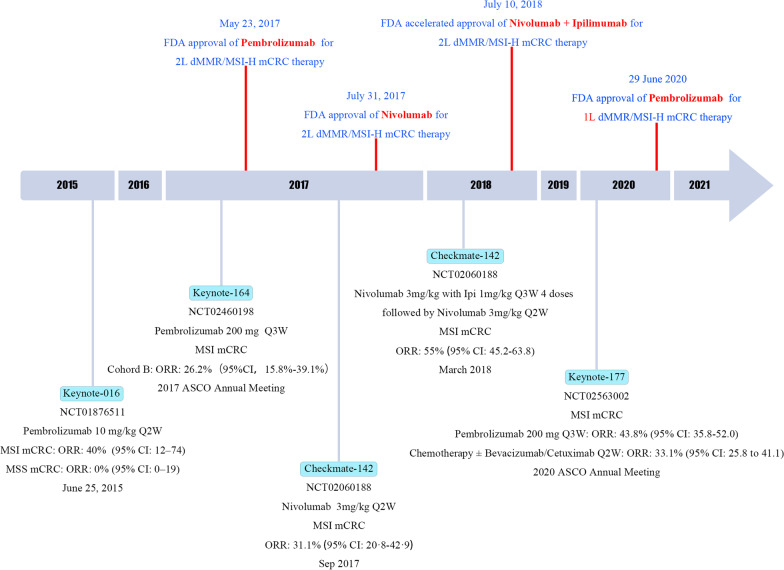
Chemotherapy combined with or without targeted therapy is the fundamental treatment for metastatic colorectal cancer (mCRC). Due to the adverse effects of chemotherapeutic drugs and the biological characteristics of the tumor cells, it is difficult to make breakthroughs in traditional strategies. The immune checkpoint blockades (ICB) therapy has made significant progress in the treatment of advanced malignant tumors, and patients who benefit from this therapy may obtain a long-lasting response. Unfortunately, immunotherapy is only effective in a limited number of patients with microsatellite instability—high (MSI-H), and segment initial responders can subsequently develop acquired resistance. From September 4, 2014, the first anti-PD-1/PD-L1 drug Pembrolizumab was approved by the FDA for the second-line treatment of advanced malignant melanoma. Subsequently, it was approved for mCRC second-line treatment in 2017. Immunotherapy has rapidly developed in the past 7 years. The in-depth research of the ICB treatment indicated that the mechanism of colorectal cancer immune-resistance has become gradually clear, and new predictive biomarkers are constantly emerging. Clinical trials examining the effect of immune checkpoints are actively carried out, in order to produce long-lasting effects for mCRC patients. This review summarizes the treatment strategies for mCRC patients, discusses the mechanism and application of ICB in mCRC treatment, outlines the potential markers of the ICB efficacy, lists the key results of the clinical trials, and collects the recent basic research results, in order to provide a theoretical basis and practical direction for immunotherapy strategies.
Overview
The claims and statistics of this paper haven’t been checked yet.
Free: it reads the open-access text and checks the first 5 claims that cite a source we can check. Create a free account to check every claim.
Integrity signals
Registry
Cites
Statistics
Figures
Verification
Claims the paper makes
The claims and statistics of this paper haven’t been checked yet.
Free: it reads the open-access text and checks the first 5 claims that cite a source we can check. Create a free account to check every claim.
Claims other papers make about this one
Each is checked against this paper’s own text: does it say what the citing paper says it does?
In the citing paper
“MSI-high or dMMR mCRC patients favorably respond to immune checkpoint blockade (ICB), and this is now the preferred front-line treatment [129].”
From Recent Advances in Therapeutic Strategies to Improve Colorectal Cancer Treatment (2024) · cites this paper as [129]
In the citing paper
“Immune checkpoint blockade (ICB) therapy with anti-PD-1 drug Pembrolizumab or Nivolumab is the approved first-line treatment for mCRC that is dMMR or MSI-high; however, this is only <5% of mCRC, and some estimates indicate that only 2% of mCRC patients are candidates for successful therapy with ICB therapy [129].”
From Recent Advances in Therapeutic Strategies to Improve Colorectal Cancer Treatment (2024) · cites this paper as [129]
Self-check
Percentages, sums and reported differences re-computed from the paper’s own numbers.
The self-check needs the paper’s full text.
Citations
Cites
1 retracted
Liu, Y., Liang, X., Yin, X., Lv, J., Tang, K., Ma, J., Ji, T., Zhang, H., Dong, W., Jin, X., et al. (2017) · Nature Communications · doi:10.1038/ncomms15207 · Cited by 212
RetractedPD-1 and PD-L1 Immune Checkpoint Blockade to Treat Breast Cancer
Hartkopf, A. D., Taran, F.-A., Wallwiener, M., Walter, C. B., Krämer, B., Grischke, E.-M., & Brucker, S. Y. (2016) · Breast Care · doi:10.1159/000453569 · Cited by 30,845
Siegel, R. L., Miller, K. D., & Jemal, A. (2019) · CA: A Cancer Journal for Clinicians · doi:10.3322/caac.21551 · Cited by 20,160
The National Comprehensive Cancer Network: Present and future directions
McGivney, W. T. (1998) · Cancer · doi:10.1002/(sici)1097-0142(19980515)82:10+<2057::aid-cncr14>3.0.co;2-a · Cited by 16,766
Adverse Renal Effects of Immune Checkpoint Inhibitors: A Narrative Review
Wanchoo, R., Karam, S., Uppal, N. N., Barta, V. S., Deray, G., Devoe, C., Launay-Vacher, V., Jhaveri, K. D., & on behalf of Cancer and Kidney International Network Workgroup on Immune Checkpoint Inhibitors (2017) · American Journal of Nephrology · doi:10.1159/000455014 · Cited by 15,256
Pembrolizumab versus Chemotherapy for PD-L1-Positive Non-Small-Cell Lung Cancer
Reck, M., Rodríguez-Abreu, D., Robinson, A. G., Hui, R., Csőszi, T., Fülöp, A., Gottfried, M., Peled, N., Tafreshi, A., Cuffe, S., et al. (2016) · New England Journal of Medicine · doi:10.1056/nejmoa1606774 · Cited by 10,089
PD-1 Blockade in Tumors with Mismatch-Repair Deficiency
Le, D. T., Uram, J. N., Wang, H., Bartlett, B. R., Kemberling, H., Eyring, A. D., Skora, A. D., Luber, B. S., Azad, N. S., Laheru, D., et al. (2015) · New England Journal of Medicine · doi:10.1056/nejmoa1500596 · Cited by 9,377
Nivolumab versus docetaxel in advanced nonsquamous non-small-cell lung cancer
Borghaei, H., Paz-Ares, L., Horn, L., Spigel, D. R., Steins, M., Ready, N. E., Chow, L. Q., Vokes, E. E., Felip, E., Holgado, E., et al. (2015) · New England Journal of Medicine · doi:10.1056/nejmoa1507643 · Cited by 9,335
Comprehensive molecular characterization of human colon and rectal cancer
The Cancer Genome Atlas Network (2012) · Nature · doi:10.1038/nature11252 · Cited by 8,499
Nivolumab versus Docetaxel in Advanced Squamous-Cell Non–Small-Cell Lung Cancer
Brahmer, J., Reckamp, K. L., Baas, P., Crinò, L., Eberhardt, W. E. E., Poddubskaya, E., Antonia, S., Pluzanski, A., Vokes, E. E., Holgado, E., et al. (2015) · New England Journal of Medicine · doi:10.1056/nejmoa1504627 · Cited by 8,447 · cited 5×
“It has been approved for the use in melanoma, NSCLC, head and neck squamous cell carcinoma and other malignant tumors and results in optimal clinical effects [22, 41–43].”
BackgroundInfluential
Research works printed but not linked: 1
- Kim R 493P - Pembrolizumab (pembro) plus mFOLFOX7 or FOLFIRI in patients (pts) with metastatic colorectal cancer (mCRC): updated results from KEYNOTE-651 cohorts B and D Ann Oncol 2020 suppl_4 S409 S461
Cited by
Metastatic colorectal cancer: mechanisms and emerging therapeutics
Shin, A. E., Giancotti, F. G., & Rustgi, A. K. (2023) · Trends in Pharmacological Sciences · doi:10.1016/j.tips.2023.01.003 · Cited by 669
Targeting cytokine and chemokine signaling pathways for cancer therapy
Yi, M., Li, T., Niu, M., Zhang, H., Wu, Y., Wu, K., & Dai, Z. (2024) · Signal Transduction and Targeted Therapy · doi:10.1038/s41392-024-01868-3 · Cited by 455
Liga, S., Paul, C., Moacă, E.-A., & Péter, F. (2024) · Pharmaceutics · doi:10.3390/pharmaceutics16020223 · Cited by 187
The role of RNA methylation in tumor immunity and its potential in immunotherapy
Li, Y., Jin, H., Li, Q., Shi, L., Mao, Y., & Zhao, L. (2024) · Molecular Cancer · doi:10.1186/s12943-024-02041-8 · Cited by 185
Exosomal circular RNAs: A chief culprit in cancer chemotherapy resistance
Guo, X., Gao, C., Yang, D., & Li, S. (2023) · Drug Resistance Updates · doi:10.1016/j.drup.2023.100937 · Cited by 156
Self-citationYang, L., Yang, Y., Zhang, J., Li, M., Yang, L., Wang, X., Chen, M., Zhang, H., He, B., Wang, X., et al. (2024) · Signal Transduction and Targeted Therapy · doi:10.1038/s41392-024-01983-1 · Cited by 138
“22 Recent studies related to its combined therapy have demonstrated the possibility of improving anti-tumor activity.”
BackgroundSelf-citationZheng, Z., Wieder, T., Mauerer, B., Schäfer, L., Kesselring, R., & Braumüller, H. (2023) · International Journal of Molecular Sciences · doi:10.3390/ijms241411673 · Cited by 133
“, melanoma and non-small cell lung cancer [16,17]) but show poor clinical effects in tumors that are poorly infiltrated by immune cells such as most CRCs [18].”
BackgroundInfluentialChallenges and Therapeutic Opportunities in the dMMR/MSI-H Colorectal Cancer Landscape
Mulet-Margalef, N., Linares, J., Badia-Ramentol, J., Jimeno, M., Sanz, C., Mozo, J. L. M., & Calon, A. (2023) · Cancers · doi:10.3390/cancers15041022 · Cited by 124
“Consequently, TMB is often used as a clinical biomarker of response to immune checkpoint inhibitors [111].”
MethodTargeting TIGIT for cancer immunotherapy: recent advances and future directions
Zhang, P., Liu, X., Gu, Z., Jiang, Z., Zhao, S. Q., Song, Y., & Yu, J. (2024) · Biomarker Research · doi:10.1186/s40364-023-00543-z · Cited by 117
Güven, D. C., Kavgacı, G., Erul, E., Syed, M. P., Magge, T., Saeed, A., Yalçın, Ş., & Şahin, İ. H. (2024) · The Oncologist · doi:10.1093/oncolo/oyae013 · Cited by 113
“In the seminal paper by Le et al., the response rate to pembrolizumab monotherapy was 40% in mostly pretreated patients with CRC,11 and in the update of this study by expansion cohorts, the response rate was The Oncologist , 2024, Vol. 29, No. 5 e581 over 50% in patients with metastatic MSI-high CRC.”
BackgroundInfluentialImmune checkpoint inhibitors in colorectal cancer: limitation and challenges
Yan, S., Wang, W., Feng, Z., Xue, J., Liang, W., Wu, X., Tan, Z., Zhang, X., Zhang, S., Li, X., et al. (2024) · Frontiers in Immunology · doi:10.3389/fimmu.2024.1403533 · Cited by 93
“Conversely, most CRC patients often demonstrate lower mutational loads (45).”
BackgroundSelf-citationTargeting PI3K/AKT/mTOR signaling to overcome drug resistance in cancer
Tufail, M., Wan, W., Jiang, C., & Li, N. (2024) · Chemico-Biological Interactions · doi:10.1016/j.cbi.2024.111055 · Cited by 81
Recent Advances in Therapeutic Strategies to Improve Colorectal Cancer Treatment
Gmeiner, W. H. (2024) · Cancers · doi:10.3390/cancers16051029 · Cited by 78
“MSI-high or dMMR mCRC patients favorably respond to immune checkpoint blockade (ICB), and this is now the preferred front-line treatment [129].”
BackgroundImmunotherapy-related biomarkers: Confirmations and uncertainties
Catalano, M., Iannone, L. F., Nesi, G., Nobili, S., Mini, E., & Roviello, G. (2023) · Critical Reviews in Oncology/Hematology · doi:10.1016/j.critrevonc.2023.104135 · Cited by 71
Ferrari, V., Lo Cascio, A., Melacarne, A., Tanasković, N., Mozzarelli, A. M., Tiraboschi, L., Lizier, M., Salvi, M., Braga, D., Algieri, F., et al. (2023) · Cancer Cell · doi:10.1016/j.ccell.2023.08.014 · Cited by 60
Immunogenic cuproptosis in cancer immunotherapy via an in situ cuproptosis-inducing system
Li, J., Zhang, G., Sun, Z., Jiang, M., Jia, G., Liu, H., Liu, N., Shi, L., Zhang, L., Nie, L., et al. (2025) · Biomaterials · doi:10.1016/j.biomaterials.2025.123201 · Cited by 69
Ma, Y., Wang, T., Zhang, X., Wang, P., & Long, F. (2024) · Cell Death and Disease · doi:10.1038/s41419-024-06698-3 · Cited by 59
“Furthermore, some initially responsive patients develop acquired resistance [130].”
BackgroundZhou, T., Wu, J., Tang, H., Liu, D., Jeon, B., Jin, W., Wang, Y., Zheng, Y., Khan, A., Han, H., et al. (2024) · npj Biofilms and Microbiomes · doi:10.1038/s41522-024-00479-8 · Cited by 55
“The drawbacks of these regimens mainly include nonspeci fi c toxicity to rapidly dividing normal cells 5 , multidrug-resistant cell formation 6 and cytokine storm 7 .”
Self-citationKaviarasan, V., Das, A., Deka, D., Saha, B., Banerjee, A., Sharma, N. R., Duttaroy, A. K., & Pathak, S. (2024) · International Journal of Colorectal Disease · doi:10.1007/s00384-024-04790-w · Cited by 55
Dai, Z., Li, X., Chen, Q., Zhu, Y., Shi, Z., Deng, X. G., Wang, C., & Chen, H. (2024) · Advanced Functional Materials · doi:10.1002/adfm.202313723 · Cited by 51
Self-citationYin, X., Song, X., Deng, W., BLAKE, N. W., Luo, X., & Meng, J. (2024) · Frontiers in Oncology · doi:10.3389/fonc.2024.1483454 · Cited by 50
CAR T-cells for colorectal cancer immunotherapy: Ready to go?
Ghazi, B., El Ghanmi, A., Kandoussi, S., Ghouzlani, A., & Badou, A. (2022) · Frontiers in Immunology · doi:10.3389/fimmu.2022.978195 · Cited by 46
“4% of the total number of cancer cases and deaths, respectively (5, 6).”
BackgroundMethodInfluentialXiao, Y., Zhu, T., Zeng, Q., Tan, Q., Jiang, G., & Huang, X. (2022) · Acta Biomaterialia · doi:10.1016/j.actbio.2022.11.043 · Cited by 47
Immunotherapy for colorectal cancer
Yu, B., Kang, J., Lei, H., Li, Z., Yang, H. C., & Zhang, M. (2024) · Frontiers in Immunology · doi:10.3389/fimmu.2024.1433315 · Cited by 43
“Immunotherapy is a therapeutic approach that activates and enhances the immune system to recognize and eliminate cancer cells to inhibit tumor growth (10).”
BackgroundPan, Q., Zhao, J., Liu, L., Zhang, D., Wang, L., Hu, W., Weng, D., Xu, X. M., Li, Y., Tang, Y., et al. (2024) · Signal Transduction and Targeted Therapy · doi:10.1038/s41392-024-01788-2 · Cited by 42
“…did not show a signi fi cant advantage in PFS for patients with pro fi cient MMR (pMMR) mCRC, 10,11 which accounts for 95% of patients with mCRC. 9 14 Currently, several kinds of immune active cells, such as cytokine ‐ induced killer cells (CIK)/dendritic cells – co ‐ cultured CIK cells (DC ‐…”
BackgroundLDHB Mediates Histone Lactylation to Activate PD-L1 and Promote Ovarian Cancer Immune Escape
Hu, X., Huang, Z., & Li, L. (2024) · Cancer Investigation · doi:10.1080/07357907.2024.2430283 · Cited by 42
Zhang, C., Wang, Y., Cheng, L., Cao, X., & Liu, C. (2025) · Frontiers in Oncology · doi:10.3389/fonc.2025.1557959 · Cited by 42
“The advent of ICIs has revolutionized the treatment landscape for various cancers, including CRC (57).”
Huang, Z., Kaller, M., & Hermeking, H. (2023) · Cell Death and Differentiation · doi:10.1038/s41418-023-01193-2 · Cited by 43
“Although promising, check-point inhibitor-based or targeted therapy only bene fi t a fraction of CRC patients [7, 8].”
BackgroundBai, X., Fu, R., Liu, Y., Deng, J., Fei, Q., Duan, Z., Zhu, C., & Fan, D. (2023) · Journal of Pharmaceutical Analysis · doi:10.1016/j.jpha.2023.09.010 · Cited by 41
“Despite various treat-ment options, such as surgery, chemotherapy, and immune checkpoint inhibitors, the treatment prospects for colon and rectal cancer patients remain discouraging owning to limitations such as drug resistance and toxicity [2,3].”
BackgroundLiu, Y., Jiang, C., Xu, C., & Gu, L. (2023) · Cancer Cell International · doi:10.1186/s12935-023-03103-5 · Cited by 42
“Colorectal cancer (CRC) is a prevalent malignancy arising from abnormal cells in the colonic mucosa [1, 2].”
BackgroundResearch Advances of Lipid Nanoparticles in the Treatment of Colorectal Cancer
Zhang, J., Ali, K., & Wang, J. (2024) · International Journal of Nanomedicine · doi:10.2147/ijn.s466490 · Cited by 42
“4 10 However, the chemotherapeutic and targeted agents currently in use are associated with substantial treatment-related toxicities.”
BackgroundYi, M., Li, T., Niu, M., Wu, Y., Zhao, B., Shen, Z., Hu, S., Zhang, C. H., Zhang, X., Zhang, J., et al. (2024) · Advanced Science · doi:10.1002/advs.202408598 · Cited by 40
Wen, Y., Ye, S., Li, Z., Zhang, X., Liu, C., Wu, Y., Zheng, R., Xu, C., Tian, J., Shu, L., et al. (2024) · Cancer Immunology Immunotherapy · doi:10.1007/s00262-023-03624-y · Cited by 39
The Efficacy of Using Patient-Derived Organoids to Predict Treatment Response in Colorectal Cancer
Su, C., Olsen, K. A., Bond, C., & Whitehall, V. (2023) · Cancers · doi:10.3390/cancers15030805 · Cited by 40
“However, the majority of CRCs have proficient mismatch repair and do not respond to immune checkpoint inhibitors.”
BackgroundInfluentialZhang, H., Shan, W., Yang, Z., Zhang, Y., Wang, M., Gao, L., Zeng, L., Zhao, Q., & Liu, J. (2023) · Epigenetics · doi:10.1080/15592294.2023.2188667 · Cited by 39
“However, since the FDA approval of pembrolizumab, a programmed death-ligand 1 (PD-L1) monoclonal antibody, for colorectal cancer, only a subset of patients has effectively responded to immune-checkpoint inhibitors (ICIs) [4].”
BackgroundSong, D., Hou, S., Ma, N., Yan, B., & Gao, J. (2024) · Frontiers in Immunology · doi:10.3389/fimmu.2024.1485303 · Cited by 39
Zhou, M., Niu, H., Cui, D., Xu, M., Li, J., Huang, G., Zhou, M., Xiong, C., Liu, Y., Xu, X., et al. (2026) · Molecular Cancer · doi:10.1186/s12943-025-02557-7 · Cited by 33
“Mic-rosatellite instability (MSI) impairs DNA repair, elevating genomic mutation rates, and is linked to mutations in mismatch repair genes like MLH1, MSH2, MSH6, and PMS2 in CRC [16, 34, 35].”
InfluentialYi, J., Xue, J., Yang, L., Xia, L., & He, W. (2023) · Frontiers in Nutrition · doi:10.3389/fnut.2023.1094189 · Cited by 33
“Approximately 15% of the patients were microsatellite instabilityhigh (MSI-H) among all CRC patients, and 5% patients with MSI-H CRC are metastatic CRC (mCRC) (4).”
BackgroundMethodZhao, N., Lai, C., Wang, Y., Dai, S., & Gu, H. (2024) · Biochimica et Biophysica Acta (BBA) - Reviews on Cancer · doi:10.1016/j.bbcan.2024.189096 · Cited by 33
Mihăilă, R. I., Gheorghe, A. S., Zob, D., & Stănculeanu, D. L. (2024) · Biomedicines · doi:10.3390/biomedicines12092146 · Cited by 33
“Thus, MSI has emerged as a significant biomarker for predicting the response to ICIs [82–84].”
BackgroundLü, C., Zhang, X. P., Schardey, J., Wirth, U., Heinrich, K., Massiminio, L., Cavestro, G. M., Neumann, J. H. L., Bazhin, A. V., Werner, J., et al. (2023) · npj Precision Oncology · doi:10.1038/s41698-023-00414-8 · Cited by 32
Targeting acid ceramidase enhances antitumor immune response in colorectal cancer
Vijayan, Y., James, S., Viswanathan, A. (., Aparna, J. S., Bindu, A., Namitha, N. N., Anantharaman, D., Lankadasari, M. B., & Harikumar, K. B. (2023) · Journal of Advanced Research · doi:10.1016/j.jare.2023.12.013 · Cited by 33
“Converting cold tumors to immunogenically hot tumors has been shown to demonstrate effective and measurable clinical outcomes and checkpoint blockade is one such strategy [47].”
BackgroundThe cGAS‒STING pathway in colorectal cancer: bridging innate immunity and therapeutic strategies
Li, W., Dong, G.-H., Bi, Y., Han, Y.-Y., Sun, L., Wang, T., Lin, Z., & Ren, X.-S. (2025) · Journal of Experimental & Clinical Cancer Research · doi:10.1186/s13046-025-03544-y · Cited by 29
“Treatments such as immune checkpoint inhibitors, cancer vaccines, CAR-T-cell therapy, and adoptive T-cell therapy have been successful in treating many cancers [4, 5, 9–11].”
Chung, B.-S., Liao, I., Lin, P., Wu, S., Kang, J., Lin, B., Chen, P.-C., Chan, R., Lee, C., Shen, M.-R., et al. (2022) · International Journal of Molecular Sciences · doi:10.3390/ijms232113277 · Cited by 29
“The production of CXCL9 in the TME can induce T-cell infiltration and may contribute to the orchestration of the “hot” TME of MSS CRC.”
BackgroundAl‐Ekaid, N. M., Al-Samydai, A. M., Al‐Deeb, I., Nsairat, H., Khleifat, K. M., & Alshaer, W. (2023) · Chemistry & Biodiversity · doi:10.1002/cbdv.202301167 · Cited by 29
Li, H., Zheng, N., Guo, A., Tang, W., Li, M., Cao, Y., Ma, X., Cao, H., Ma, Y., Wang, H., et al. (2024) · Cell Death and Disease · doi:10.1038/s41419-024-06469-0 · Cited by 30
Rakhshani, T., Razeghi, E., Kashfi, S. M., Kamyab, A., & Jeihooni, A. K. (2024) · BMC Public Health · doi:10.1186/s12889-024-19180-8 · Cited by 28
“As a result, colorectal cancer screening is advised and acknowledged by the World Health Organization and health authorities as a successful strategy to lower incidence and death [2].”
BackgroundInfluentialZhou, M., Niu, H., Cui, D., Huang, G., Li, J., Tian, H., Xu, X.-J., Liang, F., & Chen, R. (2024) · Phytotherapy Research · doi:10.1002/ptr.8184 · Cited by 28
“As comprehensive CRC management research expands, a predominant therapeutic approach involves combining chemotherapy and targeted therapy, particularly for postoperative patients and palliative treatment (Weng et al., 2022).”
BackgroundZeng, J., Chen, H., Liu, X., Xia, H., Chen, L., Lin, D., Wang, N., Weng, C., Guan, G., & Zheng, Y. (2024) · Chemico-Biological Interactions · doi:10.1016/j.cbi.2024.111239 · Cited by 30
Han, B., Chai, Q., Chen, Q., Liu, M., Wang, T., Zhang, Y., Li, Z., Chen, Z., Li, B.-W., Li, X., et al. (2025) · mSystems · doi:10.1128/msystems.00692-25 · Cited by 27
Self-citationde Moraes, F. C. A., Pasqualotto, E., Lopes, L. M., Souza, M. E. C., Rodrigues, A. L. S. D. O., de Almeida, A. M., Stecca, C., Fernandes, M. R., & dos Santos, N. P. C. (2023) · BMC Cancer · doi:10.1186/s12885-023-11654-z · Cited by 27
“However, this result has previously been described in Merkel cell carcinoma, melanoma, and pMMR colorectal carcinoma [32, 44, 45].”
ResultThe role of CD8+ T-cells in colorectal cancer immunotherapy
He, T., Hu, C., Li, S., Fan, Y., Xie, F., Sun, X., Jiang, Q., Chen, W., Jia, Y., & Li, W. (2024) · Heliyon · doi:10.1016/j.heliyon.2024.e33144 · Cited by 26
“In the TME, cancer cells can produce their own tumor antigens to weaken T cell responses, or they can secrete IL-10 and TGF-β leading to T cell tolerance, and loss of HLA class 1 expression can also impair T cells recognition [68].”
BackgroundSelf-citationLiang, R., Ding, D., Li, Y., Lan, T., Ryabtseva, S., Huang, S., Ren, J., Huang, H., & Wei, B. (2024) · Journal of Nanobiotechnology · doi:10.1186/s12951-024-02936-0 · Cited by 26
Chen, Z., Xu, J., Fang, K., Jiang, H., Leng, Z., Wu, H., Zhang, Z., Wang, Z., Li, Z., Sun, M., et al. (2025) · Cell Communication and Signaling · doi:10.1186/s12964-024-02016-8 · Cited by 26
The functional roles of chemokines and chemokine receptors in colorectal cancer progression
Yue, M., Chen, M., Zhang, B., Wang, Y., Li, P., & Zhao, Y. (2023) · Biomedicine & Pharmacotherapy · doi:10.1016/j.biopha.2023.116040 · Cited by 26
Immune checkpoint inhibitors in gastrointestinal malignancies: an Umbrella review
Noori, M., Jafari‐Raddani, F., Davoodi‐Moghaddam, Z., Delshad, M., Safiri, S., & Bashash, D. (2024) · Cancer Cell International · doi:10.1186/s12935-023-03183-3 · Cited by 26
Feng, Y., Jin, C., Wang, T., Chen, Z., Ji, D., Zhang, Y., Zhang, C., Zhang, D., Peng, W., & Sun, Y. (2024) · Advanced Science · doi:10.1002/advs.202304222 · Cited by 26
Multiple mechanisms and applications of tertiary lymphoid structures and immune checkpoint blockade
Li, Z., Liu, S., Liu, D., Yang, K., Xiong, J., & Fang, Z. (2025) · Journal of Experimental & Clinical Cancer Research · doi:10.1186/s13046-025-03318-6 · Cited by 25
“Immune checkpoint blockade (ICB) therapy has demonstrated promising outcomes in treating several malignancies, including melanoma [1], non-small cell lung cancer (NSCLC) [2], thymoma [3], head and neck cancer [4], and gastrointestinal tract cancer [5], making it a mainstay of tumor immunotherapy.”
Wang, P., Liu, H., Guo, L., Tang, Y., Lan, T., Zhou, R., Xu, H., Wang, L., Wang, X., Chen, B., et al. (2025) · Acta Biomaterialia · doi:10.1016/j.actbio.2025.08.021 · Cited by 26
Development of rapidly soluble mebendazole nanosuspension for colorectal cancer
Patel, R. D., Patel, A. S., Patel, H. J., Sarvepalli, S., & Patel, K. R. (2023) · Journal of Drug Delivery Science and Technology · doi:10.1016/j.jddst.2023.105276 · Cited by 25
The next bastion to be conquered in immunotherapy: microsatellite stable colorectal cancer
Ding, K., Mou, P., Wang, Z., Liu, S., Liu, J., Lü, H., & Yu, G. (2023) · Frontiers in Immunology · doi:10.3389/fimmu.2023.1298524 · Cited by 25
Wang, T., Chen, Z., Wang, W., Wang, H., & Li, S. (2025) · Frontiers in Immunology · doi:10.3389/fimmu.2025.1556386 · Cited by 23
Self-citationThe Predictive Value of CD3+/CD8+ Lymphocyte Infiltration and PD-L1 Expression in Colorectal Cancer
Liu, J., Li, J., Luo, F., Wu, S., Li, B., & Liu, K. (2023) · Current Oncology · doi:10.3390/curroncol30110699 · Cited by 23
“The most widely research are immune checkpoint inhibitors (ICIs) targeting programmed death-1 (PD-1), programmed death-ligand 1 (PD-L1), and cytotoxic T lymphocyte antigen-4 (CTLA-4), which have shown significant benefits in the treatment of advanced CRC [3].”
BackgroundImmunotherapy in gastrointestinal cancers: advances, challenges, and countermeasures
Wang, Z., Pan, Y., Li, X., Tsubata, T., & Xu, R. (2023) · 中国科学通报:英文版 · doi:10.1016/j.scib.2023.03.036 · Cited by 23
Self-citationWang, Y., Wei, Y., Huang, J., Li, X., You, D., Wang, L., & Ma, X. (2024) · BMC Cancer · doi:10.1186/s12885-024-12775-9 · Cited by 23
“Known for its high morbidity, mortality and distinctive evolution mechanism, mCRC has a poor clinical outcome, with a median overall survival (OS) of only 25–30 months after systemic therapy [3].”
BackgroundSelf-citationZhang, S., Zhang, H., Cao, Y., Bai, S., Li, W., Song, P., Wang, D., Wang, Z., Wang, D., Zhang, H., et al. (2024) · Nano Today · doi:10.1016/j.nantod.2024.102484 · Cited by 23
Enhancing Colorectal Cancer Treatment Through VEGF/VEGFR Inhibitors and Immunotherapy
Jiao, J., Wu, Y., Wu, S., & Jiang, J. (2025) · Current Treatment Options in Oncology · doi:10.1007/s11864-025-01306-8 · Cited by 22
“Efforts to enhance the efficacy and expand the applicability of ICB therapy involve combining it with chemotherapy, anti-angiogenic therapy, or radiotherapy to improve treatment responses and durability [9, 12, 13].”
Cheng, X., Li, X., Yang, X., Fang, S., Wang, Z., Liu, T., Zheng, M., Zhai, M., Yang, Z., & Shen, T. (2023) · Cureus · doi:10.7759/cureus.42347 · Cited by 22
“A few studies suggested that CRC patients refractory to ICI could benefit from gut microbiota modulation [22-23].”
BackgroundSelf-citationXiao, Y., Guo, G., Wang, H., Peng, B., Lin, Y., Qu, G., Li, B., Jiang, Z., Zhang, F., Wu, J., et al. (2023) · Bioengineering & Translational Medicine · doi:10.1002/btm2.10610 · Cited by 22
“38 Currently, low response rates remain the biggest obstacle in tumor immunotherapy.”
BackgroundDai, X., Wu, Z., Ruan, R., Chen, J., Huang, C., Lei, W., Yao, Y., Li, L., Tang, X., Xiong, J., et al. (2024) · Cell Communication and Signaling · doi:10.1186/s12964-024-01541-w · Cited by 22
“Nonetheless, the overall response of CRC to ICI therapy in patients with proficient mismatch repair genes or microsatellite stability has proved unsatisfactory, and the relationship between PD-L1 expression and ICI therapy in patients with CRC remains unknown [5].”
BackgroundTian, M., Dong, B., Li, W., Wang, L., & Yu, H. (2024) · Pharmaceutics · doi:10.3390/pharmaceutics16101339 · Cited by 23
“…ff er from non ‐ speci fi c distribution within the body, often causing substantial damage to healthy tissues and resulting in severe side e ff ects [31]. as effective gene delivery vectors, addressing critical challenges in gene therapy, such as gene protection, targeted delivery, and cellular…”
BackgroundSantiago-Sánchez, G. S., Hodge, J. W., & Fabian, K. P. (2022) · Frontiers in Immunology · doi:10.3389/fimmu.2022.993624 · Cited by 21
Ahmad, M. S., Braoudaki, M., Patel, H., Ahmad, I., Shagufta, S., & Siddiqui, S. S. (2023) · Frontiers in Immunology · doi:10.3389/fimmu.2023.1254911 · Cited by 21
“However, immunotherapy treatment has some limitations such as effectiveness in limited patient numbers, with acquired resistance to treatment a likely possibility (3).”
BackgroundYoung, L. E. A., Nietert, P. J., Stubler, R., Kittrell, C. G., Grimsley, G., Lewin, D., Mehta, A. S., Hajar, C., Wang, K. L., O’Quinn, E. C., et al. (2024) · Frontiers in Pharmacology · doi:10.3389/fphar.2023.1337319 · Cited by 21
Chowdhury, S., Xiu, J., Ribeiro, J. R., Nicolaides, T. P., Zhang, J., Korn, W. M., Poorman, K. A., Lenz, H., Marshall, J. L., Oberley, M. J., et al. (2024) · British Journal of Cancer · doi:10.1038/s41416-024-02826-0 · Cited by 21
“…a chemotherapy backbone — fl uoropyrimidines given with oxaliplatin or irinotecan — which can be supplemented with targeted agents including the VEGF inhibitor bevacizumab, the EGFR inhibitors cetuximab and panitumu-mab, and anti-PD-1 and/or anti-CTLA-4 immune checkpoint inhibitors (ICI) [2, 3].”
Martinis, E., Ricci, C., Trevisan, C., Tomadini, G., & Tonon, S. (2023) · Pharmaceutics · doi:10.3390/pharmaceutics15071969 · Cited by 20
“Indeed, immunotherapies for CRC, mainly consisting of immune checkpoint inhibitors, are limited to patients with microsatellite stability/mismatch repair proficiency cancers [9].”
BackgroundChen, P., Yu, J., Luo, Q., Li, J., & Wang, W. (2023) · BMC Gastroenterology · doi:10.1186/s12876-023-03020-x · Cited by 20
Wangmo, D., Gates, T. J., Zhao, X., Sun, R., & Subramanian, S. (2024) · Vaccines · doi:10.3390/vaccines12010063 · Cited by 20
“Specifically in MSS-CRC, low neoantigen load and the lack of immune cell infiltration are key drivers of resistance [20,43].”
BackgroundYang, Y., Chen, B., Zheng, C., Zeng, H., Zhou, J., Chen, Y., Su, Q., Wang, J., Wang, J., Wang, Y., et al. (2024) · Cell & Bioscience · doi:10.1186/s13578-024-01214-8 · Cited by 20
“However, the development of efficacious drugs with minimal side effects for alleviating gastrointestinal cancer symptoms has been limited [8].”
BackgroundSelf-citationWu, Z., Zhang, Y.-Z., Cheng, Y., Li, J., Li, F., Wang, C., Shi, L., Qin, G., Zhan, W., Cai, Y., et al. (2024) · Med · doi:10.1016/j.medj.2024.05.002 · Cited by 21
Pan, Y., Xue, Q., Yang, Y., Shi, T., Wang, H., Song, X., Luo, Y., Liu, W., Ren, S., Cai, Y., et al. (2024) · Cell Reports Medicine · doi:10.1016/j.xcrm.2024.101590 · Cited by 20
Self-citationThe role of cGAS-STING signaling pathway in colorectal cancer immunotherapy: Mechanism and progress
Luo, Y. Q., Liang, G., Zhang, Q., & Luo, B. (2024) · International Immunopharmacology · doi:10.1016/j.intimp.2024.113447 · Cited by 20
Du, B., Liu, X., Luan, X., Zhang, W., & Zhuang, C. (2023) · Bioorganic Chemistry · doi:10.1016/j.bioorg.2023.106531 · Cited by 20
Li, W., Li, K., Chen, Y., Wang, S., Xu, K., Ye, S., Zhao, B., Yuan, H., Li, Z., Shen, Y., et al. (2024) · International Immunopharmacology · doi:10.1016/j.intimp.2024.113678 · Cited by 19
Shi, F., Gui, L., Liu, Y., Hai‐Meng, Z. H. O. U., Zhang, Y., Wei, S., Zan, B.-J., Gao, M., Chen, F.-S., Li, B.-X., et al. (2025) · Pharmacological Research · doi:10.1016/j.phrs.2025.107668 · Cited by 19
Wang, X., Lu, X., Yang, X., Zhu, B., Deng, W., Ye, Q., Bai, B., Liang, D., Shao, B., Huang, Y., et al. (2024) · Materials & Design · doi:10.1016/j.matdes.2024.112731 · Cited by 19
Zhu, Z., Li, M., Weng, J., Li, S., Guo, T., Guo, Y., & Xu, Y. (2024) · Cancer Letters · doi:10.1016/j.canlet.2024.216828 · Cited by 18
Self-citationGuo, Y., Patel, H. J., Patel, A. S., Squillante, E., & Patel, K. R. (2024) · Colloids and Surfaces B Biointerfaces · doi:10.1016/j.colsurfb.2024.114320 · Cited by 18
The impact of SLC10A3 on prognosis and immune microenvironment in colorectal adenocarcinoma
Wang, B., Fan, W., Tao, Y., Zhang, S., Wang, J., Fan, Z., Liu, L., & Wang, Y. (2024) · European journal of medical research · doi:10.1186/s40001-023-01526-4 · Cited by 17
“Although significant clinical advancements have been made in the treatment of colorectal cancer through medical techniques, surgical interventions, and chemotherapy [20], the current lack of an effective diagnostic method to monitor CRC progression or recurrence remains a challenge.”
BackgroundOleuropein impact on colorectal cancer
Nsairat, H., Jaber, A. M., Faddah, H., & Ahmad, S. (2024) · Future Science OA · doi:10.2144/fsoa-2023-0131 · Cited by 17
“Recently, researchers have focused on saturating effector T cells with antigenic targets of interest, such as: B. CAR T cells.”
BackgroundCrosstalk Between the Nervous System and Colorectal Cancer
Li, X., Ye, C., Wang, M., Kwan, P., Tian, X., & Zhang, Y. (2024) · Neuroscience Bulletin · doi:10.1007/s12264-024-01238-7 · Cited by 17
“For patients with BMs, chemical drugs have difficulty crossing the blood-brain barrier and cannot prolong the survival of patients; therefore, surgery and radiotherapy are the main treatment methods [131].”
Self-citationWei, Z., Wang, Z., Chai, Q., Li, Z., Zhang, M., Zhang, Y., Zhang, L., Tang, Q., Zhu, H., & Sui, H. X. (2023) · Experimental and Therapeutic Medicine · doi:10.3892/etm.2023.11785 · Cited by 17
“Therapeutic strategies for mCRC have improved over the past decades (2).”
BackgroundPark, S. M., Kim, D. Y., Lee, K. H., Shin, Y., Han, S.-C., & Kwon, S. (2024) · International Journal of Nanomedicine · doi:10.2147/ijn.s439392 · Cited by 16
“5-FU is one of the primary chemotherapeutic agents for patients with CRC. 23,24 29 To overcome 5-FU-resistance in CRC, the combinations of chemotherapy 30,31 and immunotherapy 32,33 are generally used.”
BackgroundMalla, M., Deshmukh, S. K., Wu, S. K., Samec, T., Olevian, D. C., Naili, R. E., El‐Rayes, B. F., Xiu, J., Farrell, A. P., Lenz, H., et al. (2024) · Cancer Gene Therapy · doi:10.1038/s41417-024-00816-1 · Cited by 16
“Patients with CRC that have metastasized eventually become refractory to traditional systemic therapeutic approaches and succumb to the disease [4].”
BackgroundTumor specific in situ synthesis of therapeutic agent for precision cancer therapy
Zhou, Z., Zhou, C., Liu, J., Yuan, Y., Yao, C., Liu, M., Deng, L., Sun, J., Chen, Z., Wang, L., et al. (2024) · Journal of Nanobiotechnology · doi:10.1186/s12951-024-02825-6 · Cited by 16
“Hence, we evaluated the anti-tumor efficacy of combining DSF@CuPDA-PEGM with anti-PD-1 (αPD-1) in a microsatellite stable (MSS) CRC tumor model (CT26 tumor), which possesses a low mutational burden and poor response to ICB therapy [43, 44].”
MethodEmerging implications of bacterial biofilm in cancer biology: Recent updates and major perspectives
Kushwaha, M., Nukala, V., Singh, A. K., Makharia, G. K., Mohan, A., Kumar, A., & Dalal, N. (2024) · Gut Microbes Reports · doi:10.1080/29933935.2024.2339270 · Cited by 16
“21 Biofilms, known for their resistance to antibiotics and immune responses, exhibit similar characteristics in the context of cancer.”
Mou, F., Sun, Q., & Ye, Z. (2025) · Current Proteomics · doi:10.1016/j.curpro.2025.100049 · Cited by 15
Li, K., Yan, J., Zhang, H., Lu, C., Wang, W., Guo, M., Zhang, X., & Zhang, Z. (2024) · Medicine · doi:10.1097/md.0000000000037031 · Cited by 15
“[1] In recent years, CRC morbidity and mortality have decreased in some developed countries in Europe and the United States; in contrast, CRC morbidity and mortality continue to increase in China.”
BackgroundBoosting Checkpoint Immunotherapy with Biomimetic Nanodrug Delivery Systems
Chen, W., Tang, C., Chen, G., Li, J., Li, N., Zhang, H., Di, L., & Wang, R. (2024) · Advanced Healthcare Materials · doi:10.1002/adhm.202304284 · Cited by 15
Norcantharidin promotes M1 macrophage polarization and suppresses colorectal cancer growth
Wei, X., Lu, S., Li, L., Gao, Y.-J., Wang, J., Xi, S.-Y., Ye, L.-Y. L., Shen, W., Wu, M., Duan, D. D., et al. (2025) · Acta Pharmacologica Sinica · doi:10.1038/s41401-025-01578-8 · Cited by 15
“To date, chemotherapy and immunotherapy for CRC remains unsatisfactory due to low ef fi cacy and high adverse effects [5].”
Metadata
- Authors
- Weng, J., Li, S., Zhu, Z., Liu, Q., Zhang, R., Yang, Y., & Li, X.
- Affiliations
- Fudan University Shanghai Cancer Center (CN)
- Shanghai Jiao Tong University (CN)
- Corresponding author
- Li, Xinxiang
- Venue
- Journal of Hematology & Oncology
- Published
- 2022-07-16
- Volume
- 15
- Issue
- 1
- Pages
- 95-95
- ISSN
- 1756-8722 (ISSN-L)
- PMC
- PMC9288068
- OpenAlex
- W4285587152
- Cited by
- 355
- References
- 224
- Citations by year
- 2026: 62 · 2025: 93 · 2024: 127 · 2023: 61 · 2022: 12
- FWCI
- 8.97
- Type
- journal article
- Language
- en
- Open access
- gold
- doi.org
- Licence
- cc-by
- creativecommons.org/licenses/by/4.0 (tdm)
- creativecommons.org/licenses/by/4.0 (vor)
- Locations
- Journal of Hematology & Oncology (publishedVersion, cc-by)
- PubMed Central (publishedVersion, cc-by)
- PubMed (publishedVersion)
- DOAJ (DOAJ: Directory of Open Access Journals) (submittedVersion, cc-by-sa)
- Funders
- National Natural Science Foundation of China (82003060, 81772599)
- Topics
- Health Sciences › Medicine › Oncology › Cancer Immunotherapy and Biomarkers
- Health Sciences › Medicine › Oncology › Colorectal Cancer Treatments and Studies
- Health Sciences › Medicine › Pathology and Forensic Medicine › Genetic factors in colorectal cancer
- Keywords
- immunotherapy, metastatic colorectal cancer, immune checkpoint blockade, pembrolizumab, PD-1/PD-L1, microsatellite instability-high, acquired resistance, predictive biomarkers, immune resistance mechanisms, second-line therapy, clinical trials
- MeSH terms
- Humans, Immunologic Factors, Immunotherapy, Colorectal Neoplasms, Microsatellite Instability
About these checks
Registry, retraction, Cites and statistics results are computed, not judged, with one exception: a printed reference that no index lists is read once by a model before it counts as a citation error. Claims are extracted by a model and kept only when their quote appears verbatim in the text; each cited source is then checked, with a model’s help, for whether it says what the claim relies on. Those verdicts can be wrong — read the claim’s quote and the cited source before relying on one.
Statistics and arithmetic are recomputed, not judged.
Confidence bands are shown only for fields calibrated on our annotated test set. None is calibrated yet, so no band is shown.
What counts as a claim ›How we measure confidence ›How we check this ›
Are you an author, or do you see a problem with this page? Request a review
Data sources
Bibliographic data: Semantic Scholar, OpenAlex, Crossref.
Contains information from the Semantic Scholar Academic Graph Datasets, made available under the ODC Attribution License (ODC-BY 1.0).
Semantic Scholar’s data is described in: Kinney, R., et al. (2023). The Semantic Scholar Open Data Platform. arXiv:2301.10140.
