

Exploring immunotherapy in colorectal cancer
Open accessThe DOI matches its Crossref record; 225 of the 225 references it cites were found in a registry or an index.
Abstract
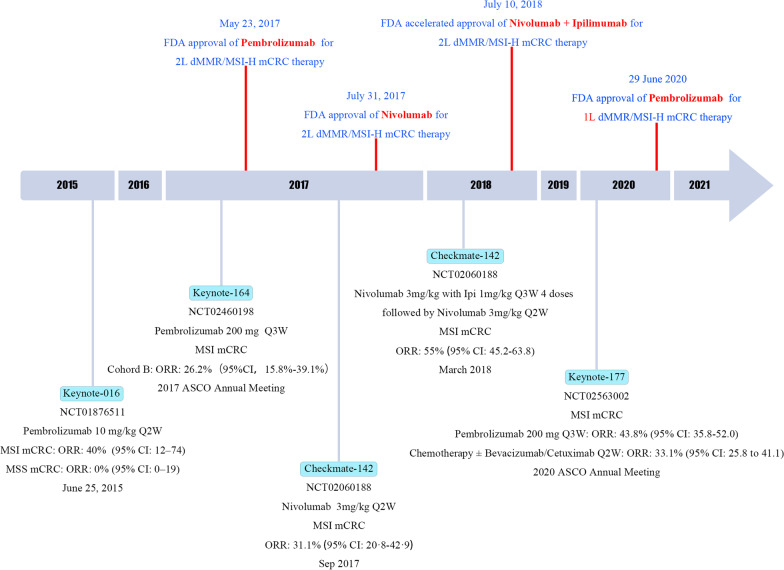
Chemotherapy combined with or without targeted therapy is the fundamental treatment for metastatic colorectal cancer (mCRC). Due to the adverse effects of chemotherapeutic drugs and the biological characteristics of the tumor cells, it is difficult to make breakthroughs in traditional strategies. The immune checkpoint blockades (ICB) therapy has made significant progress in the treatment of advanced malignant tumors, and patients who benefit from this therapy may obtain a long-lasting response. Unfortunately, immunotherapy is only effective in a limited number of patients with microsatellite instability—high (MSI-H), and segment initial responders can subsequently develop acquired resistance. From September 4, 2014, the first anti-PD-1/PD-L1 drug Pembrolizumab was approved by the FDA for the second-line treatment of advanced malignant melanoma. Subsequently, it was approved for mCRC second-line treatment in 2017. Immunotherapy has rapidly developed in the past 7 years. The in-depth research of the ICB treatment indicated that the mechanism of colorectal cancer immune-resistance has become gradually clear, and new predictive biomarkers are constantly emerging. Clinical trials examining the effect of immune checkpoints are actively carried out, in order to produce long-lasting effects for mCRC patients. This review summarizes the treatment strategies for mCRC patients, discusses the mechanism and application of ICB in mCRC treatment, outlines the potential markers of the ICB efficacy, lists the key results of the clinical trials, and collects the recent basic research results, in order to provide a theoretical basis and practical direction for immunotherapy strategies.
Overview
The claims and statistics of this paper haven’t been checked yet.
Free: it reads the open-access text and checks the first 5 claims that cite a source we can check. Create a free account to check every claim.
Integrity signals
Registry
Cites
Statistics
Figures
Verification
Claims the paper makes
The claims and statistics of this paper haven’t been checked yet.
Free: it reads the open-access text and checks the first 5 claims that cite a source we can check. Create a free account to check every claim.
Claims other papers make about this one
Each is checked against this paper’s own text: does it say what the citing paper says it does?
In the citing paper
“MSI-high or dMMR mCRC patients favorably respond to immune checkpoint blockade (ICB), and this is now the preferred front-line treatment [129].”
From Recent Advances in Therapeutic Strategies to Improve Colorectal Cancer Treatment (2024) · cites this paper as [129]
In the citing paper
“Immune checkpoint blockade (ICB) therapy with anti-PD-1 drug Pembrolizumab or Nivolumab is the approved first-line treatment for mCRC that is dMMR or MSI-high; however, this is only <5% of mCRC, and some estimates indicate that only 2% of mCRC patients are candidates for successful therapy with ICB therapy [129].”
From Recent Advances in Therapeutic Strategies to Improve Colorectal Cancer Treatment (2024) · cites this paper as [129]
Self-check
Percentages, sums and reported differences re-computed from the paper’s own numbers.
The self-check needs the paper’s full text.
Citations
Cites
1 retracted
Liu, Y., Liang, X., Yin, X., Lv, J., Tang, K., Ma, J., Ji, T., Zhang, H., Dong, W., Jin, X., et al. (2017) · Nature Communications · doi:10.1038/ncomms15207 · Cited by 212
RetractedPD-1 and PD-L1 Immune Checkpoint Blockade to Treat Breast Cancer
Hartkopf, A. D., Taran, F.-A., Wallwiener, M., Walter, C. B., Krämer, B., Grischke, E.-M., & Brucker, S. Y. (2016) · Breast Care · doi:10.1159/000453569 · Cited by 30,845
Siegel, R. L., Miller, K. D., & Jemal, A. (2019) · CA: A Cancer Journal for Clinicians · doi:10.3322/caac.21551 · Cited by 20,160
The National Comprehensive Cancer Network: Present and future directions
McGivney, W. T. (1998) · Cancer · doi:10.1002/(sici)1097-0142(19980515)82:10+<2057::aid-cncr14>3.0.co;2-a · Cited by 16,766
Adverse Renal Effects of Immune Checkpoint Inhibitors: A Narrative Review
Wanchoo, R., Karam, S., Uppal, N. N., Barta, V. S., Deray, G., Devoe, C., Launay-Vacher, V., Jhaveri, K. D., & on behalf of Cancer and Kidney International Network Workgroup on Immune Checkpoint Inhibitors (2017) · American Journal of Nephrology · doi:10.1159/000455014 · Cited by 15,256
Pembrolizumab versus Chemotherapy for PD-L1-Positive Non-Small-Cell Lung Cancer
Reck, M., Rodríguez-Abreu, D., Robinson, A. G., Hui, R., Csőszi, T., Fülöp, A., Gottfried, M., Peled, N., Tafreshi, A., Cuffe, S., et al. (2016) · New England Journal of Medicine · doi:10.1056/nejmoa1606774 · Cited by 10,089
PD-1 Blockade in Tumors with Mismatch-Repair Deficiency
Le, D. T., Uram, J. N., Wang, H., Bartlett, B. R., Kemberling, H., Eyring, A. D., Skora, A. D., Luber, B. S., Azad, N. S., Laheru, D., et al. (2015) · New England Journal of Medicine · doi:10.1056/nejmoa1500596 · Cited by 9,377
Nivolumab versus docetaxel in advanced nonsquamous non-small-cell lung cancer
Borghaei, H., Paz-Ares, L., Horn, L., Spigel, D. R., Steins, M., Ready, N. E., Chow, L. Q., Vokes, E. E., Felip, E., Holgado, E., et al. (2015) · New England Journal of Medicine · doi:10.1056/nejmoa1507643 · Cited by 9,335
Comprehensive molecular characterization of human colon and rectal cancer
The Cancer Genome Atlas Network (2012) · Nature · doi:10.1038/nature11252 · Cited by 8,499
Nivolumab versus Docetaxel in Advanced Squamous-Cell Non–Small-Cell Lung Cancer
Brahmer, J., Reckamp, K. L., Baas, P., Crinò, L., Eberhardt, W. E. E., Poddubskaya, E., Antonia, S., Pluzanski, A., Vokes, E. E., Holgado, E., et al. (2015) · New England Journal of Medicine · doi:10.1056/nejmoa1504627 · Cited by 8,447 · cited 5×
“It has been approved for the use in melanoma, NSCLC, head and neck squamous cell carcinoma and other malignant tumors and results in optimal clinical effects [22, 41–43].”
BackgroundInfluential
Research works printed but not linked: 1
- Kim R 493P - Pembrolizumab (pembro) plus mFOLFOX7 or FOLFIRI in patients (pts) with metastatic colorectal cancer (mCRC): updated results from KEYNOTE-651 cohorts B and D Ann Oncol 2020 suppl_4 S409 S461
Cited by
Items 201–300 of 394
Martinis, E., Tonon, S., Valeri, V., Colamatteo, A., Ricci, C., Trevisan, C., Capezzali, E., Pivetta, M., Battista, S., Mozzon, M., et al. (2026) · Scientific Reports · doi:10.1038/s41598-026-41446-x · Cited by 4
“For flow cytometry analyses, cells were stained for 25 min at 4 °C in the dark with fluorochrome-conjugated monoclonal antibodies or with fluorescent molecules (see Supplementary Tables 2, 3), following manufacturer instructions, according to standardized methods 31 .”
Rewiring Metal-Dependent Cell Death to Unlock Immunotherapy in Colorectal Cancer
Zhao, R., Wang, X., Wang, J., Liu, H., Zhang, G., Wu, X., Cheng, F., & Wang, L. (2026) · Nano Letters · doi:10.1021/acs.nanolett.6c00449 · Cited by 4
Zhu, C., Liu, Y., Xu, S., Li, R., Shi, J., Tang, G., Ran, R., Pang, B., Chi, Z., Ding, Y., et al. (2026) · Cell Death and Disease · doi:10.1038/s41419-026-08795-x · Cited by 5
“An effective immune response cannot be induced due to the weak immunogenicity of tumor cells and the lack of immune cell in fi ltration in patients with pMMR/MSS mCRC, resulting in the ineffectiveness of ICB treatment [18].”
Chen, T., Guo, S., & Long, X. (2025) · Computers in Biology and Medicine · doi:10.1016/j.compbiomed.2025.110768 · Cited by 4
Song, M., Zeng, X., Wu, Q., Huang, J., Dong, J.-Y., Shao, L., Sun, Z., Lin, Y., & Chen, S. (2023) · Life · doi:10.3390/life13051183 · Cited by 4
“Some studies have focused on the combination of ICIs with molecular targeted therapy [5].”
BackgroundBu, X., Liu, S., Zhang, Z.-Q., Wu, J., Pan, S., & Hu, Y. (2023) · Clinical & Translational Oncology · doi:10.1007/s12094-023-03319-x · Cited by 4
“However, only MSI-H patients, constituting roughly 15% of CRC patients [47], are the ones reported to respond effectively to ICI treatment hitherto [48, 49].”
Yu, J., Gong, Y., Xu, Z., Chen, L., Li, S., & Cui, Y. (2024) · PeerJ · doi:10.7717/peerj.17629 · Cited by 4
Self-citationAydın, E., Tokat, Ü. M., Adibi, A., Özgü, E., Bilgiç, Ş. N., & Demiray, M. (2024) · PubMed Central · doi:10.3389/fonc.2024.1405170 · Cited by 4
“Immunotherapy has emerged as a promising option for a subset of CRC patients, particularly those with microsatellite instability-high (MSI-H) or mismatch repair de fi cient (dMMR) tumors (4).”
BackgroundMGME1 associates with poor prognosis and is vital for cell proliferation in lower-grade glioma
Xiao, F., Zeng, J., Wang, H., Zhu, H., Guo, Y., Zhang, Z., Xiao, Y., Hu, G., Huang, K., Yang, Q., et al. (2023) · Aging · doi:10.18632/aging.204705 · Cited by 4
Yang, Y., Xiao, Z., Ouyang, J., & Guo, Y. (2024) · Journal of Investigative Medicine · doi:10.1177/10815589241308819 · Cited by 3
“23 Studies indicate a significant reduction in axial elongation rate post-combined treat-ment, 24 with evident effectiveness even in patients responding poorly to corneal reshaping lenses.”
Self-citationGong, W., Wen, S., Chen, Y., Wu, F., Yang, M., Sun, P., Guo, X., Li, M., Chen, D., Zhao, H., et al. (2025) · Frontiers in Oncology · doi:10.3389/fonc.2025.1525635 · Cited by 3
“MSI and TMB are crucial biomarkers for predicting the responsiveness of tumors to immune checkpoint inhibitors, such as anti-PD-1/PD-L1 therapies (27, 28).”
An Overview of Advancements in Screening Methods and Point-of-care Diagnostics for Colorectal Cancer
Kumar, P., Zargar, Z. B., Sharma, R., Kumar, S., Chopra, K., & Pawar, S. V. (2025) · Cancer Screening and Prevention · doi:10.14218/csp.2025.00006 · Cited by 3
De-rong, W., Ma, X., Li, J., Li, C., Li, Q., & Li, F.-Y. (2025) · European Journal of Medicinal Chemistry · doi:10.1016/j.ejmech.2025.118155 · Cited by 3
Cui, S., Chen, X., Qian, C., Wu, C., Wang, J., Zhang, Y., & Xiang, D. (2025) · Chemical Engineering Journal · doi:10.1016/j.cej.2025.172183 · Cited by 3
Zhang, S., Yang, S., Li, M., Zhang, H., Cao, Y., Bai, S., Li, W., Wang, B., Qu, D., Wang, Z., et al. (2026) · Materials Today Bio · doi:10.1016/j.mtbio.2026.102830 · Cited by 3
“In the last decades, immunotherapy for colorectal cancer has made tremendous progress, providing a promising approach for the treatment of colorectal cancer [4,5].”
Banik, D., Ward, C. J., Chakraborty, S., Zhang, Z., Heraghty, D. F., Suresh, P., Li, B., Kedia, S., Pramanik, J., Davis, S. J., et al. (2026) · Advanced Science · doi:10.1002/advs.202509762 · Cited by 3
“CRC, the third most common global cancer, is responsible for ∼ 10% of total cancer incidences and deaths in 2020, with ∼ 30 months of median overall survival for metastatic CRC (mCRC) patients [ 9 ].”
Hu, C., Cai, D., You, W., Zhou, Z., 刘军伟, Li, C., Lv, M., Gai, B., Chen, C., Huang, X., et al. (2026) · Cancer Letters · doi:10.1016/j.canlet.2026.218425 · Cited by 3
Huo, L., Wu, C., Li, X., Ma, C., Huang, J., Chen, Z., HE, W. P., Tao, T., & Zhang, W. (2026) · Advanced Science · doi:10.1002/advs.202522826 · Cited by 3
“While targeted therapies and immunotherapy have modestly improved outcomes, their efficacy is often transient due to substantial tumor heterogeneity and a profoundly immunosuppressive tumor microenvironment (TME) [ 4–6 ].”
Self-citationNussbaum, A. C. A. S., Antonini, M., Mattar, A. P. L., Bacal, F., & Real, J. M. (2026) · Cardio-Oncology · doi:10.1186/s40959-026-00490-2 · Cited by 3
“However, pembrolizumab, which has been used in TNBC since 2020, has a longer history in other solid tumors and was first approved for the treatment of melanoma in 2014 [78].”
Tang, X., He, Y., Luan, W.-Y., Xu, K.-Z., Zhang, Z., Xu, Z.-X., Shang, Y.-H., Hu, W.-J., Shan, M.-Y., Gan, J., et al. (2026) · Journal of Translational Medicine · doi:10.1186/s12967-026-08227-6 · Cited by 3
“The external GEO validation cohort was selected according to the following criteria [1]: the dataset contained colon cancer tissue samples [2]; both gene expression data and survival information were publicly available [3]; the platform annotation was clear and the data were compatible with…”
InfluentialLucantonio, L., Schiano, L., Sozio, F., Kosta, A., Peruzzi, G., Molfetta, R., Pietropaolo, G., Laffranchi, M., Campese, A. F., Bernardini, G., et al. (2026) · OncoImmunology · doi:10.1080/2162402x.2026.2674362 · Cited by 3
Molecularly engineered BODIPY photosensitizers for combined cancer phototherapy and immunotherapy
Wang, H., Zhang, Y., & Zhou, M. (2026) · Frontiers in Pharmacology · doi:10.3389/fphar.2026.1849977 · Cited by 3
“…strategies (Sonkin et al., 2024), including chemotherapy (Davodabadi et al., 2023; Yan M. et al., 2024), radiotherapy (Liao et al., 2024; Gong et al., 2025a; Verginadis et al., 2025), phototherapy (Zou et al., 2024a; Cai et al., 2025), and immunotherapy (Weng et al., 2022; Anders et al., 2023).”
Kang, D., Xie, S., Luo, Y., Deng, X., Tan, X.-R., Chen, Z., Zeng, L., Chen, G., Ding, P., Pan, Z., et al. (2026) · Advanced Science · doi:10.1002/advs.76143 · Cited by 3
“The activation of tumor-infiltrating immune cells requires the exposure of neoantigens, making high tumor mutational burden (TMB) a critical marker for immunotherapy response [ 8, 9 ].”
Self-citationRao, X., Huang, G., Li, J., Wu, C., Yang, M., Rao, X., Qian, Z., Chen, L., Yang, Y., & Wei, W. W. (2026) · Frontiers in Immunology · doi:10.3389/fimmu.2026.1775386 · Cited by 3
Self-citationTrends in immune-related adverse events for colorectal cancer: A bibliometric analysis
Cui, J., Xiong, Y., Min, S., Gu, X., Liu, Y., Zhong, L., Hong, X., & Liu, L. (2022) · Frontiers in Oncology · doi:10.3389/fonc.2022.1024321 · Cited by 3
“Although inhibition of programmed death-1 (PD1) or programmed cell death ligand 1 (PD-L1) therapies have had limited success in treating colorectal cancer, immunotherapy is now being used as second-line treatment for patients with dMMR/MSH-H (approximately 15% of patients with colorectal cancer) (5, 6).”
BackgroundYu, Y., & Xu, G. (2024) · Translational Cancer Research · doi:10.21037/tcr-23-2281 · Cited by 3
“Remarkable progress has been made in the clinical application of ICB therapy for advanced malignant tumors, with anti PD-1/PD-L1 drugs receiving approval as second-line treatment for metastatic CRC (mCRC) (49).”
Liu, X., Wei, N., & Chen, H. (2024) · Frontiers in Bioscience-Landmark · doi:10.31083/j.fbl2907245 · Cited by 3
“Almost all advanced cancer patients develop resistance to treatment with chemoradiation and immunotherapy due to the high degree of tumor heterogeneity [6,7].”
BackgroundHuang, Y., Liao, J., Gao, M., Fu, S., Liang, F., Jiang, Y., Luo, J., Huang, J., Tan, N., Wang, D., et al. (2024) · MedComm – Oncology · doi:10.1002/mog2.80 · Cited by 3
Chen, C., Luo, X., Tang, W., Geng, H., Martínez‐Pérez, J., Price, T. J., Kang, L., Lu, H., & Zhang, Y. (2024) · Journal of Gastrointestinal Oncology · doi:10.21037/jgo-24-468 · Cited by 3
“Immunotherapy is a novel treatment paradigm in solid tumors (11), including CRC (12,13).”
Zheng, J., Li, X., Gong, X., Hu, Y., & Tang, M. (2024) · Translational Cancer Research · doi:10.21037/tcr-24-1064 · Cited by 3
“For example, immune checkpoint inhibitors, such as PD-1/ PD-L1 and CTLA-4 inhibitors, have been shown to have a positive therapeutic impact on tumors with high TMB or MSI-H status (92,93).”
Self-citationXue, Y., Jiang, Z., Gu, J., Deng, S., Cai, K., & Wu, K. (2025) · Biomedicines · doi:10.3390/biomedicines13112596 · Cited by 3
“Despite improvements in screening programs and therapeutic strategies, a substantial proportion of patients continue to present with advanced-stage disease in China [2].”
Moqadami, A., Ahmadi, A., & Khalaj‐Kondori, M. (2023) · Jentashapir Journal of Cellular and Molecular Biology · doi:10.5812/jjcmb-141522 · Cited by 3
A hot and cold tumor‑related prognostic signature for stage II colorectal cancer
Zhou, M., Ge, X., Xu, X., Sheng, B., Wang, H., Shi, H., Liu, S., Tan, B., Xu, K., & Wang, J. (2024) · Oncology Letters · doi:10.3892/ol.2024.14552 · Cited by 3
Ce6-GFFY is a novel photosensitizer for colorectal cancer therapy
Qiao, W., Li, S., Luo, L., Chen, M., Zheng, X., Ye, J., Liang, Z., Wang, Q.-L., Hu, T., Zhou, L., et al. (2024) · Genes & Diseases · doi:10.1016/j.gendis.2024.101441 · Cited by 4
Self-citationStukalin, I., Gupta, M., Buhler, K. A., Forbes, N., Heitman, S. J., & Ma, C. (2024) · Current Oncology · doi:10.3390/curroncol31120571 · Cited by 3
Dai, F., Cao, Y. Z., Zhu, C., Li, Y., Ma, X., Wang, S., Liu, H., Xie, X., Gao, L., Wang, Y., et al. (2025) · Chemistry & Biodiversity · doi:10.1002/cbdv.202401873 · Cited by 3
Fu, H.-Y., Zhang, Y., Huang, J., Hu, J., Bai, K., & Wang, Z. (2025) · Therapeutic Advances in Medical Oncology · doi:10.1177/17588359251356581 · Cited by 3
“18,19 Although TMB has emerged as a useful predictor of patient survival after immunotherapy for various cancers, including CRC, the optimal cutoff value for TMB in relation to immunotherapy remains controversial, and not all mutations associated with high TMB result in robust antitumor immune…”
Fu, J., Jin, X., Chen, W., Chen, Z., Wu, P., Wang, X., Liu, Y., & Deng, S. (2022) · Frontiers in Pharmacology · doi:10.3389/fphar.2023.1083449 · Cited by 3
“Immunotherapy represented by immune checkpoint inhibitors (ICIs) has shown good curative effects in many malignant tumors, but its application in CRC is still limited to patients with mismatch repairdeficient (dMMR) microsatellite instability (MSI) status(Jin and Sinicrope, 2022; Weng et al., 2022).”
BackgroundMolnar, A., Monroe, H. L., Aydin, H. B., Arslan, M. E., Lightle, A. R., Lee, H., & Jabbour, T. E. (2023) · Current Oncology · doi:10.3390/curroncol30020182 · Cited by 3
“BRAF PCR, NGS BRAF V600E mutations associated with poor response to chemotherapy and increased response to ICIs [69] BRAF K601E mutations associated with better response to chemotherapy [69] KRAS PCR, NGS KRAS mutations indicative of primary resistance to immunotherapy [70] CD8+ TILS IHC High CD8+ TIL count associated…”
BackgroundMartínez-Torró, C., Alba‐Castellón, L., Carrasco-Díaz, L. M., Serna, N., Imedio, L., Gallardo, A., Casanova, I., Unzueta, U., Vázquez, E., Mangues, R., et al. (2023) · Biomedicine & Pharmacotherapy · doi:10.1016/j.biopha.2023.114976 · Cited by 3
Dashti, N., Kiaei, A. A., Boush, M., Gholami-Borujeni, B., & Nazari, A. (2024) · bioRxiv (Cold Spring Harbor Laboratory) · doi:10.1101/2024.05.28.596215 · Cited by 3
“( 58),(59),(60),(61) DPYD :Research conducted by Ying Yang and colleagues focusing on the DPYD gene has underscored its potential significance in treatment approaches.”
BackgroundWang, S., Deng, S., Jin, X., Chen, W., Wang, X., Zhan, H., Fang, X., & Fu, J. (2023) · Life Sciences · doi:10.1016/j.lfs.2023.121576 · Cited by 2
Song, Q., Wang, P., Wu, J., Lu, M., Xia, Q., Shi, Y., Wang, Z., Ma, X., & Zhao, Q. (2024) · Discover Oncology · doi:10.1007/s12672-024-01340-2 · Cited by 2
“Recently, targeted drugs and immunotherapy has brought a ray of hope for metastatic and unresectable CRC [3–6].”
BackgroundZhu, Y., Fu, X., & Dai, Y. (2025) · Advances in Clinical and Experimental Medicine · doi:10.17219/acem/194037 · Cited by 2
“59,60”
A self-sustainable DNA amplification circuit for sensitive microRNA imaging
Liu, C., Huang, Z., Li, Z., Dai, X., Chen, Q., Chen, M., Xu, Y., Chen, X., Wang, F., Chen, X., et al. (2025) · Analytica Chimica Acta · doi:10.1016/j.aca.2025.343689 · Cited by 2
SMARCD1 is a dual regulator of PD-L1 expression and cell proliferation facilitating tumor evasion
Fu, G., Liu, Y., Chen, Q., Yang, Z., Luo, M., & Cai, W. X. (2025) · Pathology - Research and Practice · doi:10.1016/j.prp.2025.155975 · Cited by 2
Zhang, M., Jin, W., Cao, L., Gao, Y., Wang, Y., & Wang, J. (2025) · Translational Cancer Research · doi:10.21037/tcr-24-1708 · Cited by 2
“Immunotherapies based on programmed cell death ligand 1, programmed cell death protein 1, and cytotoxic T lymphocyte-associated antigen 4 have shown advantages in treating COADREAD (6).”
Huang, Y., Wei, Y., Xing, X., & Liu, W. (2025) · Computers in Biology and Medicine · doi:10.1016/j.compbiomed.2025.111227 · Cited by 2
Xiao, C., Zhang, W., Qiu, M., He, D., Jiang, D., Wang, Z., Shen, Y., & Chen, H. (2025) · European Journal of Surgical Oncology · doi:10.1016/j.ejso.2025.111182 · Cited by 2
Xu, X., Wang, X., Luo, Z., Parveen, R., Zhang, J., Yu, Z., Chen, R., Ye, Y., Guo, J., Huang, G., et al. (2025) · International Immunopharmacology · doi:10.1016/j.intimp.2025.115845 · Cited by 2
Mo, M., Chen, X., Liu, Y., Wang, C., Chen, X., Zhang, N., He, N., Li, Y., Wang, J., Chen, H., et al. (2025) · Advanced Science · doi:10.1002/advs.202507695 · Cited by 2
Greenstein, S. J., Ramlogan‐Steel, C. A., Wise, I. A., Wilson, R. J., & Steel, J. C. (2025) · Clinical & Experimental Metastasis · doi:10.1007/s10585-025-10385-8 · Cited by 2
“Preclinical (JMS-053 + paclitaxel showed synergistic killing of cancer cells) [33, 97].”
Prognostic factors and survival outcomes in colorectal cancer: insights from a Ghanaian cohort
Buckman, T. A., Sakyi, S. A., Yorke, J., Laryea, J. A., Nagalo, B. M., Nyantakyi, M., Batu, E. N., Senu, E., Osei-Bonsu, E. B., Sam, D., et al. (2025) · BMC Gastroenterology · doi:10.1186/s12876-025-04405-w · Cited by 2
“…study that had explored the link between cigarette smoking and adenomatous polyps has consistently reported an elevated risk [2, 56] Most recently, research interest has focused on the possibility that risk associated with smoking is influenced by genetic variations in metabolizing enzymes [57].”
Hao, Y., Fan, Y., He, H., Zeng, Z., Zong, Y., Yang, Z., Li, B., & Cheng, L. (2026) · Cell Communication and Signaling · doi:10.1186/s12964-026-02703-8 · Cited by 2
“However, the efficacy of chemotherapeutic agents remains limited, and resistance to targeted therapies often leads to suboptimal clinical outcomes [3].”
Taghvimi, S., Fard, E. S., Baghrobehbahani, A., Shafiee, M., Zarezadeh, V., Mamaghani, M. P., Nazarian, M., Chegeni, N., Movahedpour, A., Mousavi, P., et al. (2026) · Applied Radiation and Isotopes · doi:10.1016/j.apradiso.2026.112486 · Cited by 2
Chen, G., Yao, Y., Liu, Y., Sun, Y., Gao, Y., Zhang, J., Wei, S., Li, C., Li, D., Zhou, Y., et al. (2026) · International Journal of Surgery · doi:10.1097/js9.0000000000004836 · Cited by 2
Zhu, D., Huang, W., Wang, Y., Yang, Y., Su, F., Lu, C., Lin, Z., Zhou, E., Chen, Z., Liu, R., et al. (2026) · Chemical Engineering Journal · doi:10.1016/j.cej.2026.175330 · Cited by 2
Self-citationAmrani, F. Z., & Benali, Y. (2025) · Bulletin of pioneering researches of medical and clinical science · doi:10.51847/eiaztfonlh · Cited by 2
Cai, R., Zhan, W., Lyu, X., Yang, X., Wu, Z. Z., Cheng, Y., Guo, C., Feng, J., Fu, Y., Xie, Y., et al. (2026) · Gut · doi:10.1136/gutjnl-2026-338195 · Cited by 2
Qiu, M., Wen, Y., Fang, S., Hao, T., Xu, H., Deng, X., YAMAKAWA, T., Li, B., Zhang, S., Lu, Y.-R., et al. (2026) · Materials Today Bio · doi:10.1016/j.mtbio.2026.103376 · Cited by 2
“Although cancer immunotherapy has achieved remarkable breakthroughs, its efficacy in CRC is hampered by the immunosuppressive “ cold tumor ” microenvironment, which limits the success of PD-1/PD-L1 blockade therapy [6].”
Qiao, X., Liu, J. T., Bai, J., Xu, C., Zhao, Q., Guo, S., Ding, L., Ma, D., Zhang, X., & Tian, B. (2026) · Journal of Nanobiotechnology · doi:10.1186/s12951-026-04756-w · Cited by 2
“Consequently, the investigation of targeted therapies, neoadjuvant chemotherapy, and immunotherapy for CRC has emerged as a pivotal advancement in cancer treatment [8–10].”
Advancements in immunotherapy research for colorectal cancer based on microsatellite status
Shuai, X. I. A. O., XiGuang, C. H. E. N., & XuYu, Z. U. (2023) · Scientia Sinica Vitae · doi:10.1360/ssv-2023-0103 · Cited by 2
SOX17: escape route from immune destruction in early CRC
Papavassiliou, K. A., Adamopoulos, C., & Papavassiliou, A. G. (2024) · Trends in Molecular Medicine · doi:10.1016/j.molmed.2024.04.001 · Cited by 2
Zhou, S., Jiang, D., Liu, Y., Wang, Q., Hu, M., Dai, K., Chen, L., Zhang, T., Cai, C., & Wang, J. (2025) · Biochemical and Biophysical Research Communications · doi:10.1016/j.bbrc.2025.152038 · Cited by 2
Organ Preservation in MSS Rectal Cancer
Gao, Y., & Wu, A. (2023) · Clinics in Colon and Rectal Surgery · doi:10.1055/s-0043-1767710 · Cited by 2
Shao, H., Li, Y., Tao, Y., & Huang, X. (2023) · Medicine · doi:10.1097/md.0000000000035365 · Cited by 2
“However, a great number of CRC patients are primary or have acquired resistance to immune checkpoint blockades.[3,4] Therefore, candidates who will benefit from immunotherapy treatment.”
BackgroundAzimi, M., Moazzeni, A., Jafarzadeh, L., Faraji, F., Mansourabadi, A. H., & Safari, E. (2024) · Human Cell · doi:10.1007/s13577-024-01078-7 · Cited by 2
Ding, Z., Piao, Y., Jiang, T., Chen, J., Wang, Y., Yu, H., & Zheng, Z. (2024) · World Journal of Gastrointestinal Surgery · doi:10.4240/wjgs.v16.i10.3202 · Cited by 2
“Cellular immunotherapy has been used in previous research as a complement to conventional therapy that promotes immune function recovery and assists in the destruction of residual chemotherapy-resistant cancer cells [11].”
Xie, Z., Yang, T., Zhou, C., Xue, Z., Wang, J., & Lu, F. (2024) · Molecular Carcinogenesis · doi:10.1002/mc.23854 · Cited by 2
Naveed, M., Mughal, M. S., Aziz, T. A., Makhdoom, S. I., Jamil, H., Khan, A. A., Al‐Hoshani, N., Al‐Joufi, F. A., Kassim, R. M. T., & Alwethaynani, M. S. (2025) · Open Medicine · doi:10.1515/med-2025-1167 · Cited by 2
“The examination of gene expression reveals that patients with CRC (Sinicrope, 2022) had a higher level of METLL3 expression in comparison to healthy controls [23,24].”
Huo, L., Liang, P., Duan, Y., Xu, Y., Jianhua, T., Lv, Q., & Feng, R. (2025) · Frontiers in Oncology · doi:10.3389/fonc.2025.1590319 · Cited by 2
Analysis of microsatellite instability (MSI) in pediatric gonadal and extra-gonadal germ cell tumors
Montella, M., Errico, M. E., Ronchi, A., Zannini, G., Donofrio, V., Savarese, G., Sirica, R., Esposito, F., Martino, M. D., Papparella, A., et al. (2023) · Intractable & Rare Diseases Research · doi:10.5582/irdr.2023.01039 · Cited by 2
Zhang, H., Zhang, H., Chen, W., Wang, Y., Sapudin, S. N. M., Sandai, D. A., Harun, M. S. R., Zhang, Z., Wang, W., Song, Z., et al. (2024) · Research Square · doi:10.21203/rs.3.rs-4555778/v1 · Cited by 2
Gan, L., Yang, C., Zhao, L., Wang, S., Ye, Y., & Gao, Z. (2024) · Clinical & Translational Oncology · doi:10.1007/s12094-024-03520-6 · Cited by 1
“Although it has some therapeutic value in CRC, the impact is not potent, and only a subset of patients responds well to approved checkpoint inhibitors [2].”
Wu, W., Wang, K., Yang, Y. V., & Yang, X. (2025) · Translational Cancer Research · doi:10.21037/tcr-24-1988 · Cited by 1
“Moreover, despite significant advances in tumor immunotherapy, particularly in targeting immune checkpoints, challenges such as treatment resistance, tumor spatiotemporal heterogeneity, and immune-related adverse events persist (5-7).”
Self-citationLi, L., Li, R., Zhan, W., Zhuo, Z., Zhang, J., Li, Q., Mu, S., Chen, W., Li, L., & He, S. (2025) · The FASEB Journal · doi:10.1096/fj.202501953r · Cited by 1
“However, its efficacy is limited to individuals who possess a DNA mismatch repair (dMMR) [5].”
Wan, L., Li, J. J., & Xie, X. (2025) · IET Systems Biology · doi:10.1049/syb2.70043 · Cited by 1
Li, Y.-N., Wu, Y., Deng, F.-W., Lu, Y., Song, G., Xiang, L., Peng, T., Cheng, X., & Ying, H. (2026) · Therapeutic Advances in Medical Oncology · doi:10.1177/17588359251411086 · Cited by 1
Gu, M., Zhu, M., Cai, J., Ding, Q., Hu, W., Hu, Q., Zhang, H., Zhu, X., & Zhu, Y. Z. (2026) · European Journal of Medicinal Chemistry · doi:10.1016/j.ejmech.2026.118572 · Cited by 1
Hu, L., Zhang, X., Ma, X., Ren, J., Zhang, J., Zhu, L., Chen, Y., Lu, Z., & Li, J. (2026) · Journal of Cancer · doi:10.7150/jca.119265 · Cited by 1
“The development of immunotherapy has provided a new option for the treatment of CRC [6], and immunotherapy alone or in combination with traditional therapy has become a cornerstone of CRC treatment in clinical practice [7, 8].”
Zhao, L., Pei, X., Wu, H., Zhou, S., Song, J., Wan, Q., Lv, H., Xu, J., & Nie, Y. (2026) · Translational Oncology · doi:10.1016/j.tranon.2026.102814 · Cited by 1
“Recently, the development of immunotherapy has opened new perspectives for CRC treatment [6].”
Cheng, X., He, L., Zhou, C., Li, Q., 张柏雯, Wang, J., Cheng, X., & Tu, S. (2026) · Cancer Immunology Immunotherapy · doi:10.1007/s00262-026-04428-6 · Cited by 1
Zhu, L., Sha, Y., Qu, Y., Miao, S., Cai, G., Lv, R., Zhang, X., Zhong, Z., & Meng, F. (2026) · Journal of Controlled Release · doi:10.1016/j.jconrel.2026.115045 · Cited by 1
Esparvarinha, M., Nickho, H., Najafi, A., Keykhaee, M., Mehrabadi, A. Z., Maleki, L. A., Falak, R., & Yousefi, M. (2026) · Scientific Reports · doi:10.1038/s41598-026-45740-6 · Cited by 1
Bai, F., Qin, G., Li, J., Zhan, W., Fu, Y., Wu, Z., Cheng, Y., & Deng, Y. (2026) · Cancer Letters · doi:10.1016/j.canlet.2026.218696 · Cited by 1
Wu, W., Cheng, C., Yang, T., Meng, W., & Wang, Y. (2026) · BMC Cancer · doi:10.1186/s12885-026-16395-3 · Cited by 1
“As research into immune checkpoint inhibitors deepens, novel predictive biomarkers continue to emerge [15, 16].”
Adenovirus-based cancer vaccines: a systematic review of clinical trials evidence
Kamalkazemi, E., Salehi‐Pourmehr, H., Negahdari, B., Salahlou, R., Baghi, H. B., Pashazadeh, F., Alizadeh, E., & Goradel, N. H. (2026) · Infectious Agents and Cancer · doi:10.1186/s13027-026-00784-1 · Cited by 1
Bergamo, F., Santa, S. D., Loupakis, F., Cerma, K., Tosi, A., Grandis, M. C. D., Pietà, A. D., Gringeri, E., Angerilli, V., Ramondo, G., et al. (2022) · Frontiers in Oncology · doi:10.3389/fonc.2022.964219 · Cited by 1
Cui, J., Xiong, Y., Liu, Y., Min, S., Gu, X., Zhong, L., Hong, X., & Liu, L. (2022) · BioMed Research International · doi:10.1155/2022/7406636 · Cited by 1
“Recently, researchers have discovered a novel cell death pathway called cuproptosis, and their studies have demonstrated that copper can directly bind to fatty acylated components of the tricarboxylic acid (TCA) cycle and cause toxic protein stress, ultimately leading to cell death [12 – 14].”
Recent Research Progress in Targeted Ther-apy of Metastatic Colorectal Cancer
张, 婷. (2023) · Advances in Clinical Medicine · doi:10.12677/acm.2023.1361445 · Cited by 1
The influence of gut microbiota on immunotherapy for Colorectal Cancer
de Melo, F. F. (2023) · Gastrointestinal Tract · doi:10.54844/git.2023.421 · Cited by 1
Davies, E. B. J., Meyer, J., Basiliya, K., Corbett, G. D., Bowden, D. J., Chan, D. K. H., O'Cathail, S. M., Krakowska, M., Jabbar, F., & Church, D. N. (2024) · Wiley eBooks · doi:10.1002/9781119756422.ch12 · Cited by 1
Elkhamisy, F. A. A., Eesa, A. N., Elnady, O. M., Elnaghi, K., & Foda, A. A.-R. M. (2024) · Pathology - Research and Practice · doi:10.1016/j.prp.2024.155450 · Cited by 1
George, D. M., Lakshminarayanan, M., & Lakshmanan, A. (2024) · Apollo Medicine · doi:10.1177/09760016241303575 · Cited by 1
“[27] 28-30] Tumour budding is the formation of small clusters of cancer cells at the invasive edge of tumours.”
Jang, K. Y., Kim, K. M., Ha, G. W., Lee, M. R., Park, H. S., Chung, M. J., Moon, W. S., & Ahn, A. R. (2025) · Medicine · doi:10.1097/md.0000000000041228 · Cited by 1
Huang, C., He, Y., Yang, Y., & Shen, W. (2025) · Current Cancer Drug Targets · doi:10.2174/0115680096357426250310070752 · Cited by 1
Self-citationZhou, Y., Gao, Y., Zhou, H., Fu, Y., Lin, Z., Shang, Y., Peng, S., Yang, C., & Ke, C. (2023) · SSRN Electronic Journal · doi:10.2139/ssrn.4611835 · Cited by 1
Li, Z., Jiang, Y., Liu, K., & Zhao, R. (2024) · Frontiers in Immunology · doi:10.3389/fimmu.2024.1442608 · Cited by 1
Du, Y., Gao, S., & Wang, N. (2025) · International Journal of Surgery · doi:10.1097/js9.0000000000003804 · Cited by 1
Characterization of miR-34 effectors in colorectal cancer
Huang, Z. (2024) · doi:10.5282/edoc.33313 · Cited by 1
Metadata
- Authors
- Weng, J., Li, S., Zhu, Z., Liu, Q., Zhang, R., Yang, Y., & Li, X.
- Affiliations
- Fudan University Shanghai Cancer Center (CN)
- Shanghai Jiao Tong University (CN)
- Corresponding author
- Li, Xinxiang
- Venue
- Journal of Hematology & Oncology
- Published
- 2022-07-16
- Volume
- 15
- Issue
- 1
- Pages
- 95-95
- ISSN
- 1756-8722 (ISSN-L)
- PMC
- PMC9288068
- OpenAlex
- W4285587152
- Cited by
- 355
- References
- 224
- Citations by year
- 2026: 62 · 2025: 93 · 2024: 127 · 2023: 61 · 2022: 12
- FWCI
- 8.97
- Type
- journal article
- Language
- en
- Open access
- gold
- doi.org
- Licence
- cc-by
- creativecommons.org/licenses/by/4.0 (tdm)
- creativecommons.org/licenses/by/4.0 (vor)
- Locations
- Journal of Hematology & Oncology (publishedVersion, cc-by)
- PubMed Central (publishedVersion, cc-by)
- PubMed (publishedVersion)
- DOAJ (DOAJ: Directory of Open Access Journals) (submittedVersion, cc-by-sa)
- Funders
- National Natural Science Foundation of China (82003060, 81772599)
- Topics
- Health Sciences › Medicine › Oncology › Cancer Immunotherapy and Biomarkers
- Health Sciences › Medicine › Oncology › Colorectal Cancer Treatments and Studies
- Health Sciences › Medicine › Pathology and Forensic Medicine › Genetic factors in colorectal cancer
- Keywords
- immunotherapy, metastatic colorectal cancer, immune checkpoint blockade, pembrolizumab, PD-1/PD-L1, microsatellite instability-high, acquired resistance, predictive biomarkers, immune resistance mechanisms, second-line therapy, clinical trials
- MeSH terms
- Humans, Immunologic Factors, Immunotherapy, Colorectal Neoplasms, Microsatellite Instability
About these checks
Registry, retraction, Cites and statistics results are computed, not judged, with one exception: a printed reference that no index lists is read once by a model before it counts as a citation error. Claims are extracted by a model and kept only when their quote appears verbatim in the text; each cited source is then checked, with a model’s help, for whether it says what the claim relies on. Those verdicts can be wrong — read the claim’s quote and the cited source before relying on one.
Statistics and arithmetic are recomputed, not judged.
Confidence bands are shown only for fields calibrated on our annotated test set. None is calibrated yet, so no band is shown.
What counts as a claim ›How we measure confidence ›How we check this ›
Are you an author, or do you see a problem with this page? Request a review
Data sources
Bibliographic data: Semantic Scholar, OpenAlex, Crossref.
Contains information from the Semantic Scholar Academic Graph Datasets, made available under the ODC Attribution License (ODC-BY 1.0).
Semantic Scholar’s data is described in: Kinney, R., et al. (2023). The Semantic Scholar Open Data Platform. arXiv:2301.10140.
