

Inhibition of SALL4 reduces tumorigenicity involving epithelial-mesenchymal transition via Wnt/β-catenin pathway in esophageal squamous cell carcinoma
Open accessThe DOI matches its Crossref record; 48 of the 49 references it cites were found in a registry or an index.
Abstract
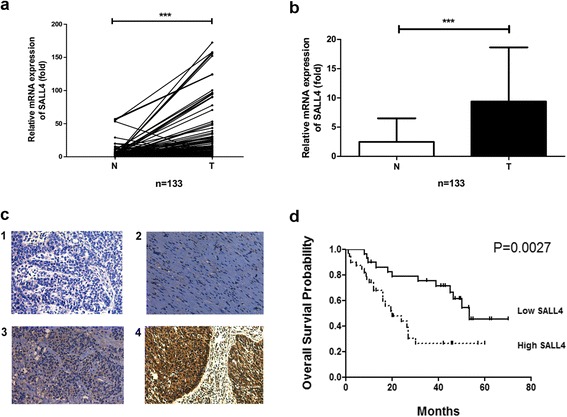
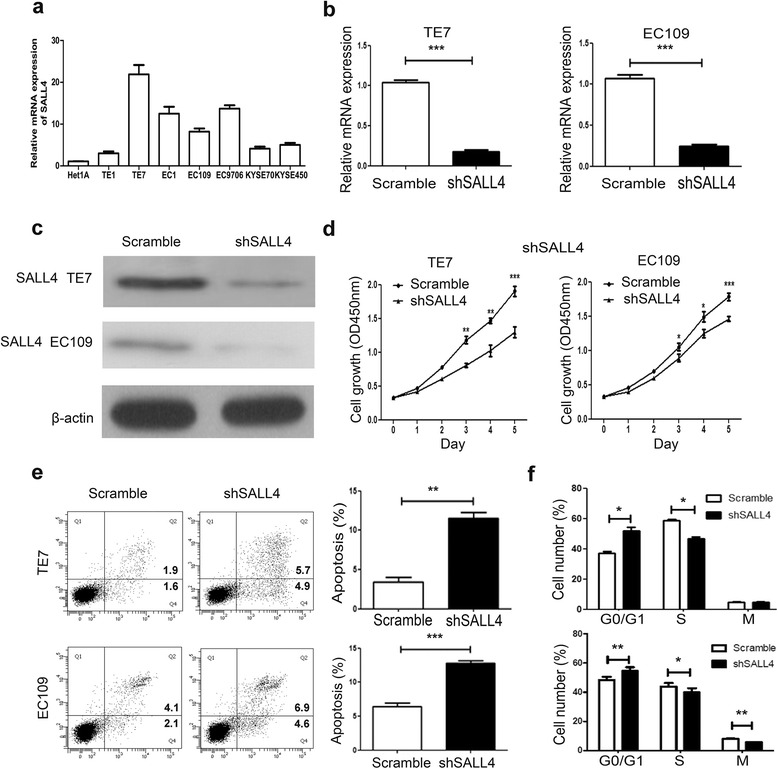
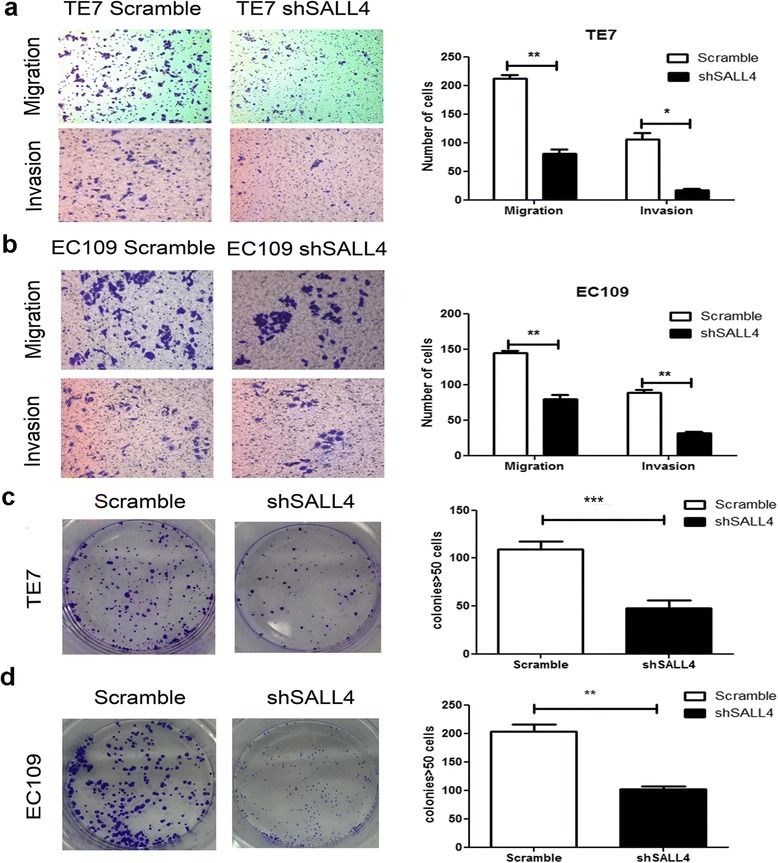
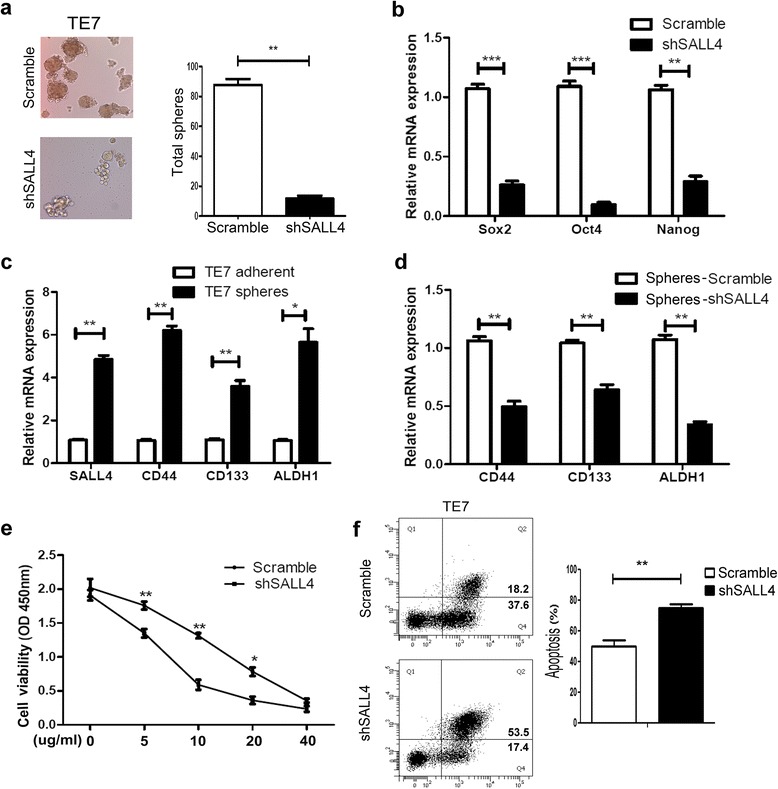
BACKGROUND: Growing evidence suggests that SALL4 plays a vital role in tumor progression and metastasis. However, the molecular mechanism of SALL4 promoting esophageal squamous cell carcinoma (ESCC) remains to be elucidated. METHODS: The gene and protein expression profiles- were examined by using quantitative real-time PCR, immunohistochemistry and western blotting. Small hairpin RNA was used to evaluate the role of SALL4 both in cell lines and in animal models. Cell proliferation, apoptosis and invasion were assessed by CCK8, flow cytometry and transwell-matrigel assays. Sphere formation assay was used for cancer stem cell derivation and characterization. RESULTS: Our study showed that the transcription factor SALL4 was overexpressed in a majority of human ESCC tissues and closely correlated with a poor outcome. We established the lentiviral system using short hairpin RNA to knockdown SALL4 in TE7 and EC109 cells. Silencing of SALL4 inhibited the cell proliferation, induced apoptosis and the G1 phase arrest in cell cycle, decreased the ability of migration/invasion, clonogenicity and stemness in vitro. Besides, down-regulation of SALL4 enhanced the ESCC cells' sensitivity to cisplatin. Xenograft tumor models showed that silencing of SALL4 decreased the ability to form tumors in vivo. Furthermore, our study demonstrated that SALL4 played a vital role in modulating the stemness of ESCC cells via Wnt/β-catenin signaling pathway and in epithelial-mesenchymal transition. CONCLUSIONS: Our results revealed that SALL4 might serve as a functional marker for ESCC cancer stem cell, a crucial marker for prognosis and an attractive candidate for target therapy of ESCC.
Overview
The claims and statistics of this paper haven’t been checked yet.
Free: it reads the open-access text and checks the first 5 claims that cite a source we can check. Create a free account to check every claim.
Integrity signals
Registry
Cites
Statistics
Figures
Verification
Claims the paper makes
The claims and statistics of this paper haven’t been checked yet.
Free: it reads the open-access text and checks the first 5 claims that cite a source we can check. Create a free account to check every claim.
Claims other papers make about this one
Each is checked against this paper’s own text: does it say what the citing paper says it does?
The source backs part of the claim, not all of it — or backs it for a different population, condition or comparison.
In the citing paper
“These data suggest that in melanoma—similar to other cancer types—Sall4 is essential for tumor growth, while its depletion or downregulation leads to increased micrometastases formation”
From Epigenetic control of melanoma cell invasiveness by the stem cell factor SALL4 (2021) · cites this paper as [37]
Experimental — accuracy not yet measured
Self-check
Percentages, sums and reported differences re-computed from the paper’s own numbers.
The self-check needs the paper’s full text.
Citations
Cites
Jemal, A., Bray, F., Center, M. M., Ferlay, J., Ward, E., & Forman, D. (2011) · CA: A Cancer Journal for Clinicians · doi:10.3322/caac.20107 · Cited by 54,679
Global Cancer Statistics, 2002
Parkin, D. M., Bray, F., Ferlay, J., & Pisani, P. (2005) · CA: A Cancer Journal for Clinicians · doi:10.3322/canjclin.55.2.74 · Cited by 18,196
Cancer statistics in China, 2015
Chen, W., Zheng, R., Baade, P. D., Zhang, S., Zeng, H., Bray, F., Jemal, A., Yu, X. Q., & He, J. (2016) · CA: A Cancer Journal for Clinicians · doi:10.3322/caac.21338 · Cited by 17,038
Self-citationJemal, A., Siegel, R., Xu, J., & Ward, E. (2010) · CA: A Cancer Journal for Clinicians · doi:10.3322/caac.20073 · Cited by 12,596
Epithelial-Mesenchymal Transitions in Development and Disease
Thiery, J. P., Acloque, H., Huang, R. Y. J., & Nieto, M. A. (2009) · Cell · doi:10.1016/j.cell.2009.11.007 · Cited by 9,931 · cited 1×
“EMT plays crucial roles during embryonic development, tumor metastasis and invasion and is one of the major molecular mechanisms through which invasion and metastasis are promoted during the oncogenic process [33, 34].”
BackgroundStem cells, cancer, and cancer stem cells
Reya, T., Morrison, S. J., Clarke, M. F., & Weissman, I. L. (2001) · Nature · doi:10.1038/35102167 · Cited by 9,738 · cited 1×
“Accumulating evidence suggests that many solid tumors contain a small subset of tumor cells known as CSCs [26], which display stem cell characteristics, including selfrenewal and differentiation into a heterogeneous tumor cell population consisting of progenitor cells and more differentiated cancer cells [27, 28].”
BackgroundTrastuzumab-Induced Hepatotoxicity: A Case Report
Vucicevic, D., Carey, E. J., & Karlin, N. J. (2013) · Breast Care · doi:10.1159/000346844 · Cited by 4,415
Brocken, P., van der Heijden, H. F. M., Dekhuijzen, P. N. R., Peters-Bax, L., & de Geus-Oei, L.-F. (2014) · Respiration · doi:10.1159/000347096 · Cited by 4,002
Wnt signalling in stem cells and cancer
Reya, T., & Clevers, H. (2005) · Nature · doi:10.1038/nature03319 · Cited by 3,666 · cited 1×
“Activation of Wnt/β-catenin signaling pathway has been implicated in stem cell self-renewal, maintenance and differentiation [38, 39].”
BackgroundClarke, M. F., Dick, J. E., Dirks, P. B., Eaves, C. J., Jamieson, C. H. M., Jones, D. L., Visvader, J., Weissman, I. L., & Wahl, G. M. (2006) · Cancer Research · doi:10.1158/0008-5472.can-06-3126 · Cited by 3,051 · cited 12×
“Accumulating evidence suggests that many solid tumors contain a small subset of tumor cells known as CSCs [26], which display stem cell characteristics, including selfrenewal and differentiation into a heterogeneous tumor cell population consisting of progenitor cells and more differentiated cancer cells [27, 28].”
BackgroundInfluentialWNT signalling pathways as therapeutic targets in cancer
Anastas, J. N., & Moon, R. T. (2013) · Nature Reviews Cancer · doi:10.1038/nrc3419 · Cited by 1,911 · cited 1×
“Activation of Wnt/β-catenin pathway can promote transcriptional changes in order to drive EMT in cancer [23].”
BackgroundJordan, C. T., Guzman, M. L., & Noble, M. (2006) · New England Journal of Medicine · doi:10.1056/nejmra061808 · Cited by 1,702
Cancer stem cells and epithelial–mesenchymal transition: Concepts and molecular links
Scheel, C., & Weinberg, R. A. (2012) · Seminars in Cancer Biology · doi:10.1016/j.semcancer.2012.04.001 · Cited by 881 · cited 1×
“Furthermore, it is well-known that cancer cells undergoing EMT share the properties of stem cell-like cells [35], which could indicate SALL4 as a CSC marker in ESCC.”
BackgroundTran, G. D., Sun, X., Abnet, C. C., Fan, J., Dawsey, S. M., Dong, Z., Mark, S. D., Qiao, Y., & Taylor, P. R. (2005) · International Journal of Cancer · doi:10.1002/ijc.20616 · Cited by 683 · cited 1×
“Almost 90 % of cases are squamous cell carcinomas in the highest risk area of Asia, especially in Henan province [3, 4].”
BackgroundZhang, J., Tam, W.-L., Tong, G. Q., Wu, Q., Chan, H.-Y., Soh, B.-S., Lou, Y., Yang, J., Ma, Y., Chai, L., et al. (2006) · Nature Cell Biology · doi:10.1038/ncb1481 · Cited by 568 · cited 1×
“SALL4 acts as a C2H2 zinc-finger transcription factor, plays essential roles in maintaining pluripotency and self-renewal of embryonic and hematopoietic stem cells [12–14].”
BackgroundKaufhold, S., & Bonavida, B. (2014) · Journal of Experimental & Clinical Cancer Research · doi:10.1186/preaccept-1929235422128885 · Cited by 469 · cited 1×
“EMT plays crucial roles during embryonic development, tumor metastasis and invasion and is one of the major molecular mechanisms through which invasion and metastasis are promoted during the oncogenic process [33, 34].”
BackgroundDiMeo, T. A., Anderson, K., Phadke, P., Feng, C., Perou, C. M., Naber, S., & Kuperwasser, C. (2009) · Cancer Research · doi:10.1158/0008-5472.can-08-4135 · Cited by 414
Cancer stem cells – old concepts, new insights
Vermeulen, L., Sprick, M. R., Kemper, K., Stassi, G., & Medema, J. P. (2008) · Cell Death & Differentiation · doi:10.1038/cdd.2008.20 · Cited by 352 · cited 1×
“CSCs were widely studied in various tumors and CSCs targeted therapy could be a great help for ESCC treatment [6].”
BackgroundSall4 Interacts with Nanog and Co-occupies Nanog Genomic Sites in Embryonic Stem Cells
Wu, Q., Chen, X., Zhang, J., Loh, Y.-H., Low, T.-Y., Zhang, W., Zhang, W., Sze, S.-K., Lim, B., & Ng, H.-H. (2006) · Journal of Biological Chemistry · doi:10.1074/jbc.c600122200 · Cited by 292 · cited 2×
“As an up-stream regulator, SALL4 could activate the expression of SOX2, Oct4 and Nanog, meanwhile, these proteins can form a transcriptional feedback network to control the development of ESCs [15, 16, 32].”
BackgroundSelf-citationMa, Y., Cui, W., Yang, J., Qu, J., Di, C., Amin, H. M., Lai, R., Ritz, J., Krause, D. S., & Chai, L. (2006) · Blood · doi:10.1182/blood-2006-02-001594 · Cited by 215 · cited 4×
“Ma et al. showed that SALL4 could bind to β-catenin in vitro and synergistically enhanced the Wnt/β-catenin pathway in human acute myeloid leukemia (AML) [17].”
BackgroundInfluentialCancer stem cells and human malignant melanoma
Schatton, T., & Frank, M. H. (2008) · Pigment Cell & Melanoma Research · doi:10.1111/j.1755-148x.2007.00427.x · Cited by 210 · cited 2×
“Moreover, CSCs are resistant to chemotherapy and radiotherapy and responsible for cancer recurrence and distant metastasis [7, 8].”
BackgroundA Novel SALL4/OCT4 Transcriptional Feedback Network for Pluripotency of Embryonic Stem Cells
Yang, J., Gao, C., Chai, L., & Ma, Y. (2010) · PLoS ONE · doi:10.1371/journal.pone.0010766 · Cited by 152 · cited 2×
“As an up-stream regulator, SALL4 could activate the expression of SOX2, Oct4 and Nanog, meanwhile, these proteins can form a transcriptional feedback network to control the development of ESCs [15, 16, 32].”
BackgroundWnt3a mediated activation of Wnt/β-catenin signaling promotes tumor progression in glioblastoma
Kaur, N., Chettiar, S. T., Rathod, S. S., Rath, P., Muzumdar, D., Shaikh, M. L., & Shiras, A. (2013) · Molecular and Cellular Neuroscience · doi:10.1016/j.mcn.2013.01.001 · Cited by 148
Regulation and function of Spalt proteins during animal development
de Celis, J. F., & Barrio, R. (2009) · The International Journal of Developmental Biology · doi:10.1387/ijdb.072408jd · Cited by 137
The multiple facets of drug resistance: one history, different approaches
Niero, E. L., Rocha-Sales, B., Lauand, C., Cortez, B. A., de Souza, M. M., Rezende-Teixeira, P., Urabayashi, M. S., Martens, A. A., Neves, J. H., & Machado-Santelli, G. M. (2014) · Journal of Experimental & Clinical Cancer Research · doi:10.1186/1756-9966-33-37 · Cited by 137 · cited 2×
“Moreover, CSCs are resistant to chemotherapy and radiotherapy and responsible for cancer recurrence and distant metastasis [7, 8].”
BackgroundVerras, M., Brown, J., Li, X., Nusse, R., & Sun, Z. (2004) · Cancer Research · doi:10.1158/0008-5472.can-04-2370 · Cited by 134 · cited 1×
“It has been reported that Wnt3a is responsible for stimulating tumor progression in glioblastoma, prostate cancer and colon cancer [42–44].”
BackgroundSALL4, a novel marker for human gastric carcinogenesis and metastasis
Zhang, L., Xu, Z., Xu, X., Zhang, B., Wu, H., Wang, M., Zhang, X., Yang, T., Cai, J., Yan, Y., et al. (2013) · Oncogene · doi:10.1038/onc.2013.495 · Cited by 128 · cited 1×
“Subsequently, SALL4 expression has been found in various types of solid tumors, including lung cancer, endometrial cancer, gastric cancer and liver cancer [18–21].”
BackgroundSelf-citationQi, L., Sun, B., Liu, Z., Cheng, R., Li, Y., & Zhao, X. (2014) · Journal of Experimental & Clinical Cancer Research · doi:10.1186/preaccept-1203114799135709 · Cited by 127 · cited 1×
“It has been reported that Wnt3a is responsible for stimulating tumor progression in glioblastoma, prostate cancer and colon cancer [42–44].”
BackgroundGholipour, C., Shalchi, R. A., & Abbasi, M. (2007) · Diseases of the Esophagus · doi:10.1111/j.1442-2050.2007.00776.x · Cited by 111
Targeting the canonical Wnt/β‐catenin pathway in hematological malignancies
Ashihara, E., Takada, T., & Maekawa, T. (2015) · Cancer Science · doi:10.1111/cas.12655 · Cited by 107
SALL4 is a new target in endometrial cancer
Li, A., Jiao, Y., Yong, K. J., Wang, F., Gao, C., Yan, B., Srivastava, S., Lim, G. S. D., Tang, P., Yang, H., et al. (2015) · Oncogene · doi:10.1038/onc.2013.529 · Cited by 100 · cited 1×
“Subsequently, SALL4 expression has been found in various types of solid tumors, including lung cancer, endometrial cancer, gastric cancer and liver cancer [18–21].”
BackgroundWu, B., Sun, C., Fěng, F., Ge, M., & Xia, L. (2015) · Journal of Experimental & Clinical Cancer Research · doi:10.1186/s13046-015-0163-4 · Cited by 96 · cited 1×
“Markers that identify CSCs have been found in some tumors [9, 10].”
BackgroundTomao, F., Papa, A., Rossi, L., Strudel, M., Vici, P., Lo Russo, G., & Tomao, S. (2013) · Journal of Experimental & Clinical Cancer Research · doi:10.1186/1756-9966-32-48 · Cited by 92 · cited 2×
“to be an ideal target for tumor eradication [7, 10].”
BackgroundSALL4 is a robust stimulator for the expansion of hematopoietic stem cells
Aguila, J. R., Liao, W., Yang, J., Avila, C., Hagag, N., Senzel, L., & Ma, Y. (2011) · Blood · doi:10.1182/blood-2011-01-333641 · Cited by 84 · cited 1×
“SALL4 acts as a C2H2 zinc-finger transcription factor, plays essential roles in maintaining pluripotency and self-renewal of embryonic and hematopoietic stem cells [12–14].”
BackgroundZhang, L., Jiao, M., Li, L., Wu, D., Wu, K., Li, X., Zhu, G., Dang, Q., Wang, X., Hsieh, J., et al. (2012) · Journal of Cancer Research and Clinical Oncology · doi:10.1007/s00432-011-1146-2 · Cited by 83 · cited 1×
“CSCs have also been identified by their ability to form tumorspheres in serum-free medium containing specific growth factors [29].”
BackgroundForghanifard, M. M., Khales, S. A., Javdani-Mallak, A., Rad, A., Farshchian, M., & Abbaszadegan, M. R. (2014) · Medical Oncology · doi:10.1007/s12032-014-0922-7 · Cited by 83 · cited 1×
“Here we reported that SALL4 was significantly up-regulated in above half of the human ESCC tissues, our results were consistent with a recent study on the expression of SALL4 in ESCC [24].”
ResultOverexpression of SALL4 in lung cancer and its importance in cell proliferation
Watanabe, N. (2011) · Oncology Reports · doi:10.3892/or.2011.1374 · Cited by 78 · cited 1×
“Subsequently, SALL4 expression has been found in various types of solid tumors, including lung cancer, endometrial cancer, gastric cancer and liver cancer [18–21].”
BackgroundCorrection: Article on Wnt Signaling in Breast Cancer
(2009) · Cancer Research · doi:10.1158/0008-5472.can-69-15-cor2 · Cited by 78
LI, S., Yue, D., Chen, X., Wang, L., Li, J., Yü, P., Gao, Q., Wang, D., Zhāng, T., Li, F., et al. (2014) · Oncology Reports · doi:10.3892/or.2014.3569 · Cited by 62 · cited 1×
“Recent studies demonstrated CD271 and ALDH1 served as CSC markers in ESCC [30, 31].”
ResultSelf-citationMa, Y., Zhu, B., Liu, X., Yu, H., Lei, Y. H., Liu, Z., Shao, J., & Liu, Z. (2015) · Journal of Experimental & Clinical Cancer Research · doi:10.1186/s13046-015-0232-8 · Cited by 59
Oncofetal Gene SALL4 in Aggressive Hepatocellular Carcinoma
Yong, K. J., Chai, L., & Tenen, D. G. (2013) · New England Journal of Medicine · doi:10.1056/nejmc1308785 · Cited by 59
SALL4 is a key transcription regulator in normal human hematopoiesis
Gao, C., Kong, N. R., Li, A., Tatetu, H., Ueno, S., Yang, Y., He, J., Yang, J., Ma, Y., Kao, G. S., et al. (2013) · Transfusion · doi:10.1111/j.1537-2995.2012.03888.x · Cited by 58 · cited 1×
“SALL4 acts as a C2H2 zinc-finger transcription factor, plays essential roles in maintaining pluripotency and self-renewal of embryonic and hematopoietic stem cells [12–14].”
BackgroundSelf-citationWang, Y., Zhe, H., Gao, P. H., Zhang, N., Li, G., & Qin, J. (2011) · Diseases of the Esophagus · doi:10.1111/j.1442-2050.2011.01279.x · Cited by 50 · cited 1×
“Recent studies demonstrated CD271 and ALDH1 served as CSC markers in ESCC [30, 31].”
ResultTanimura, N., Saito, M., Ebisuya, M., Nishida, E., & Ishikawa, F. (2013) · Journal of Biological Chemistry · doi:10.1074/jbc.m112.411173 · Cited by 43 · cited 1×
“As an up-stream regulator, SALL4 could activate the expression of SOX2, Oct4 and Nanog, meanwhile, these proteins can form a transcriptional feedback network to control the development of ESCs [15, 16, 32].”
BackgroundShuai, X., Zhou, D., Shen, T., Wu, Y., Zhang, J., Wang, X., & Li, Q. (2009) · Cancer Genetics and Cytogenetics · doi:10.1016/j.cancergencyto.2009.06.006 · Cited by 35 · cited 1×
“found that Wnt/ β-catenin pathway downstream target genes c-Myc and Cyclin D1 were activated and were closely correlated with SALL4 expression in Myelodysplastic syndromes (MDS) patients [40].”
BackgroundExpression and clinical significance of SALL4 and β-catenin in colorectal cancer
Hao, L., Zhao, Y., Wang, Z., Yin, H., Zhang, X., He, T., Song, S., Sun, S., Wang, B., Li, Z., et al. (2016) · Journal of Molecular Histology · doi:10.1007/s10735-016-9656-5 · Cited by 35
SALL4 is a novel therapeutic target in intrahepatic cholangiocarcinoma
Deng, G., Zhu, L., Huang, F., Nie, W., Huang, W., Xu, H., Zheng, S., Yi, Z., & Wan, T. (2015) · Oncotarget · doi:10.18632/oncotarget.4862 · Cited by 28 · cited 2×
“Deng et al. recently found that SALL4 expression was correlated with the Ki67 and CA199 expression in Intrahepatic cholangiocarcinoma (ICC) [25], these two factors are markers for increased proliferation of cancer cells, which may explain why SALL4 influences the proliferation of ESCC cells.”
BackgroundLeukaemic stem cells: drug resistance, metastasis and therapeutic implications.
Wong, R. S.-Y., & Cheong, S. (2012) · PubMed · Cited by 15
Cited by
Liu, J., Xue, N., Guo, Y., Niu, K., Gao, L., Zhang, S., Gu, H., Wang, X., Zhao, D., & Fan, R. (2019) · Aging · doi:10.18632/aging.102580 · Cited by 163
“Wnt3 is also reported to be associated with the tumorigenicity and poor prognosis of ESCC [22, 23].”
BackgroundSALL4 activates TGF-β/SMAD signaling pathway to induce EMT and promote gastric cancer metastasis
Zhang, X., Zhang, P., Shao, M., Zang, X., Zhang, J., Mao, F., Qian, H., & Xu, W. (2018) · Cancer Management and Research · doi:10.2147/cmar.s177373 · Cited by 83
“He et al demonstrated that the inhibition of SALL4 reduces tumorigenicity involving EMT via Wnt/βcatenin pathway in esophageal squamous cell carcinoma.(21) Liu et al suggested that SALL4 acts as an EMT and drug resistance inducer through the regulation of c-Myc in endometrial cancer.”
BackgroundIntratumor microbiome in cancer progression: current developments, challenges and future trends
Liu, J., & Zhang, Y. (2022) · Biomarker Research · doi:10.1186/s40364-022-00381-5 · Cited by 80
Self-citationCancer stem cells with increased metastatic potential as a therapeutic target for esophageal cancer
Wang, D., Plukker, J. T. M., & Coppes, R. P. (2017) · Seminars in Cancer Biology · doi:10.1016/j.semcancer.2017.03.010 · Cited by 86
Self-citationLin, J., Lin, W., Ye, Y., Wang, L., Chen, X., Zang, S., & Huang, A. (2017) · Journal of Experimental & Clinical Cancer Research · doi:10.1186/s13046-017-0603-4 · Cited by 73
“EMT is able to endow tumor cells with stem cell-like phenotype to increase the ability of migration/invasion [35, 36] and Wnt/β-catenin signaling was reporeted to have a close association with EMT [37].”
BackgroundSelf-citationRetracted
Metadata
- Authors
- He, J., Zhou, M., Chen, X., Yue, D., Yang, L., Qin, G., Zhang, Z., Gao, Q., Wang, D., Zhang, C., Huang, L., Wang, L., Zhang, B., Yu, J., & Zhang, Y.
- Affiliations
- First Affiliated Hospital of Zhengzhou University (CN)
- Northwestern University (US)
- University of Cincinnati (US)
- Zhengzhou University (CN)
- Corresponding author
- Zhang, Yi
- ORCID
- Venue
- Journal of Experimental & Clinical Cancer Research
- Published
- 2016-06-21
- Volume
- 35
- Issue
- 1
- Pages
- 98-98
- ISSN
- 0392-9078 (ISSN-L)
- 1756-9966
- PMC
- PMC4915037
- OpenAlex
- W2471237755
- Cited by
- 85
- References
- 49
- Citations by year
- 2026: 5 · 2025: 1 · 2024: 3 · 2023: 8 · 2022: 13 · 2021: 12 · 2020: 14 · 2019: 6 · 2018: 8 · 2017: 13 · 2016: 2
- FWCI
- 5.21
- Type
- journal article
- Language
- en
- Open access
- gold
- doi.org
- Licence
- cc-by
- Locations
- Journal of Experimental & Clinical Cancer Research (publishedVersion, cc-by)
- PubMed Central (publishedVersion, cc-by)
- PubMed (publishedVersion)
- Funders
- the Basic and Advanced Technology Research Foundation from Science and Technology Department of Henan Province (No.112300410153)
- Research Grant from the Ministry of Public Health (No.201501004)
- Topics
- Health Sciences › Medicine › Oncology › Cancer Cells and Metastasis
- Health Sciences › Medicine › Surgery › Esophageal Cancer Research and Treatment
- Life Sciences › Biochemistry, Genetics and Molecular Biology › Molecular Biology › Wnt/β-catenin signaling in development and cancer
- Keywords
- SALL4, esophageal squamous cell carcinoma, epithelial-mesenchymal transition, Wnt/β-catenin signaling, cancer stem cells, cancer stemness, cell proliferation, apoptosis, cell migration and invasion, cisplatin sensitivity, prognostic factors, therapeutic target
- MeSH terms
- Esophageal Squamous Cell Carcinoma, Animals, Carcinoma, Squamous Cell, Cell Movement, Esophageal Neoplasms, Female, Humans, Male, Neoplasm Transplantation, Prognosis, Transcription Factors, Up-Regulation, Gene Expression Regulation, Neoplastic, Apoptosis, Cell Line, Tumor, Cell Proliferation, Mice, Gene Knockdown Techniques, Epithelial-Mesenchymal Transition, Cell Cycle Checkpoints, Wnt Signaling Pathway
About these checks
Registry, retraction, Cites and statistics results are computed, not judged, with one exception: a printed reference that no index lists is read once by a model before it counts as a citation error. Claims are extracted by a model and kept only when their quote appears verbatim in the text; each cited source is then checked, with a model’s help, for whether it says what the claim relies on. Those verdicts can be wrong — read the claim’s quote and the cited source before relying on one.
Statistics and arithmetic are recomputed, not judged.
Confidence bands are shown only for fields calibrated on our annotated test set. None is calibrated yet, so no band is shown.
What counts as a claim ›How we measure confidence ›How we check this ›
Are you an author, or do you see a problem with this page? Request a review
Data sources
Bibliographic data: Semantic Scholar, OpenAlex, Crossref.
Contains information from the Semantic Scholar Academic Graph Datasets, made available under the ODC Attribution License (ODC-BY 1.0).
Semantic Scholar’s data is described in: Kinney, R., et al. (2023). The Semantic Scholar Open Data Platform. arXiv:2301.10140.
