

Triple blockade of EGFR, MEK and PD-L1 has antitumor activity in colorectal cancer models with constitutive activation of MAPK signaling and PD-L1 overexpression
Open accessThe DOI matches its Crossref record; 51 of the 51 references it cites were found in a registry or an index.
Abstract
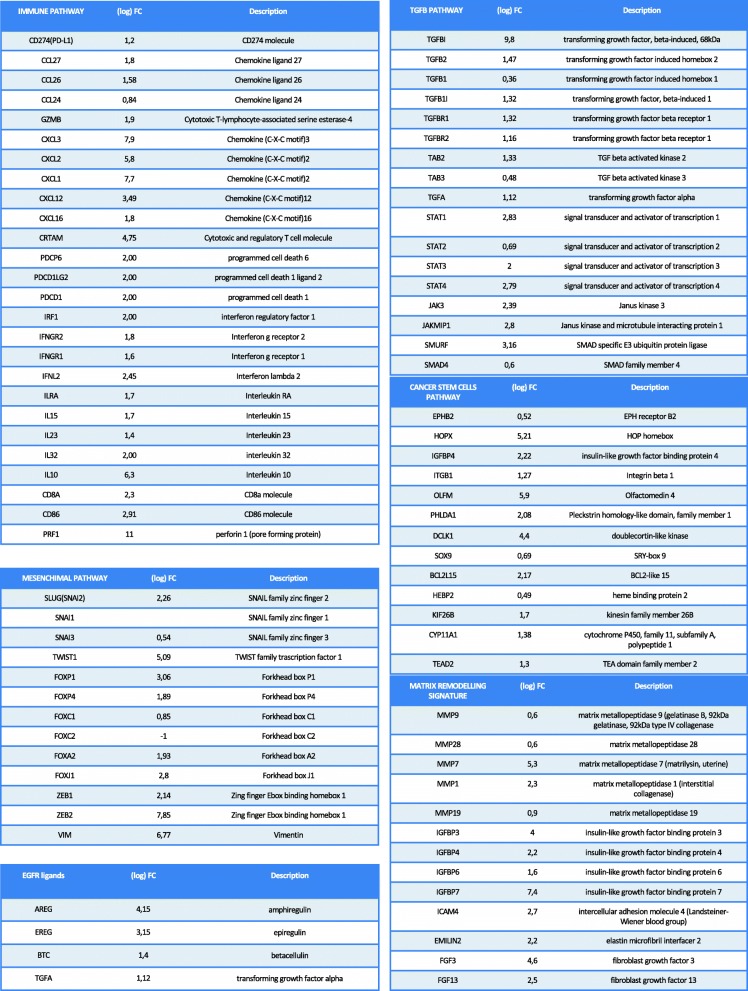
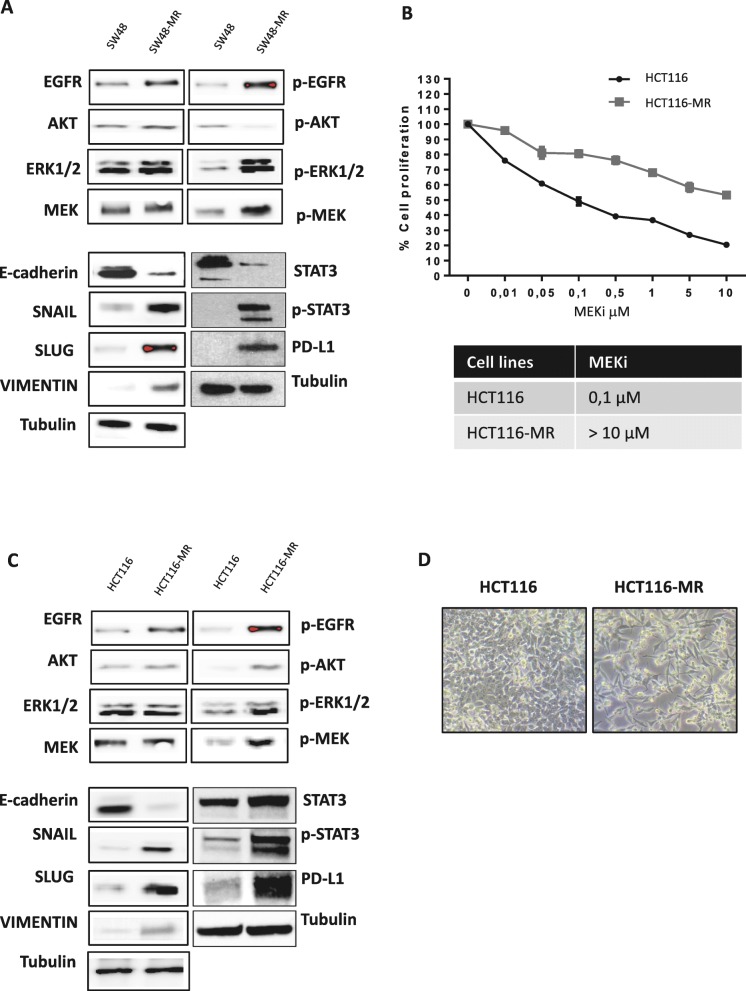
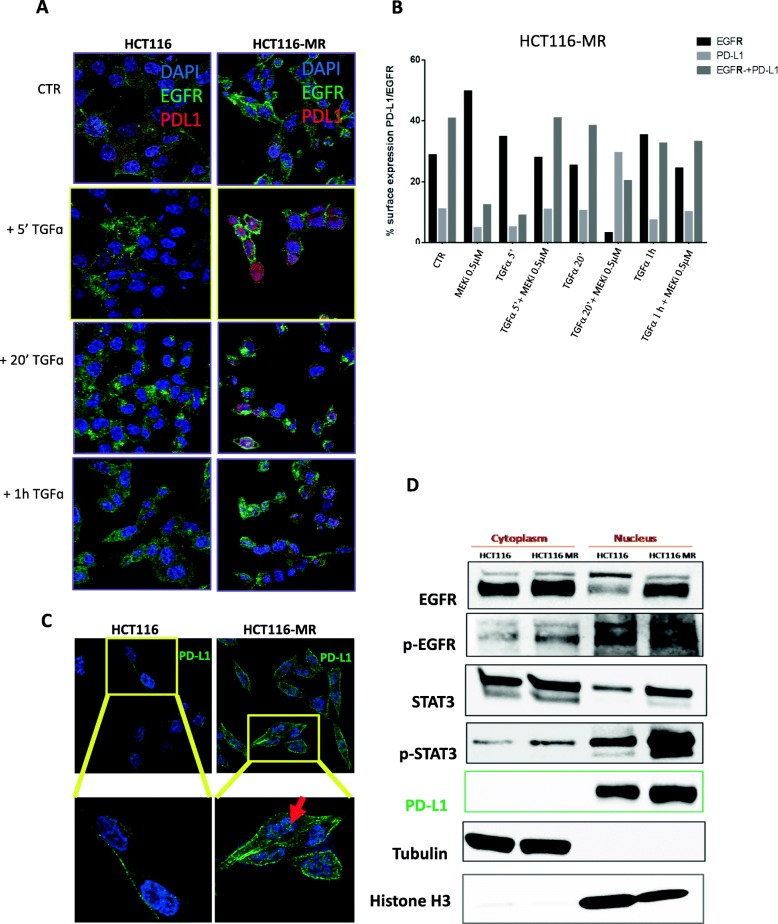
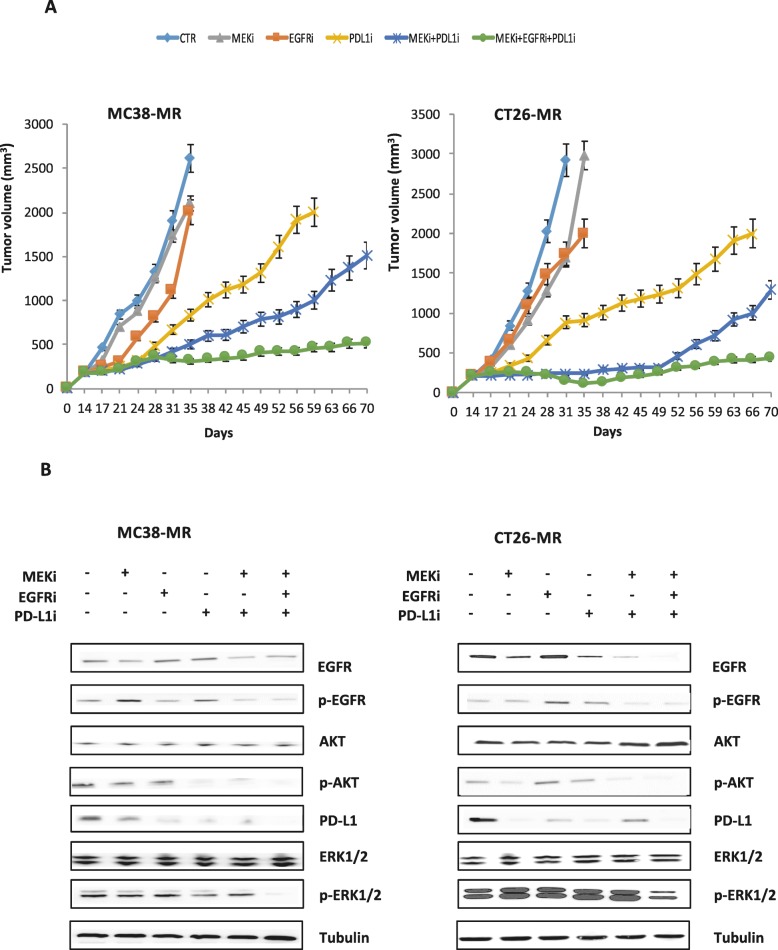
Background: Molecular mechanisms driving acquired resistance to anti-EGFR therapies in metastatic colorectal cancer (mCRC) are complex but generally involve the activation of the downstream RAS-RAF-MEK-MAPK pathway. Nevertheless, even if inhibition of EGFR and MEK could be a strategy for overcoming anti-EGFR resistance, its use is limited by the development of MEK inhibitor (MEKi) resistance. Methods: We have generated in vitro and in vivo different CRC models in order to underline the mechanisms of MEKi resistance. Results: The three different in vitro MEKi resistant models, two generated by human CRC cells quadruple wild type for KRAS, NRAS, BRAF, PI3KCA genes (SW48-MR and LIM1215-MR) and one by human CRC cells harboring KRAS mutation (HCT116-MR) showed features related to the gene signature of colorectal cancer CMS4 with up-regulation of immune pathway as confirmed by microarray and western blot analysis. In particular, the MEKi phenotype was associated with the loss of epithelial features and acquisition of mesenchymal markers and morphology. The change in morphology was accompanied by up-regulation of PD-L1 expression and activation of EGFR and its downstream pathway, independently to RAS mutation status. To extend these in vitro findings, we have obtained mouse colon cancer MC38- and CT26-MEKi resistant syngeneic models (MC38-MR and CT26-MR). Combined treatment with MEKi, EGFR inhibitor (EGFRi) and PD-L1 inhibitor (PD-L1i) resulted in a marked inhibition of tumor growth in both models. Conclusions: These results suggest a strategy to potentially improve the efficacy of MEK inhibition by co-treatment with EGFR and PD-L1 inhibitors via modulation of host immune responses.
Overview
The claims and statistics of this paper haven’t been checked yet.
Free: it reads the open-access text and checks the first 5 claims that cite a source we can check. Create a free account to check every claim.
Integrity signals
Registry
Cites
Statistics
Figures
Verification
Claims the paper makes
The claims and statistics of this paper haven’t been checked yet.
Free: it reads the open-access text and checks the first 5 claims that cite a source we can check. Create a free account to check every claim.
Claims other papers make about this one
Each is checked against this paper’s own text: does it say what the citing paper says it does?
The source backs part of the claim, not all of it — or backs it for a different population, condition or comparison.
In the citing paper
“The increased expression of PD-L1 has been observed in the specimens and cell lines of CRC patients with KRAS mutation, which may increase the stability of PD-L1 mRNA by regulating the AU-rich element-binding protein tristetraprolin (TTP), and the combined blocking of anti-EGFR and PD-1/PD-L1 significantly inhibits tumor growth [232,233].”
From Drug Resistance in Colorectal Cancer: From Mechanism to Clinic (2022) · cites this paper as [233]
Experimental — accuracy not yet measuredThe check wasn’t confident either way, so it gives no verdict — never disputed.
In the citing paper
“In addition, PD-L1 expression in CRC specimens is positively correlated with FGFR2 expression, which promotes PD-L1 expression in CRC by activating the JAK/STAT3 signaling pathway, which further promotes T cell apoptosis and leads to tumor immunosuppression.”
From Drug Resistance in Colorectal Cancer: From Mechanism to Clinic (2022) · cites this paper as [233]
Experimental — accuracy not yet measuredIn the citing paper
“The increased expression of PD-L1 has been observed in the specimens and cell lines of CRC patients with KRAS mutation, which may increase the stability of PD-L1 mRNA by regulating the AU-rich element-binding protein tristetraprolin (TTP), and the combined blocking of anti-EGFR and PD-1/PD-L1 significantly inhibits tumor growth [232,233].”
From Drug Resistance in Colorectal Cancer: From Mechanism to Clinic (2022) · cites this paper as [233]
In the citing paper
“In addition, PD-L1 expression in CRC specimens is positively correlated with FGFR2 expression, which promotes PD-L1 expression in CRC by activating the JAK/STAT3 signaling pathway, which further promotes T cell apoptosis and leads to tumor immunosuppression.”
From Drug Resistance in Colorectal Cancer: From Mechanism to Clinic (2022) · cites this paper as [233]
1 more claim about this paper
Create a free account to see every claim other papers make about this one.
Self-check
Percentages, sums and reported differences re-computed from the paper’s own numbers.
The self-check needs the paper’s full text.
Citations
Cites
Siegel, R. L., Miller, K. D., & Jemal, A. (2019) · CA: A Cancer Journal for Clinicians · doi:10.3322/caac.21551 · Cited by 20,160
PD-1 Blockade in Tumors with Mismatch-Repair Deficiency
Le, D. T., Uram, J. N., Wang, H., Bartlett, B. R., Kemberling, H., Eyring, A. D., Skora, A. D., Luber, B. S., Azad, N. S., Laheru, D., et al. (2015) · New England Journal of Medicine · doi:10.1056/nejmoa1500596 · Cited by 9,377
Comprehensive molecular characterization of human colon and rectal cancer
The Cancer Genome Atlas Network (2012) · Nature · doi:10.1038/nature11252 · Cited by 8,499
The consensus molecular subtypes of colorectal cancer
Guinney, J., Dienstmann, R., Wang, X., de Reyniès, A., Schlicker, A., Soneson, C., Marisa, L., Roepman, P., Nyamundanda, G., Angelino, P., et al. (2015) · Nature Medicine · doi:10.1038/nm.3967 · Cited by 5,170
Self-citationOverman, M. J., McDermott, R., Leach, J. L., Lonardi, S., Lenz, H.-J., Morse, M. A., Desai, J., Hill, A., Axelson, M., Moss, R. A., et al. (2017) · The Lancet Oncology · doi:10.1016/s1470-2045(17)30422-9 · Cited by 2,836
Self-citationEGFR Antagonists in Cancer Treatment
Ciardiello, F., & Tortora, G. (2008) · New England Journal of Medicine · doi:10.1056/nejmra0707704 · Cited by 2,058
Self-citationImmunotherapy in colorectal cancer: Rationale, challenges and potential
Ganesh, K., Stadler, Z. K., Cercek, A., Mendelsohn, R. B., Shia, J., Segal, N. H., & Diaz, L. A. (2019) · Nature Reviews Gastroenterology & Hepatology · doi:10.1038/s41575-019-0126-x · Cited by 1,954
Marisa, L., de Reyniès, A., Duval, A., Selves, J., Gaub, M. P., Vescovo, L., Etienne-Grimaldi, M.-C., Schiappa, R., Guenot, D., Ayadi, M., et al. (2013) · PLoS Medicine · doi:10.1371/journal.pmed.1001453 · Cited by 1,507
Activation of the PD-1 Pathway Contributes to Immune Escape in EGFR-Driven Lung Tumors
Akbay, E. A., Koyama, S., Carretero, J., Altabef, A., Tchaicha, J. H., Christensen, C. L., Mikse, O. R., Cherniack, A. D., Beauchamp, E. M., Pugh, T. J., et al. (2013) · Cancer Discovery · doi:10.1158/2159-8290.cd-13-0310 · Cited by 1,231
Consensus molecular subtypes and the evolution of precision medicine in colorectal cancer
Dienstmann, R., Vermeulen, L., Guinney, J., Kopetz, S., Tejpar, S., & Tabernero, J. (2017) · Nature Reviews Cancer · doi:10.1038/nrc.2016.126 · Cited by 1,021
Self-citationSadanandam, A., Lyssiotis, C. A., Homicsko, K., Collisson, E. A., Gibb, W. J., Wullschleger, S., Ostos, L. C. G., Lannon, W. A., Grotzinger, C., Del Rio, M., et al. (2013) · Nature Medicine · doi:10.1038/nm.3175 · Cited by 960
De Sousa E Melo, F., Wang, X., Jansen, M., Fessler, E., Trinh, A., de Rooij, L. P. M. H., de Jong, J. H., de Boer, O. J., van Leersum, R., Bijlsma, M. F., et al. (2013) · Nature Medicine · doi:10.1038/nm.3174 · Cited by 771
Regulation of PD-L1: a novel role of pro-survival signalling in cancer.
Chen, J., Jiang, C. C., Jin, L., & Zhang, X. D. (2016) · Annals of Oncology · doi:10.1093/annonc/mdv615 · Cited by 767
Ebert, P. J. R., Cheung, J., Yang, Y., McNamara, E., Hong, R., Moskalenko, M., Gould, S. E., Maecker, H., Irving, B. A., Kim, J. M., et al. (2016) · Immunity · doi:10.1016/j.immuni.2016.01.024 · Cited by 713
Chen, N., Fang, W., Zhan, J., Hong, S., Tang, Y., Kang, S., Zhang, Y., He, X., Zhou, T., Qin, T., et al. (2015) · Journal of Thoracic Oncology · doi:10.1097/jto.0000000000000500 · Cited by 669
Azuma, K., Ota, K., Kawahara, A., Hattori, S., Iwama, E., Harada, T., Matsumoto, K., Takayama, K., Takamori, S., Kage, M., et al. (2014) · Annals of Oncology · doi:10.1093/annonc/mdu242 · Cited by 645
Becht, E., de Reyniès, A., Giraldo, N. A., Pilati, C., Buttard, B., Lacroix, L., Selves, J., Sautès-Fridman, C., Laurent-Puig, P., & Fridman, W. H. (2016) · Clinical Cancer Research · doi:10.1158/1078-0432.ccr-15-2879 · Cited by 590
Eng, C., Kim, T. W., Bendell, J., Argilés, G., Tebbutt, N. C., Di Bartolomeo, M., Falcone, A., Fakih, M., Kozloff, M., Segal, N. H., et al. (2019) · The Lancet Oncology · doi:10.1016/s1470-2045(19)30027-0 · Cited by 577 · cited 3×
“explained in not correct selection of enrolled patients [42].”
BackgroundMethodInfluentialSelf-citationDrug resistance via feedback activation of Stat3 in oncogene-addicted cancer cells
Lee, H.-J., Zhuang, G., Cao, Y., Du, P., Kim, H.-J., & Settleman, J. (2014) · Cancer Cell · doi:10.1016/j.ccr.2014.05.019 · Cited by 555
Infante, J. R., Fecher, L. A., Falchook, G. S., Nallapareddy, S., Gordon, M. S., Becerra, C., DeMarini, D. J., Cox, D. S., Xu, Y., Morris, S. R., et al. (2012) · The Lancet Oncology · doi:10.1016/s1470-2045(12)70270-x · Cited by 552
Genetic Mechanisms of Immune Evasion in Colorectal Cancer
Grasso, C. S., Giannakis, M., Wells, D. K., Hamada, T., Mu, X. J., Quist, M., Nowak, J. A., Nishihara, R., Qian, Z. R., Inamura, K., et al. (2018) · Cancer Discovery · doi:10.1158/2159-8290.cd-17-1327 · Cited by 535
Angelova, M., Charoentong, P., Hackl, H., Fischer, M. L., Snajder, R., Krogsdam, A. M., Waldner, M. J., Bindea, G., Mlecnik, B., Galon, J., et al. (2015) · Genome Biology · doi:10.1186/s13059-015-0620-6 · Cited by 522
Gene expression patterns unveil a new level of molecular heterogeneity in colorectal cancer
Budinska, E., Popovici, V., Tejpar, S., D'Ario, G., Lapique, N., Sikora, K. O., Di Narzo, A. F., Yan, P., Hodgson, J. G., Weinrich, S., et al. (2013) · The Journal of Pathology · doi:10.1002/path.4212 · Cited by 409
Tumor Heterogeneity and Lesion-Specific Response to Targeted Therapy in Colorectal Cancer
Russo, M., Siravegna, G., Blaszkowsky, L. S., Corti, G., Crisafulli, G., Ahronian, L. G., Mussolin, B., Kwak, E. L., Buscarino, M., Lazzari, L., et al. (2016) · Cancer Discovery · doi:10.1158/2159-8290.cd-15-1283 · Cited by 405
Roepman, P., Schlicker, A., Tabernero, J., Majewski, I., Tian, S., Moreno, V., Snel, M. H., Chresta, C. M., Rosenberg, R., Nitsche, U., et al. (2014) · International Journal of Cancer · doi:10.1002/ijc.28387 · Cited by 346
PD‐L1 expression on tolerogenic APCs is controlled by STAT‐3
Wölfle, S. J., Strebovsky, J., Bartz, H., Sähr, A., Arnold, C., Kaiser, C., Dalpke, A. H., & Heeg, K. (2011) · European Journal of Immunology · doi:10.1002/eji.201040979 · Cited by 323
Schlicker, A., Beran, G., Chresta, C. M., McWalter, G., Pritchard, A., Weston, S., Runswick, S., Davenport, S., Heathcote, K., Castro, D. A., et al. (2012) · BMC Medical Genomics · doi:10.1186/1755-8794-5-66 · Cited by 256
Parseghian, C. M., Loree, J. M., Morris, V. K., Liu, X., Clifton, K. K., Napolitano, S., Henry, J. T., Pereira, A. A., Vilar, E., Johnson, B., et al. (2019) · Annals of Oncology · doi:10.1093/annonc/mdy509 · Cited by 253
Self-citationGhebeh, H., Lehe, C., Barhoush, E., Al-Romaih, K., Tulbah, A., Al-Alwan, M., Hendrayani, S.-F., Manogaran, P., Alaiya, A., Al-Tweigeri, T., et al. (2010) · Breast Cancer Research · doi:10.1186/bcr2605 · Cited by 234
Satelli, A., Batth, I. S., Brownlee, Z., Rojas, C., Meng, Q. H., Kopetz, S., & Li, S. (2016) · Scientific Reports · doi:10.1038/srep28910 · Cited by 203
Self-citationMolecular subtyping of colorectal cancer: Recent progress, new challenges and emerging opportunities
Wang, W., Kandimalla, R., Huang, H., Zhu, L., Li, Y., Gao, F., Goel, A., & Wang, X. (2019) · Seminars in Cancer Biology · doi:10.1016/j.semcancer.2018.05.002 · Cited by 187
Erratum: Consensus molecular subtypes and the evolution of precision medicine in colorectal cancer
Dienstmann, R., Vermeulen, L., Guinney, J., Kopetz, S., Tejpar, S., & Tabernero, J. (2017) · Nature Reviews Cancer · doi:10.1038/nrc.2017.24 · Cited by 183
Self-citationPhase Ib study of atezolizumab combined with cobimetinib in patients with solid tumors.
Hellmann, M. D., Kim, T.-W., Lee, C. B., Goh, B.-C., Miller, W. H., Oh, D.-Y., Jamal, R., Chee, C.-E., Chow, L. Q. M., Gainor, J. F., et al. (2019) · Annals of Oncology · doi:10.1093/annonc/mdz113 · Cited by 174
Lal, N., White, B. S., Goussous, G., Pickles, O., Mason, M. J., Beggs, A. D., Taniere, P., Willcox, B. E., Guinney, J., & Middleton, G. W. (2018) · Clinical Cancer Research · doi:10.1158/1078-0432.ccr-17-1090 · Cited by 155
Troiani, T., Martinelli, E., Napolitano, S., Vitagliano, D., Ciuffreda, L. P., Costantino, S., Morgillo, F., Capasso, A., Sforza, V., Nappi, A., et al. (2013) · Clinical Cancer Research · doi:10.1158/1078-0432.ccr-13-0423 · Cited by 150
Self-citationCancer resistance to therapies against the EGFR-RAS-RAF pathway: The role of MEK
Martinelli, E., Morgillo, F., Troiani, T., & Ciardiello, F. (2017) · Cancer Treatment Reviews · doi:10.1016/j.ctrv.2016.12.001 · Cited by 146
Self-citationPerez Villamil, B., Romera Lopez, A., Hernandez Prieto, S., Lopez Campos, G., Calles, A., Lopez Asenjo, J. A., Sanz Ortega, J., Fernandez Perez, C., Sastre, J., Alfonso, R., et al. (2012) · BMC Cancer · doi:10.1186/1471-2407-12-260 · Cited by 125
Sforza, V., Martinelli, E., Ciardiello, F., Gambardella, V., Napolitano, S., Martini, G., della Corte, C., Cardone, C., Ferrara, M. L., Reginelli, A., et al. (2016) · World Journal of Gastroenterology · doi:10.3748/wjg.v22.i28.6345 · Cited by 123
Self-citationTroiani, T., Napolitano, S., Vitagliano, D., Morgillo, F., Capasso, A., Sforza, V., Nappi, A., Ciardiello, D., Ciardiello, F., & Martinelli, E. (2014) · Clinical Cancer Research · doi:10.1158/1078-0432.ccr-13-2181 · Cited by 104
Self-citationTherapeutic value of EGFR inhibition in CRC and NSCLC: 15 years of clinical evidence
Troiani, T., Napolitano, S., Della Corte, C. M., Martini, G., Martinelli, E., Morgillo, F., & Ciardiello, F. (2016) · ESMO Open · doi:10.1136/esmoopen-2016-000088 · Cited by 104
Self-citationThe Cellular Immunotherapy Revolution: Arming the Immune System for Precision Therapy
Paucek, R. D., Baltimore, D., & Li, G. (2019) · Trends in Immunology · doi:10.1016/j.it.2019.02.002 · Cited by 104
Molecular Subtypes and the Evolution of Treatment Decisions in Metastatic Colorectal Cancer
Dienstmann, R., Salazar, R., & Tabernero, J. (2018) · American Society of Clinical Oncology Educational Book · doi:10.1200/edbk_200929 · Cited by 74
Li, T. X., & Hu, S. (2023) · Elsevier eBooks · doi:10.1016/b978-0-12-821584-5.00014-6 · Cited by 73
Erratum: A chemical probe toolbox for dissecting the cancer epigenome
Shortt, J., Ott, C. J., Johnstone, R. W., & Bradner, J. E. (2017) · Nature reviews. Cancer · doi:10.1038/nrc.2017.26 · Cited by 57
The Immune System's Contribution to the Clinical Efficacy of EGFR Antagonist Treatment
Macdonald, F., & Zaiss, D. M. W. (2017) · Frontiers in Pharmacology · doi:10.3389/fphar.2017.00575 · Cited by 42
Akbay, E. A., Koyama, S., Carretero, J., Altabef, A. B., Tchaicha, J. H., Christensen, C. L., Shimamura, T., Sholl, L. M., Rodig, S. J., Freeman, G. J., et al. (2013) · Molecular Cancer Therapeutics · doi:10.1158/1535-7163.targ-13-b290 · Cited by 29
Troiani, T., Napolitano, S., Martini, G., Martinelli, E., Cardone, C., Normanno, N., Vitagliano, D., Morgillo, F., Fenizia, F., Lambiase, M., et al. (2015) · Clinical Cancer Research · doi:10.1158/1078-0432.ccr-15-0211 · Cited by 18
Self-citationNapolitano, S., Martini, G., Martinelli, E., Belli, V., Parascandolo, A., Laukkanen, M. O., Sforza, V., Morgillo, F., Ciardiello, D., Ciardiello, F., et al. (2017) · Oncotarget · doi:10.18632/oncotarget.18749 · Cited by 16
Self-citationGenetic Molecular Subtypes in Optimizing Personalized Therapy for Metastatic Colorectal Cancer
Włodarczyk, M., Włodarczyk, J., Siwiński, P., Sobolewska-Włodarczyk, A., & Fichna, J. (2018) · Current Drug Targets · doi:10.2174/1389450119666180803122744 · Cited by 14
Napolitano, S., Martini, G., Martinelli, E., Corte, C. M. D., Morgillo, F., Belli, V., Cardone, C., Matrone, N., Ciardiello, F., & Troiani, T. (2017) · Oncotarget · doi:10.18632/oncotarget.19797 · Cited by 10
Self-citationSignificant differences in outcome between Immunoscore categories in stage I colon cancer patients
Galon, J., Hermitte, F., Mlecnik, B., Marliot, F., Bifulco, C. B., Lugli, A., Nagtegaal, I. D., Hartmann, A., den Eynde, M. V., Roehrl, M. H. A., et al. (2019) · Annals of Oncology · doi:10.1093/annonc/mdz154.022 · Cited by 3
Cited by
Regulatory mechanisms of PD-1/PD-L1 in cancers
Lin, X., Kang, K., Chen, P., Zeng, Z., Li, G., Xiong, W., Yi, M., & Xiang, B. (2024) · Molecular Cancer · doi:10.1186/s12943-024-02023-w · Cited by 784
Stefani, C., Miricescu, D., Stanescu-Spinu, I.-I., Nica, R. I., Greabu, M., Totan, A. R., & Jinga, M. (2021) · International Journal of Molecular Sciences · doi:10.3390/ijms221910260 · Cited by 402
Drug Resistance in Colorectal Cancer: From Mechanism to Clinic
Wang, Q., Shen, X., Chen, G., & Du, J. (2022) · Cancers · doi:10.3390/cancers14122928 · Cited by 160
Aptamer targeted therapy potentiates immune checkpoint blockade in triple-negative breast cancer
Camorani, S., Passariello, M., Agnello, L., Esposito, S., Collina, F., Cantile, M., Bonito, M. D., Ulasov, I. V., Fedele, M., Zannetti, A., et al. (2020) · Journal of Experimental & Clinical Cancer Research · doi:10.1186/s13046-020-01694-9 · Cited by 75
Yeon, M., Kim, Y., Jung, H. S., & Jeoung, D. (2020) · Frontiers in Cell and Developmental Biology · doi:10.3389/fcell.2020.00486 · Cited by 61
Metadata
- Authors
- Napolitano, S., Matrone, N., Muddassir, A. L., Martini, G., Sorokin, A., De Falco, V., Giunta, E. F., Ciardiello, D., Martinelli, E., Belli, V., Furia, M., Kopetz, S., Morgillo, F., Ciardiello, F., & Troiani, T.
- Affiliations
- The University of Texas MD Anderson Cancer Center (US)
- University of Campania "Luigi Vanvitelli" (IT)
- University of Naples Federico II (IT)
- Corresponding author
- Troiani, T.
- ORCID
- Venue
- Journal of Experimental & Clinical Cancer Research
- Published
- 2019-12
- Volume
- 38
- Issue
- 1
- Pages
- 492-492
- ISSN
- 0392-9078 (ISSN-L)
- 1756-9966
- PMC
- PMC6915948
- OpenAlex
- W2995994395
- Cited by
- 40
- References
- 51
- Citations by year
- 2026: 3 · 2025: 2 · 2024: 4 · 2023: 7 · 2022: 8 · 2021: 12 · 2020: 4
- FWCI
- 2.50
- Type
- journal article
- Language
- en
- Open access
- gold
- doi.org
- Licence
- cc-by
- creativecommons.org/licenses/by/4.0/ (tdm)
- creativecommons.org/licenses/by/4.0/ (vor, 15 d)
- Locations
- Journal of Experimental & Clinical Cancer Research (publishedVersion, cc-by)
- Europe PMC (PubMed Central) (publishedVersion, cc-by)
- PubMed Central (publishedVersion, cc-by)
- PubMed (publishedVersion)
- DOAJ (DOAJ: Directory of Open Access Journals) (submittedVersion)
- Archivio Istituzionale della Ricerca - Università degli Studi della Campania "Luigi Vanvitelli" (submittedVersion)
- RECERCAT (Consorci de Serveis Universitaris de Catalunya) (submittedVersion, cc-by)
- Funders
- Associazione Italiana per la Ricerca sul Cancro (AIRC IG 18972)
- Regione Campania (I-CURE)
- Topics
- Health Sciences › Medicine › Oncology › Colorectal Cancer Treatments and Studies
- Life Sciences › Biochemistry, Genetics and Molecular Biology › Molecular Biology › Melanoma and MAPK Pathways
- Health Sciences › Medicine › Oncology › Cancer Immunotherapy and Biomarkers
- Keywords
- MEK inhibitor resistance, EGFR inhibition, PD-L1 blockade, metastatic colorectal cancer, MAPK signaling, PD-L1 overexpression, mesenchymal transition, tumor immune microenvironment, anti-EGFR resistance, combination therapy, syngeneic mouse model
- MeSH terms
- Erlotinib Hydrochloride, Antibodies, Monoclonal, Diphenylamine, Female, Humans, Sulfonamides, Colorectal Neoplasms, Treatment Outcome, Drug Resistance, Neoplasm, MAP Kinase Kinase Kinases, MAP Kinase Signaling System, Xenograft Model Antitumor Assays, HCT116 Cells, Cell Line, Tumor, Epithelial-Mesenchymal Transition, B7-H1 Antigen, ErbB Receptors
About these checks
Registry, retraction, Cites and statistics results are computed, not judged, with one exception: a printed reference that no index lists is read once by a model before it counts as a citation error. Claims are extracted by a model and kept only when their quote appears verbatim in the text; each cited source is then checked, with a model’s help, for whether it says what the claim relies on. Those verdicts can be wrong — read the claim’s quote and the cited source before relying on one.
Statistics and arithmetic are recomputed, not judged.
Confidence bands are shown only for fields calibrated on our annotated test set. None is calibrated yet, so no band is shown.
What counts as a claim ›How we measure confidence ›How we check this ›
Are you an author, or do you see a problem with this page? Request a review
Data sources
Bibliographic data: Semantic Scholar, OpenAlex, Crossref.
Contains information from the Semantic Scholar Academic Graph Datasets, made available under the ODC Attribution License (ODC-BY 1.0).
Semantic Scholar’s data is described in: Kinney, R., et al. (2023). The Semantic Scholar Open Data Platform. arXiv:2301.10140.
