

FTO suppresses glycolysis and growth of papillary thyroid cancer via decreasing stability of APOE mRNA in an N6-methyladenosine-dependent manner
Open accessThe DOI matches its Crossref record; 49 of the 49 references it cites were found in a registry or an index.
Abstract
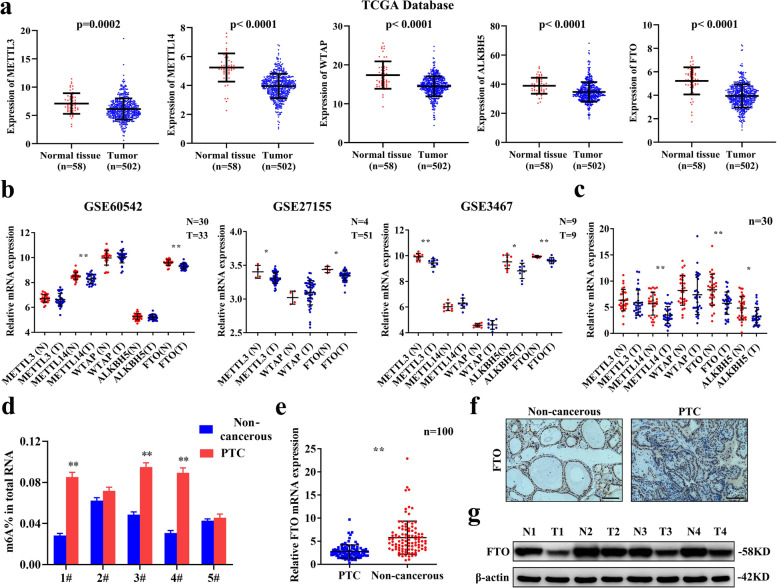
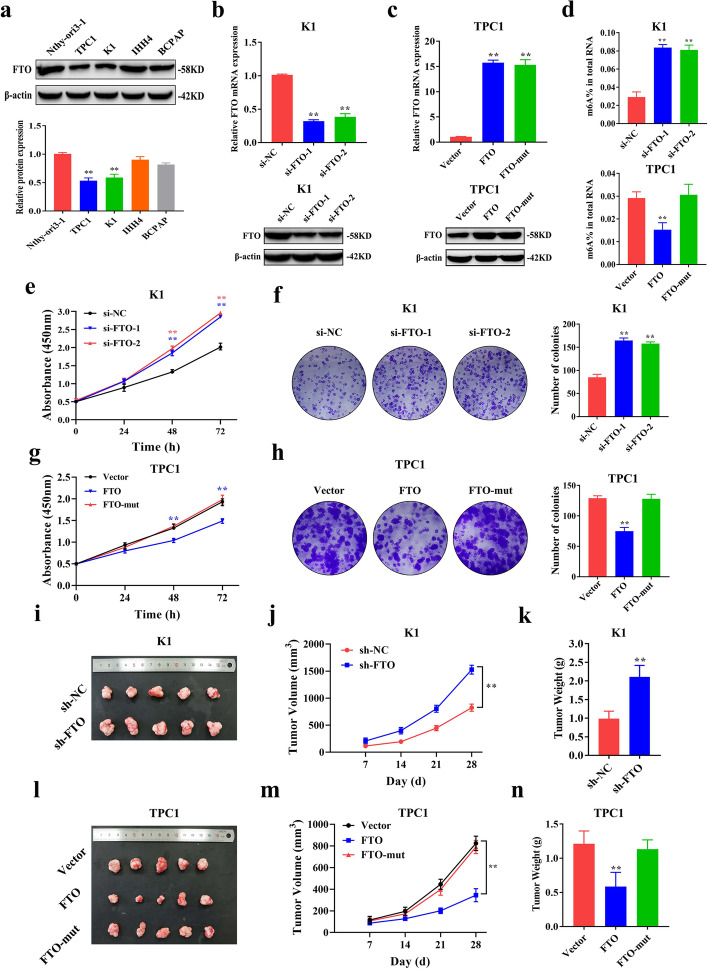
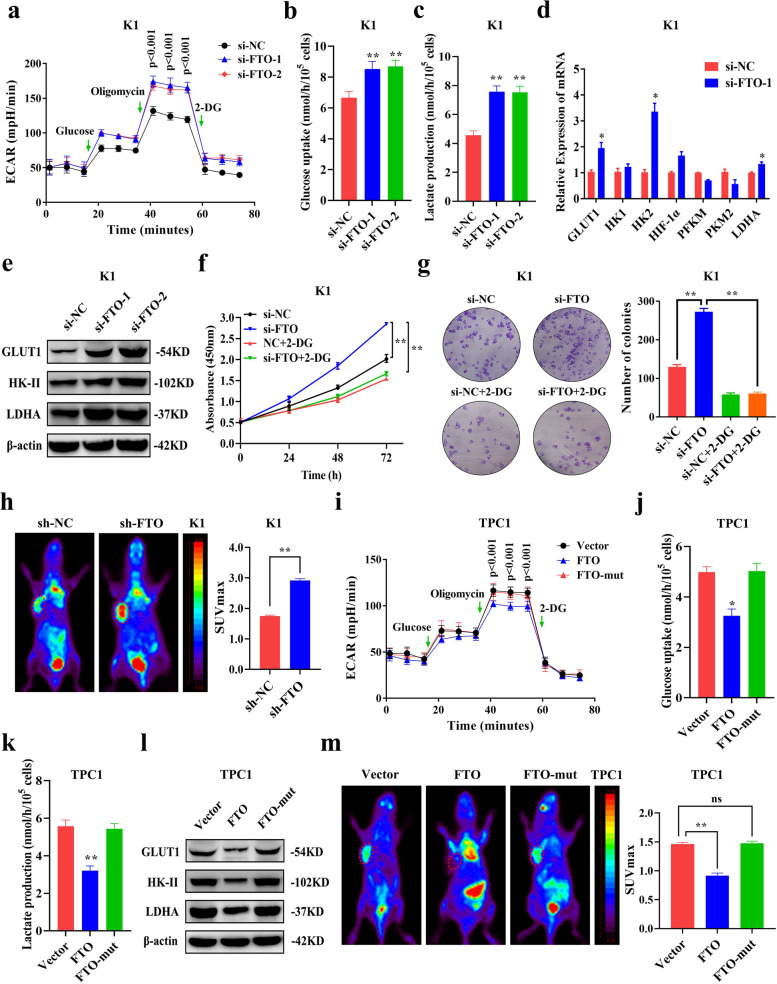
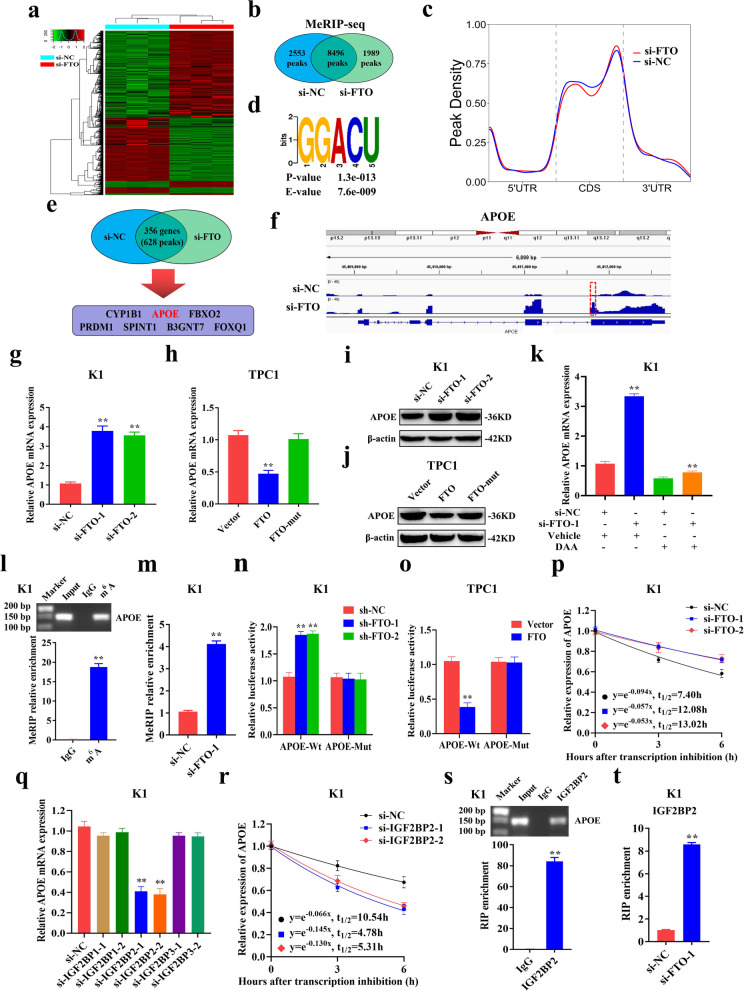
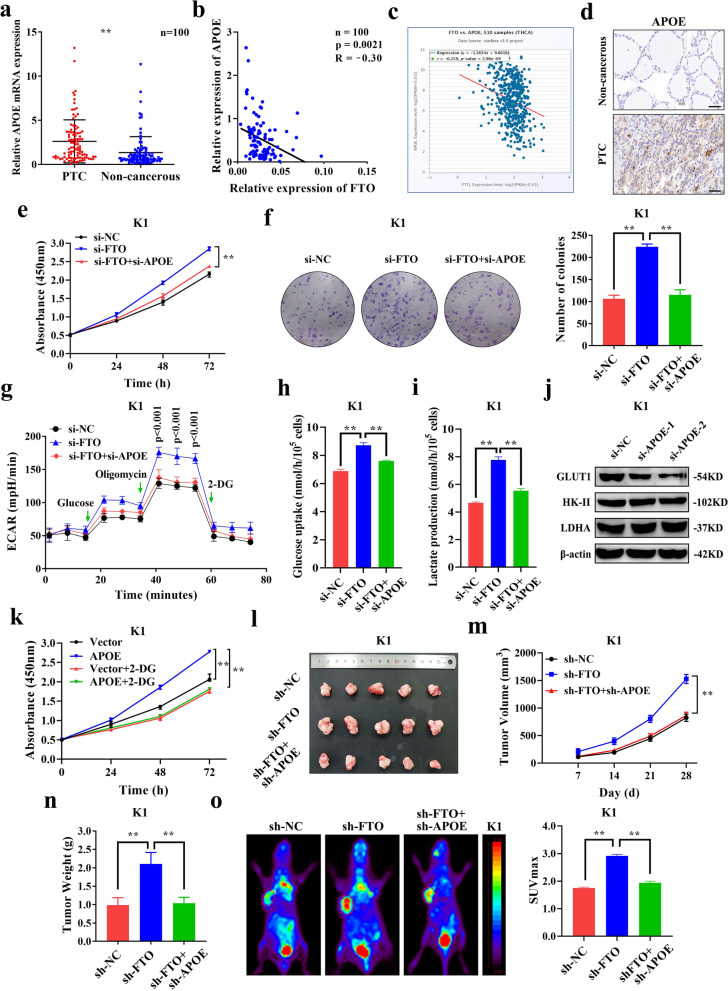
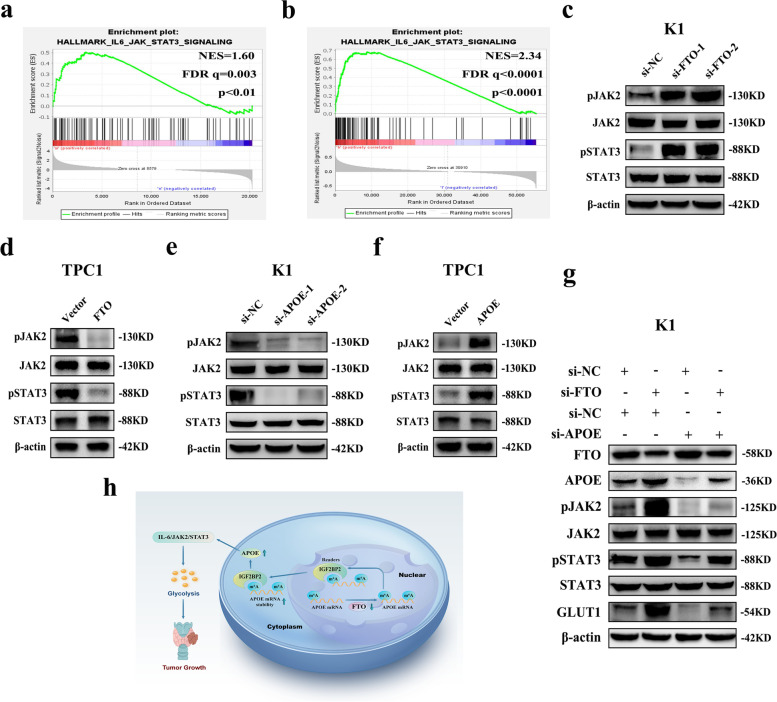
Background: N6-methyladenosine (m 6 A) modification is the most common chemical modification in mammalian mRNAs, and it plays important roles by regulating several cellular processes. Previous studies report that m 6 A is implicated in modulating tumorigenesis and progression. However, dysregulation of m 6 A modification and effect of m 6 A demethylase fat-mass and obesity-associated protein (FTO) on glucose metabolism has not been fully elucidated in papillary thyroid cancer (PTC). Methods: Quantitative real-time PCR (qRT-PCR), western blotting and immunohistochemistry were performed to explore the expression profile of FTO in PTC tissues and adjacent non-cancerous thyroid tissues. Effects of FTO on PTC glycolysis and growth were investigated through in vitro and in vivo experiments. Mechanism of FTO-mediated m 6 A modification was explored through transcriptome-sequencing (RNA-seq), methylated RNA immunoprecipitation sequencing (MeRIP-seq), MeRIP-qPCR, luciferase reporter assays, RNA stability assay and RNA immunoprecipitation assay. Results: FTO expression was significantly downregulated in PTC tissues. Functional analysis showed that FTO inhibited PTC glycolysis and growth. Further analyses were conducted to explore FTO-mediated m 6 A modification profile in PTC cells and Apolipoprotein E (APOE) was identified as the target gene for FTO-mediated m 6 A modification using RNA-seq and MeRIP-seq. FTO knockdown significantly increased APOE mRNA m 6 A modification and upregulated its expression. FTO-mediated m 6 A modification of APOE mRNA was recognized and stabilized by the m 6 A reader IGF2BP2. The findings showed that APOE also promoted tumor growth through glycolysis in PTC. Analysis showed that FTO/APOE axis inhibits PTC glycolysis by modulating IL-6/JAK2/STAT3 signaling pathway. Conclusion: FTO acts as a tumor suppressor to inhibit tumor glycolysis in PTC. The findings of the current study showed that FTO inhibited expression of APOE through IGF2BP2-mediated m 6 A modification and may inhibit glycolytic metabolism in PTC by modulating IL-6/JAK2/STAT3 signaling pathway, thus abrogating tumor growth.
Overview
The claims and statistics of this paper haven’t been checked yet.
Free: it reads the open-access text and checks the first 5 claims that cite a source we can check. Create a free account to check every claim.
Integrity signals
Registry
Cites
Statistics
Figures
Verification
Claims the paper makes
The claims and statistics of this paper haven’t been checked yet.
Free: it reads the open-access text and checks the first 5 claims that cite a source we can check. Create a free account to check every claim.
Claims other papers make about this one
Each is checked against this paper’s own text: does it say what the citing paper says it does?
The source backs part of the claim, not all of it — or backs it for a different population, condition or comparison.
In the citing paper
“This in turn activates the IL-6/JAK2/STAT3 signaling pathway, promoting glycolysis and tumor progression in papillary thyroid cancer (PTC).”
From IMPlications of IMP2 in RNA Biology and Disease (2025) · cites this paper as [102]
Experimental — accuracy not yet measuredThe cited source says what the claim attributes to it.
In the citing paper
“Luciferase reporter assays and RNA stability tests demonstrated that IMP2 stabilizes Apolipoprotein E (APOE) mRNA via m6A modification, increasing its expression [102].”
From IMPlications of IMP2 in RNA Biology and Disease (2025) · cites this paper as [102]
Self-check
Percentages, sums and reported differences re-computed from the paper’s own numbers.
The self-check needs the paper’s full text.
Citations
Cites
2 retracted
Tang, B., Yang, Y., Kang, M., Wang, Y., Wang, Y., Bi, Y., He, S., & Shimamoto, F. (2020) · Molecular Cancer · doi:10.1186/s12943-019-1128-6 · Cited by 327
RetractedZheng, M. H., Cao, M., Yu, X., Li, L., Wang, K., Wang, S., Wang, H., Tang, Y.-J., Tang, Y., & Liang, X. (2019) · Frontiers in Oncology · doi:10.3389/fonc.2019.01175 · Cited by 23 · cited 2×
“These findings show a novel molecular mechanism of PTC progression regulated by m6A modification and provide valuable insights for development of efficient therapeutic strategies against PTC. Abbreviations 2-DG: 2-deoxy-glucose; AD: Alzheimerʼs disease; ALKBH5: Alkylation repair homolog protein 5; APOE: Apolipoprotein…”
BackgroundRetractedSung, H., Ferlay, J., Siegel, R. L., Laversanne, M., Soerjomataram, I., Jemal, A., & Bray, F. (2021) · CA: A Cancer Journal for Clinicians · doi:10.3322/caac.21660 · Cited by 108,699 · cited 2×
“Global incidence of thyroid cancer in women is three times higher compared with the incidence in men, and one in every 20 women diagnosed with malignancy has thyroid cancer [1].”
BackgroundHallmarks of Cancer: The Next Generation
Hanahan, D., & Weinberg, R. A. (2011) · Cell · doi:10.1016/j.cell.2011.02.013 · Cited by 66,590 · cited 2×
“Glycolysis results in high amounts of lactate which can be utilized as the main energy source by other cells, and glycolytic intermediates may be diverted into various biosynthetic pathways [23].”
BackgroundTopology of the human and mouse m6A RNA methylomes revealed by m6A-seq
Dominissini, D., Moshitch-Moshkovitz, S., Schwartz, S., Salmon-Divon, M., Ungar, L., Osenberg, S., Cesarkas, K., Jacob-Hirsch, J., Amariglio, N., Kupiec, M., et al. (2012) · Nature · doi:10.1038/nature11112 · Cited by 4,884 · cited 3×
“We extracted the sequences of the first 1000 peaks with the largest enrichment multiples for each group (50 bp on both sides of the vertex) from MeRIP-seq data and then scanned them with dreme software to identify meaningful motif sequences [10, 33].”
BackgroundMethodN6-methyladenosine-dependent regulation of messenger RNA stability
Wang, X., Lu, Z., Gomez, A., Hon, G. C., Yue, Y., Han, D., Fu, Y., Parisien, M., Dai, Q., Jia, G., et al. (2014) · Nature · doi:10.1038/nature12730 · Cited by 4,558
Comprehensive Analysis of mRNA Methylation Reveals Enrichment in 3′ UTRs and near Stop Codons
Meyer, K. D., Saletore, Y., Zumbo, P., Elemento, O., Mason, C. E., & Jaffrey, S. R. (2012) · Cell · doi:10.1016/j.cell.2012.05.003 · Cited by 4,223
N6-Methyladenosine in nuclear RNA is a major substrate of the obesity-associated FTO
Jia, G., Fu, Y., Zhao, X., Dai, Q., Zheng, G., Yang, Y., Yi, C., Lindahl, T., Pan, T., Yang, Y.-G., et al. (2011) · Nature Chemical Biology · doi:10.1038/nchembio.687 · Cited by 4,106
N6-methyladenosine Modulates Messenger RNA Translation Efficiency
Wang, X., Zhao, B. S., Roundtree, I. A., Lu, Z., Han, D., Ma, H., Weng, X., Chen, K., Shi, H., & He, C. (2015) · Cell · doi:10.1016/j.cell.2015.05.014 · Cited by 3,483 · cited 2×
“N6-methyladenosine (m6A) modification is the most common internal chemical modification in higher eukaryotic RNA, and it mainly modifies messenger RNA (mRNA) at the post-transcriptional level [7, 8].”
BackgroundTargeting the IL-6/JAK/STAT3 signalling axis in cancer
Johnson, D. E., O'Keefe, R. A., & Grandis, J. R. (2018) · Nature Reviews Clinical Oncology · doi:10.1038/nrclinonc.2018.8 · Cited by 3,110 · cited 1×
“This signaling pathway promotes proliferation, invasiveness, and metastasis of cancer cells, and inhibits anti-tumor immune response [47].”
Background
Cited by
Metabolism, metabolites, and macrophages in cancer
Li, M., Yang, Y., Xiong, L., Jiang, P., Wang, J., & Li, C. (2023) · Journal of Hematology & Oncology · doi:10.1186/s13045-023-01478-6 · Cited by 507
“Mitochondrial OXPHOS was reduced, but anaerobic glycolysis was enhanced.”
BackgroundInfluentialThe roles and implications of RNA m6A modification in cancer
Deng, X., Qing, Y., Horne, D., Huang, H., & Chen, J. (2023) · Nature Reviews Clinical Oncology · doi:10.1038/s41571-023-00774-x · Cited by 364
Liu, W.-W., Zheng, S.-Q., Li, T., Fei, Y.-F., Wang, C., Zhang, S., Wang, F., Jiang, G.-M., & Wang, H. (2024) · Signal Transduction and Targeted Therapy · doi:10.1038/s41392-024-01777-5 · Cited by 166
“251 Likewise, another m6A eraser, ALKBH5 also have dual regulatory effects.”
BackgroundThe role of RNA methylation in tumor immunity and its potential in immunotherapy
Li, Y., Jin, H., Li, Q., Shi, L., Mao, Y., & Zhao, L. (2024) · Molecular Cancer · doi:10.1186/s12943-024-02041-8 · Cited by 185
“The demethylase FTO has been shown to be responsible for decreasing m6A methylation of Apolipoprotein E (APOE) mRNA and modulating the IL-6/JAK2/STAT3 signaling pathway, thereby inhibiting tumor glycolysis and abrogating tumor growth [163] (Fig.”
BackgroundHashemi, M., Mirdamadi, M. S. A., Talebi, Y., Khaniabad, N., Banaei, G., Daneii, P., Gholami, S., Ghorbani, A., Tavakolpournegari, A., Farsani, Z. M., et al. (2023) · Pharmacological Research · doi:10.1016/j.phrs.2022.106568 · Cited by 153
m6A-regulated tumor glycolysis: new advances in epigenetics and metabolism
Yue, S., Liu, H., Su, H.-F., Luo, C., Liang, H., Zhang, B., & Zhang, W. (2023) · Molecular Cancer · doi:10.1186/s12943-023-01841-8 · Cited by 140
“However, FTO can inhibit the expression of APOE Inhibit the glycolysis and proliferation of thyroid papillary carcinoma [159] Table 3 (continued) axis and miR-499a-3p/PGAM1 axis can inhibit aerobic glycolysis and malignant phenotype of p53 WT colorectal cancer cells by decreasing the expression of…”
BackgroundOncofetal protein IGF2BPs in human cancer: functions, mechanisms and therapeutic potential
Zhu, T., Hong, L., & Ling, Z. (2023) · Biomarker Research · doi:10.1186/s40364-023-00499-0 · Cited by 140
“cancer IGF2BP2 FTO APOE – Stability Glycolysis, proliferation [82]”
Cao, X., Geng, Q., Fan, D., Wang, Q., Wang, X., Zhang, M., Zhao, L., Jiao, Y., Deng, T., Liu, H., et al. (2023) · Molecular Cancer · doi:10.1186/s12943-022-01704-8 · Cited by 124
Zhang, F., Liu, H., Duan, M., Wang, G., Zhang, Z., Wang, Y., Qian, Y., Yang, Z., & Jiang, X. (2022) · Journal of Hematology & Oncology · doi:10.1186/s13045-022-01304-5 · Cited by 127
The role of Insulin-like growth factor 2 mRNA-binding proteins (IGF2BPs) as m6A readers in cancer
Sun, C., Cao, D., Du, B.-B., Chen, C., & Liu, D. (2022) · International Journal of Biological Sciences · doi:10.7150/ijbs.70458 · Cited by 110
“In thyroid cancer, m6A demethylase FTO inhibits cell growth and glycolysis by reducing the mRNA stability of target, APOE in IGF2BP2-mediated m6A-dependent manner [167].”
BackgroundDuan, M., Liu, H., Xu, S., Yang, Z., Zhang, F., Wang, G., Wang, Y., Zhao, S., & Jiang, X. (2023) · Genes & Diseases · doi:10.1016/j.gendis.2023.06.017 · Cited by 100
Wang, F., Hu, Y., Wang, H., Hu, P., Xiong, H., Zeng, Z., Han, S., Wang, D., Wang, J., Zhao, Y. B., et al. (2023) · Journal of Experimental & Clinical Cancer Research · doi:10.1186/s13046-023-02847-2 · Cited by 90
“Another study suggested that FTO suppressed glycolysis and growth of papillary thyroid cancer via decreasing stability of APOE mRNA in an m 6 A dependent manner [38].”
BackgroundGe, P., Duan, H., Tao, C., Niu, S., Hu, Y., Duan, R., Shen, A., Sun, Y., & Sun, W. (2023) · Journal of Inflammation Research · doi:10.2147/jir.s399480 · Cited by 78
Self-citationApolipoproteins: New players in cancers
He, Y., Chen, J., Ma, Y., & Chen, H. (2022) · Frontiers in Pharmacology · doi:10.3389/fphar.2022.1051280 · Cited by 52
“The expression of FTO is decreased in PTC, which leads to an increased level of Insulin-like growth factor 2 mRNA-binding protein 2 (IGF2BP2) mediated-N6methyladenosine (m6A) modification on the APOE gene.”
BackgroundInfluentialZhu, X., Li, W., Lu, M., Shang, J., Zhou, J., Li, L., Liu, Y., Xing, J., Zhang, M., Zhao, S., et al. (2024) · Journal of Nanobiotechnology · doi:10.1186/s12951-024-02583-5 · Cited by 52
Feng, L., Li, G., Li, D., Duan, G., & Jin, L. (2023) · Journal of Cancer Research and Clinical Oncology · doi:10.1007/s00432-023-04900-1 · Cited by 52
“This is consistent with previous studies that showed that APOE mediates poor outcomes in tumor patients.”
BackgroundResultInfluentialThe Role of Apolipoproteins in the Commonest Cancers: A Review
Darwish, N. M., Al‐Hail, M., Mohamed, Y. H., Al-Saady, R., Mohsen, S., Zar, A., Al-Mansoori, L., & Pedersen, S. (2023) · Cancers · doi:10.3390/cancers15235565 · Cited by 54
“Figure 4 illustrates the role of glycolysis in PTC progression [193].”
BackgroundInfluentialIGF2BP2: an m6A reader that affects cellular function and disease progression
Liu, S., Liao, S., He, J., Zhou, Y., & He, Q. (2025) · Cellular & Molecular Biology Letters · doi:10.1186/s11658-025-00723-9 · Cited by 52
“This downregulation appears to enhance the ability of m 6 A readers such as IGF2BP2 to recognize m 6 A modifications [74, 75].”
Park, S. H., Ju, J., Woo, H., Yun, H. J., Lee, S. B., Kim, S.-H., Győrffy, B., Kim, E.-J., Kim, H., Han, H. D., et al. (2024) · Experimental & Molecular Medicine · doi:10.1038/s12276-024-01235-w · Cited by 48
Unveiling the Role of HGF/c-Met Signaling in Non-Small Cell Lung Cancer Tumor Microenvironment
Yao, S., Liu, X., Feng, Y., Li, Y., Xiao, X., Han, Y., & Xia, S. (2024) · International Journal of Molecular Sciences · doi:10.3390/ijms25169101 · Cited by 42
“Oncogene-driven tumorigenesis results in a metabolic shift in cancer cells towards aerobic glycolysis, known as the Warburg effect, as opposed to reliance on mitochondrial oxidative phosphorylation [132].”
BackgroundReprogramming of Thyroid Cancer Metabolism: from Mechanism to Therapeutic Strategy
Wan, Y., Li, G., Cui, G., Duan, S., & Chang, S. (2025) · Molecular Cancer · doi:10.1186/s12943-025-02263-4 · Cited by 44
“Suppression of FTO [46], and overexpression of afamin [50] and SIRT6 [48] also elevate HK2 transcription.”
Zhou, H., Sun, Q., Feng, M., Gao, Z., Jia, S., Cao, L., Yu, X., Gao, S., Wu, H., & Li, K. (2023) · Theranostics · doi:10.7150/thno.86528 · Cited by 39
“Moreover, IGF2BP2 recognizes and upregulates m6A-decorated Apolipoprotein E (APOE) to promote glycolysis and tumor growth in papillary thyroid cancer [66].”
N6-Methyladenosine: an RNA modification as a central regulator of cancer
Luo, H., Kharas, M. G., & Jaffrey, S. R. (2025) · Nature reviews. Cancer · doi:10.1038/s41568-025-00889-6 · Cited by 41
“In papillary thyroid cancer, FTO suppresses glycolysis and cell growth by destabilizing apolipoprotein E ( APOE ) mRNA in an IGF2BP2-dependent manner 72 .”
Chen, F., Song, C., Meng, F., Zhu, Y., Chen, X., Fang, X., Ma, D., Wang, Y., & Zhang, C. (2022) · International Journal of Biological Macromolecules · doi:10.1016/j.ijbiomac.2022.11.295 · Cited by 38
FTO Inhibits Epithelial Ovarian Cancer Progression by Destabilising SNAI1 mRNA through IGF2BP2
Sun, M., Zhang, X., Bi, F., Wang, D., Zhou, X., Li, X., & Yang, Q. K. (2022) · Cancers · doi:10.3390/cancers14215218 · Cited by 37
Ye, M., Chen, J., Yu, P., Hu, C., Wang, B., Bao, J., Lu, F., Zhong, Y., Yan, L., Kan, J., et al. (2023) · The FASEB Journal · doi:10.1096/fj.202300344rrr · Cited by 40
ELAVL1 promotes prostate cancer progression by interacting with other m6A regulators
Cai, Z., Xu, H., Bai, G., Hu, H., Wang, D., Li, H., & Wang, Z. (2022) · Frontiers in Oncology · doi:10.3389/fonc.2022.939784 · Cited by 37
Self-citationGao, L., Wang, A., Chen, Y., Cai, X., Li, Y., Zhao, J., Zhang, Y., Zhang, W., Zhu, J., Zeng, Y., et al. (2023) · Cell Communication and Signaling · doi:10.1186/s12964-023-01343-6 · Cited by 31
Self-citationCritical roles and clinical perspectives of RNA methylation in cancer
Li, G., Yao, Q., Liu, P., Zhang, H., Liu, Y., Li, S., Shi, Y., Li, Z., & Zhu, W. (2024) · MedComm · doi:10.1002/mco2.559 · Cited by 34
Self-citationSong, Y., Wade, H., Zhang, B., Xu, W., Wu, R., Li, S., & Su, Q. (2023) · Nutrients · doi:10.3390/nu15122643 · Cited by 30
“FTO has also been shown to target the mRNAs of a series of other key genes closely related to obesity, including the adipogenic genes of sterol regulatory element-binding protein 1c (SREBP1c) [83–85], carbohydrate responsive element-binding protein (ChREBP) [85], perilipin 5 (PLIN5) [86], and RUNX1 [87], and the lipol…”
BackgroundQian, Y., Wu, J., Yang, W., Lyu, R., You, Q., Li, J., He, Q., Zhuang, Y., Wang, W., Wang, Y., et al. (2025) · Nature Communications · doi:10.1038/s41467-025-56615-1 · Cited by 35
Deng, X., Wu, D., Zhao, Y., Qing, Y., Wu, H., & Chen, J. (2025) · Cancer Cell · doi:10.1016/j.ccell.2025.12.001 · Cited by 33
Yu, X., Zhang, Y., Wang, J., Wang, X., Chen, X., Yin, K., & Zhu, X. (2024) · Phytomedicine · doi:10.1016/j.phymed.2024.155939 · Cited by 29
Bladder cancer immune-related markers: diagnosis, surveillance, and prognosis
Yang, T., Luo, W., Yu, J., Zhang, H., Hu, M., & Tian, J. Q. (2024) · Frontiers in Immunology · doi:10.3389/fimmu.2024.1481296 · Cited by 30
Self-citationWu, H., Chen, S., Li, X., Li, Y., Shi, H., Qin, Y., Shi, B., Tang, Y., Yan, Z., Hao, Y., et al. (2025) · MedComm · doi:10.1002/mco2.70042 · Cited by 26
“153 In CRC, METTL3 directly induces the m 6 A–glucose transporter type 1 (GLUT1)–mechanistic target of the rapamycin complex 1 (mTORC1) axis, promoting glucose uptake, lactate production, and CRC progression.”
The Epigenetic Regulation of RNA N6-Methyladenosine Methylation in Glycolipid Metabolism
Yang, H., Li, Y., Huang, L., Fang, M., & Xu, S. (2023) · Biomolecules · doi:10.3390/biom13020273 · Cited by 25
CircASPH Enhances Exosomal STING to Facilitate M2 Macrophage Polarization in Colorectal Cancer
Zhang, Y., Guo, J., Zhang, L., Li, Y., Sheng, K., Zhang, Y., Liu, L., Gong, W., & Guo, K. (2023) · Inflammatory Bowel Diseases · doi:10.1093/ibd/izad113 · Cited by 27
Zeng, X., Lu, Y., Zeng, T., Liu, W., Huang, W., Yu, T., Tang, X., Huang, P., Li, B., & Wei, H. (2024) · Communications Biology · doi:10.1038/s42003-024-06477-y · Cited by 24
“FTO is overexpressed in many cancers and has obvious impacts on the development of cancers 13,14 , by regulating mRNA splicing, stability,andtranslation 9,15 .”
BackgroundWang, D., Zhang, Y., Li, Q., Zhang, A., Xu, J., Li, Y., Li, W., Tang, L., Yang, F., & Meng, J. (2023) · Biomedicine & Pharmacotherapy · doi:10.1016/j.biopha.2023.115477 · Cited by 24
RNA m6A modifications regulate crosstalk between tumor metabolism and immunity
Gu, J., Cao, H., Chen, X., Zhang, X. D., Thorne, R. F., & Liu, X. (2023) · Wiley Interdisciplinary Reviews - RNA · doi:10.1002/wrna.1829 · Cited by 24
Chen, L.-H., Xie, T., Lei, Q., Gu, Y.-R., & Sun, C. (2024) · Frontiers in Endocrinology · doi:10.3389/fendo.2024.1419913 · Cited by 31
Thyroid cancer: From molecular insights to therapy (Review)
Li, Z., Wang, N., Li, X., Xie, Y., Dou, Z., Xin, H., Lin, Y., Si, Y., Feng, T., & Wang, G. (2025) · Oncology Letters · doi:10.3892/ol.2025.15266 · Cited by 26
“Research has demonstrated that FTO suppresses the expression of APOE through IGF2BP2‑mediated mRNA modification and may inhibit glycolytic metabolism in PTC by modulating the IL‑6/JAK2/STAT3 signaling pathway, thereby restraining tumor growth (51).”
Pu, X., Wu, Y., Ji, Q., Fu, S., Zuo, H., Chu, L., Tang, H., Wan, M., Wang, X., & Xu, M. (2023) · International Journal of Oncology · doi:10.3892/ijo.2023.5523 · Cited by 23
“A low expression level of FTO in papillary thyroid carcinoma leads to improvement in the stability and expression of apolipoprotein E (APOE) by enhancing the binding rate of IGF2BP2 to APOE mRNA, thereby promoting both the uptake of glucose by tumor cells and tumor growth (86).”
BackgroundJi, W., Huo, Y., Zhang, Y., Qian, X., Ren, Y., Hu, C., & Zhang, J. (2024) · International Immunopharmacology · doi:10.1016/j.intimp.2024.111968 · Cited by 21
Xiao, G., Xie, R., Gu, J., Huang, Y., Ding, M., Shen, D., Yan, J., Yuan, J., Yang, Q., He, W., et al. (2025) · Clinical and Translational Medicine · doi:10.1002/ctm2.70172 · Cited by 20
“45 Huang et al. 31 utilized the fat-mass and obesity-associated protein (FTO) to epigenetically inhibit APOE expression in PTC, leading to the inhibition of glycolytic metabolism via the IL-T/JAK/STAT3 signalling pathway and subsequent suppression of tumour growth.”
Zhao, L., Guo, J., Xu, S., Duan, M., Liu, B., Zhao, H., Wang, Y., Liu, H., Yang, Z., Yuan, H., et al. (2024) · Journal of Advanced Research · doi:10.1016/j.jare.2024.04.016 · Cited by 21
“In a study focused on papillary thyroid carcinoma (PTC), FTO was shown to inhibit APOE expression through IGF2BP2-mediated m 6 A modification, resulting in reduced cellular cholesterol efflux, ultimately inhibiting tumor growth PTC [127].”
Zhao, Y., Chen, X., Zhang, X., & Liu, H. (2025) · Biomarker Research · doi:10.1186/s40364-025-00794-y · Cited by 22
Sun, Z., Sun, X., Qin, G., Li, Y., Zhou, G., & Jiang, X. (2023) · Epigenetics · doi:10.1080/15592294.2023.2242688 · Cited by 19
Zhang, Y., Chen, L., Zhu, J., Liu, H., Xu, L., Wu, Y., He, C., & Song, Y. (2023) · Frontiers in Endocrinology · doi:10.3389/fendo.2023.1249070 · Cited by 19
Chen, J., Zhu, H., Chen, S., & Mi, H. (2024) · OncoTargets and Therapy · doi:10.2147/ott.s447319 · Cited by 19
Unraveling the landscape of m6A RNA methylation in wound healing and scars
Zhang, Q., Dong, L., Gong, S., & Wang, T. (2024) · Cell Death Discovery · doi:10.1038/s41420-024-02222-w · Cited by 20
“FTO was fi rst identi fi ed as an m6A demethylase in 2011, and possesses the capability to remove the methyl group from m6A and N6,2-O-dimethyladenosine (m6Am) in RNA, the latter primarily found in the 5 ’ -UTR [40, 41].”
BackgroundLi, D., Hu, S., Ye, J., Zhai, C., Liu, J., Wang, Z., Zhou, X., Chen, L., & Zhou, F. (2024) · International Journal of Molecular Sciences · doi:10.3390/ijms252212150 · Cited by 23
Self-citationInsights into the role of RNA m6A modification in the metabolic process and related diseases
Hu, H., Li, Z., Xie, X., Liao, Q., Hu, Y., Gong, C., Gao, N., Yang, H., Xiao, Y., & Chen, Y. (2023) · Genes & Diseases · doi:10.1016/j.gendis.2023.04.038 · Cited by 20
“102 The forkhead box protein O1 (FOXO1) is a transcription factor that regulates hepatic gluconeogenesis by increasing G6PC expression.”
BackgroundGuo, J., Zhao, L., Duan, M., Yang, Z., Zhao, H., Liu, B., Wang, Y., Deng, L., Wang, C., Jiang, X., et al. (2024) · Biomedicine & Pharmacotherapy · doi:10.1016/j.biopha.2024.116479 · Cited by 19
Zhang, Y., Chen, Y., Guo, Q., Zhang, Y., & Liu, A. (2024) · Archives of Biochemistry and Biophysics · doi:10.1016/j.abb.2024.110072 · Cited by 18
Chen, Z., Zhong, X., Xia, M. H., Liu, C., Tang, W., Liu, G., Yi, Y., Guo, Y., Jiang, Q., Zu, X., et al. (2024) · Cell Death and Disease · doi:10.1038/s41419-024-07097-4 · Cited by 18
“These results were consistent with a previous study on PTC, which showed that FTO was down-regulated and that the overall level of m6A was higher in PTC tissues [47].”
Decoding the epitranscriptome: a new frontier for cancer therapy and drug resistance
Tang, L., Tian, H., Min, Q., You, H., Yin, M., Yang, L., Zhao, Y., Wu, X., Li, M., Du, F., et al. (2024) · Cell Communication and Signaling · doi:10.1186/s12964-024-01854-w · Cited by 17
“Most of the studies reveal a tumor-promoting role for FTO [185], whereas there are also rare reports of its tumor-suppressive function [186, 187].”
BackgroundXu, X. W., Qiu, S., Zeng, B., Huang, Y., Wang, X., Li, F., Yang, Y., Cao, L., Zhang, X., Wang, J., et al. (2024) · Oncogene · doi:10.1038/s41388-024-02992-8 · Cited by 16
“It was also shown to suppress APOE expression through IGF2BP2-mediated m 6 A modi fi cation and inhibit glycolytic metabolism in papillary thyroid cancer by modulating the IL-6 – JAK2 – STAT3 signaling pathway [17].”
The m6A modification in cancer: roles, implications, and its potential in therapy
Wei, Y., Wu, Y., Zhang, C., Yuan, M.-L., Sun, Y., Li, M., Zhang, Z., & Guo, M. (2025) · Molecular Biomedicine · doi:10.1186/s43556-025-00314-2 · Cited by 16
“This molecular event decreases DDIT4 mRNA stability, [75].”
Functions of N6-methyladenosine in cancer metabolism: from mechanism to targeted therapy
He, J., Liu, F., & Zhang, Z. (2023) · Biomarker Research · doi:10.1186/s40364-023-00483-8 · Cited by 16
“GLUT1, HK2 and LDHA levels are markedly reduced, which ultimately leads to weakened aerobic glycolysis [134].”
BackgroundLi, R., Zhu, C., Wang, Y., Wang, Y., Wang, J., Wang, J., & Wang, K. (2024) · Cell Death and Disease · doi:10.1038/s41419-024-06664-z · Cited by 15
“FTO can also reduce the stability of APOE mRNA to inhibit glycolytic metabolism in papillary thyroid carcinoma [32].”
BackgroundThe Role of N6-Methyladenosine in Mitochondrial Dysfunction and Pathology
Yan, W., Saqirile, Li, K., Li, K., & Wang, C. (2025) · International Journal of Molecular Sciences · doi:10.3390/ijms26083624 · Cited by 17
Epigenetic control in thyroid cancer: mechanisms and clinical perspective
Zhang, J., Zheng, S., Xie, R., Zhang, J., Chen, X., & Xu, S. (2025) · Cell Death Discovery · doi:10.1038/s41420-025-02688-2 · Cited by 18
“The common m6A erasers are obesity-associated protein (FTO) [86], AlkB homolog 5 (ALKBH5) [87], and ALKBH3 [88].”
The Role of RNA m6A Modification in Cancer Glycolytic Reprogramming
Zhou, Y., Huang, T., Jiang, J., Li, Y., Huang, H., & Wu, S. (2022) · Current Gene Therapy · doi:10.2174/1566523222666220830150446 · Cited by 15
Targeting cyclin D1 as a therapeutic approach for papillary thyroid carcinoma
Cai, W. L., Shu, L.-Z., Liu, D.-J., Zhou, L., Wang, M.-M., & Deng, H. (2023) · Frontiers in Oncology · doi:10.3389/fonc.2023.1145082 · Cited by 16
Crosstalk between Thyroid Carcinoma and Tumor-Correlated Immune Cells in the Tumor Microenvironment
Song, M., Liu, Q., Sun, W., & Zhang, H. (2023) · Cancers · doi:10.3390/cancers15102863 · Cited by 14
“discovered that fat mass and affinity-associated protein (FTO) could inhibit m6A methylation of APOE and subsequently hinder the glycolysis of PTC through the IL-6/JAK2/STAT3 signal pathway to inhibit tumor growth [83].”
BackgroundSelf-citationDing, Y., Liu, M., Wang, W., & Li, X. (2024) · International Journal of Biological Macromolecules · doi:10.1016/j.ijbiomac.2024.139150 · Cited by 15
Wang, H., Peng, H., Zhang, Z., Abulimiti, Y., Hu, J., Zhou, Y., Ji, P., & Li, D. (2025) · Clinical and Translational Medicine · doi:10.1002/ctm2.70392 · Cited by 17
“14 While FTO-dependent m 6 A modifications have been shown to contribute to LUAD progression by regulating various targets and pathways, 17–19 the specific mechanisms involving the regulation of mRNA translation efficiency through the action of m 6 A readers and subsequent mRNA localisation to…”
Zhang, D., Wornow, S., Peehl, D. M., Rankin, E. B., & Brooks, J. D. (2022) · Translational Oncology · doi:10.1016/j.tranon.2022.101518 · Cited by 14
Self-citationYang, Z., Zhang, S., Xia, T., Fan, Y., Shan, Y., Zhang, K., Xiong, J., Gu, M., & You, B. (2022) · Cancer Management and Research · doi:10.2147/cmar.s391067 · Cited by 19
“Under hypoxic conditions, tumor cells mediated by RNA modifications can still obtain energy through glycolysis to satisfy their growth needs.(25,101,104,105,179) When the surrounding nutrients are exhausted, tumors can generate blood vessels under the regulation of RNA modifications, which can connect them with the va…”
BackgroundLi, L.-N., Wu, J.-M., Zheng, Z., Li, S., Cai, M.-Y., & Zou, M. (2024) · Autoimmunity · doi:10.1080/08916934.2024.2433628 · Cited by 13
“FTO inhibits glycolysis and the growth of thyroid papillary carcinoma in an M6A-dependent manner [21].”
Zhu, L., Jing, X., & Ahn, B. (2025) · Oral Oncology · doi:10.1016/j.oraloncology.2025.107513 · Cited by 12
He, Y., Chen, Y., Li, Z., & Wu, C. (2024) · Journal of Cancer Research and Clinical Oncology · doi:10.1007/s00432-023-05541-0 · Cited by 11
“P cells (Huang et al. 2022).”
BackgroundTang, Y., Wang, R., Xu, Z., Wang, J., Zhou, D., Zhang, S., Wei, D., Ren, J., & Liu, S. (2024) · ACS Applied Materials & Interfaces · doi:10.1021/acsami.4c14641 · Cited by 12
Liu, Z., Sun, T., Zhang, Z., Piao, C., Kong, C., & Zhang, X. (2025) · Clinical and Translational Medicine · doi:10.1002/ctm2.70232 · Cited by 11
Huang, W., Li, W., Chen, X., Xiang, C., & Luo, K. (2025) · Immunobiology · doi:10.1016/j.imbio.2025.152895 · Cited by 12
Zhang, J., Zhang, H., Chen, L., Wu, Y., Xie, J., Yang, Y., Chen, A., Shahatiaili, A., Muhammad, S., Yang, W., et al. (2025) · Journal of Hematology & Oncology · doi:10.1186/s13045-025-01762-7 · Cited by 12
“RNA modifications in mitochondria-related glucose metabolism is implemented by RNA modifications modifiers, including writers in red, readers in blue and erasers in yellow of GLUT1 expression and tumor glycolysis by modulating the IL-6/JAK2/STAT3 signaling pathway [172].”
Self-citationRen, X., Tang, X., Huang, T., Hu, Z., Wang, Y., & Zhou, Y. (2023) · Frontiers in Oncology · doi:10.3389/fonc.2023.1241357 · Cited by 11
Methyladenosine Modification in RNAs: From Regulatory Roles to Therapeutic Implications in Cancer
Qu, X., Zhang, Y., Sang, X., Ren, D., Zhao, H., & Wong, S. T. C. (2022) · Cancers · doi:10.3390/cancers14133195 · Cited by 12
Emerging implications of N6-methyladenosine in prostate cancer progression and treatment
Xu, J., Gao, D., Ren, C., Wang, Z., Yuan, F., & Shen, Y. (2025) · Cell Death Discovery · doi:10.1038/s41420-025-02680-w · Cited by 11
Self-citationLiu, W., Zheng, D., Huang, X., Wei, Z., Wei, Z., & Guo, W. (2025) · Cell Death and Disease · doi:10.1038/s41419-025-08070-5 · Cited by 10
“The DNA methylation inhibitor 3-Deazaadenosine (DAA, MedChemExpress, USA) treated cells at a concentration of 1 μ M for 48 h to inhibit DNA methyltransferase [25, 26].”
Xu, Z., Yu, Z., Li, S., Tian, Z., Yuan, J., & You, F. (2023) · Frontiers in Endocrinology · doi:10.3389/fendo.2023.1140804 · Cited by 12
“TFDP-1 is a heterodimerization partner for members of the E2F family of transcription factors and up-regulates E2F-mediated transcriptional activation (39).”
BackgroundLi, J., Liu, D., Ren, J., Li, G., Zhao, Z., Zhao, H., Yan, Q., Duan, J., & Liu, Z. (2023) · Human Genomics · doi:10.1186/s40246-023-00457-9 · Cited by 10
New insights into the tumor immune microenvironment and immunotherapy of thyroid cancer
Du, J.-J., Wang, J., Ma, K., & Ma, P. (2026) · Frontiers in Immunology · doi:10.3389/fimmu.2026.1699500 · Cited by 10
The Emerging Role of m6A Modification in Endocrine Cancer
Ji, X., Wang, Z., Sun, W., & Zhang, H. (2023) · Cancers · doi:10.3390/cancers15041033 · Cited by 9
“[72] postulated that PTC can be prevented by the activity of FTO, inhibiting the tumor development gene.”
BackgroundSelf-citationTang, H., Zhu, D., Li, W., Zhang, G., Zhang, H., & Peng, Q. (2024) · Molecular Neurobiology · doi:10.1007/s12035-024-04387-y · Cited by 9
Self-citationDu, X., & Chen, W. (2025) · Discover Oncology · doi:10.1007/s12672-025-02079-0 · Cited by 9
“Previous studies suggest that increased APOE levels in PTC can regulate glucose transport, affect glycolysis, and support tumor survival [41].”
The emerging roles of N6-methyladenosine RNA modifications in thyroid cancer
Xu, X., Zhao, J., Yang, M., Han, L., Yuan, X., Chi, W., & Jiang, J. (2023) · European journal of medical research · doi:10.1186/s40001-023-01382-2 · Cited by 9
“For instance, FTO inhibits cell growth and glycolysis by reducing the APOE mRNA stability and expression through m6A modification mediated by IGF2BP2 [62].”
BackgroundBadraldin, S. Q., Alfarttoosi, K. H., Sameer, H. N., Bishoyi, A. K., Ganesan, S., Shankhyan, A., Ray, S., Nathiya, D., Yaseen, A., Athab, Z. H., et al. (2025) · Seminars in Oncology · doi:10.1016/j.seminoncol.2025.152368 · Cited by 8
Si, W., Wang, C.-L., Zeng, L.-H., Zhao, Q.-Y., Xie, Y., Yang, Y., Diao, H., Song, J.-L., Wu, H., Zhang, F., et al. (2025) · Acta Pharmacologica Sinica · doi:10.1038/s41401-025-01593-9 · Cited by 8
“RNA m 6 A modi fi cation is the most common epigenetic modi fi cation and plays vital biological roles in various processes, including RNA splicing, localization, stability, and translation [50].”
Self-citationPositive GLI1 / INHBA feedback loop drives tumor progression in gastric cancer
Sun, J., Zhu, W., Luan, M., Xing, Y., Feng, Z., Zhu, J., Ma, X., Wang, Y., & Jia, Y. (2024) · Cancer Science · doi:10.1111/cas.16193 · Cited by 10
Shen, X., Chen, M., Zhang, J., Lin, Y., Gao, X., Tu, J. H., Chen, K., Zhu, A., & Xu, S. (2024) · Genes · doi:10.3390/genes15030347 · Cited by 8
“FTO can decrease mRNA stability and suppress the expression of ApoE and the glucose metabolism pathway via IGF2BP2-mediated m6A modification, thereby impacting the progression of papillary thyroid cancer [22].”
BackgroundXu, Y., Lan, F., Yang, C., & Li, P. (2025) · Journal of Translational Medicine · doi:10.1186/s12967-025-07026-9 · Cited by 7
“RNA methylation modulates the tumor microenvironment, a phenomenon observed in various tumors, including HCC. FTO decreases APOE mRNA-m6A levels and modulates the IL-6/JAK2/STAT3 signaling pathway, which inhibits glycolysis and suppresses tumor growth in thyroid cancer [142].”
Tan, Z., Yang, J., Chen, Y., Zhu, H., Liu, X., He, X., Meng, Q., Xiao, M., Tang, R., Rong, Z., et al. (2025) · Cell Death and Disease · doi:10.1038/s41419-025-08049-2 · Cited by 8
Lai, Y., Dong, H., Xu, P., Wang, J., Feng, W., Zhao, Z., & Sha, L. (2024) · BMC Gastroenterology · doi:10.1186/s12876-023-03065-y · Cited by 7
Xie, L., Song, D., Ouyang, Z., Ning, Y., Liu, X., Li, L., Xia, W., & Yang, Y. (2024) · Cellular Signalling · doi:10.1016/j.cellsig.2024.111585 · Cited by 7
Emerging Potential of Metabolomics in Thyroid Cancer—A Comprehensive Review
Kumari, S., Makarewicz, A., & Kłubo-Gwieździńska, J. (2025) · Cancers · doi:10.3390/cancers17061017 · Cited by 7
“These findings corroborate pre-clinical and clinical studies showing that molecular alterations in similar metabolic pathways are associated with poor PTC outcomes [86–91].”
Wu, F., Liu, Q., Zhang, J., Xu, D., Jiang, X., Zhang, K., Chen, Y., Xia, X., Jiang, Z., Shi, Y., et al. (2025) · Cell Death and Disease · doi:10.1038/s41419-025-07702-0 · Cited by 7
Zhao, K., Wei, B., Zhang, Y., Shi, W., Zhang, G., & Wang, Z. (2022) · Frontiers in Pharmacology · doi:10.3389/fphar.2022.1052177 · Cited by 6
“The demethylase FTO, an “eraser” of m6Amethylation, exhibits dual effects (tumorigenesis and tumor inhibition) in disparate solid tumors (Tao et al., 2021; Huang et al., 2022).”
BackgroundSelf-citationHan, Y., Ma, D., Lee, S.-J., Mao, Y., Sun, S.-Y., Jin, M., Sun, H., & Kwon, T. (2023) · Cancer Genomics & Proteomics · doi:10.21873/cgp.20390 · Cited by 7
Metadata
- Authors
- Huang, J., Sun, W., Wang, Z., Lv, C., Zhang, T., Zhang, D., Dong, W., Shao, L., He, L., Ji, X., Zhang, P., & Zhang, H.
- Affiliations
- First Hospital of China Medical University (CN)
- Corresponding author
- Zhang, Hao
- ORCID
- Venue
- Journal of Experimental & Clinical Cancer Research
- Published
- 2022-01-28
- Volume
- 41
- Issue
- 1
- Pages
- 42-42
- ISSN
- 0392-9078 (ISSN-L)
- 1756-9966
- PMC
- PMC8796435
- OpenAlex
- W4210813406
- Cited by
- 198
- References
- 49
- Citations by year
- 2026: 26 · 2025: 56 · 2024: 58 · 2023: 43 · 2022: 14
- FWCI
- 14.53
- Type
- journal article
- Language
- en
- Open access
- gold
- doi.org
- Licence
- cc-by
- creativecommons.org/licenses/by/4.0 (tdm)
- creativecommons.org/licenses/by/4.0 (vor)
- Locations
- Journal of Experimental & Clinical Cancer Research (publishedVersion, cc-by)
- PubMed Central (publishedVersion, cc-by)
- PubMed (publishedVersion)
- DOAJ (DOAJ: Directory of Open Access Journals) (submittedVersion, cc-by-sa)
- Funders
- National Natural Science Foundation of China (81902726)
- China Postdoctoral Science Foundation (2018M641739)
- Natural Science Foundation of Education Bureau of Liaoning Province (QNZR2020009)
- Natural Science Foundation of Liaoning Province (2020-MS-186)
- Topics
- Life Sciences › Biochemistry, Genetics and Molecular Biology › Molecular Biology › RNA modifications and cancer
- Health Sciences › Medicine › Endocrinology, Diabetes and Metabolism › Thyroid Cancer Diagnosis and Treatment
- Life Sciences › Biochemistry, Genetics and Molecular Biology › Cancer Research › Cancer-related molecular mechanisms research
- Keywords
- FTO, N6-methyladenosine, m6A RNA methylation, papillary thyroid carcinoma, apolipoprotein E, mRNA stability, IGF2BP2, glycolysis, tumor growth, IL-6/JAK2/STAT3 signaling, tumor suppressor, glucose metabolism
- MeSH terms
- Alpha-Ketoglutarate-Dependent Dioxygenase FTO, Thyroid Cancer, Papillary, Adenosine, Apolipoproteins E, Glycolysis, Humans, Prognosis, RNA, Messenger, Cell Line, Tumor, Cell Proliferation
About these checks
Registry, retraction, Cites and statistics results are computed, not judged, with one exception: a printed reference that no index lists is read once by a model before it counts as a citation error. Claims are extracted by a model and kept only when their quote appears verbatim in the text; each cited source is then checked, with a model’s help, for whether it says what the claim relies on. Those verdicts can be wrong — read the claim’s quote and the cited source before relying on one.
Statistics and arithmetic are recomputed, not judged.
Confidence bands are shown only for fields calibrated on our annotated test set. None is calibrated yet, so no band is shown.
What counts as a claim ›How we measure confidence ›How we check this ›
Are you an author, or do you see a problem with this page? Request a review
Data sources
Bibliographic data: Semantic Scholar, OpenAlex, Crossref.
Contains information from the Semantic Scholar Academic Graph Datasets, made available under the ODC Attribution License (ODC-BY 1.0).
Semantic Scholar’s data is described in: Kinney, R., et al. (2023). The Semantic Scholar Open Data Platform. arXiv:2301.10140.
