

FTO suppresses glycolysis and growth of papillary thyroid cancer via decreasing stability of APOE mRNA in an N6-methyladenosine-dependent manner
Open accessThe DOI matches its Crossref record; 49 of the 49 references it cites were found in a registry or an index.
Abstract
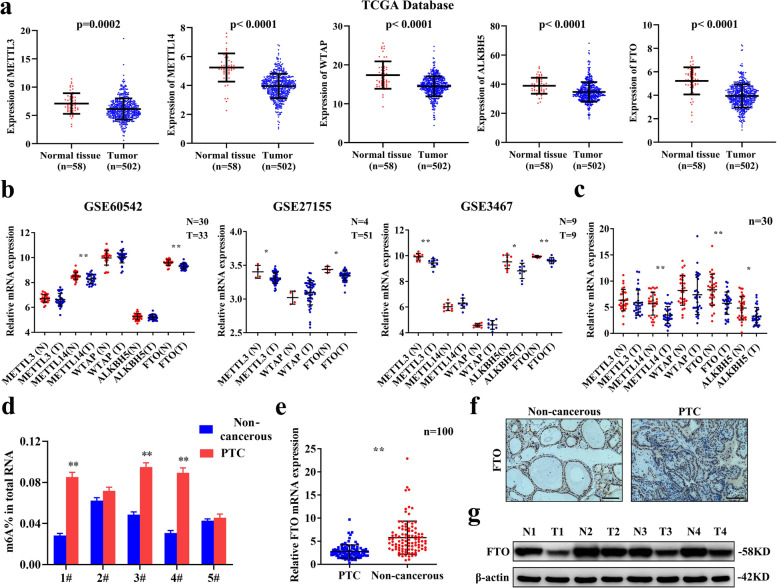
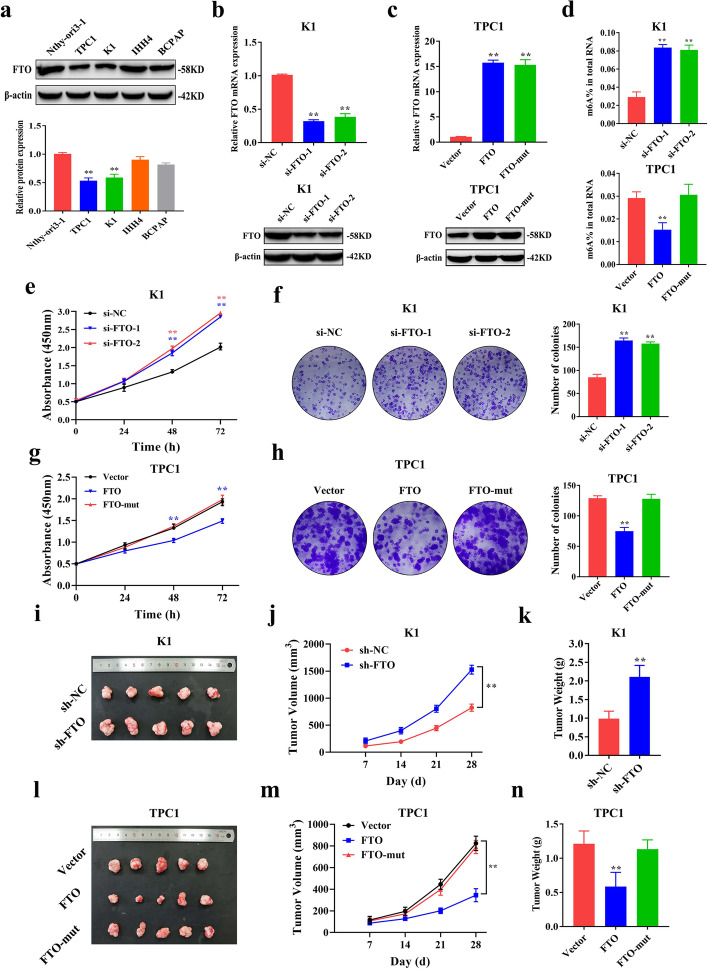
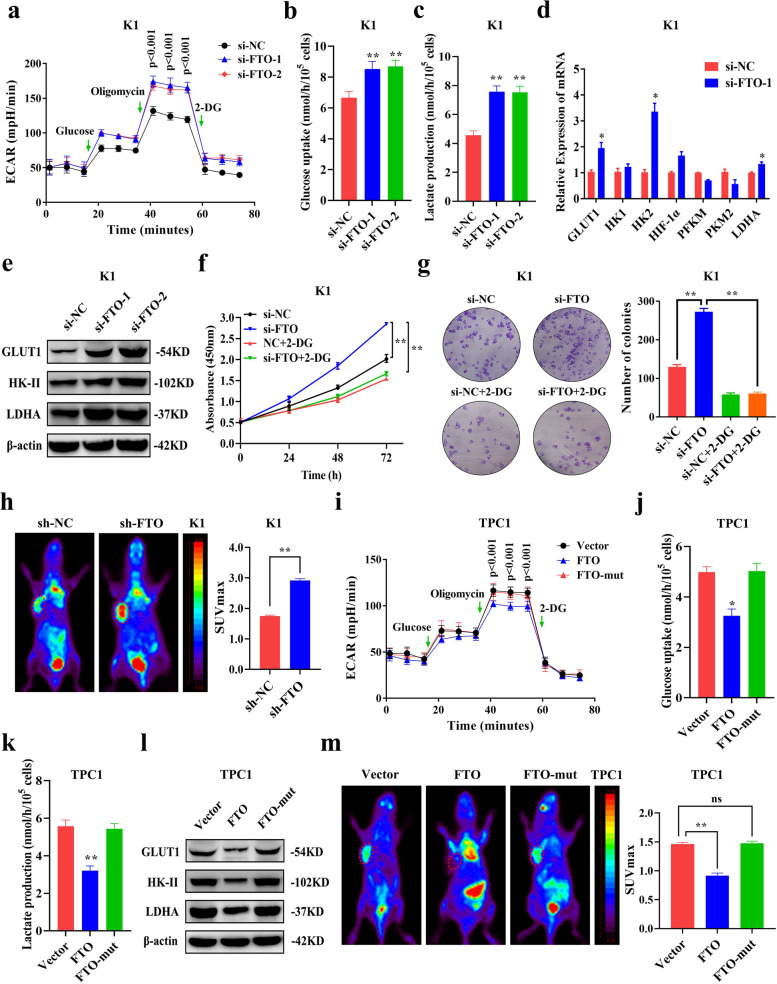
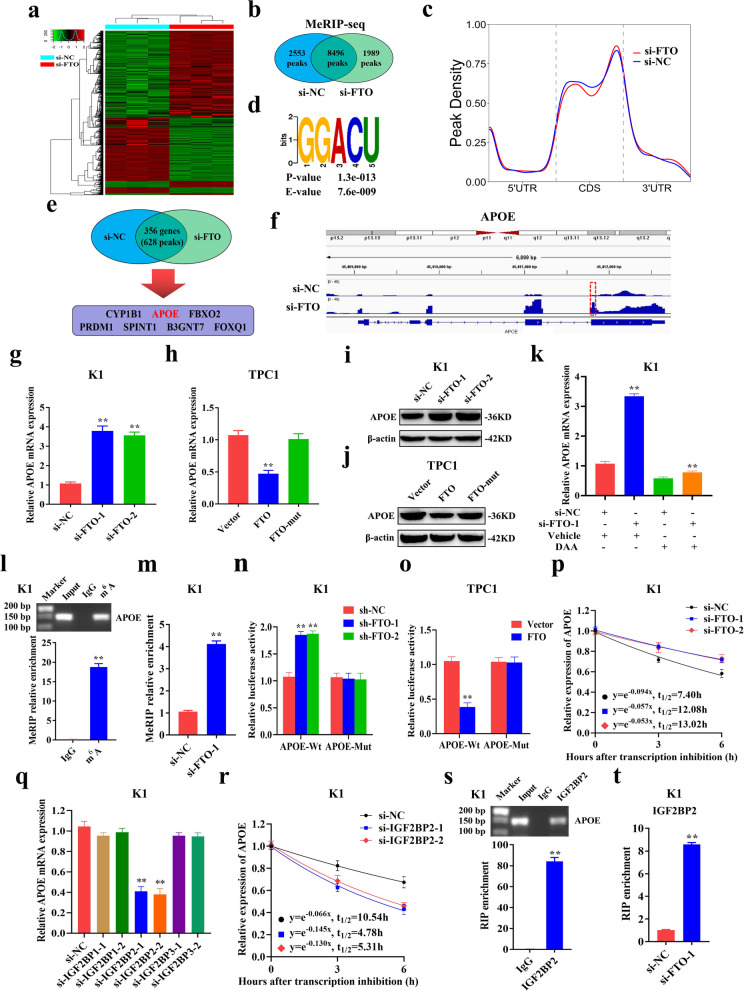
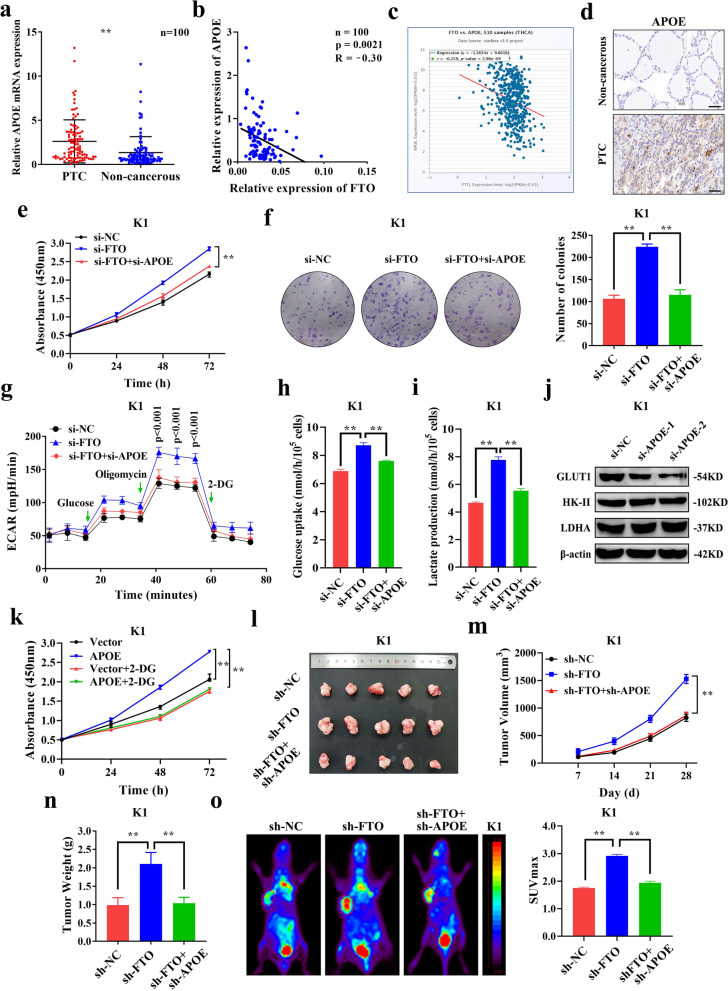
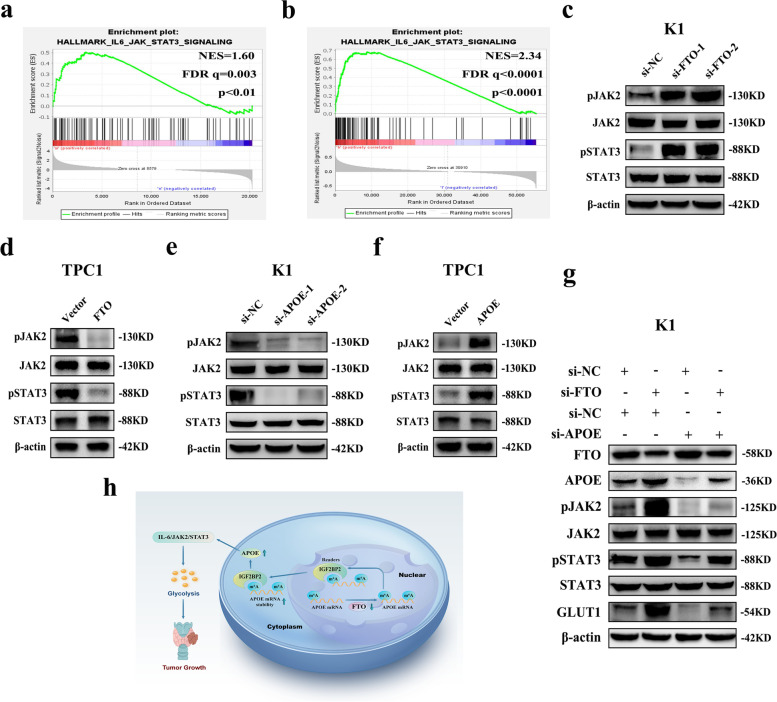
Background: N6-methyladenosine (m 6 A) modification is the most common chemical modification in mammalian mRNAs, and it plays important roles by regulating several cellular processes. Previous studies report that m 6 A is implicated in modulating tumorigenesis and progression. However, dysregulation of m 6 A modification and effect of m 6 A demethylase fat-mass and obesity-associated protein (FTO) on glucose metabolism has not been fully elucidated in papillary thyroid cancer (PTC). Methods: Quantitative real-time PCR (qRT-PCR), western blotting and immunohistochemistry were performed to explore the expression profile of FTO in PTC tissues and adjacent non-cancerous thyroid tissues. Effects of FTO on PTC glycolysis and growth were investigated through in vitro and in vivo experiments. Mechanism of FTO-mediated m 6 A modification was explored through transcriptome-sequencing (RNA-seq), methylated RNA immunoprecipitation sequencing (MeRIP-seq), MeRIP-qPCR, luciferase reporter assays, RNA stability assay and RNA immunoprecipitation assay. Results: FTO expression was significantly downregulated in PTC tissues. Functional analysis showed that FTO inhibited PTC glycolysis and growth. Further analyses were conducted to explore FTO-mediated m 6 A modification profile in PTC cells and Apolipoprotein E (APOE) was identified as the target gene for FTO-mediated m 6 A modification using RNA-seq and MeRIP-seq. FTO knockdown significantly increased APOE mRNA m 6 A modification and upregulated its expression. FTO-mediated m 6 A modification of APOE mRNA was recognized and stabilized by the m 6 A reader IGF2BP2. The findings showed that APOE also promoted tumor growth through glycolysis in PTC. Analysis showed that FTO/APOE axis inhibits PTC glycolysis by modulating IL-6/JAK2/STAT3 signaling pathway. Conclusion: FTO acts as a tumor suppressor to inhibit tumor glycolysis in PTC. The findings of the current study showed that FTO inhibited expression of APOE through IGF2BP2-mediated m 6 A modification and may inhibit glycolytic metabolism in PTC by modulating IL-6/JAK2/STAT3 signaling pathway, thus abrogating tumor growth.
Overview
The claims and statistics of this paper haven’t been checked yet.
Free: it reads the open-access text and checks the first 5 claims that cite a source we can check. Create a free account to check every claim.
Integrity signals
Registry
Cites
Statistics
Figures
Verification
Claims the paper makes
The claims and statistics of this paper haven’t been checked yet.
Free: it reads the open-access text and checks the first 5 claims that cite a source we can check. Create a free account to check every claim.
Claims other papers make about this one
Each is checked against this paper’s own text: does it say what the citing paper says it does?
The source backs part of the claim, not all of it — or backs it for a different population, condition or comparison.
In the citing paper
“This in turn activates the IL-6/JAK2/STAT3 signaling pathway, promoting glycolysis and tumor progression in papillary thyroid cancer (PTC).”
From IMPlications of IMP2 in RNA Biology and Disease (2025) · cites this paper as [102]
Experimental — accuracy not yet measuredThe cited source says what the claim attributes to it.
In the citing paper
“Luciferase reporter assays and RNA stability tests demonstrated that IMP2 stabilizes Apolipoprotein E (APOE) mRNA via m6A modification, increasing its expression [102].”
From IMPlications of IMP2 in RNA Biology and Disease (2025) · cites this paper as [102]
Self-check
Percentages, sums and reported differences re-computed from the paper’s own numbers.
The self-check needs the paper’s full text.
Citations
Cites
2 retracted
Tang, B., Yang, Y., Kang, M., Wang, Y., Wang, Y., Bi, Y., He, S., & Shimamoto, F. (2020) · Molecular Cancer · doi:10.1186/s12943-019-1128-6 · Cited by 327
RetractedZheng, M. H., Cao, M., Yu, X., Li, L., Wang, K., Wang, S., Wang, H., Tang, Y.-J., Tang, Y., & Liang, X. (2019) · Frontiers in Oncology · doi:10.3389/fonc.2019.01175 · Cited by 23 · cited 2×
“These findings show a novel molecular mechanism of PTC progression regulated by m6A modification and provide valuable insights for development of efficient therapeutic strategies against PTC. Abbreviations 2-DG: 2-deoxy-glucose; AD: Alzheimerʼs disease; ALKBH5: Alkylation repair homolog protein 5; APOE: Apolipoprotein…”
BackgroundRetractedSung, H., Ferlay, J., Siegel, R. L., Laversanne, M., Soerjomataram, I., Jemal, A., & Bray, F. (2021) · CA: A Cancer Journal for Clinicians · doi:10.3322/caac.21660 · Cited by 108,699 · cited 2×
“Global incidence of thyroid cancer in women is three times higher compared with the incidence in men, and one in every 20 women diagnosed with malignancy has thyroid cancer [1].”
BackgroundHallmarks of Cancer: The Next Generation
Hanahan, D., & Weinberg, R. A. (2011) · Cell · doi:10.1016/j.cell.2011.02.013 · Cited by 66,590 · cited 2×
“Glycolysis results in high amounts of lactate which can be utilized as the main energy source by other cells, and glycolytic intermediates may be diverted into various biosynthetic pathways [23].”
BackgroundTopology of the human and mouse m6A RNA methylomes revealed by m6A-seq
Dominissini, D., Moshitch-Moshkovitz, S., Schwartz, S., Salmon-Divon, M., Ungar, L., Osenberg, S., Cesarkas, K., Jacob-Hirsch, J., Amariglio, N., Kupiec, M., et al. (2012) · Nature · doi:10.1038/nature11112 · Cited by 4,884 · cited 3×
“We extracted the sequences of the first 1000 peaks with the largest enrichment multiples for each group (50 bp on both sides of the vertex) from MeRIP-seq data and then scanned them with dreme software to identify meaningful motif sequences [10, 33].”
BackgroundMethodN6-methyladenosine-dependent regulation of messenger RNA stability
Wang, X., Lu, Z., Gomez, A., Hon, G. C., Yue, Y., Han, D., Fu, Y., Parisien, M., Dai, Q., Jia, G., et al. (2014) · Nature · doi:10.1038/nature12730 · Cited by 4,558
Comprehensive Analysis of mRNA Methylation Reveals Enrichment in 3′ UTRs and near Stop Codons
Meyer, K. D., Saletore, Y., Zumbo, P., Elemento, O., Mason, C. E., & Jaffrey, S. R. (2012) · Cell · doi:10.1016/j.cell.2012.05.003 · Cited by 4,223
N6-Methyladenosine in nuclear RNA is a major substrate of the obesity-associated FTO
Jia, G., Fu, Y., Zhao, X., Dai, Q., Zheng, G., Yang, Y., Yi, C., Lindahl, T., Pan, T., Yang, Y.-G., et al. (2011) · Nature Chemical Biology · doi:10.1038/nchembio.687 · Cited by 4,106
N6-methyladenosine Modulates Messenger RNA Translation Efficiency
Wang, X., Zhao, B. S., Roundtree, I. A., Lu, Z., Han, D., Ma, H., Weng, X., Chen, K., Shi, H., & He, C. (2015) · Cell · doi:10.1016/j.cell.2015.05.014 · Cited by 3,483 · cited 2×
“N6-methyladenosine (m6A) modification is the most common internal chemical modification in higher eukaryotic RNA, and it mainly modifies messenger RNA (mRNA) at the post-transcriptional level [7, 8].”
BackgroundTargeting the IL-6/JAK/STAT3 signalling axis in cancer
Johnson, D. E., O'Keefe, R. A., & Grandis, J. R. (2018) · Nature Reviews Clinical Oncology · doi:10.1038/nrclinonc.2018.8 · Cited by 3,110 · cited 1×
“This signaling pathway promotes proliferation, invasiveness, and metastasis of cancer cells, and inhibits anti-tumor immune response [47].”
BackgroundRecognition of RNA N6-methyladenosine by IGF2BP proteins enhances mRNA stability and translation
Huang, H., Weng, H., Sun, W., Qin, X., Shi, H., Wu, H., Zhao, B. S., Mesquita, A., Liu, C., Yuan, C. L., et al. (2018) · Nature Cell Biology · doi:10.1038/s41556-018-0045-z · Cited by 2,997 · cited 6×
“Notably, m6A is recognized and bound by m6A-binding proteins (readers) such as YTH domain family proteins 1–3 (YTHDF1–3) [7, 13], YTH domain-containing proteins 1–2 (YTHDC1–2) [14, 15] and insulin-like growth factor 2 mRNA-binding proteins 1–3 (IGF2BP1–3) [16].”
BackgroundInfluentialSelf-citationCancer cell metabolism: warburg and beyond
Hsu, P. P., & Sabatini, D. M. (2008) · Cell · doi:10.1016/j.cell.2008.08.021 · Cited by 2,452 · cited 1×
“This non-canonical metabolic phenomenon is known as the Warburg effect [24].”
BackgroundYTHDF3 facilitates translation and decay of N6-methyladenosine-modified RNA
Shi, H., Wang, X., Lu, Z., Zhao, B. S., Ma, H., Hsu, P. J., Liu, C., & He, C. (2017) · Cell Research · doi:10.1038/cr.2017.15 · Cited by 1,815
FTO Plays an Oncogenic Role in Acute Myeloid Leukemia as a N 6 -Methyladenosine RNA Demethylase
Li, Z., Weng, H., Su, R., Weng, X., Zuo, Z., Li, C., Huang, H., Nachtergaele, S., Dong, L., Hu, C., et al. (2017) · Cancer Cell · doi:10.1016/j.ccell.2016.11.017 · Cited by 1,508
Self-citationDu, H., Zhao, Y., He, J., Zhang, Y., Xi, H., Liu, M., Ma, J., & Wu, L. (2016) · Nature Communications · doi:10.1038/ncomms12626 · Cited by 1,463
Cabanillas, M. E., McFadden, D. G., & Durante, C. (2016) · The Lancet · doi:10.1016/s0140-6736(16)30172-6 · Cited by 1,430
Chen, M., Wei, L., Law, C., Tsang, F. H., Shen, J., Cheng, C. L., Tsang, L., Ho, D. W., Chiu, D. K., Lee, J. M., et al. (2018) · Hepatology · doi:10.1002/hep.29683 · Cited by 1,376
DREME: motif discovery in transcription factor ChIP-seq data
Bailey, T. L. (2011) · Bioinformatics · doi:10.1093/bioinformatics/btr261 · Cited by 1,044
APOE and Alzheimer’s disease: Advances in genetics, pathophysiology, and therapeutic approaches
Serrano-Pozo, A., Das, S., & Hyman, B. T. (2021) · The Lancet Neurology · doi:10.1016/s1474-4422(20)30412-9 · Cited by 1,037 · cited 1×
“Although the role of APOE in cholesterol homeostasis and its regulatory mechanism in atherosclerosis and Alzheimerʼs disease (AD) are well known, the role and mechanism of APOE in cancer remains elusive [29].”
BackgroundYthdc2 is an N6-methyladenosine binding protein that regulates mammalian spermatogenesis
Hsu, P. J., Zhu, Y., Ma, H., Guo, Y., Shi, X., Liu, Y., Qi, M., Lu, Z., Shi, H., Wang, J., et al. (2017) · Cell Research · doi:10.1038/cr.2017.99 · Cited by 1,005 · cited 2×
“Notably, m6A is recognized and bound by m6A-binding proteins (readers) such as YTH domain family proteins 1–3 (YTHDF1–3) [7, 13], YTH domain-containing proteins 1–2 (YTHDC1–2) [14, 15] and insulin-like growth factor 2 mRNA-binding proteins 1–3 (IGF2BP1–3) [16]. m6A modification is involved in all stages of RNA life cy…”
BackgroundInactivation of the Fto gene protects from obesity
Fischer, J., Koch, L., Emmerling, C., Vierkotten, J., Peters, T., Brüning, J. C., & Rüther, U. (2009) · Nature · doi:10.1038/nature07848 · Cited by 949 · cited 1×
“FTO can maintain energy homeostasis by controlling energy consumption [34].”
BackgroundMETTL3 facilitates tumor progression via an m6A-IGF2BP2-dependent mechanism in colorectal carcinoma
Li, T., Hu, P.-S., Zuo, Z., Lin, J.-F., Li, X., Wu, Q.-N., Chen, Z.-H., Zeng, Z.-L., Wang, F., Zheng, J., et al. (2019) · Molecular Cancer · doi:10.1186/s12943-019-1038-7 · Cited by 799 · cited 1×
“YTHDC2, YTHDF2 and YTHDF3 downregulates expression of the target gene by promoting decay of their mRNA transcripts [38–40], whereas IGF2BP1–3 upregulates expression of target genes by promoting stability of their mRNA [41].”
BackgroundThe Critical Role of RNA m6A Methylation in Cancer
Lan, Q., Liu, P. Y., Haase, J., Bell, J. L., Hüttelmaier, S., & Liu, T. (2019) · Cancer Research · doi:10.1158/0008-5472.can-18-2965 · Cited by 720
RNA N6-methyladenosine demethylase FTO promotes breast tumor progression through inhibiting BNIP3
Niu, Y., Lin, Z., Wan, A., Chen, H., Liang, H., Sun, L., Wang, Y., Li, X., Xiong, X.-F., Wei, B., et al. (2019) · Molecular Cancer · doi:10.1186/s12943-019-1004-4 · Cited by 593 · cited 2×
“Niu Y, Lin Z, Wan A, Chen H, Liang H, Sun L, et al. RNA N6-methyladenosine demethylase FTO promotes breast tumor progression through inhibiting BNIP3.”
BackgroundYue, B., Song, C., Yang, L., Cui, R., Cheng, X., Zhang, Z., & Zhao, G. (2019) · Molecular Cancer · doi:10.1186/s12943-019-1065-4 · Cited by 589
Cai, X., Wang, X., Cao, C., Gao, Y., Zhang, S., Yang, Z., Liu, Y., Zhang, X., Zhang, W., & Ye, L. (2018) · Cancer Letters · doi:10.1016/j.canlet.2017.11.018 · Cited by 472
Update on Fundamental Mechanisms of Thyroid Cancer
Prete, A., Borges de Souza, P., Censi, S., Muzza, M., Nucci, N., & Sponziello, M. (2020) · Frontiers in Endocrinology · doi:10.3389/fendo.2020.00102 · Cited by 471 · cited 1×
“Moreover, occurrence and progression of PTC are affected by several factors such as genetic mutations, environmental exposure, and epigenetic alterations [6].”
BackgroundXu, C., Liu, K., Ahmed, H., Loppnau, P., Schapira, M., & Min, J. (2015) · Journal of Biological Chemistry · doi:10.1074/jbc.m115.680389 · Cited by 320 · cited 2×
“Notably, m6A is recognized and bound by m6A-binding proteins (readers) such as YTH domain family proteins 1–3 (YTHDF1–3) [7, 13], YTH domain-containing proteins 1–2 (YTHDC1–2) [14, 15] and insulin-like growth factor 2 mRNA-binding proteins 1–3 (IGF2BP1–3) [16]. m6A modification is involved in all stages of RNA life cy…”
BackgroundApoprotein E as a lipid transport and signaling protein in the blood, liver, and artery wall
Getz, G. S., & Reardon, C. A. (2009) · Journal of Lipid Research · doi:10.1194/jlr.r800058-jlr200 · Cited by 319
FMRP modulates neural differentiation through m6A-dependent mRNA nuclear export.
Edens, B. M., Vissers, C., Su, J., Arumugam, S., Xu, Z., Shi, H., Miller, N., Rojas Ringeling, F., Ming, G.-L., He, C., et al. (2019) · Cell Reports · doi:10.1016/j.celrep.2019.06.072 · Cited by 297 · cited 1×
“m6A modification is involved in all stages of RNA life cycle and plays a role in regulating pre-mRNA processing [17], mRNA stability [7], translation efficiency [8], and nuclear export [18].”
BackgroundTheler, D., Dominguez, C., Blatter, M., Boudet, J., & Allain, F. H.-T. (2014) · Nucleic Acids Research · doi:10.1093/nar/gku1116 · Cited by 243 · cited 2×
“Notably, m6A is recognized and bound by m6A-binding proteins (readers) such as YTH domain family proteins 1–3 (YTHDF1–3) [7, 13], YTH domain-containing proteins 1–2 (YTHDC1–2) [14, 15] and insulin-like growth factor 2 mRNA-binding proteins 1–3 (IGF2BP1–3) [16]. m6A modification is involved in all stages of RNA life cy…”
BackgroundKretschmer, J., Rao, H., Hackert, P., Sloan, K. E., Höbartner, C., & Bohnsack, M. T. (2018) · RNA · doi:10.1261/rna.064238.117 · Cited by 243
Cancer Metabolism: Current Understanding and Therapies
Counihan, J. L., Grossman, E. A., & Nomura, D. K. (2018) · Chemical Reviews · doi:10.1021/acs.chemrev.7b00775 · Cited by 226 · cited 1×
“Moreover, recent studies report that aerobic glycolysis of cancer cells is accompanied by dysregulated lipid metabolism, and some key factors of lipid metabolism may play a role in glycolysis of cells [27].”
BackgroundHuang, H., Wang, Y., Kandpal, M., Zhao, G., Cardenas, H., Ji, Y., Chaparala, A., Tanner, E. J., Chen, J., Davuluri, R. V., et al. (2020) · Cancer Research · doi:10.1158/0008-5472.can-19-4044 · Cited by 219 · cited 1×
“However, in ovarian cancer, FTO acts as a tumor suppressor and regulates cyclic AMP signaling involved in stemness and tumor initiation [37].”
BackgroundWu, L., Zhang, X., & Zhao, L. (2018) · The Journal of Neuroscience · doi:10.1523/jneurosci.2262-17.2018 · Cited by 185 · cited 1×
“Notably, APOE modulates brain glucose metabolism in AD [45], and affects glucose uptake in atherosclerosis [46].”
BackgroundFTO downregulation mediated by hypoxia facilitates colorectal cancer metastasis
Ruan, D., Li, T., Wang, Y., Qi, M., Li, Y., Yu, K., Wang, M., Lin, J., Luo, L.-Z., Wang, D., et al. (2021) · Oncogene · doi:10.1038/s41388-021-01916-0 · Cited by 179 · cited 1×
“FTO is a m6A demethylase that promotes breast tumor progression by inhibiting BNIP3 [35], whereas another study reported inhibitory effect of FTO on metastasis by targeting demethylating metastasis-associated protein 1 (MTA1) mRNA in colorectal cancer [36].”
BackgroundTargeting Metabolism in Cancer Cells and the Tumour Microenvironment for Cancer Therapy
Li, J., Eu, J. Q., Kong, L. R., Wang, L., Lim, Y. C., Goh, B. C., & Wong, A. L. A. (2020) · Molecules · doi:10.3390/molecules25204831 · Cited by 159 · cited 1×
“Studies have explored reprogramming of energy metabolism, and report that targeting glycolysis is a promising therapeutic strategy [25].”
BackgroundUddin, M. B., Wang, Z., & Yang, C. (2021) · Molecular Cancer · doi:10.1186/s12943-021-01356-0 · Cited by 149
Self-citationRen, L., Yi, J., Li, W., Zheng, X., Liu, J., Wang, J., & Du, G. (2019) · Cancer Medicine · doi:10.1002/cam4.2587 · Cited by 145 · cited 1×
“Previous studies report that APOE is mainly responsible for metabolism and redistribution of cholesterol, whereas recent studies report that its expression is upregulated and exerts biological functions in various cancers [42].”
BackgroundSarrazy, V., Viaud, M., Westerterp, M., Ivanov, S., Giorgetti-Peraldi, S., Guinamard, R., Gautier, E. L., Thorp, E. B., De Vivo, D. C., & Yvan-Charvet, L. (2016) · Circulation Research · doi:10.1161/circresaha.115.307599 · Cited by 115 · cited 1×
“Notably, APOE modulates brain glucose metabolism in AD [45], and affects glucose uptake in atherosclerosis [46].”
BackgroundShang, R., Wang, M., Dai, B., Du, J., Wang, J., Liu, Z., Qu, S., Yang, X., Liu, J., Xia, C., et al. (2020) · Molecular Oncology · doi:10.1002/1878-0261.12666 · Cited by 109 · cited 1×
“LncRNA SLC2A1-AS1 affects aerobic glycolysis and progression by inhibiting STAT3/FOXM1/GLUT1 signaling pathway in hepatocellular carcinoma [48].”
BackgroundSu, W.-P., Chen, Y.-T., Lai, W.-W., Lin, C.-C., Yan, J.-J., & Su, W.-C. (2011) · Lung Cancer · doi:10.1016/j.lungcan.2010.04.009 · Cited by 81
An, M., Li, S., Yao, H.-B., Li, C., Wang, J.-M., Sun, J. T., Li, X., Meng, X., & Wang, H. (2017) · The Journal of Cell Biology · doi:10.1083/jcb.201701064 · Cited by 76 · cited 1×
“Aberrant expression of Bcl-2-associated athanogene 3 (BAG3) can reprogram glucose metabolism in pancreatic ductal adenocarcinoma, thus increasing expression of Hexokinase II (HK-II) which is the first key enzyme of glycolysis by inducing IMP3 recruitment [26].”
BackgroundRNA methylation in nuclear pre‐mRNA processing
Covelo‐Molares, H., Bartosovic, M., & Vanacova, S. (2018) · WIREs RNA · doi:10.1002/wrna.1489 · Cited by 65 · cited 1×
“m6A modification is involved in all stages of RNA life cycle and plays a role in regulating pre-mRNA processing [17], mRNA stability [7], translation efficiency [8], and nuclear export [18].”
BackgroundThe current role of targeted therapies to induce radioiodine uptake in thyroid cancer
Fröhlich, E., & Wahl, R. (2014) · Cancer Treatment Reviews · doi:10.1016/j.ctrv.2014.01.002 · Cited by 62 · cited 1×
“However, approximately 30% patients present with recurrence and distant metastasis, thus significantly decreasing the survival rate [4, 5].”
BackgroundClinical significance of ApoE expression in human gastric cancer
Tanaka (1994) · Oncology Reports · doi:10.3892/or_00000146 · Cited by 57 · cited 1×
“In addition, APOE upregulation is positive correlated with muscular invasion, thus it is a potential biomarker for predicting extent of invasion [30].”
BackgroundManagement of Invasive Differentiated Thyroid Cancer
Nixon, I. J., Simó, R., Newbold, K. L., Rinaldo, A., Suarez, C. M., Kowalski, L. P., Silver, C. E., Shah, J. P., & Ferlito, A. (2016) · Thyroid · doi:10.1089/thy.2016.0064 · Cited by 56 · cited 1×
“However, approximately 30% patients present with recurrence and distant metastasis, thus significantly decreasing the survival rate [4, 5].”
BackgroundLee, Y. S., Yeo, I. J., Kim, K. C., Han, S., & Hong, J. T. (2019) · Frontiers in Immunology · doi:10.3389/fimmu.2019.01379 · Cited by 33 · cited 1×
“APOE knockout inhibits tumor growth and metastasis by increasing REEM1-mediated infiltration of NK cells in lung cancer [44].”
BackgroundXie, L., Wang, S., Qian, Y., Jia, S., Wang, J., Li, L., Zhang, W., Yu, H., Bao, P., & Qian, B. (2021) · Endocrine Practice · doi:10.1016/j.eprac.2021.06.002 · Cited by 19 · cited 1×
“Incidence of thyroid cancer in China is approximately twice the world average, and is the 7th leading cause of malignant tumors in the country [2].”
Background
Cited by
Metabolism, metabolites, and macrophages in cancer
Li, M., Yang, Y., Xiong, L., Jiang, P., Wang, J., & Li, C. (2023) · Journal of Hematology & Oncology · doi:10.1186/s13045-023-01478-6 · Cited by 507
“Mitochondrial OXPHOS was reduced, but anaerobic glycolysis was enhanced.”
BackgroundInfluentialThe roles and implications of RNA m6A modification in cancer
Deng, X., Qing, Y., Horne, D., Huang, H., & Chen, J. (2023) · Nature Reviews Clinical Oncology · doi:10.1038/s41571-023-00774-x · Cited by 364
Liu, W.-W., Zheng, S.-Q., Li, T., Fei, Y.-F., Wang, C., Zhang, S., Wang, F., Jiang, G.-M., & Wang, H. (2024) · Signal Transduction and Targeted Therapy · doi:10.1038/s41392-024-01777-5 · Cited by 166
“251 Likewise, another m6A eraser, ALKBH5 also have dual regulatory effects.”
BackgroundThe role of RNA methylation in tumor immunity and its potential in immunotherapy
Li, Y., Jin, H., Li, Q., Shi, L., Mao, Y., & Zhao, L. (2024) · Molecular Cancer · doi:10.1186/s12943-024-02041-8 · Cited by 185
“The demethylase FTO has been shown to be responsible for decreasing m6A methylation of Apolipoprotein E (APOE) mRNA and modulating the IL-6/JAK2/STAT3 signaling pathway, thereby inhibiting tumor glycolysis and abrogating tumor growth [163] (Fig.”
BackgroundHashemi, M., Mirdamadi, M. S. A., Talebi, Y., Khaniabad, N., Banaei, G., Daneii, P., Gholami, S., Ghorbani, A., Tavakolpournegari, A., Farsani, Z. M., et al. (2023) · Pharmacological Research · doi:10.1016/j.phrs.2022.106568 · Cited by 153
Metadata
- Authors
- Huang, J., Sun, W., Wang, Z., Lv, C., Zhang, T., Zhang, D., Dong, W., Shao, L., He, L., Ji, X., Zhang, P., & Zhang, H.
- Affiliations
- First Hospital of China Medical University (CN)
- Corresponding author
- Zhang, Hao
- ORCID
- Venue
- Journal of Experimental & Clinical Cancer Research
- Published
- 2022-01-28
- Volume
- 41
- Issue
- 1
- Pages
- 42-42
- ISSN
- 0392-9078 (ISSN-L)
- 1756-9966
- PMC
- PMC8796435
- OpenAlex
- W4210813406
- Cited by
- 198
- References
- 49
- Citations by year
- 2026: 26 · 2025: 56 · 2024: 58 · 2023: 43 · 2022: 14
- FWCI
- 14.53
- Type
- journal article
- Language
- en
- Open access
- gold
- doi.org
- Licence
- cc-by
- creativecommons.org/licenses/by/4.0 (tdm)
- creativecommons.org/licenses/by/4.0 (vor)
- Locations
- Journal of Experimental & Clinical Cancer Research (publishedVersion, cc-by)
- PubMed Central (publishedVersion, cc-by)
- PubMed (publishedVersion)
- DOAJ (DOAJ: Directory of Open Access Journals) (submittedVersion, cc-by-sa)
- Funders
- National Natural Science Foundation of China (81902726)
- China Postdoctoral Science Foundation (2018M641739)
- Natural Science Foundation of Education Bureau of Liaoning Province (QNZR2020009)
- Natural Science Foundation of Liaoning Province (2020-MS-186)
- Topics
- Life Sciences › Biochemistry, Genetics and Molecular Biology › Molecular Biology › RNA modifications and cancer
- Health Sciences › Medicine › Endocrinology, Diabetes and Metabolism › Thyroid Cancer Diagnosis and Treatment
- Life Sciences › Biochemistry, Genetics and Molecular Biology › Cancer Research › Cancer-related molecular mechanisms research
- Keywords
- FTO, N6-methyladenosine, m6A RNA methylation, papillary thyroid carcinoma, apolipoprotein E, mRNA stability, IGF2BP2, glycolysis, tumor growth, IL-6/JAK2/STAT3 signaling, tumor suppressor, glucose metabolism
- MeSH terms
- Alpha-Ketoglutarate-Dependent Dioxygenase FTO, Thyroid Cancer, Papillary, Adenosine, Apolipoproteins E, Glycolysis, Humans, Prognosis, RNA, Messenger, Cell Line, Tumor, Cell Proliferation
About these checks
Registry, retraction, Cites and statistics results are computed, not judged, with one exception: a printed reference that no index lists is read once by a model before it counts as a citation error. Claims are extracted by a model and kept only when their quote appears verbatim in the text; each cited source is then checked, with a model’s help, for whether it says what the claim relies on. Those verdicts can be wrong — read the claim’s quote and the cited source before relying on one.
Statistics and arithmetic are recomputed, not judged.
Confidence bands are shown only for fields calibrated on our annotated test set. None is calibrated yet, so no band is shown.
What counts as a claim ›How we measure confidence ›How we check this ›
Are you an author, or do you see a problem with this page? Request a review
Data sources
Bibliographic data: Semantic Scholar, OpenAlex, Crossref.
Contains information from the Semantic Scholar Academic Graph Datasets, made available under the ODC Attribution License (ODC-BY 1.0).
Semantic Scholar’s data is described in: Kinney, R., et al. (2023). The Semantic Scholar Open Data Platform. arXiv:2301.10140.
