

Diaphragm ultrasound as indicator of respiratory effort in critically ill patients undergoing assisted mechanical ventilation: a pilot clinical study
Open accessThe DOI matches its Crossref record; 47 of the 49 references it cites were found in a registry or an index.
Abstract
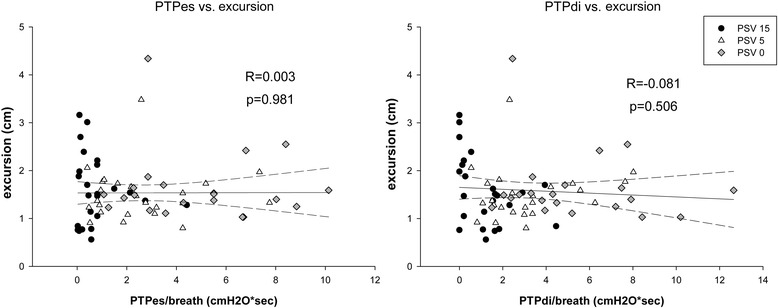
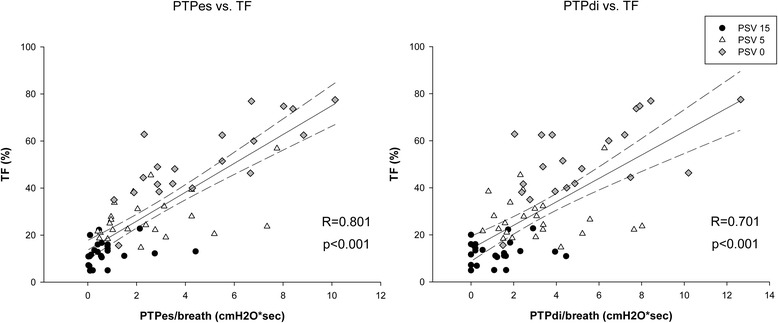
Introduction: Pressure-support ventilation, is widely used in critically ill patients; however, the relative contribution of patient’s effort during assisted breathing is difficult to measure in clinical conditions. Aim of the present study was to evaluate the performance of ultrasonographic indices of diaphragm contractile activity (respiratory excursion and thickening) in comparison to traditional indices of inspiratory muscle effort during assisted mechanical ventilation. Method: Consecutive patients admitted to the ICU after major elective surgery who met criteria for a spontaneous breathing trial with pressure support ventilation were enrolled. Patients with airflow obstruction or after thoracic/gastric/esophageal surgery were excluded. Variable levels of inspiratory muscle effort were achieved by delivery of different levels of ventilatory assistance by random application of pressure support (0, 5 and 15 cmH 2 O). The right hemidiaphragm was evaluated by B- and M-mode ultrasonography to record respiratory excursion and thickening. Airway, gastric and oesophageal pressures, and airflow were recorded to calculate indices of respiratory effort (diaphragm and esophageal pressure–time product). Results: 25 patients were enrolled. With increasing levels of pressure support, parallel reductions were found between diaphragm thickening and both diaphragm and esophageal pressure–time product (respectively, R = 0.701, p < 0.001 and R = 0.801, p < 0.001) during tidal breathing. No correlation was found between either diaphragm or esophageal pressure–time product and diaphragm excursion (respectively, R = −0.081, p = 0.506 and R = 0.003, p = 0.981), nor was diaphragm excursion correlated to diaphragm thickening (R = 0.093, p = 0.450) during tidal breathing. Conclusions: In patients undergoing in assisted mechanical ventilation, diaphragm thickening is a reliable indicator of respiratory effort, whereas diaphragm excursion should not be used to quantitatively assess diaphragm contractile activity.
Overview
The claims and statistics of this paper haven’t been checked yet.
Free: it reads the open-access text and checks the first 5 claims that cite a source we can check. Create a free account to check every claim.
Integrity signals
Registry
Cites
Statistics
Figures
Verification
Claims the paper makes
The claims and statistics of this paper haven’t been checked yet.
Free: it reads the open-access text and checks the first 5 claims that cite a source we can check. Create a free account to check every claim.
Self-check
Percentages, sums and reported differences re-computed from the paper’s own numbers.
The self-check needs the paper’s full text.
Citations
Cites
STATISTICAL METHODS FOR ASSESSING AGREEMENT BETWEEN TWO METHODS OF CLINICAL MEASUREMENT
Martin Bland, J., & Altman, D. (1986) · The Lancet · doi:10.1016/s0140-6736(86)90837-8 · Cited by 47,965
(1965) · The Lancet · doi:10.1016/s0140-6736(65)91037-8 · Cited by 16,856
ATS/ERS Statement on Respiratory Muscle Testing
(2002) · American Journal of Respiratory and Critical Care Medicine · doi:10.1164/rccm.166.4.518 · Cited by 2,841
Weaning from mechanical ventilation
Boles, J.-M., Bion, J., Connors, A., Herridge, M., Marsh, B., Melot, C., Pearl, R., Silverman, H., Stanchina, M., Vieillard-Baron, A., et al. (2007) · European Respiratory Journal · doi:10.1183/09031936.00010206 · Cited by 2,064
Esteban, A. (2002) · JAMA · doi:10.1001/jama.287.3.345 · Cited by 1,779 · cited 1×
“patients with the aim of unloading the respiratory muscles while avoiding muscle atrophy [4].”
BackgroundRapid Disuse Atrophy of Diaphragm Fibers in Mechanically Ventilated Humans
Levine, S., Nguyen, T., Taylor, N., Friscia, M. E., Budak, M. T., Rothenberg, P., Zhu, J., Sachdeva, R., Sonnad, S., Kaiser, L. R., et al. (2008) · New England Journal of Medicine · doi:10.1056/nejmoa070447 · Cited by 1,577 · cited 1×
“Conversely, mechanical ventilation itself may lead to diaphragm atrophy and dysfunction, which are well-recognized features of critically-ill patients [2,3].”
BackgroundClinical biostatistics: LIV. The biostatistics of concordance
Kramer, M. S., & Feinstein, A. R. (1981) · Clinical Pharmacology and Therapeutics · doi:10.1038/clpt.1981.18 · Cited by 1,087 · cited 1×
“75, usually considered to indicate good agreement [44].”
BackgroundA simple method for assessing the validity of the esophageal balloon technique.
Baydur, A., BEHRAKIS, P. K., Zin, W. A., Jaeger, M., & Milic‐Emili, J. (1982) · PubMed · doi:10.1164/arrd.1982.126.5.788 · Cited by 1,076 · cited 1×
“To check the correct position of the esophageal balloon, a dynamic occlusion test was performed to assure that Pes was changing in concert with Paw when making efforts against a closed airway [22].”
MethodStatistics notes: Measurement error
Bland, J. M., & Altman, D. G. (1996) · BMJ · doi:10.1136/bmj.312.7047.1654 · Cited by 835
ESTEBAN, A., ANZUETO, A., ALÍA, I., GORDO, F., APEZTEGUÍA, C., PÁLIZAS, F., CIDE, D., GOLDWASER, R., SOTO, L., BUGEDO, G., et al. (2000) · American Journal of Respiratory and Critical Care Medicine · doi:10.1164/ajrccm.161.5.9902018 · Cited by 780 · cited 1×
“PSV is a commonly used ventilation mode, both as stand-alone ventilatory support in acute respiratory failure and/or during the weaning phase of mechanical ventilation [30].”
Method
Cited by
Items 301–344 of 344
Haaksma, M. E., Smit, J. M., Boussuges, A., Demoule, A., Dres, M., Ferrari, G., Formenti, P., Goligher, E. C., Heunks, L. M. A., Lim, E. H. T., et al. (2022) · Figshare · doi:10.6084/m9.figshare.19565866
Self-citationLindner, S., Hoermann, C., Teichert, J., Ziyadova, S., Michels-Zetsche, J. D., Neetz, B., Herth, F. J., Duerschmied, D. R., & Britsch, S. (2024) · Figshare · doi:10.6084/m9.figshare.26074132
黄道政, 宋菲儿, Luo, B., Wang, S., Qin, T. H., Lin, Z., Hou, T., & Ma, H. (2023) · Figshare · doi:10.6084/m9.figshare.22613353
Eksombatchai, D., Sukkratok, C., Sutherasan, Y., Junhasavasdikul, D., & Theerawit, P. (2023) · Figshare · doi:10.6084/m9.figshare.22618936
Haaksma, M. E., Smit, J. M., Boussuges, A., Demoule, A., Dres, M., Ferrari, G., Formenti, P., Goligher, E. C., Heunks, L. M. A., Lim, E. H. T., et al. (2022) · Figshare · doi:10.6084/m9.figshare.19565860
Self-citationZhou, E. F. M., Fu, S. N., Huang, C., Huang, X. P., & Wong, A. Y. L. (2024) · Figshare · doi:10.6084/m9.figshare.26648634
Grassi, A., Ferlicca, D., Lupieri, E., Calcinati, S., Francesconi, S., Sala, V., Ormas, V., Chiodaroli, E., Abbruzzese, C., Curto, F., et al. (2020) · Figshare · doi:10.6084/m9.figshare.11979393
黄道政, 宋菲儿, Luo, B., Wang, S., Qin, T. H., Lin, Z., Hou, T., & Ma, H. (2023) · Figshare · doi:10.6084/m9.figshare.22613356
Haaksma, M. E., Smit, J. M., Boussuges, A., Demoule, A., Dres, M., Ferrari, G., Formenti, P., Goligher, E. C., Heunks, L. M. A., Lim, E. H. T., et al. (2022) · Figshare · doi:10.6084/m9.figshare.19565869
Self-citationDemoule, A., Fossé, Q., Mercat, A., Bergum, D., Virolle, S., Bureau, C., Mellemseter, M., Guichou, R., Similowski, T., Dres, M., et al. (2024) · Figshare · doi:10.6084/m9.figshare.26750018
黄道政, 宋菲儿, Luo, B., Wang, S., Qin, T. H., Lin, Z., Hou, T., & Ma, H. (2023) · Figshare · doi:10.6084/m9.figshare.22613365
Diao, S., Li, S., Dong, R., Jiang, W., Wang, C., Chen, Y., Wang, J., He, S., Wang, Y., Du, B., et al. (2024) · Figshare · doi:10.6084/m9.figshare.25939969
Suttapanit, K., Wongkrasunt, S., Savatmongkorngul, S., & Supatanakij, P. (2024) · Figshare · doi:10.6084/m9.figshare.26618320
Albani, F., Fusina, F., Ciabatti, G., Pisani, L., Lippolis, V., Franceschetti, M. E., Giovannini, A., Mussi, R. D., Murgolo, F., Rosanò, A., et al. (2021) · Figshare · doi:10.6084/m9.figshare.17210433
Song, J., Qian, Z., Zhang, H., Wang, M., Yu, Y., Ye, C., Hu, W., & 龚仕金 (2022) · Figshare · doi:10.6084/m9.figshare.21062309
Suttapanit, K., Wongkrasunt, S., Savatmongkorngul, S., & Supatanakij, P. (2024) · Figshare · doi:10.6084/m9.figshare.26618323
Respiratory Muscle Motor Control in Patients Receiving Mechanical Ventilation
Hollebeke, M. V., Shingai, K., Rassam, P., Jiang, Z. L., Mori, T., Jalil, Y., Orchanian‐Cheff, A., Damiani, L. F., Rozenberg, D., Brochard, L. J., et al. (2026) · CHEST Critical Care · doi:10.1016/j.chstcc.2026.100247
Jelassi, W., Hedhli, A., Hajtaeib, S., Euchi, K., Fraj, M. K. B., Cheikhrouhou, S., Ouahchi, Y., Mjid, M., Toujani, S., Feki, M., et al. (2026) · American Journal of Men s Health · doi:10.1177/15579883251396535
“These findings are consistent with previous reports that describe respiratory muscle dysfunction as a systemic consequence of chronic inflammation in COPD (Ottenheijm et al., 2008; Umbrello et al., 2015).”
Échographie pleuropulmonaire en anesthésie-réanimation
Delmotte, P.-R., Brisson, H., & Monsel, A. (2025) · EMC-Anesthésie réanimation/Encyclopédie médico-chirurgicale. Anesthésie, réanimation · doi:10.1016/s0246-0289(24)88852-7
Flatres, A. (2021) · theses.fr (ABES) · doi:10.70675/a01c9576zb0a3z47c1z8489z886fe0abc23a · Cited by 1
Varga, B. G., Leal, F. D. S., Figueiredo, A. D. P., de Carvalho, E. F. T., & Gomes, É. L. D. F. D. (2026) · Respiratory Medicine · doi:10.1016/j.rmed.2026.108819
Diaphragmatic ultrasound in mechanically ventilated critically ill patients: a narrative review
Ruíz-Ávila, H. A., Acosta‐Gutiérrez, E., & Guzmán-David, C. A. (2026) · Colombian Journal of Anesthesiology · doi:10.5554/22562087.e1183
“(4,5) .”
Ng, K. W., & See, K. C. (2026) · World Journal of Methodology · doi:10.5662/wjm.v16.i2.113663
“…patients[19,20], predict weaning outcomes from mechanical ventilation[3-5], titration of ventilatory support through assessment of diaphragmatic contractile activity[20-22], and detection of patient-ventilator interactions by looking at contractile activity and excursion of the diaphragm[23,24].”
Silva, I. N., & Bendjelid, K. (2026) · European Respiratory Review · doi:10.1183/16000617.0064-2026
“Consistent with this complexity, diaphragmatic excursion has shown limited association with respiratory effort in both assisted and unassisted breathing conditions [5, 6].”
Ayhan, N. A., Bayrakçı, S. Y., Fırat, A., Bulut, Y., SEYDAOĞLU, G., Karakoç, E., Toprak, O. B., & Özyılmaz, E. (2026) · Science Progress · doi:10.1177/00368504261447364
“44 In our study, we focused on a homogeneous cohort of medical patients primarily hospitalized with respiratory failure and assessed both DTF and DE in non-intubated individuals.”
Mohammed, A. S. E.-D., Mohammed, R. S. E.-D., Basset, A. S. A. E., Mohammed, O. A. S. Z., Mohamed, M. F., & Fahmy, N. M. (2026) · Egyptian Journal of Bronchology · doi:10.1186/s43168-026-00583-7
“It has been demonstrated that the diaphragmatic thickening fraction specifically correlates with the muscle’s ability to generate pressure [5], respiratory effort, and work of breathing [6, 7].”
Al-Ashmawy, S., Hafez, A. A., Gouda, T. E.-S., Elgamal, M. M., & Shaheen, R. S. B. (2026) · Egyptian Journal of Bronchology · doi:10.1186/s43168-026-00592-6
“In actuality, diaphragm excursion during an assisted breath is the result of two forces working in similar direction: the dia-phragm’s passive displacement caused by the ventilator’s pressure and the force of the diaphragm’s contraction independently [22].”
Nath, S. S., Parashar, S., Gautam, A., Singh, P., Sharma, D., & Nachimuthu, N. (2026) · Cureus · doi:10.7759/cureus.111060
“Diaphragmatic thickening fraction (DTF) has been proposed as a surrogate criterion to estimate the workload of breathing, and literature reports that it correlates well with diaphragm strength [6-8].”
Tiwari, R., Chauhan, R., & Patel, N. B. (2026) · Journal of Applied Sciences and Clinical Practice · doi:10.4103/jascp.jascp_13_26
麻梦梅, Men, L., Fu, C., Huang, B., Han, Y., & Wang, D. (2026) · The Clinical Respiratory Journal · doi:10.1111/crj.70213
Gioia, C. C. D., Alame, A., Grisan, M. L., Sicuranza, G., Ollari, E., Orlando, F., & Orso, D. (2026) · Journal of Ultrasonography · doi:10.15557/jou.2026.0013
Diaphragm dysfunction in mechanically ventilated patients: Comparing volume and pressure modes
Sabetian, G., Tabatabaei, S. M. N., Naderi-Boldaji, V., Zand, F., Masjedi, M., Nikandish, R., & Banifatemi, M. (2026) · Respiratory Medicine and Research · doi:10.1016/j.resmer.2026.101312
The Role of Diaphragmatic Thickening Fraction in Weaning in Pediatric Critical Care
Menis, A.-A., & Makris, D. A. (2026) · CHEST Journal · doi:10.1016/j.chest.2026.02.028
Sousa, M. L. D. A., Balzani, E., Dubó, S., Coelho, A. A. C., Davidson, T., Alcala, G., Lê, M., Dakshinamurti, S., Elsayed, Y. N., & Schreiber, A. F. (2026) · Pediatric Pulmonology · doi:10.1002/ppul.71807
“A low thickening fraction may simply reflect low inspiratory effort, whereas a high thickening fraction may reflect increased effort, rather than true differences in muscle function [41–43].”
InfluentialYang, F., Dai, X., Lin, H., Li, Q., Duan, W., Lu, Y., & Li, T. (2026) · Journal of Critical Care · doi:10.1016/j.jcrc.2026.155730
van Doorn, J. L. M., van Doremalen, J. S. M., van Engelen, B. G. M., Voermans, N. C., de Korte, C. L., Ottenheijm, C. A. C., & Doorduin, J. (2026) · Thorax · doi:10.1136/thorax-2026-225036
Yamaguchi, E., da Conceicao, D., Englesakis, M. F., & Perlas, A. (2026) · British Journal of Anaesthesia · doi:10.1016/j.bja.2026.08.054
Hong, Y., Hu, W., Tang, J., & Xiong, F. (2026) · Frontiers in Neurology · doi:10.3389/fneur.2026.1837085
Diaphragm ultrasound beyond numbers: A call for Bayesian reasoning in critical care
Ferreira, J. G. (2026) · Respiratory Medicine · doi:10.1016/j.rmed.2026.109209
Diaphragm ultrasound–guided PEEP titration in COPD with dynamic hyperinflation
Quiñones, P., Barisich, P. V. S., Arriagada, R., Cappuccio, E., Rocco, P. R. M., & Battaglini, D. (2026) · Respiratory Medicine · doi:10.1016/j.rmed.2026.109238
Chicayban, L. M., Maia, G. G., Morales, M. M., Rocco, P. R. M., Samary, C. D. S., & Silva, P. L. (2026) · European Journal of Anaesthesiology Intensive Care · doi:10.1097/ea9.0000000000000141
Metadata
- Authors
- Umbrello, M., Formenti, P., Longhi, D., Galimberti, A., Piva, I., Pezzi, A., Mistraletti, G., Marini, J. J., & Iapichino, G.
- Affiliations
- University of Milan (IT)
- Ospedale San Paolo (IT)
- Regions Hospital (US)
- Corresponding author
- Umbrello, Michele
- Venue
- Critical Care
- Published
- 2015-12
- Volume
- 19
- Issue
- 1
- Pages
- 161-161
- ISSN
- 1364-8535 (ISSN-L)
- PMC
- PMC4403842
- OpenAlex
- W2044981290
- Semantic Scholar
- c07ab59ab857938e0ae94f61fd4f6ac371de2c07
- Cited by
- 343
- References
- 49
- Citations by year
- 2026: 31 · 2025: 22 · 2024: 43 · 2023: 39 · 2022: 32 · 2021: 41 · 2020: 29 · 2019: 28 · 2018: 25 · 2017: 26 · 2016: 19 · 2015: 7
- FWCI
- 20.33
- Type
- journal article
- Language
- en
- Open access
- gold
- doi.org
- Licence
- cc-by
- creativecommons.org/licenses/by/4.0 (tdm)
- creativecommons.org/licenses/by/4.0 (vor)
- Locations
- Critical Care (publishedVersion, cc-by)
- PubMed Central (publishedVersion, cc-by)
- PubMed (publishedVersion)
- Archivio Istituzionale della Ricerca (Universita Degli Studi Di Milano) (submittedVersion, other-oa)
- Topics
- Health Sciences › Medicine › Pulmonary and Respiratory Medicine › Respiratory Support and Mechanisms
- Health Sciences › Medicine › Critical Care and Intensive Care Medicine › Ultrasound in Clinical Applications
- Health Sciences › Medicine › Anesthesiology and Pain Medicine › Airway Management and Intubation Techniques
- Keywords
- diaphragm ultrasound, respiratory effort, pressure support ventilation, diaphragmatic excursion, spontaneous breathing trial, mechanical ventilation, critically ill patients
- MeSH terms
- Aged, Diaphragm, Female, Humans, Intensive Care Units, Male, Middle Aged, Muscle Contraction, Pilot Projects, Positive-Pressure Respiration, Ultrasonography, Work of Breathing, Critical Illness
About these checks
Registry, retraction, Cites and statistics results are computed, not judged, with one exception: a printed reference that no index lists is read once by a model before it counts as a citation error. Claims are extracted by a model and kept only when their quote appears verbatim in the text; each cited source is then checked, with a model’s help, for whether it says what the claim relies on. Those verdicts can be wrong — read the claim’s quote and the cited source before relying on one.
Statistics and arithmetic are recomputed, not judged.
Confidence bands are shown only for fields calibrated on our annotated test set. None is calibrated yet, so no band is shown.
What counts as a claim ›How we measure confidence ›How we check this ›
Are you an author, or do you see a problem with this page? Request a review
Data sources
Bibliographic data: Semantic Scholar, OpenAlex, Crossref.
Contains information from the Semantic Scholar Academic Graph Datasets, made available under the ODC Attribution License (ODC-BY 1.0).
Semantic Scholar’s data is described in: Kinney, R., et al. (2023). The Semantic Scholar Open Data Platform. arXiv:2301.10140.
