

Bench-to-bedside review: the effects of hyperoxia during critical illness
Open accessThe DOI matches its Crossref record; 120 of the 120 references it cites were found in a registry or an index.
Abstract
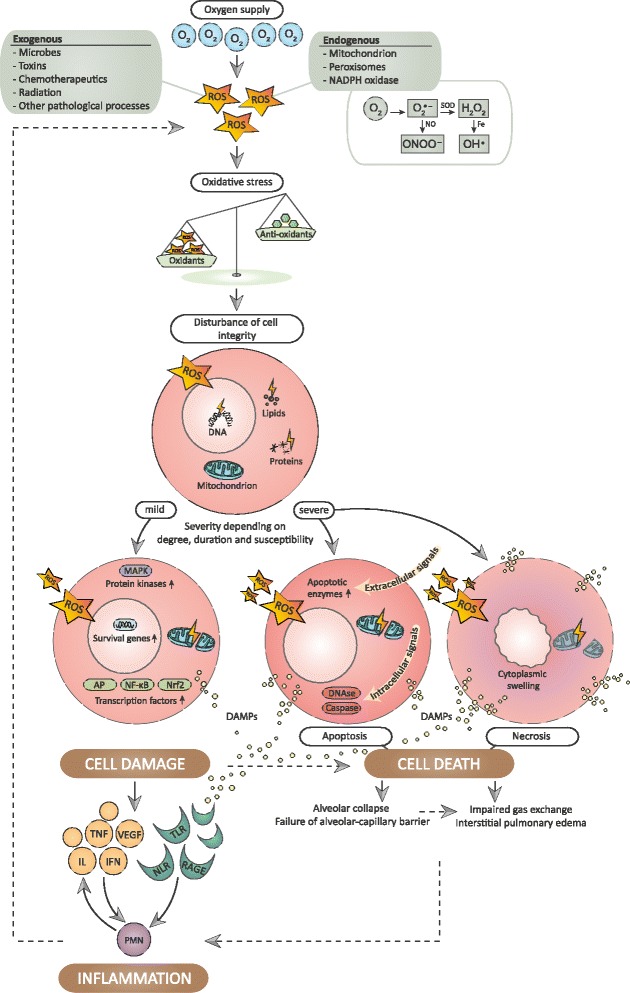
Oxygen administration is uniformly used in emergency and intensive care medicine and has life-saving potential in critical conditions. However, excessive oxygenation also has deleterious properties in various pathophysiological processes and consequently both clinical and translational studies investigating hyperoxia during critical illness have gained increasing interest. Reactive oxygen species are notorious by-products of hyperoxia and play a pivotal role in cell signaling pathways. The effects are diverse, but when the homeostatic balance is disturbed, reactive oxygen species typically conserve a vicious cycle of tissue injury, characterized by cell damage, cell death, and inflammation. The most prominent symptoms in the abundantly exposed lungs include tracheobronchitis, pulmonary edema, and respiratory failure. In addition, absorptive atelectasis results as a physiological phenomenon with increasing levels of inspiratory oxygen. Hyperoxia-induced vasoconstriction can be beneficial during vasodilatory shock, but hemodynamic changes may also impose risk when organ perfusion is impaired. In this context, oxygen may be recognized as a multifaceted agent, a modifiable risk factor, and a feasible target for intervention. Although most clinical outcomes are still under extensive investigation, careful titration of oxygen supply is warranted in order to secure adequate tissue oxygenation while preventing hyperoxic harm.
Overview
The claims and statistics of this paper haven’t been checked yet.
Free: it reads the open-access text and checks the first 5 claims that cite a source we can check. Create a free account to check every claim.
Integrity signals
Registry
Cites
Statistics
Figures
Verification
Claims the paper makes
The claims and statistics of this paper haven’t been checked yet.
Free: it reads the open-access text and checks the first 5 claims that cite a source we can check. Create a free account to check every claim.
Claims other papers make about this one
Each is checked against this paper’s own text: does it say what the citing paper says it does?
The source backs part of the claim, not all of it — or backs it for a different population, condition or comparison.
In the citing paper
“Supra-physiologic level of oxygen delivery was suggested in the past which is not supported by the current evidence [83].”
From Acute mesenteric ischemia: updated guidelines of the World Society of Emergency Surgery. (2022) · cites this paper as [83]
Experimental — accuracy not yet measured
Self-check
Percentages, sums and reported differences re-computed from the paper’s own numbers.
The self-check needs the paper’s full text.
Citations
Cites
Mitochondrial formation of reactive oxygen species
Turrens, J. F. (2003) · The Journal of Physiology · doi:10.1113/jphysiol.2003.049478 · Cited by 5,084 · cited 3×
“In general, ROS generation from mitochondria increases with oxygen tension and is dependent on the clinical balance between the underlying condition and oxygen supply [6].”
BackgroundInfluentialReactive oxygen species (ROS) homeostasis and redox regulation in cellular signaling
Ray, P. D., Huang, B.-W., & Tsuji, Y. (2012) · Cellular Signalling · doi:10.1016/j.cellsig.2012.01.008 · Cited by 4,373 · cited 1×
“Mitochondrial oxidative phosphorylation is the most important source of oxygen species, but ROS may also be generated in response to exogenous stimuli, such as microbes, cytokines, and xenobiotics [5].”
BackgroundCirculating mitochondrial DAMPs cause inflammatory responses to injury
Zhang, Q., Raoof, M., Chen, Y., Sumi, Y., Sursal, T., Junger, W., Brohi, K., Itagaki, K., & Hauser, C. J. (2010) · Nature · doi:10.1038/nature08780 · Cited by 3,812 · cited 1×
“In addition to direct cell death by necrosis or apoptosis, cellular disruption caused by hyperoxia and ROS has been shown to release endogenous damage-associated molecular pattern molecules (DAMPs) that alert the innate immune system [10–12].”
BackgroundEltzschig, H. K., & Carmeliet, P. (2011) · New England Journal of Medicine · doi:10.1056/nejmra0910283 · Cited by 2,061
HIF-1α is essential for myeloid cell-mediated inflammation
Cramer, T., Yamanishi, Y., Clausen, B. E., Förster, I., Pawlinski, R., Mackman, N., Haase, V. H., Jaenisch, R., Corr, M., Nizet, V., et al. (2003) · Cell · doi:10.1016/s0092-8674(03)00154-5 · Cited by 2,046
Beyond oxidative stress: an immunologist's guide to reactive oxygen species
Nathan, C., & Cunningham-Bussel, A. (2013) · Nature Reviews Immunology · doi:10.1038/nri3423 · Cited by 1,619 · cited 1×
“Oxidative stress refers to the imbalance caused by increased ROS formation or deficient oxidant suppressors [8].”
BackgroundVincent, J.-L., & De Backer, D. (2013) · New England Journal of Medicine · doi:10.1056/nejmra1208943 · Cited by 1,425 · cited 2×
“In medical practice, it is among the most universally used agents for the treatment of critical illness [1] and part of the routine treatment in acute shock and emergency medicine [2].”
BackgroundKilgannon, J. H. (2010) · JAMA · doi:10.1001/jama.2010.707 · Cited by 873
Emerging role of damage-associated molecular patterns derived from mitochondria in inflammation
Krysko, D. V., Agostinis, P., Krysko, O., Garg, A. D., Bachert, C., Lambrecht, B. N., & Vandenabeele, P. (2011) · Trends in Immunology · doi:10.1016/j.it.2011.01.005 · Cited by 680 · cited 4×
“Also, oxygen may aid hemodynamic stabilization and decrease intracranial pressure and can be used to stimulate erythropoietin and increase hemoglobin when intermittent hyperoxia is used as a paradoxical trigger for HIF expression.”
BackgroundInfluentialRole of NRF2 in Protection Against Hyperoxic Lung Injury in Mice
Cho, H.-Y., Jedlicka, A. E., Reddy, S. P. M., Kensler, T. W., Yamamoto, M., Zhang, L.-Y., & Kleeberger, S. R. (2002) · American Journal of Respiratory Cell and Molecular Biology · doi:10.1165/ajrcmb.26.2.4501 · Cited by 659 · cited 1×
“Experimental research suggests protective effects through modulation of protein kinases [100, 101] and transcription factors [102–105].”
Background
Cited by
Items 101–184 of 184
Аркадьевна, М. И., Podoksenov, Y. K., Mikheev, S. L., Suhodolo, I. V., Svirko, Y. S., Shipulin, V. M., Ivanova, A. V., Yavorovskiy, A. G., & Yaroshetskiy, A. I. (2023) · Biomedicines · doi:10.3390/biomedicines11041044 · Cited by 6
“called a “pseudohypoxic” reaction of the body, similar to the true hypoxic reaction, to reduce the oxygen fraction in the respiratory mixture from 70% to 21% [26].”
BackgroundOxygen Requirements for Acutely and Critically Ill Patients
Siela, D., & Kidd, M. (2017) · Critical Care Nurse · doi:10.4037/ccn2017627 · Cited by 11
Making use of the Oxygen Reserve Index (ORiTM): a new parameter of oxygenation reserve potential
Yoshida, K., Isosu, T., & Murakawa, M. (2018) · Pulmonary and Critical Care Medicine · doi:10.15761/pccm.1000146 · Cited by 6
van Paassen, J., van Dissel, J. T., Hiemstra, P. S., Zwaginga, J. J., Cobbaert, C. M., Juffermans, N. P., de Wilde, R. B. P., Stijnen, T., de Jonge, E., Klautz, R. J. M., et al. (2019) · Biomarkers in Medicine · doi:10.2217/bmm-2019-0028 · Cited by 5
Ke, Z.-W., Jiang, Y., Bao, Y.-P., Yang, Y., Zong, X.-M., Liu, M., Guan, X.-Y., & Lu, Z. (2021) · World Journal of Emergency Medicine · doi:10.5847/wjem.j.1920-8642.2021.03.007 · Cited by 5
Targeted Normoxemia and Supplemental Oxygen–Free Days in Critically Injured Adults
Douin, D. J., Rice, J. D., Anderson, E. L., Jackson, C. L., Cheng, A., Xiao, M., Cwik, J., Beaty, L. E., Wild, J. L., Daya, M. R., et al. (2025) · JAMA Network Open · doi:10.1001/jamanetworkopen.2025.2093 · Cited by 6
Douin, D. J., Rice, J. D., Xiao, M., Jackson, C. L., Anderson, E. L., Cheng, A., Cwik, J., Beaty, L. E., Wild, J. L., Beyene, R. T., et al. (2025) · The Journal of Trauma: Injury, Infection, and Critical Care · doi:10.1097/ta.0000000000004712 · Cited by 5
Lilien, T. A., Gunjak, M., Myti, D., Casado, F., van Woensel, J. B. M., Morty, R. E., & Reinout, A. (2022) · Pathogens · doi:10.3390/pathogens11111334 · Cited by 5
Lilien, T. A., Fenn, D. W., Brinkman, P., Hagens, L. A., Smit, M. R., Heijnen, N. F. L., van Woensel, J. B. M., Bos, L. D. J., Reinout, A., the DARTS study group, et al. (2024) · Intensive Care Medicine Experimental · doi:10.1186/s40635-024-00600-3 · Cited by 6
Self-citationZhao, F., Wang, M., Zhou, Q., Du, Y., Cheng, Q., Sun, X., Zhang, J., Liang, Y. J., Shen, N., & Sun, Y. (2024) · Heliyon · doi:10.1016/j.heliyon.2024.e32835 · Cited by 4
“Other researchers have considered the possibility of oxygen toxicity as an undesirable feature of HFNC therapy [21].”
BackgroundLower or Higher Oxygenation Targets in Patients With COVID-19 in the ICU
Nielsen, F. M., Klitgaard, T. L., Granholm, A., Lange, T., Perner, A., Schjørring, O. L., & Rasmussen, B. S. (2024) · CHEST Journal · doi:10.1016/j.chest.2024.08.055 · Cited by 5
Huang, K.-T., Tsai, W., Chen, C., Hwang, Y.-S., Cheng, H.-C., Yeh, C., Lin, Y.-H., Cheng, A.-J., Chang, H., Lin, S.-J., et al. (2025) · Free Radical Research · doi:10.1080/10715762.2024.2446321 · Cited by 4
Response to category II tracings: Does anything help?
Raghuraman, N. (2019) · Seminars in Perinatology · doi:10.1016/j.semperi.2019.151217 · Cited by 4
Crescioli, E., Riis, J. Ø., Weinreich, U. M., Jensen, J. S., Poulsen, L. M., Brøchner, A. C., Lange, T., Perner, A., Klitgaard, T. L., Schjørring, O. L., et al. (2021) · Acta Anaesthesiologica Scandinavica · doi:10.1111/aas.13995 · Cited by 6
Things We Do For No Reason™: Supplemental Oxygen for Patients without Hypoxemia
Moss, B. J., & Sargsyan, Z. (2019) · Journal of Hospital Medicine · doi:10.12788/jhm.3314 · Cited by 6
Sauerstofftherapie in der Notfall- und Intensivmedizin
Grensemann, J., Wachs, C., & Kluge, S. (2021) · DMW - Deutsche Medizinische Wochenschrift · doi:10.1055/a-0948-8363 · Cited by 5
SOLUBLE GUANYLYL CYCLASE ACTIVATION RESCUES HYPEROXIA-INDUCED DYSFUNCTION OF VASCULAR RELAXATION
Mace, E. H., Kimlinger, M. J., No, T. J., Dikalov, S., Hennessy, C., Shotwell, M. S., Billings, F. T., & Lopez, M. G. (2022) · Shock · doi:10.1097/shk.0000000000001982 · Cited by 4
“Hyperoxia, however, may also precipitate organ injury by increasing production of reactive oxygen species (ROS), intensifying inflammation, and decreasing hyperoxia-inducible factor–mediated gene transcription (5,6).”
BackgroundKaydu, A. (2018) · Turkish Journal of Trauma and Emergency Surgery · doi:10.5505/tjtes.2018.51430 · Cited by 4
Oxygen After Cardiac Arrest: Enough Is Enough?
McKenzie, N., & DOBB, G. J. (2018) · Circulation · doi:10.1161/circulationaha.118.033620 · Cited by 4
Kapur, N. K. (2024) · The Journal of Heart and Lung Transplantation · doi:10.1016/j.healun.2024.01.013 · Cited by 4
Earl, M., & Maharaj, R. (2024) · Neurocritical Care · doi:10.1007/s12028-024-02021-2 · Cited by 5
Thom, O., Roberts, K., Devine, S., Leggat, P. A., & Franklin, R. C. (2024) · Emergency Medicine Australasia · doi:10.1111/1742-6723.14454 · Cited by 3
“22 A recent article has shown that both hypoxia and hyperoxia are associated with increased mortality in paediatric drowning patients admitted to a Paediatric Intensive Care Unit (ICU).”
Lalla, L. T., Czorlich, P., Fischer, M., Schweingruber, N., Cramer, C., Frosch, K., Gempt, J., Kluge, S., & Grensemann, J. (2025) · European Journal of Trauma and Emergency Surgery · doi:10.1007/s00068-024-02730-5 · Cited by 3
“However, a further increase of PaO 2 may increase the formation of reactive oxygen species (ROS) promoting cell damage by apoptosis or even necro - sis [3].”
Hyperoxia-induced regulation of cough reflex and its effect after antioxidant supplementation
Brozmanová, M., & Hanacek, J. (2018) · Respiratory Physiology & Neurobiology · doi:10.1016/j.resp.2018.02.004 · Cited by 3
Elfeky, A., Chen, Y., Grove, A., Couper, K., Court, R. A., Tomassini, S., Wilson, A. C., Hooper, A., Buckle, A., Vadeyar, S., et al. (2025) · Health Technology Assessment · doi:10.3310/tntc4360 · Cited by 2
Oxygen-Based Therapies and ROS-Targeted Drug Delivery in Pneumonia: A Redox Perspective
Sasikumar, D. S. N., Raju, R., & Viswanad, V. (2026) · Oxygen · doi:10.3390/oxygen6020008 · Cited by 3
“Hyperoxia adversely affects pulmonary surfactant, increases alveolar–capillary membrane permeability, and amplifies inflammatory cascades, potentially worsening lung injury: This underscores the dual role of oxygen essential for tissue survival but potentially harmful when over-administered [53,54].”
Фаршатов, А. Г., Ershov, E. N., & Щеголев, А. В. (2023) · Messenger of Anesthesiology and Resuscitation · doi:10.24884/2078-5658-2023-20-3-20-26 · Cited by 2
Naz, R., Ahmed, S., Irfan, M., Alam, S., & Haque, A. (2024) · JOURNAL OF PEDIATRIC CRITICAL CARE · doi:10.4103/jpcc.jpcc_61_24 · Cited by 7
Exploring Alternate Targets for Respiratory Resuscitation in Patients With Sepsis and Septic Shock
Richardson, L. A., Bagunu, K., Doughty, K., Concilio, L., Jaime, S., Westcott, A., & Graham, J. (2025) · Critical Care Nursing Quarterly · doi:10.1097/cnq.0000000000000547 · Cited by 2
Li, X., Liu, D., Liu, C., Mao, Z., Liu, Y., Yi, H., & Zhou, F. (2022) · Medicina Intensiva (English Edition) · doi:10.1016/j.medine.2021.08.015 · Cited by 4
Smith, L., & Khemani, R. G. (2018) · Pediatric Critical Care Medicine · doi:10.1097/pcc.0000000000001652 · Cited by 2
Optimizing Oxygen Delivery by Low-Flow Nasal Cannula to Small Infants: A Bench Study
Bertzouanis, A., Sinopidis, X., Pelekouda, P., Karatza, A., Dimitriou, G., & Fouzas, S. (2024) · Diagnostics · doi:10.3390/diagnostics14090889 · Cited by 1
“…supply may lead to hyperoxemia, which has been associated with retinopathy of prematurity (ROP) and bronchopulmonary dysplasia, while exposure to high FiO 2 levels may result in atelectasis, interstitial edema, and ventilation/perfusion mismatch, irrespective of the infant’s age and maturity [7,8].”
BackgroundHigh-Frequency Chest Wall Oscillation in Critical Care: A Systematic Review
Ielo, S., Carriera, L., Barone, R., Mari, P., Coppola, A., Baglioni, S., Richeldi, L., & Scala, R. (2026) · Respiration · doi:10.1159/000551711 · Cited by 1
Luo, L., Li, L., Zhang, J., Li, N., Yang, Z., Liu, C., & Gou, X. (2026) · Frontiers in Medicine · doi:10.3389/fmed.2026.1798087 · Cited by 1
Allel, K., Morales, S., Jaoude, G. J. A., Basoalto, R., Haghparast‐Bidgoli, H., Retamal, J., Ferreira, J. C., Riviello, E. D., & Kattan, E. (2026) · British Journal of Anaesthesia · doi:10.1016/j.bja.2026.05.012 · Cited by 1
Zhou, B., Liang, F., Huang, Y., Shengxin, Z., Zhuo, Z., & Chen, C. (2026) · Frontiers in Pediatrics · doi:10.3389/fped.2026.1861527 · Cited by 1
“Hyperoxia-induced blood-brain barrier (BBB) damage may further increase CNSI risk (27, 28).”
O2-Therapie im Notfall – Time to say goodbye?
Göschel, M., Treml, B., Dahlmann, P., & Warnstorff, D. (2021) · Notfall + Rettungsmedizin · doi:10.1007/s10049-021-00966-x · Cited by 1
Schultz, M. J., Saihi, K., Pattnaik, R., Shrestha, G. S., & Buiteman‐Kruizinga, L. A. (2023) · Clinical Critical Care · doi:10.54205/ccc.v31.264920 · Cited by 1
Self-citationDylla, L., Douin, D. J., Cwik, J., Steinwand, A., Rice, J. D., Jackson, C. L., Anderson, E. L., Higgins, H. M., Monte, A. A., & Ginde, A. A. (2023) · Military Medicine · doi:10.1093/milmed/usad076 · Cited by 1
Usefulness of oxygen reserve index (ORi) in clinical practice
Barud, M. (2023) · Medical Studies · doi:10.5114/ms.2023.134091 · Cited by 2
Mathar, C. E., Haahr-Raunkjær, C., Elvekjær, M., Gu, Y., Holm, C. P., Achiam, M. P., Jørgensen, L. N., Aasvang, E. K., & Meyhoff, C. S. (2024) · Sensors · doi:10.3390/s24041139 · Cited by 1
“Increasing evidence finds that hyperoxia on a cellular basis can induce reactive oxygen species that contribute to inflammation, cell death or damage [6].”
BackgroundWang, L., Fu, X., Kang, Y., & Wu, Q. (2022) · Asian Journal of Surgery · doi:10.1016/j.asjsur.2022.04.005 · Cited by 1
McBride, D. (2023) · Elsevier eBooks · doi:10.1016/b978-0-323-76469-8.00017-4 · Cited by 1
Shooting for the bull’s eye in septic shock
See, K. C., & Lim, T. K. (2017) · Journal of Thoracic Disease · doi:10.21037/jtd.2017.05.38
“Some prior evidence existed to suggest that hyperoxia could induce vasoconstriction (1), while hypertonic saline could be used as a volume-sparing agent for fluid resuscitation.”
BackgroundInhaled Nitric Oxide in Pediatric Acute Hypoxic Respiratory Failure: No Time to Relax*
Reinout, A. (2020) · Pediatric Critical Care Medicine · doi:10.1097/pcc.0000000000002323 · Cited by 1
The Potential Value of Monitoring the Oxygen Reserve Index in Patients Receiving Oxygen
Perel, A. (2016) · Annual update in intensive care and emergency medicine · doi:10.1007/978-3-319-27349-5_22 · Cited by 1
Adrie, C., Shin, S. A., & Monchi, M. (2017) · Wiley-VCH eBooks · doi:10.1002/9783527692156.ch51 · Cited by 1
Jouffroy, R., Saade, A., Martin, L. C. S., Philippe, P., Carli, P. A., & Vivien, B. (2018) · The American Journal of Emergency Medicine · doi:10.1016/j.ajem.2018.07.011
Transporting Blast-Injured Patients
Tanaka, H. L., & Keller, A. P. (2020) · Springer eBooks · doi:10.1007/978-3-030-40655-4_14
Jansen, G., Kappelhoff, N., Scholz, S. S., Rehberg, S. W., & Borgstedt, R. (2021) · Notarzt · doi:10.1055/a-1499-6166
“AANA J 2014; 82: 387–400 [24] Helmerhorst HJ, Schultz MJ, van der Voort PH et al.”
BackgroundBudweiser, S. (2015) · Pneumo News · doi:10.1007/s15033-015-0263-z
Akazie, E. A., & Mpe, M. J. (2022) · Open Journal of Respiratory Diseases · doi:10.4236/ojrd.2022.123007
Tale of Two Cities: narrative review of oxygen
Gullapalli, P., Fossati, N., Stamenković, D., Haque, M. E., & Cattano, D. (2023) · F1000Research · doi:10.12688/f1000research.130592.1 · Cited by 1
Targeted Oxygen Therapy in Adult Intensive Care Unit Patients
Klitgaard, T. (2022) · VBN Forskningsportal (Aalborg Universitet) · doi:10.54337/aau473635979
Harper, J. (2021) · Open Access Victoria University of Wellington | Te Herenga Waka (Figshare) · doi:10.26686/wgtn.23657388
Yan, J., Zhao, L., Lin, H., & Yang, J. (2023) · Research Square · doi:10.21203/rs.3.rs-3351429/v1
Jiang, X., & Qiu, D. (2023) · Canadian Respiratory Journal · doi:10.1155/2023/7023712 · Cited by 1
Earl, M., & Maharaj, R. (2023) · Research Square · doi:10.21203/rs.3.rs-3626842/v1
Endothelial dysfunction in sepsis
Ćurko‐Cofek, B., Batinac, T., Laškarin, G., Rakić, M., Knežević, D., Šustić, A., Sotošek, V., & Batičić, L. (2023) · Liječnički vjesnik · doi:10.26800/lv-145-supl4-7
Scientific Background to Hyperbaric Oxygenation (HBO)
Mayevsky, A. (2023) · Springer eBooks · doi:10.1007/978-3-031-49681-3_3
Rogers, Z. J. (2023) · Digital Repository Service (Northeastern University) · doi:10.17760/d20621546
Targeted oxygen therapy in COVID-19 patients in the ICU
Nielsen, F. M. (2024) · VBN Forskningsportal (Aalborg Universitet) · doi:10.54337/aau734482963
Fokus Neurochirurgische Intensivmedizin 2022–2024
Beynon, C., Bernhard, M., Brenner, T., Dietrich, M., Fiedler, M. O., Nußhag, C., Weigand, M. A., Reuß, C. J., Michalski, D., & Jungk, C. (2024) · Die Anaesthesiologie · doi:10.1007/s00101-024-01471-9
Salvagno, M., Robba, C., & Taccone, F. S. (2025) · Oxford University Press eBooks · doi:10.1093/med/9780198864714.003.0003
Lalla, L. T., Lange, A. L., Schweingruber, N., Hardel, T. T., Schröder, M., Kluge, S., & Grensemann, J. (2025) · Frontiers in Medicine · doi:10.3389/fmed.2025.1603926
“ROS are suspected to be a major contributor to oxygen toxicity through a time-and dose-dependent accumulation in long-term hyperoxia, potentially causing cell damage by apoptosis or even necrosis (11, 12).”
Vincent, J. (2025) · Journal of Translational Critical Care Medicine · doi:10.1097/jtccm-d-25-00016
Han, S., Lac, J., Jouda, N. E. H. B., Ahmad, M., Starey, H., Ganguly, S., & Urakpo, M. D. (2025) · Intensive Care Medicine – Paediatric and Neonatal · doi:10.1007/s44253-025-00096-z
“…conclusions were imited by heterogeneity of patient populations, study methodologies, variations in disease severity (e.g. sepsis, ARDS, or postoperative care), clinical objectives (e.g. survival rates, neurodevelopmental outcomes, or length of PICU stay) and definitions of hyperoxia [13–15].”
Fay, C. (2025) · Academic Medicine & Surgery · doi:10.62186/001c.146458
Fokus Notfallmedizin 2024/2025: Zusammenfassung ausgewählter notfallmedizinischer Studien
Katzenschlager, S., Obermaier, M., Kaltschmidt, N., Bechtold, J., Horcicka, A., Dietrich, M., Weigand, M. A., Weilbacher, F., & Popp, E. (2025) · Die Anaesthesiologie · doi:10.1007/s00101-025-01613-7
Bala, M., Catena, F., Kashuk, J., De Simone, B., Gomes, C. A., Weber, D., Sartelli, M., Coccolini, F., Kluger, Y., Abu-Zidan, F. M., et al. (2022) · Figshare · doi:10.6084/m9.figshare.21368764
Li, X.-Y., Dai, B., Haijia, H., Zhao, H., Wang, W., Kang, J., & Tan, W. (2024) · Figshare · doi:10.6084/m9.figshare.26713169
McGuigan, P. J., Shankar‐Hari, M., Harrison, D. A., Laffey, J. G., & McAuley, D. F. (2020) · Figshare · doi:10.6084/m9.figshare.12477014
Lilien, T. A., Fenn, D. W., Brinkman, P., Hagens, L. A., Smit, M. R., Heijnen, N. F. L., van Woensel, J. B. M., Bos, L. D. J., & Reinout, A. (2024) · Figshare · doi:10.6084/m9.figshare.26679803
Yu, Y., Yao, R.-Q., Zhang, Y.-F., Wang, S.-Y., Xi, W., Wang, J.-N., Huang, X.-Y., Yao, Y.-M., & Wang, Z.-N. (2021) · Figshare · doi:10.6084/m9.figshare.14936514
Acute Non-Occlusive Mesenteric Ischemia
Timerbulatov, S. V., Радиковна, Г. А., Плечев, В. В., Garaev, R. R., & Timerbulatov, V. M. (2025) · Creative Surgery and Oncology · doi:10.24060/2076-3093-2025-15-4-390-401
Aljabari, S., Birişçi, E., Bennet, E., Dalabih, A. R., & Gillett, E. L. (2025) · JOURNAL OF PEDIATRIC CRITICAL CARE · doi:10.4103/jpcc.jpcc_75_25
Yamak, M., Türker, B. Ç., Oral, A., Çakır, S., Menken, Ö., & Türker, F. (2026) · International Journal of General Medicine · doi:10.2147/ijgm.s571477
The Role of the Respiratory Microbiome in Pneumonia
Baker, J. M., & Dickson, R. P. (2026) · Clinics in Chest Medicine · doi:10.1016/j.ccm.2025.12.004 · Cited by 1
Nicol, C., Kriström, K., & Bettembourg, V. (2026) · Frontiers in Veterinary Science · doi:10.3389/fvets.2026.1736215
“The FiO₂ was titrated to achieve a SpO₂ of ~95% to support oxygen delivery while minimising potential absorption atelectasis and decreased coronary perfusion as well as hyperoxia-induced V/Q maldistribution due to depressing hypoxic pulmonary vasoconstriction (20–22).”
Liu, J., Huang, J., Wang, X., Xu, X., Huang, C., Liu, D., Zhu, J., Chen, L., Chen, X., Chen, L., et al. (2026) · Frontiers in Medicine · doi:10.3389/fmed.2026.1697749
“Animal studies have shown that sustained arterial hypoxemia may lead to progressive lung injury, interstitial edema, and pulmonary inflammatory activation (3, 9, 10).”
Aleem, A., Saleem, D. Y., Sadaqat, S., & Abid, A. (2026) · Cureus · doi:10.7759/cureus.111644
“While several investigations have demonstrated increased mortality associated with hypoxemia and hyperoxemia, the independent contribution of these abnormalities remains uncertain and may vary according to illness severity and patient population [5-7].”
Bench evidence, bedside uncertainty: hyperoxia, mechanical ventilation and lung injury
Huffman, E. E., Schwingshackl, A., Sturgill, J., & Waters, C. M. (2026) · European Respiratory Review · doi:10.1183/16000617.0058-2026
“However, the threshold at which the benefits of hyperoxia are outweighed by its detrimental effects is varied and influenced by the lung environment, including underlying disease, active mechanical ventilation, chronicity of oxygen exposure, age, and environmental exposure [12, 39, 43, 47 – 49].”
Persaud-Sharma, D., & Spiess, B. D. (2026) · Anesthesia Research · doi:10.3390/anesthres3030024 · Cited by 1
Gas therapeutics for wound healing: Therapeutic potential of oxygen and nitric oxide
Jayaprakash, V., Biswas, L., Menon, R. R., Anraku, M., & Rangasamy, J. (2026) · Advanced Drug Delivery Reviews · doi:10.1016/j.addr.2026.115976
Metadata
- Authors
- Helmerhorst, H. J. F., Schultz, M. J., van der Voort, P. H. J., de Jonge, E., & van Westerloo, D. J.
- Affiliations
- Leiden University Medical Center (NL)
- Amsterdam UMC Location University of Amsterdam (NL)
- Corresponding author
- Helmerhorst, Hendrik J. F.
- Venue
- Critical Care
- Published
- 2015-12
- Volume
- 19
- Issue
- 1
- Pages
- 284-284
- ISSN
- 1364-8535 (ISSN-L)
- PMC
- PMC4538738
- OpenAlex
- W1956277079
- Cited by
- 187
- References
- 120
- Citations by year
- 2026: 14 · 2025: 15 · 2024: 22 · 2023: 22 · 2022: 20 · 2021: 24 · 2020: 16 · 2019: 7 · 2018: 23 · 2017: 14 · 2016: 9 · 2015: 1
- FWCI
- 2.77
- Type
- journal article
- Language
- en
- Open access
- gold
- doi.org
- Licence
- cc-by
- www.springer.com/tdm (tdm)
- www.springer.com/tdm (vor)
- Locations
- Critical Care (publishedVersion, cc-by)
- PubMed Central (publishedVersion, cc-by)
- PubMed (publishedVersion)
- Pure Amsterdam UMC (submittedVersion, other-oa)
- Data Archiving and Networked Services (DANS) (submittedVersion)
- Leiden Repository (Leiden University) (submittedVersion)
- Topics
- Health Sciences › Medicine › Pulmonary and Respiratory Medicine › Respiratory Support and Mechanisms
- Health Sciences › Medicine › Physiology (medical) › Biomedical and Chemical Research
- Health Sciences › Medicine › Critical Care and Intensive Care Medicine › Sepsis Diagnosis and Treatment
- Keywords
- hyperoxia, critical illness, reactive oxygen species, oxidative stress, oxygen toxicity, lung injury, pulmonary edema, respiratory failure, vasoconstriction, vasodilatory shock, oxygen titration, tissue oxygenation, inflammation
- MeSH terms
- Animals, Critical Care, Humans, Oxygen Inhalation Therapy, Critical Illness, Hyperoxia, Perioperative Care
About these checks
Registry, retraction, Cites and statistics results are computed, not judged, with one exception: a printed reference that no index lists is read once by a model before it counts as a citation error. Claims are extracted by a model and kept only when their quote appears verbatim in the text; each cited source is then checked, with a model’s help, for whether it says what the claim relies on. Those verdicts can be wrong — read the claim’s quote and the cited source before relying on one.
Statistics and arithmetic are recomputed, not judged.
Confidence bands are shown only for fields calibrated on our annotated test set. None is calibrated yet, so no band is shown.
What counts as a claim ›How we measure confidence ›How we check this ›
Are you an author, or do you see a problem with this page? Request a review
Data sources
Bibliographic data: Semantic Scholar, OpenAlex, Crossref.
Contains information from the Semantic Scholar Academic Graph Datasets, made available under the ODC Attribution License (ODC-BY 1.0).
Semantic Scholar’s data is described in: Kinney, R., et al. (2023). The Semantic Scholar Open Data Platform. arXiv:2301.10140.
