

Bench-to-bedside review: the effects of hyperoxia during critical illness
Open accessThe DOI matches its Crossref record; 120 of the 120 references it cites were found in a registry or an index.
Abstract
Oxygen administration is uniformly used in emergency and intensive care medicine and has life-saving potential in critical conditions. However, excessive oxygenation also has deleterious properties in various pathophysiological processes and consequently both clinical and translational studies investigating hyperoxia during critical illness have gained increasing interest. Reactive oxygen species are notorious by-products of hyperoxia and play a pivotal role in cell signaling pathways. The effects are diverse, but when the homeostatic balance is disturbed, reactive oxygen species typically conserve a vicious cycle of tissue injury, characterized by cell damage, cell death, and inflammation. The most prominent symptoms in the abundantly exposed lungs include tracheobronchitis, pulmonary edema, and respiratory failure. In addition, absorptive atelectasis results as a physiological phenomenon with increasing levels of inspiratory oxygen. Hyperoxia-induced vasoconstriction can be beneficial during vasodilatory shock, but hemodynamic changes may also impose risk when organ perfusion is impaired. In this context, oxygen may be recognized as a multifaceted agent, a modifiable risk factor, and a feasible target for intervention. Although most clinical outcomes are still under extensive investigation, careful titration of oxygen supply is warranted in order to secure adequate tissue oxygenation while preventing hyperoxic harm.
Overview
The claims and statistics of this paper haven’t been checked yet.
Free: it reads the open-access text and checks the first 5 claims that cite a source we can check. Create a free account to check every claim.
Integrity signals
Registry
Cites
Statistics
Figures
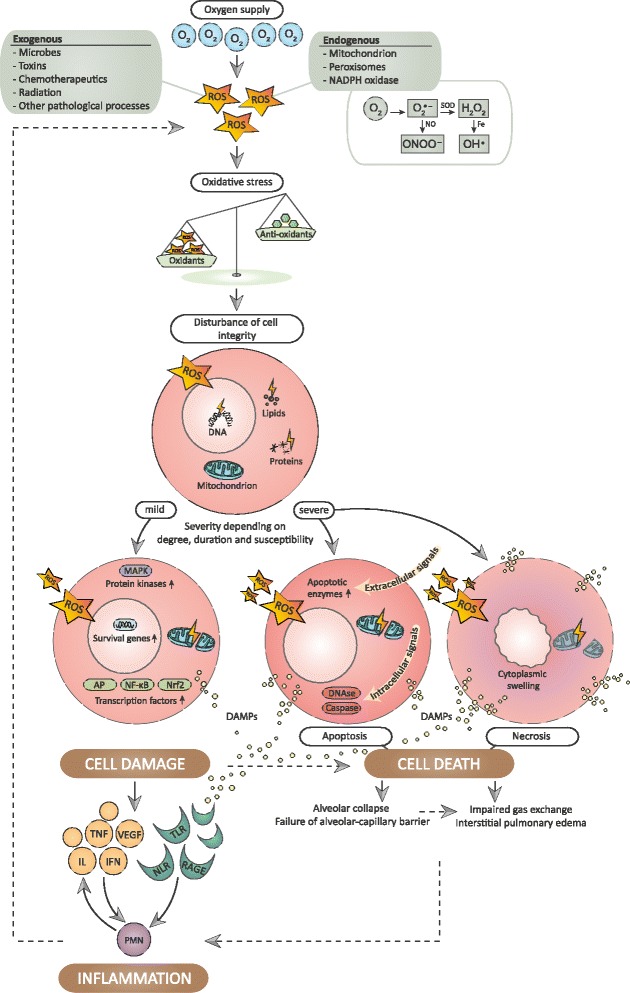
Verification
Claims the paper makes
The claims and statistics of this paper haven’t been checked yet.
Free: it reads the open-access text and checks the first 5 claims that cite a source we can check. Create a free account to check every claim.
Claims other papers make about this one
Each is checked against this paper’s own text: does it say what the citing paper says it does?
The source backs part of the claim, not all of it — or backs it for a different population, condition or comparison.
In the citing paper
“Supra-physiologic level of oxygen delivery was suggested in the past which is not supported by the current evidence [83].”
From Acute mesenteric ischemia: updated guidelines of the World Society of Emergency Surgery. (2022) · cites this paper as [83]
Experimental — accuracy not yet measured
Self-check
Percentages, sums and reported differences re-computed from the paper’s own numbers.
The self-check needs the paper’s full text.
Citations
Cites
Mitochondrial formation of reactive oxygen species
Turrens, J. F. (2003) · The Journal of Physiology · doi:10.1113/jphysiol.2003.049478 · Cited by 5,084 · cited 3×
“In general, ROS generation from mitochondria increases with oxygen tension and is dependent on the clinical balance between the underlying condition and oxygen supply [6].”
BackgroundInfluentialReactive oxygen species (ROS) homeostasis and redox regulation in cellular signaling
Ray, P. D., Huang, B.-W., & Tsuji, Y. (2012) · Cellular Signalling · doi:10.1016/j.cellsig.2012.01.008 · Cited by 4,373 · cited 1×
“Mitochondrial oxidative phosphorylation is the most important source of oxygen species, but ROS may also be generated in response to exogenous stimuli, such as microbes, cytokines, and xenobiotics [5].”
BackgroundCirculating mitochondrial DAMPs cause inflammatory responses to injury
Zhang, Q., Raoof, M., Chen, Y., Sumi, Y., Sursal, T., Junger, W., Brohi, K., Itagaki, K., & Hauser, C. J. (2010) · Nature · doi:10.1038/nature08780 · Cited by 3,812 · cited 1×
“In addition to direct cell death by necrosis or apoptosis, cellular disruption caused by hyperoxia and ROS has been shown to release endogenous damage-associated molecular pattern molecules (DAMPs) that alert the innate immune system [10–12].”
BackgroundEltzschig, H. K., & Carmeliet, P. (2011) · New England Journal of Medicine · doi:10.1056/nejmra0910283 · Cited by 2,061
HIF-1α is essential for myeloid cell-mediated inflammation
Cramer, T., Yamanishi, Y., Clausen, B. E., Förster, I., Pawlinski, R., Mackman, N., Haase, V. H., Jaenisch, R., Corr, M., Nizet, V., et al. (2003) · Cell · doi:10.1016/s0092-8674(03)00154-5 · Cited by 2,046
Beyond oxidative stress: an immunologist's guide to reactive oxygen species
Nathan, C., & Cunningham-Bussel, A. (2013) · Nature Reviews Immunology · doi:10.1038/nri3423 · Cited by 1,619 · cited 1×
“Oxidative stress refers to the imbalance caused by increased ROS formation or deficient oxidant suppressors [8].”
BackgroundVincent, J.-L., & De Backer, D. (2013) · New England Journal of Medicine · doi:10.1056/nejmra1208943 · Cited by 1,425 · cited 2×
“In medical practice, it is among the most universally used agents for the treatment of critical illness [1] and part of the routine treatment in acute shock and emergency medicine [2].”
BackgroundKilgannon, J. H. (2010) · JAMA · doi:10.1001/jama.2010.707 · Cited by 873
Emerging role of damage-associated molecular patterns derived from mitochondria in inflammation
Krysko, D. V., Agostinis, P., Krysko, O., Garg, A. D., Bachert, C., Lambrecht, B. N., & Vandenabeele, P. (2011) · Trends in Immunology · doi:10.1016/j.it.2011.01.005 · Cited by 680 · cited 4×
“Also, oxygen may aid hemodynamic stabilization and decrease intracranial pressure and can be used to stimulate erythropoietin and increase hemoglobin when intermittent hyperoxia is used as a paradoxical trigger for HIF expression.”
BackgroundInfluentialRole of NRF2 in Protection Against Hyperoxic Lung Injury in Mice
Cho, H.-Y., Jedlicka, A. E., Reddy, S. P. M., Kensler, T. W., Yamamoto, M., Zhang, L.-Y., & Kleeberger, S. R. (2002) · American Journal of Respiratory Cell and Molecular Biology · doi:10.1165/ajrcmb.26.2.4501 · Cited by 659 · cited 1×
“Experimental research suggests protective effects through modulation of protein kinases [100, 101] and transcription factors [102–105].”
BackgroundHalliwell, B. (2000) · The Lancet · doi:10.1016/s0140-6736(00)02075-4 · Cited by 655 · cited 1×
“Finally, oxidant scavenging can shift the balance toward harm when the role of oxidants in cell signaling pathways is suppressed [99].”
BackgroundThébaud, B., Ladha, F., Michelakis, E. D., Sawicka, M., Thurston, G., Eaton, F., Hashimoto, K., Harry, G., Haromy, A., Korbutt, G., et al. (2005) · Circulation · doi:10.1161/circulationaha.105.541524 · Cited by 533 · cited 1×
“Moreover, numerous preclinical studies have demonstrated that manipulation of chemokines, cytokines [13, 106], growth factors [107], receptors [108–110], and DAMPs [11, 12, 111] may limit hyperoxia-induced injury, but these targets all remain to be evaluated at the bedside.”
BackgroundAlarmins: awaiting a clinical response
Chan, J. K., Roth, J., Oppenheim, J. J., Tracey, K. J., Vogl, T., Feldmann, M., Horwood, N., & Nanchahal, J. (2012) · Journal of Clinical Investigation · doi:10.1172/jci62423 · Cited by 511 · cited 5×
“During oxidative stress, mitochondrial damage is a pivotal cause of extracellular hazardous content including both free radicals and DAMPs.”
BackgroundInfluentialAustin, M. A., Wills, K. E., Blizzard, L., Walters, E. H., & Wood-Baker, R. (2010) · BMJ · doi:10.1136/bmj.c5462 · Cited by 510 · cited 1×
“[53] (2010) Australia RCT 2006–2007 COPD 405 + Titrated oxygen treatment significantly reduced mortality, hypercapnia, and respiratory acidosis compared with high-flow oxygen in acute exacerbations of COPD”
BackgroundKallet, R. H., & Matthay, M. A. (2013) · Respiratory Care · doi:10.4187/respcare.01963 · Cited by 438 · cited 1×
“Bleomycin and amiodarone are well-known originators of drug-induced pulmonary disease and should be avoided to minimize preventable ROS formation [97, 98].”
Backgroundde Jonge, E., Peelen, L., Keijzers, P. J., Joore, H., de Lange, D., van der Voort, P. H., Bosman, R. J., de Waal, R. A., Wesselink, R., & de Keizer, N. F. (2008) · Critical Care · doi:10.1186/cc7150 · Cited by 425
Morphologic Changes in Pulmonary Oxygen Toxicity
Crapo, J. D. (1986) · Annual Review of Physiology · doi:10.1146/annurev.ph.48.030186.003445 · Cited by 420
Schmidt, B., Whyte, R. K., Asztalos, E. V., Moddemann, D., Poets, C., Rabi, Y., Solimano, A., Roberts, R. S., & Canadian Oxygen Trial (COT) Group, F. T. (2013) · JAMA · doi:10.1001/jama.2013.5555 · Cited by 409 · cited 1×
“However, strict adherence to lower target ranges of oxygen saturation among preterm infants did not significantly reduce disability or deaths [73].”
BackgroundRelationship Between Supranormal Oxygen Tension and Outcome After Resuscitation From Cardiac Arrest
Kilgannon, J. H., Jones, A. E., Parrillo, J. E., Dellinger, R. P., Milcarek, B., Hunter, K., Shapiro, N. I., & Trzeciak, S. (2011) · Circulation · doi:10.1161/circulationaha.110.001016 · Cited by 320 · cited 1×
“[60] (2011) USA Cohort substudy 2001–2005 CA 4459 + Supranormal oxygen tension was dose-dependently associated with the risk of in-hospital death”
BackgroundShould Stroke Victims Routinely Receive Supplemental Oxygen?: A Quasi-Randomized Controlled Trial
Rønning, O. M., & Guldvog, B. (1999) · Stroke · doi:10.1161/01.str.30.10.2033 · Cited by 313 · cited 2×
“Hemodynamic effects may also be pertinent to acute ischemic stroke patients, who do not appear to benefit from increased survival after prolonged treatment with oxygen [81, 82].”
BackgroundAntioxidant responses to oxidant-mediated lung diseases
Comhair, S. A. A., & Erzurum, S. C. (2002) · American Journal of Physiology-Lung Cellular and Molecular Physiology · doi:10.1152/ajplung.00491.2001 · Cited by 309 · cited 1×
“Besides this physiological activity, additional antioxidants can be recruited in the epithelial lining fluid [7].”
BackgroundArterial hyperoxia and in-hospital mortality after resuscitation from cardiac arrest
Bellomo, R., Bailey, M., Eastwood, G. M., Nichol, A., Pilcher, D., Hart, G. K., Reade, M. C., Egi, M., Cooper, J. D., & the Study of Oxygen in Critical Care (SOCC) Group (2011) · Critical Care · doi:10.1186/cc10090 · Cited by 309 · cited 1×
“[63] (2011) Australia and New Zealand Cohort 2000–2009 CA 12,108 – Hyperoxia did not have a robust or consistently reproducible association with mortality”
BackgroundArterial hyperoxia and mortality in critically ill patients: a systematic review and meta-analysis
Damiani, E., Adrario, E., Girardis, M., Romano, R., Pelaia, P., Singer, M., & Donati, A. (2014) · Critical Care · doi:10.1186/s13054-014-0711-x · Cited by 308 · cited 1×
“As highlighted in recent metaanalyses [51, 52], the effects on major clinical endpoints are conflicting and may be partially explained by heterogeneous methodology and subgroup differences in critically ill patients.”
BackgroundReactive oxygen species: toxic molecules or spark of life?
Magder, S. A. (2006) · Critical Care · doi:10.1186/cc3992 · Cited by 307 · cited 1×
“Reactive oxygen species (ROS) are versatile molecules that can be essential in the regulation of intracellular signaling pathways and in host defense [4].”
BackgroundHelmerhorst, H. J. F., Roos-Blom, M.-J., van Westerloo, D. J., & de Jonge, E. (2015) · Critical Care Medicine · doi:10.1097/ccm.0000000000000998 · Cited by 303 · cited 1×
“As highlighted in recent metaanalyses [51, 52], the effects on major clinical endpoints are conflicting and may be partially explained by heterogeneous methodology and subgroup differences in critically ill patients.”
BackgroundSelf-citationThe pathological effects due to increase of oxygen tension in the air breathed
Smith, J. L. (1899) · The Journal of Physiology · doi:10.1113/jphysiol.1899.sp000746 · Cited by 302
Saugstad, O. D., & Aune, D. (2014) · Neonatology · doi:10.1159/000356561 · Cited by 297 · cited 1×
“Results from a prospective large-scale meta-analysis investigating the most appropriate level of oxygenation for extremely preterm neonates suggested that functional oxyhemoglobin saturation be targeted at 90–95 % in the post-natal period [74].”
BackgroundA Pilot Study of Normobaric Oxygen Therapy in Acute Ischemic Stroke
Singhal, A. B., Benner, T., Roccatagliata, L., Koroshetz, W. J., Schaefer, P. W., Lo, E. H., Buonanno, F. S., Gonzalez, R. G., & Sorensen, A. G. (2005) · Stroke · doi:10.1161/01.str.0000158914.66827.2e · Cited by 280 · cited 1×
“[118] (2005) USA RCT pilot NA Stroke 16 – High-flow oxygen therapy is associated with a transient improvement of clinical deficits and MRI abnormalities”
BackgroundDavis, D. P., Meade, W., Sise, M. J., Kennedy, F., Simon, F., Tominaga, G., Steele, J., & Coimbra, R. (2009) · Journal of Neurotrauma · doi:10.1089/neu.2009.0940 · Cited by 271 · cited 1×
“[87] (2009) USA Cohort 1987–2003 TBI 3420 + Both hypoxemia and extreme hyperoxemia were associated with increased mortality and a decrease in good outcomes”
BackgroundOxygen Toxicity in Mouse Lung: Pathways to Cell Death
Barazzone, C., Horowitz, S., Donati, Y. R., Rodriguez, I., & Piguet, P.-F. (1998) · American Journal of Respiratory Cell and Molecular Biology · doi:10.1165/ajrcmb.19.4.3173 · Cited by 259 · cited 1×
“When the delicate homeostatic balance is disturbed, oxidative stress leads to damage of nucleic acids, proteins, and lipids, resulting in cell death by both apoptotic and necrotic pathways [9].”
BackgroundFloyd, T. F., Clark, J. M., Gelfand, R., Detre, J. A., Ratcliffe, S., Guvakov, D., Lambertsen, C. J., & Eckenhoff, R. G. (2003) · Journal of Applied Physiology · doi:10.1152/japplphysiol.00303.2003 · Cited by 258 · cited 1×
“region [45–47].”
Systematic review of studies of the effect of hyperoxia on coronary blood flow
Farquhar, H., Weatherall, M., Wijesinghe, M., Perrin, K., Ranchord, A., Simmonds, M., & Beasley, R. (2009) · American Heart Journal · doi:10.1016/j.ahj.2009.05.037 · Cited by 257 · cited 1×
“Indeed, oxygen therapy has not been shown to be beneficial after acute myocardial infarction and may even be harmful, causing a marked reduction in coronary blood flow and myocardial oxygen consumption [76, 77].”
BackgroundAssociation Between Hyperoxia and Mortality After Stroke: A Multicenter Cohort Study*
Rincon, F., Kang, J., Maltenfort, M., Vibbert, M., Urtecho, J., Athar, M. K., Jallo, J., Pineda, C. C., Tzeng, D., McBride, W., et al. (2014) · Critical Care Medicine · doi:10.1097/ccm.0b013e3182a27732 · Cited by 238
Air versus oxygen for resuscitation of infants at birth
Tan, A., Schulze, A. A., O'Donnell, C. P., & Davis, P. G. (2005) · Cochrane Database of Systematic Reviews · doi:10.1002/14651858.cd002273.pub3 · Cited by 237
Interleukin-6–Induced Protection in Hyperoxic Acute Lung Injury
Ward, N. S., Waxman, A. B., Homer, R. J., Mantell, L. L., Einarsson, O., Du, Y., & Elias, J. A. (2000) · American Journal of Respiratory Cell and Molecular Biology · doi:10.1165/ajrcmb.22.5.3808 · Cited by 220 · cited 1×
“Moreover, numerous preclinical studies have demonstrated that manipulation of chemokines, cytokines [13, 106], growth factors [107], receptors [108–110], and DAMPs [11, 12, 111] may limit hyperoxia-induced injury, but these targets all remain to be evaluated at the bedside.”
BackgroundHyperoxia in the intensive care unit: why more is not always better
Altemeier, W. A., & Sinclair, S. E. (2007) · Current Opinion in Critical Care · doi:10.1097/mcc.0b013e32801162cb · Cited by 211 · cited 1×
“This accounts for many aspects in medicine but may also be applicable to the oxygen molecule [3].”
BackgroundZhang, X., Shan, P., Sasidhar, M., Chupp, G. L., Flavell, R. A., Choi, A. M. K., & Lee, P. J. (2003) · American Journal of Respiratory Cell and Molecular Biology · doi:10.1165/rcmb.2002-0156oc · Cited by 201
Arterial oxygen tension and mortality in mechanically ventilated patients
Eastwood, G., Bellomo, R., Bailey, M., Taori, G., Pilcher, D., Young, P., & Beasley, R. (2012) · Intensive Care Medicine · doi:10.1007/s00134-011-2419-6 · Cited by 195 · cited 2×
“[57] (2012) Australia and New Zealand Cohort 2000–2009 MV 152,680 – Hypoxia in first 24 h of admission was associated with increased in-hospital mortality, but hyperoxia was not.”
BackgroundElmer, J., Scutella, M., Pullalarevu, R., Wang, B., Vaghasia, N., Trzeciak, S., Rosario-Rivera, B. L., Guyette, F. X., Rittenberger, J. C., Dezfulian, C., et al. (2015) · Intensive Care Medicine · doi:10.1007/s00134-014-3555-6 · Cited by 189 · cited 1×
“[62] (2014) USA Cohort 2008–2010 CA 184 + Severe hyperoxia was independently associated with decreased survival to hospital discharge”
BackgroundWang, C.-H., Chang, W.-T., Huang, C.-H., Tsai, M.-S., Yu, P.-H., Wang, A.-Y., Chen, N.-C., & Chen, W.-J. (2014) · Resuscitation · doi:10.1016/j.resuscitation.2014.05.021 · Cited by 188 · cited 1×
“The adverse association was not systematically reproduced and this was possibly due to heterogeneity in study methods [63–68].”
Association Between Early Hyperoxia and Worse Outcomes After Traumatic Brain Injury
Brenner, M., Stein, D., Hu, P., Kufera, J., Wooford, M., & Scalea, T. (2012) · Archives of Surgery · doi:10.1001/archsurg.2012.1560 · Cited by 182 · cited 1×
“[88] (2012) USA Cohort 2002–2007 TBI 1547 + Hyperoxia within the first 24 h of hospitalization was associated with worse short-term functional outcomes and higher mortality”
BackgroundBench-to-bedside review: Oxygen as a drug
Bitterman, H. (2009) · Critical Care · doi:10.1186/cc7151 · Cited by 182 · cited 4×
“The spectrum of neurological symptoms is referred to as the Paul Bert effect and ranges from nausea, dizziness, and headache to vision disturbances (retinal damage), neuropathies, paralysis, and convulsions [1].”
BackgroundInfluentialKuisma, M., Boyd, J., Voipio, V., Alaspää, A., Roine, R. O., & Rosenberg, P. (2006) · Resuscitation · doi:10.1016/j.resuscitation.2005.08.010 · Cited by 181
Janz, D. R., Hollenbeck, R. D., Pollock, J. S., McPherson, J. A., & Rice, T. W. (2012) · Critical Care Medicine · doi:10.1097/ccm.0b013e3182656976 · Cited by 180 · cited 1×
“[61] (2012) USA Cohort 2007–2012 CA 170 + Higher levels of the maximum measured PaO2 were associated with increased in-hospital mortality and poor neurological status on hospital discharge”
BackgroundVaahersalo, J., Bendel, S., Reinikainen, M., Kurola, J., Tiainen, M., Raj, R., Pettilä, V., Varpula, T., & Skrifvars, M. B. (2014) · Critical Care Medicine · doi:10.1097/ccm.0000000000000228 · Cited by 177 · cited 1×
“[66] (2014) Finland Cohort 2010–2011 CA 409 – Hypercapnia was associated with good 12-month outcome, but harm from hyperoxia exposure was not verified”
BackgroundHovaguimian, F., Lysakowski, C., Elia, N., & Tramèr, M. R. (2013) · Anesthesiology · doi:10.1097/aln.0b013e31829aaff4 · Cited by 176
Meyhoff, C. S., Jorgensen, L. N., Wetterslev, J., Christensen, K. B., & Rasmussen, L. S. (2012) · Anesthesia & Analgesia · doi:10.1213/ane.0b013e3182652a51 · Cited by 174 · cited 1×
“This was recently highlighted in patients undergoing cancer surgery in whom 80 % oxygen supply in the perioperative setting showed a significantly increased long-term all-cause mortality compared with those randomly assigned to 30 % [95].”
BackgroundRoutine use of oxygen in the treatment of myocardial infarction: systematic review
Wijesinghe, M., Perrin, K., Ranchord, A., Simmonds, M., Weatherall, M., & Beasley, R. (2008) · Heart · doi:10.1136/hrt.2008.148742 · Cited by 171 · cited 1×
“Indeed, oxygen therapy has not been shown to be beneficial after acute myocardial infarction and may even be harmful, causing a marked reduction in coronary blood flow and myocardial oxygen consumption [76, 77].”
BackgroundInteractions of lung stretch, hyperoxia, and MIP-2 production in ventilator-induced lung injury
Quinn, D. A., Moufarrej, R. K., Volokhov, A., & Hales, C. A. (2002) · Journal of Applied Physiology · doi:10.1152/japplphysiol.00570.2001 · Cited by 164 · cited 2×
“In this context, the interaction between injurious ventilation and concurrent hyperoxia was shown to transcend lung injury by alveolar distention alone [22, 32–35].”
BackgroundCytokines in tolerance to hyperoxia-induced injury in the developing and adult lung
Bhandari, V., & Elias, J. A. (2006) · Free Radical Biology and Medicine · doi:10.1016/j.freeradbiomed.2006.01.027 · Cited by 155 · cited 2×
“Moreover, numerous preclinical studies have demonstrated that manipulation of chemokines, cytokines [13, 106], growth factors [107], receptors [108–110], and DAMPs [11, 12, 111] may limit hyperoxia-induced injury, but these targets all remain to be evaluated at the bedside.”
BackgroundRockswold, S. B., Rockswold, G. L., Zaun, D. A., & Liu, J. (2013) · Journal of neurosurgery · doi:10.3171/2013.2.jns121468 · Cited by 152 · cited 1×
“Interestingly, the synergistic combination of hyperbaric and normobaric hyperoxia was recently found to have potential therapeutic efficacy in severe traumatic brain injury [86].”
BackgroundCXCR2 Is Critical to Hyperoxia-Induced Lung Injury
Sue, R. D., Belperio, J. A., Burdick, M. D., Murray, L. A., Xue, Y. Y., Dy, M. C., Kwon, J. J., Keane, M. P., & Strieter, R. M. (2004) · The Journal of Immunology · doi:10.4049/jimmunol.172.6.3860 · Cited by 147 · cited 1×
“Moreover, numerous preclinical studies have demonstrated that manipulation of chemokines, cytokines [13, 106], growth factors [107], receptors [108–110], and DAMPs [11, 12, 111] may limit hyperoxia-induced injury, but these targets all remain to be evaluated at the bedside.”
BackgroundEffect of inspired oxygen fraction on alveolar derecruitment in acute respiratory distress syndrome
Aboab, J., Jonson, B., Kouatchet, A., Taillé, S., Niklason, L., & Brochard, L. J. (2006) · Intensive Care Medicine · doi:10.1007/s00134-006-0382-4 · Cited by 145 · cited 2×
“[41] (2006) France Experimental NA ARDS 14 +/– In mechanically ventilated patients with ARDS, the breathing of pure oxygen leads to alveolar derecruitment, which is prevented by high PEEP”
BackgroundRincón, F., Kang, J. Y., Vibbert, M. D., Urtecho, J. S., Athar, M. K., & Jallo, J. (2013) · Journal of Neurology Neurosurgery & Psychiatry · doi:10.1136/jnnp-2013-305505 · Cited by 143 · cited 1×
“[92] (2013) USA Cohort 2003–2008 TBI 1212 + Arterial hyperoxia was independently associated with higher in-hospital case fatality”
BackgroundLi, L., Liao, S., Ko, Y., Lee, C.-H., & Quinn, D. A. (2007) · Critical Care · doi:10.1186/cc5704 · Cited by 133
Kuipers, M. T., van der Poll, T., Schultz, M. J., & Wieland, C. W. (2011) · Critical Care · doi:10.1186/cc10437 · Cited by 131
Self-citationSpindelboeck, W., Schindler, O., Moser, A. M., Hausler, F., Wallner, S., Strasser, C., Haas, J. G., Gemes, G., & Prause, G. (2013) · Resuscitation · doi:10.1016/j.resuscitation.2013.01.012 · Cited by 130 · cited 1×
“[67] (2013) Austria Cohort 2003–2010 CA 145 – Increasing PaO2 was associated with a significantly increased rate of hospital admission and not with harmful effects H lm eorst et al.”
BackgroundHyperoxia sensing: From molecular mechanisms to significance in disease
Gore, A., Muralidhar, M., Espey, M. G., Degenhardt, K., & Mantell, L. L. (2010) · Journal of Immunotoxicology · doi:10.3109/1547691x.2010.492254 · Cited by 130 · cited 1×
“Moreover, numerous preclinical studies have demonstrated that manipulation of chemokines, cytokines [13, 106], growth factors [107], receptors [108–110], and DAMPs [11, 12, 111] may limit hyperoxia-induced injury, but these targets all remain to be evaluated at the bedside.”
BackgroundPerrin, K., Wijesinghe, M., Healy, B., Wadsworth, K., Bowditch, R., Bibby, S., Baker, T. B., Weatherall, M., & Beasley, R. W. (2011) · Thorax · doi:10.1136/thx.2010.155259 · Cited by 129 · cited 1×
“[54] (2011) New Zealand RCT 2007–2009 Asthma 106 + High-concentration oxygen therapy causes a clinically significant increase in transcutaneous CO2 during severe exacerbations”
BackgroundConservative Oxygen Therapy in Mechanically Ventilated Patients: A Pilot Before-and-After Trial*
Suzuki, S., Eastwood, G. M., Glassford, N. J., Peck, L., Young, H., Garcia-Alvarez, M., Schneider, A. G., & Bellomo, R. (2014) · Critical Care Medicine · doi:10.1097/ccm.0000000000000219 · Cited by 117 · cited 2×
“[96] (2014) Australia Before-after pilot 2012 MV 105 +/– Conservative oxygen therapy in mechanically ventilated ICU patients was feasible and free of adverse biochemical, physiological, or clinical outcomes while allowing a marked decrease in excess oxygen exposure”
BackgroundTateda, K., Deng, J. C., Moore, T. A., Newstead, M. W., Paine, R., Kobayashi, N., Yamaguchi, K., & Standiford, T. J. (2003) · The Journal of Immunology · doi:10.4049/jimmunol.170.8.4209 · Cited by 116 · cited 1×
“Recent experiments were performed in mechanically ventilated rodents, rabbits, and pigs, mimicking the clinical environment of critically ill patients [27–31].”
MethodCardiovascular Effects of Acute Oxygen Administration in Healthy Adults
Waring, W. S., Thomson, A. J., Adwani, S. H., Rosseel, A. J., Potter, J. F., Webb, D. J., & Maxwell, S. R. J. (2003) · Journal of Cardiovascular Pharmacology · doi:10.1097/00005344-200308000-00014 · Cited by 114 · cited 1×
“Accompanying cardiovascular alterations result from even short-term exposure and include a decrease in heart rate, stroke volume, and cardiac output [48].”
BackgroundSublethal Hyperoxia Impairs Pulmonary Innate Immunity
Baleeiro, C. E. O., Wilcoxen, S. E., Morris, S. B., Standiford, T. J., & Paine, R. (2003) · The Journal of Immunology · doi:10.4049/jimmunol.171.2.955 · Cited by 107 · cited 1×
“Cytokine concentrations decrease after long-term exposure, suggesting that a fast upregulation of inflammatory action is followed by a gradual impairment of the innate immune system [14].”
BackgroundPerioperative use of oxygen: variabilities across age
Habre, W., & Peták, F. (2014) · British Journal of Anaesthesia · doi:10.1093/bja/aeu380 · Cited by 103 · cited 2×
“Rigid thresholds where harm exceeds the perceived benefits are not exactly known and may vary between subgroups [39].”
BackgroundQuintard, H., Patet, C., Suys, T., Marques-Vidal, P. M., & Oddo, M. (2014) · Neurocritical Care · doi:10.1007/s12028-014-0062-0 · Cited by 102 · cited 1×
“[83] (2014) Switzerland Cohort 2009–2013 TBI 36 + Incremental normobaric FiO2 levels were associated with increased cerebral excitotoxicity independently from brain tissue oxygen and other important cerebral and systemic determinants”
BackgroundResponses of baboons to prolonged hyperoxia: physiology and qualitative pathology
Fracica, P. J., Knapp, M. J., Piantadosi, C. A., Takeda, K., Fulkerson, W. J., Coleman, R. E., Wolfe, W. G., & Crapo, J. D. (1991) · Journal of Applied Physiology · doi:10.1152/jappl.1991.71.6.2352 · Cited by 101 · cited 1×
“These findings were reproduced in primates in which progressive pulmonary injury, interstitial edema, and inflammatory activation were observed [21].”
BackgroundKapançi, Y., Tosco, R., Eggermann, J., & Gould, V. E. (1972) · CHEST Journal · doi:10.1378/chest.62.2.162 · Cited by 98 · cited 1×
“Several lines of evidence indicate further effects of breathing high oxygen levels in animals and healthy subjects [1, 42], but evidence of pulmonary toxicity in a clinical scenario is limited [43].”
BackgroundReynolds, P. R., Schmitt, R. E., Kasteler, S. D., Sturrock, A., Sanders, K. A., Bierhaus, A., Nawroth, P. P., Paine, R., & Hoidal, J. R. (2010) · American Journal of Respiratory Cell and Molecular Biology · doi:10.1165/rcmb.2008-0265oc · Cited by 98 · cited 1×
“Moreover, numerous preclinical studies have demonstrated that manipulation of chemokines, cytokines [13, 106], growth factors [107], receptors [108–110], and DAMPs [11, 12, 111] may limit hyperoxia-induced injury, but these targets all remain to be evaluated at the bedside.”
BackgroundLee, B. K., Jeung, K. W., Lee, H. Y., Lee, S. J., Jung, Y. H., Lee, W. K., Heo, T., & Min, Y. I. (2013) · The American Journal of Emergency Medicine · doi:10.1016/j.ajem.2013.09.044 · Cited by 97 · cited 1×
“[65] (2014) Korea Cohort 2008–2012 CA 213 – Mean PaO2 was not independently associated with in-hospital mortality”
BackgroundTogioka, B., Galvagno, S., Sumida, S., Murphy, J., Ouanes, J.-P., & Wu, C. (2012) · Anesthesia & Analgesia · doi:10.1213/ane.0b013e31823fada8 · Cited by 97 · cited 1×
“of perioperative hyperoxia have been comprehensively summarized in meta-analyses enrolling over 7000 patients and generally showed a reduced risk of surgical site infections and postoperative nausea without luxation of postoperative atelectasis [93, 94].”
BackgroundDecreased O2 consumption and cardiac output during normobaric hyperoxia in conscious dogs
Lodato, R. F. (1989) · Journal of Applied Physiology · doi:10.1152/jappl.1989.67.4.1551 · Cited by 96 · cited 1×
“Pioneering studies using conscious dogs postulated that normobaric hyperoxia decreased metabolic rate and altered hemodynamics [19, 20].”
BackgroundTime course of inflammation, oxidative stress and tissue damage induced by hyperoxia in mouse lungs
Nagato, A. C., Bezerra, F. S., Lanzetti, M., Lopes, A. A., Silva, M. A. D. S., Pôrto, L. C., & Valença, S. S. (2012) · International Journal of Experimental Pathology · doi:10.1111/j.1365-2613.2012.00823.x · Cited by 95 · cited 1×
“However, studies in mechanically ventilated animals are usually restricted to short exposure periods [32, 34–38], even though hyperoxia may induce time-dependent inflammation [23].”
BackgroundHyperoxemia and long-term outcome after traumatic brain injury
Raj, R., Bendel, S., Reinikainen, M., Kivisaari, R. P., Siironen, J. O., Lång, M., & Skrifvars, M. B. (2013) · Critical Care · doi:10.1186/cc12856 · Cited by 92 · cited 1×
“[90] (2013) Finland Cohort 2003–2012 TBI 1116 – Hyperoxemia in the first 24 h of admission was not predictive of 6-month mortality”
BackgroundCalzia, E., Asfar, P., Hauser, B. Z., Matějovič, M., Balestra, C., Radermacher, P., & Georgieff, M. (2010) · Critical Care Medicine · doi:10.1097/ccm.0b013e3181f1fe70 · Cited by 91 · cited 1×
“However, hyperoxia is not a universal vasoconstrictor in all vascular regions, and blood flow may be redistributed to the hepatosplanchnic circulation in septic shock [1, 49].”
BackgroundUnderstanding the benefits and harms of oxygen therapy
Asfar, P., Singer, M., & Radermacher, P. (2015) · Intensive Care Medicine · doi:10.1007/s00134-015-3670-z · Cited by 86 · cited 1×
“Most pathophysiological changes originate rapidly and are rather universal effects, but the effects of hyperoxia are assumed to be time—and dose-dependent [40].”
BackgroundBailey, T. C., Martin, E. L., Zhao, L., & Veldhuizen, R. A. W. (2003) · Journal of Applied Physiology · doi:10.1152/japplphysiol.00619.2002 · Cited by 85 · cited 2×
“In later experiments, biochemical effects of ROS and interventional targets on the molecular level were more intensively studied in spontaneously breathing animals in hyperoxic environments and showed both detrimental and protective potential [22–26].”
BackgroundHuman cardiovascular dose–response to supplemental oxygen
Bak, Z., Sjöberg, F., Rousseau, A., Steinvall, I., & Janerot-Sjöberg, B. (2007) · Acta Physiologica · doi:10.1111/j.1748-1716.2007.01710.x · Cited by 84 · cited 1×
“region [45–47].”
Effects of ventilation with 100% oxygen during early hyperdynamic porcine fecal peritonitis*
Barth, E., Bassi, G., Maybauer, D. M., Simon, F., Gröger, M., Öter, Ş., Speit, G., Nguyen, C. D., Hasel, C., Möller, P., et al. (2008) · Critical Care Medicine · doi:10.1097/01.ccm.0b013e318161fc45 · Cited by 83 · cited 1×
“Recent experiments were performed in mechanically ventilated rodents, rabbits, and pigs, mimicking the clinical environment of critically ill patients [27–31].”
MethodPatel, V., Sitapara, R. A., Gore, A., Phan, B. D., Sharma, L., Sampat, V., Li, J. H., Yang, H., Chavan, S. S., Wang, H., et al. (2013) · American Journal of Respiratory Cell and Molecular Biology · doi:10.1165/rcmb.2012-0279oc · Cited by 82 · cited 5×
“During oxidative stress, mitochondrial damage is a pivotal cause of extracellular hazardous content including both free radicals and DAMPs.”
BackgroundInfluentialCameron, L., Pilcher, J., Weatherall, M., Beasley, R. W., & Perrin, K. (2012) · Postgraduate Medical Journal · doi:10.1136/postgradmedj-2012-130809 · Cited by 82 · cited 1×
“[55] (2012) New Zealand Cohort 2005–2008 COPD 180 + Serious adverse clinical outcomes are associated with both hypoxaemia and hyperoxaemia during acute exacerbations”
BackgroundJeon, S., Choi, H. A., Badjatia, N., Schmidt, J. M., Lantigua, H., Claassen, J., Connolly, E. S., Mayer, S. A., & Lee, K. (2014) · Journal of Neurology Neurosurgery & Psychiatry · doi:10.1136/jnnp-2013-307314 · Cited by 80 · cited 1×
“[84] (2014) USA Cohort 1996–2011 Stroke 252 + Exposure to hyperoxia was associated with delayed cerebral ischemia”
BackgroundRanchord, A. M., Argyle, R., Beynon, R., Perrin, K., Sharma, V., Weatherall, M., Simmonds, M. B., Heatlie, G., Brooks, N., & Beasley, R. W. (2012) · American Heart Journal · doi:10.1016/j.ahj.2011.10.013 · Cited by 79 · cited 1×
“[114] (2012) New Zealand RCT pilot 2007–2009 STEMI 136 – No evidence of benefit or harm from high-concentration compared with titrated oxygen”
BackgroundOverexpression of Stat3C in pulmonary epithelium protects against hyperoxic lung injury
Lian, X., Qin, Y., Hossain, S. A., Yang, L., White, A., Xu, H., Shipley, J. M., Li, T., Senior, R. M., Du, H., et al. (2005) · The Journal of Immunology · doi:10.4049/jimmunol.174.11.7250 · Cited by 75 · cited 1×
“Experimental research suggests protective effects through modulation of protein kinases [100, 101] and transcription factors [102–105].”
BackgroundOxygen for Newborn Resuscitation: How Much Is Enough?
Saugstad, O. D., Ramji, S., & Vento, M. (2006) · PEDIATRICS · doi:10.1542/peds.2006-0832 · Cited by 69
Ihle, J. F., Bernard, S., Bailey, M., Pilcher, D. V., Smith, K. L., & Scheinkestel, C. D. (2013) · Critical Care and Resuscitation · doi:10.1016/s1441-2772(23)01794-5 · Cited by 66 · cited 1×
“[64] (2013) Australia Cohort 2007–2011 CA 584 – Hyperoxia within the first 24 h was not associated with increased hospital mortality”
BackgroundStub, D. A., Smith, K. L., Bernard, S. A., Bray, J., Stephenson, M., Cameron, P. A., Meredith, I. T., & Kaye, D. M. (2012) · American Heart Journal · doi:10.1016/j.ahj.2011.11.011 · Cited by 64 · cited 2×
“[78] (2012) Australia RCT 2011–2014 STEMI 441 + Supplemental oxygen therapy in patients with STEMI but without hypoxia increased myocardial injury, recurrent myocardial infarction, and cardiac arrhythmia and was associated with larger myocardial infarct size at 6 months.”
BackgroundMethodAli, K., Warusevitane, A., Lally, F., Sim, J., Sills, S., Pountain, S., Nevatte, T., Allen, M., & Roffe, C. (2013) · PLoS ONE · doi:10.1371/journal.pone.0059274 · Cited by 62 · cited 1×
“Hemodynamic effects may also be pertinent to acute ischemic stroke patients, who do not appear to benefit from increased survival after prolonged treatment with oxygen [81, 82].”
BackgroundOxygen therapy in acute coronary syndrome: are the benefits worth the risk?
Shuvy, M., Atar, D., Steg, P. G., Halvorsen, S., Jolly, S. S., Yusuf, S., & Lotan, C. (2013) · European Heart Journal · doi:10.1093/eurheartj/eht110 · Cited by 60
Roffe, C., Ali, K., Warusevitane, A., Sills, S., Pountain, S., Allen, M., Hodsoll, J., Lally, F., Jones, P., & Crome, P. (2011) · PLoS ONE · doi:10.1371/journal.pone.0019113 · Cited by 59 · cited 1×
“[117] (2011) UK RCT pilot 2004–2008 Stroke 289 – Routine oxygen supplementation started within 24 h of hospital admission with acute stroke led to a small improvement in neurological recovery at 1 week, but no outcome differences were observed at 6 months”
BackgroundNelskylä, A., Parr, M. J., & Skrifvars, M. B. (2013) · Scandinavian Journal of Trauma Resuscitation and Emergency Medicine · doi:10.1186/1757-7241-21-35 · Cited by 57 · cited 1×
“[112] (2013) Australia Cohort 2008–2010 CA 122 – No statistically significant differences in numbers of patients discharged from the hospital and 30-day survival between patients with hyperoxia exposure and no exposure”
BackgroundSupplementary oxygen for nonhypoxemic patients: O2 much of a good thing?
Iscoe, S., Beasley, R., & Fisher, J. A. (2011) · Critical Care · doi:10.1186/cc10229 · Cited by 56
Liu, Y.-Y., Liao, S., Huang, C.-C., Tsai, Y., Quinn, D. A., & Li, L. (2009) · Translational research · doi:10.1016/j.trsl.2009.06.006 · Cited by 52
NF-κB protects lung epithelium against hyperoxia-induced nonapoptotic cell death–oncosis
Franek, W. R., Morrow, D. M. P., Zhu, H., Vancurova, I., Miskolci, V., Darley-Usmar, K., Simms, H. H., & Mantell, L. L. (2004) · Free Radical Biology and Medicine · doi:10.1016/j.freeradbiomed.2004.08.007 · Cited by 50 · cited 1×
“Experimental research suggests protective effects through modulation of protein kinases [100, 101] and transcription factors [102–105].”
BackgroundHyperoxic ventilation at the critical haematocrit
Kemming, G., Meisner, F. G., Kleen, M. S., Meier, J. M., Tillmanns, J., Hutter, J. W., Wojtczyk, C. J., Packert, K. B., Bottino, D. A., & Habler, O. P. (2003) · Resuscitation · doi:10.1016/s0300-9572(02)00408-2 · Cited by 50 · cited 1×
“Alternatively, the administration of oxygen promotes hemodynamic stabilization during vasodilatory shock, decreases intracranial pressure by cerebral vasoconstriction, and preserves tissue oxygenation during hemodilution [2, 50].”
BackgroundMultiple System Organ Response Induced by Hyperoxia in a Clinically Relevant Animal Model of Sepsis
Rodríguez‐González, R., Martín-Barrasa, J. L., Ramos-Nuez, Á., Cañas-Pedrosa, A. M., Martínez-Saavedra, M. T., Bello, M. Á. G., López‐Aguilar, J., Baluja, A., Álvarez, J., Slutsky, A. S., et al. (2014) · Shock · doi:10.1097/shk.0000000000000189 · Cited by 50 · cited 1×
“Recent experiments were performed in mechanically ventilated rodents, rabbits, and pigs, mimicking the clinical environment of critically ill patients [27–31].”
MethodMechanisms Of Drug-Induced Pulmonary Disease
Cooper, J. A. D., Zitnik, R. J., & Matthay, R. A. (1988) · Annual Review of Medicine · doi:10.1146/annurev.me.39.020188.002143 · Cited by 48
Survival Advantage and PaO2 Threshold in Severe Traumatic Brain Injury
Asher, S. R., Curry, P., Sharma, D., Wang, J., O’Keefe, G. E., Daniel‐Johnson, J. A., & Vavilala, M. S. (2013) · Journal of Neurosurgical Anesthesiology · doi:10.1097/ana.0b013e318283d350 · Cited by 47 · cited 1×
“[89] (2013) USA Cohort NA TBI 193 – PaO2 threshold between 250 and 486 mm Hg during the first 72 h after injury was associated with improved all-cause survival independently of hypocarbia or hypercarbia”
BackgroundThe impact of oxygen and carbon dioxide management on outcome after cardiac arrest
Eastwood, G. M., Young, P. J., & Bellomo, R. (2014) · Current Opinion in Critical Care · doi:10.1097/mcc.0000000000000084 · Cited by 47 · cited 1×
“In view of all recent data, supplemental oxygen administration during resuscitation still appears desirable, but hyperoxia should be avoided in the post-resuscitation phase and saturation should be targeted at 94–96 % [58, 70].”
BackgroundEndothelial Akt activation by hyperoxia: Role in cell survival
Ahmad, A. M., Ahmad, S., Chang, L., Schaack, J. B., & White, C. W. (2005) · Free Radical Biology and Medicine · doi:10.1016/j.freeradbiomed.2005.10.045 · Cited by 46 · cited 1×
“Experimental research suggests protective effects through modulation of protein kinases [100, 101] and transcription factors [102–105].”
BackgroundMakena, P. S., Luellen, C. L., Balázs, L., Ghosh, M. C., Parthasarathi, K., Waters, C. M., & Sinclair, S. E. (2010) · American Journal of Physiology-Lung Cellular and Molecular Physiology · doi:10.1152/ajplung.00072.2010 · Cited by 45 · cited 1×
“In this context, the interaction between injurious ventilation and concurrent hyperoxia was shown to transcend lung injury by alveolar distention alone [22, 32–35].”
BackgroundYoung, P., Beasley, R., Bailey, M., Bellomo, R., Eastwood, G., Nichol, A., Pilcher, D., Yunos, N., Egi, M., Hart, G., et al. (2012) · Critical Care and Resuscitation · doi:10.1016/s1441-2772(23)01805-7 · Cited by 43 · cited 1×
“[91] (2012) Australia and New Zealand Cohort 2000–2009 Stroke 2643 – Worst arterial oxygen tension in the first 24 h was not associated with outcome”
BackgroundHou, L., Xie, K., Qin, M., DaoRong, P., Ma, S., Shang, L., Li, N., Li, S., Ji, G., Lu, Y., et al. (2010) · Shock · doi:10.1097/shk.0b013e3181c1b5d4 · Cited by 43 · cited 1×
“In later experiments, biochemical effects of ROS and interventional targets on the molecular level were more intensively studied in spontaneously breathing animals in hyperoxic environments and showed both detrimental and protective potential [22–26].”
BackgroundHow much oxygen in adult cardiac arrest?
Dell’Anna, A. M., Lamanna, I., Vincent, J., & Taccone, F. S. (2014) · Critical Care · doi:10.1186/s13054-014-0555-4 · Cited by 42
Gb, U., Kostianov, I. I., Kuchkina, N. V., Ep, G., & Gofman, I. B. (2005) · PubMed · Cited by 41
HYPEROXIA-INDUCED LUNG INJURY IS DOSE DEPENDENT IN WISTAR RATS
Nagato, A. C., Silva, F. L., Silva, A. R., Bezerra, F. S., Oliveira, M. L., Belló‐Klein, A., Pôrto, L. C., & Valença, S. S. (2009) · Experimental Lung Research · doi:10.3109/01902140902853184 · Cited by 39 · cited 1×
“In later experiments, biochemical effects of ROS and interventional targets on the molecular level were more intensively studied in spontaneously breathing animals in hyperoxic environments and showed both detrimental and protective potential [22–26].”
BackgroundDose-Related Effects of Hyperoxia on the Lung Inflammatory Response in Septic Rats
Waisman, D., Brod, V., Rahat, M. A., Amit-Cohen, B.-C., Lahat, N., Rimar, D., Menn‐Josephy, H., David, M., Lavon, O., Cavari, Y., et al. (2011) · Shock · doi:10.1097/shk.0b013e3182356fc3 · Cited by 37 · cited 1×
“In later experiments, biochemical effects of ROS and interventional targets on the molecular level were more intensively studied in spontaneously breathing animals in hyperoxic environments and showed both detrimental and protective potential [22–26].”
BackgroundPrognostic implications of arterial blood gases in acute decompensated heart failure
Miñana, G., Núñez, J. E., Bañuls, P., Sanchís, J. M., Núñez, E., Robles, R., Mascarell, B., Palau, P., Chorro, F. J., & Llácer, Á. (2011) · European Journal of Internal Medicine · doi:10.1016/j.ejim.2011.01.014 · Cited by 35 · cited 1×
“[113] (2011) Spain Cohort 2003–2009 ADHF 588 – Admission PaO2 was not associated with all-cause long-term mortality”
BackgroundThe "normobaric oxygen paradox": a new tool for the anesthetist?
Rocco, M., Ditri, L., Bels, D. D., Corazza, F., & Balestra, C. (2014) · PubMed · Cited by 34
Hyperoxia exaggerates bacterial dissemination and lethality in Pseudomonas aeruginosa pneumonia
Kikuchi, Y., Tateda, K., Fuse, E. T., Matsumoto, T., Gotoh, N., Fukushima, J., Takizawa, H., Nagase, T., Standiford, T. J., & Yamaguchi, K. (2009) · Pulmonary Pharmacology & Therapeutics · doi:10.1016/j.pupt.2008.12.021 · Cited by 34 · cited 1×
“Recent experiments were performed in mechanically ventilated rodents, rabbits, and pigs, mimicking the clinical environment of critically ill patients [27–31].”
MethodKapançi, Y., Tosco, R., Eggermann, J., & Gould, V. E. (1974) · Springer eBooks · doi:10.1007/978-3-642-65742-9_6 · Cited by 33
The Association between Early Arterial Oxygenation and Mortality Post Cardiac Surgery
Sutton, A., Bailey, M., Bellomo, R., Eastwood, G. M., & Pilcher, D. V. (2014) · Anaesthesia and Intensive Care · doi:10.1177/0310057x1404200608 · Cited by 33
Oxygen therapy for sepsis patients in the emergency department
Stolmeijer, R., ter Maaten, J. C., Zijlstra, J. G., & Ligtenberg, J. J. M. (2013) · European Journal of Emergency Medicine · doi:10.1097/mej.0b013e328361c6c7 · Cited by 32 · cited 1×
“[119] (2014) The Netherlands Cohort NA Sepsis 83 – No association between mortality and hyperoxia, nor between lower FiO2 and other detrimental effects”
BackgroundDivergent Effects of Oxygen Therapy in Four Models of Uncontrolled Hemorrhagic Shock
Sukhotnik, I., Krausz, M. M., Brod, V., Balan, M., Turkieh, A., Siplovich, L., & Bitterman, H. (2002) · Shock · doi:10.1097/00024382-200209000-00013 · Cited by 29 · cited 1×
“Recent experiments were performed in mechanically ventilated rodents, rabbits, and pigs, mimicking the clinical environment of critically ill patients [27–31].”
MethodAndrade, P. V., dos Santos, J. M., da Silva, H. C. A., Wilbert, D. D., Cavassani, S. S., & de Oliveira-Júnior, I. S. (2013) · Inflammation · doi:10.1007/s10753-013-9762-4 · Cited by 28 · cited 1×
“However, studies in mechanically ventilated animals are usually restricted to short exposure periods [32, 34–38], even though hyperoxia may induce time-dependent inflammation [23].”
BackgroundIs it time for permissive hypoxaemia in the intensive care unit?
Capellier, G., & Panwar, R. (2011) · Critical Care and Resuscitation · doi:10.1016/s1441-2772(23)01625-3 · Cited by 27 · cited 1×
“Several lines of evidence indicate further effects of breathing high oxygen levels in animals and healthy subjects [1, 42], but evidence of pulmonary toxicity in a clinical scenario is limited [43].”
BackgroundThe analgesic effect of oxygen during percutaneous coronary intervention (the OXYPAIN Trial)
Zughaft, D., Bhiladvala, P., Dijkman, A. V., Harnek, J., Härdig, B. M., Björk, J., Ekelund, U. E. G., & Erlinge, D. (2013) · Acute Cardiac Care · doi:10.3109/17482941.2013.822083 · Cited by 15 · cited 1×
“[116] (2013) Sweden RCT NA ACS 300 – The use of oxygen during PCI did not demonstrate any analgesic effect and no difference in myocardial injury measured with troponin- t or in the morphine dose”
Impact of supplemental oxygen in mechanically ventilated adult and infant mice
Cannizzaro, V., Berry, L. J., Zosky, G. R., Turner, D. J., Hantos, Z., & Sly, P. D. (2008) · Respiratory Physiology & Neurobiology · doi:10.1016/j.resp.2008.10.006 · Cited by 13 · cited 1×
“However, studies in mechanically ventilated animals are usually restricted to short exposure periods [32, 34–38], even though hyperoxia may induce time-dependent inflammation [23].”
BackgroundShort courses of mechanical ventilation with high-O2 levels in elderly rat lungs
Cavassani, S. S., Junqueira, V. B. C., Moraes, J. B., Luzo, K. K., Silva, C. M. A., Barros, M., Marinho, M., Simões, R. S., & de Oliveira-Júnior, I. S. (2011) · Acta Cirúrgica Brasileira · doi:10.1590/s0102-86502011000200006 · Cited by 8 · cited 1×
“However, studies in mechanically ventilated animals are usually restricted to short exposure periods [32, 34–38], even though hyperoxia may induce time-dependent inflammation [23].”
BackgroundEffects of Normobaric Hyperoxia on Hemodynamics and O2 Utilization in Conscious Dogs
Lodato, R. F. (1990) · Advances in experimental medicine and biology · doi:10.1007/978-1-4684-8181-5_92 · Cited by 6 · cited 1×
“Pioneering studies using conscious dogs postulated that normobaric hyperoxia decreased metabolic rate and altered hemodynamics [19, 20].”
BackgroundUnderstanding the benefits and harms of oxygen therapy: response to comments by Akca
Asfar, P., Singer, M., & Radermacher, P. (2015) · Intensive Care Medicine · doi:10.1007/s00134-015-3995-7 · Cited by 3
Cited by
Acute mesenteric ischemia: guidelines of the World Society of Emergency Surgery
Bala, M., Kashuk, J., Moore, E. E., Kluger, Y., Biffl, W., Gomes, C. A., Ben-Ishay, O., Rubinstein, C., Balogh, Z. J., Civil, I., et al. (2017) · World Journal of Emergency Surgery · doi:10.1186/s13017-017-0150-5 · Cited by 574
“Although in the past, supra-physiologic levels were advocated, current evidence does not support this concept [49].”
BackgroundAcute mesenteric ischemia: updated guidelines of the World Society of Emergency Surgery.
Bala, M., Catena, F., Kashuk, J., De Simone, B., Gomes, C. A., Weber, D., Sartelli, M., Coccolini, F., Kluger, Y., Abu-Zidan, F. M., et al. (2022) · World Journal of Emergency Surgery · doi:10.1186/s13017-022-00443-x · Cited by 380
“Supra-physiologic level of oxygen delivery was suggested in the past which is not supported by the current evidence [83].”
BackgroundOxidative Stress and Endothelial Dysfunction in Sepsis and Acute Inflammation
Joffre, J., & Hellman, J. (2021) · Antioxidants & Redox Signaling · doi:10.1089/ars.2021.0027 · Cited by 337
“Basedontheassumptionofimprovingthedeliveryofoxygen to the tissue and promoting bacterial defenses via oxidative burst (117, 160), some authors have proposed hyperoxia as a therapy for sepsis (71).”
Serpa Neto, A., Schmidt, M., Azevedo, L. C. P., Bein, T., Brochard, L., Beutel, G., Combes, A., Costa, E. L. V., Hodgson, C., Lindskov, C., et al. (2016) · Intensive Care Medicine · doi:10.1007/s00134-016-4507-0 · Cited by 222
“Indeed, high FiO 2 may induce pulmonary injury, at least in part by increased oxidative stress via increased levels of reactive oxygen-derived free radicals, with an influx of inflammatory cells, increased permeability and endothelial cell injury [36, 37] .”
BackgroundSelf-citationMetrics of Arterial Hyperoxia and Associated Outcomes in Critical Care*
Helmerhorst, H. J. F., Arts, D. L., Schultz, M. J., van der Voort, P. H. J., Abu-Hanna, A., de Jonge, E., & van Westerloo, D. J. (2017) · Critical Care Medicine · doi:10.1097/ccm.0000000000002084 · Cited by 205
Self-citation
Metadata
- Authors
- Helmerhorst, H. J. F., Schultz, M. J., van der Voort, P. H. J., de Jonge, E., & van Westerloo, D. J.
- Affiliations
- Leiden University Medical Center (NL)
- Amsterdam UMC Location University of Amsterdam (NL)
- Corresponding author
- Helmerhorst, Hendrik J. F.
- Venue
- Critical Care
- Published
- 2015-12
- Volume
- 19
- Issue
- 1
- Pages
- 284-284
- ISSN
- 1364-8535 (ISSN-L)
- PMC
- PMC4538738
- OpenAlex
- W1956277079
- Cited by
- 187
- References
- 120
- Citations by year
- 2026: 14 · 2025: 15 · 2024: 22 · 2023: 22 · 2022: 20 · 2021: 24 · 2020: 16 · 2019: 7 · 2018: 23 · 2017: 14 · 2016: 9 · 2015: 1
- FWCI
- 2.77
- Type
- journal article
- Language
- en
- Open access
- gold
- doi.org
- Licence
- cc-by
- www.springer.com/tdm (tdm)
- www.springer.com/tdm (vor)
- Locations
- Critical Care (publishedVersion, cc-by)
- PubMed Central (publishedVersion, cc-by)
- PubMed (publishedVersion)
- Pure Amsterdam UMC (submittedVersion, other-oa)
- Data Archiving and Networked Services (DANS) (submittedVersion)
- Leiden Repository (Leiden University) (submittedVersion)
- Topics
- Health Sciences › Medicine › Pulmonary and Respiratory Medicine › Respiratory Support and Mechanisms
- Health Sciences › Medicine › Physiology (medical) › Biomedical and Chemical Research
- Health Sciences › Medicine › Critical Care and Intensive Care Medicine › Sepsis Diagnosis and Treatment
- Keywords
- hyperoxia, critical illness, reactive oxygen species, oxidative stress, oxygen toxicity, lung injury, pulmonary edema, respiratory failure, vasoconstriction, vasodilatory shock, oxygen titration, tissue oxygenation, inflammation
- MeSH terms
- Animals, Critical Care, Humans, Oxygen Inhalation Therapy, Critical Illness, Hyperoxia, Perioperative Care
About these checks
Registry, retraction, Cites and statistics results are computed, not judged, with one exception: a printed reference that no index lists is read once by a model before it counts as a citation error. Claims are extracted by a model and kept only when their quote appears verbatim in the text; each cited source is then checked, with a model’s help, for whether it says what the claim relies on. Those verdicts can be wrong — read the claim’s quote and the cited source before relying on one.
Statistics and arithmetic are recomputed, not judged.
Confidence bands are shown only for fields calibrated on our annotated test set. None is calibrated yet, so no band is shown.
What counts as a claim ›How we measure confidence ›How we check this ›
Are you an author, or do you see a problem with this page? Request a review
Data sources
Bibliographic data: Semantic Scholar, OpenAlex, Crossref.
Contains information from the Semantic Scholar Academic Graph Datasets, made available under the ODC Attribution License (ODC-BY 1.0).
Semantic Scholar’s data is described in: Kinney, R., et al. (2023). The Semantic Scholar Open Data Platform. arXiv:2301.10140.
