

Bench-to-bedside review: the effects of hyperoxia during critical illness
Open accessThe DOI matches its Crossref record; 120 of the 120 references it cites were found in a registry or an index.
Abstract
Oxygen administration is uniformly used in emergency and intensive care medicine and has life-saving potential in critical conditions. However, excessive oxygenation also has deleterious properties in various pathophysiological processes and consequently both clinical and translational studies investigating hyperoxia during critical illness have gained increasing interest. Reactive oxygen species are notorious by-products of hyperoxia and play a pivotal role in cell signaling pathways. The effects are diverse, but when the homeostatic balance is disturbed, reactive oxygen species typically conserve a vicious cycle of tissue injury, characterized by cell damage, cell death, and inflammation. The most prominent symptoms in the abundantly exposed lungs include tracheobronchitis, pulmonary edema, and respiratory failure. In addition, absorptive atelectasis results as a physiological phenomenon with increasing levels of inspiratory oxygen. Hyperoxia-induced vasoconstriction can be beneficial during vasodilatory shock, but hemodynamic changes may also impose risk when organ perfusion is impaired. In this context, oxygen may be recognized as a multifaceted agent, a modifiable risk factor, and a feasible target for intervention. Although most clinical outcomes are still under extensive investigation, careful titration of oxygen supply is warranted in order to secure adequate tissue oxygenation while preventing hyperoxic harm.
Overview
The claims and statistics of this paper haven’t been checked yet.
Free: it reads the open-access text and checks the first 5 claims that cite a source we can check. Create a free account to check every claim.
Integrity signals
Registry
Cites
Statistics
Figures
Verification
Claims the paper makes
The claims and statistics of this paper haven’t been checked yet.
Free: it reads the open-access text and checks the first 5 claims that cite a source we can check. Create a free account to check every claim.
Claims other papers make about this one
Each is checked against this paper’s own text: does it say what the citing paper says it does?
The source backs part of the claim, not all of it — or backs it for a different population, condition or comparison.
In the citing paper
“Supra-physiologic level of oxygen delivery was suggested in the past which is not supported by the current evidence [83].”
From Acute mesenteric ischemia: updated guidelines of the World Society of Emergency Surgery. (2022) · cites this paper as [83]
Experimental — accuracy not yet measured
Self-check
Percentages, sums and reported differences re-computed from the paper’s own numbers.
The self-check needs the paper’s full text.
Citations
Cites
Mitochondrial formation of reactive oxygen species
Turrens, J. F. (2003) · The Journal of Physiology · doi:10.1113/jphysiol.2003.049478 · Cited by 5,084 · cited 3×
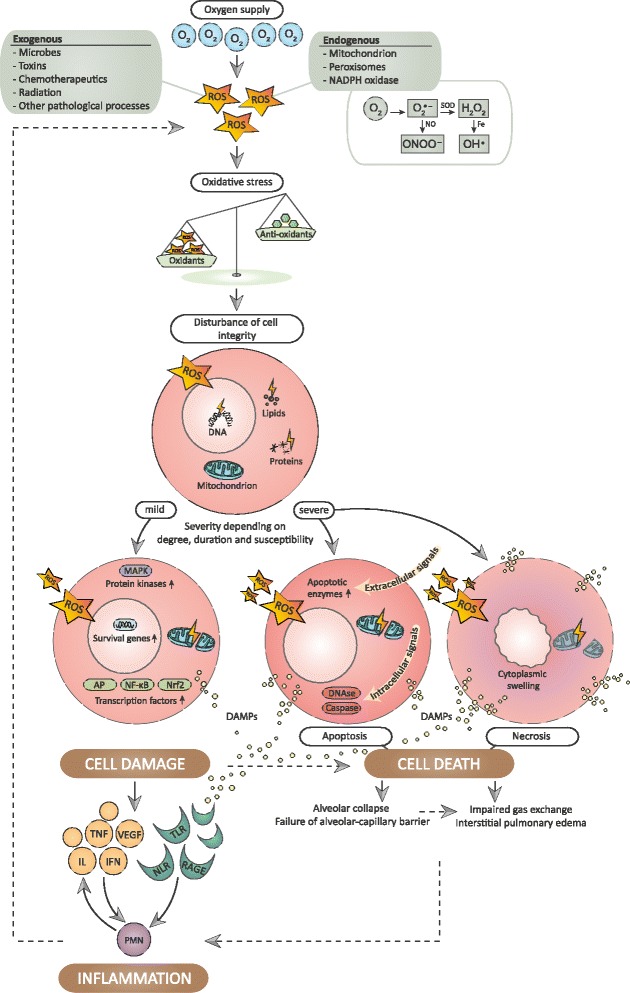
“In general, ROS generation from mitochondria increases with oxygen tension and is dependent on the clinical balance between the underlying condition and oxygen supply [6].”
BackgroundInfluentialReactive oxygen species (ROS) homeostasis and redox regulation in cellular signaling
Ray, P. D., Huang, B.-W., & Tsuji, Y. (2012) · Cellular Signalling · doi:10.1016/j.cellsig.2012.01.008 · Cited by 4,373 · cited 1×
“Mitochondrial oxidative phosphorylation is the most important source of oxygen species, but ROS may also be generated in response to exogenous stimuli, such as microbes, cytokines, and xenobiotics [5].”
BackgroundCirculating mitochondrial DAMPs cause inflammatory responses to injury
Zhang, Q., Raoof, M., Chen, Y., Sumi, Y., Sursal, T., Junger, W., Brohi, K., Itagaki, K., & Hauser, C. J. (2010) · Nature · doi:10.1038/nature08780 · Cited by 3,812 · cited 1×
“In addition to direct cell death by necrosis or apoptosis, cellular disruption caused by hyperoxia and ROS has been shown to release endogenous damage-associated molecular pattern molecules (DAMPs) that alert the innate immune system [10–12].”
BackgroundEltzschig, H. K., & Carmeliet, P. (2011) · New England Journal of Medicine · doi:10.1056/nejmra0910283 · Cited by 2,061
HIF-1α is essential for myeloid cell-mediated inflammation
Cramer, T., Yamanishi, Y., Clausen, B. E., Förster, I., Pawlinski, R., Mackman, N., Haase, V. H., Jaenisch, R., Corr, M., Nizet, V., et al. (2003) · Cell · doi:10.1016/s0092-8674(03)00154-5 · Cited by 2,046
Beyond oxidative stress: an immunologist's guide to reactive oxygen species
Nathan, C., & Cunningham-Bussel, A. (2013) · Nature Reviews Immunology · doi:10.1038/nri3423 · Cited by 1,619 · cited 1×
“Oxidative stress refers to the imbalance caused by increased ROS formation or deficient oxidant suppressors [8].”
BackgroundVincent, J.-L., & De Backer, D. (2013) · New England Journal of Medicine · doi:10.1056/nejmra1208943 · Cited by 1,425 · cited 2×
“In medical practice, it is among the most universally used agents for the treatment of critical illness [1] and part of the routine treatment in acute shock and emergency medicine [2].”
BackgroundKilgannon, J. H. (2010) · JAMA · doi:10.1001/jama.2010.707 · Cited by 873
Emerging role of damage-associated molecular patterns derived from mitochondria in inflammation
Krysko, D. V., Agostinis, P., Krysko, O., Garg, A. D., Bachert, C., Lambrecht, B. N., & Vandenabeele, P. (2011) · Trends in Immunology · doi:10.1016/j.it.2011.01.005 · Cited by 680 · cited 4×
“Also, oxygen may aid hemodynamic stabilization and decrease intracranial pressure and can be used to stimulate erythropoietin and increase hemoglobin when intermittent hyperoxia is used as a paradoxical trigger for HIF expression.”
BackgroundInfluentialRole of NRF2 in Protection Against Hyperoxic Lung Injury in Mice
Cho, H.-Y., Jedlicka, A. E., Reddy, S. P. M., Kensler, T. W., Yamamoto, M., Zhang, L.-Y., & Kleeberger, S. R. (2002) · American Journal of Respiratory Cell and Molecular Biology · doi:10.1165/ajrcmb.26.2.4501 · Cited by 659 · cited 1×
“Experimental research suggests protective effects through modulation of protein kinases [100, 101] and transcription factors [102–105].”
Background
Cited by
Acute mesenteric ischemia: guidelines of the World Society of Emergency Surgery
Bala, M., Kashuk, J., Moore, E. E., Kluger, Y., Biffl, W., Gomes, C. A., Ben-Ishay, O., Rubinstein, C., Balogh, Z. J., Civil, I., et al. (2017) · World Journal of Emergency Surgery · doi:10.1186/s13017-017-0150-5 · Cited by 574
“Although in the past, supra-physiologic levels were advocated, current evidence does not support this concept [49].”
BackgroundAcute mesenteric ischemia: updated guidelines of the World Society of Emergency Surgery.
Bala, M., Catena, F., Kashuk, J., De Simone, B., Gomes, C. A., Weber, D., Sartelli, M., Coccolini, F., Kluger, Y., Abu-Zidan, F. M., et al. (2022) · World Journal of Emergency Surgery · doi:10.1186/s13017-022-00443-x · Cited by 380
“Supra-physiologic level of oxygen delivery was suggested in the past which is not supported by the current evidence [83].”
BackgroundOxidative Stress and Endothelial Dysfunction in Sepsis and Acute Inflammation
Joffre, J., & Hellman, J. (2021) · Antioxidants & Redox Signaling · doi:10.1089/ars.2021.0027 · Cited by 337
“Basedontheassumptionofimprovingthedeliveryofoxygen to the tissue and promoting bacterial defenses via oxidative burst (117, 160), some authors have proposed hyperoxia as a therapy for sepsis (71).”
Serpa Neto, A., Schmidt, M., Azevedo, L. C. P., Bein, T., Brochard, L., Beutel, G., Combes, A., Costa, E. L. V., Hodgson, C., Lindskov, C., et al. (2016) · Intensive Care Medicine · doi:10.1007/s00134-016-4507-0 · Cited by 222
“Indeed, high FiO 2 may induce pulmonary injury, at least in part by increased oxidative stress via increased levels of reactive oxygen-derived free radicals, with an influx of inflammatory cells, increased permeability and endothelial cell injury [36, 37] .”
BackgroundSelf-citationMetrics of Arterial Hyperoxia and Associated Outcomes in Critical Care*
Helmerhorst, H. J. F., Arts, D. L., Schultz, M. J., van der Voort, P. H. J., Abu-Hanna, A., de Jonge, E., & van Westerloo, D. J. (2017) · Critical Care Medicine · doi:10.1097/ccm.0000000000002084 · Cited by 205
Self-citationHighs and lows of hyperoxia: physiological, performance, and clinical aspects
Brugniaux, J. V., Coombs, G. B., Barak, O. F., Dujić, Ž., Sekhon, M. S., & Ainslie, P. N. (2018) · American Journal of Physiology-Regulatory, Integrative and Comparative Physiology · doi:10.1152/ajpregu.00165.2017 · Cited by 149
Oxygen in the critically ill: friend or foe?
Damiani, E., Donati, A., & Girardis, M. (2018) · Current Opinion in Anaesthesiology · doi:10.1097/aco.0000000000000559 · Cited by 148
Monro-Somerville, T., Sim, M. R., Ruddy, J., Vilas, M., & Gillies, M. (2016) · Critical Care Medicine · doi:10.1097/ccm.0000000000002091 · Cited by 121
Respiratory support in patients with acute respiratory distress syndrome: an expert opinion
Chiumello, D., Brochard, L. J., Marini, J. J., Slutsky, A. S., Mancebo, J., Ranieri, V. M., Thompson, B., Papazian, L., Schultz, M. J., Amato, M. B. P., et al. (2017) · Critical Care · doi:10.1186/s13054-017-1820-0 · Cited by 115
“Hyperoxia may increase lung inflammation, can adversely affect the microcirculation and is associated with increased mortality rates in certain categories of patients [24, 25].”
Self-citationThe Ongoing Challenge of Acute Mesenteric Ischemia
Luther, B., Mamopoulos, A., Lehmann, C., & Klar, E. (2018) · Visceral Medicine · doi:10.1159/000490318 · Cited by 93
Targeting Hypoxia Signaling for Perioperative Organ Injury
Yuan, X., Lee, J. W., Bowser, J. L., Neudecker, V., Sridhar, S., & Eltzschig, H. K. (2017) · Anesthesia & Analgesia · doi:10.1213/ane.0000000000002288 · Cited by 104
Helmerhorst, H. J. F., Schouten, L. R. A., Wagenaar, G. T. M., Juffermans, N. P., Roelofs, J. J. T. H., Schultz, M. J., de Jonge, E., & van Westerloo, D. J. (2017) · Intensive Care Medicine Experimental · doi:10.1186/s40635-017-0142-5 · Cited by 73
“Furthermore, damage-associated molecular pattern (DAMP) molecules play a key role in the inflammatory response to injury and have been suggested to modulate the effects of hyperoxia and oxidative stress [34, 35].”
BackgroundSelf-citationHyperoxia and Lungs: What We Have Learned From Animal Models
Amarelle, L., Quintela, L., Hurtado, J., & Malacrida, L. S. (2021) · Frontiers in Medicine · doi:10.3389/fmed.2021.606678 · Cited by 69
Peters, M. J., Jones, G. A. L., Wiley, D., Wulff, J., Ramnarayan, P., Ray, S., Inwald, D. P., Grocott, M. P. W., Griksaitis, M. J., Pappachan, J., et al. (2018) · Intensive Care Medicine · doi:10.1007/s00134-018-5232-7 · Cited by 65
Lilien, T. A., Groeneveld, N. S., van Etten‐Jamaludin, F. S., Peters, M. J., Buysse, C. M. P., Ralston, S. L., van Woensel, J. B. M., Bos, L. D. J., & Reinout, A. (2022) · JAMA Network Open · doi:10.1001/jamanetworkopen.2021.42105 · Cited by 71
Biological effects of the oxygen molecule in critically ill patients
Nakane, M. (2020) · Journal of Intensive Care · doi:10.1186/s40560-020-00505-9 · Cited by 71
Heinrichs, J., Lodewyks, C. L., Neilson, C. J., Abou-Setta, A. M., & Grocott, H. P. (2018) · Canadian Journal of Anesthesia/Journal canadien d anesthésie · doi:10.1007/s12630-018-1143-x · Cited by 55
“Given that there is no universally accepted definition of hyperoxia,(19) we did not pre-specify thresholds for hyperoxic or normoxic FIO2 or PaO2 targets, but instead relied on the individual study definitions.(1,17) The primary outcome examined was postoperative organ dysfunction defined by: 1) postoperative increase…”
BackgroundMethodHoiland, R. L., Robba, C., Menon, D. K., Citerio, G., Sandroni, C., & Sekhon, M. S. (2023) · Intensive Care Medicine · doi:10.1007/s00134-023-07165-x · Cited by 64
Oxygen administration during surgery and postoperative organ injury: observational cohort study
McIlroy, D. R., Shotwell, M. S., Lopez, M. G., Vaughn, M. T., Olsen, J. S., Hennessy, C., Wanderer, J. P., Semler, M. W., Rice, T. W., Kheterpal, S., et al. (2022) · BMJ · doi:10.1136/bmj-2022-070941 · Cited by 58
Benefits and risks of oxygen therapy during acute medical illness: Just a matter of dose!
Allardet-Servent, J., Sicard, G., Metz, V., & Chiche, L. (2019) · La Revue de Médecine Interne · doi:10.1016/j.revmed.2019.04.003 · Cited by 62
Jentzer, J. C., Miller, P. E., Alviar, C. L., Yalamuri, S. M., Bohman, J. K., & Tonna, J. E. (2023) · Circulation Heart Failure · doi:10.1161/circheartfailure.122.010328 · Cited by 59
Demiselle, J., Wepler, M., Hartmann, C., Radermacher, P., Schortgen, F., Meziani, F., Singer, M., Seegers, V., & Asfar, P. (2018) · Annals of Intensive Care · doi:10.1186/s13613-018-0435-1 · Cited by 51
Oldman, A. H., Martín, D., Feelisch, M., Grocott, M. P. W., & Cumpstey, A. F. (2020) · British Journal of Anaesthesia · doi:10.1016/j.bja.2020.09.050 · Cited by 51
“13 14 Oxidative stress can be beneficial (e.g. in phagocytosis) but can also lead to tissue damage and organ failure.”
BackgroundFarag, E. S., Chen, L., Mascha, E. J., Tóth, G., ARGALIOUS, M. Y., Manlapaz, M. R., Gomes, J. A., Ebrahim, Z., & Hussain, M. S. (2021) · Anesthesia & Analgesia · doi:10.1213/ane.0000000000005763 · Cited by 47
“Peripheral vascular disease, n (%) 34 (33) 62 (24) 0.”
Matin, N., Sarhadi, K. J., Crooks, C. P., Lele, A. V., Srinivasan, V., Johnson, N. J., Robba, C., Town, J. A., & Wahlster, S. (2022) · Current Treatment Options in Neurology · doi:10.1007/s11940-022-00726-3 · Cited by 52
Hyperoxia Induces Inflammation and Cytotoxicity in Human Adult Cardiac Myocytes
Hafner, C. M., Wu, J., Tiboldi, Á., Hess, M., Mitulović, G., Kaun, C., Krychtiuk, K. A., Wojta, J., Ullrich, R., Tretter, V. E., et al. (2016) · Shock · doi:10.1097/shk.0000000000000740 · Cited by 45
“These findings in general surgical patients are in agreement with the fact that careful titration of O2 supply is recommended for intensive care patients as some studies suggest detrimental outcome after hyperoxia exposure (42).”
ResultShould Oxygen Therapy Be Tightly Regulated to Minimize Hyperoxia in Critically Ill Patients?
Kallet, R. H., & Branson, R. D. (2016) · Respiratory Care · doi:10.4187/respcare.04933 · Cited by 50
Staphylococcal Superantigens Spark Host-Mediated Danger Signals
Krakauer, T., Pradhan, K., & Stiles, B. G. (2016) · Frontiers in Immunology · doi:10.3389/fimmu.2016.00023 · Cited by 55
“Elevated ROS activates the intrinsic cell death pathway via caspase 9, leading to mitochondrial damage that releases cytochrome c and mtDNA (173).”
BackgroundYen, C., Chang, W.-H., Tung, M., Chen, H., Liu, H.-C., Liao, C.-H., Lan, Y., Chong, K., Yang, S., & Chen, C. (2019) · Molecular Imaging and Biology · doi:10.1007/s11307-019-01390-x · Cited by 40
Current research priorities in perioperative intensive care medicine
Gillies, M., Sander, M., Shaw, A., Wijeysundera, D. N., Myburgh, J., Aldecoa, C., Jammer, I., Lobo, S. M., Pritchard, N., Grocott, M. P. W., et al. (2017) · Intensive Care Medicine · doi:10.1007/s00134-017-4848-3 · Cited by 44
Self-citationInitial use of supplementary oxygen for trauma patients: a systematic review
Eskesen, T. G., Bækgaard, J. S., Steinmetz, J., & Rasmussen, L. S. (2018) · BMJ Open · doi:10.1136/bmjopen-2017-020880 · Cited by 39
Lin, S., Liu, K., Lin, Z., & Lin, P. (2017) · Respiratory Medicine · doi:10.1016/j.rmed.2017.08.005 · Cited by 33
Schjørring, O. L., Perner, A., Wetterslev, J., Lange, T., Keus, F., Laake, J. H., Okkonen, M., Siegemund, M., Morgan, M., Þormar, K., et al. (2019) · Acta Anaesthesiologica Scandinavica · doi:10.1111/aas.13356 · Cited by 37
Automated Weaning from Mechanical Ventilation after Off-Pump Coronary Artery Bypass Grafting
Fot, E. V., Izotova, N. N., Yudina, A. S., Smetkin, A. A., Владимирович, К. В., & Кirov, М. Y. (2017) · Frontiers in Medicine · doi:10.3389/fmed.2017.00031 · Cited by 46
Chavala, M. L. A. (2017) · Medicina Intensiva · doi:10.1016/j.medin.2017.08.006 · Cited by 40
Facing acute hypoxia: from the mountains to critical care medicine
Berger, M. M., & Grocott, M. P. W. (2017) · British Journal of Anaesthesia · doi:10.1093/bja/aew407 · Cited by 35
“administered in numerous medical conditions where oxygen therapy is liberaly administered are commonly ineffective, and in some circumstances, harmful.(22) An appealing notion to consider is whether all humans have the potential to (re)activate effective mechanisms of oxygen tol-”
BackgroundMcGuigan, P. J., Shankar‐Hari, M., Harrison, D. A., Laffey, J. G., & McAuley, D. F. (2020) · Critical Care · doi:10.1186/s13054-020-03039-6 · Cited by 32
“studies, we only included patients who survived beyond 24 h [9, 10, 12, 23, 24].”
MethodPerioperative Lung Protection: Clinical Implications
Hol, L., Nijbroek, S. G. L. H., & Schultz, M. J. (2020) · Anesthesia & Analgesia · doi:10.1213/ane.0000000000005187 · Cited by 33
Self-citationOptimal ex vivo lung perfusion techniques with oxygenated perfusate
Noda, K., Tane, S., Haam, S., Hayanga, A. J., D’Cunha, J., Luketich, J. D., & Shigemura, N. (2016) · The Journal of Heart and Lung Transplantation · doi:10.1016/j.healun.2016.10.014 · Cited by 30
Oxygen Treatment in Intensive Care and Emergency Medicine
Grensemann, J., Fuhrmann, V., & Kluge, S. (2018) · Deutsches Ärzteblatt international · doi:10.3238/arztebl.2018.0455 · Cited by 45
Supplemental oxygen and hyperoxemia in trauma patients: A prospective, observational study
Eskesen, T. G., Bækgaard, J. S., Christensen, R. E., Lee, J. M., Velmahos, G. C., Steinmetz, J., & Rasmussen, L. S. (2018) · Acta Anaesthesiologica Scandinavica · doi:10.1111/aas.13301 · Cited by 31
“As hyperoxemia has been associated with physiological changes like increased formation of ROS, pulmonary atelectasis and inflammation, vasoconstriction, and decreased cardiac output, hyperoxemia may be especially disadvantageous in an already vulnerable patient.(8,18,19) As such, it can be a difficult balance, as unde…”
BackgroundPhysiology and pathophysiology of mucus and mucolytic use in critically ill patients
Roe, T., Talbot, T., Terrington, I., Johal, J., Kemp, I., Saeed, K. B. A., Webb, E., Cusack, R., Grocott, M. P. W., & Dushianthan, A. (2025) · Critical Care · doi:10.1186/s13054-025-05286-x · Cited by 48
Chavala, M. L. A. (2018) · Medicina Intensiva (English Edition) · doi:10.1016/j.medine.2018.05.013 · Cited by 30
“78---80”
Hanidziar, D., Nakahori, Y., Cahill, L. A., Gallo, D. J., Keegan, J. W., Nguyen, J. P., Otterbein, L. E., Lederer, J. A., & Robson, S. C. (2020) · Scientific Reports · doi:10.1038/s41598-020-61489-y · Cited by 25
Boehme, J. B., Moan, N. L., Kameny, R. J., Loucks, A., Johengen, M. J., Lesneski, A. L., Gong, W., Goudy, B. D., Davis, T., Tanaka, K., et al. (2018) · PLoS Biology · doi:10.1371/journal.pbio.2005924 · Cited by 23
“In this manner, OMX-CV circulates and can be predicted to sustain an ongoing, targeted O2 delivery to the most hypoxic organs and tissues without unnecessary and potentially harmful [18] oxygenation of tissues at physiologic O2 tensions.”
BackgroundGas Partial Pressure in Cultured Cells: Patho-Physiological Importance and Methodological Approaches
Farré, R., Almendros, I., Montserrat, J. M., Gozal, D., & Navajas, D. (2018) · Frontiers in Physiology · doi:10.3389/fphys.2018.01803 · Cited by 25
“ventilated with high oxygen fraction (Damiani et al., 2014; Helmerhorst et al., 2015) and in newborns receiving critical care (Sola et al.”
BackgroundBodien, Y. G., Busl, K. M., Chang, C. W. J., Claassen, J., Gaspard, N., Gosseries, O., Helbok, R., Massimini, M., Naccache, L., Newcombe, V., et al. (2025) · Intensive Care Medicine · doi:10.1007/s00134-025-08224-1 · Cited by 37
Revisited Hyperoxia Pathophysiology in the Perioperative Setting: A Narrative Review
Busani, S., Sarti, M. D., Serra, F., Gelmini, R., Venturelli, S., Munari, E., & Girardis, M. (2021) · Frontiers in Medicine · doi:10.3389/fmed.2021.689450 · Cited by 26
“This process interrupts angiogenesis and alveolarization (23).”
Li, Y., Tao, Y., Xu, J., He, Y.-H., Zhang, W., Jiang, Z.-G., He, Y., Liu, H., Chen, M., Zhang, W., et al. (2021) · Frontiers in Medicine · doi:10.3389/fmed.2021.732039 · Cited by 33
“Yet, there is increasing evidence showing that hyperoxia systemically influences almost all human organs by increasing the dissolved oxygen in plasma and leading to oxidative stress (39, 40).”
BackgroundVentilatory targets following brain injury
Taran, S., Wahlster, S., & Robba, C. (2023) · Current Opinion in Critical Care · doi:10.1097/mcc.0000000000001018 · Cited by 26
Carr, A. C., Spencer, E. S., Mackle, D., Hunt, A., Judd, H. L., Mehrtens, J. E., Parker, K., Stockwell, Z., Gale, C., Beaumont, M., et al. (2020) · Free Radical Biology and Medicine · doi:10.1016/j.freeradbiomed.2020.06.018 · Cited by 24
Hemodynamic effects of short-term hyperoxia after coronary artery bypass grafting
Helmerhorst, H. J. F., de Wilde, R. B. P., Lee, D. H., Palmen, M., Jansen, J. R. C., van Westerloo, D. J., & de Jonge, E. (2017) · Annals of Intensive Care · doi:10.1186/s13613-017-0246-9 · Cited by 21
Self-citationGrensemann, J., Mader, M. M.-D., Westphal, M., Kluge, S., & Czorlich, P. (2022) · Neurocritical Care · doi:10.1007/s12028-022-01534-y · Cited by 22
Li, X., Dai, B., Hou, H., Zhao, H., Wang, W., Kang, J., & Tan, W. (2024) · Annals of Intensive Care · doi:10.1186/s13613-024-01300-7 · Cited by 21
Harb, H. S., Saeed, H., Madney, Y. M., Abdelrahman, M. A., Osama, H., Esquinas, A. M., & Abdelrahim, M. E. A. (2020) · Journal of Drug Delivery Science and Technology · doi:10.1016/j.jddst.2020.101922 · Cited by 21
Hafner, C. M., Pramhas, S., Schaubmayr, W., Assinger, A., Gleiß, A., Tretter, V. E., Klein, K. U., & Scharbert, G. (2021) · Shock · doi:10.1097/shk.0000000000001728 · Cited by 17
Schjørring, O. L., Toft‐Petersen, A. P., Kusk, K. H., Mouncey, P., Sørensen, E. E., Berezowicz, P. S., Bestle, M. H., Bülow, H., Bundgaard, H., Christensen, S., et al. (2018) · Acta Anaesthesiologica Scandinavica · doi:10.1111/aas.13171 · Cited by 18
“14 kPa 0 (0-1) 8 (6-11)* 92 (89-94) 0 (0-1) 3 (2-4)* 97 (96-98)”
InfluentialJaeger, B. R., Arron, H. E., Kalka-Moll, W. M., & Seidel, D. (2022) · Frontiers in Cardiovascular Medicine · doi:10.3389/fcvm.2022.1007636 · Cited by 16
Crescioli, E., Klitgaard, T. L., Poulsen, L. M., Brand, B., Siegemund, M., Grøfte, T., Keus, F., Pedersen, U. G., Bäcklund, M., Karttunen, J., et al. (2022) · Intensive Care Medicine · doi:10.1007/s00134-022-06695-0 · Cited by 17
Dietz, R. M., & Wright, C. J. (2017) · American Journal of Reproductive Immunology · doi:10.1111/aji.12787 · Cited by 16
Lower versus higher oxygenation targets in hypoxaemic ICU patients after cardiac arrest
Crescioli, E., Klitgaard, T., Perner, A., Schjørring, O. L., & Rasmussen, B. S. (2023) · Resuscitation · doi:10.1016/j.resuscitation.2023.109838 · Cited by 15
Insulin Secretion, Sensitivity, and Kidney Function in Young Individuals With Type 2 Diabetes
Bjornstad, P., Choi, Y. J., Platnick, C., Gross, S. P., Narongkiatikhun, P., Melena, I. L., Remmers, L., Baca, M., Schutte, G., Dobbs, T. J., et al. (2023) · Diabetes Care · doi:10.2337/dc23-1818 · Cited by 19
sFasL—The Key to a Riddle: Immune Responses in Aging Lung and Disease
Wallach‐Dayan, S. B., Petukhov, D., Ahdut-HaCohen, R., Richter-Dayan, M., & Breuer, R. (2021) · International Journal of Molecular Sciences · doi:10.3390/ijms22042177 · Cited by 14
Joyce, C., Shekar, K., & Cook, D. (2018) · Intensive Care Medicine Experimental · doi:10.1186/s40635-018-0183-4 · Cited by 13
Tiron, A., Ristescu, I., Postu, P. A., Tiron, C. E., Zugun‐Eloae, F., & Grigoraș, I. (2020) · Cancers · doi:10.3390/cancers12030688 · Cited by 15
“The accumulation of data on hyperoxia harmful effects in the acute settings [19,20] raised the question about the optimal oxygen concentration to avoid postoperative short-term complications, in the general surgical population or in specific subgroups [5,6].”
BackgroundSupplemental oxygen therapy in trauma patients: An exploratory registry‐based study
Christensen, M. A., Steinmetz, J., Velmahos, G. C., & Rasmussen, L. S. (2021) · Acta Anaesthesiologica Scandinavica · doi:10.1111/aas.13829 · Cited by 14
Li, X., Liu, D., Liu, C., Mao, Z., Liu, Y., Yi, H., & Zhou, F. (2021) · Medicina Intensiva · doi:10.1016/j.medin.2021.08.006 · Cited by 12
Dumas, G., Morris, I. S., Hensman, T., Bagshaw, S. M., Demoule, A., Ferreyro, B. L., Kouatchet, A., Lemiale, V., Mokart, D., Pène, F., et al. (2024) · Intensive Care Medicine · doi:10.1007/s00134-024-07389-5 · Cited by 13
“The specific threshold of arterial hyperox-emia associated with harm has not been well defined in the literature with thresholds of harm ranging from 107 to 300 mmHg [19, 20, 22, 24].”
Clinical features of critically ill patients with confirmed COVID-19
Chu, Y., Li, T., Fang, Q., & Wang, X. (2020) · Journal of Infection · doi:10.1016/j.jinf.2020.03.023 · Cited by 11
Hyperoxia and Acute Kidney Injury: A Tale of Oxygen and the Kidney
Kraus, A. C., & Miguel, C. D. (2022) · Seminars in Nephrology · doi:10.1016/j.semnephrol.2022.10.008 · Cited by 11
Kongebro, E. K., Jørgensen, L. N., Siersma, V., & Meyhoff, C. S. (2018) · Acta Anaesthesiologica Scandinavica · doi:10.1111/aas.13235 · Cited by 10
“Furthermore, cell injury and vascular alterations could worsen clinical outcome for patients already diagnosed with stroke or TCI, if normobaric hyperoxia is routinely used.(2,3,10) Stroke accounts for as much as one in four deaths worldwide.”
BackgroundInfluentialA new mode of mechanical ventilation: positive + negative synchronized ventilation
Vincenzi, U. (2021) · Multidisciplinary Respiratory Medicine · doi:10.4081/mrm.2021.788 · Cited by 10
“Other disadvantages that can be encountered in positive mechanical ventilation, especially if air mixtures with a high concentration of oxygen are used, are: oxidative damage to the bronchial epithelium, such as a reduction in the motility of the vibrating cilia with a reduction in mucociliary clearance, and alveolar…”
BackgroundTitration of oxygen therapy in critically ill emergency department patients: a feasibility study
Dobbe, A. S. M., Stolmeijer, R., ter Maaten, J. C., & Ligtenberg, J. J. M. (2018) · BMC Emergency Medicine · doi:10.1186/s12873-018-0169-2 · Cited by 10
Schjørring, O. L., & Rasmussen, B. S. (2018) · Critical Care · doi:10.1186/s13054-018-2257-9 · Cited by 11
Wang, J., Gangavelli, A., Tonna, J. E., Magruder, J. T., Zaaqoq, A. M., Yalamuri, S. M., Miller, P. E., & Jentzer, J. C. (2025) · Critical Care Medicine · doi:10.1097/ccm.0000000000006810 · Cited by 11
Yu, Y., Yao, R.-Q., Zhang, Y., Wang, S., Wang, X., Wang, J., Huang, X., Yao, Y.-M., & Wang, Z. (2021) · Military Medical Research · doi:10.1186/s40779-021-00330-7 · Cited by 15
“The excessive formation of ROS outweighs the antioxidant capacities of the cells, and results in oxidative stress and a cascade of adverse outcomes including damage to nucleic acids, proteins and lipids, and activation of apoptotic as well as necrotic pathways causing cell death [6, 40, 41].”
BackgroundNielsen, F. M., Klitgaard, T. L., Crescioli, E., Aagaard, S. R., Andreasen, A. S., Poulsen, L. M., Siegemund, M., Brøchner, A. C., Bestle, M. H., Iversen, S. A., et al. (2021) · Acta Anaesthesiologica Scandinavica · doi:10.1111/aas.13956 · Cited by 9
Nielsen, F. M., Klitgaard, T., Bruun, N. H., Møller, M. H., Schjørring, O. L., & Rasmussen, B. S. (2024) · Intensive Care Medicine · doi:10.1007/s00134-024-07523-3 · Cited by 10
“This hypothesis is based on the potential deleterious effects of hyperoxae-mia in ICU patients [19].”
BackgroundArterial hyperoxia and mortality in the cardiac intensive care unit
Jentzer, J. C., van Diepen, S., Alviar, C. L., Miller, P. E., Metkus, T. S., Geller, B. J., & KASHANI, K. B. (2024) · Current Problems in Cardiology · doi:10.1016/j.cpcardiol.2024.102738 · Cited by 9
“Nitrogen Wash-Out” in Non-Hypoxaemic Patients with Spontaneous Pneumothorax: A Narrative Review
Grasmuk‐Siegl, E., & Valipour, A. (2023) · Journal of Clinical Medicine · doi:10.3390/jcm12134300 · Cited by 8
“In fact, during hyperoxia, cerebral blood flow— for example—is reduced up to a third [30].”
BackgroundCao, L., Chen, Q., Xiang, Y.-Y., Xiao, C., Tan, Y., & Li, H. (2024) · Anesthesia & Analgesia · doi:10.1213/ane.0000000000006859 · Cited by 11
“15,16 Excessive oxygen administration has also been associated with pulmonary edema, fibrosis, and emphysema.”
The impact and relevance of techniques and fluids on lung injury in machine perfusion of lungs
Ponholzer, F., Dumfarth, J., Krapf, C., Pircher, A., Hautz, T., Wolf, D. G. F., Augustin, F., & Schneeberger, S. (2024) · Frontiers in Immunology · doi:10.3389/fimmu.2024.1358153 · Cited by 15
“This damage activates apoptosis and necrosis and triggers an immune response through endogenous damage-associated molecular pattern molecules (23, 24).”
BackgroundKetharanathan, N., de Jonge, R. C. J., Klouwen, I., Wildschut, E. D., Reiss, I. K. M., Tibboel, D., Haitsma, I., & Buysse, C. (2020) · Brain Injury · doi:10.1080/02699052.2020.1765021 · Cited by 9
“Suggested mechanisms of potential negative effects include cerebral vasoconstriction in a similar manner as hypocarbia, oxidative stress and inflammation (2,5–7).”
The implications of hyperoxia, type 1 diabetes and sex on cardiovascular physiology in mice
Bojkovic, K., Rodgers, J. L., Vichare, R., Nandi, A., Mansour, N., Saleem, F., Abıdın, Z. U., Vanthenapalli, S., Cheng, F., & Panguluri, S. K. (2021) · Scientific Reports · doi:10.1038/s41598-021-02550-2 · Cited by 9
“Unfortunately, this treatment may also result in hyperoxia, a condition where excessive tissue oxygen culminates in injurious physiological effects, such as cellular death, increased presence of reactive oxygen species (ROS), and overall increased mortality compared to normoxic patients [2, 3].”
Wu, J., Zhang, G., Xiong, H., Zhang, Y., Ding, G., & Ge, J. (2021) · Scientific Reports · doi:10.1038/s41598-021-95712-1 · Cited by 10
Celińska‐Spodar, M., Załęska‐Kocięcka, M., Banaś, S., Kołsut, P., Kowalik, I., Kuśmierczyk, M., Kuśmierski, K., Litwiński, P., Sitkowska-Rysiak, E., Szymański, J., et al. (2022) · Shock · doi:10.1097/shk.0000000000002038 · Cited by 9
“Hyperoxygenation stimulates the production of reactive oxygen species and reactive nitrogen species, leading to oxidative stress and altered platelet and neutrophil activation responses (10,11).”
BackgroundSurvey of Oxygen Delivery Practices in UK Paediatric Intensive Care Units
Raman, S., Ray, S., & Peters, M. J. (2016) · Critical Care Research and Practice · doi:10.1155/2016/6312970 · Cited by 11
“Hyperoxia can lead to production of reactive oxygen species and cell injury [2, 3].”
BackgroundАркадьевна, М. И., Podoksenov, Y. K., Suhodolo, I. V., An, D. A., Mikheev, S. L., Podoksenov, A. Y., Svirko, Y. S., Гусакова, А. М., Shipulin, V. M., & Yavorovskiy, A. G. (2020) · International Journal of Molecular Sciences · doi:10.3390/ijms21155336 · Cited by 8
“In Helmerhorst’s study (2015) the organism’s response to oxygen reduction in the breathing gas mixture from high to normal was called ”pseudohypoxic”, because the term reflects the organism’s universal pathophysiological response to oxygen delivery changes [45].”
BackgroundCan Erythropoietin Reduce Hypoxemic Neurological Damages in Neonates With Congenital Heart Defects?
Ottolenghi, S., Milano, G., Dei, M., Findley, T. O., Paroni, R. C., & Corno, A. F. (2021) · Frontiers in Pharmacology · doi:10.3389/fphar.2021.770590 · Cited by 9
Oldman, A. H., Cumpstey, A. F., Martín, D., & Grocott, M. P. W. (2019) · Perioperative Medicine · doi:10.1186/s13741-019-0118-y · Cited by 8
“On a cellular level, these pathologies are likely mediated by reactive oxygen species (ROS) — unstable free radicals in part generated as by-products of oxidative phosphorylation in the mitochondrial electron transport chain (Helmerhost et al. 2015).”
InfluentialCurtis, B., Rak, K. J., Richardson, A., Linstrum, K. M., Kahn, J. M., & Girard, T. D. (2020) · Annals of the American Thoracic Society · doi:10.1513/annalsats.202007-802oc · Cited by 10
Oxygen reserve index guided oxygen titration in one lung ventilation with low fresh gas flow
Saraçoğlu, A., Şirzai, E. Y., Yıldızeli, B., Yüksel, M., & Aykaç, Z. (2021) · TURKISH JOURNAL OF MEDICAL SCIENCES · doi:10.3906/sag-2009-149 · Cited by 7
Ristescu, I., Tiron, C. E., Tiron, A., & Grigoraș, I. (2021) · Biomedicines · doi:10.3390/biomedicines9091213 · Cited by 8
“High concentration oxygen exposure results in increased ROS formation and oxidative stress, overwhelming the antioxidant mechanisms capacity and producing DNA damage, protein damage and lipid peroxidation [70].”
BackgroundImpact of hyperoxia and phenylephrine on cerebral oxygenation: An experimental clinical study
Pedersen, S. S., Meyhoff, C. S., Olsen, M. H., Stisen, Z. R., Lund, A., Møller, K., Skjøth‐Rasmussen, J., Moltke, F. B., & Sørensen, M. K. (2022) · Acta Anaesthesiologica Scandinavica · doi:10.1111/aas.14149 · Cited by 7
“Furthermore, overdosing of oxygen has well-established harmful systemic effects.(2,3)”
BackgroundLilien, T. A., de Sonnaville, E. S. V., van Woensel, J. B. M., & Reinout, A. (2022) · Pediatric Critical Care Medicine · doi:10.1097/pcc.0000000000003130 · Cited by 7
Admission Pao 2 and Mortality Among PICU Patients and Select Diagnostic Subgroups
Holton, C., Lee, B. R., Escobar, H., Benton, T., & Bauer, P. N. (2023) · Pediatric Critical Care Medicine · doi:10.1097/pcc.0000000000003247 · Cited by 6
Acute Respiratory Failure in Severe Acute Brain Injury
Robateau, Z. R., Lin, V., & Wahlster, S. (2024) · Critical Care Clinics · doi:10.1016/j.ccc.2024.01.006 · Cited by 8
Kayalar, Ö., Bayrak, B. B., Yıldırım, M., Yanardağ, R., & Öztay, F. (2024) · Cell Biochemistry and Function · doi:10.1002/cbf.4094 · Cited by 6
Grim, C. C. A., van der Wal, L. I., Helmerhorst, H. J. F., van Westerloo, D. J., Pelosi, P. P., Schultz, M. J., de Jonge, E., for the ICONIC Investigators and PROVE Network, del Prado, M. R., Wigbers, J., et al. (2022) · Trials · doi:10.1186/s13063-022-06065-7 · Cited by 6
Self-citationWu, A., Luch, S., Floersch, J., Keester, A., Slusher, T. M., Fischer, G. A., Hale, J., & Bjorklund, A. (2022) · American Journal of Tropical Medicine and Hygiene · doi:10.4269/ajtmh.22-0091 · Cited by 6
Metadata
- Authors
- Helmerhorst, H. J. F., Schultz, M. J., van der Voort, P. H. J., de Jonge, E., & van Westerloo, D. J.
- Affiliations
- Leiden University Medical Center (NL)
- Amsterdam UMC Location University of Amsterdam (NL)
- Corresponding author
- Helmerhorst, Hendrik J. F.
- Venue
- Critical Care
- Published
- 2015-12
- Volume
- 19
- Issue
- 1
- Pages
- 284-284
- ISSN
- 1364-8535 (ISSN-L)
- PMC
- PMC4538738
- OpenAlex
- W1956277079
- Cited by
- 187
- References
- 120
- Citations by year
- 2026: 14 · 2025: 15 · 2024: 22 · 2023: 22 · 2022: 20 · 2021: 24 · 2020: 16 · 2019: 7 · 2018: 23 · 2017: 14 · 2016: 9 · 2015: 1
- FWCI
- 2.77
- Type
- journal article
- Language
- en
- Open access
- gold
- doi.org
- Licence
- cc-by
- www.springer.com/tdm (tdm)
- www.springer.com/tdm (vor)
- Locations
- Critical Care (publishedVersion, cc-by)
- PubMed Central (publishedVersion, cc-by)
- PubMed (publishedVersion)
- Pure Amsterdam UMC (submittedVersion, other-oa)
- Data Archiving and Networked Services (DANS) (submittedVersion)
- Leiden Repository (Leiden University) (submittedVersion)
- Topics
- Health Sciences › Medicine › Pulmonary and Respiratory Medicine › Respiratory Support and Mechanisms
- Health Sciences › Medicine › Physiology (medical) › Biomedical and Chemical Research
- Health Sciences › Medicine › Critical Care and Intensive Care Medicine › Sepsis Diagnosis and Treatment
- Keywords
- hyperoxia, critical illness, reactive oxygen species, oxidative stress, oxygen toxicity, lung injury, pulmonary edema, respiratory failure, vasoconstriction, vasodilatory shock, oxygen titration, tissue oxygenation, inflammation
- MeSH terms
- Animals, Critical Care, Humans, Oxygen Inhalation Therapy, Critical Illness, Hyperoxia, Perioperative Care
About these checks
Registry, retraction, Cites and statistics results are computed, not judged, with one exception: a printed reference that no index lists is read once by a model before it counts as a citation error. Claims are extracted by a model and kept only when their quote appears verbatim in the text; each cited source is then checked, with a model’s help, for whether it says what the claim relies on. Those verdicts can be wrong — read the claim’s quote and the cited source before relying on one.
Statistics and arithmetic are recomputed, not judged.
Confidence bands are shown only for fields calibrated on our annotated test set. None is calibrated yet, so no band is shown.
What counts as a claim ›How we measure confidence ›How we check this ›
Are you an author, or do you see a problem with this page? Request a review
Data sources
Bibliographic data: Semantic Scholar, OpenAlex, Crossref.
Contains information from the Semantic Scholar Academic Graph Datasets, made available under the ODC Attribution License (ODC-BY 1.0).
Semantic Scholar’s data is described in: Kinney, R., et al. (2023). The Semantic Scholar Open Data Platform. arXiv:2301.10140.
