

High protein intake during the early phase of critical illness: yes or no?
Open accessThe DOI matches its Crossref record; 44 of the 44 references it cites were found in a registry or an index.
Abstract
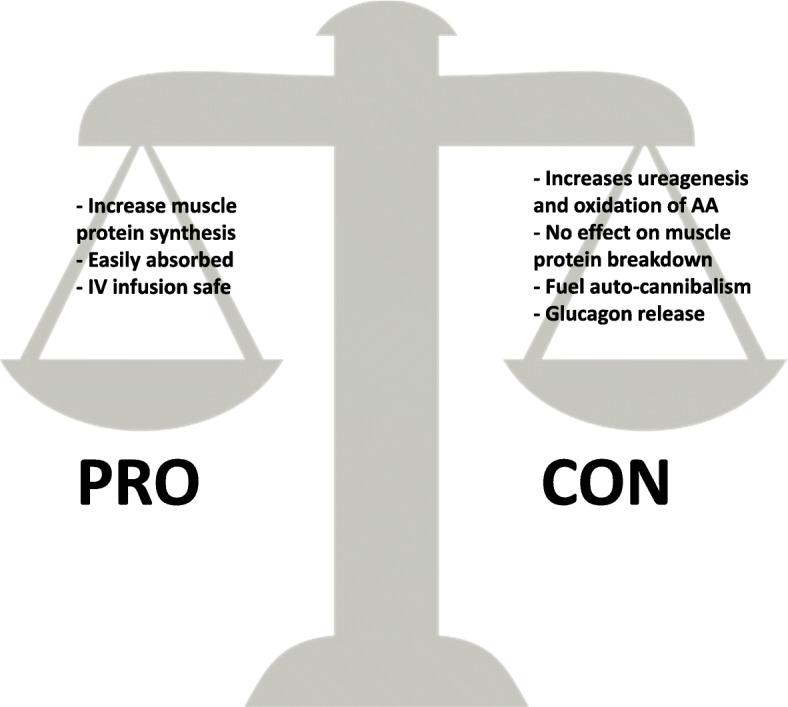
The rationale for the provision of nitrogen from proteins given via the enteral route or from intravenous amino acids is to boost the synthesis of muscle proteins, and thereby to limit the severity of intensive care unit-acquired weakness by the prevention of muscle loss. However, the optimal timing for supplemental nitrogen provision is a matter of debate and controversy. Indeed, consistent data from retrospective studies support an association between high early protein intakes and better outcomes, while recent post-hoc findings from prospective studies raise safety concerns. This pro-con paper details the arguments of both sides and highlights the need for large-scale prospective studies assessing the safety and efficacy of different levels of protein intake in combination with physical activity and summarizes the currently recruiting clinical trials.
Overview
The claims and statistics of this paper haven’t been checked yet.
Free: it reads the open-access text and checks the first 5 claims that cite a source we can check. Create a free account to check every claim.
Integrity signals
Registry
Cites
Statistics
Figures
Verification
Claims the paper makes
The claims and statistics of this paper haven’t been checked yet.
Free: it reads the open-access text and checks the first 5 claims that cite a source we can check. Create a free account to check every claim.
Self-check
Percentages, sums and reported differences re-computed from the paper’s own numbers.
The self-check needs the paper’s full text.
Citations
Cites
McClave, S. A., Taylor, B. E., Martindale, R. G., Warren, M. M., Johnson, D. R., Braunschweig, C., McCarthy, M. S., Davanos, E., Rice, T. W., Cresci, G. A., et al. (2016) · Journal of Parenteral and Enteral Nutrition · doi:10.1177/0148607115621863 · Cited by 3,982
Functional Disability 5 Years after Acute Respiratory Distress Syndrome
Herridge, M. S., Tansey, C. M., Matté, A., Tomlinson, G., Diaz-Granados, N., Cooper, A., Guest, C. B., Mazer, C. D., Mehta, S., Stewart, T. E., et al. (2011) · New England Journal of Medicine · doi:10.1056/nejmoa1011802 · Cited by 2,847
Acute skeletal muscle wasting in critical illness
Puthucheary, Z. A., Rawal, J., McPhail, M., Connolly, B., Ratnayake, G., Chan, P., Hopkinson, N. S., Padhke, R., Dew, T., Sidhu, P. S., et al. (2013) · JAMA · doi:10.1001/jama.2013.278481 · Cited by 2,103
McClave, S. A., Martindale, R. G., Vanek, V. W., McCarthy, M., Roberts, P., Taylor, B., Ochoa, J. B., Napolitano, L., Cresci, G., the A.S.P.E.N. Board of Directors, et al. (2009) · Journal of Parenteral and Enteral Nutrition · doi:10.1177/0148607109335234 · Cited by 1,873 · cited 1×
“5 g/kg of protein per day [5, 6] and the Correspondence: Jean-Charles.”
BackgroundEarly versus late parenteral nutrition in critically ill adults
Casaer, M. P., Mesotten, D., Hermans, G., Wouters, P. J., Schetz, M., Meyfroidt, G., Van Cromphaut, S., Ingels, C., Meersseman, P., Muller, J., et al. (2011) · New England Journal of Medicine · doi:10.1056/nejmoa1102662 · Cited by 1,696
Taylor, B. E., McClave, S. A., Martindale, R. G., Warren, M. M., Johnson, D. R., Braunschweig, C., McCarthy, M. S., Davanos, E., Rice, T. W., Cresci, G. A., et al. (2016) · Critical Care Medicine · doi:10.1097/ccm.0000000000001525 · Cited by 1,476
The National Heart, L., Rice, T. W., Wheeler, A. P., Thompson, B. T., Steingrub, J., Hite, R. D., Moss, M., Morris, A., Dong, N., & Rock, P. (2012) · JAMA: The Journal of the American Medical Association · doi:10.1001/jama.2012.137 · Cited by 935
Early versus late parenteral nutrition in critically ill children
Fivez, T., Kerklaan, D., Mesotten, D., Verbruggen, S., Wouters, P. J., Vanhorebeek, I., Debaveye, Y., Vlasselaers, D., Desmet, L., Casaer, M. P., et al. (2016) · New England Journal of Medicine · doi:10.1056/nejmoa1514762 · Cited by 558
Metabolic response to the stress of critical illness
Preiser, J.-C., Ichai, C., Orban, J.-C., & Groeneveld, A. B. J. (2014) · British Journal of Anaesthesia · doi:10.1093/bja/aeu187 · Cited by 505 · cited 1×
“However, controversial views are expressed regarding the amount of proteins to be given during the early phase of critical illness, when muscle protein breakdown outweighs muscle synthesis as a result of the resistance to anabolic stimuli [3, 4].”
BackgroundSelf-citationMetabolic and nutritional support of critically ill patients: consensus and controversies
Preiser, J.-C., van Zanten, A. R., Berger, M. M., Biolo, G., Casaer, M. P., Doig, G. S., Griffiths, R. D., Heyland, D. K., Hiesmayr, M., Iapichino, G., et al. (2015) · Critical Care · doi:10.1186/s13054-015-0737-8 · Cited by 416
Self-citation
Cited by
A guide to enteral nutrition in intensive care units: 10 expert tips for the daily practice
Preiser, J.-C., Arabi, Y. M., Berger, M. M., Casaer, M., McClave, S., Montejo-González, J. C., Peake, S., Reintam Blaser, A., Van den Berghe, G., van Zanten, A., et al. (2021) · Critical Care · doi:10.1186/s13054-021-03847-4 · Cited by 166
“The role of high-protein intakes that stress the need for focused larger clinical trial evidence examining the effect of specifically increasing protein delivery [4, 67, 84], combined with active mobilization to optimize physical therapy and functional outcomes in long-stayers, requires further study.”
BackgroundSelf-citationNutrition in Sepsis: A Bench-to-Bedside Review.
De Waele, E., Malbrain, M. L. N. G., & Spapen, H. (2020) · Nutrients · doi:10.3390/nu12020395 · Cited by 135
“Dose, timing, and risk-to-benefit ratio of protein supplementation during the different phases of sepsis are largely unexplored [23].”
BackgroundZhu, R., Allingstrup, M. J., Perner, A., & Doig, G. S. (2018) · Critical Care Medicine · doi:10.1097/ccm.0000000000003221 · Cited by 54
Carteron, L., Samain, E., Winiszewski, H., Blasco, G., Balon, A.-S., Gilli, C., Piton, G., Capellier, G., Pili‐Floury, S., & Besch, G. (2021) · Critical Care · doi:10.1186/s13054-020-03456-7 · Cited by 46
“Likewise, by promoting gut function and protein absorption, semi-elemental or elemental solutions should be considered in high protein intake strategies in ICU patients [33, 34].”
BackgroundOral Nutrition during and after Critical Illness: SPICES for Quality of Care!
Fadeur, M., Preiser, J., Verbrugge, A., Misset, B., & Rousseau, A. (2020) · Nutrients · doi:10.3390/nu12113509 · Cited by 36
“3 g/kg/day proteins between day 3 to day 7 at the latest [2,42].”
BackgroundSelf-citationOptimizing Nitrogen Balance Is Associated with Better Outcomes in Neurocritically Ill Patients
Kim, T. J., Park, S.-H., Jeong, H.-B., Ha, E. J., Cho, W., Kang, H., Kim, J. E., & Ko, S. (2020) · Nutrients · doi:10.3390/nu12103137 · Cited by 38
“10 illness, and the types of protein synthesized in the acute phase may differ in patients with severe illness compared to those in healthy conditions, possibly mediated by the intensity of SIR [7, 8, 15, 22, 23].”
BackgroundResultInfluentialChallenges in Septic Shock: From New Hemodynamics to Blood Purification Therapies
Rueda, F. R., Nieves‐Alonso, J., Villabona, E. G., Vallejo, C., Kattan, E., & Méndez, R. (2024) · Journal of Personalized Medicine · doi:10.3390/jpm14020176 · Cited by 29
“Given the low level of evidence, international clinical nutrition guidelines recommend a wide variety of protein regimens [92].”
BackgroundKasti, A. N., Θεοδωρακοπούλου, Μ., Katsas, K., Synodinou, K. D., Nikolaki, M. D., Zouridaki, A., Fotiou, S., Kapetani, A., & Armaganidis, A. (2023) · Nutrients · doi:10.3390/nu15040917 · Cited by 32
“Recommended micronutrient intake based on diagnosis [8,14,27,47].”
Early Supplemental Parenteral Nutrition in Critically Ill Children: An Update
Jacobs, A., Verlinden, I., Vanhorebeek, I., & den Berghe, G. V. (2019) · Journal of Clinical Medicine · doi:10.3390/jcm8060830 · Cited by 27
“Altogether, these findings suggest that muscle wasting during the acute phase of critical illness may be considered an adaptive response designed to provide substrates for gluconeogenesis in order to meet the energy requirements of vital organs [32].”
BackgroundProtein intake and outcome in critically ill patients
Arabi, Y. M., Al‐Dorzi, H. M., & Sadat, M. (2019) · Current Opinion in Clinical Nutrition & Metabolic Care · doi:10.1097/mco.0000000000000619 · Cited by 25
Le concept du « Baby stomach » appliqué à la nutrition du patient agressé
Preiser, J., Fraipont, V., & Lheureux, O. (2019) · Nutrition Clinique et Métabolisme · doi:10.1016/j.nupar.2019.05.003 · Cited by 19
Self-citationWhen and how to manage enteral feeding intolerance?
Arabi, Y. M., Blaser, A. R., & Preiser, J. (2019) · Intensive Care Medicine · doi:10.1007/s00134-019-05635-9 · Cited by 21
Self-citationReignier, J., Le Gouge, A., Lascarrou, J.-B., Annane, D., Argaud, L., Hourmant, Y., Asfar, P., Badie, J., Nay, M.-A., Botoc, N.-V., et al. (2021) · BMJ Open · doi:10.1136/bmjopen-2020-045041 · Cited by 17
Issac, A., Dhiraaj, S., Halemani, K., Thimmappa, L., Mishra, P., Kumar, B., & Mavinatop, A. (2023) · European Journal of Pediatric Surgery · doi:10.1055/s-0043-1760837 · Cited by 19
“47,48 The metabolic complications arisingfrom refeedingsyndromeareindicated bylow phosphate, potassium, and magnesium levels, which can be managed by the administration of thiamine 100 to 200mg for the initial 3 days.”
BackgroundGut, metabolism and nutritional Support for COVID-19: Experiences from China
Jiang, H., Zhang, J., Zeng, J., Wang, L., Wang, Y., Lu, C. D., Deng, L., Deng, H., Wang, K., Sun, M., et al. (2020) · Burns & Trauma · doi:10.1093/burnst/tkaa048 · Cited by 16
Arabi, Y. M., Al‐Dorzi, H. M., Sadat, M., Muharib, D., Algethamy, H. M., Al-Hameed, F. M., Mady, A. M., Alghamdi, A., Almekhlafi, G. A., Al-Fares, A. A., et al. (2023) · Trials · doi:10.1186/s13063-023-07507-6 · Cited by 16
Self-citationGrigoryev, E. V., SHUKEVICH, D. L., Плотников, Г. П., Kudryavtsev, A. N., & Сергеевич, Р. А. (2019) · Annals of critical care · doi:10.21320/1818-474x-2019-2-48-57 · Cited by 14
“посредством активации факторов транскрипции усиливает экспрессию генов убиквитина, атрогина-1, тем самым ускоряя разрушение белков [62].”
Patel, J. J., Rice, T. W., Compher, C. W., & Heyland, D. K. (2019) · Nutrition in Clinical Practice · doi:10.1002/ncp.10320 · Cited by 15
Heming, N., Carlier, R., Prigent, H., Mekki, A., Jousset, C., Lofaso, F., Ambrosi, X., Bounab, R., Maxime, V., Mansart, A., et al. (2022) · Critical Care · doi:10.1186/s13054-022-04232-5 · Cited by 16
Self-citationDoğanay, M., Halil, M. G., Kaymak, Ç., Selek, U., Topçuoğlu, M. A., & Yalçın, Ş. (2025) · Frontiers in Nutrition · doi:10.3389/fnut.2025.1509689 · Cited by 17
“However, optimal nutritional support for critically ill patients, particularly the effectiveness and safety of the early or overall high-dose protein application, remains a topic of debate with controversial results of the related studies (89, 164–166).”
Mohamed, M. A., Doleman, B., Phillips, B. E., & Williams, J. P. (2025) · Nutrients · doi:10.3390/nu17162613 · Cited by 12
“…by Preiser, who also pointed out that protein synthesis increased in response to high nitrogen provision at the early stage of critical illness [17], the recent international multi-centre EFFORT trial reported that high (>2.2 g/kg/d) compared to low ( 1.2 g/kg/d) protein provision did not…”
InfluentialCoruja, M. K., Antunes, L. D. C., Leotti, V. B., & Steemburgo, T. (2024) · Nutrition in Clinical Practice · doi:10.1002/ncp.11155 · Cited by 11
“6 11 Some studies of patients who are critically ill have demonstrated the effects of different nutrition prescriptions in the acute (early and late periods) and chronic phases and their association with unfavorable clinical outcomes, such as mortality 12 – 15 and ICU/hospital LOS.”
Seven Deadly Sins of Nutrition Therapy in Critically Ill Patients
Loss, S. H., Franzosi, O. S., Nunes, D. S. L., Teixeira, C., & Viana, L. V. (2019) · Nutrition in Clinical Practice · doi:10.1002/ncp.10430 · Cited by 9
Dietary management of blood glucose in medical critically ill patients with overweight/obesity
Srinath, R., & Mechanick, J. I. (2020) · Current Opinion in Clinical Nutrition & Metabolic Care · doi:10.1097/mco.0000000000000636 · Cited by 5
“Specific concerns include increased glucagon secretion, with consequent hyperglycemia, increased protein catabolism, and greater urea nitrogen production, effectively delaying recovery [22].”
BackgroundHow to achieve nutrition goals by actual nutrition guidelines
Stoppe, C., Preiser, J., & Heyland, D. K. (2019) · Critical Care · doi:10.1186/s13054-019-2502-x · Cited by 5
Self-citationOchoa, J. B., Berger, A. L., Hussein, R., & Huhmann, M. B. (2022) · Clinical Nutrition · doi:10.1016/j.clnu.2022.10.020 · Cited by 10
Clinical applications of whey protein
Kelkar, N. (2023) · Elsevier eBooks · doi:10.1016/b978-0-323-85615-7.00018-5 · Cited by 4
Papel del músculo en el paciente crítico
González, J. C. M., Griffith, M. S., & García, L. O. (2019) · Nutrición Hospitalaria · doi:10.20960/nh.02676 · Cited by 7
The 6 Ps of post-ICU recovery: application of a shared conceptual model
Jones, J. R. A., & Griffith, D. M. (2020) · Current Opinion in Clinical Nutrition & Metabolic Care · doi:10.1097/mco.0000000000000682 · Cited by 3
“Protein [33] and ergogenic supplements, for exam-”
Nutritional support in the early stage of critical illness - focused on energy and protein intake
Kula, R., Kula, R., Charwátová, D., & Sušková, T. (2021) · Vnitřní lékařství · doi:10.36290/vnl.2021.016 · Cited by 2
Nutrition recovery after critical illness: toward a personalized, multimodal approach
Dupuis, C., & Preiser, J. C. (2025) · Current Opinion in Clinical Nutrition & Metabolic Care · doi:10.1097/mco.0000000000001197 · Cited by 4
Self-citationO futuro da nutrição parenteral no paciente crítico
de Souza, I. A. O. (2020) · Braspen Journal · doi:10.37111/braspenj.2020352013 · Cited by 4
Anabolic response to amino acid supplementation in critical illness
Liebau, F. (2019) · Figshare
Nainggolan, H. D., Harijanto, E., Sugiarto, A., Permadhi, I., & Salamah, T. (2020) · Bioscientia Medicina Journal of Biomedicine and Translational Research · doi:10.32539/bsm.v4i1.104
The Dose of Protein Bolus Matters
Lew, C. C. H., & Lee, Z. (2020) · CHEST Journal · doi:10.1016/j.chest.2020.07.072
Recent recommendations in Nutritional support to patients with sepsis in ICU
El-Maqsoud, A., Shabob, I. A., & El-Sayed, M. A. (2022) · Benha Journal of Applied Sciences · doi:10.21608/bjas.2022.244799
Arabi, Y. M., Al‐Dorzi, H. M., Sadat, M., Muharib, D., Algethamy, H. M., Al-Hameed, F. M., Mady, A. M., Alghamdi, A., Mekhlafi, G. A. A., Al-Fares, A. A., et al. (2022) · medRxiv · doi:10.1101/2022.11.10.22282161
Self-citationNava, V. M. S., & Garcia, H. A. R. (2023) · Elsevier eBooks · doi:10.1016/b978-0-323-88271-2.00025-0
Analysis of Nutritional Support in Sepsis
陈, 若. (2024) · Advances in Clinical Medicine · doi:10.12677/acm.2024.1451609
Zheng, L., Yuan, X., Wang, P., Zheng, H., Lin, J., Li, C., Chen, T., Tong, Z., Liu, Y., Ke, L., et al. (2024) · Clinical Nutrition ESPEN · doi:10.1016/j.clnesp.2024.09.001
Protein Requirements: Refocusing on an Essential Nutrient
Pardo, E., & Preiser, J. (2024) · Springer eBooks · doi:10.1007/978-3-031-66541-7_9
Self-citationArabi, Y. M., Al-Dorzi, H. M., Sadat, M., Muharib, D., Algethamy, H. M., Al-Hameed, F., Mady, A. M., Alghamdi, A., Almekhlafi, G. A., Al-Fares, A. A., et al. (2024) · Figshare · doi:10.6084/m9.figshare.26607517
Self-citationArabi, Y. M., Al-Dorzi, H. M., Sadat, M., Muharib, D., Algethamy, H. M., Al-Hameed, F., Mady, A. M., Alghamdi, A., Almekhlafi, G. A., Al-Fares, A. A., et al. (2024) · Figshare · doi:10.6084/m9.figshare.26607520
Self-citationArabi, Y. M., Al-Dorzi, H. M., Sadat, M., Muharib, D., Algethamy, H. M., Al-Hameed, F., Mady, A. M., Alghamdi, A., Almekhlafi, G. A., Al-Fares, A. A., et al. (2024) · Figshare · doi:10.6084/m9.figshare.26607514
Self-citation
Metadata
- Authors
- Preiser, J.-C.
- Affiliations
- Université Libre de Bruxelles (BE)
- Corresponding author
- Preiser, Jean-Charles
- Venue
- Critical Care
- Published
- 2018-10-25
- Volume
- 22
- Issue
- 1
- Pages
- 261-261
- ISSN
- 1364-8535 (ISSN-L)
- PMC
- PMC6203200
- OpenAlex
- W2898483187
- Cited by
- 44
- References
- 44
- Citations by year
- 2025: 3 · 2024: 8 · 2023: 5 · 2022: 4 · 2021: 4 · 2020: 9 · 2019: 10 · 2018: 1
- FWCI
- 4.96
- Type
- journal article
- Language
- en
- Open access
- gold
- doi.org
- Licence
- cc-by
- creativecommons.org/licenses/by/4.0/ (tdm)
- Locations
- Critical Care (publishedVersion, cc-by)
- Europe PMC (PubMed Central) (publishedVersion, other-oa)
- PubMed Central (publishedVersion, cc-by)
- PubMed (publishedVersion)
- Dépôt institutionnel de l'Université libre de Bruxelles (Université Libre de Bruxelles) (submittedVersion, other-oa)
- DOAJ (DOAJ: Directory of Open Access Journals) (submittedVersion, cc-by-sa)
- Topics
- Health Sciences › Nursing › Nutrition and Dietetics › Clinical Nutrition and Gastroenterology
- Health Sciences › Medicine › Critical Care and Intensive Care Medicine › Intensive Care Unit Cognitive Disorders
- Health Sciences › Nursing › Nutrition and Dietetics › Muscle metabolism and nutrition
- Keywords
- high protein intake, nitrogen supplementation, enteral nutrition, intravenous amino acids, muscle protein synthesis, ICU-acquired weakness, muscle mass loss, treatment efficacy and safety, physical activity, critically ill patients
- MeSH terms
- Dietary Proteins, Enteral Nutrition, Humans, Prospective Studies, Time Factors, Critical Illness
About these checks
Registry, retraction, Cites and statistics results are computed, not judged, with one exception: a printed reference that no index lists is read once by a model before it counts as a citation error. Claims are extracted by a model and kept only when their quote appears verbatim in the text; each cited source is then checked, with a model’s help, for whether it says what the claim relies on. Those verdicts can be wrong — read the claim’s quote and the cited source before relying on one.
Statistics and arithmetic are recomputed, not judged.
Confidence bands are shown only for fields calibrated on our annotated test set. None is calibrated yet, so no band is shown.
What counts as a claim ›How we measure confidence ›How we check this ›
Are you an author, or do you see a problem with this page? Request a review
Data sources
Bibliographic data: Semantic Scholar, OpenAlex, Crossref.
Contains information from the Semantic Scholar Academic Graph Datasets, made available under the ODC Attribution License (ODC-BY 1.0).
Semantic Scholar’s data is described in: Kinney, R., et al. (2023). The Semantic Scholar Open Data Platform. arXiv:2301.10140.
