

High protein intake during the early phase of critical illness: yes or no?
Open accessThe DOI matches its Crossref record; 44 of the 44 references it cites were found in a registry or an index.
Abstract
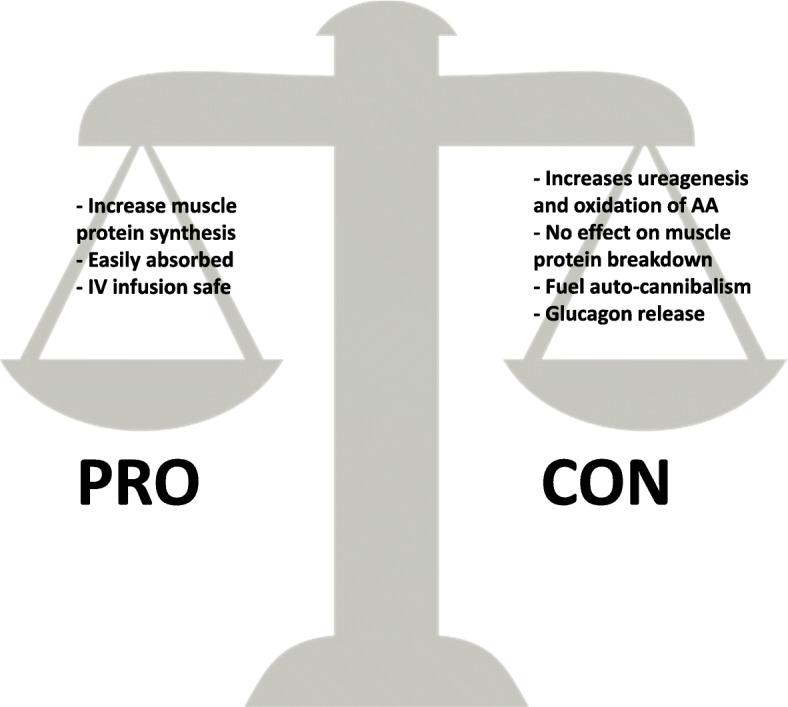
The rationale for the provision of nitrogen from proteins given via the enteral route or from intravenous amino acids is to boost the synthesis of muscle proteins, and thereby to limit the severity of intensive care unit-acquired weakness by the prevention of muscle loss. However, the optimal timing for supplemental nitrogen provision is a matter of debate and controversy. Indeed, consistent data from retrospective studies support an association between high early protein intakes and better outcomes, while recent post-hoc findings from prospective studies raise safety concerns. This pro-con paper details the arguments of both sides and highlights the need for large-scale prospective studies assessing the safety and efficacy of different levels of protein intake in combination with physical activity and summarizes the currently recruiting clinical trials.
Overview
The claims and statistics of this paper haven’t been checked yet.
Free: it reads the open-access text and checks the first 5 claims that cite a source we can check. Create a free account to check every claim.
Integrity signals
Registry
Cites
Statistics
Figures
Verification
Claims the paper makes
The claims and statistics of this paper haven’t been checked yet.
Free: it reads the open-access text and checks the first 5 claims that cite a source we can check. Create a free account to check every claim.
Self-check
Percentages, sums and reported differences re-computed from the paper’s own numbers.
The self-check needs the paper’s full text.
Citations
Cites
McClave, S. A., Taylor, B. E., Martindale, R. G., Warren, M. M., Johnson, D. R., Braunschweig, C., McCarthy, M. S., Davanos, E., Rice, T. W., Cresci, G. A., et al. (2016) · Journal of Parenteral and Enteral Nutrition · doi:10.1177/0148607115621863 · Cited by 3,982
Functional Disability 5 Years after Acute Respiratory Distress Syndrome
Herridge, M. S., Tansey, C. M., Matté, A., Tomlinson, G., Diaz-Granados, N., Cooper, A., Guest, C. B., Mazer, C. D., Mehta, S., Stewart, T. E., et al. (2011) · New England Journal of Medicine · doi:10.1056/nejmoa1011802 · Cited by 2,847
Acute skeletal muscle wasting in critical illness
Puthucheary, Z. A., Rawal, J., McPhail, M., Connolly, B., Ratnayake, G., Chan, P., Hopkinson, N. S., Padhke, R., Dew, T., Sidhu, P. S., et al. (2013) · JAMA · doi:10.1001/jama.2013.278481 · Cited by 2,103
McClave, S. A., Martindale, R. G., Vanek, V. W., McCarthy, M., Roberts, P., Taylor, B., Ochoa, J. B., Napolitano, L., Cresci, G., the A.S.P.E.N. Board of Directors, et al. (2009) · Journal of Parenteral and Enteral Nutrition · doi:10.1177/0148607109335234 · Cited by 1,873 · cited 1×
“5 g/kg of protein per day [5, 6] and the Correspondence: Jean-Charles.”
BackgroundEarly versus late parenteral nutrition in critically ill adults
Casaer, M. P., Mesotten, D., Hermans, G., Wouters, P. J., Schetz, M., Meyfroidt, G., Van Cromphaut, S., Ingels, C., Meersseman, P., Muller, J., et al. (2011) · New England Journal of Medicine · doi:10.1056/nejmoa1102662 · Cited by 1,696
Taylor, B. E., McClave, S. A., Martindale, R. G., Warren, M. M., Johnson, D. R., Braunschweig, C., McCarthy, M. S., Davanos, E., Rice, T. W., Cresci, G. A., et al. (2016) · Critical Care Medicine · doi:10.1097/ccm.0000000000001525 · Cited by 1,476
The National Heart, L., Rice, T. W., Wheeler, A. P., Thompson, B. T., Steingrub, J., Hite, R. D., Moss, M., Morris, A., Dong, N., & Rock, P. (2012) · JAMA: The Journal of the American Medical Association · doi:10.1001/jama.2012.137 · Cited by 935
Early versus late parenteral nutrition in critically ill children
Fivez, T., Kerklaan, D., Mesotten, D., Verbruggen, S., Wouters, P. J., Vanhorebeek, I., Debaveye, Y., Vlasselaers, D., Desmet, L., Casaer, M. P., et al. (2016) · New England Journal of Medicine · doi:10.1056/nejmoa1514762 · Cited by 558
Metabolic response to the stress of critical illness
Preiser, J.-C., Ichai, C., Orban, J.-C., & Groeneveld, A. B. J. (2014) · British Journal of Anaesthesia · doi:10.1093/bja/aeu187 · Cited by 505 · cited 1×
“However, controversial views are expressed regarding the amount of proteins to be given during the early phase of critical illness, when muscle protein breakdown outweighs muscle synthesis as a result of the resistance to anabolic stimuli [3, 4].”
BackgroundSelf-citationMetabolic and nutritional support of critically ill patients: consensus and controversies
Preiser, J.-C., van Zanten, A. R., Berger, M. M., Biolo, G., Casaer, M. P., Doig, G. S., Griffiths, R. D., Heyland, D. K., Hiesmayr, M., Iapichino, G., et al. (2015) · Critical Care · doi:10.1186/s13054-015-0737-8 · Cited by 416
Self-citationWeijs, P. J. M., Stapel, S. N., de Groot, S. D. W., Driessen, R. H., de Jong, E., Girbes, A. R. J., Strack van Schijndel, R. J. M., & Beishuizen, A. (2012) · Journal of Parenteral and Enteral Nutrition · doi:10.1177/0148607111415109 · Cited by 408
Provision of protein and energy in relation to measured requirements in intensive care patients
Allingstrup, M. J., Esmailzadeh, N., Wilkens Knudsen, A., Espersen, K., Hartvig Jensen, T., Wiis, J., Perner, A., & Kondrup, J. (2012) · Clinical Nutrition · doi:10.1016/j.clnu.2011.12.006 · Cited by 381
Allingstrup, M. J., Kondrup, J., Wiis, J., Claudius, C., Pedersen, U. G., Hein-Rasmussen, R., Bjerregaard, M. R., Steensen, M., Jensen, T. H., Lange, T., et al. (2017) · Intensive Care Medicine · doi:10.1007/s00134-017-4880-3 · Cited by 341
Nicolo, M., Heyland, D. K., Chittams, J., Sammarco, T., & Compher, C. (2016) · Journal of Parenteral and Enteral Nutrition · doi:10.1177/0148607115583675 · Cited by 294
Compher, C., Chittams, J., Sammarco, T., Nicolo, M., & Heyland, D. K. (2017) · Critical Care Medicine · doi:10.1097/ccm.0000000000002083 · Cited by 264
Protein Requirements in the Critically Ill: A Randomized Controlled Trial Using Parenteral Nutrition
Ferrie, S., Allman‐Farinelli, M., Daley, M., & Smith, K. (2016) · Journal of Parenteral and Enteral Nutrition · doi:10.1177/0148607115618449 · Cited by 250 · cited 1×
“In other interventional studies, intravenous infusion of amino acids was found to be safe in patients at risk of acute renal failure [23] and transiently improved muscle function [24].”
BackgroundMuscle wasting and energy balance in critical illness
Reid, C. (2004) · Clinical Nutrition · doi:10.1016/s0261-5614(03)00129-8 · Cited by 242
Doig, G. S., Simpson, F., Bellomo, R., Heighes, P. T., Sweetman, E. A., Chesher, D., Pollock, C., Davies, A., Botha, J., Harrigan, P., et al. (2015) · Intensive Care Medicine · doi:10.1007/s00134-015-3827-9 · Cited by 232
Appropriate protein provision in critical illness: a systematic and narrative review
Hoffer, L. J., & Bistrian, B. R. (2012) · The American Journal of Clinical Nutrition · doi:10.3945/ajcn.111.032078 · Cited by 225
Metabolic phenotype of skeletal muscle in early critical illness
Puthucheary, Z. A., Astin, R., Mcphail, M. J. W., Saeed, S., Pasha, Y., Bear, D. E., Constantin, D., Velloso, C., Manning, S., Calvert, L., et al. (2018) · Thorax · doi:10.1136/thoraxjnl-2017-211073 · Cited by 205
The intensive care medicine research agenda in nutrition and metabolism
Arabi, Y. M., Casaer, M. P., Chapman, M., Heyland, D. K., Ichai, C., Marik, P. E., Martindale, R. G., McClave, S. A., Preiser, J.-C., Reignier, J., et al. (2017) · Intensive Care Medicine · doi:10.1007/s00134-017-4711-6 · Cited by 203
Self-citationThe evolutionary benefit of insulin resistance
Soeters, M. R., & Soeters, P. B. (2012) · Clinical Nutrition · doi:10.1016/j.clnu.2012.05.011 · Cited by 174
Petros, S., Horbach, M., Seidel, F., & Weidhase, L. (2016) · Journal of Parenteral and Enteral Nutrition · doi:10.1177/0148607114528980 · Cited by 163
Vanhorebeek, I., Verbruggen, S., Casaer, M. P., Gunst, J., Wouters, P. J., Hanot, J., Guerra, G. G., Vlasselaers, D., Joosten, K., & Van den Berghe, G. (2017) · The Lancet Respiratory Medicine · doi:10.1016/s2213-2600(17)30186-8 · Cited by 163
Protein metabolism and gene expression in skeletal muscle of critically ill patients with sepsis
Klaude, M., Mori, M., Tjäder, I., Gustafsson, T., Wernerman, J., & Rooyackers, O. (2012) · Clinical Science · doi:10.1042/cs20110233 · Cited by 146
Supplementation in Acute Lung Injury—Reply
Rice, T. W., Wheeler, A. P., & Thompson, B. (2012) · JAMA · doi:10.1001/jama.2011.1985 · Cited by 130
Summary Points and Consensus Recommendations From the International Protein Summit
Hurt, R. T., McClave, S. A., Martindale, R. G., Ochoa, J. B., Coss‐Bu, J. A., Dickerson, R. N., Heyland, D. K., Hoffer, L. J., Moore, F. A., Morris, C. R., et al. (2017) · Nutrition in Clinical Practice · doi:10.1177/0884533617693610 · Cited by 107
Rugeles, S., Villarraga-Angulo, L. G., Ariza-Gutiérrez, A., Chaverra-Kornerup, S., Lasalvia, P., & Rosselli, D. (2016) · Journal of Critical Care · doi:10.1016/j.jcrc.2016.05.004 · Cited by 103
van Zanten, A. R. H., Petit, L., De Waele, J., Kieft, H., de Wilde, J., van Horssen, P., Klebach, M., & Hofman, Z. (2018) · Critical Care · doi:10.1186/s13054-018-2070-5 · Cited by 90
Nitrogen Balance and Protein Requirements for Critically Ill Older Patients
Dickerson, R. (2016) · Nutrients · doi:10.3390/nu8040226 · Cited by 83
Adams, R. L., & Broughton, K. S. (2016) · Annals of Nutrition and Metabolism · doi:10.1159/000448665 · Cited by 82
Role of Glucagon in Catabolism and Muscle Wasting of Critical Illness and Modulation by Nutrition
Thiessen, S. E., Derde, S., Derese, I., Dufour, T., Vega, C. A., Langouche, L., Goossens, C., Peersman, N., Vermeersch, P., Vander Perre, S., et al. (2017) · American Journal of Respiratory and Critical Care Medicine · doi:10.1164/rccm.201702-0354oc · Cited by 75
Gamrin-Gripenberg, L., Sundström-Rehal, M., Olsson, D., Grip, J., Wernerman, J., & Rooyackers, O. (2018) · Critical Care · doi:10.1186/s13054-017-1932-6 · Cited by 71
Feeding critically ill patients the right ‘whey’: thinking outside of the box. A personal view
Marik, P. E. (2015) · Annals of Intensive Care · doi:10.1186/s13613-015-0051-2 · Cited by 66
Liebau, F., Wernerman, J., van Loon, L. J. C., & Rooyackers, O. (2015) · American Journal of Clinical Nutrition · doi:10.3945/ajcn.114.091934 · Cited by 62
Zhu, R., Allingstrup, M. J., Perner, A., & Doig, G. S. (2018) · Critical Care Medicine · doi:10.1097/ccm.0000000000003221 · Cited by 54
Seres, D. S., & Ippolito, P. R. (2016) · Clinical Nutrition · doi:10.1016/j.clnu.2016.04.016 · Cited by 48
Should We Prescribe More Protein to Critically Ill Patients?
Heyland, D. K., Stapleton, R., & Compher, C. W. (2018) · Nutrients · doi:10.3390/nu10040462 · Cited by 46
Hypocaloric, high-protein nutrition therapy for critically ill patients with obesity
Dickerson, R. N. (2014) · Nutrition in Clinical Practice · doi:10.1177/0884533614542439 · Cited by 23
High protein intake without concerns?
Rooyackers, O., Rehal, M. S., Liebau, F., Norberg, Å., & Wernerman, J. (2017) · Critical Care · doi:10.1186/s13054-017-1699-9 · Cited by 22
REDOXs: Important Answers, Many More Questions Raised!
Preiser, J., & Wernerman, J. (2013) · Journal of Parenteral and Enteral Nutrition · doi:10.1177/0148607113495893 · Cited by 12 · cited 1×
“In the field of nutrition, this sequence is usually not followed; as a result the issue of safety may have been overlooked [9].”
BackgroundSelf-citationPassive Cycling Limits Myofibrillar Protein Catabolism in Unconscious Patients: A Pilot Study
Prato, C. D. (2014) · Journal of Novel Physiotherapies · doi:10.4172/2165-7025.1000225 · Cited by 10
Esmailzadeh, N., Allingstrup, M., Knudsen, A. W., Wiis, J., Espersen, K., Jensen, T. H., & Kondrup, J. (2011) · Clinical Nutrition Supplements · doi:10.1016/s1744-1161(11)70031-x · Cited by 8
Provision of Nutrients to the Acutely Ill. Introducing the “Baby Stomach” Concept
Preiser, J., & Wernerman, J. (2017) · American Journal of Respiratory and Critical Care Medicine · doi:10.1164/rccm.201705-0919ed · Cited by 8 · cited 1×
“be Department of Intensive Care, Erasme University Hospital, Université Libre de Bruxelles, 808 route de Lennik, B-1070 Brussels, Belgium provision of an amount of protein lower than nitrogen losses [1, 4], in agreement with the “Baby stomach” concept [7].”
ResultSelf-citation
Cited by
A guide to enteral nutrition in intensive care units: 10 expert tips for the daily practice
Preiser, J.-C., Arabi, Y. M., Berger, M. M., Casaer, M., McClave, S., Montejo-González, J. C., Peake, S., Reintam Blaser, A., Van den Berghe, G., van Zanten, A., et al. (2021) · Critical Care · doi:10.1186/s13054-021-03847-4 · Cited by 166
“The role of high-protein intakes that stress the need for focused larger clinical trial evidence examining the effect of specifically increasing protein delivery [4, 67, 84], combined with active mobilization to optimize physical therapy and functional outcomes in long-stayers, requires further study.”
BackgroundSelf-citationNutrition in Sepsis: A Bench-to-Bedside Review.
De Waele, E., Malbrain, M. L. N. G., & Spapen, H. (2020) · Nutrients · doi:10.3390/nu12020395 · Cited by 135
“Dose, timing, and risk-to-benefit ratio of protein supplementation during the different phases of sepsis are largely unexplored [23].”
BackgroundZhu, R., Allingstrup, M. J., Perner, A., & Doig, G. S. (2018) · Critical Care Medicine · doi:10.1097/ccm.0000000000003221 · Cited by 54
Carteron, L., Samain, E., Winiszewski, H., Blasco, G., Balon, A.-S., Gilli, C., Piton, G., Capellier, G., Pili‐Floury, S., & Besch, G. (2021) · Critical Care · doi:10.1186/s13054-020-03456-7 · Cited by 46
“Likewise, by promoting gut function and protein absorption, semi-elemental or elemental solutions should be considered in high protein intake strategies in ICU patients [33, 34].”
BackgroundOral Nutrition during and after Critical Illness: SPICES for Quality of Care!
Fadeur, M., Preiser, J., Verbrugge, A., Misset, B., & Rousseau, A. (2020) · Nutrients · doi:10.3390/nu12113509 · Cited by 36
“3 g/kg/day proteins between day 3 to day 7 at the latest [2,42].”
BackgroundSelf-citation
Metadata
- Authors
- Preiser, J.-C.
- Affiliations
- Université Libre de Bruxelles (BE)
- Corresponding author
- Preiser, Jean-Charles
- Venue
- Critical Care
- Published
- 2018-10-25
- Volume
- 22
- Issue
- 1
- Pages
- 261-261
- ISSN
- 1364-8535 (ISSN-L)
- PMC
- PMC6203200
- OpenAlex
- W2898483187
- Cited by
- 44
- References
- 44
- Citations by year
- 2025: 3 · 2024: 8 · 2023: 5 · 2022: 4 · 2021: 4 · 2020: 9 · 2019: 10 · 2018: 1
- FWCI
- 4.96
- Type
- journal article
- Language
- en
- Open access
- gold
- doi.org
- Licence
- cc-by
- creativecommons.org/licenses/by/4.0/ (tdm)
- Locations
- Critical Care (publishedVersion, cc-by)
- Europe PMC (PubMed Central) (publishedVersion, other-oa)
- PubMed Central (publishedVersion, cc-by)
- PubMed (publishedVersion)
- Dépôt institutionnel de l'Université libre de Bruxelles (Université Libre de Bruxelles) (submittedVersion, other-oa)
- DOAJ (DOAJ: Directory of Open Access Journals) (submittedVersion, cc-by-sa)
- Topics
- Health Sciences › Nursing › Nutrition and Dietetics › Clinical Nutrition and Gastroenterology
- Health Sciences › Medicine › Critical Care and Intensive Care Medicine › Intensive Care Unit Cognitive Disorders
- Health Sciences › Nursing › Nutrition and Dietetics › Muscle metabolism and nutrition
- Keywords
- high protein intake, nitrogen supplementation, enteral nutrition, intravenous amino acids, muscle protein synthesis, ICU-acquired weakness, muscle mass loss, treatment efficacy and safety, physical activity, critically ill patients
- MeSH terms
- Dietary Proteins, Enteral Nutrition, Humans, Prospective Studies, Time Factors, Critical Illness
About these checks
Registry, retraction, Cites and statistics results are computed, not judged, with one exception: a printed reference that no index lists is read once by a model before it counts as a citation error. Claims are extracted by a model and kept only when their quote appears verbatim in the text; each cited source is then checked, with a model’s help, for whether it says what the claim relies on. Those verdicts can be wrong — read the claim’s quote and the cited source before relying on one.
Statistics and arithmetic are recomputed, not judged.
Confidence bands are shown only for fields calibrated on our annotated test set. None is calibrated yet, so no band is shown.
What counts as a claim ›How we measure confidence ›How we check this ›
Are you an author, or do you see a problem with this page? Request a review
Data sources
Bibliographic data: Semantic Scholar, OpenAlex, Crossref.
Contains information from the Semantic Scholar Academic Graph Datasets, made available under the ODC Attribution License (ODC-BY 1.0).
Semantic Scholar’s data is described in: Kinney, R., et al. (2023). The Semantic Scholar Open Data Platform. arXiv:2301.10140.
