

Prognostic significance of FOXP3+ tumor-infiltrating lymphocytes in breast cancer depends on estrogen receptor and human epidermal growth factor receptor-2 expression status and concurrent cytotoxic T-cell infiltration
Open accessThe DOI matches its Crossref record; 48 of the 48 references it cites were found in a registry or an index.
Abstract
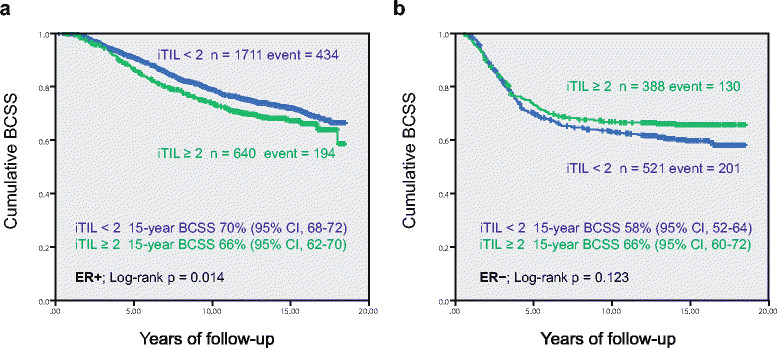
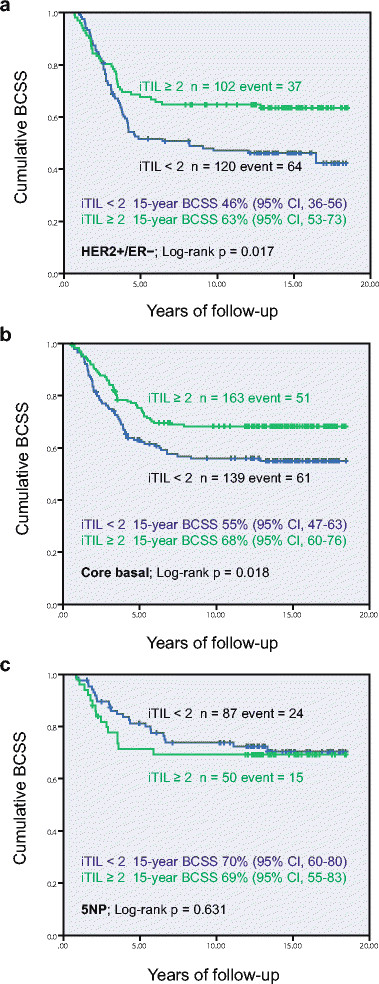
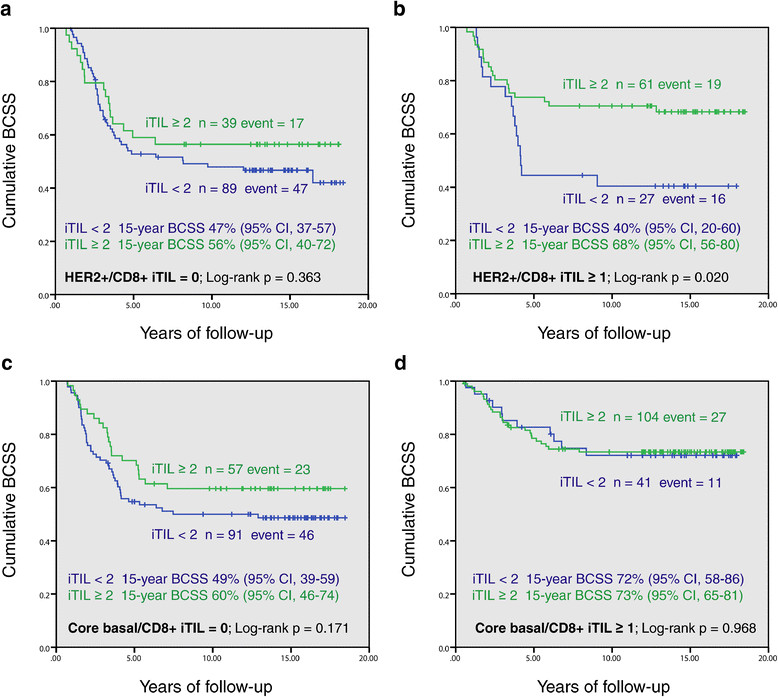
INTRODUCTION: The infiltration of FOXP3+ regulatory T cells into invasive tumors has been reported to be associated with survival in a variety of cancers. The prognostic significance of FOXP3+ tumor-infiltrating lymphocytes (TILs) in breast cancer, however, remains controversial. METHODS: FOXP3+ TILs were assessed by immunohistochemistry on tissue microarrays constructed from a well-defined cohort of 3,992 breast cancer patients linked to detailed demographic, biomarker, treatment and outcome data. Survival analyses were performed using the Kaplan-Meier function and Cox proportional hazards regression models to evaluate the association of FOXP3+ TILs with breast cancer-specific survival, stratified by intrinsic subtype and cytotoxic T-cell infiltration status (as defined by CD8 immunohistochemistry). RESULTS: The presence of high numbers of FOXP3+ TILs was significantly associated with young age, high grade, estrogen receptor (ER) negativity, concurrent CD8+ cytotoxic T-cell infiltration, and human epidermal growth factor receptor-2 positive (HER2+)/ER- and core basal subtypes. On multivariate survival analysis, a high level of FOXP3+ TILs was significantly associated with poor survival in ER+ breast cancers that lacked CD8+ T-cell infiltrates (hazard ratio (HR) = 1.30, 95% confidence interval (CI) = 1.02 to 1.66). However, in ER- breast cancers, FOXP3+ TILs were strongly associated with improved survival in the HER2+/ER- subgroup, particularly in those with co-existent CD8+ T-cell infiltrates (HR = 0.48, 95% CI = 0.23 to 0.98), for which the presence of high levels of FOXP3+ TILs was independent of standard clinical prognostic factors. CONCLUSIONS: FOXP3+ regulatory TILs are a poor prognostic indicator in ER+ breast cancer, but a favorable prognostic factor in the HER2+/ER- subtype. The prognostic value of FOXP3+ TILs in breast cancer differs depending on ER and HER2 expression status and CD8+ T-cell infiltration.
Overview
The claims and statistics of this paper haven’t been checked yet.
Free: it reads the open-access text and checks the first 5 claims that cite a source we can check. Create a free account to check every claim.
Integrity signals
Registry
Cites
Statistics
Figures
Verification
Claims the paper makes
The claims and statistics of this paper haven’t been checked yet.
Free: it reads the open-access text and checks the first 5 claims that cite a source we can check. Create a free account to check every claim.
Claims other papers make about this one
Each is checked against this paper’s own text: does it say what the citing paper says it does?
The source backs part of the claim, not all of it — or backs it for a different population, condition or comparison.
In the citing paper
“For instance, a substantial immunohistochemical study found that high-density Tregs had a better prognosis in the HER2+/ER− category of breast cancers, but only if accompanied by a high infiltration of CD8+ T cells [72].”
From Potential anti-tumor effects of regulatory T cells in the tumor microenvironment: a review (2024) · cites this paper as [72]
Experimental — accuracy not yet measured
Self-check
Percentages, sums and reported differences re-computed from the paper’s own numbers.
The self-check needs the paper’s full text.
Citations
Cites
The blockade of immune checkpoints in cancer immunotherapy
Pardoll, D. M. (2012) · Nature Reviews Cancer · doi:10.1038/nrc3239 · Cited by 13,838 · cited 1×
“This tumor-induced increase in FOXP3+ Tregs represents a potential barrier to attempts at cancer immunotherapy [4,5].”
Wolff, A. C., Hammond, M. E. H., Schwartz, J. N., Hagerty, K. L., Allred, D. C., Cote, R. J., Dowsett, M., Fitzgibbons, P. L., Hanna, W. M., Langer, A., et al. (2007) · Journal of Clinical Oncology · doi:10.1200/jco.2006.09.2775 · Cited by 4,434
Sakaguchi, S. (2005) · Nature Immunology · doi:10.1038/ni1178 · Cited by 2,669 · cited 1×
“This transcription factor plays an important role in the development and function of immune regulatory T cells (Tregs), and can be used as a specific biomarker for the identification of Tregs within an inflammatory infiltrate [2].”
Nielsen, T. O., Hsu, F. D., Jensen, K., Cheang, M., Karaca, G., Hu, Z., Hernandez-Boussard, T., Livasy, C., Cowan, D., Dressler, L., et al. (2004) · Clinical Cancer Research · doi:10.1158/1078-0432.ccr-04-0220 · Cited by 2,663
Self-citationKi67 Index, HER2 Status, and Prognosis of Patients With Luminal B Breast Cancer
Cheang, M. C. U., Chia, S. K., Voduc, D., Gao, D., Leung, S., Snider, J., Watson, M., Davies, S., Bernard, P. S., Parker, J. S., et al. (2009) · JNCI: Journal of the National Cancer Institute · doi:10.1093/jnci/djp082 · Cited by 2,249
Self-citationEffector Memory T Cells, Early Metastasis, and Survival in Colorectal Cancer
Pagès, F., Berger, A., Camus, M., Sanchez-Cabo, F., Costes, A., Molidor, R., Mlecnik, B., Kirilovsky, A., Nilsson, M., Damotte, D., et al. (2005) · New England Journal of Medicine · doi:10.1056/nejmoa051424 · Cited by 2,135 · cited 1×
“Conversely, other studies have found that FOXP3+ TILs correlate with favorable prognosis in colorectal, gastric, ovarian and head and neck carcinomas [11-15].”
Regulatory T cells, tumour immunity and immunotherapy
Zou, W. (2006) · Nature Reviews Immunology · doi:10.1038/nri1806 · Cited by 2,085
Wolff, A. C., Hammond, M. E. H., Hicks, D. G., Dowsett, M., McShane, L. M., Allison, K. H., Allred, D. C., Bartlett, J. M. S., Bilous, M., Fitzgibbons, P., et al. (2014) · Archives of Pathology and Laboratory Medicine · doi:10.5858/arpa.2013-0953-sa · Cited by 1,762
Immunological aspects of cancer chemotherapy
Zitvogel, L., Apetoh, L., Ghiringhelli, F., & Kroemer, G. (2008) · Nature Reviews Immunology · doi:10.1038/nri2216 · Cited by 1,712 · cited 1×
“Studies have reported that pre-existing immune responses may fortify the effect of chemotherapy [45,46].”
Tumor-Infiltrating CD8+Lymphocytes Predict Clinical Outcome in Breast Cancer
Mahmoud, S. M. A., Paish, E. C., Powe, D. G., Macmillan, R. D., Grainge, M. J., Lee, A. H. S., Ellis, I. O., & Green, A. R. (2011) · Journal of Clinical Oncology · doi:10.1200/jco.2010.30.5037 · Cited by 1,367
Cited by
Salgado, R., Denkert, C., Demaria, S., Sirtaine, N., Klauschen, F., Pruneri, G., Wienert, S., Van den Eynden, G., Baehner, F. L., Penault-Llorca, F., et al. (2015) · Annals of Oncology · doi:10.1093/annonc/mdu450 · Cited by 3,113
Self-citationHendry, S., Salgado, R., Gevaert, T., Russell, P. A., John, T., Thapa, B., Christie, M., van de Vijver, K., Estrada, M. V., Gonzalez-Ericsson, P. I., et al. (2017) · Advances in Anatomic Pathology · doi:10.1097/pap.0000000000000161 · Cited by 799
Self-citationHendry, S., Salgado, R., Gevaert, T., Russell, P. A., John, T., Thapa, B., Christie, M., van de Vijver, K., Estrada, M. V., Gonzalez-Ericsson, P. I., et al. (2017) · Advances in Anatomic Pathology · doi:10.1097/pap.0000000000000162 · Cited by 709
Self-citationRegulatory T Cells Exhibit Distinct Features in Human Breast Cancer
Plitas, G., Konopacki, C., Wu, K., Bos, P. D., Morrow, M., Putintseva, E. V., Chudakov, D. M., & Rudensky, A. Y. (2016) · Immunity · doi:10.1016/j.immuni.2016.10.032 · Cited by 695
“Treg cells variably infiltrate human breast cancers and their frequency in the tumor microenvironment has clinical significance (Demir et al., 2013; Kim et al., 2014; Liu et al., 2011; Liu et al., 2014).”
Stanton, S. E., Adams, S., & Disis, M. L. (2016) · JAMA Oncology · doi:10.1001/jamaoncol.2016.1061 · Cited by 631
Bense, R. D., Sotiriou, C., Piccart-Gebhart, M. J., Haanen, J. B. A. G., van Vugt, M. A. T. M., de Vries, E. G. E., Schröder, C. P., & Fehrmann, R. S. N. (2017) · Journal of the National Cancer Institute · doi:10.1093/jnci/djw192 · Cited by 379
Tumor-infiltrating B cells signal functional humoral immune responses in breast cancer
Garaud, S., Buisseret, L., Solinas, C., Gu-Trantien, C., de Wind, A., Van den Eynden, G., Naveaux, C., Lodewyckx, J.-N., Boisson, A., Duvillier, H., et al. (2019) · JCI Insight · doi:10.1172/jci.insight.129641 · Cited by 347
Natural and therapy-induced immunosurveillance in breast cancer
Kroemer, G., Senovilla, L., Galluzzi, L., André, F., & Zitvogel, L. (2015) · Nature Medicine · doi:10.1038/nm.3944 · Cited by 310
Therapeutic targeting of regulatory T cells in cancer
Shan, F., Somasundaram, A., Bruno, T. C., Workman, C. J., & Vignali, D. A. A. (2022) · Trends in Cancer · doi:10.1016/j.trecan.2022.06.008 · Cited by 244
Santoni, M., Romagnoli, E., Saladino, T., Foghini, L., Guarino, S., Capponi, M., Giannini, M., Cognigni, P. D., Ferrara, G., & Battelli, N. (2018) · Biochimica et Biophysica Acta (BBA) - Reviews on Cancer · doi:10.1016/j.bbcan.2017.10.007 · Cited by 237
Buisseret, L., Garaud, S., de Wind, A., Van den Eynden, G., Boisson, A., Solinas, C., Gu-Trantien, C., Naveaux, C., Lodewyckx, J.-N., Duvillier, H., et al. (2017) · OncoImmunology · doi:10.1080/2162402x.2016.1257452 · Cited by 237
Immune Infiltrates in Breast Cancer: Recent Updates and Clinical Implications
Dieci, M. V., Miglietta, F., & Guarneri, V. (2021) · Cells · doi:10.3390/cells10020223 · Cited by 228
“Interestingly, a weak correlation between the phosphorylation levels of the phosphoinositide 3-kinases (PI3K) pathway and lymphocytic infiltration, especially for FOXP3+ cells, was observed, thus revealing a possible link between the PI3K pathway and immune infiltrate composition [69].”
BackgroundBurugu, S., Asleh-Aburaya, K., & Nielsen, T. O. (2017) · Breast Cancer · doi:10.1007/s12282-016-0698-z · Cited by 222
Self-citationThe Great Immune Escape: Understanding the Divergent Immune Response in Breast Cancer Subtypes
Onkar, S. S., Carleton, N. M., Lucas, P. C., Bruno, T. C., Lee, A. V., Vignali, D. A. A., & Oesterreich, S. (2023) · Cancer Discovery · doi:10.1158/2159-8290.cd-22-0475 · Cited by 213
If we build it they will come: targeting the immune response to breast cancer
Gatti-Mays, M. E., Balko, J. M., Gameiro, S. R., Bear, H. D., Prabhakaran, S., Fukui, J., Disis, M. L., Nanda, R., Gulley, J. L., Kalinsky, K., et al. (2019) · npj Breast Cancer · doi:10.1038/s41523-019-0133-7 · Cited by 207
Breast and Gut Microbiota Action Mechanisms in Breast Cancer Pathogenesis and Treatment
Laborda-Illanes, A., Sanchez-Alcoholado, L., Dominguez-Recio, M. E., Jimenez-Rodriguez, B., Lavado, R., Comino-Méndez, I., Alba, E., & Queipo-Ortuño, M. I. (2020) · Cancers · doi:10.3390/cancers12092465 · Cited by 206
“In contrast, FOXP3+ CD4+ regulatory T cells act primarily by mediating immune tolerance and their presence correlates with a poor prognosis [57].”
BackgroundCD74 and intratumoral immune response in breast cancer
Wang, Z.-Q., Milne, K., Webb, J. R., & Watson, P. H. (2017) · Oncotarget · doi:10.18632/oncotarget.8610 · Cited by 202
Burugu, S., Gao, D., Leung, S., Chia, S. K., & Nielsen, T. O. (2017) · Annals of Oncology · doi:10.1093/annonc/mdx557 · Cited by 189
Self-citationTargeting microRNAs as key modulators of tumor immune response
Paladini, L., Fabris, L., Bottai, G., Raschioni, C., Calin, G. A., & Santarpia, L. (2016) · Journal of Experimental & Clinical Cancer Research · doi:10.1186/s13046-016-0375-2 · Cited by 184
“Higher frequency of T cells, NK cells and natural killer T (NKT) cells have been correlated with better prognosis in patients with different types of cancer types [38–43].”
BackgroundExhausted T cell signature predicts immunotherapy response in ER-positive breast cancer
Terranova-Barberio, M., Pawlowska, N., Dhawan, M., Moasser, M., Chien, A. J., Melisko, M. E., Rugo, H., Rahimi, R., Deal, T., Daud, A., et al. (2020) · Nature Communications · doi:10.1038/s41467-020-17414-y · Cited by 177
The Immunology of Hormone Receptor Positive Breast Cancer
Goldberg, J., Pastorello, R. G., Vallius, T., Davis, J., Cui, Y. X., Agudo, J., Waks, A. G., Keenan, T., McAllister, S. S., Tolaney, S. M., et al. (2021) · Frontiers in Immunology · doi:10.3389/fimmu.2021.674192 · Cited by 171
“Conversely, FOXP3+ regulatory T cells assessed in treatment naïve tumors were shown to be an indicator of poor prognosis in HR+ breast cancer, but of favorable prognosis in HR-/HER2+ tumors (38).”
BackgroundTargeting immune checkpoints in breast cancer: an update of early results
Solinas, C., Gombos, A., Latifyan, S., Piccart, M. J., Kok, M., & Buisseret, L. (2017) · ESMO Open · doi:10.1136/esmoopen-2017-000255 · Cited by 166
Matsumoto, H., Thike, A. A., Li, H., Yeong, J., Koo, S.-L., Dent, R. A., Tan, P. H., & Iqbal, J. (2016) · Breast Cancer Research and Treatment · doi:10.1007/s10549-016-3743-x · Cited by 165
Regulatory T cells in the tumour microenvironment
Imianowski, C. J., Chen, Q., Workman, C. J., & Vignali, D. A. A. (2025) · Nature reviews. Cancer · doi:10.1038/s41568-025-00832-9 · Cited by 162
Treg depletion potentiates checkpoint inhibition in claudin-low breast cancer
Taylor, N., Vick, S. C., Iglesia, M. D., Brickey, W. J., Midkiff, B. R., McKinnon, K. P., Reisdorf, S., Anders, C. K., Carey, L., Parker, J. S., et al. (2017) · Journal of Clinical Investigation · doi:10.1172/jci90499 · Cited by 163
CD103 and Intratumoral Immune Response in Breast Cancer
Wang, Z.-Q., Milne, K., Derocher, H., Webb, J. R., Nelson, B. H., & Watson, P. H. (2016) · Clinical Cancer Research · doi:10.1158/1078-0432.ccr-16-0732 · Cited by 156
Breast cancer genomics and immuno-oncological markers to guide immune therapies
Hammerl, D., Smid, M., Timmermans, A. M., Sleijfer, S., Martens, J. W. M., & Debets, R. (2018) · Seminars in Cancer Biology · doi:10.1016/j.semcancer.2017.11.003 · Cited by 152
The Tolerogenic Function of Regulatory T Cells in Pregnancy and Cancer
Jørgensen, N., Persson, G., & Hviid, T. V. F. (2019) · Frontiers in Immunology · doi:10.3389/fimmu.2019.00911 · Cited by 152
Tumour-infiltrating lymphocytes and the emerging role of immunotherapy in breast cancer
Luen, S. J., Savas, P. S., Fox, S. B., Salgado, R., & Loi, S. (2017) · Pathology · doi:10.1016/j.pathol.2016.10.010 · Cited by 150
Sobral‐Leite, M., Salomon, I., Opdam, M., Kruger, D. T., Beelen, K. J., van der Noort, V., van Vlierberghe, R. L. P., Blok, E. J., Giardiello, D., Sanders, J., et al. (2019) · Breast Cancer Research · doi:10.1186/s13058-019-1176-2 · Cited by 149
Yeong, J. P.-S., Thike, A. A., Lim, J. C. T., Lee, B. T. K., Li, H., Wong, S. C., Hue, S. S., Tan, P. H., & Iqbal, J. (2017) · Breast Cancer Research and Treatment · doi:10.1007/s10549-017-4161-4 · Cited by 150
CD177 modulates the function and homeostasis of tumor-infiltrating regulatory T cells
Kim, M., Borcherding, N. C., Ahmed, K. K., Voigt, A. P., Vishwakarma, A., Kolb, R. H., Kluz, P., Pandey, G., De, U., Drashansky, T. T., et al. (2021) · Nature Communications · doi:10.1038/s41467-021-26091-4 · Cited by 146
Shou, J., Zhang, Z., Lai, Y., Chen, Z., & Huang, J. (2016) · BMC Cancer · doi:10.1186/s12885-016-2732-0 · Cited by 144
Triple negative breast cancer – prognostic role of immune-related factors: a systematic review
Stovgaard, E. S., Nielsen, D. L., Høgdall, E. V. S., & Balslev, E. (2017) · Acta Oncologica · doi:10.1080/0284186x.2017.1400180 · Cited by 142
Bottai, G., Raschioni, C., Losurdo, A., Tommaso, L. D., Tinterri, C., Torrisi, R., Reis-Filho, J. S., Roncalli, M. G., Sotiriou, C. P., Santoro, A., et al. (2016) · Breast Cancer Research · doi:10.1186/s13058-016-0783-4 · Cited by 130
Tumor-infiltrating lymphocytes in breast cancer according to tumor subtype: Current state of the art
Solinas, C., Carbognin, L., Silva, P. D., Criscitiello, C., & Lambertini, M. (2017) · The Breast · doi:10.1016/j.breast.2017.07.005 · Cited by 130
The prognostic effects of somatic mutations in ER-positive breast cancer
Griffith, O. L., Spies, N. C., Anurag, M., Griffith, M., Luo, J., Tu, D., Yeo, B., Kunisaki, J., Miller, C. A., Krysiak, K., et al. (2018) · Nature Communications · doi:10.1038/s41467-018-05914-x · Cited by 128
Self-citationThe immune system and hormone-receptor positive breast cancer: Is it really a dead end?
Dieci, M. V., Griguolo, G., Miglietta, F., & Guarneri, V. (2016) · Cancer Treatment Reviews · doi:10.1016/j.ctrv.2016.03.011 · Cited by 123
Tumor-infiltrating lymphocytes and breast cancer: Beyond the prognostic and predictive utility
Ravelli, A., Roviello, G., Cretella, D., Cavazzoni, A., Biondi, A., Cappelletti, M. R., Zanotti, L., Ferrero, G., Ungari, M., Zanconati, F., et al. (2017) · Tumor Biology · doi:10.1177/1010428317695023 · Cited by 119
Epigenomic Deconvolution of Breast Tumors Reveals Metabolic Coupling between Constituent Cell Types
Onuchic, V., Hartmaier, R. J., Boone, D. N., Samuels, M. L., Patel, R. Y., White, W. M., Garovic, V. D., Oesterreich, S., Roth, M. E., Lee, A. V., et al. (2016) · Cell Reports · doi:10.1016/j.celrep.2016.10.057 · Cited by 109
Schmidt, M., Weyer‐Elberich, V., Hengstler, J. G., Heimes, A.-S., Almstedt, K., Gerhold‐Ay, A., Lebrecht, A., Battista, M. J., Hasenburg, A., Şahin, U., et al. (2018) · Breast Cancer Research · doi:10.1186/s13058-018-0942-x · Cited by 106
Potential anti-tumor effects of regulatory T cells in the tumor microenvironment: a review
Li, Y., Zhang, C., Jiang, A., Lin, A., Liu, Z., Cheng, X., Wang, W., Cheng, Q., Zhang, J., Wei, T., et al. (2024) · Journal of Translational Medicine · doi:10.1186/s12967-024-05104-y · Cited by 105
Immunotherapy for metastatic breast cancer
Sugie, T. (2018) · Chinese Clinical Oncology · doi:10.21037/cco.2018.05.05 · Cited by 106
König, L., Mairinger, F. D., Hoffmann, O., Bittner, A., Schmid, K. W., Kimmig, R., Kasimir‐Bauer, S., & Bánkfalvi, Á. (2019) · BMC Cancer · doi:10.1186/s12885-019-5320-2 · Cited by 99
Zhang, S., Ke, X., Zeng, S., Wu, M., Lou, J., Wu, L., Huang, P., Huang, L., Wang, F., & Pan, S. (2015) · Cellular & Molecular Immunology · doi:10.1038/cmi.2015.57 · Cited by 95
Wang, R., Feng, W., Wang, H., Wang, L., Yang, X. Q., Yang, F., Zhang, Y., Liu, X., Zhang, D., Ren, Q., et al. (2019) · Cancer Letters · doi:10.1016/j.canlet.2019.10.032 · Cited by 95
Miyan, M., Schmidt-Mende, J., Kiessling, R. W., Poschke, I. C., & de Boniface, J. (2016) · Journal of Translational Medicine · doi:10.1186/s12967-016-0983-9 · Cited by 94
Luminal Breast Cancer: Risk of Recurrence and Tumor-Associated Immune Suppression
Pellegrino, B., Hlavata, Z., Migali, C., Silva, P. D., Aiello, M. M., Willard-Gallo, K. E., Musolino, A., & Solinas, C. (2021) · Molecular Diagnosis & Therapy · doi:10.1007/s40291-021-00525-7 · Cited by 86
Chung, Y. R., Kim, H. J., Jang, M. H., & Park, S. Y. (2016) · Breast Cancer Research and Treatment · doi:10.1007/s10549-016-4072-9 · Cited by 84
Immune Checkpoint Profiles in Luminal B Breast Cancer (Alliance)
Anurag, M., Zhu, M. M. T., Huang, C. L., Vasaikar, S. V., Wang, J., Hoog, J., Burugu, S., Gao, D., Suman, V. J., Zhang, X. H.-F., et al. (2019) · JNCI Journal of the National Cancer Institute · doi:10.1093/jnci/djz213 · Cited by 78
Self-citationKim, M., Chung, Y. R., Kim, H. J., Woo, J. W., Ahn, S., & Park, S. Y. (2020) · Breast Cancer Research · doi:10.1186/s13058-020-01267-w · Cited by 76
Dieci, M. V., Tsvetkova, V., Griguolo, G., Miglietta, F., Tasca, G., Giorgi, C. A., Cumerlato, E., Massa, D., Mele, M. L., Orvieto, E., et al. (2020) · European Journal of Cancer · doi:10.1016/j.ejca.2020.05.014 · Cited by 75
TIM-3 expression in breast cancer
Burugu, S., Gao, D., Leung, S. C. Y., Chia, S., & Nielsen, T. O. (2018) · OncoImmunology · doi:10.1080/2162402x.2018.1502128 · Cited by 74
Self-citationRole of adenosine A2b receptor overexpression in tumor progression
Sepúlveda, C., Palomo, I. F., & Fuentes, E. (2016) · Life Sciences · doi:10.1016/j.lfs.2016.10.008 · Cited by 72
Jiang, D., Gao, Z., Cai, Z., Wang, M., & He, J. (2015) · BMC Cancer · doi:10.1186/s12885-015-1742-7 · Cited by 70
Immunology and immunotherapy in breast cancer
Семиглазов, В. Ф., Tseluyko, A. I. T., Галимовна, К. А., Artemyeva, A. S., Криворотько, П. В., & Donskih, R. V. (2022) · Cancer Biology and Medicine · doi:10.20892/j.issn.2095-3941.2021.0597 · Cited by 70
Zhou, Y., Shao, N., AiErken, N., Xie, C., Ye, R., Qian, X., Hu, Z., Zhang, J., & Lin, Y. (2017) · Journal of Cancer · doi:10.7150/jca.21030 · Cited by 69
SIRT7 Is a Prognostic Biomarker Associated With Immune Infiltration in Luminal Breast Cancer
Huo, Q., Li, Z., Cheng, L., Yang, F., & Xie, N. (2020) · Frontiers in Oncology · doi:10.3389/fonc.2020.00621 · Cited by 69
Wu, H., & Chu, P. (2021) · International Journal of Molecular Sciences · doi:10.3390/ijms22020636 · Cited by 66
Immune microenvironment in different molecular subtypes of ductal breast carcinoma
Sadeghalvad, M., Mohammadi‐Motlagh, H., & Rezaei, N. (2020) · Breast Cancer Research and Treatment · doi:10.1007/s10549-020-05954-2 · Cited by 63
Kos, K., Aslam, M. A., van de Ven, R., Wellenstein, M. D., Pieters, W., van Weverwijk, A., Duits, D. E. M., van Pul, K., Hau, C., Vrijland, K., et al. (2022) · Cell Reports · doi:10.1016/j.celrep.2022.110447 · Cited by 62
Current Issues and Clinical Evidence in Tumor-Infiltrating Lymphocytes in Breast Cancer
Ahn, S. G., Jeong, J., Hong, S. W., & Jung, W. H. (2015) · Journal of Pathology and Translational Medicine · doi:10.4132/jptm.2015.07.29 · Cited by 62
Breast Cancer and Tumor Microenvironment: The Crucial Role of Immune Cells
Moura, T., Laranjeira, P., Caramelo, O. L., Gil, A. M., & Paiva, A. A. (2025) · Current Oncology · doi:10.3390/curroncol32030143 · Cited by 61
(2018) · doi:10.26574/maedica.2018.13.4.317
Alsibai, K. D., & Meseure, D. (2017) · Developmental Dynamics · doi:10.1002/dvdy.24548 · Cited by 60
The Multifaceted Role of Regulatory T Cells in Breast Cancer
Kos, K., & de Visser, K. E. (2021) · Annual Review of Cancer Biology · doi:10.1146/annurev-cancerbio-042920-104912 · Cited by 58
“…grade, high CD8+, young age West et al. 2013 ER− HER2+ No effect ER+ 2,166 No effect (multivariate)b ER−; HER2+; basal High grade, LN met+, High CD8+, young age Liu et al. 2014 ER− HER2+ 250 No effect (multivariate)c Basal 330 Favorable (multivariate) ER+ 554 ND ER+ ND Tsang et al. 2014 ER−…”
BackgroundMethodLiu, S., Chen, B., Burugu, S., Leung, S., Gao, D., Virk, S., Kos, Z., Parulekar, W. R., Shepherd, L., Gelmon, K. A., et al. (2017) · JAMA Oncology · doi:10.1001/jamaoncol.2017.2085 · Cited by 57
Self-citationO’Loughlin, M., Andreu, X., Bianchi, S., Chemielik, E., Córdoba, A., Cserni, G., Figueiredo, P., Floris, G., Foschini, M. P., Heikkilä, P., et al. (2018) · Breast Cancer Research and Treatment · doi:10.1007/s10549-018-4825-8 · Cited by 57
Goto, W., Kashiwagi, S., Asano, Y., Takada, K., Takahashi, K., Hatano, T., Takashima, T., Tomita, S., Motomura, H., Ohsawa, M., et al. (2018) · ESMO Open · doi:10.1136/esmoopen-2017-000305 · Cited by 56
Yin-yang effect of tumor infiltrating B cells in breast cancer: From mechanism to immunotherapy
Zhang, Z., Zhu, Y., Wang, Z., Zhang, T., Wu, P., & Huang, J. (2017) · Cancer Letters · doi:10.1016/j.canlet.2017.02.008 · Cited by 56
Immunologic approaches to cancer prevention—current status, challenges, and future perspectives
Wojtowicz, M. E., Dunn, B. K., & Umar, A. (2015) · Seminars in Oncology · doi:10.1053/j.seminoncol.2015.11.001 · Cited by 55
Polónia, A., Pinto, R., Cameselle-Teijeiro, J. F., Schmitt, F. C., & Paredes, J. (2017) · Journal of Clinical Pathology · doi:10.1136/jclinpath-2016-203990 · Cited by 54
Immunometabolism of regulatory T cells in cancer
Saravia, J., & Chi, H. (2025) · Oncogene · doi:10.1038/s41388-025-03458-1 · Cited by 53
Metaplastic breast cancers frequently express immune checkpoint markers FOXP3 and PD-L1
Kalaw, E., Lim, M., Kutasovic, J. R., Sokolova, A., Taege, L., Johnstone, K. J., Bennett, J., Saunus, J. M., Niland, C., Ferguson, K., et al. (2020) · British Journal of Cancer · doi:10.1038/s41416-020-01065-3 · Cited by 53
CD8 + T cell immunity blocks the metastasis of carcinogen-exposed breast cancer
Li, K., Li, T., Feng, Z., Huang, M., Wei, L., Yan, Z., Long, M. D., Hu, Q., Wang, J., Liu, S., et al. (2021) · Science Advances · doi:10.1126/sciadv.abd8936 · Cited by 53
Self-citationUnveiling the Immune Microenvironment’s Role in Breast Cancer: A Glimpse into Promising Frontiers
Kotsifaki, A., Alevizopoulos, N., Dimopoulou, V., & Armakolas, A. (2023) · International Journal of Molecular Sciences · doi:10.3390/ijms242015332 · Cited by 52
Tumor-Infiltrating Lymphocytes and Immune Response in HER2-Positive Breast Cancer
Luque, M., Sanz-Álvarez, M., Morales-Gallego, M., Madoz‐Gúrpide, J., Zazo, S., Domínguez, C., Cazorla, A., Izarzugaza, Y., Arranz, J. L., Cristóbal, I., et al. (2022) · Cancers · doi:10.3390/cancers14246034 · Cited by 52
Increased regulatory T cells in acute lymphoblastic leukemia patients
Idris, S.-Z., Hassan, N., Lee, L.-J., Noor, S. M., Osman, R., Abdul-Jalil, M., Nordin, A.-J., & Abdullah, M. (2015) · Hematology · doi:10.1179/1607845415y.0000000025 · Cited by 51
Pu, N., Zhao, G., Yin, H., Li, J., Nuerxiati, A., Wang, D., Xu, X., Kuang, T., Jin, D., Lou, W., et al. (2018) · Journal of Translational Medicine · doi:10.1186/s12967-018-1673-6 · Cited by 50
Shin, H. J., Kim, S. H., Lee, H. J., Gong, G., Baek, S., Chae, E. Y., Choi, W. J., Cha, J. H., & Kim, H. H. (2016) · NMR in Biomedicine · doi:10.1002/nbm.3571 · Cited by 50
T-cell-based breast cancer immunotherapy
Pilipow, K., Darwich, A., & Losurdo, A. (2020) · Seminars in Cancer Biology · doi:10.1016/j.semcancer.2020.05.019 · Cited by 46
Nilchian, A., Johansson, J., Ghalali, A., Asanin, S. T., Santiago, A. C., Rosencrantz, O., Sollerbrant, K., Vincent, C. T., Sund, M., Stenius, U., et al. (2019) · Cancer Research · doi:10.1158/0008-5472.can-18-1742 · Cited by 46
Chen, Q., Shen, M., Yan, M., Han, X., Mu, S., Li, Y., Luo, L., Wang, Y., Li, S., Li, T., et al. (2024) · Journal of Translational Medicine · doi:10.1186/s12967-024-05518-8 · Cited by 44
Zhao, J., & Huang, J. (2020) · Chinese Medical Journal · doi:10.1097/cm9.0000000000000710 · Cited by 44
Çelebi, F., Ağaçayak, F., Öztürk, A., İlgün, S., Üçüncü, M., İyigün, Z. E., Ordu, Ç., Pilancı, K. N., Alço, G., Gültekin, S., et al. (2019) · European Radiology · doi:10.1007/s00330-019-06516-x · Cited by 44
Zarrilli, G., Businello, G., Dieci, M. V., Paccagnella, S., Carraro, V., Cappellesso, R., Miglietta, F., Griguolo, G., Guarneri, V., Mele, M. L., et al. (2020) · International Journal of Molecular Sciences · doi:10.3390/ijms21218102 · Cited by 45
Infiltration of γδ T cells, IL-17+ T cells and FoxP3+ T cells in human breast cancer
Allaoui, R., Hagerling, C., Desmond, E., Warfvinge, C. F., Jirström, K., & Leandersson, K. (2017) · Cancer Biomarkers · doi:10.3233/cbm-170026 · Cited by 43
Shi, J., Geng, C., Sang, M., Gao, W., Li, S., Yang, S., & Zheng, L. (2019) · Oncology Letters · doi:10.3892/ol.2019.10187 · Cited by 44
Papaioannou, E. C., Sakellakis, M., Melachrinou, M., Tzoracoleftherakis, E., Kalofonos, H. P., & Kourea, E. P. (2019) · Anticancer Research · doi:10.21873/anticanres.13232 · Cited by 42
Study of the tumor microenvironment during breast cancer progression
Eftekhari, R., Esmaeili, R., Mirzaei, R., Bidad, K., Lima, S. D., Ajami, M., Shirzad, H., Hadjati, J., & Majidzadeh‐A, K. (2017) · Cancer Cell International · doi:10.1186/s12935-017-0492-9 · Cited by 42
The influence of physical activity in the anti-tumor immune response in experimental breast tumor
Bianco, T. M., Abdalla, D. R., Desidério, C. S., Thys, S., Simoens, C., Bogers, J., Murta, E. F. C., & Michelin, M. A. (2017) · Immunology Letters · doi:10.1016/j.imlet.2017.08.007 · Cited by 41
The Immune Microenvironment in Gastric Cancer: Prognostic Prediction
Ma, M., Sun, J., Liu, Z., Ouyang, S., Zhang, Z., Zeng, Z., Li, J., & Kang, W. (2022) · Frontiers in Oncology · doi:10.3389/fonc.2022.836389 · Cited by 40
Xu, Y., Lan, S., & Zheng, Q. (2018) · Tumori Journal · doi:10.5301/tj.5000624 · Cited by 39
Regulatory T cells as suppressors of anti-tumor immunity: Role of metabolism
Rosa, V. D., Rella, F. D., Giacomo, A. D., & Matarese, G. (2017) · Cytokine & Growth Factor Reviews · doi:10.1016/j.cytogfr.2017.04.001 · Cited by 39
Blomberg, O. S., Kos, K., Spagnuolo, L., Isaeva, O. I., Garner, H., Wellenstein, M. D., Bakker, N. A. M., Duits, D. E. M., Kersten, K., Klarenbeek, S., et al. (2023) · OncoImmunology · doi:10.1080/2162402x.2023.2201147 · Cited by 39
Integrated BATF transcriptional network regulates suppressive intratumoral regulatory T cells
Shan, F., Cillo, A. R., Cardello, C., Yuan, D. Y., Kunning, S. R., Cui, J., Lampenfeld, C., Williams, A. M., McDonough, A. P., Pennathur, A., et al. (2023) · Science Immunology · doi:10.1126/sciimmunol.adf6717 · Cited by 38
WANG, Y., SUN, J., ZHENG, R., Shao, Q., Gao, W., SONG, B., CHEN, X., & Qu, X. (2016) · Neoplasma · doi:10.4149/neo_2016_517 · Cited by 38
Increased regulatory T cells in acute lymphoblastic leukaemia patients
Idris, S.-Z., Hassan, N., Lee, L.-J., Noor, S. M., Osman, R., Abdul-Jalil, M., Nordin, A.-J., & Abdullah, M. (2016) · Hematology · doi:10.1080/10245332.2015.1101965 · Cited by 38
Xue, D., Xia, T., Wang, J., Chong, M., Wang, S., & Zhang, C. (2018) · Oncology Letters · doi:10.3892/ol.2018.8993 · Cited by 38
Liefaard, M. C., van der Voort, A., van Seijen, M., Thijssen, B., Sanders, J., Vonk, S., Mittempergher, L., Bhaskaran, R., de Munck, L., van Leeuwen‐Stok, A. E., et al. (2024) · npj Breast Cancer · doi:10.1038/s41523-024-00636-4 · Cited by 37
Metadata
- Authors
- Liu, S., Foulkes, W. D., Leung, S., Gao, D., Lau, S., Kos, Z., & Nielsen, T. O.
- Affiliations
- University of British Columbia (CA)
- McGill University Health Centre (CA)
- Corresponding author
- Nielsen, Torsten O
- Venue
- Breast Cancer Research
- Published
- 2014-09-06
- Volume
- 16
- Issue
- 5
- Pages
- 432-432
- ISSN
- 1465-5411 (ISSN-L)
- 1465-542X
- PMC
- PMC4303113
- OpenAlex
- W2155901347
- Semantic Scholar
- 51fe2bc6bc44659edd05ede56f172cee696d53aa
- Cited by
- 236
- References
- 48
- Citations by year
- 2026: 3 · 2025: 16 · 2024: 24 · 2023: 18 · 2022: 22 · 2021: 20 · 2020: 30 · 2019: 17 · 2018: 16 · 2017: 31 · 2016: 26 · 2015: 11 · 2014: 2
- FWCI
- 7.48
- Type
- journal article
- Language
- en
- Open access
- gold
- doi.org
- Licence
- cc-by
- creativecommons.org/licenses/by/4.0 (tdm)
- creativecommons.org/licenses/by/4.0 (vor)
- Locations
- Breast Cancer Research (publishedVersion, cc-by)
- PubMed Central (publishedVersion, cc-by)
- PubMed (publishedVersion)
- TSpace (University of Toronto) (submittedVersion)
- Funders
- Sanofi
- Susan G. Komen
- Michael Smith Health Research BC
- National Institutes of Health (5u01ca114722-05)
- National Cancer Institute (U01-CA114722)
- Topics
- Life Sciences › Biochemistry, Genetics and Molecular Biology › Cancer Research › Breast Cancer Treatment Studies
- Health Sciences › Medicine › Oncology › Cancer Immunotherapy and Biomarkers
- Life Sciences › Immunology and Microbiology › Immunology › T-cell and B-cell Immunology
- Keywords
- Foxp3+ regulatory T cells, tumor-infiltrating lymphocytes, breast cancer, prognostic factors, estrogen receptor status, HER2-positive breast cancer, CD8+ cytotoxic T lymphocytes, breast cancer-specific survival, breast cancer intrinsic subtypes, basal-like breast cancer, tumor immune microenvironment
- MeSH terms
- Adult, Aged, Aged, 80 and over, Breast Neoplasms, Female, Humans, Middle Aged, Prognosis, Receptors, Estrogen, T-Lymphocytes, Cytotoxic, Multivariate Analysis, Proportional Hazards Models, Lymphocytes, Tumor-Infiltrating, Erb-b2 Receptor Tyrosine Kinases, Receptor, ErbB-2, Forkhead Transcription Factors, Kaplan-Meier Estimate, Young Adult
About these checks
Registry, retraction, Cites and statistics results are computed, not judged, with one exception: a printed reference that no index lists is read once by a model before it counts as a citation error. Claims are extracted by a model and kept only when their quote appears verbatim in the text; each cited source is then checked, with a model’s help, for whether it says what the claim relies on. Those verdicts can be wrong — read the claim’s quote and the cited source before relying on one.
Statistics and arithmetic are recomputed, not judged.
Confidence bands are shown only for fields calibrated on our annotated test set. None is calibrated yet, so no band is shown.
What counts as a claim ›How we measure confidence ›How we check this ›
Are you an author, or do you see a problem with this page? Request a review
Data sources
Bibliographic data: Semantic Scholar, OpenAlex, Crossref.
Contains information from the Semantic Scholar Academic Graph Datasets, made available under the ODC Attribution License (ODC-BY 1.0).
Semantic Scholar’s data is described in: Kinney, R., et al. (2023). The Semantic Scholar Open Data Platform. arXiv:2301.10140.
