

TET1 regulates hypoxia-induced epithelial-mesenchymal transition by acting as a co-activator
Open accessThe DOI matches its Crossref record; 40 of the 40 references it cites were found in a registry or an index.
Abstract
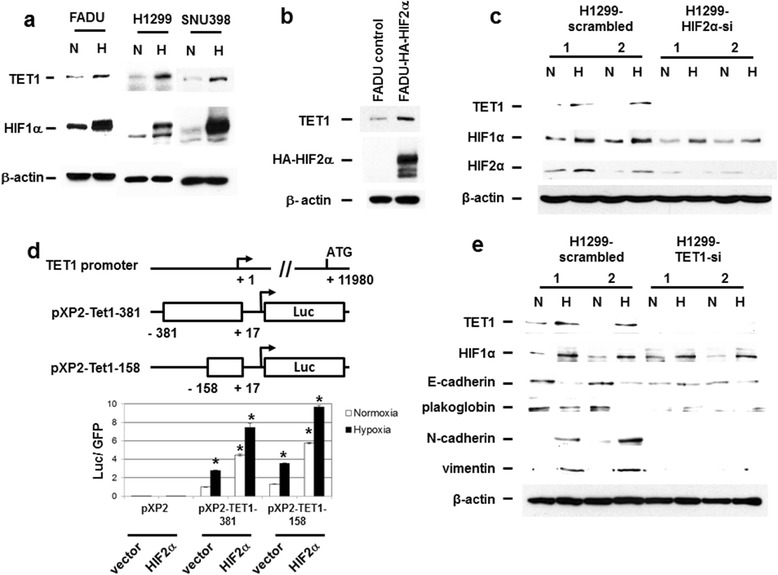
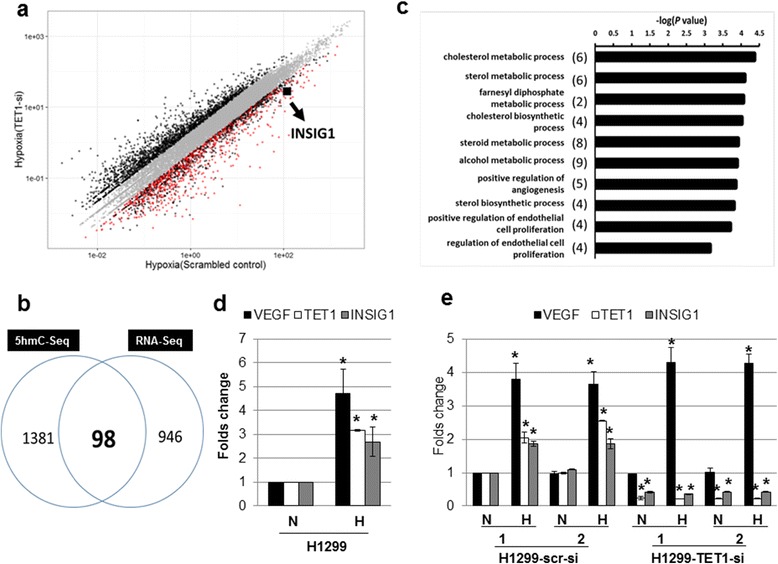
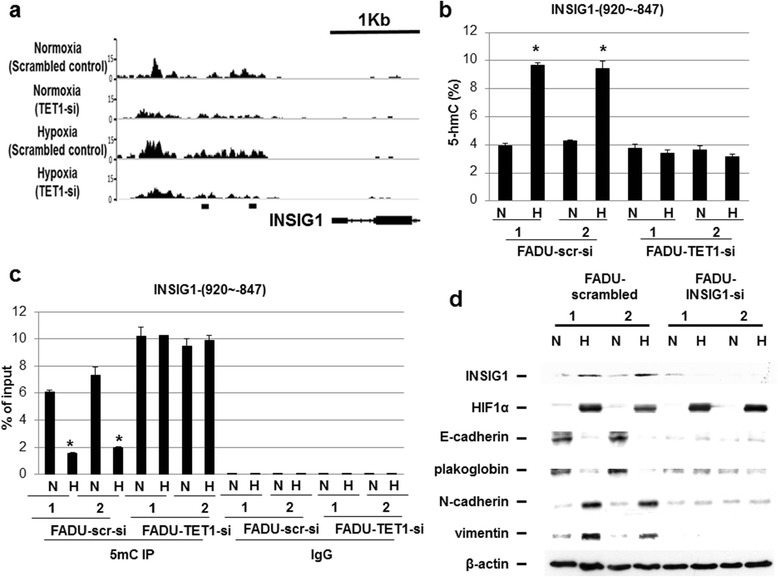
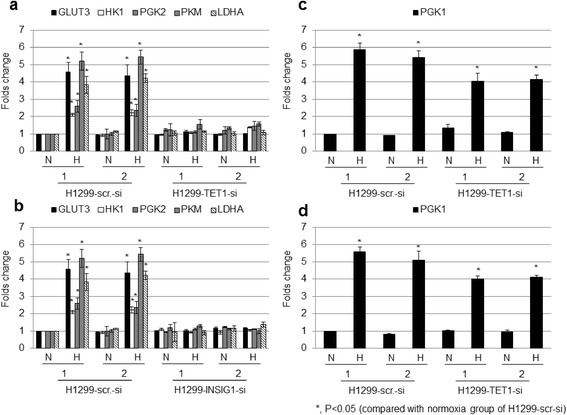
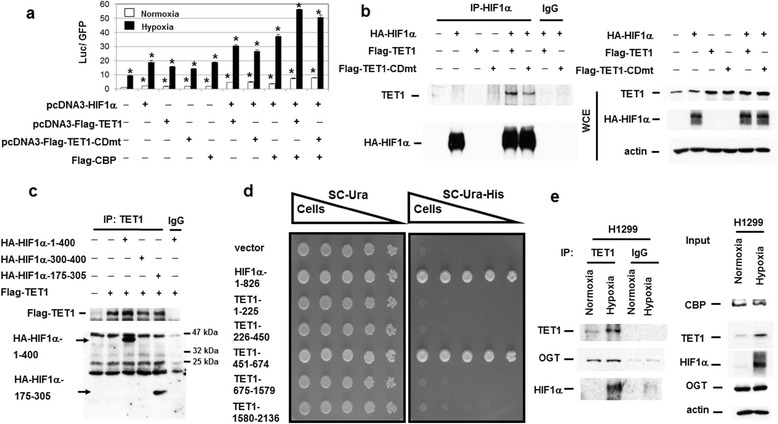
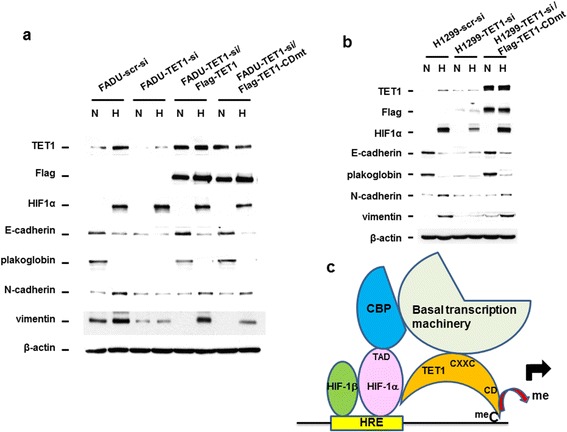
BACKGROUND: Hypoxia induces the epithelial-mesenchymal transition, EMT, to promote cancer metastasis. In addition to transcriptional regulation mediated by hypoxia-inducible factors, HIFs, other epigenetic mechanisms of gene regulation, such as histone modifications and DNA methylation, are utilized under hypoxia. However, whether DNA demethylation mediated by TET1, a DNA dioxygenase converting 5-methylcytosine, 5mC, into 5-hydroxymethylcytosine, 5hmC, plays a role in hypoxia-induced EMT is largely unknown. RESULTS: We show that TET1 regulates hypoxia-responsive gene expression. Hypoxia/HIF-2α regulates the expression of TET1. Knockdown of TET1 mitigates hypoxia-induced EMT. RNA sequencing and 5hmC sequencing identified the set of TET1-regulated genes. Cholesterol metabolic process genes are among the genes that showed high prevalence and statistical significance. We characterize one of the genes, INSIG1 (insulin induced gene 1), to confirm its expression and the 5hmC levels in its promoter. Knockdown of INSIG1 also mitigates hypoxia-induced EMT. Finally, TET1 is shown to be a transcriptional co-activator that interacts with HIF-1α and HIF-2α to enhance their transactivation activity independent of its enzymatic activity. TET1 acts as a co-activator to further enhance the expression of INSIG1 together with HIF-2α. We define the domain in HIF-1α that interacts with TET1 and map the domain in TET1 that confers transactivation to a 200 amino acid region that contains a CXXC domain. The TET1 catalytically inactive mutant is capable of rescuing hypoxia-induced EMT in TET1 knockdown cells. CONCLUSIONS: These findings demonstrate that TET1 serves as a transcription co-activator to regulate hypoxia-responsive gene expression and EMT, in addition to its role in demethylating 5mC.
Overview
The claims and statistics of this paper haven’t been checked yet.
Free: it reads the open-access text and checks the first 5 claims that cite a source we can check. Create a free account to check every claim.
Integrity signals
Registry
Cites
Statistics
Figures
Verification
Claims the paper makes
The claims and statistics of this paper haven’t been checked yet.
Free: it reads the open-access text and checks the first 5 claims that cite a source we can check. Create a free account to check every claim.
Claims other papers make about this one
Each is checked against this paper’s own text: does it say what the citing paper says it does?
The check wasn’t confident either way, so it gives no verdict — never disputed.
In the citing paper
“identifying 22 differentially expressed E3 ligase genes that may undergo epigenetic regulation by Tet1 (supplemental Table 1).”
From RNF217 regulates iron homeostasis through its E3 ubiquitin ligase activity by modulating ferroportin degradation (2021) · cites this paper as [48]
Experimental — accuracy not yet measured
Self-check
Percentages, sums and reported differences re-computed from the paper’s own numbers.
The self-check needs the paper’s full text.
Citations
Cites
Ultrafast and memory-efficient alignment of short DNA sequences to the human genome.
Langmead, B., Trapnell, C., Pop, M., & Salzberg, S. L. (2009) · Genome Biology · doi:10.1186/gb-2009-10-3-r25 · Cited by 21,849 · cited 1×
“7 algorithm (-m 1 -v 3 –best –strata) [36].”
Trapnell, C., Roberts, A., Goff, L., Pertea, G., Kim, D., Kelley, D. R., Pimentel, H., Salzberg, S. L., Rinn, J. L., & Pachter, L. (2012) · Nature Protocols · doi:10.1038/nprot.2012.016 · Cited by 12,116 · cited 1×
“The reads were aligned to the hg19 reference assembly with the TopHat/Cufflinks [34] alignment package using Ensembl annotations.”
MethodEpithelial-Mesenchymal Transitions in Development and Disease
Thiery, J. P., Acloque, H., Huang, R. Y. J., & Nieto, M. A. (2009) · Cell · doi:10.1016/j.cell.2009.11.007 · Cited by 9,931 · cited 3×
“Exposure of H1299 cells to hypoxia induced EMT as characterized by repression of E-cadherin/plakoglobin and upregulation of vimentin/N-cadherin expression [5,6] (Figure 1e).”
BackgroundSherman, F., Fink, G. R., & Hicks, J. B. (1979) · Cold Spring Harbor Laboratory eBooks · Cited by 7,430
Conversion of 5-Methylcytosine to 5-Hydroxymethylcytosine in Mammalian DNA by MLL Partner TET1
Tahiliani, M., Koh, K. P., Shen, Y., Pastor, W. A., Bandukwala, H., Brudno, Y., Agarwal, S., Iyer, L. M., Liu, D. R., Aravind, L., et al. (2009) · Science · doi:10.1126/science.1170116 · Cited by 5,836
Jacob, H. E. (1988) · Bioelectrochemistry and Bioenergetics · doi:10.1016/0302-4598(88)80052-7 · Cited by 4,792
Hypoxia-inducible factors in physiology and medicine
Semenza, G. L. (2012) · Cell · doi:10.1016/j.cell.2012.01.021 · Cited by 3,645 · cited 2×
“Cells develop various mechanisms to cope with hypoxia and survive [1,2].”
BackgroundResultTet proteins can convert 5-methylcytosine to 5-formylcytosine and 5-carboxylcytosine
Ito, S., Shen, L., Dai, Q., Wu, S. C., Collins, L. B., Swenberg, J. A., He, C., & Zhang, Y. (2011) · Science · doi:10.1126/science.1210597 · Cited by 3,451
Self-citationTet-Mediated Formation of 5-Carboxylcytosine and Its Excision by TDG in Mammalian DNA
He, Y.-F., Li, B.-Z., Li, Z., Liu, P., Wang, Y., Tang, Q., Ding, J., Jia, Y., Chen, Z., Li, L., et al. (2011) · Science · doi:10.1126/science.1210944 · Cited by 2,770
Genomic Libraries and a Host Strain Designed for Highly Efficient Two-Hybrid Selection in Yeast
James, P., Halladay, J., & Craig, E. A. (1996) · Genetics · doi:10.1093/genetics/144.4.1425 · Cited by 2,637
Research works printed but not linked: 1
- Gietz RD Schiestl RH Transforming yeast with DNA Methods Mol Cell Biol 1995 1995 255 269
Cited by
Items 101–152 of 152
Mahajan, V., Farquhar, C. M., & Ponnampalam, A. P. (2019) · Molecular Reproduction and Development · doi:10.1002/mrd.23299 · Cited by 18
“Apart from being involved in the DNA demethylation process and in catalysing hydroxymethylation, TET family proteins also display noncatalytic functions (Gao et al., 2016; Lian, Li, & Jin, 2016; Montagner et al., 2016; Tsai et al., 2014; Xu et al., 2012; Zhang et al., 2015).”
BackgroundJia, S., Wei, G., Bono, J., Pan, Z., Zheng, B., Wang, B., Adaralegbe, A., Tenorio, C., Bekker, A., & Tao, Y. (2022) · Life Sciences · doi:10.1016/j.lfs.2022.120486 · Cited by 17
Wang, C., Yang, Y., Yin, L., Wei, N., Hong, T., Sun, Z., Yao, J., Li, Z., & Liu, T. (2020) · Frontiers in Oncology · doi:10.3389/fonc.2020.00931 · Cited by 21
Wu, S., Zhang, X., Chang, M., Huang, C., Qian, J., Li, Q., Yuan, F., Sun, L., Yu, X., Cui, X., et al. (2021) · Genomics Proteomics & Bioinformatics · doi:10.1016/j.gpb.2019.05.005 · Cited by 17
TET is targeted for proteasomal degradation by the PHD-pVHL pathway to reduce DNA hydroxymethylation
Fan, S., Wang, J., Yu, G., Rong, F., Zhang, D., Xu, C., Du, J., Li, Z., Ouyang, G., & Xiao, W. (2020) · Journal of Biological Chemistry · doi:10.1074/jbc.ra120.014538 · Cited by 18
Kong, Y., Ji, J., Zhan, X., Yan, W., Liu, F., Ye, P., Wang, S., & Tai, J. (2024) · Journal of Neuroinflammation · doi:10.1186/s12974-024-03189-2 · Cited by 17
“However, hypoxia increases TET1 expression and 5hmC levels in certain types of cells, such as neuro-blastoma [28, 30] and glioblastoma cells [31], probably because Tet1 coactivates with hypoxia-inducible factor independently of enzymatic activity [30, 32, 33].”
BackgroundWu, J., Li, X., Huang, H., Xia, X., Zhang, M., & Fang, X. (2020) · PeerJ · doi:10.7717/peerj.9950 · Cited by 15
Katebi, A., Ramirez, D., & Lu, M. (2021) · Computational and Systems Oncology · doi:10.1002/cso2.1021 · Cited by 16
Regulation and Functional Significance of 5-Hydroxymethylcytosine in Cancer
Arvinden, V. R., Rao, A. K. D. M., Rajkumar, T., & Mani, S. (2017) · Epigenomes · doi:10.3390/epigenomes1030019 · Cited by 16
“Tumor hypoxia is observed to increase TET expression through Hypoxia Inducible Factor (HIF)–mediated transcriptional activation [41,84].”
BackgroundYan, J., Huang, Y. J., Huang, Q. Y., Liu, P. X., & Wang, C. S. (2022) · Molecular Carcinogenesis · doi:10.1002/mc.23393 · Cited by 14
“Interestingly, TET1 also serves as a transcription coactivator to regulate hypoxia‐responsive gene expression.(44) We found that HIF‐1α‐induced S100A2 expression is associated with an increase of TET2 under hypoxic conditions.”
BackgroundZhang, M., Zhang, K., Wang, J., Liu, Y., Liu, G., Jin, W., Wu, S., & Zhao, X. (2020) · Cell & Bioscience · doi:10.1186/s13578-020-00473-5 · Cited by 14
Changing paradigms in oncology: Toward noncytotoxic treatments for advanced gliomas
Doeberitz, N. V. K., Paech, D., Sturm, D., Pusch, S., Turcan, Ş., & Saunthararajah, Y. (2022) · International Journal of Cancer · doi:10.1002/ijc.34131 · Cited by 11
“(Figure 3B)—possibly, reduction in TET1 protein amounts disrupts multiprotein coactivator complexes to hence impede gene activation in ways beyond disrupted erasure of me-CpG.(100,101)”
BackgroundAhn, H., Lee, H. J., Lee, J., Cho, H. D., Oh, M., Son, J. W., & Jang, S. (2020) · Pathology - Research and Practice · doi:10.1016/j.prp.2020.153188 · Cited by 14
Liu, R., Guo, Y., Wang, L., Yin, G., Tuo, H., Zhu, Y., Yang, W., Liu, Q., & Wang, Y. (2024) · Cell Death and Differentiation · doi:10.1038/s41418-024-01419-x · Cited by 16
Hypoxia-induced genome-wide DNA demethylation by DNMT3A and EMT of cancer cells
Chatterjee, B., Majumder, P., Chen, S. C.-C., Wang, J., Su, P., Lai, H.-C., Liu, C.-C., Lin, H.-N., Yu, C.-H. A., Yuan, H. S., et al. (2025) · Cellular & Molecular Biology Letters · doi:10.1186/s11658-025-00775-x · Cited by 9
An interpretation of the apparent orbit of VY CMa AB: the rotating holey dust cloud hypothesis
Wallerstein, G. (1978) · Observatory · Cited by 8
Zhao, Y., Yang, Z. R., Ma, L., Wang, F., Wang, Y., & Xiang, C. (2023) · Heliyon · doi:10.1016/j.heliyon.2023.e14714 · Cited by 8
“It has been demonstrated that HIF1A upregulates epithelial-mesenchymal transition-related transcription factors [34].”
BackgroundKoutsouraki, E., Pells, S., & Sousa, P. A. D. (2018) · Stem Cell Research · doi:10.1016/j.scr.2018.11.019 · Cited by 9
“In other cell systems both TET1 and KDM4C 25 have been shown to facilitate/co-activate hypoxia-inducible factor expression, and in turn, to be regulated by them [13, 35-46].”
BackgroundGawroński, M., Starczak, M., Wasilow, A., Dziaman, T., Oliński, R., & Gackowski, D. (2025) · Epigenetics & Chromatin · doi:10.1186/s13072-025-00634-1 · Cited by 6
“The expression of TET proteins is tightly regulated through alternative splicing, promoter usage, and post-transcriptional modifications, generating several isoforms with tissue-specific functions, some of which extend beyond their catalytic activity [16–19].”
Genomic and Epigenomic Plasticity in the Hypoxic Environment
Cricchi, E., Bertozzo, A., Minisini, M., & Brancolini, C. (2025) · DNA · doi:10.3390/dna5020022 · Cited by 9
“It has also been reported that TET1 acts as a co-activator of HIF-2 α independently of its enzymatic activity [116].”
G9A performs important roles in the progression of breast cancer through upregulating its targets
Jiang, W., Liu, P., & Li, X. (2017) · Oncology Letters · doi:10.3892/ol.2017.5977 · Cited by 5
“Thus, this suggests that G9A and INSIG1 serve important roles in the progression of BC. INSIG1 , which is downregulated in G9A‑ KO BC, was closely associated with the progression of several types of cancer via the regulation of glucose metabolism and hypoxia-induced EMT (32,33).”
Anand, S., Vikramdeo, K. S., Khan, M. A., Singh, S., & Singh, A. P. (2025) · Cancer Letters · doi:10.1016/j.canlet.2025.217916 · Cited by 4
“In hypoxic conditions, it is shown that the upregulation of INSIG1 triggers a cascade, leading to the increased expression of EMT-associated genes [48].”
Misregulation of DNA Methylation Regulators in Cancer
Thompson, J. J., & Robertson, K. D. (2017) · Cancer drug discovery and develogment/Cancer drug discovery and development · doi:10.1007/978-3-319-59786-7_5 · Cited by 3
TET1 displays catalytic and non-catalytic functions in the adult mouse cortex
Foong, Y. H., Caldwell, B. A., Thorvaldsen, J. L., Krapp, C. J., Mesaros, C., Zhou, W., Kohli, R. M., & Bartolomei, M. S. (2024) · Epigenetics · doi:10.1080/15592294.2024.2374979 · Cited by 3
“This non-catalytic function of TET1 also holds true outside of mESCs, where TET1 has been shown to regulate hypoxia-induced epithelial-mesenchymal transition (EMT) by physically interacting with hypoxia-inducible factor 1a/2a (HIF-1a/HIF-2a) independent of its enzymatic function [16].”
BackgroundMotamed, R., Jabbari, K., Sheikhbahaei, M., Ghazimoradi, M. H., Ghodsi, S., Jahangir, M., Habibi, N., & Babashah, S. (2025) · Scientific Reports · doi:10.1038/s41598-025-91314-3 · Cited by 3
“However, recent studies suggest that TET1 may also contribute to tumor malignancy, with its effects being influenced by its demethylation activity, particularly under low oxygen conditions (hypoxia) 43,44 .”
Kouidou, S., Malousi, A., & Andreou, A. Z. (2020) · Pathogens · doi:10.3390/pathogens9121006 · Cited by 3
“In epithelial cells, TET1 is involved in activation of the hypoxia-induced, epithelial-mesenchymal transition [32].”
BackgroundFu, Y., Wu, Y., Cao, D., Jia, Z., Shen, A., Jiang, J., & Cao, X. (2022) · World Journal of Gastrointestinal Oncology · doi:10.4251/wjgo.v14.i7.1295 · Cited by 2
Epigenetic Regulation During Hypoxia and Its Implications in Cancer
Pant, D., Mutnuru, S. A., & Shukla, S. (2022) · Sub-cellular biochemistry/Subcellular biochemistry · doi:10.1007/978-3-031-07634-3_11 · Cited by 2
Promising Role of PKM2 in the Diagnosis and Prognosis of Ovarian Cancer
Borra, P. K., Chandra, P., Sharma, H., Fatima, S., Koneru, A., Athilli, L., Fatima, F., Kumar, N. B., & Sachan, N. (2025) · Anti-Cancer Agents in Medicinal Chemistry · doi:10.2174/0118715206394408250806065235 · Cited by 2
Wołowiec, A., Wołowiec, Ł., Jaśniak, A., Grześk, G., Budzyński, J., Osiak, J., Jakubowska, P., Gordon, P., & Kozakiewicz, M. (2026) · Current Issues in Molecular Biology · doi:10.3390/cimb48050467 · Cited by 1
“Notably, TET1 regulates hypoxia-induced endothelial-to-mesenchymal transition (EndMT), a key process in the initiation and progression of various CVDs [14–16].”
DDX21 Promotes Breast Cancer Growth and Metastasis via Stimulating RNAPII Elongation During Hypoxia
Li, G., Deng, M., Zhu, L., Lei, Z., Guo, R., Liu, X., Chen, R., Xia, X., Wen, Q., Duan, Y., et al. (2026) · MedComm · doi:10.1002/mco2.70792 · Cited by 1
“…array of coregulators, including p300/CBP [ 16, 17 ], TIP60 complex [ 18 ], chromatin remodeling factors (JMJD2C [ 19 ], JMJD1A [ 20 ], and TET1 [ 47 ], SET9 [ 48 ], SET1B [ 49 ]), and epigenetic enzymes (PADI4 [ 22 ], ZMYND8 [ 40, 50 ], CHD4 [ 51 ]), CDK8-Mediator [ 39 ], and TRIM28 [ 52 ].”
Preventing phenotypic plasticity in cancer to mitigate therapy resistance
Coatham, M. L., Jewer, M., & Postovit, L.-M. M. (2021) · Elsevier eBooks · doi:10.1016/b978-0-12-821310-0.00002-4 · Cited by 1
Day, J. J. (2017) · Elsevier eBooks · doi:10.1016/b978-0-12-801596-4.00006-x · Cited by 1
A network-based analysis of the human TET Gene Family
Ohsawa, S., Umemura, T., Akahori, H., Terada, T., & Muto, Y. (2018) · Biologia · doi:10.2478/s11756-018-0041-6 · Cited by 1
HIF-1alpha regulates CD55 expression in airway epithelium
Pandya, P. H. (2015)
Passenger or Driver: Can Gene Expression Profiling Tell Us Anything about LINE-1 in Cancer?
Ohms, S., Dahlstrom, J. E., & Rangasamy, D. (2018) · InTech eBooks · doi:10.5772/intechopen.73266 · Cited by 1
“In addition, APOC1 is highly expressed in latestage lung cancer [102] and is also one of a small number of genes undergoing late-stage upregulation downstream of KLF4 during the metabolic shift that facilitates reprogramming during the generation of iPSCs in an SeVdp(KOSM)-based system [103].”
BackgroundInfluentialCharacterisation of the cellular response to defective translational termination
Ploumakis, A. (2018) · University of Birmingham Institutional Research Archive (University of Birmingham)
Minh, G. L., & Reginato, M. J. (2021) · Elsevier eBooks · doi:10.1016/b978-0-12-820472-6.00038-4
Huo, M., Yu, K., Zheng, Y., Liu, L., Zhao, H., Li, X., Huang, C., & Zhang, J. (2021) · Bioscience Reports · doi:10.1042/bsr20210126
“important regulator of DNA methylation, and has been identified as a critical 204 oncoprotein(27,28).”
Data from CHD4 Promotes Breast Cancer Progression as a Coactivator of Hypoxia-Inducible Factors
Wang, Y., Chen, Y., Bao, L., Zhang, B., Wang, J. E., Kumar, A., Xing, C., Wang, Y., & Luo, W. (2023) · doi:10.1158/0008-5472.c.6512224
Data from Targeting Cellular Iron Homeostasis with Ironomycin in Diffuse Large B-cell Lymphoma
Devin, J., Cañeque, T., Lin, Y., Mondoulet, L., Veyrune, J., Abouladzé, M., Paco, E. G. D., Gadacha, O. K., Cartron, G., Pasero, P., et al. (2023) · doi:10.1158/0008-5472.c.6513636.v1
Data from CHD4 Promotes Breast Cancer Progression as a Coactivator of Hypoxia-Inducible Factors
Wang, Y., Chen, Y., Bao, L., Zhang, B., Wang, J. E., Kumar, A., Xing, C., Wang, Y., & Luo, W. (2023) · doi:10.1158/0008-5472.c.6512224.v1
Data from Targeting Cellular Iron Homeostasis with Ironomycin in Diffuse Large B-cell Lymphoma
Devin, J., Cañeque, T., Lin, Y., Mondoulet, L., Veyrune, J., Abouladzé, M., Paco, E. G. D., Gadacha, O. K., Cartron, G., Pasero, P., et al. (2023) · doi:10.1158/0008-5472.c.6513636
Kulebyakina, M., Smirnova, A. S., Popov, V. S., Eremichev, R. Y., & Макаревич, П. И. (2023) · Регенерация органов и тканей. · doi:10.60043/2949-5938-2023-1-42-52
Osmani, N. E. (2022) · theses.fr (ABES) · doi:10.70675/44703178z2ad1z4ebcza891z61cf9febffe8 · Cited by 1
Godlewski, A., Wróblewski, M., Kuk, J., Moritz, M., Dobrak, F., Kołodziejska, R., & Woźniak, A. (2026) · Genes · doi:10.3390/genes17080964
“…α ) methylation by DNMT3B and TET1, and the AMPK/SIRT1/class IIa histone deacetylase (HDAC) signaling axis, which collectively regulate mitochondrial biogenesis, Glucose Transporter Type 4 (GLUT4) expression, lipid oxidation, and metabolic adaptation in response to exercise and disuse [157–164].”
Metadata
- Authors
- Tsai, Y.-P., Chen, H.-F., Chen, S.-Y., Cheng, W.-C., Wang, H.-W., Shen, Z.-J., Song, C., Teng, S.-C., He, C., & Wu, K.-J.
- Affiliations
- National Yang Ming University (TW)
- China Medical University (TW)
- National Taiwan University (TW)
- Howard Hughes Medical Institute (US)
- Corresponding author
- Wu, Kou-Juey
- Venue
- Genome biology
- Published
- 2014-12-03
- Volume
- 15
- Issue
- 12
- Pages
- 513-513
- ISSN
- 1465-6906 (ISSN-L)
- 1474-760X
- PMC
- PMC4253621
- OpenAlex
- W2161672422
- Cited by
- 152
- References
- 40
- Citations by year
- 2026: 3 · 2025: 6 · 2024: 8 · 2023: 11 · 2022: 13 · 2021: 15 · 2020: 31 · 2019: 12 · 2018: 12 · 2017: 21 · 2016: 13 · 2015: 6
- FWCI
- 5.46
- Type
- journal article
- Language
- en
- Open access
- gold
- doi.org
- Licence
- cc-by
- creativecommons.org/licenses/by/4.0 (tdm)
- creativecommons.org/licenses/by/4.0 (vor)
- Locations
- Genome biology (publishedVersion, cc-by)
- Europe PMC (PubMed Central) (publishedVersion, cc-by)
- PubMed Central (publishedVersion, cc-by)
- PubMed (publishedVersion)
- Funders
- Howard Hughes Medical Institute
- Wellcome Trust
- National Science Council (NSC102-2321-B-010-001, MOHW103-TD-B-111-02)
- Academia Sinica
- National Health Research Institutes (NSC102-2321-B-010-001, NHRI-EX102)
- National Research Program for Biopharmaceuticals
- Taichung Veterans General Hospital
- Taipei Veterans General Hospital (MOHW103-TD-B-111-02, NSC102-2321-B-010-001)
- Topics
- Life Sciences › Biochemistry, Genetics and Molecular Biology › Molecular Biology › Epigenetics and DNA Methylation
- Life Sciences › Biochemistry, Genetics and Molecular Biology › Cancer Research › Cancer, Hypoxia, and Metabolism
- Health Sciences › Medicine › Oncology › Cancer Cells and Metastasis
- Keywords
- TET1, epithelial-mesenchymal transition, hypoxia, HIF-2α, HIF-1α, transcriptional coactivator, 5-hydroxymethylcytosine, DNA demethylation, INSIG1, cholesterol metabolism, CXXC domain, metastasis, epigenetic regulation
- MeSH terms
- Endothelial PAS Domain-Containing Protein 1, DNA-Binding Proteins, Humans, Mixed Function Oxygenases, Membrane Proteins, Neoplasms, Promoter Regions, Genetic, Proto-Oncogene Proteins, Cell Hypoxia, Gene Expression Regulation, Neoplastic, Catalytic Domain, 5-Methylcytosine, Cell Line, Tumor, Intracellular Signaling Peptides and Proteins, Basic Helix-Loop-Helix Proteins, Hypoxia-Inducible Factor 1, alpha Subunit, HEK293 Cells, Epithelial-Mesenchymal Transition
About these checks
Registry, retraction, Cites and statistics results are computed, not judged, with one exception: a printed reference that no index lists is read once by a model before it counts as a citation error. Claims are extracted by a model and kept only when their quote appears verbatim in the text; each cited source is then checked, with a model’s help, for whether it says what the claim relies on. Those verdicts can be wrong — read the claim’s quote and the cited source before relying on one.
Statistics and arithmetic are recomputed, not judged.
Confidence bands are shown only for fields calibrated on our annotated test set. None is calibrated yet, so no band is shown.
What counts as a claim ›How we measure confidence ›How we check this ›
Are you an author, or do you see a problem with this page? Request a review
Data sources
Bibliographic data: Semantic Scholar, OpenAlex, Crossref.
Contains information from the Semantic Scholar Academic Graph Datasets, made available under the ODC Attribution License (ODC-BY 1.0).
Semantic Scholar’s data is described in: Kinney, R., et al. (2023). The Semantic Scholar Open Data Platform. arXiv:2301.10140.
