

Lifetime stress accelerates epigenetic aging in an urban, African American cohort: relevance of glucocorticoid signaling
Open accessThe DOI matches its Crossref record; 74 of the 75 references it cites were found in a registry or an index.
Abstract
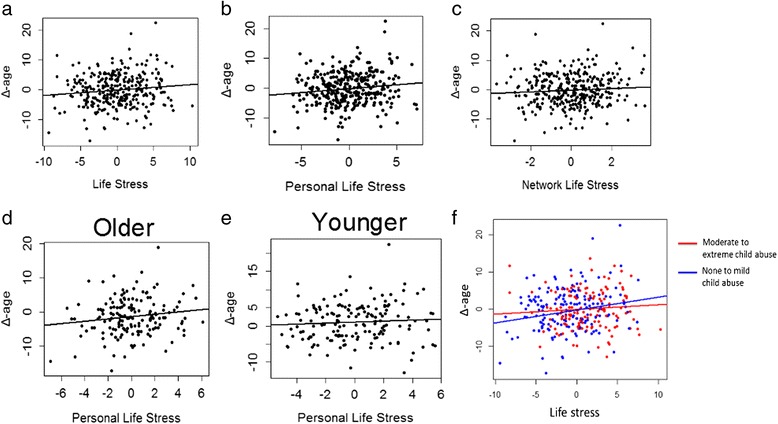
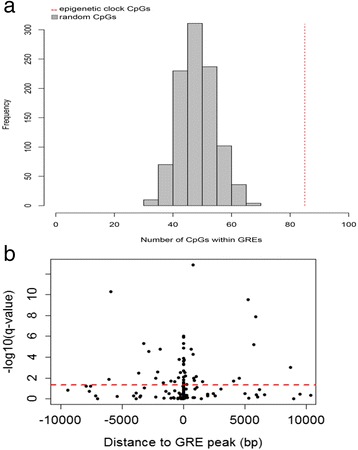
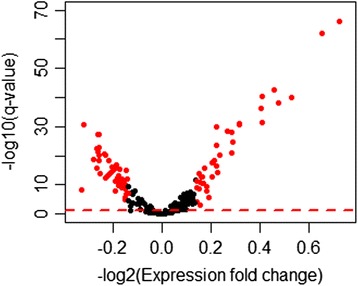
BACKGROUND: Chronic psychological stress is associated with accelerated aging and increased risk for aging-related diseases, but the underlying molecular mechanisms are unclear. RESULTS: We examined the effect of lifetime stressors on a DNA methylation-based age predictor, epigenetic clock. After controlling for blood cell-type composition and lifestyle parameters, cumulative lifetime stress, but not childhood maltreatment or current stress alone, predicted accelerated epigenetic aging in an urban, African American cohort (n = 392). This effect was primarily driven by personal life stressors, was more pronounced with advancing age, and was blunted in individuals with higher childhood abuse exposure. Hypothesizing that these epigenetic effects could be mediated by glucocorticoid signaling, we found that a high number (n = 85) of epigenetic clock CpG sites were located within glucocorticoid response elements. We further examined the functional effects of glucocorticoids on epigenetic clock CpGs in an independent sample with genome-wide DNA methylation (n = 124) and gene expression data (n = 297) before and after exposure to the glucocorticoid receptor agonist dexamethasone. Dexamethasone induced dynamic changes in methylation in 31.2 % (110/353) of these CpGs and transcription in 81.7 % (139/170) of genes neighboring epigenetic clock CpGs. Disease enrichment analysis of these dexamethasone-regulated genes showed enriched association for aging-related diseases, including coronary artery disease, arteriosclerosis, and leukemias. CONCLUSIONS: Cumulative lifetime stress may accelerate epigenetic aging, an effect that could be driven by glucocorticoid-induced epigenetic changes. These findings contribute to our understanding of mechanisms linking chronic stress with accelerated aging and heightened disease risk.
Overview
The claims and statistics of this paper haven’t been checked yet.
Free: it reads the open-access text and checks the first 5 claims that cite a source we can check. Create a free account to check every claim.
Integrity signals
Registry
Cites
Statistics
Figures
Verification
Claims the paper makes
The claims and statistics of this paper haven’t been checked yet.
Free: it reads the open-access text and checks the first 5 claims that cite a source we can check. Create a free account to check every claim.
Claims other papers make about this one
Each is checked against this paper’s own text: does it say what the citing paper says it does?
The source backs part of the claim, not all of it — or backs it for a different population, condition or comparison.
In the citing paper
“Accelerated epigenetic aging has been shown to be conferred by cumulative, particularly personal lifetime stress in a cohort of highly traumatized African-Americans (Zannas et al., 2015), and 6-month exposure of male soldiers to combat deployment in Afghanistan (Boks et al., 2015).”
From The applied implications of epigenetics in anxiety, affective and stress-related disorders - A review and synthesis on psychosocial stress, psychotherapy and prevention (2020) · cites this paper as Zannas et al., 2015
Experimental — accuracy not yet measuredThe source backs part of the claim, not all of it — or backs it for a different population, condition or comparison.
In the citing paper
“In addition, the methylation profile of individuals exposed to lifetime stress displayed an accelerated epigenetic aging profile, which was not present in individuals exposed to acute stress (Zannas et al, 2015).”
From Microglia Priming with Aging and Stress (2017) · cites this paper as Zannas et al, 2015
Experimental — accuracy not yet measuredThe cited source says what the claim attributes to it.
In the citing paper
“Cumulative lifetime stress was associated with accelerated epigenetic aging”
From The applied implications of epigenetics in anxiety, affective and stress-related disorders - A review and synthesis on psychosocial stress, psychotherapy and prevention (2020) · cites this paper as Zannas et al., 2015
In the citing paper
“Recent clinical findings showed that the epigenetic profile (such as, DNA methylation in glucocorticoid (GC) responsive regions) of subjects exposed to lifetime stress resembled the epigenetic changes in aging-associated diseases (Zannas et al, 2015).”
From Microglia Priming with Aging and Stress (2017) · cites this paper as Zannas et al, 2015
Self-check
Percentages, sums and reported differences re-computed from the paper’s own numbers.
The self-check needs the paper’s full text.
Citations
Cites
Fast and accurate short read alignment with Burrows-Wheeler transform
Li, H., & Durbin, R. (2009) · Bioinformatics · doi:10.1093/bioinformatics/btp324 · Cited by 58,607
An inventory for measuring depression
BECK, A. T. (1961) · Archives of General Psychiatry · doi:10.1001/archpsyc.1961.01710120031004 · Cited by 38,032 · cited 1×
“In the GTP, current depressive symptomatology was assessed with the 21-item validated Beck Depression Inventory (BDI) [56, 57] and current PTSD symptomatology was assessed with the validated 17-item PTSD Symptom Scale (PSS) [49, 58].”
MethodFelitti, V. J., Anda, R. F., Nordenberg, D., Williamson, D. F., Spitz, A. M., Edwards, V., Koss, M. P., & Marks, J. S. (1998) · American Journal of Preventive Medicine · doi:10.1016/s0749-3797(98)00017-8 · Cited by 18,943
Model-based Analysis of ChIP-Seq (MACS)
Zhang, Y., Liu, T., Meyer, C. A., Eeckhoute, J., Johnson, D. S., Bernstein, B. E., Nusbaum, C., Myers, R. M., Brown, M., Li, W., et al. (2008) · Genome Biology · doi:10.1186/gb-2008-9-9-r137 · Cited by 18,386 · cited 1×
“Peak-calling was carried out by MACS14 (v. 1 .4.2) [70] using default settings, resulting in approximately 23,000 annotated signals.”
MethodInfluentialPsychometric properties of the Beck Depression Inventory: Twenty-five years of evaluation
Beck, A. T., Steer, R. A., & Carbin, M. G. (1988) · Clinical Psychology Review · doi:10.1016/0272-7358(88)90050-5 · Cited by 11,696
Child abuse: Adolescent records vs. adult recall
Femina, D. D., Yeager, C. A., & Lewis, D. O. (1990) · Child Abuse & Neglect · doi:10.1016/0145-2134(90)90033-p · Cited by 8,820
Adjusting batch effects in microarray expression data using empirical Bayes methods
Johnson, W. E., Li, C., & Rabinovic, A. (2007) · Biostatistics · doi:10.1093/biostatistics/kxj037 · Cited by 8,658
Scoville, W. B. (1949) · Journal of neurosurgery · doi:10.3171/jns.1949.6.1.0065 · Cited by 7,381
DNA methylation age of human tissues and cell types
Horvath, S. (2013) · Genome Biology · doi:10.1186/gb-2013-14-10-r115 · Cited by 7,075 · cited 21×
“The present study sought to determine the effect of life stressors on epigenetic aging, as measured with the epigenetic clock [27] in peripheral blood samples.”
BackgroundMethodInfluentialDevelopment and validation of a brief screening version of the Childhood Trauma Questionnaire
Bernstein, D. P., Stein, J. A., Newcomb, M. D., Walker, E., Pogge, D., Ahluvalia, T., Stokes, J., Handelsman, L., Medrano, M., Desmond, D., et al. (2003) · Child Abuse & Neglect · doi:10.1016/s0145-2134(02)00541-0 · Cited by 6,419 · cited 1×
“tional abuse, as well as emotional and physical neglect [53].”
Background
Research works printed but not linked: 1
- 2. Office for National Statistics. National Population Projections, 2012-based Statistical Bulletin. Newport: Office for National Statistics; 2012.
Cited by
Items 401–465 of 465
Yoga Therapy: An Overview of Key Research and the Underlying Mechanisms
Lafer, E. M., McCuiston, M., & Swanson, A. (2020) · Advances in medical diagnosis, treatment, and care (AMDTC) book series · doi:10.4018/978-1-7998-3254-6.ch010 · Cited by 1
Bipolar disorder and accelerated aging: Shared mechanisms and implications
Wieck, A., Bauer, M. E., & Teixeira, A. L. (2020) · Elsevier eBooks · doi:10.1016/b978-0-12-819182-8.00028-4
The Combined Effects of Bisphenol A Exposure, Diet, and Physical Activity on the Aging Epigenome
Kochmanski, J. J. (2018) · Deep Blue (University of Michigan)
Avaliação da idade epigenética e padrão de metilação do DNA em dependentes de crack
Camilo, C. (2021) · Digital Library of Theses and Dissertations (Universidade de São Paulo) · doi:10.11606/t.5.2021.tde-31082021-091043
Wolf, A. (2022) · Springer eBooks · doi:10.1007/978-3-662-61417-4_11
Genomics and epigenomics of anxiety and obsessive-compulsive disorders
Erhardt, A., Mattheisen, M., & Deckert, J. (2022) · Elsevier eBooks · doi:10.1016/b978-0-12-819602-1.00006-1
Self-citationAged-Related Physiological Changes: CNS Function
Miot, S., Chancel, R., & Blain, H. (2022) · Lessons from the ICU · doi:10.1007/978-3-030-94133-8_3
A Methylome-Based Signature of Stress: Association With Accelerated Epigenetic Aging and Alcohol Use
Domschke, K. (2023) · Biological Psychiatry · doi:10.1016/j.biopsych.2022.11.011
Explaining Related Concepts and Vocabulary and Identifying Their Connections
Jalilisadrabad, S., Behzadfar, M., & Rahimi, K. M. (2023) · Springer eBooks · doi:10.1007/978-981-99-4202-2_2
León, I., Góngora, D., Rodrigo, M. J., Herrero-Roldán, S., Rodríguez, M. L., Mitchell, C. M., Fisher, J., & Iturria‐Medina, Y. (2023) · Research Square · doi:10.21203/rs.3.rs-3343636/v1
León, I., Góngora, D., López, M. J. R., Herrero-Roldán, S., Rodríguez, M. L., Mitchell, C. M., Fisher, J., & Iturria‐Medina, Y. (2023) · Research Square · doi:10.21203/rs.3.rs-3343636/v2
Social Determinants of Health and Functional Disability at Mid- and Late-life
Pullen, C. E. (2023) · The Research Repository @ WVU (West Virginia University) · doi:10.33915/etd.12233
Environmental factors and epigenetics of neuropsychiatric disorders
Peedicayil, J. (2024) · Elsevier eBooks · doi:10.1016/b978-0-443-18516-8.00013-2
Matías‐García, P. R., Ward-Caviness, C. K., Raffield, L. M., Gao, X., Zhang, Y., Wilson, R., Gao, X. Y., Nano, J., Bostom, A. G., Colicino, E., et al. (2021) · Figshare · doi:10.6084/m9.figshare.14722140
Focusing on Dynamics: When an Exception Becomes a Rule
Peretti, A. V., Calbacho-Rosa, L. S., Olivero, P. A., Oviedo‐Diego, M. A., & Vrech, D. E. (2024) · Springer eBooks · doi:10.1007/978-3-031-55382-0_6
Health equity engineering: Optimizing hope for a new generation of healthcare
Enders, F., Golembiewski, E. H., Balls‐Berry, J. E., Brooks, T. R., Carr, A. R., Cullen, J. P., DiazGranados, D., Gaba, A., Johnson, L., Menser, T. L., et al. (2024) · Journal of Clinical and Translational Science · doi:10.1017/cts.2024.549 · Cited by 1
“This stress manifests in higher morbidity and mortality rates and has been shown to accelerate epigenetic aging [18].”
BackgroundProblem Davranışların Sınıflandırılması
Yürek, E. (2024) · doi:10.5152/8702
Tutumlu, R. (2024) · doi:10.5152/8704
Problem Davranışlarla Başa Çıkmada Kullanılan Yöntemler
İrevül, G. (2024) · doi:10.5152/8705
Problem Davranışların Nedenleri
Seven, Z. D. (2024) · doi:10.5152/8703
Problem Davranış ve Erken Müdahale
Kaya, İ. (2024) · doi:10.5152/8701
Problem Davranışlarla Başa Çıkmada Çocuk Odaklı Stratejiler
Kumru, F. B. A. (2024) · doi:10.5152/8707
Ungleiche Lebenschancen durch das Epigenom? Zum Zusammenwirken biologischer mit sozialen Mechanismen
Diewald, M., Kuznetsov, D., & Liu, Y. (2024) · Springer eBooks · doi:10.1007/978-3-658-39745-6_59 · Cited by 1
Roland, H. B., McGuire, C. M., Baskin, M. L., Esposito, M. H., Baker, E. H., & Brown, E. E. (2024) · Cancer · doi:10.1002/cncr.35512
Opsasnick, L. A., Zhao, W., Schmitz, L., Ratliff, S. M., Faul, J. D., Zhou, X., Needham, B. L., & Smith, J. A. (2025) · Brain Behavior & Immunity - Health · doi:10.1016/j.bbih.2025.100994 · Cited by 1
“Previous studies have identified associations between measures of psychosocial stress and EAA measured by several clocks (Zannas et al., 2015; Skinner et al., 2024; Harvanek et al., 2021).”
Chaix, R., & Bies‐Etheve, N. (2025) · Wiley eBooks · doi:10.1002/9781394372683.ch6
Reddy, C. (2022) · Scholars Archive - University at Albany (University at Albany, State University of New York) · doi:10.54014/0c7f-eqzz
Barha, C. K., on behalf of the Canadian Longitudinal Study on Aging (CLSA) Team, Liu-Ambrose, T. Y. L., Inkster, A. M., Falck, R. S., Burma, J. S., Kirkland, S., Griffith, L. E., Thompson, M., Basta, N. E., et al. (2025) · Aging · doi:10.18632/aging.206337
“…and major depressive disorder in early and middle age are both associated with accelerated epigenetic aging in later life [26 – 28], and cumulative lifetime stress is more strongly associated with accelerated epigenetic age than current stress in a cohort of African American individuals [29].”
Psychosocial stress as a factor influencing the rate of human aging
Gilyarevskiy, S. R., Eruslanova, K. A., & Shchedrina, A. Y. (2025) · Problems of Geroscience · doi:10.37586/2949-4745-1-2025-7-14
Matías‐García, P. R., Ward-Caviness, C. K., Raffield, L. M., Gao, X., Zhang, Y., Wilson, R., Gào, X., Nano, J., Bostom, A. G., Colicino, E., et al. (2021) · Figshare · doi:10.6084/m9.figshare.14722143
Czamara, D., Neufang, A., Dieterle, R., Iurato, S., Arloth, J., Martins, J., Ising, M., Binder, E. E., & Erhardt, A. (2022) · Figshare · doi:10.6084/m9.figshare.19670068
Self-citationCzamara, D., Neufang, A., Dieterle, R., Iurato, S., Arloth, J., Martins, J., Ising, M., Binder, E. E., & Erhardt, A. (2022) · Figshare · doi:10.6084/m9.figshare.19670095
Self-citationMatías‐García, P. R., Ward-Caviness, C. K., Raffield, L. M., Gao, X., Zhang, Y., Wilson, R., Gào, X., Nano, J., Bostom, A. G., Colicino, E., et al. (2021) · Figshare · doi:10.6084/m9.figshare.14722146
Czamara, D., Neufang, A., Dieterle, R., Iurato, S., Arloth, J., Martins, J., Ising, M., Binder, E. E., & Erhardt, A. (2022) · Figshare · doi:10.6084/m9.figshare.19670077
Self-citationCzamara, D., Neufang, A., Dieterle, R., Iurato, S., Arloth, J., Martins, J., Ising, M., Binder, E. E., & Erhardt, A. (2022) · Figshare · doi:10.6084/m9.figshare.19670080
Self-citationCzamara, D., Neufang, A., Dieterle, R., Iurato, S., Arloth, J., Martins, J., Ising, M., Binder, E. E., & Erhardt, A. (2022) · Figshare · doi:10.6084/m9.figshare.19670074
Self-citationCzamara, D., Neufang, A., Dieterle, R., Iurato, S., Arloth, J., Martins, J., Ising, M., Binder, E. E., & Erhardt, A. (2022) · Figshare · doi:10.6084/m9.figshare.19670089
Self-citationCzamara, D., Neufang, A., Dieterle, R., Iurato, S., Arloth, J., Martins, J., Ising, M., Binder, E. E., & Erhardt, A. (2022) · Figshare · doi:10.6084/m9.figshare.19670062
Self-citationCzamara, D., Neufang, A., Dieterle, R., Iurato, S., Arloth, J., Martins, J., Ising, M., Binder, E. E., & Erhardt, A. (2022) · Figshare · doi:10.6084/m9.figshare.19670083
Self-citationCzamara, D., Neufang, A., Dieterle, R., Iurato, S., Arloth, J., Martins, J., Ising, M., Binder, E. E., & Erhardt, A. (2022) · Figshare · doi:10.6084/m9.figshare.19670065
Self-citationCzamara, D., Neufang, A., Dieterle, R., Iurato, S., Arloth, J., Martins, J., Ising, M., Binder, E. E., & Erhardt, A. (2022) · Figshare · doi:10.6084/m9.figshare.19670059
Self-citationCzamara, D., Neufang, A., Dieterle, R., Iurato, S., Arloth, J., Martins, J., Ising, M., Binder, E. E., & Erhardt, A. (2022) · Figshare · doi:10.6084/m9.figshare.19670056
Self-citationCzamara, D., Neufang, A., Dieterle, R., Iurato, S., Arloth, J., Martins, J., Ising, M., Binder, E. E., & Erhardt, A. (2022) · Figshare · doi:10.6084/m9.figshare.19670086
Self-citationCzamara, D., Neufang, A., Dieterle, R., Iurato, S., Arloth, J., Martins, J., Ising, M., Binder, E. E., & Erhardt, A. (2022) · Figshare · doi:10.6084/m9.figshare.19670092
Self-citationCzamara, D., Neufang, A., Dieterle, R., Iurato, S., Arloth, J., Martins, J., Ising, M., Binder, E. E., & Erhardt, A. (2022) · Figshare · doi:10.6084/m9.figshare.19670053
Self-citationCzamara, D., Neufang, A., Dieterle, R., Iurato, S., Arloth, J., Martins, J., Ising, M., Binder, E. E., & Erhardt, A. (2022) · Figshare · doi:10.6084/m9.figshare.19670044
Self-citationTopriceanu, C., Dev, E., Ahmad, M., Hughes, R. K., Shiwani, H., Webber, M. R., Direk, K., Wong, A., Ugander, M., Moon, J., et al. (2024) · Figshare · doi:10.6084/m9.figshare.26628364
Li, Z., Zong, X., Li, D., He, Y. Z., Tang, J., Hu, M., & Chen, X. (2023) · Figshare · doi:10.6084/m9.figshare.22610803
Czamara, D., Neufang, A., Dieterle, R., Iurato, S., Arloth, J., Martins, J., Ising, M., Binder, E. E., & Erhardt, A. (2022) · Figshare · doi:10.6084/m9.figshare.19670050
Self-citationCzamara, D., Neufang, A., Dieterle, R., Iurato, S., Arloth, J., Martins, J., Ising, M., Binder, E. E., & Erhardt, A. (2022) · Figshare · doi:10.6084/m9.figshare.19670071
Self-citationJones, R., Clausing, E. S., Shelton, R. C., Conneely, K. N., Prada, D., Factor-Litvak, P. R., Cirillo, P. M., Baccarelli, A., Cohn, B. A., Keyes, K. M., et al. (2025) · Journal of Affective Disorders · doi:10.1016/j.jad.2025.120962
Chen, L. (2026) · Archives of Gerontology and Geriatrics · doi:10.1016/j.archger.2026.106256
How old are you really? Epigenetic clocks – A narrative review
Satapathy, A., Sarangi, R., & Nath, S. (2026) · Journal of Integrative Medicine and Research · doi:10.4103/jimr.jimr_39_26 · Cited by 1
Multi-omics of stressful life eventsPreprint
Azzi, E., Heikkinen, A., Drouard, G., Palviainen, T., Kabrita, C. S., Kaprio, J. A., & Ollikainen, M. (2026) · medRxiv · doi:10.64898/2026.05.22.26353900
Epigenetic modulation of prostate cancer disparities in men with African ancestry
Craddock, J., & Hayes, V. M. (2026) · Nature Reviews Urology · doi:10.1038/s41585-026-01157-4
“…glucocorticoid signalling triggers lasting local DNA methylation changes, influencing future responses to stressors and glucocorticoids, and resulting in long-term epigenetic consequences such as stress-induced accelerated epigenetic ageing in African Americans who live in urban areas 108–110 .”
Ma, Y., Luo, L., Li, H., Zhou, Y., Xiang, S., Liu, X., & Zhu, X. (2026) · Frontiers in Microbiology · doi:10.3389/fmicb.2026.1849097
“This concept of microbial premature aging aligns with findings on early-life adversity, which demonstrate that childhood stress can induce epigenetic age acceleration across multiple tissues (Zannas et al., 2015).”
Menopause and epigenetic changes: a review
Özdemir, B. G., & Çelik, Ç. (2026) · Climacteric · doi:10.1080/13697137.2026.2689718
Lin, C., Zhang, S., Li, Q., Qi, Z., & Liu, W. (2026) · Acta Pharmaceutica Sinica B · doi:10.1016/j.apsb.2026.07.053
Guo, J., Shan, J., Ye, K. X., Liang, W., Wang, Y., Ang, E., Lee, T.-S., Suckling, J., Maier, A. B., & Feng, L. (2026) · The Journal of Prevention of Alzheimer s Disease · doi:10.1016/j.tjpad.2026.100650 · Cited by 1
“Conversely, one study found that greater stressful burden was associated with higher Horva-thEAA ( b = 0.31, SE = 0.11, p = 0.007) [45].”
InfluentialThe concept of biological age and prospects for its application in clinical practice
OSLOPOV, V. N., & GRISHINA, Y. D. (2026) · Kazan medical journal · doi:10.17816/kmj703616
Gardner, S. T., Daugherty, D. J., Lutz‐Carrillo, D. J., Pracheil, B. M., & Moody, K. N. (2026) · Evolutionary Applications · doi:10.1111/eva.70328 · Cited by 1
“Methylation status at many CpG loci is thought to confer molecular integrity and maintain physiological function (Meng et al. 2015); however, altered methylation states may occur from molecular responses to lifetime stressors (Zannas et al. 2015).”
Morse, L. M., Weiss, S., Ritchie, C. S., Wong, M. L., Harris, C., Thair, P., & Miaskowski, C. (2026) · Seminars in Oncology Nursing · doi:10.1016/j.soncn.2026.152404
Sayapogu, M. S., V., Y. P., Shetty, S., & J., S. K. (2026) · International Journal of Research in Medical Sciences · doi:10.18203/2320-6012.ijrms20264229
Musanabaganwa, C., Mets, T. F., Jansen, S., Batamuriza, J., Mutabaruka, J., Wildman, D. E., Uddin, M., Hermans, E. J., Roozendaal, B., Niyonsenga, J., et al. (2026) · Epigenomics · doi:10.1080/17501911.2026.2751831
Metadata
- Authors
- Zannas, A. S., Arloth, J., Carrillo-Roa, T., Iurato, S., Röh, S., Ressler, K. J., Nemeroff, C. B., Smith, A. K., Bradley, B., Heim, C., Menke, A., Lange, J. F., Brückl, T., Ising, M., Wray, N. R., Erhardt, A., Binder, E. B., & Mehta, D.
- Affiliations
- Duke University (US)
- Helmholtz Munich (DE)
- Max Planck Institute of Psychiatry (DE)
- Howard Hughes Medical Institute (US)
- University of Miami (US)
- Emory University (US)
- Pennsylvania State University (US)
- University of Würzburg (DE)
- The University of Queensland (AU)
- Corresponding author
- Zannas, Anthony S.
- Binder, Elisabeth B.
- ORCID
- Venue
- Genome Biology
- Published
- 2015-12
- Volume
- 16
- Issue
- 1
- Pages
- 266-266
- ISSN
- 1465-6906 (ISSN-L)
- 1474-760X
- PMC
- PMC4699359
- OpenAlex
- W2200534091
- Semantic Scholar
- 4a9f0c2be1397c1c5f01e5383f6df18f4d6b9917
- Cited by
- 469
- References
- 75
- Citations by year
- 2026: 31 · 2025: 38 · 2024: 51 · 2023: 46 · 2022: 62 · 2021: 60 · 2020: 33 · 2019: 43 · 2018: 44 · 2017: 43 · 2016: 16
- FWCI
- 14.82
- Type
- journal article
- Language
- en
- Update notices
- correction (2018-05-23)
- Open access
- gold
- doi.org
- Licence
- cc-by
- creativecommons.org/licenses/by/4.0/ (tdm)
- creativecommons.org/licenses/by/4.0/ (vor, 16 d)
- Locations
- Genome biology (publishedVersion, cc-by)
- PubMed Central (publishedVersion, cc-by)
- PubMed (publishedVersion)
- QUT ePrints (Queensland University of Technology) (submittedVersion, cc-by)
- MPG.PuRe (Max Planck Society) (submittedVersion, cc-by)
- Site cant be reached (submittedVersion, cc-by)
- Online Publication Service of Würzburg University (Würzburg University) (submittedVersion, cc-by)
- PuSH - Publication Server of Helmholtz Zentrum München (submittedVersion, cc-by)
- Funders
- European Commission (653240, ERA-NET Neuron)
- European Research Council (281338)
- National Institute of Mental Health (MH071538, MH58922, K01 MH073698–01)
- National Health and Medical Research Council (1047956)
- U.S. Public Health Service (UL1 RR025008)
- Topics
- Life Sciences › Biochemistry, Genetics and Molecular Biology › Molecular Biology › Epigenetics and DNA Methylation
- Life Sciences › Neuroscience › Behavioral Neuroscience › Stress Responses and Cortisol
- Life Sciences › Biochemistry, Genetics and Molecular Biology › Aging › Genetics, Aging, and Longevity in Model Organisms
- Keywords
- epigenetic aging, DNA methylation, epigenetic clocks, glucocorticoid signaling, glucocorticoid response element, dexamethasone, child abuse, African Americans, urban population, age-related diseases, coronary artery disease, arteriosclerosis, leukemia, gene expression
- MeSH terms
- Adolescent, Adult, Aged, Aging, Black or African American, Dexamethasone, Female, Glucocorticoids, Humans, Male, Middle Aged, Receptors, Glucocorticoid, Stress, Psychological, Urban Population, Signal Transduction, Case-Control Studies, CpG Islands, Response Elements, Epigenesis, Genetic
About these checks
Registry, retraction, Cites and statistics results are computed, not judged, with one exception: a printed reference that no index lists is read once by a model before it counts as a citation error. Claims are extracted by a model and kept only when their quote appears verbatim in the text; each cited source is then checked, with a model’s help, for whether it says what the claim relies on. Those verdicts can be wrong — read the claim’s quote and the cited source before relying on one.
Statistics and arithmetic are recomputed, not judged.
Confidence bands are shown only for fields calibrated on our annotated test set. None is calibrated yet, so no band is shown.
What counts as a claim ›How we measure confidence ›How we check this ›
Are you an author, or do you see a problem with this page? Request a review
Data sources
Bibliographic data: Semantic Scholar, OpenAlex, Crossref.
Contains information from the Semantic Scholar Academic Graph Datasets, made available under the ODC Attribution License (ODC-BY 1.0).
Semantic Scholar’s data is described in: Kinney, R., et al. (2023). The Semantic Scholar Open Data Platform. arXiv:2301.10140.
