

Application of single-cell RNA sequencing in optimizing a combinatorial therapeutic strategy in metastatic renal cell carcinoma
Open accessThe DOI matches its Crossref record; 72 of the 72 references it cites were found in a registry or an index.
Abstract
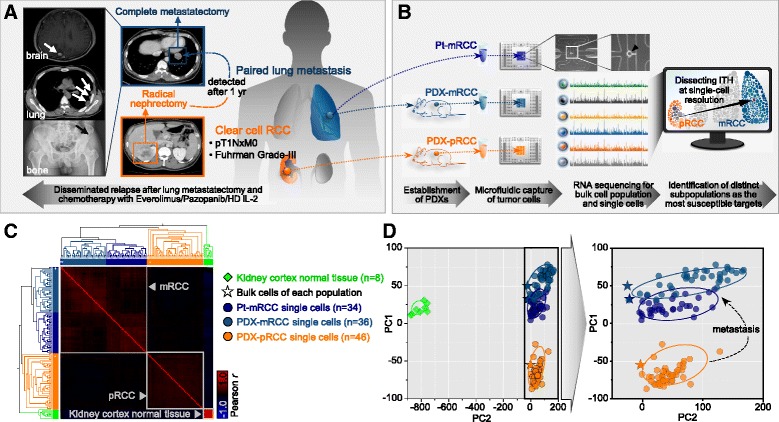
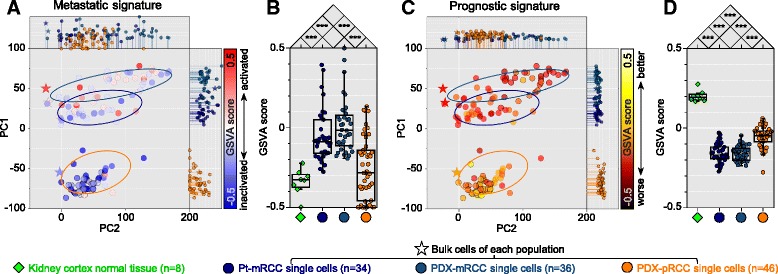
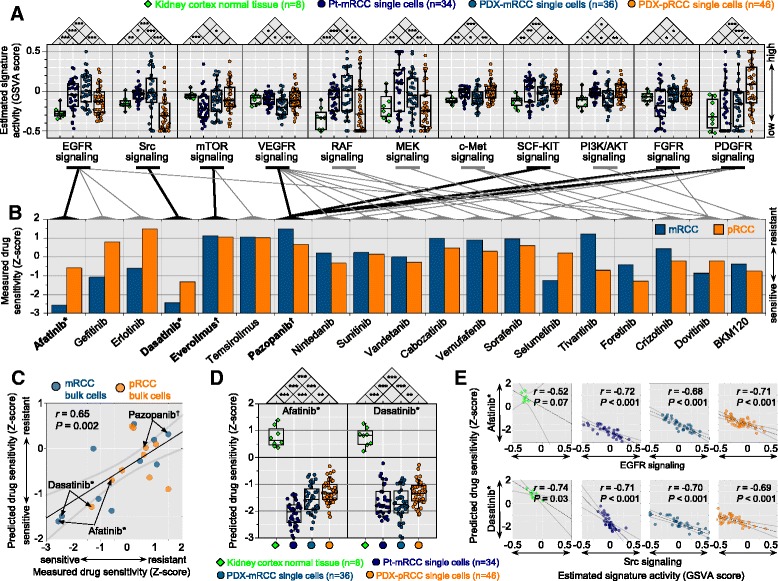
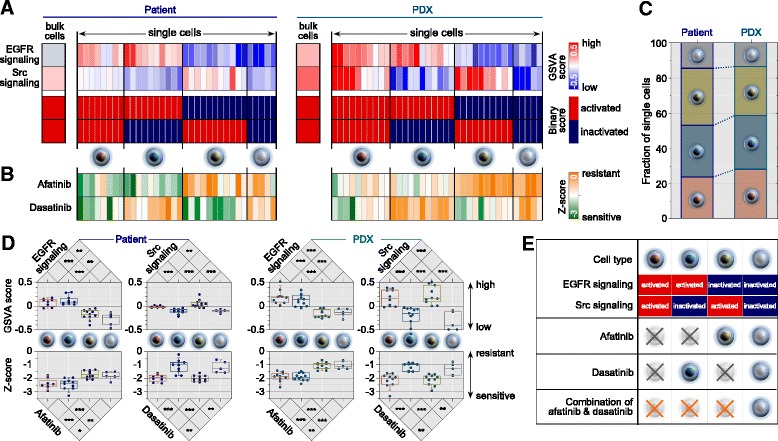
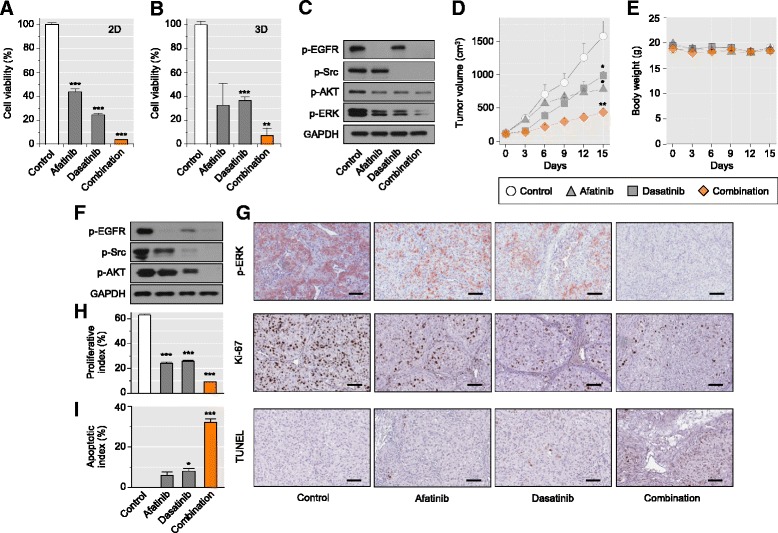
BACKGROUND: Intratumoral heterogeneity hampers the success of marker-based anticancer treatment because the targeted therapy may eliminate a specific subpopulation of tumor cells while leaving others unharmed. Accordingly, a rational strategy minimizing survival of the drug-resistant subpopulation is essential to achieve long-term therapeutic efficacy. RESULTS: Using single-cell RNA sequencing (RNA-seq), we examine the intratumoral heterogeneity of a pair of primary renal cell carcinoma and its lung metastasis. Activation of drug target pathways demonstrates considerable variability between the primary and metastatic sites, as well as among individual cancer cells within each site. Based on the prediction of multiple drug target pathway activation, we derive a combinatorial regimen co-targeting two mutually exclusive pathways for the metastatic cancer cells. This combinatorial strategy shows significant increase in the treatment efficacy over monotherapy in the experimental validation using patient-derived xenograft platforms in vitro and in vivo. CONCLUSIONS: Our findings demonstrate the investigational application of single-cell RNA-seq in the design of an anticancer regimen. The approach may overcome intratumoral heterogeneity which hampers the success of precision medicine.
Overview
The claims and statistics of this paper haven’t been checked yet.
Free: it reads the open-access text and checks the first 5 claims that cite a source we can check. Create a free account to check every claim.
Integrity signals
Registry
Cites
Statistics
Figures
Verification
Claims the paper makes
The claims and statistics of this paper haven’t been checked yet.
Free: it reads the open-access text and checks the first 5 claims that cite a source we can check. Create a free account to check every claim.
Claims other papers make about this one
Each is checked against this paper’s own text: does it say what the citing paper says it does?
The cited source says what the claim attributes to it.
In the citing paper
“Single-cell RNA sequencing (scRNA-seq) has emerged as a powerful tool to dissect this heterogeneity, revealing that drug target pathway activation varies significantly between primary and metastatic sites, as well as among individual cancer cells within a single site (Kim et al., 2016).”
From Spatial pharmacology of anti-cancer immunomodulators: a comprehensive review (2026) · cites this paper as Kim et al., 2016
The cited source says what the claim attributes to it.
In the citing paper
“For example, in metastatic renal cell carcinoma (RCC), scRNA-seq analysis of primary and lung metastatic tumors identified mutually exclusive pathway activation, leading to the design of a combinatorial regimen that co-targeted these pathways and significantly improved treatment efficacy in patient-derived xenograft models (Kim et al., 2016).”
From Spatial pharmacology of anti-cancer immunomodulators: a comprehensive review (2026) · cites this paper as Kim et al., 2016
The cited source says what the claim attributes to it.
In the citing paper
“Intratumoral heterogeneity remains a major barrier to effective cancer treatment, as targeted therapies often eliminate only specific subpopulations of tumor cells while leaving others unharmed (Kim et al., 2016).”
From Spatial pharmacology of anti-cancer immunomodulators: a comprehensive review (2026) · cites this paper as Kim et al., 2016
The cited source says what the claim attributes to it.
In the citing paper
“For example, in metastatic renal cell carcinoma, scRNA-seq identified mutually exclusive pathway activation, leading to the design of a combinatorial regimen that co-targeted these pathways and significantly improved efficacy (Kim et al., 2016).”
From Spatial pharmacology of anti-cancer immunomodulators: a comprehensive review (2026) · cites this paper as Kim et al., 2016
Self-check
Percentages, sums and reported differences re-computed from the paper’s own numbers.
The self-check needs the paper’s full text.
Citations
Cites
1 retracted
EMT Phenotype is Induced by Increased Src Kinase Activity via Src-Mediated Caspase-8 Phosphorylation
Zhao, Y., Li, X., Sun, X., Zhang, Y., & Ren, H. (2012) · Cellular Physiology and Biochemistry · doi:10.1159/000338489 · Cited by 11 · cited 2×
“Dysregulation of EGFR [32–34] and Src/FAK [35, 36] pathways plays a critical role in the tumorigenesis and metastatic progression of RCCs.”
BackgroundRetractedFast and accurate short read alignment with Burrows-Wheeler transform
Li, H., & Durbin, R. (2009) · Bioinformatics · doi:10.1093/bioinformatics/btp324 · Cited by 58,607
Cytoscape: A software Environment for integrated models of biomolecular interaction networks
Shannon, P., Markiel, A., Ozier, O., Baliga, N. S., Wang, J. T., Ramage, D., Amin, N., Schwikowski, B., & Ideker, T. (2003) · Genome Research · doi:10.1101/gr.1239303 · Cited by 51,888 · cited 1×
“the ClueGO [67] plug-in within the Cytoscape framework [68].”
MethodSTAR: ultrafast universal RNA-seq aligner
Dobin, A., Davis, C. A., Schlesinger, F., Drenkow, J., Zaleski, C., Jha, S., Batut, P., Chaisson, M., & Gingeras, T. R. (2013) · Bioinformatics · doi:10.1093/bioinformatics/bts635 · Cited by 51,709
limma powers differential expression analyses for RNA-sequencing and microarray studies
Ritchie, M. E., Phipson, B., Wu, D., Hu, Y., Law, C. W., Shi, W., & Smyth, G. K. (2015) · Nucleic Acids Research · doi:10.1093/nar/gkv007 · Cited by 40,458 · cited 1×
“Based on the CGH data, extracted signals were normalized to log2 ratios using the limma package [55].”
MethodThe Genome Analysis Toolkit: A MapReduce framework for analyzing next-generation DNA sequencing data
McKenna, A., Hanna, M., Banks, E., Sivachenko, A., Cibulskis, K., Kernytsky, A., Garimella, K., Altshuler, D., Gabriel, S., Daly, M., et al. (2010) · Genome Research · doi:10.1101/gr.107524.110 · Cited by 27,895 · cited 2×
“Identification of single-nucleotide variants and copy number variants Using the WES data, generated reads were aligned to the human genome reference hg19 using the Burrows- Wheeler Aligner [50] after removing duplicate reads, followed by implementation of the data-processing modules using the Genome Analysis Toolkit […”
MethodRSEM: accurate transcript quantification from RNA-Seq data with or without a reference genome
Li, B., & Dewey, C. N. (2011) · BMC Bioinformatics · doi:10.1186/1471-2105-12-323 · Cited by 22,179
GSVA: gene set variation analysis for microarray and RNA-Seq data
Hänzelmann, S., Castelo, R., & Guinney, J. (2013) · BMC Bioinformatics · doi:10.1186/1471-2105-14-7 · Cited by 15,440 · cited 1×
“way or signature across samples, we implemented the GSVA algorithm [61] in RNA-seq data.”
MethodRobinson, J. T., Thorvaldsdóttir, H., Winckler, W., Guttman, M., Lander, E. S., Getz, G., & Mesirov, J. P. (2011) · Nature Biotechnology · doi:10.1038/nbt.1754 · Cited by 15,390 · cited 2×
“Called variants were reviewed manually using the Integrative Genomic Viewer [53], and considered only within chromosomes 1–22 and X. Mutations were annotated using the SnpEff [54] package.”
MethodFast and accurate long-read alignment with Burrows-Wheeler transform.
Li, H., & Durbin, R. (2010) · Bioinformatics · doi:10.1093/bioinformatics/btp698 · Cited by 12,063
Cited by
Items 101–198 of 198
Reticker-Flynn, N. E., & Engleman, E. G. (2020) · eLife · doi:10.7554/elife.53839 · Cited by 26
Clinical Perspectives of Single-Cell RNA Sequencing
Kim, N., Eum, H. H., & Lee, H. (2021) · Biomolecules · doi:10.3390/biom11081161 · Cited by 26
Self-citationSingle-cell transcriptomics: a novel precision medicine technique in nephrology
Kim, J., & Park, J. (2020) · The Korean Journal of Internal Medicine · doi:10.3904/kjim.2020.415 · Cited by 15
“They identified cellular subpopulations with active signaling pathways and combinations of drugs that eliminate cancer cells [83].”
BackgroundMethodInfluentialKim, T. J., Lee, Y. H., & Koo, K. C. (2022) · Korean journal of urology · doi:10.4111/icu.20220103 · Cited by 22
“A study sequenced single-cell RNA (scRNA) to elucidate the relationship between RCC tumor heterogeneity and lung metastasis [93].”
BackgroundChen, H., Zuo, H., Huang, J., Liu, J., Jiang, L., Jiang, C., Zhang, S., Hu, Q., Lai, H., Yin, B., et al. (2024) · Journal of Cellular and Molecular Medicine · doi:10.1111/jcmm.18403 · Cited by 26
“43,44 Traditional tumour staging, focusing solely on static tumour status at a specific time point, lacks the ability to capture dynamic cellular dynamics, the tumour microenvironment and immune characteristics.”
BackgroundCellular milieu in clear cell renal cell carcinoma
Raghubar, A. M., Roberts, M. J., Wood, S., Healy, H. G., Kassianos, A. J., & Mallett, A. J. (2022) · Frontiers in Oncology · doi:10.3389/fonc.2022.943583 · Cited by 27
“Similarly, metastatic ccRCC progression has been profiled by 17 metastasis-associated gene (MAG) markers identified in a single-cell transcriptomics study conducted on 121 single cells (31, 32).”
BackgroundPetrossian, K., Kanaya, N., Lo, C., Hsu, P.-Y., Nguyen, D. M., Yang, L., Yang, L., Warden, C., Wu, X., Pillai, R. K., et al. (2018) · Oncotarget · doi:10.18632/oncotarget.25552 · Cited by 23
“Unlike cell line xenografts, PDX models recapitulate the tumor microenvironment and the differing ER expression levels; thus, single cell isolation from a heterogeneous tumor will aid in elucidating the inhibitor’s mechanism of action on heterogeneous ER expressing tumor cells [50, 51].”
BackgroundPatient-derived xenograft models to optimize kidney cancer therapies
Patel, A., Cohen, S., Moret, R., Maresh, G. A., Gobe, G. C., & Li, L. (2019) · Translational Andrology and Urology · doi:10.21037/tau.2018.11.04 · Cited by 19
Applications of single cell RNA sequencing to research of stem cells
Zhang, X., & Liu, L. (2019) · World Journal of Stem Cells · doi:10.4252/wjsc.v11.i10.722 · Cited by 19
Scarpa, J. R., DiNatale, R. G., Mano, R., Silagy, A. W., Kuo, F., Irie, T., McCormick, P. J., Fischer, G. W., Hakimi, A. A., & Mincer, J. S. (2021) · Cancer Research · doi:10.1158/0008-5472.can-20-1852 · Cited by 22
Cheng, J., Song, X., Ao, L., Chen, R., Chi, M., Guo, Y., Zhang, J., Li, H., Zhao, W., Guo, Z., et al. (2018) · Journal of Cancer · doi:10.7150/jca.23017 · Cited by 17
Radpour, R., & Forouharkhou, F. (2018) · World Journal of Stem Cells · doi:10.4252/wjsc.v10.i11.160 · Cited by 20
Pfisterer, U., Bräunig, J., Brattås, P. L., Heidenblad, M., Karlsson, G., & Fioretos, T. (2021) · Genes Chromosomes and Cancer · doi:10.1002/gcc.22944 · Cited by 18
“Similarly, single-cell resolution of the transcriptome in renal cell carcinoma has shed new light on intratumor heterogeneity and led to the derivation of a new, combinatorial therapeutic strategy.(59)”
BackgroundCancer cell immune mimicry delineates onco-immunologic modulation
Gao, R., He, B., Huang, Q., Wang, Z., Yan, M., Lam, E. W. ‐., Lin, S., Wang, B., & Liu, Q. (2021) · iScience · doi:10.1016/j.isci.2021.103133 · Cited by 19
Giri, A. K., & Ianevski, A. (2021) · Expert Opinion on Drug Discovery · doi:10.1080/17460441.2022.1991306 · Cited by 16
“used scRNA along with drug screening in patient-derived xenograft models to optimize drug combination targeting metastatic renal cell carcinoma [65].”
MethodSingle-cell transcriptomics: A new tool for studying diabetic kidney disease
Mao, Z., Gao, Z.-X., Liu, Y., Liu, D., Liu, Z.-S., & Wu, P. (2023) · Frontiers in Physiology · doi:10.3389/fphys.2022.1053850 · Cited by 15
“In renal tumors, researchers mainly explore the cell types, heterogeneity of tumors, and diversity of tumor tissues, providing a reference value for the design of anti-tumor protocols and precision medicine (Kim et al., 2016; Young et al., 2018; Hu et al., 2020).”
BackgroundZiogas, D. E., Kyrochristos, I. D., & Roukos, D. H. (2018) · Drug Discovery Today · doi:10.1016/j.drudis.2018.07.008 · Cited by 17
Circulating Tumor Cells for the Management of Renal Cell Carcinoma
Broncy, L., & Paterlini-Bréchot, P. (2018) · Diagnostics · doi:10.3390/diagnostics8030063 · Cited by 14
“examined the intratumoral heterogeneity of a pair of primary RCC tumor and its lung metastasis [49].”
BackgroundIntrinsic entropy model for feature selection of scRNA-seq data
Li, L., Tang, H., Xia, R., Dai, H., Liu, R., & Chen, L. (2022) · Journal of Molecular Cell Biology · doi:10.1093/jmcb/mjac008 · Cited by 14
“, 2017) and metastatic renal cell carcinoma (Kim et al., 2016) express markers of different activation states (M1/M2) simultaneously, suggesting that macrophage polarization is not a”
Ascierto, P. A., Brugarolas, J., Buonaguro, L., Butterfield, L. H., Carbone, D. P., Daniele, B., Ferris, R. L., Fox, B. A., Galon, J., Gridelli, C., et al. (2018) · Journal for ImmunoTherapy of Cancer · doi:10.1186/s40425-018-0377-z · Cited by 18
“Experimental approaches have focused on single cell analyses using mass cytometry or single cell RNA sequencing [42, 43].”
Owoicho, A. M., Ogenyi, D. O., Zhilenkova, A. V., Essogmo, F. E., Tchawe, Y. S. N., Uchendu, I. K., Pascal, A. M., Nikitina, N. M., Rusanov, A. S., Sanikovich, V. D., et al. (2024) · International Journal of Molecular Sciences · doi:10.3390/ijms26010265 · Cited by 15
Application of single-cell RNA sequencing in head and neck squamous cell carcinoma
An, Z., Liu, W., Li, W., Wei, M., & An, C. (2023) · Chinese Journal of Cancer Research · doi:10.21147/j.issn.1000-9604.2023.04.01 · Cited by 13
Wang, T., Mai, D., Shu, H., Hu, J., Wang, Y., Peng, J., Chen, J. W., & Shang, X. (2025) · Fundamental Research · doi:10.1016/j.fmre.2025.01.001 · Cited by 11
“To evaluate the performance of the embeddings in generating cancer single-cell trajectories, we collected a renal cell carcinoma (RCC) scRNA-seq dataset (GSE ID: GSE73121) [48] .”
Choi, J. M., Rhee, J., & Chae, H. (2021) · IEEE Access · doi:10.1109/access.2021.3052923 · Cited by 15
“tumor immune infiltration, to develop clinical application strategies, and so on [5]–[9].”
BackgroundAlchahin, A. M., Τσέα, Ι., & Baryawno, N. (2023) · Cancers · doi:10.3390/cancers15194734 · Cited by 12
“Equally, as single-cell technologies have computationally and quantitatively mapped the TME [14,17,21,87,88], clinical trials are pursuing to evaluate the findings.”
BackgroundInfluentialEvolutionary scalpels for dissecting tumor ecosystems
Rosenbloom, D. I. S., Cámara, P. G., Chu, T., & Rabadán, R. (2016) · Biochimica et Biophysica Acta (BBA) - Reviews on Cancer · doi:10.1016/j.bbcan.2016.11.005 · Cited by 12
The optimization of combinatorial drug therapies: Strategies and laboratorial platforms
Wang, B., Warden, A. R., & Ding, X. (2021) · Drug Discovery Today · doi:10.1016/j.drudis.2021.07.023 · Cited by 11
Evolving Clinical Applications of Tissue Transcriptomics in Kidney Disease
Oliverio, A., Bellomo, T., & Mariani, L. (2019) · Frontiers in Pediatrics · doi:10.3389/fped.2019.00306 · Cited by 8
Zhou, Y., Guo, Y., & Wang, Y. (2022) · IET Systems Biology · doi:10.1049/syb2.12041 · Cited by 13
Whole-genome mapping of small-molecule targets for cancer medicine
Solier, S., Müller, S., & Rodriguez, R. (2020) · Current Opinion in Chemical Biology · doi:10.1016/j.cbpa.2019.12.005 · Cited by 10
Unravelling the Complexity of HNSCC Using Single-Cell Transcriptomics
Conde‐López, C., Marripati, D., Elkabets, M., Heß, J., & Kurth, I. (2024) · Cancers · doi:10.3390/cancers16193265 · Cited by 12
“In breast and renal cell carcinomas, scRNAseq has identified gene expression differences between primary and metastatic tumors, highlighting prognostic biomarkers and potential therapeutic targets to prevent metastasis [12,13].”
BackgroundApplications of single‐cell sequencing for the field of otolaryngology: A contemporary review
Pyle, M. P., & Hoa, M. (2020) · Laryngoscope Investigative Otolaryngology · doi:10.1002/lio2.388 · Cited by 10
Intrarenal Single-Cell Sequencing of Hepatitis B Virus Associated Membranous Nephropathy
Yu, L., Lin, W., Shen, C., Meng, T., Jin, P., Ding, X., Eggenhuizen, P. J., Ooi, J. D., Tang, R., Nie, W., et al. (2022) · Frontiers in Medicine · doi:10.3389/fmed.2022.869284 · Cited by 9
Zhang, F., Hou, T., Chen, L., Xiong, M., Zhou, M., Kazobinka, G., Zhao, J., & Han, X. (2022) · Translational Cancer Research · doi:10.21037/tcr-22-242 · Cited by 8
Towards multiomic analysis of oral mucosal pathologies
Einhaus, J. F., Han, X., Feyaerts, D., Sunwoo, J. B., Gaudilliere, B. L., Ahmad, S. H., Aghaeepour, N., Bruckman, K. C., Ojcius, D. M., Schürch, C. M., et al. (2023) · Seminars in Immunopathology · doi:10.1007/s00281-022-00982-0 · Cited by 14
Single-cell sequencing leads a new era of profiling transcriptomic landscape
Zhang, H., Cui, N., Cai, Y., Lei, F., & Weitz, D. A. (2018) · Journal of Bio-X Research · doi:10.1097/jbr.0000000000000003 · Cited by 8
“Nevertheless, this method has had great impact on biomedical research,([1]) diagnostics,([2]) and therapeutics.([3]) However, even greater impact demands information at the level of individual cells, still collected over the full population of cells.”
MethodApplication of Single Cell Sequencing in Cancer
Yu, L., Zhao, H., Li, M., & Zhang, C. (2018) · Advances in experimental medicine and biology · doi:10.1007/978-981-13-0502-3_11 · Cited by 8
Winter, S., Fisel, P., Büttner, F., Nies, A. T., Stenzl, A., Bedke, J., Schwab, M. G., & Schaeffeler, E. (2017) · Science Translational Medicine · doi:10.1126/scitranslmed.aal2439 · Cited by 8
Unsupervised and Semisupervised Learning
Li, J., & Pisztora, V. (2021) · Wiley eBooks · doi:10.1002/9781118445112.stat08320 · Cited by 8
Cheng, X., Sun, D., Li, H., Zhang, J., Luo, Q., Jin, X., Chen, Y., Yuan, Q., & Wang, B. (2023) · Translational Andrology and Urology · doi:10.21037/tau-23-166 · Cited by 7
Single Cell Transcriptome Helps Better Understanding Crosstalk in Diabetic Kidney Disease
Du, C.-Y., Ren, Y.-Z., Li, G.-X., Yang, Y., Yan, Z., & Yao, F. (2021) · Frontiers in Medicine · doi:10.3389/fmed.2021.657614 · Cited by 7
“Guided by scRNA-seq analysis, a combinatorial regimen co-targeting two mutually exclusive pathways for the metastatic cancer cells gained better treatment efficacy over monotherapy (37).”
BackgroundMethodInfluentialSingle-cell entropy network detects the activity of immune cells based on ribosomal protein genes
Jin, Q., Zuo, C., Cui, H., Li, L., Yang, Y., Dai, H., & Chen, L. (2022) · Computational and Structural Biotechnology Journal · doi:10.1016/j.csbj.2022.06.056 · Cited by 7
“To validate the performance of SCEN method, we collected seven high-quality scRNA-seq data-sets with clear classification labels from literatures [15–20] and performed cell clustering analysis on both gene expression matrix and AE matrix.”
MethodOgbue, O., Ünlü, S., Ibodeng, G.-O. E., Singh, A., Durmaz, A., Visconte, V., & Molina, J. C. (2023) · Cancers · doi:10.3390/cancers15092477 · Cited by 8
“Targetable transcriptomic changes in crucial genes that regulate proliferation and survival in AML/MDS can help generate more personalized therapy and monitor response to treatment in both clonal cells and healthy immune cells prior to relapse at a much higher resolution that is obtainable by bulk sequencing methods […”
BackgroundNovel omics technology driving translational research in precision oncology
Basu, A., Budhraja, A., Juwayria, Abhilash, D., & Gupta, I. (2021) · Advances in genetics · doi:10.1016/bs.adgen.2021.08.003 · Cited by 8
Poirion, O., Zhu, X., Ching, T. H., & Garmire, L. X. (2016) · bioRxiv (Cold Spring Harbor Laboratory) · doi:10.1101/095810 · Cited by 7
González-Fernández, J., Zaragozano, S., Monteagudo, A., Simón, C., & Vilella, F. (2025) · American Journal of Obstetrics and Gynecology · doi:10.1016/j.ajog.2024.08.042 · Cited by 7
Kannan, J., Mathews, L., Wu, Z., Young, N. S., & Gao, S. (2022) · BMC Bioinformatics · doi:10.1186/s12859-022-04625-x · Cited by 8
“A renal cell carcinoma dataset of GSE73122 included three types of known clones to benchmark accuracy [17].”
BackgroundChen, L., Wang, L., Xiong, Z., Zhu, X. M., & Chen, L. (2023) · Cureus · doi:10.7759/cureus.48436 · Cited by 8
“They performed a full exon strategy on duplicate samples and found that all PDX cells were heterogeneous [9].”
BackgroundXin, S., Zhang, Y., Zhang, Z., Li, Z., Sun, X., Liu, X., Jin, L., Li, W., Tang, C., Mei, W., et al. (2024) · Cancer Gene Therapy · doi:10.1038/s41417-024-00779-3 · Cited by 8
“Kyu-Tae et al. determined the transcriptional heterogeneity of metastatic renal cell carcinoma (mRCC) by scRNA-seq and found that this tumor has strong invasiveness and metastatic ability [25].”
Li, Q., Lu, M., Zhang, Z., & Zhang, R. (2021) · International Journal of General Medicine · doi:10.2147/ijgm.s318271 · Cited by 7
Single-Cell Sequencing in Genitourinary Malignancies
Murphy, N. J., Shah, P., Shih, A., Khalili, H., Liew, A., Zhu, X., & Lee, A. (2020) · Advances in experimental medicine and biology · doi:10.1007/978-981-15-4494-1_13 · Cited by 6
Understanding the epigenetic landscape and cellular architecture of childhood brain tumors
Cruzeiro, G. A. V., Rota, C., Hack, O. A., Segal, R. A., & Filbin, M. G. (2020) · Neurochemistry International · doi:10.1016/j.neuint.2020.104940 · Cited by 9
Current Trends in Computational Chemistry for Breast Cancer
Paliwal, D., & Gupta, U. (2022) · Letters in Drug Design & Discovery · doi:10.2174/1570180819666220330161006 · Cited by 5
Ma, M., Jin, C., & Dong, Q. (2025) · Journal of Cellular and Molecular Medicine · doi:10.1111/jcmm.70482 · Cited by 6
Wu, M., Sun, M., Lai, Q., LU, Y., Fu, Y., Peng, Y., Lai, W., Zeng, L., Zhao, S., LI, Y., et al. (2021) · Biocell · doi:10.32604/biocell.2021.013882 · Cited by 5
“To verify the RNA expression in KIRC cells, we also checked one previous scRNA-seq dataset (N = 116, GSE73121) based on primary and metastatic tumor cells (Kim et al., 2016), using scRNASeqDB.”
MethodSüner, A. (2019) · Statistical Applications in Genetics and Molecular Biology · doi:10.1515/sagmb-2019-0004 · Cited by 5
GranatumX: A Community-engaging, Modularized, and Flexible Webtool for Single-cell Data AnalysisPreprint
Garmire, D. G., Zhu, X., Mantravadi, A., Huang, Q., Yunits, B., Liu, Y., Wolfgruber, T., Poirion, O., Zhao, T., Arisdakessian, C., et al. (2018) · bioRxiv (Cold Spring Harbor Laboratory) · doi:10.1101/385591 · Cited by 5
Jiang, Y., Pan, X., Zhang, Y., Huang, T., & Gao, Y. (2019) · IEEE Access · doi:10.1109/access.2019.2944132 · Cited by 4
“MATERIALS AND METHODS A. DATASET We downloaded single-cell RNA sequencing data of 24,866 genes in 36 cells from PDX of metastatic renal cell carcinoma (mRCC), 47 cells from PDX of primary RCC (pRCC), and 35 cells from parental mRCC (pt-mRCC) from the Gene Expression Omnibus with accession number of GSE73121 [18].”
BackgroundMethodInfluentialExploring Stem Cell Heterogeneity in Chronic Myeloid Leukemia
Munje, C., & Copland, M. (2017) · Trends in cancer · doi:10.1016/j.trecan.2017.12.001 · Cited by 4
Single-Cell Omics in Personalized Medicine
Buriani, A., Fortinguerra, S., Sorrenti, V., Gabbia, D., & Carrara, M. (2019) · Elsevier eBooks · doi:10.1016/b978-0-12-817532-3.00014-1 · Cited by 6
A Novel Immune Gene-Related Prognostic Score Predicts Survival and Immunotherapy Response in Glioma
Luo, X., Wang, Q., Tang, H., Chen, Y., Li, X., Chen, J., Zhang, X., Li, Y., Sun, J., & Han, S. (2022) · Medicina · doi:10.3390/medicina59010023 · Cited by 4
“In the study, we performed a high-resolution differential analysis on glioma RNA-seq data [46] and deeply studied the IRG expression profiles of glioma patients using WGCNA analysis.”
MethodCurrent research development of single cell genome in urological tumor
Cao, Z., & Wu, S. (2017) · The International Journal of Biochemistry & Cell Biology · doi:10.1016/j.biocel.2017.08.003 · Cited by 4
“A new research using single-cell RNA sequencing has shown the investigational application in the design of an anticancer regimen (Kim et al., 2016).”
BackgroundDai, Y., Wang, Z., Yan, E., Li, J., Ge, H., Xiao, N., Cheng, J., & Diao, P. (2022) · Head & Neck · doi:10.1002/hed.27126 · Cited by 4
SNP Identification and Discovery
Raj, C. B. A., Nagarajan, H., Aslam, M. H., & Panchalingam, S. (2021) · Springer eBooks · doi:10.1007/978-981-16-3993-7_17 · Cited by 3
Kidney diseases and single-cell sequencing research: a bibliometric analysis from 2015 to 2024
Li, Y., Hou, J., Zhang, X., Wu, X., Lin, S., Liu, W., Wang, Y., & Zheng, H. (2025) · Renal Failure · doi:10.1080/0886022x.2025.2521457 · Cited by 3
Fu, B., Lü, L. T., & Huang, H. (2022) · International Journal of General Medicine · doi:10.2147/ijgm.s353848 · Cited by 3
“ScRNA-seq analysis of metastatic renal cell carcinoma samples shows the coexistence of multiple tumor cell clusters in the tissues, each exhibiting a different signaling pathway dysregulation and drug response sensitivity.(9) Taken together, these previous studies suggest that scRNA-seq holds promising prospects for t…”
BackgroundCell Features Reconstruction from Gene Association Network of Single Cell
Xu, Q., Zhu, J., Luo, Y., & Li, W. (2023) · Interdisciplinary Sciences Computational Life Sciences · doi:10.1007/s12539-023-00553-3 · Cited by 4
“There is good agreement between these results and those in reference [16] that demonstrate that stromal signatures on Pt-mRCCs are low and gene expression signatures on clear cell renal cell carcinoma (ccRCC) are substantially higher.”
ResultKim, S. H., Park, J., Park, W. S., Hong, D., & Chung, J. (2022) · Korean journal of urology · doi:10.4111/icu.20210341 · Cited by 2
“…concepts have been developed to overcome the heterogeneity of mRCC using genetic sequencing approaches, including single-cell RNA sequencing to optimize a combinatorial therapeutic strategy [19], TGS with pan-cancer panel [20], and genomically annotated risk model and classification [21].”
Self-citationSingle-cell Technology in Stem Cell Research
Golchin, A., Shams, F., Moradi, F., Sadrabadi, A. E., Parviz, S., Alipour, S., Ranjbarvan, P., Hemmati, Y., Rahnama, M., Rasmi, Y., et al. (2024) · Current Stem Cell Research & Therapy · doi:10.2174/011574888x265479231127065541 · Cited by 3
Spatial pharmacology of anti-cancer immunomodulators: a comprehensive review
Chen, S., Tu, L., & Chen, Q. (2026) · Frontiers in Pharmacology · doi:10.3389/fphar.2026.1898418 · Cited by 1
“xenograft models (Kim et al., 2016).”
InfluentialSGLP: A novel method for mining single-cell specific gene clusters
Xu, Q., Zhang, Y., Li, W., & Zhu, J. (2025) · Biomedical Signal Processing and Control · doi:10.1016/j.bspc.2025.107944 · Cited by 1
Ai, S., Zhou, Y., Zou, W., Chatterjee, E., Li, G., Shi, J., Xiao, J., & Zhao, J. (2025) · IEEE Transactions on Computational Biology and Bioinformatics · doi:10.1109/tcbbio.2025.3576169 · Cited by 1
“The scRNA-seq datasets used in this work, namely GSE95140 [26], GSE106474 [27], GSE122662 [28], GSE52529 [29], GSE67835 [30], GSE73121 [31], GSE75748 [32], GSE81608 [33], were all obtained from GEO datasets; the Bulk RNA-seq data was sourced from the Cancer Genome Atlas (TCGA) TCGA-BRCA project and…”
Zuo, Z., & Sun, Y. (2026) · Biochemical Pharmacology · doi:10.1016/j.bcp.2026.117873 · Cited by 1
Navigating disease phenotypes – A multidimensional single-cell resolution compass leads the way
Beyer, M., Händler, K., Günther, P. S., Bassler, K. E., Ulas, T., Becker, M., Klee, K., Schultze, J. L., & Schlitzer, A. (2017) · Current Opinion in Systems Biology · doi:10.1016/j.coisb.2017.05.004 · Cited by 1
Single-Cell Diagnostics, Prognosis, and Therapy
Dhawan, D. (2019) · Elsevier eBooks · doi:10.1016/b978-0-12-817532-3.00001-3 · Cited by 1
Ou, J., Li, J., Xia, Z., Dai, S., Ding, Y., Guo, Y. P., Jiang, L., & Tang, J. (2024) · IEEE International Conference on Bioinformatics and Biomedicine (BIBM) · doi:10.1109/bibm62325.2024.10822339 · Cited by 3
Zhang, C., Abouleila, Y., Dévédec, S. E. L., Hankemeier, T., Germond, A., & Ali, A. (2025) · Analytical and Bioanalytical Chemistry · doi:10.1007/s00216-025-06058-w · Cited by 2
“These results show that single-cell RNA sequencing can not only elucidate transcriptional heterogeneity during metastatic progression but can also be used to design optimized combinations of targeted drugs against metastasis [11, 12].”
Evidence for in vivo mRNA Transport Between Mammalian CellsPreprint
Shubin, A. V., Liu, S., Church, G. M., & Hunter, C. P. (2024) · bioRxiv (Cold Spring Harbor Laboratory) · doi:10.1101/2024.10.11.617465 · Cited by 2
PharmacoDB: an integrative database for mining in vitro drug screening studiesPreprint
Smirnov, P., Kofia, V., Maru, A., Freeman, M., Ho, C., El-Hachem, N., Adam, G.-A., Ba-Alawi, W., Safikhani, Z., & Haibe‐Kains, B. (2017) · bioRxiv (Cold Spring Harbor Laboratory) · doi:10.1101/195149 · Cited by 1
“of research for the rational discovery of synergistic drug combinations in renal cell carcinoma (21).”
BackgroundIntegrative Modeling and Novel Technologies in Human Genomics
Carmona-Mora, P., & Young, J. I. (2019) · Elsevier eBooks · doi:10.1016/b978-0-12-816573-7.00008-0
Peyvandipour, A. (2020) · Human Biology
Kinker, G. S. (2020) · Digital Library of Theses and Dissertations (Universidade de São Paulo) · doi:10.11606/t.41.2020.tde-13022020-101209 · Cited by 1
Molecular Fingerprinting by Single Cell Clone Analysis in Adverse Drug Reaction (ADR) Assessment
Banerjee, A. K. (2021) · Current Drug Safety · doi:10.2174/1574886316666210727150415
The application of RNA sequencing in precision cancer medicine
Saran, U., & Damodaran, C. (2023) · Elsevier eBooks · doi:10.1016/b978-0-12-824010-6.00026-5
Scarpa, J. R., DiNatale, R. G., Mano, R., Silagy, A. W., Kuo, F., Irie, T., McCormick, P. J., Fischer, G. W., Hakimi, A. A., & Mincer, J. S. (2023) · doi:10.1158/0008-5472.c.6512577.v1
Zhang, X., Wang, Z., Zeng, Z., Shen, N., Wang, B., Zhang, Y., Shen, H., Lu, W., Wei, R., Ma, W., et al. (2021) · Figshare · doi:10.6084/m9.figshare.14445103
Disclosing the development and focus of sequencing and omics studies in kidney neoplasm research
Liu, Y., Lu, B., Yang, X., Cui, J., Yang, T., Zhang, H., Zhao, Z., Lyu, D., Li, Y., Yao, Y., et al. (2025) · Discover Oncology · doi:10.1007/s12672-025-02750-6 · Cited by 1
“In 2016, a pioneer study using scRNA-seq in RCC research explored the ITH within a matched primary RCC and lung metastatic site pair [125].”
Additional file 1 of Single-cell RNA sequencing for the study of kidney disease
Zhu, J., Lu, J., & Weng, H. (2024) · Figshare · doi:10.6084/m9.figshare.26601703
Zhang, X., Wang, Z., Zeng, Z., Shen, N., Wang, B., Zhang, Y., Shen, H., Lu, W., 魏蓉, Ma, W., et al. (2021) · Figshare · doi:10.6084/m9.figshare.14445100
Wang, J. (2023) · Journal of High School Science · doi:10.64336/001c.70222
Wang, Z., Ma, L., Cao, J., Lin, S., Ma, R., Wang, J., Lv, H., Zhang, Z., & Jiang, T. (2026) · Scientific Reports · doi:10.1038/s41598-025-34933-0
Overview of RNA-sequencing and applications to neuro-oncology
Patel, H. M., Chaudhary, A., Venugopal, C., Singh, S. K., & Escudero, L. (2026) · Elsevier eBooks · doi:10.1016/b978-0-443-27356-8.00080-2
SCKAR is a reference-free method for scRNA-seq data analysis
Ratul, M. R. Z., Karim, M. R., Samee, M. A. H., & Rahman, A. H. (2026) · Communications Biology · doi:10.1038/s42003-026-09942-y
Making multi-axis methods feasible for multi-omics data
Andrew, E. B. (2026) · White Rose eTheses Online (University of Leeds, The University of Sheffield, University of York)
Metadata
- Authors
- Kim, K.-T., Lee, H. W., Lee, H.-O., Song, H. J., Jeong, D. E., Shin, S., Kim, H., Shin, Y., Nam, D.-H., Jeong, B. C., Kirsch, D. G., Joo, K. M., & Park, W.-Y.
- Affiliations
- Samsung Medical Center (KR)
- Sungkyunkwan University (KR)
- Korea University (KR)
- Duke University (US)
- Corresponding author
- Joo, Kyeung Min
- Park, Woong-Yang
- ORCID
- Venue
- Genome Biology
- Published
- 2016-04-29
- Volume
- 17
- Issue
- 1
- Pages
- 80-80
- ISSN
- 1465-6906 (ISSN-L)
- 1474-760X
- PMC
- PMC4852434
- OpenAlex
- W2342423616
- Cited by
- 198
- References
- 71
- Citations by year
- 2026: 5 · 2025: 8 · 2024: 12 · 2023: 20 · 2022: 21 · 2021: 35 · 2020: 27 · 2019: 19 · 2018: 23 · 2017: 21 · 2016: 7
- FWCI
- 20.70
- Type
- journal article
- Language
- en
- Open access
- gold
- doi.org
- Licence
- cc-by
- Locations
- Genome biology (publishedVersion, cc-by)
- PubMed Central (publishedVersion, cc-by)
- PubMed (publishedVersion)
- Funders
- Korea National Institute of Health (HI13C2096000013)
- Topics
- Health Sciences › Medicine › Oncology › Renal cell carcinoma treatment
- Life Sciences › Biochemistry, Genetics and Molecular Biology › Cancer Research › Cancer Genomics and Diagnostics
- Life Sciences › Biochemistry, Genetics and Molecular Biology › Molecular Biology › Single-cell and spatial transcriptomics
- Keywords
- metastatic renal cell carcinoma, intratumoral heterogeneity, lung metastasis, drug resistance, combination therapy, patient-derived xenografts, precision medicine, single-cell RNA sequencing
- MeSH terms
- Adult, Animals, Carcinoma, Renal Cell, Cells, Cultured, Humans, Kidney Neoplasms, Lung Neoplasms, Male, Sequence Analysis, RNA, Gene Expression Profiling, Mice, Molecular Targeted Therapy, Single-Cell Analysis
About these checks
Registry, retraction, Cites and statistics results are computed, not judged, with one exception: a printed reference that no index lists is read once by a model before it counts as a citation error. Claims are extracted by a model and kept only when their quote appears verbatim in the text; each cited source is then checked, with a model’s help, for whether it says what the claim relies on. Those verdicts can be wrong — read the claim’s quote and the cited source before relying on one.
Statistics and arithmetic are recomputed, not judged.
Confidence bands are shown only for fields calibrated on our annotated test set. None is calibrated yet, so no band is shown.
What counts as a claim ›How we measure confidence ›How we check this ›
Are you an author, or do you see a problem with this page? Request a review
Data sources
Bibliographic data: Semantic Scholar, OpenAlex, Crossref.
Contains information from the Semantic Scholar Academic Graph Datasets, made available under the ODC Attribution License (ODC-BY 1.0).
Semantic Scholar’s data is described in: Kinney, R., et al. (2023). The Semantic Scholar Open Data Platform. arXiv:2301.10140.
