

Application of single-cell RNA sequencing in optimizing a combinatorial therapeutic strategy in metastatic renal cell carcinoma
Open accessThe DOI matches its Crossref record; 72 of the 72 references it cites were found in a registry or an index.
Abstract
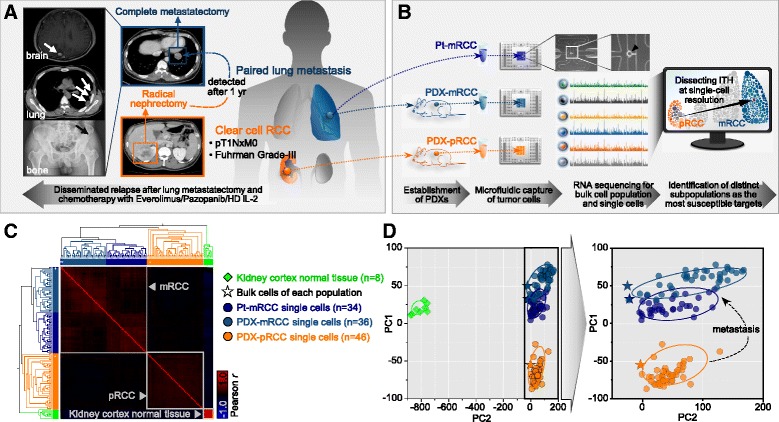
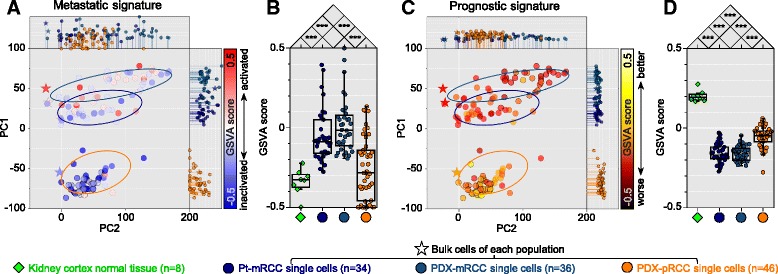
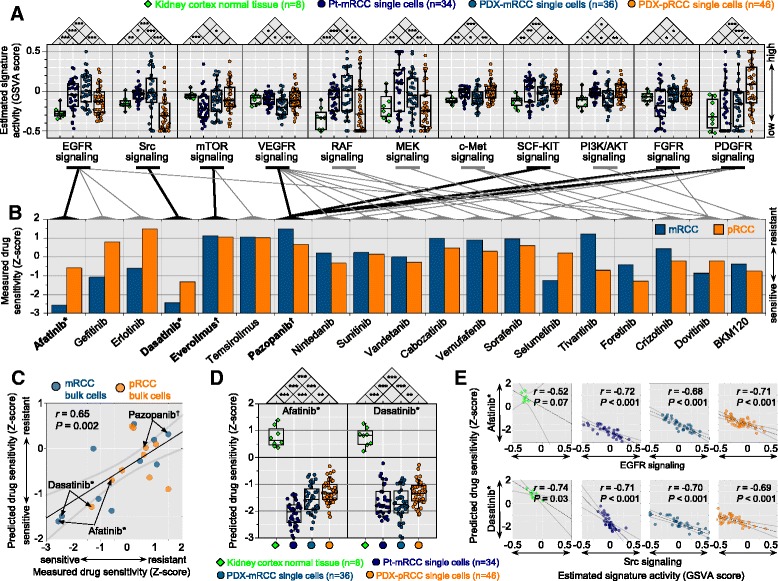
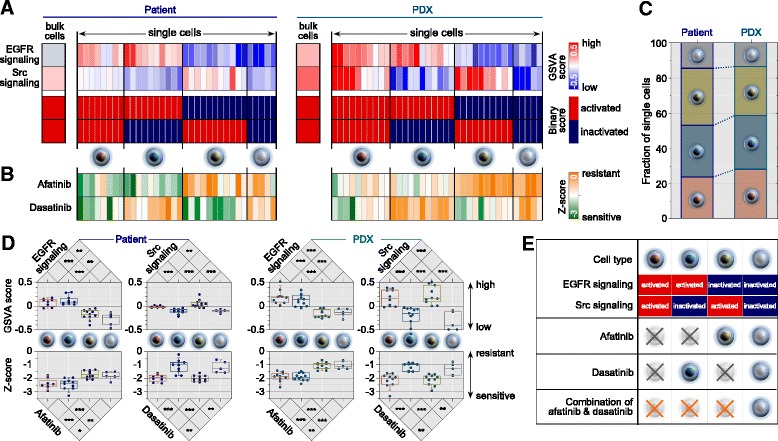
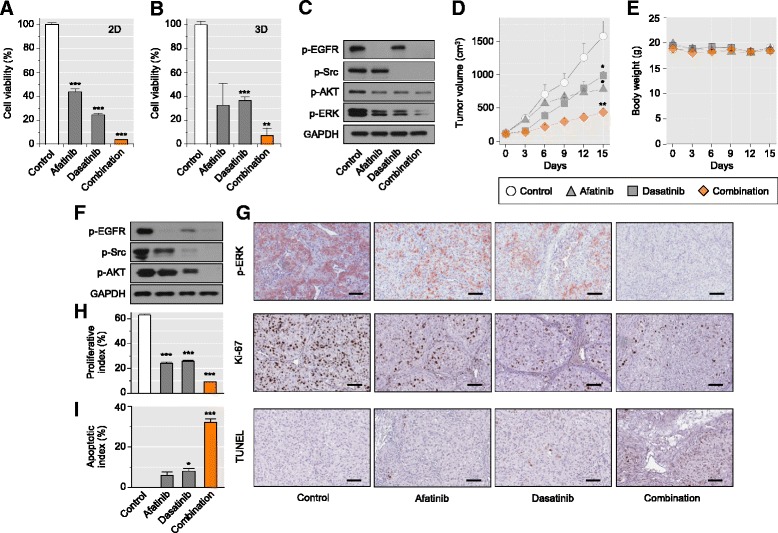
BACKGROUND: Intratumoral heterogeneity hampers the success of marker-based anticancer treatment because the targeted therapy may eliminate a specific subpopulation of tumor cells while leaving others unharmed. Accordingly, a rational strategy minimizing survival of the drug-resistant subpopulation is essential to achieve long-term therapeutic efficacy. RESULTS: Using single-cell RNA sequencing (RNA-seq), we examine the intratumoral heterogeneity of a pair of primary renal cell carcinoma and its lung metastasis. Activation of drug target pathways demonstrates considerable variability between the primary and metastatic sites, as well as among individual cancer cells within each site. Based on the prediction of multiple drug target pathway activation, we derive a combinatorial regimen co-targeting two mutually exclusive pathways for the metastatic cancer cells. This combinatorial strategy shows significant increase in the treatment efficacy over monotherapy in the experimental validation using patient-derived xenograft platforms in vitro and in vivo. CONCLUSIONS: Our findings demonstrate the investigational application of single-cell RNA-seq in the design of an anticancer regimen. The approach may overcome intratumoral heterogeneity which hampers the success of precision medicine.
Overview
The claims and statistics of this paper haven’t been checked yet.
Free: it reads the open-access text and checks the first 5 claims that cite a source we can check. Create a free account to check every claim.
Integrity signals
Registry
Cites
Statistics
Figures
Verification
Claims the paper makes
The claims and statistics of this paper haven’t been checked yet.
Free: it reads the open-access text and checks the first 5 claims that cite a source we can check. Create a free account to check every claim.
Claims other papers make about this one
Each is checked against this paper’s own text: does it say what the citing paper says it does?
The cited source says what the claim attributes to it.
In the citing paper
“Single-cell RNA sequencing (scRNA-seq) has emerged as a powerful tool to dissect this heterogeneity, revealing that drug target pathway activation varies significantly between primary and metastatic sites, as well as among individual cancer cells within a single site (Kim et al., 2016).”
From Spatial pharmacology of anti-cancer immunomodulators: a comprehensive review (2026) · cites this paper as Kim et al., 2016
The cited source says what the claim attributes to it.
In the citing paper
“For example, in metastatic renal cell carcinoma (RCC), scRNA-seq analysis of primary and lung metastatic tumors identified mutually exclusive pathway activation, leading to the design of a combinatorial regimen that co-targeted these pathways and significantly improved treatment efficacy in patient-derived xenograft models (Kim et al., 2016).”
From Spatial pharmacology of anti-cancer immunomodulators: a comprehensive review (2026) · cites this paper as Kim et al., 2016
The cited source says what the claim attributes to it.
In the citing paper
“Intratumoral heterogeneity remains a major barrier to effective cancer treatment, as targeted therapies often eliminate only specific subpopulations of tumor cells while leaving others unharmed (Kim et al., 2016).”
From Spatial pharmacology of anti-cancer immunomodulators: a comprehensive review (2026) · cites this paper as Kim et al., 2016
The cited source says what the claim attributes to it.
In the citing paper
“For example, in metastatic renal cell carcinoma, scRNA-seq identified mutually exclusive pathway activation, leading to the design of a combinatorial regimen that co-targeted these pathways and significantly improved efficacy (Kim et al., 2016).”
From Spatial pharmacology of anti-cancer immunomodulators: a comprehensive review (2026) · cites this paper as Kim et al., 2016
Self-check
Percentages, sums and reported differences re-computed from the paper’s own numbers.
The self-check needs the paper’s full text.
Citations
Cites
1 retracted
EMT Phenotype is Induced by Increased Src Kinase Activity via Src-Mediated Caspase-8 Phosphorylation
Zhao, Y., Li, X., Sun, X., Zhang, Y., & Ren, H. (2012) · Cellular Physiology and Biochemistry · doi:10.1159/000338489 · Cited by 11 · cited 2×
“Dysregulation of EGFR [32–34] and Src/FAK [35, 36] pathways plays a critical role in the tumorigenesis and metastatic progression of RCCs.”
BackgroundRetractedFast and accurate short read alignment with Burrows-Wheeler transform
Li, H., & Durbin, R. (2009) · Bioinformatics · doi:10.1093/bioinformatics/btp324 · Cited by 58,607
Cytoscape: A software Environment for integrated models of biomolecular interaction networks
Shannon, P., Markiel, A., Ozier, O., Baliga, N. S., Wang, J. T., Ramage, D., Amin, N., Schwikowski, B., & Ideker, T. (2003) · Genome Research · doi:10.1101/gr.1239303 · Cited by 51,888 · cited 1×
“the ClueGO [67] plug-in within the Cytoscape framework [68].”
MethodSTAR: ultrafast universal RNA-seq aligner
Dobin, A., Davis, C. A., Schlesinger, F., Drenkow, J., Zaleski, C., Jha, S., Batut, P., Chaisson, M., & Gingeras, T. R. (2013) · Bioinformatics · doi:10.1093/bioinformatics/bts635 · Cited by 51,709
limma powers differential expression analyses for RNA-sequencing and microarray studies
Ritchie, M. E., Phipson, B., Wu, D., Hu, Y., Law, C. W., Shi, W., & Smyth, G. K. (2015) · Nucleic Acids Research · doi:10.1093/nar/gkv007 · Cited by 40,458 · cited 1×
“Based on the CGH data, extracted signals were normalized to log2 ratios using the limma package [55].”
MethodThe Genome Analysis Toolkit: A MapReduce framework for analyzing next-generation DNA sequencing data
McKenna, A., Hanna, M., Banks, E., Sivachenko, A., Cibulskis, K., Kernytsky, A., Garimella, K., Altshuler, D., Gabriel, S., Daly, M., et al. (2010) · Genome Research · doi:10.1101/gr.107524.110 · Cited by 27,895 · cited 2×
“Identification of single-nucleotide variants and copy number variants Using the WES data, generated reads were aligned to the human genome reference hg19 using the Burrows- Wheeler Aligner [50] after removing duplicate reads, followed by implementation of the data-processing modules using the Genome Analysis Toolkit […”
MethodRSEM: accurate transcript quantification from RNA-Seq data with or without a reference genome
Li, B., & Dewey, C. N. (2011) · BMC Bioinformatics · doi:10.1186/1471-2105-12-323 · Cited by 22,179
GSVA: gene set variation analysis for microarray and RNA-Seq data
Hänzelmann, S., Castelo, R., & Guinney, J. (2013) · BMC Bioinformatics · doi:10.1186/1471-2105-14-7 · Cited by 15,440 · cited 1×
“way or signature across samples, we implemented the GSVA algorithm [61] in RNA-seq data.”
MethodRobinson, J. T., Thorvaldsdóttir, H., Winckler, W., Guttman, M., Lander, E. S., Getz, G., & Mesirov, J. P. (2011) · Nature Biotechnology · doi:10.1038/nbt.1754 · Cited by 15,390 · cited 2×
“Called variants were reviewed manually using the Integrative Genomic Viewer [53], and considered only within chromosomes 1–22 and X. Mutations were annotated using the SnpEff [54] package.”
MethodFast and accurate long-read alignment with Burrows-Wheeler transform.
Li, H., & Durbin, R. (2010) · Bioinformatics · doi:10.1093/bioinformatics/btp698 · Cited by 12,063
Cited by
Puram, S. V., Tirosh, I., Parikh, A. S., Patel, A. P., Yizhak, K., Gillespie, S., Rodman, C., Luo, C. L., Mroz, E. A., Emerick, K. S., et al. (2017) · Cell · doi:10.1016/j.cell.2017.10.044 · Cited by 2,557
“…scRNA-seq has facilitated the identification of developmental hierarchies, drug resistance programs, and patterns of immune infiltration relevant to tumor biology, diagnosis, and therapy (Kim et al., 2016; Li et al., 2017; Patel et al., 2014; Tirosh et al., 2016a, 2016b; Venteicher et al., 2017).”
BackgroundSingle-cell analysis reveals fibroblast clusters linked to immunotherapy resistance in cancer.
Kieffer, Y., Hocine, H. R., Gentric, G., Pelon, F., Bernard, C., Bourachot, B., Lameiras, S., Albergante, L., Bonneau, C., Guyard, A., et al. (2020) · Cancer Discovery · doi:10.1158/2159-8290.cd-19-1384 · Cited by 910
Denisenko, E., Guo, B. B., Jones, M., Hou, R., de Kock, L., Lassmann, T., Poppe, D., Clément, O., Simmons, R. K., Lister, R., et al. (2020) · Genome Biology · doi:10.1186/s13059-020-02048-6 · Cited by 686
Denisenko, E., Guo, B. B., Jones, M., Hou, R., de Kock, L., Lassmann, T., Poppe, D., Clement, O., Simmons, R. K., Lister, R., et al. (2019) · doi:10.1101/832444 · Cited by 686
Müller, S., Kohanbash, G., Liu, S. J., Alvarado, B., Carrera, D., Bhaduri, A., Watchmaker, P. B., Yagnik, G., Di Lullo, E., Malatesta, M., et al. (2017) · Genome Biology · doi:10.1186/s13059-017-1362-4 · Cited by 654
“A more recent scRNA-seq study, in a mouse model of CNS injury, showed that macrophages can simultaneously express markers of both M1 and M2 activation [39].”
BackgroundSingle-cell RNA sequencing for the study of development, physiology and disease
Potter, S. S. (2018) · Nature Reviews Nephrology · doi:10.1038/s41581-018-0021-7 · Cited by 622
From bulk, single-cell to spatial RNA sequencing
Li, X., & Wang, C.-Y. (2021) · International Journal of Oral Science · doi:10.1038/s41368-021-00146-0 · Cited by 605
Pan-cancer single-cell RNA-seq identifies recurring programs of cellular heterogeneity
Kinker, G. S., Greenwald, A. C., Tal, R., Orlova, Z., Cuoco, M. S., McFarland, J. M., Warren, A., Rodman, C., Roth, J. A., Bender, S. A., et al. (2020) · Nature Genetics · doi:10.1038/s41588-020-00726-6 · Cited by 445
Machine learning approaches to drug response prediction: challenges and recent progress
Adam, G., Rampášek, L., Safikhani, Z., Smirnov, P., Haibe-Kains, B., & Goldenberg, A. (2020) · npj Precision Oncology · doi:10.1038/s41698-020-0122-1 · Cited by 425
“Kim et al. 90 sequenced the transcriptome at single-cell resolution of a primary renal cell carcinoma (pRCC) and its lung metastasis (mRCC) from a patient and paired PDX models to design a combination therapy that would address the heterogeneous nature of the tumor.”
BackgroundInfluentialSingle‐cell RNA sequencing in cancer research
Zhang, Y., Wang, D., Peng, M., Tang, L., Ouyang, J., Xiong, F., Guo, C., Tang, Y., Zhou, Y., Liao, Q., et al. (2021) · Journal of Experimental & Clinical Cancer Research · doi:10.1186/s13046-021-01874-1 · Cited by 390
the Accelerating Medicines Partnership Rheumatoid Arthritis and Systemic Lupus Erythematosus (AMP RA/SLE) Consortium, Der, E., Suryawanshi, H., Morozov, P., Kustagi, M., Goilav, B., Ranabothu, S., Izmirly, P., Clancy, R., Belmont, H. M., et al. (2019) · Nature Immunology · doi:10.1038/s41590-019-0386-1 · Cited by 403
“This technique has been applied to a number of complex renal diseases including renal cell carcinoma 12,13 as well as to LN 9 .”
Zhang, Y., Narayanan, S. P., Mannan, R., Raskind, G., Wang, X., Vats, P., Su, F., Hosseini, N., Cao, X., Kumar-Sinha, C., et al. (2021) · Proceedings of the National Academy of Sciences · doi:10.1073/pnas.2103240118 · Cited by 377
“…cell atlases of benign and tumor tissues generated through scRNA-seq provide a rare glimpse into the unique composition of constituent cell types of complex organs and solid tumors that arise therein (44 – 46), such as histologically complex kidney tissue and diverse subtypes of RCCs (14, 47, 48).”
Mapping the immune environment in clear cell renal carcinoma by single-cell genomics
Borcherding, N., Vishwakarma, A., Voigt, A. P., Bellizzi, A., Kaplan, J., Nepple, K., Salem, A. K., Jenkins, R. W., Zakharia, Y., & Zhang, W. (2021) · Communications Biology · doi:10.1038/s42003-020-01625-6 · Cited by 364
Single-cell RNA sequencing in cardiovascular development, disease and medicine
Paik, D. T., Cho, S., Tian, L., Chang, H. Y., & Wu, J. C. (2020) · Nature Reviews Cardiology · doi:10.1038/s41569-020-0359-y · Cited by 307
Predicting cellular responses to complex perturbations in high‐throughput screens
Lotfollahi, M., Klimovskaia Susmelj, A., De Donno, C., Hetzel, L., Ji, Y., Ibarra, I. L., Srivatsan, S. R., Naghipourfar, M., Daza, R. M., Martin, B., et al. (2023) · Molecular Systems Biology · doi:10.15252/msb.202211517 · Cited by 307
“These shortcomings become more apparent when exploring the effects of combination therapies (Al-Lazikani et al , 2012; Kim et al , 2016; Sachs et al , 2020) or genetic perturbations (Dixit et al , 2016; Datlinger et al , 2017; Norman et al , 2019), where the experimental screening of all possible…”
BackgroundAdvancing Cancer Research and Medicine with Single-Cell Genomics
Lim, B., Lin, Y., & Navin, N. (2020) · Cancer Cell · doi:10.1016/j.ccell.2020.03.008 · Cited by 302
Aissa, A. F., Islam, A. B. M. M. K., Ariss, M. M., Go, C. C., Rader, A. E., Conrardy, R. D., Gajda, A. M., Rubio-Perez, C., Valyi-Nagy, K., Pasquinelli, M., et al. (2021) · Nature Communications · doi:10.1038/s41467-021-21884-z · Cited by 273
Single cell RNA sequencing to dissect the molecular heterogeneity in lupus nephritis
Der, E., Ranabothu, S., Suryawanshi, H., Akat, K. M., Clancy, R., Morozov, P., Kustagi, M., Czuppa, M., Izmirly, P., Belmont, H. M., et al. (2017) · JCI Insight · doi:10.1172/jci.insight.93009 · Cited by 207
“Recently, scRNA-seq has been applied to renal carcinoma cells to differentiate between primary and metastatic tumor cells (15).”
MethodImmunotherapy in Renal Cell Carcinoma: The Future Is Now
Deleuze, A., Saout, J., Dugay, F., Peyronnet, B., Mathieu, R., Verhoest, G., Bensalah, K., Crouzet, L., Laguerre, B., Belaud-Rotureau, M.-A., et al. (2020) · International Journal of Molecular Sciences · doi:10.3390/ijms21072532 · Cited by 198
“In RCC, Kim and collaborators performed single-cell RNA sequencing to study the intratumour heterogeneity of paired primary RCC and lung metastasis [87].”
BackgroundLee, H. W., Chung, W., Lee, H.-O., Jeong, D. E., Jo, A., Lim, J. E., Hong, J. H., Nam, D.-H., Jeong, B. C., Park, S. H., et al. (2020) · Genome Medicine · doi:10.1186/s13073-020-00741-6 · Cited by 183
Self-citationCell-specific network constructed by single-cell RNA sequencing data
Dai, H., Li, L., Zeng, T., & Chen, L. (2019) · Nucleic Acids Research · doi:10.1093/nar/gkz172 · Cited by 183
“Kim dataset (23) includes 118 cells and three cell types.”
BackgroundSingle-cell analyses to tailor treatments
Shalek, A. K., & Benson, M. (2017) · Science Translational Medicine · doi:10.1126/scitranslmed.aan4730 · Cited by 160
SIDR: simultaneous isolation and parallel sequencing of genomic DNA and total RNA from single cells
Han, K. Y., Kim, K.-T., Joung, J.-G., Son, D.-S., Kim, Y. J., Jo, A., Jeon, H.-J., Moon, H.-S., Yoo, C. E., Chung, W., et al. (2018) · Genome Research · doi:10.1101/gr.223263.117 · Cited by 143
Self-citationCancer cell states: Lessons from ten years of single-cell RNA-sequencing of human tumors
Tirosh, I., & Suvà, M. L. (2024) · Cancer Cell · doi:10.1016/j.ccell.2024.08.005 · Cited by 165
Sinha, S., Vegesna, R., Mukherjee, S., Kammula, A. V., Dhruba, S. R., Wu, W., Kerr, D. L., Nair, N. U., Jones, M. G., Yosef, N., et al. (2024) · Nature Cancer · doi:10.1038/s43018-024-00756-7 · Cited by 152
Changing Technologies of RNA Sequencing and Their Applications in Clinical Oncology
Wang, Y., Mashock, M. J., Tong, Z., Mu, X., Chen, H., Zhou, X., Zhang, H., Zhao, G., Liu, B., & Li, X. (2020) · Frontiers in Oncology · doi:10.3389/fonc.2020.00447 · Cited by 142
“used scRNAseq technology to successfully develop an optimized combinatorial therapeutic strategy that showed significantly improved response in vitro and in vivo compared to monotherapies (38).”
MethodSingle-cell genomics: coming of age
Linnarsson, S., & Teichmann, S. A. (2016) · Genome Biology · doi:10.1186/s13059-016-0960-x · Cited by 119
“In this issue, Park and colleagues show how single-cell dissection of tumor heterogeneity can translate directly into new combinatorial therapies in a xenograft model [37].”
Su, C., Lv, Y., Lu, W., Yu, Z., Ye, Y., Guo, B., Liu, D., Yan, H., Li, T., Zhang, Q., et al. (2021) · Frontiers in Oncology · doi:10.3389/fonc.2021.719564 · Cited by 115
Predictive approaches for drug combination discovery in cancer
Madani Tonekaboni, S. A., Soltan Ghoraie, L., Manem, V. S. K., & Haibe-Kains, B. (2018) · Briefings in Bioinformatics · doi:10.1093/bib/bbw104 · Cited by 115
Cell composition analysis of bulk genomics using single-cell data
Frishberg, A., Peshes-Yaloz, N., Cohn, O., Rosentul, D., Steuerman, Y., Valadarsky, L., Yankovitz, G., Mandelboim, M., Iraqi, F. A., Amit, I., et al. (2019) · Nature Methods · doi:10.1038/s41592-019-0355-5 · Cited by 117
Heterogeneity in renal cell carcinoma
Beksac, A. T., Paulucci, D. J., Blum, K. A., Yadav, S. S., Sfakianos, J. P., & Badani, K. K. (2017) · Urologic Oncology Seminars and Original Investigations · doi:10.1016/j.urolonc.2017.05.006 · Cited by 124
Single-cell RNA sequencing in cancer: Applications, advances, and emerging challenges
Sun, G., Li, Z., Rong, D., Zhang, H., Shi, X., Yang, W., Zheng, W., Sun, G., Wu, F., Cao, H., et al. (2021) · Molecular Therapy - Oncolytics · doi:10.1016/j.omto.2021.04.001 · Cited by 99
Single-Cell RNA Sequencing with Spatial Transcriptomics of Cancer Tissues
Ahmed, R., Zaman, T., Chowdhury, F., Mraiche, F., Tariq, M., Ahmad, I. S., & Hasan, A. (2022) · International Journal of Molecular Sciences · doi:10.3390/ijms23063042 · Cited by 118
“Then, they used combinatorial therapeutic strategies that display improved response in vitro and in vivo as compared with the monotherapy strategy [98].”
MethodBuzdin, A. A., Sorokin, M., Garazha, A., Sekacheva, M. I., Kim, E. L., Zhukov, N. V., Wang, Y., Li, X., Kar, S., Hartmann, C. J., et al. (2018) · Seminars in Cancer Biology · doi:10.1016/j.semcancer.2018.06.003 · Cited by 113
Advances in single-cell RNA sequencing and its applications in cancer research
Zhu, S., Qing, T., Zheng, Y., Li, J., & Shi, L. M. (2017) · Oncotarget · doi:10.18632/oncotarget.17893 · Cited by 109
“Through experimental validation, a combination drug administration experiment exhibited a greater inhibitory effect on tumor growth and induced more apoptosis compared to monotherapy both in vitro and in vivo [52].”
BackgroundTranslational opportunities of single-cell biology in atherosclerosis
de Winther, M. P. J., Bäck, M., Evans, P. C., Gomez, D. A., Gonçalves, I., Jørgensen, H. F., Koenen, R. R., Lutgens, E., Norata, G. D., Osto, E., et al. (2022) · European Heart Journal · doi:10.1093/eurheartj/ehac686 · Cited by 101
Single-cell sequencing: a promising approach for uncovering the mechanisms of tumor metastasis
Han, Y., Wang, D., Peng, L., Huang, T., He, X., Wang, J., & Ou, C. (2022) · Journal of Hematology & Oncology · doi:10.1186/s13045-022-01280-w · Cited by 103
“[162] applied SCS to examine the intratumoral heterogeneity of a pair of primary renal cell carcinomas and their pulmonary metastases.”
MethodSC2disease: a manually curated database of single-cell transcriptome for human diseases
Zhao, T., Lyu, S., Lu, G., Juan, L., Zeng, X., Wei, Z., Hao, J., & Peng, J. (2021) · Nucleic Acids Research · doi:10.1093/nar/gkaa838 · Cited by 88
“More importantly, the rapid development of scRNA-seq brings insight on exploring cellular subpopulations in the disease microenvironment, which is conducive to the study of disease occurrence, development, drug resistance (2) and immune escape (3).”
BackgroundSystems Immunology: Learning the Rules of the Immune System
Villani, A., Sarkizova, S., & Hacohen, N. (2018) · Annual Review of Immunology · doi:10.1146/annurev-immunol-042617-053035 · Cited by 102
“NetMHC (216, 217) and NetMHCpan (218, 219) repeatedly perform well and are the most widely used (152, 184, 214).”
BackgroundMethodA Partial Picture of the Single-Cell Transcriptomics of Human IgA Nephropathy
Tang, R., Meng, T., Lin, W., Shen, C., Ooi, J. D., Eggenhuizen, P. J., Jin, P., Ding, X., Chen, J., Tang, Y., et al. (2021) · Frontiers in Immunology · doi:10.3389/fimmu.2021.645988 · Cited by 89
What are the applications of single-cell RNA sequencing in cancer research: a systematic review
Li, L., Xiong, F., Wang, Y., Zhang, S., Gong, Z., Li, X., He, Y., Shi, L., Wang, F., Liao, Q., et al. (2021) · Journal of Experimental & Clinical Cancer Research · doi:10.1186/s13046-021-01955-1 · Cited by 112
Clinical multi-omics strategies for the effective cancer management
Yoo, B. C., Kim, K., Woo, S. M., & Myung, J. (2017) · Journal of Proteomics · doi:10.1016/j.jprot.2017.08.010 · Cited by 92
Self-citationRadiation induces dynamic changes to the T cell repertoire in renal cell carcinoma patients
Chow, J. L., Hoffend, N. C., Abrams, S. I., Schwaab, T., Singh, A. K., & Muhitch, J. B. (2020) · Proceedings of the National Academy of Sciences · doi:10.1073/pnas.2001933117 · Cited by 90
“Available tissue was restricted to small regions within patient tumors (∼1 g), and thus we were unable to capture the well-characterized tumor heterogeneity within RCC and other tumor types (38, 39).”
Current Trends of Microfluidic Single-Cell Technologies
Shinde, P., Mohan, L., Kumar, A. S., Dey, K., Maddi, A., Patananan, A. N., Tseng, F., Chang, H., Nagai, M., & Santra, T. S. (2018) · International Journal of Molecular Sciences · doi:10.3390/ijms19103143 · Cited by 85
Granatum: a graphical single-cell RNA-Seq analysis pipeline for genomics scientists
Zhu, X., Wolfgruber, T. K., Tasato, A., Arisdakessian, C., Garmire, D. G., & Garmire, L. X. (2017) · Genome Medicine · doi:10.1186/s13073-017-0492-3 · Cited by 79
“This renal 163 carcinoma dataset contains three groups of cells: patient-derived xenografts (PDX) primary, PDX 164 metastatic cells, and patient metastatic cells [18].”
BackgroundMethodUpdates on Immunotherapy and Immune Landscape in Renal Clear Cell Carcinoma
Kim, M., Jin, Z., Kolb, R. H., Borcherding, N. C., Chatzkel, J. A., Falzarano, S. M., & Zhang, W. (2021) · Cancers · doi:10.3390/cancers13225856 · Cited by 88
Poirion, O., Zhu, X., Ching, T., & Garmire, L. X. (2018) · Nature Communications · doi:10.1038/s41467-018-07170-5 · Cited by 78
Roles of tumor heterogeneity in the development of drug resistance: A call for precision therapy
Wu, D., Wang, D. C., Cheng, Y., Qian, M., Zhang, M., Shen, Q., & Wang, X. (2016) · Seminars in Cancer Biology · doi:10.1016/j.semcancer.2016.11.006 · Cited by 82
Peng, Y., Xiong, L., Zhou, Z., Kang, N., Li, Z., Wu, Z., Deng, M.-H., Wei, W.-S., Wang, N., Zou, X.-P., et al. (2022) · Journal for ImmunoTherapy of Cancer · doi:10.1136/jitc-2021-004206 · Cited by 84
Rajendran, B. K., & Deng, C.-X. (2017) · Oncotarget · doi:10.18632/oncotarget.17225 · Cited by 73
Single‐cell sequencing and tumorigenesis: improved understanding of tumor evolution and metastasis
Ellsworth, D. L., Blackburn, H. L., Shriver, C. D., Rabizadeh, S., Soon‐Shiong, P., & Ellsworth, R. E. (2017) · Clinical and Translational Medicine · doi:10.1186/s40169-017-0145-6 · Cited by 84
The promise of single-cell RNA sequencing for kidney disease investigation
Wu, H., & Humphreys, B. D. (2017) · Kidney International · doi:10.1016/j.kint.2017.06.033 · Cited by 79
Mapping the human kidney using single-cell genomics
Schreibing, F., & Kramann, R. (2022) · Nature Reviews Nephrology · doi:10.1038/s41581-022-00553-4 · Cited by 74
Developments in label‐free microfluidic methods for single‐cell analysis and sorting
Carey, T. R., Cotner, K. L., Li, B., & Sohn, L. L. (2018) · Wiley Interdisciplinary Reviews Nanomedicine and Nanobiotechnology · doi:10.1002/wnan.1529 · Cited by 70
“Mechano-NPS introduces a constriction segment whose width is much smaller than the diameter of a cell (K.-T. T. Kim et al., 2016).”
BackgroundSingle-Cell Transcriptomics in Cancer Immunobiology: The Future of Precision Oncology
Valdes-Mora, F., Handler, K., Law, A. M. K., Salomon, R., Oakes, S. R., Ormandy, C. J., & Gallego-Ortega, D. (2018) · Frontiers in Immunology · doi:10.3389/fimmu.2018.02582 · Cited by 68
“Thus, in the last 5 years, studies on single-cell transcriptome of tumors of different cancer types have emerged, this includes (Table 2): glioma (150, 151, 157), melanoma (112), colorectal cancer (159), hepatocellular carcinoma (113, 152), renal carcinoma (153), nonsmall-cell lung cancer (NSCLC) (115, 116, 154), brea…”
BackgroundPrecision medicine from the renal cancer genome
Riazalhosseini, Y., & Lathrop, M. G. (2016) · Nature Reviews Nephrology · doi:10.1038/nrneph.2016.133 · Cited by 80
Application of Single-Cell Multi-Omics in Dissecting Cancer Cell Plasticity and Tumor Heterogeneity
Pan, D., & Jia, D. (2021) · Frontiers in Molecular Biosciences · doi:10.3389/fmolb.2021.757024 · Cited by 74
“Furthermore, single-cell techniques have advantages to identifying rare cancer cell subpopulations, which lead to the tumor progression and failure of cancer treatments (Kim et al., 2016; Miao et al., 2019; Prieto-Vila et al., 2019; Lee et al., 2020; Sehgal et al., 2021).”
BackgroundCancer biology deciphered by single-cell transcriptomic sequencing
Li, Y., Jin, J., & Bai, F. (2021) · Protein & Cell · doi:10.1007/s13238-021-00868-1 · Cited by 88
“A recent study compared primary renal cell carcinoma and its lung metastases and found considerable variability in the activation of certain drug-target pathways (Kim et al., 2016).”
BackgroundThe Application of Single‐Cell RNA Sequencing in Vaccinology
Noé, A., Cargill, T. N., Nielsen, C. M., Russell, A. J. C., & Barnes, E. J. (2020) · Journal of Immunology Research · doi:10.1155/2020/8624963 · Cited by 66
“Single-cell sequencing has already been used in the optimisation of targeted drug treatment against metastatic renal cell carcinoma [115].”
Vries, N. L. D., Mahfouz, A. E., Koning, F., & de Miranda, N. F. C. C. (2020) · Frontiers in Oncology · doi:10.3389/fonc.2020.01254 · Cited by 63
“Thereafter, scRNA-seq has been used to study the microenvironment of several cancer types including prostate cancer (46), breast cancer (47), glioma (48–50), renal cancer (51), lung cancer (52), melanoma (53– 56), colorectal cancer (57–59), pancreatic ductal adenocarcinoma (60), liver cancer (61), head and neck cancer…”
MethodDENDRO: genetic heterogeneity profiling and subclone detection by single-cell RNA sequencing
Zhou, Z., Xu, B., Minn, A. J., & Zhang, N. R. (2020) · Genome biology · doi:10.1186/s13059-019-1922-x · Cited by 66
“We also benchmarked DENDRO against existing methods on the renal cell carcinoma dataset from Kim et al. [21] (Fig.”
MethodLeveraging Single-Cell Approaches in Cancer Precision Medicine
Nath, A., & Bild, A. (2021) · Trends in cancer · doi:10.1016/j.trecan.2021.01.007 · Cited by 72
Application of single-cell technology in cancer research
Liang, S.-B., & Fu, L. (2017) · Biotechnology Advances · doi:10.1016/j.biotechadv.2017.04.001 · Cited by 65
Pan, X., Zhang, H., Xu, D., Chen, J., Chen, W., Gan, S., Qu, F., Chu, C., Cao, J., Fan, Y., et al. (2020) · International Journal of Biological Sciences · doi:10.7150/ijbs.46645 · Cited by 56
“Cellular heterogeneity across primary and metastatic RCC dramatically affects the sensitivity of anti-tumor therapy owing to incomplete response to all tumor cell subpopulations [13, 14].”
BackgroundZhang, C., He, H., Hu, X., Liu, A., Huang, D., Xu, Y., Chen, L., & Xu, D. (2019) · Aging · doi:10.18632/aging.102434 · Cited by 55
“Accordingly, we investigated significant marker genes among subpopulations of primary and metastatic ccRCC cells from single-cell expression profiling [17].”
BackgroundWu, Y., Terekhanova, N. V., Caravan, W., Deen, N. N. A., Lal, P., Chen, S., Mo, C.-K., Cao, S., Li, Y., Karpova, A., et al. (2023) · Nature Communications · doi:10.1038/s41467-023-37211-7 · Cited by 67
“Sofar, scRNA-seqstudies of relatively small numbers of ccRCC samples have been reported, shedding light on the molecular attributes of tumorcellsoforigin 29,30 ,tumormicroenvironments,tumormarkers 29,31 , and therapeutic targets 32 .”
BackgroundFibrosis in Pathology of Heart and Kidney: From Deep RNA-Sequencing to Novel Molecular Targets
Schreibing, F., Anslinger, T. M., & Kramann, R. (2023) · Circulation Research · doi:10.1161/circresaha.122.321761 · Cited by 53
Deciphering Human Tumor Biology by Single-Cell Expression Profiling
Tirosh, I., & Suvà, M. L. (2018) · Annual Review of Cancer Biology · doi:10.1146/annurev-cancerbio-030518-055609 · Cited by 56
“All RNA-seq and qPCR studies described above were performed with platforms that are based on chips or plates with limited cell numbers; along with cells that do not pass quality control, these approaches restrict the number of cells profiled.”
BackgroundInfluential-Omics biomarker identification pipeline for translational medicine
Bravo-Merodio, L., Williams, J. A., Gkoutos, G. V., & Acharjee, A. (2019) · Journal of Translational Medicine · doi:10.1186/s12967-019-1912-5 · Cited by 55
“After normalization, populations of cells may be identified by several unsupervised learning methods, from clustering to tSNE [46].”
MethodJose, A., Kulkarni, P., Thilakan, J., Munisamy, M., Malhotra, A. G., Singh, J., Kumar, A., Rangnekar, V. M., Arya, N., & Rao, M. (2024) · Molecular Cancer · doi:10.1186/s12943-023-01916-6 · Cited by 56
“Based on the anticipated activation of multiple drug target pathways, the authors developed a combinatorial regimen co-targeting two pathways mutually exclusive for the metastatic cancer cells thereby demonstrating the potential of scRNA-seq in the formulation of a treatment strategy [61].”
BackgroundWinter, S., Fisel, P., Büttner, F., Rausch, S., D’Amico, D., Hennenlotter, J., Kruck, S., Nies, A. T., Stenzl, A., Junker, K., et al. (2016) · Scientific Reports · doi:10.1038/srep29930 · Cited by 49
Dissecting human disease with single-cell omics: application in model systems and in the clinic
Strzelecka, P. M., Ranzoni, A. M., & Cvejic, A. (2018) · Disease Models & Mechanisms · doi:10.1242/dmm.036525 · Cited by 51
“Kim and colleagues applied scRNA-seq analysis to optimise the treatment strategy for metastatic renal cell carcinoma patients (Kim et al., 2016).”
Can single-cell RNA sequencing crack the mystery of cells?
Wang, W. Y., Gao, D., & Wang, X. (2017) · Cell Biology and Toxicology · doi:10.1007/s10565-017-9404-y · Cited by 49
c-CSN: Single-Cell RNA Sequencing Data Analysis by Conditional Cell-Specific Network
Li, L., Dai, H., Fang, Z., & Chen, L. (2021) · Genomics Proteomics & Bioinformatics · doi:10.1016/j.gpb.2020.05.005 · Cited by 51
“Twelve scRNA-seq datasets and one bulk RNA-seq dataset [15, 35-41] were used to 257 validate our CCSN method.”
BackgroundMethodMQuad enables clonal substructure discovery using single cell mitochondrial variants
Kwok, A. W. C., Qiao, C., Huang, R., Sham, M. H., Ho, J. W. K., & Huang, Y. (2022) · Nature Communications · doi:10.1038/s41467-022-28845-0 · Cited by 50
“95) because there is an imbalance between the number of clonal variants (15-150) and the number of true negative variants (>16,000).”
BackgroundBringing Renal Biopsy Interpretation Into the Molecular Age With Single-Cell RNA Sequencing
Malone, A. F., Wu, H., & Humphreys, B. D. (2017) · Seminars in Nephrology · doi:10.1016/j.semnephrol.2017.09.005 · Cited by 45
The role of sex as a biological variable in the efficacy and toxicity of therapeutic nanomedicine
Sharifi, S., Caracciolo, G., Pozzi, D., Digiacomo, L., Swann, J. M., Daldrup-Link, H. E., & Mahmoudi, M. (2021) · Advanced Drug Delivery Reviews · doi:10.1016/j.addr.2021.04.028 · Cited by 48
Deciphering immune mechanisms in chronic inflammatory demyelinating polyneuropathies
Wolbert, J., Cheng, M. I., zu Hörste, G. M., & Su, M. A. (2020) · JCI Insight · doi:10.1172/jci.insight.132411 · Cited by 46
“drug target pathway activation in a patient with renal carcinoma (96), showing the potential of scRNA-seq”
BackgroundSingle-Cell Discovery and Multiomic Characterization of Therapeutic Targets in Multiple Myeloma
Yao, L., Wang, J. T., Jayasinghe, R. G., O’Neal, J., Tsai, C., Rettig, M. P., Song, Y., Liu, R., Zhao, Y., Ibrahim, O. M., et al. (2023) · Cancer Research · doi:10.1158/0008-5472.can-22-1769 · Cited by 43
“Applications of single-cell RNA-sequencing (scRNA-seq) in diseases have demonstrated the utility of single-cell data in overcoming tumor heterogeneity when optimizing treatment regimens (10).”
BackgroundYin, Y., Liu, P., Shi, Y., & Li, P. (2021) · Reviews of physiology, biochemistry and pharmacology · doi:10.1007/112_2020_47 · Cited by 45
Patient-tailored design for selective co-inhibition of leukemic cell subpopulations
Ianevski, A., Lahtela, J., Javarappa, K. K., Sergeev, P., Ghimire, B. R., Gautam, P., Vähä-Koskela, M. J. V., Turunen, L., Linnavirta, N., Kuusanmäki, H. A., et al. (2021) · Science Advances · doi:10.1126/sciadv.abe4038 · Cited by 43
Saout, J., Lécuyer, G., Léonard, S., Evrard, B., Kammerer‐Jacquet, S., Noël, L., Khene, Z., Mathiéu, R., Brunot, A., Rolland, A. D., et al. (2023) · European Urology · doi:10.1016/j.eururo.2023.02.008 · Cited by 45
Li, C., Gong, L.-Q., Jiang, Y., Huo, X.-Y., Huang, L., Lei, H., Gu, Y., Wang, D., Guo, D., & Deng, Y. (2023) · Phytomedicine · doi:10.1016/j.phymed.2023.155052 · Cited by 44
Saeed, K., Ojamies, P., Pellinen, T. S., Eldfors, S., Turkki, R., Lundin, J. E., Järvinen, P., Nísen, H., Taari, K., af Hällström, T. M., et al. (2018) · International Journal of Cancer · doi:10.1002/ijc.31815 · Cited by 42
“sequencing (scRNA-seq) of the paired samples, and underlined the impact of ITH in RCC.(16) In contrast, two-”
BackgroundCancer cell states and emergent properties of the dynamic tumor system
Barkley, D., Rao, A. N., Pour, M., França, G. S., & Yanai, I. (2021) · Genome Research · doi:10.1101/gr.275308.121 · Cited by 43
“Increasing evidence has shown that drug tolerance is mediated by broad reversible transcriptional changes, suggesting that one or more states may underlie this phenotypic property (Sharma et al. 2010; Kim et al. 2016; Shaffer et al. 2017).”
BackgroundTumour invasion and dissemination
Lusby, R., Dunne, P. D., & Tiwari, V. K. (2022) · Biochemical Society Transactions · doi:10.1042/bst20220452 · Cited by 32
Disease characterization using a partial correlation-based sample-specific network
Huang, Y., Chang, X., Zhang, Y., Chen, L., & Liu, X. (2020) · Briefings in Bioinformatics · doi:10.1093/bib/bbaa062 · Cited by 39
Kim, N., Chung, W., Eum, H. H., Lee, H., & Park, W. (2019) · PLoS ONE · doi:10.1371/journal.pone.0217196 · Cited by 35
Self-citationSingle-Cell RNA Sequencing-Based Computational Analysis to Describe Disease Heterogeneity
Zeng, T., & Dai, H. (2019) · Frontiers in Genetics · doi:10.3389/fgene.2019.00629 · Cited by 36
“…obtained from scRNA-seq is the possibility to decipher tumor architecture (Cloney 2017), so that it might overcome intratumoral heterogeneity, which hampers the success of precision medicine and is therefore a huge challenge in cancer treatment (Patel et al., 2014; Kim et al., 2016; Zong, 2017).”
BackgroundHOOK1 Inhibits the Progression of Renal Cell Carcinoma via TGF‐β and TNFSF13B/VEGF‐A Axis
Yin, L., Li, W., Chen, X., Wang, R., Zhang, T., Meng, J., Zhao, L., Xu, L., Yin, R., Cheng, B., et al. (2023) · Advanced Science · doi:10.1002/advs.202206955 · Cited by 35
Luo, L., Wei, D., Pan, Y., Wang, Q., Feng, J.-X., Yu, B., Kang, T., Luo, J., Yang, J., & Gao, S. (2023) · 癌症:英文版 · doi:10.1002/cac2.12428 · Cited by 31
“To screen key regulators of tumorigenesis and metastasis of ccRCC, we analyzed gene expression in two ccRCC cohorts from TCGA-KIRC and GSE73121 datasets, respectively.”
MethodInfluentialNazarov, P. V., Wienecke-Baldacchino, A. K., Zinovyev, A. Y., Czerwińska, U., Muller, A., Nashan, D., Dittmar, G., Azuaje, F. J., & Kreis, S. (2019) · BMC Medical Genomics · doi:10.1186/s12920-019-0578-4 · Cited by 30
“Furthermore, there are well-documented variations of tumour cells within the same neoplasia, which can conceal low abundant, but critical cell subtypes such as drug-resistant tumour cells [2].”
BackgroundSingle-Cell mRNA Sequencing in Cancer Research: Integrating the Genomic Fingerprint
Müller, S., & Diaz, A. A. (2017) · Frontiers in Genetics · doi:10.3389/fgene.2017.00073 · Cited by 33
“Already, scRNA-seq has led to groundbreaking insights into clonal tumor evolution (Navin et al., 2011), metastatic dissemination (Lawson et al., 2015), the development of chemo-resistance (Kim et al., 2016), and interactions between tumor and stromal cells (Choi et al., 2015).”
BackgroundAscierto, P. A., Bifulco, C. B., Buonaguro, L., Emens, L. A., Ferris, R. L., Fox, B. A., Delgoffe, G. M., Galon, J., Gridelli, C., Merlano, M. C., et al. (2019) · Journal for ImmunoTherapy of Cancer · doi:10.1186/s40425-019-0798-3 · Cited by 31
Circulating Tumor Cells in Renal Cell Carcinoma: Recent Findings and Future Challenges
Santoni, M., Cimadamore, A., Cheng, L., López-Beltrán, A., Battelli, N., Massari, F., Scarpelli, M., Galosi, A. B., Bracarda, S., & Montironi, R. (2019) · Frontiers in Oncology · doi:10.3389/fonc.2019.00228 · Cited by 29
“In the same view, activated drug target pathways have been shown to be considerably variable within the same tumor and between primary RCC and lung metastases (16).”
BackgroundRecent Advances in Glioma Therapy: Combining Vascular Normalization and Immune Checkpoint Blockade
Ho, R. L. Y., & Ho, I. A. W. (2021) · Cancers · doi:10.3390/cancers13153686 · Cited by 34
“Similarly, in a murine CNS injury model, the macrophages were found to simultaneously present both M1 and M2 activation markers [71].”
BackgroundSingle-cell RNA sequencing for the study of kidney disease
Zhu, J., Lu, J., & Weng, H. (2023) · Molecular Medicine · doi:10.1186/s10020-023-00693-8 · Cited by 27
“In the treatment of mRCC, Kim et al. presented a pioneering study, in which they used scRNA-seq to explore the heterogeneity of mRCC and designed the optimal combination of targeted drugs through the activation of different drug pathways to derive a personalized treatment plan (Kim et al. 2016).”
MethodddSeeker: a tool for processing Bio-Rad ddSEQ single cell RNA-seq data
Romagnoli, D., Boccalini, G., Bonechi, M., Biagioni, C., Fassan, P., Bertorelli, R., Sanctis, V. D., Leo, A. D., Migliaccio, I., Malorni, L., et al. (2018) · BMC Genomics · doi:10.1186/s12864-018-5249-x · Cited by 38
“Most of these studies have focused on dissecting the interplay between tumor cell biology and cancer treatment, with the ultimate goal of identifying new treatment hypotheses [6, 8, 9].”
BackgroundZhang, X., Wang, Z., Zeng, Z., Shen, N., Wang, B., Zhang, Y., Shen, H., Lu, W., Wei, R., Ma, W., et al. (2021) · Cancer Cell International · doi:10.1186/s12935-021-01917-9 · Cited by 25
Li, X., Meng, X., Wei, C., Zhou, Y., Chen, H., Huang, H., & Chen, M. (2018) · Molecular Cancer Research · doi:10.1158/1541-7786.mcr-17-0776 · Cited by 26
Metadata
- Authors
- Kim, K.-T., Lee, H. W., Lee, H.-O., Song, H. J., Jeong, D. E., Shin, S., Kim, H., Shin, Y., Nam, D.-H., Jeong, B. C., Kirsch, D. G., Joo, K. M., & Park, W.-Y.
- Affiliations
- Samsung Medical Center (KR)
- Sungkyunkwan University (KR)
- Korea University (KR)
- Duke University (US)
- Corresponding author
- Joo, Kyeung Min
- Park, Woong-Yang
- ORCID
- Venue
- Genome Biology
- Published
- 2016-04-29
- Volume
- 17
- Issue
- 1
- Pages
- 80-80
- ISSN
- 1465-6906 (ISSN-L)
- 1474-760X
- PMC
- PMC4852434
- OpenAlex
- W2342423616
- Cited by
- 198
- References
- 71
- Citations by year
- 2026: 5 · 2025: 8 · 2024: 12 · 2023: 20 · 2022: 21 · 2021: 35 · 2020: 27 · 2019: 19 · 2018: 23 · 2017: 21 · 2016: 7
- FWCI
- 20.70
- Type
- journal article
- Language
- en
- Open access
- gold
- doi.org
- Licence
- cc-by
- Locations
- Genome biology (publishedVersion, cc-by)
- PubMed Central (publishedVersion, cc-by)
- PubMed (publishedVersion)
- Funders
- Korea National Institute of Health (HI13C2096000013)
- Topics
- Health Sciences › Medicine › Oncology › Renal cell carcinoma treatment
- Life Sciences › Biochemistry, Genetics and Molecular Biology › Cancer Research › Cancer Genomics and Diagnostics
- Life Sciences › Biochemistry, Genetics and Molecular Biology › Molecular Biology › Single-cell and spatial transcriptomics
- Keywords
- metastatic renal cell carcinoma, intratumoral heterogeneity, lung metastasis, drug resistance, combination therapy, patient-derived xenografts, precision medicine, single-cell RNA sequencing
- MeSH terms
- Adult, Animals, Carcinoma, Renal Cell, Cells, Cultured, Humans, Kidney Neoplasms, Lung Neoplasms, Male, Sequence Analysis, RNA, Gene Expression Profiling, Mice, Molecular Targeted Therapy, Single-Cell Analysis
About these checks
Registry, retraction, Cites and statistics results are computed, not judged, with one exception: a printed reference that no index lists is read once by a model before it counts as a citation error. Claims are extracted by a model and kept only when their quote appears verbatim in the text; each cited source is then checked, with a model’s help, for whether it says what the claim relies on. Those verdicts can be wrong — read the claim’s quote and the cited source before relying on one.
Statistics and arithmetic are recomputed, not judged.
Confidence bands are shown only for fields calibrated on our annotated test set. None is calibrated yet, so no band is shown.
What counts as a claim ›How we measure confidence ›How we check this ›
Are you an author, or do you see a problem with this page? Request a review
Data sources
Bibliographic data: Semantic Scholar, OpenAlex, Crossref.
Contains information from the Semantic Scholar Academic Graph Datasets, made available under the ODC Attribution License (ODC-BY 1.0).
Semantic Scholar’s data is described in: Kinney, R., et al. (2023). The Semantic Scholar Open Data Platform. arXiv:2301.10140.
