

Application of single-cell RNA sequencing in optimizing a combinatorial therapeutic strategy in metastatic renal cell carcinoma
Open accessThe DOI matches its Crossref record; 72 of the 72 references it cites were found in a registry or an index.
Abstract
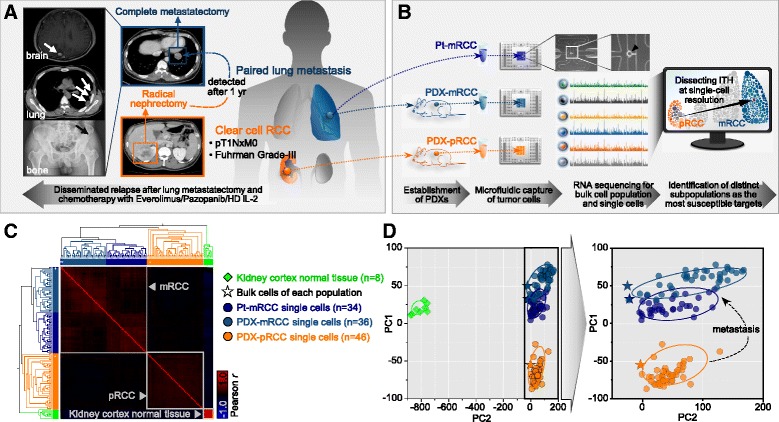
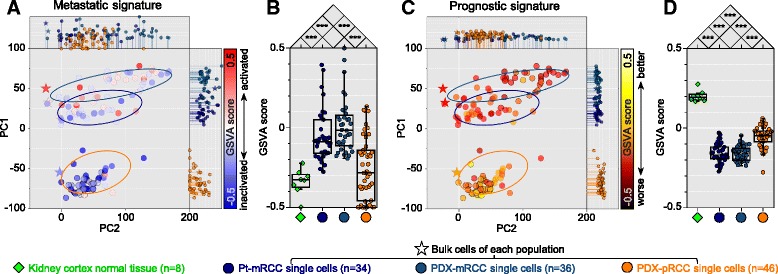
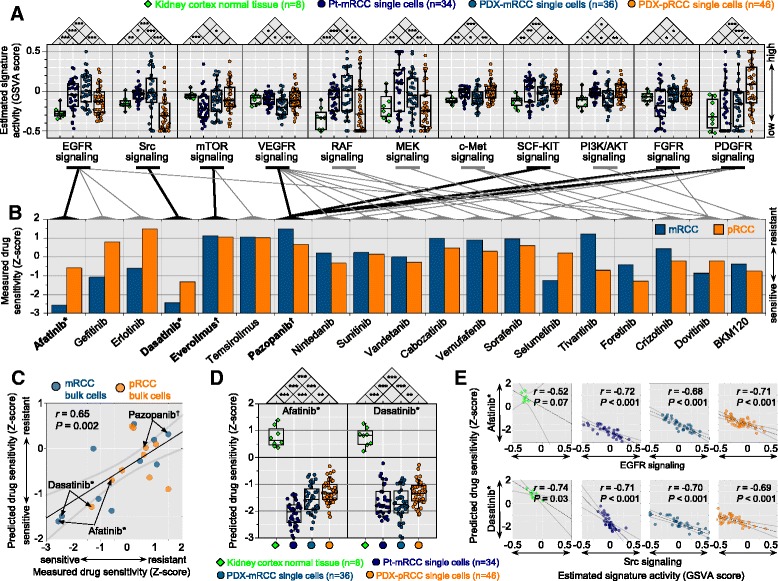
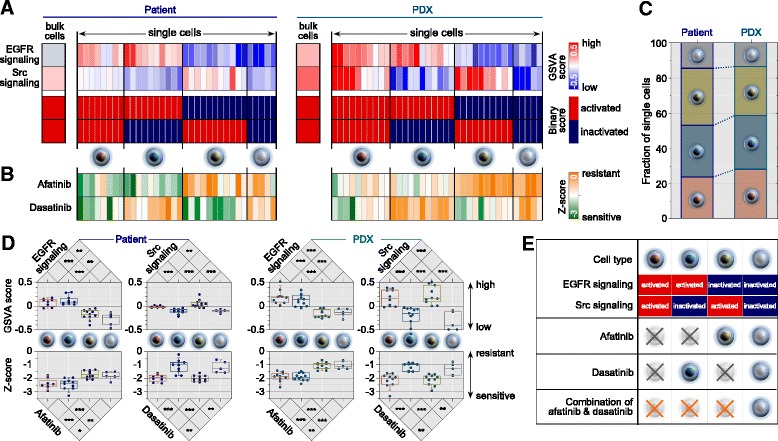
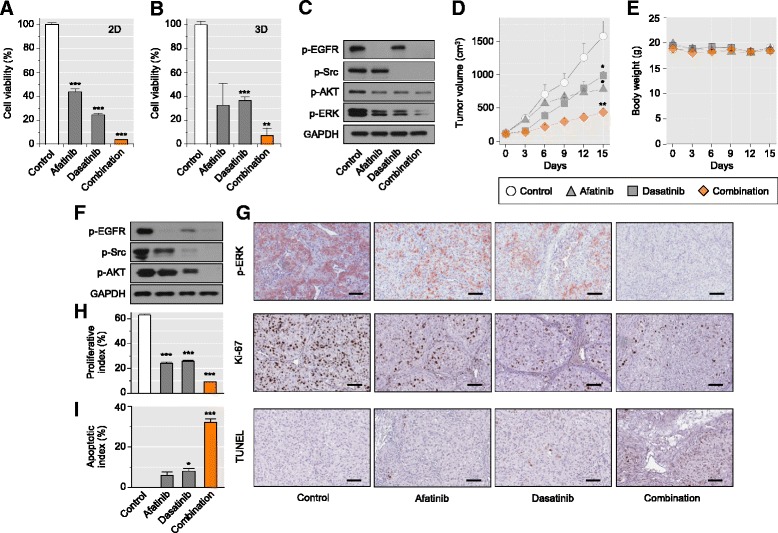
BACKGROUND: Intratumoral heterogeneity hampers the success of marker-based anticancer treatment because the targeted therapy may eliminate a specific subpopulation of tumor cells while leaving others unharmed. Accordingly, a rational strategy minimizing survival of the drug-resistant subpopulation is essential to achieve long-term therapeutic efficacy. RESULTS: Using single-cell RNA sequencing (RNA-seq), we examine the intratumoral heterogeneity of a pair of primary renal cell carcinoma and its lung metastasis. Activation of drug target pathways demonstrates considerable variability between the primary and metastatic sites, as well as among individual cancer cells within each site. Based on the prediction of multiple drug target pathway activation, we derive a combinatorial regimen co-targeting two mutually exclusive pathways for the metastatic cancer cells. This combinatorial strategy shows significant increase in the treatment efficacy over monotherapy in the experimental validation using patient-derived xenograft platforms in vitro and in vivo. CONCLUSIONS: Our findings demonstrate the investigational application of single-cell RNA-seq in the design of an anticancer regimen. The approach may overcome intratumoral heterogeneity which hampers the success of precision medicine.
Overview
The claims and statistics of this paper haven’t been checked yet.
Free: it reads the open-access text and checks the first 5 claims that cite a source we can check. Create a free account to check every claim.
Integrity signals
Registry
Cites
Statistics
Figures
Verification
Claims the paper makes
The claims and statistics of this paper haven’t been checked yet.
Free: it reads the open-access text and checks the first 5 claims that cite a source we can check. Create a free account to check every claim.
Claims other papers make about this one
Each is checked against this paper’s own text: does it say what the citing paper says it does?
The cited source says what the claim attributes to it.
In the citing paper
“Single-cell RNA sequencing (scRNA-seq) has emerged as a powerful tool to dissect this heterogeneity, revealing that drug target pathway activation varies significantly between primary and metastatic sites, as well as among individual cancer cells within a single site (Kim et al., 2016).”
From Spatial pharmacology of anti-cancer immunomodulators: a comprehensive review (2026) · cites this paper as Kim et al., 2016
The cited source says what the claim attributes to it.
In the citing paper
“For example, in metastatic renal cell carcinoma (RCC), scRNA-seq analysis of primary and lung metastatic tumors identified mutually exclusive pathway activation, leading to the design of a combinatorial regimen that co-targeted these pathways and significantly improved treatment efficacy in patient-derived xenograft models (Kim et al., 2016).”
From Spatial pharmacology of anti-cancer immunomodulators: a comprehensive review (2026) · cites this paper as Kim et al., 2016
The cited source says what the claim attributes to it.
In the citing paper
“Intratumoral heterogeneity remains a major barrier to effective cancer treatment, as targeted therapies often eliminate only specific subpopulations of tumor cells while leaving others unharmed (Kim et al., 2016).”
From Spatial pharmacology of anti-cancer immunomodulators: a comprehensive review (2026) · cites this paper as Kim et al., 2016
The cited source says what the claim attributes to it.
In the citing paper
“For example, in metastatic renal cell carcinoma, scRNA-seq identified mutually exclusive pathway activation, leading to the design of a combinatorial regimen that co-targeted these pathways and significantly improved efficacy (Kim et al., 2016).”
From Spatial pharmacology of anti-cancer immunomodulators: a comprehensive review (2026) · cites this paper as Kim et al., 2016
Self-check
Percentages, sums and reported differences re-computed from the paper’s own numbers.
The self-check needs the paper’s full text.
Citations
Cites
1 retracted
EMT Phenotype is Induced by Increased Src Kinase Activity via Src-Mediated Caspase-8 Phosphorylation
Zhao, Y., Li, X., Sun, X., Zhang, Y., & Ren, H. (2012) · Cellular Physiology and Biochemistry · doi:10.1159/000338489 · Cited by 11 · cited 2×
“Dysregulation of EGFR [32–34] and Src/FAK [35, 36] pathways plays a critical role in the tumorigenesis and metastatic progression of RCCs.”
BackgroundRetractedFast and accurate short read alignment with Burrows-Wheeler transform
Li, H., & Durbin, R. (2009) · Bioinformatics · doi:10.1093/bioinformatics/btp324 · Cited by 58,607
Cytoscape: A software Environment for integrated models of biomolecular interaction networks
Shannon, P., Markiel, A., Ozier, O., Baliga, N. S., Wang, J. T., Ramage, D., Amin, N., Schwikowski, B., & Ideker, T. (2003) · Genome Research · doi:10.1101/gr.1239303 · Cited by 51,888 · cited 1×
“the ClueGO [67] plug-in within the Cytoscape framework [68].”
MethodSTAR: ultrafast universal RNA-seq aligner
Dobin, A., Davis, C. A., Schlesinger, F., Drenkow, J., Zaleski, C., Jha, S., Batut, P., Chaisson, M., & Gingeras, T. R. (2013) · Bioinformatics · doi:10.1093/bioinformatics/bts635 · Cited by 51,709
limma powers differential expression analyses for RNA-sequencing and microarray studies
Ritchie, M. E., Phipson, B., Wu, D., Hu, Y., Law, C. W., Shi, W., & Smyth, G. K. (2015) · Nucleic Acids Research · doi:10.1093/nar/gkv007 · Cited by 40,458 · cited 1×
“Based on the CGH data, extracted signals were normalized to log2 ratios using the limma package [55].”
MethodThe Genome Analysis Toolkit: A MapReduce framework for analyzing next-generation DNA sequencing data
McKenna, A., Hanna, M., Banks, E., Sivachenko, A., Cibulskis, K., Kernytsky, A., Garimella, K., Altshuler, D., Gabriel, S., Daly, M., et al. (2010) · Genome Research · doi:10.1101/gr.107524.110 · Cited by 27,895 · cited 2×
“Identification of single-nucleotide variants and copy number variants Using the WES data, generated reads were aligned to the human genome reference hg19 using the Burrows- Wheeler Aligner [50] after removing duplicate reads, followed by implementation of the data-processing modules using the Genome Analysis Toolkit […”
MethodRSEM: accurate transcript quantification from RNA-Seq data with or without a reference genome
Li, B., & Dewey, C. N. (2011) · BMC Bioinformatics · doi:10.1186/1471-2105-12-323 · Cited by 22,179
GSVA: gene set variation analysis for microarray and RNA-Seq data
Hänzelmann, S., Castelo, R., & Guinney, J. (2013) · BMC Bioinformatics · doi:10.1186/1471-2105-14-7 · Cited by 15,440 · cited 1×
“way or signature across samples, we implemented the GSVA algorithm [61] in RNA-seq data.”
MethodRobinson, J. T., Thorvaldsdóttir, H., Winckler, W., Guttman, M., Lander, E. S., Getz, G., & Mesirov, J. P. (2011) · Nature Biotechnology · doi:10.1038/nbt.1754 · Cited by 15,390 · cited 2×
“Called variants were reviewed manually using the Integrative Genomic Viewer [53], and considered only within chromosomes 1–22 and X. Mutations were annotated using the SnpEff [54] package.”
MethodFast and accurate long-read alignment with Burrows-Wheeler transform.
Li, H., & Durbin, R. (2010) · Bioinformatics · doi:10.1093/bioinformatics/btp698 · Cited by 12,063
Cingolani, P., Platts, A., Wang, L. L., Coon, M., Nguyen, T., Wang, L., Land, S. J., Lu, X., & Ruden, D. M. (2012) · Fly · doi:10.4161/fly.19695 · Cited by 11,816 · cited 3×
“Mutations were annotated using the SnpEff [54] package.”
MethodInferring tumour purity and stromal and immune cell admixture from expression data
Yoshihara, K., Shahmoradgoli, M., Martínez, E., Vegesna, R., Kim, H., Torres-Garcia, W., Treviño, V., Shen, H., Laird, P. W., Levine, D. A., et al. (2013) · Nature Communications · doi:10.1038/ncomms3612 · Cited by 9,778 · cited 1×
“sources: stromal signature, extracted from the ESTIMATE package [62]; ccRCC signature, taken from Jones et al.”
MethodSelf-citationAdjusting batch effects in microarray expression data using empirical Bayes methods
Johnson, W. E., Li, C., & Rabinovic, A. (2007) · Biostatistics · doi:10.1093/biostatistics/kxj037 · Cited by 8,658 · cited 2×
“After adjusting two independent sets of our expression data with the training set of solid tumor cell lines using ComBat [66], a ridge regression model was fitted for the training set with the given drugs that were simultaneously identified in our study.”
MethodIntratumor Heterogeneity and Branched Evolution Revealed by Multiregion Sequencing
Gerlinger, M., Rowan, A. J., Horswell, S., Larkin, J., Endesfelder, D., Gronroos, E., Martinez, P., Matthews, N., Stewart, A., Tarpey, P., et al. (2012) · New England Journal of Medicine · doi:10.1056/nejmoa1113205 · Cited by 7,774 · cited 8×
“0, Additional file 2: Figure S2A and Additional file 3: Table S1), suggesting that it might be a founder event in tumor evolution [7, 8].”
BackgroundResultInfluentialBindea, G., Mlecnik, B., Hackl, H., Charoentong, P., Tosolini, M., Kirilovsky, A., Fridman, W.-H., Pagès, F., Trajanoski, Z., & Galon, J. (2009) · Bioinformatics · doi:10.1093/bioinformatics/btp101 · Cited by 6,280
Single-cell RNA-seq highlights intratumoral heterogeneity in primary glioblastoma
Patel, A. P., Tirosh, I., Trombetta, J. J., Shalek, A. K., Gillespie, S. M., Wakimoto, H., Cahill, D. P., Nahed, B. V., Curry, W. T., Martuza, R. L., et al. (2014) · Science · doi:10.1126/science.1254257 · Cited by 5,063
Sensitive detection of somatic point mutations in impure and heterogeneous cancer samples
Cibulskis, K., Lawrence, M. S., Carter, S. L., Sivachenko, A., Jaffe, D., Sougnez, C., Gabriel, S., Meyerson, M., Lander, E. S., & Getz, G. (2013) · Nature Biotechnology · doi:10.1038/nbt.2514 · Cited by 4,981
Temsirolimus, Interferon Alfa, or Both for Advanced Renal-Cell Carcinoma
Hudes, G., Carducci, M., Tomczak, P., Dutcher, J., Figlin, R., Kapoor, A., Staroslawska, E., Sosman, J., McDermott, D., Bodrogi, I., et al. (2007) · New England Journal of Medicine · doi:10.1056/nejmoa066838 · Cited by 3,647 · cited 1×
“Signaling pathways involved in this metabolic shift have been proposed as potential therapeutic targets, including epidermal growth factor receptor (EGFR) [3], vascular endothelial growth factor (VEGFR) [4], or mammalian target of rapamycin (mTOR) pathways [5].”
BackgroundComprehensive molecular characterization of clear cell renal cell carcinoma
The Cancer Genome Atlas Research Network (2013) · Nature · doi:10.1038/nature12222 · Cited by 3,485
Systematic identification of genomic markers of drug sensitivity in cancer cells
Garnett, M. J., Edelman, E. J., Heidorn, S. J., Greenman, C. D., Dastur, A., Lau, K. W., Greninger, P., Thompson, I. R., Luo, X., Soares, J., et al. (2012) · Nature · doi:10.1038/nature11005 · Cited by 2,456 · cited 3×
“drug sensitivity data as a training set [31].”
BackgroundMethodThe causes and consequences of genetic heterogeneity in cancer evolution
Burrell, R. A., McGranahan, N., Bartek, J., & Swanton, C. (2013) · Nature · doi:10.1038/nature12625 · Cited by 2,262
Absolute quantification of somatic DNA alterations in human cancer
Carter, S. L., Cibulskis, K., Helman, E., McKenna, A., Shen, H., Zack, T., Laird, P. W., Onofrio, R. C., Winckler, W., Weir, B. A., et al. (2012) · Nature Biotechnology · doi:10.1038/nbt.2203 · Cited by 2,053 · cited 1×
“Considering sample-specific tumor purity and ploidy, somatic copy number alterations (SCNA) were adjusted by implementing the ABSOLUTE algorithm [57].”
MethodRini, B. I., Escudier, B., Tomczak, P., Kaprin, A., Szczylik, C., Hutson, T. E., Michaelson, M. D., Gorbunova, V. A., Gore, M. E., Rusakov, I. G., et al. (2011) · The Lancet · doi:10.1016/s0140-6736(11)61613-9 · Cited by 1,840 · cited 3×
“GSVA scores were estimated for given gene sets from the following sources: stromal signature, extracted from the ESTIMATE package [62]; ccRCC signature, taken from Jones et al. [63]; EMT-induced signature, taken from Taube et al. [64]; metastatic signature, taken from Jones et al. [63]; prognostic signature, taken fro…”
BackgroundSpheroid-based drug screen: Considerations and practical approach
Friedrich, J., Seidel, C., Ebner, R., & Kunz-Schughart, L. A. (2009) · Nature Protocols · doi:10.1038/nprot.2008.226 · Cited by 1,742 · cited 1×
“The efficiency of the combinatorial drug treatment was also examined in the spheroid formation model, which is a well-characterized three-dimensional (3D) culture and screening model with the advantages of simplicity, reproducibility, and similarity to physiological tissues compared with other methods involving extrac…”
MethodGerlinger, M., Horswell, S., Larkin, J., Rowan, A. J., Salm, M. P., Varela, I., Fisher, R., McGranahan, N., Matthews, N., Santos, C. R., et al. (2014) · Nature Genetics · doi:10.1038/ng.2891 · Cited by 1,208 · cited 9×
“0, Additional file 2: Figure S2A and Additional file 3: Table S1), suggesting that it might be a founder event in tumor evolution [7, 8].”
BackgroundResultInfluentialGenome remodelling in a basal-like breast cancer metastasis and xenograft
Ding, L., Ellis, M. J., Li, S., Larson, D. E., Chen, K., Wallis, J. W., Harris, C. C., McLellan, M. D., Fulton, R. S., Fulton, L. L., et al. (2010) · Nature · doi:10.1038/nature08989 · Cited by 1,139
Epithelial–mesenchymal plasticity in carcinoma metastasis
Tsai, J. H., & Yang, J. (2013) · Genes & Development · doi:10.1101/gad.225334.113 · Cited by 1,136 · cited 1×
“In recognition of the critical role of epithelial–mesenchymal transition (EMT) in promoting metastasis [27, 28], we first examined the “EMT-induced” signature.”
BackgroundParallel progression of primary tumours and metastases
Klein, C. A. (2009) · Nature Reviews Cancer · doi:10.1038/nrc2627 · Cited by 1,133 · cited 1×
“divergence between the primary and metastatic tumors [45].”
BackgroundTaube, J. H., Herschkowitz, J. I., Komurov, K., Zhou, A. Y., Gupta, S., Yang, J., Hartwell, K., Onder, T. T., Gupta, P. B., Evans, K. W., et al. (2010) · Proceedings of the National Academy of Sciences · doi:10.1073/pnas.1004900107 · Cited by 1,041 · cited 1×
“[64]; metastatic signature, taken from Jones et al.”
BackgroundHeng, D. Y., Xie, W., Regan, M. M., Harshman, L. C., Bjarnason, G. A., Vaishampayan, U. N., Mackenzie, M., Wood, L., Donskov, F., Tan, M.-H., et al. (2013) · The Lancet Oncology · doi:10.1016/s1470-2045(12)70559-4 · Cited by 1,030 · cited 1×
“to have worse prognostic properties and poor survival outcomes [29], we evaluated the “tumor aggressiveness” using prognostic markers that classify patients according”
MethodNon-genetic origins of cell-to-cell variability in TRAIL-induced apoptosis
Spencer, S. L., Gaudet, S., Albeck, J. G., Burke, J. M., & Sorger, P. K. (2009) · Nature · doi:10.1038/nature08012 · Cited by 1,021 · cited 2×
“In recognition of that drug responses are diverse in the pathologically identical tumors and even in the genetically homogeneous cancer cells [16, 17], profiling tumor transcriptome at the single-cell resolution can enable us to dissect inherent complex heterogeneous cell populations and to discern which cell would be…”
BackgroundDeRose, Y. S., Wang, G., Lin, Y.-C., Bernard, P. S., Buys, S. S., Ebbert, M. T. W., Factor, R., Matsen, C., Milash, B. A., Nelson, E., et al. (2011) · Nature Medicine · doi:10.1038/nm.2454 · Cited by 1,002
PyClone: statistical inference of clonal population structure in cancer
Roth, A., Khattra, J., Yap, D., Wan, A., Laks, E., Biele, J., Ha, G., Aparicio, S., Bouchard-Côté, A., & Shah, S. P. (2014) · Nature Methods · doi:10.1038/nmeth.2883 · Cited by 999 · cited 1×
“RCC and paired lung metastasis, we adopted the PyClone algorithm [58] that computes the cellular”
MethodGupta, K., Miller, J. D., Li, J. Z., Russell, M. W., & Charbonneau, C. (2008) · Cancer Treatment Reviews · doi:10.1016/j.ctrv.2007.12.001 · Cited by 974 · cited 1×
“Approximately 30 % of patients with renal cell carcinoma (RCC) are diagnosed with metastases [6].”
BackgroundA faster circular binary segmentation algorithm for the analysis of array CGH data
Venkatraman, E. S., & Olshen, A. B. (2007) · Bioinformatics · doi:10.1093/bioinformatics/btl646 · Cited by 961 · cited 1×
“To detect significant breakpoints across thousands of probederived signals, we applied the circular binary segmentation (CBS) algorithm using the DNAcopy package [56].”
MethodGeeleher, P., Cox, N. J., & Huang, R. S. (2014) · Genome Biology · doi:10.1186/gb-2014-15-3-r47 · Cited by 890 · cited 2×
“model [30] using public gene expression profiles and”
MethodA community effort to assess and improve drug sensitivity prediction algorithms
Community, N. D., Costello, J. C., Heiser, L. M., Georgii, E., Gönen, M., Menden, M. P., Wang, N. J., Bansal, M., Ammad-ud-din, M., Hintsanen, P., et al. (2014) · Nature Biotechnology · doi:10.1038/nbt.2877 · Cited by 772
The genetic basis of kidney cancer: a metabolic disease
Linehan, W. M., Srinivasan, R., & Schmidt, L. S. (2010) · Nature Reviews Urology · doi:10.1038/nrurol.2010.47 · Cited by 744 · cited 1×
“A major underlying genetic alteration in ccRCC is the von Hippel–Lindau (VHL) tumor-suppressor gene, whose deregulation stimulates an oncologic metabolic shift [2].”
BackgroundVariable Clonal Repopulation Dynamics Influence Chemotherapy Response in Colorectal Cancer
Kreso, A., O'Brien, C. A., van Galen, P., Gan, O. I., Notta, F., Brown, A. M. K., Ng, K., Ma, J., Wienholds, E., Dunant, C., et al. (2013) · Science · doi:10.1126/science.1227670 · Cited by 744
Patient-Derived Tumor Xenografts: Transforming Clinical Samples into Mouse Models
Siolas, D., & Hannon, G. J. (2013) · Cancer Research · doi:10.1158/0008-5472.can-13-1069 · Cited by 669 · cited 1×
“Since higher engraftment rates are associated with more clinically aggressive tumors such as metastatic or treatment-refractory cases [43], surgically removed metastases or biopsy metastasis samples might extend the application of PDXs to advanced RCCs in terms of technical feasibility and unmet clinical needs.”
BackgroundSingle-Cell Exome Sequencing Reveals Single-Nucleotide Mutation Characteristics of a Kidney Tumor
Xu, X., Hou, Y., Yin, X., Bao, L., Tang, A., Song, L., Li, F., Tsang, S., Wu, K., Wu, H., et al. (2012) · Cell · doi:10.1016/j.cell.2012.02.025 · Cited by 667 · cited 1×
“multiregional biopsied specimens [7, 8] or single cells [14].”
BackgroundA comprehensive transcriptional portrait of human cancer cell lines
Klijn, C., Durinck, S., Stawiski, E. W., Haverty, P. M., Jiang, Z., Liu, H., Degenhardt, J., Mayba, O., Gnad, F., Liu, J., et al. (2015) · Nature Biotechnology · doi:10.1038/nbt.3080 · Cited by 660 · cited 1×
“In the prediction of drug sensitivity in cancer cells, transcriptome profiling can enhance our understanding of how the cellular mechanism is functionally perturbed in response to drug treatment [19].”
BackgroundMicrofluidic assay for simultaneous culture of multiple cell types on surfaces or within hydrogels
Shin, Y., Han, S., Jeon, J. S., Yamamoto, K., Zervantonakis, I. K., Sudo, R., Kamm, R. D., & Chung, S. (2012) · Nature Protocols · doi:10.1038/nprot.2012.051 · Cited by 617 · cited 2×
“The efficiency of the combinatorial drug treatment was also examined in the spheroid formation model, which is a well-characterized three-dimensional (3D) culture and screening model with the advantages of simplicity, reproducibility, and similarity to physiological tissues compared with other methods involving extrac…”
MethodSelf-citationDynamic Proteomics of Individual Cancer Cells in Response to a Drug
Cohen, A. A., Geva-Zatorsky, N., Eden, E., Frenkel-Morgenstern, M., Issaeva, I., Sigal, A., Milo, R., Cohen-Saidon, C., Liron, Y., Kam, Z., et al. (2008) · Science · doi:10.1126/science.1160165 · Cited by 596 · cited 2×
“In recognition of that drug responses are diverse in the pathologically identical tumors and even in the genetically homogeneous cancer cells [16, 17], profiling tumor transcriptome at the single-cell resolution can enable us to dissect inherent complex heterogeneous cell populations and to discern which cell would be…”
BackgroundResistance to targeted therapy in renal-cell carcinoma
Rini, B. I., & Atkins, M. B. (2009) · The Lancet Oncology · doi:10.1016/s1470-2045(09)70240-2 · Cited by 569 · cited 3×
“In mRCC, durable complete responses are rarely achieved with conventional targeted molecular agents [1].”
BackgroundInfluentialRNA sequencing of pancreatic circulating tumour cells implicates WNT signalling in metastasis
Yu, M., Ting, D. T., Stott, S. L., Wittner, B. S., Ozsolak, F., Paul, S., Ciciliano, J. C., Smas, M. E., Winokur, D., Gilman, A. J., et al. (2012) · Nature · doi:10.1038/nature11217 · Cited by 484
Smith, K., Gunaratnam, L., Morley, M., Franovic, A., Mekhail, K., & Lee, S. (2005) · Cancer Research · doi:10.1158/0008-5472.can-05-0169 · Cited by 458
Gene Signatures of Progression and Metastasis in Renal Cell Cancer
Jones, J., Otu, H., Spentzos, D., Kolia, S., Inan, M., Beecken, W. D., Fellbaum, C., Gu, X., Joseph, M., Pantuck, A. J., et al. (2005) · Clinical Cancer Research · doi:10.1158/1078-0432.ccr-04-2225 · Cited by 447 · cited 2×
“[63]; prognostic signature, taken from The Cancer Genome Atlas Research Network for ccRCC [25]; EGFR signaling,”
BackgroundMethodClonal selection drives genetic divergence of metastatic medulloblastoma
Wu, X., Northcott, P. A., Dubuc, A., Dupuy, A. J., Shih, D. J. H., Witt, H., Croul, S., Bouffet, E., Fults, D. W., Eberhart, C. G., et al. (2012) · Nature · doi:10.1038/nature10825 · Cited by 407 · cited 1×
“Clonal genetic events in the metastases can be demonstrated for restricted subclones of the primary tumor, suggesting that only rare cells within the primary tumor have the ability to metastasize [44].”
BackgroundJulien, S., Merino-Trigo, A., Lacroix, L., Pocard, M., Goéré, D., Mariani, P., Landron, S., Bigot, L., Nemati, F., Dartigues, P., et al. (2012) · Clinical Cancer Research · doi:10.1158/1078-0432.ccr-12-0372 · Cited by 360 · cited 1×
“lar level [20] with the benefits of recapitulating the molecular, genetic, and histopathologic heterogeneity”
BackgroundA pathway-based classification of human breast cancer
Gatza, M. L., Lucas, J. E., Barry, W. T., Kim, J. W., Wang, Q., D. Crawford, M., B. Datto, M., Kelley, M., Mathey-Prevot, B., Potti, A., et al. (2010) · Proceedings of the National Academy of Sciences · doi:10.1073/pnas.0912708107 · Cited by 347 · cited 1×
“[65]; mTOR signaling (Reactome, mTOR signaling); VEGFR signaling (PID, signaling events mediated by VEGFR1 and VEGFR2); RAF signaling, (Reactome, RAF activation); MEK signaling, (Reactome, MEK activation); c-Met signaling, (PID, signaling events mediated by c-Met); SCFKIT signaling, (Reactome, signaling by SCF-KIT); P…”
BackgroundThe Genetic Basis for Cancer Treatment Decisions
Dancey, J. E., Bedard, P. L., Onetto, N., & Hudson, T. J. (2012) · Cell · doi:10.1016/j.cell.2012.01.014 · Cited by 343 · cited 1×
“Accurate identification of disease-causing sequence variants and driving pathways is essential to minimize drug resistance or tumor relapse with targeted therapeutics [15].”
BackgroundCancer genomics: one cell at a time
Navin, N. E. (2014) · Genome Biology · doi:10.1186/s13059-014-0452-9 · Cited by 318 · cited 2×
“Recent technological advances in singlecell sequencing have facilitated the paradigm shift in our understanding of the cancer ecosystem from the averaged signal of a complex tumor mass to the sum of distinctive signals in individual cells [42].”
BackgroundMethodMontero, J. C., Seoane, S., Ocaña, A., & Pandiella, A. (2011) · Clinical Cancer Research · doi:10.1158/1078-0432.ccr-10-2616 · Cited by 298 · cited 1×
“The anticancer agents afatinib [37] and dasatinib [38, 39], targeting EGFR and Src signaling, respectively, have shown efficacy in the treatment of metastatic RCC.”
BackgroundKim, K.-T., Lee, H. W., Lee, H.-O., Kim, S. C., Seo, Y. J., Chung, W., Eum, H. H., Nam, D.-H., Kim, J., Joo, K. M., et al. (2015) · Genome Biology · doi:10.1186/s13059-015-0692-3 · Cited by 268 · cited 3×
“reflect their parental tumors with rare contamination of normal stromal cells [24], we verified discrete global”
InfluentialSelf-citationLee, M.-C. W., Lopez-Diaz, F. J., Khan, S. Y., Tariq, M. A., Dayn, Y., Vaske, C. J., Radenbaugh, A. J., Kim, H. J., Emerson, B. M., & Pourmand, N. (2014) · Proceedings of the National Academy of Sciences · doi:10.1073/pnas.1404656111 · Cited by 172
Self-citationKosari, F., Parker, A. S., Kube, D. M., Lohse, C. M., Leibovich, B. C., Blute, M. L., Cheville, J. C., & Vasmatzis, G. (2005) · Clinical Cancer Research · doi:10.1158/1078-0432.ccr-05-0073 · Cited by 161
Chang, Q., Jorgensen, C., Pawson, T., & Hedley, D. W. (2008) · British Journal of Cancer · doi:10.1038/sj.bjc.6604676 · Cited by 158 · cited 1×
“The anticancer agents afatinib [37] and dasatinib [38, 39], targeting EGFR and Src signaling, respectively, have shown efficacy in the treatment of metastatic RCC.”
BackgroundMolecular footprints of human lung cancer progression
Yokota, J., & Kohno, T. (2004) · Cancer Science · doi:10.1111/j.1349-7006.2004.tb02203.x · Cited by 139 · cited 1×
“The heterogeneity of metastatic cancer may underlie its poor responsiveness to therapy and explain why biomarkers of prognosis or therapy responsiveness measured exclusively from primary tumors give a restricted view of the biological properties of metastatic cancer [46].”
BackgroundStumm, G., Eberwein, S., Rostock‐Wolf, S., Stein, H., Pomer, S., Schlegel, J., & Waldherr, R. (1996) · International Journal of Cancer · Cited by 112
High-Throughput Screening (HTS) of Anticancer Drug Efficacy on a Micropillar/Microwell Chip Platform
Lee, D. W., Choi, Y.-S., Seo, Y. J., Lee, M.-Y., Jeon, S. Y., Ku, B., Kim, S., Yi, S. H., & Nam, D.-H. (2014) · Analytical Chemistry · doi:10.1021/ac402546b · Cited by 110
Self-citationRavaud, A., Hawkins, R., Gardner, J. P., von der Maase, H., Zantl, N., Harper, P., Rolland, F., Audhuy, B., Machiels, J.-P., Pétavy, F., et al. (2008) · Journal of Clinical Oncology · doi:10.1200/jco.2007.14.5029 · Cited by 105 · cited 20×
“We combined comprehensive single-cell analyses with high-throughput drug screening in the PDX model and, based on these data, suggested a combinatorial treatment regimen targeting both EGFR and Src as the most efficient therapeutic option.”
BackgroundInfluentialPAX2 and PAX8 Expression in Primary and Metastatic Renal Tumors: A Comprehensive Comparison
Özcan, A., de la Roza, G., Ro, J. Y., Shen, S. S., & Truong, L. D. (2012) · Archives of Pathology & Laboratory Medicine · doi:10.5858/arpa.2012-0072-oa · Cited by 104
Afatinib: A Review of Its Use in the Treatment of Advanced Non-Small Cell Lung Cancer
Keating, G. M. (2014) · Drugs · doi:10.1007/s40265-013-0170-8 · Cited by 101 · cited 1×
“The anticancer agents afatinib [37] and dasatinib [38, 39], targeting EGFR and Src signaling, respectively, have shown efficacy in the treatment of metastatic RCC.”
BackgroundMock, H., Sauter, G., Buchholz, N. P. N., Gasser, T. C., Bubendorf, L., Waldman, F., & Mihatsch, M. J. (1997) · Human Pathology · doi:10.1016/s0046-8177(97)90198-2 · Cited by 100
Wyler, L. G., Napoli, C., Ingold, B., Sulser, T., Heikenwälder, M. F., Schraml, P., & Moch, H. (2013) · British Journal of Cancer · doi:10.1038/bjc.2013.755 · Cited by 99
Invasion and metastasis of renal cell carcinoma
Mikami, S., Oya, M., Mizuno, R., Kosaka, T., Katsube, K., & Okada, Y. (2013) · Medical Molecular Morphology · doi:10.1007/s00795-013-0064-6 · Cited by 73 · cited 1×
“In recognition of the critical role of epithelial–mesenchymal transition (EMT) in promoting metastasis [27, 28], we first examined the “EMT-induced” signature.”
BackgroundLee, H. W., Lee, J.-I., Lee, S. J., Cho, H. J., Song, H. J., Jeong, D. E., Seo, Y. J., Shin, S., Joung, J.-G., Kwon, Y.-J., et al. (2015) · Clinical Cancer Research · doi:10.1158/1078-0432.ccr-14-1589 · Cited by 65 · cited 1×
“Xenograft tumor specimens were dissociated into single cells according to previously published protocols [69].”
MethodSelf-citationPrognostic significance of morphologic parameters in renal cell carcinoma
Erdoğan, F., Demirel, A., & Polat, Ö. (2004) · International Journal of Clinical Practice · doi:10.1111/j.1368-5031.2004.00008.x · Cited by 64 · cited 1×
“This might be explained by the experimental approach of using large size (17–25 μm) microfluidic chips to capture single cells based on the histopathologic properties of the RCC tumor cells (Fuhrman Grade-III, average cell size ~20 μm) [26] to reduce the likelihood of capturing stromal cells.”
MethodYonezawa, Y., Nagashima, Y., Sato, H., Virgona, N., Fukumoto, K., Shirai, S., Hagiwara, H., Seki, T., ARIGA, T., Senba, H., et al. (2005) · Molecular Carcinogenesis · doi:10.1002/mc.20109 · Cited by 38 · cited 2×
“Dysregulation of EGFR [32–34] and Src/FAK [35, 36] pathways plays a critical role in the tumorigenesis and metastatic progression of RCCs.”
BackgroundSeshadri, R., McLeay, W., Horsfall, D. J., & McCaul, K. A. (1996) · International Journal of Cancer · doi:10.1002/(sici)1097-0215(19960220)69:1<38::aid-ijc9>3.0.co;2-x · Cited by 36
Higashiyama, M., Okami, J., Maeda, J., Tokunaga, T., Fujiwara, A., Kodama, K., Imamura, F., & Kobayashi, H. (2012) · PubMed Central · doi:10.3978/j.issn.2072-1439.2011.05.02 · Cited by 23 · cited 2×
“Furthermore, primary tumors and their corresponding metastases frequently show significant differences in therapeutic responses [13], suggesting that biopsies should be taken upon metastatic relapse for molecular profiling analysis to inform selection of salvage therapies.”
Background
Cited by
Puram, S. V., Tirosh, I., Parikh, A. S., Patel, A. P., Yizhak, K., Gillespie, S., Rodman, C., Luo, C. L., Mroz, E. A., Emerick, K. S., et al. (2017) · Cell · doi:10.1016/j.cell.2017.10.044 · Cited by 2,557
“…scRNA-seq has facilitated the identification of developmental hierarchies, drug resistance programs, and patterns of immune infiltration relevant to tumor biology, diagnosis, and therapy (Kim et al., 2016; Li et al., 2017; Patel et al., 2014; Tirosh et al., 2016a, 2016b; Venteicher et al., 2017).”
BackgroundSingle-cell analysis reveals fibroblast clusters linked to immunotherapy resistance in cancer.
Kieffer, Y., Hocine, H. R., Gentric, G., Pelon, F., Bernard, C., Bourachot, B., Lameiras, S., Albergante, L., Bonneau, C., Guyard, A., et al. (2020) · Cancer Discovery · doi:10.1158/2159-8290.cd-19-1384 · Cited by 910
Denisenko, E., Guo, B. B., Jones, M., Hou, R., de Kock, L., Lassmann, T., Poppe, D., Clément, O., Simmons, R. K., Lister, R., et al. (2020) · Genome Biology · doi:10.1186/s13059-020-02048-6 · Cited by 686
Denisenko, E., Guo, B. B., Jones, M., Hou, R., de Kock, L., Lassmann, T., Poppe, D., Clement, O., Simmons, R. K., Lister, R., et al. (2019) · doi:10.1101/832444 · Cited by 686
Müller, S., Kohanbash, G., Liu, S. J., Alvarado, B., Carrera, D., Bhaduri, A., Watchmaker, P. B., Yagnik, G., Di Lullo, E., Malatesta, M., et al. (2017) · Genome Biology · doi:10.1186/s13059-017-1362-4 · Cited by 654
“A more recent scRNA-seq study, in a mouse model of CNS injury, showed that macrophages can simultaneously express markers of both M1 and M2 activation [39].”
Background
Metadata
- Authors
- Kim, K.-T., Lee, H. W., Lee, H.-O., Song, H. J., Jeong, D. E., Shin, S., Kim, H., Shin, Y., Nam, D.-H., Jeong, B. C., Kirsch, D. G., Joo, K. M., & Park, W.-Y.
- Affiliations
- Samsung Medical Center (KR)
- Sungkyunkwan University (KR)
- Korea University (KR)
- Duke University (US)
- Corresponding author
- Joo, Kyeung Min
- Park, Woong-Yang
- ORCID
- Venue
- Genome Biology
- Published
- 2016-04-29
- Volume
- 17
- Issue
- 1
- Pages
- 80-80
- ISSN
- 1465-6906 (ISSN-L)
- 1474-760X
- PMC
- PMC4852434
- OpenAlex
- W2342423616
- Cited by
- 198
- References
- 71
- Citations by year
- 2026: 5 · 2025: 8 · 2024: 12 · 2023: 20 · 2022: 21 · 2021: 35 · 2020: 27 · 2019: 19 · 2018: 23 · 2017: 21 · 2016: 7
- FWCI
- 20.70
- Type
- journal article
- Language
- en
- Open access
- gold
- doi.org
- Licence
- cc-by
- Locations
- Genome biology (publishedVersion, cc-by)
- PubMed Central (publishedVersion, cc-by)
- PubMed (publishedVersion)
- Funders
- Korea National Institute of Health (HI13C2096000013)
- Topics
- Health Sciences › Medicine › Oncology › Renal cell carcinoma treatment
- Life Sciences › Biochemistry, Genetics and Molecular Biology › Cancer Research › Cancer Genomics and Diagnostics
- Life Sciences › Biochemistry, Genetics and Molecular Biology › Molecular Biology › Single-cell and spatial transcriptomics
- Keywords
- metastatic renal cell carcinoma, intratumoral heterogeneity, lung metastasis, drug resistance, combination therapy, patient-derived xenografts, precision medicine, single-cell RNA sequencing
- MeSH terms
- Adult, Animals, Carcinoma, Renal Cell, Cells, Cultured, Humans, Kidney Neoplasms, Lung Neoplasms, Male, Sequence Analysis, RNA, Gene Expression Profiling, Mice, Molecular Targeted Therapy, Single-Cell Analysis
About these checks
Registry, retraction, Cites and statistics results are computed, not judged, with one exception: a printed reference that no index lists is read once by a model before it counts as a citation error. Claims are extracted by a model and kept only when their quote appears verbatim in the text; each cited source is then checked, with a model’s help, for whether it says what the claim relies on. Those verdicts can be wrong — read the claim’s quote and the cited source before relying on one.
Statistics and arithmetic are recomputed, not judged.
Confidence bands are shown only for fields calibrated on our annotated test set. None is calibrated yet, so no band is shown.
What counts as a claim ›How we measure confidence ›How we check this ›
Are you an author, or do you see a problem with this page? Request a review
Data sources
Bibliographic data: Semantic Scholar, OpenAlex, Crossref.
Contains information from the Semantic Scholar Academic Graph Datasets, made available under the ODC Attribution License (ODC-BY 1.0).
Semantic Scholar’s data is described in: Kinney, R., et al. (2023). The Semantic Scholar Open Data Platform. arXiv:2301.10140.
