

The MHC locus and genetic susceptibility to autoimmune and infectious diseases
Open accessThe DOI matches its Crossref record; 141 of the 141 references it cites were found in a registry or an index.
Abstract
In the past 50 years, variants in the major histocompatibility complex (MHC) locus, also known as the human leukocyte antigen (HLA), have been reported as major risk factors for complex diseases. Recent advances, including large genetic screens, imputation, and analyses of non-additive and epistatic effects, have contributed to a better understanding of the shared and specific roles of MHC variants in different diseases. We review these advances and discuss the relationships between MHC variants involved in autoimmune and infectious diseases. Further work in this area will help to distinguish between alternative hypotheses for the role of pathogens in autoimmune disease development.
Overview
The claims and statistics of this paper haven’t been checked yet.
Free: it reads the open-access text and checks the first 5 claims that cite a source we can check. Create a free account to check every claim.
Integrity signals
Registry
Cites
Statistics
Figures
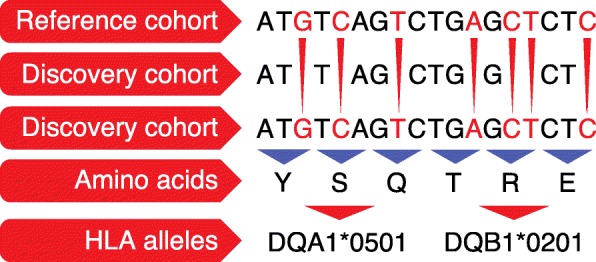
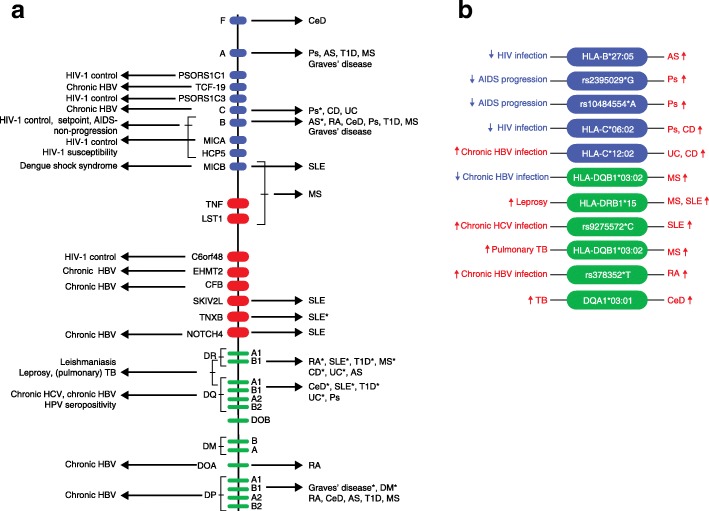
Verification
Claims the paper makes
The claims and statistics of this paper haven’t been checked yet.
Free: it reads the open-access text and checks the first 5 claims that cite a source we can check. Create a free account to check every claim.
Claims other papers make about this one
Each is checked against this paper’s own text: does it say what the citing paper says it does?
The check wasn’t confident either way, so it gives no verdict — never disputed.
In the citing paper
“Even though disease modeling is not the primary aim for HLA iPSC banking, these iPSCs can also be used to clarify the disease mechanisms of HLA-associated autoimmune and infectious disease [102].”
From Utility of iPSC-Derived Cells for Disease Modeling, Drug Development, and Cell Therapy (2022) · cites this paper as [102]
Experimental — accuracy not yet measured
Self-check
Percentages, sums and reported differences re-computed from the paper’s own numbers.
The self-check needs the paper’s full text.
Citations
Cites
A global reference for human genetic variation
The 1000 Genomes Project Consortium, authors, C., Auton, A., Abecasis, G. R., Steering committee, Altshuler, D. M., Durbin, R. M., Abecasis, G. R., Bentley, D. R., Chakravarti, A., et al. (2015) · Nature · doi:10.1038/nature15393 · Cited by 18,247
Common polygenic variation contributes to risk of schizophrenia and bipolar disorder
The International Schizophrenia Consortium (2009) · Nature · doi:10.1038/nature08185 · Cited by 4,821
A second generation human haplotype map of over 3.1 million SNPs
The International HapMap Consortium (2007) · Nature · doi:10.1038/nature06258 · Cited by 4,438 · cited 1×
“Notably in this study, imputation was performed using HLA*IMP:02 and reference panels from the HapMap Project [86] and the 1958 British Birth Cohort, as well as using SNP2HLA with another reference panel from the T1DGC.”
MethodGregersen, P. K., Silver, J., & Winchester, R. J. (1987) · Arthritis & Rheumatism · doi:10.1002/art.1780301102 · Cited by 2,599
PacBio Sequencing and its Applications
Rhoads, A., & Au, K. F. (2015) · Genomics, Proteomics & Bioinformatics · doi:10.1016/j.gpb.2015.08.002 · Cited by 2,135
Heritability in the genomics era — concepts and misconceptions
Visscher, P. M., Hill, W. G., & Wray, N. R. (2008) · Nature Reviews Genetics · doi:10.1038/nrg2322 · Cited by 1,921
Genotype imputation for genome-wide association studies
Marchini, J., & Howie, B. (2010) · Nature Reviews Genetics · doi:10.1038/nrg2796 · Cited by 1,627
A Whole-Genome Association Study of Major Determinants for Host Control of HIV-1
Fellay, J., Shianna, K. V., Ge, D., Colombo, S., Ledergerber, B., Weale, M., Zhang, K., Gumbs, C., Castagna, A., Cossarizza, A., et al. (2007) · Science · doi:10.1126/science.1143767 · Cited by 1,235
HLA and HIV-1: Heterozygote Advantage and B*35-Cw*04 Disadvantage
Carrington, M., Nelson, G. W., Martin, M. P., Kissner, T., Vlahov, D., Goedert, J. J., Kaslow, R., Buchbinder, S., Hoots, K., & O'Brien, S. J. (1999) · Science · doi:10.1126/science.283.5408.1748 · Cited by 1,224 · cited 6×
“Finally, epistatic interactions between MHC class I alleles and certain KIR alleles (between KIR3DS1 combined with HLA-B alleles) are associated with slower progression to acquired immunodeficiency syndrome (AIDS) [93] and better resolution of HCV infection (between KIR2DL3 and its human leukocyte antigen C group 1, H…”
BackgroundInfluentialEpistatic interaction between KIR3DS1 and HLA-B delays the progression to AIDS
Martin, M. P., Gao, X., Lee, J.-H., Nelson, G. W., Detels, R., Goedert, J. J., Buchbinder, S., Hoots, K., Vlahov, D., Trowsdale, J., et al. (2002) · Nature Genetics · doi:10.1038/ng934 · Cited by 1,189
Research works printed but not linked: 1
- Hu X Deutsch AJ Lenz TL Onengut-Gumuscu S Han B Chen WM Additive and interaction effects at three amino acid positions in HLA-DQ and HLA-DR molecules drive type 1 diabetes risk Nat Genet 2016 47 898 905 10.1038/ng.3353 PMC4930791 26168013 · DOI · Paper page
Cited by
Items 201–300 of 625
Celiac Disease and Serious Infections: A Nationwide Cohort Study From 2002 to 2017
Tjernberg, A. R., Mårild, K., Söderling, J. K., Lebwohl, B., Roelstraete, B., Bonnedahl, J., Green, P. H., & Ludvigsson, J. F. (2022) · The American Journal of Gastroenterology · doi:10.14309/ajg.0000000000001877 · Cited by 15
“The increased risk of serious infections in CD may not only be mediated through changes in the microbiome (14) but also through shared genetic susceptibility between autoimmunity and infections (11).”
BackgroundBasir, H. R. G., Majzoobi, M. M., Ebrahimi, S., Noroozbeygi, M., Hashemi, S. H., Keramat, F., Mamani, M., Eini, P., Alizadeh, S., Solgi, G., et al. (2022) · Frontiers in Immunology · doi:10.3389/fimmu.2022.891816 · Cited by 16
“It is thus unsurprising that a great number of HLA alleles and SNPs have been associated with viral infections (7, 8).”
BackgroundFine mapping identifies independent HLA associations in autoimmune hepatitis type 1
Li, Y., Zhou, L., Huang, Z., Yang, Y., Zhang, J., Yang, L., Xu, Y., Shi, J., Tang, S., Yuan, X., et al. (2023) · JHEP Reports · doi:10.1016/j.jhepr.2023.100926 · Cited by 16
“20 Thus, understanding the role of HLA in AIH may help to expand our understanding of the immune genetic pathogenesis of the disease.”
BackgroundChloroquine and Hydroxychloroquine
Barber, B. E. (2017) · doi:10.1201/9781498747967-175 · Cited by 16
Miyamae, J., Okano, M., Katakura, F., Kulski, J. K., Moritomo, T., & Shiina, T. (2023) · Cells · doi:10.3390/cells12050809 · Cited by 16
Autoimmunity: A New Focus on Nasal Polyps
Huang, J., & Xu, Y. (2023) · International Journal of Molecular Sciences · doi:10.3390/ijms24098444 · Cited by 18
“Some of these HLA polymorphisms have also been implicated in other autoimmune diseases [177].”
BackgroundBank1 and NF-kappaB as key regulators in anti-nucleolar antibody development
Alkaissi, H., Havarinasab, S., Nielsen, J. B., Söderkvist, P., & Hultman, P. A. (2018) · PLoS ONE · doi:10.1371/journal.pone.0199979 · Cited by 17
Interleukin in Immune-Mediated Diseases: An Updated Review
Zaroon, Z., Aslam, S., Hafsa, H., Mustafa, U., Fatima, S., & Bashir, H. (2024) · Molecular Biotechnology · doi:10.1007/s12033-024-01347-8 · Cited by 15
“Sometimes a single mutation in one gene end up in forming hazardous genetic conditions and these are often referred to as Mendelian or monogenic disorders [32].”
Cao, C., Zhao, W., Guo, J., Wang, Z., Lü, A., & Liang, C. C. (2025) · The Innovation Medicine · doi:10.59717/j.xinn-med.2025.100154 · Cited by 14
Stanescu, C., Andronesi, A. G., Jurcuț, C., Gherghiceanu, M., Vornicu, A., Burcea, A.-F., Andronesi, D., Lupusoru, G. E., Iliuță, L., Sorohan, B. M., et al. (2021) · Medicina · doi:10.3390/medicina57090912 · Cited by 14
“The genetic testing of our patient revealed multiple high‐risk gene patterns for autoimmune diseases [4].”
BackgroundGoni, E., Regel, I., Mahajan, U. M., Amodio, A., Marchi, G. D., Beyer, G., Zuppardo, R. A., Leo, M. D., Lanzillotta, M., Bonatti, F., et al. (2022) · Pancreatology · doi:10.1016/j.pan.2022.03.015 · Cited by 15
HLA analysis of immune checkpoint inhibitor-induced and idiopathic isolated ACTH deficiency
Ono, M., Fukuda, I., Nagao, M., Tomiyama, K., Okazaki‐Hada, M., Shuto, Y., Kobayashi, S., Yamaguchi, Y., Nagamine, T., Nakajima, Y., et al. (2022) · Pituitary · doi:10.1007/s11102-022-01231-1 · Cited by 15
Novel immunoprofiling method for diagnosing SLE and evaluating therapeutic response
Lee, J., Chen, M., Chou, K.-Y., Chao, Y., Chen, M., & Tsai, C. (2022) · Lupus Science & Medicine · doi:10.1136/lupus-2022-000693 · Cited by 14
Bogers, L., Kuiper, K. L., Smolders, J., Rip, J., & van Luijn, M. M. (2023) · Immunology Letters · doi:10.1016/j.imlet.2023.07.006 · Cited by 15
The Role of Sclerostin in Rheumatic Diseases: A Review
Jaśkiewicz, Ł., Chmielewski, G., Kuna, J., Stompór, T. P., & Krajewska–Włodarczyk, M. (2023) · Journal of Clinical Medicine · doi:10.3390/jcm12196248 · Cited by 16
“…play a role in the process of converting arginine A genetic predisposition was identi fi ed, which was located in a common epitope in the HLA-DRB1 locus of major histocompatibility complex (MHC) class II histocompatibility antigens [50]. into Peptidyl Arginine Deiminase 4 (PADI4) enzyme [48,49].”
Microbes as Master Immunomodulators: Immunopathology, Cancer and Personalized Immunotherapies
Lérias, J. R., Paraschoudi, G., de Sousa, E., Martins, J. D., Condeço, C., Figueiredo, N., Carvalho, C. T., Dodoo, E., Castillo-Martín, M., López-Beltrán, A., et al. (2020) · Frontiers in Cell and Developmental Biology · doi:10.3389/fcell.2019.00362 · Cited by 15
Immune Equilibrium Depends on the Interaction Between Recognition and Presentation Landscapes
Shevyrev, D., Tereshchenko, V., & Va, K. (2021) · Frontiers in Immunology · doi:10.3389/fimmu.2021.706136 · Cited by 17
Human Genetic Host Factors and Its Role in the Pathogenesis of Chikungunya Virus Infection
Rueda, J. C., Arcos‐Burgos, M., Santos, A. M., Arsanios, D. A. M., Villota‐Erazo, C., Reyes, V., Bernal‐Macías, S., Peláez-Ballestas, I. D. P., Cardiel, M. H., & Londoño, J. D. (2022) · Frontiers in Medicine · doi:10.3389/fmed.2022.654395 · Cited by 14
“To explain the relationships between HLA variants involved in both autoimmune and infectious diseases, two hypotheses have been proposed (97).”
BackgroundΚoukoulioti, Ε., Fischer, J., Schott, E., Fulop, B. D., Heyne, R., Berg, T., & van Bömmel, F. (2018) · Liver International · doi:10.1111/liv.14008 · Cited by 14
Antigen Processing, Presentation, and Tolerance: Role in Autoimmune Skin Diseases
Prinz, J. C. (2021) · Journal of Investigative Dermatology · doi:10.1016/j.jid.2021.05.009 · Cited by 13
Tran, M. T., Lim, J. J., Loh, T. J., Mannering, S. I., Rossjohn, J., & Reid, H. H. (2024) · Journal of Biological Chemistry · doi:10.1016/j.jbc.2024.107612 · Cited by 13
Pierini, F., Nutsua, M., Böhme, L., Özer, O., Bonczarowska, J. H., Susat, J., Franke, A., Nebel, A., Krause‐Kyora, B., & Lenz, T. L. (2020) · Scientific Reports · doi:10.1038/s41598-020-64312-w · Cited by 15
HLA class II peptide-binding-region analysis reveals funneling of polymorphism in action
Sarri, C. A., Giannoulis, T., Moutou, K. A., & Mamuris, Z. (2021) · Immunology Letters · doi:10.1016/j.imlet.2021.07.005 · Cited by 14
Ahmed, Z., DeGroat, W., Abdelhalim, H., Zeeshan, S., & Fine, D. H. (2024) · Clinical Oral Investigations · doi:10.1007/s00784-023-05406-3 · Cited by 13
“…be used to explain the causal relationship between periodontitis and CVDs. HLA-B and GPX1 are protein-coding genes that are strongly associated with inflammatory pathways [20, 21], and overexpression of these can affect the etiology of diseases such as cardio-myopathy and periodontitis [15, 16].”
Larsen, F. T., Bed’Hom, B., Naghizadeh, M., Kjærup, R. B., Zohari, S., & Dalgaard, T. S. (2019) · Developmental & Comparative Immunology · doi:10.1016/j.dci.2019.02.004 · Cited by 13
Epitope Selection for HLA-DQ2 Presentation: Implications for Celiac Disease and Viral Defense
Hung, S.-C., Hou, T., Jiang, W., Wang, N., Qiao, S., Chow, I., Liu, X., van der Burg, S. H., Koelle, D. M., Kwok, W. W., et al. (2019) · The Journal of Immunology · doi:10.4049/jimmunol.1801454 · Cited by 13
“Ag presentation of both self- and foreign proteins, with consequences for autoimmunity/tolerance and host defense (1).”
BackgroundHundrieser, J., Hein, R., Pokoyski, C., Brinkmann, A., Düvel, H., Dinkel, A., Trautewig, B., Siegert, J., Römermann, D., Petersen, B., et al. (2019) · Xenotransplantation · doi:10.1111/xen.12523 · Cited by 13
Family-based genome-wide association study of leprosy in Vietnam
Gzara, C., Dallmann-Sauer, M., Orlova, M., Thuc, N. V., Thai, V. H., Fava, V. M., Bihoreau, M., Boland, A., Abel, L., Alcaïs, A., et al. (2020) · PLoS Pathogens · doi:10.1371/journal.ppat.1008565 · Cited by 15
“271 HLA-DQ genes have been implicated in several autoimmune and inflammatory diseases (40) 272 and, recently, in susceptibility to streptococcal disease (41).”
BackgroundJekarl, D. W., Lee, D., Yoo, J. B., Kim, J. R., Yu, H., Yoo, J., Lim, J., Kim, M., & Kim, Y. (2021) · HLA · doi:10.1111/tan.14167 · Cited by 13
Differential mitochondrial genome in patients with Rheumatoid Arthritis
Jaiswal, K. S., Khanna, S., Ghosh, A., Padhan, P., Raghav, S. K., & Gupta, B. (2021) · Autoimmunity · doi:10.1080/08916934.2020.1846182 · Cited by 12
Type 2 autoimmune pancreatitis associated with ulcerative colitis
Nan, N., & Wang, D. (2023) · Frontiers in Immunology · doi:10.3389/fimmu.2023.1288390 · Cited by 14
Alamad, B., Elliott, K., & Knight, J. C. (2024) · Cambridge Prisms Precision Medicine · doi:10.1017/pcm.2023.25 · Cited by 14
“Genomic evidence suggests that pathogen-driven selection targeted immune-related genes contributes to inflammatory disorders (Barreiro et al., 2008; Barreiro & Quintana-Murci, 2010; Matzaraki et al., 2017; Pankratov et al., 2022).”
Mapping the relative accuracy of cross-ancestry prediction
Lupi, A. S., Vazquez, A. I., & Campos, G. D. L. (2024) · Nature Communications · doi:10.1038/s41467-024-54727-8 · Cited by 14
“The MHC region is also known to be highly polymorphic, has high gene density, and has very strong LD 33,34,38 .”
Maksić, M., Corovic, I. F., Maksic, T., Zivic, J., Živić, M., Zdravković, N., Begovic, A., Medovic, M. V., Kralj, D., Todorović, Ž., et al. (2025) · International Journal of Molecular Sciences · doi:10.3390/ijms26157274 · Cited by 12
“Certain examples include the HLA-DR3 and DR4 alleles, which have been associated with type 1 diabetes mellitus [20]; the HLA-B27 allele, which has been linked to ankylosing spondylitis [21]; and the HLA-DQ2/DQ8 variant, which has been linked to celiac disease (Figure 1) [13].”
InfluentialDevelopment of a humanized HLA‐A30 transgenic mouse model
Zhu, M., Niu, B., Liu, L., Yang, H., Qin, B., Peng, X., Chen, L., Liu, Y., Wang, C., Ren, X., et al. (2022) · Animal Models and Experimental Medicine · doi:10.1002/ame2.12225 · Cited by 13
CRISPR-based targeted haplotype-resolved assembly of a megabase region
Li, T., Du, D., Zhang, D., Lin, Y., Ma, J., Zhou, M., Meng, W., Jin, Z., Chen, Z., Yuan, H., et al. (2023) · Nature Communications · doi:10.1038/s41467-022-35389-w · Cited by 13
Ma, G., Yang, J., Wang, X., Xia, E., Yu, J., Zhang, M., Hu, Y., Ma, S., Zhou, X., Fan, Q., et al. (2024) · Scientific Reports · doi:10.1038/s41598-024-62509-x · Cited by 14
“Specifically, our approach involved extracting SNPs that are genome-wide significant (P value 5.0E−08) while excluding those containing MHC regions 12 .”
Autoimmune Diseases and Risk of Non‐Hodgkin Lymphoma: A Mendelian Randomisation Study
Shi, X., Wallach, J. D., Ma, X., & Rogne, T. (2024) · Cancer Medicine · doi:10.1002/cam4.70327 · Cited by 12
“Because human leukocyte antigen (HLA) region is highly predictive of both autoimmune diseases and NHL, we excluded SNPs from this locus from all analyses to prevent potential bias due to genetic pleiotropy [22, 23].”
BackgroundTargeting antigen presentation in autoimmunity
Lees, J. R. (2018) · Cellular Immunology · doi:10.1016/j.cellimm.2018.12.006 · Cited by 12
HLA-C and KIR permutations influence chronic obstructive pulmonary disease risk
Mkorombindo, T., Tran-Nguyen, T. K., Yuan, K., Zhang, Y., Xue, J., Criner, G. J., Kim, Y.-I., Pilewski, J. M., Gaggar, A., Cho, M. H., et al. (2021) · JCI Insight · doi:10.1172/jci.insight.150187 · Cited by 12
“We initially hypothesized that HLA–Class I polymorphisms may be important in COPD pathogenesis, similar to findings in other immune disorders (8, 9).”
BackgroundResultHaridas, V. M., Shetty, P. K., Kumar, M., Vasanthakumar, K., Haridas, K., Khode, V., & Bargale, A. B. (2018) · Indian Journal of Rheumatology · doi:10.4103/injr.injr_95_17 · Cited by 12
Singh, G. C., Ahmed, M., Zaid, M., & Hasnain, S. (2020) · Molecular Genetics & Genomic Medicine · doi:10.1002/mgg3.1147 · Cited by 13
Associations between HLA-II variation and antibody specificity are predicted by antigen properties
Innocenti, G., Andreu‐Sánchez, S., Hörstke, N. V., ElAbd, H., Barozzi, I., Franke, A., Manczinger, M., & Vogl, T. J. (2025) · Genome Medicine · doi:10.1186/s13073-025-01486-w · Cited by 11
“Given the prominent role of HLA-II alleles in infection [28, 29], auto-immune/inflammatory diseases [30–34], allergy [11, 35, 36], and cancer [37–40], our work provides a theoretical framework to study antigen/HLA-II risk factors in these disease settings.”
Ruiz-Pablos, M., Paiva, B., & Zabaleta, A. (2025) · Frontiers in Immunology · doi:10.3389/fimmu.2025.1710571 · Cited by 13
“Whether such clones remain quiescent or progress to pathogenicity depends largely on the peptide-binding repertoire of HLA class II molecules (12, 13, 15, 16).”
InfluentialYang, J., Lin, W., Ma, Y., Song, H., Mu, C., Wu, Q., Chen, H., Zhang, J., & Liu, X. (2024) · Frontiers in Immunology · doi:10.3389/fimmu.2024.1370831 · Cited by 12
HLA Genes: A Hallmark of Functional Genetic Variation and Complex Evolution
Lenz, T. L. (2024) · Methods in molecular biology · doi:10.1007/978-1-0716-3874-3_1 · Cited by 11
HLA-transgenic mouse models to study autoimmune central nervous system diseases
Pressley, K. R., Schwegman, L., Arena, M. M. D. O., Huizar, C. C., Zamvil, S. S., & Forsthuber, T. G. (2024) · Autoimmunity · doi:10.1080/08916934.2024.2387414 · Cited by 11
“Variants of the highly polymorphic HLA genes are associated with autoimmune and infectious diseases [1–3], outcomes of organ transplants [4], drug reactions [5], and tumor immunity [6].”
Polymorphisms in the CTLA4 promoter sequence are associated with canine hypoadrenocorticism
Boag, A. M., Short, A. D., Kennedy, L. J., Syme, H., Graham, P. A., & Catchpole, B. (2020) · Canine Medicine and Genetics · doi:10.1186/s40575-020-0081-4 · Cited by 11
“Whilst the significance of these findings have been contested [30, 31] it is the case that fine mapping techniques have confirmed MHC associations in human studies as well as revealing further associations and the importance of epistasis [32].”
BackgroundGeneration and expression analysis of BAC humanized mice carrying HLA‐DP401 haplotype
Li, F., Zhu, M., Niu, B., Liu, L., Peng, X., Yang, H., Qin, B., Wang, M., Ren, X., & Zhou, X. (2021) · Animal Models and Experimental Medicine · doi:10.1002/ame2.12158 · Cited by 13
Coming of Age: Human Genomics and the Cancer–Immune Set Point
Hammer, C., & Mellman, I. (2022) · Cancer Immunology Research · doi:10.1158/2326-6066.cir-21-1017 · Cited by 11
Istrate-Ofiţeru, A. M., Ruican, D., Niculescu, M. D., Nagy, R. D., Roşu, G. C., Petrescu, A.-M., Drăguşin, R. C., Iovan, L., Zorilă, G. L., & Iliescu, D. G. (2021) · Romanian Journal of Morphology and Embryology · doi:10.47162/rjme.61.4.01 · Cited by 11
Endo-lysosomal assembly variations among human leukocyte antigen class I (HLA class I) allotypes
Olson, E. C., Ceccarelli, T., & Raghavan, M. (2023) · eLife · doi:10.7554/elife.79144 · Cited by 10
Pritchard, D., Anand, A., De'Ath, A., Lee, H., & Rees, M. T. (2023) · International Journal of Immunogenetics · doi:10.1111/iji.12649 · Cited by 10
“,2014; Matzaraki et al. , 2017).”
Cis-SNPs Set Testing and PrediXcan Analysis for Gene Expression Data using Linear Mixed Models
Zeng, P., Wang, T., & Huang, S. (2017) · Scientific Reports · doi:10.1038/s41598-017-15055-8 · Cited by 12
“This is not likely by chance since there is a lot of evidence that the MHC region has important impacts on T1D and RA 17,100,102 .”
BackgroundInfluentialTimoteo, V. J., Chiang, K.-M., Yang, H., & Pan, W. (2022) · The Journal of Nutritional Biochemistry · doi:10.1016/j.jnutbio.2022.109126 · Cited by 12
Human Leukocyte Antigen Genotyping of Idiopathic Subglottic Stenosis
Rohlfing, M. L., Hillel, A. T., Wohler, E., Sobreira, N. L. D. M., Phillips, E. J., Mallal, S. A., & Gelbard, A. H. (2023) · The Laryngoscope · doi:10.1002/lary.30580 · Cited by 10
The Genome of the Great Gerbil Reveals Species-Specific Duplication of an MHCII Gene
Nilsson, P., Solbakken, M. H., Schmid, B. V., Orr, R. J. S., Lv, R., Cui, Y., Song, Y., Zhang, Y., Baalsrud, H. T., Tørresen, O. K., et al. (2020) · Genome Biology and Evolution · doi:10.1093/gbe/evaa008 · Cited by 10
Aflalo, A., & Boyle, L. H. (2021) · International Journal of Immunogenetics · doi:10.1111/iji.12546 · Cited by 10
“Furthermore, associations between inheritance of particular MHC- I alleles and susceptibility to a variety of conditions have been, and continue to be, the subject of intense study (Matzaraki et al., 2017; Trowsdale & Knight, 2013).”
BackgroundBiosimilars and immunogenicity: a matter of concern?
Jarab, A. S., Heshmeh, S. A., & Meslamani, A. Z. A. (2025) · Expert Opinion on Drug Safety · doi:10.1080/14740338.2025.2467817 · Cited by 9
“MHC genes encode proteins that present antigens to immune cells [18– 20].”
Brochu, H. N., Wang, R., Tollison, T. S., Pyo, C., Thomas, A. S., Tseng, E., Law, G. L., Picker, L. J., Gale, M., Geraghty, D. E., et al. (2022) · Communications Biology · doi:10.1038/s42003-022-04344-2 · Cited by 9
Association of HLA-DRB1 Alleles with Rheumatic Fever and Rheumatic Heart Disease: A Meta-analysis
Poomarimuthu, M., Ramasamy, T., Govindan, R., Rathinavel, A., Gunavathy, N., Kadiam, S., & Jayalakshmi, M. (2020) · Immunological Investigations · doi:10.1080/08820139.2020.1822864 · Cited by 9
“Various fine mapping studies determined specific antigen binding pockets and key amino acid sequences for various autoimmune diseases (Matzaraki et al. 2017).”
BackgroundInfluentialBoquett, J. A., Zagonel-Oliveira, M., Jobim, L. F., Jobim, M., Gonzaga, L., Veronez, M. R., Fagundes, N. J. R., & Schüler‐Faccini, L. (2018) · International Journal of Health Geographics · doi:10.1186/s12942-018-0154-8 · Cited by 9
Fernell, E., Sundin, M., Fasth, A. L., Dinkler, L., Galazka, M. A., Gillberg, C., & Johnson, M. (2021) · Acta Paediatrica · doi:10.1111/apa.15805 · Cited by 9
Revealing the genetic complexity of hypothyroidism: integrating complementary association methods
Zucker, R., Kovalerchik, M., Stern, A., Kaufman, H., & Linial, M. (2024) · Frontiers in Genetics · doi:10.3389/fgene.2024.1409226 · Cited by 10
Biology of HLA class I associated inflammatory diseases
Bordbar, A., Manches, O., & Nowatzky, J. (2024) · Best Practice & Research Clinical Rheumatology · doi:10.1016/j.berh.2024.101977 · Cited by 8
Garrido-Palazuelos, L. I., Almanza-Orduño, A. A., Waseem, M., Basheer, A., Medrano‐Félix, J. A., Mukthar, M., Khan, H. A., Shahid, F., & Aguirre-Sánchez, J. R. (2024) · Journal of Molecular Graphics and Modelling · doi:10.1016/j.jmgm.2024.108848 · Cited by 9
Salazar‐Camarena, D. C., Palafox‐Sánchez, C. A., Espinoza‐García, N., Guareña-Casillas, J. A., Reyes-Mata, M. P., Velador-Mendoza, J., & Marín‐Rosales, M. (2025) · Journal of Clinical Medicine · doi:10.3390/jcm14113693 · Cited by 10
“Class III genes of the MHC encode proteins not involved in antigen presentation [6,7].”
Namgoong, S., Shin, J., Cheong, H. S., Kim, L. H., Kim, J. O., Seo, J. Y., Shin, H. D., & Kim, Y. J. (2018) · Liver International · doi:10.1111/liv.13675 · Cited by 8
Liu, X., Li, X., Chen, L., Hsu, A., Asquith, K. L., Liu, C., Laurie, K., Barr, I., Foster, P. S., & Yang, M. (2022) · Frontiers in Immunology · doi:10.3389/fimmu.2022.805558 · Cited by 8
Upadhyai, P., Shenoy, P. U., Banjan, B., Albeshr, M. F., Mahboob, S., Manzoor, I., & Das, R. (2022) · Life · doi:10.3390/life12091300 · Cited by 8
Weinberg, S. E., & Jennings, L. J. (2020) · Advances in Molecular Pathology · doi:10.1016/j.yamp.2020.07.016 · Cited by 8
Mistaken Identity: The Role of Autoantibodies in Endocrine Disease
Nelson, H. A., Joshi, H. R., & Straseski, J. A. (2022) · The Journal of Applied Laboratory Medicine · doi:10.1093/jalm/jfab128 · Cited by 10
“Due to their critical role in antigen presentation, variants in human leukocyte antigen (HLA), also known as major histocompatibility complex, are a risk factor for many autoimmune diseases (10) including type 1 diabetes mellitus (T1DM) (11), autoimmune thyroid diseases (12), and Addison disease (13).”
BackgroundWinichakoon, P., Chanloung, W., Nantsupawat, T., & Louthrenoo, W. (2022) · Vaccines · doi:10.3390/vaccines10071022 · Cited by 11
Akçay, Ö. F., Yeter, H. H., ÜNSAL, Y. A., Yaşar, E., Gönen, S., & Derici, Ü. (2023) · Human Immunology · doi:10.1016/j.humimm.2023.01.008 · Cited by 8
Relationship between human leukocyte antigen DRB1 and psoriasis in Iraqi patients
Zalzala, H. H., Abdullah, G. A., Abbas, M. Y., Mohammedsalih, H. R., & Mahdi, B. M. (2018) · Saudi Medical Journal · doi:10.15537/smj.2018.9.23156 · Cited by 8
Learning polygenic scores for human blood cell traitsPreprint
Xu, Y., Vuckovic, D., Ritchie, S. C., Akbari, P., Jiang, T., Grealey, J., Butterworth, A. S., Ouwehand, W. H., Roberts, D. J., Angelantonio, E. D., et al. (2020) · bioRxiv (Cold Spring Harbor Laboratory) · doi:10.1101/2020.02.17.952788 · Cited by 9
“…among even a small set of variants, make significant contributions to its PGS, and the univariate PGS do not sufficiently capture these epistatic interactions 42 ; whereas, data-driven learning may partially capture these epistatic effects by better adjusting combinations of marginal effects 20 .”
Backgroundde Groot, N., van der Wiel, M. K. H., Le, N. G., de Groot, N. G., Bruijnesteijn, J., & Bontrop, R. E. (2024) · Genome Research · doi:10.1101/gr.278968.124 · Cited by 8
Kim, D., Song, J., Mancuso, N., Mangul, S., Ahn, C. W., Jung, J., & Jang, W. (2024) · Arthritis Research & Therapy · doi:10.1186/s13075-024-03280-2 · Cited by 8
“In addition, DRB1*04:01 and DQB1*03:02 may have a shared contribution to JIA and T1D since specific interactions between DRB1*03:01-DQB1*02:01/DRB1*04:01-DQB1*03:02 genotypes were previously described to increase T1D risks [127].”
BackgroundBang, S., & Shim, S. C. (2024) · Journal of Rheumatic Diseases · doi:10.4078/jrd.2024.0051 · Cited by 7
Mishra, V. C., Deshpande, T., Gupta, N., Dorwal, P., Chandra, D., Raina, V., & Sharma, G. D. (2020) · Meta Gene · doi:10.1016/j.mgene.2020.100842 · Cited by 7
Scherman, K., Råberg, L., & Westerdahl, H. (2021) · Frontiers in Immunology · doi:10.3389/fimmu.2021.703025 · Cited by 7
Plášil, M., Oppelt, J., Klumplerová, M., Bubenikova, J., Vychodilova, L., Jánová, E., Stejskalová, K., Futas, J., Knoll, A., Leblond, A., et al. (2023) · HLA · doi:10.1111/tan.15078 · Cited by 8
Mendelian randomization analysis using multiple biomarkers of an underlying common exposure
Jin, J., Qi, G., Yu, Z., & Chatterjee, N. (2024) · Biostatistics · doi:10.1093/biostatistics/kxae006 · Cited by 8
Yatskiu, H. A., Злотникова, М. В., Сукало, А. В., & Гончарова, Р. И. (2020) · Doklady of the National Academy of Sciences of Belarus · doi:10.29235/1561-8323-2020-64-2-209-216 · Cited by 7
Coronavirus Disease-2019 (COVID-19): A Review of the Literature
Tarafder, S. (2020) · ACTA SCIENTIFIC MICROBIOLOGY · doi:10.31080/asmi.2020.03.0641 · Cited by 7
No impact of cancer and plague-relevant FPR1 polymorphisms on COVID-19
Petrazzuolo, A., Naour, J. L., Vacchelli, E., Gaussem, P., Ellouze, S., Jourdi, G., Solary, É., Fontenay, M., Smadja, D. M., & Kroemer, G. (2020) · OncoImmunology · doi:10.1080/2162402x.2020.1857112 · Cited by 7
“In this sense, such PRR polymorphisms might have a similar function as the heterogeneity in major histocompatibility complex (MHC) genes.(42,43) While MHC polymorphisms create interindividual variation in cognate antigen recognition because of their impact on the immunopeptidome, PRR polymorphism would create variatio…”
Backgroundde Almeida, L. N., Clauder, A., Meng, L., Ehlers, M., Arce, S., & Manz, R. A. (2021) · European Journal of Immunology · doi:10.1002/eji.202149279 · Cited by 7
Daneshmandi, Z., Pourdowlat, G., Rekabi, M., Honarpisheh, P., Mirzendedel, M., Sadati, E., Ghaffaripour, H., Hassanzad, M., Mahdaviani, S. A., & Velayati, A. A. (2022) · Journal of Preventive Diagnostic and Treatment Strategies in Medicine · doi:10.4103/jpdtsm.jpdtsm_6_22 · Cited by 8
Searching for parent-of-origin effects on cardiometabolic traits in imprinted genomic regions
Granot‐Hershkovitz, E., Wu, P., Karasik, D., Peter, I., Peloso, G. M., Levy, D. A., Vasan, R. S., Cupples, L. A., Liu, C., Meigs, J. B., et al. (2020) · European Journal of Human Genetics · doi:10.1038/s41431-019-0568-1 · Cited by 7
“autoimmune and inflammatory diseases [45], though it is not known to be associated with height or other body size”
BackgroundComparative genetics of KIR haplotype diversity in humans and rhesus macaques: the balancing act
Bruijnesteijn, J., de Groot, N., de Vos‐Rouweler, A. J. M., de Groot, N. G., & Bontrop, R. E. (2022) · Immunogenetics · doi:10.1007/s00251-022-01259-4 · Cited by 7
“The different combinations of KIR and MHC, with specific tendencies towards activating or inhibitory signaling, may associate with a wide spectrum of biological or clinical scenarios, including successful pregnancy, cell and organ transplantation, viral infections, autoimmunity, and different forms of malignancies (Al…”
BackgroundAn, H., & Park, J. (2020) · bioRxiv (Cold Spring Harbor Laboratory) · doi:10.1101/2020.11.12.344424 · Cited by 9
“molecules associated with autoimmune diseases (Matzaraki et al., 2017).”
BackgroundMethodInfluentialPathogen Adaptation of HLA Alleles and Its Correlation with Autoimmune Diseases in the Han Chinese
Liu, S., Li, Y., Song, T., Zhang, J., Zhang, P., Luo, H., Zhang, S., Niu, Y., Xu, T., & He, S. (2025) · Genomics Proteomics & Bioinformatics · doi:10.1093/gpbjnl/qzaf038 · Cited by 7
“The theory of pathogen-driven HLA diversity has been well developed to explain the significant association between the variants of HLA alleles and infectious diseases, as well as the autoimmune diseases [18,40,48].”
Glycoproteins, Glycolipids, or Both: Why do Glycosyltransferases Recognize Different Acceptors?
Mikolajczyk, K. P., Czerwiński, M., & Kaczmarek, R. (2025) · ChemBioChem · doi:10.1002/cbic.202500212 · Cited by 7
Evaluating statistical significance in a meta -analysis by using numerical integration
Lin, Y.-C., Liang, Y.-J., & Yang, H. (2022) · Computational and Structural Biotechnology Journal · doi:10.1016/j.csbj.2022.06.055 · Cited by 7
“2), which is strongly associated with rheumatoid arthritis [19,20].”
BackgroundAlbinism in the largest extant amphibian: A metabolic, endocrine, or immune problem?
Chang, L., Zhu, W., & Jiang, J. (2022) · Frontiers in Endocrinology · doi:10.3389/fendo.2022.1053732 · Cited by 6
Garcia-Marquez, M. A., Thelen, M., Bauer, E., Maas, L., Wennhold, K., Lehmann, J. M., Keller, D. T., Nikolić, M., George, J., Zander, T., et al. (2024) · Journal for ImmunoTherapy of Cancer · doi:10.1136/jitc-2023-007268 · Cited by 6
Sex Bias in Autoimmunity: New Findings and New Opportunities
van Drongelen, V., Rew, J., & Billi, A. C. (2025) · JID Innovations · doi:10.1016/j.xjidi.2025.100391 · Cited by 7
Immunomodulatory Functions of the Gastrointestinal Tract
Welcome, M. O. (2018) · Springer eBooks · doi:10.1007/978-3-319-91056-7_10 · Cited by 7
HLA3D: an integrated structure-based computational toolkit for immunotherapy
Li, X., Lin, X., Mei, X., Pin, C., Liu, A., Liang, W., Chang, S., & Li, J. (2022) · Briefings in Bioinformatics · doi:10.1093/bib/bbac076 · Cited by 6
“The MHC region has been shown to be associated with a variety of diseases and therapies, including autoimmune diseases [1], tumour [2] and organ transplantation [3].”
Identifying Pathogen and Allele Type Simultaneously in a Single Well Using Droplet Digital PCR
Notsu, K., Daous, H. E., Mitoma, S., Wu, X., Norimine, J., & Sekiguchi, S. (2023) · mSphere · doi:10.1128/msphere.00493-22 · Cited by 7
Metadata
- Authors
- Matzaraki, V., Kumar, V., Wijmenga, C., & Zhernakova, A.
- Affiliations
- University Medical Center Groningen (NL)
- Corresponding author
- Wijmenga, Cisca
- Venue
- Genome biology
- Published
- 2017-04-27
- Volume
- 18
- Issue
- 1
- Pages
- 76-76
- ISSN
- 1465-6906 (ISSN-L)
- 1474-760X
- PMC
- PMC5406920
- OpenAlex
- W2608171249
- Semantic Scholar
- 9ca8caef2d7a438f2e688f4dc539f43b98a234db
- Cited by
- 566
- References
- 141
- Citations by year
- 2026: 29 · 2025: 56 · 2024: 74 · 2023: 73 · 2022: 77 · 2021: 89 · 2020: 76 · 2019: 38 · 2018: 43 · 2017: 11
- FWCI
- 5.89
- Type
- journal article
- Language
- en
- Open access
- gold
- doi.org
- Licence
- cc-by
- Locations
- Genome biology (publishedVersion, cc-by)
- PubMed Central (publishedVersion, cc-by)
- PubMed (publishedVersion)
- DOAJ (DOAJ: Directory of Open Access Journals) (submittedVersion, cc-by-sa)
- University of Groningen research database (University of Groningen / Centre for Information Technology) (submittedVersion, cc-by)
- NORA - Norwegian Open Research Archives (submittedVersion, cc-by)
- University of Groningen research database (University of Groningen / Centre for Information Technology) (submittedVersion)
- Funders
- European Commission (305279, 322698, EU-FP7, 2007–2013)
- Rijksuniversiteit Groningen
- Nederlandse Organisatie voor Wetenschappelijk Onderzoek (NWO SPI 92–266, SPI 92-266)
- Topics
- Life Sciences › Biochemistry, Genetics and Molecular Biology › Genetics › Genetic Associations and Epidemiology
- Health Sciences › Medicine › Clinical Neurology › Multiple Sclerosis Research Studies
- Life Sciences › Biochemistry, Genetics and Molecular Biology › Molecular Biology › vaccines and immunoinformatics approaches
- Keywords
- major histocompatibility complex, HLA variants, genetic susceptibility, autoimmune disease, infectious diseases, epistasis, non-additive genetic effects, genotype imputation, shared genetic risk
- MeSH terms
- Autoimmune Diseases, Communicable Diseases, Epistasis, Genetic, HLA Antigens, Humans, Genetic Variation, Genetic Predisposition to Disease, Genetic Association Studies
About these checks
Registry, retraction, Cites and statistics results are computed, not judged, with one exception: a printed reference that no index lists is read once by a model before it counts as a citation error. Claims are extracted by a model and kept only when their quote appears verbatim in the text; each cited source is then checked, with a model’s help, for whether it says what the claim relies on. Those verdicts can be wrong — read the claim’s quote and the cited source before relying on one.
Statistics and arithmetic are recomputed, not judged.
Confidence bands are shown only for fields calibrated on our annotated test set. None is calibrated yet, so no band is shown.
What counts as a claim ›How we measure confidence ›How we check this ›
Are you an author, or do you see a problem with this page? Request a review
Data sources
Bibliographic data: Semantic Scholar, OpenAlex, Crossref.
Contains information from the Semantic Scholar Academic Graph Datasets, made available under the ODC Attribution License (ODC-BY 1.0).
Semantic Scholar’s data is described in: Kinney, R., et al. (2023). The Semantic Scholar Open Data Platform. arXiv:2301.10140.
