

The MHC locus and genetic susceptibility to autoimmune and infectious diseases
Open accessThe DOI matches its Crossref record; 141 of the 141 references it cites were found in a registry or an index.
Abstract
In the past 50 years, variants in the major histocompatibility complex (MHC) locus, also known as the human leukocyte antigen (HLA), have been reported as major risk factors for complex diseases. Recent advances, including large genetic screens, imputation, and analyses of non-additive and epistatic effects, have contributed to a better understanding of the shared and specific roles of MHC variants in different diseases. We review these advances and discuss the relationships between MHC variants involved in autoimmune and infectious diseases. Further work in this area will help to distinguish between alternative hypotheses for the role of pathogens in autoimmune disease development.
Overview
The claims and statistics of this paper haven’t been checked yet.
Free: it reads the open-access text and checks the first 5 claims that cite a source we can check. Create a free account to check every claim.
Integrity signals
Registry
Cites
Statistics
Figures
Verification
Claims the paper makes
The claims and statistics of this paper haven’t been checked yet.
Free: it reads the open-access text and checks the first 5 claims that cite a source we can check. Create a free account to check every claim.
Claims other papers make about this one
Each is checked against this paper’s own text: does it say what the citing paper says it does?
The check wasn’t confident either way, so it gives no verdict — never disputed.
In the citing paper
“Even though disease modeling is not the primary aim for HLA iPSC banking, these iPSCs can also be used to clarify the disease mechanisms of HLA-associated autoimmune and infectious disease [102].”
From Utility of iPSC-Derived Cells for Disease Modeling, Drug Development, and Cell Therapy (2022) · cites this paper as [102]
Experimental — accuracy not yet measured
Self-check
Percentages, sums and reported differences re-computed from the paper’s own numbers.
The self-check needs the paper’s full text.
Citations
Cites
A global reference for human genetic variation
The 1000 Genomes Project Consortium, authors, C., Auton, A., Abecasis, G. R., Steering committee, Altshuler, D. M., Durbin, R. M., Abecasis, G. R., Bentley, D. R., Chakravarti, A., et al. (2015) · Nature · doi:10.1038/nature15393 · Cited by 18,247
Common polygenic variation contributes to risk of schizophrenia and bipolar disorder
The International Schizophrenia Consortium (2009) · Nature · doi:10.1038/nature08185 · Cited by 4,821
A second generation human haplotype map of over 3.1 million SNPs
The International HapMap Consortium (2007) · Nature · doi:10.1038/nature06258 · Cited by 4,438 · cited 1×
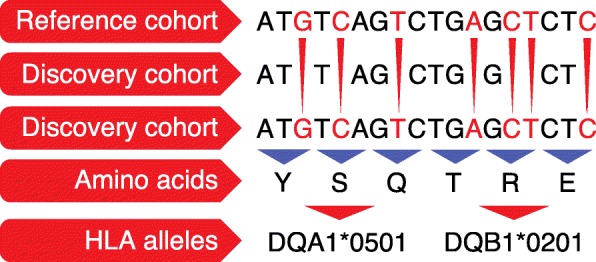
“Notably in this study, imputation was performed using HLA*IMP:02 and reference panels from the HapMap Project [86] and the 1958 British Birth Cohort, as well as using SNP2HLA with another reference panel from the T1DGC.”
MethodGregersen, P. K., Silver, J., & Winchester, R. J. (1987) · Arthritis & Rheumatism · doi:10.1002/art.1780301102 · Cited by 2,599
PacBio Sequencing and its Applications
Rhoads, A., & Au, K. F. (2015) · Genomics, Proteomics & Bioinformatics · doi:10.1016/j.gpb.2015.08.002 · Cited by 2,135
Heritability in the genomics era — concepts and misconceptions
Visscher, P. M., Hill, W. G., & Wray, N. R. (2008) · Nature Reviews Genetics · doi:10.1038/nrg2322 · Cited by 1,921
Genotype imputation for genome-wide association studies
Marchini, J., & Howie, B. (2010) · Nature Reviews Genetics · doi:10.1038/nrg2796 · Cited by 1,627
A Whole-Genome Association Study of Major Determinants for Host Control of HIV-1
Fellay, J., Shianna, K. V., Ge, D., Colombo, S., Ledergerber, B., Weale, M., Zhang, K., Gumbs, C., Castagna, A., Cossarizza, A., et al. (2007) · Science · doi:10.1126/science.1143767 · Cited by 1,235
HLA and HIV-1: Heterozygote Advantage and B*35-Cw*04 Disadvantage
Carrington, M., Nelson, G. W., Martin, M. P., Kissner, T., Vlahov, D., Goedert, J. J., Kaslow, R., Buchbinder, S., Hoots, K., & O'Brien, S. J. (1999) · Science · doi:10.1126/science.283.5408.1748 · Cited by 1,224 · cited 6×
“Finally, epistatic interactions between MHC class I alleles and certain KIR alleles (between KIR3DS1 combined with HLA-B alleles) are associated with slower progression to acquired immunodeficiency syndrome (AIDS) [93] and better resolution of HCV infection (between KIR2DL3 and its human leukocyte antigen C group 1, H…”
BackgroundInfluentialEpistatic interaction between KIR3DS1 and HLA-B delays the progression to AIDS
Martin, M. P., Gao, X., Lee, J.-H., Nelson, G. W., Detels, R., Goedert, J. J., Buchbinder, S., Hoots, K., Vlahov, D., Trowsdale, J., et al. (2002) · Nature Genetics · doi:10.1038/ng934 · Cited by 1,189
Research works printed but not linked: 1
- Hu X Deutsch AJ Lenz TL Onengut-Gumuscu S Han B Chen WM Additive and interaction effects at three amino acid positions in HLA-DQ and HLA-DR molecules drive type 1 diabetes risk Nat Genet 2016 47 898 905 10.1038/ng.3353 PMC4930791 26168013 · DOI · Paper page
Cited by
Items 601–625 of 625
Multipl Myelomda HLA ve Reseptör Gen Polimorfizmlerinin Analizi
Akın, H. Y. (2024) · OpenMETU (Middle East Technical University)
Lhotte, R. (2023) · theses.fr (ABES) · doi:10.70675/0ecaab41zf8b9z40aezaf13z0f94af07ccaf · Cited by 1
Rare bi-allelic MEX3B mutations in childhood herpes simplex encephalitis
Kerrouche, N. (2024) · theses.fr (ABES) · doi:10.70675/a1c17eadz8e32z4ae6z8f5dzbe60fed472de
Lee, K., Lee, J.-Y., Lee, S. J., Bae, H., & Sung, J. (2026) · medRxiv · doi:10.64898/2026.04.16.26351065
Human leukocyte antigens in the era of precision medicine in immunology
Ulum, B., Sönmez, G., & Cağdaş, D. N. (2026) · Transplant Immunology · doi:10.1016/j.trim.2026.102389
Exploring Genetic Variations Associated with the Immune Response in Underrepresented Populations
Hernández-Ledesma, A. L., Coss-Navarrete, E. L., Sevilla-Parra, G., Bravo-García, M. F., Schäfer, A., Brunck, M. E. G., & Medina-Rivera, A. (2026) · Annual Review of Biomedical Data Science · doi:10.1146/annurev-biodatasci-092724-034109
Agarwal, T., & Yadav, V. (2026) · Neuroimmunology Reports · doi:10.1016/j.nerep.2026.100290
Boltz, T. A., Bot, M. H. M., Lapinska, S., Schwarz, T., Hou, K., Garske, K. M., Freund, M. K., Bearden, C. E., Macaya, G., Lopez-Jaramillo, C. A., et al. (2026) · BMC Genomics · doi:10.1186/s12864-026-13065-3
Methodological strategies for mapping HLA susceptibility loci in vitiligo: A focused minireview
Bouayad, A. (2026) · World Journal of Methodology · doi:10.5662/wjm.v16.i3.112691
“Among immunogenetic factors, variations in HLA genes are particularly important because they play a central role in T cell–mediated elimination of melanocytes[9-11] and in the development of autoimmunity[12-14].”
Quirós, P. M., Gil-González, S., Pelfort, X., Coelho, A., Peñalver, J. M., Viñas-Noguera, M., Martí-Garín, D., & Grillo, G. (2026) · Research Square · doi:10.21203/rs.3.rs-10116054/v1
Ayers, C. B., Nalley, M. J., Madhani, H. D., Potts, W. K., McClelland, E. E., & Seipelt-Thiemann, R. L. (2026) · BMC Genomics · doi:10.1186/s12864-026-13196-7
“Because MHC genes activate T cells and the immune response, specific versions of MHC genes (alleles) affect an individual’s susceptibility to infectious and autoimmune diseases [7, 8], and there is strong selection for any pathogen that can escape MHC presentation.”
Kao, W.-Y., Cheng, C., Su, M., Lin, M., Liou, J., Wu, C., Chen, L.-Y., Chen, C.-Y., Fan, C. C., Pan, Y., et al. (2026) · Communications Medicine · doi:10.1038/s43856-026-01857-3
Chen, C. (2026) · International Journal of Clinical and Experimental Medicine Research · doi:10.26855/ijcemr.2026.07.002
Clinical application of genomic advances in systemic sclerosis
Rosa-Baez, C., Rangel‐Peláez, C., Martínez-Gutiérrez, L., Acosta‐Herrera, M., & Martín, J. (2026) · Current Opinion in Rheumatology · doi:10.1097/bor.0000000000001185
Al-Rukhayes, M., Al-Shatti, N., Alhasawi, A. W., Alghubaysh, O., Almsned, F. M., & AlEissa, M. M. (2026) · Frontiers in Immunology · doi:10.3389/fimmu.2026.1832089
Selective control of HLA-DRB1 and HLA-DQA1 transcription through DR/DQ super enhancer microelements
Majumder, P., Lee, J., Butler, R., Scharer, C. D., & Boss, J. M. (2026) · Cell Reports · doi:10.1016/j.celrep.2026.117980
“54,55 Although polymorphisms across the coding regions of the HLA-DRB1 and HLA-DQA1 genes are well documented, it is intriguing that an even greater number appear within the SE.”
Zhang, X., Jiang, Y., Xu, W., Li, G., Wang, Y., Qin, Q., Li, N., & Zhang, J. (2026) · Immunological Investigations · doi:10.1080/08820139.2026.2729081
Jørgensen, S., Kronborg, L., Andersen, J. S., Bertelsen, T., Hjuler, K. F., Stensballe, A., & Johansen, C. (2026) · Human Immunology · doi:10.1016/j.humimm.2026.112079
Serafim, L. V. (2026) · DSpace (Federal University of Santa Catarina)
Heidari, H., Brimacombe, M., & Lawrence, D. A. (2026) · Frontiers in Neuroscience · doi:10.3389/fnins.2026.1952549
“Lifestyle, diet, contacts with xenobiotics (drugs and chemicals), medical practices, environmental exposures (air pollution and infections), stress, and climate change with more industrialization have been associated with a loss of ancestral microbial diversity and an increased incidence of endocrine and immune-associ…”
InfluentialRahmoune, H., Boutrid, N., Boutrid, H., & Iddir, S. (2026) · Exploratory Research and Hypothesis in Medicine · doi:10.14218/erhm.2026.00044
GENETIC AND ENVIRONMENTAL FACTORS IN SYSTEMIC SCLEROSIS: A COMPREHENSIVE REVIEW
(2026) · International Journal of Drug Delivery Technology · doi:10.25258/ijddt.16.77s.11
“These observations require confirmation in independent cohorts but suggest that CD8+ T-cell-mediated immune mechanisms may contribute to disease development [26].”
Variation in Disease Susceptibility Is Associated With Immunogenetics in a Threatened Amphibian
Clemons, R. A., Belasen, A. M., Hardy, B. M., Muths, E., Bailey, L. L., Funk, W. C., & Zamudio, K. R. (2026) · Evolutionary Applications · doi:10.1111/eva.70348
“MHC screening has been used to try to predict disease susceptibility in humans, where certain MHC genotypes have been associated with the severity of various diseases (Matzaraki et al. 2017; Davies et al. 2012).”
Tabibzadeh, S., Meng, F., Asghariazar, V., Safarzadeh, E., Esmaeili, A., ten Hagen, T. L. M., Farhoudi, L., & Cai, Y. (2026) · International Journal of Nanomedicine · doi:10.2147/ijn.s645776
Metadata
- Authors
- Matzaraki, V., Kumar, V., Wijmenga, C., & Zhernakova, A.
- Affiliations
- University Medical Center Groningen (NL)
- Corresponding author
- Wijmenga, Cisca
- Venue
- Genome biology
- Published
- 2017-04-27
- Volume
- 18
- Issue
- 1
- Pages
- 76-76
- ISSN
- 1465-6906 (ISSN-L)
- 1474-760X
- PMC
- PMC5406920
- OpenAlex
- W2608171249
- Semantic Scholar
- 9ca8caef2d7a438f2e688f4dc539f43b98a234db
- Cited by
- 566
- References
- 141
- Citations by year
- 2026: 29 · 2025: 56 · 2024: 74 · 2023: 73 · 2022: 77 · 2021: 89 · 2020: 76 · 2019: 38 · 2018: 43 · 2017: 11
- FWCI
- 5.89
- Type
- journal article
- Language
- en
- Open access
- gold
- doi.org
- Licence
- cc-by
- Locations
- Genome biology (publishedVersion, cc-by)
- PubMed Central (publishedVersion, cc-by)
- PubMed (publishedVersion)
- DOAJ (DOAJ: Directory of Open Access Journals) (submittedVersion, cc-by-sa)
- University of Groningen research database (University of Groningen / Centre for Information Technology) (submittedVersion, cc-by)
- NORA - Norwegian Open Research Archives (submittedVersion, cc-by)
- University of Groningen research database (University of Groningen / Centre for Information Technology) (submittedVersion)
- Funders
- European Commission (305279, 322698, EU-FP7, 2007–2013)
- Rijksuniversiteit Groningen
- Nederlandse Organisatie voor Wetenschappelijk Onderzoek (NWO SPI 92–266, SPI 92-266)
- Topics
- Life Sciences › Biochemistry, Genetics and Molecular Biology › Genetics › Genetic Associations and Epidemiology
- Health Sciences › Medicine › Clinical Neurology › Multiple Sclerosis Research Studies
- Life Sciences › Biochemistry, Genetics and Molecular Biology › Molecular Biology › vaccines and immunoinformatics approaches
- Keywords
- major histocompatibility complex, HLA variants, genetic susceptibility, autoimmune disease, infectious diseases, epistasis, non-additive genetic effects, genotype imputation, shared genetic risk
- MeSH terms
- Autoimmune Diseases, Communicable Diseases, Epistasis, Genetic, HLA Antigens, Humans, Genetic Variation, Genetic Predisposition to Disease, Genetic Association Studies
About these checks
Registry, retraction, Cites and statistics results are computed, not judged, with one exception: a printed reference that no index lists is read once by a model before it counts as a citation error. Claims are extracted by a model and kept only when their quote appears verbatim in the text; each cited source is then checked, with a model’s help, for whether it says what the claim relies on. Those verdicts can be wrong — read the claim’s quote and the cited source before relying on one.
Statistics and arithmetic are recomputed, not judged.
Confidence bands are shown only for fields calibrated on our annotated test set. None is calibrated yet, so no band is shown.
What counts as a claim ›How we measure confidence ›How we check this ›
Are you an author, or do you see a problem with this page? Request a review
Data sources
Bibliographic data: Semantic Scholar, OpenAlex, Crossref.
Contains information from the Semantic Scholar Academic Graph Datasets, made available under the ODC Attribution License (ODC-BY 1.0).
Semantic Scholar’s data is described in: Kinney, R., et al. (2023). The Semantic Scholar Open Data Platform. arXiv:2301.10140.
