

Genomic diversity and ecology of human-associated Akkermansia species in the gut microbiome revealed by extensive metagenomic assembly
Open accessThe DOI matches its Crossref record; 112 of the 117 references it cites were found in a registry or an index.
Abstract
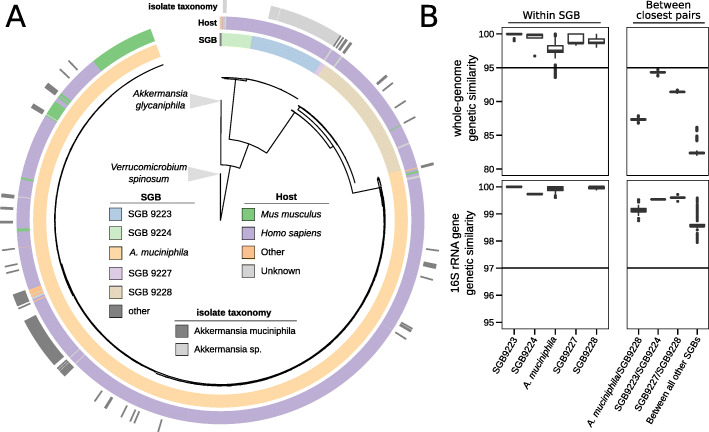
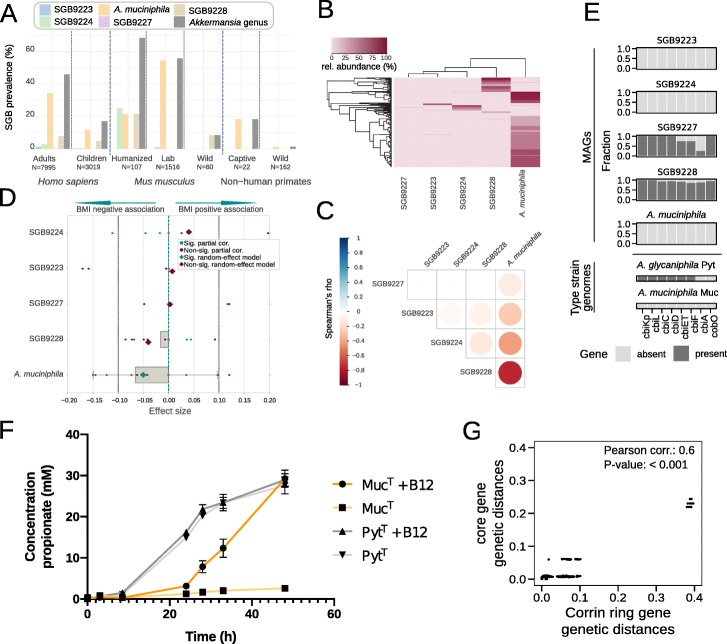
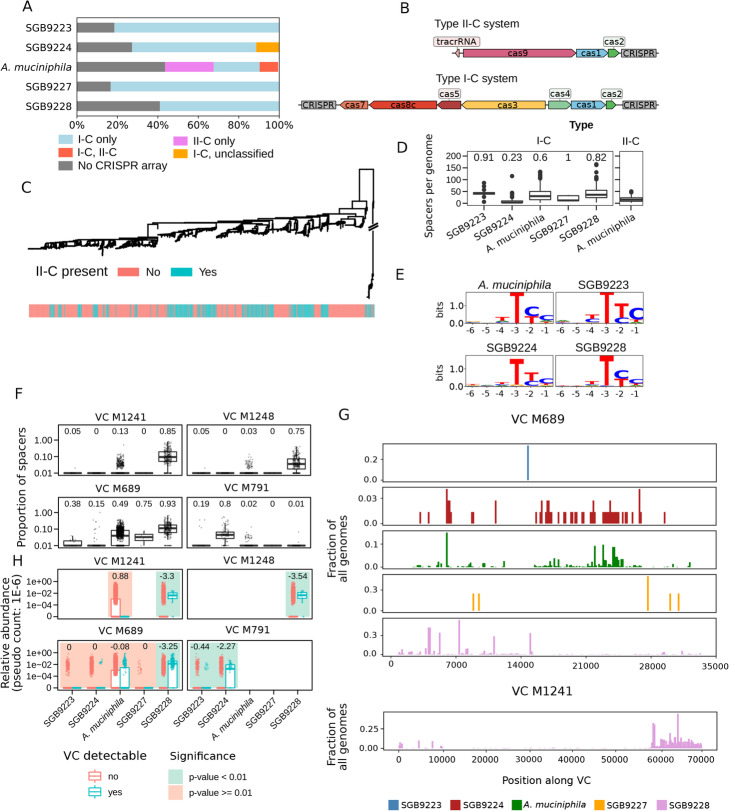
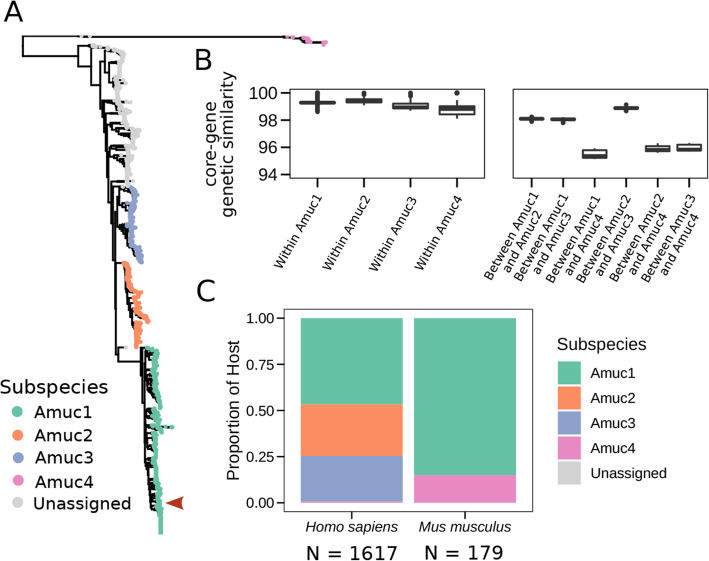
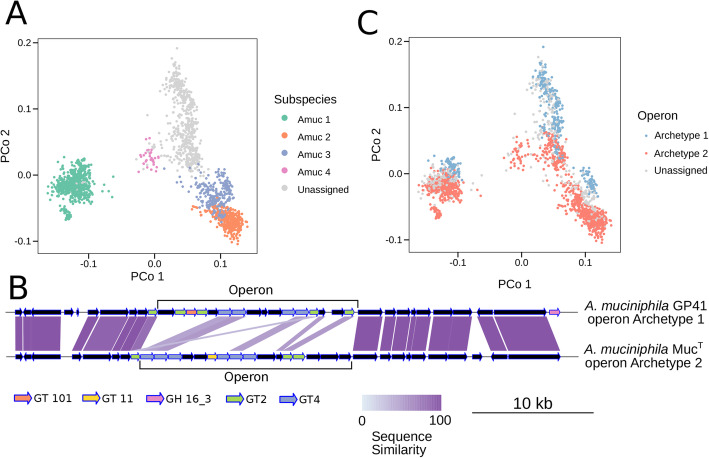
Background: Akkermansia muciniphila is a human gut microbe with a key role in the physiology of the intestinal mucus layer and reported associations with decreased body mass and increased gut barrier function and health. Despite its biomedical relevance, the genomic diversity of A. muciniphila remains understudied and that of closely related species, except for A. glycaniphila , unexplored. Results: We present a large-scale population genomics analysis of the Akkermansia genus using 188 isolate genomes and 2226 genomes assembled from 18,600 metagenomes from humans and other animals. While we do not detect A. glycaniphila , the Akkermansia strains in the human gut can be grouped into five distinct candidate species, including A. muciniphila , that show remarkable whole-genome divergence despite surprisingly similar 16S rRNA gene sequences. These candidate species are likely human-specific, as they are detected in mice and non-human primates almost exclusively when kept in captivity. In humans, Akkermansia candidate species display ecological co-exclusion, diversified functional capabilities, and distinct patterns of associations with host body mass. Analysis of CRISPR-Cas loci reveals new variants and spacers targeting newly discovered putative bacteriophages. Remarkably, we observe an increased relative abundance of Akkermansia when cognate predicted bacteriophages are present, suggesting ecological interactions. A. muciniphila further exhibits subspecies-level genetic stratification with associated functional differences such as a putative exo/lipopolysaccharide operon. Conclusions: We uncover a large phylogenetic and functional diversity of the Akkermansia genus in humans. This variability should be considered in the ongoing experimental and metagenomic efforts to characterize the health-associated properties of A. muciniphila and related bacteria.
Overview
The claims and statistics of this paper haven’t been checked yet.
Free: it reads the open-access text and checks the first 5 claims that cite a source we can check. Create a free account to check every claim.
Integrity signals
Registry
Cites
Statistics
Figures
Verification
Claims the paper makes
The claims and statistics of this paper haven’t been checked yet.
Free: it reads the open-access text and checks the first 5 claims that cite a source we can check. Create a free account to check every claim.
Claims other papers make about this one
Each is checked against this paper’s own text: does it say what the citing paper says it does?
In the citing paper
“It should be noted that A. muciniphila B is a distinct species from A. muciniphila; although the latter was positively implicated in anti-PD-1 efficacy in NSCLC 13 (also positive in our study but not within the top 22 strains), recent analyses have revealed that it is phylogenetically and phenotypically distinct from A. muciniphila B (known as Akkermansia SGB9228 by MetaPhlAn4 taxonomy) 21 .”
From A gut microbial signature for combination immune checkpoint blockade across cancer types (2024) · cites this paper as [21]
Self-check
Percentages, sums and reported differences re-computed from the paper’s own numbers.
The self-check needs the paper’s full text.
Citations
Cites
R: A Language and Environment for Statistical Computing
R Core Team (2025) · doi:10.32614/r.manuals · Cited by 352,181
Basic local alignment search tool
Altschul, S. F., Gish, W., Miller, W., Myers, E. W., & Lipman, D. J. (1990) · Journal of Molecular Biology · doi:10.1006/jmbi.1990.9999 · Cited by 98,669
Fast gapped-read alignment with Bowtie 2
Langmead, B., & Salzberg, S. L. (2012) · Nature Methods · doi:10.1038/nmeth.1923 · Cited by 56,400
RAxML version 8: a tool for phylogenetic analysis and post-analysis of large phylogenies
Stamatakis, A. (2014) · Bioinformatics · doi:10.1093/bioinformatics/btu033 · Cited by 32,291
BEDTools: a flexible suite of utilities for comparing genomic features
Quinlan, A. R., & Hall, I. M. (2010) · Bioinformatics · doi:10.1093/bioinformatics/btq033 · Cited by 27,437
BLAST+: architecture and applications
Camacho, C., Coulouris, G., Avagyan, V., Ma, N., Papadopoulos, J., Bealer, K., & Madden, T. L. (2009) · BMC Bioinformatics · doi:10.1186/1471-2105-10-421 · Cited by 22,074
Prokka: rapid prokaryotic genome annotation
Seemann, T. (2014) · Bioinformatics · doi:10.1093/bioinformatics/btu153 · Cited by 18,818
Fast and sensitive protein alignment using DIAMOND
Buchfink, B., Xie, C., & Huson, D. H. (2015) · Nature Methods · doi:10.1038/nmeth.3176 · Cited by 14,201
trimAl: a tool for automated alignment trimming in large-scale phylogenetic analyses
Capella-Gutiérrez, S., Silla-Martínez, J. M., & Gabaldón, T. (2009) · Bioinformatics · doi:10.1093/bioinformatics/btp348 · Cited by 12,751
Parks, D. H., Imelfort, M., Skennerton, C. T., Hugenholtz, P., & Tyson, G. W. (2015) · Genome Research · doi:10.1101/gr.186072.114 · Cited by 12,496
Research works printed but not linked: 1
- Krueger F. Trim galore. A wrapper tool around Cutadapt and FastQC to consistently apply quality and adapter trimming to FastQ files. 2015;516:517. https://github.com/FelixKrueger/TrimGalore.
Cited by
Items 101–178 of 178
Omics-based analysis of Akkermansia muciniphila cultivation in food-grade media
Geerlings, S. Y., van der Ark, K. C. H., Nijsse, B., Boeren, S. A., van Loosdrecht, M. C. M., Belzer, C., & de Vos, W. M. (2024) · Microbiome Research Reports · doi:10.20517/mrr.2024.06 · Cited by 10
Species- or genus-dependent immunostimulatory effects of gut-derived potential probiotics
Feng, S., Wang, S., Qu, D., Li, J., Tian, F., Yu, L., Zhang, H., Zhao, J., Chen, W., & Zhai, Q. (2022) · Journal of genetics and genomics/Journal of Genetics and Genomics · doi:10.1016/j.jgg.2022.11.001 · Cited by 10
The worldview of Akkermansia muciniphila, a bibliometric analysis
Zhang, Z., Wang, J., Dang, S., Liu, X., Zhang, Y., & Zhang, H. (2025) · Frontiers in Microbiology · doi:10.3389/fmicb.2025.1500893 · Cited by 9
Seasonal dynamics in the mammalian microbiome between disparate environments
Stothart, M. R., Spina, H. A., Hotchkiss, M. Z., Ko, W., & Newman, A. E. M. (2023) · Ecology and Evolution · doi:10.1002/ece3.10692 · Cited by 9
Molteni, C., Forni, D., Cagliani, R., & Sironi, M. (2025) · Biology Direct · doi:10.1186/s13062-025-00680-5 · Cited by 9
Zhang, K., Dong, Y., Ding, Y., Wang, X., Liu, T., Zhong, W., & Cao, H. (2025) · Microbiological Research · doi:10.1016/j.micres.2025.128240 · Cited by 8
Worsley, S. F., Lee, C. Z., Versteegh, M. A., Burke, T. A., Komdeur, J., Dugdale, H. L., & Richardson, D. S. (2025) · ISME Communications · doi:10.1093/ismeco/ycaf138 · Cited by 8
Regulation of the innate immune response and gut microbiome by p53
Khor, A. H. P., Koguchi, T., Liu, H., Kakuta, M., Matsubara, D., Wen, R., Sagiya, Y., Imoto, S., Nakagawa, H., Matsuda, K., et al. (2023) · Cancer Science · doi:10.1111/cas.15991 · Cited by 6
Lian, V., Hinrichs, H., Young, M., Faerber, A., Özler, O., Xie, Y., Ballentine, S. J., Tarr, P. I., Davidson, N. O., & Thompson, M. D. (2023) · American Journal Of Pathology · doi:10.1016/j.ajpath.2023.11.006 · Cited by 6
Safety evaluation of pasteurized Akkermansia muciniphila YGMCC2645
Tian, J., He, Z., Zhao, M., Ke, X., Zhang, Y. T., Qu, J., Xia, Y., Fu, S., Yang, W., Pei, L., et al. (2026) · Food and Chemical Toxicology · doi:10.1016/j.fct.2026.115940 · Cited by 5
Lu, W., Zha, B., Lyu, J., LingHu, C., Chen, J., Deng, S., Zhang, X., Li, L., & Wang, G. (2024) · Frontiers in Microbiology · doi:10.3389/fmicb.2024.1500886 · Cited by 4
Straining to define a healthy microbiome
Seekatz, A. M. (2025) · mSphere · doi:10.1128/msphere.00797-24 · Cited by 4
Dinkov, B. (2026) · Biomedicines · doi:10.3390/biomedicines14061235 · Cited by 4
Safety evaluation of Akkermansia massiliensis sp. nov. DSM 33459
Pitt, J. A., Bauter, M. R., Kumar, R., Hasselwander, O., Hibberd, A. A., Kane, H., Wang, Q., Auzanneau, I., Bry, S., David, E., et al. (2025) · Toxicology Reports · doi:10.1016/j.toxrep.2025.102042 · Cited by 4
Gałęcki, R., Nowak, A., & Szulc, J. (2025) · International Journal of Molecular Sciences · doi:10.3390/ijms26178663 · Cited by 4
Microbial reprogramming of the gut-liver nexus in MASLD: Lessons from Akkermansia muciniphila
Liu, Y., Targher, G., Byrne, C. D., Jiang, C., Tan, Z., Tilg, H., Yu, J., He, Z., Yin, Y., Zheng, M., et al. (2026) · Cell Press Blue · doi:10.1016/j.cpblue.2026.100031 · Cited by 3
Fan, P., Ni, M., Fan, Y., Ksiezarek, M., & Fang, G. (2024) · bioRxiv (Cold Spring Harbor Laboratory) · doi:10.1101/2024.08.21.608814 · Cited by 3
Valdez-Palomares, F., Noriega, L. G., Reyes-Romo, D., Canizales‐Quinteros, S., Nambo‐Venegas, R., Salinas‐Lara, C., Tovar-Palacio, A. R., Menjívar, M., Peña‐Espinoza, B. I., Ortiz, G., et al. (2026) · Gut Microbes · doi:10.1080/19490976.2026.2651984 · Cited by 3
Geerlings, S. Y. (2023) · doi:10.18174/581871 · Cited by 3
Arıkan, M., Demir, T. K., Yıldız, Z., Yılmaz, N. H., Şen, A., Hanoğlu, L., & Yıldırım, S. (2024) · Mikrobiyoloji Bulteni · doi:10.5578/mb.20249951 · Cited by 3
Probiotic Engraftment of Akkermansia muciniphila in an In Vitro Synthetic Microbial Community
Berkhout, M. D., de Ram, C., Boeren, S. A., Plugge, C. M., & Belzer, C. (2025) · Microbial Ecology · doi:10.1007/s00248-025-02605-1 · Cited by 3
Xia, J., Wei, M., Huang, Q., Fang, Y., Ying, Y., Luo, Y., Feng, X., Liao, D., Zhao, T., Huang, Q. M., et al. (2022) · Research Square · doi:10.21203/rs.3.rs-1245321/v1 · Cited by 3
Nandhagopal, M., & Mathivanan, N. (2024) · World Journal of Microbiology and Biotechnology · doi:10.1007/s11274-024-03954-8 · Cited by 3
Next-generation probiotics: Health-promoting bacteria of the human gut
Golić, N., Đokić, J., Tolinački, M., & Živković, M. (2023) · Arhiv za farmaciju · doi:10.5937/arhfarm73-46921 · Cited by 2
Gracia, L., Hughes, E. R., Middleton, D. R., Mueller, K. D., Portillo, J., Sharma, A., Davey, L., Panzetta, M. E., Chanin, R. B., Bhatt, A. S., et al. (2026) · mBio · doi:10.1128/mbio.01048-26 · Cited by 2
Yin, Y., Li, Y., Zhang, X., Jia, M., Zhu, S., & Liu, C. (2026) · Current Research in Food Science · doi:10.1016/j.crfs.2026.101471 · Cited by 2
Zhang, Y., Li, Q., Tan, H., & Nie, S. (2025) · Elsevier eBooks · doi:10.1016/b978-0-443-21630-5.00015-0 · Cited by 2
High stability of the genome of Akkermansia muciniphila Muc T under long-term culturing conditions
Ligthart, K., Elzinga, J., Segers, A., Smidt, H., & de Vos, W. M. (2026) · Microbiology Spectrum · doi:10.1128/spectrum.02400-25 · Cited by 2
Wu, X., Shi, S., Zhang, C., Lu, M., Zhang, Z., Luo, Z., Yao, X., Peng, T., Nie, H., Wu, J., et al. (2026) · Pharmacological Research - Modern Chinese Medicine · doi:10.1016/j.prmcm.2026.100811 · Cited by 2
Bioetica - clonazione - tutela persona e della vita
Riz, R. (2000) · Indice penale · Cited by 2
Gut Microbiome Communities Vary Across Translocated Populations of the Seychelles Warbler
Worsley, S. F., Crighton, Z., Lee, C. Z., Terry, B., Komdeur, J., Dugdale, H. L., & Richardson, D. S. (2026) · Ecology and Evolution · doi:10.1002/ece3.73750 · Cited by 2
Li, Y., Zhou, J., Guo, T., Zhang, H., Cao, C., Cai, Y., Zhang, J., Li, T., & Zhang, J. (2024) · Poultry Science · doi:10.1016/j.psj.2024.104506 · Cited by 2
Gut microbiome-based solutions for lifestyle-related disorders
Medina-Rodriguez, E. M., Olivares, M., Romaní‐Pérez, M., & Sanz, Y. (2025) · Elsevier eBooks · doi:10.1016/b978-0-443-29983-4.00011-9 · Cited by 1
Li, H., He, Z., Zhao, M., Yang, J., Bai, Y., Chen, J., & Li, Z. (2026) · Frontiers in Nutrition · doi:10.3389/fnut.2026.1863368 · Cited by 1
Wang, W., Feng, C., Lou, Y., Liu, C., Chang, G., Xu, K., Ren, W., Luo, M., Hu, Y., & Zhu, L. (2026) · Journal of Functional Foods · doi:10.1016/j.jff.2026.107325 · Cited by 1
Sun, Y. W., Zhang, M., Wang, X., Huang, X., Yu, Y., Pan, H., Li, H., Shi, L., Yang, W., Zhang, C., et al. (2026) · Integrative Zoology · doi:10.1111/1749-4877.70092 · Cited by 1
Wei, M., Huang, Q., Fang, Y., Ying, Y., Luo, Y., Feng, X., Liao, D., Zhao, T., Huang, Q. M., Feng, J., et al. (2022) · Research Square · doi:10.21203/rs.3.rs-1245321/v2 · Cited by 1
Akkermansia muciniphila in the Gut–Bone Axis: Current Insights and Translational Implications
Yang, S., Zhou, B., Li, T., Ouchi, T., Yi, J., & Li, B. (2026) · Comprehensive physiology · doi:10.1002/cph4.70253 · Cited by 1
Akkermansia muciniphila protects against endometritis through a tyrosol-mediated gut-uterus axis
Qu, L., Cai, J., Zhang, X., He, Y., Liu, J., Xie, X., & Cao, Y. (2026) · Cell Host & Microbe · doi:10.1016/j.chom.2026.09.012 · Cited by 1
Alterations in the Gut Microbiota and Metabolite Profiles of Lung Cancer Patients
Li, N., Qian, Q., Ouyang, J., Hu, M., Chang, L., & Zheng, S. (2025) · Current Microbiology · doi:10.1007/s00284-025-04362-3 · Cited by 1
Chen, R., Liu, X.-Y., Wang, S., Guo, L. P., Li, M., Xu, X., Lv, R., Hong, L., Wang, G., Deng, C., et al. (2025) · Frontiers in Veterinary Science · doi:10.3389/fvets.2025.1683047 · Cited by 1
Chadaideh, K. S., Eappen, K. E., Moore, B. E., & Carmody, R. N. (2021) · bioRxiv (Cold Spring Harbor Laboratory) · doi:10.1101/2021.11.07.466338 · Cited by 1
Computational Strategies to Enhance Vitamin B12 Biosynthesis Potential of Microbes
Nelliyan, V., Doraisamy, U., Nallusamy, S., Nathan, B., Thiyagamoorthy, U. M., Ganapathyswamy, H., & Raghu, R. (2025) · Current Microbiology · doi:10.1007/s00284-025-04325-8 · Cited by 1
F. Penadés, B., Oliva, S. L., Terrén, A., & Martín, I. S. M. (2023) · Dialnet (Universidad de la Rioja) · Cited by 1
Lu, T., Dietz, Z. K., Ericsson, A. C., Picking, W. L., & Picking, W. L. (2026) · bioRxiv (Cold Spring Harbor Laboratory) · doi:10.64898/2026.03.16.712136 · Cited by 1
Lan, X., Zhao, Y., Li, X., Feng, J., Wang, Y., Li, Y., Liu, C., Lou, G., & Lai, Y. (2026) · Frontiers in Microbiology · doi:10.3389/fmicb.2026.1997604 · Cited by 1
Niu, H., Zhou, M., Zhou, L., Li, H., Chen, R., Xu, X., Wang, H., & Zhang, H. (2025) · Food Science and Human Wellness · doi:10.26599/fshw.2025.9250730 · Cited by 1
Microbiota, a new tool for gynaecological cancer prevention and treatment
Borruto, F., Robino, C., & Comparetto, C. (2025) · European Journal of Gynaecological Oncology · doi:10.22514/ejgo.2025.075 · Cited by 1
Ndela, É. O. (2023) · theses.fr (ABES) · doi:10.70675/17b72026z076az4622za540z38bfb251dd02
Zhang, Q., Li, H., Yu, F., Gao, M., Wang, Y., Xin, S., Yang, J., Wang, Z., Xiang, L., Ru, Q., et al. (2026) · Chinese Medicine · doi:10.1186/s13020-026-01395-z
Stein, R. A., Ganesh, A., Rianom, N. A., & Paratore, A. W. (2026) · Physiological Genomics · doi:10.1152/physiolgenomics.00230.2025
Chen, M., Li, R., Xiang, Y., Ma, X., Yu, X., Zhao, J., & Ren, D. (2026) · Journal of the Science of Food and Agriculture · doi:10.1002/jsfa.70969
Xu, Y., Li, Q., Chen, X., Zhang, X., & Xie, J. (2026) · Food Bioscience · doi:10.1016/j.fbio.2026.109771
Potential role of Akkermansia massiliensis in multiple sclerosis protection by the FcRL3 gene
Orrù, V., Marongiu, M., Cocco, E. E., & Żołędziewska, M. (2026) · Genes and Immunity · doi:10.1038/s41435-026-00404-3
Zheng, T., Keidel, I., Omer, H., Joshipura, A., Cenier, A., Atay, E., Tan, Y. H., Wetzel, D., Gaćeša, R., Zhao, S., et al. (2026) · Nature Communications · doi:10.1038/s41467-026-78314-1
Self-citationGrondin, J. A., Wang, H., Haq, S., Cheng, C., Derakhshani, H., MacNeil, L. T., Surette, M. G., & Khan, W. I. (2026) · Scientific Reports · doi:10.1038/s41598-026-60105-9
Sharma, A., Panzetta, M. E., Overly, M., Yang, H., Ernst, R. K., & Valdivia, R. H. (2025) · bioRxiv (Cold Spring Harbor Laboratory) · doi:10.64898/2025.12.30.696933
Qin, X., Huang, G., Han, Y., Zhou, M., Xu, M., Xiong, C., Liu, Y., Li, X., Chen, R., & Liang, F. (2026) · Medical Oncology · doi:10.1007/s12032-026-03332-4
Functional adaptive genomic characteristics of gut Akkermansia in obese populations
Ji, B., Huang, P., Zhang, C., Zhang, C., Wang, G., Cui, S., Lu, W., Yang, B., Wu, J., Lyu, X., et al. (2026) · Food Science and Human Wellness · doi:10.26599/fshw.2025.9250907
Anderson, K. L., Shipley, L. A., Staudenmaier, A. R., Galla, S. J., & Forbey, J. S. (2026) · Journal of Chemical Ecology · doi:10.1007/s10886-026-01729-z
Dai, J., Li, Z., Zheng, C., Li, Y., Li, X., Ni, W., & Hu, S. (2026) · World Journal of Microbiology and Biotechnology · doi:10.1007/s11274-026-05386-y
Kuang, X., Zuo, W., Shen, J., Zhan, Y., Qu, Z., Huang, J., Song, S., Ni, H., Ma, Y., Leung, E. L., et al. (2026) · doi:10.65215/ltspreprints.2026.09.30.000356
Glendinning, L., Jia, X., Kebede, A., Oyola, S. O., Park, J.-E., Park, W., Assiri, A., Holm, J. B., Kristiansen, K., Han, J., et al. (2024) · Figshare · doi:10.6084/m9.figshare.26752882
Glendinning, L., Jia, X., Kebede, A., Oyola, S. O., Park, J.-E., Park, W., Assiri, A., Holm, J. B., Kristiansen, K., Han, J., et al. (2024) · Figshare · doi:10.6084/m9.figshare.26752879
Glendinning, L., Jia, X., Kebede, A., Oyola, S. O., Park, J.-E., Park, W., Assiri, A., Holm, J. B., Kristiansen, K., Han, J., et al. (2024) · Figshare · doi:10.6084/m9.figshare.26752885
Glendinning, L., Jia, X., Kebede, A., Oyola, S. O., Park, J. C., Park, W., Assiri, A., Holm, J. B., Kristiansen, K., Han, J., et al. (2024) · Figshare · doi:10.6084/m9.figshare.26752876
Antigenic mimicry by Akkermansia muciniphila drives IgA nephropathyPreprint
Zhang, Y., Zhang, Z. Y., Dang, S., Wang, X., Duan, X., Wang, J., Lv, J., Cao, Y. J., Zhu, S., & Zhang, H. (2026) · Research Square · doi:10.21203/rs.3.rs-9873170/v1
What is the best time to harvest grapes destined to whitering? A three-years study.
Scalzini, G., & Rollè, L. (2022) · Institutional Research Information System University of Turin (University of Turin)
Impact of different filtration processes on genetic traceability of monovarietal wines.
Paolis, C. D., & Rollè, L. (2022) · Institutional Research Information System University of Turin (University of Turin)
Shaw, C. A. (2023) · eScholarship (California Digital Library)
ヒト腸内酪酸産生菌Faecalibacterium属細菌の新規分類マーカーの確立と定量法の開発
丹野, 広., & Tanno, H. (2023) · Institutional Repositories DataBase (IRDB)
Lv, Q.-B., Li, S., Zhang, Y., Guo, R., Wang, Y.-C., Peng, Y., & Zhang, X.-X. (2022) · doi:10.3389/fcimb.2022.957439.s005
Spatially resolved host and microbiota RNA profiling in the mouse gut using microDBiT
Tao, B., Song, D., Dong, M., Li, G., Wang, S., Wang, D., Di, X., Gao, F., Lin, L., Yu, X., et al. (2026) · Nature Communications · doi:10.1038/s41467-026-78852-8
González, D., Morales-Olavarria, M., Vidal-Veuthey, B., & Cárdenas, J. P. (2023) · doi:10.3389/fmicb.2023.1238580.s009
Han, Z., Luo, Z., Liu, J., Zhou, X., Yang, H., & Sun, J. (2026) · Journal of Applied Ichthyology · doi:10.48130/jai-0026-0011
Inostroza, O., Escobar, F., Enríquez, L., Montero, D. A., López, F., Espinoza, R., Cabrera, D., Marín, D., Nardocci, G., & Gil, F. (2026) · Frontiers in Immunology · doi:10.3389/fimmu.2026.2029457
Metadata
- Authors
- Karcher, N., Nigro, E., Punčochář, M., Blanco-Míguez, A., Ciciani, M., Manghi, P., Zolfo, M., Cumbo, F., Manara, S., Golzato, D., Cereseto, A., Arumugam, M., Bui, T. P. N., Tytgat, H. L. P., Valles-Colomer, M., de Vos, W. M., & Segata, N.
- Affiliations
- University of Trento (IT)
- University of Copenhagen (DK)
- Wageningen University & Research (NL)
- Nestlé (Switzerland) (CH)
- University of Helsinki (FI)
- Corresponding author
- Segata, Nicola
- ORCID
- Venue
- Genome Biology
- Published
- 2021-07-14
- Volume
- 22
- Issue
- 1
- Pages
- 209-209
- ISSN
- 1465-6906 (ISSN-L)
- 1474-760X
- PMC
- PMC8278651
- OpenAlex
- W3182508478
- Cited by
- 159
- References
- 114
- Citations by year
- 2026: 27 · 2025: 34 · 2024: 31 · 2023: 29 · 2022: 35 · 2021: 2
- FWCI
- 7.65
- Type
- journal article
- Language
- en
- Open access
- gold
- doi.org
- Licence
- cc-by
- creativecommons.org/licenses/by/4.0 (tdm)
- creativecommons.org/licenses/by/4.0 (vor)
- Locations
- Genome biology (publishedVersion, cc-by)
- PubMed Central (publishedVersion, cc-by)
- PubMed (publishedVersion)
- Research at the University of Copenhagen (University of Copenhagen) (publishedVersion, cc-by)
- Socio-Environmental Systems Modeling (acceptedVersion, cc-by)
- Iris (University of Trento) (submittedVersion, cc-by)
- DOAJ (DOAJ: Directory of Open Access Journals) (submittedVersion, cc-by-sa)
- Työväentutkimus Vuosikirja (submittedVersion)
- Data Archiving and Networked Services (DANS) (submittedVersion, cc-by)
- Funders
- European Research Council (MetaPG-716575)
- MIUR (RBFR13EWWI_001)
- Horizon 2020 Framework Programme (ONCOBIOME-825410, MASTER-818368 project)
- National Cancer Institute of the National Institutes of Health (1U01CA230551)
- SIAM Gravitation Grant (024.002.002)
- 2008 Spinoza Award of the Netherlands Organization for Scientific Research
- Topics
- Life Sciences › Biochemistry, Genetics and Molecular Biology › Molecular Biology › Gut microbiota and health
- Life Sciences › Biochemistry, Genetics and Molecular Biology › Molecular Biology › Genomics and Phylogenetic Studies
- Physical Sciences › Environmental Science › Ecology › Microbial Community Ecology and Physiology
- Keywords
- Akkermansia, Akkermansia muciniphila, gut microbiota, population genomics, metagenome assembly, candidate species, body mass, bacteriophages, host-microbe interactions, intestinal mucus layer, human-associated bacteria
- MeSH terms
- Gastrointestinal Microbiome, Akkermansia, Animals, Bacteriophages, Humans, Operon, Phylogeny, RNA, Ribosomal, 16S, Genetic Variation, Genome, Bacterial, Mice, Metagenome, Clustered Regularly Interspaced Short Palindromic Repeats
About these checks
Registry, retraction, Cites and statistics results are computed, not judged, with one exception: a printed reference that no index lists is read once by a model before it counts as a citation error. Claims are extracted by a model and kept only when their quote appears verbatim in the text; each cited source is then checked, with a model’s help, for whether it says what the claim relies on. Those verdicts can be wrong — read the claim’s quote and the cited source before relying on one.
Statistics and arithmetic are recomputed, not judged.
Confidence bands are shown only for fields calibrated on our annotated test set. None is calibrated yet, so no band is shown.
What counts as a claim ›How we measure confidence ›How we check this ›
Are you an author, or do you see a problem with this page? Request a review
Data sources
Bibliographic data: Semantic Scholar, OpenAlex, Crossref.
Contains information from the Semantic Scholar Academic Graph Datasets, made available under the ODC Attribution License (ODC-BY 1.0).
Semantic Scholar’s data is described in: Kinney, R., et al. (2023). The Semantic Scholar Open Data Platform. arXiv:2301.10140.
