

Genomic diversity and ecology of human-associated Akkermansia species in the gut microbiome revealed by extensive metagenomic assembly
Open accessThe DOI matches its Crossref record; 112 of the 117 references it cites were found in a registry or an index.
Abstract
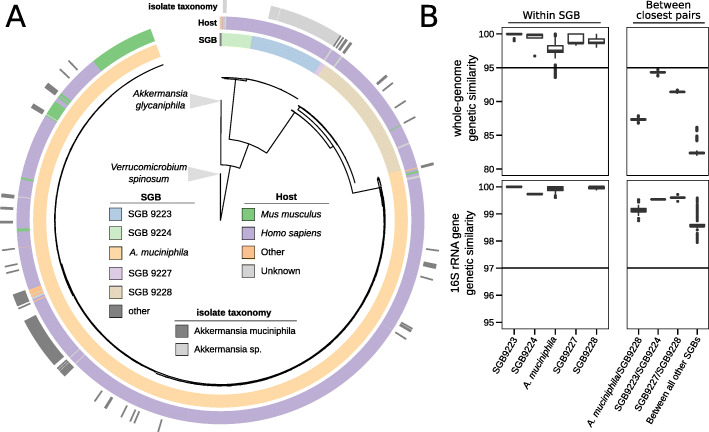
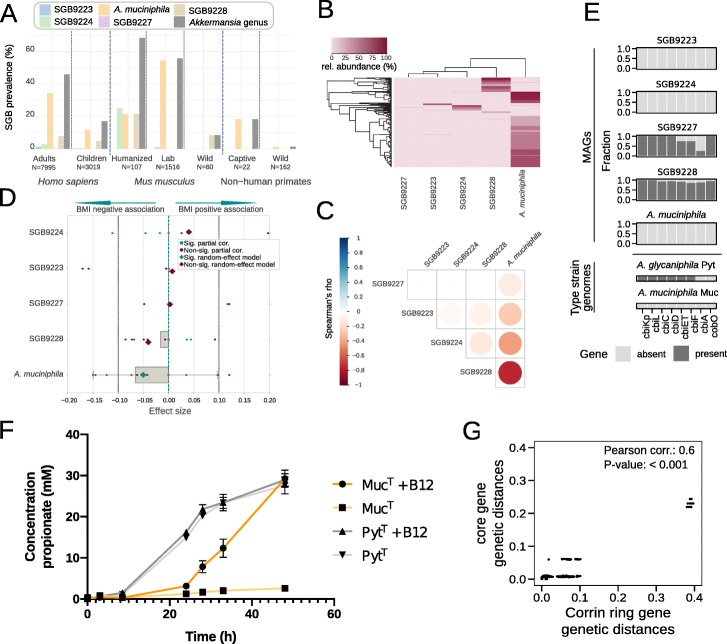
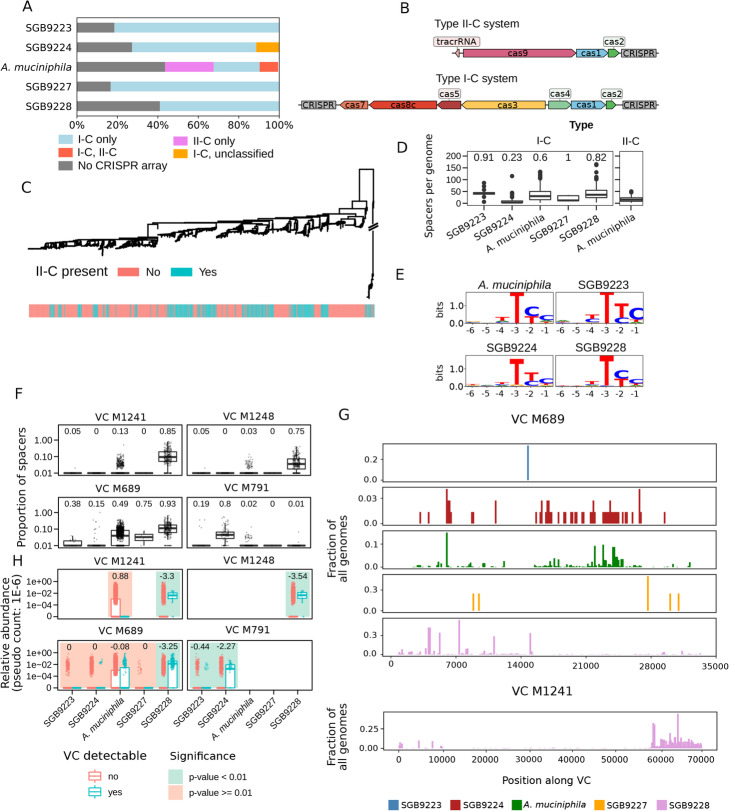
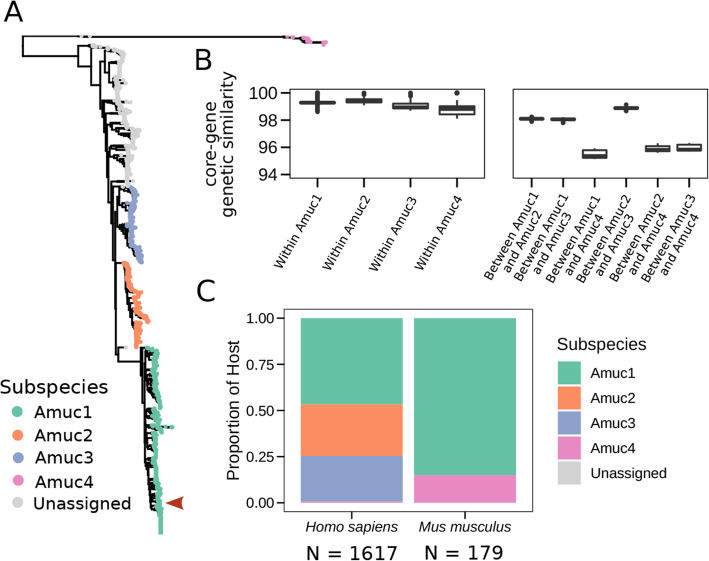
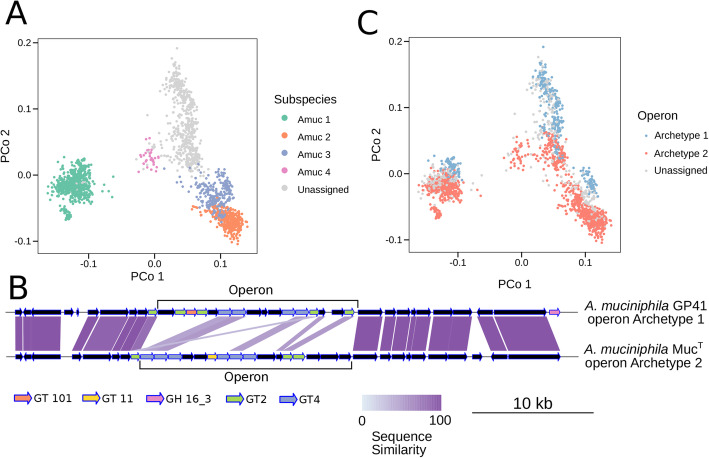
Background: Akkermansia muciniphila is a human gut microbe with a key role in the physiology of the intestinal mucus layer and reported associations with decreased body mass and increased gut barrier function and health. Despite its biomedical relevance, the genomic diversity of A. muciniphila remains understudied and that of closely related species, except for A. glycaniphila , unexplored. Results: We present a large-scale population genomics analysis of the Akkermansia genus using 188 isolate genomes and 2226 genomes assembled from 18,600 metagenomes from humans and other animals. While we do not detect A. glycaniphila , the Akkermansia strains in the human gut can be grouped into five distinct candidate species, including A. muciniphila , that show remarkable whole-genome divergence despite surprisingly similar 16S rRNA gene sequences. These candidate species are likely human-specific, as they are detected in mice and non-human primates almost exclusively when kept in captivity. In humans, Akkermansia candidate species display ecological co-exclusion, diversified functional capabilities, and distinct patterns of associations with host body mass. Analysis of CRISPR-Cas loci reveals new variants and spacers targeting newly discovered putative bacteriophages. Remarkably, we observe an increased relative abundance of Akkermansia when cognate predicted bacteriophages are present, suggesting ecological interactions. A. muciniphila further exhibits subspecies-level genetic stratification with associated functional differences such as a putative exo/lipopolysaccharide operon. Conclusions: We uncover a large phylogenetic and functional diversity of the Akkermansia genus in humans. This variability should be considered in the ongoing experimental and metagenomic efforts to characterize the health-associated properties of A. muciniphila and related bacteria.
Overview
The claims and statistics of this paper haven’t been checked yet.
Free: it reads the open-access text and checks the first 5 claims that cite a source we can check. Create a free account to check every claim.
Integrity signals
Registry
Cites
Statistics
Figures
Verification
Claims the paper makes
The claims and statistics of this paper haven’t been checked yet.
Free: it reads the open-access text and checks the first 5 claims that cite a source we can check. Create a free account to check every claim.
Claims other papers make about this one
Each is checked against this paper’s own text: does it say what the citing paper says it does?
In the citing paper
“It should be noted that A. muciniphila B is a distinct species from A. muciniphila; although the latter was positively implicated in anti-PD-1 efficacy in NSCLC 13 (also positive in our study but not within the top 22 strains), recent analyses have revealed that it is phylogenetically and phenotypically distinct from A. muciniphila B (known as Akkermansia SGB9228 by MetaPhlAn4 taxonomy) 21 .”
From A gut microbial signature for combination immune checkpoint blockade across cancer types (2024) · cites this paper as [21]
Self-check
Percentages, sums and reported differences re-computed from the paper’s own numbers.
The self-check needs the paper’s full text.
Citations
Cites
R: A Language and Environment for Statistical Computing
R Core Team (2025) · doi:10.32614/r.manuals · Cited by 352,181
Basic local alignment search tool
Altschul, S. F., Gish, W., Miller, W., Myers, E. W., & Lipman, D. J. (1990) · Journal of Molecular Biology · doi:10.1006/jmbi.1990.9999 · Cited by 98,669
Fast gapped-read alignment with Bowtie 2
Langmead, B., & Salzberg, S. L. (2012) · Nature Methods · doi:10.1038/nmeth.1923 · Cited by 56,400
RAxML version 8: a tool for phylogenetic analysis and post-analysis of large phylogenies
Stamatakis, A. (2014) · Bioinformatics · doi:10.1093/bioinformatics/btu033 · Cited by 32,291
BEDTools: a flexible suite of utilities for comparing genomic features
Quinlan, A. R., & Hall, I. M. (2010) · Bioinformatics · doi:10.1093/bioinformatics/btq033 · Cited by 27,437
BLAST+: architecture and applications
Camacho, C., Coulouris, G., Avagyan, V., Ma, N., Papadopoulos, J., Bealer, K., & Madden, T. L. (2009) · BMC Bioinformatics · doi:10.1186/1471-2105-10-421 · Cited by 22,074
Prokka: rapid prokaryotic genome annotation
Seemann, T. (2014) · Bioinformatics · doi:10.1093/bioinformatics/btu153 · Cited by 18,818
Fast and sensitive protein alignment using DIAMOND
Buchfink, B., Xie, C., & Huson, D. H. (2015) · Nature Methods · doi:10.1038/nmeth.3176 · Cited by 14,201
trimAl: a tool for automated alignment trimming in large-scale phylogenetic analyses
Capella-Gutiérrez, S., Silla-Martínez, J. M., & Gabaldón, T. (2009) · Bioinformatics · doi:10.1093/bioinformatics/btp348 · Cited by 12,751
Parks, D. H., Imelfort, M., Skennerton, C. T., Hugenholtz, P., & Tyson, G. W. (2015) · Genome Research · doi:10.1101/gr.186072.114 · Cited by 12,496
Research works printed but not linked: 1
- Krueger F. Trim galore. A wrapper tool around Cutadapt and FastQC to consistently apply quality and adapter trimming to FastQ files. 2015;516:517. https://github.com/FelixKrueger/TrimGalore.
Cited by
Blanco-Míguez, A., Beghini, F., Cumbo, F., McIver, L. J., Thompson, K. N., Zolfo, M., Manghi, P., Dubois, L., Huang, K. D., Thomas, A. M., et al. (2023) · Nature Biotechnology · doi:10.1038/s41587-023-01688-w · Cited by 1,442
Self-citationAkkermansia muciniphila: paradigm for next-generation beneficial microorganisms
Cani, P. D., Depommier, C., Derrien, M., Everard, A., & de Vos, W. M. (2022) · Nature Reviews Gastroenterology & Hepatology · doi:10.1038/s41575-022-00631-9 · Cited by 1,192
Derosa, L., Routy, B., Thomas, A. M., Iebba, V., Zalcman, G., Friard, S., Mazieres, J., Audigier-Valette, C., Moro-Sibilot, D., Goldwasser, F., et al. (2022) · Nature Medicine · doi:10.1038/s41591-021-01655-5 · Cited by 685
Self-citationZhou, X., Baumann, R., Gao, X., Mendoza, M., Singh, S., Katz Sand, I., Xia, Z., Cox, L. M., Chitnis, T., Yoon, H., et al. (2022) · Cell · doi:10.1016/j.cell.2022.08.021 · Cited by 319
Qi, X., Zhang, Y., Zhang, Y., Luo, F., Song, K., Wang, G., & Ling, F. (2023) · Microbiome · doi:10.1186/s40168-023-01574-2 · Cited by 285
Akkermansia muciniphila: biology, microbial ecology, host interactions and therapeutic potential
Ioannou, A., Berkhout, M. D., Geerlings, S. Y., & Belzer, C. (2025) · Nature Reviews Microbiology · doi:10.1038/s41579-024-01106-1 · Cited by 221
“There is much uncertainty around this topic, as summarized previously 35,189 .”
InfluentialAkkermansia muciniphila and Faecalibacterium prausnitzii in Immune-Related Diseases
Effendi, R. M. R. A., Anshory, M., Kalim, H., Dwiyana, R. F., Suwarsa, O., Pardo, L. M., Nijsten, T. E. C., & Thio, H. B. (2022) · Microorganisms · doi:10.3390/microorganisms10122382 · Cited by 179
Jian, H., Liu, Y., Wang, X., Dong, X., & Zou, X. (2023) · International Journal of Molecular Sciences · doi:10.3390/ijms24043900 · Cited by 173
“Akk also exhibits subspecies-level genetic stratification with associated functional differences such as a putative exo/lipopolysaccharide operon [31].”
BackgroundInfluentialA gut microbial signature for combination immune checkpoint blockade across cancer types
Gunjur, A., Shao, Y., Rozday, T., Klein, O., Mu, A., Haak, B. W., Markman, B., Kee, D., Carlino, M. S., Underhill, C., et al. (2024) · Nature Medicine · doi:10.1038/s41591-024-02823-z · Cited by 165
“For example, there is growing awareness of the diversity of intraspecies (strain) variation among commensal bacteria (such as A. muciniphila and F. prausnitzii ), with diverging functional potentials and differing associations with host phenotypes 21,22 .”
Expanding known viral diversity in the healthy infant gut
Shah, S. A., Deng, L., Thorsen, J., Pedersen, A. G., Dion, M. B., Castro-Mejía, J. L., Silins, R., Romme, F. O., Sausset, R., Jessen, L. E., et al. (2023) · Nature Microbiology · doi:10.1038/s41564-023-01345-7 · Cited by 161
Revisiting the role of Akkermansia muciniphila as a therapeutic bacterium
Si, J., Kang, H., You, H. J., & Ko, G. (2022) · Gut Microbes · doi:10.1080/19490976.2022.2078619 · Cited by 141
Luo, Y., Lan, C., Li, H., Ouyang, Q., Kong, F., Wu, A., Ren, Z., Tian, G., Cai, J., Yu, B., et al. (2022) · npj Biofilms and Microbiomes · doi:10.1038/s41522-022-00338-4 · Cited by 138
Akkermansia muciniphila: a potential candidate for ameliorating metabolic diseases
Niu, H., Zhou, M., Zogona, D., Xing, Z., Wu, T., Chen, R., Cui, D., Liang, F., & Xu, X. (2024) · Frontiers in Immunology · doi:10.3389/fimmu.2024.1370658 · Cited by 120
Roles of the gut microbiome in weight management
Carmody, R. N., & Bisanz, J. E. (2023) · Nature Reviews Microbiology · doi:10.1038/s41579-023-00888-0 · Cited by 118
Akkermansia muciniphila: A key player in gut microbiota-based disease modulation
Shaheen, N., Khursheed, W., Gurung, B., & Wang, S. (2025) · Microbiological Research · doi:10.1016/j.micres.2025.128317 · Cited by 115
Cardiometabolic health, diet and the gut microbiome: a meta-omics perspective
Valles-Colomer, M., Menni, C., Berry, S. E., Valdes, A. M., Spector, T. D., & Segata, N. (2023) · Nature Medicine · doi:10.1038/s41591-023-02260-4 · Cited by 114
Self-citationAkkermansia muciniphila plays critical roles in host health
Zhao, Q., Yu, J., Hao, Y., Zhou, H., Hu, Y., Zhang, C., Zheng, H., Wang, X., Zeng, F., Hu, J., et al. (2022) · Critical Reviews in Microbiology · doi:10.1080/1040841x.2022.2037506 · Cited by 111
Functional Insights into the Kelp Microbiome from Metagenome-Assembled Genomes
Weigel, B. L., Miranda, K. K., Fogarty, E. C., Watson, A. R., & Pfister, C. A. (2022) · mSystems · doi:10.1128/msystems.01422-21 · Cited by 107
Akkermansia in the gastrointestinal tract as a modifier of human health
Panzetta, M. E., & Valdivia, R. H. (2024) · Gut Microbes · doi:10.1080/19490976.2024.2406379 · Cited by 105
Liu, L., Xu, M., Lan, R., Hu, D., Li, X., Qiao, L., Zhang, S., Lin, X., Yang, J., Ren, Z., et al. (2022) · Frontiers in Immunology · doi:10.3389/fimmu.2022.1036196 · Cited by 103
Muñoz, R. R. S., Mantz, S., Martínez, I., Li, F., Schmaltz, R. J., Pudlo, N. A., Urs, K., Martens, E. C., Walter, J., & Ramer‐Tait, A. E. (2022) · The ISME Journal · doi:10.1038/s41396-022-01208-9 · Cited by 96
CRISPR-Cas-Based Engineering of Probiotics
Liu, L., Helal, S. E., & Peng, N. (2023) · BioDesign Research · doi:10.34133/bdr.0017 · Cited by 95
Blanco‐Míguez, A., Gálvez, E. J. C., Pasolli, E., Filippis, F. D., Amend, L., Huang, K. D., Manghi, P., Lesker, T.-R., Riedel, T., Cova, L., et al. (2023) · Cell Host & Microbe · doi:10.1016/j.chom.2023.09.013 · Cited by 90
Self-citationBinding of Akkermansia muciniphila to mucin is O-glycan specific
Elzinga, J., Narimatsu, Y., de Haan, N., Clausen, H., de Vos, W. M., & Tytgat, H. L. P. (2024) · Nature Communications · doi:10.1038/s41467-024-48770-8 · Cited by 89
Self-citationFunction of Akkermansia muciniphila in type 2 diabetes and related diseases
Li, J., Yang, G., Zhang, Q., Liu, Z., Jiang, X. M., & Xin, Y. (2023) · Frontiers in Microbiology · doi:10.3389/fmicb.2023.1172400 · Cited by 90
Liu, H., Huang, R., Shen, B., Huang, C., Zhou, Q., Xu, J., Chen, S., Lin, X., Wang, J., Zhao, X., et al. (2024) · Microbiome · doi:10.1186/s40168-024-01995-7 · Cited by 81
Shaw, C. A., Hess, M., & Weimer, B. C. (2023) · Microorganisms · doi:10.3390/microorganisms11071825 · Cited by 77
Outlook on next-generation probiotics from the human gut
Filippis, F. D., Esposito, A., & Ercolini, D. (2022) · Cellular and Molecular Life Sciences · doi:10.1007/s00018-021-04080-6 · Cited by 75
Podlesny, D., Arze, C., Dörner, E., Verma, S., Dutta, S., Walter, J., & Fricke, W. F. (2022) · Microbiome · doi:10.1186/s40168-022-01251-w · Cited by 73
Segers, A., & de Vos, W. M. (2023) · Microbiome Research Reports · doi:10.20517/mrr.2023.05 · Cited by 71
Lakshmanan, A. P., Murugesan, S., Khodor, S. A., & Terranegra, A. (2022) · Journal of Translational Medicine · doi:10.1186/s12967-022-03631-0 · Cited by 67
Health Effects and Therapeutic Potential of the Gut Microbe Akkermansia muciniphila
Aja, E., Zeng, A.-P., Gray, W. R., Connelley, K. K., Chaganti, A., & Jacobs, J. P. (2025) · Nutrients · doi:10.3390/nu17030562 · Cited by 62
Targeting gut microbiota to alleviate neuroinflammation in Alzheimer’s disease
Nguyen, V. T. T., & Endres, K. (2022) · Advanced Drug Delivery Reviews · doi:10.1016/j.addr.2022.114418 · Cited by 61
Kyei-Baffour, V. O., Vijaya, A. K., Burokas, A., & Daliri, E. B. (2025) · Critical Reviews in Food Science and Nutrition · doi:10.1080/10408398.2025.2459341 · Cited by 59
Faghfuri, E., & Gholizadeh, P. (2024) · Biomedicine & Pharmacotherapy · doi:10.1016/j.biopha.2024.116416 · Cited by 57
Human microbiome acquisition and transmission
Heidrich, V., Valles‐Colomer, M., & Segata, N. (2025) · Nature Reviews Microbiology · doi:10.1038/s41579-025-01166-x · Cited by 56
Self-citationLi, L., Li, M., Chen, Y., Yu, Z., Chen, P., Yu, Z., Cheng, W., Zhang, W., Wang, Z., Gao, X., et al. (2024) · Frontiers in Microbiology · doi:10.3389/fmicb.2024.1354447 · Cited by 49
Data-driven prediction of colonization outcomes for complex microbial communities
Wu, L., Wang, X.-W., Tao, Z., Wang, T., Zuo, W., Zeng, Y., Liu, Y.-Y., & Dai, L. (2024) · Nature Communications · doi:10.1038/s41467-024-46766-y · Cited by 44
Anderson, G. (2023) · International Journal of Molecular Sciences · doi:10.3390/ijms24043300 · Cited by 44
Data-driven prediction of colonization outcomes for complex microbial communities
(2023) · doi:10.1101/2023.04.19.537502 · Cited by 44
Mruk-Mazurkiewicz, H., Kulaszyńska, M., Czarnecka, W., Podkówka, A., Ekstedt, N., Zawodny, P., Wierzbicka-Woś, A., Marlicz, W. M., Skupin, B., Stachowska, E., et al. (2024) · Nutrients · doi:10.3390/nu16111695 · Cited by 43
Gut microbiome signatures and host colonization with multidrug-resistant bacteria
Isles, N. S., Mu, A., Kwong, J. C., Howden, B. P., & Stinear, T. P. (2022) · Trends in Microbiology · doi:10.1016/j.tim.2022.01.013 · Cited by 42
Navigating the duality of Akkermansia muciniphila
Grant, E. T., Monzel, E., & Desai, M. S. (2026) · Nature Microbiology · doi:10.1038/s41564-025-02222-1 · Cited by 41
Nooij, S., Plomp, N., Sanders, I. M. J. G., Schout, L., van der Meulen, A. E., Terveer, E. M., Norman, J. M., Karcher, N., Larralde, M., Vossen, R. H. A. M., et al. (2025) · Nature Communications · doi:10.1038/s41467-025-56449-x · Cited by 41
Self-citationHernández-Calderón, P., Wiedemann, L., & Benítez‐Páez, A. (2022) · Frontiers in Nutrition · doi:10.3389/fnut.2022.1006747 · Cited by 40
The multifaceted roles of Akkermansia muciniphila in neurological disorders
Ma, X., Liu, Q., & Yang, G. (2025) · Trends in Neurosciences · doi:10.1016/j.tins.2025.04.004 · Cited by 38
Akkermansia muciniphila: The state of the art, 18 years after its first discovery
Iwaza, R., Wasfy, R. M., Dubourg, G., Raoult, D., & Lagier, J. (2022) · Frontiers in Gastroenterology · doi:10.3389/fgstr.2022.1024393 · Cited by 38
Role of Akkermansia muciniphila in insulin resistance
Zeng, Z., Chen, M., Liu, Y., Zhou, Y., Liu, H., Wang, S., & Ji, Y. (2024) · Journal of Gastroenterology and Hepatology · doi:10.1111/jgh.16747 · Cited by 38
Hickl, O., Queirós, P., Wilmes, P., May, P., & Heintz‐Buschart, A. (2022) · Briefings in Bioinformatics · doi:10.1093/bib/bbac431 · Cited by 35
Haberman, Y., Kamer, I., Amir, A., Goldenberg, S., Efroni, G., Daniel‐Meshulam, I., Lobachov, A., Daher, S., Hadar, R., Gantz-Sorotsky, H., et al. (2023) · Scientific Reports · doi:10.1038/s41598-023-29136-4 · Cited by 34
Manghi, P., Antonello, G., Schiffer, L., Golzato, D., Wokaty, A., Beghini, F., Mirzayi, C. A., Long, K., Gravel-Pucillo, K., Piccinno, G., et al. (2025) · Nature Communications · doi:10.1038/s41467-025-66888-1 · Cited by 34
Self-citationHong, M.-G., Song, E., Yoon, H. J., Chung, W., Seo, H. Y., Kim, D., Lee, D., Seo, J., Lee, H., Kim, S., et al. (2025) · Nature Communications · doi:10.1038/s41467-025-57631-x · Cited by 33
Hu, H., Weng, J., Cui, C., Tang, F., Yu, M., Zhou, Y., Shao, F., & Zhu, Y. (2022) · Evidence-based Complementary and Alternative Medicine · doi:10.1155/2022/3033311 · Cited by 33
Baby-to-baby strain transmission shapes the developing gut microbiome
Ricci, L., Heidrich, V., Punčochář, M., Armanini, F., Ciciani, M., Nabinejad, A., FAZAELI, F., Piperni, E., Servais, C., Pinto, F., et al. (2026) · Nature · doi:10.1038/s41586-025-09983-z · Cited by 31
Self-citationInsights into early evolutionary adaptations of the Akkermansia genus to the vertebrate gut
González, D., Morales-Olavarria, M., Vidal-Veuthey, B., & Cárdenas, J. P. (2023) · Frontiers in Microbiology · doi:10.3389/fmicb.2023.1238580 · Cited by 30
Palomba, A., Tanca, A., Abbondio, M., Sau, R., Serra, M., Marongiu, F., Fraumene, C., Pagnozzi, D., Laconi, E., & Uzzau, S. (2021) · npj Biofilms and Microbiomes · doi:10.1038/s41522-021-00256-x · Cited by 30
Mueller, K. D., Panzetta, M. E., Davey, L. E., McCann, J. R., Rawls, J. F., Flores, G. E., & Valdivia, R. H. (2024) · Microbiome Research Reports · doi:10.20517/mrr.2024.09 · Cited by 29
Mei, L., Wang, J., Hao, Y., Zeng, X., Yang, Y., Wu, Z., & Ji, Y. S. (2024) · Critical Reviews in Food Science and Nutrition · doi:10.1080/10408398.2024.2416481 · Cited by 29
Zhang, F., & Wang, D. (2023) · Frontiers in Microbiology · doi:10.3389/fmicb.2023.1191445 · Cited by 29
Characterization of antibiotic-resistance traits in Akkermansia muciniphila strains of human origin
Filardi, R., Gargari, G., Mora, D., & Arioli, S. (2022) · Scientific Reports · doi:10.1038/s41598-022-23980-6 · Cited by 29
Advances in CRISPR-Cas systems for gut microbiome
Ali, N., Vora, C., Mathuria, A., Kataria, N., & Mani, I. (2024) · Progress in molecular biology and translational science · doi:10.1016/bs.pmbts.2024.07.008 · Cited by 28
Intestinal microbiota research from a global perspective
Wallenborn, J. T., & Vonaesch, P. (2022) · Gastroenterology report · doi:10.1093/gastro/goac010 · Cited by 27
Tian, R., Yu, L., Tian, F., Zhao, J., Chen, W., & Zhai, Q. (2024) · Food & Function · doi:10.1039/d4fo00428k · Cited by 26
Automated identification of sequence-tailored Cas9 proteins using massive metagenomic data
Ciciani, M., Demozzi, M., Pedrazzoli, E., Visentin, E., Pezzè, L., Signorini, L. F., Blanco‐Míguez, A., Zolfo, M., Asnicar, F., Casini, A., et al. (2022) · Nature Communications · doi:10.1038/s41467-022-34213-9 · Cited by 26
Self-citationEstaki, M., Langsetmo, L., Shardell, M. D., Mischel, A. K., Jiang, L., Zhong, Y., Kaufmann, C. N., Knight, R. D., Stone, K. L., & Kado, D. M. (2023) · The Journals of Gerontology Series A · doi:10.1093/gerona/glad011 · Cited by 25
Lv, Q.-B., Li, S., Zhang, Y., Guo, R., Wang, Y.-C., Peng, Y., & Zhang, X.-X. (2022) · Frontiers in Cellular and Infection Microbiology · doi:10.3389/fcimb.2022.957439 · Cited by 25
Oguri, N., Miyoshi, J., Nishinarita, Y., Wada, H., Nemoto, N., Hibi, N., Kawamura, N., Miyoshi, S., Lee, S. T. M., Matsuura, M., et al. (2024) · npj Biofilms and Microbiomes · doi:10.1038/s41522-024-00564-y · Cited by 25
Impact of the ONCOBIOME network in cancer microbiome research
Zitvogel, L., Derosa, L., Routy, B., Loibl, S., Heinzerling, L., de Vries, I. J. M., Engstrand, L., ONCOBIOME Network, Silva, C. A. C., Barbieri, D., et al. (2025) · Nature Medicine · doi:10.1038/s41591-025-03608-8 · Cited by 23
Self-citationOuwerkerk, J. P., Tytgat, H. L. P., Elzinga, J., Koehorst, J., Van den Abbeele, P., Henrissat, B., Gueimonde, M., Cani, P. D., Van de Wiele, T., Belzer, C., et al. (2022) · Microorganisms · doi:10.3390/microorganisms10081605 · Cited by 23
“All isolates show adaptation to their mucosal niche, sharing conserved glycan-degrading capacities, although strain A. muciniphila H2, belonging to the AmucU cluster, displayed a significantly reduced CAZyme diversity.”
BackgroundMethodSelf-citationOkamura, T., Hamaguchi, M., Nakajima, H., Kitagawa, N., Majima, S., Senmaru, T., Okada, H., Ushigome, E., Nakanishi, N., Sasano, R., et al. (2023) · Journal of Cachexia Sarcopenia and Muscle · doi:10.1002/jcsm.13245 · Cited by 23
Saenz, C., Nigro, E., Gunalan, V., & Arumugam, M. (2022) · Frontiers in Bioinformatics · doi:10.3389/fbinf.2022.846922 · Cited by 22
Self-citationOh, J. H., Hild, B., Yoshida, T., Badger, J. H., Seishima, J., McCulloch, J. A., Jung, M. K., Azar, S., Trinchieri, G., & Rehermann, B. (2025) · Immunity · doi:10.1016/j.immuni.2025.07.004 · Cited by 22
Surrogate markers of intestinal dysfunction associated with survival in advanced cancers
Birebent, R., Drubay, D., Alves Costa Silva, C., Marmorino, F., Vitali, G., Piccinno, G., Hurtado, Y., Bonato, A., Belluomini, L., Messaoudene, M., et al. (2025) · OncoImmunology · doi:10.1080/2162402x.2025.2484880 · Cited by 21
Self-citationHughes, E. R., Panzetta, M. E., Sharma, A., & Valdivia, R. H. (2025) · Annual Review of Microbiology · doi:10.1146/annurev-micro-051524-032131 · Cited by 21
Akkermansia muciniphila in Metabolic Disease: Far from Perfect
Mierlan, O. L., Bușilă, C., Amariței, O., Elena, D., Răileanu, C.-R., Maftei, N.-M., Matei, M. N., & Gurău, G. (2025) · International Journal of Molecular Sciences · doi:10.3390/ijms262311602 · Cited by 20
Ladeira, R., Tap, J., & Derrien, M. (2023) · Microbiome Research Reports · doi:10.20517/mrr.2023.01 · Cited by 19
Tang, M., Ma, C., Weinheimer-Haus, E. M., Robertson, C. E., Kofonow, J. M., Berman, L. M., Waljee, A. K., Zhu, J., Frank, D. N., & Krebs, N. F. (2023) · Frontiers in Nutrition · doi:10.3389/fnut.2022.1063518 · Cited by 19
Zhao, Z., Hu, Z., & Li, L. (2025) · Frontiers in Microbiology · doi:10.3389/fmicb.2025.1509548 · Cited by 19
Comparative Genomics and Pan-Genome Driven Prediction of a Reduced Genome of Akkermansia muciniphila
Bukhari, S. A. R., Irfan, M., Ahmad, I., & Chen, L. (2022) · Microorganisms · doi:10.3390/microorganisms10071350 · Cited by 18
“muciniphila genomes into four phylogroups [73].”
Patumcharoenpol, P., Kingkaw, A., Nakphaichit, M., Chatchatee, P., Suratannon, N., Panagiotou, G., & Vongsangnak, W. (2023) · Biology · doi:10.3390/biology12091262 · Cited by 17
Li, W., Sun, J., Jing, Y., Zhao, J., Wu, Q., Liu, J., Kwok, L. Y., Zhang, W., Sun, Z., Zhong, Z., et al. (2022) · Microbiology Spectrum · doi:10.1128/spectrum.02439-21 · Cited by 17
Microbiomes in action: multifaceted benefits and challenges across academic disciplines
Soth, S., Hampton, J. G., Alizadeh, H., Wakelin, S. A., & Mendoza‐Mendoza, A. (2025) · Frontiers in Microbiology · doi:10.3389/fmicb.2025.1550749 · Cited by 16
A Catalog of over 5,000 Metagenome-Assembled Microbial Genomes from the Caprinae Gut Microbiota
Zhang, X., Lv, Q., Yan, Q., Zhang, Y., Guo, R., Meng, J., Ma, H., Qin, S., Zhu, Q., Li, C.-Q., et al. (2022) · Microbiology Spectrum · doi:10.1128/spectrum.02211-22 · Cited by 16
Big lessons from the little Akkermansia muciniphila in hepatocellular carcinoma
Yang, Y., & Shi, X. (2025) · Frontiers in Immunology · doi:10.3389/fimmu.2025.1524563 · Cited by 15
Immunostimulating Commensal Bacteria and Their Potential Use as Therapeutics
McCuaig, B., & Goto, Y. (2023) · International Journal of Molecular Sciences · doi:10.3390/ijms242115644 · Cited by 15
Dong, Q., Ma, B., Zhou, X., Huang, P., Gao, M., Yang, S., Jiao, Y., Zhou, Y., Shi, Z., Deng, Q., et al. (2025) · Genome Medicine · doi:10.1186/s13073-025-01566-x · Cited by 15
Loving mucus with Akkermansia muciniphila
Davey, L. E. (2024) · Nature Microbiology · doi:10.1038/s41564-024-01744-4 · Cited by 14
CALDERA: finding all significant de Bruijn subgraphs for bacterial GWAS
de Bézieux, H. R., Lima, L., Perraudeau, F., Mary, A., Dudoit, S., & Jacob, L. (2022) · Bioinformatics · doi:10.1093/bioinformatics/btac238 · Cited by 14
Anderson, G. (2023) · Current Topics in Medicinal Chemistry · doi:10.2174/0115680266253465230920114223 · Cited by 13
Akkermansia muciniphila: promises and pitfallsfor next-generation beneficial microorganisms
Liu, Y., Li, Z., Lee, S. C., Chen, S., & Li, F. (2025) · Archives of Microbiology · doi:10.1007/s00203-025-04263-w · Cited by 13
Glendinning, L., Jia, X., Kebede, A., Oyola, S. O., Park, J., Park, W., Assiri, A., Holm, J. B., Kristiansen, K., Jianlin, H., et al. (2024) · Microbiome · doi:10.1186/s40168-024-01847-4 · Cited by 13
Nie, C., Xie, X., Liu, H., Yuan, X., Ma, Q., Tu, A., Zhang, M., Chen, Z., & Li, J. (2023) · Food & Function · doi:10.1039/d2fo02959f · Cited by 13
Subspecies of the human gut microbiota carry implicit information for in-depth microbiome research
Tričković, M., Kieser, S., Zdobnov, E. M., & Trajkovski, M. (2025) · Cell Host & Microbe · doi:10.1016/j.chom.2025.07.015 · Cited by 13
The Human Microbiome as a Therapeutic Target for Metabolic Diseases
Bui, T. P. N. (2024) · Nutrients · doi:10.3390/nu16142322 · Cited by 12
Self-citationNormal Gut Microbiomes in Diverse Populations: Clinical Implications
Shete, O., & Ghosh, T. S. (2024) · Annual Review of Medicine · doi:10.1146/annurev-med-051223-031809 · Cited by 12
Peng, L., Zeng, H., Wan, L., Yang, X., Bai, Q., Huang, J., & Liu, Z. (2025) · Food Research International · doi:10.1016/j.foodres.2025.116111 · Cited by 12
Akkermansia beyond muciniphila - emergence of new species Akkermansia massiliensis sp. nov.
Kumar, R., Hasselwander, O., Kane, H., & Hibberd, A. A. (2024) · Microbiome Research Reports · doi:10.20517/mrr.2024.28 · Cited by 11
Feng, S., Wang, W., Zhang, X., Helal, S. E., Peng, N., & Zhang, Z. (2025) · Frontiers in Microbiology · doi:10.3389/fmicb.2025.1638771 · Cited by 11
Garrison, E. C., Brown, A. M. V., Salazar, M. M., Barr, B., Moustaïd‐Moussa, N., & Gollahon, L. (2024) · Nutrients · doi:10.3390/nu16111613 · Cited by 11
Gao, W., Xiao, M., Gu, Z., Fu, X., Ren, X., Yu, Y., Liu, Z., Zhu, C., Kong, Q., & Mou, H. (2022) · Molecular Genetics and Genomics · doi:10.1007/s00438-022-01937-8 · Cited by 10
Metadata
- Authors
- Karcher, N., Nigro, E., Punčochář, M., Blanco-Míguez, A., Ciciani, M., Manghi, P., Zolfo, M., Cumbo, F., Manara, S., Golzato, D., Cereseto, A., Arumugam, M., Bui, T. P. N., Tytgat, H. L. P., Valles-Colomer, M., de Vos, W. M., & Segata, N.
- Affiliations
- University of Trento (IT)
- University of Copenhagen (DK)
- Wageningen University & Research (NL)
- Nestlé (Switzerland) (CH)
- University of Helsinki (FI)
- Corresponding author
- Segata, Nicola
- ORCID
- Venue
- Genome Biology
- Published
- 2021-07-14
- Volume
- 22
- Issue
- 1
- Pages
- 209-209
- ISSN
- 1465-6906 (ISSN-L)
- 1474-760X
- PMC
- PMC8278651
- OpenAlex
- W3182508478
- Cited by
- 159
- References
- 114
- Citations by year
- 2026: 27 · 2025: 34 · 2024: 31 · 2023: 29 · 2022: 35 · 2021: 2
- FWCI
- 7.65
- Type
- journal article
- Language
- en
- Open access
- gold
- doi.org
- Licence
- cc-by
- creativecommons.org/licenses/by/4.0 (tdm)
- creativecommons.org/licenses/by/4.0 (vor)
- Locations
- Genome biology (publishedVersion, cc-by)
- PubMed Central (publishedVersion, cc-by)
- PubMed (publishedVersion)
- Research at the University of Copenhagen (University of Copenhagen) (publishedVersion, cc-by)
- Socio-Environmental Systems Modeling (acceptedVersion, cc-by)
- Iris (University of Trento) (submittedVersion, cc-by)
- DOAJ (DOAJ: Directory of Open Access Journals) (submittedVersion, cc-by-sa)
- Työväentutkimus Vuosikirja (submittedVersion)
- Data Archiving and Networked Services (DANS) (submittedVersion, cc-by)
- Funders
- European Research Council (MetaPG-716575)
- MIUR (RBFR13EWWI_001)
- Horizon 2020 Framework Programme (ONCOBIOME-825410, MASTER-818368 project)
- National Cancer Institute of the National Institutes of Health (1U01CA230551)
- SIAM Gravitation Grant (024.002.002)
- 2008 Spinoza Award of the Netherlands Organization for Scientific Research
- Topics
- Life Sciences › Biochemistry, Genetics and Molecular Biology › Molecular Biology › Gut microbiota and health
- Life Sciences › Biochemistry, Genetics and Molecular Biology › Molecular Biology › Genomics and Phylogenetic Studies
- Physical Sciences › Environmental Science › Ecology › Microbial Community Ecology and Physiology
- Keywords
- Akkermansia, Akkermansia muciniphila, gut microbiota, population genomics, metagenome assembly, candidate species, body mass, bacteriophages, host-microbe interactions, intestinal mucus layer, human-associated bacteria
- MeSH terms
- Gastrointestinal Microbiome, Akkermansia, Animals, Bacteriophages, Humans, Operon, Phylogeny, RNA, Ribosomal, 16S, Genetic Variation, Genome, Bacterial, Mice, Metagenome, Clustered Regularly Interspaced Short Palindromic Repeats
About these checks
Registry, retraction, Cites and statistics results are computed, not judged, with one exception: a printed reference that no index lists is read once by a model before it counts as a citation error. Claims are extracted by a model and kept only when their quote appears verbatim in the text; each cited source is then checked, with a model’s help, for whether it says what the claim relies on. Those verdicts can be wrong — read the claim’s quote and the cited source before relying on one.
Statistics and arithmetic are recomputed, not judged.
Confidence bands are shown only for fields calibrated on our annotated test set. None is calibrated yet, so no band is shown.
What counts as a claim ›How we measure confidence ›How we check this ›
Are you an author, or do you see a problem with this page? Request a review
Data sources
Bibliographic data: Semantic Scholar, OpenAlex, Crossref.
Contains information from the Semantic Scholar Academic Graph Datasets, made available under the ODC Attribution License (ODC-BY 1.0).
Semantic Scholar’s data is described in: Kinney, R., et al. (2023). The Semantic Scholar Open Data Platform. arXiv:2301.10140.
