

SCEPTRE improves calibration and sensitivity in single-cell CRISPR screen analysis
Open accessPublished version of a preprint
The DOI matches its Crossref record; 33 of the 34 references it cites were found in a registry or an index.
Abstract
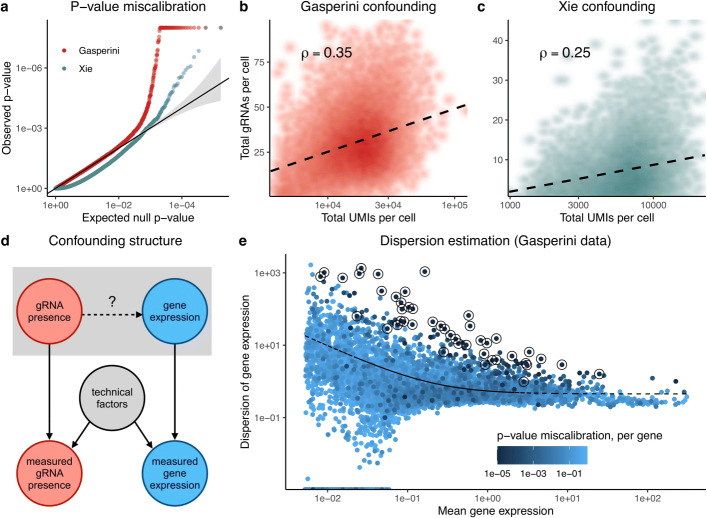
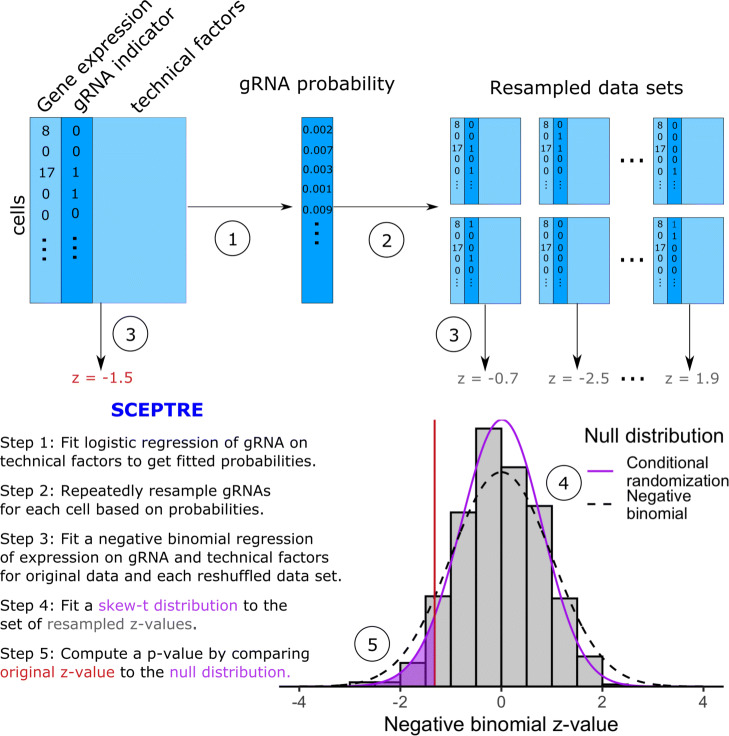
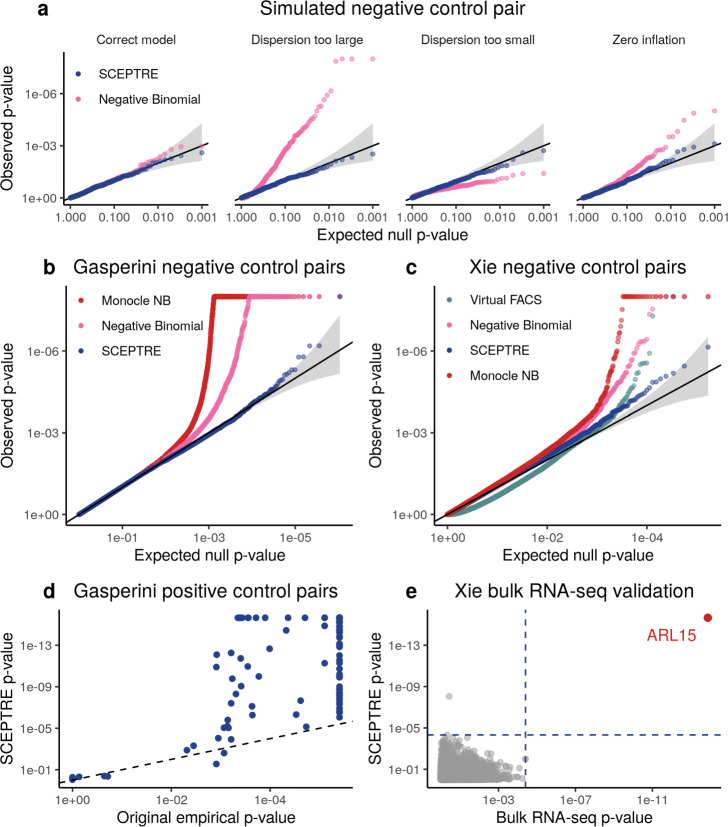
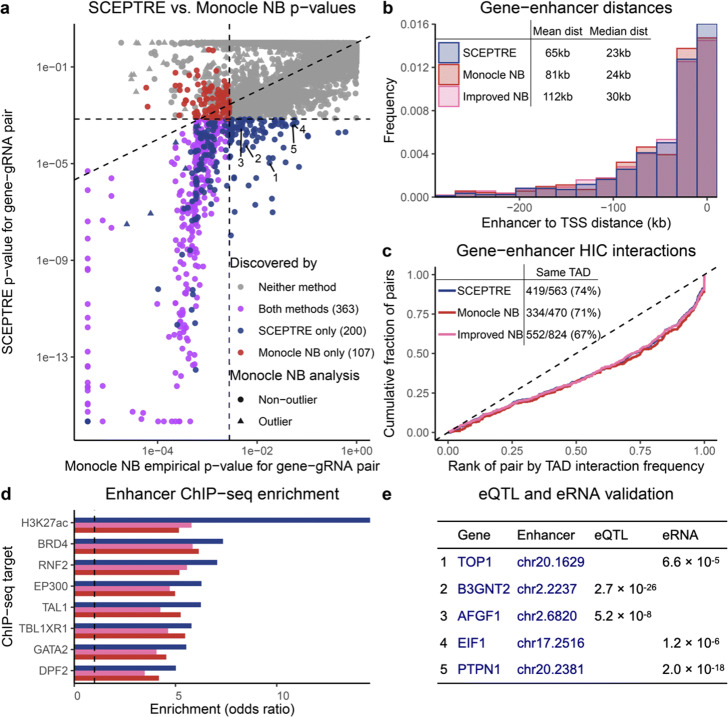
Single-cell CRISPR screens are a promising biotechnology for mapping regulatory elements to target genes at genome-wide scale. However, technical factors like sequencing depth impact not only expression measurement but also perturbation detection, creating a confounding effect. We demonstrate on two single-cell CRISPR screens how these challenges cause calibration issues. We propose SCEPTRE: analysis of single-cell perturbation screens via conditional resampling, which infers associations between perturbations and expression by resampling the former according to a working model for perturbation detection probability in each cell. SCEPTRE demonstrates very good calibration and sensitivity on CRISPR screen data, yielding hundreds of new regulatory relationships supported by orthogonal biological evidence.
Overview
The claims and statistics of this paper haven’t been checked yet.
Free: it reads the open-access text and checks the first 5 claims that cite a source we can check. Create a free account to check every claim.
Integrity signals
Registry
Cites
Statistics
Figures
Verification
Claims the paper makes
The claims and statistics of this paper haven’t been checked yet.
Free: it reads the open-access text and checks the first 5 claims that cite a source we can check. Create a free account to check every claim.
Claims other papers make about this one
Each is checked against this paper’s own text: does it say what the citing paper says it does?
The source backs part of the claim, not all of it — or backs it for a different population, condition or comparison.
In the citing paper
“technical factors, such as biological replicate, batch, and library size, impact not only a cell’s expression level but also its probability of receiving a perturbation, thereby creating a confounding effect that can lead to spurious associations [13]”
From Robust differential expression testing for single-cell CRISPR screens at low multiplicity of infection (2024) · cites this paper as [13]
Experimental — accuracy not yet measuredThe source backs part of the claim, not all of it — or backs it for a different population, condition or comparison.
In the citing paper
“Given that we carefully evaluated the high-MOI version of scMaGECK in our prior work [13]”
From Robust differential expression testing for single-cell CRISPR screens at low multiplicity of infection (2024) · cites this paper as [13]
Experimental — accuracy not yet measuredThe cited source says what the claim attributes to it.
In the citing paper
“The method uncovers numerous cis and trans-regulatory relationships and proves valuable in dissecting regulatory mechanisms related to GWAS associations.”
From A mini-review on perturbation modelling across single-cell omic modalities (2024) · cites this paper as [30]
The cited source says what the claim attributes to it.
In the citing paper
“we discovered that existing methods for association testing are prone to an excess of false positive hits [13]”
From Robust differential expression testing for single-cell CRISPR screens at low multiplicity of infection (2024) · cites this paper as [13]
Self-check
Percentages, sums and reported differences re-computed from the paper’s own numbers.
The self-check needs the paper’s full text.
Citations
Cites
Moderated estimation of fold change and dispersion for RNA-seq data with DESeq2
Love, M. I., Huber, W., & Anders, S. (2014) · Genome Biology · doi:10.1186/s13059-014-0550-8 · Cited by 95,106 · cited 4×
“Love MI, Huber W, Anders S. Moderated estimation of fold change and dispersion for RNA-seq data with DESeq2.”
InfluentialAn integrated encyclopedia of DNA elements in the human genome
The ENCODE Project Consortium (2012) · Nature · doi:10.1038/nature11247 · Cited by 18,072 · cited 1×
“The ChIP-seq data are taken from the ENCODE project [30] and are available at www.”
A 3D Map of the Human Genome at Kilobase Resolution Reveals Principles of Chromatin Looping
Rao, S. S. P., Huntley, M. H., Durand, N. C., Stamenova, E. K., Bochkov, I. D., Robinson, J. T., Sanborn, A. L., Machol, I., Omer, A. D., Lander, E. S., et al. (2014) · Cell · doi:10.1016/j.cell.2014.11.021 · Cited by 9,212
The Genotype-Tissue Expression (GTEx) pilot analysis: Multitissue gene regulation in humans
The GTEx Consortium, Ardlie, K. G., Deluca, D. S., Segrè, A. V., Sullivan, T. J., Young, T. R., Gelfand, E. T., Trowbridge, C. A., Maller, J. B., Tukiainen, T., et al. (2015) · Science · doi:10.1126/science.1262110 · Cited by 5,062 · cited 1×
“gene-enhancer links by eQTL [18] and eRNA [19] p-values in relevant tissue types.”
Hafemeister, C., & Satija, R. (2019) · Genome Biology · doi:10.1186/s13059-019-1874-1 · Cited by 4,479 · cited 2×
“We attempted to alleviate the miscalibration within the negative binomial regression framework by following the recommendations of Hafemeister and Satija, who recently proposed a strategy for parametric modeling of single-cell RNA-seq data [17].”
XSEDE: Accelerating Scientific Discovery
Towns, J., Cockerill, T., Dahan, M., Foster, I., Gaither, K., Grimshaw, A., Hazlewood, V., Lathrop, S., Lifka, D., Peterson, G. D., et al. (2014) · Computing in Science & Engineering · doi:10.1109/mcse.2014.80 · Cited by 3,109 · cited 2×
“Part of the data analysis used the Extreme Science and Engineering Discovery Environment (XSEDE) [28], which is supported by National Science Foundation grant number ACI-1548562.”
An atlas of active enhancers across human cell types and tissues
The FANTOM Consortium, Andersson, R., Gebhard, C., Miguel-Escalada, I., Hoof, I., Bornholdt, J., Boyd, M., Chen, Y., Zhao, X., Schmidl, C., et al. (2014) · Nature · doi:10.1038/nature12787 · Cited by 2,550 · cited 1×
“gene-enhancer links by eQTL [18] and eRNA [19] p-values in relevant tissue types.”
Single-cell mRNA quantification and differential analysis with Census
Qiu, X., Hill, A., Packer, J., Lin, D., Ma, Y.-A., & Trapnell, C. (2017) · Nature Methods · doi:10.1038/nmeth.4150 · Cited by 1,918 · cited 5×
“Gasperini et al. computed pvalues using a DESeq2 [15]-inspired negative binomial regression analysis implemented in Monocle2 [16], and Xie et al. computed p-values using Virtual FACS, a nonparametric method proposed by these authors.”
InfluentialDixit, A., Parnas, O., Li, B., Chen, J., Fulco, C. P., Jerby-Arnon, L., Marjanovic, N. D., Dionne, D., Burks, T., Raychowdhury, R., et al. (2016) · Cell · doi:10.1016/j.cell.2016.11.038 · Cited by 1,863 · cited 2×
“Single-cell CRISPR screens (implemented by Perturb-seq [3, 4], CROP-seq [5], ECCITE-seq [6], and other protocols) are among the most promising technologies for mapping CREs to their target genes at genome-wide scale.”
GeneHancer: genome-wide integration of enhancers and target genes in GeneCards
Fishilevich, S., Nudel, R., Rappaport, N., Hadar, R., Plaschkes, I., Iny Stein, T., Rosen, N., Kohn, A., Twik, M., Safran, M., et al. (2017) · Database · doi:10.1093/database/bax028 · Cited by 1,271 · cited 1×
“The eQTL and eRNA co-expression p-values are taken from the GeneHancer, database [32] available as part of GeneCards (www.”
Research works printed but not linked: 1
- Zhang L, Janson L. Floodgate: inference for model-free variable importance. arXiv. 2020:1–67.
Cited by
Discovery of target genes and pathways at GWAS loci by pooled single-cell CRISPR screens
Morris, J. A., Caragine, C., Daniloski, Z., Domingo, J., Barry, T., Lu, L., Davis, K., Ziosi, M., Glinos, D. A., Hao, S., et al. (2023) · Science · doi:10.1126/science.adh7699 · Cited by 208
“To perform differential expression testing, we recently developed a conditional resampling approach (SCEPTRE) that yields state-of-the-art calibration on CRISPR single-cell datasets to connect perturbations with changes in gene and protein expression ( 26 ).”
BackgroundMethodInfluentialSelf-citationPertpy: an end-to-end framework for perturbation analysis
Heumos, L., Ji, Y., May, L. T., Green, T. D., Peidli, S., Zhang, X., Wu, X., Ostner, J., Schumacher, A., Hrovatin, K., et al. (2025) · Nature Methods · doi:10.1038/s41592-025-02909-7 · Cited by 112
“Current perturbation analysis frameworks such as MUSIC 6 , ScMAGeCK 7 , SCEPTRE 8 , GSFA 9 and FR-Perturb 10 primarily focus on CRISPR perturbation analysis, neglecting other perturbation data types and perturbation analysis steps.”
A mini-review on perturbation modelling across single-cell omic modalities
Gavriilidis, G. I., Vasileiou, V., Orfanou, A., Ishaque, N., & Psomopoulos, F. (2024) · Computational and Structural Biotechnology Journal · doi:10.1016/j.csbj.2024.04.058 · Cited by 54
“Drawing from the paradigm of negative binomial distribution in single-cell data [29], SCEPTRE [30], analyses single-cell CRISPR screens using conditional resampling to tackle batch effects and diverse sequencing depth, which are confounding sources of variation masking actual perturbational effects.”
MethodMultiplex, single-cell CRISPRa screening for cell type specific regulatory elements
Chardon, F. M., McDiarmid, T. A., Page, N. F., Daza, R. M., Martin, B., Domcke, S., Regalado, S. G., Lalanne, J., Calderon, D., Li, X., et al. (2024) · Nature Communications · doi:10.1038/s41467-024-52490-4 · Cited by 60
“Resulting SCEPTRE P -valueswerethen Benjamini-Hochberg corrected and those 0.1 were kept for two-sided discovery sets.”
MethodInfluentialMassively parallel functional dissection of schizophrenia-associated noncoding genetic variants
Rummel, C. K., Gagliardi, M., Ahmad, R., Herholt, A., Jiménez-Barrón, L. T., Murek, V., Weigert, L., Hausruckinger, A., Maidl, S., Hauger, B., et al. (2023) · Cell · doi:10.1016/j.cell.2023.09.015 · Cited by 53
JSNMF enables effective and accurate integrative analysis of single-cell multiomics data
Ma, Y., Sun, Z., Zeng, P., Zhang, W., & Lin, Z. (2022) · Briefings in Bioinformatics · doi:10.1093/bib/bbac105 · Cited by 43
Zhou, Y., Luo, K., Liang, L., Chen, M., & He, X. (2023) · Nature Methods · doi:10.1038/s41592-023-02017-4 · Cited by 34
“8d–f for DESeq2, MAST and SCEPTRE).”
BackgroundMethodInfluentialBuilding, benchmarking, and exploring perturbative maps of transcriptional and morphological data
Çelik, S., Hütter, J.-C., Carlos, S. M., Lazar, N. H., Mohan, R., Tillinghast, C. A., Biancalani, T., Fay, M. M., Earnshaw, B. A., & Haque, I. S. (2024) · PLoS Computational Biology · doi:10.1371/journal.pcbi.1012463 · Cited by 48
Wang, L. (2021) · Nature Communications · doi:10.1038/s41467-021-26682-1 · Cited by 33
Decoding heterogeneous single-cell perturbation responses
Song, B., Liu, D., Dai, W., McMyn, N. F., Wang, Q., Yang, D., Krejčí, A., Vasilyev, A., Untermoser, N., Loregger, A., et al. (2025) · Nature Cell Biology · doi:10.1038/s41556-025-01626-9 · Cited by 58
“Methods such as MUSIC 18 , MIMOSCA 3 , scMAGeCK 15 and SCEPTRE 19 estimate the average effects of perturbations but fall short of capturing response heterogeneity.”
CRISPR screens identify gene targets at breast cancer risk loci
Tuano, N. K., Beesley, J., Manning, M., Shi, W., Perlaza-Jimenez, L., Malaver-Ortega, L. F., Paynter, J. M., Black, D., Civitarese, A., McCue, K., et al. (2023) · Genome Biology · doi:10.1186/s13059-023-02898-w · Cited by 30
“To identify genes regulated by these enhancers, we used the recently described SCEPTRE algorithm [39].”
MethodMorris, J. A., Sun, J. S., & Sanjana, N. E. (2023) · Trends in Genetics · doi:10.1016/j.tig.2023.10.012 · Cited by 37
“For these cases, SCEPTRE [116,117] or Normalisr [118] approaches outperform other methods that are not explicitly designed for high MOI experiments [53,54,112].”
BackgroundMethodSelf-citationPerturBase: a comprehensive database for single-cell perturbation data analysis and visualization
Wei, Z., Si, D., Duan, B., Gao, Y., Yu, Q., Zhang, Z., Guo, L., & Liu, Q. (2024) · Nucleic Acids Research · doi:10.1093/nar/gkae858 · Cited by 44
Barry, T., Mason, K., Roeder, K., & Katsevich, E. (2024) · Genome Biology · doi:10.1186/s13059-024-03254-2 · Cited by 28
“In our previous work on high-MOI single-cell CRISPR screen analysis, we discovered that existing methods for association testing are prone to an excess of false positive hits [13].”
InfluentialSelf-citationHigh-content CRISPR screening in tumor immunology
Holcomb, E. A., Pearson, A. N., Jungles, K. M., Tate, A., James, J. G., Jiang, L., Huber, A. K., & Green, M. D. (2022) · Frontiers in Immunology · doi:10.3389/fimmu.2022.1041451 · Cited by 28
Transcriptome data are insufficient to control false discoveries in regulatory network inference
Kernfeld, E. M., Keener, R., Cahan, P., & Battle, A. J. (2024) · Cell Systems · doi:10.1016/j.cels.2024.07.006 · Cited by 31
Ishikawa, M., Sugino, S., Masuda, Y., Tarumoto, Y., Seto, Y., Taniyama, N., Wagai, F., Yamauchi, Y., Kojima, Y., Kiryu, H., et al. (2023) · Communications Biology · doi:10.1038/s42003-023-05594-4 · Cited by 22
“Recently, SCEPTRE 41 and Normalisr 42 were shown to improve the inference of associations between perturbations and gene expression in scCRISPR analysis.”
CRISPR screening in hematology research: from bulk to single-cell level
Meyers, S., Demeyer, S., & Cools, J. (2023) · Journal of Hematology & Oncology · doi:10.1186/s13045-023-01495-5 · Cited by 25
“To make sense of the complex single-cell data, multiple algorithms have been developed, including MIMOSCA [44], Mixscape [79, 80], SCEPTRE [80], scMAGeCK [81] or MUSIC [82].”
MethodZhao, Y., Zhang, M., & Yang, D. (2022) · Quantitative Biology · doi:10.15302/j-qb-022-0299 · Cited by 25
Nonlinear transcriptional responses to gradual modulation of transcription factor dosage
Domingo, J., Minaeva, M., Morris, J. A., Ghatan, S., Ziosi, M., Sanjana, N. E., & Lappalainen, T. (2024) · doi:10.1101/2024.03.01.582837 · Cited by 18
“We believe this work provides a valuable foundation for future genome-wide applications and more physiologically relevant perturbation studies.”
Self-citationAlda-Catalinas, C., Ibarra-Soria, X., Flouri, C., Gordillo, J. E., Cousminer, D. L., Hutchinson, A., Sun, B., Pembroke, W. G., Ullrich, S., Krejčí, A., et al. (2024) · Genome biology · doi:10.1186/s13059-024-03176-z · Cited by 20
“To assess p -value calibration, we followed the same strategy as Barry et al. (2021) [68].”
MethodGao, Y., Wei, Z., Dong, K., Chen, K., Yang, J., Chuai, G., & Liu, Q. (2024) · Nature Computational Science · doi:10.1038/s43588-024-00698-1 · Cited by 21
“7) and (2) using different DE testing methods 30–32 to test STAMP (Supplementary Figs.”
Prime editor-based high-throughput screening reveals functional synonymous mutations in human cells
Niu, X., Tang, W., Liu, Y., Mo, B., Liu, Y., Liu, Y., & Wei, W. (2025) · Nature Biotechnology · doi:10.1038/s41587-025-02710-z · Cited by 25
“Given that sequencing depth poses a confounding factor, the single-cell data were analyzed using SCEPTRE (version 0.9.1) 29 .”
InfluentialEnhancer regulatory networks globally connect non-coding breast cancer loci to cancer genes
Wang, Y., Armendariz, D. A., Wang, L., Zhao, H., Xie, S., & Hon, G. C. (2025) · Genome biology · doi:10.1186/s13059-025-03474-0 · Cited by 16
Interpretation, extrapolation and perturbation of single cells
Dimitrov, D., Schrod, S., Rohbeck, M., & Stegle, O. (2026) · Nature Reviews Genetics · doi:10.1038/s41576-025-00920-4 · Cited by 39
Exponential family measurement error models for single-cell CRISPR screens
Barry, T., Roeder, K., & Katsevich, E. (2024) · Biostatistics · doi:10.1093/biostatistics/kxae010 · Cited by 15
Self-citationComputational identification of clonal cells in single-cell CRISPR screens
Wang, Y., Xie, S., Armendariz, D. A., & Hon, G. C. (2022) · BMC Genomics · doi:10.1186/s12864-022-08359-1 · Cited by 12
From variants to mechanisms: Neurogenomics in the post-GWAS era
Margolis, M. P., Tang, M., Gagliardi, M., Wen, C. H., Wu, Y., Wray, N. R., Ziller, M. J., & Gandal, M. J. (2025) · Neuron · doi:10.1016/j.neuron.2025.10.014 · Cited by 16
Ho, C., Dippel, M. A., McQuade, M. S., Nguyen, L. P., Mishra, A., Pribitzer, S., Hardy, S. R., Chandok, H., Chardon, F. M., McDiarmid, T. A., et al. (2025) · Nature Genetics · doi:10.1038/s41588-025-02301-3 · Cited by 15
“We used SCEPTRE 37 to connect CREs to local genes ( 1 Mb) based on differential gene expression in cells containing gRNAs targeting the CRE versus those containing non-target gRNAs.”
Liu, S., Hamilton, M. C., Cowart, T., Barrera, A., Bounds, L. R., Nelson, A. C., Dornbaum, S. F., Riley, J. W., Doty, R. W., Allen, A. S., et al. (2025) · Cell Genomics · doi:10.1016/j.xgen.2025.100766 · Cited by 12
Zhou, J., Guruvayurappan, K., Toneyan, S., Chen, H. V., Chen, A. R., Koo, P. K., & McVicker, G. (2024) · Cell Genomics · doi:10.1016/j.xgen.2024.100672 · Cited by 13
“10,13,20,21 Upon applying GLiMMIRS-base to the simulated data, we found that the estimated enhancer effects, b enhancer , correlated well with the reference enhancer effects when we used a perturbation indicator for X perturb (Pearson’s r = 0 : 81) and that this correlation improved when we used a…”
Wei, H., Han, T., Li, T., Wu, Q., & Wang, C. (2023) · Briefings in Bioinformatics · doi:10.1093/bib/bbad123 · Cited by 10
Green, N. F. O., Sutton, G. J., Pérez‐Burillo, J., Wang, J., Bagot, S., Danon, H. G., Walsh, K., Gokoolparsadh, A., Miles, S. A., Yang, G., et al. (2025) · Nature Neuroscience · doi:10.1038/s41593-025-02154-3 · Cited by 14
“We found the SCEPTRE approach to have lower sensitivity, identifying 90 significant EGPs versus 158 identified using the empirical P -value approach, of which 88 overlapped (Supplementary Table 3).”
InfluentialConery, M., Pippin, J. A., Wagley, Y., Trang, B. K., Pahl, M. C., Villani, D. A., Favazzo, L. J., Ackert‐Bicknell, C. L., Zuscik, M. J., Katsevich, E., et al. (2025) · Genome biology · doi:10.1186/s13059-025-03802-4 · Cited by 10
“To test for significant perturbations in our screen, we used SCEPTRE [49, 50] to analyze the expression of all genes within 1 MB of each target.”
Self-citationNon-linear transcriptional responses to gradual modulation of transcription factor dosage
Domingo, J., Minaeva, M., Morris, J. A., Ghatan, S., Ziosi, M., Sanjana, N. E., & Lappalainen, T. (2024) · doi:10.7554/elife.100555.1 · Cited by 6
Self-citationBarragán-Álvarez, C. P., Flores-Fernández, J. M., Hernández‐Pérez, O. R., Ávila‐González, D., Díaz, N. F., Padilla‐Camberos, E., Dublán‐García, O., Gómez‐Oliván, L. M., & Diaz-Martinez, N. E. (2022) · Frontiers in Cell and Developmental Biology · doi:10.3389/fcell.2022.947769 · Cited by 6
“examples of these advances in data analysis (Duan et al., 2019; Yang et al., 2020; Barry et al., 2021; Watson et al., 2021).”
BackgroundReconciling model-X and doubly robust approaches to conditional independence testing
Niu, Z., Chakraborty, A., Dukes, O., & Katsevich, E. (2024) · The Annals of Statistics · doi:10.1214/24-aos2372 · Cited by 5
“In practice, the conditional law is usually fit in sample on the same data that is used for testing, and then treated as if it were known (Candès et al., 2018; Sesia, Sabatti, and Candès, 2019; Sesia et al., 2020; Bates et al., 2020; Liu et al., 2022; Li et al., 2021; Sesia et al., 2021; Barry et al., 2021).”
MethodInfluentialSelf-citationFunctional chromatin signatures premark future lineage-specific enhancers
Pulecio, J., Tayyebi, Z., Liu, D., Wong, W., Luo, R., Damodaran, J. R., Kaplan, S. J., Hu, N., Cho, H., Yan, J., et al. (2026) · Cell Genomics · doi:10.1016/j.xgen.2026.101189 · Cited by 6
“We used the SCEPTRE algorithm 28 to identify CCR-gene activation pairs by comparing gene expression in cells carrying gRNAs targeting candidate regions and cells carrying negative control gRNAs (Figure S5C).”
Zhou, J., Guruvayurappan, K., Toneyan, S., Chen, H. V., Chen, A. R., Koo, P. K., & McVicker, G. (2023) · bioRxiv (Cold Spring Harbor Laboratory) · doi:10.1101/2023.04.26.538501 · Cited by 5
Ramste, M. O., Weldy, C. S., Kundu, S., Zhao, Q., Li, D. Y., Brand, K., Sharma, D., Ramste, A., Jagoda, E., Ray, J., et al. (2025) · medRxiv · doi:10.1101/2025.08.28.25334684 · Cited by 7
Ray, J., Jagoda, E., Sheth, M. U., Galante, J., Amgalan, D., Mattei, E., Gschwind, A. R., Munger, C. J., Huang, J., Munson, G., et al. (2025) · bioRxiv (Cold Spring Harbor Laboratory) · doi:10.1101/2025.09.16.676677 · Cited by 12
Self-citationInterrogating the Regulatory Function of HAQERs during Human Cortical DevelopmentPreprint
Abeykoon, Y., Dzikowski, N., Sinniah, E., Luo, Y., Weaver, S., Pavlovic, B. J., Wallace, J. L., Gozashti, L., Mangan, R. J., Sudmant, P. H., et al. (2025) · bioRxiv (Cold Spring Harbor Laboratory) · doi:10.1101/2025.11.30.691411 · Cited by 7
Ghatan, S., Panten, J., Oliveros, W., Sanjana, N. E., Morris, J. A., & Lappalainen, T. (2025) · bioRxiv (Cold Spring Harbor Laboratory) · doi:10.1101/2025.05.05.651929 · Cited by 8
“Trans-eGene effect sizes were then aligned to the allele associated with decreased expression of the cis-gene.”
Self-citationSegmentally Duplicated Regulatory Elements Undergo Human-Specific Rewiring
Weaver, S., & Lowe, C. B. (2026) · Molecular Biology and Evolution · doi:10.1093/molbev/msag140 · Cited by 3
Everall, A., Tapinos, A., Hawari, A., Cornish, A. J., Sud, A., Chubb, D., Kinnersley, B., Frangou, A., Barquín, M., Jung, J., et al. (2026) · Nature Genetics · doi:10.1038/s41588-025-02474-x · Cited by 32
“For associations among signature activities and genomic alterations, therapy exposure and tumor suppressor gene inactivation, we used distilled conditional randomization test (dCRT) 73,74 that drastically reduces false-positive rates compared with a Wilks’ likelihood-ratio test.”
Kim, C. S., Cairns, J., Quarantotti, V., Kaczkowski, B., Wang, Y., Könings, P., & Zhang, X. (2024) · PLoS ONE · doi:10.1371/journal.pone.0307445 · Cited by 5
Niu, X., Tang, W. D., Liu, Y., Liu, Y., Mo, B., Yu, Y., & Wei, W. (2024) · bioRxiv (Cold Spring Harbor Laboratory) · doi:10.1101/2024.06.16.599253 · Cited by 3
Large-scale discovery of neural enhancers for cis-regulation therapiesPreprint
McDiarmid, T. A., Page, N. F., Chardon, F. M., Daza, R. M., Chen, G. T., Kosicki, M., James, L. M., Nourie, H. C., Cintrón, D. L., Lee, A. S., et al. (2025) · bioRxiv (Cold Spring Harbor Laboratory) · doi:10.1101/2025.11.04.686611 · Cited by 4
Dissecting cellular ecosystem with single-cell CRISPR screens
Liu, Z., Lan, Z., Kang, X., Yao, Y., & Rao, S. (2025) · Blood Science · doi:10.1097/bs9.0000000000000266 · Cited by 2
“57,69 Standardization initiatives in single-cell CRISPR screening are of paramount importance to ensure reproducibility and cross-platform comparability.”
Ghamsari, M. R. E., Rosenbluh, J., Menon, A. V., Lovell, N. H., & Alinejad-Rokny, H. (2023) · Cancers · doi:10.3390/cancers15143566 · Cited by 3
“Upon applying SCEPTRE, a new set of enhancers (>40) was introduced to Gasperini’s dataset, while a set of introduced enhancers (>20) in the original research was removed [49].”
MethodEnhancer-driven gene regulatory network of human forebrain development provides insights into autism
Jourdon, A., Mariani, J., Natu, A., Wu, F., Li, B., Capauto, D., Hagy, K. T., Norton, S., Tomasini, L., Safi, A., et al. (2026) · Nature Communications · doi:10.1101/2023.09.06.555206 · Cited by 2
Inference of heterogeneous effects in single-cell genetic perturbation screensPreprint
Fu, Z., & Hou, L. (2024) · bioRxiv (Cold Spring Harbor Laboratory) · doi:10.1101/2024.05.28.596224 · Cited by 2
Laub, S., Tulina, N. M., Hoffman, M., Faryean, J., Ramachandran, S., Trang, B. K., Lewkiewicz, S. M., & Chesi, A. (2025) · bioRxiv (Cold Spring Harbor Laboratory) · doi:10.1101/2025.04.01.646442 · Cited by 2
Laub, S., Tulina, N. M., Hoffman, M., Faryean, J., Ramachandran, S., Trang, B. K., Lewkiewicz, S. M., & Chesi, A. (2026) · The American Journal of Human Genetics · doi:10.1016/j.ajhg.2026.04.011 · Cited by 3
Single-Cell Studies Advance Understanding of the Genetic and Molecular Basis of Atherosclerosis
Li, D. Y., Monteiro, J. P., Zhao, Q., Stitziel, N. O., & Quertermous, T. (2026) · Circulation Research · doi:10.1161/circresaha.125.327472 · Cited by 5
Fishash: a contingency table approach to Perturb-seq guide assignment
Kamm, J., Yeung, J., & Forrest, W. F. (2026) · BMC Bioinformatics · doi:10.1186/s12859-026-06631-9 · Cited by 2
VI-VS: calibrated identification of feature dependencies in single-cell multiomics
Boyeau, P., Bates, S., Ergen, C., Jordan, M. I., & Yosef, N. (2024) · Genome biology · doi:10.1186/s13059-024-03419-z · Cited by 1
“In single-cell studies, nonparametric tests, particularly the Conditional Randomization Test (CRT), have demonstrated the ability to produce calibrated significance scores in the presence of technical factors [71].”
Multiple testing with anytime-valid Monte Carlo p-values
Fischer, L., Barry, T., & Ramdas, A. (2026) · Electronic Journal of Statistics · doi:10.1214/26-ejs2514 · Cited by 9
Self-citationAlda-Catalinas, C., Ibarra-Soria, X., Flouri, C., Gordillo, J. E., Cousminer, D. L., Hutchinson, A., Krejčí, A., Cortés, A., Acevedo, A., Malla, S., et al. (2023) · bioRxiv (Cold Spring Harbor Laboratory) · doi:10.1101/2023.05.14.540711 · Cited by 1
Wang, X., Lalli, M. A., Thopte, U., & Buxbaum, J. D. (2024) · bioRxiv (Cold Spring Harbor Laboratory) · doi:10.1101/2024.09.25.614184 · Cited by 1
Self-citationKahlani, M., Mesner, L. D., Madhu, V., Wagner, L., Kupkova, K., Pitas, H. J., Gebbia, M., Kazemi, M., Belarbi, C., Mello, A. C., et al. (2026) · bioRxiv (Cold Spring Harbor Laboratory) · doi:10.64898/2026.02.11.705362 · Cited by 1
“…of gRNA–program associations—those where the gRNAs also had significant trans-regulatory networks—and identified 11 high-confidence associations: TRIP11 with programs 23 and 30, CHD4 with programs 2, 20, 34, 35, 43, and 44, DAP3 / YY1AP1 with programs 20 and 31, and ZBTB4 with program 30 ( Fig.”
InfluentialSelf-citationKriachkov, V. A., Hui, J. C. W., Lancaster, J., Vespasiani, D. M., Denny, N., Hamley, J. C., Gubbels, L., Bandala‐Sanchez, E., Neeland, M. R., Levi, E., et al. (2026) · bioRxiv (Cold Spring Harbor Laboratory) · doi:10.64898/2026.03.01.708923 · Cited by 1
“S3E-F) ( 17, 33 ).”
PerturbPlan: An analytical framework for designing Perturb-seq experimentsPreprint
Niu, Z., He, Y., Galante, J., Gschwind, A. R., Ray, J., Steinmetz, L. M., Engreitz, J., & Katsevich, E. (2026) · bioRxiv (Cold Spring Harbor Laboratory) · doi:10.64898/2026.05.22.727199 · Cited by 1
“The simulation pipeline estimates power for a given parameter configuration as follows: (1) apply sceptre 28,29 to the sampled perturbation and gene expression matrices (with the sampling procedure described below); (2) combine the resulting sceptre p-values with additional null p-values drawn from…”
Self-citationAdditional file 2 of CRISPR screens identify gene targets at breast cancer risk loci
Tuano, N., Beesley, J. M., Manning, M., Shi, W., Perlaza-Jiménez, L., Malaver-Ortega, L. F., Paynter, J. M., Black, D. M., Civitarese, A., McCue, K., et al. (2023) · Figshare · doi:10.6084/m9.figshare.22622549
Additional file 7 of CRISPR screens identify gene targets at breast cancer risk loci
Tuano, N., Beesley, J. M., Manning, M., Shi, W., Perlaza-Jiménez, L., Malaver-Ortega, L. F., Paynter, J. M., Black, D. M., Civitarese, A., McCue, K., et al. (2023) · Figshare · doi:10.6084/m9.figshare.22622564
Additional file 5 of CRISPR screens identify gene targets at breast cancer risk loci
Tuano, N., Beesley, J. M., Manning, M., Shi, W., Perlaza-Jiménez, L., Malaver-Ortega, L. F., Paynter, J. M., Black, D. M., Civitarese, A., McCue, K., et al. (2023) · Figshare · doi:10.6084/m9.figshare.22622558
Additional file 3 of CRISPR screens identify gene targets at breast cancer risk loci
Tuano, N., Beesley, J. M., Manning, M., Shi, W., Perlaza-Jiménez, L., Malaver-Ortega, L. F., Paynter, J. M., Black, D. M., Civitarese, A., McCue, K., et al. (2023) · Figshare · doi:10.6084/m9.figshare.22622552
Additional file 6 of CRISPR screens identify gene targets at breast cancer risk loci
Tuano, N., Beesley, J. M., Manning, M., Shi, W., Perlaza-Jiménez, L., Malaver-Ortega, L. F., Paynter, J. M., Black, D. M., Civitarese, A., McCue, K., et al. (2023) · Figshare · doi:10.6084/m9.figshare.22622561
Additional file 8 of CRISPR screens identify gene targets at breast cancer risk loci
Tuano, N., Beesley, J. M., Manning, M., Shi, W., Perlaza-Jiménez, L., Malaver-Ortega, L. F., Paynter, J. M., Black, D. M., Civitarese, A., McCue, K., et al. (2023) · Figshare · doi:10.6084/m9.figshare.22622567
Additional file 4 of CRISPR screens identify gene targets at breast cancer risk loci
Tuano, N., Beesley, J. M., Manning, M., Shi, W., Perlaza-Jiménez, L., Malaver-Ortega, L. F., Paynter, J. M., Black, D. M., Civitarese, A., McCue, K., et al. (2023) · Figshare · doi:10.6084/m9.figshare.22622555
A review on single-cell perturbation data analysis
Fu, Z., Yang, M., & Hou, L. (2025) · Scientia Sinica Mathematica · doi:10.1360/ssm-2024-0315
Additional file 9 of CRISPR screens identify gene targets at breast cancer risk loci
Tuano, N., Beesley, J. M., Manning, M., Shi, W., Perlaza-Jiménez, L., Malaver-Ortega, L. F., Paynter, J. M., Black, D. M., Civitarese, A., McCue, K., et al. (2023) · Figshare · doi:10.6084/m9.figshare.22622570
Barry, T., Mason, K., Roeder, K., & Katsevich, E. (2024) · Figshare · doi:10.6084/m9.figshare.26722062
Self-citationBarry, T., Mason, K., Roeder, K., & Katsevich, E. (2024) · Figshare · doi:10.6084/m9.figshare.26722065
Self-citationAdditional file 1 of CRISPR screens identify gene targets at breast cancer risk loci
Tuano, N., Beesley, J. M., Manning, M., Shi, W., Perlaza-Jiménez, L., Malaver-Ortega, L. F., Paynter, J. M., Black, D. M., Civitarese, A., McCue, K., et al. (2023) · Figshare · doi:10.6084/m9.figshare.22622546
Qoku, A., Stickel, T., AmeriFar, S., Oellerich, T., Wolf, S., & Buettner, F. (2026) · bioRxiv (Cold Spring Harbor Laboratory) · doi:10.64898/2026.03.20.713295
“…by comparing PACMON with [Love et al., 2014], limma [Ritchie et al., 2015]), single-cell-specific DE tools (MAST [Finak et al., 2015]), specialized tools CRISPR screen analysis (scMAGeCK-LR [Yang et al., 2020], SCEPTRE [Barry et al., 2021]), and the latent factor model GSFA [Zhou et al., 2023].”
Tang, Q., Song, X.-H., Guo, A.-N., Chen, Y., & Shao, J.-W. (2026) · Biochemical and Biophysical Research Communications · doi:10.1016/j.bbrc.2026.153719
Ge, C., & Li, H. (2026) · bioRxiv (Cold Spring Harbor Laboratory) · doi:10.64898/2026.04.20.719759
“This simplification ignores the combined regulatory effects of additional perturbations present in the same cell, and can therefore introduce systematic label bias and noise, obscuring the underlying causal structure [14].”
Yu, L., Deary, L. T., Liu, Q., Zhang, Q., & Zhao, S. (2026) · bioRxiv (Cold Spring Harbor Laboratory) · doi:10.64898/2026.04.27.721080
A Perturb-seq screen guided by species divergence uncovers pathways for collateral artery formationPreprint
Fan, X., Zhou, R., Raftrey, B. C., Coronado, P. E. R., Trimm, E., Clancy, E., Chen, X., Bozeman, J., Chen, M. S., Alimukhamedov, S., et al. (2026) · bioRxiv (Cold Spring Harbor Laboratory) · doi:10.64898/2026.04.29.721711
Targeted single-cell RNA and perturbation sequencing with TAP-seq
Moonen, D. P. I., Schraivogel, D., Gschwind, A. R., & Steinmetz, L. M. (2026) · Nature Protocols · doi:10.1038/s41596-026-01367-5 · Cited by 2
Decoding causal genes and programs from regulatory variants in aortic valve diseasePreprint
Briend, M., Rufiange, A., Duclos, V., Mathieu, S., Kanmacher, T., Boudreau, D. K., Gaudreault, N., Armero, V. E. S., Dagenais, F., Couture, C., et al. (2026) · bioRxiv (Cold Spring Harbor Laboratory) · doi:10.64898/2026.05.26.727981
Charting the computational landscape of single-cell genetic perturbation
Zhang, Y., Huang, J., Li, Y., Liu, T., Ren, L., Huang, J. H., Lin, H., Feng, J., & Zhang, Y. (2026) · Journal of Advanced Research · doi:10.1016/j.jare.2026.06.012 · Cited by 1
CRISPRing through time: How cutting-edge technology is revolutionizing life sciences and medicine
Banik, I., & Coppé, J. (2026) · Molecular Therapy — Nucleic Acids · doi:10.1016/j.omtn.2026.103003
Region-Level Design and Analysis of CRISPR Perturbation Screens with FRACTELPreprint
Doty, R. W., ter Weele, M. A., Barrera, A., Bounds, L. R., Gersbach, C. A., & Allen, A. S. (2026) · bioRxiv (Cold Spring Harbor Laboratory) · doi:10.64898/2026.07.06.736794
Yeung, J., Tan, J., Wang, L., Wu, D., Carlos, S. M., Kageyama, J., Kamm, J., Chu, B. B., Mayba, O., Forrest, W. F., et al. (2026) · bioRxiv (Cold Spring Harbor Laboratory) · doi:10.64898/2026.07.10.737863 · Cited by 1
“To further scale the analysis, we evaluated fitting one differential expression model per genetic perturbation [16, 25–28] versus fitting one full model across perturbations [2, 14, 29].”
Triglia, E. T., Miller, T. E., Durand, N. C., Kim, K. L., Casaní-Galdón, S., D’Antonio, J., Javed, N., Hernandez, A. P., Raman, A., Cruz, A. J., et al. (2026) · Cell Genomics · doi:10.1016/j.xgen.2026.101304
Law, P., Vijayakrishnan, J., Smith, J., Barry, T., Mandelia, M., Katsevich, E., & Houlston, R. S. (2026) · Wellcome Open Research · doi:10.12688/wellcomeopenres.26913.1
Self-citationTrans-regulatory gene mapping prioritizes disease drivers in asthma
Salamone, I. M., Tian, P., Qi, Z., Zhao, J., Zhang, L., Tan, Q., Li, J., Michael, A. N., Thornburg, A. G., Sakabe, N. J., et al. (2026) · Cell · doi:10.1016/j.cell.2026.07.034 · Cited by 3
Wu, P., & Zhou, X. (2026) · Proceedings of the National Academy of Sciences · doi:10.1073/pnas.2525359123 · Cited by 1
“…- seq data and can be adapted for sc - CRISPR [e.g., MAST (15), Wilcoxon test (16), RUV - III - NB (17)]; ii) methods specifically designed for sc - CRISPR [e.g., SCEPTRE (18), MIMOSCA (1)]; and iii) causal DE methods that adjust for unmeasured confounders [e.g., cocoA - diff (19), causarray (20)].”
Huang, Y., Pérez‐Schindler, J., Datta, S., Liu, Y. C., Min, B., Murali, M., Gibson, R. M., Maynard, A. G., NAMBRATH, N., Kubitz, P., et al. (2026) · bioRxiv (Cold Spring Harbor Laboratory) · doi:10.64898/2026.08.12.744187 · Cited by 1
Metadata
- Authors
- Barry, T., Wang, X., Morris, J. A., Roeder, K., & Katsevich, E.
- Affiliations
- Carnegie Mellon University (US)
- New York Genome Center (US)
- University of Pennsylvania (US)
- Corresponding author
- Katsevich, Eugene
- Venue
- Genome Biology
- Published
- 2021-12
- Volume
- 22
- Issue
- 1
- Pages
- 344-344
- ISSN
- 1465-6906 (ISSN-L)
- 1474-760X
- PMC
- PMC8686614
- OpenAlex
- W4200438609
- Cited by
- 86
- References
- 34
- Citations by year
- 2026: 28 · 2025: 17 · 2024: 20 · 2023: 14 · 2022: 5 · 2021: 2
- FWCI
- 3.76
- Type
- journal article
- Language
- en
- Open access
- gold
- doi.org
- Licence
- cc-by
- creativecommons.org/licenses/by/4.0 (tdm)
- creativecommons.org/licenses/by/4.0 (vor, 19 d)
- Locations
- Genome biology (publishedVersion, cc-by)
- PubMed Central (publishedVersion, cc-by)
- PubMed (publishedVersion)
- DOAJ (DOAJ: Directory of Open Access Journals) (submittedVersion, cc-by-sa)
- Funders
- National Institute of Mental Health (R01MH123184, SFARI Grant 575547)
- National Science Foundation (ACI-1548562, ACI-1445606)
- Topics
- Life Sciences › Biochemistry, Genetics and Molecular Biology › Molecular Biology › Single-cell and spatial transcriptomics
- Life Sciences › Biochemistry, Genetics and Molecular Biology › Molecular Biology › CRISPR and Genetic Engineering
- Life Sciences › Biochemistry, Genetics and Molecular Biology › Molecular Biology › Gene Regulatory Network Analysis
- Keywords
- single-cell CRISPR screens, scepter, disturbance detection, calibration, sensitivity, regulatory elements, gene expression
- MeSH terms
- Gene Editing, Chromatin Immunoprecipitation Sequencing, Calibration, Humans, Gene Expression, Genome, Human, Single-Cell Analysis, Clustered Regularly Interspaced Short Palindromic Repeats, CRISPR-Cas Systems
About these checks
Registry, retraction, Cites and statistics results are computed, not judged, with one exception: a printed reference that no index lists is read once by a model before it counts as a citation error. Claims are extracted by a model and kept only when their quote appears verbatim in the text; each cited source is then checked, with a model’s help, for whether it says what the claim relies on. Those verdicts can be wrong — read the claim’s quote and the cited source before relying on one.
Statistics and arithmetic are recomputed, not judged.
Confidence bands are shown only for fields calibrated on our annotated test set. None is calibrated yet, so no band is shown.
What counts as a claim ›How we measure confidence ›How we check this ›
Are you an author, or do you see a problem with this page? Request a review
Data sources
Bibliographic data: Semantic Scholar, OpenAlex, Crossref.
Contains information from the Semantic Scholar Academic Graph Datasets, made available under the ODC Attribution License (ODC-BY 1.0).
Semantic Scholar’s data is described in: Kinney, R., et al. (2023). The Semantic Scholar Open Data Platform. arXiv:2301.10140.
