

SCEPTRE improves calibration and sensitivity in single-cell CRISPR screen analysis
Open accessPublished version of a preprint
The DOI matches its Crossref record; 33 of the 34 references it cites were found in a registry or an index.
Abstract
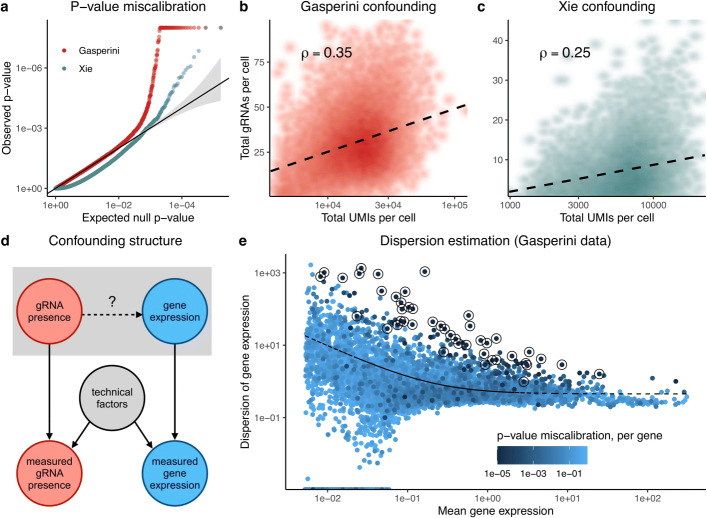
Single-cell CRISPR screens are a promising biotechnology for mapping regulatory elements to target genes at genome-wide scale. However, technical factors like sequencing depth impact not only expression measurement but also perturbation detection, creating a confounding effect. We demonstrate on two single-cell CRISPR screens how these challenges cause calibration issues. We propose SCEPTRE: analysis of single-cell perturbation screens via conditional resampling, which infers associations between perturbations and expression by resampling the former according to a working model for perturbation detection probability in each cell. SCEPTRE demonstrates very good calibration and sensitivity on CRISPR screen data, yielding hundreds of new regulatory relationships supported by orthogonal biological evidence.
Overview
The claims and statistics of this paper haven’t been checked yet.
Free: it reads the open-access text and checks the first 5 claims that cite a source we can check. Create a free account to check every claim.
Integrity signals
Registry
Cites
Statistics
Figures
Verification
Claims the paper makes
The claims and statistics of this paper haven’t been checked yet.
Free: it reads the open-access text and checks the first 5 claims that cite a source we can check. Create a free account to check every claim.
Claims other papers make about this one
Each is checked against this paper’s own text: does it say what the citing paper says it does?
The source backs part of the claim, not all of it — or backs it for a different population, condition or comparison.
In the citing paper
“technical factors, such as biological replicate, batch, and library size, impact not only a cell’s expression level but also its probability of receiving a perturbation, thereby creating a confounding effect that can lead to spurious associations [13]”
From Robust differential expression testing for single-cell CRISPR screens at low multiplicity of infection (2024) · cites this paper as [13]
Experimental — accuracy not yet measuredThe source backs part of the claim, not all of it — or backs it for a different population, condition or comparison.
In the citing paper
“Given that we carefully evaluated the high-MOI version of scMaGECK in our prior work [13]”
From Robust differential expression testing for single-cell CRISPR screens at low multiplicity of infection (2024) · cites this paper as [13]
Experimental — accuracy not yet measuredThe cited source says what the claim attributes to it.
In the citing paper
“The method uncovers numerous cis and trans-regulatory relationships and proves valuable in dissecting regulatory mechanisms related to GWAS associations.”
From A mini-review on perturbation modelling across single-cell omic modalities (2024) · cites this paper as [30]
The cited source says what the claim attributes to it.
In the citing paper
“we discovered that existing methods for association testing are prone to an excess of false positive hits [13]”
From Robust differential expression testing for single-cell CRISPR screens at low multiplicity of infection (2024) · cites this paper as [13]
Self-check
Percentages, sums and reported differences re-computed from the paper’s own numbers.
The self-check needs the paper’s full text.
Citations
Cites
Moderated estimation of fold change and dispersion for RNA-seq data with DESeq2
Love, M. I., Huber, W., & Anders, S. (2014) · Genome Biology · doi:10.1186/s13059-014-0550-8 · Cited by 95,106 · cited 4×
“Love MI, Huber W, Anders S. Moderated estimation of fold change and dispersion for RNA-seq data with DESeq2.”
InfluentialAn integrated encyclopedia of DNA elements in the human genome
The ENCODE Project Consortium (2012) · Nature · doi:10.1038/nature11247 · Cited by 18,072 · cited 1×
“The ChIP-seq data are taken from the ENCODE project [30] and are available at www.”
A 3D Map of the Human Genome at Kilobase Resolution Reveals Principles of Chromatin Looping
Rao, S. S. P., Huntley, M. H., Durand, N. C., Stamenova, E. K., Bochkov, I. D., Robinson, J. T., Sanborn, A. L., Machol, I., Omer, A. D., Lander, E. S., et al. (2014) · Cell · doi:10.1016/j.cell.2014.11.021 · Cited by 9,212
The Genotype-Tissue Expression (GTEx) pilot analysis: Multitissue gene regulation in humans
The GTEx Consortium, Ardlie, K. G., Deluca, D. S., Segrè, A. V., Sullivan, T. J., Young, T. R., Gelfand, E. T., Trowbridge, C. A., Maller, J. B., Tukiainen, T., et al. (2015) · Science · doi:10.1126/science.1262110 · Cited by 5,062 · cited 1×
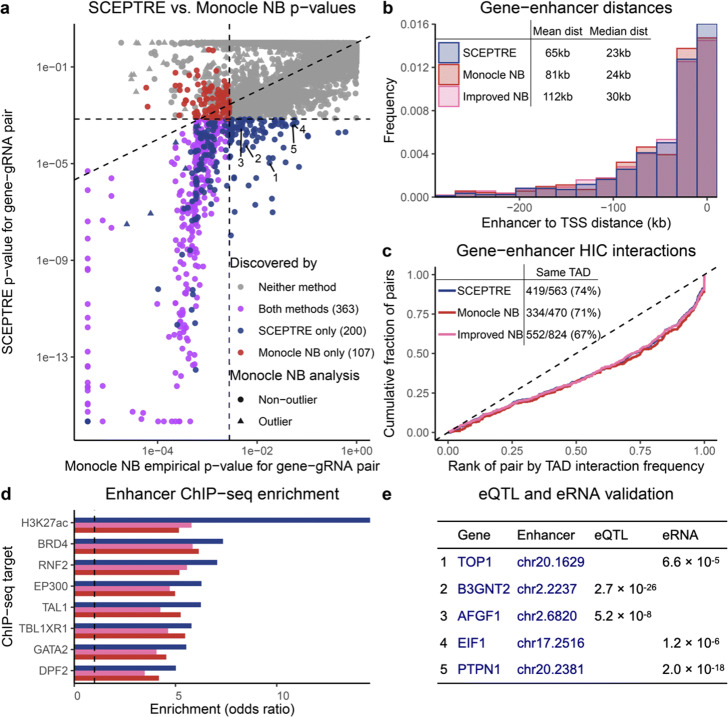
“gene-enhancer links by eQTL [18] and eRNA [19] p-values in relevant tissue types.”
Hafemeister, C., & Satija, R. (2019) · Genome Biology · doi:10.1186/s13059-019-1874-1 · Cited by 4,479 · cited 2×
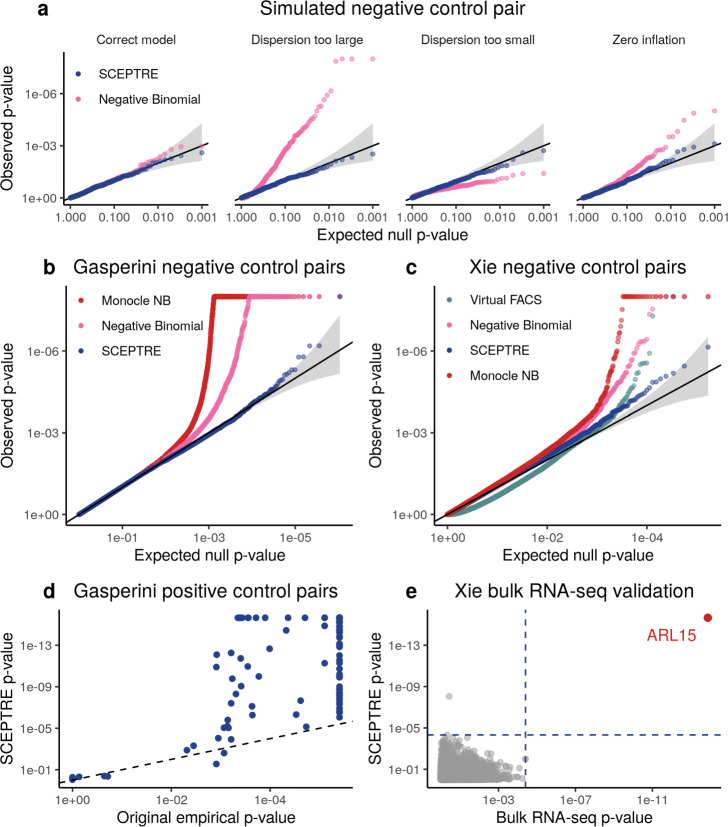
“We attempted to alleviate the miscalibration within the negative binomial regression framework by following the recommendations of Hafemeister and Satija, who recently proposed a strategy for parametric modeling of single-cell RNA-seq data [17].”
XSEDE: Accelerating Scientific Discovery
Towns, J., Cockerill, T., Dahan, M., Foster, I., Gaither, K., Grimshaw, A., Hazlewood, V., Lathrop, S., Lifka, D., Peterson, G. D., et al. (2014) · Computing in Science & Engineering · doi:10.1109/mcse.2014.80 · Cited by 3,109 · cited 2×
“Part of the data analysis used the Extreme Science and Engineering Discovery Environment (XSEDE) [28], which is supported by National Science Foundation grant number ACI-1548562.”
An atlas of active enhancers across human cell types and tissues
The FANTOM Consortium, Andersson, R., Gebhard, C., Miguel-Escalada, I., Hoof, I., Bornholdt, J., Boyd, M., Chen, Y., Zhao, X., Schmidl, C., et al. (2014) · Nature · doi:10.1038/nature12787 · Cited by 2,550 · cited 1×
“gene-enhancer links by eQTL [18] and eRNA [19] p-values in relevant tissue types.”
Single-cell mRNA quantification and differential analysis with Census
Qiu, X., Hill, A., Packer, J., Lin, D., Ma, Y.-A., & Trapnell, C. (2017) · Nature Methods · doi:10.1038/nmeth.4150 · Cited by 1,918 · cited 5×
“Gasperini et al. computed pvalues using a DESeq2 [15]-inspired negative binomial regression analysis implemented in Monocle2 [16], and Xie et al. computed p-values using Virtual FACS, a nonparametric method proposed by these authors.”
InfluentialDixit, A., Parnas, O., Li, B., Chen, J., Fulco, C. P., Jerby-Arnon, L., Marjanovic, N. D., Dionne, D., Burks, T., Raychowdhury, R., et al. (2016) · Cell · doi:10.1016/j.cell.2016.11.038 · Cited by 1,863 · cited 2×
“Single-cell CRISPR screens (implemented by Perturb-seq [3, 4], CROP-seq [5], ECCITE-seq [6], and other protocols) are among the most promising technologies for mapping CREs to their target genes at genome-wide scale.”
GeneHancer: genome-wide integration of enhancers and target genes in GeneCards
Fishilevich, S., Nudel, R., Rappaport, N., Hadar, R., Plaschkes, I., Iny Stein, T., Rosen, N., Kohn, A., Twik, M., Safran, M., et al. (2017) · Database · doi:10.1093/database/bax028 · Cited by 1,271 · cited 1×
“The eQTL and eRNA co-expression p-values are taken from the GeneHancer, database [32] available as part of GeneCards (www.”
Adamson, B., Norman, T. M., Jost, M., Cho, M. Y., Nuñez, J. K., Chen, Y., Villalta, J. E., Gilbert, L. A., Horlbeck, M. A., Hein, M. Y., et al. (2016) · Cell · doi:10.1016/j.cell.2016.11.048 · Cited by 1,193 · cited 1×
“Single-cell CRISPR screens (implemented by Perturb-seq [3, 4], CROP-seq [5], ECCITE-seq [6], and other protocols) are among the most promising technologies for mapping CREs to their target genes at genome-wide scale.”
Pooled CRISPR screening with single-cell transcriptome readout.
Datlinger, P., Rendeiro, A. F., Schmidl, C., Krausgruber, T., Traxler, P., Klughammer, J., Schuster, L. C., Kuchler, A., Alpar, D., & Bock, C. (2017) · Nature Methods · doi:10.1038/nmeth.4177 · Cited by 1,096 · cited 4×
“Single-cell CRISPR screens (implemented by Perturb-seq [3, 4], CROP-seq [5], ECCITE-seq [6], and other protocols) are among the most promising technologies for mapping CREs to their target genes at genome-wide scale.”
InfluentialThe Post-GWAS Era: From Association to Function
Gallagher, M. D., & Chen-Plotkin, A. S. (2018) · The American Journal of Human Genetics · doi:10.1016/j.ajhg.2018.04.002 · Cited by 822 · cited 1×
“The noncoding genome plays a crucial role in human development and homeostasis: over 90% of loci implicated by GWAS in diseases lie in regions outside protein-coding exons [1].”
Panning for Gold: ‘Model-X’ Knockoffs for High Dimensional Controlled Variable Selection
Candès, E., Fan, Y., Janson, L., & Lv, J. (2018) · Journal of the Royal Statistical Society Series B: Statistical Methodology · doi:10.1111/rssb.12265 · Cited by 632 · cited 3×
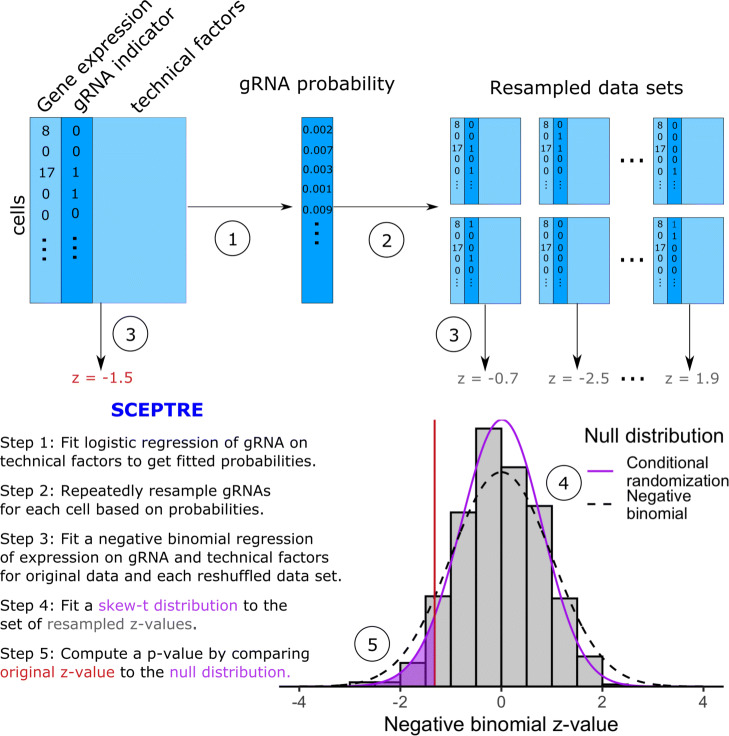
“The conditional randomization test [13] is based on resampling the gRNA indicators independently for each cell.”
InfluentialA Genome-wide Framework for Mapping Gene Regulation via Cellular Genetic Screens
Gasperini, M., Hill, A. J., McFaline-Figueroa, J. L., Martin, B., Kim, S., Zhang, M. D., Jackson, D., Leith, A., Schreiber, J., Noble, W. S., et al. (2019) · Cell · doi:10.1016/j.cell.2018.11.029 · Cited by 613
Mimitou, E. P., Cheng, A., Montalbano, A., Hao, S., Stoeckius, M., Legut, M., Roush, T., Herrera, A., Papalexi, E., Ouyang, Z., et al. (2019) · Nature Methods · doi:10.1038/s41592-019-0392-0 · Cited by 520
Combinatorial single-cell CRISPR screens by direct guide RNA capture and targeted sequencing
Replogle, J. M., Norman, T. M., Xu, A., Hussmann, J. A., Chen, J., Cogan, J. Z., Meer, E. J., Terry, J. M., Riordan, D. P., Srinivas, N., et al. (2020) · Nature Biotechnology · doi:10.1038/s41587-020-0470-y · Cited by 465 · cited 1×
“We identify a key challenge that sets single-cell CRISPR screens apart from traditional differential expression experiments: the “treatment”—in this case the presence of a CRISPR perturbation in a given cell—is subject to measurement error [3, 11, 12].”
Towards a comprehensive catalogue of validated and target-linked human enhancers
Gasperini, M., Tome, J. M., & Shendure, J. (2020) · Nature Reviews Genetics · doi:10.1038/s41576-019-0209-0 · Cited by 396 · cited 1×
“While millions of cisregulatory elements (CREs) have been nominated through biochemical annotations, the functional role of these CREs, including the genes that they target, remain essentially unknown [2].”
Exploring genetic interaction manifolds constructed from rich single-cell phenotypes
Norman, T. M., Horlbeck, M. A., Replogle, J. M., Ge, A. Y., Xu, A., Jost, M., Gilbert, L. A., & Weissman, J. S. (2019) · Science · doi:10.1126/science.aax4438 · Cited by 392 · cited 1×
“Currently, SCEPTRE does not estimate the effect sizes of perturbations, disentangle interactions among perturbed regulatory elements [20, 21], or leverage information from off-targeting gRNAs to improve power.”
Multiplexed Engineering and Analysis of Combinatorial Enhancer Activity in Single Cells
Xie, S., Duan, J., Li, B., Zhou, P., & Hon, G. C. (2017) · Molecular Cell · doi:10.1016/j.molcel.2017.03.007 · Cited by 334 · cited 2×
“used Mosaic-seq [7, 8] to perturb at a high multiplicity of infection 518 putative enhancers in a population of 106,670 Cas9KRAB-expressing K562 cells.”
A new era in functional genomics screens
Przybyla, L., & Gilbert, L. A. (2022) · Nature Reviews Genetics · doi:10.1038/s41576-021-00409-w · Cited by 281 · cited 1×
“Single-cell CRISPR screens will play a key role in unraveling the regulatory architecture of the noncoding genome [23].”
Datlinger, P., Rendeiro, A. F., Boenke, T., Senekowitsch, M., Krausgruber, T., Barreca, D., & Bock, C. (2021) · Nature Methods · doi:10.1038/s41592-021-01153-z · Cited by 269 · cited 1×
“For example, screens of candidate CREs could be extended to different, disease-relevant cell types and tissues (although this remains a challenge); new combinatorial indexing strategies, such as scifi-RNA-seq, could enable the scaling-up of such screens to millions of cells [24]; different CRISPR technologies, such as…”
On the design of CRISPR-based single-cell molecular screens
Hill, A. J., McFaline-Figueroa, J. L., Starita, L. M., Gasperini, M. J., Matreyek, K. A., Packer, J., Jackson, D., Shendure, J., & Trapnell, C. (2018) · Nature Methods · doi:10.1038/nmeth.4604 · Cited by 262
Discovery of target genes and pathways at GWAS loci by pooled single-cell CRISPR screens
Morris, J. A., Caragine, C., Daniloski, Z., Domingo, J., Barry, T., Lu, L., Davis, K., Ziosi, M., Glinos, D. A., Hao, S., et al. (2023) · Science · doi:10.1126/science.adh7699 · Cited by 208
Self-citationBridges: a uniquely flexible HPC resource for new communities and data analytics
Nystrom, N. A., Levine, M. J., Roskies, R. Z., & Scott, J. R. (2015) · Proceedings of the 2015 XSEDE Conference on Scientific Advancements Enabled by Enhanced Cyberinfrastructure - XSEDE '15 · doi:10.1145/2792745.2792775 · Cited by 195 · cited 1×
“Specifically, it used the Bridges system [29], which is supported by NSF award number ACI-1445606, at the Pittsburgh Supercomputing Center (PSC).”
On the False Discovery Rate and Expected Type I Errors
Finner, H., & Roters, M. (2001) · Biometrical Journal · doi:10.1002/1521-4036(200112)43:8<985::aid-bimj985>3.0.co;2-4 · Cited by 165 · cited 1×
“While Bonferroni corrections can only become more conservative when including more hypotheses, BH corrections are known to become anticonservative when extra positive controls are included [27].”
Pierce, S. E., Granja, J. M., & Greenleaf, W. J. (2021) · Nature Communications · doi:10.1038/s41467-021-23213-w · Cited by 146 · cited 1×
“For example, screens of candidate CREs could be extended to different, disease-relevant cell types and tissues (although this remains a challenge); new combinatorial indexing strategies, such as scifi-RNA-seq, could enable the scaling-up of such screens to millions of cells [24]; different CRISPR technologies, such as…”
scMAGeCK links genotypes with multiple phenotypes in single-cell CRISPR screens
Yang, L., Zhu, Y., Yu, H., Cheng, X., Chen, S., Chu, Y., Huang, H., Zhang, J., & Li, W. (2020) · Genome Biology · doi:10.1186/s13059-020-1928-4 · Cited by 94
Fast and powerful conditional randomization testing via distillation
Liu, M., Katsevich, E., Janson, L., & Ramdas, A. (2021) · Biometrika · doi:10.1093/biomet/asab039 · Cited by 85 · cited 1×
“First, we employed the recently proposed [26] distillation technique to accelerate the recomputation of the negative binomial regression for each resample.”
Self-citationZamanighomi, M., Jain, S. S., Ito, T., Pal, D., Daley, T., & Sellers, W. (2019) · Genome Biology · doi:10.1186/s13059-019-1745-9 · Cited by 54 · cited 1×
“Currently, SCEPTRE does not estimate the effect sizes of perturbations, disentangle interactions among perturbed regulatory elements [20, 21], or leverage information from off-targeting gRNAs to improve power.”
Global Analysis of Enhancer Targets Reveals Convergent Enhancer-Driven Regulatory Modules
Xie, S., Armendariz, D., Zhou, P., Duan, J., & Hon, G. C. (2019) · Cell Reports · doi:10.1016/j.celrep.2019.10.073 · Cited by 46 · cited 1×
“We thank Shiqi Xie for providing guidance on using the Xie et al. 2019 data and Wei Li for a helpful discussion on scMAGeCK.”
Morris, J. A., Daniloski, Z., Domingo, J., Barry, T., Ziosi, M., Glinos, D. A., Hao, S., Mimitou, E. P., Smibert, P., Roeder, K., et al. (2021) · bioRxiv · doi:10.1101/2021.04.07.438882 · Cited by 20 · cited 3×
“In the “Discussion” section, we describe an independent work conducted in parallel to the current study in which we leveraged biobank-scale GWAS data, single-cell CRISPR screens, and SCEPTRE to dissect the cis and trans effects of noncoding variants associated with blood diseases [14].”
InfluentialSelf-citationConditional resampling improves calibration and sensitivity in single-cell CRISPR screen analysisPreprint
Barry, T., Wang, X., Morris, J. A., Roeder, K., & Katsevich, E. (2020) · bioRxiv (Cold Spring Harbor Laboratory) · doi:10.1101/2020.08.13.250092 · Cited by 11
Self-citation
Research works printed but not linked: 1
- Zhang L, Janson L. Floodgate: inference for model-free variable importance. arXiv. 2020:1–67.
Cited by
Discovery of target genes and pathways at GWAS loci by pooled single-cell CRISPR screens
Morris, J. A., Caragine, C., Daniloski, Z., Domingo, J., Barry, T., Lu, L., Davis, K., Ziosi, M., Glinos, D. A., Hao, S., et al. (2023) · Science · doi:10.1126/science.adh7699 · Cited by 208
“To perform differential expression testing, we recently developed a conditional resampling approach (SCEPTRE) that yields state-of-the-art calibration on CRISPR single-cell datasets to connect perturbations with changes in gene and protein expression ( 26 ).”
BackgroundMethodInfluentialSelf-citationPertpy: an end-to-end framework for perturbation analysis
Heumos, L., Ji, Y., May, L. T., Green, T. D., Peidli, S., Zhang, X., Wu, X., Ostner, J., Schumacher, A., Hrovatin, K., et al. (2025) · Nature Methods · doi:10.1038/s41592-025-02909-7 · Cited by 112
“Current perturbation analysis frameworks such as MUSIC 6 , ScMAGeCK 7 , SCEPTRE 8 , GSFA 9 and FR-Perturb 10 primarily focus on CRISPR perturbation analysis, neglecting other perturbation data types and perturbation analysis steps.”
A mini-review on perturbation modelling across single-cell omic modalities
Gavriilidis, G. I., Vasileiou, V., Orfanou, A., Ishaque, N., & Psomopoulos, F. (2024) · Computational and Structural Biotechnology Journal · doi:10.1016/j.csbj.2024.04.058 · Cited by 54
“Drawing from the paradigm of negative binomial distribution in single-cell data [29], SCEPTRE [30], analyses single-cell CRISPR screens using conditional resampling to tackle batch effects and diverse sequencing depth, which are confounding sources of variation masking actual perturbational effects.”
MethodMultiplex, single-cell CRISPRa screening for cell type specific regulatory elements
Chardon, F. M., McDiarmid, T. A., Page, N. F., Daza, R. M., Martin, B., Domcke, S., Regalado, S. G., Lalanne, J., Calderon, D., Li, X., et al. (2024) · Nature Communications · doi:10.1038/s41467-024-52490-4 · Cited by 60
“Resulting SCEPTRE P -valueswerethen Benjamini-Hochberg corrected and those 0.1 were kept for two-sided discovery sets.”
MethodInfluentialMassively parallel functional dissection of schizophrenia-associated noncoding genetic variants
Rummel, C. K., Gagliardi, M., Ahmad, R., Herholt, A., Jiménez-Barrón, L. T., Murek, V., Weigert, L., Hausruckinger, A., Maidl, S., Hauger, B., et al. (2023) · Cell · doi:10.1016/j.cell.2023.09.015 · Cited by 53
Metadata
- Authors
- Barry, T., Wang, X., Morris, J. A., Roeder, K., & Katsevich, E.
- Affiliations
- Carnegie Mellon University (US)
- New York Genome Center (US)
- University of Pennsylvania (US)
- Corresponding author
- Katsevich, Eugene
- Venue
- Genome Biology
- Published
- 2021-12
- Volume
- 22
- Issue
- 1
- Pages
- 344-344
- ISSN
- 1465-6906 (ISSN-L)
- 1474-760X
- PMC
- PMC8686614
- OpenAlex
- W4200438609
- Cited by
- 86
- References
- 34
- Citations by year
- 2026: 28 · 2025: 17 · 2024: 20 · 2023: 14 · 2022: 5 · 2021: 2
- FWCI
- 3.76
- Type
- journal article
- Language
- en
- Open access
- gold
- doi.org
- Licence
- cc-by
- creativecommons.org/licenses/by/4.0 (tdm)
- creativecommons.org/licenses/by/4.0 (vor, 19 d)
- Locations
- Genome biology (publishedVersion, cc-by)
- PubMed Central (publishedVersion, cc-by)
- PubMed (publishedVersion)
- DOAJ (DOAJ: Directory of Open Access Journals) (submittedVersion, cc-by-sa)
- Funders
- National Institute of Mental Health (R01MH123184, SFARI Grant 575547)
- National Science Foundation (ACI-1548562, ACI-1445606)
- Topics
- Life Sciences › Biochemistry, Genetics and Molecular Biology › Molecular Biology › Single-cell and spatial transcriptomics
- Life Sciences › Biochemistry, Genetics and Molecular Biology › Molecular Biology › CRISPR and Genetic Engineering
- Life Sciences › Biochemistry, Genetics and Molecular Biology › Molecular Biology › Gene Regulatory Network Analysis
- Keywords
- single-cell CRISPR screens, scepter, disturbance detection, calibration, sensitivity, regulatory elements, gene expression
- MeSH terms
- Gene Editing, Chromatin Immunoprecipitation Sequencing, Calibration, Humans, Gene Expression, Genome, Human, Single-Cell Analysis, Clustered Regularly Interspaced Short Palindromic Repeats, CRISPR-Cas Systems
About these checks
Registry, retraction, Cites and statistics results are computed, not judged, with one exception: a printed reference that no index lists is read once by a model before it counts as a citation error. Claims are extracted by a model and kept only when their quote appears verbatim in the text; each cited source is then checked, with a model’s help, for whether it says what the claim relies on. Those verdicts can be wrong — read the claim’s quote and the cited source before relying on one.
Statistics and arithmetic are recomputed, not judged.
Confidence bands are shown only for fields calibrated on our annotated test set. None is calibrated yet, so no band is shown.
What counts as a claim ›How we measure confidence ›How we check this ›
Are you an author, or do you see a problem with this page? Request a review
Data sources
Bibliographic data: Semantic Scholar, OpenAlex, Crossref.
Contains information from the Semantic Scholar Academic Graph Datasets, made available under the ODC Attribution License (ODC-BY 1.0).
Semantic Scholar’s data is described in: Kinney, R., et al. (2023). The Semantic Scholar Open Data Platform. arXiv:2301.10140.
