

Population structure discovery in meta-analyzed microbial communities and inflammatory bowel disease using MMUPHin
Open accessThe DOI matches its Crossref record; 67 of the 68 references it cites were found in a registry or an index.
Abstract
Microbiome studies of inflammatory bowel diseases (IBD) have achieved a scale for meta-analysis of dysbioses among populations. To enable microbial community meta-analyses generally, we develop MMUPHin for normalization, statistical meta-analysis, and population structure discovery using microbial taxonomic and functional profiles. Applying it to ten IBD cohorts, we identify consistent associations, including novel taxa such as Acinetobacter and Turicibacter, and additional exposure and interaction effects. A single gradient of dysbiosis severity is favored over discrete types to summarize IBD microbiome population structure. These results provide a benchmark for characterization of IBD and a framework for meta-analysis of any microbial communities.
Overview
The claims and statistics of this paper haven’t been checked yet.
Free: it reads the open-access text and checks the first 5 claims that cite a source we can check. Create a free account to check every claim.
Integrity signals
Registry
Cites
Statistics
Figures
Verification
Claims the paper makes
The claims and statistics of this paper haven’t been checked yet.
Free: it reads the open-access text and checks the first 5 claims that cite a source we can check. Create a free account to check every claim.
Claims other papers make about this one
Each is checked against this paper’s own text: does it say what the citing paper says it does?
In the citing paper
“Data were batch-corrected with MMUPHin (Ma et al. 2022).36”
From Custom scoring based on ecological topology of gut microbiota associated with cancer immunotherapy outcome (2024) · cites this paper as [36]
Self-check
Percentages, sums and reported differences re-computed from the paper’s own numbers.
The self-check needs the paper’s full text.
Citations
Cites
limma powers differential expression analyses for RNA-sequencing and microarray studies
Ritchie, M. E., Phipson, B., Wu, D., Hu, Y., Law, C. W., Shi, W., & Smyth, G. K. (2015) · Nucleic Acids Research · doi:10.1093/nar/gkv007 · Cited by 40,458 · cited 1×
“This agrees with the field’s consensus on the most appropriate way to address batch effects during supervised testing [15, 58].”
DADA2: High–resolution sample inference from Illumina amplicon data
Callahan, B. J., McMurdie, P. J., Rosen, M. J., Han, A. W., Johnson, A. J. A., & Holmes, S. P. (2016) · Nature Methods · doi:10.1038/nmeth.3869 · Cited by 35,698 · cited 1×
“Specifically, we processed two studies representing extremes of size, BIDMC-FMT (n=16, two technical batches) and RISK (n=882, fifteen batches) with the dada2 method [65], and performed batch correction and evaluation on the generated ASV profiles.”
vegan: Community Ecology Package
Oksanen, J., Simpson, G. L., Blanchet, F. G., Kindt, R., Legendre, P., Minchin, P. R., O'Hara, R. B., Solymos, P., Stevens, M. H. H., Szoecs, E., et al. (2001) · CRAN: Contributed Packages · doi:10.32614/cran.package.vegan · Cited by 22,615
Conducting Meta-Analyses in R with the metafor Package
Viechtbauer, W. (2010) · Journal of Statistical Software · doi:10.18637/jss.v036.i03 · Cited by 20,464 · cited 4×
“These are then aggregated into meta-analysis effect size with fixed/random effects modelling as implemented in the metafor R package [34]: ∼ Yijp = exp {”
MethodInfluentialUPARSE: highly accurate OTU sequences from microbial amplicon reads
Edgar, R. C. (2013) · Nature Methods · doi:10.1038/nmeth.2604 · Cited by 16,707 · cited 2×
“For all studies, demultiplexed sequences were truncated at 200bp max length and filtered by maximum expected error of one [63].”
Wold, S., Esbensen, K., & Geladi, P. (1987) · Chemometrics and Intelligent Laboratory Systems · doi:10.1016/0169-7439(87)80084-9 · Cited by 11,606 · cited 1×
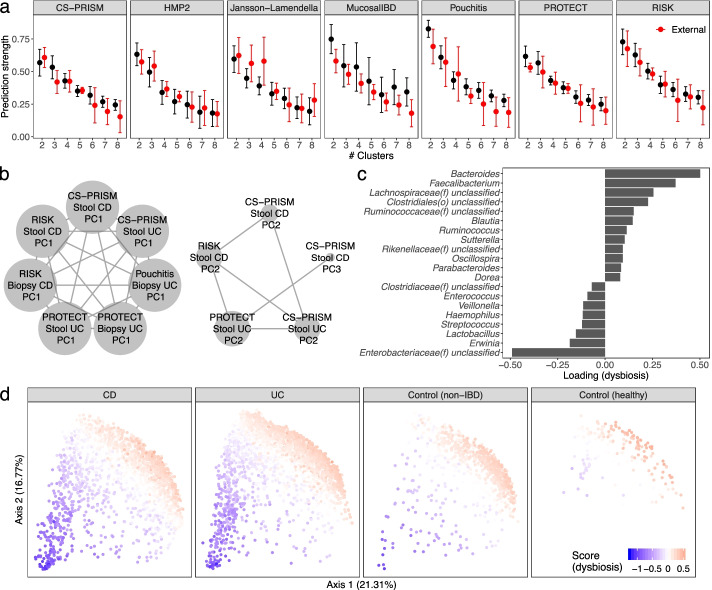
“This is generalized from single study principal component analysis (PCA [43]) to multiple studies by constructing a network of correlated top PC loadings [35] (Fig.”
Principal components analysis corrects for stratification in genome-wide association studies
Price, A. L., Patterson, N. J., Plenge, R. M., Weinblatt, M. E., Shadick, N. A., & Reich, D. (2006) · Nature Genetics · doi:10.1038/ng1847 · Cited by 10,248 · cited 1×
“One example of this is in genome-wide association studies (GWAS [1]), where the appropriate study scale, achieved by rigorous integration of multiple cohorts, has both facilitated reproducible discoveries (in the form of disease-associated loci [2–4]) and addressed confounding due to unobserved population structure [5…”
Adjusting batch effects in microarray expression data using empirical Bayes methods
Johnson, W. E., Li, C., & Rabinovic, A. (2007) · Biostatistics · doi:10.1093/biostatistics/kxj037 · Cited by 8,658 · cited 13×
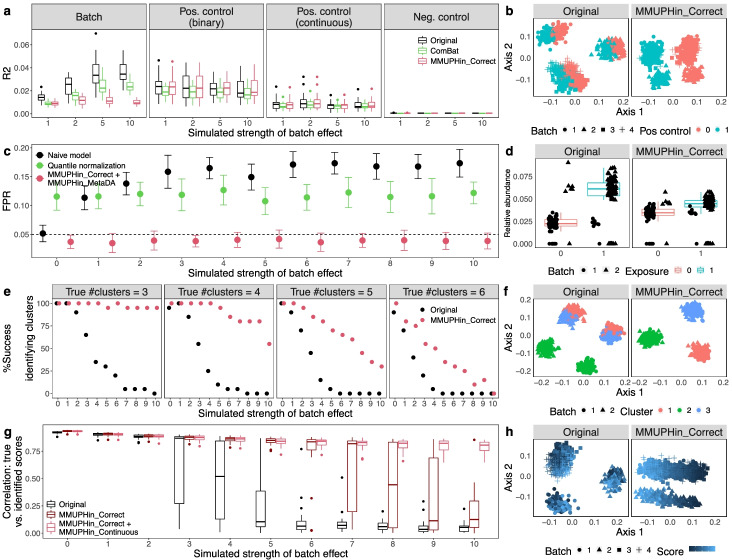
“ComBat correction [15], suited for gene expression data, was capable of reducing batch effects to a lesser degree, but also tended to reduce desirable “biological” variation in the process, likely due to noise introduced by it changing many zero counts to non-zero values.”
InfluentialEnterotypes of the human gut microbiome
MetaHIT Consortium (additional members), Arumugam, M., Raes, J., Pelletier, E., Le Paslier, D., Yamada, T., Mende, D. R., Fernandes, G. R., Tap, J., Bruls, T., et al. (2011) · Nature · doi:10.1038/nature09944 · Cited by 7,548 · cited 5×
“S14) [9, 32, 41], the first continuous score was IBD-specific and corresponded roughly to more extreme disease-associated dysbiosis in CD and UC populations”
InfluentialMETAL: fast and efficient meta-analysis of genomewide association scans
Willer, C. J., Li, Y., & Abecasis, G. R. (2010) · Bioinformatics · doi:10.1093/bioinformatics/btq340 · Cited by 5,205 · cited 3×
“One example of this is in genome-wide association studies (GWAS [1]), where the appropriate study scale, achieved by rigorous integration of multiple cohorts, has both facilitated reproducible discoveries (in the form of disease-associated loci [2–4]) and addressed confounding due to unobserved population structure [5…”
Research works printed but not linked: 2
- Csardi G Nepusz T The igraph software package for complex network research Int J Complex Syst 2006 1695 5 1 9
- Ma S Population structure discovery in meta-analyzed microbial communities and inflammatory bowel disease 2022 Zenodo PMC9531436 36192803 · doi:10.5281/zenodo.7008567
Cited by
Items 101–168 of 168
Microbial hallmarks of the respiratory tract in lung cancer: a meta-analysis
Zhu, B., McHale, S. S., Scoyk, M. M. V., Riddick, G., Wu, P., Chou, C., Tossas, K. Y., Chen, C., & Winn, R. A. (2025) · Frontiers in Microbiomes · doi:10.3389/frmbi.2025.1589686 · Cited by 3
Guo, Y., Feng, H., Du, L., Gao, Y., & Yu, Z. H. (2025) · Current Microbiology · doi:10.1007/s00284-025-04638-8 · Cited by 2
Choi, Y., Zhou, M., Romero-Pérez, A., Beauchemin, K. A., Duval, S. M., Kindermann, M., & Guan, L. L. (2025) · Journal of Animal Science and Biotechnology/Journal of animal science and biotechnology · doi:10.1186/s40104-025-01291-w · Cited by 2
Fernandes, A. C., Reverter, A., Conteville, L. C., Afonso, J., Cardoso, T. F., Palhares, J. C. P., Mourão, G. B., Regitano, L. C. D. A., & Coutinho, L. L. (2026) · Scientific Reports · doi:10.1038/s41598-025-29588-w · Cited by 3
Ju, Y., Lin, S., Hu, S., Jin, X., Xiao, L., Zhang, T., Zhang, Y., Zhang, L., Ma, X., Zhu, F., et al. (2026) · Gut Microbes · doi:10.1080/19490976.2026.2630563 · Cited by 2
Bansal, H., Arshita, & Srija, K. D. (2026) · Advances in computational intelligence and robotics book series · doi:10.4018/979-8-3373-3121-8.ch002 · Cited by 2
Fu, J., Zhang, J., He, R., Dong, Q., Mao, H., Shen, W., Wu, W., Chen, X., Ma, W., Zhai, Q., et al. (2026) · npj Biofilms and Microbiomes · doi:10.1038/s41522-026-00970-4 · Cited by 5
Network topology of the gut microbiome associates with metabolic health in obesity
Lacruz-Pleguezuelos, B., Perez-Cuervo, A., Coleto-Checa, D., Bazán, G. X., Romero-Tapiador, S., Freixer, G., Fernández-Cabezas, J., Aguilar-Aguilar, E., Martín‐Segura, A., Cárdenas-Roig, N., et al. (2026) · Nature Communications · doi:10.1038/s41467-026-72588-1 · Cited by 5
Vélez, I. G., Leonés-Baños, I., Folch, B. A., Antequera, L., Rojas, I., Ortuño, F. M., Sáez‐Lara, M. J., Altmäe, S., & Herrera, L. J. (2026) · Frontiers in Endocrinology · doi:10.3389/fendo.2026.1812407 · Cited by 2
“For large meta-analyses, MMUPHin (54) offers a single statistical system, including batch correction, differential abundance testing and population structure identi fi cation.”
Thompson, K. N., Ma, S., Bhosle, A., Nickols, W. A., Shen, J., Ghazi, A. R., Dang, N. H., Zhang, Y., Nzabarushimana, É., Kim, H., et al. (2026) · Gastroenterology · doi:10.1053/j.gastro.2026.06.023 · Cited by 4
Self-citationRoche, C. E., Montague, M. J., Wang, J., Dickey, A. N., Ruiz-Lambides, A. V., Brent, L. J. N., Platt, M. L., & Horvath, J. E. (2023) · Microbiology Spectrum · doi:10.1128/spectrum.02974-23 · Cited by 2
Large-Scale Meta-Longitudinal Microbiome Data with a Known Batch Factor
Oh, S., & Li, R. W. (2022) · Genes · doi:10.3390/genes13030392 · Cited by 2
“We are currently preparing for another submission of the next study to explore the large-scale of comparative study and to propose a novel unified Bayesian approach by including the popular and more recently developed methods such as ANCOM and MMUPHin [17,18].”
BackgroundMethodMOSAIC: A Pipeline for MicrobiOme Studies Analytical Integration and CorrectionPreprint
Fu, C., Lu, J., Zhao, N., & Ling, W. (2024) · bioRxiv (Cold Spring Harbor Laboratory) · doi:10.1101/2024.11.07.622561 · Cited by 2
The event of multiomics in metagenomics
Mallick, H., Bardhan, M., Dagli, C. S., Liu, Z., & Gao, J. (2025) · Elsevier eBooks · doi:10.1016/b978-0-443-22376-1.00010-6 · Cited by 2
Self-citationGao, Y., Wang, D., Lu, T., Liu, K., Li, S., Kang, J., Sha, S., Xing, G., Cheng, L., Fan, S., et al. (2025) · mSystems · doi:10.1128/msystems.00657-25 · Cited by 1
“To eliminate potential batch effects arising from different sequencing platforms, we performed batch effect correction using the MMUPHin pipeline (28).”
MDPD reveals specific microbial signatures in human pulmonary diseases
Roy, P., Roy, D., Bhattacharjee, S., Ghosh, A., & Saha, S. (2026) · Briefings in Bioinformatics · doi:10.1093/bib/bbag017 · Cited by 1
“In user-defined discriminant analysis with multiple BioProjects, batch effect correction was done using the ‘adjust_batch’ function of MMUPHin [49] package.”
Identifying candidate gut microbiota indicators for Alzheimer’s disease through integrated data
Wang, J., Liu, H., Lai, H., Bao, Y., Shen, M., Li, C., Ma, L., Wu, T., Yang, S., Du, X., et al. (2026) · mSystems · doi:10.1128/msystems.01754-25 · Cited by 1
A conserved bacterial signature characterizes plant microbiome responses to drought
Cosma, B.-M., & Abeel, T. (2026) · Frontiers in Microbiology · doi:10.3389/fmicb.2026.1768028 · Cited by 2
“Batch correction was performed on these merged datasets, with watering treatment as a covariate, followed by differential abundance analysis (with a log-transform), using MMUPHin v0.”
InfluentialKenneth, M. J., Wu, C.-C., Fang, C., Hussain, B., Abbas, A., Tsai, H., & Hsu, B. (2026) · Pharmacological Research - Modern Chinese Medicine · doi:10.1016/j.prmcm.2026.100820 · Cited by 1
Unno, T. (2026) · The Journal of Microbiology · doi:10.71150/jm.2603014 · Cited by 2
“16S-Pipeline provides two merging modes — by-sequence for same-re-gion datasets and by-taxonomy for cross-region datasets — but does not currently implement computational batch correction methods such as ComBat (Johnson et al., 2007) or MMUPHin (Ma et al., 2022).”
Ni, Z., Xie, J., Zhang, Z., Zhang, K., Ding, J., Chang, M., Su, Y., Zhang, Y., Yao, M., Wang, C., et al. (2026) · iMeta · doi:10.1002/imt2.70148 · Cited by 2
A comparative analysis of urinary microbiome identifies marker bacteria
Anand, R., Sahil, R., Pandey, R., Prakash, P., Misra, H. S., & Maurya, G. K. (2026) · In Silico Research in Biomedicine · doi:10.1016/j.insi.2026.100646 · Cited by 1
Longitudinal analysis of microbiome composition in Ghanaians living with HIV-1
Runtuwene, L. R., Parbie, P. K., Mizutani, T., Ishizaka, A., Matsuoka, S., Abana, C. Z.-Y., Kushitor, D., Bonney, E. Y., Ofori, S. B., Kiyono, H., et al. (2024) · Frontiers in Microbiology · doi:10.3389/fmicb.2024.1359402 · Cited by 1
An Introduction to the Human Microbiome
Kotthapalli, P., & Archer, A. C. (2024) · Springer eBooks · doi:10.1007/978-981-97-3790-1_1 · Cited by 1
Gut microbial ecosystems differ across metabolic and obesity phenotypesPreprint
Lacruz-Pleguezuelos, B., Bazán, G. X., Romero-Tapiador, S., Freixer, G., Fernández-Cabezas, J., Aguilar-Aguilar, E., Martín‐Segura, A., Fernández, L. P., Espinosa‐Salinas, I., de Molina, A. R., et al. (2025) · bioRxiv (Cold Spring Harbor Laboratory) · doi:10.1101/2025.04.25.650405 · Cited by 1
“Three SVMs with radial basis kernel functions were trained while performing hyperparameter tuning for the cost parameter C and sigma (kernlab package version 0.9-218 33) 42,43 .”
InfluentialColeto-Checa, D., Lacruz-Pleguezuelos, B., Perez-Cuervo, A., Cárdenas-Roig, N., Carrasco-Guijarro, L., Martín‐Segura, A., Pau, E. C. D. S., & Marcos-Zambrano, L. J. (2025) · bioRxiv (Cold Spring Harbor Laboratory) · doi:10.64898/2025.12.03.691829 · Cited by 1
“20.0) [40].”
InfluentialGao, W., Gao, X., Zhu, L., Gao, S., Sun, R., Feng, Z., Wu, D., Liu, Z., Zhu, R., & Jiao, N. (2023) · bioRxiv (Cold Spring Harbor Laboratory) · doi:10.1101/2023.02.04.527090
Bugs as Features (Part II): A Perspective on Enriching Microbiome-Gut-Brain Axis AnalysesPreprint
Bastiaanssen, T. F. S., Quinn, T. P., & Loughman, A. (2023) · arXiv (Cornell University) · doi:10.48550/arxiv.2305.11703 · Cited by 1
Race-dependent variability in the human tumor mycobiomePreprint
Coster, D., Margalit, T., Boursi, B., & Ron Shamir, A. (2024) · bioRxiv (Cold Spring Harbor Laboratory) · doi:10.1101/2024.06.01.596924
Fernandes, A. C. (2024) · Digital Library of Theses and Dissertations (Universidade de São Paulo) · doi:10.11606/t.11.2024.tde-10012025-081946
Creation and validation of LIMÓN - Longitudinal Individual Microbial Omics NetworksPreprint
Alvernaz, S. A., & Bernabé, B. P. (2025) · bioRxiv (Cold Spring Harbor Laboratory) · doi:10.1101/2025.03.18.644048 · Cited by 1
Cross Sequencing Integration of Compositional Microbiome Data in Cancer
Fernández-Edreira, D., Liñares-Blanco, J., & Fernandez-Lozano, C. (2025) · Lecture notes in computer science · doi:10.1007/978-3-031-89704-7_6
Skin microbiome composite features in Atopic Dermatitis via integration analysis across cohortsPreprint
Wang, Y., & Liu, B. (2025) · bioRxiv (Cold Spring Harbor Laboratory) · doi:10.1101/2025.05.18.653690
Shinde, T., Kumpitsch, C., Zhang, Y., Franzosa, E. A., Mohammadzadeh, R., Weinberger, V., Eagan, T., Huttenhower, C., Foris, V., & Moissl‐Eichinger, C. (2025) · bioRxiv (Cold Spring Harbor Laboratory) · doi:10.1101/2025.09.04.674177
Self-citationA Multi-omics Approach for Microbiome Data Analysis in Legumes
Sahil, R., & Jain, M. (2025) · Methods in molecular biology · doi:10.1007/978-1-0716-4820-9_13
Microbiota diversity and association with performance phenotypes in beef bulls
Rojas, L. J. F., Bussiman, F. D. O., Cardoso, T. F., Colmenarez, G. A., Conteville, L. C., Antonio, B. C. P., Ventura, H. T., Paschoal, J. J., Lourenco, D. A. L., & Regitano, L. C. D. A. (2025) · Journal of Animal Science · doi:10.1093/jas/skaf340
Wolf, M., Knipper, L., Schallert, K., Groba, A.-C., Hellwig, P., Bang, C., Rausch, P., Franke, A., Benndorf, D., Aden, K., et al. (2025) · bioRxiv (Cold Spring Harbor Laboratory) · doi:10.1101/2025.11.06.684320
“MMUPHin batch effect removal procedure was used to adjust the abundance of metaproteins identified in all discovery cohorts 23 .”
Hu, X., Yu, C., He, Y., Zhu, S., Wang, S., Xu, Z., You, S., Jiao, Y., Liu, S.-L., & Bao, H. (2024) · Figshare · doi:10.6084/m9.figshare.25556486
Hu, X., Yu, C., He, Y., Zhu, S., Wang, S., Xu, Z., You, S., Jiao, Y., Liu, S.-L., & Bao, H. (2024) · Figshare · doi:10.6084/m9.figshare.26702611
Hu, M., Lin, X., Sun, T., Shao, X., Huang, X., Weiwei, D., Guo, M., Zhu, X., Zhou, Y., Tong, T., et al. (2024) · Figshare · doi:10.6084/m9.figshare.26669787
Hu, X., Yu, C., He, Y., Zhu, S., Wang, S., Xu, Z., You, S., Jiao, Y., Liu, S.-L., & Bao, H. (2024) · Figshare · doi:10.6084/m9.figshare.26702614
Gray, S. M., Moss, A. D., Herzog, J., Kashiwagi, S., Liu, B., Young, J. B., Sun, S., Bhatt, A. P., Fodor, A. A., & Sartor, R. B. (2024) · Figshare · doi:10.6084/m9.figshare.26517865
Hu, M., Lin, X., Sun, T., Shao, X., Huang, X., Weiwei, D., Guo, M., Zhu, X., Zhou, Y., Tong, T., et al. (2024) · Figshare · doi:10.6084/m9.figshare.26669790
Hu, X., Yu, C., He, Y., Zhu, S., Wang, S., Xu, Z., You, S., Jiao, Y., Liu, S.-L., & Bao, H. (2024) · Figshare · doi:10.6084/m9.figshare.25556652
Guide scaffolding improves phylogenetic accuracy and enables integration across 16S amplicon regionsPreprint
Arnold, H. K., Little, E., Hunt, A., & Sharpton, T. J. (2026) · bioRxiv (Cold Spring Harbor Laboratory) · doi:10.64898/2026.01.05.697767
“…have been successful in many areas of molecular epidemiology, especially when rigorous integration of multiple cohorts enables analysis at a scale sufficient to identify reproducible associations while allowing for rigorous statistical control of cohort-specific confounding effects 1,7 .”
Fernandes, A. C. (2024) · LA Referencia (Red Federada de Repositorios Institucionales de Publicaciones Científicas)
Zhu, M., Hu, Y., Chang, Y., Wang, Z., & Yu, S. (2026) · Food Research International · doi:10.1016/j.foodres.2026.118992
Demography-dependent variability in the human tumor mycobiome
Coster, D., Margalit, T., Ben‐Ami, R., Boursi, B., & Shamir, R. (2026) · Microbiology Spectrum · doi:10.1128/spectrum.02310-25
Comprehensive study of the microbiome of fermented vegetables using integrative approaches
Junker, R. (2024) · theses.fr (ABES) · doi:10.70675/26164caeze8c2z4baaz9744z98cbc2b9a7c8
A comparative analysis of urinary microbiome identifies putative probioticsPreprint
Anand, R., Sahil, R., Pandey, R., Prakash, P. J., Misra, H. S., & Maurya, G. K. (2026) · bioRxiv (Cold Spring Harbor Laboratory) · doi:10.64898/2026.05.15.725591
Unlocking the Metagenome: Pipeline for Microbiome Data Analysis
Ravikrishnan, A. (2026) · Methods in molecular biology · doi:10.1007/978-1-0716-5080-6_1
Yu, J., Wan, Y., Peng, Y., Liang, S., Chan, F. K., Ng, S. C., & Tun, H. M. (2026) · Psychiatry Research · doi:10.1016/j.psychres.2026.117317
Li, J., Ping, Z., Zhou, J., Qian, S., Bai, R., Shen, C., Tang, M., Wang, J., Sheng, J., Chen, K., et al. (2026) · Ecotoxicology and Environmental Safety · doi:10.1016/j.ecoenv.2026.120411
Roy, P., Dasgupta, A., & Saha, S. (2026) · In Silico Research in Biomedicine · doi:10.1016/j.insi.2026.100510
Chandra, J., Wang, H., Hossain, T., Tillett, B. J., Berman, C., Nissen, M. D., Joseph, S. R., Simpson, F., Walpole, E. T., McCaffrey, E., et al. (2026) · Research Square · doi:10.21203/rs.3.rs-10134278/v1
Khan, A., Vasquez, D. E. C., Si, Y., Vidar, W. S., Wu, K., Chiu, N., & Jia, Z. (2026) · Journal of Hazardous Materials · doi:10.64898/2026.07.09.736446
Zhu, M., Chang, Y., Hu, Y., Wang, Z., & Yu, S. (2026) · Food & Function · doi:10.1039/d6fo00833j
Sun, C., Wang, S., Zhang, Q., Liu, R., & Du, Y. (2026) · Bioinformatics · doi:10.1093/bioinformatics/btag538
“Consequently, batch-correction methods designed for microbiome data may differ in accepted input scale, zero handling, covariate adjustment, and modelling assumptions (Ling et al. 2022, Ma et al. 2022, Wang and L ^ e Cao 2023, Austin et al. 2025, Yuan and Wang 2025).”
InfluentialWinters, A. D., Rudagi, E., Koka, O., & Angoa‐Pérez, M. (2026) · Frontiers in Cellular and Infection Microbiology · doi:10.3389/fcimb.2026.1822390
Age-stratified gut microbiome variation in a Taiwanese cohort
Yeh, Y., Cheng, H., Chen, C.-C., Kuo, C., Chiu, C., Le, P., & Chiu, C. (2026) · Biomedical Journal · doi:10.1016/j.bj.2026.101035
Kumar, B., Lorusso, E., Fosso, B., & Pesole, G. (2026) · Frontiers in Microbiology · doi:10.3389/fmicb.2026.1925500
“Such heterogeneity can adversely affect model performance (Ma et al., 2022; Kumar et al., 2024).”
InfluentialZhang, J., & Li, S. (2026) · Diagnostics · doi:10.3390/diagnostics16182992
“Batch effects: Microbiome data were harmonized across centers using MMUPHin with center as the batch variable [18], and Center C parameters estimated from its own unlabeled sequencing output.”
Li, S., Niu, Y.-H., & Yu, H. (2026) · The Journal of Microbiology · doi:10.71150/jm.2604010
“Batch effects of core microbial communities across studies in China and the USA were corrected using the adjust_batch function in the MMUPHin package (Liu et al., 2022; Ma et al., 2022).”
Khan, I., Khan, I., Noor, U., Irfan, M., & Zhiqiang, L. (2026) · Archives of Microbiology · doi:10.1007/s00203-026-05209-6
“For example, a recent meta-analysis of 16 S rRNA data from inflammatory bowel disease studies found that batch effects explained more vari - ance than disease status itself (Ma et al. 2022 ).”
Sun, J., Fan, Z., Bohn, R. C., Kim, S., & Park, H. J. (2026) · Briefings in Bioinformatics · doi:10.1093/bib/bbag545
“Step 5 corrected site/platform effects and performed transfer-aware normalization with ComBat/MMUPHin [ 62, 63], yielding model-ready data in a truly shared coordinate space.”
Chakravarthy, A. (2026) · Frontiers in Aging Neuroscience · doi:10.3389/fnagi.2026.1918251
Multikingdom and functional gut microbiota markers for cholangiocarcinoma
Rao, B., Liu, S., Cui, G., Jiang, J., Li, N., Hu, J., Sun, R., Li, A., Zhang, R., Lu, H., et al. (2026) · Genome Medicine · doi:10.1186/s13073-026-01757-0
“Batch effects were corrected using ComBat [57] in MMUPHin [58], and their magnitude and correction were evaluated by PCoA and PERMANOVA (Bray–Curtis, 9,999 permutations) on all seven data layers before and after correction.”
Metadata
- Authors
- Ma, S., Shungin, D., Mallick, H., Schirmer, M., Nguyen, L. H., Kolde, R., Franzosa, E., Vlamakis, H., Xavier, R., & Huttenhower, C.
- Affiliations
- Harvard University (US)
- Broad Institute (US)
- Massachusetts General Hospital (US)
- Corresponding author
- Xavier, Ramnik
- Huttenhower, Curtis
- ORCID
- Venue
- Genome biology
- Published
- 2022-10-03
- Volume
- 23
- Issue
- 1
- Pages
- 208-208
- ISSN
- 1465-6906 (ISSN-L)
- 1474-760X
- PMC
- PMC9531436
- OpenAlex
- W4300863449
- Semantic Scholar
- c4d18396ecd99205b6ba86c56bfb23fb47e84d90
- Cited by
- 164
- References
- 68
- Citations by year
- 2026: 40 · 2025: 47 · 2024: 40 · 2023: 28 · 2022: 7
- FWCI
- 3.31
- Type
- journal article
- Language
- en
- Open access
- gold
- doi.org
- Licence
- cc-by
- creativecommons.org/licenses/by/4.0 (tdm)
- creativecommons.org/licenses/by/4.0 (vor)
- Locations
- Genome biology (publishedVersion, cc-by)
- PubMed Central (publishedVersion, cc-by)
- PubMed (publishedVersion)
- DOAJ (DOAJ: Directory of Open Access Journals) (submittedVersion, cc-by-sa)
- Funders
- national institute of diabetes and digestive and kidney diseases (R24DK110499, P30DK043351)
- Topics
- Life Sciences › Biochemistry, Genetics and Molecular Biology › Molecular Biology › Gut microbiota and health
- Health Sciences › Medicine › Gastroenterology › Inflammatory Bowel Disease
- Physical Sciences › Environmental Science › Ecology › Microbial Community Ecology and Physiology
- Keywords
- inflammatory bowel disease, gut microbiota, dysbiosis, taxonomic profiles, functional profile, Acinetobacter, Turicibacter
- MeSH terms
- Gastrointestinal Microbiome, Humans, Inflammatory Bowel Diseases, Microbiota, Dysbiosis
About these checks
Registry, retraction, Cites and statistics results are computed, not judged, with one exception: a printed reference that no index lists is read once by a model before it counts as a citation error. Claims are extracted by a model and kept only when their quote appears verbatim in the text; each cited source is then checked, with a model’s help, for whether it says what the claim relies on. Those verdicts can be wrong — read the claim’s quote and the cited source before relying on one.
Statistics and arithmetic are recomputed, not judged.
Confidence bands are shown only for fields calibrated on our annotated test set. None is calibrated yet, so no band is shown.
What counts as a claim ›How we measure confidence ›How we check this ›
Are you an author, or do you see a problem with this page? Request a review
Data sources
Bibliographic data: Semantic Scholar, OpenAlex, Crossref.
Contains information from the Semantic Scholar Academic Graph Datasets, made available under the ODC Attribution License (ODC-BY 1.0).
Semantic Scholar’s data is described in: Kinney, R., et al. (2023). The Semantic Scholar Open Data Platform. arXiv:2301.10140.
