

Population structure discovery in meta-analyzed microbial communities and inflammatory bowel disease using MMUPHin
Open accessThe DOI matches its Crossref record; 67 of the 68 references it cites were found in a registry or an index.
Abstract
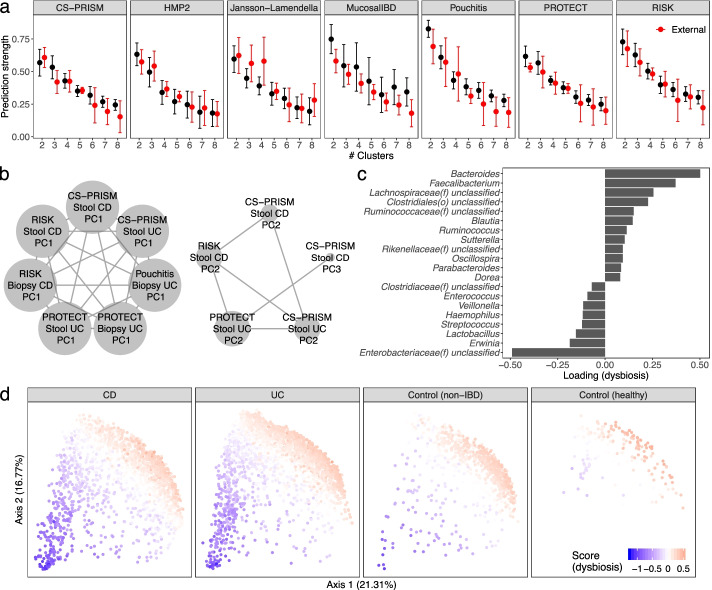
Microbiome studies of inflammatory bowel diseases (IBD) have achieved a scale for meta-analysis of dysbioses among populations. To enable microbial community meta-analyses generally, we develop MMUPHin for normalization, statistical meta-analysis, and population structure discovery using microbial taxonomic and functional profiles. Applying it to ten IBD cohorts, we identify consistent associations, including novel taxa such as Acinetobacter and Turicibacter, and additional exposure and interaction effects. A single gradient of dysbiosis severity is favored over discrete types to summarize IBD microbiome population structure. These results provide a benchmark for characterization of IBD and a framework for meta-analysis of any microbial communities.
Overview
The claims and statistics of this paper haven’t been checked yet.
Free: it reads the open-access text and checks the first 5 claims that cite a source we can check. Create a free account to check every claim.
Integrity signals
Registry
Cites
Statistics
Figures
Verification
Claims the paper makes
The claims and statistics of this paper haven’t been checked yet.
Free: it reads the open-access text and checks the first 5 claims that cite a source we can check. Create a free account to check every claim.
Claims other papers make about this one
Each is checked against this paper’s own text: does it say what the citing paper says it does?
In the citing paper
“Data were batch-corrected with MMUPHin (Ma et al. 2022).36”
From Custom scoring based on ecological topology of gut microbiota associated with cancer immunotherapy outcome (2024) · cites this paper as [36]
Self-check
Percentages, sums and reported differences re-computed from the paper’s own numbers.
The self-check needs the paper’s full text.
Citations
Cites
limma powers differential expression analyses for RNA-sequencing and microarray studies
Ritchie, M. E., Phipson, B., Wu, D., Hu, Y., Law, C. W., Shi, W., & Smyth, G. K. (2015) · Nucleic Acids Research · doi:10.1093/nar/gkv007 · Cited by 40,458 · cited 1×
“This agrees with the field’s consensus on the most appropriate way to address batch effects during supervised testing [15, 58].”
DADA2: High–resolution sample inference from Illumina amplicon data
Callahan, B. J., McMurdie, P. J., Rosen, M. J., Han, A. W., Johnson, A. J. A., & Holmes, S. P. (2016) · Nature Methods · doi:10.1038/nmeth.3869 · Cited by 35,698 · cited 1×
“Specifically, we processed two studies representing extremes of size, BIDMC-FMT (n=16, two technical batches) and RISK (n=882, fifteen batches) with the dada2 method [65], and performed batch correction and evaluation on the generated ASV profiles.”
vegan: Community Ecology Package
Oksanen, J., Simpson, G. L., Blanchet, F. G., Kindt, R., Legendre, P., Minchin, P. R., O'Hara, R. B., Solymos, P., Stevens, M. H. H., Szoecs, E., et al. (2001) · CRAN: Contributed Packages · doi:10.32614/cran.package.vegan · Cited by 22,615
Conducting Meta-Analyses in R with the metafor Package
Viechtbauer, W. (2010) · Journal of Statistical Software · doi:10.18637/jss.v036.i03 · Cited by 20,464 · cited 4×
“These are then aggregated into meta-analysis effect size with fixed/random effects modelling as implemented in the metafor R package [34]: ∼ Yijp = exp {”
MethodInfluentialUPARSE: highly accurate OTU sequences from microbial amplicon reads
Edgar, R. C. (2013) · Nature Methods · doi:10.1038/nmeth.2604 · Cited by 16,707 · cited 2×
“For all studies, demultiplexed sequences were truncated at 200bp max length and filtered by maximum expected error of one [63].”
Wold, S., Esbensen, K., & Geladi, P. (1987) · Chemometrics and Intelligent Laboratory Systems · doi:10.1016/0169-7439(87)80084-9 · Cited by 11,606 · cited 1×
“This is generalized from single study principal component analysis (PCA [43]) to multiple studies by constructing a network of correlated top PC loadings [35] (Fig.”
Principal components analysis corrects for stratification in genome-wide association studies
Price, A. L., Patterson, N. J., Plenge, R. M., Weinblatt, M. E., Shadick, N. A., & Reich, D. (2006) · Nature Genetics · doi:10.1038/ng1847 · Cited by 10,248 · cited 1×
“One example of this is in genome-wide association studies (GWAS [1]), where the appropriate study scale, achieved by rigorous integration of multiple cohorts, has both facilitated reproducible discoveries (in the form of disease-associated loci [2–4]) and addressed confounding due to unobserved population structure [5…”
Adjusting batch effects in microarray expression data using empirical Bayes methods
Johnson, W. E., Li, C., & Rabinovic, A. (2007) · Biostatistics · doi:10.1093/biostatistics/kxj037 · Cited by 8,658 · cited 13×
“ComBat correction [15], suited for gene expression data, was capable of reducing batch effects to a lesser degree, but also tended to reduce desirable “biological” variation in the process, likely due to noise introduced by it changing many zero counts to non-zero values.”
InfluentialEnterotypes of the human gut microbiome
MetaHIT Consortium (additional members), Arumugam, M., Raes, J., Pelletier, E., Le Paslier, D., Yamada, T., Mende, D. R., Fernandes, G. R., Tap, J., Bruls, T., et al. (2011) · Nature · doi:10.1038/nature09944 · Cited by 7,548 · cited 5×
“S14) [9, 32, 41], the first continuous score was IBD-specific and corresponded roughly to more extreme disease-associated dysbiosis in CD and UC populations”
InfluentialMETAL: fast and efficient meta-analysis of genomewide association scans
Willer, C. J., Li, Y., & Abecasis, G. R. (2010) · Bioinformatics · doi:10.1093/bioinformatics/btq340 · Cited by 5,205 · cited 3×
“One example of this is in genome-wide association studies (GWAS [1]), where the appropriate study scale, achieved by rigorous integration of multiple cohorts, has both facilitated reproducible discoveries (in the form of disease-associated loci [2–4]) and addressed confounding due to unobserved population structure [5…”
Research works printed but not linked: 2
- Csardi G Nepusz T The igraph software package for complex network research Int J Complex Syst 2006 1695 5 1 9
- Ma S Population structure discovery in meta-analyzed microbial communities and inflammatory bowel disease 2022 Zenodo PMC9531436 36192803 · doi:10.5281/zenodo.7008567
Cited by
Multivariable association discovery in population-scale meta-omics studies
Mallick, H., Rahnavard, A., McIver, L. J., Ma, S., Zhang, Y., Nguyen, L. H., Tickle, T. L., Weingart, G., Ren, B., Schwager, E. H., et al. (2021) · PLOS Computational Biology · doi:10.1371/journal.pcbi.1009442 · Cited by 2,596
“For instance, MaAsLin 2’s multi-analysis framework has been used in the context of meta-analysis [54], and the extracted residuals and random effects from a MaAsLin 2 fit can be used for further downstream analysis (e.”
MethodSelf-citationLu, Y., Zhou, G., Ewald, J., Pang, Z., Shiri, T., & Xia, J. (2023) · Nucleic Acids Research · doi:10.1093/nar/gkad407 · Cited by 623
“The method is composed of two parts: abundance testing in individual da tasets using multivaria te linear r egr ession followed by the integration of effect size using a random effects model based on the MMUPHin R package ( 13 ).”
Liu, N.-N., Jiao, N., Tan, J.-C., Wang, Z., Wu, D., Wang, A.-J., Chen, J., Tao, L., Zhou, C., Fang, W., et al. (2022) · Nature Microbiology · doi:10.1038/s41564-021-01030-7 · Cited by 306
Derosa, L., Iebba, V., Silva, C. A. C., Piccinno, G., Wu, G., Lordello, L., Routy, B., Zhao, N., Thelemaque, C., Birebent, R., et al. (2024) · Cell · doi:10.1016/j.cell.2024.05.029 · Cited by 198
Batch effects removal for microbiome data via conditional quantile regression
Ling, W., Lu, J., Zhao, N., Lulla, A., Plantinga, A. M., Fu, W., Zhang, A., Liu, H., Song, H., Li, Z., et al. (2022) · Nature Communications · doi:10.1038/s41467-022-33071-9 · Cited by 136
Mei, Z., Wang, F., Bhosle, A., Dong, D., Mehta, R. S., Ghazi, A. R., Zhang, Y., Liu, Y., Rinott, E., Ma, S., et al. (2024) · Nature Medicine · doi:10.1038/s41591-024-03067-7 · Cited by 143
“23) to identify microbial features with different distributions across T2D status in each cohort and pooled the effect estimates from the models across cohorts using meta-analysis 22,24 (Methods).”
InfluentialSelf-citationRegueira‐Iglesias, A., Balsa‐Castro, C., Blanco‐Pintos, T., & Tomás, I. (2023) · Molecular Oral Microbiology · doi:10.1111/omi.12434 · Cited by 155
Huang, X., Hu, M., Sun, T., Li, J., Zhou, Y., Yan, Y., Xuan, B., Wang, J., Xiong, H., Ji, L., et al. (2023) · Cell Host & Microbe · doi:10.1016/j.chom.2023.10.005 · Cited by 104
Multikingdom and functional gut microbiota markers for autism spectrum disorder
Su, Q., Wong, O. W. H., Lu, W., Wan, Y., Zhang, L., Xu, W., Li, M., Liu, C., Cheung, C. P., Ching, J. Y., et al. (2024) · Nature Microbiology · doi:10.1038/s41564-024-01739-1 · Cited by 122
Mucosal host-microbe interactions associate with clinical phenotypes in inflammatory bowel disease
Hu, S., Bourgonje, A. R., Gaćeša, R., Jansen, B. H., Björk, J. R., Bangma, A., Hidding, I. J., van Dullemen, H. M., Visschedijk, M. C., Faber, K. N., et al. (2024) · Nature Communications · doi:10.1038/s41467-024-45855-2 · Cited by 97
Statistical normalization methods in microbiome data with application to microbiome cancer research
Xia, Y. (2023) · Gut Microbes · doi:10.1080/19490976.2023.2244139 · Cited by 83
Robustness of cancer microbiome signals over a broad range of methodological variation
Sepich‐Poore, G. D., McDonald, D. T., Kopylova, E., Guccione, C., Zhu, Q., Austin, G. I., Carpenter, C. S., Fraraccio, S., Wandro, S., Kościółek, T., et al. (2024) · Oncogene · doi:10.1038/s41388-024-02974-w · Cited by 72
Li, M., Liu, J., Zhu, J., Wang, H., Sun, C., Gao, N. L., Zhao, X.-M., & Chen, W.-H. (2023) · Gut Microbes · doi:10.1080/19490976.2023.2205386 · Cited by 66
Gut microbiome for predicting immune checkpoint blockade-associated adverse events
Hu, M., Lin, X., Sun, T., Shao, X., Huang, X., Du, W., Guo, M., Zhu, X., Zhou, Y., Tong, T., et al. (2024) · Genome Medicine · doi:10.1186/s13073-024-01285-9 · Cited by 78
“…accounted for the largest confounder, we used the MMUPHin (Meta-analysis Methods with a Uniform Pipeline for Heterogeneity in microbiome studies) [45] for microbial community batch correction on the confounder factor “study,” a new algorithm extending the batch correction method developed for…”
MethodMeta-analysis of shotgun sequencing of gut microbiota in Parkinson’s disease
Nishiwaki, H., Ueyama, J., Ito, M., Hamaguchi, T., Takimoto, K., Maeda, T., Kashihara, K., Tsuboi, Y., Mori, H., Kurokawa, K., et al. (2024) · npj Parkinson s Disease · doi:10.1038/s41531-024-00724-z · Cited by 86
Meta-Analysis Reveals Compositional and Functional Microbial Changes Associated with Osteoporosis
Akinsuyi, O., & Roesch, L. F. W. (2023) · Microbiology Spectrum · doi:10.1128/spectrum.00322-23 · Cited by 70
“MMUPHin (76) was used to reduce the batch effect while preserving the magnitude of biological differences between groups (Table S1B) as performed by previous studies (77–79).”
MethodSun, H., Shu, J., Tang, J., Li, Y., Qiu, J., Ding, Z., Xuan, B., Chen, M., Gan, C., Lin, J., et al. (2024) · Immunology · doi:10.1111/imm.13784 · Cited by 54
“A recent study showed that GLP-1 [28 – 36], a neutral endopeptidase-generated metabolite of GLP-1, acts directly on mice through micropinocytosis [45].”
BackgroundResultThompson, K. N., Bonham, K. S., Ilott, N. E., Britton, G. J., Colmenero, P., Bullers, S. J., McIver, L. J., Ma, S., Nguyen, L. H., Filer, A. D., et al. (2023) · Science Translational Medicine · doi:10.1126/scitranslmed.abn4722 · Cited by 59
Self-citationSearching for a Consensus Among Inflammatory Bowel Disease Studies: A Systematic Meta-Analysis
Abdel-Rahman, L. I. H., & Morgan, X. C. (2022) · Inflammatory Bowel Diseases · doi:10.1093/ibd/izac194 · Cited by 59
Integrative metagenomic analysis reveals distinct gut microbial signatures related to obesity
Hu, X., Yu, C. H. A., He, Y., Zhu, S., Wang, S., Xu, Z., You, S., Jiao, Y., Liu, S., & Bao, H. (2024) · BMC Microbiology · doi:10.1186/s12866-024-03278-5 · Cited by 67
Data pre-processing for analyzing microbiome data – A mini review
Zhou, R., Ng, S. K., Sung, J. J. �., Goh, W. W. B., & Wong, S. H. (2023) · Computational and Structural Biotechnology Journal · doi:10.1016/j.csbj.2023.10.001 · Cited by 66
“MMUPHin (Meta-Analysis Methods with a Uniform Pipeline for Heterogeneity in microbiome studies) incorporates batch and study effect correction, meta-analyzed differential abundance testing and population structure discovery [84].”
MethodLi, Y., Hu, Y., Zhan, X., Song, Y., Xu, M., Wang, S., Huang, X., & Xu, Z. Z. (2023) · Gut Microbes · doi:10.1080/19490976.2023.2197835 · Cited by 59
Metagenomic analysis characterizes stage-specific gut microbiota in Alzheimer’s disease
Jia, L., Ke, Y., Zhao, S., Liu, J., Luo, X., Cao, J., Liu, Y., Guo, Q., Chen, W., Chen, F., et al. (2025) · Molecular Psychiatry · doi:10.1038/s41380-025-02973-7 · Cited by 58
“2b) [72, 73].”
InfluentialChallenges in IBD Research 2024: Preclinical Human IBD Mechanisms
Ciorba, M. A., Konnikova, L., Hirota, S. A., Lucchetta, E. M., Turner, J. R., Slavin, A., Johnson, K., Condray, C. D., Hong, S., Cressall, B. K., et al. (2024) · Inflammatory Bowel Diseases · doi:10.1093/ibd/izae081 · Cited by 47
Kubinski, R., Djamen-Kepaou, J.-Y., Zhanabaev, T., Hernández-García, Á., Bauer, S., Hildebrand, F., Korcsmáros, T., Karam, S., Jantchou, P., Kafi, K., et al. (2022) · Frontiers in Genetics · doi:10.3389/fgene.2022.784397 · Cited by 45
Lin, Y., Lau, H. C.-H., Liu, C., Ding, X., Sun, Y., Rong, J., Zhang, X., Wang, L., Yuan, K., Miao, Y., et al. (2025) · Cell Host & Microbe · doi:10.1016/j.chom.2025.03.012 · Cited by 46
Multi-Cohort Analysis Reveals Altered Archaea in Colorectal Cancer Fecal Samples Across Populations
Li, T., Coker, O. O., Sun, Y., Li, S., Liu, C., Lin, Y., Wong, S. H., Miao, Y., Sung, J. J. �., & Yu, J. Q. (2024) · Gastroenterology · doi:10.1053/j.gastro.2024.10.023 · Cited by 45
Li, P., Li, M., & Chen, W. (2025) · Gut Microbes · doi:10.1080/19490976.2025.2489074 · Cited by 48
“…batch effects while preserving strong model performance In this study, we compared three methods for batch effect removal: the “removeBatchEffect” function from the limma R package, 35 the “adjust_batch” function from the MMUPHin R package, 36 and the “ComBat” function from the sva R package.”
InfluentialGao, S., Gao, X., Zhu, R., Wu, D., Feng, Z., Jiao, N., Sun, R., Gao, W., He, Q., Liu, Z., et al. (2023) · Gut Microbes · doi:10.1080/19490976.2023.2221428 · Cited by 43
“First, the effects of major confounders were assessed to be not significant (Figure S1), and differential signatures were identified at the species, gene, and SNV levels after adjusting for batch effects using the MMUPHin approach.”
MethodInfluentialGao, W., Gao, X., Zhu, L., Gao, S., Sun, R., Feng, Z., Wu, D., Liu, Z., Zhu, R., & Jiao, N. (2023) · Gut Microbes · doi:10.1080/19490976.2023.2245562 · Cited by 37
“51,52 Respective regression analyses in individual cohorts were performed and then aggregated with established fixed effect models to test for consistent differential signatures between adenoma and con-trol samples with “cohort” set as the main batch and demographic indices, including gender, age…”
MethodRavikrishnan, A., Wijaya, I., Png, E., Chng, K. R., Ho, E. X. P., Ng, A. H. Q., Naim, A. N. M., Gounot, J.-S., Guan, S. P., Lee, J. H., et al. (2024) · Nature Communications · doi:10.1038/s41467-024-52097-9 · Cited by 41
An integrated Bayesian framework for multi‐omics prediction and classification
Mallick, H., Porwal, A., Saha, S., Basak, P., Svetnik, V., & Paul, E. (2023) · Statistics in Medicine · doi:10.1002/sim.9953 · Cited by 40
“S2 ) are due to the fact the non-IBD subjects in this population are not perfectly representative of a healthy cohort, thus adding to the significant heterogeneity in an already heterogeneous disease cohort 6,16,17 .”
BackgroundSelf-citationGlobal compositional and functional states of the human gut microbiome in health and disease
Lee, S., Portlock, T., Chatelier, E. L., García-Guevara, F., Clasen, F., Oñate, F. P., Pons, N., Begum, N., Harzandi, A., Proffitt, C., et al. (2024) · Genome Research · doi:10.1101/gr.278637.123 · Cited by 38
“Some approaches exist for removing batch effects in microbiome data sets (Ling et al. 2022; Ma et al. 2022); however, they assume that all confounding factors are known, which can be challenging when public data sets are used that do not provide metadata.”
BackgroundMethodOkoro, P. C., ORWOLL, E. S., Huttenhower, C., Morgan, X. C., Kuntz, T. M., McIver, L. J., Dufour, A. B., Bouxsein, M., Langsetmo, L., Farsijani, S., et al. (2023) · Frontiers in Endocrinology · doi:10.3389/fendo.2023.1237727 · Cited by 36
Self-citationRumen and fecal microbiomes are related to diet and production traits in Bos indicus beef cattle
Conteville, L. C., da Silva, J. V., Andrade, B. G. N., Cardoso, T. F., Bruscadin, J. J., de Oliveira, P. S. N., Mourão, G. B., Coutinho, L. L., Palhares, J. C. P., Berndt, A., et al. (2023) · Frontiers in Microbiology · doi:10.3389/fmicb.2023.1282851 · Cited by 39
Mazgaj, R., Lipiński, P., Szudzik, M., Jończy, A., Kopeć, Z., Stankiewicz, A. M., Kamyczek, M., Swinkels, D. W., Żelazowska, B., & Starzyński, R. R. (2021) · International Journal of Molecular Sciences · doi:10.3390/ijms22189930 · Cited by 36
“MMUPHin R package was used for batch correction [82].”
MethodKang, S., Kim, H., Kim, S., Kim, J., Park, S., Lee, C.-W., Kim, K. O., Seo, G. S., Kim, M. S., Cha, J. M., et al. (2023) · Microorganisms · doi:10.3390/microorganisms11071665 · Cited by 31
Meta-analysis of shotgun sequencing of gut microbiota in obese children with MASLD or MASH
Zöggeler, T., Kavallar, A. M., Pollio, A. R., Aldrian, D., Decristoforo, C., Scholl‐Bürgi, S., Müller, T., & Vogel, G. F. (2025) · Gut Microbes · doi:10.1080/19490976.2025.2508951 · Cited by 34
Gray, S. M., Moss, A. D., Herzog, J., Kashiwagi, S., Liu, B., Young, J. B., Sun, S., Bhatt, A. P., Fodor, A. A., & Sartor, R. B. (2024) · Microbiome · doi:10.1186/s40168-024-01857-2 · Cited by 28
“H, Table S1) [7, 9, 59, 60].”
Arıkan, M., Demir, T. K., Yıldız, Z., Nalbantoğlu, Ö. U., Korkmaz, N. D., Yılmaz, N. H., Şen, A., Özcan, M., Muth, T., Hanoğlu, L., et al. (2023) · npj Biofilms and Microbiomes · doi:10.1038/s41522-023-00452-x · Cited by 30
Identification and validation of microbial biomarkers from cross-cohort datasets using xMarkerFinder
Gao, W., Lin, W., Li, Q., Chen, W., Yin, W., Zhu, X., Gao, S., Liu, L., Li, W., Wu, D., et al. (2024) · Nature Protocols · doi:10.1038/s41596-024-00999-9 · Cited by 25
“…technical differences, we employed Meta-analysis Methods with Uniform Pipeline for Heterogeneity in Microbiome Studies (MMUPHin), a widely used meta-analysis method, allowing joint confounding effect correction and differential signature identification between groups in cross-cohort datasets 9 .”
Austin, G. I., Kav, A. B., ElNaggar, S., Park, H., Biermann, J., Uhlemann, A., Pe’er, I., & Korem, T. (2025) · Nature Microbiology · doi:10.1038/s41564-025-01954-4 · Cited by 30
“…that this cross-batch similarity assumption assumes only a similarity in means and is thus weaker than the similarity assumption made by some alternative methods, which enforce similarity on both mean and variance 20,22,23 or on the entire shape of the distribution using quantiles 16,18,19,21 .”
Li, Y., Ma, A., Johnson, W. E., Eng, C., De, S., Jiang, S., Li, Z., Spakowicz, D. J., & Ma, Q. (2025) · Nature Methods · doi:10.1038/s41592-025-02807-y · Cited by 27
“Several microbiome-specific tools have been developed to remove batch effects, thereby ensuring more reliable data integration across studies 69–71 .”
Jin, D.-M., Morton, J. T., & Bonneau, R. (2024) · mSystems · doi:10.1128/msystems.00295-24 · Cited by 31
Cha, J. H., Kim, N., Ma, J., Lee, S.-H., Koh, G., Yang, S., Beck, S., Byeon, I., Lee, B., & Lee, I. (2025) · Cell Host & Microbe · doi:10.1016/j.chom.2025.10.001 · Cited by 29
Surrogate markers of intestinal dysfunction associated with survival in advanced cancers
Birebent, R., Drubay, D., Alves Costa Silva, C., Marmorino, F., Vitali, G., Piccinno, G., Hurtado, Y., Bonato, A., Belluomini, L., Messaoudene, M., et al. (2025) · OncoImmunology · doi:10.1080/2162402x.2025.2484880 · Cited by 21
Multiomics reveals microbial metabolites as key actors in intestinal fibrosis in Crohn’s disease
Li, X., Hu, S., Shen, X., Zhang, R., Liu, C., Lin, X., Lin, J., Huang, L., He, W., Wang, X., et al. (2024) · EMBO Molecular Medicine · doi:10.1038/s44321-024-00129-8 · Cited by 24
“…(e.g., Ruminococcaceae , Muribaculaceae ) and fecal/blood metabolites (e.g., L -aspartic acid, glutamine, IPA) might be speci fi c to BF2 in a non-linear relationship along with the severity of fi brosis, which was consistent with some fi ndings reported in a previous meta-analysis (Ma et al, 2022).”
First insights into microbial changes within an Inflammatory Bowel Disease Family Cohort study
Rausch, P., Ratjen, I., Tittmann, L., Enderle, J., Wacker, E. M., Jaeger, K., Rühlemann, M. C., Franzpötter, K., Ellul, P., Kruse, R., et al. (2025) · Gut Microbes · doi:10.1080/19490976.2025.2559119 · Cited by 22
“51 Various Enterobacteriaceae are known to elicit and exploit inflammatory processes and are associated with the development of IBD 50 at the ecological, 57 metabolic, 58 or immunological level.”
Ma, C., Li, Y., Mei, Z., Yuan, C., Kang, J. H., Grodstein, F., Ascherio, A., Willett, W. C., Chan, A. T., Huttenhower, C., et al. (2023) · Neurology · doi:10.1212/wnl.0000000000207849 · Cited by 28
“25 We used MMUPHin 26 to correct the potential batch e ff ect in the metagenomic data sets.”
MethodSelf-citationLee, S., & Lee, I. (2024) · Gut Microbes · doi:10.1080/19490976.2024.2375679 · Cited by 25
Planning and Analyzing a Low-Biomass Microbiome Study: A Data Analysis Perspective
Austin, G. I., & Korem, T. (2024) · The Journal of Infectious Diseases · doi:10.1093/infdis/jiae378 · Cited by 30
Predicting the role of the human gut microbiome in type 1 diabetes using machine-learning methods
Liu, X., Li, H., Ma, C.-Y., Shi, T., Wang, T., Yan, D., Tang, H., Lin, H., & Deng, K. (2024) · Briefings in Functional Genomics · doi:10.1093/bfgp/elae004 · Cited by 20
Bugs as features (part 2): a perspective on enriching microbiome–gut–brain axis analyses
Bastiaanssen, T. F. S., Quinn, T. P., & Loughman, A. (2023) · Nature Mental Health · doi:10.1038/s44220-023-00149-2 · Cited by 19
Rad, S. K., Yeo, K. K. L., Wu, F., Li, R., Nourmohammadi, S., Tomita, Y., Price, T. J., Ingman, W. V., Townsend, A. R., & Smith, E. (2025) · Microorganisms · doi:10.3390/microorganisms13020467 · Cited by 24
“Batch-correction tools cannot fully address the variability introduced by differences in DNA extraction protocols, primer sets, or amplified amplicon regions [93–95].”
Ma, J., Kim, N., Cha, J. H., Kim, W., Kim, C. Y., Lee, Y., Kim, H. S., Han, Y. D., Yong, D., Han, E., et al. (2025) · Nature Microbiology · doi:10.1038/s41564-025-02206-1 · Cited by 32
Dong, C., Guan, Q., Xu, W., Zhang, X., Jin, B., Yu, S., Xu, X., & Xia, Y. (2023) · Gut Microbes · doi:10.1080/19490976.2023.2290320 · Cited by 17
“54 The batch effects resulting from these factors after adjustment were evaluated using the same methodology, which suggested an evident reduction.”
MethodZhang, H., Wu, J., Ji, D., Liu, Y., Lu, S., Lin, Z., Chen, T., & Ao, L. (2022) · Frontiers in Microbiology · doi:10.3389/fmicb.2022.1005201 · Cited by 20
“Moreover, to identify the differential genera in all samples mixed from the six metagenomics datasets, de-batch processing by the MMUPHin Rpackage (Ma et al., 2020) was performed to avoid biases from different studies due to different taxonomic classifiers, reference databases, etc. 3 Release132, http://www.arb-silva.…”
MethodOh, S., & Li, R. W. (2024) · Advanced Science · doi:10.1002/advs.202400458 · Cited by 15
Cai, X., Cho, J. Y., Chen, L., Liu, Y., Ji, F., Salgado, K., Ge, S., Yang, D., Yu, H., Shao, J., et al. (2025) · iScience · doi:10.1016/j.isci.2025.112162 · Cited by 21
Pietruska, A., Bortoluzzi, C., & Hauck, R. (2023) · Poultry Science · doi:10.1016/j.psj.2023.102652 · Cited by 20
Sahil, R., Pal, V., Kharat, A. S., & Jain, M. (2025) · Plant Cell & Environment · doi:10.1111/pce.15429 · Cited by 18
“Batch effect adjustment was performed using MMUPHin (Ma et al. 2022).”
Na, C., Shi, X., Fu, J., Li, J.-H., Jiang, H., Guo, Z., Lai, H., Zhang, Z., Zhao, L., Yuan, Q., et al. (2025) · Carbohydrate Polymers · doi:10.1016/j.carbpol.2025.124717 · Cited by 16
Krukowski, H., Valkenburg, S., Vila, A. V., Maciel, L. F., Vázquez-Castellanos, J. F., Gryp, T., Joossens, M., Biesen, W. V., Verbeke, F., Derrien, M., et al. (2026) · Nature Microbiology · doi:10.1038/s41564-026-02259-w · Cited by 21
“To mitigate batch effects, microbiome abundance profiles were harmonized using MMUPHin (v.1.12.1) 75 .”
InfluentialHansen, Z. A., Vasco, K. A., Rudrik, J. T., Scribner, K. T., Zhang, L., & Manning, S. D. (2023) · Scientific Reports · doi:10.1038/s41598-023-42822-7 · Cited by 16
Hernández-Rocha, C., Turpin, W., Borowski, K., Stempak, J. M., Sabic, K., Gettler, K., Tastad, C., Chasteau, C., Korie, U. M., Hanna, M. T., et al. (2024) · Clinical Gastroenterology and Hepatology · doi:10.1016/j.cgh.2024.06.022 · Cited by 13
Challenges and Opportunities in Analyzing Cancer-Associated Microbiomes
Chia, M., Pop, M., Salzberg, S. L., & Nagarajan, N. (2025) · Cancer Research · doi:10.1158/0008-5472.can-24-3629 · Cited by 12
Gut-microbiota-based ensemble model predicts prognosis of pediatric inflammatory bowel disease
Ha, S. M., Lee, K., Kim, G.-H., Hurych, J., Cinek, O., & Shim, J. O. (2024) · iScience · doi:10.1016/j.isci.2024.111442 · Cited by 12
“59 The adjusted read counts were used in downstream analyses of differential abundance and prognostic model training.”
A conserved pilin from uncultured gut bacterial clade TANB77 enhances cancer immunotherapy
Kim, C. Y., Park, D. J., Ahn, B., Baek, S., Hong, M. H., Nguyen, L. T., Hwang, S. H., Kim, N., Podlesny, D., Orakov, A. N., et al. (2024) · Nature Communications · doi:10.1038/s41467-024-55388-3 · Cited by 12
Self-citationSall, I., Foxall, R. L., Felth, L. C., Maret, S., Rosa, Z., Gaur, A., Calawa, J., Pavlik, N., Whistler, J. L., & Whistler, C. A. (2025) · Gut Microbes · doi:10.1080/19490976.2024.2446423 · Cited by 10
“10.0) 77”
InfluentialCRCpred: An AI-ML tool for colorectal cancer prediction using gut microbiome
Pateriya, D., Malwe, A. S., & Sharma, V. K. (2025) · Computers in Biology and Medicine · doi:10.1016/j.compbiomed.2025.110592 · Cited by 13
Wang, L., Zhao, H. Y., Wu, F., Chen, J., Xu, H., Gong, W., Wen, S., Yang, M., Xia, J., Chen, Y., et al. (2025) · Computational and Structural Biotechnology Journal · doi:10.1016/j.csbj.2025.03.030 · Cited by 8
“Methods such as Conditional Quantile Regression (ConQuR) [24], ComBat [46], and MMUPHin [47] have been developed to mitigate these effects, but limitations remain.”
Zheng, Q., Zhong, Y., Lian, H., Zhuang, J., Wang, L., Chen, J., Wang, H., Wang, H., Ye, X., Huang, Z., et al. (2025) · United European Gastroenterology Journal · doi:10.1002/ueg2.70064 · Cited by 10
““MMUPHin” R package [24] was used to mitigate batch effects between datasets.”
Xu, X., Lubomski, M., Holmes, A. J., Sue, C. M., Davis, R. L., Müller, S., & Yang, J. Y. H. (2023) · Microbiome · doi:10.1186/s40168-023-01475-4 · Cited by 13
“an arcsin square root transformation, was performed on taxa proportion [47, 55]; the arcsin transformed data were further standardized to have mean zero and unit variance (z-score).”
MethodHansen, Z. A., Schilmiller, A. L., Guzior, D. V., Rudrik, J. T., Quinn, R. A., Vasco, K. A., & Manning, S. D. (2024) · Frontiers in Cellular and Infection Microbiology · doi:10.3389/fcimb.2024.1359576 · Cited by 8
Meta-analysis of gut microbiome reveals patterns of dysbiosis in colorectal cancer patients
Yan, R., Zheng, R., Han, Y., Song, G., Huo, B., & Sun, H. L. (2025) · Journal of Medical Microbiology · doi:10.1099/jmm.0.002042 · Cited by 9
“Incorporating a wide range of microbiome research methods, such as meta-analysis [21], microbiome-based association test analyses [35, 49] and microbial differential abundance analyses [37, 50], could further enrich our experimental analyses.”
Setting higher standards for reports of microbial species in human cancers
Salzberg, S. L., Chia, M., Tay, C. Y., de Miranda, N. F. C. C., Smit, V. T. H. B. M., Wesseling, J., Irizarry, R. A., Marshall, B. J., Willerslev, E., Neefjes, J., et al. (2026) · Nature Cancer · doi:10.1038/s43018-026-01121-6 · Cited by 8
Junker, R., Valence, F., Mistou, M., Chaillou, S., & Chiapello, H. (2024) · Microbiology Spectrum · doi:10.1128/spectrum.00312-24 · Cited by 9
Liu, J., Feng, W., Liu, J., Sun, W., Liu, S., Chen, S., Zhang, D., Xu, B., & Ma, S. (2024) · Journal of Ethnopharmacology · doi:10.1016/j.jep.2024.118879 · Cited by 7
Self-citationMicrobial Metabolic Pathways Guide Response to Immune Checkpoint Blockade Therapy
Mimpen, I. L., Battaglia, T., Parra-Martinez, M., Toner-Bartelds, C., Zeverijn, L. J., Geurts, B. S., Verkerk, K., Hoes, L. R., van Renterghem, A. W. J., Noë, M., et al. (2025) · Cancer Discovery · doi:10.1158/2159-8290.cd-24-1669 · Cited by 11
Gao, P., Yuan, H., Mei, Z., Yin, X., Zeng, Y., Liu, Z., Yang, X., Xue, J., Liu, Z., Jiang, Y., et al. (2025) · Cell Reports Medicine · doi:10.1016/j.xcrm.2025.102431 · Cited by 9
Choi, Y., Zhou, M., Oba, M., Romero-Pérez, A., Beauchemin, K. A., Duval, S. M., Kindermann, M., & Guan, L. L. (2026) · Microbiome · doi:10.1186/s40168-025-02201-y · Cited by 7
“A comparative analysis approach was employed to investigate the impact of 3-NOP across each study, identifying different microbial signatures and functions using MMUPHin (v.1.18.1, Meta-analysis Methods with a Uni-form Pipeline for Heterogeneity in Microbiome Studies, [60]).”
InfluentialMohammadzadeh, R., Mahnert, A., Zurabishvili, T., Wink, L., Kumpitsch, C., Habisch, H., Sprengel, J., Filek, K., Mertelj, P., Pernitsch, D., et al. (2026) · Nature Communications · doi:10.1038/s41467-026-69711-7 · Cited by 13
Yang, P., Zhu, X. H., & Ning, K. (2023) · Communications Biology · doi:10.1038/s42003-023-04753-x · Cited by 8
Choi, Y., Zhou, M., Ban, Y., Oba, M., Duval, S. M., & Guan, L. L. (2025) · Journal of Dairy Science · doi:10.3168/jds.2024-26206 · Cited by 7
Geographic diversity in inflammatory bowel disease genetics and microbiome
Hao, F., Zhu, W., Zheng, J., Ng, S. C., & Zhang, J. (2025) · Trends in Microbiology · doi:10.1016/j.tim.2025.06.017 · Cited by 7
Metagenomic analysis reveals gut plasmids as diagnosis markers for colorectal cancer
Cai, Z., Li, P., Zhu, W., Wei, J., Lü, J., Song, X., Li, K., Li, S., & Li, M. (2023) · Frontiers in Microbiology · doi:10.3389/fmicb.2023.1130446 · Cited by 8
“Plasmid community batch effects among cohorts were corrected using the “adjust_batch” function of the MMUPHin R package (v 2.6-2; Ma et al., 2022).”
MethodInfluentialBacterial genomic structural variations in children with autism serve as diagnostic biomarkers
Liu, W., Lu, Y., Ng, S. C., Chan, F. K., Sung, J. J. Y., & Yu, J. Q. (2026) · Gut · doi:10.1136/gutjnl-2025-337280 · Cited by 6
Gem, H., Ebadi, M., Sebastian, G., Abasaeed, R., Lloid, M. E., Minot, S. S., Dean, D. R., & Rashidi, A. (2024) · npj Biofilms and Microbiomes · doi:10.1038/s41522-024-00611-8 · Cited by 8
Budzinski, L., Sempert, T., Lietz, L., Maier, R., Kang, G.-U., von Stuckrad, A. S. L., Goetzke, C. C., Roth, M., Shah, A., Abbas, A., et al. (2024) · Molecular and Cellular Pediatrics · doi:10.1186/s40348-024-00186-6 · Cited by 7
“The MMUPHin::adjust_batch function was applied for batch effect correction [27].”
Quorum quenching enzymes disrupt bacterial communication in a sex‐ and dose‐dependent manner
Syal, A., Martell, M., Sikdar, R., Dietz, M. A., Ziegert, Z., Jahansouz, C., Elias, M. H., & Staley, C. M. (2025) · Animal Models and Experimental Medicine · doi:10.1002/ame2.12520 · Cited by 5
Yeo, K., Wu, F., Li, R., Smith, E., Wormald, P.-J., Valentine, R., Psaltis, A. J., Vreugde, S., & Fenix, K. (2024) · Pathogens · doi:10.3390/pathogens13100826 · Cited by 5
“Most batch correction tools are designed to mitigate or alleviate technical variations rather than being modeled particularly on specific sources (i.e., differences in extraction protocols, primers, amplicon regions amplified) [57,68,78].”
BackgroundMethodInfluentialSun, Y., Huang, Y., Li, R., Zhang, J., Fan, X., & Su, X. (2025) · Microbiome Research Reports · doi:10.20517/mrr.2025.75 · Cited by 6
Graham, A. S., Patel, F., Little, F., van der Kouwe, A. J. W., Kaba, M., & Holmes, M. (2025) · Frontiers in Bioinformatics · doi:10.3389/fbinf.2025.1484113 · Cited by 5
Zhang, Y., Luo, J., Chen, K., Li, N., Luo, C., Di, S., Qin, J., Zhang, F., Chen, H., & Dai, M. (2025) · Journal of Translational Medicine · doi:10.1186/s12967-025-06676-z · Cited by 4
“Given the heterogeneity among different studies, we used the Meta-analysis Methods with Uniform Pipeline for Heterogeneity in Microbiome Studies (MMUPHin) to identify differential gut microbial signatures associated with CRC at the species level [23].”
Microbiome data integration via shared dictionary learning
Yuan, B., & Wang, S. (2025) · Nature Communications · doi:10.1038/s41467-025-63425-y · Cited by 8
“…in sequencing count distributions is due to batch effects after adjusting the effects of all possible confounding variables, and we shall remove such differences before integrating data sets (Gibbons et al., 2018; Zhang et al., 2020; Ma et al., 2022; Ling et al., 2022; Wang and Lˆe Cao, 2023).”
InfluentialZhang, L., Zhou, D., Feng, J., Liao, Z.-J., Shu, X.-L., Yang, R., Gao, Y., Zhou, H., Zhang, W., Zou, Y. F., et al. (2025) · npj Biofilms and Microbiomes · doi:10.1038/s41522-025-00827-2 · Cited by 8
Rühlemann, M. C., Waschina, S., Wacker, E. M., Rausch, P., Schaan, A. P., Zafroon, Z., Franzpötter, K., Jacobs, G., Ellinghaus, D., Kruse, R., et al. (2023) · medRxiv · doi:10.1101/2023.12.10.23299783 · Cited by 5
Poyet, M., Rühlemann, M. C., Schaan, A. P., Ma, Y., Moitinho‐Silva, L., Wacker, E. M., Jebens, H., Patel, L., Nguyen, L. T. T., Zimmer, A., et al. (2026) · Cell · doi:10.1101/2025.10.20.683358 · Cited by 10
Self-citationComposite quantile regression approach to batch effect correction in microbiome data
Park, J. W., & Park, T. (2025) · Frontiers in Microbiology · doi:10.3389/fmicb.2025.1484183 · Cited by 3
da Silva, J. V., Conteville, L. C., Bruscadin, J. J., Cardoso, T. F., Porto, T., de Oliveira, P. S. N., Zerlotini, A., de Medeiros, S. R., Mourão, G. B., Coutinho, L. L., et al. (2025) · mSphere · doi:10.1128/msphere.00535-25 · Cited by 4
“Following this aggregation, functional profiles were corrected to account for variation associated with contemporary groups (defined by weighing and slaughter groups) using the batch correction model (adjust_batch) implemented in MMUPHin (31), with default parameters.”
Influential
Metadata
- Authors
- Ma, S., Shungin, D., Mallick, H., Schirmer, M., Nguyen, L. H., Kolde, R., Franzosa, E., Vlamakis, H., Xavier, R., & Huttenhower, C.
- Affiliations
- Harvard University (US)
- Broad Institute (US)
- Massachusetts General Hospital (US)
- Corresponding author
- Xavier, Ramnik
- Huttenhower, Curtis
- ORCID
- Venue
- Genome biology
- Published
- 2022-10-03
- Volume
- 23
- Issue
- 1
- Pages
- 208-208
- ISSN
- 1465-6906 (ISSN-L)
- 1474-760X
- PMC
- PMC9531436
- OpenAlex
- W4300863449
- Semantic Scholar
- c4d18396ecd99205b6ba86c56bfb23fb47e84d90
- Cited by
- 164
- References
- 68
- Citations by year
- 2026: 40 · 2025: 47 · 2024: 40 · 2023: 28 · 2022: 7
- FWCI
- 3.31
- Type
- journal article
- Language
- en
- Open access
- gold
- doi.org
- Licence
- cc-by
- creativecommons.org/licenses/by/4.0 (tdm)
- creativecommons.org/licenses/by/4.0 (vor)
- Locations
- Genome biology (publishedVersion, cc-by)
- PubMed Central (publishedVersion, cc-by)
- PubMed (publishedVersion)
- DOAJ (DOAJ: Directory of Open Access Journals) (submittedVersion, cc-by-sa)
- Funders
- national institute of diabetes and digestive and kidney diseases (R24DK110499, P30DK043351)
- Topics
- Life Sciences › Biochemistry, Genetics and Molecular Biology › Molecular Biology › Gut microbiota and health
- Health Sciences › Medicine › Gastroenterology › Inflammatory Bowel Disease
- Physical Sciences › Environmental Science › Ecology › Microbial Community Ecology and Physiology
- Keywords
- inflammatory bowel disease, gut microbiota, dysbiosis, taxonomic profiles, functional profile, Acinetobacter, Turicibacter
- MeSH terms
- Gastrointestinal Microbiome, Humans, Inflammatory Bowel Diseases, Microbiota, Dysbiosis
About these checks
Registry, retraction, Cites and statistics results are computed, not judged, with one exception: a printed reference that no index lists is read once by a model before it counts as a citation error. Claims are extracted by a model and kept only when their quote appears verbatim in the text; each cited source is then checked, with a model’s help, for whether it says what the claim relies on. Those verdicts can be wrong — read the claim’s quote and the cited source before relying on one.
Statistics and arithmetic are recomputed, not judged.
Confidence bands are shown only for fields calibrated on our annotated test set. None is calibrated yet, so no band is shown.
What counts as a claim ›How we measure confidence ›How we check this ›
Are you an author, or do you see a problem with this page? Request a review
Data sources
Bibliographic data: Semantic Scholar, OpenAlex, Crossref.
Contains information from the Semantic Scholar Academic Graph Datasets, made available under the ODC Attribution License (ODC-BY 1.0).
Semantic Scholar’s data is described in: Kinney, R., et al. (2023). The Semantic Scholar Open Data Platform. arXiv:2301.10140.
