

Evaluation of cell-cell interaction methods by integrating single-cell RNA sequencing data with spatial information
Open accessThe DOI matches its Crossref record; 68 of the 68 references it cites were found in a registry or an index.
Abstract
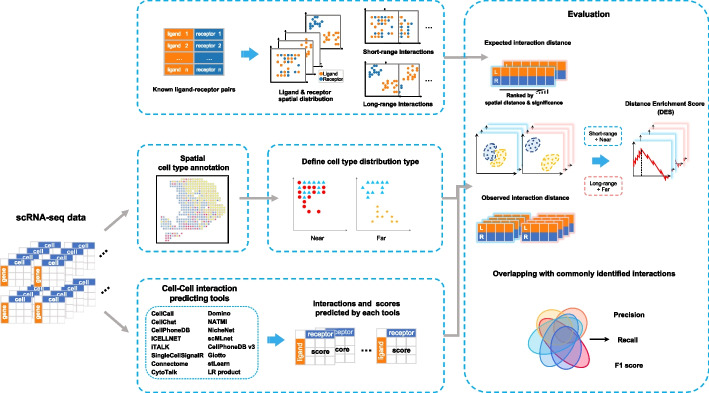
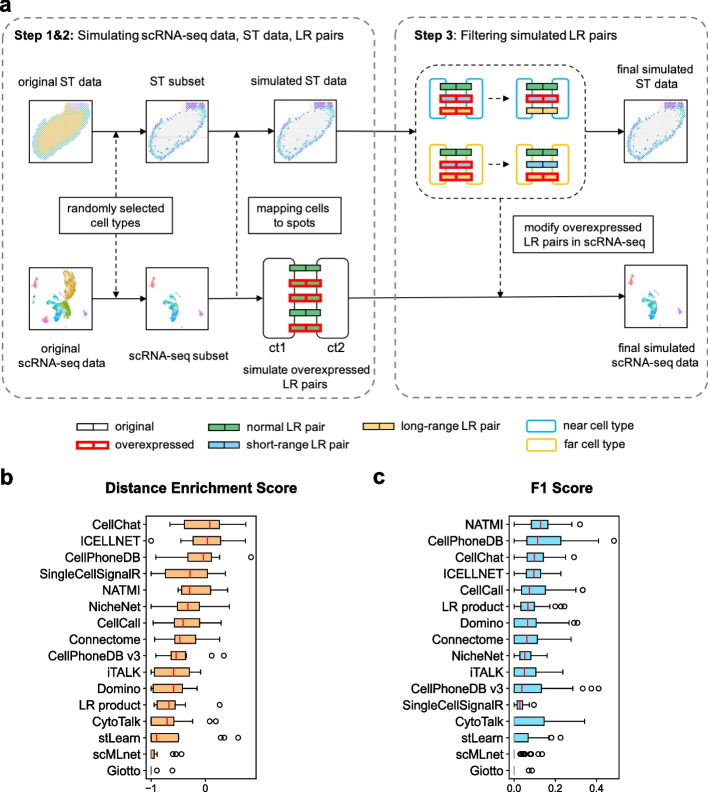
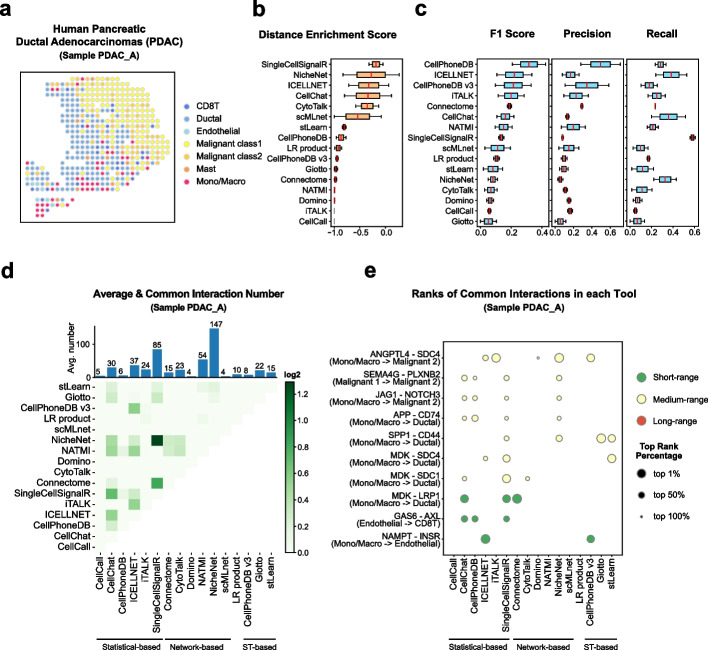
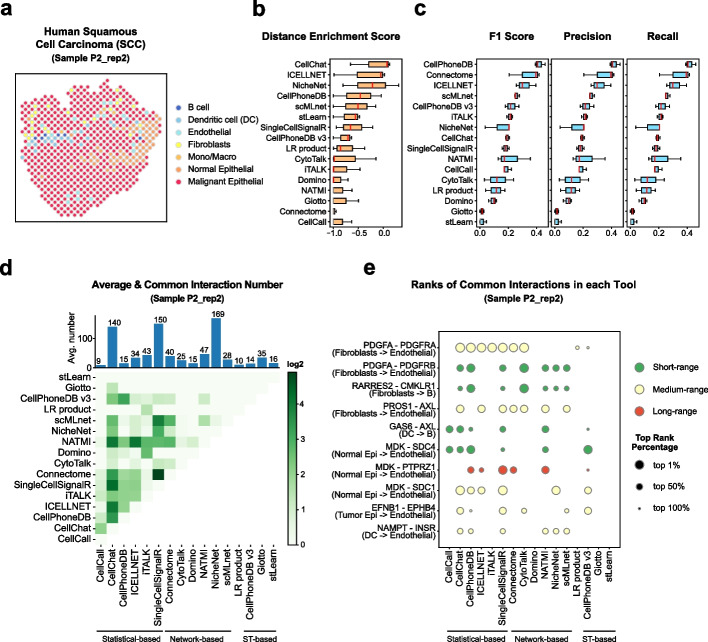
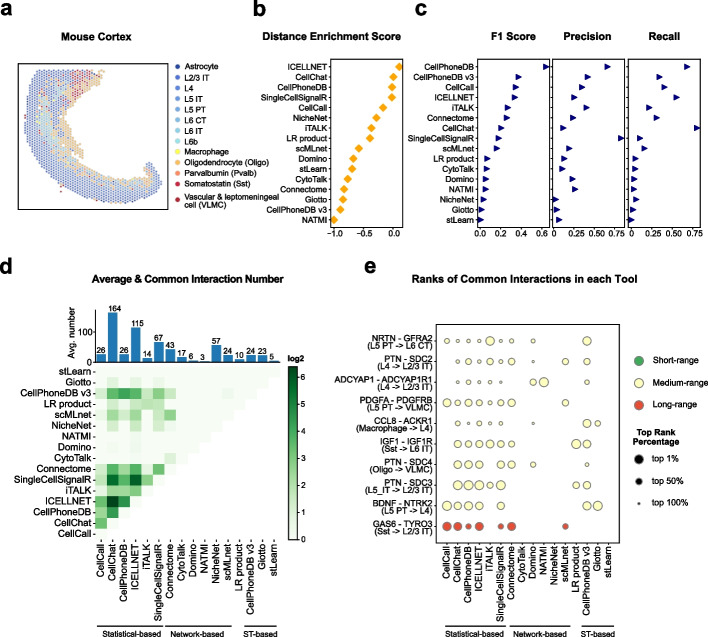
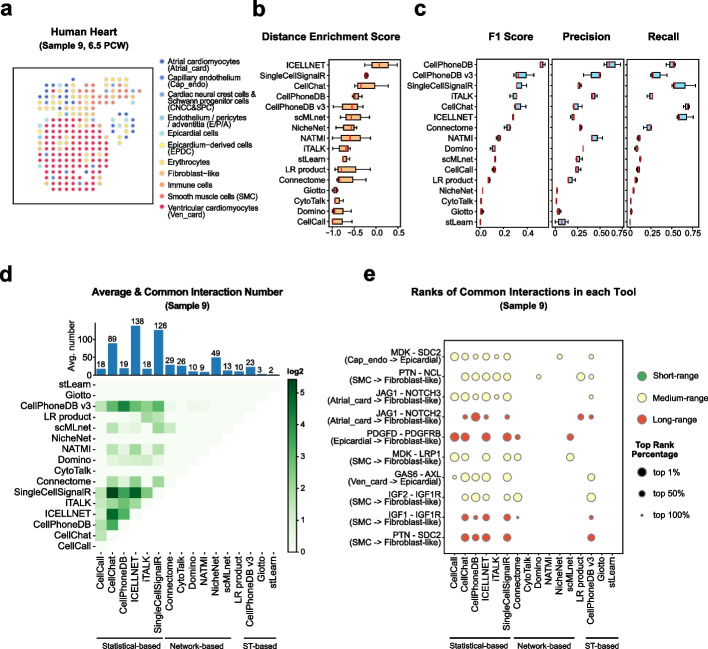
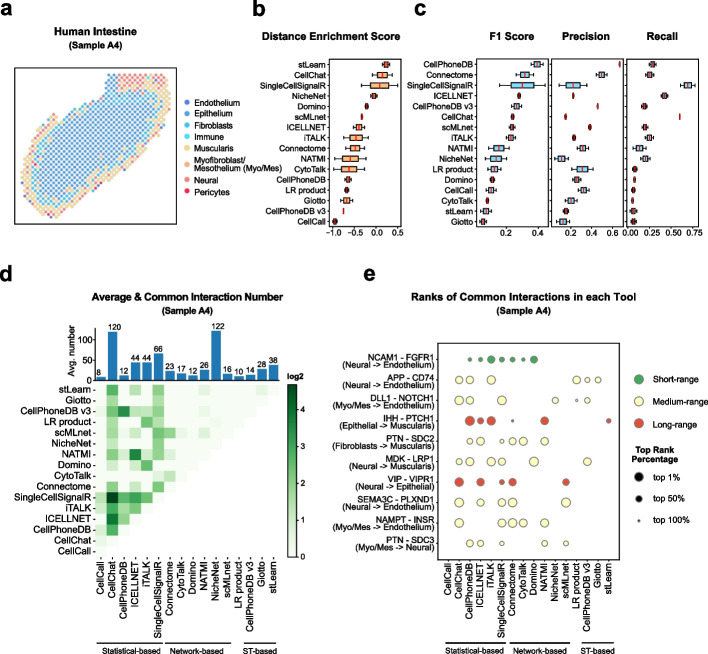
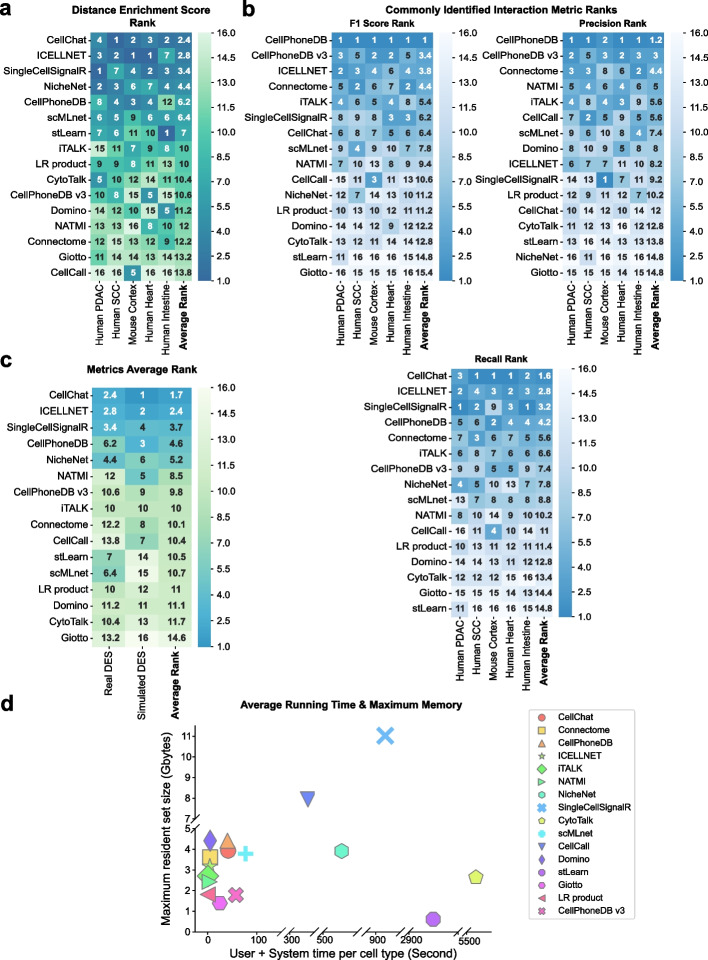
Background: Cell-cell interactions are important for information exchange between different cells, which are the fundamental basis of many biological processes. Recent advances in single-cell RNA sequencing (scRNA-seq) enable the characterization of cell-cell interactions using computational methods. However, it is hard to evaluate these methods since no ground truth is provided. Spatial transcriptomics (ST) data profiles the relative position of different cells. We propose that the spatial distance suggests the interaction tendency of different cell types, thus could be used for evaluating cell-cell interaction tools. Results: We benchmark 16 cell-cell interaction methods by integrating scRNA-seq with ST data. We characterize cell-cell interactions into short-range and long-range interactions using spatial distance distributions between ligands and receptors. Based on this classification, we define the distance enrichment score and apply an evaluation workflow to 16 cell-cell interaction tools using 15 simulated and 5 real scRNA-seq and ST datasets. We also compare the consistency of the results from single tools with the commonly identified interactions. Our results suggest that the interactions predicted by different tools are highly dynamic, and the statistical-based methods show overall better performance than network-based methods and ST-based methods. Conclusions: Our study presents a comprehensive evaluation of cell-cell interaction tools for scRNA-seq. CellChat, CellPhoneDB, NicheNet, and ICELLNET show overall better performance than other tools in terms of consistency with spatial tendency and software scalability. We recommend using results from at least two methods to ensure the accuracy of identified interactions. We have packaged the benchmark workflow with detailed documentation at GitHub (https://github.com/wanglabtongji/CCI).
Overview
The claims and statistics of this paper haven’t been checked yet.
Free: it reads the open-access text and checks the first 5 claims that cite a source we can check. Create a free account to check every claim.
Integrity signals
Registry
Cites
Statistics
Figures
Verification
Claims the paper makes
The claims and statistics of this paper haven’t been checked yet.
Free: it reads the open-access text and checks the first 5 claims that cite a source we can check. Create a free account to check every claim.
Claims other papers make about this one
Each is checked against this paper’s own text: does it say what the citing paper says it does?
In the citing paper
“expanded the CellChatDB to include more than 1000 protein and non-protein interactions (e.g., metabolic and synaptic signaling) with rich annotations, based on the peer reviewed literature and existing databases such as CellPhoneDB 10 and NeuronChatDB 11”
From CellChat for systematic analysis of cell–cell communication from single-cell transcriptomics (2025) · cites this paper as [11]
In the citing paper
“Recently, CellPhoneDB v4 30 added interactions of non-protein molecules not directly encoded by genes, and NeuronChat 11 was designed specifically for neuron-to-neuron communication mediated by neurotransmitters.”
From CellChat for systematic analysis of cell–cell communication from single-cell transcriptomics (2025) · cites this paper as [11]
Self-check
Percentages, sums and reported differences re-computed from the paper’s own numbers.
The self-check needs the paper’s full text.
Citations
Cites
Subramanian, A., Tamayo, P., Mootha, V. K., Mukherjee, S., Ebert, B. L., Gillette, M. A., Paulovich, A., Pomeroy, S. L., Golub, T. R., Lander, E. S., et al. (2005) · Proceedings of the National Academy of Sciences · doi:10.1073/pnas.0506580102 · Cited by 53,625
clusterProfiler: an R Package for Comparing Biological Themes Among Gene Clusters
Yu, G., Wang, L.-G., Han, Y., & He, Q.-Y. (2012) · OMICS: A Journal of Integrative Biology · doi:10.1089/omi.2011.0118 · Cited by 36,259
Comprehensive Integration of Single-Cell Data
Stuart, T., Butler, A., Hoffman, P., Hafemeister, C., Papalexi, E., Mauck, W. M., Hao, Y., Stoeckius, M., Smibert, P., & Satija, R. (2019) · Cell · doi:10.1016/j.cell.2019.05.031 · Cited by 15,453
Inference and analysis of cell-cell communication using CellChat
Jin, S., Guerrero-Juarez, C. F., Zhang, L., Chang, I., Ramos, R., Kuan, C.-H., Myung, P., Plikus, M. V., & Nie, Q. (2021) · Nature Communications · doi:10.1038/s41467-021-21246-9 · Cited by 8,409 · cited 5×
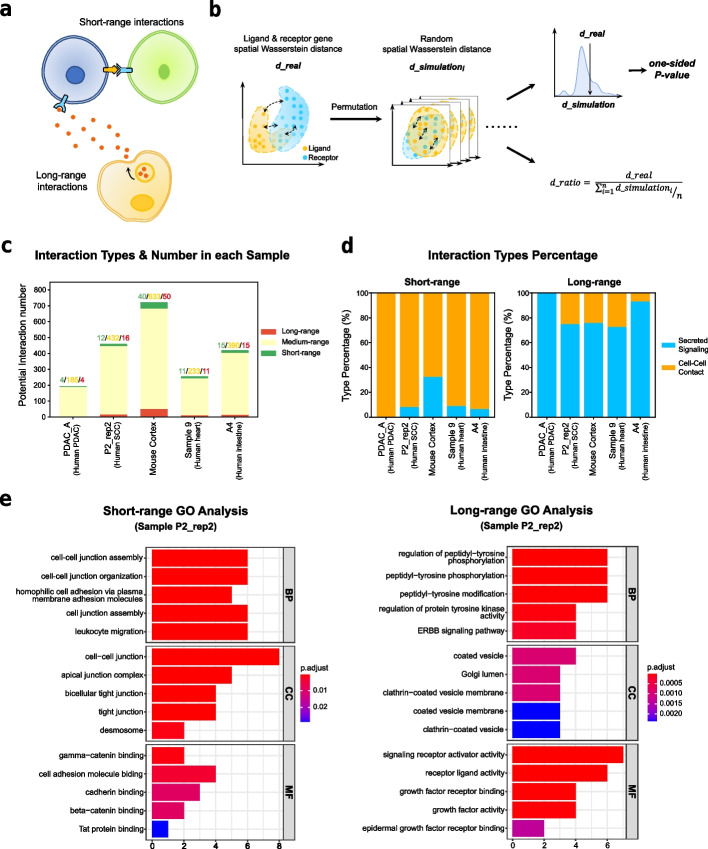
“The first type of method, statistical-based CCI tools, applies a statistical test to quantify the probability of each interaction over null hypotheses, such as CellPhoneDB [10] and CellChat [11].”
MethodInfluentialUntangling the ErbB signalling network
Yarden, Y., & Sliwkowski, M. X. (2001) · Nature Reviews Molecular Cell Biology · doi:10.1038/35052073 · Cited by 6,974 · cited 1×
“By contrast, long-range interaction genes were enriched in many signaling pathways that have a wide regulatory range, such as the ERBB signaling pathway [35] (Fig.”
BackgroundHafemeister, C., & Satija, R. (2019) · Genome Biology · doi:10.1186/s13059-019-1874-1 · Cited by 4,479 · cited 1×
“When applying to the real data, we used sctransform [66] to normalize the count matrix before calculating the Wasserstein metric.”
MethodMapping identifiers for the integration of genomic datasets with the R/Bioconductor package biomaRt
Durinck, S., Spellman, P. T., Birney, E., & Huber, W. (2009) · Nature Protocols · doi:10.1038/nprot.2009.97 · Cited by 4,197 · cited 1×
“Finally, for both scRNA-seq and ST data, we transformed the mouse gene symbols to human gene symbols using biomaRt [62].”
MethodNew insights into the mechanisms of epithelial–mesenchymal transition and implications for cancer
Dongre, A., & Weinberg, R. A. (2019) · Nature Reviews Molecular Cell Biology · doi:10.1038/s41580-018-0080-4 · Cited by 3,876 · cited 1×
“Understanding how the cells interact with each other will help to reveal the potential mechanisms behind biological processes, such as organ development [5, 6] and tumor progression [7, 8].”
BackgroundVisualization and analysis of gene expression in tissue sections by spatial transcriptomics
Ståhl, P. L., Salmén, F., Vickovic, S., Lundmark, A., Navarro, J. F., Magnusson, J., Giacomello, S., Asp, M., Westholm, J. O., Huss, M., et al. (2016) · Science · doi:10.1126/science.aaf2403 · Cited by 3,834 · cited 1×
“The recent development of spatial transcriptomics (ST) enables the recording of gene expression and spatial position of cells at the same time [26, 27], which could be used to characterize the spatial distance tendency of known interactions.”
BackgroundEfremova, M., Vento-Tormo, M., Teichmann, S. A., & Vento-Tormo, R. (2020) · Nature Protocols · doi:10.1038/s41596-020-0292-x · Cited by 3,449 · cited 2×
“These 15 CCI tools include statistical-based methods such as CellCall [15], CellChat [11], CellPhoneDB [10], ICELLNET [16], iTALK [17], and SingleCellSignalR [18]; network-based methods such as Con-nectome [19], CytoTalk [20], Domino [21], NATMI [22], NicheNet [12], and scMLnet [23]; and ST-based…”
MethodNicheNet: Modeling intercellular communication by linking ligands to target genes
Browaeys, R., Saelens, W., & Saeys, Y. (2020) · Nature Methods · doi:10.1038/s41592-019-0667-5 · Cited by 2,192 · cited 2×
“…CellChat [11], CellPhoneDB [10], ICELLNET [16], iTALK [17], and SingleCellSignalR [18]; network-based methods such as Con-nectome [19], CytoTalk [20], Domino [21], NATMI [22], NicheNet [12], and scMLnet [23]; and ST-based methods such as CellPhoneDB v3 [13], Giotto [24], and stLearn [25] (Table 1).”
BackgroundMethodSpatiotemporal transcriptomic atlas of mouse organogenesis using DNA nanoball-patterned arrays
Chen, A., Liao, S., Cheng, M., Ma, K., Wu, L., Lai, Y., Qiu, X., Yang, J., Xu, J., Hao, S., et al. (2022) · Cell · doi:10.1016/j.cell.2022.04.003 · Cited by 1,784
Adult mouse cortical cell taxonomy revealed by single cell transcriptomics
Tasic, B., Menon, V., Nguyen, T. N., Kim, T. K., Jarsky, T., Yao, Z., Levi, B., Gray, L. T., Sorensen, S. A., Dolbeare, T., et al. (2016) · Nature Neuroscience · doi:10.1038/nn.4216 · Cited by 1,714 · cited 1×
“4216) [73], or can also be downloaded from Seurat spatial vignette (https:// satij alab.”
Cell2location maps fine-grained cell types in spatial transcriptomics
Kleshchevnikov, V., Shmatko, A., Dann, E., Aivazidis, A., King, H. W., Li, T., Elmentaite, R., Lomakin, A., Kedlian, V., Gayoso, A., et al. (2022) · Nature Biotechnology · doi:10.1038/s41587-021-01139-4 · Cited by 1,279 · cited 1×
“We defined the spatial microenvironments using cell2location [70] according to its tutorial and selected the significant interactions using 0.”
MethodDeciphering cell–cell interactions and communication from gene expression
Armingol, E., Officer, A., Harismendy, O., & Lewis, N. E. (2021) · Nature Reviews Genetics · doi:10.1038/s41576-020-00292-x · Cited by 1,267 · cited 6×
“In general, CCIs can be classified into 4 types, autocrine, juxtacrine, paracrine, and endocrine with increasing signaling ranges [4].”
BackgroundInfluentialMultimodal Analysis of Composition and Spatial Architecture in Human Squamous Cell Carcinoma
Ji, A. L., Rubin, A. J., Thrane, K., Jiang, S., Reynolds, D. L., Meyers, R. M., Guo, M. G., George, B. M., Mollbrink, A., Bergenstråhle, J., et al. (2020) · Cell · doi:10.1016/j.cell.2020.05.039 · Cited by 1,117 · cited 4×
“The SCC dataset was generated from a published study on human cutaneous squamous cell carcinoma [29].”
BackgroundMethodInfluentialMoncada, R., Barkley, D., Wagner, F., Chiodin, M., Devlin, J. C., Baron, M., Hajdu, C. H., Simeone, D. M., & Yanai, I. (2020) · Nature Biotechnology · doi:10.1038/s41587-019-0392-8 · Cited by 1,045 · cited 3×
“These datasets are from 3 different biological systems, the human pancreatic ductal adenocarcinoma dataset [28] and the human squamous cell carcinoma dataset [29] are from the tumor microenvironment system; the mouse cortex dataset [30] is from the nervous system; and the human heart dataset [31]…”
BackgroundMethodNeurexins Induce Differentiation of GABA and Glutamate Postsynaptic Specializations via Neuroligins
Graf, E. R., Zhang, X., Jin, S.-X., Linhoff, M. W., & Craig, A. M. (2004) · Cell · doi:10.1016/j.cell.2004.11.035 · Cited by 1,000 · cited 1×
“The neurexin (NRXN) and neuroligin (NLGN) are neuronal cell surface proteins and they can interact with each other to involve in the maturation of glutamatergic and GABAergic synapses [41].”
BackgroundGiotto: a toolbox for integrative analysis and visualization of spatial expression data
Dries, R., Zhu, Q., Dong, R., Eng, C.-H. L., Li, H., Liu, K., Fu, Y., Zhao, T., Sarkar, A., Bao, F., et al. (2021) · Genome Biology · doi:10.1186/s13059-021-02286-2 · Cited by 917 · cited 2×
“…interacting cell types; spatial co-expression for interactions Single subunit Ligand-receptor pairs; cell type colocalization; L-R co-expression R [24] stLearn Identify interactions by L-R co-expression and cell type density Single subunit Ligand-receptor pairs; cell type colocalization; L-R…”
BackgroundMethodA Spatiotemporal Organ-Wide Gene Expression and Cell Atlas of the Developing Human Heart
Asp, M., Giacomello, S., Larsson, L., Wu, C., Fürth, D., Qian, X., Wärdell, E., Custodio, J., Reimegård, J., Salmén, F., et al. (2019) · Cell · doi:10.1016/j.cell.2019.11.025 · Cited by 758 · cited 3×
“…ductal adenocarcinoma dataset [28] and the human squamous cell carcinoma dataset [29] are from the tumor microenvironment system; the mouse cortex dataset [30] is from the nervous system; and the human heart dataset [31] and the human intestine dataset [32] are from the developmental system.”
BackgroundMethodPham, D., Tan, X., Balderson, B., Xu, J., Grice, L. F., Yoon, S., Willis, E. F., Tran, M., Lam, P. Y., Raghubar, A., et al. (2023) · Nature Communications · doi:10.1038/s41467-023-43120-6 · Cited by 730
Spatially resolved transcriptomes—next generation tools for tissue exploration
Asp, M., Bergenstråhle, J., & Lundeberg, J. (2020) · BioEssays · doi:10.1002/bies.201900221 · Cited by 666 · cited 2×
“The recent development of spatial transcriptomics (ST) enables the recording of gene expression and spatial position of cells at the same time [26, 27], which could be used to characterize the spatial distance tendency of known interactions.”
BackgroundDimitrov, D., Türei, D., Garrido-Rodriguez, M., Burmedi, P. L., Nagai, J. S., Boys, C., Ramirez Flores, R. O., Kim, H., Szalai, B., Costa, I. G., et al. (2022) · Nature Communications · doi:10.1038/s41467-022-30755-0 · Cited by 664
Mapping the temporal and spatial dynamics of the human endometrium in vivo and in vitro
Garcia-Alonso, L., Handfield, L.-F., Roberts, K., Nikolakopoulou, K., Fernando, R. C., Gardner, L., Woodhams, B., Arutyunyan, A., Polanski, K., Hoo, R., et al. (2021) · Nature Genetics · doi:10.1038/s41588-021-00972-2 · Cited by 662 · cited 3×
“The third type, ST-based CCI tools, integrate spatial information to correct interactions predicted by gene expression, for instance, CellPhoneDB v3 [13] only focuses on interactions between cell types in the same spatial microenvironment.”
BackgroundMethodMultilineage communication regulates human liver bud development from pluripotency
Camp, J. G., Sekine, K., Gerber, T., Loeffler-Wirth, H., Binder, H., Gac, M., Kanton, S., Kageyama, J., Damm, G., Seehofer, D., et al. (2017) · Nature · doi:10.1038/nature22796 · Cited by 621 · cited 1×
“Understanding how the cells interact with each other will help to reveal the potential mechanisms behind biological processes, such as organ development [5, 6] and tumor progression [7, 8].”
BackgroundExpression, Regulation, and Function of IGF-1, IGF-1R, and IGF-1 Binding Proteins in Blood Vessels
Delafontaine, P., Song, Y.-H., & Li, Y. (2004) · Arteriosclerosis, Thrombosis, and Vascular Biology · doi:10.1161/01.atv.0000105902.89459.09 · Cited by 542 · cited 2×
“The three long-range interactions shown are all related to secreted functions [42, 46, 47] and their ligands and receptors are spatially distributed away from each other.”
BackgroundSpatiotemporal analysis of human intestinal development at single-cell resolution
Fawkner-Corbett, D., Antanaviciute, A., Parikh, K., Jagielowicz, M., Gerós, A. S., Gupta, T., Ashley, N., Khamis, D., Fowler, D., Morrissey, E., et al. (2021) · Cell · doi:10.1016/j.cell.2020.12.016 · Cited by 526 · cited 1×
“The scRNA-seq and ST data of the human intestinal dataset can be accessed through GEO under accession numbers GSE158328 (ST) [76] and GSE158702 (scRNA-seq) [77].”
MethodMicroscopic examination of spatial transcriptome using Seq-Scope
Cho, C.-S., Xi, J., Si, Y., Park, S.-R., Hsu, J.-E., Kim, M., Jun, G., Kang, H. M., & Lee, J. H. (2021) · Cell · doi:10.1016/j.cell.2021.05.010 · Cited by 520 · cited 1×
“Recently, some ST technologies with nanoscale resolution have been published, such as Stereo-seq [56] and Seq-Scope [57].”
MethodStructure of the agonist-bound neurotensin receptor
White, J. F., Noinaj, N., Shibata, Y., Love, J., Kloss, B., Xu, F., Gvozdenovic-Jeremic, J., Shah, P., Shiloach, J., Tate, C. G., et al. (2012) · Nature · doi:10.1038/nature11558 · Cited by 509 · cited 1×
“The three long-range interactions were enriched in cell types that have distinct spatial distribution [42, 43, 44].”
Circuit Design Features of a Stable Two-Cell System
Zhou, X., Franklin, R. A., Adler, M., Jacox, J. B., Bailis, W., Shyer, J. A., Flavell, R. A., Mayo, A., Alon, U., & Medzhitov, R. (2018) · Cell · doi:10.1016/j.cell.2018.01.015 · Cited by 430 · cited 1×
“Cell-cell interactions (CCIs) are essential to various biological processes in multicellular organisms [1].”
BackgroundSingleCellSignalR: inference of intercellular networks from single-cell transcriptomics
Cabello-Aguilar, S., Alame, M., Kon-Sun-Tack, F., Fau, C., Lacroix, M., & Colinge, J. (2020) · Nucleic Acids Research · doi:10.1093/nar/gkaa183 · Cited by 407 · cited 1×
“…tools include statistical-based methods such as CellCall [15], CellChat [11], CellPhoneDB [10], ICELLNET [16], iTALK [17], and SingleCellSignalR [18]; network-based methods such as Con-nectome [19], CytoTalk [20], Domino [21], NATMI [22], NicheNet [12], and scMLnet [23]; and ST-based methods…”
MethodThree Functions of Cadherins in Cell Adhesion
Maître, J.-L., & Heisenberg, C.-P. (2013) · Current Biology · doi:10.1016/j.cub.2013.06.019 · Cited by 344 · cited 1×
“In the sample P2_rep2 from the SCC dataset, the short-range interaction genes were enriched in cell-cell junction-associated biological processes and cellular components, including cell-cell junction assembly and cell adhesion molecule binding, which play a crucial role in regulating cell contact formation and stabili…”
BackgroundDifferential molecular interactions of β-catenin and plakoglobin in adhesion, signaling and cancer
Ben-Ze'ev, A., & Geiger, B. (1998) · Current Opinion in Cell Biology · doi:10.1016/s0955-0674(98)80039-2 · Cited by 341 · cited 1×
“In the sample P2_rep2 from the SCC dataset, the short-range interaction genes were enriched in cell-cell junction-associated biological processes and cellular components, including cell-cell junction assembly and cell adhesion molecule binding, which play a crucial role in regulating cell contact formation and stabili…”
BackgroundiTALK: an R Package to Characterize and Illustrate Intercellular Communication
Wang, Y., Wang, R., Zhang, S., Song, S., Jiang, C., Han, G., Wang, M., Ajani, J., Futreal, A., & Wang, L. (2019) · bioRxiv (Cold Spring Harbor Laboratory) · doi:10.1101/507871 · Cited by 331 · cited 1×
“These 15 CCI tools include statistical-based methods such as CellCall [15], CellChat [11], CellPhoneDB [10], ICELLNET [16], iTALK [17], and SingleCellSignalR [18]; network-based methods such as Con-nectome [19], CytoTalk [20], Domino [21], NATMI [22], NicheNet [12], and scMLnet [23]; and ST-based…”
MethodMicroenvironmental regulation of cancer development
Hu, M., & Polyak, K. (2008) · Current Opinion in Genetics & Development · doi:10.1016/j.gde.2007.12.006 · Cited by 330 · cited 1×
“The biological behavior of a cell is regulated by its intracellular regulatory network and extracellular signaling environment at the same time and can eventually decide the function of that cell [2, 3].”
BackgroundNotch and interacting signalling pathways in cardiac development, disease, and regeneration
MacGrogan, D., Münch, J., & de la Pompa, J. L. (2018) · Nature Reviews Cardiology · doi:10.1038/s41569-018-0100-2 · Cited by 287 · cited 1×
“7e), while these interactions play important roles in atrial development [48, 49, 50].”
BackgroundPredicting cell-to-cell communication networks using NATMI
Hou, R., Denisenko, E., Ong, H. T., Ramilowski, J. A., & Forrest, A. R. R. (2020) · Nature Communications · doi:10.1038/s41467-020-18873-z · Cited by 285 · cited 1×
“…CellChat [11], CellPhoneDB [10], ICELLNET [16], iTALK [17], and SingleCellSignalR [18]; network-based methods such as Con-nectome [19], CytoTalk [20], Domino [21], NATMI [22], NicheNet [12], and scMLnet [23]; and ST-based methods such as CellPhoneDB v3 [13], Giotto [24], and stLearn [25] (Table 1).”
MethodSnijders, A. M., Schmidt, B. L., Fridlyand, J., Dekker, N., Pinkel, D., Jordan, R. C. K., & Albertson, D. G. (2005) · Oncogene · doi:10.1038/sj.onc.1208601 · Cited by 280 · cited 1×
“LAMA3 binds to its high-affinity receptor and mediates the attachment and migration of cells [39].”
BackgroundZhang, Y., Liu, T., Hu, X., Wang, M., Wang, J., Zou, B., Tan, P., Cui, T., Dou, Y., Ning, L., et al. (2021) · Nucleic Acids Research · doi:10.1093/nar/gkab638 · Cited by 252 · cited 1×
“These 15 CCI tools include statistical-based methods such as CellCall [15], CellChat [11], CellPhoneDB [10], ICELLNET [16], iTALK [17], and SingleCellSignalR [18]; network-based methods such as Con-nectome [19], CytoTalk [20], Domino [21], NATMI [22], NicheNet [12], and scMLnet [23]; and ST-based…”
MethodDissection of intercellular communication using the transcriptome-based framework ICELLNET
Noël, F., Massenet-Regad, L., Carmi-Levy, I., Cappuccio, A., Grandclaudon, M., Trichot, C., Kieffer, Y., Mechta-Grigoriou, F., & Soumelis, V. (2021) · Nature Communications · doi:10.1038/s41467-021-21244-x · Cited by 209 · cited 1×
“These 15 CCI tools include statistical-based methods such as CellCall [15], CellChat [11], CellPhoneDB [10], ICELLNET [16], iTALK [17], and SingleCellSignalR [18]; network-based methods such as Con-nectome [19], CytoTalk [20], Domino [21], NATMI [22], NicheNet [12], and scMLnet [23]; and ST-based…”
MethodThe landscape of cell–cell communication through single-cell transcriptomics
Almet, A. A., Cang, Z., Jin, S., & Nie, Q. (2021) · Current Opinion in Systems Biology · doi:10.1016/j.coisb.2021.03.007 · Cited by 197 · cited 1×
“Although these CCI tools can infer a series of interactions using the annotated scRNA-seq data, a key question remains that the accuracy of inferred CCIs is not tested since there is no golden standard dataset for benchmarking them [4, 14].”
BackgroundIntegrative analyses of single-cell transcriptome and regulome using MAESTRO
Wang, C., Sun, D., Huang, X., Wan, C., Li, Z., Han, Y., Qin, Q., Fan, J., Qiu, X., Xie, Y., et al. (2020) · Genome Biology · doi:10.1186/s13059-020-02116-x · Cited by 187 · cited 1×
“The preprocessing and cell type annotation of scRNA-seq data was performed by MAESTRO [64] using the gene markers provided in its publication and the ST data was subset according to the biggest tissue region in the slide (Additional file 1: Fig.”
MethodSelf-citationStructural basis of adhesive binding by desmocollins and desmogleins
Harrison, O. J., Brasch, J., Lasso, G., Katsamba, P. S., Ahlsen, G., Honig, B., & Shapiro, L. (2016) · Proceedings of the National Academy of Sciences · doi:10.1073/pnas.1606272113 · Cited by 172 · cited 2×
“DSG and DSC were consistently observed to present the colocalization on the apposed cell surfaces in desmosomes and form the basic adhesive unit of desmosomes [38].”
BackgroundShao, X., Lu, X., Liao, J., Chen, H., & Fan, X. (2020) · Protein & Cell · doi:10.1007/s13238-020-00727-5 · Cited by 159 · cited 2×
“With the advanced development of single-cell RNA sequencing (scRNA-seq), several computational tools are designed to infer CCIs through integrating gene expression from scRNA-seq data and ligand-receptor information [3, 4, 9].”
BackgroundGe, G., Hopkins, D. R., Ho, W.-B., & Greenspan, D. S. (2005) · Molecular and Cellular Biology · doi:10.1128/mcb.25.14.5846-5858.2005 · Cited by 157 · cited 1×
“The three long-range interactions shown are all related to secreted functions [42, 46, 47] and their ligands and receptors are spatially distributed away from each other.”
BackgroundRaredon, M. S. B., Yang, J., Garritano, J., Wang, M., Kushnir, D., Schupp, J. C., Adams, T. S., Greaney, A. M., Leiby, K. L., Kaminski, N., et al. (2022) · Scientific Reports · doi:10.1038/s41598-022-07959-x · Cited by 138
CytoTalk: De novo construction of signal transduction networks using single-cell transcriptomic data
Hu, Y., Peng, T., Gao, L., & Tan, K. (2021) · Science Advances · doi:10.1126/sciadv.abf1356 · Cited by 136 · cited 1×
“…CellChat [11], CellPhoneDB [10], ICELLNET [16], iTALK [17], and SingleCellSignalR [18]; network-based methods such as Con-nectome [19], CytoTalk [20], Domino [21], NATMI [22], NicheNet [12], and scMLnet [23]; and ST-based methods such as CellPhoneDB v3 [13], Giotto [24], and stLearn [25] (Table…”
MethodCheng, J., Zhang, J., Wu, Z., & Sun, X. (2021) · Briefings in Bioinformatics · doi:10.1093/bib/bbaa327 · Cited by 125 · cited 2×
“…CellChat [11], CellPhoneDB [10], ICELLNET [16], iTALK [17], and SingleCellSignalR [18]; network-based methods such as Con-nectome [19], CytoTalk [20], Domino [21], NATMI [22], NicheNet [12], and scMLnet [23]; and ST-based methods such as CellPhoneDB v3 [13], Giotto [24], and stLearn [25] (Table 1).”
MethodThe role of the semaphorins in cancer
Neufeld, G., Mumblat, Y., Smolkin, T., Toledano, S., Nir-Zvi, I., Ziv, K., & Kessler, O. (2016) · Cell Adhesion & Migration · doi:10.1080/19336918.2016.1197478 · Cited by 122 · cited 2×
“The three long-range interactions were enriched in cell types that have distinct spatial distribution [42, 43, 44].”
BackgroundSun, D., Liu, Z., Li, T., Wu, Q., & Wang, C. (2022) · Nucleic Acids Research · doi:10.1093/nar/gkac150 · Cited by 122 · cited 7×
“The scRNA-seq and ST data preprocessing were done by Seurat V3 [59], and the cell type deconvolution of ST data was done by STRIDE [60].”
MethodInfluentialSelf-citationReelin in the years: controlling neuronal migration and maturation in the mammalian brain
D'Arcangelo, G. (2014) · Advances in Neuroscience · doi:10.1155/2014/597395 · Cited by 120 · cited 1×
“The three long-range interactions shown are all related to secreted functions [42, 46, 47] and their ligands and receptors are spatially distributed away from each other.”
BackgroundCherry, C., Maestas, D. R., Han, J., Andorko, J. I., Cahan, P., Fertig, E. J., Garmire, L. X., & Elisseeff, J. H. (2021) · Nature Biomedical Engineering · doi:10.1038/s41551-021-00770-5 · Cited by 120
Pleiotrophin as a central nervous system neuromodulator, evidences from the hippocampus
González-Castillo, C., Ortuño-Sahagún, D., Guzmán-Brambila, C., Pallà s, M., & Rojas-MayorquÃn, A. E. (2015) · Frontiers in Cellular Neuroscience · doi:10.3389/fncel.2014.00443 · Cited by 95 · cited 1×
“S8e) with the function of secreted signaling pathways [43, 53, 54].”
BackgroundWang, T., Steel, G., Milam, A. H., & Valle, D. L. (2000) · Proceedings of the National Academy of Sciences · doi:10.1073/pnas.97.3.1224 · Cited by 91 · cited 1×
“S8e) with the function of secreted signaling pathways [43, 53, 54].”
BackgroundModular Proteoglycan Perlecan/HSPG2: Mutations, Phenotypes, and Functions
Martinez, J. R., Dhawan, A., & Farach‐Carson, M. C. (2018) · Genes · doi:10.3390/genes9110556 · Cited by 89 · cited 1×
“S7d), among which COL1A2 and HSPG2 are known to play important roles in cell adhesion [38, 45].”
BackgroundZhou, J. X., Taramelli, R., Pedrini, E., Knijnenburg, T., & Huang, S. (2017) · Scientific Reports · doi:10.1038/s41598-017-09307-w · Cited by 85 · cited 1×
“Understanding how the cells interact with each other will help to reveal the potential mechanisms behind biological processes, such as organ development [5, 6] and tumor progression [7, 8].”
BackgroundSpatiotemporal transcriptomic atlas of mouse organogenesis using DNA nanoball patterned arrays
Chen, A., Liao, S., Cheng, M., Ma, K., Wu, L., Lai, Y., Qiu, X., Yang, J., Li, W., Xu, J., et al. (2021) · bioRxiv (Cold Spring Harbor Laboratory) · doi:10.1101/2021.01.17.427004 · Cited by 78 · cited 1×
“Recently, some ST technologies with nanoscale resolution have been published, such as Stereo-seq [56] and Seq-Scope [57].”
MethodFurther characterization of the NH2-terminal fibrin-binding site on fibronectin.
Rostagno, A. A., Williams, M. J., Baron, M., Campbell, I. D., & Gold, L. I. (1994) · Journal of Biological Chemistry · doi:10.1016/s0021-9258(18)31786-1 · Cited by 62 · cited 1×
“The three short-range interaction examples are associated with cell adhesion [51, 52] and displayed spatial colocalized patterns, while the three long-range interaction examples are enriched in spatially distinct cell types (Additional file 1: Fig.”
BackgroundEndothelial EphB4 maintains vascular integrity and transport function in adult heart
Luxán, G., Stewen, J., Díaz, N., Kato, K., Maney, S. K., Aravamudhan, A., Berkenfeld, F., Nagelmann, N., Drexler, H. C. A., Zeuschner, D., et al. (2019) · eLife · doi:10.7554/elife.45863 · Cited by 56
Systematic Identification of Cell-Cell Communication Networks in the Developing Brain
Sheikh, B. N., Bondareva, O., Guhathakurta, S., Tsang, T. H., Sikora, K., Aizarani, N., Sagar, Holz, H., Grün, D., Hein, L., et al. (2019) · iScience · doi:10.1016/j.isci.2019.10.026 · Cited by 52 · cited 1×
“Understanding how the cells interact with each other will help to reveal the potential mechanisms behind biological processes, such as organ development [5, 6] and tumor progression [7, 8].”
BackgroundMa, F., Zhang, S., Song, L., Wang, B., Wei, L., & Zhang, F. (2021) · Cell & Bioscience · doi:10.1186/s13578-021-00635-z · Cited by 51 · cited 1×
“With the advanced development of single-cell RNA sequencing (scRNA-seq), several computational tools are designed to infer CCIs through integrating gene expression from scRNA-seq data and ligand-receptor information [3, 4, 9].”
Arcangeli, M.-L., Bardin, F., Frontera, V., Bidaut, G., Obrados, E., Adams, R. H., Chabannon, C., & Aurrand‐Lions, M. (2014) · Stem Cells · doi:10.1002/stem.1624 · Cited by 50 · cited 1×
“The three short-range interaction examples are associated with cell adhesion [51, 52] and displayed spatial colocalized patterns, while the three long-range interaction examples are enriched in spatially distinct cell types (Additional file 1: Fig.”
BackgroundAn unsupervised method for physical cell interaction profiling of complex tissues
Andrews, N., Serviss, J. T., Geyer, N., Andersson, A., Dzwonkowska, E., Šutevski, I., Heijboer, R., Baryawno, N., Gerling, M., & Enge, M. (2021) · Nature Methods · doi:10.1038/s41592-021-01196-2 · Cited by 47 · cited 1×
“Validation of these interactions through loss-of-function experiments or high-throughput screening like CIM-seq [55] is labor-intensive and time-consuming.”
BackgroundCoronary arterial development is regulated by a Dll4-Jag1-EphrinB2 signaling cascade
Travisano, S. I., Oliveira, V. L., Prados, B., Grego‐Bessa, J., Piñeiro-Sabarís, R., Bou, V., Gómez, M. J., Sánchez‐Cabo, F., MacGrogan, D., & de la Pompa, J. L. (2019) · eLife · doi:10.7554/elife.49977 · Cited by 41
Single sample pathway analysis in metabolomics: performance evaluation and application
Wieder, C., Lai, R., & Ebbels, T. M. D. (2022) · BMC Bioinformatics · doi:10.1186/s12859-022-05005-1 · Cited by 39
Developmental heart - filtered and unfiltered count matrices and meta tables
Asp, M. (2019) · Data Archiving and Networked Services (DANS) · doi:10.17632/mbvhhf8m62 · Cited by 1
Liu, Z. (2022) · Zenodo (CERN European Organization for Nuclear Research) · doi:10.5281/zenodo.7125649 · Cited by 1
Self-citationIntercellular signaling dynamics from a single cell atlas of the biomaterials response
Cherry, C., Maestas, D. R., Han, J., Andorko, J. I., Cahan, P., Fertig, E. J., Garmire, L. X., & Elisseeff, J. H. (2020) · doi:10.1101/2020.07.24.218537 · cited 1×
“…CellChat [11], CellPhoneDB [10], ICELLNET [16], iTALK [17], and SingleCellSignalR [18]; network-based methods such as Con-nectome [19], CytoTalk [20], Domino [21], NATMI [22], NicheNet [12], and scMLnet [23]; and ST-based methods such as CellPhoneDB v3 [13], Giotto [24], and stLearn [25] (Table 1).”
Method
Research works printed but not linked: 12
- Pham D Tan X Xu J Grice LF Lam PY Raghubar A stLearn: integrating spatial location, tissue morphology and gene expression to find cell types, cell-cell interactions and spatial trajectories within undissociated tissues 2020
- Dimitrov D, Türei D, Boys C, Nagai JS, Ramirez Flores RO, Kim H, et al. Comparison of resources and methods to infer cell-cell communication from single-cell RNA data. bioRxiv. 2021:445160. 10.1101/2021.05.21.445160. · doi:10.1101/2021.05.21.445160
- Tasic B Menon V Nguyen TN Kim TK Jarsky T Yao Z Adult mouse cortical cell taxonomy revealed by single cell transcriptomics Nat Neurosci 2016 19 335 346 10.1038/nn.4216 26727548 PMC4985242 · DOI · Paper page
- Flamary R Courty N Gramfort A Alaya MZ Boisbunon A Chambon S POT Python Optimal Transport library J Mach Learn Res 2021 22 1 8
- Alexa A Rahnenfuhrer J topGO: enrichment analysis for gene ontology. R package version 2.40.0 2020
- Carlson M org.Hs.eg.db: Genome wide annotation for Human. R package version 3.11.4 2020
- Moncada R, et al. Data from: Integrating microarray-based spatial transcriptomics and single-cell RNA-seq reveals tissue architecture in pancreatic ductal adenocarcinomas, GEO, Dataset, https://www.ncbi.nlm.nih.gov/geo/query/acc.cgi?acc=GSE111672. (2020). 31932730
- Ji AL, et al. Data from: single cell and spatial analysis of human squamous cell carcinoma, GEO, Dataset, https://www.ncbi.nlm.nih.gov/geo/query/acc.cgi?acc=GSE144240. (2020).
- Tasic B, et al. Data from: adult mouse cortical cell taxonomy by single cell transcriptomics, GEO, Dataset, https://www.ncbi.nlm.nih.gov/geo/query/acc.cgi?acc=GSE71585. (2016). PMC4985242 26727548
- Fawkner-Corbett D, et al. Data from: spatiotemporal analysis of human intestinal development at single cell resolution - spatial transcriptomics, GEO, dataset, https://www.ncbi.nlm.nih.gov/geo/query/acc.cgi?acc=GSE158328. (2021). PMC7864098 33406409
- Fawkner-Corbett D, et al. Data from: spatiotemporal analysis of human intestinal development at single cell resolution - scRNA-Seq, GEO, dataset, https://www.ncbi.nlm.nih.gov/geo/query/acc.cgi?acc=GSE158702. (2021). PMC7864098 33406409
- Liu Z. Evaluation of cell-cell interaction methods by integrating single-cell RNA sequencing data with spatial information. Zenodo. 2022. 10.5281/zenodo.7125650. PMC9575221 36253792 · doi:10.5281/zenodo.7125650
Cited by
CellChat for systematic analysis of cell–cell communication from single-cell transcriptomics
Jin, S., Plikus, M. V., & Nie, Q. (2025) · Nature Protocols · doi:10.1038/s41596-024-01045-4 · Cited by 1,448
“Two recent systematic evaluations of more than 15 cell–cell communication inference methods suggest CellChat is among the top-performing methods 11,18 .”
InfluentialLIANA+ Provides an All-in-One Framework for Cell–Cell Communication Inference
Dimitrov, D., Schäfer, P. S. L., Farr, E., Rodriguez-Mier, P., Lobentanzer, S., Badia-i-Mompel, P., Dugourd, A., Tanevski, J., Ramirez Flores, R. O., & Saez-Rodriguez, J. (2024) · Nature Cell Biology · doi:10.1038/s41556-024-01469-w · Cited by 263
“Ours and other evaluations remain limited by the lack of ground truth 3 , using instead orthogonal modalities, such as spatial data 3,69 or downstream signalling 3 .”
A Review of Single-Cell RNA-Seq Annotation, Integration, and Cell–Cell Communication
Cheng, C., Chen, W., Jin, H., & Chen, X. (2023) · Cells · doi:10.3390/cells12151970 · Cited by 224
“For instance, Liu et al. [226] integrated spatial information to evaluate a cell–cell communication method and discovered that statistical-based approaches exhibited superior performance and produced more consistent results.”
BackgroundMethodResultThe diversification of methods for studying cell–cell interactions and communication
Armingol, E., Baghdassarian, H. M., & Lewis, N. E. (2024) · Nature Reviews Genetics · doi:10.1038/s41576-023-00685-8 · Cited by 201
Cheng, M., Jiang, Y., Xu, J., Mentis, A.-F. A., Wang, S., Zheng, H., Sahu, S. K., Liu, L., & Xu, X. (2023) · Journal of Genetics and Genomics · doi:10.1016/j.jgg.2023.03.011 · Cited by 187
Metadata
- Authors
- Liu, Z., Sun, D., & Wang, C.
- Venue
- Genome Biology
- Published
- 2022-10-17
- Volume
- 23
- Issue
- 1
- Pages
- 218-218
- ISSN
- 1465-6906 (ISSN-L)
- 1474-760X
- PMC
- PMC9575221
- OpenAlex
- W4306404361
- Cited by
- 159
- References
- 67
- FWCI
- 8.91
- Type
- journal article
- Language
- en
- Open access
- gold
- Licence
- creativecommons.org/licenses/by/4.0 (tdm)
- creativecommons.org/licenses/by/4.0 (vor)
- Funders
- National Natural Science Foundation of China (32222026, 32170660, 31801059)
- Shanghai Rising-Star Program (21QA1408200)
- Natural Science Foundation of Shanghai (21ZR1467600)
About these checks
Registry, retraction, Cites and statistics results are computed, not judged, with one exception: a printed reference that no index lists is read once by a model before it counts as a citation error. Claims are extracted by a model and kept only when their quote appears verbatim in the text; each cited source is then checked, with a model’s help, for whether it says what the claim relies on. Those verdicts can be wrong — read the claim’s quote and the cited source before relying on one.
Statistics and arithmetic are recomputed, not judged.
Confidence bands are shown only for fields calibrated on our annotated test set. None is calibrated yet, so no band is shown.
What counts as a claim ›How we measure confidence ›How we check this ›
Are you an author, or do you see a problem with this page? Request a review
Data sources
Bibliographic data: Semantic Scholar, OpenAlex, Crossref.
Contains information from the Semantic Scholar Academic Graph Datasets, made available under the ODC Attribution License (ODC-BY 1.0).
Semantic Scholar’s data is described in: Kinney, R., et al. (2023). The Semantic Scholar Open Data Platform. arXiv:2301.10140.
